
LEAD ANALYST
Utkarsh Khirodkar is a Lead Market Research Analyst at MetaStat Insight, specializing in market intelligence, technology sector assessments, and competitive strategy.

Global Home Office Furniture Market Size, Share, By Product Type (Desks, Chairs, Storage Units, Workstations and Accessories), By Material Type (Wood, Metal, Plastic, Glass and Fabric), By Distribution Channel (Supermarkets & Hypermarkets, Specialty Stores and E-commerce), By End Use (Commercial Office Furniture and Home Office Furniture), Industry Analysis, Growth, Trends, and Forecast, 2026-2033
Report ID
MSI-5527
Published
October, 2026
Pages
276 Pages
Format
Historical
Base year
Forecast
Forecast period
Report Details
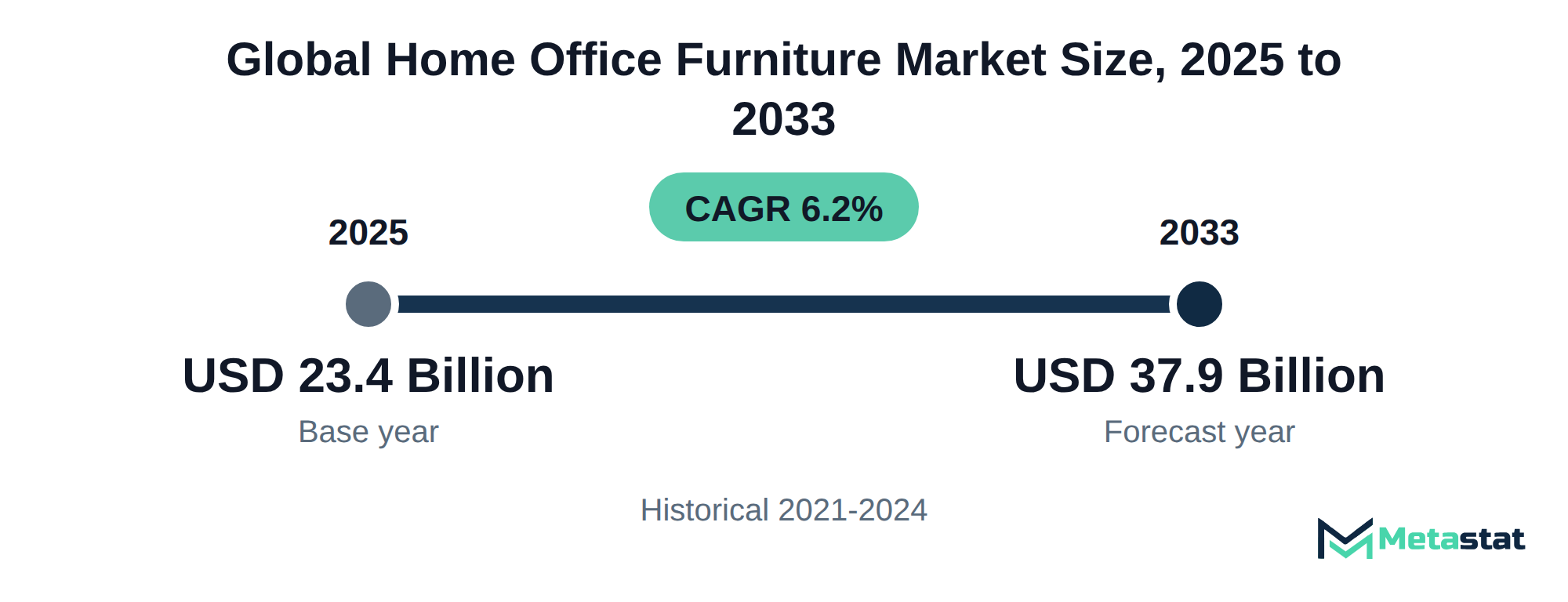
Market Valuation: Valued at $23.4 Billion in 2025, projected to reach $37.9 Billion by 2033 at a 6.2% CAGR.
Dominant Segment: Chairs lead the Home Office Furniture market, driven by consumer preference for ergonomic solutions that enhance comfort and productivity during remote work.
Geographic Lead: North America is projected to dominate the market, with the US showing significant growth due to a robust economy and a shift towards remote work arrangements.
What's Inside: The report provides a comprehensive analysis of market segments, including product types, material types, and distribution channels, along with competitive landscape insights and future forecasts.
Emerging Trends: The demand for ergonomic chairs and sit-stand desks is on the rise, reflecting a growing focus on health and productivity among remote workers.
E-commerce Growth: E-commerce is expected to reach USD 19 billion by 2033, highlighting a significant shift towards online purchasing as consumers seek convenience and competitive pricing.
Choose Your License
Global Home Office Furniture Market
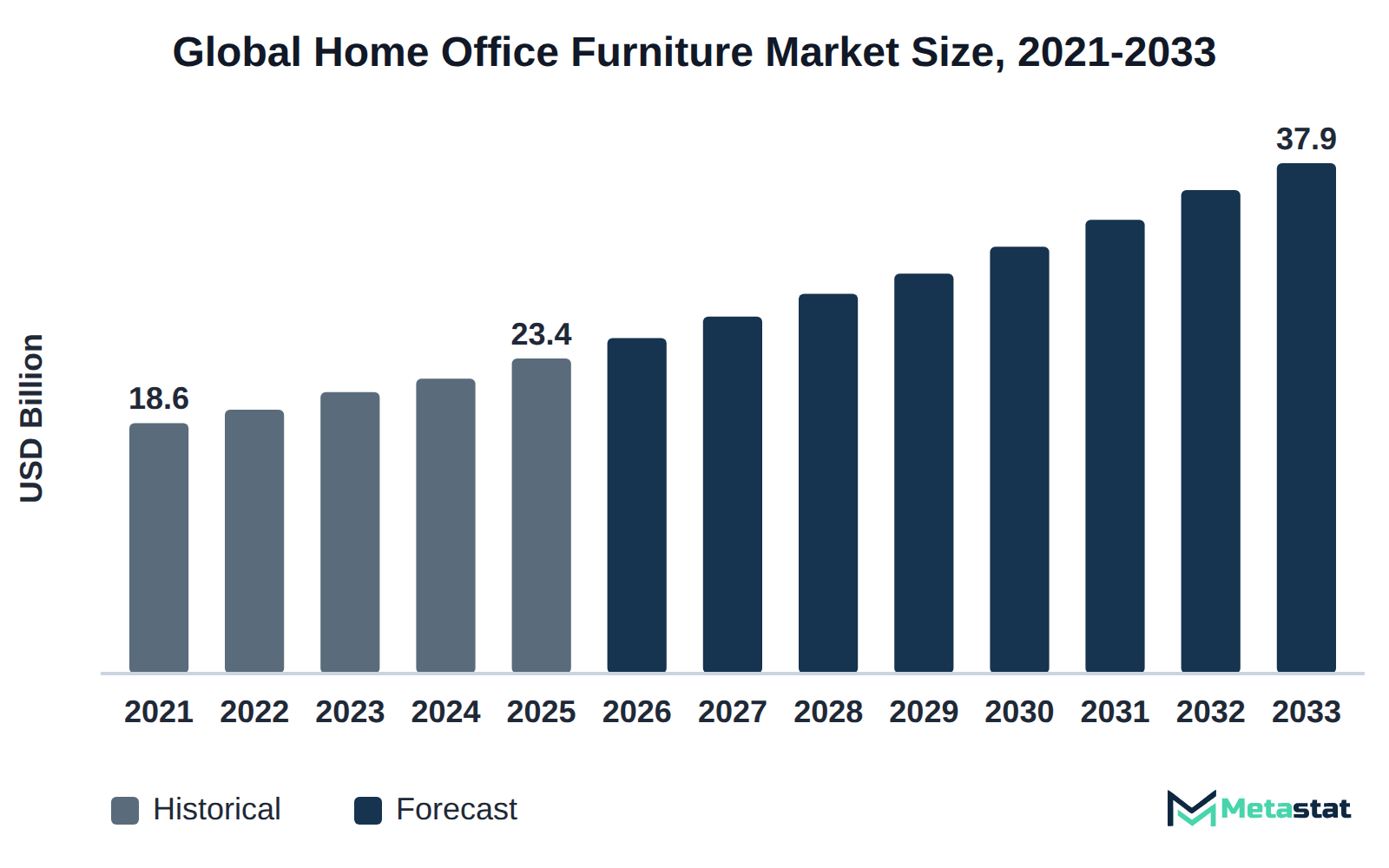
The global Home Office Furniture market was valued at USD 23.4 billion in 2025 and is projected to reach USD 37.9 billion by 2033, growing at a CAGR of 6.2% over the forecast period.
The Home Office Furniture market encompasses a wide range of products designed for home office environments, including desks, chairs, workstations, and storage units. Buyers invest in this market to enhance productivity and comfort while working from home. The rise of remote work has heightened the importance of creating functional and aesthetically pleasing home office spaces, leading to increased spending on furniture that meets these needs.
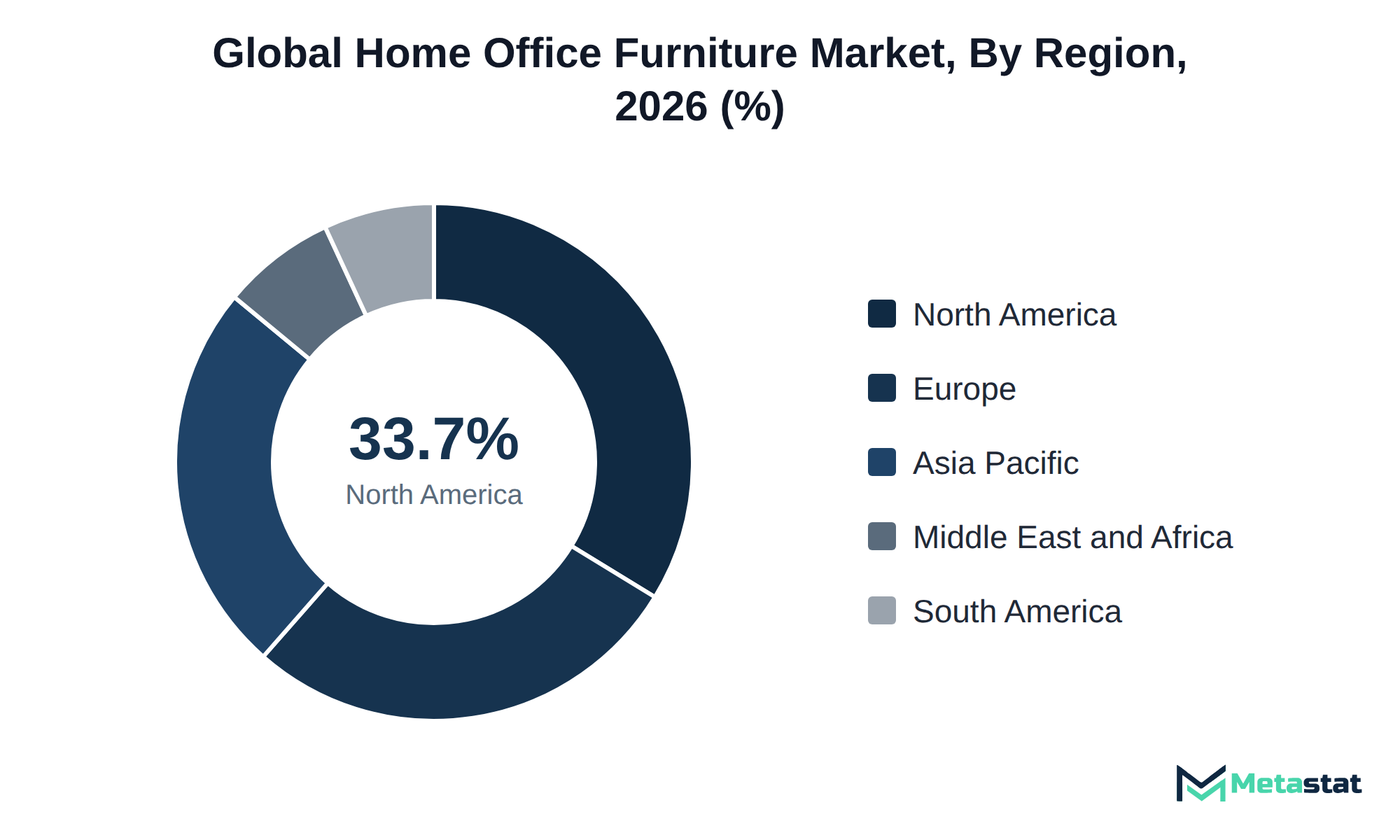
Growth in the market is driven by the increasing number of remote workers seeking to optimize their home office setups. Among the various segments, chairs represent the largest share of value, reflecting consumer preference for ergonomic solutions. North America holds 33.7% of the market in 2025, with the US leading in 2026. The combination of a robust economy and a significant shift towards remote work arrangements has resulted in higher demand for home office furniture across the region.
While companies and individuals adapt to hybrid work models, investment in home office furniture is expected to rise steadily. The demand for high-quality materials, including wood and metal, continues to shape purchasing decisions. Factors driving this growth include a focus on ergonomics and design, which enhance the overall user experience in home office environments.
In the Home Office Furniture market, buyers invest in products that enhance productivity and comfort within home office settings. Factors driving purchasing decisions include the increased prevalence of remote work and the necessity for functional yet aesthetically pleasing workspaces. The demand for ergonomic furniture options further influences consumer choices, with individuals seeking to improve their work environments for better health and efficiency.
Growth in the market is supported by several factors, with the most significant being the rise of remote work arrangements. Desks represent the segment with the highest value, reflecting a strong consumer preference for dedicated workspace solutions. This regional dominance highlights robust demand for home office setups, influenced by changing work habits and increased focus on work-life balance.
Continued investment in home office furniture remains critical, driven by businesses and individuals adapting to evolving work environments. The market is characterized by a diverse range of products, catering to varying consumer needs and preferences. While the trend towards home-based work persists, the demand for quality home office furniture is expected to remain strong, driving market growth over the forecast period.
The Home Office Furniture market experiences increasing demand for ergonomic chairs and sit-stand desks due to the rise of hybrid work arrangements. In 2023, the market for ergonomic chairs is projected to reach USD 11.1 billion by 2033, reflecting strong interest in promoting employee well-being and productivity in home office setups. The integration of ergonomic designs in furniture aligns with health-conscious trends. Workers seek comfort during prolonged periods of remote work.
Ergonomic chairs support better posture and reduce the risk of musculoskeletal issues, which are prevalent among individuals spending extended hours at their desks. The rise of sit-stand desks complements this trend by offering versatility and encouraging movement throughout the day. Such furniture solutions enhance physical health and boost overall employee satisfaction, which is crucial in competitive job markets. The focus on creating conducive home office environments encourages businesses and individuals to invest in ergonomic products, driving growth within the market.
Home office furniture designed for compact and multipurpose rooms meets the growing demand for flexibility in workspace design. The trend towards working from home has heightened the need for furniture solutions that optimize space without sacrificing functionality. In 2025, the home office furniture segment is expected to reach USD 23.4 billion, reflecting a significant market opportunity for innovative, space-efficient designs.
Pricing strategies play a crucial role in how buyers approach their purchases. Many consumers prefer online platforms where they compare prices and access a wide range of options. E-commerce is projected to account for a substantial portion of the market, with a target value of USD 19 billion by 2033. This shift emphasizes the importance of transparent pricing and competitive offers to attract buyers seeking affordable yet stylish home office furniture.
Contract models further influence purchasing behavior. Businesses often prefer bulk purchases through long-term contracts, securing better pricing and priority access to new collections. This approach encourages customer loyalty and establishes ongoing relationships between suppliers and buyers. Understanding these purchasing trends will be essential for companies aiming to maximize their presence in the home office furniture market.
The delivery and assembly processes in online Home Office Furniture sales significantly impact customer satisfaction and overall business outcomes. Customers increasingly prefer the convenience of purchasing furniture online; however, the delivery and assembly of these products often present challenges. This evolution highlights the importance of efficient logistics and assembly services catered to various buyer groups.
Remote workers, a distinct buyer group within the Home Office Furniture market, require solutions that enhance productivity and comfort while minimizing hassle during delivery. Many remote workers prioritize timely delivery and easy assembly, which influences their purchasing decisions. Fulfilling these needs leads to increased customer loyalty and repeat business. The segment of Home Office Furniture targeting these consumers is projected to reach USD 27.2 billion by 2033, emphasizing the role of streamlined logistics in attracting and retaining this demographic.
To cater to remote workers, companies implement clear assembly instructions and options for professional assembly services. By offering these solutions, businesses mitigate common pain points related to online purchases, enhancing customer experiences and reinforcing brand reputation in the competitive market.
Durability in materials directly influences the longevity and performance of home office furniture. Among various material types, wood stands out as a top choice, exemplifying strength and resilience. In the Home Office Furniture market, wood-based products are projected to reach a value of USD 14.4 billion by 2033, reflecting a compound annual growth rate of 5.2% from 2026. This growth indicates a strong preference for wooden furniture, driven by its ability to withstand wear and tear while maintaining aesthetic appeal.
Metal ranks as another durable option, with expected market value reaching USD 9.2 billion by 2033, exhibiting a compound annual growth rate of 6.9%. Metal furniture offers robustness and stability, catering to both commercial and home environments. Buyers prioritizing long-lasting solutions often lean toward these materials for their structural integrity and ease of maintenance.
The choice of material significantly affects not only the lifespan of the furniture but its overall cost-effectiveness. Investing in durable materials reduces the need for frequent replacements, translating to long-term savings for customers. Selecting wood or metal for furniture pieces in home office settings ensures enhanced durability, aligning with consumer demands for quality and sustainability within the market.
Shifts in work environments drive higher spending on home office furniture. Individuals transitioning to remote work require improved comfort and functionality in their home office spaces. Demand for ergonomic products, including chairs and desks, enhances productivity. With the rise of hybrid work models, professionals seek adjustable and multifunctional furniture to accommodate varying work styles. Growth stems from an increased focus on creating conducive work environments at home, resulting in greater investment in specialized furniture solutions.
Businesses expanding their remote workforce contribute to heightened demand. Organizations prioritize employee wellness and productivity, prompting investments in quality home office setups. Enhanced functionality becomes a key consideration, leading to increased competition among suppliers to meet evolving consumer preferences.
Growing awareness of environmental issues influences the selection of materials in manufacturing. Suppliers increasingly adopt sustainable practices, responding to consumer preferences for eco-friendly products in the Home Office Furniture market. This shift leads to heightened demand for furniture crafted from renewable and recyclable materials, including bamboo and reclaimed wood.
The focus on sustainability is significant among manufacturers aiming to enhance their competitive edge. By incorporating eco-friendly materials, companies attract environmentally conscious consumers, thereby expanding their market share. This trend aligns with a broader global movement toward sustainability, prompting businesses to innovate in product design and production methods.
Investment in sustainable technologies and materials results in long-term cost efficiencies and reduced waste. These advancements support the industry's growth trajectory, with the market projected to reach USD 37.9 billion by 2033. Continued emphasis on sustainability is expected to drive further adoption of innovative materials, influencing purchasing decisions across various buyer segments.
Increasing material and production costs present a significant restraint for buyers in the Home Office Furniture market. The impact of higher prices leads to slower uptake of new purchases, particularly among small businesses and individual consumers who prioritize budget constraints. This dynamic results in a hesitance to replace outdated furniture or invest in new styles, slowing overall market growth. Buyers often turn to older models or less expensive alternatives, which hampers demand for innovative designs and advanced functionality. Price sensitivity among consumers delays decisions, affecting sales volumes and overall market performance. Consequently, the market faces challenges in attracting new buyers, necessitating strategic pricing or promotional efforts to stimulate interest and drive sales.
Suppliers in the Home Office Furniture market face significant challenges related to rising input costs. Costs for raw materials, including wood, metal, and plastic, have experienced upward trends, driven by increased demand and supply chain disturbances. These rising costs create margin pressures for suppliers, affecting profitability and pricing strategies. In response, many manufacturers explore alternative sourcing options and negotiate long-term contracts to secure more favorable pricing. Suppliers invest in technology and process improvements to enhance operational efficiency and reduce waste, thereby mitigating cost impacts. This proactive approach enables suppliers to maintain competitive pricing while adapting to fluctuating material costs, which is essential for sustaining growth in the evolving market.
The e-commerce distribution channel presents a significant growth opportunity within the market, projected to reach USD 19 billion by 2033. The increasing preference for online shopping aligns with consumer demand for convenience and accessibility, driving investment in digital platforms. This shift allows suppliers to enhance their reach and cater to a broader audience without the overhead associated with physical retail locations. The expansion of e-commerce enables businesses to respond more effectively to changing consumer preferences while maintaining competitive pricing. The streamlined purchasing process has the potential to boost overall sales, contributing to market growth. This growth strategy positions e-commerce as a compelling avenue for capturing demand from buyers seeking home office furniture tailored to specific needs.
The Global Home Office Furniture market is segmented based on Product Type, Material Type, Distribution Channel, and End Use.
Desks segment is valued at USD 7.1 billion in 2026 and is projected to reach USD 10.7 billion by 2033, at a CAGR of 6% during the forecast period. This segment serves individuals in home office environments, providing essential workspace for productivity. Demand for desks experiences a boost due to the increase in remote work, where employees require dedicated areas for effective job performance. Compared to other segments, including chairs, which grow at a CAGR of 5.6%, desks show a stronger growth trajectory. The trend toward ergonomic designs and multifunctional furniture influences choices in this segment, with buyers seeking products that enhance comfort and efficiency. By 2033, this segment is expected to reflect significant advancements in design and materials, catering to evolving workspace needs.
Chairs segment is estimated to reach USD 11.1 billion by 2033, at a CAGR of 5.6% during the forecast period. This segment provides comfort and support during prolonged work hours. Primarily used by remote workers and home-based professionals, chairs are essential for maintaining productivity and well-being in home office settings. The segment experiences growth driven by rising awareness of ergonomic designs aimed at enhancing user comfort. Unlike desks, which have a higher CAGR of 6%, chairs present slower growth due to market saturation and established preferences. Buyers prioritize aesthetics and functionality, reflecting a diverse range of styles and materials, ensuring chairs remain a staple in the home office furniture market.
Storage Units segment is expected to reach USD 5.4 billion by 2033. This segment caters to individuals and businesses requiring effective organization solutions within home office environments. Increasing remote work trends drive higher demand for storage solutions that enhance workspace efficiency and declutter personal areas. Unlike other product types, Storage Units exhibit a steady growth trajectory, supported by the overall shift towards dedicated home office spaces. With a CAGR of 6.2%, the segment maintains a competitive edge against desks and chairs, which have varying growth rates. Buyers emphasize the importance of aesthetic appeal and functionality, influencing their purchasing decisions. This segment's unique focus on organization differentiates it from the broader market, ensuring it retains significant relevance in evolving workspaces.
Workstations segment is projected to grow at a CAGR of 7.6% during the forecast period. This segment caters to professionals seeking a dedicated area for productivity within home environments. Demand for workstations primarily stems from the rise in remote work and a focus on creating efficient home office setups. Unlike desks and chairs, which serve broader functions, workstations emphasize ergonomic design, integrating technology and storage solutions, appealing to businesses and individuals alike. The anticipated growth reflects a shift in consumer preferences toward comprehensive workstation solutions, enhancing both aesthetics and functionality in home office furniture. This growth trajectory highlights the increasing necessity for tailored workspace solutions that support a variety of work styles, differentiating workstations from other product types in the market.
Accessories include various supplementary items designed to enhance the functionality and aesthetics of home office environments. These products consist of items like desk organizers, monitor stands, lighting solutions, and ergonomic accessories. Home office setups incorporate accessories to optimize workspace organization and efficiency. The demand for these products has risen due to the trend toward personalized workspaces, where individuals seek to create comfortable and inspiring environments. This sub-segment faces less intense competition compared to larger categories like desks and chairs, which feature more aggressive pricing strategies. Differentiation in this segment derives from design innovation and compatibility with existing furniture, appealing to consumers looking for cohesive setups. Accessories follow a unique growth trajectory, driven by consumer focus on enhancing productivity and personalization in home office settings, differing from the other segments due to their role in completing and customizing workspaces.
This material type is frequently used for crafting desks, chairs, and storage units, appealing to consumers who prioritize aesthetics and durability. Demand is driven by trends favoring sustainable materials and the increasing adoption of home office setups. Compared to metal and plastic alternatives, wood products typically command higher prices due to the perceived value associated with natural materials and craftsmanship. The segment's growth trajectory reflects a balanced approach to functionality and design, distinguishing it from faster-growing segments including products made from plastic, which are often favored for their affordability and versatility.
Metal segment is estimated to reach USD 9.2 billion by 2033, at a CAGR of 6.9% during the forecast period. This segment finds application in various office furnishings, appealing to businesses and consumers seeking durable and stylish options. Increasing demand for metal products arises from their strength, longevity, and modern aesthetic, particularly in home office settings. Metal furniture often commands a higher price point compared to alternatives like plastic, attracting a specific buyer demographic focused on quality and design. With a CAGR of 6.9%, this segment experiences faster growth than the Wood segment, which has a CAGR of 5.2%. The rising trend of minimalist and industrial design further boosts interest in metal products, supporting expansion in the home office furniture market.
Plastic is expected to reach USD 7.2 billion by 2033. This material is increasingly favored for its lightweight and versatile properties, appealing to a broad range of buyers, including home office users seeking flexible and affordable solutions. The demand for plastic furniture is driven by its cost-effectiveness and ease of maintenance, making it a preferred choice for consumers embracing remote work. Its lower price point compared to wood and metal contributes to its competitive edge, especially among budget-conscious buyers. While the plastic segment exhibits steady growth, it faces challenges from environmental concerns regarding plastic waste, leading to a gradual shift toward more sustainable materials in the market. This segment's trajectory highlights evolving consumer preferences, balancing functionality with environmental responsibility.
Glass materials in furniture production provide a unique aesthetic with transparency and versatility. The segment is projected to grow at a CAGR of 3.4% during the forecast period. Used in various office settings, glass is a popular choice for tabletops and decorative elements, appealing to both home office users and commercial spaces. This segment attracts buyers seeking modern design and durability while contributing to a light and airy atmosphere. Factors influencing this segment include rising demand for contemporary aesthetics and integration of glass with other materials. Compared to wood or metal, glass offers a distinct visual appeal, yet it typically carries a higher price point, which could limit adoption among budget-conscious consumers. The market for home office furniture is expected to continue evolving, reflecting these preferences and trends.
Fabric is a versatile material choice in home office furniture, appealing to users who prioritize comfort and aesthetic appeal. This segment finds applications in various products, particularly chairs and accessories, where texture and design contribute significantly to user experience. The demand for fabric is driven by consumer preferences for ergonomic designs and stylish appearances, which enhance the functionality of home office environments. In contrast to other materials, fabric often offers a lower price point, making it an attractive option for budget-conscious buyers. However, durability concerns limit its use compared to metal or wood segments, which present higher longevity. Overall, fabric contributes uniquely to the market by addressing aesthetic and ergonomic requirements while catering to a diverse range of consumer preferences.
Supermarkets & Hypermarkets segment is valued at USD 4.4 billion in 2026 and is projected to reach USD 4.8 billion by 2033, at a CAGR of 1.2% during the forecast period. This segment primarily caters to individual consumers seeking home office furniture for personal use, including desks, chairs, and storage units. A notable demand driver arises from the convenience of accessibility and variety that these retail formats provide. Compared to other distribution channels, this segment experiences slower growth, attributed to increasing competition from the expanding e-commerce channel, which is projected to reach USD 19 billion by 2033. While retailers in this segment maintain a focus on affordability, the overall pricing strategy tends to be more competitive than that of specialty stores, offering a broader range of products at accessible price points. Evolving shopping preferences increasingly favor online platforms, impacting foot traffic in physical stores.
Specialty Stores segment is estimated to reach USD 11.7 billion by 2033, at a CAGR of 5.1% during the forecast period. This segment serves consumers seeking personalized shopping experiences and expert advice when selecting home office furniture. Customers include home-based professionals and remote workers prioritizing style and comfort. A key force driving this segment involves increasing consumer preference for specialized retail environments that offer curated selections of high-quality products. Compared to other distribution channels, Specialty Stores differentiate themselves through tailored customer interactions and unique merchandise. The growth rate for this segment is slightly below the projected growth of the e-commerce channel, which is expected to reach USD 19 billion by 2033. Specialty Stores provide a hands-on shopping experience that online platforms struggle to replicate, creating a niche appeal in the competitive landscape of the Home Office Furniture market.
This segment facilitates the purchase of home office furniture through online platforms, attracting a diverse range of consumers, including remote workers and small business owners. The convenience of online shopping drives its growth, with consumers preferring to compare products and prices from the comfort of their homes. E-commerce faces competition from traditional retail channels, which often offer immediate product availability and in-person consultation. However, the e-commerce segment demonstrates a faster growth trajectory than other distribution channels, evidenced by a notable increase in online sales and a shift in consumer purchasing behavior. The market for home office furniture adapts to changing consumer preferences, enhancing the overall demand for online purchasing options.
The Others segment is projected to grow at a CAGR of 5% during the forecast period. This segment encompasses various distribution methods not classified under supermarkets, hypermarkets, specialty stores, or e-commerce. Consumers use this channel for unique purchases, often seeking specialized items or designs not widely available. The shift toward online platforms and diverse purchasing preferences significantly influences this segment's growth. Compared to established channels, the Others segment offers distinct products appealing to niche markets, supporting its unique identity. This sub-segment stands out with its tailored offerings, attracting buyers who prioritize customization and specific design aesthetics, which differ from broader retail approaches observed in other distribution channels. By 2033, this segment is expected to make notable contributions to the overall market, reflecting evolving consumer preferences.
Commercial Office Furniture segment is valued at USD 7.8 billion in 2026 and is projected to reach USD 10.7 billion by 2033, at a CAGR of 4.6% during the forecast period. This sub-segment serves organizations requiring functional and aesthetically pleasing furniture solutions for office environments. Key drivers include the increasing emphasis on employee productivity and well-being, prompting businesses to invest in ergonomic and versatile office furniture. This segment experiences slower growth compared to others, including Home Office Furniture, which is projected to reach USD 27.2 billion by 2033 at a CAGR of 6.8%. While the demand for Commercial Office Furniture focuses on the corporate sector, other segments target individual consumers. This distinction highlights differing buyer preferences and usage patterns within the market.
This segment caters primarily to individuals working remotely or setting up home office spaces, reflecting a shift towards flexible work arrangements. Increased remote working trends have driven demand for ergonomic and functional home office solutions, influencing purchasing decisions. Compared to other segments, Home Office Furniture exhibits faster growth; for instance, the Commercial Office Furniture segment is projected to grow at a CAGR of 4.6%. The rising focus on comfort and productivity at home fuels this segment's expansion, highlighting the demand for innovative designs that prioritize user experience. The market benefits from a diverse range of products, including desks and chairs specifically tailored for home environments, distinguishing it from traditional office furniture offerings.
Based on geography, the Global Home Office Furniture market is divided into North America, Europe, Asia-Pacific, South America, Middle East, and Africa.
In North America, the demand for the Home Office Furniture market is driven by a rise in remote work trends and the increasing importance of creating productive home environments. The United States, Canada, and Mexico exhibit strong purchasing power, facilitating robust investment in home office setups. Infrastructure developments, including improved internet connectivity, support this shift, allowing more individuals to work effectively from home. The market is projected to reach USD 11.9 billion by the end of 2033, reflecting a growing emphasis on ergonomic furniture solutions. The market's share in 2025 stands at 33.7%, highlighting North America's significant role within the global landscape. This region's focus on innovative design and sustainable materials contributes to its competitive position, attracting a diverse range of consumers seeking both functionality and aesthetics in their home office environments.
Demand for home office furniture in Europe reflects increasing shifts in work patterns, influenced primarily by the rise of remote work. Countries including Germany, France, and the UK lead this transformation, driven by a growing preference for flexible workplace solutions. The market faces unique challenges including fluctuating costs of raw materials and tariffs on imported goods, impacting pricing strategies. Regulatory frameworks in specific countries, including energy efficiency standards, push manufacturers to innovate and reduce environmental footprints. By 2025, the regional share of the market stands at 27.7%, with anticipated revenues expected to grow significantly through 2033. This growth highlights the importance of adapting product offerings to meet evolving consumer demands and preferences in the home office furniture market.
In the Asia Pacific region, the home office furniture market reflects significant growth driven by increasing remote work trends and the rise of the gig economy. Countries including China, Japan, and India demonstrate robust demand from both individual consumers and small businesses investing in home office setups. The region benefits from a growing middle class with higher disposable incomes, contributing to increased spending on quality furniture. Rapid urbanization in Southeast Asia enhances the need for compact, efficient furniture solutions. In 2025, the market will hold a share of 24.5% of the global home office furniture market. This momentum positions Asia Pacific as a crucial player in shaping future market dynamics.
In South America, the home office furniture market is influenced by a growing trend of remote work and flexible working arrangements. Countries like Brazil and Argentina exhibit increased demand due to a shift in consumer preferences toward home office setups. The market share in this region stands at 6.9% for the year 2025. The expansion of e-commerce in these countries facilitates easier access to a variety of furniture options, enhancing consumer choice. Urbanization and an increasing middle-class population contribute to rising disposable incomes, further driving demand for quality home office furniture. The market's growth trajectory reflects changing work habits and the evolving expectations of consumers in their home environments.
Saudi Arabia, UAE, and South Africa represent key markets within the region, with increasing demand for the Home Office Furniture market. Factors driving this demand include a rise in remote work and changing workplace dynamics. The growing trend toward flexible working arrangements influences consumers' preferences for ergonomic and stylish office solutions. Infrastructure improvements in the region enhance accessibility to both retail and online distribution channels, facilitating a better purchasing experience. The market share for the Middle East and Africa reached 7.1% in 2025, indicating developing interest in home office solutions driven by evolving work patterns and lifestyle changes. This shift reflects broader acceptance of working from home, prompting consumers to invest in quality home office furniture.
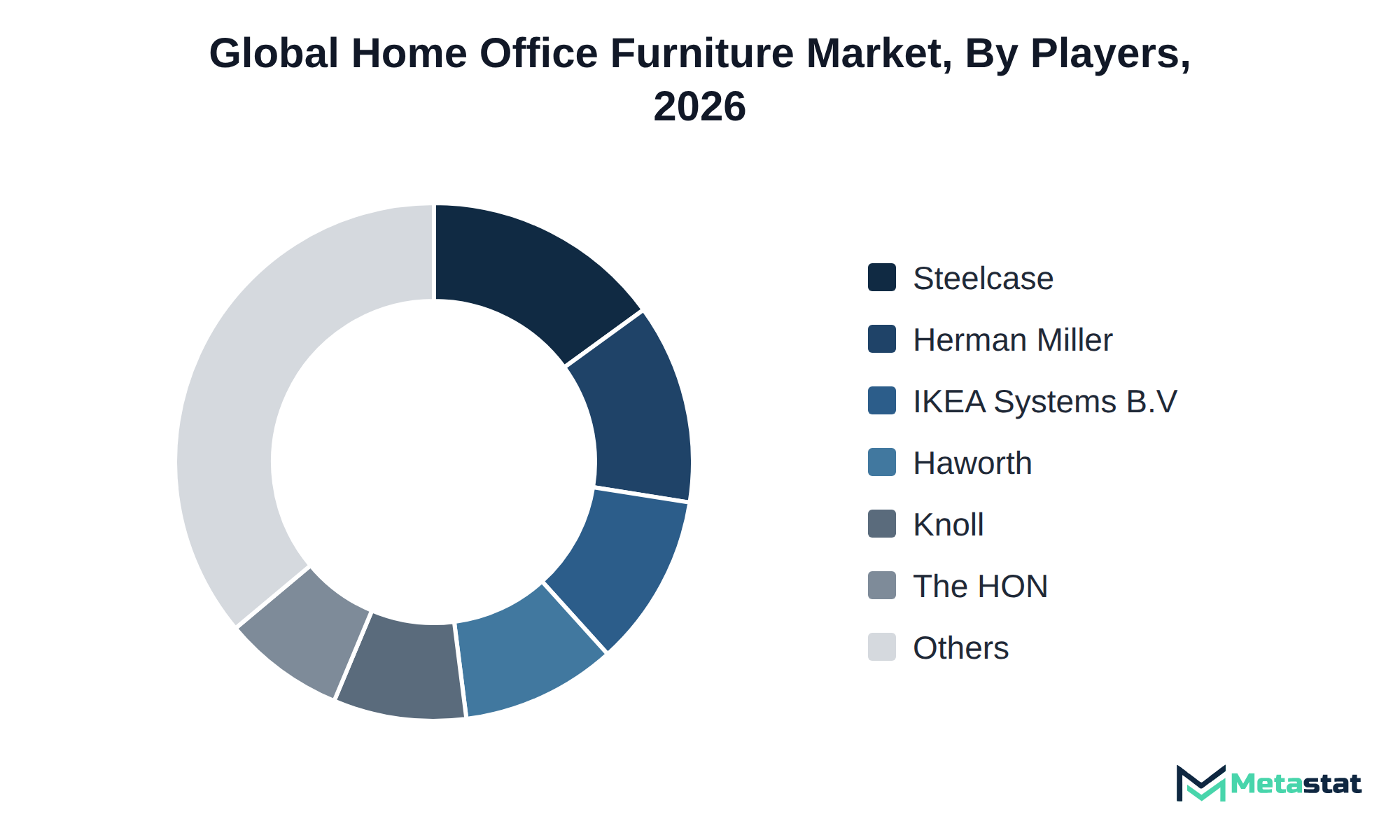
Companies in the Home Office Furniture market compete across various dimensions, including product type, material characteristics, and distribution channels. Key players like Steelcase Inc. and Herman Miller focus on high-quality, ergonomic designs appealing to health-conscious consumers, while IKEA Systems B.V. targets budget-conscious buyers with affordable, functional solutions. Customization options and sustainable materials influence buyer decisions, driving companies to enhance their offerings in these areas.
Manufacturers including Knoll, Inc. and Haworth, Inc. prioritize innovative designs and customization, appealing to businesses looking to create inspiring work environments. E-commerce platforms, like Vari and FlexiSpot, emphasize convenience and competitive pricing, catering to a growing segment of online shoppers. The diverse strategies employed by these companies reflect the necessity for differentiation within the market.
Achieving this growth requires several key developments. First, the demand for home office furniture, particularly desks and chairs, is expected to increase significantly due to the continuing trend of remote and flexible work arrangements. The segment of home office furniture is projected to reach USD 27.2 billion by 2033, indicating strong adoption among professionals seeking enhanced workspaces at home. Second, the expansion of e-commerce distribution channels will play a critical role in making products more accessible, with this channel anticipated to reach USD 19 billion by 2033. This accessibility will drive purchases from consumers who prefer online shopping. However, potential supply chain disruptions present a significant risk that could hinder this growth. Factors including rising material costs and delays in manufacturing could impact the ability to meet the increasing demand across regions. North America, which holds the largest market share at 33.7%, experiences challenges if these disruptions occur, affecting overall market dynamics. The successful navigation of these developments and risks will determine the trajectory of the market.
By Product Type: Desks, Chairs, Storage Units, Workstations, Accessories
By Material Type: Wood, Metal, Plastic, Glass, Fabric
By Distribution Channel: Supermarkets & Hypermarkets, Specialty Stores, E-commerce, Others
The report strategically identifies and profiles the key market players and analyses their core competencies in each sub-segment of the Home Office Furniture market.
Report Attributes | Details |
Study Period | 2021-2033 |
Base Year | 2025 |
Estimated Year | 2026 |
Forecast Period | 2026-2033 |
Historical Period | 2021-2025 |
Growth Rate | CAGR 6.2% from 2026 to 2033 |
Revenue Unit | USD billion |
Segmentation | By Product Type, Material Type, Distribution Channel, End Use, and Region |
By Region | North America (By Product Type, Material Type, Distribution Channel, End Use, and Country)
|
Europe (By Product Type, Material Type, Distribution Channel, End Use, and Country)
| |
Asia Pacific (By Product Type, Material Type, Distribution Channel, End Use, and Country)
| |
South America (By Product Type, Material Type, Distribution Channel, End Use, and Country)
| |
Middle East and Africa (By Product Type, Material Type, Distribution Channel, End Use, and Country)
|
Find answers to common questions about this report
The Home Office Furniture market size was valued at USD 23.4 billion in 2025.
The market is projected to grow at a CAGR of 6.2% during the forecast period from 2026 to 2033.
The North America Home Office Furniture market size is estimated to reach USD 11.9 billion by 2033.
The leading segment in the Home Office Furniture market is Chairs, with a projected value of USD 11.1 billion by 2033. This segment surpasses others in terms of revenue potential.
Shifts in work environments drive increased spending on home office furniture, as individuals transitioning to remote work seek improved comfort and functionality. The rise of hybrid work models prompts demand for adjustable and multifunctional furniture that accommodates varying work styles.
North America holds the dominant share of the Home Office Furniture market, with a value of USD 11.9 billion projected for 2033, representing 33.7 percent of the total market. This region surpasses others in market share, including Europe and Asia Pacific.
Increasing material and production costs restrain growth in the Home Office Furniture market. Higher prices lead to slower uptake of new purchases, particularly among budget-conscious consumers. Price sensitivity delays decisions, affecting sales volumes and overall market performance.
Several factors favor adoption in the Home Office Furniture industry. The shift toward remote and hybrid work models drives demand for ergonomic and multifunctional furniture, enhancing productivity. Increased consumer preference for e-commerce facilitates access to a wider range of products, further supporting market growth.
The Home Office Furniture market is estimated to reach a valuation of USD 37.9 billion by 2033.
Key players operating in the Home Office Furniture market include Steelcase Inc., Herman Miller, Knoll, Inc., Haworth, Inc., The HON Company, and IKEA Systems B.V.
The analysts below cover Consumer Goods research at Metastat Insights.
LEAD ANALYST
Utkarsh Khirodkar is a Lead Market Research Analyst at MetaStat Insight, specializing in market intelligence, technology sector assessments, and competitive strategy.
Evaluating sovereign cloud deployments for core banking platforms demands a clear view of data residency regulations and migration exit strategies. MetaStat Insight delivered an exhaustive review of regional latency tolerances, mainframe decommission milestones, and third-party vendor concentration risk. The regulatory compliance mapping across European and Asian financial jurisdictions gave our team a dependable baseline for multi-cloud infrastructure discussions.
Replacing petrochemical surfactants with bio-based alternatives requires realistic timelines on industrial precision fermentation scaling. The market research broke down commercialization timelines, feedstock sugar price sensitivities, and regional cosmetic ingredient regulatory approvals in Europe and East Asia. That supplier readiness mapping gave our formulations team reliable context when comparing renewable chemical sourcing roadmaps.
Tracking ceramic matrix composite adoption in high-bypass aero engines requires strict attention to material qualification cycles and FAA airworthiness testing milestones. The MetaStat Insight team provided a detailed timeline of silicon carbide fiber manufacturing capacity and commercial foundry lead times. Having clear visibility into upstream thermal barrier coating supply helped us stress-test our long-term component procurement strategy.
Explore related market intelligence reports worth reading alongside this one.