
LEAD ANALYST
Utkarsh Khirodkar is a Lead Market Research Analyst at MetaStat Insight, specializing in market intelligence, technology sector assessments, and competitive strategy.

Global Ergonomic Office Furniture Market Size, Share, By Product Type (Ergonomic Office Chairs, Height-Adjustable / Sit-Stand Desks, Integrated Ergonomic Computer Workstations, Modular Workstation & Benching Systems, Ergonomic Office Tables, Active Seating & Sit-Stand Stools, Desk Converters & Worksurface Risers, Others (Ergonomic Footrests, Keyboard Supports, Specialized Workstation Furniture)), By Application (Corporate Offices, Home Offices, Coworking & Flexible Workspaces, Control Rooms & Operations Centers, Healthcare & Medical Workstations, Education & Training Workspaces, Government & Defense Workspaces, Creative & Media Studios, Others (Trading Floors, Esports & Professional Gaming Workspaces)), By Distribution Channel (Direct B2B / Contract Sales, Office Furniture Dealer Networks, Specialty Ergonomic Furniture Retail, Brand-Owned E-commerce / Direct-to-Consumer, Third-Party E-commerce Marketplaces, Mass-Market Furniture Retail), Industry Analysis, Growth, Trends, and Forecast, 2026-2033
Report ID
MSI-5255
Published
September, 2026
Pages
288 Pages
Format
Historical
Base year
Forecast
Forecast period
Report Details
Market Valuation: Valued at $15.6 Billion in 2025, projected to reach $26.3 Billion by 2033 at a 6.7% CAGR.
Dominant Segment: The Ergonomic Office Chairs segment leads the market, projected to grow from USD 5.6 billion in 2026 to USD 8.1 billion by 2033, driven by a focus on employee well-being and productivity.
Geographic Lead: The Asia Pacific region is experiencing rapid growth in demand for ergonomic solutions, influenced by increasing workplace comfort expectations and modernization efforts.
What's Inside: This report provides a comprehensive analysis of the global Ergonomic Office Furniture market, including detailed competitive coverage, market segmentation, and a forecast window from 2026 to 2033.
Emerging Regional Demands: Emerging markets in South America and Asia Pacific show significant interest in ergonomic office solutions, driven by evolving workplace dynamics and infrastructure modernization.
Increased Investment in Workplace Modern: Organizations are investing in ergonomic designs to modernize workspaces, enhancing employee satisfaction and productivity, particularly in corporate offices.
Choose Your License
Global Ergonomic Office Furniture Market
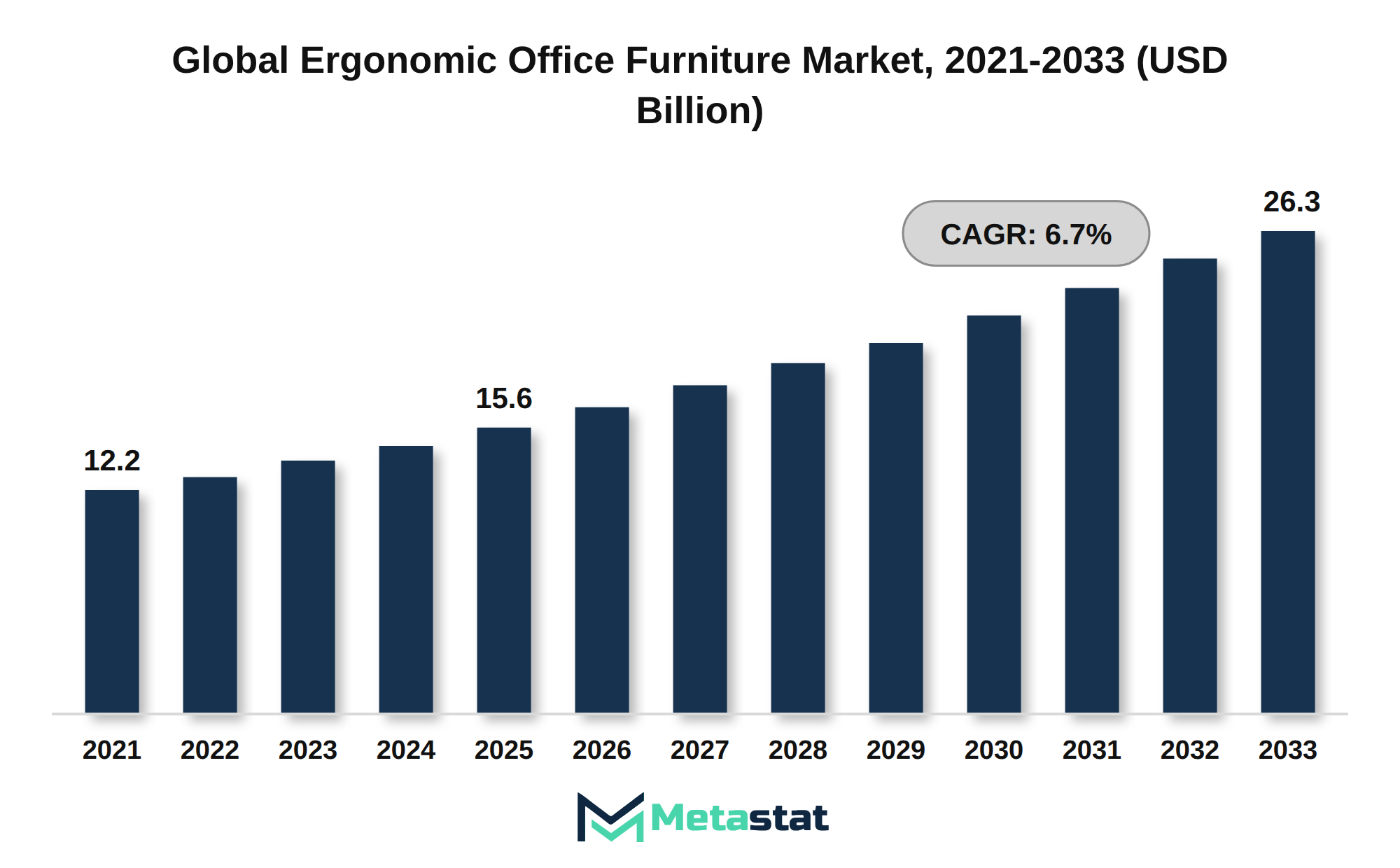
The global Ergonomic Office Furniture market was valued at USD 15.6 billion in 2025 and is projected to reach USD 26.3 billion by 2033, growing at a CAGR of 6.7% over the forecast period.
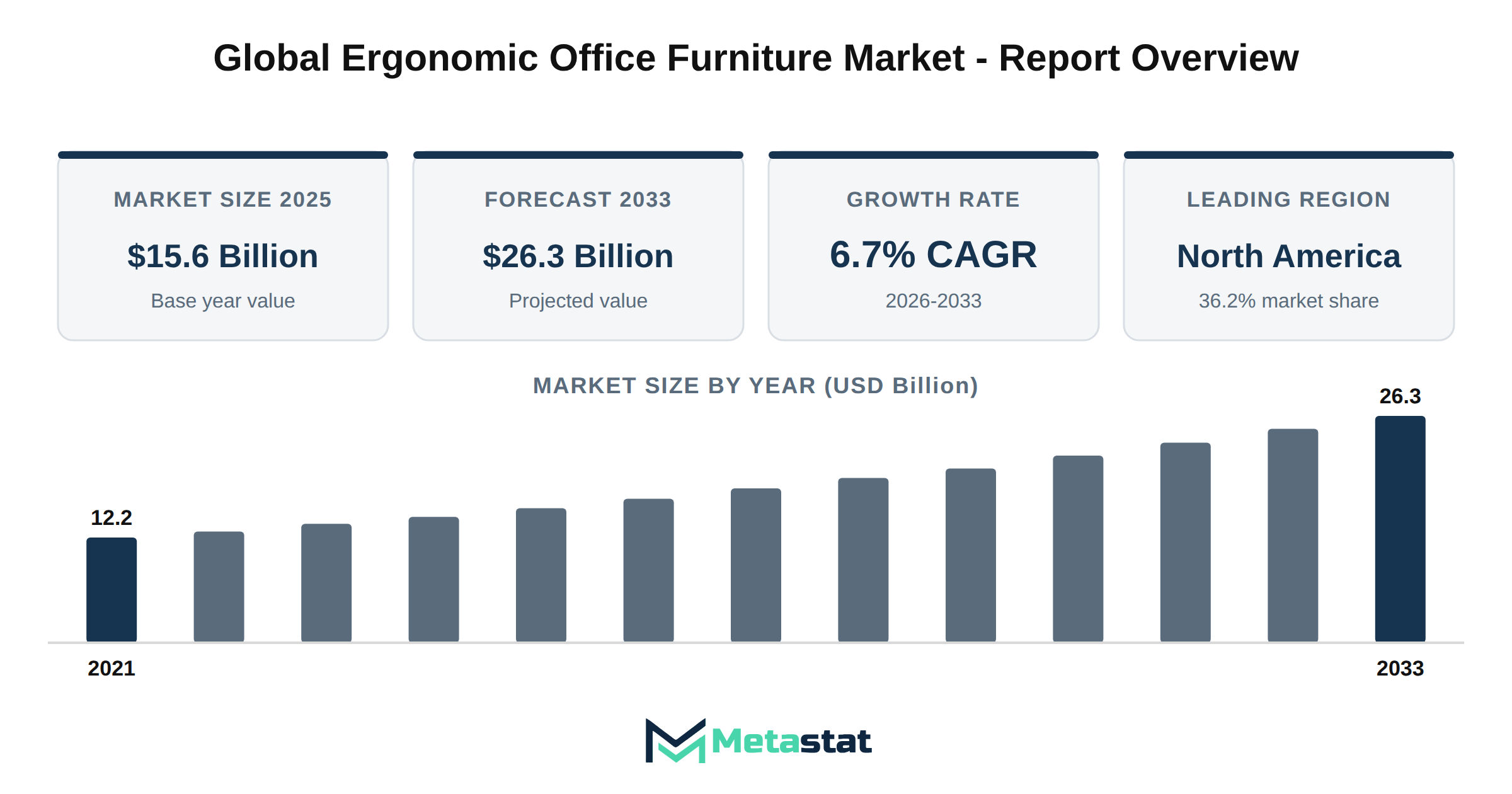
The global Ergonomic Office Furniture market reached a value of USD 15.6 billion in 2025, with a projected growth to USD 26.3 billion by 2033, reflecting a compound annual growth rate (CAGR) of 6.7%. Historical data indicates steady growth, with the market valued at USD 12.2 billion in 2021 and increasing to USD 14.6 billion in 2024.
Hybrid work environments have driven significant demand for ergonomic solutions, prompting companies to prioritize office comfort and productivity. The shift towards flexible workspaces necessitates innovative ergonomic office designs that cater to diverse employee preferences. The increasing adoption of remote working arrangements influences the market, encouraging investment in ergonomic office chairs, height-adjustable desks, and integrated workstations.
Product innovation in premium workstation offerings emphasizes the integration of advanced features. Height-adjustable and sit-stand desks are expected to experience rapid growth, projected to reach USD 6.6 billion by 2033, driven by a focus on employee health and wellness. Smart and motorized adjustment technologies further enhance the functionality of ergonomic furniture, appealing to a tech-savvy clientele that values convenience and adaptability in their workspace.
Shifts in customer ergonomic preferences highlight the need for tailored solutions that enhance workplace comfort. The market demonstrates a robust demand for products that support various work styles, with a notable emphasis on modular furniture systems. Ergonomic office tables and active seating solutions, including sit-stand stools, are increasingly sought after to encourage collaboration and movement.
Competitive benchmarking among key players shows a focus on product differentiation through unique features and design innovations. Major manufacturers invest in research and development to offer versatile and aesthetically pleasing ergonomic office furniture. This competitive landscape intensifies because companies strive to capture market share by addressing evolving consumer needs and preferences.
The Ergonomic Office Furniture market experiences significant trends driven by the evolving nature of work environments. Hybrid work models have prompted increased adoption of ergonomic solutions, owing to organizations prioritizing employee well-being and comfort. This shift reflects a growing recognition of the link between ergonomics and productivity, leading to higher demand for products that support a flexible working environment.
Innovation in premium workstation products continues to reshape the market. Manufacturers focus on enhancing the functionality and aesthetics of ergonomic furniture, targeting consumers seeking both style and practicality. This trend enables the introduction of advanced materials and customizable options, appealing to a broader range of customers.
Smart and motorized adjustment innovations gain traction, addressing the needs of diverse work styles. Adjustable desks and chairs equipped with technology enhance user experience by providing smooth transitions between sitting and standing positions. Such features contribute to a healthier work environment and align with contemporary expectations for office furniture.
Shifts in customer ergonomic preferences highlight the importance of tailored solutions. Increased awareness of health issues related to prolonged sitting has led consumers to seek products that promote better posture and comfort. This demand influences design and functionality, compelling manufacturers to prioritize ergonomic features in their offerings.
Workplace comfort directly correlates with productivity drivers in various sectors. Organizations investing in ergonomic solutions notice improvements in employee satisfaction and performance. The market reflects this trend, with companies recognizing the long-term benefits of prioritizing ergonomic office furniture to enhance overall workplace dynamics.
Competitive product and feature benchmarking remains crucial because companies strive to differentiate their offerings. Key players analyze trends and consumer feedback to refine their product lines, focusing on ergonomics, design, and technology integration. This ongoing evaluation ensures that the market remains dynamic, driving innovation and growth opportunities for established and emerging brands.
The Ergonomic Office Furniture market experiences growth driven by a heightened focus on employee well-being and comfort in the workplace. Companies increasingly recognize that investing in ergonomic solutions enhances employee productivity, reduces absenteeism, and creates a healthier working environment. This shift aligns with broader trends emphasizing workplace wellness, leading to greater adoption of ergonomic office chairs, height-adjustable desks, and integrated ergonomic workstations. The impact of these trends is particularly evident in corporate offices and coworking environments, where aesthetics and functionality intertwine to create conducive workspaces.
The necessity for improved employee satisfaction and retention further fuels demand within the market. Organizations prioritize creating an appealing work environment that attracts talent, prompting investments in ergonomic furniture. Height-adjustable desks allow employees to customize their workspace to suit individual preferences, enhancing comfort and promoting productivity. This evolving workplace culture contributes to a significant increase in the consumption of ergonomic office furniture across various sectors.
The projected compound annual growth rate of 6.7% reflects the market's potential driven by these factors. Ongoing investments in ergonomic solutions prioritize employee well-being, resulting in a more engaged workforce and improved overall organizational performance.
The Ergonomic Office Furniture market experiences growth driven by increased investment in workplace modernization. Organizations recognize the need for improved office environments, leading to higher demand for ergonomic designs and innovative solutions. Rising GDP and favorable capital investment environments contribute to this momentum, enabling businesses to allocate resources toward modernizing their office furniture. This shift aligns with trends toward enhancing employee productivity and satisfaction, resulting in the adoption of ergonomic office furniture solutions that support health and well-being.
Corporate offices, in particular, show a significant commitment to upgrading their workspaces. Prioritizing employee well-being and operational efficiency, investments in ergonomic office chairs and height-adjustable desks increase. Such furniture enhances comfort and boosts productivity by reducing the risk of workplace injuries. The growing emphasis on creating adaptable workspaces ensures that organizations capture the benefits of improved ergonomics while fostering a positive work atmosphere.
Investment in workplace modernization influences the competitive landscape, prompting suppliers to innovate continually. Companies in the Ergonomic Office Furniture market respond by expanding product offerings that incorporate advanced technologies and sustainable materials. This proactive approach positions firms favorably within an expanding market, facilitating access to diverse customer segments seeking furniture that aligns with contemporary workplace needs.
Regulatory challenges significantly impact the Ergonomic Office Furniture market by imposing compliance hurdles that increase operational complexities. Companies face stringent requirements that demand extensive documentation and certification processes, affecting timelines and overall product launch strategies. These hurdles raise costs for manufacturers, particularly small and medium enterprises that lack the resources to navigate intricate regulatory landscapes effectively, limiting their competitiveness.
Macroeconomic headwinds, including inflationary pressures and capital stagnation, further constrain market growth. Rising material costs strain profit margins, pushing companies to pass expenses onto consumers, which reduces demand. Geopolitical instability disrupts supply chains, leading to delays in the production and distribution of ergonomic furniture. Such interruptions create uncertainty and compel businesses to reevaluate their supply chain strategies, impeding expansion efforts and affecting overall market stability.
Technological obsolescence remains a concern, with rapid advancements in design and functionality rendering existing products less appealing. Companies continuously innovate to meet evolving consumer expectations, incurring high research and development costs. Rising workforce overhead and talent gaps exacerbate challenges, limiting the capacity for companies to hire skilled labor necessary for producing advanced ergonomic solutions, ultimately affecting product availability.
Increased market fragmentation introduces competition from alternative offerings, complicating market dynamics. New entrants often leverage lower-priced options, attracting cost-sensitive consumers and eroding market share for established brands. This environment necessitates strategic adaptations, diverting focus from innovation to competitive pricing strategies, which stifles growth in the Ergonomic Office Furniture market.
The Ergonomic Office Furniture market encounters significant challenges stemming from geopolitical fragmentation. Political unrest and trade disputes disrupt supply chains, leading to increased costs and delays in production. Such instability affects manufacturers who rely on a global network for sourcing materials and components, creating vulnerabilities to price fluctuations and availability. These pressures necessitate careful management of resources and logistics, which adds complexity to operations within the market.
Trade deficits and tariff friction exacerbate these challenges, resulting in higher import costs for essential materials. Manufacturers face increased pricing pressures, which reduce profit margins and hinder investments in innovation. The combination of rising input costs and market saturation compels businesses to optimize their product offerings, often at the expense of quality or differentiation. Consequently, long-term growth strategies shift to prioritize cost-cutting measures over sustainable practices, impacting overall industry development.
The market deals with technological disruptions that impose demands for rapid adaptation and integration of new solutions. Companies striving to innovate reconcile existing product lines with emerging technologies, creating R&D complexities. This dynamic environment creates barriers for firms aiming to maintain competitive advantages while navigating evolving consumer preferences.
Increased focus on sustainability and environmental footprints pressures firms to reduce their carbon impact. Compliance with tightening global regulatory standards adds overhead while requiring significant investment in eco-friendly practices. Balancing these demands with operational efficiency poses a formidable challenge for players in the Ergonomic Office Furniture market.
Ultimately, geopolitical tensions and their resulting economic ramifications significantly influence the strategic direction of market participants, compelling them to reassess their approaches to growth, sustainability, and operational resilience.
The Ergonomic Office Furniture market benefits from emerging regional demands that reflect changing workplace dynamics and employee expectations. Regions including Asia Pacific and South America show increasing interest in ergonomic solutions, influenced by a growing focus on workplace comfort and productivity. This shift encourages manufacturers to diversify their offerings, catering to unique regional preferences and driving sales growth.
Infrastructure modernization remains a significant factor, with organizations upgrading their facilities to support flexible work environments. Integrating ergonomic furniture is essential to these upgrades, enhancing workplace efficiency and employee satisfaction. This trend presents expansive opportunities for suppliers to penetrate new markets and expand their product lines.
Technological disruptions drive innovation in product design and functionality. Advancements including smart desks and integrated ergonomic workstations create compelling options for businesses seeking to improve workplace ergonomics. The Ergonomic Office Furniture market anticipates increased demand for these next-generation products, enhancing competitive positioning among suppliers.
Digital transformation influences commercial models within the market. The rise of e-commerce platforms allows companies to reach a broader audience, facilitating direct sales channels that cater to diverse customer needs. This shift promotes a more agile market structure, enabling rapid response to changing consumer preferences and increasing overall market penetration.
Sustainability imperatives play a critical role in shaping purchasing decisions. Companies increasingly prioritize eco-friendly materials and manufacturing processes, aligning with environmental, social, and governance (ESG) criteria. This market orientation encourages suppliers to innovate and differentiate their products, driving growth through sustainability-driven alignments.
Continued diversification within downstream markets creates additional growth avenues. Opportunities exist to integrate ergonomic solutions into various applications, including healthcare, education, and creative industries. This diversification enables firms to target niche markets and broaden their customer base, strengthening their market presence.
The Global Ergonomic Office Furniture market is segmented based on Product Type, Application, and Distribution Channel.
Valued at USD 5.6 billion in 2026, the Ergonomic Office Chairs segment is projected to reach USD 8.1 billion by 2033, demonstrating a CAGR of 5.5% during the forecast period. Demand growth in this segment arises from the increasing focus on employee well-being and productivity in corporate environments. Businesses recognize that ergonomic chairs significantly reduce physical discomfort, enhancing overall employee performance.
Technological advancements contribute to the segment's expansion, with manufacturers introducing innovative materials and designs that provide enhanced comfort and support. The shift toward remote work has prompted a notable rise in home office setups, further driving demand for ergonomic office chairs. Companies prioritize the ergonomic features of workspaces, creating a competitive landscape that encourages continuous product evolution.
Regulatory compliance standards regarding workplace safety and employee health influence purchasing decisions, pushing organizations to invest in ergonomic solutions. Adoption of these standards results in increased capital investments, supporting market growth. The Ergonomic Office Furniture market thrives on these trends, boosting demand and highlighting the importance of ergonomic office chairs in modern workspaces.
Growing health awareness among employees drives demand for Height-Adjustable / Sit-Stand Desks, significantly impacting the Ergonomic Office Furniture market. Ergonomic solutions that promote movement and reduce sedentary behavior attract attention in corporate environments, enhancing workplace productivity and employee satisfaction. Increasing emphasis on wellness initiatives and flexibility in workspaces encourages companies to adopt adjustable desks, ensuring offerings align with modern workplace dynamics.
The Height-Adjustable / Sit-Stand Desks segment is projected to reach USD 6.6 billion by 2033, growing at a CAGR of 7.9% during the forecast period. Innovation in design and technology enhances user experience, leading to product evolution within the segment. Features including programmable height settings and enhanced stability contribute to market growth, appealing to diverse end-users, including corporate offices and home offices.
Increased adoption of remote work has further expanded the market. Individuals seek ergonomic solutions for home environments. The demand for these desks aligns with consumption shifts toward flexible work arrangements and the need for adaptable office furniture. Regulatory compliance standards addressing workplace ergonomics support segment growth, creating strategic opportunity windows for manufacturers.
Supply chain resilience remains critical for the Height-Adjustable / Sit-Stand Desks segment. Raw material sourcing and logistics efficiency directly influence cost structures, pricing volatility, and margin pressures. Addressing these factors positions companies favorably within the competitive landscape, driving growth in the Ergonomic Office Furniture market.
Demand for Integrated Ergonomic Computer Workstations stems from the increasing emphasis on workplace productivity and employee well-being. Organizations recognize the correlation between ergonomic designs and enhanced employee performance, driving adoption across various sectors. This segment is projected to reach USD 2.8 billion by 2033, reflecting a growing trend towards integrating ergonomic solutions into workplace environments.
Technological maturation fuels advancements in integrated systems, allowing for innovative features that address user needs for comfort and efficiency. Heightened awareness of health issues related to prolonged sitting has prompted a shift towards more active workstations, further propelling market growth. The rise of remote and flexible work arrangements has led to increased demand for adaptable workstation solutions that cater to diverse work environments.
Regulatory compliance regarding workplace safety and health standards influences purchasing decisions. Companies prioritizing compliance find value in ergonomic workstations designed to mitigate musculoskeletal disorders, thus enhancing employee satisfaction and reducing turnover rates. This focus creates strategic opportunities for manufacturers to innovate and differentiate their offerings within the market.
Cost structures for integrated solutions present challenges, particularly for small and medium enterprises. However, the long-term benefits associated with improved employee productivity and reduced health-related costs often justify the initial investment. Strategic partnerships and streamlined supply chains enhance the competitive positioning of key players, enabling them to offer value-added solutions that appeal to buyers.
Future investments will likely target research and development to refine product offerings and incorporate smart technologies into ergonomic workstations. These developments align with the key trends within the Ergonomic Office Furniture market, where end-users increasingly seek products that enhance their work experience while promoting health and well-being.
Growth in the Modular Workstation & Benching Systems segment aligns with the increasing demand for flexible office environments that promote collaboration and adaptability. Employers recognize the importance of creating dynamic workspaces that cater to varying employee needs and preferences. This shift results in heightened interest in modular furniture solutions that allow for easy reconfiguration and customization. The trend toward remote and hybrid work models spurs investment in adaptable office layouts, further driving demand in this segment.
Technological advancements enhance the evolution of modular workstations, introducing features that support ergonomic benefits and improved functionality. Innovations in materials and design contribute to a more appealing product offering, attracting businesses aiming for modern aesthetics combined with practicality. The projected growth rate of 6.2% CAGR during the forecast period reflects a robust response to these emerging preferences, positioning the segment favorably within the overall Ergonomic Office Furniture market.
Companies producing modular workstation systems increasingly emphasize sustainability and eco-friendliness in their product designs. This focus on environmental responsibility aligns with corporate clients prioritizing green initiatives, which supports purchasing decisions. The integration of sustainable practices within the supply chain enhances brand reputation and strengthens customer loyalty in a competitive landscape.
Changes in workplace dynamics influence consumption shifts, with organizations seeking furniture solutions that accommodate diverse work styles and enhance employee engagement. Companies investing in modular systems stand to benefit operationally and financially, leveraging the ability to adapt to changing workforce demands while optimizing space utilization. The segment's growth trajectory positions it because a critical component of the evolving Ergonomic Office Furniture market.
Growing interest in ergonomic solutions fuels demand for Ergonomic Office Tables within the broader Ergonomic Office Furniture market. The increasing focus on employee well-being and productivity drives organizations to invest in furniture that promotes better posture and comfort during work hours. Ergonomic tables assist in creating flexible work environments that cater to various tasks and preferences, enhancing overall user experience.
Technological maturation leads to innovative designs and features in Ergonomic Office Tables. Manufacturers incorporate adjustable height options and integrated technology solutions, allowing users to customize their workspaces. These advancements attract corporate buyers who prioritize functionality and adaptability, contributing to segment expansion.
Consumption shifts reflect a growing preference for hybrid work arrangements, resulting in heightened demand for versatile office solutions. Companies emphasize the importance of creating conducive spaces to enhance employee satisfaction and productivity. This evolving landscape presents strategic opportunities for manufacturers to introduce next-generation products that align with changing workplace dynamics.
Regulatory compliance standards focusing on health and safety enhance the appeal of ergonomic solutions. Organizations face increasing pressure to provide safe and comfortable work environments, which incentivizes investments in ergonomic furniture. This trend pushes suppliers to adapt their offerings to meet regulatory requirements while maintaining competitive pricing structures.
The market evolves with ongoing product evolution and enhancements in Ergonomic Office Tables that address emerging user needs. Continuous research and development efforts enable manufacturers to innovate and introduce solutions that enhance usability and aesthetic appeal. Capital investment outlooks remain positive, with firms actively seeking to expand their portfolios in response to increasing market demands.
Recent trends within the ergonomic office furniture market highlight a shift towards more dynamic seating options, including active seating and sit-stand stools. The pivot towards these products stems from a growing emphasis on employee well-being and comfort. Organizations prioritize adaptability in their workspaces, recognizing that these solutions enhance productivity and reduce the risks associated with prolonged sitting.
In terms of adoption, offices increasingly integrate active seating to promote movement throughout the day. This evolution aligns with rising awareness regarding the adverse effects of sedentary lifestyles, compelling companies to rethink traditional seating arrangements. The trend reflects a broader movement towards healthier workplace environments, enhancing employee engagement and satisfaction.
Technological advancements in design and materials enable the development of innovative active seating options. Manufacturers respond to demand for ergonomically sound products by incorporating features including adjustable heights and mobility. This innovation supports the market's expansion, meeting the expectations of modern workplaces that seek ergonomic solutions and flexibility in their furniture selections.
End-users across various sectors, including corporate offices and flexible workspaces, increasingly recognize the benefits of active seating. The focus on health and productivity continues to shape purchasing decisions, driving the demand for these products. The ergonomic office furniture market is projected to grow because organizations invest in solutions that prioritize employee well-being.
Increased demand for remote work solutions drives interest in Desk Converters & Worksurface Risers, because these products facilitate flexible workspace arrangements. Users seek ergonomic alternatives to traditional desks, aligning with a growing emphasis on health and productivity. The shift towards more adaptable work environments reflects changes in corporate strategies, influencing furniture design and functionality.
Technological advancements play a critical role in product evolution, enhancing the appeal of ergonomic solutions. Modern designs incorporate features that promote better posture and user comfort, responding to the growing awareness of workplace wellness. This focus on ergonomics aligns with trends in employee retention and job satisfaction, where organizations invest in furniture that supports a healthier work-life balance.
Corporate offices and home environments increasingly prioritize customization and versatility. This trend encourages manufacturers to innovate and develop products that meet diverse consumer preferences. Companies adopting hybrid work models intensify the relevance of Desk Converters & Worksurface Risers, positioning them because essential components of ergonomic office furniture solutions.
Supply chain resilience is crucial in fulfilling the growing demand for these products. Manufacturers face challenges related to raw material sourcing due to fluctuations in availability and prices. Strategic partnerships and streamlined logistics networks enhance the capacity to deliver innovative solutions to the market, ensuring timely access to these ergonomic products. Embracing sustainability in materials attracts environmentally conscious consumers, further expanding the market.
Organizations continue to adapt to evolving work styles, and the potential for growth in the Desk Converters & Worksurface Risers segment within the Ergonomic Office Furniture market remains significant. Investments in next-generation upgrades and adaptations to changing consumer needs shape its trajectory, emphasizing the importance of strategic planning and innovation in capturing emerging opportunities.
Demand for ergonomic footrests, keyboard supports, and specialized workstation furniture aligns with the increased focus on employee health and productivity. The need for these products arises from long hours spent at desks, leading to discomfort and potential health issues among workers. This segment experiences growth due to the expansion of flexible workspaces and corporate offices that prioritize ergonomic solutions in their design. The push for healthier work environments drives adoption across a diverse range of industries, including technology, healthcare, and education.
Consumer preferences shift towards multifunctional ergonomic accessories that enhance comfort and support. The evolution of these products reflects advancements in material technology, leading to innovations that improve usability and design. The growing trend towards remote work and home offices fuels interest in ergonomic solutions, prompting increased investments in specialized furniture. Emphasizing comfort and support influences employee satisfaction and productivity, creating a favorable environment for growth within this segment of the ergonomic office furniture market.
Regulatory compliance and workplace standards contribute to the demand for ergonomic accessories. Companies increasingly adopt these products to meet occupational health and safety regulations, positioning them because vital components of office design. The market's ability to adapt to these evolving regulatory landscapes enhances its resilience against potential disruptions. Investment in ergonomic solutions presents strategic opportunities, allowing suppliers to capture a broader range of customers looking for improved workplace environments.
Valued at USD 6.9 billion in 2026, the Corporate Offices segment is projected to reach USD 10.3 billion by 2033, at a CAGR of 5.8% during the forecast period. Increased awareness of workplace ergonomics drives demand for ergonomic office furniture tailored to corporate environments. Organizations prioritize employee health and productivity, influencing investment strategies toward ergonomic solutions. The integration of advanced technologies within ergonomic office furniture enhances functionality and comfort, further expanding segment appeal.
Investment in ergonomic furniture aligns with evolving corporate policies emphasizing employee well-being. The shift toward hybrid work models prompts companies to create adaptable workspaces that accommodate diverse working styles. Consequently, the demand for ergonomic solutions in corporate settings intensifies, reflecting a commitment to productivity and employee satisfaction. Market participants focusing on innovative design and technology integration are well-positioned to capitalize on this growing demand in the ergonomic office furniture market.
Growing trends toward remote work arrangements influence the demand for ergonomic office solutions, especially within the Home Offices segment. Valued at USD 5.3 billion by 2033, this segment experiences a compound annual growth rate (CAGR) of 7.3% during the forecast period. Increased focus on employee well-being and productivity fuels investment in ergonomic office furniture, driven by individuals prioritizing comfort and functionality in their home work environments. The growing availability of advanced ergonomic products, including height-adjustable desks and ergonomic chairs, enhances appeal among remote workers seeking optimal ergonomic support. Manufacturers focus on creating adaptable solutions that cater to the diverse needs of home office users, ensuring product evolution aligns with shifting consumer preferences. The market benefits from ongoing technological maturity that drives innovation in ergonomic design and functionality, leading to enhanced product offerings. Overall, the expansion of the Home Offices segment reflects broader trends in work-from-home arrangements and highlights the importance of ergonomic furniture in promoting well-being and productivity within the Ergonomic Office Furniture market.
Increasing adoption of coworking and flexible workspaces drives demand for ergonomic office furniture designed to enhance comfort and productivity. Businesses recognize the importance of creating adaptable environments that cater to diverse work styles and preferences. This shift aligns with the growing trend of remote and hybrid work arrangements, where employees seek flexibility in their work environments. Ergonomic office furniture improves employee well-being, influencing retention and attraction of talent. Companies investing in ergonomic solutions create a healthier work culture, reducing absenteeism and related costs.
Technological advancements further drive this segment, enabling the development of innovative products that enhance user experience. The growing variety of ergonomic office furniture tailored for coworking spaces accommodates diverse user needs, from height-adjustable desks to collaborative seating arrangements. These upgrades support transitions between different tasks, enhancing overall efficiency. Prioritizing ergonomic design allows organizations to address the evolving demands of modern workspaces.
Valued at USD 2.9 billion by 2033, the coworking and flexible workspaces segment reflects the ongoing transformation of work environments. This growth results from a combination of factors, including increased focus on worker health, customization options, and the rise of flexible business models in various industries. Continuous investment in ergonomic office furniture is essential for organizations to remain competitive in this rapidly expanding market.
Expansion in the Control Rooms & Operations Centers segment stems from an increasing emphasis on workplace efficiency and employee well-being. Organizations prioritize ergonomic solutions to enhance productivity and reduce workplace-related health issues. The segment is projected to grow at a CAGR of 7.6% during the forecast period. Investment in advanced ergonomic office furniture, including specialized workstations tailored for control rooms, aligns with the trend of integrating technology into workspace design, ensuring optimal functionality.
Rising demand for real-time data management and collaboration in control rooms drives the need for adaptable ergonomic furniture. This evolution reflects a shift towards environments that support ergonomic principles alongside advanced operational capabilities. The integration of technology into ergonomic office furniture heightens the focus on customizable solutions suitable for various operational requirements.
The Ergonomic Office Furniture market benefits from innovations that address the specific needs of control rooms and operations centers. Features including modular designs, adjustable components, and integrated technology enhance usability and adaptability. Organizations recognize the importance of investing in ergonomic solutions, revealing growth opportunities within this segment.
Overall, the Control Rooms & Operations Centers segment significantly impacts the broader Ergonomic Office Furniture market, emphasizing the link between worker comfort, productivity, and operational effectiveness. Continued advancements and investment in this area promise substantial market growth and transformation in workspace dynamics.
Increasing focus on ergonomics within healthcare environments drives demand for Healthcare & Medical Workstations. The rise of chronic health conditions, including musculoskeletal disorders, influences healthcare facilities to invest in furniture that promotes better posture and comfort for healthcare professionals and patients alike. This shift enhances employee productivity and contributes to improved patient outcomes.
Healthcare regulations and standards that emphasize safety and comfort further drive the adoption of ergonomic solutions. Facilities seeking to comply with these standards experience a surge in demand for adaptable workstations featuring adjustable heights and integrated technologies. This trend reflects the broader dynamics within the Ergonomic Office Furniture market, where technological advancements enable greater customization and efficiency.
Investments in next-gen upgrades significantly shape the segment, with manufacturers focusing on innovative designs that integrate technology seamlessly into work environments. These developments cater to the evolving needs of healthcare providers and emphasize creating functional yet aesthetically pleasing workspaces. Such enhancements facilitate collaboration among healthcare teams and positively impact patient care delivery.
Consumer preferences are shifting toward multifunctional workstations that accommodate a range of tasks. The demand for modular designs that enable easy reconfiguration aligns with the need for flexible spaces in healthcare settings. This evolution supports operational efficiency and addresses the dynamic requirements of modern medical environments.
Regulatory compliance continues to shape the dynamics of the segment, with certifications and standards influencing purchasing decisions. Healthcare providers prioritize compliance, making investments in ergonomic solutions essential to mitigate risks linked to workplace injuries and enhance staff well-being. This trend highlights the interconnectedness of workplace safety and operational effectiveness within the market.
Education and training workspaces reflect a growing emphasis on ergonomic solutions that enhance learning and productivity. Awareness of health issues related to prolonged sitting drives the need for ergonomic furniture in educational settings. This segment benefits from the integration of next-generation upgrades, including smart technologies that promote user comfort and engagement during training sessions.
Demand for ergonomic office furniture in educational environments aligns with evolving teaching methodologies that encourage interactive and collaborative learning experiences. Institutions recognize the importance of providing a comfortable and adaptable workspace that supports various teaching styles and student needs.
Regulatory compliance standards promote the adoption of ergonomic designs to ensure a safe and conducive learning environment. Schools and training centers prioritize investments in ergonomic furniture to align with these standards and enhance overall student well-being.
This segment within the Ergonomic Office Furniture market experiences continuous evolution, driven by technological advancements and innovative product designs. The focus on sustainable materials influences consumer preferences, leading to a shift toward eco-friendly options in education settings.
Market players focus on developing solutions tailored to the unique requirements of educational institutions, enhancing user experience and functionality. Growth within this segment contributes significantly to broader trends observed in the ergonomic office furniture market.
In the Ergonomic Office Furniture market, growing emphasis on employee comfort and productivity drives interest in solutions tailored for Government and Defense Workspaces. These sectors prioritize ergonomic considerations to enhance employee well-being, reduce workplace injuries, and improve overall efficiency. Adoption of ergonomic office furniture aligns with an increasing focus on creating healthy work environments, supporting the retention of skilled personnel and enhancing job satisfaction.
Technological maturation facilitates integration of advanced ergonomic solutions in these workspaces, allowing for tailored configurations that meet specific operational needs. Continuous product evolution results in innovative designs that accommodate a variety of tasks, supporting the dynamic requirements of government and defense functions. The growing trend of remote operations within these sectors influences consumption shifts, necessitating adaptable furniture solutions for both office and field environments.
Compliance with regulatory standards influences the selection of ergonomic furniture, ensuring that government and defense organizations meet health and safety requirements. This regulatory focus emphasizes the importance of certified ergonomic products, driving demand for quality solutions. Strategic opportunities arise from capital investment in ergonomic furniture, reflecting a commitment to workforce well-being and operational efficiency.
The Government and Defense Workspaces segment within the Ergonomic Office Furniture market benefits from several primary demand drivers, including a focus on employee health, technological advancements, and regulatory compliance. These factors collectively enhance the appeal of ergonomic solutions, creating a climate conducive to growth and innovation in this specialized market segment.
In the Creative & Media Studios application segment, the demand for ergonomic office furniture experiences notable growth driven by the increasing need for versatile and adaptive work environments. This demand is fueled by creative professionals who emphasize comfort and productivity while engaging in extended hours of artistic tasks. Ergonomic furniture designed specifically for this segment enhances user experience, thereby supporting creativity and innovation.
Technological advancements play a significant role in this market. Innovative designs incorporate features including adjustable components, integrated technology, and aesthetic appeal. These upgrades align with the evolving nature of creative workspaces, ensuring that furniture provides comfort and facilitates collaboration and dynamic work processes. End-users in this segment prioritize functionality that accommodates diverse tasks, from brainstorming sessions to video production.
Shifts in consumption patterns among creative industries emphasize the importance of ergonomics in promoting health and wellness. Professionals increasingly recognize that proper seating and desk configurations significantly impact productivity and overall job satisfaction. The growing awareness of workplace ergonomics positions the Creative & Media Studios segment because a vital component of the Ergonomic Office Furniture market.
Regulatory compliance standards regarding workplace safety and health influence the adoption of ergonomic solutions. Organizations invest in ergonomic furniture to meet these guidelines, enhancing workplace safety and reducing liabilities associated with employee discomfort. Consequently, the Creative & Media Studios segment reflects a proactive approach to employee wellness, aligning with broader market trends within the ergonomic office furniture domain.
Strategic opportunities arise from the increasing capital investment in creative sectors. Companies recognize the value of ergonomic solutions in attracting and retaining top talent, leading to an expansion in the market. The emphasis on creating appealing work environments aligns with corporate branding strategies, driving demand for specialized ergonomic office furniture in the Creative & Media Studios application segment.
Demand for ergonomic solutions in trading floors, esports, and professional gaming workspaces reflects a shift towards optimizing performance and comfort in high-pressure environments. These areas prioritize extended periods of seated activity, increasing the necessity for ergonomic office furniture that supports users during prolonged use. While competitive gaming gains traction, professionals increasingly seek specialized furniture that enhances focus and reduces physical strain, thereby improving overall productivity.
Integration of next-generation technology, including adjustable and customizable furniture, attracts investment within this segment. Technological advancements lead to the development of innovative ergonomic designs that cater specifically to the unique needs of gamers and professionals in trading environments. These upgrades not only enhance functionality but align with the aesthetic trends prevalent in modern workspace design.
Rising awareness regarding health and wellness among users in these segments drives interest in ergonomic office furniture. The emphasis on long-term well-being directly influences purchasing decisions, encouraging buyers to invest in products that mitigate the risk of musculoskeletal disorders associated with prolonged sitting. This heightened focus on health promotes expansion in the market, driven by companies recognizing the value of ergonomic solutions for their employees or clients.
Competitive dynamics within the market highlight the emergence of niche players focusing on the unique needs of esports and professional gaming spaces. These specialized products often undergo rigorous testing and certification to meet industry standards, enhancing their appeal to discerning consumers. Strategic partnerships between manufacturers and content creators or gaming organizations further increase brand visibility, facilitating market penetration and revenue growth.
Investment in ergonomic office furniture tailored for trading floors, esports, and professional gaming workspaces exemplifies a strategic opportunity window for suppliers seeking to diversify their portfolios. By capitalizing on this demand, companies position themselves favorably within the market, responding to the evolving requirements of end-users and establishing long-term loyalty.
Valued at USD 6.3 billion in 2026, the Direct B2B / Contract Sales segment is projected to reach USD 9.3 billion by 2033, at a CAGR of 5.7% during the forecast period. Increasing demand for ergonomic office furniture stems from rising awareness about workplace health and productivity. Businesses recognize the impact of ergonomic design on employee well-being, influencing purchasing decisions. The segment benefits from strong relationships between manufacturers and businesses, which streamline procurement processes and align product offerings with organizational needs.
Technological advancements play a crucial role in the evolution of ergonomic office furniture, enhancing the appeal of direct B2B sales. Innovations including smart furniture solutions, which integrate technology for improved ergonomics and user experience, attract corporate clients. Organizations prioritize employee comfort, and ergonomic office furniture markets expand through tailored solutions that cater to specific corporate environments.
Changing workplace dynamics, particularly the shift toward hybrid work models, contribute to the growth of the market. Companies invest in ergonomic solutions not only for traditional office settings but for remote and flexible work environments. This shift creates new opportunities for suppliers within the Direct B2B / Contract Sales segment, enabling them to capture a broader customer base and enhance revenue potential.
Ongoing regulatory compliance standards regarding workplace safety and employee health further drive demand within this segment. Organizations strive to meet compliance requirements, integrating ergonomic solutions to reduce workplace injuries and enhance overall productivity. This alignment with health regulations positions the market to capitalize on increased investments in ergonomic furniture.
Overall, the Direct B2B / Contract Sales segment presents significant growth potential within the broader Ergonomic Office Furniture market. The combination of heightened awareness, technological maturation, and regulatory influences positions this segment for continued expansion.
Growing interest in ergonomic solutions within work environments drives demand for Office Furniture Dealer Networks. The segment benefits from trends emphasizing employee wellness, productivity, and comfort. Customers increasingly seek products that address health concerns associated with prolonged seating, positioning ergonomic furniture because a key component of modern office design.
Office Furniture Dealer Networks segment is estimated to reach USD 5.5 billion by 2033, at a CAGR of 5.1% during the forecast period. This growth reflects a shift toward collaborative and flexible workspaces, encouraging dealers to adapt their offerings to meet evolving consumer preferences. Enhanced product accessibility and variety through dealer networks further support market expansion.
Strategic opportunities exist for companies within this segment to leverage advancements in ergonomic design and technology. Continuous product evolution aligns with the market's focus on integrating innovative solutions, including height-adjustable desks and modular workstations. Consumer awareness regarding ergonomic benefits increases, and the market anticipates steady demand growth across various applications.
Sustainability initiatives and regulatory compliance standards influence purchasing decisions in the Office Furniture Dealer Networks segment. Dealers responding to these trends enhance their competitive positioning by offering environmentally friendly products, ensuring alignment with corporate social responsibility goals. This approach not only attracts environmentally conscious consumers but builds long-term loyalty.
Sales through the Specialty Ergonomic Furniture Retail channel reflect increased consumer awareness regarding ergonomic solutions. This segment benefits from heightened demand for tailored ergonomic products, which cater to individual preferences and needs. Increased focus on health, wellness, and productivity in workplace settings drives consumers toward specialty retailers offering comprehensive ergonomic furniture options.
The emergence of online retail platforms allows specialty retailers to reach a broader audience, facilitating the growth of the segment. Significant investment in marketing and customer education about the benefits of ergonomic products enhances brand visibility and consumer engagement. Specialty retailers serve because a vital link between manufacturers and consumers, ensuring that customers receive the necessary guidance to select appropriate ergonomic products.
Specialty Ergonomic Furniture Retail segment is expected to reach USD 2.9 billion by 2033. Continuous innovation in ergonomic design and materials plays a critical role in maintaining competitive advantage within this channel. The market's evolution signals growth potential, driven by an increasing number of consumers prioritizing ergonomic solutions because essential components of their workspaces.
Projected growth in the Brand-Owned E-commerce / Direct-to-Consumer segment reflects a shift toward more personalized shopping experiences for ergonomic office furniture. Increased consumer awareness regarding health and wellness drives demand for innovative ergonomic solutions. This segment benefits from the ongoing trend of direct-to-consumer sales channels, which enable brands to engage customers more effectively and build loyalty.
The Brand-Owned E-commerce / Direct-to-Consumer segment is projected to grow at a CAGR of 10.7% during the forecast period. The rise of online shopping platforms enhances accessibility for consumers seeking ergonomic office solutions, increasing revenue potential in the market. Growing consumer preference for convenience strengthens the demand for direct-to-consumer channels.
Emerging technologies, including augmented reality and virtual showrooms, facilitate improved product visualization and customer engagement, leading to greater conversion rates. The market for ergonomic office furniture evolves with these technological advancements, enabling brands to create immersive shopping experiences. Brands investing in such innovations are likely to capture market share and enhance their competitive positioning.
Continued emphasis on health and productivity in workplace environments drives growth in this segment. Companies prioritize ergonomic solutions to meet employee needs, leading to heightened consumer interest in purchasing directly from brands. This trend aligns with broader shifts in workplace culture, where comfort and functionality significantly impact performance and employee satisfaction.
Growth in the third-party e-commerce marketplaces for ergonomic office furniture arises from a shift in consumer purchasing behavior. Increasing reliance on online shopping platforms fuels this trend, particularly among remote workers seeking convenient access to ergonomic solutions. Enhanced product visibility and accessibility create opportunities for suppliers to reach a broader audience, supporting market expansion.
Technological advancements play a significant role in segment expansion. Innovations in e-commerce platforms, coupled with advancements in payment solutions and logistics, streamline the purchasing experience. Enhanced user interfaces and personalized marketing strategies improve customer engagement and drive sales through these channels, resulting in increased revenue for suppliers.
Demand drivers include rising awareness of the importance of ergonomics in promoting health and productivity. More consumers recognize that investing in ergonomic office furniture contributes to better workplace wellness, thus increasing demand across various applications. The market's growth reflects a shift in end-use dynamics, with buyers prioritizing comfort and health benefits when selecting office furniture.
Regulatory compliance and certification standards impact the segment. Products that meet specific ergonomic standards gain consumer trust, enhancing their marketability. This trend encourages suppliers to focus on quality materials and designs that comply with established guidelines, thereby supporting market growth.
Strategic opportunities exist within this segment, particularly for brands that leverage digital marketing and innovative promotional tactics. Companies that invest in targeted advertising campaigns and consumer education capture a competitive edge in the market. Evolving consumer preferences create white-space opportunities for new entrants and established players alike, enhancing overall market dynamics.
Consumer preferences for cost-effective and functional furniture solutions significantly drive the demand for ergonomic products through the Mass-Market Furniture Retail channel. Increased awareness of health and wellness in the workplace encourages end-users to seek ergonomic options that promote better posture and comfort. The workforce becomes more health-conscious, and demand for ergonomic office furniture in the market is expected to rise.
Segment expansion reflects the growing interest in implementing ergonomic solutions in home and corporate office settings. Advancements in manufacturing technology facilitate the production of more affordable ergonomic furniture, allowing retailers to offer competitive pricing. Retailers adapting to these trends capture a larger market share, driven by consumers prioritizing health and productivity.
Pricing volatility presents a challenge for mass-market retailers, especially amid fluctuations in raw material costs. Retailers strategically manage their pricing structures to maintain attractive margins while offering competitive products. This dynamic environment necessitates continuous assessment of market trends to align with consumer expectations.
Strategic opportunity windows arise from the growing inclination toward remote work. Retailers effectively leveraging the trend of home office setups enhance their product offerings and cater to the evolving needs of consumers. By expanding their ergonomic product lines, retailers position themselves to benefit from the market's anticipated growth.
Based on geography, the Global Ergonomic Office Furniture market is divided into North America, Europe, Asia-Pacific, South America, Middle East, and Africa.
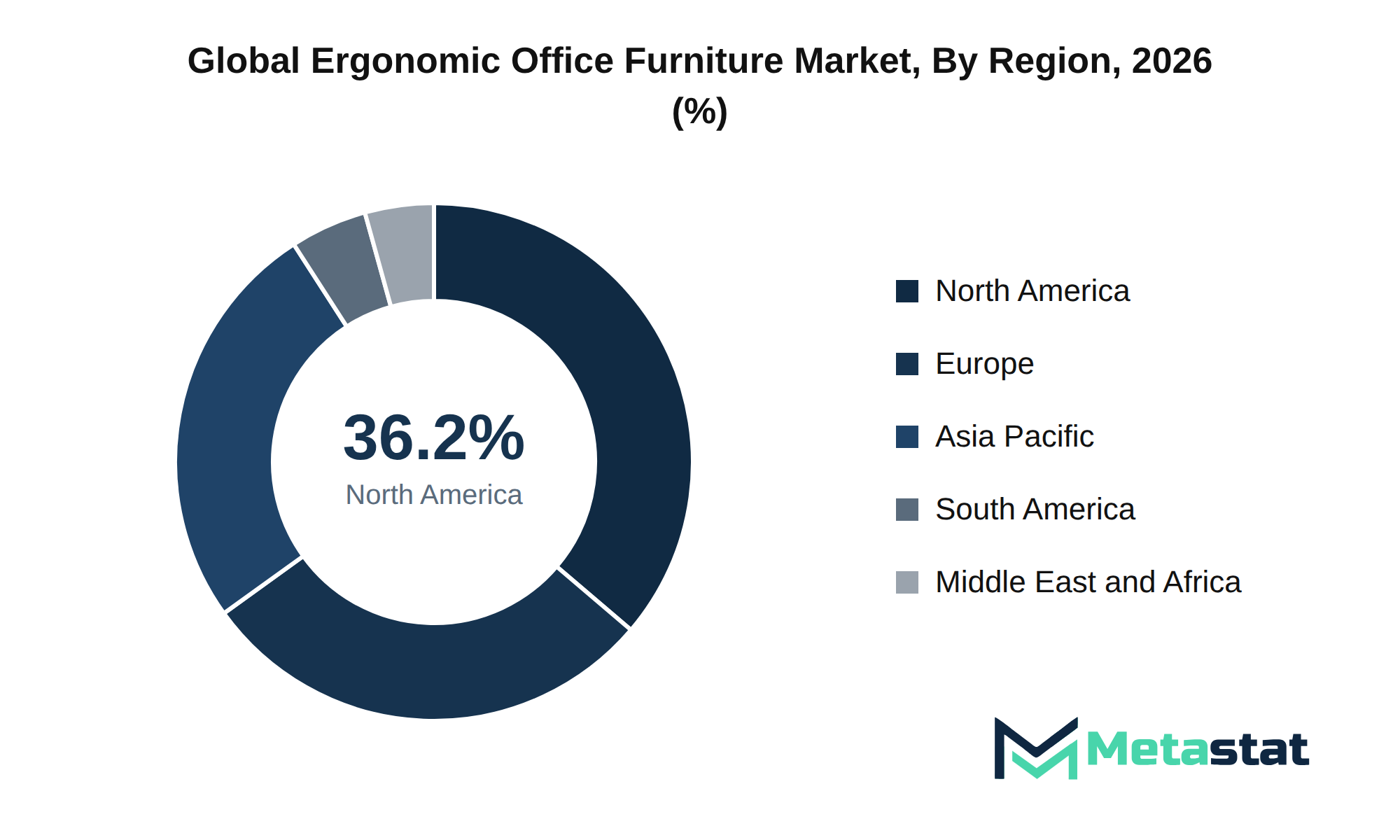
The Ergonomic Office Furniture market in North America is projected to achieve a market size of USD 8.9 billion by the end of 2033, expanding at a CAGR of 6.7% during the forecast period. This region accounts for a significant share of the global market.
Strong demand arises from a focus on employee health and productivity within corporate offices, driving investments in ergonomic solutions. The corporate sector actively seeks to enhance workplace environments by integrating ergonomic office chairs and height-adjustable desks, which contribute to improved comfort and efficiency for employees.
Increased emphasis on home office setups, particularly following shifts in work patterns, has led to a surge in demand for ergonomic office furniture tailored for remote work environments. Consumers in this space prioritize comfort and functionality, influencing manufacturers to innovate and expand their product offerings.
The market experiences robust competition, characterized by both established players and emerging companies striving to capture market share. Localized procurement dynamics and cultural nuances shape buyer behaviors, necessitating that suppliers adapt to specific regional demands. Companies are increasingly focused on understanding these regional preferences to effectively meet market needs.
Investment in infrastructure modernization and heightened awareness of health-related issues further contribute to the growth of the ergonomic office furniture market. Companies in North America are increasingly aligning with localized manufacturing strategies and nearshoring initiatives, enhancing supply chain efficiencies and reducing lead times.
The Ergonomic Office Furniture market in Europe shows robust potential, driven by a growing focus on employee welfare and productivity. Nations including Germany, France, and the UK lead the way in adopting ergonomic solutions across various sectors. The emphasis on modernizing workspaces remains a significant factor, with Italy and Spain actively investing in ergonomic office designs to enhance employee comfort and efficiency. Russia's increasing interest in ergonomic furniture reflects a broader trend towards accommodating diverse work styles and preferences.
While businesses seek to create healthier work environments, demand for ergonomic office chairs and height-adjustable desks continues to rise. The market exhibits a strong shift towards integrated ergonomic computer workstations, ensuring that employees have access to tools that promote wellness. Corporate offices are projected to drive growth in this region, supported by the expansion of coworking and flexible workspaces that accommodate diverse working arrangements.
Localized manufacturing and procurement strategies are becoming essential for suppliers in Europe, allowing them to respond swiftly to market demands. The influence of domestic market participants shapes competitive dynamics within the region, driving innovation and customization in product offerings. With a projected market share of 28.8% in 2025, Europe is poised for continuous growth, driven by increasing awareness of the importance of ergonomics in workplace productivity and employee satisfaction.
The Asia-Pacific region represents a growing share of the Ergonomic Office Furniture market, accounting for 25.8% in 2025. Countries including China, Japan, India, South Korea, and Australia contribute substantially to this market, driven by rapid urbanization and increasing awareness of workplace ergonomics.
China's robust manufacturing sector acts because a catalyst for growth, with rising disposable incomes leading to increased investment in ergonomic solutions. Japan's aging population stimulates demand for ergonomic office furniture, particularly in home office settings. India's expanding corporate sector enhances adoption rates across various applications.
South Korea demonstrates a strong inclination towards modern workplace solutions, with local companies prioritizing the integration of ergonomic furniture in corporate office designs. Australia sees a growing trend towards flexible workspaces, driving demand for height-adjustable and modular workstation solutions.
Emerging markets in Southeast Asia exhibit potential for expansion, largely due to the increasing number of startups and coworking spaces that prioritize employee well-being. The region's infrastructure modernization initiatives further support the growth of the ergonomic office furniture sector, enabling local manufacturers to enhance production capabilities.
Localized manufacturing densities across the region strengthen supply chain resilience, allowing firms to respond swiftly to changing market dynamics. The competitive landscape features a mix of domestic market participants and global players, encouraging innovation and improving access to ergonomic solutions.
The Ergonomic Office Furniture market in South America experiences unique dynamics influenced by varying consumer preferences and economic conditions. Brazil and Argentina represent key markets within the region, contributing significantly to growth and demand. Increasing awareness of workplace ergonomics enhances the adoption of ergonomic solutions in corporate and home office environments. Infrastructure modernization efforts support the market, enabling the introduction of advanced ergonomic products designed to improve comfort and productivity.
Emerging market front-runners, particularly in urban areas, seek innovative furniture solutions that cater to both aesthetic and functional needs. The presence of localized manufacturing facilities strengthens the supply chain, reducing lead times and costs associated with importing furniture. Cultural nuances influence B2B buying behaviors, with businesses focusing on durability and value in their procurement strategies. Growth in the Ergonomic Office Furniture market aligns with regional shifts toward employee well-being and productivity enhancements.
Growth in the Ergonomic Office Furniture market within the Middle East and Africa is propelled by increased awareness of ergonomic benefits across various sectors, including corporate and healthcare environments. The region's population shift towards urbanization increases demand for modern office solutions, with businesses seeking to improve employee productivity and comfort. Countries including Saudi Arabia and the UAE exhibit significant investment in infrastructure modernization, contributing to expanded adoption of ergonomic furniture.
This market benefits from a rising number of startups and small to medium enterprises that prioritize employee well-being. This trend aligns with the global movement towards healthier workplace environments, prompting businesses to invest in ergonomic office furniture. South Africa's diverse economic landscape supports this growth, with an emphasis on enhancing work environments across various industries.
Localized manufacturing and supply chain initiatives enhance market penetration, addressing regional demand effectively. Cultural nuances influence procurement behaviors, with businesses becoming increasingly attentive to ergonomics and its impact on productivity. The region's competitive landscape features both established players and emerging brands, promoting innovation in product offerings.
Forecasts indicate a gradual increase in market size, driven by the ongoing emphasis on workplace well-being and productivity. The Ergonomic Office Furniture market in the Middle East and Africa is projected to benefit from these trends, establishing a position within the global landscape while addressing the specific needs of local consumers and businesses.
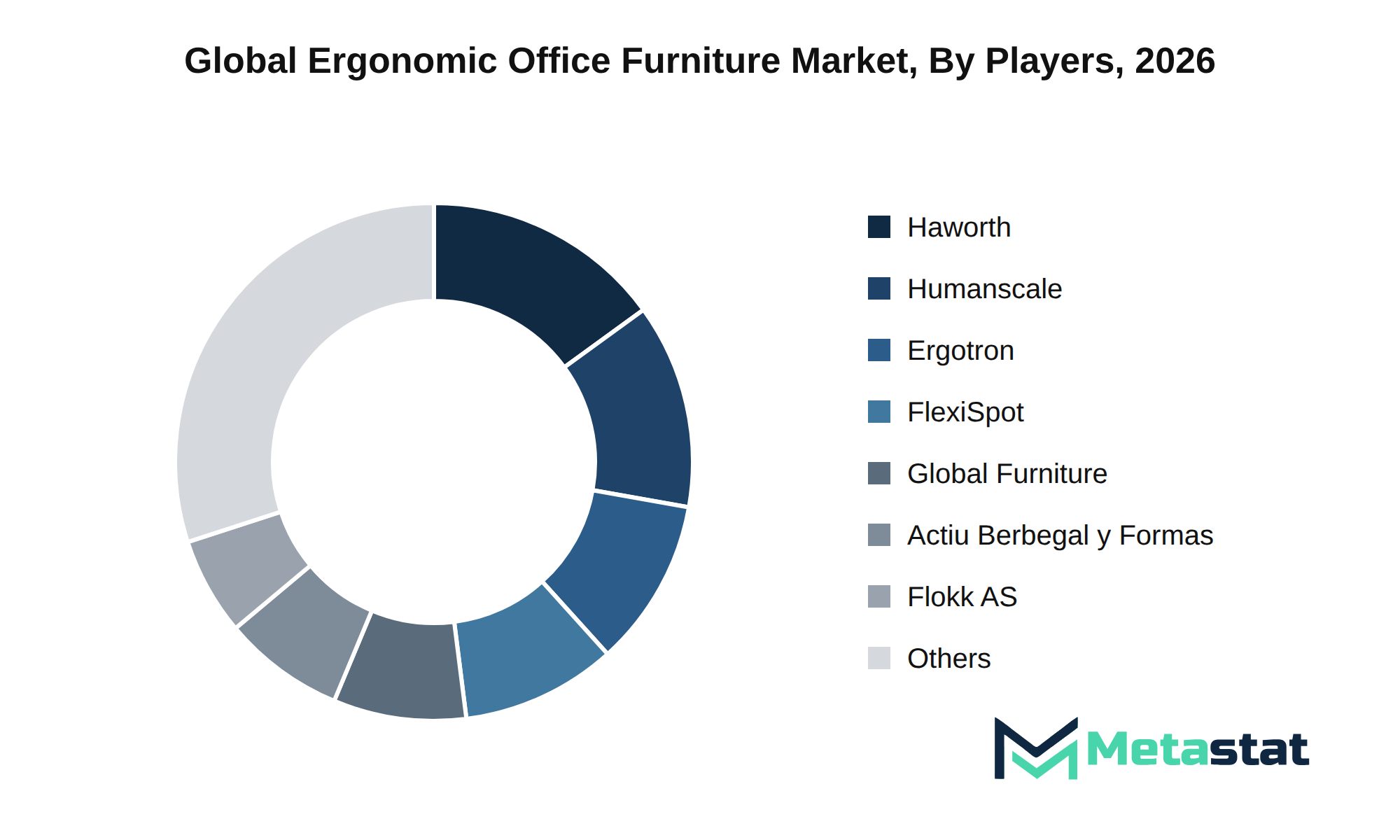
The Ergonomic Office Furniture market features a diverse array of players engaged in various strategic behaviors to enhance their competitive positions. Companies including Steelcase Inc., Haworth, Inc., and Global Furniture Group focus on product differentiation through innovative designs and ergonomic features, catering to the rising demand for comfortable and health-conscious office solutions. The presence of strong brand equity among major players builds customer loyalty, while the development of proprietary technologies supports unique value propositions in their offerings.
Strategic alliances and partnerships are prevalent, with companies like Ergotron, Inc. and FlexiSpot Inc. collaborating with tech firms to integrate smart features into their ergonomic furniture. Such collaborations enhance product functionality, enabling firms to meet evolving customer expectations in the modern workspace. The competitive landscape experiences significant investment in R&D pipelines, with firms like Autonomous Inc. and Humanscale Corporation prioritizing the development of new products that incorporate advanced ergonomic principles and sustainability practices.
The market faces threats from new entrants that introduce innovative business models and products, prompting established players to refine their go-to-market strategies. Companies are increasingly adopting direct-to-consumer sales tactics through brand-owned e-commerce platforms, which enhance customer interactions and streamline distribution. This shift towards online sales channels allows firms to cut costs and improve margins, making it essential for traditional retail models to adapt.
The future competitive outlook for the Ergonomic Office Furniture market anticipates ongoing consolidation driven by firms seeking synergies through mergers and acquisitions. Companies will likely focus on integrating supply chains and procurement processes to achieve greater operational efficiency. Continuous efforts in customer retention strategies, coupled with a keen focus on switching costs, will shape the dynamics of brand loyalty and market share across the sector.
Market size is forecast to rise from USD 15.6 billion in 2025 to over USD 26.3 billion by 2033. The base case reflects a growth trajectory of 6.7% CAGR, driven by ongoing trends in workplace ergonomics and health awareness, which support demand for products that enhance employee comfort and productivity.
In a bull scenario, heightened corporate investments in health and wellness initiatives could propel the market beyond current projections, leading to accelerated adoption rates of ergonomic office solutions. Conversely, a bear scenario characterized by economic downturns and budget constraints restricts growth, causing organizations to delay or reduce investments in ergonomic office furniture.
Macroeconomic factors, including shifts in global supply chains and regulatory requirements, will influence industry dynamics. The alignment of strategic capital allocation with emerging trends, including remote work and flexible office designs, creates high-growth opportunities within the market. Next-generation technology integration and R&D timelines will dictate product life cycles, ensuring that companies remain competitive and responsive to market demands.
Executive-level strategic imperatives focusing on sustainable practices and compliance with evolving regulations will shape the future of the ergonomic office furniture market. Companies that proactively address these imperatives will position themselves to capitalize on unmet enterprise needs and navigate emerging white-space opportunities effectively.
The report strategically identifies and profiles the key market players and analyses their core competencies in each sub-segment of the Ergonomic Office Furniture market.
Report Attributes | Details |
Study Period | 2021-2033 |
Base Year | 2025 |
Estimated Year | 2026 |
Forecast Period | 2026-2033 |
Historical Period | 2021-2025 |
Growth Rate | CAGR 6.7% from 2026 to 2033 |
Revenue Unit | USD billion |
Segmentation | By Product Type, Application, Distribution Channel, and Region |
By Region | North America (By Product Type, Application, Distribution Channel, and Country)
|
Europe (By Product Type, Application, Distribution Channel, and Country)
| |
Asia Pacific (By Product Type, Application, Distribution Channel, and Country)
| |
South America (By Product Type, Application, Distribution Channel, and Country)
| |
Middle East and Africa (By Product Type, Application, Distribution Channel, and Country)
|
Find answers to common questions about this report
The Ergonomic Office Furniture market size was valued at USD 15.6 billion in 2025, according to the Metastat Insights study.
The Ergonomic Office Furniture market is projected to grow at a CAGR of 6.7% during the forecast period from 2026 to 2033.
The North America Ergonomic Office Furniture market size is estimated to reach USD 8.9 billion by 2033.
The leading segment in the Ergonomic Office Furniture market is Ergonomic Office Chairs, with a projected value of USD 8.1 billion by 2033. This segment's growth reflects a compound annual growth rate of 5.5% from 2026 to 2033.
The Ergonomic Office Furniture market experiences growth driven by a heightened focus on employee well-being and comfort, along with increased investment in workplace modernization. Companies prioritize ergonomic solutions to enhance productivity, reduce absenteeism, and create appealing work environments, leading to a significant rise in demand for ergonomic furniture.
North America holds the dominant share of the Ergonomic Office Furniture market, with a projected value of USD 8.9 billion in 2033, representing 36.2 percent of the total market.
The Ergonomic Office Furniture market faces significant challenges due to regulatory complexities that increase operational costs and timelines for manufacturers. Geopolitical instability disrupts supply chains, leading to production delays and heightened costs. rising material costs and inflationary pressures constrain profit margins, further limiting market growth potential.
Increased focus on employee well-being and comfort in the workplace drives product adoption in the Ergonomic Office Furniture market. Investments in ergonomic solutions enhance productivity and reduce absenteeism, aligning with trends emphasizing workplace wellness. Organizations prioritize creating appealing work environments, prompting demand for height-adjustable desks and ergonomic chairs that support health and satisfaction.
The Ergonomic Office Furniture market is estimated to reach a valuation of USD 26.3 billion by 2033.
Key players in the Ergonomic Office Furniture market include Actiu Berbegal y Formas, S.A., Autonomous Inc, Ergotron, Inc., FlexiSpot Inc, Haworth, Inc., Humanscale Corporation, Steelcase Inc., and Teknion Corporation.
The analysts below cover Consumer Goods research at Metastat Insights.
LEAD ANALYST
Utkarsh Khirodkar is a Lead Market Research Analyst at MetaStat Insight, specializing in market intelligence, technology sector assessments, and competitive strategy.
Tracking ceramic matrix composite adoption in high-bypass aero engines requires strict attention to material qualification cycles and FAA airworthiness testing milestones. The MetaStat Insight team provided a detailed timeline of silicon carbide fiber manufacturing capacity and commercial foundry lead times. Having clear visibility into upstream thermal barrier coating supply helped us stress-test our long-term component procurement strategy.
Transitioning ultra-class mining haul trucks to alternative power requires concrete data on remote hydrogen refueling infrastructure economics. The report evaluated megawatt-scale electrolyzer installation expenses, onsite storage safety mandates, and heavy-duty fuel cell stack degradation under continuous duty cycles. That technical rigor helped our engineers benchmark realistic total operating cost horizons for off-highway fleet decarbonization.
Enterprise zero-trust network rollouts are often slowed down by multi-cloud transit latency and proprietary hardware retirement schedules. This study provided realistic total cost of ownership models comparing cloud-delivered security edge solutions against traditional hardware refreshes. The analysis of contract renewal lengths and software maintenance fees gave us clear visibility into enterprise replacement cycles over the next three to five years.
Explore related market intelligence reports worth reading alongside this one.
Starting from
$2950