
Explore how changing consumer preferences and technological advancements are shaping the Asia Vacation Ownership (Timeshare) market. Discover growth drivers and challenges affecting this sector.
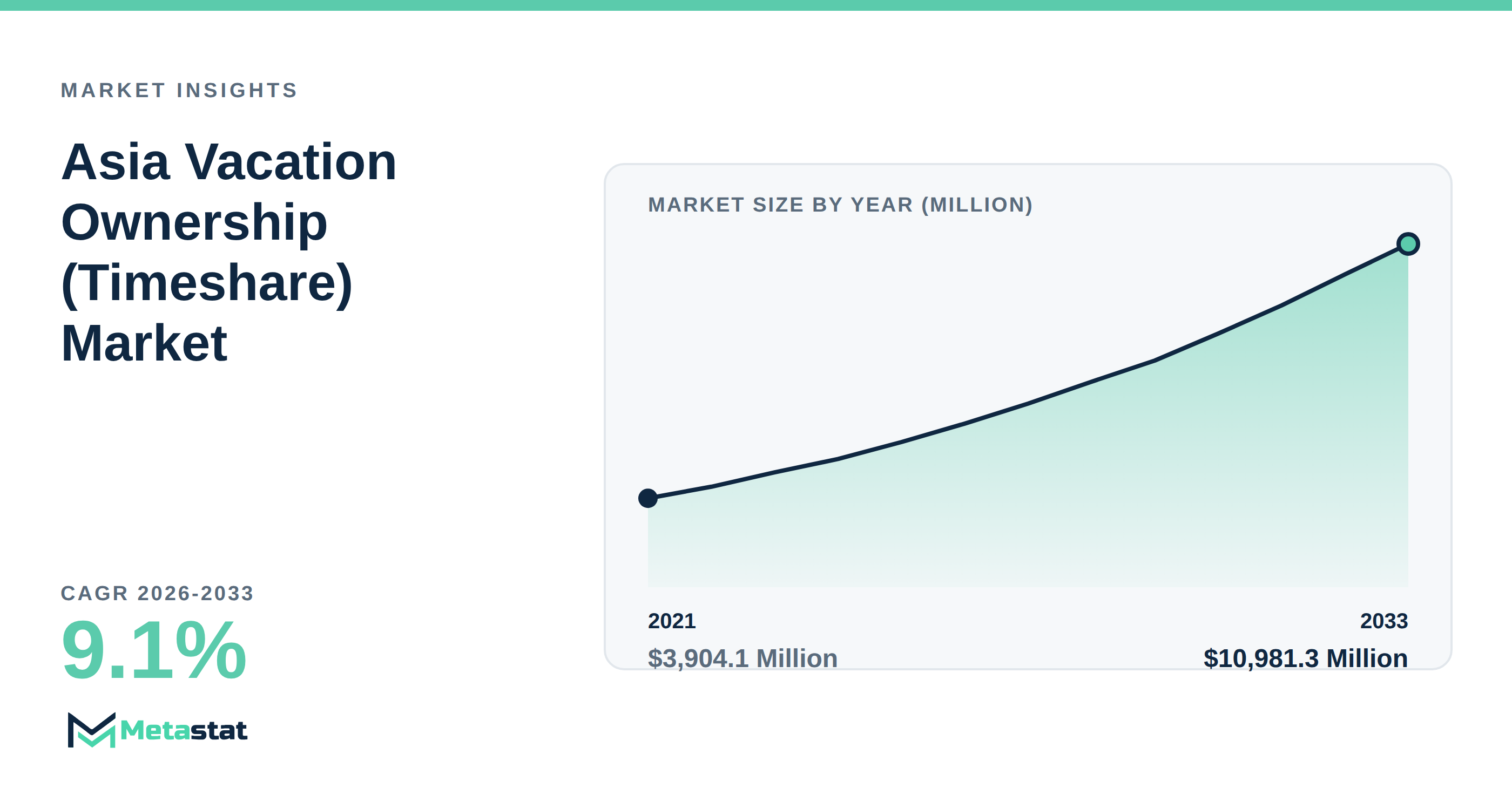
Understanding the Asia Vacation Ownership (Timeshare) market requires a deeper analysis beyond numbers. The market's anticipated growth from USD 5,469.1 million in 2025 to USD 10,981.3 million by 2033, with a compound annual growth rate of 9.1%, signals more than mere expansion; it indicates evolving consumer behaviors and a shift in travel paradigms.
Significant shifts in traveler demographics and preferences are reshaping the Asia Vacation Ownership (Timeshare) market. Younger generations, particularly Millennials, increasingly seek unique, personalized vacation experiences, moving away from traditional hotel stays. The appeal of vacation ownership arises from its flexibility and the opportunity to craft memorable family experiences. This focus on affordability and accessibility particularly attracts urban dwellers aiming to escape the bustle of city living.
The rise of domestic travel plays a crucial role in market dynamics, with projections showing an increase from USD 4,245.5 million in 2026 to USD 7,357.5 million by 2033, reflecting a compound annual growth rate of 8.2%. This trend aligns with a societal shift favoring local experiences. The combination of rising disposable income and interest in staycations underscores the relevance of vacation ownership because a practical solution for consumers. Marketing strategies are evolving to effectively target families and groups, utilizing digital platforms for enhanced customer engagement.
Technological advancements emerge because a vital driver for growth within the Asia Vacation Ownership (Timeshare) market. The integration of digital platforms streamlines booking processes and personalizes offerings, catering to the diverse needs of independent travelers and tour groups. Companies investing in innovative technologies enhance their competitive edge and improve customer experiences, making technological integration essential for stakeholders in the sector.
However, the market faces challenges impacting its growth trajectory. Complex regulatory compliance requirements present obstacles for both new entrants and established companies, leading to increased operational costs. Navigating these regulations necessitates significant legal resources, often resulting in delays in project timelines and reduced profitability. Inflationary pressures and currency fluctuations further complicate operational challenges, necessitating effective cost management strategies for sustained competitiveness.
Regional factors significantly influence the Asia Vacation Ownership (Timeshare) market. China is set for substantial growth, with projections indicating its market value will increase from USD 1,724.1 million in 2026 to USD 2,964.9 million by 2033. Conversely, India is expected to expand even more rapidly, reaching USD 2,196.3 million by 2033, fueled by rising domestic tourism and disposable incomes. This underscores the importance of regionally tailored strategies to address diverse consumer preferences.
While the Asia Vacation Ownership (Timeshare) market expands, competition intensifies. Companies including Marriott Vacations Worldwide Corporation, Hilton Grand Vacations Inc, and Travel + Leisure Co. prioritize product differentiation and strategies to retain customers, enhancing brand equity. Regional players like Minor International PCL / Minor Vacation Club and Mahindra Holidays & Resorts India Limited leverage strategic partnerships to expand market reach, encouraging innovation and differentiation for consumers, who benefit from a wider array of vacation ownership options.
The future outlook for the Asia Vacation Ownership (Timeshare) market remains strong, driven by consumer demand for unique travel experiences and innovative products. Stakeholders are expected to invest in technology and sustainability initiatives to align with changing consumer preferences. Engaging marketing campaigns that emphasize the benefits of vacation ownership while adapting to evolving travel dynamics will be crucial. By strategically adjusting operations and closely monitoring market trends, companies position themselves favorably for sustained growth in this dynamic environment. For more comprehensive insights, access the full Asia Vacation Ownership (Timeshare) Market report.
Tags
About the Author

LEAD ANALYST
Utkarsh Khirodkar is a Lead Market Research Analyst at MetaStat Insight, specializing in market intelligence, technology sector assessments, and competitive strategy.