
LEAD ANALYST
Utkarsh Khirodkar is a Lead Market Research Analyst at MetaStat Insight, specializing in market intelligence, technology sector assessments, and competitive strategy.

Asia Vacation Ownership (Timeshare) Market Size, Share, By Type (Fixed-Week Timeshare, Floating-Week Timeshare, Points-Based Vacation Ownership, Flexible Night/Credit-Based Ownership and Hybrid Week-and-Points Model), By Tour Type (Domestic and International), By Tourist Type (Independent Traveler and Tour Group), By Region (China, India, Japan, Southeast Asia and Rest of Asia), Industry Analysis, Growth, Trends, and Forecast, 2026-2033
Report ID
MSI-5159
Published
September, 2026
Pages
284 Pages
Format
Historical
Base year
Forecast
Forecast period
Report Details
Choose Your License
Asia Vacation Ownership (Timeshare) Market
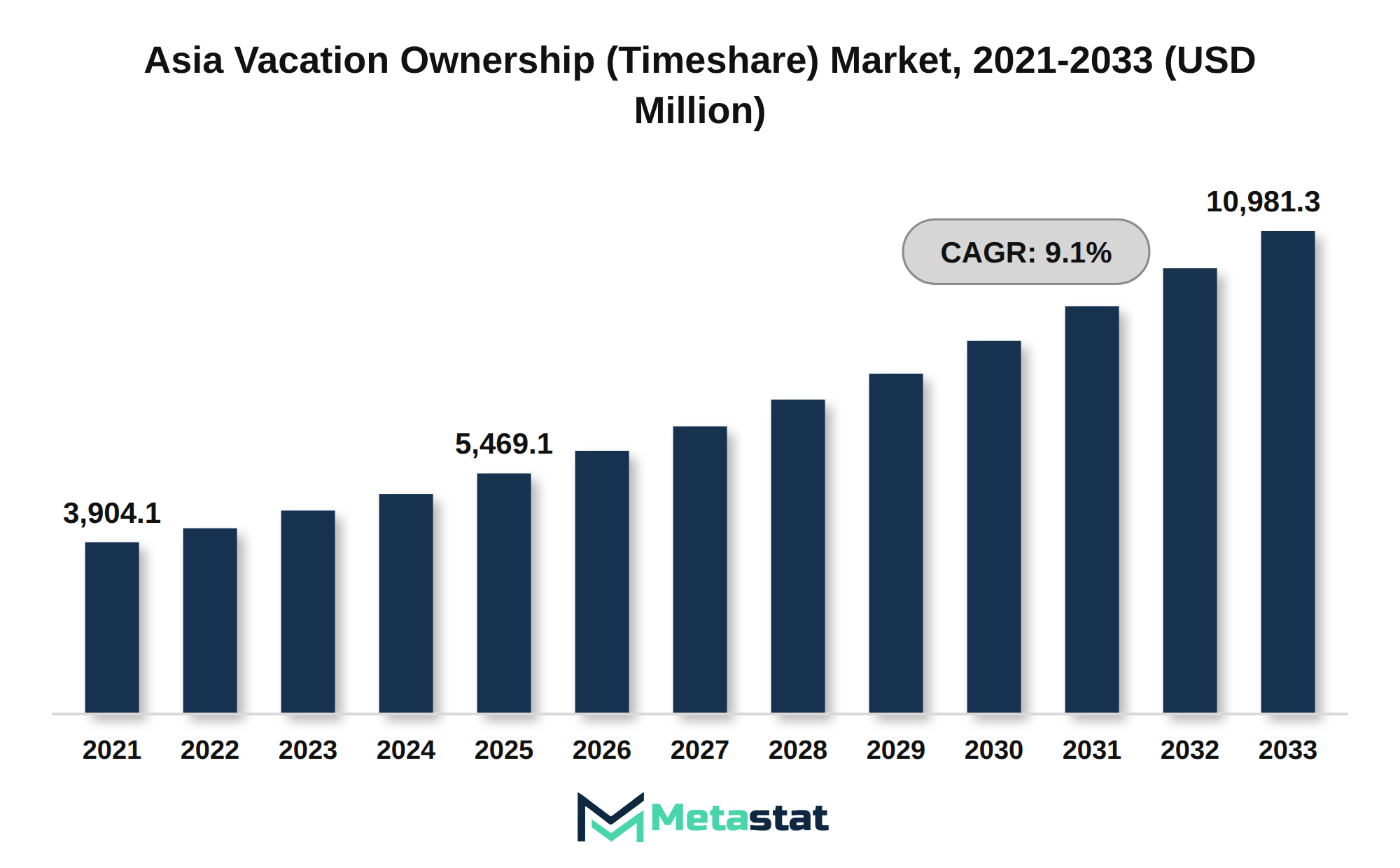
The Asia Vacation Ownership (Timeshare) market was valued at USD 5,469.1 million in 2025 and is projected to reach USD 10,981.3 million by 2033, growing at a CAGR of 9.1% over the forecast period.
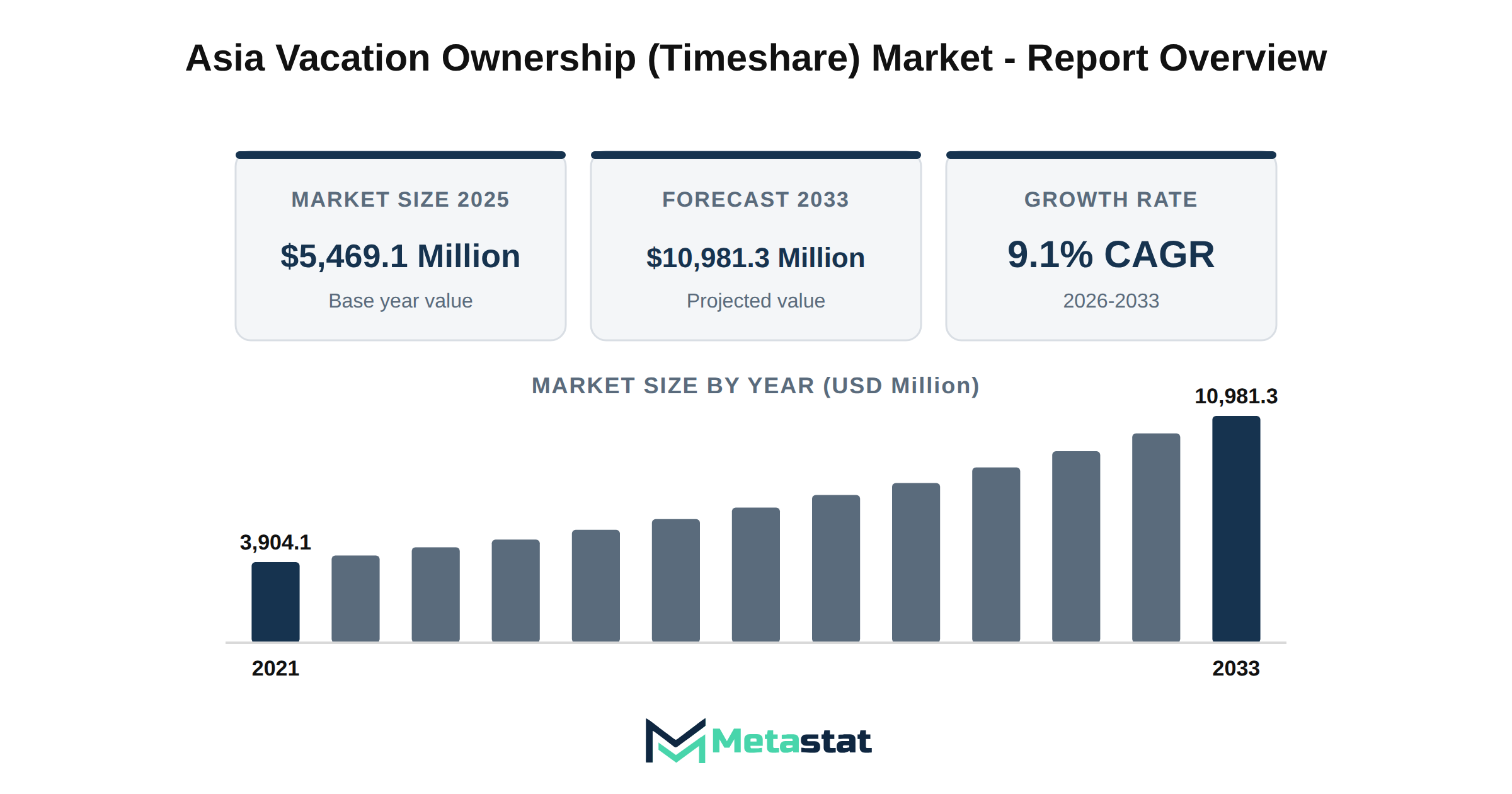
The Asia Vacation Ownership (Timeshare) market exhibits significant growth, transitioning from a historical value of USD 3,904.1 million in 2021 to a base value of USD 5,469.1 million in 2025. This upward trend reflects a compound annual growth rate (CAGR) of 9.1% from 2025 to 2033, with the market projected to reach USD 10,981.3 million by the end of the forecast period. Key segments within the market include Fixed-Week Timeshare, Floating-Week Timeshare, Points-Based Vacation Ownership, Flexible Night/Credit-Based Ownership, and the Hybrid Week-and-Points Model, each contributing distinctly to the overall market dynamics.
The Points-Based Vacation Ownership segment leads, commanding 36.4% of the market share, followed by Floating-Week Timeshare at 23.5% and Fixed-Week Timeshare at 21.5%. Flexible Night/Credit-Based Ownership and the Hybrid Week-and-Points Model account for 10.3% and 8.3% of the market, respectively. The diversity in ownership types caters to varying consumer preferences and enhances market accessibility, thus driving growth. Domestic travel generates the most revenue, with a projected value rise from USD 4,245.5 million in 2026 to USD 7,357.5 million in 2033, reflecting a CAGR of 8.2%.
International travel shows robust potential, with an anticipated value of USD 3,623.8 million by 2033, indicating a CAGR of 11.1%. The independent traveler category demonstrates strong growth, evolving from USD 4,154.8 million in 2026 to USD 8,126.1 million in 2033, reflecting a CAGR of 10.1%. In contrast, the tour group segment is projected to reach USD 2,855.1 million by 2033, with a CAGR of 6.6%. Such trends highlight changing preferences in travel patterns and increasing demand for vacation ownership options.
Regionally, China is set to expand significantly within the Asia Vacation Ownership (Timeshare) market, with its value expected to rise from USD 1,724.1 million in 2026 to USD 2,964.9 million in 2033, representing a CAGR of 8.1%. India is projected to experience even higher growth, reaching USD 2,196.3 million by 2033, with a CAGR of 12.6%. Japan and Southeast Asia are positioned to contribute positively, with the latter demonstrating a CAGR of 10.5%. These regional dynamics signify varied growth opportunities across different markets, emphasizing the importance of tailored strategies for successful penetration.
The Asia Vacation Ownership (Timeshare) market experiences significant growth driven by several factors. A growing middle class across Asia fuels demand for leisure travel, leading to increased interest in timeshare options. The market benefits from evolving consumer preferences, with vacation ownership becoming increasingly appealing due to its flexibility and potential cost savings over traditional hotel bookings.
Technological advancements play a significant role in enhancing customer experiences within the market. The integration of digital platforms enables easier booking processes and personalized offerings, catering to the demands of independent travelers and tour groups. Companies investing in innovative technologies improve their competitive positions, driving growth in the sector.
Environmental sustainability emerges because a critical focus within the Asia Vacation Ownership (Timeshare) market. Consumers increasingly prefer brands that demonstrate commitment to sustainable practices, influencing purchasing decisions. Companies adopting eco-friendly initiatives not only meet consumer expectations but reduce operational costs, enhancing overall profitability.
While competition intensifies, market fragmentation presents both challenges and opportunities. Numerous players operate in the sector, ranging from established brands to emerging companies. This landscape encourages innovation and differentiation, allowing consumers to benefit from a wider array of options tailored to various preferences and budgets.
Investment in infrastructure remains vital for the expansion of the market. Developers and operators are prioritizing projects that enhance accessibility and attract a diverse range of tourists. Strategic capital allocation towards high-demand regions supports long-term growth and positions companies favorably against competitors.
Inflationary pressures introduce various challenges, impacting operational costs within the market. Companies navigate fluctuating expenses while maintaining competitive pricing strategies. Effective cost management and operational efficiencies become crucial for sustaining profitability amid market fluctuations.
Currency volatility poses additional risks, particularly for international transactions. Companies operating across multiple currencies face challenges in pricing and revenue stability. Developing robust financial strategies to mitigate these risks is essential for maintaining market competitiveness.
The future strategic outlook for the Asia Vacation Ownership (Timeshare) market remains positive, driven by consumer demand for travel experiences and innovative offerings. Ongoing investments in technology, sustainability, and infrastructure are expected to support market growth and enhance overall value propositions, aligning with evolving consumer preferences.
The Asia Vacation Ownership (Timeshare) market experiences notable expansion fueled by evolving consumer behaviors. Changing preferences among travelers, particularly the rising inclination toward domestic and experiential travel, significantly influence demand. Independent travelers increasingly seek flexible options that allow for a variety of experiences rather than traditional hotel stays. This shift aligns with a broader societal trend prioritizing unique and personalized vacation experiences.
The market benefits from the growing participation of millennial and younger generations, who demonstrate a preference for vacation ownership because a viable alternative to conventional accommodations. These demographics highly value the concept of ownership, particularly in the context of memorable family experiences and lifestyle enhancements. The increased focus on affordability and accessibility enhances the appeal of timeshare options.
The rising number of urban dwellers in Asia contributes to the growth of the market. Urbanization encourages individuals to explore vacation ownership because a means to escape city life and engage with nature or new locales. While consumer confidence strengthens and disposable income rises, the market is expected to capitalize on these demographic shifts. A significant uptrend in vacation ownership adoption is evident, supporting sustained growth through the forecast period.
Enhancements in infrastructure development significantly impact the Asia Vacation Ownership (Timeshare) market, providing improved access and connectivity for consumers. The ongoing expansion of transportation networks, including roads and airports, facilitates easier travel to vacation destinations. Growth in regional tourism encourages investment in related infrastructure, including hotels and leisure facilities, which directly supports the demand for timeshare properties.
Investment in digital infrastructure enables effective booking processes and customer engagement through advanced technologies. The integration of innovative platforms allows for better user experiences and streamlined operations for providers. While digital transformation continues, the market benefits from increased efficiency and reduced operational costs, driving profitability for companies involved in vacation ownership.
Ongoing capital investments in new developments and property upgrades enhance the attractiveness of vacation ownership options. Upgraded amenities and modern facilities within timeshare properties attract a broader consumer base, generating interest and demand. Consequently, the Asia Vacation Ownership (Timeshare) market is anticipated to experience sustained growth driven by infrastructure improvements and technological advancements aligning with evolving consumer preferences.
The Asia Vacation Ownership (Timeshare) market faces significant challenges due to complex regulatory compliance requirements. Stricter regulations regarding consumer protection, property rights, and taxation impact market dynamics, creating barriers for new entrants and existing players. Navigating these regulations requires substantial legal resources and leads to increased operational costs, ultimately affecting profitability.
Compliance hurdles often delay project timelines and increase the capital investment required for development. This situation creates hesitance among potential investors, adversely impacting market expansion. Ongoing legal adjustments to meet compliance standards further complicate operational planning, resulting in resource allocation challenges and diversion of funds that could support growth initiatives.
Geopolitical instability in the region contributes to uncertainty, making potential investors cautious. Fluctuations in government policies, influenced by broader economic conditions, lead to sudden market shifts. This unpredictability creates an environment where long-term investments are less attractive, restricting overall market development.
The Asia Vacation Ownership (Timeshare) market's growth trajectory faces further strain from inflationary pressures. Rising costs associated with property development, maintenance, and services challenge profitability and market pricing strategies. These economic factors, combined with regulatory compliance issues, create a challenging environment for established companies and new entrants, emphasizing the need for strategic adaptation to navigate these complexities successfully.
The Asia Vacation Ownership (Timeshare) market confronts challenges stemming from geopolitical fragmentation, which disrupts trade relationships and creates uncertainty for investors. This fragmentation leads to fluctuating tariffs and trade deficits, affecting pricing strategies and operational costs. The market's reliance on international supply chains heightens vulnerability to disruptions, impacting the availability of materials and components necessary for developing vacation ownership properties.
Trade tariffs imposed between countries increase the cost of imported goods, placing financial strain on companies operating within the market. Such tariff friction not only raises costs but alters competitive dynamics, forcing businesses to reconsider their pricing models. Technological disruptions, including rapid advancements and the need for complex integrations, complicate development processes, potentially delaying project timelines and inflating expenses.
The market faces challenges related to tightening regulatory standards, leading to increased compliance overhead. Companies invest in strategies to meet evolving legal liabilities, diverting resources away from growth initiatives. This situation generates margin pressures while affecting talent retention due to businesses navigating a situation defined by skill gaps and automation displacements.
Ultimately, these factors hinder the overall growth trajectory of the Asia Vacation Ownership (Timeshare) market. Addressing geopolitical fragmentation requires strategic adjustments to supply chain management and operational practices, ensuring resilience against external shocks and supporting sustainable development within the sector.
Technological disruptions play a significant role in the Asia Vacation Ownership (Timeshare) market, enabling innovative approaches to customer engagement and property management. Advancements in digital platforms facilitate efficient booking processes and personalized experiences, responding to changing consumer expectations. The integration of smart technologies enhances operational efficiency, allowing companies to optimize resource utilization while providing increased value to customers.
Geographical expansion continues to shape market dynamics, with emerging destinations attracting interest from travelers seeking unique experiences. Growth in regions including China and India highlights the potential for increased investment in vacation ownership properties, driven by rising disposable incomes and a growing middle class. Opportunities in these markets present avenues for industry players to diversify their portfolios and expand their reach.
Sustainability imperatives increasingly influence consumer preferences, pushing organizations to adopt eco-friendly practices. The demand for green transformations in vacation ownership properties aligns with broader environmental, social, and governance (ESG) objectives, appealing to environmentally conscious travelers. Companies prioritizing sustainability initiatives enhance their market positioning while tapping into a growing segment of eco-aware consumers.
Downstream market diversification presents opportunities for companies to innovate their offerings, exploring niche applications and tailored experiences. The Asia Vacation Ownership (Timeshare) market benefits from evolving buying behaviors, with customers seeking personalized and unique vacation experiences. Emphasizing product integration allows firms to create comprehensive packages that cater to diverse consumer needs and preferences.
Strategic consolidation through mergers and acquisitions enables companies to strengthen their market presence and enhance competitive advantages. By leveraging combined resources, firms streamline operations and enhance service offerings, contributing to market growth. The Asia Vacation Ownership (Timeshare) market capitalizes on these trends, positioning itself for sustained expansion in the coming years.
The Asia Vacation Ownership (Timeshare) market is segmented based on Type, Tour Type, Tourist Type, and Region.
Valued at USD 1,251.2 million in 2026, the Fixed-Week Timeshare segment is projected to reach USD 1,757 million by 2033, with a CAGR of 5% during the forecast period. This growth results from increasing consumer preferences for predictable vacation experiences. Fixed-week ownership provides a reliable option, allowing buyers to reserve specific weeks each year, thus enhancing planning for family vacations and travel. The Asia Vacation Ownership (Timeshare) market benefits from a demographic shift towards experiential spending, particularly among millennials and Generation X consumers seeking flexibility and assurance in their travel planning.
Segment expansion hinges on rising disposable incomes and an inclination towards leisure spending across Asia. The appeal of fixed-week ownership is reinforced by the stability it offers during changing travel dynamics influenced by global events. Investments in marketing strategies that highlight the advantages of fixed-week timeshares enhance visibility and adoption rates. Regulatory compliance in various countries supports transparent transactions, which builds consumer trust and supports growth within the segment.
Price stability remains crucial, with fluctuations in operational costs impacting profitability for providers. Nevertheless, fixed-week timeshares uphold their value through strategic pricing models that align with market demand. Continuous efforts to innovate and enhance customer experience through improved amenities and service offerings contribute to maintaining a competitive advantage in a growing market. Overall, the Fixed-Week Timeshare segment epitomizes a reliable choice for consumers within the broader Asia Vacation Ownership (Timeshare) market.
Growth in the Floating-Week Timeshare segment arises from increasing consumer preferences for flexibility and accessibility in vacation planning. This segment provides vacationers the option to book accommodations during their desired weeks, enhancing convenience and satisfaction. The shift towards experiential travel has heightened demand, influencing bookings across various demographics.
Floating-Week Timeshare is anticipated to reach USD 2,196.3 million by 2033, at a CAGR of 6.9% during the forecast period. This trajectory reflects growing interest in alternative vacationing options, with potential for further expansion attributed to more consumers prioritizing travel experiences over traditional lodging. The market continues to adapt to evolving consumer preferences and expectations, driving innovation in offerings and marketing strategies.
Technological advancements contribute to segment growth by enhancing customer engagement and streamlining reservation processes. Digital platforms facilitate easy access to listings and comparisons, attracting a broader audience. The integration of user-friendly applications and tools enhances overall user experience, promoting higher rates of customer retention and satisfaction.
Investment in promotional strategies targeting independent travelers and families strengthens market presence. Engaging marketing campaigns highlight the value proposition of Floating-Week Timeshare, increasing awareness and generating interest among potential buyers. This approach aligns with the broader trends observed in the Asia Vacation Ownership (Timeshare) market, where tailored experiences attract diverse customer segments.
Growth in the Points-Based Vacation Ownership segment stems from shifting consumer preferences towards flexible travel arrangements and the desire for personalized vacation experiences. This segment aligns well with modern travelers who seek convenience and adaptability, enhancing appeal among independent travelers and tour groups. Increased awareness of the advantages associated with points-based systems, including access to a wider range of destinations and accommodations, drives adoption among consumers.
Technological advancements contribute significantly to the segment's expansion. Enhanced digital platforms facilitate effective booking processes and real-time availability of vacation options, appealing to tech-savvy millennials and Gen Z consumers. The integration of mobile applications enables users to manage their vacation points effectively, further increasing engagement and satisfaction.
Points-Based Vacation Ownership segment is expected to reach USD 4,392.5 million by 2033. This growth forecast reflects the segment's robust performance amid rising disposable incomes, particularly in Asia, where a growing middle class seeks affordable luxury travel options. Competitive pricing strategies and attractive membership benefits offered by key players strengthen market penetration and consumer loyalty.
Regulatory compliance and evolving certification standards influence segment dynamics. Companies within the Asia Vacation Ownership (Timeshare) market actively address regulatory requirements to enhance credibility and build trust among consumers. Effective navigation of these compliance landscapes is essential for sustained growth in the market.
Overall, the Points-Based Vacation Ownership segment presents a promising opportunity for investment, driven by ongoing consumer demand for flexibility, evolving technologies, and regulatory alignment. This segment's potential positions it because a crucial component of the broader Asia Vacation Ownership (Timeshare) market.
Strong interest in Flexible Night/Credit-Based Ownership, driven by evolving consumer preferences for flexible travel options, leads to significant market dynamics. This segment is projected to grow at a CAGR of 12.3% during the forecast period. The appeal of flexible ownership arrangements aligns with increasing demand for personalized travel experiences, allowing consumers to tailor their vacations to individual preferences. This adaptability supports a broader customer base, including independent travelers and families seeking convenience in planning their trips.
The rise of digital platforms facilitating booking and management of vacation ownership enhances the consumer experience. This technological advancement contributes to the attractiveness of Flexible Night/Credit-Based Ownership in the Asia Vacation Ownership (Timeshare) market. Enhanced marketing strategies focusing on the benefits of flexibility and customization attract potential buyers, further propelling segment growth.
Pricing structures within this segment remain competitive, influenced by market demand and evolving consumer behavior. More individuals seek unique vacation experiences, and value perceptions surrounding flexible ownership increase, impacting purchase decisions. Improved awareness of the benefits and accessibility of flexible ownership options encourages new customer engagement, ultimately contributing to sustained growth in the segment.
Interest in the Hybrid Week-and-Points Model within the Asia Vacation Ownership (Timeshare) market arises from shifting consumer preferences for flexible vacation options. This model appeals to travelers seeking a balance between fixed-week ownership and point-based systems, allowing for diverse travel experiences. Demand for this model grows amid ongoing trends favoring personalization and adaptability in vacation planning.
Investment in technology significantly influences this segment. Advancements in booking platforms and mobile applications enable easier management of vacation ownership, enhancing customer satisfaction. Increased integration of user-friendly interfaces contributes to efficient transaction experiences, driving greater customer engagement.
Consumer awareness of various vacation ownership models influences market dynamics. Educational campaigns by industry players help potential buyers understand the benefits of the Hybrid Week-and-Points Model. This knowledge creates a more informed customer base, positively impacting adoption rates and expanding market presence.
Regulatory compliance remains a vital component, influencing the market landscape. Adhering to legal standards and certifications aids in building trust among consumers, promoting a stable growth environment. Ensuring compliance contributes to overall market credibility, which attracts more participants to the segment.
Pricing strategies and cost structures significantly affect the market's competitiveness. Innovative pricing models that offer attractive options for potential buyers enhance the appeal of the Hybrid Week-and-Points Model. Offering flexible financial arrangements encourages wider adoption and supports long-term growth.
Valued at USD 4,245.5 million in 2026, the Domestic segment is projected to reach USD 7,357.5 million by 2033, at a CAGR of 8.2% during the forecast period. Growth in the Domestic segment of the Asia Vacation Ownership (Timeshare) market results from increasing domestic travel trends, which reflect a broader shift in consumer preferences towards vacation ownership experiences. Independent travelers, particularly from emerging economies, drive demand due to their desire for affordable and flexible options for holiday accommodations.
Expansion catalysts include rising disposable income and an increased focus on leisure activities. The combination of these factors influences consumer behavior, leading to greater interest in timeshare products that offer long-term vacation solutions. The growing popularity of staycations further supports the Domestic segment, because consumers prioritize local travel experiences over international ventures. Marketing efforts targeted towards families and groups have proven effective in improving market penetration.
Technological advancements, including online booking platforms and mobile applications, streamline the purchasing process, making timeshare ownership more accessible. This evolution aligns with the growing trend of digital engagement among consumers. Marketing strategies that leverage digital channels contribute to segment growth by reaching a broader audience and improving consumer engagement.
Cost structures associated with Domestic timeshare ownership remain competitive, with pricing strategies often designed to attract first-time buyers. This approach has strengthened interest among budget-conscious travelers. Regulatory compliance standards serve to enhance buyer confidence and secure market integrity, thereby creating an environment conducive to investment and growth.
Shifts in consumption patterns towards experiential travel indicate a favorable outlook for the Domestic segment within the Asia Vacation Ownership (Timeshare) market. Such trends highlight the importance of adapting offerings to meet evolving customer preferences. Strategic investments in customer relationship management and loyalty programs will likely enhance retention rates, further strengthening the segment's market position.
Substantial growth in the International segment contributes to the overall expansion of the Asia Vacation Ownership (Timeshare) market. This segment is estimated to reach USD 3,623.8 million by 2033, at a CAGR of 11.1% during the forecast period. Rising disposable incomes and increasing travel trends among consumers drive demand for international vacation options. The appeal of diverse cultural experiences and attractive global destinations enhances the market potential for international timeshare offerings.
Changing consumer preferences toward unique travel experiences further support segment growth. Independent travelers seek tailored vacation experiences, leading to a heightened interest in international timeshare products. Adoption of flexible and points-based ownership models captures the attention of this demographic.
Investment in marketing strategies targeting international tourists serves because a catalyst for segment expansion. Companies focus on developing promotional campaigns that highlight the benefits of vacation ownership, including cost savings and guaranteed access to sought-after international destinations. This strategic focus results in heightened brand awareness and increased consumer interest in international timeshare offerings.
The potential for technological advancements in booking platforms and customer engagement tools positions the international segment for ongoing growth. Enhanced online booking experiences and virtual tours improve customer satisfaction and facilitate informed purchasing decisions. Consequently, this growth in technological maturity creates opportunities for companies to innovate and refine their offerings in the Asia Vacation Ownership (Timeshare) market.
Valued at USD 4,154.8 million in 2026, the Independent Traveler segment is projected to reach USD 8,126.1 million by 2033, at a CAGR of 10.1% during the forecast period. Increased interest in experiential travel strongly influences demand within this segment, with travelers seeking personalized, immersive experiences that align with their preferences. The adoption of vacation ownership among independent travelers reflects a shift toward flexible travel arrangements, catering to individual schedules and preferences. Consumers increasingly prioritize unique accommodations, driving the expansion of offerings tailored to independent travelers.
The growth in the Independent Traveler segment is driven by the rising trend of digital nomadism, where individuals combine work and travel, necessitating accommodations that provide flexibility and comfort. Increased disposable income, particularly in emerging markets, facilitates access to vacation ownership options, further expanding the segment. Enhanced marketing efforts by service providers effectively target this demographic, promoting tailored packages that appeal to the desire for authenticity and exploration.
In the context of the Asia Vacation Ownership (Timeshare) market, the Independent Traveler segment aligns with broader trends of personalization and flexibility in travel offerings. The emphasis on unique travel experiences encourages service providers to innovate, ensuring offerings remain relevant and attractive to this growing consumer base. Strategic investments in marketing and partnerships enhance the visibility of vacation ownership options, increasing appeal to independent travelers seeking diverse and enriching experiences.
Significant growth is anticipated in the Tour Group sub-segment of the Asia Vacation Ownership (Timeshare) market, driven by the increasing number of group travel packages and the rising popularity of experiences curated specifically for tour groups. Tour operators actively seek arrangements that include vacation ownership options, encouraging collaboration with timeshare providers. The trend of personalized travel experiences for groups increases demand for more flexible vacation ownership solutions, enhancing the appeal of this segment.
The Tour Group segment is projected to reach USD 2,855.1 million by 2033, at a CAGR of 6.6% during the forecast period. This growth trajectory reflects an evolving landscape where travelers prioritize unique experiences and group bonding opportunities over traditional vacation formats. Enhanced marketing strategies focused on group dynamics and shared experiences contribute to interest in the market, facilitating deeper market penetration and expanding consumer engagement.
The Asia Vacation Ownership (Timeshare) market benefits from strategic partnerships between tour operators and vacation ownership companies, optimizing offerings and promoting value propositions tailored to groups. While the segment evolves, the competitive landscape requires continuous adaptation to consumer preferences and technological advancements, ensuring sustained growth in the segment.
Valued at USD 1,724.1 million in 2026, the segment is projected to reach USD 2,964.9 million by 2033, at a CAGR of 8.1% during the forecast period. Increasing disposable income among consumers in China drives demand for vacation ownership products. The growing trend of domestic and international travel, supported by improved transportation and hospitality infrastructure, supports this segment's expansion. The China vacation ownership market benefits from an emerging middle class that prioritizes leisure activities and travel experiences. Enhanced marketing strategies and the availability of flexible ownership options attract a broader range of consumers, including younger travelers seeking innovative vacation solutions. The rise of digital platforms facilitates access to vacation ownership options, enabling consumers to make informed decisions. These factors contribute to a robust outlook for the Asia Vacation Ownership (Timeshare) market in the region, driving increased competition and investment opportunities.
Growth in the India segment reflects increasing consumer interest in vacation ownership, driven by a surge in domestic tourism and rising disposable incomes. The segment is projected to reach USD 2,196.3 million by 2033, at a CAGR of 12.6% during the forecast period. Efforts by vacation ownership companies to enhance their offerings, including flexible booking options and loyalty programs, contribute to this upward trend. The market benefits from improved infrastructure and accessibility to popular tourist destinations within India, further encouraging participation in vacation ownership schemes. Changing consumer preferences highlight a shift towards experiential travel, making vacation ownership an appealing option for independent travelers. The sector's growth aligns with a broader trend in the Asia Vacation Ownership (Timeshare) market, where demand for memorable travel experiences continues to rise. Investment in marketing strategies that emphasize the benefits of timeshare ownership, along with partnerships with local tourism boards, supports segment growth. The increasing focus on sustainability within the hospitality industry positions vacation ownership because a responsible choice for environmentally conscious consumers.
Valued at USD 1,976.6 million by 2033, the Japan segment reflects a growing interest in vacation ownership. Factors contributing to this demand include an increase in domestic tourism, driving interest among local travelers seeking flexible vacation options. Technological advancements enhance customer experience through innovative booking systems and personalized services, further stimulating market growth.
The market recognizes a shift towards Points-Based Vacation Ownership, appealing to Japanese consumers seeking adaptable travel solutions. Increased disposable income and changing lifestyle preferences among consumers support the sector's expansion. The regulatory environment surrounding vacation ownership improves, building confidence in potential buyers and encouraging investments in new properties.
Competitive pressure among industry players in the Asia Vacation Ownership (Timeshare) market fuels innovation and service improvement, enhancing customer satisfaction. Companies operating in this segment respond by developing loyalty programs tailored to frequent travelers, thereby increasing retention rates. The anticipated rise in the number of independent travelers aligns with this trend, presenting strategic opportunities for market participants.
Southeast Asia experiences significant growth within the Asia Vacation Ownership (Timeshare) market. Consumer enthusiasm for vacation ownership options fuels this expansion, with a projected CAGR of 10.5% during the forecast period. The region's diverse tourism appeal attracts various independent travelers and tour groups, both contributing significantly to market demand.
Valued at USD 1,724.1 million in 2026, the Southeast Asia segment is anticipated to reach USD 2,964.9 million by 2033. This growth is driven by increasing investment in regional infrastructure and hospitality services, enhancing the attractiveness of timeshare offerings. Rising disposable incomes among Southeast Asian consumers further support the trend of vacation ownership adoption, reflecting shifts in spending behavior towards leisure and travel.
In addition, the region exhibits a growing interest in innovative vacation ownership models, facilitating enhanced consumer engagement. Operators in Southeast Asia leverage technology to streamline booking processes and enhance customer experiences, aligning with global trends in the Asia Vacation Ownership (Timeshare) market.
Overall, the combination of strong demand dynamics and evolving consumer preferences positions the Southeast Asia segment because a critical area of growth, making it a focal point for stakeholders in the timeshare industry.
Increasing interest in vacation ownership among travelers contributes to the expansion of the Asia Vacation Ownership (Timeshare) market in the Rest of Asia region. A rise in disposable income and changing lifestyle preferences act because primary demand drivers, leading to a growing willingness to invest in vacation experiences. This trend promotes the development of various ownership models, enhancing accessibility to diverse consumer segments.
Technological advancements play a significant role in shaping consumer preferences, particularly with the integration of digital platforms for booking and management. Enhanced user interfaces and mobile applications streamline the customer journey, facilitating easier access to ownership options. This technological maturation supports market penetration by appealing to tech-savvy consumers, thereby driving engagement and satisfaction.
While competition intensifies, companies focus on product evolution to capture market share. Innovative offerings, including flexible ownership structures and customizable packages, connect with a broader audience seeking tailored vacation experiences. These strategies allow firms to address shifting consumption patterns, ensuring relevance in an evolving market.
Regulatory compliance standards and certifications enhance consumer confidence in vacation ownership. Clear regulations surrounding timeshare agreements protect buyers, building trust in the market. This regulatory framework acts because a catalyst for growth, encouraging potential investors to explore ownership options within the region.
Economic factors, including pricing volatility and margin pressures, influence the overall attractiveness of the market. Companies strategically adjust pricing models to remain competitive while maintaining profitability. This adaptability reflects a commitment to meeting consumer demands during fluctuating market conditions, ultimately supporting sustained growth in the segment.
Strategic opportunity windows emerge for businesses willing to invest in improving supply chain resilience and raw material sourcing. Firms that efficiently manage logistics vulnerabilities enhance their operational capacity, positioning themselves favorably in the market. By addressing these challenges, companies strengthen their competitive advantage, enabling further segment expansion.
The Rest of Asia segment presents robust potential within the Asia Vacation Ownership (Timeshare) market, driven by evolving consumer preferences, technological advancements, and regulatory frameworks. Continued investment in innovative solutions and strategic market positioning will be essential for players aiming to capitalize on emerging trends.
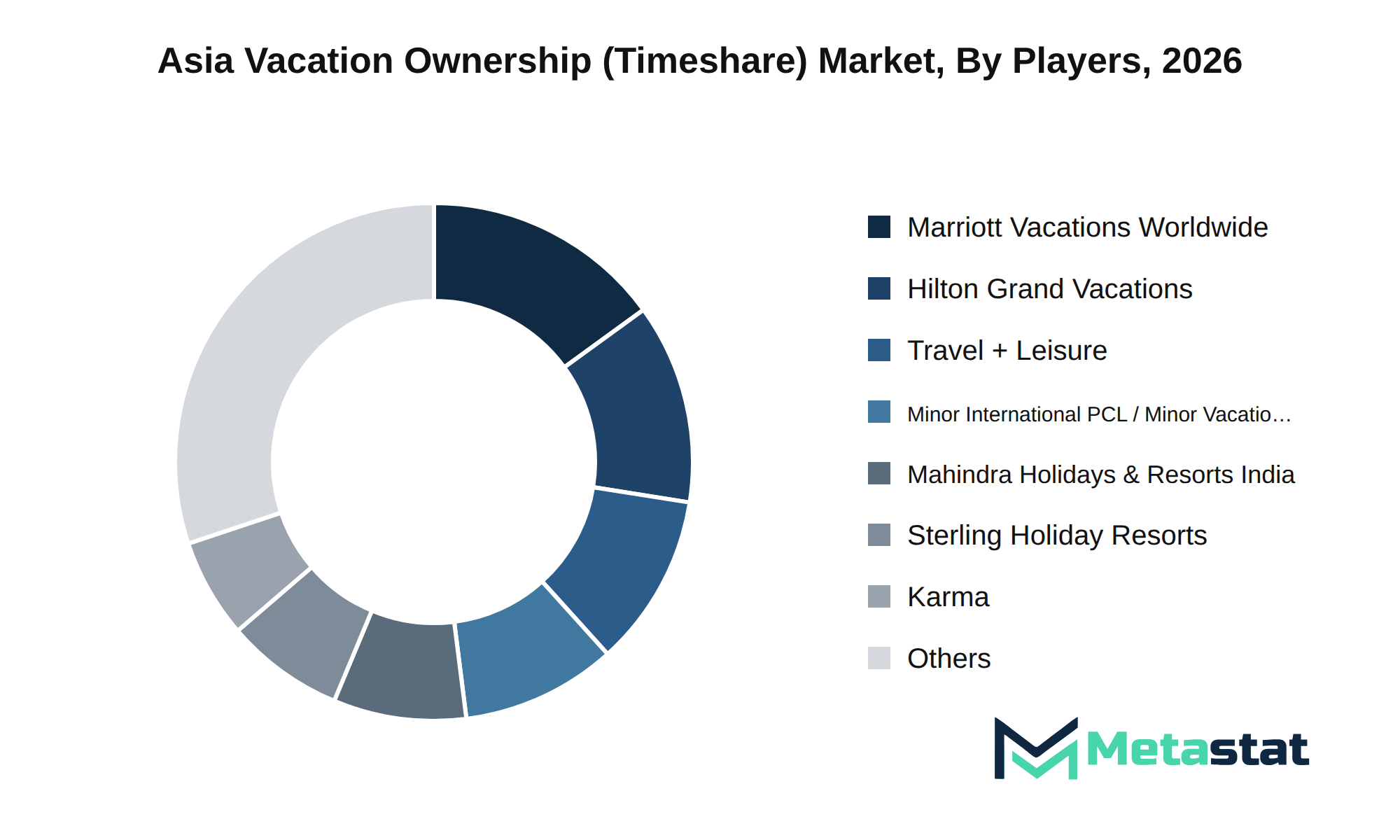
The Asia Vacation Ownership (Timeshare) market features a diverse array of players implementing various strategic behaviors. Companies including Marriott Vacations Worldwide Corporation, Hilton Grand Vacations Inc, and Travel + Leisure Co focus on product differentiation and customer retention strategies, enhancing brand equity through unique offerings and loyalty programs. This approach strengthens customer loyalty and mitigates switching costs.
Regional players including Minor International PCL / Minor Vacation Club and Mahindra Holidays & Resorts India Limited leverage strategic alliances and joint ventures to broaden market reach. These collaborations enable integration of value chains and optimization of procurement leverage, thus enhancing competitive positioning. Innovation and proprietary technology moats play a crucial role in maintaining a competitive edge, particularly for companies like Tokyu Land Corporation and Absolute World Group.
The market faces barriers to entry, affecting new entrants and potential startup disruptions. Established companies benefit from economies of scale and strong intellectual property portfolios, contributing to technological defensibility. While the market evolves, the future competitive outlook depends on how companies adapt their go-to-market strategies and respond to emerging trends in consumer preferences.
Market size is forecast to rise from USD 5,469.1 million in 2025 to over USD 10,981.3 million by 2033. The Asia Vacation Ownership (Timeshare) market is projected to experience a compound annual growth rate (CAGR) of 9.1% during this period. The base case reflects steady growth driven by increasing consumer interest in flexible vacation options and a rising number of independent travelers seeking unique experiences. In contrast, a bullish scenario indicates a rapid acceleration in growth, spurred by significant advancements in technology and innovative product offerings that align with shifting consumer preferences.
Conversely, a bearish outlook contemplates potential challenges arising from macroeconomic fluctuations, regulatory changes, and geopolitical tensions that could disrupt market stability. The ongoing evolution of consumer preferences, paired with structural consumption shifts, highlights the necessity for stakeholders in the Asia Vacation Ownership (Timeshare) market to adapt and innovate continuously. Emerging white-space opportunities, particularly in the regions of China and India, signify high-growth pockets that offer substantial potential for investment and strategic capital allocation.
Investment in infrastructure and technology integration will play a critical role in defining the competitive landscape. Timelines for research and development commercialization and policy enforcement will influence market dynamics significantly, making it essential for industry players to establish defensibility roadmaps and align their strategies with evolving market demands.
The report strategically identifies and profiles the key market players and analyses their core competencies in each sub-segment of the Vacation Ownership (Timeshare) market.
Report Attributes | Details |
Study Period | 2021-2033 |
Base Year | 2025 |
Estimated Year | 2026 |
Forecast Period | 2026-2033 |
Historical Period | 2021-2025 |
Growth Rate | CAGR 9.1% from 2026 to 2033 |
Revenue Unit | USD million |
Segmentation | By Type, Tour Type, Tourist Type, Region, and Region |
Find answers to common questions about this report
The Asia Vacation Ownership (Timeshare) market size was valued at USD 5,469.1 million in 2025.
The Vacation Ownership (Timeshare) market is projected to grow at a CAGR of 9.1% during the forecast period from 2026 to 2033.
Points-Based Vacation Ownership leads the Asia Vacation Ownership (Timeshare) market, with a projected value of USD 4,392.5 million by 2033. This segment represents the largest share compared to other types.
Key drivers for the Asia Vacation Ownership (Timeshare) market include evolving consumer preferences toward unique and personalized travel experiences, increased participation from millennials, and urbanization encouraging vacation ownership because an escape from city life. Infrastructure development and advancements in digital technology further enhance accessibility and user experience, supporting market growth.
The Asia Vacation Ownership (Timeshare) market growth faces significant challenges due to complex regulatory compliance requirements, which increase operational costs and create barriers for new entrants. Geopolitical instability and inflationary pressures further complicate the landscape, impacting profitability and market dynamics. These factors contribute to hesitance among potential investors, restricting overall market development.
Notable factors favoring product adoption in the Asia Vacation Ownership (Timeshare) market include evolving consumer preferences toward unique and personalized vacation experiences, particularly among millennials and younger generations. The increased focus on affordability and accessibility, alongside urbanization trends, enhances the appeal of vacation ownership, positioning it because an alternative to traditional accommodations.
The Vacation Ownership (Timeshare) market is estimated to reach a valuation of USD 10,981.3 million by 2033.
Key players operating in the Asia Vacation Ownership (Timeshare) market include Marriott Vacations Worldwide Corporation, Hilton Grand Vacations Inc, Travel + Leisure Co, Minor International PCL / Minor Vacation Club, Mahindra Holidays & Resorts India Limited, and Karma Group.
India demonstrates the highest growth in the Asia Vacation Ownership market, with a compound annual growth rate of 12.6% projected through 2033.
The Points-Based Vacation Ownership segment is expected to reach USD 4,392.5 million by 2033.
The analysts below cover Consumer Goods research at Metastat Insights.
LEAD ANALYST
Utkarsh Khirodkar is a Lead Market Research Analyst at MetaStat Insight, specializing in market intelligence, technology sector assessments, and competitive strategy.
Analyzing the transition from natural gas to green hydrogen in iron ore reduction requires realistic infrastructure timelines. Meta stat insight supplied a detailed regional assessment of DRI plant conversion costs and scrap metal availability in North America and Western Europe. Their report carefully examined pellet quality specs and electrical grid access constraints without making oversimplified market assumptions. The research material served as a practical reference during internal technology roadmap discussions.
Integrating zero-trust access controls across legacy electronic health record systems involves complex compliance overhead. Team produced an analysis that clearly separated identity governance and administration tools from privileged access management platforms. Their evaluation of HIPAA and GDPR compliance features across cloud native solutions gave our architecture group clear baseline criteria. The custom data request regarding biometric authentication adoption in hospital networks was returned promptly with clear documentation.
Evaluating calorific value requirements and air permit compliance across municipal waste facilities requires localized data. Metastat Insight structured their analysis around operational throughput capacity and feedstock composition variations in Latin America and Eastern Europe. Their competitive mapping of sorting equipment vendors helped clarify technology differences between optical separators and heavy media systems. The study provided an objective baseline during our capital expenditure reviews.
Explore related market intelligence reports worth reading alongside this one.