
LEAD ANALYST
Utkarsh Khirodkar is a Lead Market Research Analyst at MetaStat Insight, specializing in market intelligence, technology sector assessments, and competitive strategy.

Global Luxury Experiential Travel Market Size, Share, By Product Type (Luxury Hotels & Resorts, Luxury Rail Journeys, Conventional Luxury Ocean & Yacht Cruises, Luxury River Cruises, Luxury Safari & Wildlife Journeys, Luxury Expedition Cruises, Luxury Cultural & Tailor-Made Land Journeys, Luxury Private Jet Journeys and Others), By Booking Channel (Direct Supplier Channels, Luxury Travel Advisors & Agencies, Tour Operators & Destination Management Companies, Online Travel Agencies and Luxury Booking Platforms), By Traveller Type (Solo Travelers and Two-Guest Bookings), By Passengers Type (Domestic and International), Industry Analysis, Growth, Trends, and Forecast, 2026-2033
Report ID
MSI-4979
Published
August, 2026
Pages
298 Pages
Format
Historical
Base year
Forecast
Forecast period
Report Details
Choose Your License
Global Luxury Experiential Travel Market
The global Luxury Experiential Travel market was valued at USD 1,606.8 billion in 2025 and is projected to reach USD 3,109.7 billion by 2033, growing at a CAGR of 8.6% over the forecast period.
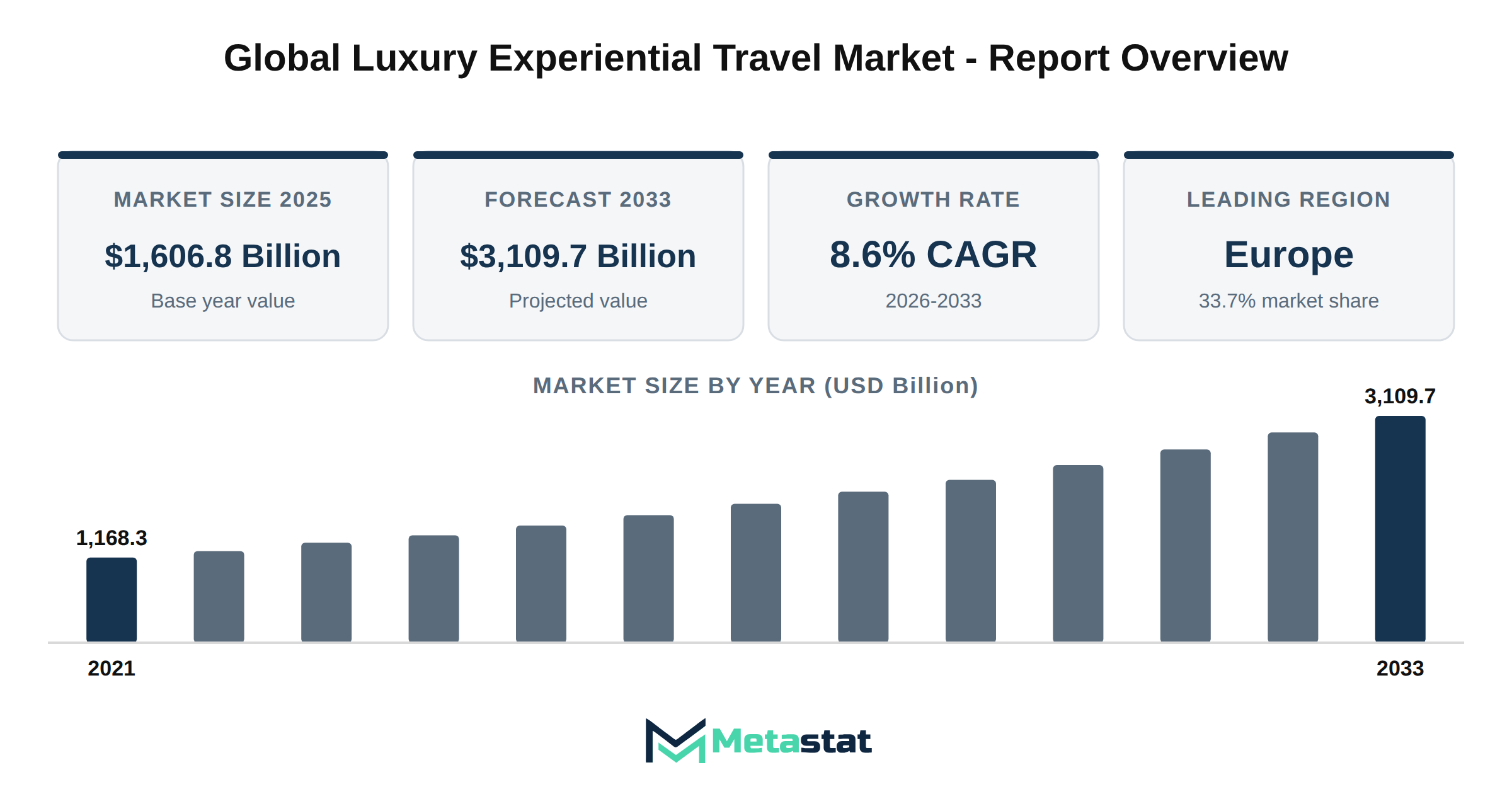
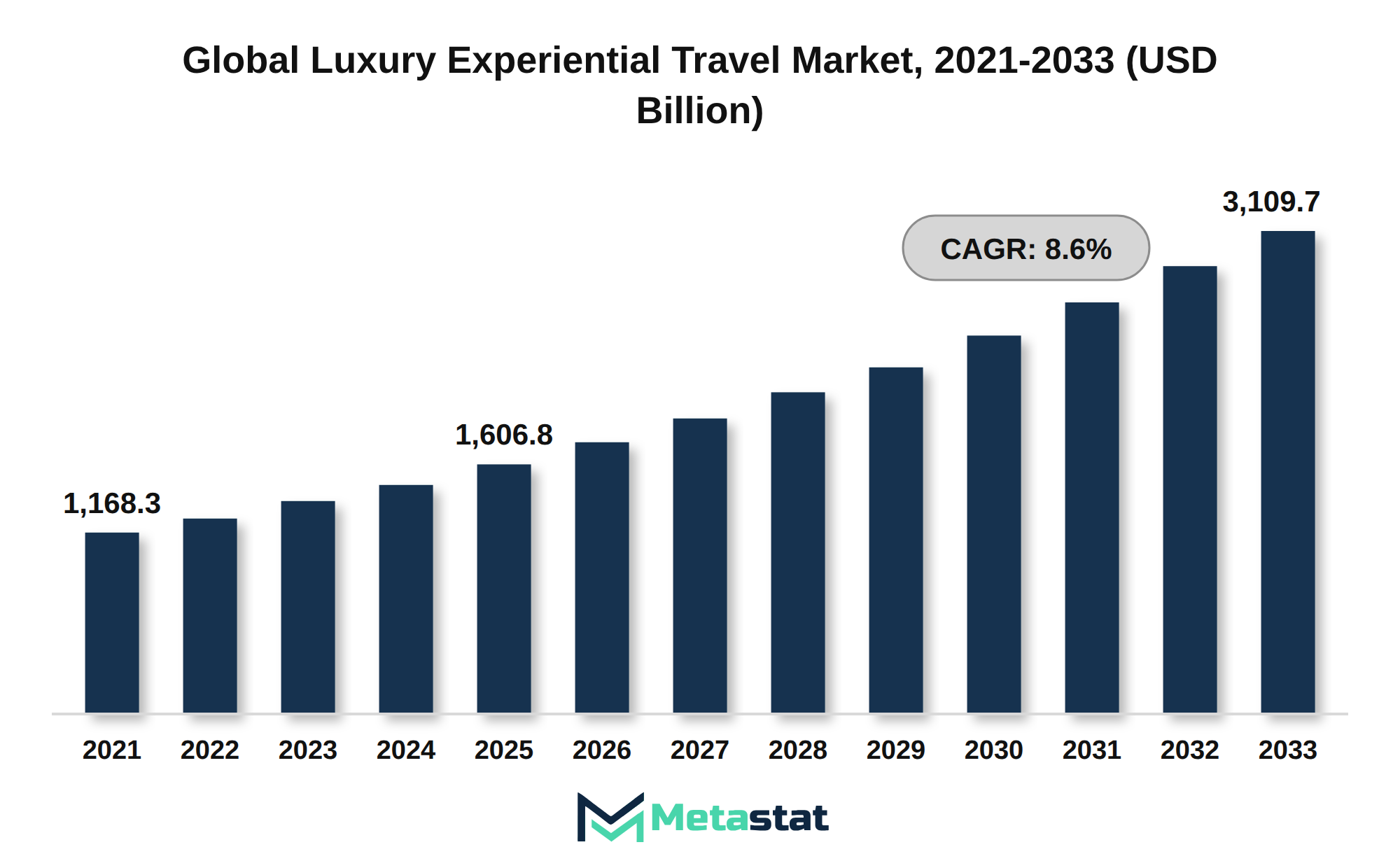
The Luxury Experiential Travel market, valued at USD 1,606.8 billion in 2025, is projected to reach USD 3,109.7 billion by 2033, reflecting a compound annual growth rate (CAGR) of 8.6%. Historical data shows an increase from USD 1,168.3 billion in 2021 to USD 1,474.5 billion in 2024, indicating a strong upward trend in market performance.
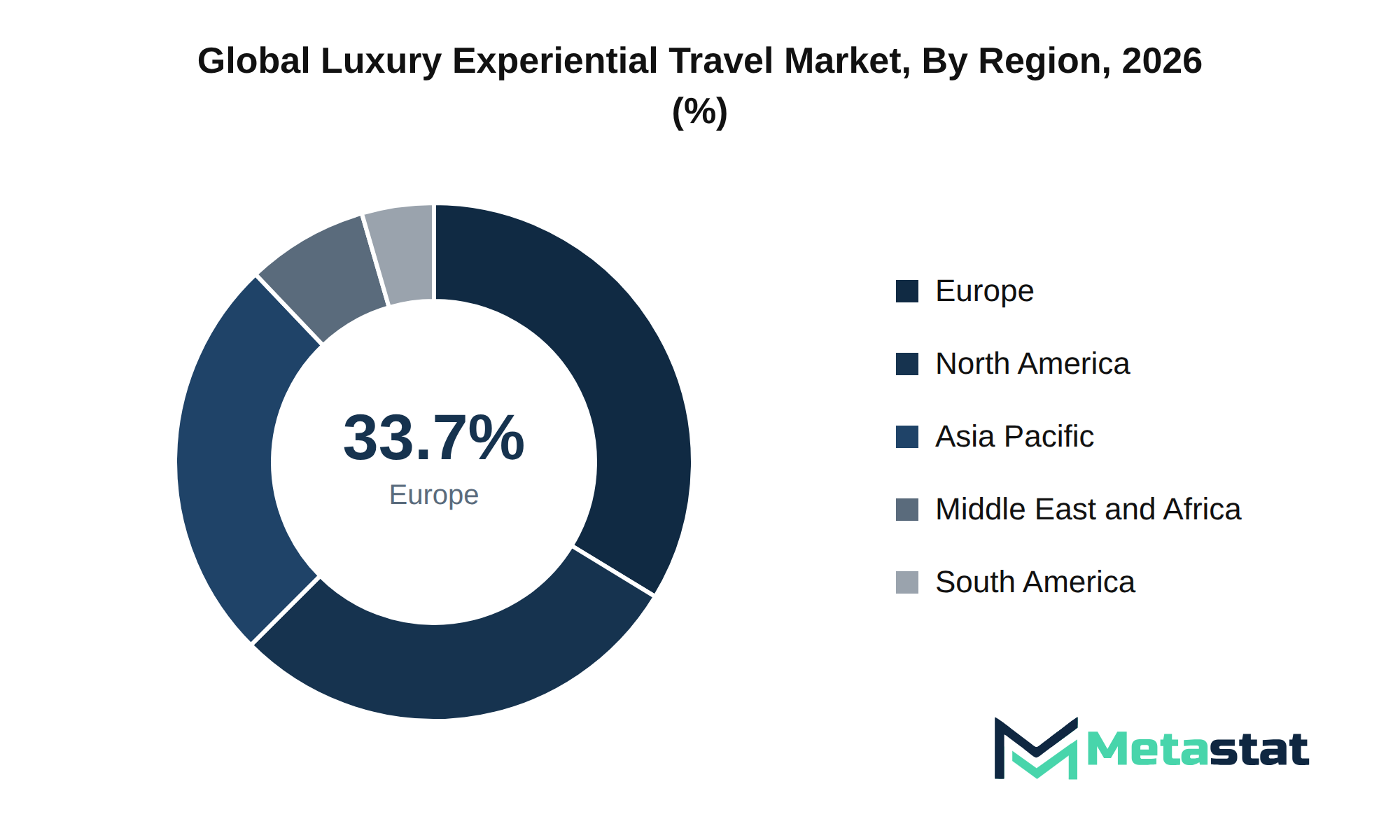
Regional analysis shows that Europe holds the largest market share at 33.7%, followed closely by North America at 28.8% and Asia Pacific at 25.4%. The market dynamics in each region are influenced by distinct cultural preferences, economic conditions, and travel behaviors, suggesting a tailored approach for service providers targeting diverse demographics.
Product segmentation highlights Luxury Hotels & Resorts because a significant contributor, with a value projected to grow from USD 619.2 billion in 2026 to USD 1,026.2 billion by 2033, representing a CAGR of 7.5%. Luxury Rail Journeys are expected to expand at a CAGR of 9.3%, indicating growing interest in unique travel experiences that emphasize comfort and exclusivity.
Booking channels reflect evolving consumer preferences, with Direct Supplier Channels anticipated to increase from USD 555.5 billion in 2026 to USD 1,057.3 billion by 2033, reflecting a CAGR of 9.6%. This shift highlights the importance of direct engagement between consumers and providers, enabling personalized experiences that enhance customer satisfaction.
Traveler types indicate rising demand for unique and bespoke travel experiences, particularly among Solo Travelers, projected to grow from USD 323.7 billion in 2026 to USD 626.3 billion by 2033, achieving a CAGR of 9.9%. This trend emphasizes the necessity for market players to develop tailored offerings that cater to the individual needs and preferences of travelers.
The Luxury Experiential Travel market experiences significant growth driven by evolving consumer preferences and increasing disposable incomes. High-net-worth individuals seek unique and immersive experiences, resulting in a shift toward personalized travel options. This trend influences various segments, including luxury hotels, bespoke travel services, and exclusive tours, enhancing revenue opportunities for service providers.
Technological advancements contribute to market dynamics, enabling innovative travel solutions and enhanced customer engagement. The integration of digital platforms facilitates efficient booking experiences, while data analytics allows for tailored marketing strategies. These developments attract investment in technology-driven services, enhancing competitive positioning within the market.
Environmental considerations shape the market, reflecting consumer prioritization of sustainability. Companies are adopting eco-friendly practices and promoting responsible tourism to align with consumer values. This shift not only caters to demand for sustainable options but positions brands favorably in an increasingly conscientious consumer base.
Geopolitical factors and economic fluctuations impact market stability. Economic growth in emerging markets expands the customer base for luxury travel services, while currency volatility poses challenges for pricing strategies. Companies navigate these complexities to optimize their offerings and maintain profitability in the evolving landscape.
The Luxury Experiential Travel market anticipates ongoing transformation, with opportunities arising from demographic shifts and changing consumer behaviors. Investment in infrastructure, including luxury accommodations and transportation networks, supports market expansion and enhances accessibility. Organizations that adapt to these trends and align their strategies with evolving consumer expectations are positioned for success in this competitive environment.
Changes in consumer behavior significantly influence the Luxury Experiential Travel market. A growing preference for customized travel experiences reflects a broader trend among affluent consumers seeking unique and immersive adventures. This demand arises from the desire for authenticity and the willingness to invest in memorable experiences rather than traditional luxury goods.
Affluent travelers increasingly favor destinations and services that offer tailored experiences, which encompasses everything from bespoke itineraries to exclusive access to cultural events and luxury accommodations. The increasing availability of technology that supports personalization, including artificial intelligence and data analytics, enhances the ability of travel providers to offer unique services, further driving market growth.
This trend influences various demographics, particularly millennials and Gen Z travelers who prioritize experiences over material possessions. While these consumers gain purchasing power, their preferences shape the offerings within the market, prompting providers to innovate and diversify their services. Consequently, travel brands that adapt to these evolving expectations position themselves for sustained growth and competitiveness in the Luxury Experiential Travel market.
Investment in infrastructure development and asset modernization plays a critical role in propelling the Luxury Experiential Travel market. Upgrading physical and digital capacities enhances the overall travel experience, attracting affluent consumers who prioritize unique and immersive journeys. Modernized facilities and improved network capabilities facilitate smoother travel logistics, increasing consumer satisfaction and reinforcing brand loyalty.
Emerging technologies, including automation and advanced software solutions, streamline operational processes within the travel industry. These innovations contribute to cost efficiency, allowing companies to allocate resources towards enhancing customer experiences. Firms experience improvements in productivity and competitiveness, driving further growth in the Luxury Experiential Travel market.
The ongoing transformation of travel infrastructure aligns with trends in urbanization and evolving consumer preferences. High-quality accommodations and exclusive experiences thrive in well-connected destinations, leading to increased demand for luxury travel services. Continued investment in infrastructure and modernization initiatives supports sustained growth and expansion within the Luxury Experiential Travel market.
The Luxury Experiential Travel market faces significant challenges from regulatory pressures and macroeconomic headwinds. Increasing regulatory requirements regarding environmental sustainability impact operational costs and compliance efforts for service providers. These regulations restrict certain luxury travel offerings, forcing companies to adapt their services and raising overall expenses. Macroeconomic factors including inflationary pressures affect both consumer spending behavior and operational costs. Rising prices for essential services and goods reduce discretionary spending on luxury experiences, adversely influencing market growth.
Supply chain disruptions stemming from geopolitical instability introduce further constraints. Fluctuations in global trade dynamics delay the delivery of high-end travel services and experiences, thus affecting customer satisfaction. Resource scarcity poses a risk to luxury travel providers, particularly in exclusive locations where natural attractions are essential to the offering. Companies navigate these challenges while striving to maintain high service standards, straining financial resources.
The combination of these factors generates an impediment to growth within the Luxury Experiential Travel market. While companies allocate more resources toward compliance and inflation-related adjustments, the potential for investment in innovative offerings diminishes. This situation hinders the market's ability to evolve and respond to changing consumer preferences, resulting in stagnation of growth opportunities.
The Luxury Experiential Travel market faces severe challenges owing to geopolitical fragmentation and trade disruptions. Increasing trade deficits and tariff friction have led to higher costs for operators, impacting pricing strategies and overall profitability. These factors create uncertainty that affects both suppliers and consumers, complicating market dynamics and resulting in a cautious approach to spending on luxury travel experiences.
Technological disruptions significantly influence the market, driven by rapid advancements that demand continuous adaptation from service providers. Companies invest in new technologies to enhance customer experiences and maintain competitive advantages. The challenge lies in integrating these technologies effectively while navigating interoperability friction, which impedes operations across various booking channels and service providers.
Logistics disruptions, stemming from supply chain instability, present additional hurdles for the Luxury Experiential Travel market. Shifts in global supply chains and resource availability create volatility in costs, which erode profit margins. The need for strategic planning and long-term partnerships becomes essential for companies aiming to mitigate risks associated with fluctuating input costs and ensure a steady flow of services.
Environmental factors impact the market, influenced by growing sustainability demands that push companies to reevaluate their operational practices. The necessity to comply with tightening global regulatory standards adds compliance overhead, leading to increased operational costs. Firms adapt to these evolving legal liabilities while managing the environmental lifecycle footprints of their offerings, ensuring they meet consumer expectations for responsible travel.
The Luxury Experiential Travel market encounters pressures from changing downstream demands and market saturation. While competition intensifies, the push for innovative offerings drives companies to diversify their portfolios and enhance service quality. This environment necessitates ongoing investment in talent retention and workforce development, ensuring that providers maintain a skilled workforce capable of delivering high-quality luxury experiences.
The Luxury Experiential Travel market benefits from advancements in technology and digital transformation, enhancing consumer engagement and operational efficiencies. The integration of artificial intelligence, machine learning, and data analytics streamlines personalized travel experiences, allowing companies to tailor offerings to individual preferences and enhance customer satisfaction. This technology facilitates a shift toward more dynamic and responsive travel planning, appealing to consumers seeking bespoke experiences.
Digital platforms enable integration of various travel services, from booking to post-travel engagement, promoting loyalty among travelers. The growth of online travel agencies and luxury booking platforms exemplifies this trend, driving the market's expansion. Companies that successfully adopt these technologies position themselves competitively in a changing marketplace.
Next-generation innovations, including virtual and augmented reality, enhance the marketing of luxury experiences, allowing potential travelers to engage with destinations and services before making a commitment. These immersive technologies attract a tech-savvy demographic, expanding the market's reach. The emphasis on sustainability and eco-friendly practices aligns with changing consumer preferences, encouraging investment in green technologies that reduce environmental impact.
The combination of these technological advancements and evolving consumer demands is projected to drive significant growth in the Luxury Experiential Travel market. Firms that leverage digital transformation effectively capture new market segments, ensure operational efficiency, and respond adeptly to shifts in consumer behavior. This strategic alignment positions them to thrive in the competitive environment of luxury experiential travel.
The Global Luxury Experiential Travel market is segmented based on Product Type, Booking Channel, Traveller Type, and Passengers Type.
Valued at USD 619.2 billion in 2026, the Luxury Hotels & Resorts segment is projected to reach USD 1,026.2 billion by 2033, reflecting a CAGR of 7.5% during the forecast period. Demand for luxury accommodations arises from evolving consumer preferences for personalized and exclusive experiences, attracting high-net-worth individuals seeking unique travel opportunities. This segment capitalizes on trends including wellness tourism, eco-friendly practices, and immersive cultural experiences, which align with the priorities of affluent travelers.
Investment in luxury hotel infrastructure and enhanced service offerings drives segment expansion. Facilities respond to customer expectations for high service quality through innovative technology and tailored experiences. Market participants invest in next-generation upgrades, ensuring that properties maintain relevance and appeal to discerning consumers.
Consumer shifts toward experiential travel emphasize the importance of unique and high-quality offerings in the Luxury Hotels & Resorts segment. Guests increasingly seek accommodations that provide more than just a place to stay, favoring properties that offer cultural immersion, fine dining, and bespoke services. This focus on experiential engagement positions the segment for significant growth within the broader Luxury Experiential Travel market.
Pricing structures experience volatility due to fluctuating demand and operational costs. Strategic pricing aligns with consumer expectations, ensuring that value perception remains strong amid rising service expenses. Providers in this segment navigate margins carefully while maintaining high service standards, positioning themselves effectively within a competitive environment.
Supply chain resilience enhances the Luxury Hotels & Resorts segment. Establishing strong relationships with suppliers focused on quality improves operational efficiency and guest satisfaction. Continuous evaluation of sourcing strategies mitigates risks associated with disruptions, ensuring a stable flow of high-quality products and services.
Regulatory compliance and sustainability initiatives shape market dynamics. Certifications related to eco-friendly practices appeal to the environmentally conscious traveler, enhancing brand loyalty and reputation. Adhering to regulatory requirements ensures operational continuity while aligning with market demands for responsible tourism practices.
Growth in the Luxury Rail Journeys segment stems from increasing consumer interest in unique travel experiences that offer comfort and luxury. This segment attracts affluent travelers seeking immersive adventures that combine scenic views, historical contexts, and high-end services. Investments in upgrading train interiors and enhancing onboard experiences significantly contribute to segment appeal. Luxury Rail Journeys emphasize personalized services and exclusive itineraries, catering to discerning travelers who prioritize high-quality experiences. Innovations in rail technology, including modern amenities and gourmet dining options, enhance passenger satisfaction and drive demand.
While the demand for luxury travel continues to rise, this segment is projected to reach USD 149.3 billion by 2033, at a CAGR of 9.3% during the forecast period. The Luxury Experiential Travel market benefits from strong marketing strategies that highlight the unique aspects of luxury rail journeys. Enhanced partnerships with luxury brands and travel agencies strengthen market position, creating a competitive edge in attracting high-net-worth individuals. This segment's focus on creating memorable experiences positions it favorably within the broader Luxury Experiential Travel market.
Growth within the Conventional Luxury Ocean & Yacht Cruises segment occurs due to increasing disposable income among affluent consumers worldwide. A growing preference for unique, tailor-made travel experiences enhances demand for luxury cruises, with consumers seeking immersive journeys that combine travel with high-quality service and amenities. The Luxury Experiential Travel market sees an influx of affluent travelers who prioritize experiential offerings over traditional vacations, driving growth in this segment.
The Conventional Luxury Ocean & Yacht Cruises segment is expected to reach USD 357.6 billion by 2033. Investments in state-of-the-art vessels and innovative cruise experiences contribute to segment expansion. Cruise lines actively pursue modernization efforts through the development of eco-friendly ships, which aligns with heightened environmental awareness among travelers. Enhanced offerings, including personalized itineraries and exclusive excursions, further differentiate luxury cruises in a competitive market.
Adoption of advanced technologies, including onboard entertainment systems and sophisticated logistics, enhances the overall customer experience. Streamlined booking processes through online platforms enable travelers to easily access and customize their journeys, boosting operational efficiency for cruise operators. The Luxury Experiential Travel market responds to shifting consumer preferences by adapting offerings that promote sustainability and wellness, appealing to a growing segment of eco-conscious voyagers.
Pricing structures in the segment reflect the quality of services and experiences provided, with premium pricing strategies adopted to maintain exclusivity. Market players face margin pressures attributed to fluctuations in fuel prices and increasing operational costs. Strategic partnerships with luxury brands reinforce the value proposition for consumers and facilitate access to unique experiences, positioning companies favorably within the evolving luxury travel market.
Long-term growth prospects for the Conventional Luxury Ocean & Yacht Cruises segment appear strong, aided by emerging markets and increased interest in luxury travel. Continued investment in marketing and brand development will capture the attention of high-net-worth individuals seeking unique experiences. The segment stands to benefit significantly from trends that prioritize personalized service, unique experiences, and sustainable travel practices.
Growth in the Luxury River Cruises segment aligns with evolving consumer preferences for unique and immersive travel experiences. Travelers increasingly seek personalized journeys that offer cultural enrichment and scenic views, driving demand for luxury river cruises. This segment is projected to grow at a CAGR of 9.3% during the forecast period.
Technological advancements enhance luxury river cruise offerings, with modern vessels equipped with amenities that cater to high-end clientele preferences. Enhanced onboard experiences, including gourmet dining and curated excursions, attract a discerning audience. The demand for sustainable travel options gains momentum, with eco-friendly practices becoming a priority for cruise operators.
Emerging markets exhibit a growing appetite for luxury river cruises, expanding the customer base significantly. While more travelers seek authentic experiences, operators focus on unique itineraries that highlight local culture and history, further driving segment growth. The Luxury Experiential Travel market benefits from these trends, positioning luxury river cruises because a competitive offering within the broader market.
Competitive dynamics within the market intensify owing to new entrants introducing innovative concepts, leading to differentiation in service and pricing strategies. Operators are increasingly incorporating technology to streamline booking processes and enhance customer engagement. This shift towards digital platforms facilitates better customer interactions and optimizes operational efficiency.
Capital investments in fleet enhancement and customer experience innovations remain crucial for sustaining growth within the Luxury River Cruises segment. Companies that prioritize strategic opportunities in emerging markets unlock significant revenue potential, ensuring robust performance in the growing Luxury Experiential Travel market.
Interest in Luxury Safari & Wildlife Journeys arises from a growing desire for unique and immersive travel experiences among affluent consumers. This segment attracts clients seeking personal connections with nature and wildlife, particularly in regions renowned for their diverse ecosystems. Increased focus on sustainable tourism practices enhances the appeal of wildlife journeys, aligning with the values of environmentally conscious travelers.
Expansion catalysts include the rise of experiential travel trends, with travelers prioritizing meaningful encounters over traditional luxury offerings. Innovative tour operators are introducing tailored experiences, highlighting local cultures and conservation efforts, which enrich the travel experience. Marketing strategies that emphasize adventure and personalized services contribute to growth in this sub-segment, appealing to a broad demographic of affluent travelers.
Technological advancements, including mobile booking platforms and enhanced digital marketing techniques, play a significant role in reaching potential customers. Social media influencers and travel bloggers frequently promote their luxury wildlife experiences, effectively marketing this offering to their followers. Such exposure cultivates interest and increases bookings, further driving demand in the Luxury Experiential Travel market.
Cost structures within the Luxury Safari & Wildlife Journeys segment reflect the premium nature of the experiences offered. High-quality accommodations and exclusive access to wildlife reserves significantly influence pricing. Fluctuations in travel demand lead to pricing volatility, impacting profitability for service providers. Companies operating in this niche often face margin pressures due to heightened competition and the maintain high service standards.
Strategic opportunity windows exist owing to an increasing number of travelers seeking unique experiences that prioritize wildlife conservation. Brands that align their offerings with ethical practices and sustainability initiatives differentiate themselves in a crowded market. This alignment not only enhances brand loyalty but attracts a clientele willing to invest in premium experiences, reinforcing the segment's growth trajectory.
Interest in Luxury Expedition Cruises stems from increasing demand for unique travel experiences that allow travelers to explore remote destinations while enjoying lavish accommodations. This trend attracts affluent consumers seeking adventure, cultural immersion, and personalized itineraries tailored to their preferences. The willingness of consumers to spend on high-end experiences drives market growth, making this segment a vital part of the Luxury Experiential Travel market.
Technological advancements play a role in enhancing the appeal of Luxury Expedition Cruises. Innovations in vessel design and onboard amenities provide luxury cruise lines the ability to offer superior experiences that cater to discerning travelers. Enhanced navigation and environmental sustainability initiatives contribute to the attraction, promoting responsible tourism while ensuring comfort and luxury throughout the journey.
Consumer behavior reflects a shift towards experiential travel, emphasizing authenticity and exclusivity. This evolving preference drives the adoption of Luxury Expedition Cruises, appealing to those who value unique and immersive experiences over traditional luxury offerings. The market adapts by innovating and introducing new itineraries that highlight distinct cultural and natural attractions, capitalizing on the desire for one-of-a-kind journeys.
Competition within the segment intensifies, prompting luxury cruise operators to enhance their service offerings. Strategic collaborations with local guides and experts enrich the travel experience, ensuring guests receive in-depth knowledge and insights during their journeys. This focus on differentiation positions companies favorably within the Luxury Experiential Travel market, allowing them to attract a growing customer base.
Investment in fleet modernization and the introduction of next-generation vessels form a core strategy for operators. These investments improve operational efficiency and enhance the overall guest experience, providing opportunities for increased market penetration. While the market continues to evolve, Luxury Expedition Cruises are positioned to capture the interest of travelers seeking exclusive, adventurous experiences.
Consumer interest in unique and personalized travel experiences drives demand for Luxury Cultural & Tailor-Made Land Journeys. This segment thrives on travelers seeking immersive experiences that connect them to local cultures and traditions, delivering memorable interactions that enhance overall journeys. Cultural events, culinary experiences, and bespoke itineraries attract affluent travelers who prioritize authenticity and uniqueness in travel plans.
Collaboration between luxury travel providers and local artisans supports segment expansion. This partnership facilitates the development of exclusive experiences that blend high-end service with local heritage, appealing to discerning travelers. Such offerings enhance customer satisfaction and encourage repeat business, strengthening the overall competitiveness of the Luxury Experiential Travel market.
Technological advancements contribute significantly to this segment's evolution. Enhanced online platforms and mobile applications offer travelers personalized suggestions and tailored itineraries, streamlining the planning process while ensuring each journey meets individual preferences. These innovations improve customer engagement and satisfaction, reinforcing loyalty among high-end travelers.
Shifts in consumer behavior reflect a growing preference for experiential over material luxury, prompting travel providers to enhance cultural offerings. The focus on immersive travel experiences creates opportunities for operators to differentiate services within the Luxury Experiential Travel market. This demand for authenticity drives operators to innovate continuously, offering tailored packages that cater specifically to the interests of affluent travelers.
Regulatory compliance and certifications play critical roles in ensuring safety and quality standards across offerings. Adhering to these guidelines builds trust with consumers, further enhancing the appeal of Luxury Cultural & Tailor-Made Land Journeys. Consequently, this focus on quality contributes to sustainable growth within the market.
Overall, the Luxury Cultural & Tailor-Made Land Journeys segment positions itself well within the luxury travel sector. By leveraging advancements in technology, supporting local partnerships, and responding to consumer preferences for authentic experiences, this segment continues to thrive in the competitive environment of the Luxury Experiential Travel market.
Growth in Luxury Private Jet Journeys aligns with a rising demand for personalized and exclusive travel experiences among affluent consumers. Factors driving this trend include an increasing preference for privacy and convenience, particularly among high-net-worth individuals seeking efficient travel solutions. Adoption of this segment reflects shifts in consumer priorities, with travelers valuing bespoke experiences that facilitate transitions between destinations.
Technological advancements contribute significantly to segment expansion. Enhanced in-flight services, advanced booking technologies, and improved aircraft safety standards enhance the overall consumer experience. The integration of next-generation upgrades, including more fuel-efficient jets and advanced communication systems, strengthens the appeal of private jet travel. This evolution caters to a clientele that prioritizes comfort and luxury while traveling, creating a competitive atmosphere within the Luxury Experiential Travel market.
Regulatory compliance and high safety standards shape operational protocols for luxury private jet services. Compliance with aviation regulations ensures that service providers maintain rigorous safety measures, promoting consumer confidence. Costs associated with maintaining regulatory standards impact pricing strategies, influencing market dynamics and profit margins. Consequently, service providers address these challenges by optimizing operational efficiencies, which enhances overall profitability.
Investment in luxury private jet services remains robust amid rising consumer demand. Strategic opportunity windows arise owing to new markets emerging and existing markets expanding, prompting investment in fleet upgrades and service enhancements. The importance of supply chain resilience becomes evident, because service providers navigate raw material sourcing and logistics complexities in the aviation sector. This proactive approach to market vulnerabilities positions companies favorably, enabling them to capitalize on growth opportunities within the Luxury Experiential Travel market.
Demand for private villas and exclusive-use residences within the Luxury Experiential Travel market reflects a shift towards personalized and intimate travel experiences. This segment attracts high-net-worth individuals seeking secluded getaways that offer both luxury and privacy, away from crowded tourist destinations. Growth in this sub-segment results from travelers’ increasing preference for bespoke experiences, combined with heightened awareness of health and safety concerns.
Segment expansion is driven by advancements in property technology and enhanced customer service offerings. Exclusive-use residences, often equipped with premium amenities, appeal to groups and families desiring intimate settings for gatherings or celebrations. The rise of digital platforms facilitating bookings directly with property owners enhances accessibility and visibility for these unique travel options.
Shifts in consumption behaviors indicate a strong preference for unique and curated experiences over traditional hotel stays. Regulatory compliance standards around short-term rentals influence the operational landscape, compelling property owners to adhere to local laws while enhancing quality and safety standards of their offerings. This compliance builds trust among travelers, further driving demand.
Investments in marketing and strategic partnerships with luxury travel advisors enhance the visibility of private villas and exclusive residences. These partnerships lead to tailored packages that align with consumer desires for unique experiences, further propelling growth within the market. The segment is projected to experience substantial expansion, meeting the evolving preferences of high-end travelers.
Valued at USD 555.5 billion in 2026, the Direct Supplier Channels segment is projected to reach USD 1,057.3 billion by 2033, at a CAGR of 9.6% during the forecast period. This growth is driven by several factors, including an increasing preference for personalized travel experiences. Consumers demonstrate a strong inclination towards direct interactions with suppliers, which enhances their travel experiences and strengthens customer loyalty.
Direct Supplier Channels provide a range of booking options, offering travelers greater flexibility and opportunities to customize their itineraries. This segment benefits from technological advancements, enabling suppliers to provide efficient booking processes and real-time updates. Enhanced digital platforms allow for improved communication between suppliers and consumers, creating a more engaging and efficient travel planning experience.
Segment expansion is influenced by an uptick in global travel demand, particularly because international travel restrictions ease. The rising disposable income among consumers leads to increased spending on luxury experiences, reinforcing the importance of Direct Supplier Channels in meeting this demand. With travelers seeking exclusive and unique journeys, suppliers are set to capitalize on this trend by enhancing their service offerings and expanding their market reach.
Pricing volatility in the luxury travel sector poses challenges, owing to fluctuating costs that impact profit margins for suppliers. However, strategic partnerships and collaborations within the market mitigate these pressures, allowing suppliers to enhance value propositions for travelers. While the market evolves, investment in innovative solutions and customer-centric approaches remains crucial for sustaining growth within the Direct Supplier Channels segment.
Market dynamics reflect a growing preference for personalized travel options, significantly influencing demand for Luxury Travel Advisors & Agencies. This segment is recognized for its ability to deliver tailored experiences, catering to affluent travelers seeking unique adventures. The increasing emphasis on bespoke itineraries strengthens the market position, allowing agencies to capitalize on consumer desires for exclusivity and quality service.
Technological advancements play a significant role in enhancing the operational capabilities of Luxury Travel Advisors & Agencies. The integration of sophisticated booking systems and data analytics enables agencies to optimize customer interactions and streamline service offerings. Such enhancements attract a wider clientele, contributing to an anticipated growth trajectory in the market.
The Luxury Travel Advisors & Agencies segment is estimated to reach USD 839.6 billion by 2033, at a CAGR of 8.1% during the forecast period. This growth aligns with an increasing willingness among consumers to invest in premium travel experiences, propelled by rising disposable incomes and a robust global economy. Agencies that effectively leverage digital marketing and social media platforms capture a larger share of the affluent traveler segment.
Competition among Luxury Travel Advisors & Agencies intensifies owing to new entrants and established players vying for market share. Strategic partnerships with luxury service providers enhance service offerings, allowing agencies to present comprehensive travel solutions. Such collaborations improve client satisfaction and reinforce brand reputation in the Luxury Experiential Travel market.
Changing consumer behaviors, particularly post-pandemic, indicate a shift towards experiential travel, characterized by immersive cultural experiences and authentic local engagement. This trend presents a strategic opportunity for Luxury Travel Advisors & Agencies to refine their service models and align offerings with evolving traveler expectations. By focusing on unique experiences, agencies differentiate themselves in a crowded marketplace.
Market demand for Tour Operators & Destination Management Companies reflects a significant trend towards personalized travel experiences and expertly curated itineraries. This sector benefits from travelers increasingly seeking unique, immersive experiences rather than traditional sightseeing tours. The rise of digital platforms enhances the visibility and accessibility of these services, allowing operators to reach a broader audience while customizing offerings to meet diverse customer preferences.
The segment is expected to reach USD 559.8 billion by 2033. Factors contributing to this growth include the ability of operators to provide specialized knowledge and local insights, which enhances the travel experience. Increased interest in experiential travel, driven by social media influence and peer recommendations, fuels demand for tailored travel solutions. Partnerships between operators and local businesses create unique opportunities, enriching the travel experience while supporting local economies.
Technological advancements play a crucial role in the segment's evolution, enabling operators to apply data analytics and customer feedback to refine services. Enhanced online booking platforms streamline the customer journey, facilitating easier access to tailored travel packages. Shifting consumer preferences towards sustainable and responsible travel influence operators to adapt their offerings to include eco-friendly options, which will likely capture additional market share. Overall, the Luxury Experiential Travel market's growth trajectory indicates a robust future for Tour Operators & Destination Management Companies, driven by evolving consumer behaviors and technological advancements.
Increasing consumer preference for convenience and efficiency drives growth within the Online Travel Agencies & Luxury Booking Platforms segment. This segment is projected to grow at a CAGR of 10.1% during the forecast period. Enhanced digital platforms have simplified the booking process, attracting a wider audience seeking luxury travel experiences. The ability to compare options and access exclusive offers online contributes to the segment's expansion.
Technological advancements support the evolution of online travel services, enabling real-time updates and personalized recommendations. These features enhance user experience, allowing travelers to tailor their itineraries according to individual preferences. This shift aligns with the broader trends in the Luxury Experiential Travel market, where customization and flexibility are essential.
Investment in user-friendly interfaces and mobile applications strengthens competitive positioning among online platforms. Enhanced functionality and accessibility encourage repeat usage, building brand loyalty among affluent travelers. The segment experiences significant growth, with businesses focusing on optimizing their digital presence to capture market share.
Changing consumption patterns reflect a preference for experiences over material possessions, further fueling demand for online booking platforms. High-income consumers increasingly seek curated experiences that online travel agencies provide. This trend reinforces the importance of digital channels in the luxury travel sector.
In the Luxury Experiential Travel market, the "Others (Membership, Concierge Platforms)" sub-segment benefits from increasing consumer preference for bespoke travel arrangements. This trend arises from affluent travelers seeking tailored experiences that align with their individual tastes and desires. The rise of exclusive membership services and concierge platforms enhances access to unique travel opportunities, allowing clients to enjoy customized itineraries and personalized support throughout their journeys.
Technological advancements play a significant role in this sub-segment, enabling integration of services and improving user experience. Enhanced digital platforms facilitate access to luxury offerings and allow for real-time communication between travelers and service providers. This shift towards digital engagement has transformed how luxury experiences are marketed and consumed, influencing client expectations and loyalty.
Emerging trends including sustainability and wellness tourism impact the demand for membership and concierge services. Affluent travelers increasingly prioritize eco-friendly and wellness-oriented options when selecting experiences. This growing consciousness prompts companies within this sub-segment to adapt and innovate, ensuring offerings align with evolving consumer values.
Strategic partnerships among service providers enhance market opportunities. Collaborations between luxury hotels, travel agencies, and concierge services enable a comprehensive approach to meeting diverse travel needs. By leveraging synergies, companies expand their reach and enhance service offerings, creating increased value for clients in the Luxury Experiential Travel market.
Valued at USD 323.7 billion in 2026, the Solo Travelers segment is projected to reach USD 626.3 billion by 2033, at a CAGR of 9.9% during the forecast period. Primary demand drivers include a rising inclination among individuals to seek personalized and immersive travel experiences, contributing significantly to segment growth. The quest for self-discovery, adventure, and unique cultural encounters enhances the appeal of solo travel, especially in the Luxury Experiential Travel market.
Changing social dynamics, particularly among millennials and Gen Z travelers, result in an increased desire for solo journeys. These travelers prioritize authenticity and unique experiences, seeking opportunities for personal growth and exploration. Segment expansion occurs through a growing trend of wellness and self-care, with solo travelers inclined towards retreats and wellness-focused travel options.
Technological advancements in booking platforms and travel applications enable effective planning and personalization for solo travelers. Enhanced digital tools allow for tailored itineraries and experiences, addressing the distinctive needs of individuals exploring the market. The influence of social media is significant, driven by travelers sharing their experiences, further encouraging others to take solo adventures.
Cost structures reflect a variety of pricing options catering to different budgets, enhancing accessibility within the segment. Pricing volatility arises from fluctuations in travel demand and economic conditions, but overall, luxury offerings and unique experiences command premium pricing. The segment benefits from increasing investment in marketing strategies aimed at solo travelers, highlighting experiences that align with their preferences.
Supply chain resilience remains vital, with suppliers adapting to changing consumer needs and preferences. While the market evolves, ensuring robust connections with accommodation providers, transportation services, and local experience providers becomes essential. Overall, the Solo Travelers segment represents a significant opportunity for growth within the Luxury Experiential Travel market, driven by evolving traveler preferences and the pursuit of personalized experiences.
Increasing interest in intimate travel experiences fuels growth in the Two-Guest Bookings segment of the Luxury Experiential Travel market. Couples seek romantic getaways and personalized itineraries, contributing to this segment's expansion. Unique offerings, including private tours and exclusive dining experiences, enhance appeal to travelers. This trend reflects a broader shift toward customized experiences where travelers desire intimate settings to create lasting memories.
Two-Guest Bookings segment is projected to reach USD 1,212.8 billion by 2033, at a CAGR of 7.7% during the forecast period. Growth factors include rising disposable income and changing consumer preferences toward exclusive travel, which drives demand for luxury accommodations tailored to couples. The emergence of new destinations and innovative travel packages stimulates interest in this segment, encouraging investment from suppliers aiming to capitalize on evolving market dynamics.
The Luxury Experiential Travel market benefits from a strong emphasis on personalization, which enhances customer loyalty and satisfaction. Travelers prioritize memorable experiences over material possessions, prompting companies to innovate continuously. This strategy supports the segment's growth, reflecting alignment with consumer expectations for high-quality service and unique offerings. While market competition intensifies, suppliers focusing on Two-Guest Bookings will capture significant market share through differentiated services and strategic partnerships.
Increasing interest in intimate travel experiences drives demand for the Small Private Parties (3-5 Travelers) segment within the Luxury Experiential Travel market. Travelers seeking personalized and unique experiences prefer traveling in small groups, enhancing social interaction and the sharing of memorable moments. This segment reflects a growing trend toward exclusivity and tailored adventures, appealing to affluent consumers who prioritize bespoke itineraries and unique destinations.
While the market evolves, numerous factors contribute to the anticipated growth of this segment. Rising disposable incomes among consumers enable higher spending on luxury travel experiences. Improved access to diverse travel destinations through advancements in technology increases the appeal of small group travel. In this context, Small Private Parties are expected to reach USD 653 billion by 2033, indicating robust expansion driven by changing consumer preferences.
Market players are responding to this shift by enhancing offerings tailored to small group travel. Increased collaboration with luxury service providers ensures high-quality experiences and personalized services, further attracting consumers. The opportunity for unique, immersive activities tailored to smaller groups enhances the attractiveness of this segment, reinforcing its potential within the Luxury Experiential Travel market.
Growth in the Medium Private Groups (6-10 Travelers) segment aligns with increasing consumer interest in shared travel experiences. This interest stems from a desire for social interaction and a personalized touch during journeys. Families and friends traveling together often seek unique and memorable experiences, fueling demand within this sub-segment. Valued at USD 323.7 billion in 2026, the segment is projected to grow at a CAGR of 8.5% during the forecast period.
Travelers within this group prioritize personalized itineraries and tailored services, contributing to the segment's expansion. Increased digital engagement and online platforms facilitate the booking of group experiences, enhancing accessibility. The Luxury Experiential Travel market benefits from technological advancements that improve the booking process and customer engagement.
Market competition intensifies due to travel providers adapting to the preferences of medium private groups. Companies that invest in innovative offerings and effective experiences position themselves for growth. Strategic partnerships with local attractions and service providers enhance the overall travel experience, attracting more groups to unique destinations. The segment's robust potential indicates strong future revenues for businesses catering to this demographic.
Growing interest in bespoke travel experiences drives demand for Large Private Groups (11+ Travelers) within the Luxury Experiential Travel market. This segment benefits from a shift towards more personalized and immersive travel options, attracting larger groups seeking unique experiences together. The rising trend of multi-generational travel, where families and friends travel in larger numbers, supports this growth. Technological advancements in booking platforms enhance accessibility and convenience, allowing larger groups to plan complex itineraries with ease. Increased availability of luxury accommodations and experiences tailored for groups further fuels this demand. Travelers exhibit a preference for exclusive services, including private transfers and customized excursions, which cater to specific needs and desires. Significant activity in the market for Large Private Groups comes from luxury travel advisors and agencies specializing in group travel arrangements. Their expertise in curating tailored experiences strengthens their role in connecting service providers with group travelers. Expansion in this segment reflects broader consumption shifts towards personalized travel, creating strategic opportunities for service providers targeting this demographic.
Valued at USD 762.2 billion in 2026, the Domestic segment is projected to reach USD 1,306.1 billion by 2033, at a CAGR of 8% during the forecast period. This growth aligns with a shift in consumer preferences toward exploring local attractions and unique experiences, which has received significant attention in the Luxury Experiential Travel market. Increased disposable income among domestic travelers enhances demand for high-end services and accommodations, driving further expansion within the segment.
While more travelers seek convenient options that offer high-quality experiences, the Domestic segment experiences a notable increase in bookings. This trend results from a combination of evolving travel preferences and heightened awareness of local destinations. The market observes significant interest from younger demographics, who prioritize experiential travel over traditional luxury commodities. These shifts contribute to the segment's overall growth trajectory, with demand increasing steadily.
Developments in technology enable domestic travel providers to enhance offerings through personalized services and tailored experiences. Advanced booking platforms and mobile applications facilitate connections between travelers and service providers, strengthening market engagement. The rising importance of sustainability influences consumer choices, with travelers increasingly seeking eco-friendly accommodations and experiences that minimize environmental impact.
Regulatory compliance and safety standards play crucial roles in shaping the landscape for the Domestic segment. Travel companies that adapt to these standards position themselves favorably within the market, attracting a more safety-conscious clientele. Overall, the combination of evolving consumer preferences, technological advancements, and regulatory factors contributes to a positive outlook for the Domestic segment in the Luxury Experiential Travel market.
Increasing global travel accessibility and tourism recovery drive demand for the International segment within the Luxury Experiential Travel market. This segment is projected to reach USD 1,803.7 billion by 2033, at a CAGR of 9% during the forecast period. A growing number of affluent travelers prioritize international experiences that blend luxury with cultural engagement and adventure. The rise of social media and digital platforms enhances exposure to global destinations, further stimulating interest in international travel.
Shifting consumer preferences towards immersive experiences highlight the importance of tailored offerings in the market. Luxury travelers increasingly seek itineraries that include exclusive access to local attractions and authentic cultural interactions. This trend emphasizes collaboration among luxury travel providers, local businesses, and destination management organizations to design unique travel packages that meet evolving consumer expectations.
Technological advancements in communication and booking processes facilitate smoother planning for international travel, enhancing overall customer experience. Innovations in mobile apps and online platforms streamline the booking journey, allowing travelers to customize their itineraries efficiently. These technological developments contribute to the growth of the International segment within the market.
Increasing awareness of sustainable travel practices influences purchasing decisions among luxury travelers. Eco-friendly options and responsible tourism initiatives gain traction, aligning with the values of affluent consumers who prioritize environmental consciousness. This shift creates opportunities for travel providers to differentiate their offerings through sustainability-focused experiences, further driving demand in the International segment.
Investment in marketing strategies that target high-net-worth individuals plays a critical role in expanding reach within the market. While competition intensifies, effective brand positioning and personalized marketing efforts capture the attention of discerning travelers seeking exclusive international experiences. This strategic emphasis on targeted marketing supports expansion efforts and revenue growth in the International segment.
Based on geography, the Global Luxury Experiential Travel market is divided into North America, Europe, Asia-Pacific, South America, Middle East, and Africa.
North America Luxury Experiential Travel market is set to expand at a CAGR of 8.6% within the forecast period, reaching a market size (TAM) of USD 839.6 billion by the end of 2033. The region represents 28.8% of the global market in 2025, highlighting its significance because a key player in the Luxury Experiential Travel landscape. The high demand for personalized and bespoke travel experiences drives growth in this market, with consumers seeking unique and memorable adventures.
Consumer preferences shift towards luxury offerings across various segments, including Luxury Hotels & Resorts and Luxury Rail Journeys. The increase in disposable income among travelers in the United States, Canada, and Mexico enhances purchasing power, facilitating access to premium travel options. Emerging trends in wellness and experiential travel contribute to the market's expansion, because consumers prioritize rejuvenation and immersive experiences.
Infrastructure modernization plays a critical role in supporting market activity. Investments in transportation networks and hospitality facilities improve accessibility and enhance the overall travel experience. The presence of established domestic players, including leading hotel chains and travel advisors, creates competitive dynamics that further stimulate growth. Local market leaders leverage their expertise to cater to the evolving needs of affluent travelers.
Nearshoring initiatives and localized procurement dynamics influence the supply chain landscape, enhancing efficiency and responsiveness to consumer demands. Geographic regulatory frameworks and compliance mandates shape operational strategies for market participants, ensuring adherence to local norms while pursuing growth opportunities. These factors collectively position North America because an expanding hub within the Luxury Experiential Travel market.
Europe accounts for 33.7% of the global Luxury Experiential Travel market in 2025. The region's diverse offerings and rich cultural heritage attract travelers seeking unique experiences, driving demand across key markets including Germany, France, the UK, Italy, Spain, and Russia.
Increasing disposable incomes and a growing inclination towards high-end travel experiences contribute to strong growth within this region. Consumers show a strong preference for luxury hotels, resorts, and exclusive travel packages, further enhancing market dynamics. The presence of well-established luxury brands and a competitive hospitality sector creates an environment ripe for expansion.
Emerging trends, including experiential travel and personalized itineraries, reflect changing consumer preferences. This shift creates opportunities within the market, prompting suppliers to innovate and expand service offerings. Enhanced cross-border connectivity and a focus on sustainable tourism practices increase the attractiveness of European destinations.
The Luxury Experiential Travel market in Europe benefits from a mature infrastructure and high service standards. Local compliance mandates and cultural nuances shape regional buying behaviors, influencing procurement dynamics. Strategic entry barriers remain high, ensuring established players maintain a competitive edge while new entrants navigate complex regulatory frameworks.
Continued foreign direct investment (FDI) flows into the region support infrastructure modernization and tourism development, creating additional growth vectors. The relationship between local market participants and global brands drives vendor consolidation trends, enhancing service diversity and quality across the Luxury Experiential Travel market.
Asia-Pacific holds a share of the Luxury Experiential Travel market, accounting for 25.4% in 2025. The region's demand is influenced by rising disposable incomes, evolving lifestyle preferences, and a growing middle class eager for unique travel experiences. Countries including China, Japan, India, South Korea, and Australia contribute to market expansion. Enhanced connectivity through modernized transport infrastructure facilitates travel, allowing for a smooth flow of tourists across the region.
China, with its vast population and increasing inclination towards luxury experiences, serves because a frontrunner in the market. The country's robust economic growth results in a higher demand for luxury hotels and exclusive travel packages. In Japan, cultural heritage tourism continues to drive interest, with travelers seeking bespoke experiences that reflect the nation's rich traditions and modern amenities.
India's expanding affluent class supports growth within the market, because luxury travel becomes an essential aspect of lifestyle for many. South Korea embraces experiential travel patterns, focusing on wellness and cultural immersion. Australia, known for its diverse landscapes and attractions, attracts attention from both domestic and international travelers seeking luxury experiences that highlight nature and adventure.
The Southeast Asia region benefits from its unique cultural offerings and natural beauty, attracting tourists searching for luxury and authentic experiences. Countries within this area reinforce their tourism strategies, promoting sustainable luxury travel options. The Rest of Asia Pacific continues to develop, with emerging markets providing fresh opportunities for growth within the Luxury Experiential Travel market.
South America represents a growing segment within the Luxury Experiential Travel market, contributing 4.5% of the global market share in 2025. The region includes key players including Brazil and Argentina, where an increasing number of affluent travelers seek unique and immersive experiences. Cultural richness and diverse landscapes enhance the appeal of luxury travel in these countries, encouraging investments in high-end accommodations and tailored travel services.
Infrastructure development supports the market. Ongoing improvements in transportation networks and luxury amenities enable a more efficient travel experience for visitors. This modernization aligns with a rising trend among consumers who prioritize personalized and high-quality travel experiences, thus driving growth in luxury segments.
Brazil and Argentina present significant opportunities for market expansion, with a focus on luxury hotels and resorts, luxury rail journeys, and cruises. The emergence of local and international travel brands enhances competition and stimulates further investment. An increasing number of luxury travel advisors and agencies cater to the growing demand for bespoke travel solutions within the region.
Local consumer behaviors reflect a preference for experiences that blend adventure with comfort. This has led to a rise in demand for unique offerings, including cultural tours and eco-lodges, which highlight the natural beauty and heritage of the region. Continuous growth in disposable income among South American consumers supports this trend, ensuring that the market remains attractive for investment and development.
South America represents a promising frontier in the Luxury Experiential Travel market. The combination of cultural appeal, infrastructure enhancement, and evolving consumer preferences positions the region for sustained growth and increased market share in the coming years.
The Luxury Experiential Travel market in the Middle East and Africa exhibits distinct characteristics shaped by cultural nuances and evolving travel preferences. The region's market presence indicates a growing significance in luxury travel dynamics. Countries including Saudi Arabia, UAE, and South Africa lead the charge in market expansion, driven by rising disposable income and a strong interest in high-end travel experiences.
Infrastructure modernization plays a critical role in enhancing travel experiences. Investments in transportation, hospitality, and tourism facilities contribute to creating a conducive environment for luxury travelers. Emerging market front-runners, particularly in the UAE, attract international visitors with world-class attractions and luxury accommodations.
A focus on localized procurement and cultural sensitivity enhances the appeal of the market. Travel offerings tailored to regional preferences strongly connect with consumers, promoting engagement and loyalty. The market anticipates growth from the increasing number of affluent travelers seeking unique experiences that blend luxury with authentic cultural immersion.
The competitive landscape in the region features both domestic market participants and established international players. Companies continually adapt to local preferences, ensuring offerings meet the expectations of sophisticated travelers. This adaptation encourages vendor consolidation trends, driven by businesses aiming to deliver comprehensive and appealing travel packages.
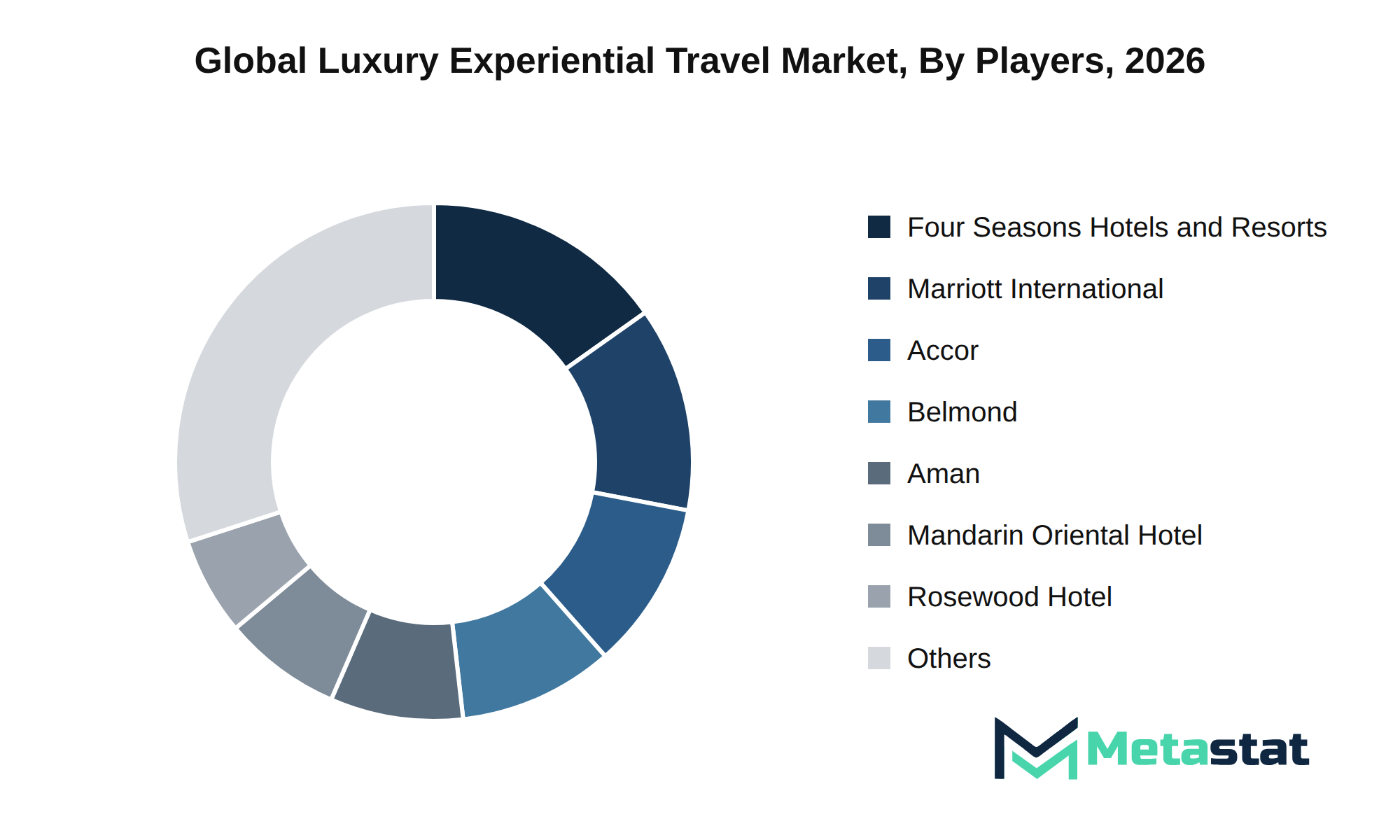
The Luxury Experiential Travel market features a diverse range of players focusing on various strategic behaviors to strengthen their positions. Companies including Belmond, Four Seasons Hotels and Resorts, and Marriott International, Inc. emphasize product differentiation through premium offerings, enhancing customer experiences, and leveraging brand equity. This focus drives customer retention strategies, reinforcing loyalty among travelers seeking unique and luxurious experiences.
Strategic alliances and partnerships characterize the efforts of several firms, including Accor and Aman Group, to expand their market reach and enhance service offerings. Collaborations with local businesses and service providers facilitate access to exclusive experiences, enriching the travel experience for customers. Such partnerships generate additional value and improve supply chain dynamics, enabling firms to maintain competitive pricing structures.
Intellectual property portfolios and proprietary technology moats play a significant role in the competitive dynamics within the market. Companies like Rosewood Hotel Group and Mandarin Oriental Hotel Group invest in research and development, promoting innovation in service delivery and operational efficiencies. This focus enhances their technological defensibility and positions them favorably against potential new entrants.
The future competitive outlook for the Luxury Experiential Travel market indicates a strong growth trajectory, driven by evolving consumer preferences and increased disposable income among affluent travelers. Defensive imperatives will shape strategies, with firms including One&Only Resorts and Six Senses Hotels Resorts Spas focusing on enhancing customer experiences to mitigate the threat of new entrants and startup disruption dynamics.
Market size is forecast to rise from USD 1,606.8 billion in 2025 to over USD 3,109.7 billion by 2033. The base case anticipates growth at a compound annual growth rate (CAGR) of 8.6%. The luxury experiential travel market faces both bullish and bearish scenarios driven by varying macroeconomic conditions and consumer trends.
In the bullish case, increased disposable income and travel enthusiasm among affluent consumers enhance demand for luxury experiences, leading to accelerated growth in the market. Conversely, the bearish scenario considers potential economic downturns or geopolitical tensions that could restrict discretionary spending on luxury travel, resulting in slower market expansion.
Shifts in consumer preferences toward unique, personalized travel experiences significantly influence demand. The integration of next-generation technologies, including artificial intelligence and virtual reality, facilitates enriched customer experiences while optimizing operational efficiencies in the market.
Regulatory evolution and compliance milestones present additional factors shaping the market. Adapting to new regulations ensures operational resilience and nurtures consumer trust, impacting overall market dynamics. Strategic capital allocation and infrastructure investments will further enhance growth in this sector, addressing emerging white-space opportunities and unmet enterprise needs.
Growth strategies should emphasize understanding core industry maturation trends, exploring high-growth pockets, and adapting to evolving demands in the luxury experiential travel market. An effective approach to infrastructure commitments and technology integration will ultimately define competitive positioning and long-term success.
The report strategically identifies and profiles the key market players and analyses their core competencies in each sub-segment of the Luxury Experiential Travel market.
Report Attributes | Details |
Study Period | 2021-2033 |
Base Year | 2025 |
Estimated Year | 2026 |
Forecast Period | 2026-2033 |
Historical Period | 2021-2025 |
Growth Rate | CAGR 8.6% from 2026 to 2033 |
Revenue Unit | USD billion |
Segmentation | By Product Type, Booking Channel, Traveller Type, Passengers Type, and Region |
By Region | North America (By Product Type, Booking Channel, Traveller Type, Passengers Type, and Country)
|
Europe (By Product Type, Booking Channel, Traveller Type, Passengers Type, and Country)
| |
Asia Pacific (By Product Type, Booking Channel, Traveller Type, Passengers Type, and Country)
| |
South America (By Product Type, Booking Channel, Traveller Type, Passengers Type, and Country)
| |
Middle East and Africa (By Product Type, Booking Channel, Traveller Type, Passengers Type, and Country)
|
Find answers to common questions about this report
The Luxury Experiential Travel market size was valued at USD 1,606.8 billion in 2025.
The Luxury Experiential Travel market is projected to grow at a CAGR of 8.6% during the forecast period from 2026 to 2033.
The North America Luxury Experiential Travel market size is estimated to reach USD 839.6 billion by 2033.
The Luxury Hotels & Resorts segment leads the Luxury Experiential Travel market, with a projected value of USD 1,026.2 billion by 2033. This segment's growth reflects a compound annual growth rate of 7.5 percent from 2026 to 2033.
Key drivers for the Luxury Experiential Travel market include a growing preference for customized travel experiences among affluent consumers and advancements in technology that support personalization. investment in infrastructure development enhances the overall travel experience, attracting consumers who prioritize unique and immersive journeys.
Europe holds the dominant share of the Luxury Experiential Travel market, accounting for 33.7 percent of the total market in 2033.
The Luxury Experiential Travel market experiences growth constraints from regulatory pressures and macroeconomic challenges. Increasing environmental regulations raise operational costs, while inflationary pressures diminish consumer spending on luxury experiences. geopolitical fragmentation and supply chain disruptions introduce uncertainties that complicate market dynamics and affect profitability.
Growing consumer preference for customized travel experiences and increasing availability of technology that supports personalization favor product adoption in the Luxury Experiential Travel market. These factors appeal to millennials and Gen Z travelers, who prioritize unique and immersive adventures over traditional luxury goods.
The Luxury Experiential Travel market is estimated to reach a valuation of USD 3,109.7 billion by 2033.
Key players in the Luxury Experiential Travel market include Belmond, Four Seasons Hotels and Resorts, Marriott International, Inc., Accor, Aman Group, and Rosewood Hotel Group.
The analysts below cover Consumer Goods research at Metastat Insights.
LEAD ANALYST
Utkarsh Khirodkar is a Lead Market Research Analyst at MetaStat Insight, specializing in market intelligence, technology sector assessments, and competitive strategy.
Evaluating sovereign cloud deployments for core banking platforms demands a clear view of data residency regulations and migration exit strategies. MetaStat Insight delivered an exhaustive review of regional latency tolerances, mainframe decommission milestones, and third-party vendor concentration risk. The regulatory compliance mapping across European and Asian financial jurisdictions gave our team a dependable baseline for multi-cloud infrastructure discussions.
Replacing petrochemical surfactants with bio-based alternatives requires realistic timelines on industrial precision fermentation scaling. The market research broke down commercialization timelines, feedstock sugar price sensitivities, and regional cosmetic ingredient regulatory approvals in Europe and East Asia. That supplier readiness mapping gave our formulations team reliable context when comparing renewable chemical sourcing roadmaps.
Tracking ceramic matrix composite adoption in high-bypass aero engines requires strict attention to material qualification cycles and FAA airworthiness testing milestones. The MetaStat Insight team provided a detailed timeline of silicon carbide fiber manufacturing capacity and commercial foundry lead times. Having clear visibility into upstream thermal barrier coating supply helped us stress-test our long-term component procurement strategy.
Explore related market intelligence reports worth reading alongside this one.