
Explore the driving forces behind the growth of the Ga 68 DOTATOC market, from technological advancements to increasing demand for precision medicine.
The positive trajectory of the Ga 68 DOTATOC market reflects a crucial evolution in the healthcare industry, with projections indicating a rise from USD 100.9 million in 2025 to USD 235.9 million by 2033. Such a substantial increase represents a compound annual growth rate of 11.2%. Identifying the factors propelling this growth is essential for stakeholders looking to navigate this dynamic landscape effectively.
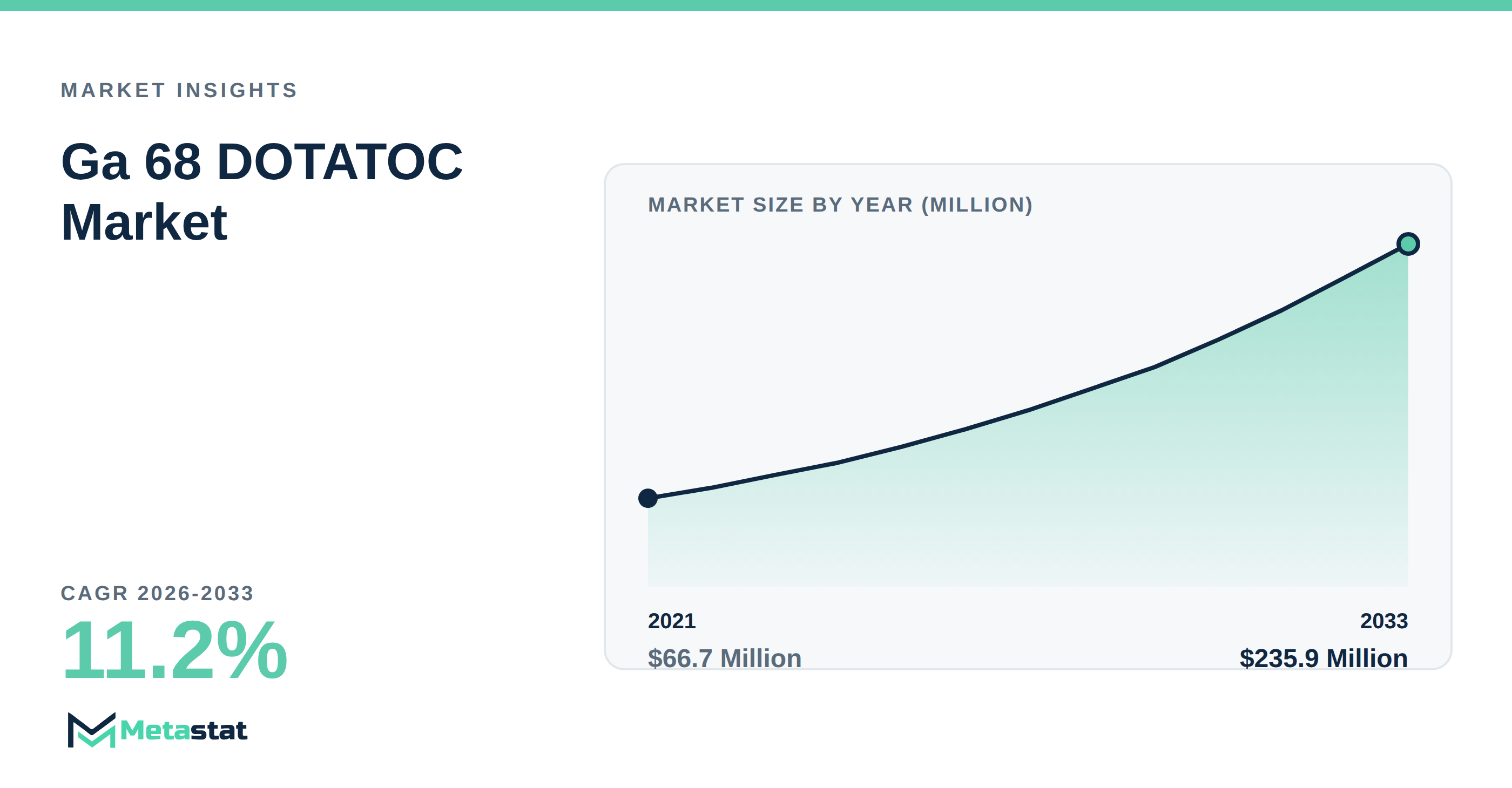
What drives the demand for Ga 68 DOTATOC products?
The rising incidence of neuroendocrine tumors serves because a primary motivator for the escalating demand for Ga 68 DOTATOC products. Healthcare providers are increasingly acknowledging the critical nature of accurate diagnostic tools and targeted therapies, which makes integrating Ga 68 DOTATOC into clinical practices essential. This trend signals a broader shift towards precision medicine, emphasizing personalized treatments tailored to the unique characteristics of individual tumors.
Geographically, North America leads in market share, accounting for 38.2% and projected to reach USD 82.3 million by 2033. This growth is attributed to significant investments in healthcare infrastructure and advancements in nuclear medicine. Facilities in the region focus on enhancing diagnostic capabilities, and the stringent regulatory environment reinforces the credibility and reliability of Ga 68 DOTATOC, further solidifying its presence in therapeutic applications.
How is technology influencing the Ga 68 DOTATOC market?
Technological innovations play a vital role in shaping the Ga 68 DOTATOC market. Advances in radiopharmaceutical production, notably through automated radiosynthesis systems, increase efficiency and accuracy. Such advancements have considerable implications for production timelines and costs, thereby improving accessibility for healthcare providers. The introduction of next-generation radiolabeling techniques ensures these products evolve to meet the growing demands of medical professionals, enhancing patient outcomes.
The ongoing digital transformation within healthcare supports this growth. The application of artificial intelligence and machine learning in diagnostics streamlines operational workflows, enabling faster and more precise diagnostics. Demand for Ga 68 DOTATOC products is on the rise, aligning with the overarching trend toward innovative diagnostic methodologies that foster informed clinical decision-making.
What challenges does the Ga 68 DOTATOC market face?
Despite robust growth prospects, the Ga 68 DOTATOC market faces several challenges. Stringent regulatory requirements often lead to delays in product launches and increased operational costs. This complex regulatory landscape deters smaller firms from entering the market, resulting in reduced innovation and competitive pressure among existing players.
Macroeconomic factors including inflation and currency volatility present hurdles for manufacturers, impacting pricing strategies and profitability. Companies in this sector adopts proactive risk management approaches to maintain competitive advantages while navigating fluctuating production costs and market conditions.
What opportunities exist for growth in the Ga 68 DOTATOC market?
In light of the challenges, numerous growth opportunities exist for companies willing to invest in innovation and sustainability. A growing focus on environmentally responsible practices aligns with global trends, allowing organizations to enhance operational efficiency while reducing their ecological footprint. This emphasis on sustainability highlights potential growth avenues because companies introduce technologies that fulfill regulatory standards and consumer expectations.
Investment in research and development remains paramount for tapping into emerging opportunities within the Ga 68 DOTATOC market. Organizations that prioritize R&D develops products addressing specific customer needs, particularly those relating to the increasing incidence of neuroendocrine tumors. The market's fragmentation, exemplified by a variety of participants and products, encourages innovation and differentiation, enabling firms to strengthen their market positions.
Stakeholders in the Ga 68 DOTATOC market should leverage these insights to make informed decisions that align with current market dynamics and future trends. For a more detailed analysis of the Ga 68 DOTATOC market, readers benefit from reviewing the Global Ga 68 DOTATOC Market report.
Tags
About the Authors

LEAD ANALYST
Utkarsh Khirodkar is a Lead Market Research Analyst at MetaStat Insight, specializing in market intelligence, technology sector assessments, and competitive strategy.

LEAD PRINCIPAL ANALYST, PHARMA AND HEALTHCARE
Food and Beverages · Healthcare · Healthcare IT · Medical Devices
Ajay Devgire is the Lead Healthcare Analyst at MetaStat Insight, leading strategic research and market intelligence initiatives across the global healthcare domain.

SENIOR RESEARCH ANALYST
Biotechnology · Food and Beverages · Medical Devices · Packaging
Snehal Pasalkar is a Research Analyst at MetaStat Insight, operating at the intersection of life sciences research, competitive strategy, and market intelligence.