
Understanding the dynamics of the ASEAN Freight Forwarding market is crucial for stakeholders. This post explores the driving factors, challenges, and strategies for success.
The ASEAN Freight Forwarding market offers a vital service for trade in the region, currently valued at USD 31.9 billion and projected to expand to USD 46.1 billion by 2033. Despite impressive figures, many potential investors and stakeholders misinterpret the underlying factors influencing this growth. Understanding these drivers proves crucial for companies seeking to enhance their competitive position.
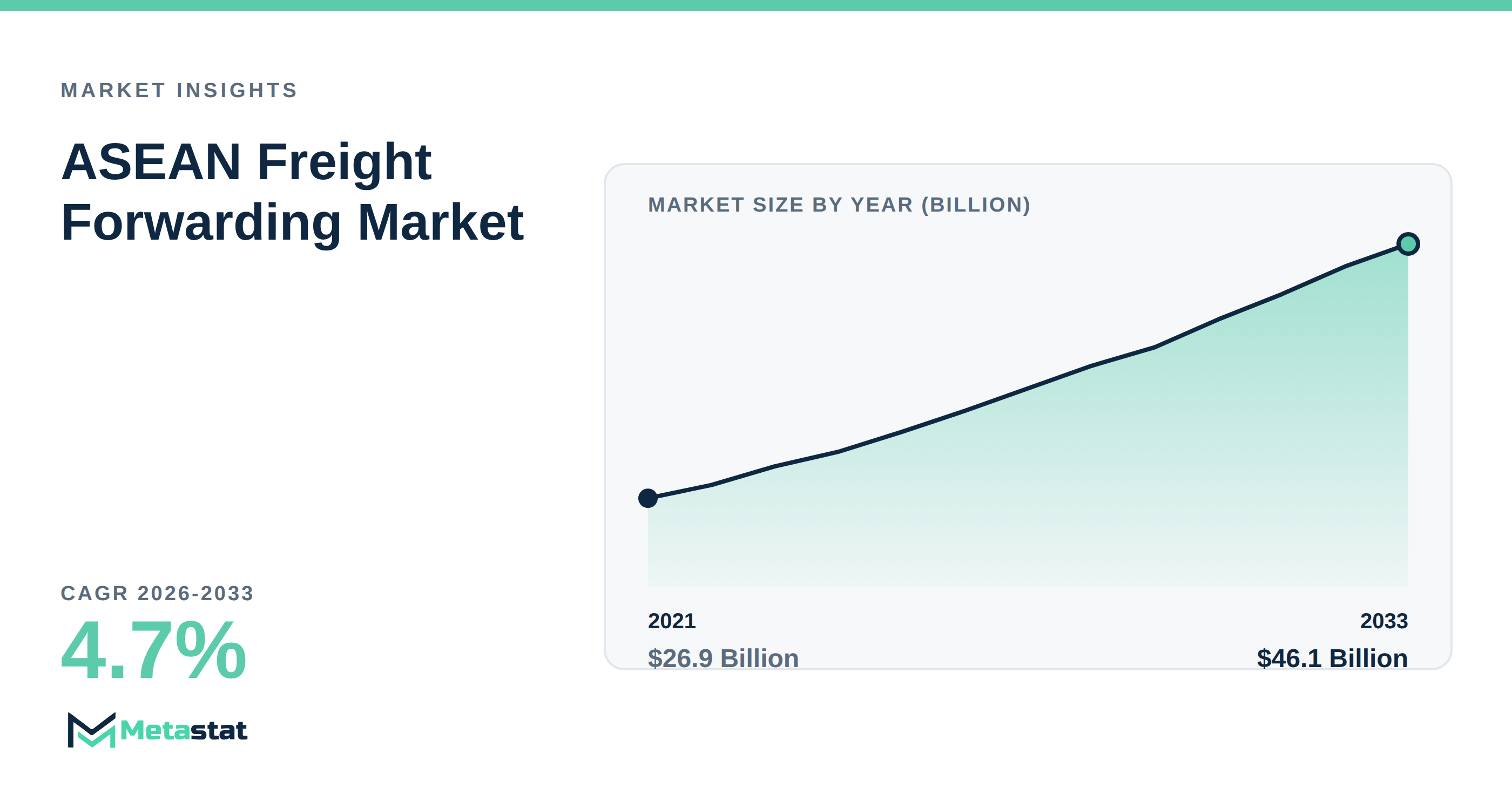
Growth in the ASEAN Freight Forwarding market stems from escalating international trade, driven by economic expansion across the region. The increasing integration within ASEAN countries enhances trade relationships, which directly boosts freight forwarding services. Key nations like Indonesia and Vietnam are ramping up production in manufacturing and agriculture, indicating that logistical demands are set to rise. This shift signals that companies focusing on regional trade expect heightened opportunities in shipping and logistics.
The surge in e-commerce plays an essential role in influencing growth. The rise of online shopping across Southeast Asia significantly alters logistics requirements, creating consumer expectations for swift and efficient deliveries. Market participants adjust their operations to meet the demands of this rapidly changing environment. E-commerce giants require reliable logistics partners capable of ensuring timely and cost-effective shipping solutions, driving logistics firms to innovate and enhance their offerings. In particular, the air freight forwarding segment is expected to increase from USD 11.9 billion in 2026 to USD 16.9 billion by 2033, indicating the market's alignment with evolving consumer behaviors.
While growth opportunities abound, the ASEAN Freight Forwarding market encounters notable challenges. Regulatory compliance remains a significant concern, complicating operational processes for logistics providers. Firms navigate a complex web of legal mandates governing international trade, which often leads to delays and increased costs. These hurdles create barriers for smaller players attempting to enter or expand within the market. Consequently, understanding and addressing these compliance challenges provides a competitive advantage for freight forwarding companies.
Geopolitical tensions further complicate the landscape, introducing volatility into supply chain operations. Political instability or changing trade policies disrupt established logistics routes, directly affecting overall efficiency. Firms that respond to these challenges with agility and develop flexible supply chain strategies stand to gain an advantage. By concentrating on resilience, companies mitigate the impacts of geopolitical uncertainties while capitalizing on emerging opportunities.
Investment in infrastructure remains a crucial factor shaping the ASEAN Freight Forwarding market. Ongoing development of transportation networks across the region enhances connectivity and streamlines logistics operations. Governments prioritize modernizing ports and airports, resulting in an environment conducive to trade growth. Companies that actively engage with governmental initiatives and invest in upgrading their networks strengthen service delivery and positioning within the market.
Technological advancements propel operational efficiencies in the logistics sector. The integration of automated systems and advanced tracking technologies strengthens service reliability, reduces transit times, and ensures transparency. Firms that embrace these innovations will not only bolster customer satisfaction but achieve significant cost reductions over time. A focus on adapting technology will distinguish successful companies from competitors that fail to evolve.
Despite the promising growth outlook, inflationary pressures and fluctuating costs continue to challenge profit margins. Rising prices for fuel and raw materials constrain operations, diminishing profitability. Companies adopt strategic procurement approaches and enhance their financial management to address these economic pressures. Investment in optimizing supply chain processes enables firms to buffer against volatility, ensuring sustainability amid increasing economic uncertainties.
In summary, the ASEAN Freight Forwarding market presents considerable growth potential through 2033, but stakeholders navigate a complex environment shaped by regulatory compliance, geopolitical risks, and technological advancements. Firms prioritizing operational agility, investing in technology, and adapting to regional trade dynamics will position themselves favorably within this competitive market. For a comprehensive analysis of these trends and their implications, see the ASEAN Freight Forwarding Market.
Tags
About the Authors

LEAD ANALYST
Utkarsh Khirodkar is a Lead Market Research Analyst at MetaStat Insight, specializing in market intelligence, technology sector assessments, and competitive strategy.

ENERGY & INFRASTRUCTURE INDUSTRY CONSULTANT
Automotive and Transportation · Electronics and Semiconductor · Energy and Power · Machinery & Equipment
Saurabh Vasant Ganvir consults for Energy & Infrastructure Industry at MetaStat Insight, specializing in renewable energy, solar EPC, and electric vehicle (EV) infrastructure markets.