
Electric chillers are set to lead the US District Cooling market, driven by energy efficiency demands, technological advancements, and urbanization trends.
Electric chillers have established themselves because the leading segment in the US District Cooling market, with a projected increase in value from USD 2,419.2 million in 2026 to USD 3,321.1 million by 2033. This growth represents a compound annual growth rate (CAGR) of 4.6%, reflecting the rising demand for energy-efficient and sustainable cooling solutions.
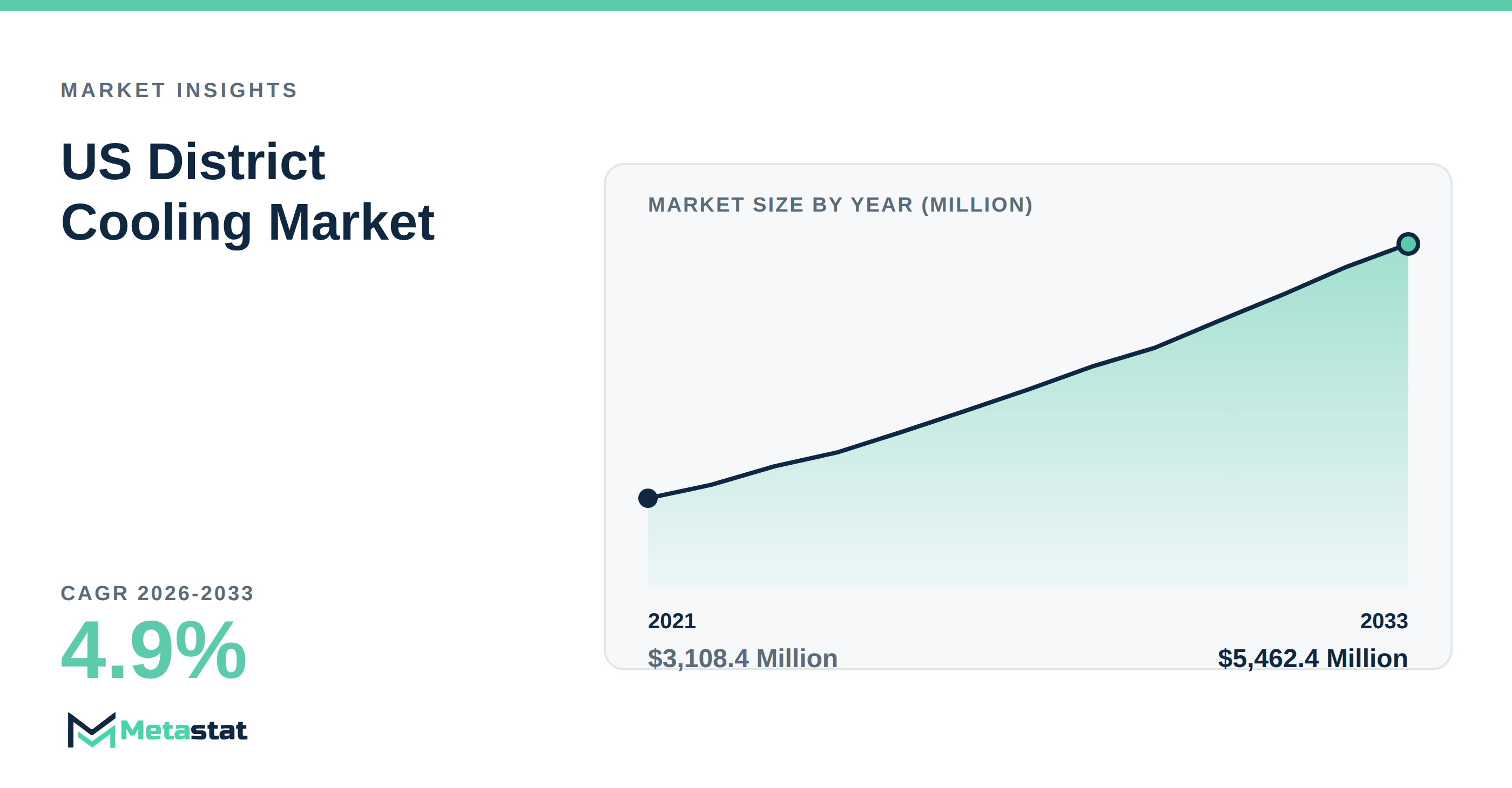
The increasing focus on energy efficiency is a significant factor driving the adoption of electric chillers. Stricter regulatory frameworks highlight the need for sustainable cooling methods, prompting businesses in commercial and industrial sectors to adopt electric chillers because reliable solutions. While urban areas expand, maintaining efficient cooling systems has become critical for managing populations and addressing rising temperatures.
Technological advancements play a vital role in enhancing the appeal of electric chillers. Innovations in design and advanced control systems facilitate better energy optimization, significantly lowering operational costs. Many operators recognize the potential for long-term savings, which contributes to the widespread acceptance of electric chillers. The role of electric chillers in achieving compliance with evolving regulatory requirements further strengthens their position in the market.
In comparison, other cooling technology segments, including absorption chillers and thermal energy storage, are not growing at the same rate because electric chillers. The absorption chillers segment is projected to reach USD 715.6 million by 2033, with a CAGR of 3.3%. While these systems effectively utilize renewable energy sources, their adoption remains largely dependent on specific applications and market preferences, which limits their growth relative to electric chillers.
The fragmentation of the market introduces complexities because multiple players offer diverse cooling solutions. This competition presents challenges for organizations when selecting the appropriate technology for their needs. However, electric chillers stand out due to their established reliability, consistent performance, and adaptability to evolving energy demands.
Urbanization is another critical factor fostering the development of centralized systems. Expected to grow from USD 2,530.8 million in 2026 to USD 3,460.4 million by 2033, centralized systems are increasingly favored in urban settings. By integrating central cooling systems, municipalities enhance efficiency and improve resource management in densely populated areas. While cities expand, the demand for centralized cooling solutions is anticipated to drive further growth in the electric chillers segment.
Infrastructure development supports this upward trend by modernizing urban cooling frameworks to accommodate electric chillers. These improvements optimize energy consumption and enhance service delivery, leading municipalities to prioritize efficient energy networks. More commercial and residential establishments are likely to pursue the adoption of electric chillers.
The financial implications for stakeholders in the US District Cooling market are considerable. The costs associated with regulatory compliance and the push towards energy-efficient systems necessitate investments in technologies like electric chillers. Transitioning towards sustainability entails infrastructure upgrades and new installations, with electric chillers at the forefront due to their operational advantages.
Despite challenges including skilled labor shortages and supply chain disruptions, electric chillers remain the preferred option for operators navigating these complexities. Their combination of advanced technologies, market demand, and regulatory pressures fosters continued growth and dominance in the market.
Investing in electric chillers enhances market resilience, enabling stakeholders to seize emerging opportunities. While sustainability and energy efficiency become increasingly important, the electric chillers segment is set to maintain its leading position in the US District Cooling market for years ahead. For a deeper analysis of the market, readers are encouraged to refer to the US District Cooling Market.
Tags
About the Authors

LEAD ANALYST
Utkarsh Khirodkar is a Lead Market Research Analyst at MetaStat Insight, specializing in market intelligence, technology sector assessments, and competitive strategy.

PRINCIPAL CONSULTANT - ENTERPRISE AI & EMERGING TECHNOLOGIES
Banking & Finance · Electronics and Semiconductor · Energy and Power · Healthcare IT · Information & Technology · Professional Services
Vijay Gunti is a Principal Consultant at MetaStat Insight, bringing over two decades of experience across enterprise digital transformation, technology strategy, and intelligent systems.

ENERGY & INFRASTRUCTURE INDUSTRY CONSULTANT
Automotive and Transportation · Electronics and Semiconductor · Energy and Power · Machinery & Equipment
Saurabh Vasant Ganvir consults for Energy & Infrastructure Industry at MetaStat Insight, specializing in renewable energy, solar EPC, and electric vehicle (EV) infrastructure markets.