
Discover the driving forces behind the rising demand for glass fiber composites in the Automotive Composite market and their competitive advantages.
The Automotive Composite market is experiencing a remarkable trend, with glass fiber composites emerging because the leading segment. Valued at USD 8.3 billion in 2026, this segment is anticipated to grow to USD 14.1 billion by 2033, representing a compound annual growth rate (CAGR) of 7.8%. This upward trajectory is credited to various factors, particularly the automotive industry’s increasing commitment to lightweight materials aimed at both enhancing performance and fuel efficiency.
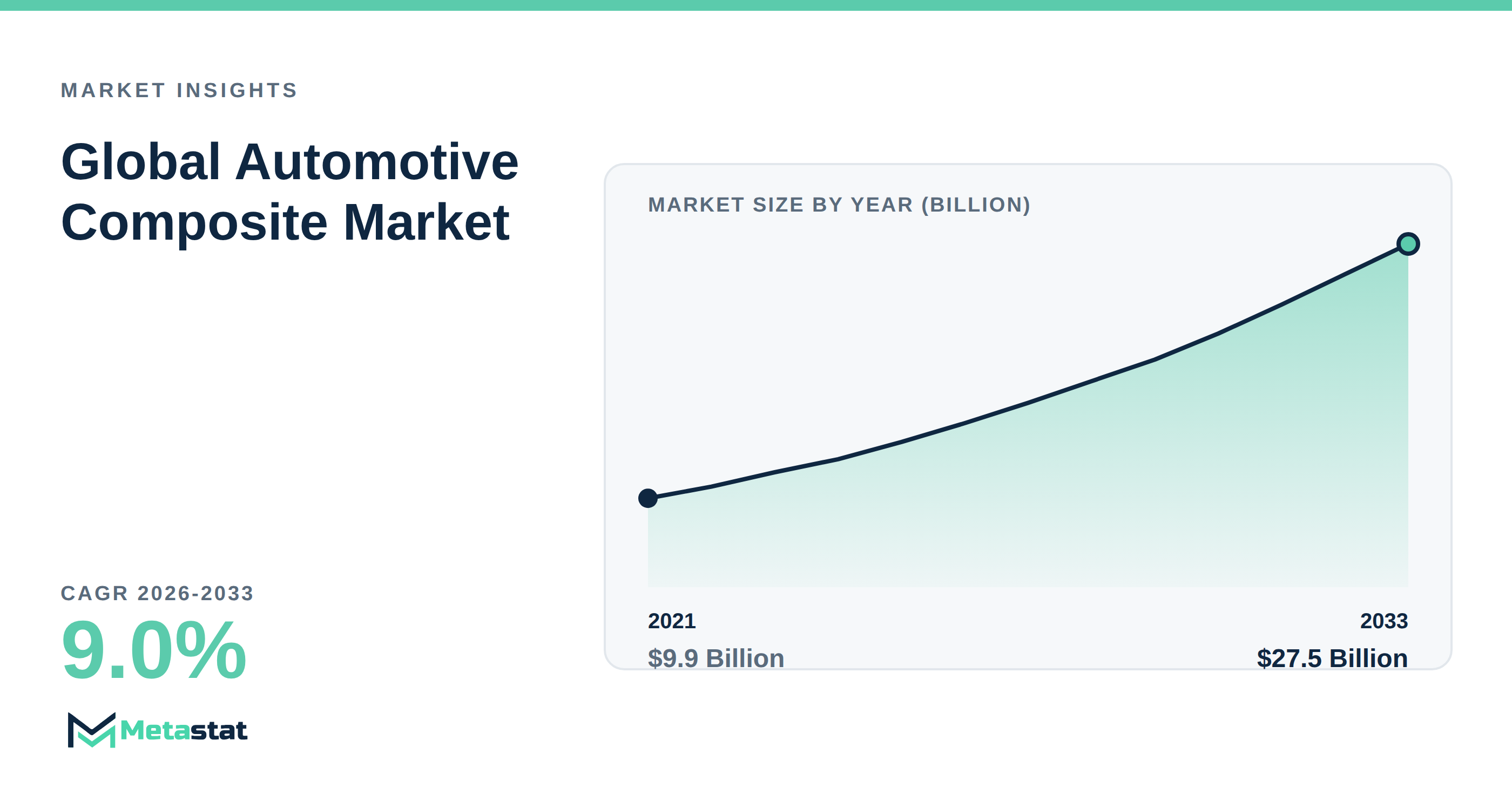
The transition towards electric vehicles (EVs) significantly stimulates the increasing demand for glass fiber composites. Manufacturers are focused on optimizing energy efficiency and adhering to strict regulatory standards, and the lightweight properties of glass fiber composites render them a compelling choice. These materials offer exceptional strength relative to their weight, which is crucial for enhancing vehicle performance while preserving structural integrity.
What factors drive the growth of glass fiber composites?
Several dynamics contribute to the expanding role of glass fiber composites within the Automotive Composite market. Increasing regulatory pressures regarding emissions and fuel efficiency lead manufacturers to adopt lightweight materials in their designs. Glass fiber composites are fundamental in achieving compliance with these standards by significantly lessening the overall weight of vehicles.
Advancements in manufacturing technologies are refining both the characteristics and production processes of glass fiber composites. Innovations including compression molding and injection molding are improving efficiency, enabling manufacturers to produce components that satisfy the automotive sector's evolving demands. These enhancements result in increased durability and performance, promoting wider adoption of glass fiber composites.
Comparing glass fiber composites to other materials
Glass fiber composites present a unique blend of cost-effectiveness and performance benefits, setting them apart from competing materials in the Automotive Composite market. Carbon fiber composites, known for their superior strength-to-weight ratios, often entail higher production costs and limited processing options. In contrast, glass fiber composites offer a more budget-friendly alternative while still providing meaningful reductions in weight.
Glass fiber composites afford substantial design flexibility. Their adaptability caters to a wide array of applications, including body panels and structural components. Manufacturers are increasingly choosing glass fiber composites for products requiring aesthetic appeal alongside functional performance, positioning these materials because a preferred option across numerous automotive applications.
How sustainability influences the glass fiber composite segment
Sustainability trends are profoundly shaping the automotive landscape, leading to increased interest in glass fiber composites. These materials offer eco-friendly alternatives, aligning with global initiatives to foster more sustainable manufacturing practices. The growing emphasis on environmentally conscious materials motivates manufacturers to prioritize options that minimize their environmental impact while ensuring robust performance.
A growing consumer awareness of environmental issues drives automotive manufacturers to integrate glass fiber composites into their designs. This trend solidifies glass fiber composites' potential to become vital components in future automotive production, facilitating adherence to environmental regulations and enriching overall sustainability objectives.
Market implications and the future outlook
The upward trend of glass fiber composites within the Automotive Composite market signals a strengthening long-term demand for lightweight materials. Manufacturers are keen to improve vehicle efficiency and performance, which suggests that the adoption of glass fiber composites is likely to continue expanding.
In summary, the glass fiber composite segment is gaining momentum in the Automotive Composite market due to its lightweight properties, cost-effectiveness, and alignment with sustainability trends. These materials’ continued development and integration by manufacturers highlight their critical role in the evolving automotive industry. For a comprehensive analysis of the trends and dynamics driving this market, visit the Global Automotive Composite Market.
Tags
About the Authors

LEAD ANALYST
Utkarsh Khirodkar is a Lead Market Research Analyst at MetaStat Insight, specializing in market intelligence, technology sector assessments, and competitive strategy.

ENERGY & INFRASTRUCTURE INDUSTRY CONSULTANT
Automotive and Transportation · Electronics and Semiconductor · Energy and Power · Machinery & Equipment
Saurabh Vasant Ganvir consults for Energy & Infrastructure Industry at MetaStat Insight, specializing in renewable energy, solar EPC, and electric vehicle (EV) infrastructure markets.