
Video streaming is significantly leading demand in Streaming Services. This post explores the factors driving this trend and its implications for stakeholders.
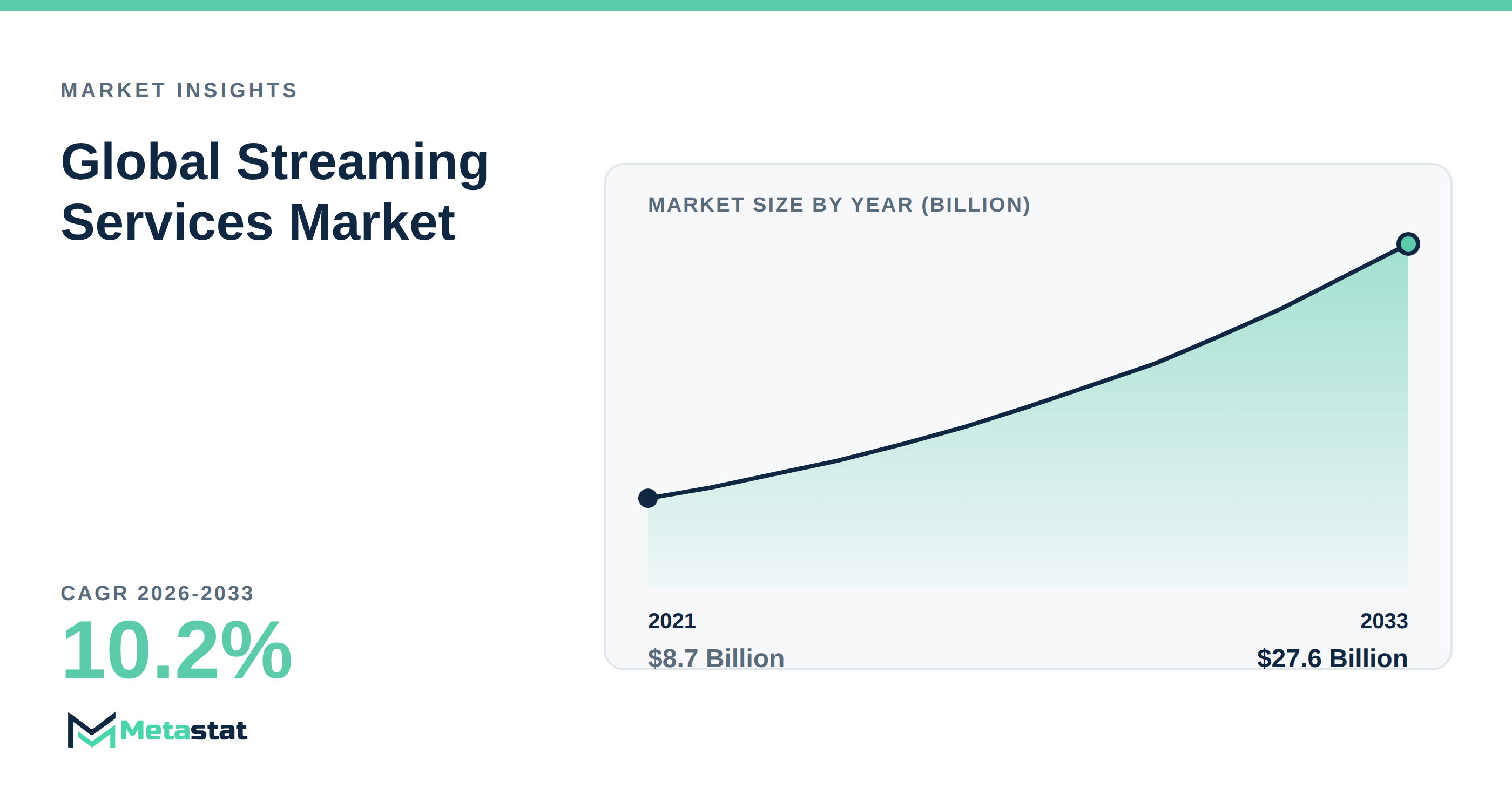
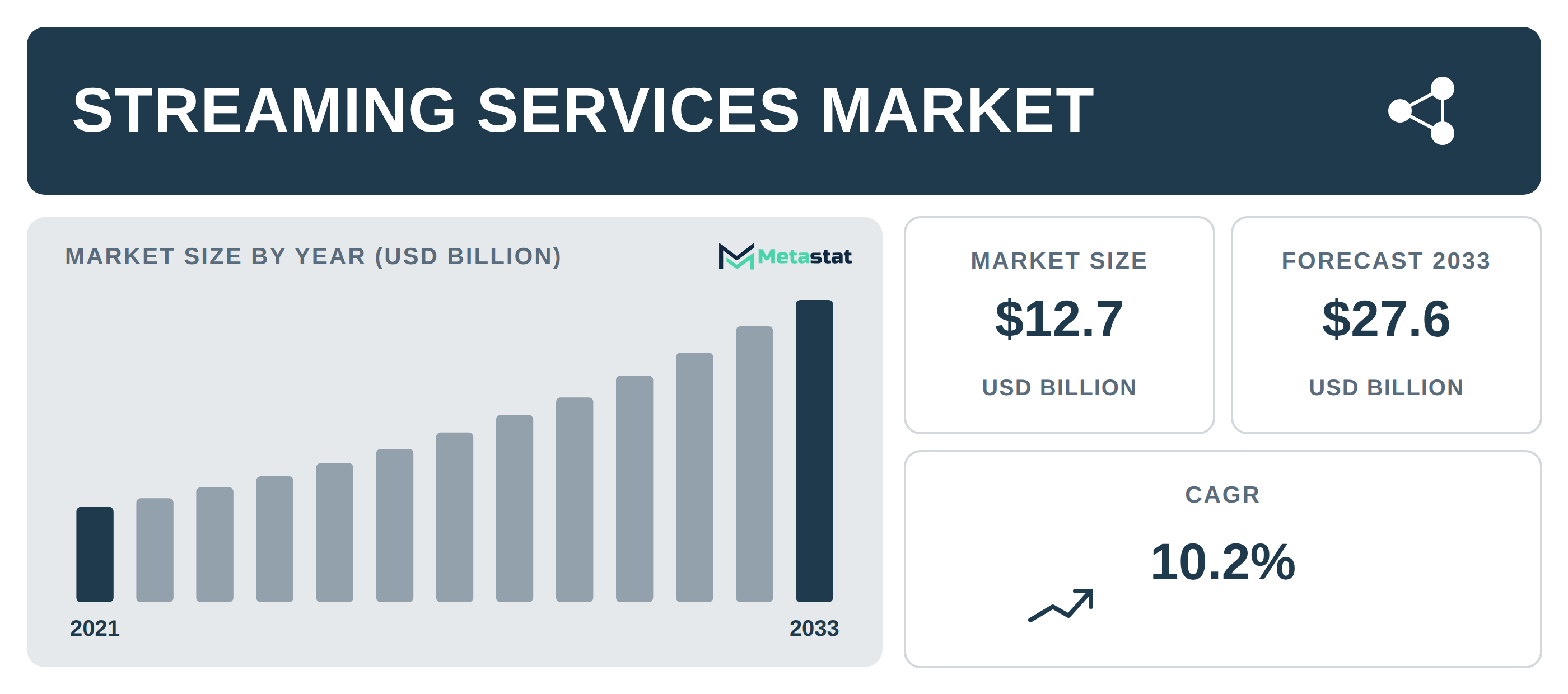
Video streaming is significantly outpacing other segments in the market for Streaming Services, projected to generate USD 11.8 billion in 2026 and reach USD 22.5 billion by 2033. This segment's robust growth reflects a fundamental change in consumer behavior and preferences for on-demand content. Understanding the factors driving this trend offers valuable insights for stakeholders looking to navigate this evolving environment. The full figures are in our Streaming Services market size and forecast report.
What drives the demand for video streaming?
Several key factors contribute to the increasing demand for video streaming. One major driver is the widespread availability of high-speed internet, which enhances the viewing experience and encourages consumers to subscribe to these services. While more households adopt faster connection speeds, the quality of streaming improves, allowing for high-definition content consumption without interruptions. This technology upgrades create an environment where viewers enjoy their favorite shows and movies whenever they choose.
How do changing viewing habits influence video streaming?
Shifts in consumer behavior significantly shape the landscape of video streaming services. Younger audiences, in particular, prioritize on-demand content, moving away from traditional cable television. This preference drives higher subscription rates as viewers enjoy the flexibility of selecting what, when, and how to watch. The market's growth is further supported by an increasing appetite for diverse content offerings, including original series, documentaries, and live events. Companies are focusing on producing multiple genres and formats to cater to various audience interests, enhancing the attractiveness of video streaming.
What role does content quality play in consumer preference?
Content quality serves as a crucial factor in the decision-making process for consumers choosing streaming services. Platforms investing in original programming experience heightened engagement rates, as viewers seek unique and captivating content. This focus on quality not only attracts new subscribers but improves retention; satisfied consumers are likelier to remain loyal when presented with high-quality and diverse offerings. Companies like Netflix, Inc. and The Walt Disney Company actively produce exclusive content that aligns with the evolving expectations of their audiences, positioning themselves for success.
How do technological advancements impact engagement in video streaming?
The streaming sector continually evolves with advancements in technology. Innovations including adaptive bitrate streaming optimize video quality based on the user’s internet speed, ensuring a smooth viewing experience. While consumers become accustomed to high-quality streaming, platforms that do not integrate new technology risk losing viewers. The ongoing rollout of 5G networks is anticipated to greatly enhance mobile streaming experiences, allowing users to access content virtually anywhere, which in turn fuels demand.
What are the implications of the rising video streaming demand for stakeholders?
For companies operating within the Streaming Services sector, these trends underscore the importance of continuous investment in both content and technology. Engaging users through a variety of programming, coupled with high-quality delivery methods, directly enhances both subscriber acquisition and retention. Stakeholders should be aware of the competitive environment, where effective pricing strategies and partnerships provide a substantial advantage in attracting consumers. Such approaches will be vital in navigating a sector projected to expand significantly in the coming years.
In conclusion, the demand for video streaming services not only leads among various segments due to technological advancements but reflects shifting consumer preferences and the essential role of quality content. Companies that acknowledge and adapt to these trends will effectively position themselves to capture a growing audience in the fluid environment of Streaming Services.
Tags
About the Authors

LEAD ANALYST
Utkarsh Khirodkar is a Lead Market Research Analyst at MetaStat Insight, specializing in market intelligence, technology sector assessments, and competitive strategy.

PRINCIPAL CONSULTANT - ENTERPRISE AI & EMERGING TECHNOLOGIES
Banking & Finance · Electronics and Semiconductor · Energy and Power · Healthcare IT · Information & Technology · Professional Services
Vijay Gunti is a Principal Consultant at MetaStat Insight, bringing over two decades of experience across enterprise digital transformation, technology strategy, and intelligent systems.

LEAD CONSULTANT - COMMUNICATION, TELECOM, AND IT
Electronics and Semiconductor · Information & Technology · Machinery & Equipment · Professional Services
Ravindra Sathe Consultants for Communication, Telecom, and IT at MetaStat Insight. He leads the firm's industry research initiatives across telecommunications infrastructure, digital connectivity, enterprise networking, and emerging information technology domains.