
The Long/Short Equity segment is emerging as a significant player within the Asia Pacific Hedge Fund market. A closer look reveals key factors fueling its growth and impact on investor strategies.
The Long/Short Equity strategy within the Asia Pacific Hedge Fund market is experiencing substantial growth compared to other strategies. Valued at USD 48 billion in 2026, this segment is expected to reach USD 74.4 billion by 2033, reflecting a compound annual growth rate (CAGR) of 6.5%. This performance outpaces other segments, indicating a strong preference for strategies that allow flexibility and risk mitigation.
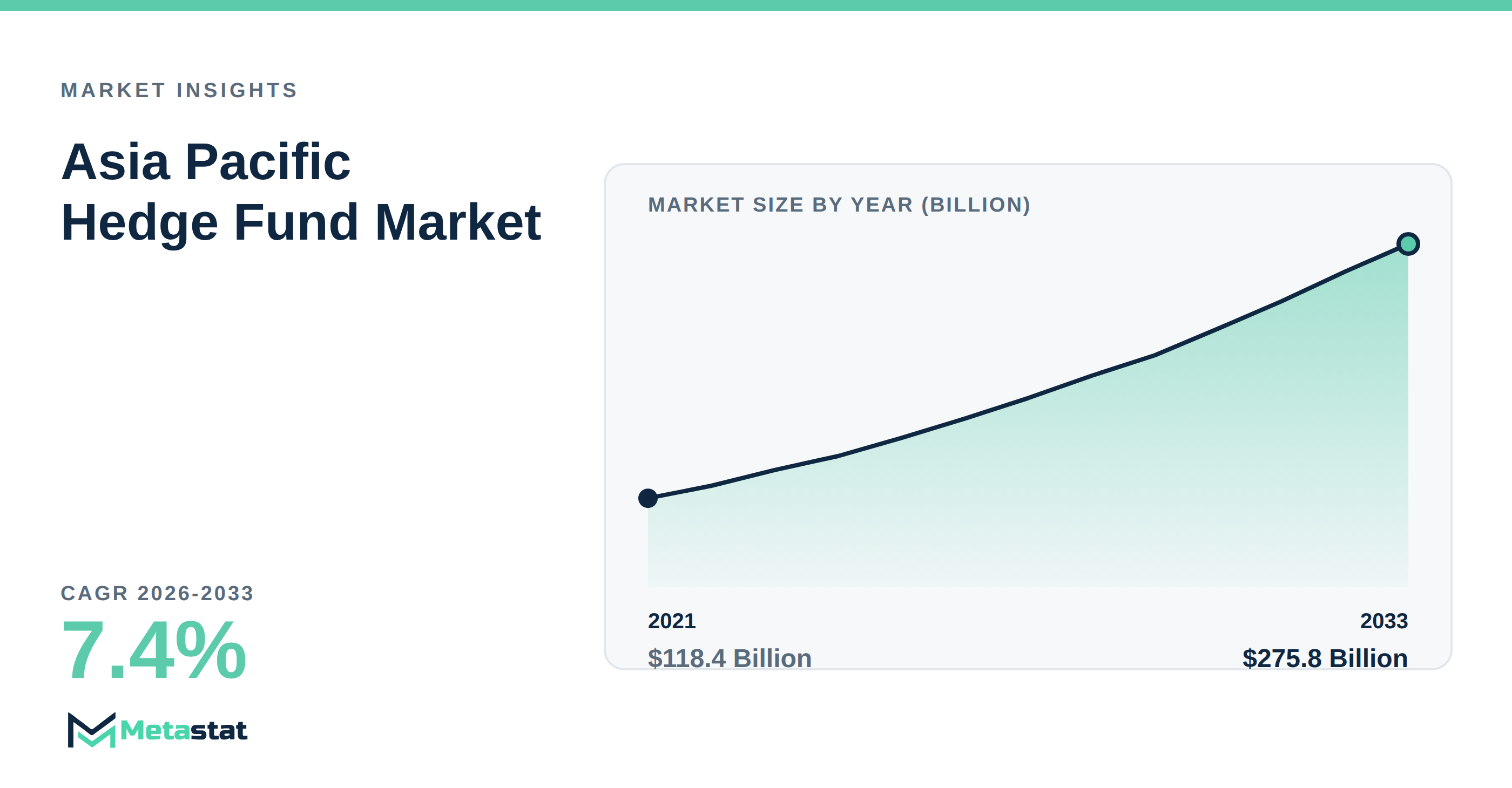
What is driving the growth of Long/Short Equity strategies?
Market volatility significantly influences the appeal of Long/Short Equity strategies. Institutional investors increasingly prioritize these strategies to hedge against downturns while capitalizing on market inefficiencies. By taking both long and short positions, fund managers navigate fluctuating market conditions more effectively. This adaptability in strategy attracts substantial investments, aligning with the growing trend among institutional investors to enhance portfolio diversification and risk management.
How do institutional investors influence this segment?
Institutional investors, including pension funds and sovereign wealth funds, play a pivotal role in driving the growth of Long/Short Equity strategies. Their anticipated investments are projected to increase from USD 106.3 billion in 2026 to USD 168.9 billion by 2033, achieving a CAGR of 6.8%. These entities strategically move towards alternative investments to secure better risk-adjusted returns. This ongoing capital influx allows hedge funds utilizing Long/Short strategies to expand operations and innovate, resulting in a more competitive landscape.
What challenges do Long/Short Equity strategies face?
While the Long/Short Equity segment thrives, it encounters several challenges. Compliance with regulatory standards remains a critical concern, because evolving rules impose significant operational overheads on fund managers. Rising costs associated with regulatory adherence impact profit margins, compelling firms to refine their operational strategies and enhance efficiencies. The intense competition among hedge funds seeking to differentiate themselves through unique strategies adds pressure on performance expectations.
How does technology play a role?
Technological advancements significantly impact the effectiveness of Long/Short Equity strategies. The integration of sophisticated quantitative analysis and data-driven trading algorithms enhances decision-making processes. Hedge funds investing in technology to optimize risk-return profiles position themselves favorably within the Asia Pacific Hedge Fund market. Adopting next-generation trading platforms supports the agility needed to respond promptly to market fluctuations, thus attracting new capital while retaining existing investors.
What does the future hold for Long/Short Equity strategies?
The segment’s future within the Asia Pacific Hedge Fund market remains promising. The combination of favorable economic conditions, increasing institutional investments, and technological improvements positions Long/Short Equity strategies for sustained growth. Firms that prioritize transparency and effective risk management are likely to attract more investors, ensuring market stability and solid performance in the years to come. While the market evolves, adaptability will be key for hedge funds aiming to capitalize on emerging opportunities.
The Asia Pacific Hedge Fund market's movement towards Long/Short Equity strategies highlights a broader trend of institutional investors seeking diversified alternatives to traditional asset classes. While funds continue to innovate and align with investor preferences, the Long/Short segment is poised to lead the market's growth trajectory.
For a deeper insight into the dynamics shaping this segment, refer to the Asia Pacific Hedge Fund Market.
Tags
About the Authors

LEAD ANALYST
Utkarsh Khirodkar is a Lead Market Research Analyst at MetaStat Insight, specializing in market intelligence, technology sector assessments, and competitive strategy.

PRINCIPAL CONSULTANT - ENTERPRISE AI & EMERGING TECHNOLOGIES
Banking & Finance · Electronics and Semiconductor · Energy and Power · Healthcare IT · Information & Technology · Professional Services
Vijay Gunti is a Principal Consultant at MetaStat Insight, bringing over two decades of experience across enterprise digital transformation, technology strategy, and intelligent systems.