
Explore the rapid growth of the renewable natural gas segment in the biogas market, driven by technological advancements and sustainability efforts.
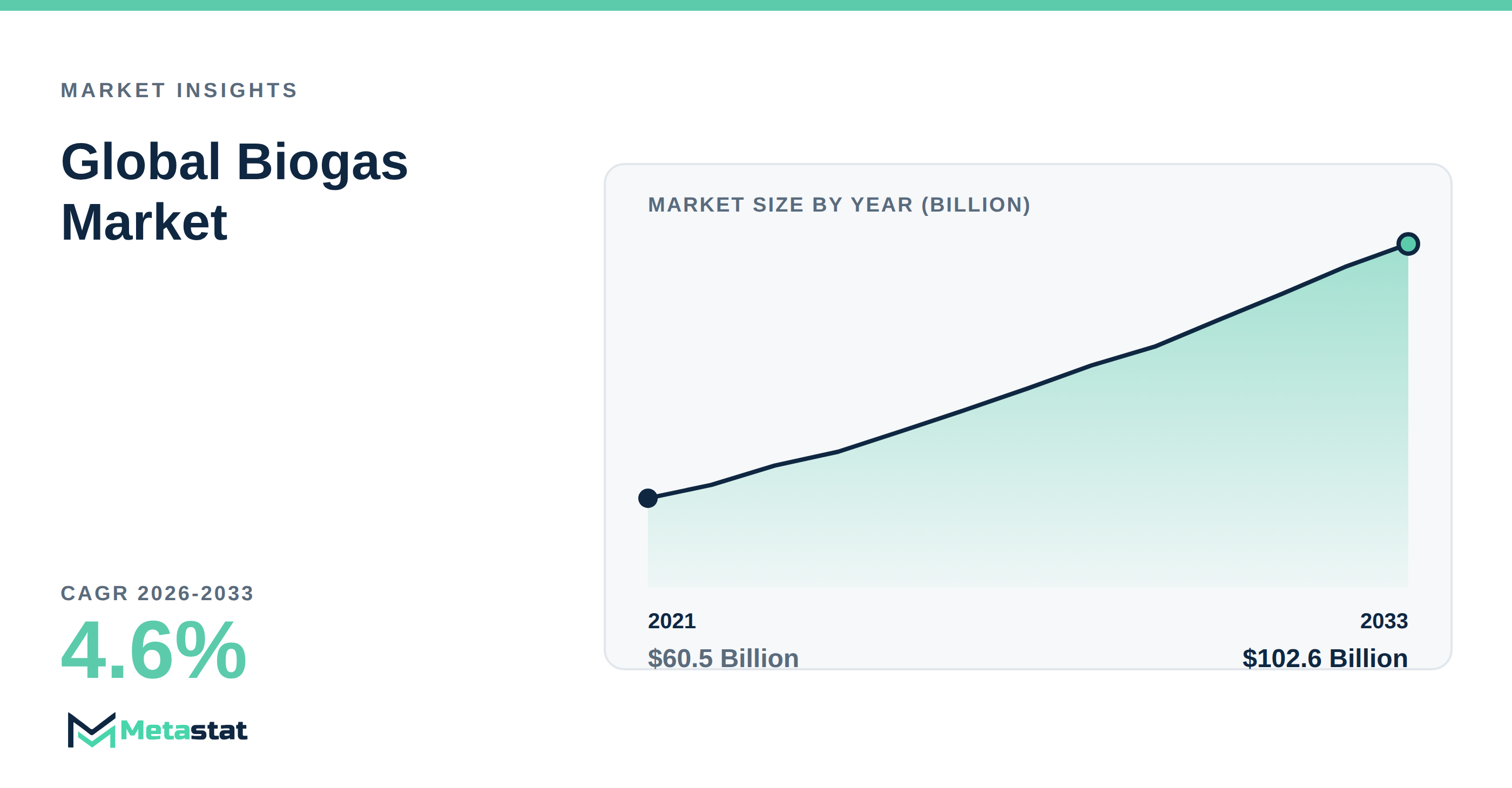
The renewable natural gas (RNG) segment is projected to be the fastest-growing area in the biogas market. With an expected value of USD 102.6 billion by 2033, this segment significantly outpaces other areas due to rising demand for cleaner energy solutions. This blog examines the factors driving RNG's development and its implications for market dynamics.
What is driving the rise of renewable natural gas?
Growing interest in renewable energy and the necessity for waste-to-energy solutions are driving the expansion of the biogas market, particularly within the RNG segment. Continual increases in energy costs and increasing environmental concerns force industries and governments to pursue sustainable alternatives. RNG provides a cleaner energy option that aligns with global decarbonization initiatives. By integrating RNG and biomethane into established gas networks, the market facilitates a smooth shift from fossil fuels while ensuring energy security and sustainability.
How is RNG reshaping the market landscape?
RNG differentiates itself through its capability to meet pipeline quality standards, allowing producers to tap into new revenue streams while aiding efforts to reduce greenhouse gas emissions. The transition to RNG reshapes the biogas market, driven by improvements in upgrading technologies that boost the efficiency of biogas production. This evolution bolsters investment in advanced technologies and enhances the overall feasibility of biogas projects.
What feedstocks are fueling RNG production?
Agricultural waste and livestock manure have emerged because primary feedstocks for RNG production. The abundance of these resources in agricultural regions increases the viability of biogas projects, encouraging a shift towards a circular economy where waste is transformed into valuable energy. The heightened emphasis on food waste and organic waste management further contributes to the availability of feedstocks, accelerating the growth of RNG production facilities.
What technological advancements are enhancing RNG production?
Advancements in anaerobic digestion technology are vital in improving the yield and efficiency of RNG production. Innovations in reactor design and process optimization enhance the conversion efficiency of organic materials into biogas, making RNG increasingly competitive in the energy market. Ongoing technological improvements ensure that production processes remain effective, reducing costs and increasing profitability for biogas producers.
What role do government policies play in promoting RNG?
Government incentives and renewable energy policies significantly affect the growth of RNG within the biogas market. These supportive frameworks facilitate project financing and stimulate private investment, promoting the deployment of biogas technologies across diverse regions. Policies aimed at reducing carbon footprints strengthen the demand for RNG, aligning with global initiatives. While industries adapt to meet these targets, the market for RNG is expected to continue expanding.
The rising interest in vehicle fuel applications further highlights the adaptability of RNG. Increasing demand for low-carbon transport fuels aligns with regulatory frameworks encouraging cleaner alternatives, which in turn stimulates RNG production. This trend emphasizes the market's ability to meet changing energy requirements while contributing to sustainability objectives.
Overall, the renewable natural gas segment is leading the biogas market's growth due to its multiple benefits, including cleaner energy production, alignment with governmental policies, and technological advancements. Stakeholders in the biogas market should monitor developments within this segment to seize emerging opportunities and ensure sustained success because the global energy landscape evolves. For deeper insights into market dynamics and forecasts, refer to the Global Biogas Market.
Tags
About the Authors

LEAD ANALYST
Utkarsh Khirodkar is a Lead Market Research Analyst at MetaStat Insight, specializing in market intelligence, technology sector assessments, and competitive strategy.

PRINCIPAL CONSULTANT - ENTERPRISE AI & EMERGING TECHNOLOGIES
Banking & Finance · Electronics and Semiconductor · Energy and Power · Healthcare IT · Information & Technology · Professional Services
Vijay Gunti is a Principal Consultant at MetaStat Insight, bringing over two decades of experience across enterprise digital transformation, technology strategy, and intelligent systems.

ENERGY & INFRASTRUCTURE INDUSTRY CONSULTANT
Automotive and Transportation · Electronics and Semiconductor · Energy and Power · Machinery & Equipment
Saurabh Vasant Ganvir consults for Energy & Infrastructure Industry at MetaStat Insight, specializing in renewable energy, solar EPC, and electric vehicle (EV) infrastructure markets.