
LEAD ANALYST
Utkarsh Khirodkar is a Lead Market Research Analyst at MetaStat Insight, specializing in market intelligence, technology sector assessments, and competitive strategy.

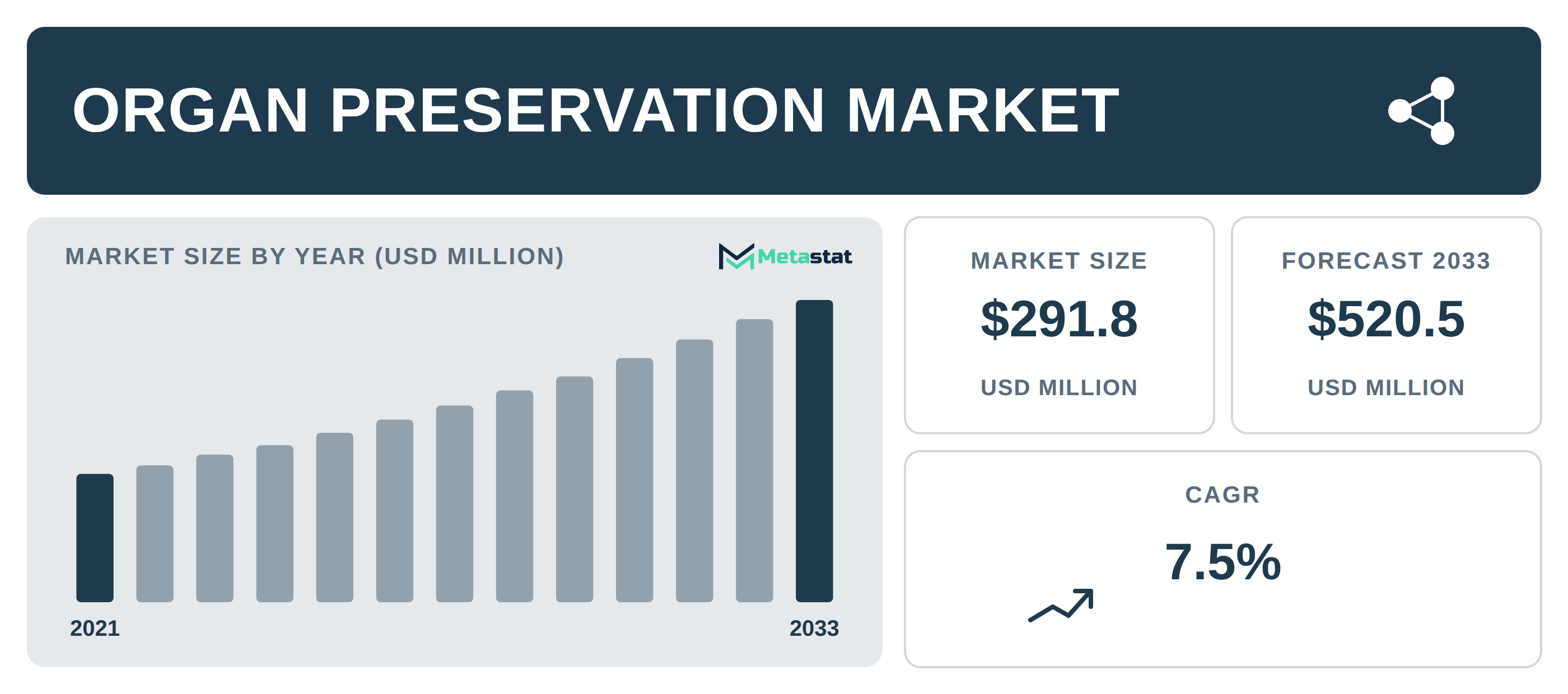
Metastat Insights has published a new report on the Organ Preservation market, forecasting growth from USD 291.8 million in 2025 to USD 520.5 million by 2033, driven by increasing demand for organ transplants and technological advancements.
Metastat Insights has published "Global Organ Preservation Market Size, Share, By Product Type (Organ Preservation Solutions, Machine Perfusion Systems, Organ Transport Systems, Organ Assessment & Monitoring Systems), By Organ Type (Kidney, Liver, Heart, Lung, Pancreas), By End User (Transplant Centers, Organ Procurement Organizations, Organ & Tissue Banks, Research Institutes & Laboratories), By Preservation Technique (Static Cold Storage, Hypothermic Machine Perfusion, Normothermic Machine Perfusion, Subnormothermic Machine Perfusion, Subzero Preservation), Industry Analysis, Growth, Trends, and Forecast, 2026-2033", with the market valued at USD 291.8 million in 2025, projected to reach USD 520.5 million by 2033, growing at a CAGR of 7.5%.
Growth in organ transplantation significantly impacts the Organ Preservation market. Increasing rates of chronic diseases and an aging demographic contribute to higher instances of organ failure. This trend prompts healthcare providers to invest in effective preservation solutions that maintain organ viability during transport and storage. Enhanced awareness regarding organ transplantation benefits further fuels this demand, leading stakeholders to pursue advanced techniques. Technological developments, particularly in machine perfusion systems and monitoring technologies, enhance operational efficiency and improve clinical outcomes. This aligns with a growing emphasis on patient health and safety.
Regulatory compliance and macroeconomic challenges impose considerable constraints on the Organ Preservation market. Strict regulatory requirements necessitate significant investments in technology and processes to meet standards, discouraging new market entrants and limiting growth for smaller firms. Macroeconomic factors, including inflation, influence purchasing decisions of end users including transplant centers and organ procurement organizations. Rising operational costs impact budgets, leading to constraints in adopting advanced preservation technologies. Insufficient infrastructure in many regions further hampers the deployment of innovative solutions, creating disparities in access and decelerating market growth.
The Organ Preservation market segments into various categories, including product type, organ type, end user, and preservation technique. Key product types encompass Organ Preservation Solutions, Machine Perfusion Systems, Organ Transport Systems, and Organ Assessment & Monitoring Systems. The kidney segment, a significant part of the organ category, is anticipated to grow from USD 111.6 million in 2026 to USD 174.2 million by 2033. North America leads the market with a 45.1% share, driven by advanced healthcare infrastructure and substantial investments in organ preservation technologies, while Europe follows with a 26.6% share.
Key players in the Organ Preservation market include TransMedics Group, Inc., XVIVO Perfusion AB, Organ Recovery Systems, Inc., Paragonix Technologies, Inc. (Getinge), and OrganOx Limited. These companies focus on developing innovative solutions that address the complexities of organ preservation, enhancing organ viability during transport and storage. Their initiatives reflect a commitment to ongoing investment in new technologies and a response to the evolving demands of the market.
For a comprehensive analysis of the market, including detailed insights, please visit the full report: Global Organ Preservation Market.
Related Report
Global Organ Preservation MarketLEAD ANALYST
Utkarsh Khirodkar is a Lead Market Research Analyst at MetaStat Insight, specializing in market intelligence, technology sector assessments, and competitive strategy.

LEAD PRINCIPAL ANALYST, PHARMA AND HEALTHCARE
Food and Beverages · Healthcare · Healthcare IT · Medical Devices
Ajay Devgire is the Lead Healthcare Analyst at MetaStat Insight, leading strategic research and market intelligence initiatives across the global healthcare domain.

SENIOR RESEARCH ANALYST
Biotechnology · Food and Beverages · Medical Devices · Packaging
Snehal Pasalkar is a Research Analyst at MetaStat Insight, operating at the intersection of life sciences research, competitive strategy, and market intelligence.