
LEAD ANALYST
Utkarsh Khirodkar is a Lead Market Research Analyst at MetaStat Insight, specializing in market intelligence, technology sector assessments, and competitive strategy.

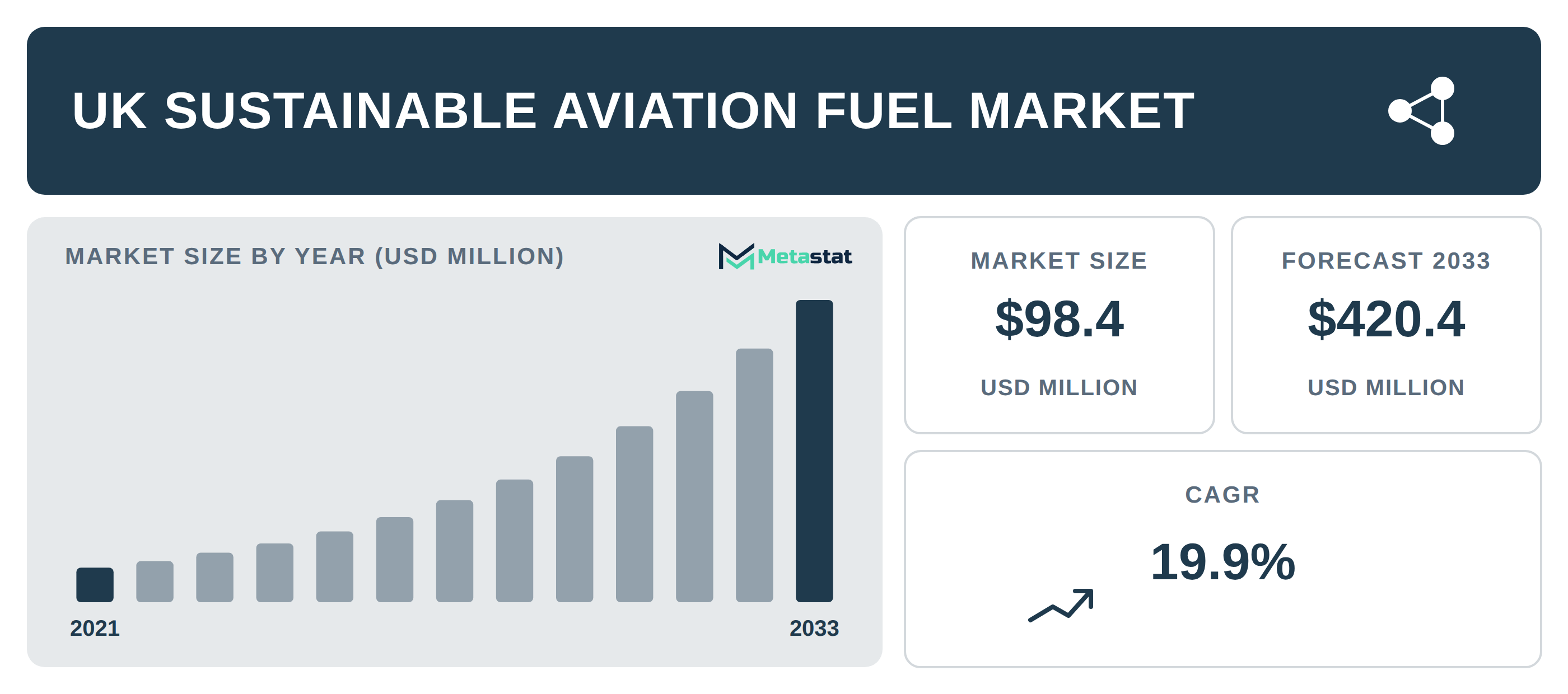
Metastat Insights announces the release of its latest report on the UK Sustainable Aviation Fuel market, forecasting substantial growth from USD 98.4 million in 2025 to USD 420.4 million by 2033, driven by regulatory pressures and technological advancements.
Metastat Insights has published "UK Sustainable Aviation Fuel Market Size, Share, By Production Pathway (Hydroprocessed Esters and Fatty Acids, Waste/Biomass Gasification-to-Fischer-Tropsch, Alcohol-to-Jet, Methanol-to-Jet, Power-to-Liquid Fischer-Tropsch, Pyrolysis and Hydrotreatment, Refinery Co-processing, Synthesized Iso-Paraffins, Catalytic Hydrothermolysis, HC-HEFA), By Primary Feedstock (Used Cooking Oil, Waste Animal Fats and Greases, Agricultural Residues, Forestry, Sawmill and Waste-Wood Residues, Municipal Solid Waste and Refuse-Derived Fuel, Industrial Off-Gases and Other Recycled-Carbon Feedstocks), By End User (Commercial Passenger Airlines, Cargo and Express Airlines, Business and General Aviation, Military and Government Aviation), Industry Analysis, Growth, Trends, and Forecast, 2026-2033", with key figures indicating a market value of USD 98.4 million in 2025 and a projected increase to USD 420.4 million by 2033, reflecting a compound annual growth rate (CAGR) of 19.9%.
The UK Sustainable Aviation Fuel market experiences rapid growth due to stringent emission limits imposed on the aviation sector. Regulatory pressures compel airlines to transition to cleaner fuel alternatives, significantly increasing demand for sustainable aviation fuels that minimize greenhouse gas emissions. Investment in sustainable aviation fuels aligns with broader operational productivity trends, driven by airlines and fuel producers enhancing their sustainability profiles through advanced technologies and production methodologies. The integration of innovative production pathways, including Hydroprocessed Esters and Fatty Acids and Waste/Biomass Gasification-to-Fischer-Tropsch, supports both environmental objectives and potential cost savings over time.
High capital investment requirements hinder adoption within the UK Sustainable Aviation Fuel market. Substantial costs associated with establishing production facilities and advanced technologies limit access for smaller players and new entrants. This financial barrier restricts the ability of many companies to invest in sustainable aviation fuel production, resulting in slower market penetration. Escalating operating costs complicate profitability and operational feasibility for existing players. Geopolitical fragmentation and supply chain disruptions exacerbate these challenges, impacting the procurement of essential materials and production timelines.
The UK Sustainable Aviation Fuel market segments into various production pathways and primary feedstocks. By production pathway, it includes Hydroprocessed Esters and Fatty Acids, Waste/Biomass Gasification-to-Fischer-Tropsch, Alcohol-to-Jet, Methanol-to-Jet, and Power-to-Liquid Fischer-Tropsch, among others. By primary feedstock, it encompasses Used Cooking Oil, Waste Animal Fats and Greases, Agricultural Residues, and Municipal Solid Waste. Each segment faces unique challenges and opportunities, driven by regulatory mandates and market demand for sustainable practices.
The UK Sustainable Aviation Fuel market features several key players, including LanzaJet, Inc., Neste, Shell plc, and TotalEnergies, among others. These companies actively engage in developing and promoting sustainable aviation fuel technologies, aligning their operations with the growing emphasis on sustainability within the aviation sector. Their strategic initiatives contribute to market growth by enhancing production capacities and expanding the availability of sustainable fuel options.
For further insights and detailed analysis, readers access the full report at UK Sustainable Aviation Fuel Market.
Related Report
UK Sustainable Aviation Fuel MarketLEAD ANALYST
Utkarsh Khirodkar is a Lead Market Research Analyst at MetaStat Insight, specializing in market intelligence, technology sector assessments, and competitive strategy.