
LEAD ANALYST
Utkarsh Khirodkar is a Lead Market Research Analyst at MetaStat Insight, specializing in market intelligence, technology sector assessments, and competitive strategy.

Global 5-Axis 3D Metal Printer Market Size, Share, By Technology (Laser-Based Directed Energy Deposition (DED-LB), Arc-Based Directed Energy Deposition (DED-Arc / WAAM), Electron Beam-Based Directed Energy Deposition (DED-EB), Plasma Arc-Based Directed Energy Deposition), By Machine Configuration (Dedicated Multi-Axis Metal 3D Printers, Hybrid CNC Milling and Additive Manufacturing Machines, Hybrid Turn-Mill and Additive Manufacturing Machines, Robotic Arm-Based Metal Additive Manufacturing Systems, Retrofit Multi-Axis Additive Manufacturing Systems), By Application (Complex Metal Component Manufacturing, Repair and Remanufacturing, Tooling and Mold Manufacturing, Surface Cladding and Functional Coatings, Rapid Prototyping and Product Development, Others (Customized and Low-Volume Part Production, Lightweight Component Manufacturing)), By End-Use Industry (Aerospace and Defense, Automotive and Transportation, Energy and Power Generation, Oil and Gas, Industrial Machinery and Equipment, Marine and Shipbuilding, Medical Devices and Implants, Research and Academic Institutions, Others (Mining Equipment, Architectural Metal Fabrication)), Industry Analysis, Growth, Trends, and Forecast, 2026-2033
Report ID
MSI-5482
Published
October, 2026
Pages
294 Pages
Format
Historical
Base year
Forecast
Forecast period
Report Details
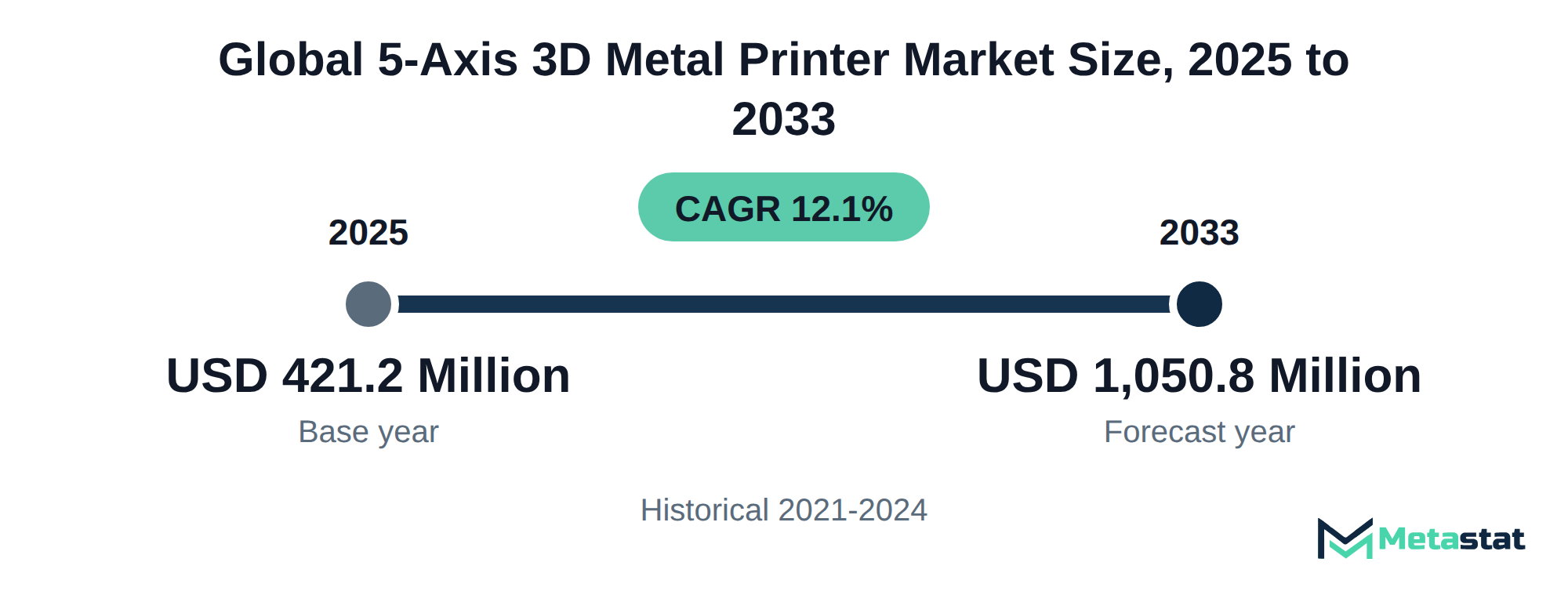
Market Valuation: Valued at $421.2 Million in 2025, projected to reach $1,050.8 Million by 2033 at a 12.1% CAGR.
Dominant Segment: Laser-Based Directed Energy Deposition (DED-LB) leads the market, driven by its widespread application in producing complex metal components, particularly in aerospace and defense.
Geographic Lead: North America holds a significant market share of 32.0% in 2025, with the US expected to lead in growth due to strong industrial capabilities and investments in R&D.
What's Inside: The report provides a comprehensive analysis of market dynamics, competitive landscape, and forecasts from 2026 to 2033, covering various technologies and machine configurations.
Emerging Trends: The arc-based directed energy deposition segment shows a robust growth trajectory with a CAGR of 14.3%, appealing to industries focused on high-speed and cost-effective manufacturing solutions.
Choose Your License
Global 5-Axis 3D Metal Printer Market
The global 5-Axis 3D Metal Printer market was valued at USD 421.2 million in 2025 and is projected to reach USD 1,050.8 million by 2033, growing at a CAGR of 12.1% over the forecast period. Much of this growth stems from energy operators complementing heavy metal forgings for oil and gas with additive repair and cladding technologies.
The 5-Axis 3D Metal Printer market encompasses advanced additive manufacturing technologies that enable the production of complex metal components through various techniques. Buyers invest in this market to enhance manufacturing efficiency, reduce lead times, and achieve high precision in product development. Industries including aerospace, automotive, and energy consistently seek innovative solutions that facilitate the creation of intricate designs and components, driving expenditures in this evolving field. Similar technical advantages drive adoption in specialized medical device fabrication, including the production of medical titanium mesh implants.
Growth in the market is driven by increasing demand for customized and lightweight components, particularly within the aerospace and defense sectors. The segment of Laser-Based Directed Energy Deposition (DED-LB) holds the highest value, reflecting its widespread application and acceptance in various industries. North America holds 32.0% of the market in 2025, with the US leading in 2026. This region's competitive advantage stems from a strong industrial base and significant investment in research and development.
Rapid advancements in metal printing technologies contribute to the expansion of the market. Companies seek to adopt versatile manufacturing solutions that support both prototyping and production processes. The focus on sustainability and resource efficiency further increases interest in 5-Axis 3D Metal Printers, encouraging firms to explore these technologies for improved operational performance and cost-effectiveness.
The 5-Axis 3D Metal Printer market includes diverse applications across various industries, highlighting the growing emphasis on precision and efficiency in manufacturing processes. Buyers invest in these technologies to enhance production capabilities, reduce lead times, and achieve cost savings in the long run. This investment becomes crucial for sectors including aerospace, automotive, and energy, where high-performance components are essential for maintaining competitive advantages.
Growth in the market is primarily driven by advancements in laser-based directed energy deposition technologies, which facilitate the production of intricate designs and lightweight structures. In terms of market value, the dedicated multi-axis metal 3D printers segment represents the largest share, reflecting the increasing adoption of these systems for complex manufacturing tasks. North America holds 32.0% of the market in 2025, with the US leading in 2026, demonstrating the region's significant role in the global landscape.
Emerging applications, including repair and remanufacturing, further contribute to market expansion, illustrating the versatility of 5-Axis 3D Metal Printers. Industries continue to evolve, and the demand for innovative solutions that streamline production processes and improve material utilization strengthens. Sustained investment and development within the market drive continued growth across various sectors.
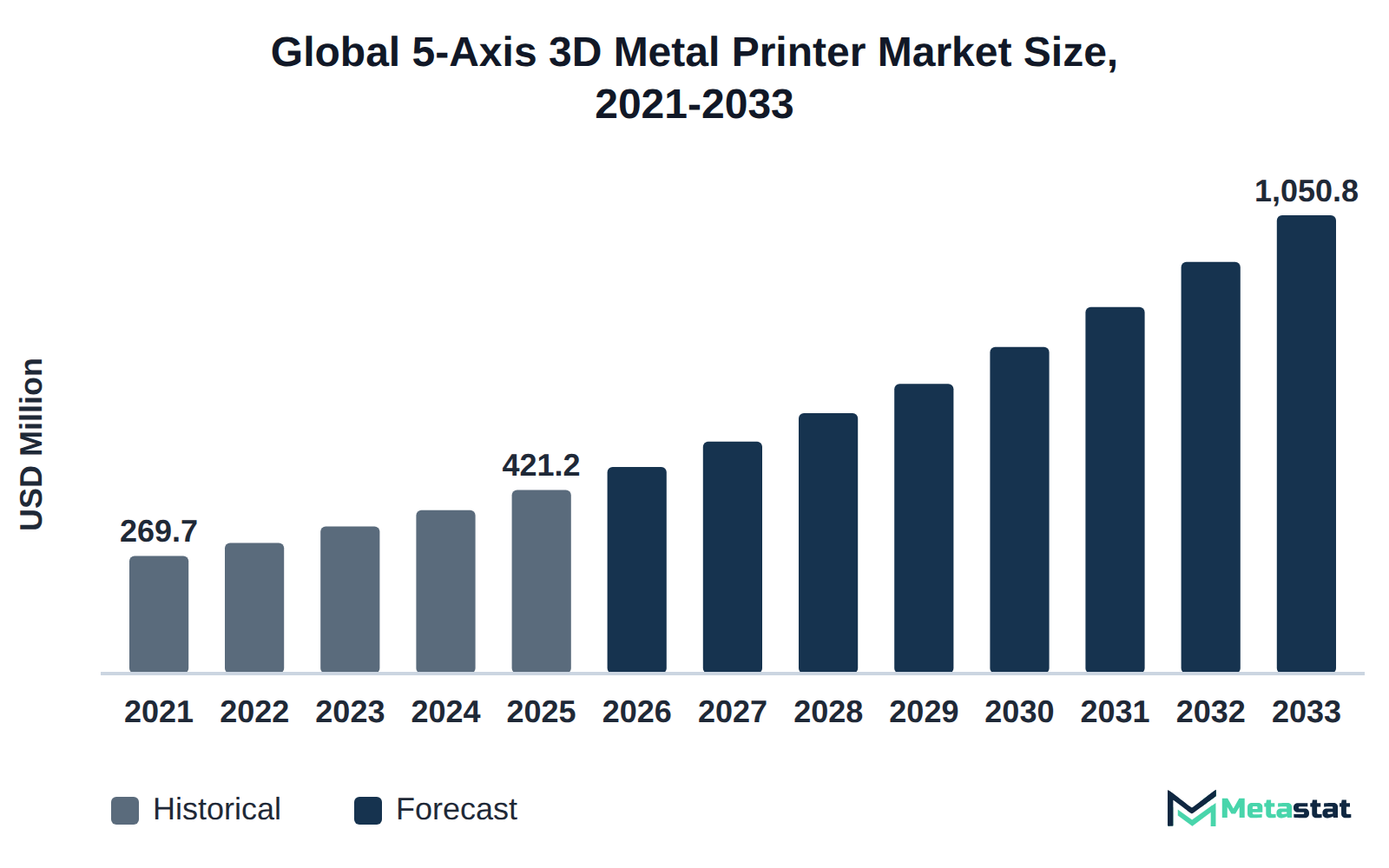
Laser-Based Directed Energy Deposition (DED-LB) and Wire Arc Additive Manufacturing (DED-Arc / WAAM) have begun to reshape processes within the 5-Axis 3D Metal Printer market. DED-LB, with a projected growth from USD 258.3 million in 2026 to USD 538.8 million by 2033, reflects a significant trend toward more efficient metal printing techniques. This technology leverages focused laser energy to melt metal feedstock, enabling the creation of complex geometries with high precision.
The demand for these advanced methods is strong among industries that require intricate metal components, including aerospace and defense. The performance capabilities of these technologies provide a competitive edge in manufacturing, resulting in faster production times and reduced waste materials. In addition, the DED-Arc process, which anticipates growth at a compound annual growth rate of 14.3%, enhances the versatility of metal printing by allowing for a wider range of materials, further expanding its application potential.
Investment in these technologies signals a shift toward innovative manufacturing solutions, driving both adoption and growth within the market. Industries continue to seek more reliable and cost-effective methods for producing high-value components, and the influence of Laser-Based DED and Wire Arc Additive Manufacturing increases, positioning them as critical elements in the evolution of the 5-Axis 3D Metal Printer market.
Purchasing models for hybrid CNC and 5-axis 3D metal printers largely focus on upfront capital expenditure and financing options. Buyers in the 5-Axis 3D Metal Printer market typically evaluate various payment structures that align with their operational budgets and production requirements. An increasing number of manufacturers offer flexible financing arrangements, which include lease agreements and installment payments. Such options allow businesses to acquire advanced technology without significant initial capital outlay.
The demand for hybrid CNC and 5-axis 3D metal printers stems from their ability to produce complex geometries and high-precision components, particularly in industries including aerospace and automotive. Data indicates that the aerospace and defense end-use industry is projected to expand from USD 147 million in 2026 to USD 345.3 million by 2033, representing a compound annual growth rate (CAGR) of 13.0%. This growth emphasizes the importance of accessible financing in facilitating investments in advanced manufacturing technologies.
Competition intensifies, leading suppliers to adopt tiered pricing models that reflect the technological capabilities and customization options of their machines. Buyers benefit from these competitive pricing strategies, which result in lower overall costs for high-performance equipment. Consequently, manufacturers that provide tailored financing solutions enhance their market position while supporting the expansion of advanced manufacturing capabilities across various sectors.
The aerospace and defense sectors drive significant demand for 5-axis 3D metal printing technology. This industry relies on complex metal component manufacturing to meet stringent performance and safety standards. The emergence of multi-axis metal printing technologies addresses the unique requirements of these sectors, offering capabilities for producing lightweight, high-strength components with intricate geometries. In 2026, the market value for complex metal component manufacturing reaches USD 170.6 million, with projections indicating growth to USD 403.7 million by 2033, reflecting a CAGR of 13.1%.
The ability to repair and remanufacture critical components provides considerable operational efficiency. The shift toward renewable energy sources increases the demand for innovative manufacturing technologies, allowing for the production of specialized parts tailored to high-temperature and high-pressure environments. The anticipated growth in the repair and remanufacturing segment, with a projected value of USD 256 million by 2033, illustrates the potential of 5-axis 3D metal printing in supporting energy industry needs.
The advancement of these technologies positions the market for substantial growth, driven by the aerospace, defense, and energy sectors. By offering customizable and efficient manufacturing solutions, multi-axis metal printing continues to play a vital role in meeting the specific needs of these industries, enhancing operational efficiency, and reducing production time and costs.
Robotic Arm-Based Metal Additive Manufacturing Systems are significantly transforming large-scale production and repair processes in various industries. These systems enhance efficiency and precision, meeting the increasing demand for complex metal components. The 5-Axis 3D Metal Printer market sees substantial growth driven by this technology, with an anticipated compound annual growth rate (CAGR) of 14.2% from 2026 to 2033. This growth reflects a shift towards automation in manufacturing, reducing lead times and improving production quality.
Industries including aerospace and defense particularly benefit from these advancements, where precision and reliability are essential. The sector is expected to grow from USD 147.0 million in 2026 to USD 345.3 million by 2033, driven by the need for advanced manufacturing solutions. Robotic systems facilitate the creation of intricate designs and repairs, ensuring high-quality outputs while minimizing waste. The adoption of Robotic Arm-Based Systems within the market positions companies to meet the evolving requirements of large-scale production and repair, providing competitive advantages.
The demand for high-precision manufacturing drives significant growth in the market. Aerospace, automotive, and energy sectors increasingly adopt 5-axis 3D metal printers to achieve superior accuracy and efficiency in production processes. These industries require complex geometries and customized solutions, which traditional manufacturing methods struggle to provide. Enhanced capabilities of 5-axis printers eliminate the need for extensive tooling, resulting in cost savings and expediting production timelines. The shift toward digital manufacturing techniques supports strategic objectives to reduce waste and optimize supply chains, boosting overall productivity. The market is projected to expand, with a value reaching USD 1,050.8 million by 2033.
Technological advancements in robotic arm-based metal additive manufacturing systems enhance production capabilities within the 5-Axis 3D Metal Printer market. These systems facilitate the automation of complex manufacturing processes, enabling greater precision and efficiency. The increasing demand for customized solutions among industries including aerospace and automotive highlights the effectiveness of this technology. Organizations leverage robotic systems to streamline production timelines while ensuring high-quality output of intricate components. This shift significantly reduces labor costs and operational risks associated with manual processes. The integration of robotic systems supports rapid prototyping and low-volume manufacturing, allowing businesses to respond swiftly to changing market conditions. With the 5-Axis 3D Metal Printer market experiencing strong growth, the incorporation of robotic arm technology positions manufacturers to meet evolving customer expectations. Continuous enhancements in robotics technology are expected to drive further advancements in additive manufacturing capabilities, creating opportunities for increased market penetration.
High costs associated with 5-Axis 3D Metal Printers impact demand among potential users, particularly in the aerospace and automotive sectors. Significant capital investment requirements result in slower uptake, particularly for small to medium-sized enterprises that often have limited budgets for advanced manufacturing technologies. The high initial price tag contributes to smaller orders, which hinders the ability of these buyers to justify the expense against expected returns on investment. Limited budget allocations for new technologies lead to delayed replacement cycles for traditional manufacturing methods, affecting the overall growth trajectory within the market. Consequently, reluctance to invest in advanced systems stems from both the substantial cost and the uncertainty surrounding the long-term benefits these technologies offer. This price sensitivity highlights the challenges faced by industry players aiming to expand their market reach and adoption rates.
The rising prices of raw materials, including metals and alloys, create significant challenges for suppliers. These costs influence the overall pricing structure of 5-Axis 3D Metal Printers, limiting profitability margins for manufacturers. In response, suppliers actively explore alternative materials and innovative production techniques to mitigate these input costs. Engaging in collaborative partnerships with material producers allows for better pricing negotiations, enhancing competitiveness. Investments in research and development focus on improving production efficiency and reducing waste during the manufacturing process. Suppliers implement cost-saving measures by adopting advanced technologies that streamline operations, thereby optimizing resource utilization. Enhanced operational efficiency offsets rising costs associated with raw materials, allowing suppliers to maintain price stability in the market. Overall, addressing input cost pressures plays a critical role in sustaining growth and profitability within the 5-Axis 3D Metal Printer market.
Significant growth exists in the arc-based directed energy deposition segment, with a projected compound annual growth rate (CAGR) of 14.3% through 2033. This segment primarily attracts industries focused on high-speed production and cost-effective manufacturing solutions. Increased adoption of arc-based technology in automotive and energy sectors drives demand, as these industries require efficient, durable, and lightweight components that traditional manufacturing methods struggle to provide. The market for arc-based systems addresses specific applications in complex metal component manufacturing and repair, enabling companies to streamline operations and reduce turnaround times. Enhanced performance attributes of arc-based systems, including improved material utilization and faster production cycles, position this technology as an attractive choice for manufacturers seeking competitive advantages. Companies investing in this segment stand to benefit from increased market penetration and revenue growth, further enhancing their presence in the evolving 5-Axis 3D Metal Printer market.
The Global 5-Axis 3D Metal Printer market is segmented based on Technology, Machine Configuration, Application, and End-Use Industry.
Laser-Based Directed Energy Deposition (DED-LB) segment is valued at USD 258.3 million in 2026 and is projected to reach USD 538.8 million by 2033, at a CAGR of 11.1% during the forecast period. This technology primarily serves the aerospace and defense industries for manufacturing complex metal components that require high precision and optimal material properties. Driven by growing demand for lightweight, durable parts in these sectors, DED-LB stands out for its ability to produce intricate geometries efficiently. Compared to other segments, including Arc-Based DED, which exhibits a higher CAGR of 14.3%, DED-LB maintains a steadier growth trajectory. The focus on advanced materials and stringent quality standards in aerospace applications strongly influences investment and adoption rates, ensuring continued expansion within the market.
Arc-Based Directed Energy Deposition (DED-Arc / WAAM) segment is estimated to reach USD 343.3 million by 2033, at a CAGR of 14.3% during the forecast period. This technology focuses on creating complex geometries and large components with high deposition rates, primarily applied in the aerospace and automotive sectors for component manufacturing and repair applications. The increasing demand for cost-effective material usage and the ability to produce large parts quickly drive growth in this segment. Compared to other technologies, including Laser-Based Directed Energy Deposition, DED-Arc / WAAM offers a faster production rate, appealing to manufacturers requiring efficient output. The forecast indicates strong adoption trends, driven by advancements in equipment and processes, enhancing the overall capabilities of arc-based systems in the market.
Electron Beam-Based Directed Energy Deposition (DED-EB) segment is expected to reach USD 107.4 million by 2033. This technology is used for high-precision manufacturing of complex metal components, serving industries including aerospace and defense, which require specialized parts with intricate designs. The growth of this segment faces challenges due to the higher costs associated with the technology compared to other methods, including Laser-Based Directed Energy Deposition (DED-LB), which is projected to grow at a CAGR of 11.1%. In contrast, DED-EB experiences slower growth rates, influenced by both limited adoption in mainstream manufacturing and the higher investment required for implementation. The continued emphasis on improving production efficiency drives the advancement of this technology, highlighting its potential to capture niche markets in the broader 5-Axis 3D Metal Printer market.
Plasma Arc-Based Directed Energy Deposition segment is projected to grow at a CAGR of 12.2% during the forecast period. This technology is for high-volume production of complex components, particularly in sectors including aerospace and defense. Its application encompasses the manufacturing of parts that require superior mechanical properties and durability. The primary demand driver stems from the need for efficient production processes that reduce lead times, coupled with an increasing focus on lightweight materials. Compared to other segments, Plasma Arc-Based Directed Energy Deposition exhibits a competitive advantage due to its ability to produce larger parts at a lower cost, attracting manufacturers focused on scalability. Sectors seek to enhance efficiency, and this segment is expected to capture a growing share of the market.
Dedicated Multi-Axis Metal 3D Printers segment is valued at USD 136.1 million in 2026 and is projected to reach USD 275.1 million by 2033, at a CAGR of 10.6% during the forecast period. These printers facilitate the creation of intricate metal components, widely used in sectors including aerospace, automotive, and industrial machinery. Manufacturers increasingly adopt this technology due to its efficiency in producing complex geometries and high-quality finishes. Significant demand arises from the aerospace and defense industries, where precision parts are crucial. Compared to other machine configurations, dedicated multi-axis metal 3D printers exhibit lower growth than the hybrid models, which achieve a CAGR of 11% during the same period. This segment focuses on high-value applications, influencing pricing dynamics and market positioning, ensuring its relevance in an evolving environment where customization and speed are critical.
Hybrid CNC Milling and Additive Manufacturing Machines segment is estimated to reach USD 255.2 million by 2033, at a CAGR of 11% during the forecast period. This technology combines traditional milling and additive manufacturing processes, making it suitable for producing complex geometries and high-precision components. Industries including aerospace and automotive leverage these machines for their ability to perform both subtractive and additive operations, resulting in improved production efficiency and reduced material waste. The driving force behind this segment is the increasing demand for versatile manufacturing solutions, facilitating rapid prototyping and customization. Compared to other configurations, including Dedicated Multi-Axis Metal 3D Printers, this segment offers a balance between flexibility and capability, addressing diverse manufacturing needs while maintaining competitive pricing structures. The projected growth highlights the segment's role in transforming manufacturing processes across various sectors.
Hybrid Turn-Mill and Additive Manufacturing Machines segment is expected to reach USD 135.2 million by 2033. This technology serves industries requiring efficient production of complex components, particularly in aerospace and automotive applications. Factors driving growth include increasing demand for precision manufacturing and the need for versatile machines that combine additive and subtractive processes. Unlike other segments, this segment exhibits a moderate growth rate. While hybrid CNC Milling and Additive Manufacturing Machines feature higher estimated revenue by 2033, the unique capabilities of Turn-Mill machines in processing diverse materials differentiate them in the market. Such advancements enhance operational flexibility, promoting adoption among manufacturers seeking to optimize production capabilities.
Robotic Arm-Based Metal Additive Manufacturing Systems segment is projected to grow at a CAGR of 14.2% during the forecast period. This technology serves various industries, including aerospace, automotive, and healthcare, primarily for producing complex components and facilitating repairs. Significant advancements in robotic systems enhance their ability to deliver precision and efficiency, driving adoption among manufacturers seeking to optimize production processes. Operational flexibility distinguishes this segment from others in the Machine Configuration category, with robotic arms accommodating diverse production needs. The segment's growth trajectory reflects ongoing investments in automation and smart manufacturing technologies, with an expected value of USD 135.2 million by 2033. Enhanced capabilities position robotic arm systems uniquely within the market, appealing to buyers prioritizing innovative solutions to traditional manufacturing challenges.
Retrofit Multi-Axis Additive Manufacturing Systems integrate advanced 3D printing capabilities into existing manufacturing setups, enhancing productivity and flexibility. This approach is valuable for industries seeking to modernize their operations without significant capital investment in entirely new machinery. These systems primarily serve sectors including aerospace and automotive, where precise component production is essential. Key drivers of growth in this segment include increasing demand for customized parts and the need for rapid prototyping, aligning with the evolving manufacturing landscape. Compared to other machine configurations, retrofit systems offer a cost-effective solution for existing facilities looking to adopt additive manufacturing technologies. The 5-Axis 3D Metal Printer market reflects a growing trend toward integrating traditional methods with modern additive processes, encouraging innovation within established manufacturing frameworks.
This segment primarily serves industries requiring the production of intricate metal parts with high precision, including aerospace, automotive, and energy sectors. The increasing demand for lightweight, durable components enhances growth prospects. Technological advancements in 5-Axis 3D Metal Printers facilitate the production of complex geometries, improving performance and reducing lead times. The segment distinguishes itself from others, including Repair and Remanufacturing, which experiences a different growth rate. With a CAGR of 12.7%, Repair and Remanufacturing presents slower growth compared to Complex Metal Component Manufacturing, reflecting diverse buyer needs and applications across the market.
Repair and Remanufacturing segment is estimated to reach USD 256 million by 2033, at a CAGR of 12.7% during the forecast period. This segment focuses on restoring and improving the performance of existing metal components, appealing to industries including aerospace, automotive, and energy. Increasing emphasis on sustainability and the circular economy drives demand for repair and remanufacturing solutions, given their ability to extend the lifecycle of expensive components. This segment's growth trajectory stands out with a CAGR of 12.7%, making it more dynamic compared to other applications, including Tooling and Mold Manufacturing, which exhibit lower growth rates. The ongoing shift toward reducing waste and optimizing resource utilization highlights the importance of this segment within the 5-Axis 3D Metal Printer market. Producing high-quality repairs efficiently positions it as a valuable option for manufacturers seeking to enhance operational effectiveness.
The Tooling and Mold Manufacturing segment is expected to reach USD 141.6 million by 2033. This segment focuses on producing tools and molds required for various manufacturing processes, particularly in industries including automotive and aerospace. Companies apply advanced 5-Axis 3D Metal Printers to create complex geometries and enhance precision in these tools. The growth in this segment is driven by increasing demand for customized tooling solutions that improve efficiency and reduce lead times. Competitive pricing in tooling and mold manufacturing affects purchasing decisions, leading to a faster growth rate compared to other applications, with a projected CAGR of 12.7% through 2033. This reflects a growing trend for manufacturers to implement additive technologies, enhancing capabilities while reducing traditional manufacturing constraints. Overall, the significant benefits of additive manufacturing in producing tooling components align with trends observed across the 5-Axis 3D Metal Printer market.
Surface Cladding and Functional Coatings segment is projected to grow at a CAGR of 9.9% during the forecast period. This segment finds applications in various industries, including aerospace and automotive, where the enhancement of metal surfaces for durability and resistance against wear is crucial. Factors driving this segment include increased demand for high-performance coatings that improve the lifespan of components and reduce maintenance costs. The technology involved in this segment typically involves advanced deposition methods that differ from those in other applications, including Complex Metal Component Manufacturing, which anticipates a higher growth rate of 13.1% through 2033. The focus on performance and longevity in surface treatments makes this segment attractive to buyers prioritizing quality and efficiency, impacting overall demand in the 5-Axis 3D Metal Printer market.
Rapid prototyping and product development involves the creation of functional prototypes using advanced additive manufacturing techniques. This process is primarily adopted by industries including aerospace, automotive, and medical devices, where rapid iteration and testing of designs accelerates innovation. Continuous advancements in technology drive demand for this application, enabling faster design cycles and reducing time-to-market for new products. Compared to other applications, rapid prototyping offers a unique advantage in flexibility and speed, catering to clients requiring quick turnaround times for prototypes. This sub-segment stands out in the market due to its emphasis on customization and low-volume production, appealing to specialized manufacturers aiming for agility in product development.
Customized and low-volume part production, lightweight component manufacturing focuses on fulfilling specific customer requirements through tailored solutions. This segment serves industries including aerospace and defense, automotive, and medical devices, where unique and lightweight components are essential. The push for more efficient use of materials drives growth, prompting manufacturers to adopt these technologies to create lighter parts that enhance performance and reduce operational costs. Compared to other applications, this segment experiences slower growth due to specialized production demands and potential higher costs associated with custom orders. The 5-Axis 3D Metal Printer market reflects a shift toward personalized manufacturing solutions, allowing businesses to remain competitive while addressing unique customer needs.
This segment supports the production of critical components for aircraft, military vehicles, and defense systems, driving demand from manufacturers and defense contractors. The need for lightweight, complex parts that meet stringent safety standards drives growth in this segment. Unlike other segments, Aerospace and Defense features a higher price point, reflecting the advanced technology and materials required. Continuous advancements in additive manufacturing technology enhance precision and reduce lead times, contributing to a robust expansion outlook. The segment's growth trajectory emphasizes its importance within the 5-Axis 3D Metal Printer market, aligning with increasing investments in defense and aerospace capabilities globally.
The Automotive and Transportation segment is estimated to reach USD 177.1 million by 2033, at a CAGR of 12.5% during the forecast period. This segment plays an important role in producing components for vehicles and transportation systems, catering to manufacturers focused on high-performance and efficient parts. Demand for lightweight materials and complex geometries in automotive applications drives the growth of this segment. In comparison to other segments, the Automotive and Transportation segment demonstrates a stronger growth trajectory due to a heightened focus on innovation and sustainability, making it a vital area for 5-Axis 3D Metal Printer market advancements. A combination of evolving regulatory standards regarding emissions and the competitive push for fuel-efficient vehicles fuels investment in advanced manufacturing processes in this sector.
The Energy and Power Generation segment is expected to reach USD 140.9 million by 2033. This segment primarily serves utilities and energy companies focused on producing and maintaining equipment used in power generation processes. Demand for advanced manufacturing techniques, driven by the need for improved efficiency and sustainability, influences growth in this sector. Compared to other segments, this area experiences moderate growth, supported by increasing investments in renewable energy technologies. The CAGR for this segment is 12.9%, which aligns closely with broader market trends while emphasizing the unique requirements of energy production systems. Continuous advancements in additive manufacturing technology enable more efficient production of components used in turbines and power plants, positioning this segment as a key driver of innovation within the market.
The Oil and Gas segment is projected to grow at a CAGR of 12.9% during the forecast period. This segment focuses on producing critical components and systems for exploration, extraction, and refining processes. Buyers in this segment include major oil companies and service providers catering to the energy sector. Increasing demand for efficient and durable parts to withstand harsh operating conditions drives growth. The high cost of failure in this industry emphasizes the importance of reliability, pushing companies toward advanced manufacturing solutions. Compared to other segments, the Oil and Gas segment experiences a relatively higher price point due to specialized applications and stringent quality standards. The market is anticipated to see robust investment in new technologies to enhance production capabilities, aligning with the ongoing shift toward digital transformation and automation in the oil and gas sectors.
Industrial Machinery and Equipment involves the use of advanced technologies for manufacturing processes that require precision and complexity. Companies in this sector focus on creating intricate components essential for machinery functionality. Demand in this segment is driven by the ongoing need for innovation and efficiency in production methods. Manufacturers benefit from the unique capabilities of 5-Axis 3D Metal Printers, which enable the production of complex geometries that traditional methods cannot achieve. Compared to other segments, including Aerospace and Defense, Industrial Machinery and Equipment experiences different growth dynamics, with distinct buyer requirements emphasizing customization and cost-effectiveness. The market continues to evolve, influenced by technological advancements that enhance design capabilities and production efficiency.
Marine and Shipbuilding focuses on producing components and structures for maritime applications, catering to various stakeholders, including shipbuilders and marine equipment manufacturers. This segment relies on advanced manufacturing techniques to create intricate parts that meet the stringent performance and durability requirements of the marine environment. Key drivers in this segment include increasing demand for lightweight materials and the need for efficient manufacturing processes to reduce costs and lead times. Compared to other segments, this area experiences slower growth due to high specialization and regulatory compliance required for marine applications. The market benefits from ongoing advancements in additive manufacturing technologies that enhance design flexibility and material utilization, positioning it for sustained interest from industry players.
Medical devices and implants employ advanced 3D metal printing technologies to create customized components, enhancing patient care and surgical outcomes. Major buyers in this segment include healthcare providers, medical device manufacturers, and research institutions focusing on tailored solutions for individual patient needs. Innovation in biocompatible materials and precision manufacturing drives demand in this segment. Regulatory standards governing medical devices influence production practices and material selection. Compared to other segments within the market, this segment experiences unique growth dynamics, reflecting an increasing emphasis on personalized medicine and technological advances in additive manufacturing. Overall, the market continues to evolve, driven by advancements that support the development of complex medical devices.
Research and Academic Institutions use advanced 5-Axis 3D Metal Printers for various purposes, including developing innovative materials and methods in additive manufacturing. Academic researchers and institutions focus on exploring novel applications of metal printing technology, employing these systems for experimental prototypes and scientific studies. Growth in this segment is driven by increasing investments in research and development, emphasizing the role of additive manufacturing in advancing engineering and design capabilities. Compared to other segments, this area typically sees slower growth due to funding limitations and the extended timeline for research projects. The market for these printers within academic environments reflects a distinct need for customization and flexibility in machine capabilities, promoting innovation and broadening the scope of metal additive manufacturing.
This segment encompasses applications in mining equipment and architectural metal fabrication. These applications serve industries requiring specialized components and structures, which often demand intricate designs and high precision. Mining companies employ advanced 3D printing technologies to create durable and lightweight parts, enhancing operational efficiency. Factors influencing this segment include the increasing adoption of additive manufacturing for customized equipment and the push for lighter materials to improve performance and reduce energy consumption. Compared to other segments, this segment faces unique challenges, including regulatory hurdles and the need for robust materials that withstand harsh environments, which affect the pace of growth. The 5-Axis 3D Metal Printer market benefits from the ongoing trend toward automation, which drives greater demand for specialized manufacturing in sectors including mining and construction.
Based on geography, the Global 5-Axis 3D Metal Printer market is divided into North America, Europe, Asia-Pacific, South America, Middle East, and Africa.
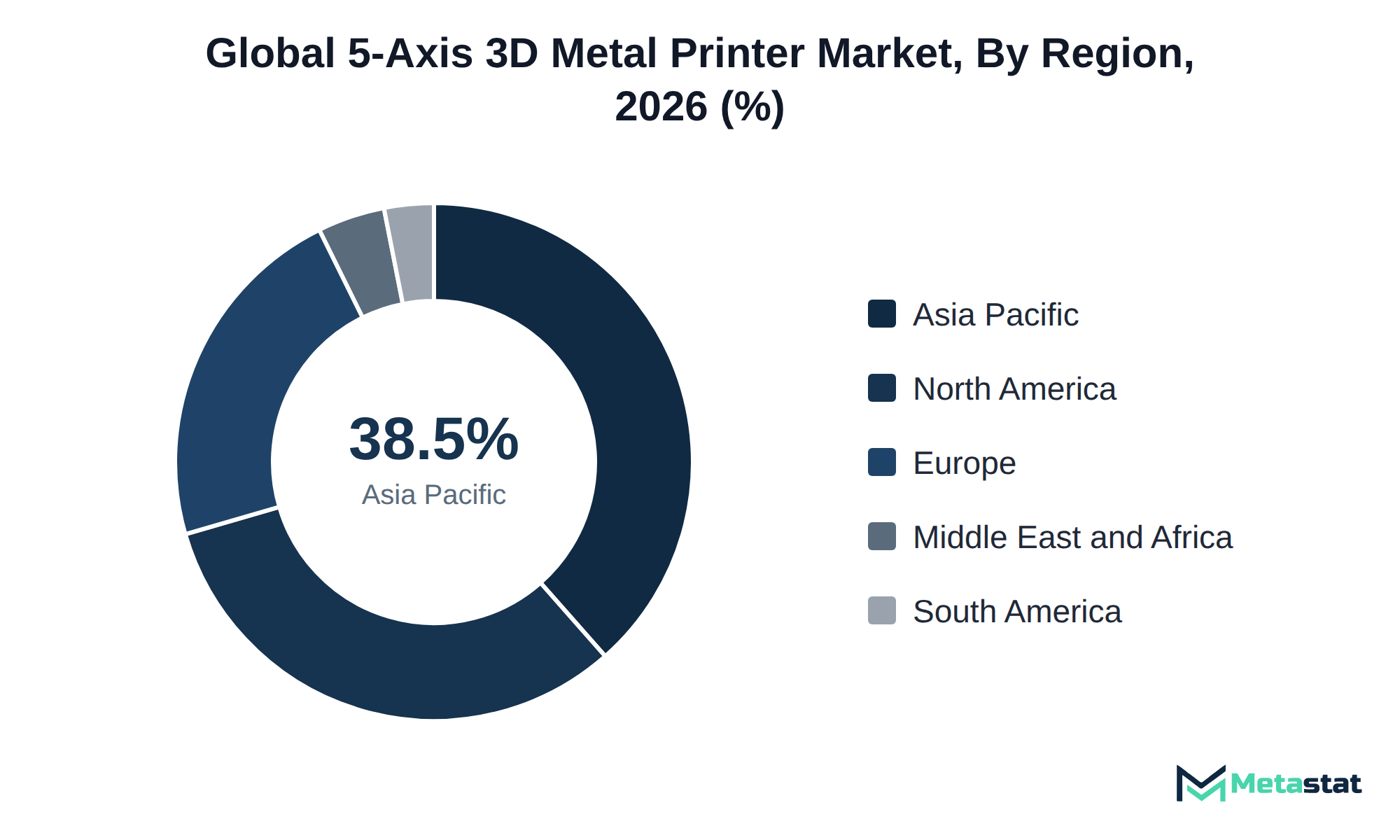
North America exhibits significant growth potential within the 5-Axis 3D Metal Printer market, driven primarily by advanced manufacturing sectors including aerospace and defense. The region's established infrastructure supports the adoption of innovative technologies, facilitating the production of complex metal components essential for high-performance applications. At 2025, North America holds a 32.00% share of the global market, reflecting its dominance in additive manufacturing. By 2033, the market is projected to reach USD 316.2 million, indicating strong demand from industries focusing on precision engineering. The United States, Canada, and Mexico are the primary countries contributing to this growth, benefiting from robust investment in research and development activities aimed at enhancing production capabilities and operational efficiency.
The European market for 5-Axis 3D Metal Printers, representing a share of 22.2% in 2025, experiences significant growth driven by the aerospace and defense industries. Countries including Germany, France, and the UK actively participate in advanced manufacturing initiatives, enhancing their production capabilities. The presence of established automotive manufacturers in Germany and Italy further fuels demand for high-precision components. Innovations in technology, including laser-based directed energy deposition, gain traction in this region, leading to advancements in manufacturing processes. A focus on sustainability and efficient production methods supports the market's expansion. Investment in research and development across Europe plays a critical role in establishing the region as a hub for advanced 3D printing solutions. The market is projected to benefit from this robust infrastructure and the increasing integration of 5-Axis 3D Metal Printing technologies in various applications.
Demand in the Asia-Pacific region for the 5-Axis 3D Metal Printer market experiences significant influence from industries including aerospace, automotive, and energy. Countries like China and India drive growth through their robust manufacturing sectors and ongoing investments in advanced technologies. The region benefits from increasing government support for innovative manufacturing processes, which supports adoption across various applications. With a market share of 38.5% in 2025, the Asia-Pacific region demonstrates a strong commitment to enhancing production capabilities. Companies actively explore opportunities to integrate additive manufacturing solutions within existing infrastructure, increasing operational efficiency and enhancing competitive advantage. The rising emphasis on high-quality production and customization aligns with the increasing use of 5-Axis 3D Metal Printers across multiple sectors, reinforcing further growth in the region.
Brazil and Argentina stand out within the region, with increasing investments in advanced manufacturing technologies. Specific governmental initiatives aimed at enhancing industrial capabilities contribute to this expansion. The market share in South America is projected at 3.1% by 2025, reflecting potential for further development. Challenges related to infrastructure and cost efficiency persist, impacting the adoption of these technologies. While manufacturers align with global standards, demand for advanced printing solutions grows, driving innovation and competitiveness within the region.
The 5-Axis 3D Metal Printer market in the Middle East and Africa faces unique dynamics driven by increasing investments in advanced manufacturing technologies. Countries including Saudi Arabia and the UAE prioritize diversification away from oil dependency, driving growth in industries including aerospace and defense. South Africa's focus on industrial capabilities supports demand for 3D printing technologies, particularly for local manufacturing of complex components. The region's share of the global market in 2025 stands at 4.2%, highlighting emerging opportunities. Infrastructure developments further enhance access to advanced metal printing solutions, driving collaboration between local manufacturers and technology providers. The market growth potential aligns with ongoing trends of modernization and innovation across various sectors.
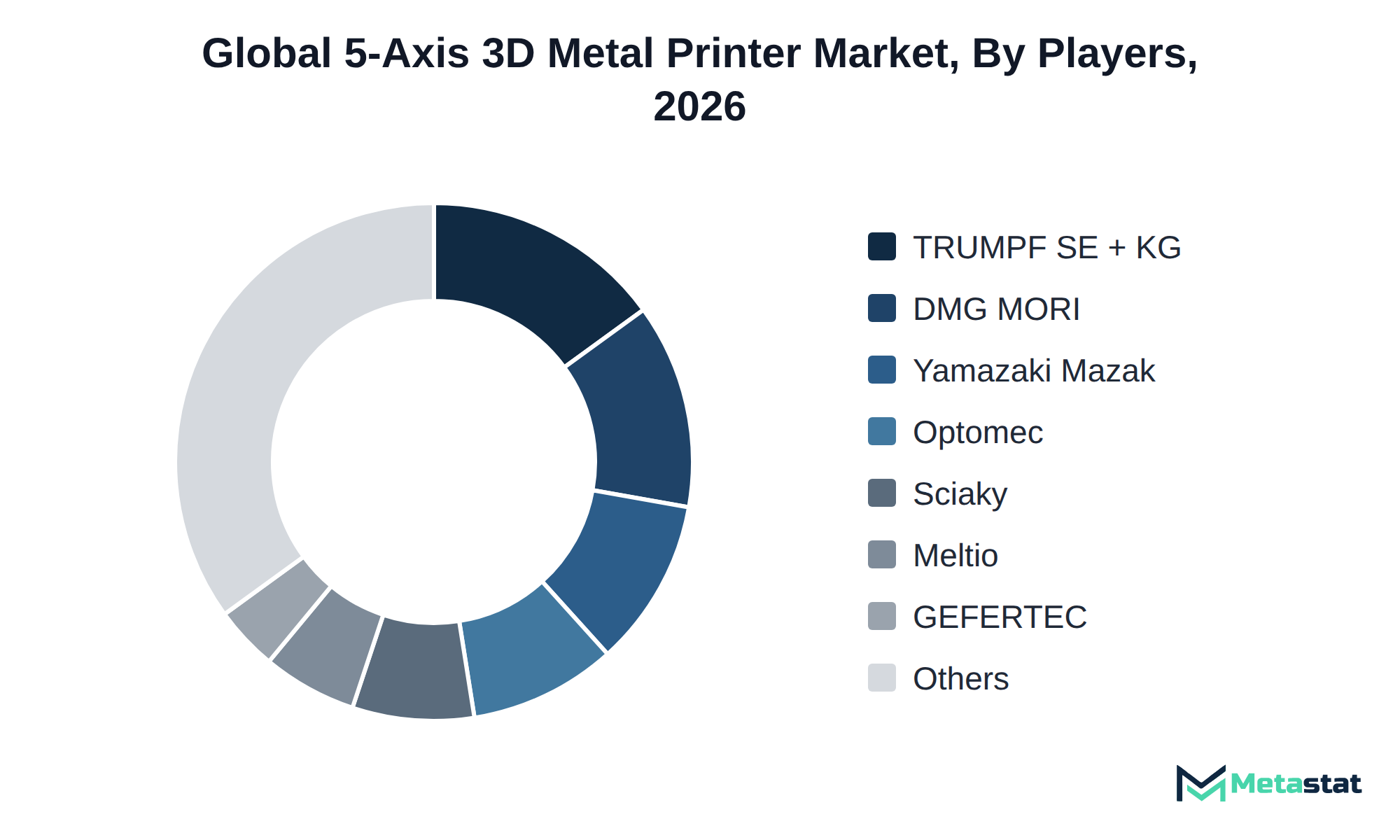
Companies position themselves based on pricing strategies, certifications, and the ability to deliver tailored solutions to meet specific customer requirements. Buyers prioritize factors including service quality and ecosystem compatibility when selecting suppliers.
DMG MORI CO., LTD. emphasizes its expertise in precision machining and advanced manufacturing technologies. TRUMPF SE + Co. KG focuses on laser technology and automation solutions, enhancing operational efficiency for clients. Optomec, Inc. specializes in additive manufacturing systems, leveraging its unique processes to cater to diverse applications within the market. These strategic behaviors illustrate how companies compete in delivering innovative solutions to meet the evolving demands of various industries.
Achieving this growth depends on several developments within the market. First, increasing demand for complex metal component manufacturing in the aerospace and defense industry drives substantial investment, supporting the growth trajectory. Second, advancements in Arc-Based Directed Energy Deposition (DED-Arc) technology play a crucial role, with revenue anticipated to reach USD 343.3 million by 2033 at a 14.3% CAGR, attracting industries aiming for greater efficiency in production. A primary risk that could hinder market expansion includes supply chain disruptions impacting raw material availability, which slows adoption rates. North America remains a key region, forecasted to achieve USD 316.2 million by 2033, highlighting the market's potential and regional dynamics. These factors collectively shape the outlook for the 5-Axis 3D Metal Printer market, driving its future growth.
By Technology: Laser-Based Directed Energy Deposition (DED-LB), Arc-Based Directed Energy Deposition (DED-Arc / WAAM), Electron Beam-Based Directed Energy Deposition (DED-EB), Plasma Arc-Based Directed Energy Deposition
By Machine Configuration: Dedicated Multi-Axis Metal 3D Printers, Hybrid CNC Milling and Additive Manufacturing Machines, Hybrid Turn-Mill and Additive Manufacturing Machines, Robotic Arm-Based Metal Additive Manufacturing Systems, Retrofit Multi-Axis Additive Manufacturing Systems
By Application: Complex Metal Component Manufacturing, Repair and Remanufacturing, Tooling and Mold Manufacturing, Surface Cladding and Functional Coatings, Rapid Prototyping and Product Development, Others (Customized and Low-Volume Part Production, Lightweight Component Manufacturing)
By End-Use Industry: Aerospace and Defense, Automotive and Transportation, Energy and Power Generation, Oil and Gas, Industrial Machinery and Equipment, Marine and Shipbuilding, Medical Devices and Implants, Research and Academic Institutions, Others (Mining Equipment, Architectural Metal Fabrication)
The report strategically identifies and profiles the key market players and analyses their core competencies in each sub-segment of the 5-Axis 3D Metal Printer market.
|
Report Attributes |
Details |
|
Study Period |
2021-2033 |
|
Base Year |
2025 |
|
Estimated Year |
2026 |
|
Forecast Period |
2026-2033 |
|
Historical Period |
2021-2025 |
|
Growth Rate |
CAGR 12.1% from 2026 to 2033 |
|
Revenue Unit |
USD million |
|
Segmentation |
By Technology, Machine Configuration, Application, End-Use Industry, and Region |
|
By Region |
North America (By Technology, Machine Configuration, Application, End-Use Industry, and Country)
|
|
Europe (By Technology, Machine Configuration, Application, End-Use Industry, and Country)
|
|
|
Asia Pacific (By Technology, Machine Configuration, Application, End-Use Industry, and Country)
|
|
|
South America (By Technology, Machine Configuration, Application, End-Use Industry, and Country)
|
|
|
Middle East and Africa (By Technology, Machine Configuration, Application, End-Use Industry, and Country)
|
Find answers to common questions about this report
The 5-Axis 3D Metal Printer market size was valued at USD 421.2 million in 2025.
The market is projected to grow at a CAGR of 12.1% during the forecast period from 2026 to 2033.
The North America 5-Axis 3D Metal Printer market size is estimated to reach USD 316.2 million by 2033.
The leading segment in the 5-Axis 3D Metal Printer market is Laser-Based Directed Energy Deposition (DED-LB), with a projected value of USD 538.8 million by 2033. This segment demonstrates significant growth potential, driven by its applications in various industries.
The demand for high-precision manufacturing drives significant growth in the market. High costs associated with 5-Axis 3D Metal Printers impact demand among potential users, particularly in the aerospace and automotive sectors.
High costs associated with 5-Axis 3D Metal Printers impact demand, particularly among aerospace and automotive sectors. Significant capital investment requirements result in slower uptake, especially for small to medium-sized enterprises with limited budgets for advanced manufacturing technologies.
The increasing demand for customized solutions in high-precision manufacturing, particularly within the aerospace and automotive sectors, drives adoption of 5-axis 3D metal printers. Technological advancements in robotic arm-based systems enhance production capabilities, enabling greater efficiency and precision, which further supports market expansion.
The 5-Axis 3D Metal Printer market is estimated to reach a valuation of USD 1,050.8 million by 2033.
Key players operating in the 5-Axis 3D Metal Printer market include DMG MORI CO., LTD., Yamazaki Mazak Corporation, TRUMPF SE + Co. KG, Optomec, Inc., Meltio, GEFERTEC GmbH, and Sciaky Inc.
The arc-based directed energy deposition segment is projected to reach USD 343.3 million by 2033, reflecting a compound annual growth rate of 14.3 percent.
The analysts below cover Machinery & Equipment research at Metastat Insights.
LEAD ANALYST
Utkarsh Khirodkar is a Lead Market Research Analyst at MetaStat Insight, specializing in market intelligence, technology sector assessments, and competitive strategy.

INDUSTRY CONSULTANT - CHEMICALS & ADVANCED MATERIALS
Chemicals and Materials · Machinery & Equipment · Packaging
Amit Gadhekar Consultant for Chemicals and Materials at MetaStat Insight, directing sector-specific intelligence, research, and strategic consulting across global chemical and processing markets.

PRINCIPAL CONSULTANT - QUALITY SYSTEMS & COMPLIANCE
Electronics and Semiconductor · Machinery & Equipment · Professional Services
Omkar Phadtare is an Industry Consultant at MetaStat Insight, specializing in quality systems, regulatory compliance, and standards benchmarking to drive data-driven market intelligence and strategic industry research.

ENERGY & INFRASTRUCTURE INDUSTRY CONSULTANT
Automotive and Transportation · Electronics and Semiconductor · Energy and Power · Machinery & Equipment
Saurabh Vasant Ganvir consults for Energy & Infrastructure Industry at MetaStat Insight, specializing in renewable energy, solar EPC, and electric vehicle (EV) infrastructure markets.

LEAD CONSULTANT - COMMUNICATION, TELECOM, AND IT
Electronics and Semiconductor · Information & Technology · Machinery & Equipment · Professional Services
Ravindra Sathe Consultants for Communication, Telecom, and IT at MetaStat Insight. He leads the firm's industry research initiatives across telecommunications infrastructure, digital connectivity, enterprise networking, and emerging information technology domains.
Assessing commercial microgrid software adoption requires looking past top-level installation numbers and examining utility interconnection queues. The research provided verifiable data on average permitting timelines, tariff structures, and battery storage integration costs across regional utility territories. That grounded perspective was valuable for our team when building five-year demand projections for industrial microgrid controllers.
Ambulatory surgical centers have very different purchasing cycles for robotic-assisted surgery platforms than major hospital networks. The MetaStat Insight study focused squarely on capital expenditure depreciation, procedural reimbursement pathways, and surgeon training overhead. That operational clarity made it much simpler to validate multi-year procedure growth forecasts against actual ambulatory center adoption patterns.
When planning edge sensor rollouts across refinery environments, generic IoT reports typically miss the harsh-environment certification bottlenecks. MetaStat Insight gave an objective evaluation of ATEX and Class 1 Division 2 hardware availability, along with realistic five-year maintenance cycle cost projections. The comparison of wireless mesh versus private cellular backhaul helped our team pressure-test network reliability models for remote processing facilities.
Explore related market intelligence reports worth reading alongside this one.