
LEAD ANALYST
Utkarsh Khirodkar is a Lead Market Research Analyst at MetaStat Insight, specializing in market intelligence, technology sector assessments, and competitive strategy.

Global Large-Format Industrial 3D Printers Market Size, Share, By Technology (Material Extrusion, Powder Bed Fusion, Directed Energy Deposition, Vat Photopolymerization, Binder Jetting and Others), By Material Capability (Polymer and Polymer Composite Printers, Metal Printers, Sand Printers and Others), By Application (Prototyping and Design Validation, Tooling, Molds and Patterns, End-Use Part Production, Repair and Remanufacturing and Others), By End-Use Industry (Aerospace and Defense, Automotive and Transportation, Industrial Machinery and Heavy Equipment, Energy and Power, Marine and Shipbuilding, Construction and Architecture, Consumer Goods and Visual Communication, Healthcare and Others), Industry Analysis, Growth, Trends, and Forecast, 2026-2033
Report ID
MSI-5750
Published
November, 2026
Pages
279 Pages
Format
Historical
Base year
Forecast
Forecast period
Report Details
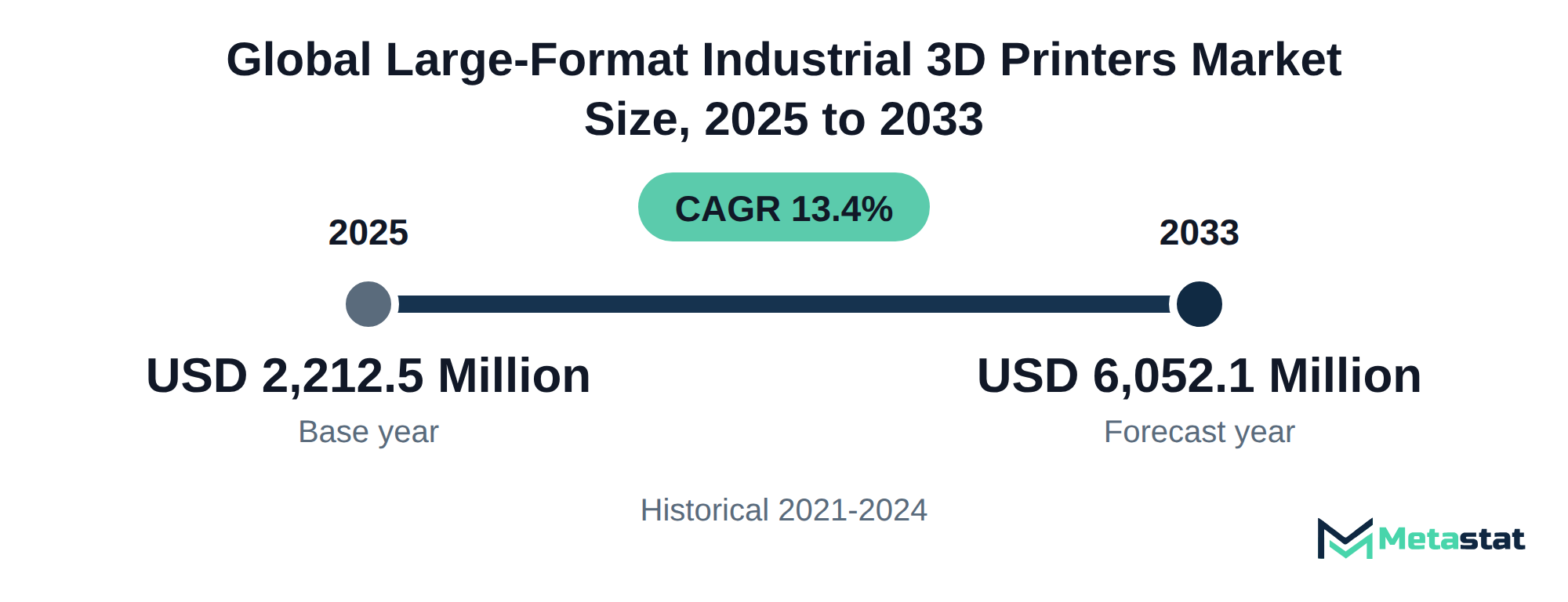
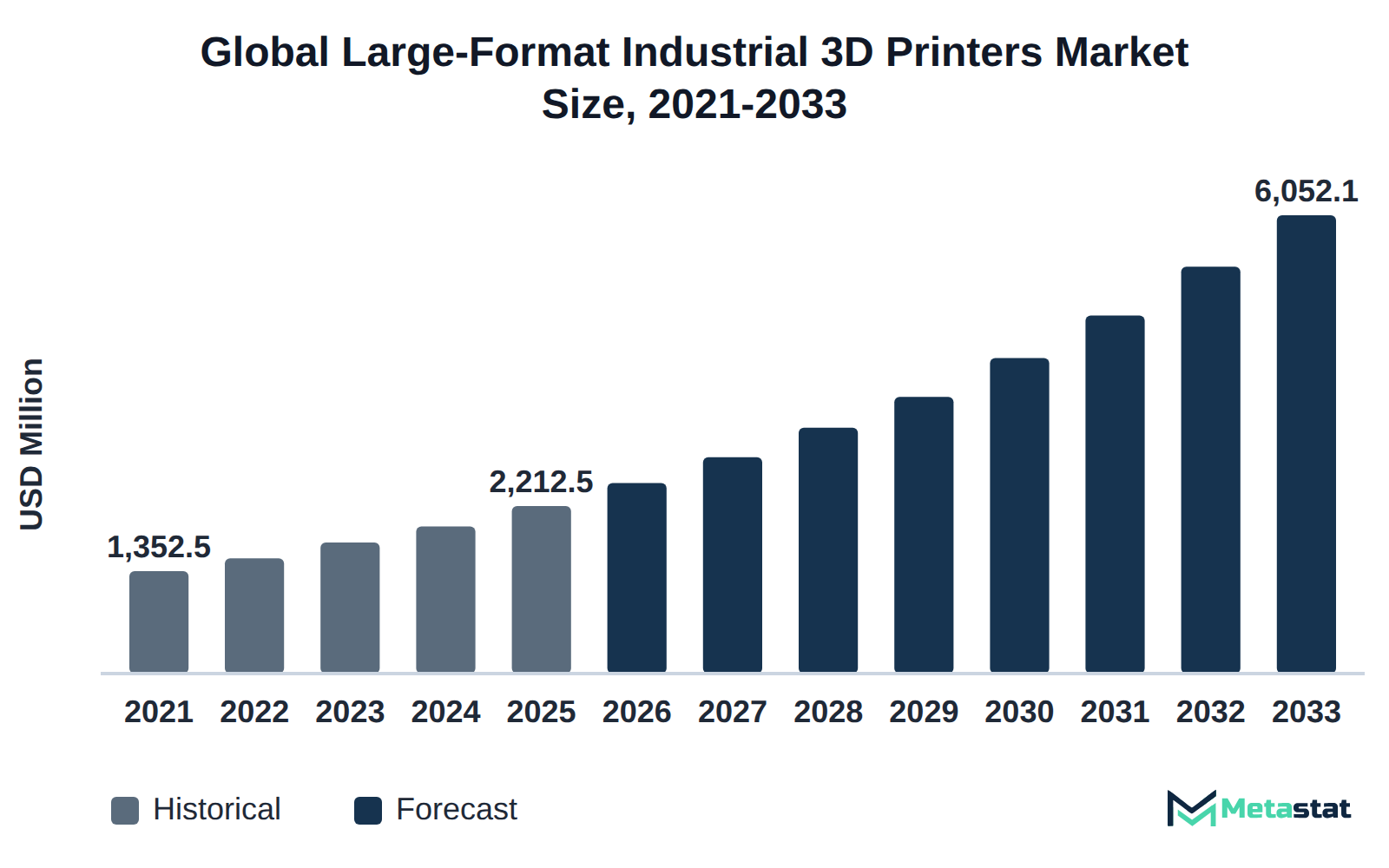
Market Valuation: Valued at $2,212.5 Million in 2025, projected to reach $6,052.1 Million by 2033 at a 13.4% CAGR.
Dominant Segment: Material Extrusion leads the market due to its extensive applications and cost-effectiveness, catering to industries focused on prototyping and design validation.
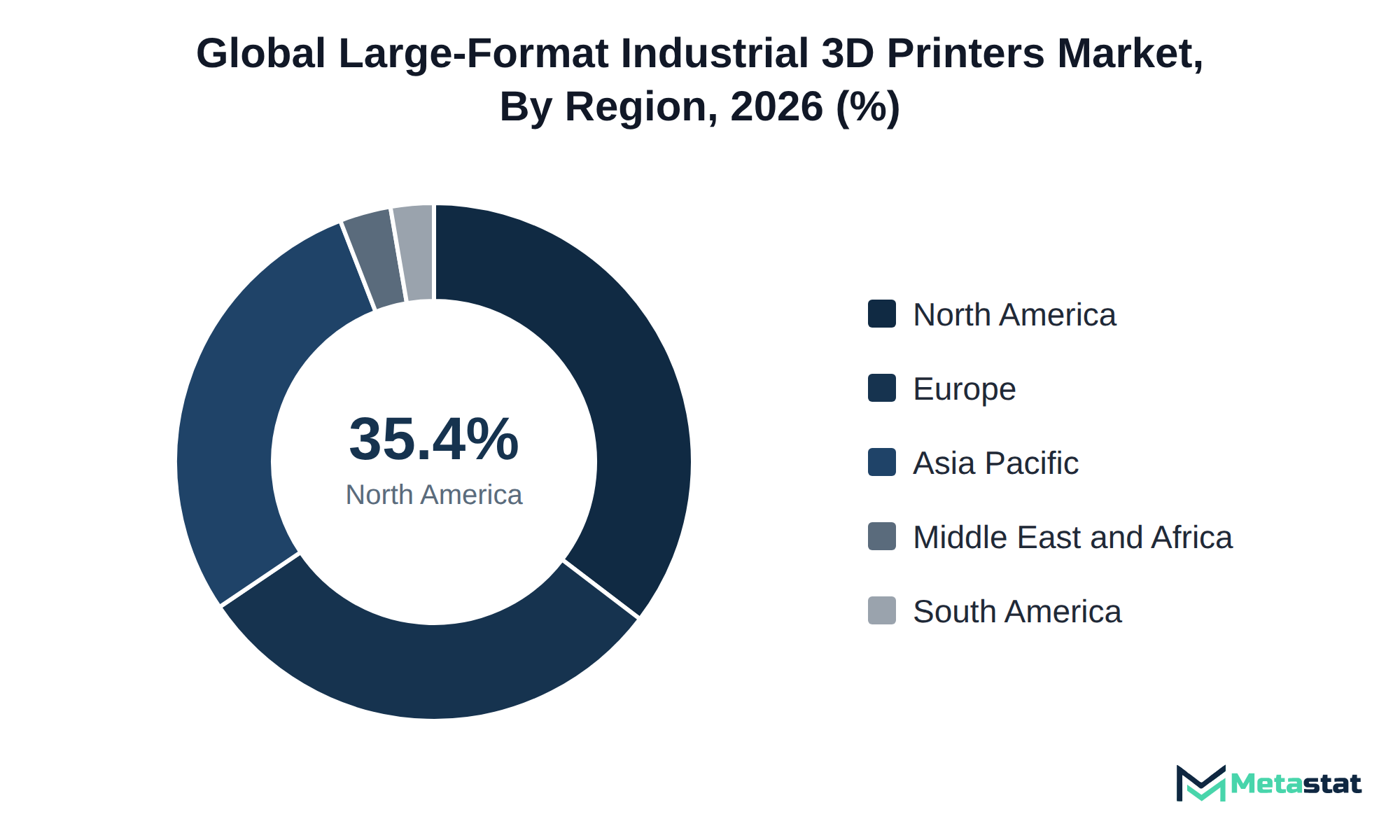
Geographic Lead: North America is the leading region, holding 35.4% of the market in 2025, with the US expected to continue its dominance through 2026 due to strong technological infrastructure.
What's Inside: The report provides a comprehensive analysis of the competitive landscape, covering various technologies, material capabilities, applications, and end-use industries, along with growth forecasts through 2033.
Emerging Trends: The market is witnessing significant advancements in material capabilities, particularly in polymers and metals, driving innovation and enhancing manufacturing flexibility across sectors.
Regulatory Challenges: Stringent regulations regarding material usage and emissions present challenges that impact the adoption rates of large-format industrial 3D printers, particularly in aerospace and automotive sectors.
Choose Your License
Global Large-Format Industrial 3D Printers Market
The global Large-Format Industrial 3D Printers market was valued at USD 2,212.5 million in 2025 and is projected to reach USD 6,052.1 million by 2033, growing at a CAGR of 13.4% over the forecast period.
The Large-Format Industrial 3D Printers market encompasses advanced 3D printing technologies designed for large-scale applications, focusing on sectors including aerospace, automotive, and industrial machinery. Buyers invest in this market to enhance production efficiency, reduce lead times, and achieve complex geometries that traditional manufacturing methods cannot provide. The increasing demand for customization and rapid prototyping significantly influences spending in this sector.
Growth in the market is driven by technological advancements that enable higher precision and the ability to use a broader range of materials. Among the various segments, Material Extrusion holds the most significant value, reflecting its widespread adoption across diverse industries. North America holds 35.4% of the market in 2025, with the US leading in 2026.
The automotive sector is a primary driver of growth, using large-format 3D printers for tooling, molds, and end-use parts. Rising production costs and the demand for innovative manufacturing solutions support market expansion, leading to increased investment in advanced 3D printing technologies.
The Large-Format Industrial 3D Printers market addresses the increasing demand for efficient and precise manufacturing solutions across various industries. Buyers invest in these technologies to enhance production capabilities, reduce lead times, and achieve superior design flexibility. Growth in sectors including aerospace and automotive drives the need for advanced printing solutions that combine material versatility with scalability, helping companies stay competitive.
Growth in the market is propelled by advancements in printing technology and increasing adoption of additive manufacturing processes. Material Extrusion emerges as the leading segment due to its extensive applications and cost-effectiveness. North America's strong technological infrastructure and investment in research and development contribute significantly to its dominant position.
Continued innovation in materials and techniques expands the capabilities of large-format printers, attracting a broader range of end-users. The emphasis on sustainability and efficiency further influences purchasing decisions, with industries seeking to minimize waste and enhance productivity. The market's trajectory indicates significant growth as manufacturing practices change and 3D printing technologies become more relevant.
Pellet extrusion is a significant advancement in the Large-Format Industrial 3D Printers market, particularly for composite tooling. This technology enhances the production of large components by processing thermoplastic pellets, which provide advantages in material properties and cost-efficiency compared to traditional filament-based methods. The market for polymer and polymer composite printers is projected to grow from USD 1,232.5 million in 2026 to USD 2,796.7 million by 2033, reflecting a compound annual growth rate of 12.4%. This shift towards pellet extrusion enables manufacturers to produce larger, more complex parts while reducing production time and material waste.
Companies adopting pellet extrusion techniques benefit from lower material costs and improved production efficiencies. The ability to process a wider range of materials, including filled and composite polymers, enhances the functional properties of the end products. This versatility allows for tailored solutions that meet the specific requirements of various industries, including aerospace and automotive. With the aerospace and defense sector projected to increase its share from USD 728.8 million in 2026 to USD 1,806 million by 2033, the impact of pellet extrusion technology on the market becomes evident. Manufacturers that integrate this technology can serve growing demand in high-performance applications.
Multi-laser metal production using large-format industrial 3D printers has gained traction in the aerospace sector due to its ability to produce complex geometries with high precision. The adoption of these technologies involves pricing models that reflect both the material costs and the operational efficiencies achieved through advanced printing techniques. For example, the market for metal printers is projected to reach USD 2,446.9 million by 2033, highlighting the significant investment potential in this area. A related equipment category for metal additive manufacturing is the 5-axis 3D metal printer industry.
Buyers typically engage in contract models that offer flexible terms based on production volume and project specifications. These contracts include tiered pricing structures, allowing firms to scale their usage according to their production needs. Increased demand for customized aerospace components encourages manufacturers to sign long-term agreements with suppliers of large-format industrial 3D printers, securing access to advanced technology while controlling costs.
The ability to secure favorable contract terms contributes to improved profit margins for aerospace manufacturers. This dynamic lets buyers use their purchasing power to negotiate better pricing and service conditions. As the market expands, firms that want to optimize operations and stay competitive in the aerospace industry need to understand these purchasing mechanisms.
Thermal control shapes the performance and reliability of large-format industrial 3D printers. Precise temperature regulation during the printing process significantly influences material properties, including strength and durability. Manufacturers increasingly recognize the importance of material qualification, driven by demand for higher-quality end products in industries including aerospace and automotive.
The aerospace and defense sector particularly benefits from advanced thermal control systems. With the market for aerospace and defense large-format industrial 3D printers projected to grow from USD 728.8 million in 2026 to USD 1,806 million by 2033, companies in this industry prioritize rigorous material qualification processes. These processes include testing for thermal stability and mechanical properties under various conditions, ensuring components meet stringent regulatory standards. Material qualification is also relevant to the aerospace materials industry. Successful qualification enhances operational efficiency and reduces the risk of production delays, thereby improving overall profitability. The demand for superior thermal management continues to influence the competitive dynamics of the market.
Large-format industrial 3D printers significantly shorten tooling lead times, enhancing operational efficiency for manufacturers. By facilitating rapid prototyping and design validation, these printers support quicker iterations and modifications during the development phase. In 2026, the market for prototyping and design validation is projected to reach USD 765.2 million, with anticipated growth to USD 1,585 million by 2033, reflecting a compound annual growth rate (CAGR) of 11%. This substantial growth indicates rising adoption among industries that prioritize speed and flexibility in production.
Reducing lead times translates to decreased production costs and improved responsiveness to market demands. The aerospace and defense, automotive, and industrial machinery sectors particularly benefit from this capability, resulting in streamlined operations and faster market entry for new products. The integration of large-format industrial 3D printers into tooling processes accelerates production cycles and enhances innovation, allowing for more complex and customized designs. This evolution helps manufacturers remain competitive as the market changes.
Shifts in buyer preferences toward advanced manufacturing technologies drive demand from the aerospace and defense sectors. Increasing pressure for rapid prototyping and production of complex geometries incentivizes these buyers to invest in large-format industrial 3D printers. The integration of additive manufacturing techniques enhances operational efficiency and reduces time-to-market for critical components. The aerospace and defense industry is projected to reach a market value of USD 1,806 million by 2033, reflecting a compound annual growth rate of 13.8% during the forecast period. This growth indicates a significant shift in how these industries approach manufacturing and adapt to changing technological capabilities.
Investments in advanced technologies are crucial for maintaining competitive advantages in a changing environment. The demand surge from aerospace and defense is expected to drive further innovation and attract additional investment.
Advancements in material capabilities significantly influence the Large-Format Industrial 3D Printers market. Innovations in polymers and metal printing expand application potential, enhancing manufacturing flexibility and efficiency. New materials facilitate improved mechanical properties, enabling manufacturers to produce durable components that meet the rigorous demands of various industries, including aerospace and automotive.
While manufacturers adopt advanced materials, processes evolve, resulting in higher production speeds and reduced costs. The introduction of lightweight materials positively affects energy consumption in end-use products, aligning with sustainability goals. These developments attract investment in research and development to create next-generation materials, further driving competition within the market.
Industry players continuously explore the integration of composite materials to enhance product performance. Such efforts contribute to the ongoing transformation of manufacturing processes, enabling a shift toward a more agile production environment. This dynamic supports the market's expansion, with forecasts indicating growth driven by continuous material innovation.
Regulatory challenges present a significant constraint within the Large-Format Industrial 3D Printers market, impacting adoption among various industries. Stringent regulations surrounding material usage and emissions create barriers for manufacturers, particularly in sectors prioritizing compliance with environmental standards. Buyers in aerospace and automotive sectors face heightened scrutiny, leading to slower uptake of advanced 3D printing technologies. The requirement for certification and testing extends project timelines, resulting in smaller orders and delayed replacement cycles. Compliance complexities deter potential investments, impacting overall market growth. This environment creates a cautious approach among buyers, with a focus on risk mitigation rather than innovation, ultimately restricting the market's expansion potential.
Increasing costs of raw materials significantly challenge profitability within the market. Suppliers face pressure from fluctuating prices for polymers and metals, which impacts overall production expenses. This situation leads to tighter margins for manufacturers who rely on these materials for large-format industrial 3D printers. In response, companies pursue strategic partnerships with material producers to stabilize costs and ensure consistent supply. Enhanced investment in research and development targets the creation of alternative materials that offer similar performance at lower prices. By diversifying material sources and optimizing supply chains, suppliers aim to mitigate the effects of rising costs, ultimately striving to maintain competitiveness and meet growing demand. These strategies reflect a proactive approach to addressing the financial pressures posed by fluctuating input costs, supporting ongoing growth in the market.
The polymer and polymer composite segment presents a significant opportunity within the Large-Format Industrial 3D Printers market. Rising demand for lightweight and durable components drives this growth, particularly in industries including automotive and consumer goods. The ability of polymer printers to produce intricate designs while maintaining material properties enhances their appeal to manufacturers looking to innovate and optimize production processes. Advancements in material capabilities address the diverse needs of various applications, creating a favorable environment for investment in this technology. Increasing adoption of polymer printers is expected to influence market dynamics, improving production efficiency and reducing lead times in manufacturing.
The Global Large-Format Industrial 3D Printers market is segmented based on Technology, Material Capability, Application, and End-Use Industry.
Material Extrusion segment is valued at USD 851.4 million in 2026 and is projected to reach USD 1,964.5 million by 2033, at a CAGR of 12.7% during the forecast period. This technology primarily serves industries focused on prototyping and design validation, providing efficient methods for producing complex geometries with high precision. Advancements in material formulations drive this segment, appealing to manufacturers seeking cost-effective solutions. Compared to other technologies, including Powder Bed Fusion, which experiences a higher CAGR of 14.3%, Material Extrusion's growth is slightly slower. However, its extensive application in various sectors, including automotive and consumer goods, emphasizes its significance in the market, catering to buyers prioritizing operational efficiency and speed in product development.
Powder Bed Fusion segment is estimated to reach USD 1,899.2 million by 2033, at a CAGR of 14.3% during the forecast period. This technology employs a laser to selectively fuse powdered material, producing intricate geometries and high-quality parts. Industries including aerospace, automotive, and healthcare apply Powder Bed Fusion for applications including prototyping, tooling, and end-use part production. The segment's growth is driven by increasing demand for lightweight and complex components, particularly in the aerospace sector, where weight reduction plays a critical role in performance. Compared to other technologies, including Material Extrusion, Powder Bed Fusion exhibits a higher growth rate due to its ability to work with a wider range of materials and produce parts with superior mechanical properties. This technological advantage positions Powder Bed Fusion as a critical segment in the market, enhancing its appeal to manufacturers focused on innovation and efficiency.
Directed Energy Deposition segment is expected to reach USD 1,043.4 million by 2033. This technology specializes in additive manufacturing processes that focus energy, including lasers, to melt and fuse materials. Industries including aerospace and automotive frequently employ Directed Energy Deposition for applications requiring high precision and material versatility. The increasing focus on lightweight and durable components drives demand in these sectors, with a projected growth rate of 14.3% through 2033. This segment experiences a higher growth rate compared to others, reflecting advancements in material capabilities and design configurations. In contrast to other technologies, Directed Energy Deposition offers distinct advantages in producing high-performance metal parts, positioning it as a critical player in the evolving market.
Vat Photopolymerization segment is projected to grow at a CAGR of 11.6% during the forecast period. This technology employs a liquid photopolymer resin that hardens when exposed to light, producing intricate and precise parts. Industries including healthcare and consumer goods apply this technology for applications like dental models and custom prosthetics. Demand from these sectors continues to rise due to the growing emphasis on customization and rapid prototyping. The segment's growth trajectory, while robust, remains slower relative to Powder Bed Fusion, which is expected to achieve a CAGR of 14.3%. The price point for Vat Photopolymerization systems often appeals to smaller-scale operations looking for entry-level solutions, distinguishing it from other technologies focused on higher production volumes and scalability. The competitive landscape features a range of suppliers, further driving innovation and product enhancements.
Binder Jetting involves a process where a binding agent is selectively deposited onto a powder bed, allowing for the creation of complex geometries without the need for extensive supports. This technology finds applications in industries including aerospace and automotive, where the production of intricate parts is essential. Demand for Binder Jetting is driven by the increasing need for rapid prototyping and the ability to work with a variety of materials, including metals and polymers. Compared to other technologies in the market, Binder Jetting experiences slower growth rates, particularly when contrasted with segments like Powder Bed Fusion, which benefits from higher adoption rates driven by its established capabilities. This segment's unique characteristics appeal to specific buyers focused on cost-effective production methods for medium to large parts while maintaining design flexibility.
Material Jetting and Sheet Lamination technologies encompass innovative 3D printing methods that enable the creation of complex geometries and high-resolution parts. These technologies find applications primarily in industries including consumer products, healthcare, and automotive, where precise design validation and prototyping are essential. Demand for this segment arises from the need for rapid prototyping and customization, allowing manufacturers to respond swiftly to market shifts. Compared to other technologies, including Powder Bed Fusion and Material Extrusion, this segment experiences slower growth due to higher operational costs associated with the materials used. Buyers in this segment seek advanced features including multi-material capabilities, driving differentiation from more traditional printing methods. Overall, these factors contribute to a unique position for Material Jetting and Sheet Lamination in the evolving dynamics of the Large-Format Industrial 3D Printers market.
This segment serves critical functions for industries requiring rapid prototyping, tooling, and production of complex geometries. Key buyers include aerospace and automotive manufacturers, who leverage these printers for their ability to produce lightweight components with enhanced material properties. Demand for this segment is driven by the growing emphasis on advanced manufacturing techniques and sustainability, leading to increased adoption. Compared to other segments, including Metal Printers, which are projected to grow at a CAGR of 14.7%, Polymer and Polymer Composite Printers exhibit a slightly lower growth trajectory, highlighting the unique positioning of polymer materials in the market. Overall, the polymer segment's versatility and continued technological advancements support its sustained growth in the Large-Format Industrial 3D Printers market.
Metal Printers are projected to reach USD 2,446.9 million by 2033, at a CAGR of 14.7% during the forecast period. This segment finds application primarily in the aerospace and defense sectors, where precise and complex parts are often required. Companies in these industries employ metal printers to create lightweight components, reducing material waste and enhancing performance. Factors driving growth in this segment include advancements in metal powder technology and increasing demand for customized parts, which differ significantly from the offerings in other material capability segments. The CAGR for Metal Printers exceeds that of Polymer Printers, which stands at 12.4%. This growth trajectory indicates a stronger shift towards metal materials, aligning with broader trends in the Large-Format Industrial 3D Printers market that favor high-performance applications.
Sand Printers segment is expected to reach USD 616.1 million by 2033. This technology primarily serves industries engaged in creating mold patterns and core production, particularly in foundries and construction. Growth in this segment is driven by increasing demand for rapid prototyping and customization in these sectors. The segment stands out due to its ability to produce complex geometries using sand, a cost-effective material for specific applications. Compared to other material capabilities, Sand Printers exhibit a unique advantage in pricing, appealing to buyers focused on lower-cost production solutions. Other segments, including Metal Printers, experience higher growth rates due to advancements in material capabilities, but Sand Printers maintain a strong position owing to their established applications and lower entry costs associated with the technology. The market continues to evolve, reflecting shifting priorities of buyers seeking efficient and economical production methods.
Others (Ceramic Printers, Multi-Material Printers) segment is projected to grow at a CAGR of 14.8% during the forecast period. This segment finds application in industries needing intricate designs and specialized materials, appealing to manufacturers in aerospace, automotive, and healthcare for prototyping and production. The increasing demand for customized components drives adoption, owing to companies seeking to enhance operational efficiency and reduce waste. The segment differentiates itself through its focus on advanced material capabilities, allowing for diverse applications that traditional methods cannot achieve. This segment's rapid growth contrasts with others that experience slower rates due to market saturation or technological constraints. The ability to produce complex geometries at competitive prices influences the segment's attractiveness, setting it apart from conventional manufacturing processes in the market.
This segment primarily serves industries that require rapid product development and testing, including aerospace, automotive, and consumer goods. The demand is driven by the necessity for quicker design iterations and reduced time to market. Compared to other segments, this segment experiences slower growth relative to End-Use Part Production, which focuses on final product manufacturing and typically commands higher prices. The increasing push for innovation within these industries highlights the significance of prototyping capabilities, influencing investment in advanced 3D printing technologies. Adoption in this sector reflects a strategic shift toward more efficient design processes, reinforcing its role in the evolving dynamics of the Large-Format Industrial 3D Printers market.
Tooling, Molds and Patterns segment is estimated to reach USD 1,738.8 million by 2033, at a CAGR of 12.7% during the forecast period. This segment supports the manufacturing of tools, molds, and patterns used in various industrial applications, primarily targeting sectors including automotive, aerospace, and consumer goods. Demand for customized and complex tooling solutions drives growth, reflecting increasing efficiency and speed in production processes. Compared to other application segments, Tooling, Molds and Patterns exhibits moderate growth influenced by technological advancements and materials innovation. With a CAGR of 12.7%, this segment's growth trajectory surpasses the Prototyping and Design Validation segment, which grows at a CAGR of 11%. Continuous development of high-performance materials enhances the capabilities of tooling applications, positioning this segment as a vital component of the broader market focused on meeting evolving manufacturing needs.
End-Use Part Production segment is expected to reach USD 2,022.6 million by 2033. This segment focuses on the production of functional parts intended for direct use, catering to industries including aerospace, automotive, and healthcare. Increasing demand for customized parts and rapid prototyping drives growth within this segment. The End-Use Part Production segment exhibits a higher growth rate compared to Prototyping and Design Validation, projected at a CAGR of 11.0%. The shift towards on-demand manufacturing reduces lead times and production costs, driving interest among manufacturers seeking efficiency. This segment’s ability to produce complex geometries and lightweight structures positions it as a competitive option compared to traditional manufacturing methods, enhancing its appeal within the Large-Format Industrial 3D Printers market.
Repair and Remanufacturing is projected to grow at a CAGR of 15.1% during the forecast period. This segment plays a significant role in restoring and refurbishing used parts, predominantly for industries including aerospace, automotive, and manufacturing. Increased focus on sustainability drives demand for this segment, with companies seeking to reduce waste and extend the lifecycle of components. Compared to other applications, it offers higher growth potential due to the rising need for cost-effective solutions, highlighting its distinct value proposition. While segments like Prototyping and Design Validation focus on new product development, Repair and Remanufacturing emphasizes the revival of existing products, catering to a different buyer profile focused on efficiency and resource conservation. Strong demand within the Repair and Remanufacturing segment positions it uniquely within the Large-Format Industrial 3D Printers market, contributing to the overall expansion of the market.
This sub-segment focuses on research and process development, along with training applications, which serve critical roles in advancing 3D printing technologies. Industries including education, research institutions, and corporate training programs apply these capabilities for innovation and skill enhancement. The emphasis on training reflects a growing recognition of the need for skilled personnel in the field, driving demand for machines that support these educational initiatives. In comparison to other applications, this sub-segment typically experiences slower growth, influenced by extensive infrastructure requirements and investment in technical education. Overall, the segment contributes substantially to the diversification of the Large-Format Industrial 3D Printers market, promoting both knowledge transfer and practical experience in additive manufacturing technologies.
This segment includes applications for manufacturing components and parts for aircraft, missiles, and defense systems. Key players in this segment include aerospace manufacturers and defense contractors who prioritize precision and reliability. Demand for lightweight and durable materials drives this segment, with regulatory standards promoting advanced manufacturing techniques. The growing emphasis on reducing lead times and costs in this sector fuels adoption of large-format industrial 3D printers, distinguishing this segment from industries with lower growth rates. The Aerospace and Defense segment experiences faster growth compared to other sectors within the market, reflecting its critical role in enabling innovation in high-stakes environments.
Automotive and Transportation segment is estimated to reach USD 1,316.9 million by 2033, at a CAGR of 12.4% during the forecast period. This segment focuses on producing components and systems for vehicles, with rapid prototyping and design validation playing crucial roles for manufacturers in the automotive industry. Increasing adoption of lightweight materials and the push for more efficient manufacturing processes drive demand in this area. Compared to other segments, the Automotive and Transportation segment exhibits a moderate growth rate influenced by advancements in material technologies and the reduction of production costs. The competitive nature of the automotive industry emphasizes the importance of innovation, pushing manufacturers to invest in Large-Format Industrial 3D Printers that enhance production capabilities and improve product quality. Rising environmental regulations further encourage the shift towards more sustainable production methods, supporting ongoing growth in this segment within the market.
Industrial Machinery and Heavy Equipment segment is expected to reach USD 899.9 million by 2033. This segment finds application in sectors including construction, manufacturing, and energy, where businesses employ large-format printers for producing components and equipment parts. Demand for this segment experiences growth driven by the increasing shift toward automation and custom manufacturing processes. Technological advancements enable the production of intricate machinery components with high precision and efficiency. Compared to other segments, this one exhibits a distinct growth trajectory, influenced by robust demand for durable and custom parts in heavy industries. The market for this segment expands due to rising investments in industrial automation and the need for customized solutions in production processes.
Energy and Power segment is projected to grow at a CAGR of 14.4% during the forecast period. This segment focuses on the production of energy components and equipment, serving industries including renewable energy, utilities, and power generation. The ongoing shift toward sustainable energy solutions drives demand for advanced manufacturing techniques that enhance efficiency and reduce waste. Compared to other segments within the market, this area experiences faster growth due to rising investments in renewable energy technologies and the need for innovation in energy production methods. Increasing adoption of large-format industrial 3D printers allows for the creation of complex geometries required in energy applications, presenting opportunities for significant operational cost reductions and improved performance outcomes.
Marine and Shipbuilding focuses on the development and production of marine vessels and systems, integrating advanced manufacturing techniques for enhanced efficiency and performance. This segment serves shipbuilders and marine engineers, allowing for the creation of complex components while reducing lead times and production costs. A notable demand driver arises from the industry's ongoing emphasis on lightweight materials and innovative designs, driving a shift toward additive manufacturing technologies. Compared to other segments, this sub-segment faces a slower growth trajectory due to the high capital investment required for integrating large-format 3D printing into traditional shipbuilding processes. Consequently, the emphasis on cost optimization and rapid prototyping becomes crucial for players operating in this space, positioning them to capitalize on opportunities for innovation in vessel design and construction.
Construction and architecture involve the design and creation of structures, employing advanced technologies for efficient building processes. Architects and construction firms increasingly adopt large-format industrial 3D printers to produce complex models and prototypes, enabling enhanced visualization and design validation. Large-scale additive construction is also tracked in the 3D concrete printing industry. Demand in this segment is driven by the growing trend towards sustainable construction practices and the pursuit of innovative architectural solutions. Compared to other segments, this area experiences slower growth due to higher initial investment costs associated with large-format printers. While sectors including aerospace and automotive prioritize efficiency and part production, the construction and architecture segment stands out by focusing on design accuracy and the ability to produce large-scale components, reflecting the unique requirements of the construction industry. The large-format industrial 3D printers market continues to evolve, with architects seeking sustainable materials and methods to meet contemporary demands.
Consumer Goods and Visual Communication encompasses the development and production of consumer products, promotional materials, and visual displays. This segment caters to industries that prioritize aesthetics and functionality, including retail, advertising, and product design. Demand for customized products and unique designs drives growth within this segment, reflecting a broader trend toward personalization in consumer goods. Companies in this space often seek innovative ways to enhance brand appeal, leveraging advanced 3D printing technologies for rapid prototyping and design validation. Compared to other segments, Consumer Goods and Visual Communication experiences different market dynamics, focusing more on design flexibility than volume production. The market emphasizes lower quantities with higher customization, distinguishing it from segments requiring mass production, leading to varying pricing strategies and buyer profiles.
Healthcare applications benefit significantly from large-format industrial 3D printing technologies, facilitating the production of custom medical devices, implants, and anatomical models tailored for surgical planning. Patient-specific anatomical models also form part of the surgical 3D printing industry. Healthcare providers, including hospitals and research institutions, leverage these printers to create patient-specific solutions that enhance treatment outcomes and operational efficiency. Demand in this segment is driven by the increasing emphasis on personalized medicine and advancements in bioprinting technologies. Unlike other segments with broader applications, healthcare focuses on specialized needs, leading to a unique pricing structure and longer adoption cycles due to regulatory requirements and scrutiny. The market sees a distinct trend toward higher-value applications, contrasting with more standardized industrial uses, thereby influencing investment strategies and technology development.
This sub-segment encompasses educational and research institutions employing 3D printing technologies for various applications. Institutions leverage large-format industrial 3D printers for prototyping and research purposes, enhancing capabilities in product development and innovation. Growth in this segment is driven by increased investment in research and development, particularly in STEM fields. This focus on educational advancements differentiates it from other segments, with demand stemming from institutional budgets rather than direct consumer purchases. Educational and research facilities require access to advanced technology for teaching and experimental purposes. This sub-segment offers unique opportunities for manufacturers to cater to specialized needs, aligning with the broader trends of digital transformation and modernization in educational contexts. The Large-Format Industrial 3D Printers market is expected to benefit from this trend, supporting advancements in academic and scientific exploration.
Based on geography, the Global Large-Format Industrial 3D Printers market is divided into North America, Europe, Asia-Pacific, South America, Middle East, and Africa.
North America exhibits significant growth potential within the Large-Format Industrial 3D Printers market, with a projected value of USD 2,008.1 million by the end of 2033. The region's strong demand stems from industries including aerospace and defense, automotive, and industrial machinery, which increasingly adopt advanced 3D printing technologies for prototyping and production processes. A growing emphasis on customization and rapid production capabilities drives investment in 3D printing solutions. The United States, Canada, and Mexico are leading contributors to this market expansion, supported by robust manufacturing infrastructures and a commitment to innovation. By 2025, North America is expected to hold a 35.4% share of the global market, demonstrating its strategic importance in shaping the industry. Continuous advancements in technology and increasing applications across various sectors will further enhance the market's growth trajectory.
In Europe, the Large-Format Industrial 3D Printers market benefits from strong demand driven by industries including aerospace, automotive, and industrial machinery. Countries including Germany and France lead in adoption due to advanced manufacturing capabilities and investment in innovative technologies. The presence of established firms and research institutions creates an ecosystem supportive of 3D printing advancements. Infrastructure improvements and funding programs aimed at enhancing manufacturing efficiency contribute to market growth. With a share of 30.2% in 2025, Europe represents a significant player, highlighting the region's commitment to integrating large-format industrial 3D printing solutions across various applications.
Rapid advancements in manufacturing technologies influence the Large-Format Industrial 3D Printers market in Asia-Pacific, with significant demand growth driven by industries including aerospace, automotive, and healthcare. Countries like China, Japan, and India play crucial roles in this expansion, fueled by increasing investments in research and development alongside government initiatives promoting additive manufacturing. Robust infrastructure and a skilled workforce in these nations enhance the adoption of large-format 3D printing technologies. The region accounted for 28.6% of the global market share in 2025, reflecting strong interest in innovative production methods. High demand for customized parts and prototypes further drives growth across various applications, ensuring continued investment and development in this dynamic sector.
Demand for the Large-Format Industrial 3D Printers market in South America reflects the growing industrial base, particularly in Brazil and Argentina. The region's focus on sectors including automotive and consumer goods drives the adoption of advanced manufacturing technologies. Challenges arise from limited infrastructure and investment in additive manufacturing, which restrict wider implementation. Nevertheless, local players are increasing their presence, enhancing market competition and encouraging innovation. Economic conditions and consumer preferences in these countries create unique opportunities for customized solutions within the market.
The Middle East and Africa exhibit unique dynamics within the Large-Format Industrial 3D Printers market, driven primarily by industries including aerospace and defense and automotive. Adoption of advanced manufacturing technologies aligns with regional infrastructure developments, particularly in countries like Saudi Arabia and the UAE. Local initiatives promoting technological advancements contribute to the market's growth trajectory. South Africa stands out as a notable player in the industrial machinery segment. The region is anticipated to show increasing interest in large-format industrial 3D printing, addressing specific needs within various sectors. The focus on innovation and efficiency supports enhanced manufacturing processes, positioning the market for sustained growth.
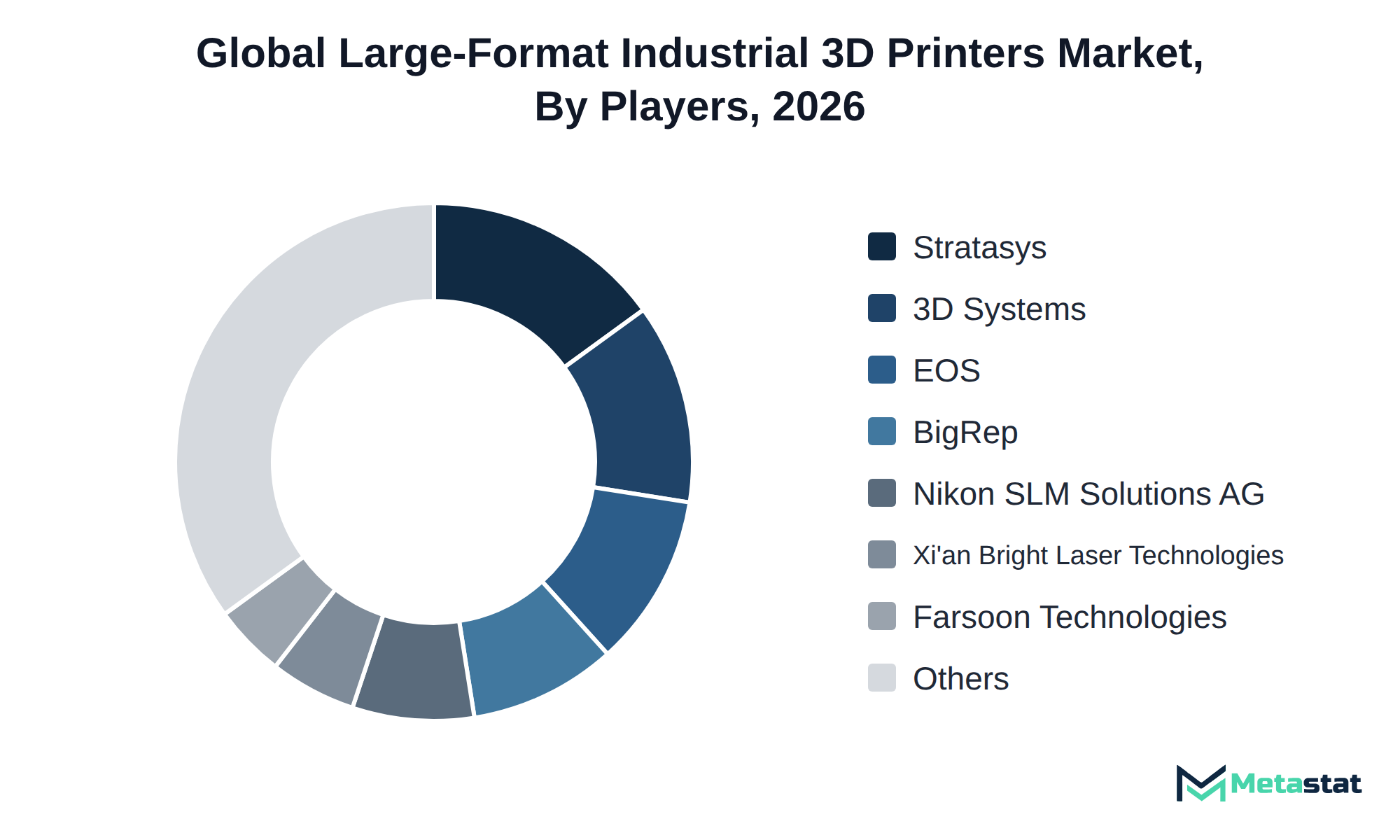
In the Large-Format Industrial 3D Printers market, companies compete primarily through technological innovation, quality, and customization capabilities. Diverse applications across industries including aerospace, automotive, and healthcare drive demand for specific features in 3D printers. Buyers prioritize criteria including price, service, certification, and the ability to customize solutions based on unique requirements.
Stratasys Ltd. focuses on enhancing polymer and polymer composite printing technologies, catering to industries requiring high precision and efficiency. 3D Systems Corporation emphasizes broadening its material capabilities in metal printing to serve the evolving demands of industrial applications. EOS GmbH specializes in powder bed fusion technology, appealing to clients in aerospace and automotive sectors seeking advanced production methods.
Companies differentiate themselves through service offerings and ecosystem integration. Buyers increasingly favor manufacturers providing comprehensive support, training, and maintenance services alongside their products. BigRep GmbH emphasizes large-scale printing solutions, appealing to industries including construction and architecture, while DMG MORI CO., LTD. combines traditional manufacturing expertise with advanced additive manufacturing techniques, attracting clients in industrial machinery and heavy equipment sectors.
The competitive environment in the market reflects a blend of established players and emerging innovators, each striving to meet the diverse needs of manufacturers across various end-use industries.
The expansion of the Large-Format Industrial 3D Printers market relies on several key developments. First, advancements in technology including Powder Bed Fusion, projected to achieve a CAGR of 14.3%, play a significant role in enhancing printing capabilities and material properties. These improvements drive demand in industries like aerospace and automotive, where precision and efficiency are critical. Second, increasing adoption of Metal Printers, expected to reach USD 2,446.9 million by 2033, reflects a growing need for stronger components in diverse applications, including industrial machinery. However, potential risks including supply chain disruptions could hinder market growth. Fluctuations in material costs or delays in technology implementation impede the expansion trajectory, particularly in the North American region where investment levels are high. Overall, achieving the forecasted growth hinges on the successful integration of innovative technologies and stable supply lines within the market.
By Technology: Material Extrusion, Powder Bed Fusion, Directed Energy Deposition, Vat Photopolymerization, Binder Jetting, Others (Material Jetting, Sheet Lamination)
By Material Capability: Polymer and Polymer Composite Printers, Metal Printers, Sand Printers, Others (Ceramic Printers, Multi-Material Printers)
By Application: Prototyping and Design Validation, Tooling, Molds and Patterns, End-Use Part Production, Repair and Remanufacturing, Others (Research and Process Development, Training)
By End-Use Industry: Aerospace and Defense, Automotive and Transportation, Industrial Machinery and Heavy Equipment, Energy and Power, Marine and Shipbuilding, Construction and Architecture, Consumer Goods and Visual Communication, Healthcare, Others (Education, Research Institutes)
The report strategically identifies and profiles the key market players and analyses their core competencies in each sub-segment of the Large-Format Industrial 3D Printers market.
Report Attributes | Details |
Study Period | 2021-2033 |
Base Year | 2025 |
Estimated Year | 2026 |
Forecast Period | 2026-2033 |
Historical Period | 2021-2025 |
Growth Rate | CAGR 13.4% from 2026 to 2033 |
Revenue Unit | USD million |
Segmentation | By Technology, Material Capability, Application, End-Use Industry, and Region |
By Region | North America (By Technology, Material Capability, Application, End-Use Industry, and Country)
|
Europe (By Technology, Material Capability, Application, End-Use Industry, and Country)
| |
Asia Pacific (By Technology, Material Capability, Application, End-Use Industry, and Country)
| |
South America (By Technology, Material Capability, Application, End-Use Industry, and Country)
| |
Middle East and Africa (By Technology, Material Capability, Application, End-Use Industry, and Country)
|
Find answers to common questions about this report
The Large-Format Industrial 3D Printers market size was valued at USD 2,212.5 million in 2025.
The market is projected to grow at a CAGR of 13.4% during the forecast period from 2026 to 2033.
The North America Large-Format Industrial 3D Printers market size is estimated to reach USD 2,008.1 million by 2033.
Material Extrusion leads the Large-Format Industrial 3D Printers market with a projected value of USD 1,964.5 million by 2033. This segment's growth reflects its significant share compared to other technology segments.
Key drivers for the Large-Format Industrial 3D Printers market include increasing demand from the aerospace and defense sectors, driven by the need for rapid prototyping and production of complex geometries. Advancements in material capabilities enhance manufacturing flexibility and efficiency, attracting investment in research and development.
North America holds the dominant share of the Large-Format Industrial 3D Printers market, with a value of USD 2,008.1 million projected for 2033. This region accounts for 35.4 percent of the total market share.
Regulatory challenges and increasing costs of raw materials restrain growth in the Large-Format Industrial 3D Printers market. Stringent regulations surrounding material usage and emissions create barriers for manufacturers, while fluctuating prices for polymers and metals impact production expenses, resulting in tighter margins.
Advancements in polymer and polymer composite technologies favor adoption by enabling the production of lightweight and durable components. This capability meets the increasing demand for intricate designs, particularly in the automotive and consumer goods sectors, enhancing production efficiencies and reducing lead times.
The Large-Format Industrial 3D Printers market is estimated to reach a valuation of USD 6,052.1 million by 2033.
Key players operating in the Large-Format Industrial 3D Printers market include Stratasys Ltd., 3D Systems Corporation, BigRep GmbH, EOS GmbH, Nikon SLM Solutions AG, and DMG MORI CO., LTD.
The analysts below cover Machinery & Equipment research at Metastat Insights.
LEAD ANALYST
Utkarsh Khirodkar is a Lead Market Research Analyst at MetaStat Insight, specializing in market intelligence, technology sector assessments, and competitive strategy.

INDUSTRY CONSULTANT - CHEMICALS & ADVANCED MATERIALS
Chemicals and Materials · Machinery & Equipment · Packaging
Amit Gadhekar Consultant for Chemicals and Materials at MetaStat Insight, directing sector-specific intelligence, research, and strategic consulting across global chemical and processing markets.

PRINCIPAL CONSULTANT - QUALITY SYSTEMS & COMPLIANCE
Electronics and Semiconductor · Machinery & Equipment · Professional Services
Omkar Phadtare is an Industry Consultant at MetaStat Insight, specializing in quality systems, regulatory compliance, and standards benchmarking to drive data-driven market intelligence and strategic industry research.

ENERGY & INFRASTRUCTURE INDUSTRY CONSULTANT
Automotive and Transportation · Electronics and Semiconductor · Energy and Power · Machinery & Equipment
Saurabh Vasant Ganvir consults for Energy & Infrastructure Industry at MetaStat Insight, specializing in renewable energy, solar EPC, and electric vehicle (EV) infrastructure markets.

LEAD CONSULTANT - COMMUNICATION, TELECOM, AND IT
Electronics and Semiconductor · Information & Technology · Machinery & Equipment · Professional Services
Ravindra Sathe Consultants for Communication, Telecom, and IT at MetaStat Insight. He leads the firm's industry research initiatives across telecommunications infrastructure, digital connectivity, enterprise networking, and emerging information technology domains.
Transitioning ultra-class mining haul trucks to alternative power requires concrete data on remote hydrogen refueling infrastructure economics. The report evaluated megawatt-scale electrolyzer installation expenses, onsite storage safety mandates, and heavy-duty fuel cell stack degradation under continuous duty cycles. That technical rigor helped our engineers benchmark realistic total operating cost horizons for off-highway fleet decarbonization.
Enterprise zero-trust network rollouts are often slowed down by multi-cloud transit latency and proprietary hardware retirement schedules. This study provided realistic total cost of ownership models comparing cloud-delivered security edge solutions against traditional hardware refreshes. The analysis of contract renewal lengths and software maintenance fees gave us clear visibility into enterprise replacement cycles over the next three to five years.
Scaling antibody-drug conjugate manufacturing hinges on contract manufacturing availability for high-potency active ingredients. The MetaStat Insight analysis looked closely at global cleanroom slot constraints, bioconjugation batch failure rates, and supply chain redundancies between the US, Europe, and India. The supplier capability matrix proved genuinely useful for our team when mapping secondary source options across our clinical pipeline.
Explore related market intelligence reports worth reading alongside this one.