
LEAD ANALYST
Utkarsh Khirodkar is a Lead Market Research Analyst at MetaStat Insight, specializing in market intelligence, technology sector assessments, and competitive strategy.

Global Precision Gearbox Market Size, Share, By Gear Technology (Planetary, Harmonic and Strain-Wave, Cycloidal and RV, Precision Spur and Helical, Precision Bevel and Right-Angle), By Product Configuration (Standard Catalog Gearboxes, Configured-to-Order Gearboxes, Custom-Engineered Gearboxes, Integrated Gearmotor and Actuator Systems), By Application (Robotic Joint and End-of-Arm Motion, Machine Axis Positioning, Indexing and Rotary Tables, Conveyor and Automated Material Movement, Packaging and Filling Machinery, Precision Assembly and Inspection, Surgical and Diagnostic Equipment), By End-Use Industry (Automotive Manufacturing, Electronics and Semiconductor, General Industrial Manufacturing, Logistics and Warehousing, Food and Beverage, Aerospace and Defense, Healthcare and Life Sciences), Industry Analysis, Growth, Trends, and Forecast, 2026-2033
Report ID
MSI-5726
Published
November, 2026
Pages
282 Pages
Format
Historical
Base year
Forecast
Forecast period
Report Details
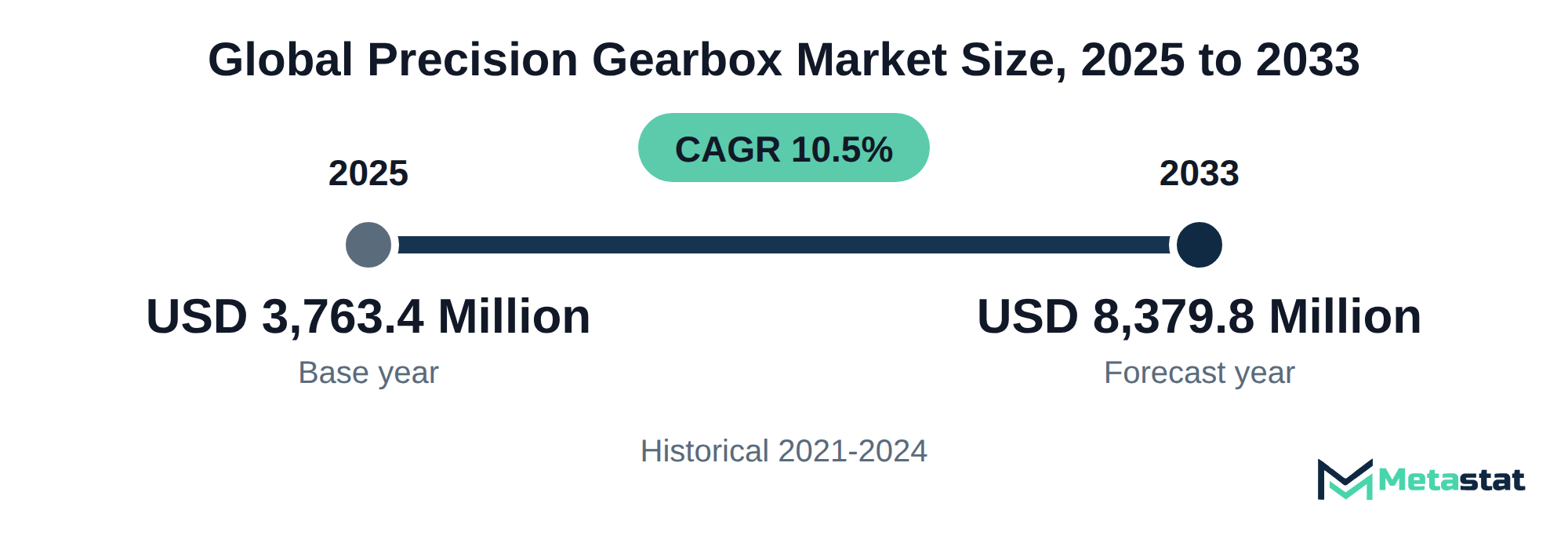
Market Valuation: Valued at $3,763.4 Million in 2025, projected to reach $8,379.8 Million by 2033 at a 10.5% CAGR.
Dominant Segment: The planetary gear technology segment leads the market, driven by its wide application in robotics and automation systems, expected to reach USD 4,511.7 million by 2033.
Geographic Lead: Asia Pacific dominates the market with a 40.1% share in 2025, fueled by robust industrial activity and increasing investments in manufacturing technologies.
What's Inside: The report includes competitive coverage, detailed analyses of market dynamics, and forecasts for the period 2026-2033.
Market Trends: The increasing demand for automation and advanced technologies is propelling market growth, with significant investments in robotics across various industries.
Growth Drivers: The push for energy-efficient solutions and customized gearbox designs is enhancing operational efficiency and aligning with modern industrial requirements.
Choose Your License
Global Precision Gearbox Market
The global Precision Gearbox market was valued at USD 3,763.4 million in 2025 and is projected to reach USD 8,379.8 million by 2033, growing at a CAGR of 10.5% over the forecast period.
The Precision Gearbox market encompasses various gear technologies and configurations across multiple applications and end-use industries. Buyers invest in precision gearboxes to improve efficiency and performance in automation and machinery. This segment serves manufacturers in robotics, automotive, electronics, and general industrial sectors, where precision and reliability are critical for maintaining competitive advantages.
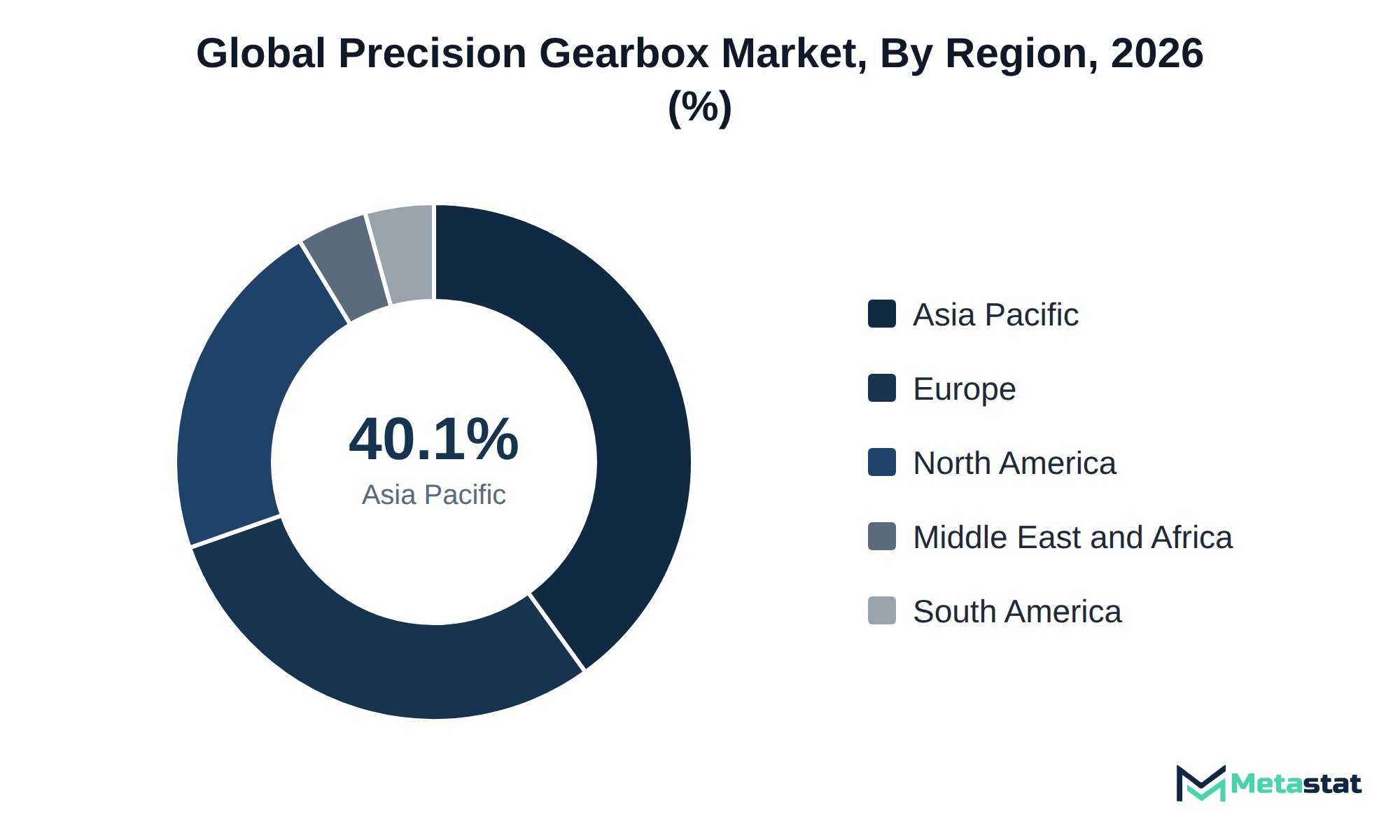
Rising demand for automation and advanced technologies drives growth in the precision gearbox market. The planetary gear technology segment emerges as the most valuable, reflecting its wide application in robotics and automation systems. In terms of regional distribution, Asia Pacific dominates the market with a share of 40.1% in 2025, followed by Europe at 29.6%. North America holds 21.7% of the market in 2025, with the US leading in 2026.
The rising focus on Industry 4.0 and smart manufacturing fuels the demand for precision gearboxes, enabling manufacturers to streamline production processes and enhance productivity. The push for energy-efficient solutions also supports market expansion, as precision gearboxes offer advantages in power consumption and operational sustainability.
Demand for precision gearboxes arises from the efficiency and performance gains they deliver across industrial applications. Buyers invest in these components to achieve precise control in motion and reduce downtime, which translates into improved productivity and cost savings. Key sectors driving this expenditure include automotive manufacturing, electronics, and general industrial manufacturing, where the need for reliable performance and accuracy remains essential.
Advances in automation and robotics, which require high-performance gear systems, fuel market growth. The planetary gearbox segment stands out with the highest value, expected to reach USD 4,511.7 million by 2033. Asia Pacific holds the largest market share at 40.1%, reflecting strong industrial activity and rising investments in manufacturing technologies.
The increasing need for customized solutions further drives market expansion, enabling manufacturers to tailor gearboxes for specific applications. This approach enhances operational efficiency and aligns with the evolving requirements of modern industries. The precision gearbox market continues to evolve, driven by technological innovations and the growing emphasis on automation and precision in various sectors.
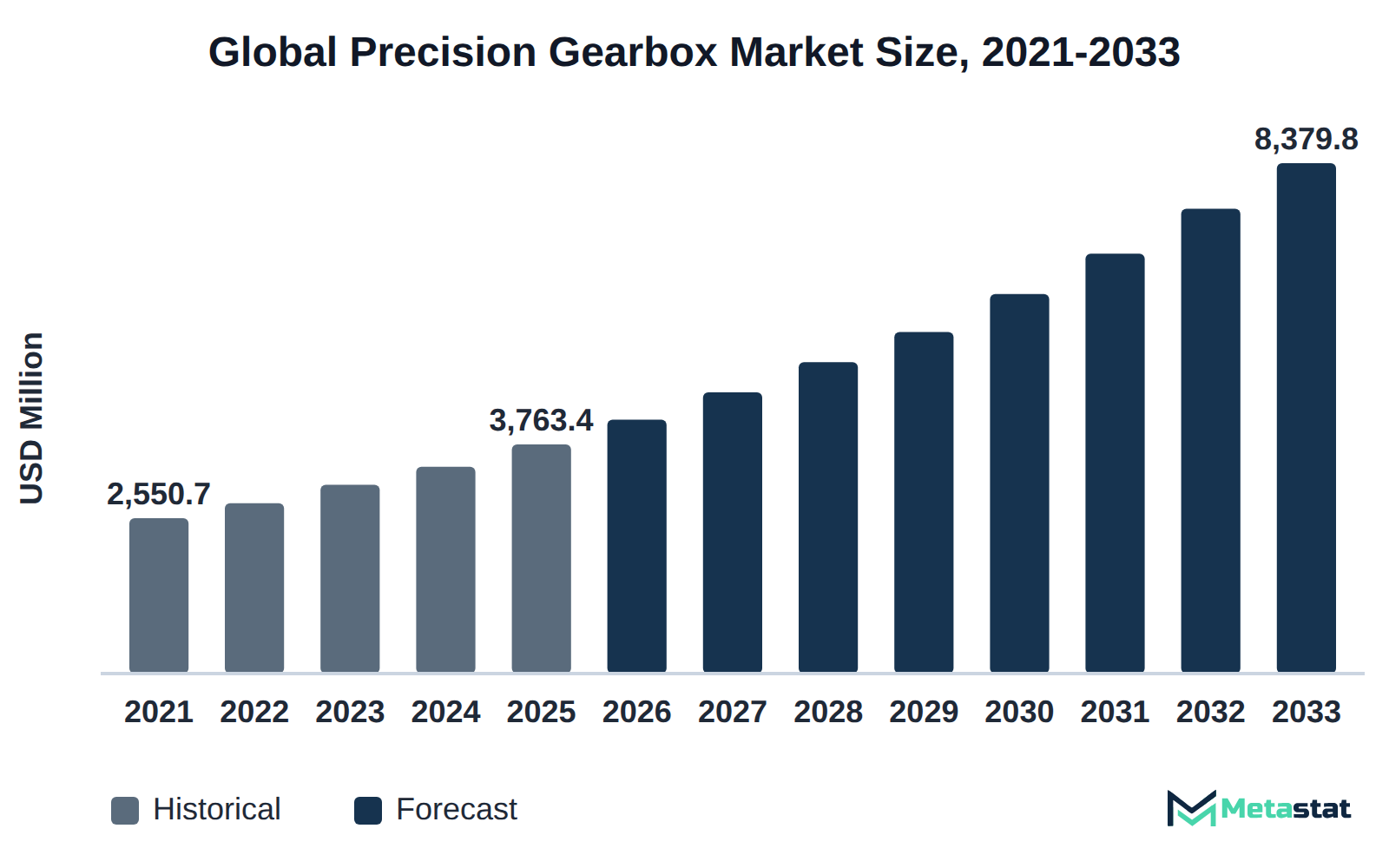
Planetary, Harmonic, and Cycloidal gearboxes significantly influence the development of robotic motion systems, providing essential precision and reliability. The Planetary segment of the Precision Gearbox market is projected to grow at a CAGR of 10.8%. It is expected to expand from USD 2,206.8 million in 2026 to USD 4,511.7 million by 2033. This growth stems from increasing automation across industries, where robots require reliable motion control and high torque density. The same requirements apply to advanced robotics for industrial automation.
Harmonic gearboxes, known for their compact design and high precision, further enhance robotic applications, with a forecasted market value reaching USD 1,615.6 million by 2033. The demand for these gearboxes reflects the necessity for lightweight solutions that maintain accuracy and performance in increasingly sophisticated robotic systems. The ability to provide flexibility and high efficiency positions Harmonic gearboxes as critical components for modern robotics.
Cycloidal gearboxes contribute to the market by offering robust solutions for applications requiring high shock load resistance and longevity. The expected integration of Cycloidal gearboxes into various robotic systems reinforces their role in enhancing performance while minimizing maintenance costs. This trend indicates a notable shift toward advanced gearbox technologies that optimize motion control and operational efficiency in robotics.
The process of purchasing custom precision gearboxes in high-dynamics industrial automation involves detailed pricing strategies and contract models tailored to client needs. Standard catalog gearboxes typically offer clearer pricing structures, but configured-to-order and custom-engineered gearboxes introduce complexity due to the unique specifications required by buyers. The anticipated value for configured-to-order gearboxes is USD 2,207.2 million by 2033, reflecting increasing demand for tailored solutions.
Contract models in this segment often encompass fixed pricing for standard options or tiered pricing based on volume for custom projects. Suppliers implement flexible payment terms to accommodate substantial investments required for high-performance gearboxes, impacting cash flow for clients. Such arrangements simplify the purchasing process, facilitating the integration of advanced gear technologies into operations.
The level of customization in contract arrangements influences overall costs, affecting procurement decisions among buyers. In a competitive environment, transparency in pricing and contract terms enhances supplier relationships, driving loyalty and repeat business. Understanding these dynamics proves vital for companies seeking to optimize purchasing strategies within the precision gearbox market.
Low-backlash gearboxes improve performance across semiconductor, packaging, and machine tool equipment. In these applications, precision and accuracy significantly impact operational effectiveness. Packaging machinery is one of the equipment categories where this accuracy matters. For instance, in robotic joint and end-of-arm motion applications, low-backlash gearboxes improve positional accuracy and reduce errors during complex movements, which is essential for maintaining high productivity levels.
The market for robotic joints and end-of-arm motion is projected to grow from USD 1,096.7 million in 2026 to USD 2,482.1 million by 2033, reflecting a compound annual growth rate (CAGR) of 12.4%. This growth arises from increasing automation in industries including semiconductor manufacturing and packaging. Robot joint actuator modules are a closely related product category for these applications. Low-backlash gearboxes address the demand for high-speed and precise movements, reducing wear and tear while prolonging equipment lifespan.
Investing in low-backlash gearboxes leads to operational efficiencies and enhances the reliability of machinery. By minimizing positional errors and improving responsiveness, businesses in these sectors achieve higher output rates and improve quality assurance. While the Precision Gearbox market continues to expand, the emphasis on low-backlash solutions is expected to increase, driving further innovation and competitiveness in these critical industries.
Planetary gear technology is the most effective precision gearbox option for supporting robotics and automated manufacturing applications. This technology offers high torque density and efficiency, crucial for the dynamic movements required in robotic joints and end-of-arm tooling. Industries seeking to enhance automation capabilities show strong demand for this technology.
Efficiency and compact design are essential in robotics, where space constraints often pose challenges. Planetary gearboxes excel in these environments, providing the necessary performance while saving valuable space. By integrating these gearboxes into robotic systems, manufacturers enhance overall operational capabilities and reduce production downtime. Investing in planetary gear technology improves productivity and strengthens competitiveness in automated manufacturing.
The rise in robotics applications drives significant demand for precision gearboxes. Industries including automotive manufacturing and electronics have adopted robotics to enhance production efficiency and accuracy. This shift towards automation reflects the growing need for components that support precise movement and control. Robotics applications, particularly in end-of-arm tooling, require gearboxes with high torque density and compact designs. The market for precision gearboxes is projected to reach USD 8,379.8 million by 2033, highlighting increased spending driven by this trend. The transition towards robotic systems leads to greater volume requirements for precision gearboxes, positively impacting overall market dynamics.
The adoption of advanced robotics in manufacturing processes has accelerated the demand for precision gearboxes, especially in applications requiring high performance and reliability. This trend drives various sectors to emphasize gear technologies that provide superior motion control. The precision gearbox market continues to expand, supported by ongoing integration of automation across diverse industries.
The adoption of harmonic and strain-wave gear technologies influences the Precision Gearbox market through their unique capabilities in applications requiring high precision and compact design. These gearboxes deliver high torque density and low backlash, enhancing performance in demanding environments including robotics and automation. Industries focused on advanced robotics, aerospace, and medical applications increasingly rely on these solutions due to their ability to function effectively in limited spaces while maintaining high efficiency.
The growing trend toward miniaturization in technology drives further interest in harmonic and strain-wave gearboxes. This demand stems from the need for lightweight and compact solutions that do not compromise performance. Buyers from the electronics and semiconductor sectors prioritize precision and reliability, promoting an upward trajectory for these gear technologies. The rising acceptance of harmonic and strain-wave designs within automated systems is expected to support overall market growth, providing a competitive advantage for manufacturers specializing in these precision solutions.
Price sensitivity represents a significant restraint in the Precision Gearbox market, particularly among small and medium-sized enterprises (SMEs) in industries including automotive manufacturing and general industrial manufacturing. The high costs associated with precision gearboxes deter these buyers from making larger purchases or opting for advanced models, resulting in a slower uptake of new technologies. Budget constraints lead to smaller orders, impacting manufacturers' revenue and production planning capabilities. Delayed replacement cycles occur when organizations prioritize cost-saving measures over upgrading to more efficient gearboxes, further hampering market growth. The presence of lower-cost substitutes in the market exacerbates this issue, causing potential buyers to reconsider their investment in precision gear technology. This price sensitivity ultimately affects overall demand for precision gearboxes, shaping competitive dynamics within the market.
Suppliers face significant challenges related to rising input material costs in the Precision Gearbox market. The increase in raw material prices, driven by supply chain disruptions and heightened demand across various industries, affects profit margins. Suppliers experience pressure to maintain competitive pricing while ensuring quality, leading to tight margins.
In response to these cost pressures, many suppliers adopt strategies focused on optimizing production processes and enhancing supply chain efficiency. Investments in automated manufacturing technologies contribute to lowering operating costs and improving production capacity. Building strong supplier relationships secures more favorable pricing terms, further mitigating the impact of material cost fluctuations. Such measures enable suppliers to remain competitive while managing profitability within the evolving market.
The ongoing challenges of material costs necessitate continuous adaptation among suppliers, influencing their operational strategies and market positioning. Effective management of these issues is essential for supporting long-term sustainability in the Precision Gearbox market.
Significant growth exists within the robotic joint and end-of-arm motion segment. The increasing demand for automation in manufacturing processes drives investment in robotics, positioning precision gearboxes as essential components in these systems. The emphasis on efficiency and precision within robotic applications fuels the need for advanced gear technologies, including planetary and harmonic designs, which provide high torque and compact form factors. Buyers in industries including automotive and electronics recognize the advantages of integrating these gearboxes to enhance operational performance and reduce cycle times. The market for robotic joint applications reflects a broader trend toward automation across various sectors, highlighting ongoing demand growth in the precision gearbox market.
The Global Precision Gearbox market is segmented based on Gear Technology, Product Configuration, Application, and End-Use Industry.
Planetary gearboxes find extensive applications in robotics, automation, and aerospace, essential for high torque and compact design requirements. The growing adoption in robotic joints and end-of-arm tooling drives demand in this segment, focusing on precision and reliability. Technological advancements contribute to improved efficiency, enhancing their appeal among manufacturers. Compared to other gear technologies, including Harmonic and Cycloidal, which exhibit CAGRs of 11.8% and an unspecified rate respectively, Planetary gearboxes maintain a competitive growth rate. Ongoing demand for compact and efficient solutions within industries emphasizes the need for continued innovation and investment in this segment, ensuring alignment with evolving industry standards and customer expectations.
Harmonic and Strain-Wave gear technologies are estimated to reach USD 1,615.6 million by 2033, at a CAGR of 11.8% during the forecast period. These gearboxes are primarily applied in applications requiring high precision and compact designs, making them essential for robotics, automation, and aerospace sectors. The rising demand for robotic joint and end-of-arm motion systems drives significant growth in this segment, reflecting advancements in automation technologies. Differentiation within the gear technology category highlights the Harmonic and Strain-Wave segment's faster growth compared to others, including Precision Spur and Helical gearboxes, which exhibit a CAGR of 7.8%. This segment benefits from its unique capabilities, allowing it to meet specific performance requirements in various high-precision applications, thus attracting a diverse array of buyers, including manufacturers and system integrators.
Cycloidal and RV segment is expected to reach USD 1,335.7 million by 2033. This segment primarily serves applications requiring high torque and precision, including robotics and automated machinery. Key buyers include manufacturers in sectors like automotive, electronics, and general industrial manufacturing, who rely on these gear technologies for effective motion control and positioning. The growth of this segment is driven by increasing automation across various industries, with a particular emphasis on robotics that demand compact and efficient gear solutions. Compared to other segments, Cycloidal and RV gear technologies exhibit a moderate growth rate. This contrasts with the Harmonic and Strain-Wave segment, which has a higher CAGR of 11.8%, indicating more rapid adoption of those technologies in specialized applications. The market's expansion is further influenced by technological advancements that enhance the capabilities of Cycloidal and RV gearboxes, resulting in improved performance and reliability in demanding environments.
Precision Spur and Helical segment is projected to grow at a CAGR of 7.8% during the forecast period. This segment finds application in various industries, including automotive and industrial manufacturing, where precision and reliability are crucial. The increasing automation in manufacturing processes drives demand for these gear types, which provide smooth operation and efficient power transmission. Unlike the Planetary and Harmonic segments, which experience faster growth rates of 10.8% and 11.8% respectively, Precision Spur and Helical gear technologies cater to a different customer base that prioritizes cost-effective and straightforward solutions. This segment serves buyers focused on traditional manufacturing methods, where these gearboxes continue to hold significant value due to their established performance. The Precision Gearbox market, reflecting a growing trend towards automation and efficiency, sees the Precision Spur and Helical segment maintaining its critical position despite the rapid advancements in competing technologies.
Precision Bevel and Right-Angle gear technologies serve critical functions in various mechanical systems, providing reliable solutions for applications requiring specific gearing configurations. Industries including robotics, packaging, and material handling use these technologies for their ability to achieve significant torque and compact designs. The growing demand for efficiency drives interest in these configurations, with customers seeking precise motion control and durability in high-stress environments. Compared to other segments, Precision Bevel and Right-Angle gear technologies experience moderate growth rates. Their unique design caters to specific mechanical requirements, attracting distinct buyers focused on specialized applications. The increasing integration of automation across industries further enhances the relevance of these gear technologies. This segment stands out due to its focus on unique applications that require tailored solutions, differentiating it from broader categories in the market.
Worm and hypoid gear technologies offer unique solutions for applications requiring high torque transmission and compact designs. Their use is prevalent in industries including automotive manufacturing and robotics, where precise motion and reliable operation are essential. Demand in this segment is driven by the increasing need for high-performance gearboxes that ensure efficiency in mechanical systems. Compared to other gear technologies, worm and hypoid gearboxes typically feature different pricing strategies, often presenting higher costs due to specialized manufacturing processes and material requirements. This segment's growth trajectory reflects its niche applications, distinguishing it from broader segments that cater to more general requirements, thus influencing overall dynamics in the Precision Gearbox market.
Standard Catalog Gearboxes segment is valued at USD 1,779.4 million in 2026 and is projected to reach USD 3,366.2 million by 2033, at a CAGR of 9.5% during the forecast period. These gearboxes serve various applications across industries including robotics, manufacturing, and automation, where precise motion control is critical. The segment experiences growth driven by increasing demand for standardized solutions that facilitate faster product development and cost efficiency. Compared to configured-to-order and custom-engineered gearboxes, this segment offers a more cost-effective option for buyers seeking reliable performance without extensive customization, contributing to its growth in the market. With the growth of automation and Industry 4.0, the market for standard catalog gearboxes is expected to flourish significantly.
Configured-to-Order Gearboxes are estimated to reach USD 2,207.2 million by 2033, at a CAGR of 11% during the forecast period. These gearboxes enable customization to meet specific application requirements, appealing to industries including robotics, automotive, and manufacturing. Demand for these products increases due to the growing trend of automation and the need for tailored solutions that enhance operational efficiency. This segment differs from others in its category, including Standard Catalog Gearboxes, which typically offer off-the-shelf solutions at lower price points. Configured-to-Order Gearboxes command higher prices due to their bespoke nature, with manufacturers focusing on client specifications. The growth of this segment is driven by increasing investments in advanced manufacturing technologies, highlighting its relevance in the evolving Precision Gearbox market.
Custom-Engineered Gearboxes segment is expected to reach USD 1,663.4 million by 2033. This segment primarily addresses specialized requirements in various industrial applications, providing tailored solutions for unique specifications. Manufacturers in sectors including aerospace, automotive, and robotics apply these custom solutions to enhance performance and meet stringent operational standards. Rising demand for specific functionalities drives growth in this segment, with an anticipated CAGR of 11% during the forecast period. Distinct from other segments, custom-engineered gearboxes cater to niche markets, offering higher price points due to their tailored nature. This differentiation from standard catalog and configured-to-order gearboxes, which typically serve broader applications at lower costs, enhances their market position. The Precision Gearbox market continues to evolve, emphasizing the importance of customization to meet diverse client needs.
Integrated Gearmotor and Actuator Systems segment is projected to grow at a CAGR of 9.8% during the forecast period. This segment serves various applications, particularly in robotics and automation, where precise motion control is essential. Key buyers include manufacturers in automotive, electronics, and industrial sectors, which employ these systems to enhance efficiency and operational reliability. Smart electric actuators are a related category for buyers seeking integrated motion control. Increasing demand for automation in manufacturing processes drives growth in this segment. Compared to other product configurations, Integrated Gearmotor and Actuator Systems exhibit moderate pricing and relatively faster growth, appealing to industries focusing on advanced automation solutions. This segment differentiates itself through its integration of gearing and motor functions, offering compact solutions tailored for complex applications that require both precision and space savings. The market reflects strong investment interest due to evolving technology and increasing production efficiencies.
Gearbox-Rack and Pinion Systems offer distinct solutions for various applications, particularly in robotics and automated machinery. These systems provide precise linear motion control, making them essential for robotic joints and other mechanisms requiring accurate positioning. Industries including automotive manufacturing and electronics use these systems to enhance efficiency and precision in production processes. Demand growth stems from increasing automation in manufacturing, driven by the need for higher productivity and reduced labor costs. This segment differentiates itself from others through its specialized applications and the necessity for high precision, which positions it uniquely in the market. While segments like Standard Catalog Gearboxes and Custom-Engineered Gearboxes serve broader applications, Gearbox-Rack and Pinion Systems focus on niche markets where precise motion is critical.
Robotics manufacturers apply this segment for applications involving joint motions and end-of-arm tooling, which require high levels of precision and reliability. The increasing deployment of automation across sectors including automotive and electronics drives this demand. Competitive pricing and advanced technology serve as significant factors influencing market dynamics, with manufacturers focusing on developing innovative solutions to enhance performance and reduce overall costs. Compared to other segments, the Robotic Joint and End-of-Arm Motion segment exhibits a faster growth rate due to its unique applications and the growing integration of robotic systems in production lines. This segment stands out through its specialized requirements, distinguishing it from broader product configurations that cater to diverse applications.
Machine Axis Positioning segment is estimated to reach USD 1,402.8 million by 2033, at a CAGR of 9% during the forecast period. This segment involves the precise control of linear and rotational movements in machinery, primarily applied in robotics, CNC machines, and automated assembly lines. The demand for highly accurate positioning systems in manufacturing processes drives growth within this segment. Compared to other segments, including Robotic Joint and End-of-Arm Motion, which has a higher growth rate of 12.4%, Machine Axis Positioning offers a more moderate growth path. Buyers prioritize reliability and precision, reflecting the critical nature of these applications in the overall precision gearbox market. Technological advancements and the push for automation across various industries continue to influence demand in this area, shaping the competitive landscape of the market.
Indexing and Rotary Tables segment is expected to reach USD 1,070.9 million by 2033. This segment finds application in various industries that employ indexing and rotary tables for precise positioning and motion control. Industries including manufacturing and automation employ these systems extensively for assembly, machining, and material handling processes. A significant driver for this segment stems from the growing demand for automation in manufacturing processes, enhancing efficiency and reducing operational costs. The anticipated CAGR of 9.5% indicates strong growth compared to other segments, highlighting its critical role in the Precision Gearbox market. Unlike segments focused on robotic motion, which exhibit higher growth rates, indexing and rotary tables cater to a different set of buyers, primarily focused on precision and stability in industrial applications.
Valued at USD 1,070.9 million in 2026, this segment is projected to grow at a CAGR of 9.5% during the forecast period. Applications in conveyor systems and automated material handling require precision gearboxes to enhance efficiency and reliability. Industries including logistics, manufacturing, and warehousing primarily employ these solutions. Rising demand for automation across various sectors drives growth in this segment, reflecting increasing focus on operational efficiency and cost reduction. Compared to other segments, the growth rate aligns closely with the overall market but highlights unique positioning due to its emphasis on cost-effective solutions for high-volume material movement. This factor differentiates it from segments driven by more specialized applications, including robotic joints, which experience higher growth rates.
Packaging and Filling Machinery involves the use of precision gearboxes to automate and enhance the efficiency of packaging processes across various industries. This application serves manufacturers in sectors like food and beverage, pharmaceuticals, and consumer goods, where automation is essential for improving productivity and reducing operational costs. Demand for this segment is driven by the rising emphasis on automation and the increasing need for high precision in packaging tasks. Compared to other applications, including Robotic Joint and End-of-Arm Motion, Packaging and Filling Machinery exhibits slower growth, reflecting different technological advancements and investment levels across segments. This application requires specific gearbox configurations tailored to the unique demands of packaging systems, highlighting its distinct position in the market.
This segment focuses on Precision Assembly and Inspection, crucial for ensuring high accuracy and quality in manufacturing processes. Industries including electronics and semiconductor manufacturing rely on this segment to maintain precision during assembly operations. Key drivers of growth include advancements in automation technologies and a rising emphasis on quality assurance in production lines. Demand for precision gearboxes specifically tailored for assembly and inspection applications shows a strong upward trend, driven by increasing automation in manufacturing processes. Compared to other segments like Robotic Joint and End-of-Arm Motion, this segment generally offers higher prices due to its specialized nature and the necessity for superior precision. The Precision Gearbox market reflects growing needs for precision components across various sectors, enhancing operational efficiency.
Surgical and diagnostic equipment play essential roles in healthcare, enabling precise procedures and accurate diagnostics. Various healthcare providers, including hospitals and outpatient surgical centers, extensively use these devices, which require high-performance gearboxes to ensure reliability and accuracy. The demand for advanced surgical equipment rises due to increasing minimally invasive surgeries, which necessitate the integration of precise motion control solutions. Medical robots are one example of equipment that relies on this kind of precise motion control. This segment stands out in the application category due to the critical nature of its use in healthcare, where any error leads to significant consequences. Compared to other segments, the focus on accuracy and reliability in surgical applications drives a higher willingness to invest in premium gear technologies. The Precision Gearbox market experiences continuous innovation, specifically tailored to meet the stringent requirements of surgical and diagnostic applications.
Precision gearboxes used in flight control and antennas play vital roles in aerospace and defense applications. These gearboxes facilitate precision movement and control in systems that require high reliability and accuracy. Manufacturers in the aerospace sector employ these components for both military and commercial aircraft, ensuring optimal performance in demanding environments. Demand for these precision gearboxes is driven by technological advancements in automation and the increasing complexity of flight systems. Compared to other segments, this application category experiences slower growth due to strict regulatory requirements and high costs associated with aerospace certification processes. The precision gearbox market remains competitive, with continuous innovation required to meet the evolving needs of the aerospace industry.
Valued at USD 791.9 million in 2026, this segment is projected to reach USD 1,459.8 million by 2033, at a CAGR of 9.1% during the forecast period. Automotive manufacturing relies on precision gearboxes for critical applications including assembly lines, where high torque and accuracy are essential. The increasing demand for electric vehicles and automation drives growth, reflecting a shift towards advanced technologies. Compared to other segments, this sector benefits from steady investments, leading to a robust expansion trajectory. The automotive industry's focus on efficiency and performance attracts significant attention from suppliers, differentiating it from less dynamic segments. Pricing pressures and the need for customization in gearboxes further influence market operations, necessitating innovative solutions that align with evolving manufacturing standards. This segment's growth contributes to the overall expansion of the market for precision gearboxes.
The Electronics and Semiconductor segment is estimated to reach USD 1,664.2 million by 2033, at a CAGR of 11.6% during the forecast period. This segment primarily serves manufacturers in the electronics sector, providing essential precision gearboxes for applications including assembly lines, testing equipment, and automated systems. Electronics manufacturing services providers are among the operators of these assembly lines. Significant demand arises from increasing automation trends in semiconductor production, driving the need for reliable, high-performance components. Compared to other segments, this one exhibits faster growth due to rapid technological advancements and rising adoption of robotics in manufacturing processes. The focus on miniaturization and precision in electronic devices further distinguishes this segment, highlighting its critical role in enhancing operational efficiency and productivity. The market reflects strong alignment with innovations and shifts in consumer demand for sophisticated electronic devices.
General Industrial Manufacturing segment is expected to reach USD 1,308.1 million by 2033. This segment encompasses precision gearboxes employed in various manufacturing processes, including assembly lines and material handling systems. Key players, including large-scale production facilities, drive demand through the need for enhanced efficiency and precision in operations. The rising emphasis on automation and improved production capabilities significantly influences this segment, with a notable CAGR of 9% anticipated. Compared to other segments, including Robotics, which has a higher growth rate, General Industrial Manufacturing demonstrates stable demand fluctuations due to reliance on traditional manufacturing practices. Ongoing shifts towards smart manufacturing and Industry 4.0 are likely to contribute to market growth, pushing manufacturers to invest in advanced technologies. Continuous improvements in product engineering and technology adaptation further support this segment's evolution.
Logistics and warehousing employ precision gearboxes for various automated systems, including sorting and material handling equipment. Demand for efficiency and speed in supply chain operations drives this segment, with businesses increasingly investing in warehouse automation technologies. This segment differentiates itself from others in the group, including automotive manufacturing, which has a slower growth rate of 9.1%. The ongoing need for quick and accurate inventory management creates a competitive landscape where precision gearboxes enhance productivity. With technological advancements in automation, the logistics and warehousing segment continues to evolve, capturing attention in the Precision Gearbox market.
Food and Beverage applications require precision gearboxes for various processes, including mixing, filling, and packaging. Manufacturers in this sector focus on equipment that enhances efficiency and accuracy in production lines. The segment experiences strong demand driven by the increasing need for automation and higher production rates in food processing. This sector differs from others within the end-use industry group due to its emphasis on stringent hygiene standards and reliability. Manufacturers prioritize gearboxes that offer durability and minimal maintenance to meet these requirements. The market for precision gearboxes in the food and beverage industry reflects a commitment to improving production capabilities, ensuring that operations run smoothly while maintaining quality standards.
Aerospace and Defense encompass advanced applications requiring high precision and reliability in various systems, including aircraft, satellites, and defense equipment. This segment finds extensive use by manufacturers and defense contractors who prioritize performance and durability. Strong demand arises from innovations in aerospace technology, driving investments in next-generation aircraft and defense systems. Unlike other segments, Aerospace and Defense typically involve higher price points due to stringent regulatory standards and the critical nature of applications. The market's focus on customization and specialized solutions differentiates it from faster-growing segments including Robotic Joint and End-of-Arm Motion. Continued advancements in aerospace technology further enhance the requirements for precision gearboxes, establishing a robust outlook for this segment in the market.
This segment focuses on the Healthcare and Life Sciences sector, employing precision gearboxes for a variety of medical and laboratory applications, including surgical tools, diagnostic equipment, and automated laboratory systems. These applications require high levels of accuracy and reliability, essential for maintaining patient safety and ensuring effective diagnoses. Driving factors for growth in this segment include the increasing demand for automation in healthcare processes and advancements in medical technology. Unlike other segments, the Healthcare and Life Sciences segment experiences a faster growth trajectory due to the critical nature of its applications and the continuous push toward improving healthcare efficiency through technology. Budget constraints and regulatory standards pose challenges; however, ongoing innovations in precision gear design and materials enhance capabilities, supporting sustained interest and investment in this vital segment of the Precision Gearbox market.
This sub-segment encompasses applications in energy generation and research sectors, catering to specialized requirements for precision and reliability. Precision gearboxes in this area serve various roles, including automation in renewable energy systems and precision instrumentation used in scientific research. Demand in this segment is driven by the increasing focus on sustainable energy solutions and advancements in research technologies that require high-performance components. Compared to other segments, this sub-segment operates at a unique intersection of innovation and specialized applications, resulting in higher prices due to the complex engineering involved. This differentiation highlights the need for tailored solutions that meet specific requirements, setting it apart from more generalized applications within the market.
Based on geography, the Global Precision Gearbox market is divided into North America, Europe, Asia-Pacific, South America, Middle East, and Africa.
Expectations indicate North America will reach USD 1,794.9 million by the end of 2033. The region, accounting for 21.7% of the global market in 2025, benefits from heightened demand in sectors including automotive manufacturing and electronics. Strong investments in automation and robotics drive the adoption of precision gearboxes, particularly in robotic joint and end-of-arm motion applications, which are projected to grow significantly during the forecast period. Infrastructure advancements and a skilled workforce serve as key factors supporting growth in this region. The Precision Gearbox market thrives due to continuous technological improvements and increasing demand for high-performance solutions across various industries.
In Europe, the precision gearbox market benefits from strong demand driven by industries including automotive manufacturing and electronics. Countries including Germany, France, and the UK demonstrate advanced manufacturing capabilities, facilitating the adoption of high-precision gear systems in various applications. The region emphasizes innovation and technological advancements, contributing to an expanding market. Environmental regulations push for more energy-efficient solutions, fueling the need for sophisticated gearbox technologies. With demand for reliable and high-performance gearboxes growing in Europe, the market is projected to experience significant advancements and increased investment through 2033.
Asia-Pacific stands out with a share of the Precision Gearbox market, accounting for 40.1% in 2025. The region experiences strong demand driven by robust industries, particularly robotics and automated manufacturing. Countries like China and Japan lead advancements in robotics and automation technologies, increasing the need for high-precision solutions. Infrastructure investments in these countries support the expansion of manufacturing capabilities, enhancing the operational efficiency of various sectors. The growing focus on smart manufacturing in India and South Korea increases demand for sophisticated gearboxes. The market in this region is projected to see growth with these industries evolving, resulting in higher investments and adoption rates for precision gearboxes.
Demand for the Precision Gearbox market in South America is driven primarily by automotive manufacturing and electronics industries. Brazil and Argentina lead this demand, reflecting a growing need for automation and precision in production processes. The region's manufacturing sector faces challenges, including varying infrastructure quality and logistics capabilities. Despite these obstacles, rising investments in technology enhance operational efficiency. The market share of South America is projected at 4.3% in 2025, highlighting its role in the global landscape. The Precision Gearbox market continues to expand in this region, demonstrating resilience and potential for growth.
The Middle East and Africa region represents a niche market for precision gearboxes, with specific applications in industries including manufacturing and logistics. The market experiences growth driven by increasing automation and technological advancements in manufacturing processes, particularly in countries like Saudi Arabia and the UAE. Investments in infrastructure projects and modernization initiatives further support demand for precision gearboxes. The market share for this region was recorded at 4.4% in 2025, reflecting its developing industrial landscape. South Africa contributes to market dynamics through its expanding industrial base, which requires efficient machinery and systems. The precision gearbox market in this region is expected to grow, fueled by ongoing industrialization efforts, emphasizing the importance of precision gearboxes in enhancing operational efficiencies.
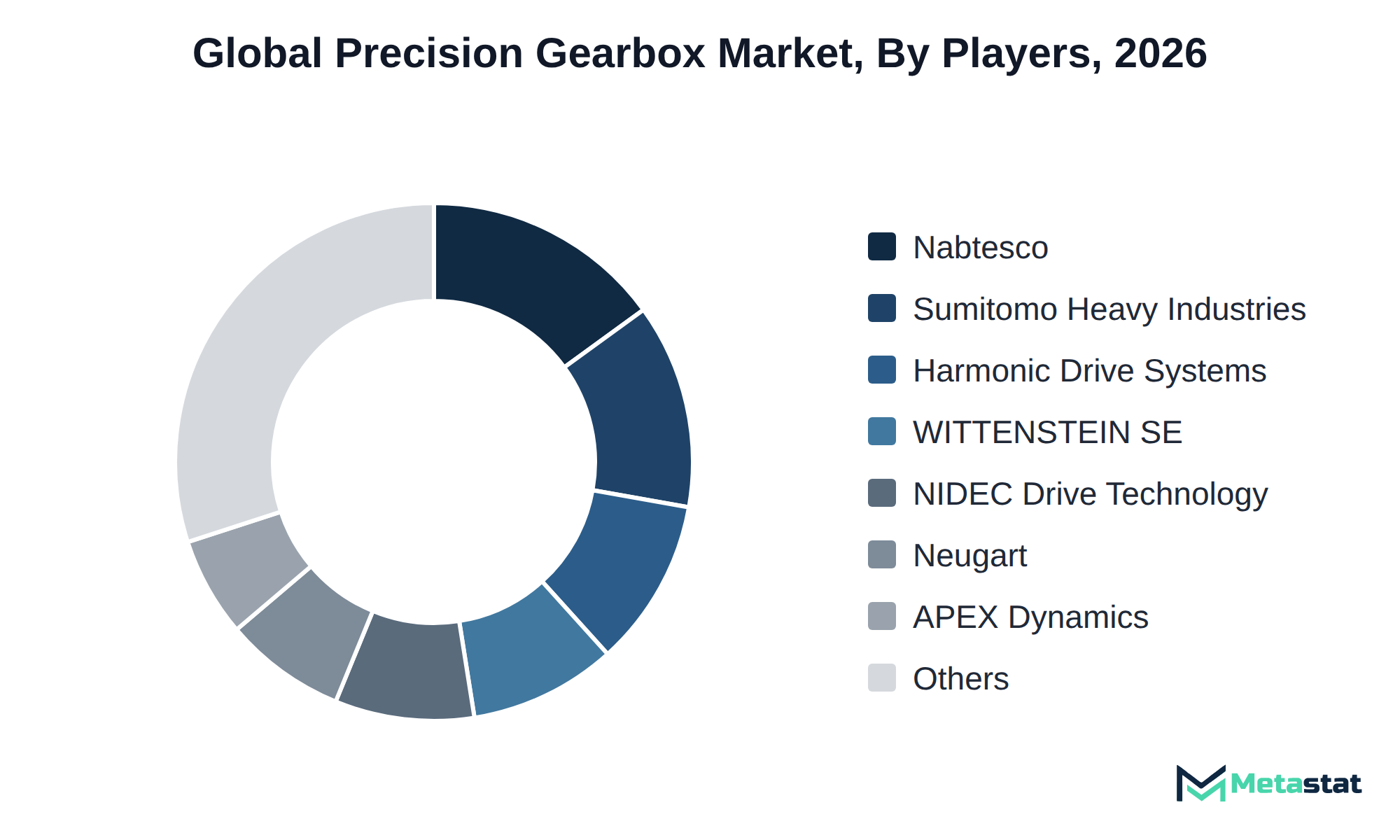
The Precision Gearbox market features diverse competitive strategies, segmented primarily by product configuration and application focus. Companies differentiate themselves through key factors including pricing, customization options, and the ability to provide comprehensive service ecosystems that cater to specific customer demands.
For instance, Nabtesco Corporation emphasizes its expertise in gear technology, providing advanced planetary gear systems designed for high-performance applications. Sumitomo Heavy Industries, Ltd. focuses on a broad range of product configurations, particularly standard catalog and configured-to-order gearboxes, appealing to various industries seeking flexible solutions. Harmonic Drive Systems Inc. stands out with its precision harmonic and strain-wave gearboxes, targeting sectors requiring high accuracy and reliability.
In addition, companies like WITTENSTEIN SE and NIDEC Drive Technology Corporation leverage strong engineering capabilities to offer customized gearbox solutions. This adaptability allows them to meet the individual needs of clients across automotive manufacturing and robotics, which represent significant application areas in the Precision Gearbox market.
The market growth relies on several key developments. First, an increase in demand for robotic joint and end-of-arm motion applications, driven by advancements in automation technologies, is expected to support significant market expansion. Second, the rise of configured-to-order gearboxes, which offer tailored solutions to specific operational requirements, is anticipated to enhance revenue. This segment's value is forecasted to reach USD 2,207.2 million by 2033. Third, the market's performance in the Asia Pacific region, which accounts for 40.1% of the overall market share, will play a crucial role in achieving the target. A notable risk that could hinder growth is potential supply chain disruptions, which affect the timely availability of components essential for precision gearboxes. Such disruptions could impact the automotive manufacturing sector, where demand for precision gearboxes is projected to rise from USD 791.9 million in 2026 to USD 1,459.8 million by 2033. Stable supply chains remain essential to the market's forecasted trajectory.
By Gear Technology: Planetary, Harmonic and Strain-Wave, Cycloidal and RV, Precision Spur and Helical, Precision Bevel and Right-Angle, Others (Worm and Hypoid)
By Product Configuration: Standard Catalog Gearboxes, Configured-to-Order Gearboxes, Custom-Engineered Gearboxes, Integrated Gearmotor and Actuator Systems, Others (Gearbox-Rack and Pinion Systems)
By Application: Robotic Joint and End-of-Arm Motion, Machine Axis Positioning, Indexing and Rotary Tables, Conveyor and Automated Material Movement, Packaging and Filling Machinery, Precision Assembly and Inspection, Surgical and Diagnostic Equipment, Others (Flight Control and Antennas)
By End-Use Industry: Automotive Manufacturing, Electronics and Semiconductor, General Industrial Manufacturing, Logistics and Warehousing, Food and Beverage, Aerospace and Defense, Healthcare and Life Sciences, Others (Energy and Research)
The report strategically identifies and profiles the key market players and analyses their core competencies in each sub-segment of the Precision Gearbox market.
Report Attributes | Details |
Study Period | 2021-2033 |
Base Year | 2025 |
Estimated Year | 2026 |
Forecast Period | 2026-2033 |
Historical Period | 2021-2025 |
Growth Rate | CAGR 10.5% from 2026 to 2033 |
Revenue Unit | USD million |
Segmentation | By Gear Technology, Product Configuration, Application, End-Use Industry, and Region |
By Region | North America (By Gear Technology, Product Configuration, Application, End-Use Industry, and Country)
|
Europe (By Gear Technology, Product Configuration, Application, End-Use Industry, and Country)
| |
Asia Pacific (By Gear Technology, Product Configuration, Application, End-Use Industry, and Country)
| |
South America (By Gear Technology, Product Configuration, Application, End-Use Industry, and Country)
| |
Middle East and Africa (By Gear Technology, Product Configuration, Application, End-Use Industry, and Country)
|
Find answers to common questions about this report
The Precision Gearbox market size was valued at USD 3,763.4 million in 2025.
The market is projected to grow at a CAGR of 10.5% during the forecast period from 2026 to 2033.
The North America Precision Gearbox market size is estimated to reach USD 1,794.9 million by 2033.
The planetary segment leads the Precision Gearbox market with a projected value of USD 4,511.7 million by 2033, reflecting the highest growth rate among the segments.
The rise in robotics applications drives significant demand for precision gearboxes, particularly in industries including automotive manufacturing and electronics. The ongoing integration of automation across diverse sectors enhances the emphasis on gear technologies that provide superior motion control.
Asia Pacific holds the dominant share of the Precision Gearbox market, accounting for 40.1 percent of the total market. This region's significant share reflects its robust industrial base and high demand for precision gearboxes across various applications.
Price sensitivity represents a significant restraint on Precision Gearbox market growth, particularly among small and medium-sized enterprises in various industries. Rising input material costs challenge suppliers, impacting profit margins and competitive pricing.
The increasing demand for automation in manufacturing processes significantly favors the adoption of precision gearboxes, particularly in robotic applications. Advanced gear technologies, including planetary and harmonic designs, enhance operational performance and efficiency, driving investment in robotics across various industries.
The Precision Gearbox market is estimated to reach a valuation of USD 8,379.8 million by 2033.
Key players operating in the Precision Gearbox market include Nabtesco Corporation, Sumitomo Heavy Industries, Ltd., Harmonic Drive Systems Inc., WITTENSTEIN SE, NIDEC Drive Technology Corporation, Neugart GmbH, and APEX Dynamics, Inc.
The analysts below cover Machinery & Equipment research at Metastat Insights.
LEAD ANALYST
Utkarsh Khirodkar is a Lead Market Research Analyst at MetaStat Insight, specializing in market intelligence, technology sector assessments, and competitive strategy.

INDUSTRY CONSULTANT - CHEMICALS & ADVANCED MATERIALS
Chemicals and Materials · Machinery & Equipment · Packaging
Amit Gadhekar Consultant for Chemicals and Materials at MetaStat Insight, directing sector-specific intelligence, research, and strategic consulting across global chemical and processing markets.

PRINCIPAL CONSULTANT - QUALITY SYSTEMS & COMPLIANCE
Electronics and Semiconductor · Machinery & Equipment · Professional Services
Omkar Phadtare is an Industry Consultant at MetaStat Insight, specializing in quality systems, regulatory compliance, and standards benchmarking to drive data-driven market intelligence and strategic industry research.

ENERGY & INFRASTRUCTURE INDUSTRY CONSULTANT
Automotive and Transportation · Electronics and Semiconductor · Energy and Power · Machinery & Equipment
Saurabh Vasant Ganvir consults for Energy & Infrastructure Industry at MetaStat Insight, specializing in renewable energy, solar EPC, and electric vehicle (EV) infrastructure markets.

LEAD CONSULTANT - COMMUNICATION, TELECOM, AND IT
Electronics and Semiconductor · Information & Technology · Machinery & Equipment · Professional Services
Ravindra Sathe Consultants for Communication, Telecom, and IT at MetaStat Insight. He leads the firm's industry research initiatives across telecommunications infrastructure, digital connectivity, enterprise networking, and emerging information technology domains.
Most industry reports on warehouse automation bundle autonomous mobile robots and fixed conveyor installations into the same top-level numbers, which complicates advisory work. This study split the market cleanly by payload tiers, navigation technology, and fleet management software layers. The regional forecast for Western Europe gave our team defensible adoption benchmarks when evaluating capital allocation for logistics clients, saving us days of secondary data scrubbing.
Standard industry briefs frequently blur the operational distinctions between isobaric pressure exchangers and centrifugal turbines. In this study, MetaStat Insight categorized mega-scale desalination tenders across the GCC and Mediterranean basins by membrane replacement frequencies and salinity tolerances. Their primary research helped us evaluate local content requirements in Saudi Arabia and the UAE without relying on marketing literature. We found the segment-level equipment replacement estimates grounded and well-reasoned throughout.
The technical breakdown of ISO 20022 migration readiness across correspondent banking corridors was remarkably thorough. Rather than treating cross-border corporate payments as a single block, the report drew a useful distinction between multilateral netting platforms and domestic instant payment rails across ASEAN economies. MetaStat Insight highlighted regulatory constraints on foreign exchange liquidity management that many publications gloss over. The research material offered practical clarity for our platform development roadmap.
Explore related market intelligence reports worth reading alongside this one.