
LEAD ANALYST
Utkarsh Khirodkar is a Lead Market Research Analyst at MetaStat Insight, specializing in market intelligence, technology sector assessments, and competitive strategy.

Global Industrial Vacuum Pumps Market Size, Share, By Technology (Rotary Vane Vacuum Pumps, Dry Screw Vacuum Pumps, Liquid Ring Vacuum Pumps, Dry Claw Vacuum Pumps, Roots Vacuum Pumps and Mechanical Boosters, Scroll Vacuum Pumps, Diaphragm Vacuum Pumps, Turbomolecular Vacuum Pumps, Diffusion Vacuum Pumps and Others (Rotary Piston and Side-Channel Vacuum Pumps)), By Lubrication and Sealing Configuration (Oil-Sealed, Dry-Running, Water-Sealed and Others (Grease-Sealed)), By Application (Packaging and Food Processing, Material Handling and Pneumatic Conveying, Drying, Distillation and Evaporation, Degassing and Impregnation, Forming, Pressing and Lamination, Coating and Metallization, Semiconductor and Electronics Manufacturing, Leak Testing and Others (Freeze Drying and Sterilization)), By End-Use Industry (Food and Beverage, Chemicals and Petrochemicals, Pharmaceuticals and Biotechnology, Semiconductor and Electronics, Automotive and Transportation, Oil and Gas, Metals and Mining, Power and Renewable Energy, Plastics and Rubber and Others (Pulp and Paper and Aerospace)), Industry Analysis, Growth, Trends, and Forecast, 2026-2033
Report ID
MSI-5831
Published
November, 2026
Pages
265 Pages
Format
Historical
Base year
Forecast
Forecast period
Report Details
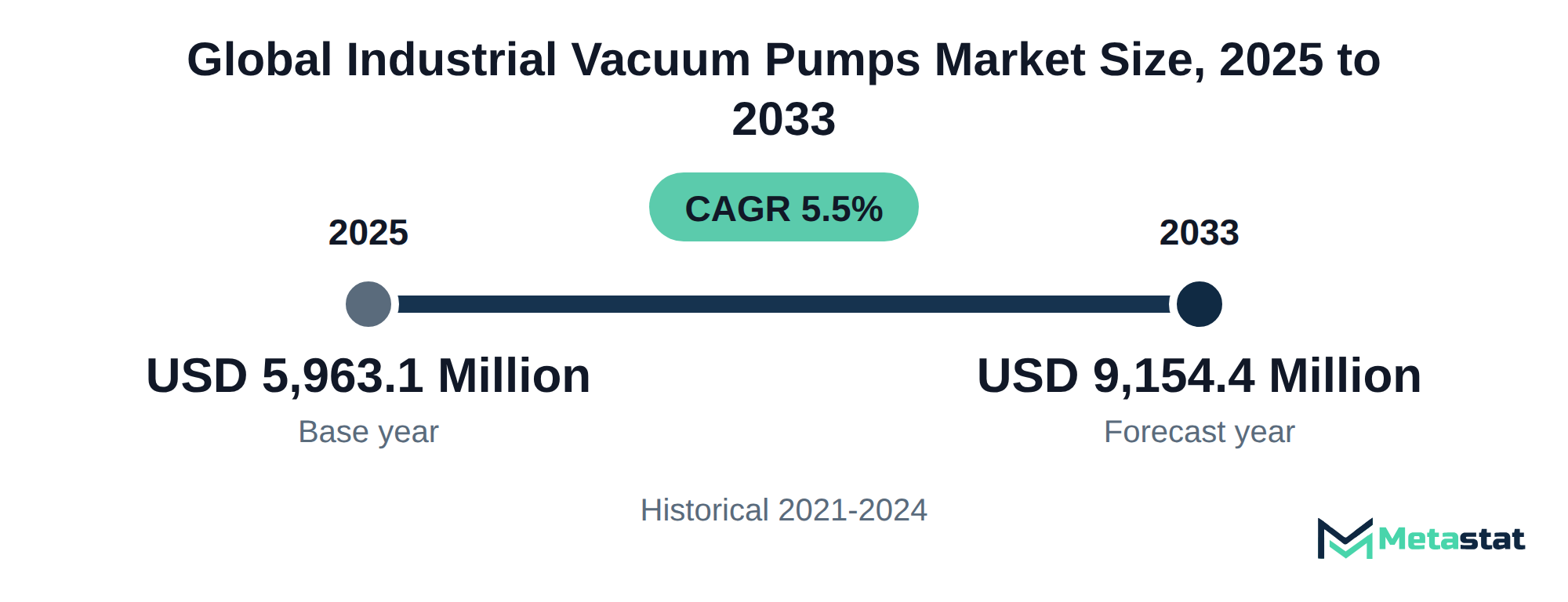
Market Valuation: Valued at $5,963.1 Million in 2025, projected to reach $9,154.4 Million by 2033 at a 5.5% CAGR.
Dominant Segment: Oil-sealed vacuum pumps lead the market due to their widespread application across various industries, driven by their reliability and effectiveness in maintaining vacuum conditions.
Geographic Lead: North America is the leading region in the Industrial Vacuum Pumps market, holding 27.0% of the market share in 2025, with the US expected to continue its dominance into 2026.
What's Inside: The report provides comprehensive coverage of market dynamics, competitive landscape, and detailed segmentation by technology, lubrication configuration, application, and end-use industry, along with forecasts from 2026 to 2033.
Shift Toward Dry-Running Pumps: The dry-running vacuum pump segment is projected to grow at a CAGR of 6.2%, driven by increasing demand for energy-efficient solutions and sustainability across various applications.
Smart Vacuum Systems: Adoption of smart vacuum systems is on the rise, enhancing operational efficiency through real-time monitoring and predictive maintenance, with oil-sealed vacuum pumps projected to grow significantly in value by 2033.
Choose Your License
Global Industrial Vacuum Pumps Market
The global Industrial Vacuum Pumps market was valued at USD 5,963.1 million in 2025 and is projected to reach USD 9,154.4 million by 2033, growing at a CAGR of 5.5% over the forecast period.
The Industrial Vacuum Pumps market encompasses various technologies, configurations, applications, and end-use industries. Buyers invest in this market primarily to enhance efficiency in manufacturing processes and ensure high-quality results in applications ranging from food processing to pharmaceuticals. Increasing demand for automated processes and stringent quality standards drives the need for effective vacuum solutions across diverse industries.
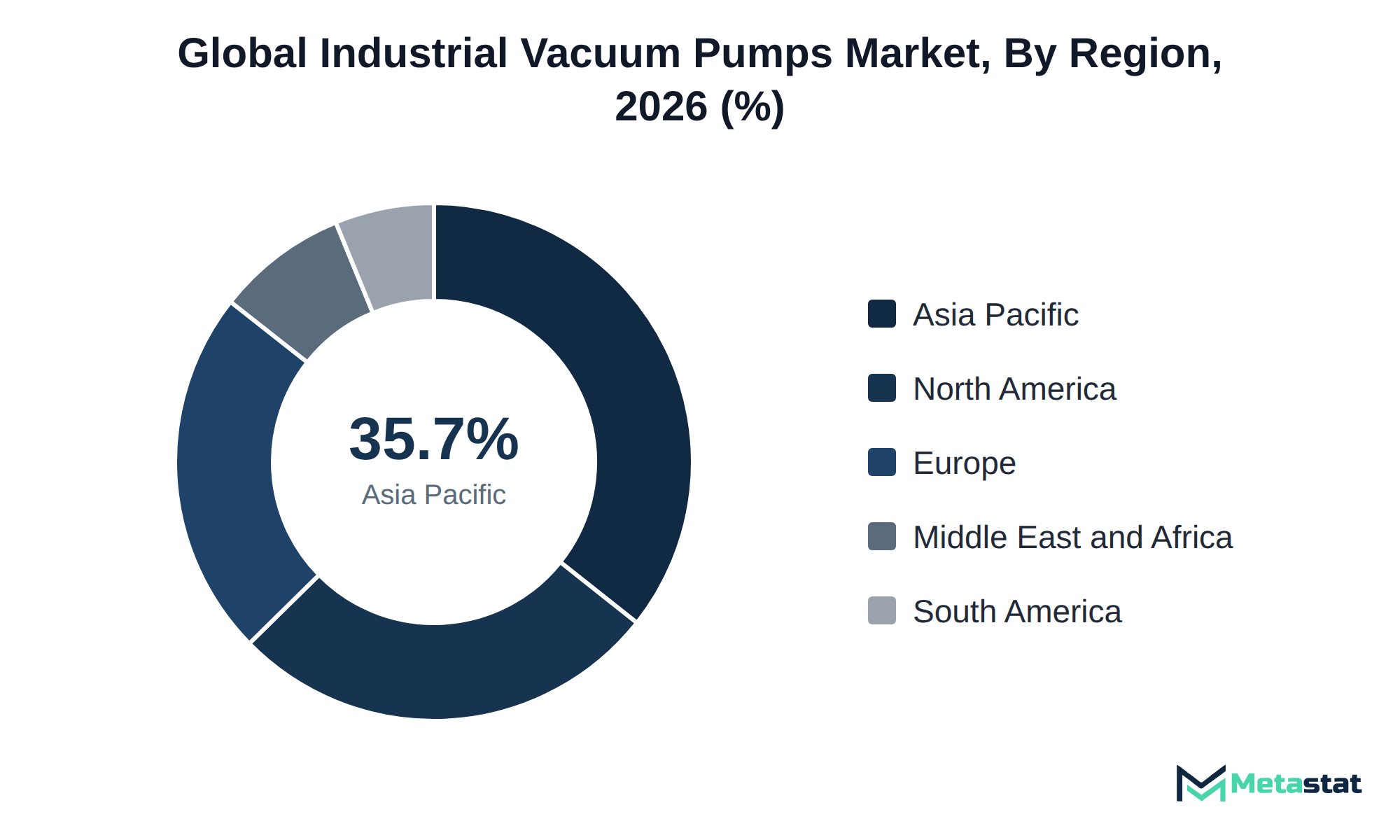
Growth in the market is propelled by advancements in vacuum pump technologies, particularly the rise of dry screw vacuum pumps, which provide significant operational advantages. North America holds 27.0% of the market in 2025, with the US leading in 2026. The Asia Pacific region follows closely, accounting for 35.7% of market share, reflecting strong industrial activity and demand for efficient vacuum solutions.
Among the various segments, oil-sealed vacuum pumps represent the largest value, driven by their widespread application in numerous industries. The market expands due to an increasing focus on sustainable practices and the need for cost-effective solutions, which enhances investment in advanced vacuum technologies.
Demand for Industrial Vacuum Pumps stems from their use in applications such as packaging, food processing, and material handling. Buyers invest in these pumps to enhance operational efficiency, maintain product quality, and comply with regulatory standards. The versatility of vacuum pumps across industries ensures sustained spending, particularly in sectors that prioritize precision and reliability in their processes.
Technology advances and the growing need for automation in manufacturing processes fuel this growth. The segment of Dry Screw Vacuum Pumps stands out due to its efficiency and reliability, attracting significant investment. Asia Pacific follows closely, capturing 35.7% of the market share, driven by rapid industrialization and expansion in various manufacturing sectors.
Investments in research and development to innovate vacuum pump technologies will enhance market growth prospects. Increased awareness regarding energy-efficient solutions continues to shape purchasing decisions. Companies are expanding their product offerings and improving operational efficiencies to meet the diverse needs of end-users in the Industrial Vacuum Pumps market.
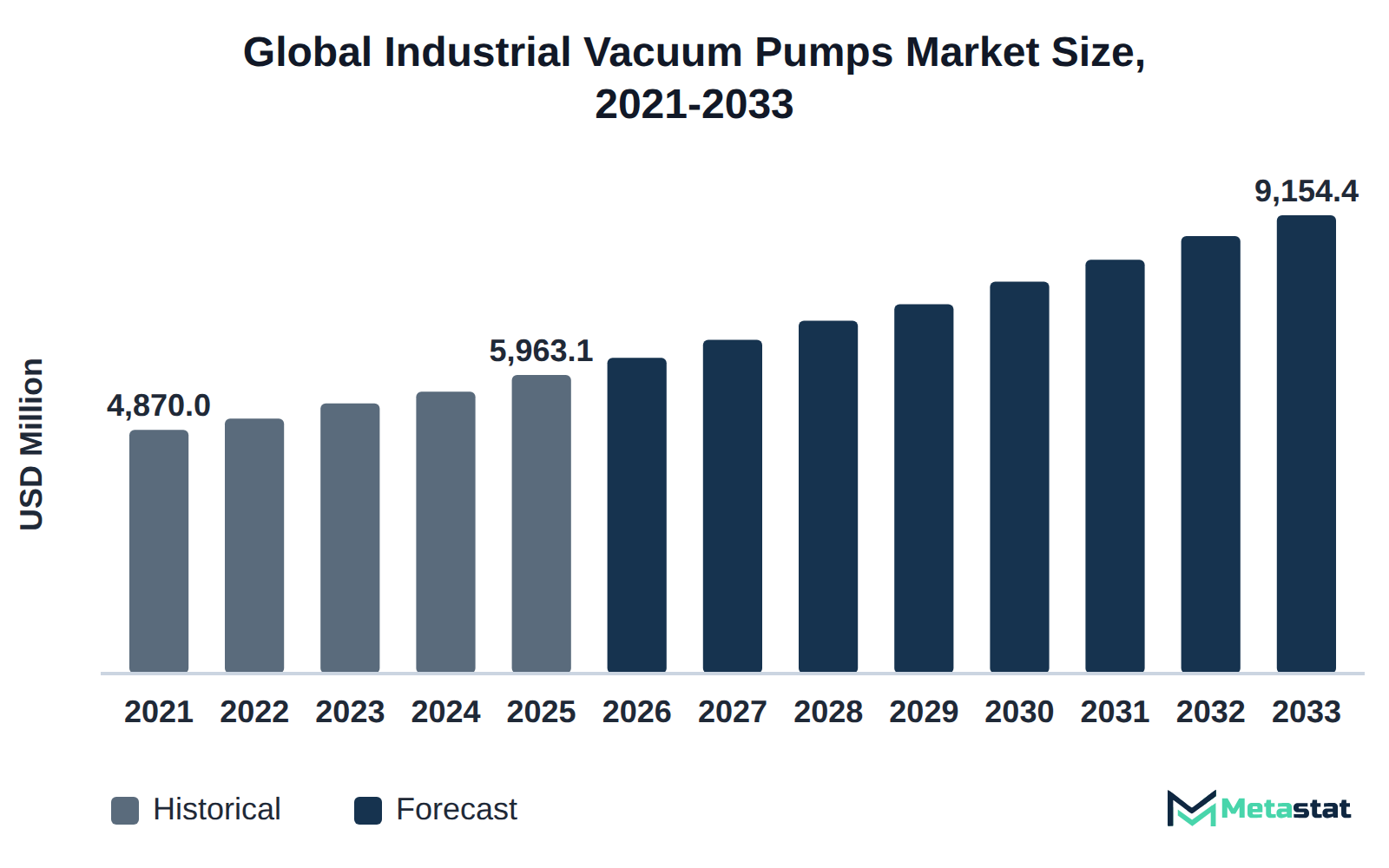
The Industrial Vacuum Pumps market experiences a significant shift toward dry-running technologies, driven by increasing demand for energy efficiency and sustainability. Dry-running vacuum pumps eliminate the need for lubrication, resulting in reduced operating costs and minimal environmental impact. The shift is most visible in the lubrication and sealing configuration segment. There, dry-running vacuum pumps are anticipated to reach USD 3,130.8 million by 2033, a compound annual growth rate of 6.2%.
Industries including pharmaceuticals and biotechnology are leading the adoption of these technologies, prioritizing clean processes and lower maintenance needs. The growing focus on energy-efficient solutions aligns with global initiatives aimed at reducing carbon footprints and lowering operational expenses. The benefits extend beyond immediate cost savings to long-term sustainability goals and regulatory compliance.
The increasing complexity of semiconductor, pharmaceutical, and chemical processing applications drives demand for advanced Industrial Vacuum Pumps. Buyers in these sectors emphasize performance reliability and efficiency, leading to a preference for equipment that meets stringent operational standards. For instance, the pharmaceuticals and biotechnology end-use industry is expected to reach USD 1,222.1 million by 2033 in the Industrial Vacuum Pumps market.
Pricing strategies in this market involve long-term contracts, enabling suppliers to offer pricing stability while ensuring buyers receive consistent service and support. Such contracts frequently include maintenance agreements that provide additional value through scheduled servicing and emergency support, reducing downtime risks associated with equipment failures. This method secures revenue for suppliers while providing peace of mind for buyers, enhancing market competitiveness.
Buyers increasingly seek suppliers who offer flexible payment models, allowing for financial arrangements that align with project timelines and capital expenditures. The focus on innovation in equipment design and performance necessitates significant investment, thus influencing purchasing decisions. As equipment evolves with technology, buyers and suppliers collaborate more closely to produce solutions tailored to specific industry challenges.
Smart vacuum systems enhance operations within the Industrial Vacuum Pumps market, offering improved efficiency and operational control. These systems use advanced sensors and IoT technology to monitor performance metrics in real time, allowing rapid adjustments that optimize energy consumption and maintain consistent vacuum levels. The adoption of predictive maintenance strategies further reduces downtime by identifying potential failures before they impact operations.
Within the lubrication and sealing configuration segment, Oil-Sealed vacuum pumps are projected to grow from USD 2,711.7 million in 2026 to USD 3,835.7 million by 2033, reflecting a CAGR of 5.1%. This growth emphasizes the increasing demand for systems that integrate smart technologies, driving manufacturers to innovate and develop more sophisticated offerings.
The implementation of smart vacuum systems aligns with the broader trend of lifecycle cost optimization, where companies focus on reducing total ownership costs through efficient technology. These systems contribute significantly to lowering maintenance expenses and improving productivity, which translates to higher profitability for users in industries including food and beverage, chemicals, and pharmaceuticals.
The selection of Industrial Vacuum Pumps significantly impacts operational efficiency and product quality in various end-use industries. In the Food and Beverage sector, vacuum pumps support packaging and processing applications by removing air from packages to extend shelf life. This industry specifically requires high-performance pumps, including Dry Screw Vacuum Pumps, which are projected to reach a value of USD 1,539.8 million by 2033, reflecting a Compound Annual Growth Rate (CAGR) of 5.9%.
In the Chemicals and Petrochemicals industry, the need for reliable vacuum solutions drives demand for specific configurations that handle corrosive substances. The forecast indicates that this sector will see a value of USD 1,533.4 million for vacuum pumps by 2033, with a CAGR of 5.1%. Such figures highlight the importance of selecting pumps that meet regulatory standards and enhance operational reliability.
The choice of vacuum pumps within the Industrial Vacuum Pumps market directly influences production efficiency, compliance with industry standards, and long-term operational costs, guiding buyers to prioritize technology and configurations that align with their specific operational needs.
Automation in manufacturing processes drives significant expenditures in advanced machinery, including vacuum technologies. Industries, particularly in food processing and pharmaceuticals, adopt these systems to enhance productivity while minimizing labor costs. The transition toward automated production lines requires higher volume outputs and increased efficiency, resulting in heightened demand for these technologies. This trend is evident in the packaging and food processing segment, projected to grow from USD 897.5 million in 2026 to USD 1,286.2 million by 2033 at a CAGR of 5.3%. The Industrial Vacuum Pumps market benefits from these shifts, where investments in automation translate into improved operational standards and enhanced profit margins for manufacturers.
Increasing regulatory emission standards significantly influence the development of advanced vacuum pump technologies. These regulations compel manufacturers to adopt closed-loop systems and advanced filtration mechanisms that meet stringent environmental requirements. Industries including food processing and pharmaceuticals emphasize compliance with these regulations, prompting suppliers to innovate and enhance their product offerings. This adaptation supports environmental sustainability and improves operational efficiency for end-users by reducing waste and enhancing process reliability.
The Industrial Vacuum Pumps market benefits from this regulatory push, leading to enhanced demand for technologies like dry-running vacuum pumps, which minimize environmental impact. Suppliers investing in research and development to meet these standards capture greater market share and enhance their competitive positioning. The pursuit of compliance encourages collaboration between technology providers and end-users, resulting in tailored solutions that address specific industry challenges while driving overall market expansion.
High equipment prices pose a significant restraint on the Industrial Vacuum Pumps market, particularly affecting small to medium-sized enterprises (SMEs) that are often more price-sensitive. These companies experience slower uptake and smaller purchase volumes due to budget constraints, resulting in extended decision-making processes during procurement. In sectors including food processing and pharmaceuticals, where vacuum pumps are essential, the initial costs delay equipment replacement or upgrades. SMEs prioritize cost-effective solutions, hindering their ability to adopt the latest technology in vacuum pumps. Consequently, overall market growth faces challenges, with these enterprises representing a considerable portion of the buyer group. The imbalance between the necessity for advanced vacuum technologies and the financial burden restricts the competitive positioning of smaller companies and limits their operational efficiency.
Suppliers in the Industrial Vacuum Pumps market face challenges from rising input costs, impacting profit margins. Prices for raw materials and components have experienced significant increases, driven by global supply chain disruptions and fluctuating demand patterns. These conditions create pressure on manufacturers to adjust pricing structures while maintaining competitiveness. Several smaller suppliers struggle with these rising costs, lacking the financial flexibility of larger companies, which absorb expenses more effectively.
In response, several manufacturers are adopting strategies to optimize production processes and enhance efficiency. Investments in technology aimed at reducing waste and improving manufacturing outputs contribute to mitigating cost impacts. Collaborative efforts with suppliers to secure better pricing terms and long-term agreements stabilize costs. These adaptations reflect broader trends within the market, where maintaining profitability has become a critical focus for many companies facing escalating material costs.
The dry-running vacuum pump segment presents significant growth opportunities within the market, driven by increasing demand for energy-efficient solutions across various applications. This segment is projected to achieve a compound annual growth rate (CAGR) of 6.2% through 2033, highlighting its potential for expansion. Industries including pharmaceuticals, food processing, and semiconductor manufacturing focus on adopting dry-running technologies due to their operational efficiencies and lower maintenance costs. By eliminating the requirement for lubrication, these pumps enhance hygiene and reduce contamination risks, making them increasingly attractive to end-users in sensitive applications. Sustainability goals and lower operating costs make dry-running pumps a priority area for investment and innovation.
The Global Industrial Vacuum Pumps market is segmented based on Technology, Lubrication and Sealing Configuration, Application, and End-Use Industry.
Rotary Vane Vacuum Pumps segment is valued at USD 1,136.4 million in 2026 and is projected to reach USD 1,546.2 million by 2033, at a CAGR of 4.5% during the forecast period. These pumps find application in industries including food processing, packaging, and pharmaceuticals due to their ability to provide reliable vacuum conditions. The increasing demand for efficient production processes drives growth in this segment. Compared to other technologies like Dry Screw Vacuum Pumps, which exhibit a higher growth rate of 5.9%, Rotary Vane Vacuum Pumps experience more moderate expansion. The balance between performance and cost-effectiveness makes this segment appealing to users requiring dependable vacuum solutions without excessive investment. Sustained interest in this reliable technology supports its continued adoption.
Dry screw vacuum pumps serve various industrial applications, particularly in sectors that require reliable vacuum generation, including pharmaceuticals, food processing, and chemicals. Demand for dry screw vacuum pumps is driven by the need for oil-free operation and low maintenance, factors critical for industries focusing on cleanliness and efficiency. Compared to other technologies in the market, this segment experiences a competitive advantage due to its higher reliability and lower energy consumption, appealing to buyers prioritizing operational cost savings. The segment's growth outpaces certain other categories, reflecting a broader industry trend toward sustainable and efficient vacuum solutions.
Liquid Ring Vacuum Pumps segment is expected to reach USD 1,242.2 million by 2033. This technology is primarily used in applications requiring consistent suction levels, making it suitable for industries including food processing, pharmaceuticals, and chemical manufacturing. Demand for Liquid Ring Vacuum Pumps increases due to their ability to handle large volumes of gas with low energy consumption. This segment experiences growth driven by the rising need for energy-efficient solutions while adhering to strict environmental regulations. Compared to other technologies like Dry Screw Vacuum Pumps, which exhibit a CAGR of 5.9%, Liquid Ring Vacuum Pumps demonstrate more stable growth, appealing to buyers seeking reliability and efficiency in various operational settings. The market continues to evolve, with advancements focusing on enhancing performance and reducing operational costs.
Dry Claw Vacuum Pumps segment is projected to grow at a CAGR of 6.4% during the forecast period. These pumps find application primarily in industrial sectors requiring reliable vacuum solutions for material handling, drying, and processing. Industries including food and beverage, pharmaceuticals, and chemicals use Dry Claw Vacuum Pumps for their efficiency in maintaining consistent vacuum levels. The increasing emphasis on energy-efficient technologies drives the demand for this segment, with operators seeking to optimize energy consumption and reduce operational costs. Compared to other technologies, including Rotary Vane or Dry Screw Vacuum Pumps, Dry Claw Vacuum Pumps serve specific functions that cater to a distinct buyer base, contributing to their differentiated growth trajectory. Growing adoption of these pumps reflects a broader trend in the market toward effective and sustainable vacuum solutions.
Roots Vacuum Pumps and Mechanical Boosters represent a critical technology within the Industrial Vacuum Pumps market, serving primarily in industrial applications requiring high vacuum levels. These pumps provide reliable performance in sectors including chemical processing, food packaging, and pharmaceuticals, where maintaining precise vacuum conditions is essential for product quality and process efficiency. Increasing demand for energy-efficient and low-maintenance solutions drives growth in this segment. Unlike other technologies, Roots Vacuum Pumps and Mechanical Boosters deliver higher capacities, making them suitable for intensive applications. The focus on reducing operational costs and improving performance significantly influences purchasing decisions, positioning this segment strategically within the broader market.
Scroll Vacuum Pumps function by using two interleaved helical scrolls to compress gas, resulting in efficient vacuum generation without oil or lubrication. These pumps find extensive use in applications including semiconductor manufacturing, food processing, and laboratory environments, where contamination from lubricants poses risks. The demand for Scroll Vacuum Pumps is driven by the increasing need for clean and efficient vacuum solutions in these sensitive applications. Compared to other technologies, these pumps typically offer quieter operation and lower maintenance costs, appealing to users seeking reliability and efficiency in their processes. While competing technologies like Dry Screw Vacuum Pumps exhibit faster growth rates, Scroll Vacuum Pumps maintain a distinct advantage in specific niches that prioritize cleanliness and low energy consumption.
Diaphragm vacuum pumps employ a flexible diaphragm that creates a vacuum chamber, ideal for applications requiring chemical compatibility and low contamination levels. These pumps find extensive use in healthcare, food processing, and laboratory environments, where maintaining product integrity is crucial. Demand for diaphragm vacuum pumps increases due to the rising focus on hygiene and safety standards in these industries. Compared to other technologies, diaphragm pumps typically operate at lower pressures and offer a cleaner alternative without the need for oil lubrication. This technology generally presents a higher initial investment; however, its operational efficiency and maintenance ease contribute to its appeal among buyers focused on long-term cost savings. The unique operational characteristics ensure that diaphragm vacuum pumps cater to specific needs that other types do not fulfill, enhancing their relevance within the market.
Turbomolecular Vacuum Pumps employ advanced technology for achieving high vacuum levels, primarily targeting applications in the semiconductor, pharmaceuticals, and research sectors. These pumps find widespread use in environments requiring ultra-high vacuum conditions, including electron microscopy, mass spectrometry, and surface science. Demand for Turbomolecular Vacuum Pumps is driven by the need for precision and reliability in critical applications. This segment typically experiences faster growth compared to others due to the ongoing expansion of industries focused on research and technology. Buyers in this segment prioritize performance and efficiency over cost, leading to a higher pricing structure than more conventional pump technologies that cater to broader industrial applications. Innovation continues to advance in this segment, contributing to its significant role in the Industrial Vacuum Pumps market.
Diffusion vacuum pumps apply the principle of vaporization to create a high vacuum by using a jet of vaporized fluid. This technology serves key applications in industries including pharmaceuticals and electronics, where maintaining a controlled environment is crucial for product quality. The ongoing demand for high-purity environments drives growth in this segment, reflecting its importance in sectors that require clean processes. Unlike other vacuum pump technologies, diffusion pumps often offer higher performance at lower pressures, appealing to users requiring extreme vacuum levels. However, their specialized applications result in a narrower buyer base. Industrial processes evolve, and advancements in diffusion pump design enhance reliability and efficiency, ensuring these systems remain integral to the market growth trajectory.
Others (Rotary Piston and Side-Channel Vacuum Pumps) serve various applications requiring specialized vacuum solutions. These pumps find utility across industries including food processing, pharmaceuticals, and chemical manufacturing, where precise control over vacuum levels is essential. The segment experiences growth driven by increasing demand for advanced processing technologies that emphasize efficiency and reliability. The specific requirements of these applications often lead buyers to prefer this segment for its unique design characteristics, allowing for effective handling of a range of materials. This segment tends to lag behind others in growth rates, reflecting its niche positioning and specific operational requirements compared to faster-growing technologies within the market. Differentiating factors include varying pricing strategies and distinct buyer bases focusing on specialized applications, further influencing market dynamics.
Oil-sealed vacuum pumps are important in applications including food processing, pharmaceuticals, and chemical manufacturing, where maintaining a vacuum is essential for product quality and safety. The increasing demand for energy-efficient and reliable vacuum systems drives growth in this segment, appealing to industries focused on sustainability. Compared to other segments, Oil-Sealed exhibits a slower growth rate, positioned below the 6.2% CAGR of Dry-Running technologies. The higher operational efficiency and lower maintenance requirements of Dry-Running alternatives divert interest, but Oil-Sealed retains a significant market share due to its established reliability and effectiveness in specific applications.
This segment primarily serves industries that require low maintenance and energy-efficient vacuum solutions, including food processing and pharmaceuticals. The increasing focus on sustainability and energy efficiency drives demand for dry-running pumps, appealing to manufacturers aiming to reduce operational costs. Unlike other lubrication configurations, dry-running pumps do not rely on oil or water, offering advantages in contamination-sensitive applications. With a projected growth rate faster than oil-sealed variants, the dry-running segment demonstrates potential to capture significant market share, particularly where environmental regulations influence purchasing decisions. The market's emphasis on high performance and reliability further strengthens the position of this segment in the industrial vacuum pumps market.
Water-Sealed segment is expected to reach USD 1,391.5 million by 2033. This segment serves applications requiring reliable vacuum solutions in environments with moisture or liquid exposure. Industries including food processing, pharmaceuticals, and chemical manufacturing heavily employ these pumps due to their ability to efficiently handle liquids without compromising performance. Adoption of water-sealed vacuum pumps is influenced by the growing emphasis on sustainability and efficiency in industrial processes. Compared to other lubrication configurations, the Water-Sealed segment generally experiences slower growth patterns, primarily attributed to specific operational requirements and higher initial investment costs associated with these systems. The market for water-sealed solutions retains a distinct position, appealing to buyers focused on reliable performance in challenging conditions.
Others (Grease-Sealed and Other Configurations) segment is projected to grow at a CAGR of 6% during the forecast period. This segment primarily serves applications where grease-sealed solutions are preferred for their reliability and maintenance convenience. Industries including food processing and pharmaceuticals use these vacuum pumps for tasks requiring contamination-free environments. Demand for this segment is driven by increasing focus on operational efficiency and regulatory compliance within these sectors. Compared to other configurations, this segment offers a balance between performance and cost, appealing to buyers seeking effective sealing solutions. The expected growth rate positions it favorably within the market, reflecting rising adoption of specialized vacuum technologies.
This segment serves the packaging and food processing industries, providing vacuum solutions that enhance product preservation and reduce spoilage. Packaging machinery in this segment uses vacuum pumps to remove air from packages and extend shelf life. Demand for reliable vacuum systems is driven by the growing emphasis on food safety and packaging efficiency. Compared to other segments, this category displays moderate growth, with a CAGR of 5.3%. The increasing trend toward automation and hygiene in food manufacturing further supports demand, distinguishing it from segments including material handling, which experiences more rapid expansion at a CAGR of 5.6%. Participants in the Industrial Vacuum Pumps market adapt to evolving consumer preferences while maintaining competitive pricing to capture market share effectively.
Material Handling and Pneumatic Conveying segment is estimated to reach USD 1,050.9 million by 2033, at a CAGR of 5.6% during the forecast period. This segment finds application in industries including food processing, pharmaceuticals, and manufacturing, facilitating the movement of bulk materials and ensuring efficient operations in various production processes. The demand for this segment is driven by the increasing need for automation in material handling, enhancing efficiency and reducing labor costs. Unlike other segments, this category exhibits a moderate growth rate, influenced by advancements in technology and the growing trend of integrating vacuum systems into production lines. The market offers unique solutions that differ from others by focusing on specialized applications requiring precise control and reliability, resulting in a competitive landscape where innovative solutions continue to emerge.
The Drying, Distillation, and Evaporation segment is expected to reach USD 1,180.9 million by 2033. This segment addresses essential processes in various industries, including food and beverage, pharmaceuticals, and chemicals. This segment is significant for removing moisture from products, thereby extending shelf life and ensuring product quality. Demand for this segment has increased due to growing consumer preferences for high-quality food products and stringent regulations in the pharmaceutical sector. Compared to other applications in the market, this segment exhibits stable growth driven by consistent demand across various end-use industries. The anticipated growth rate for this sub-segment stands at 5.3%, making it competitive relative to others within the application category. Operators in this segment prioritize efficiency and reliability, leading to ongoing investments in advanced vacuum pump technologies that enhance performance.
Degassing and Impregnation segment is projected to grow at a CAGR of 5.3% during the forecast period. This segment is essential in applications requiring the removal of trapped gases and the infusion of materials into porous products. Industries including food processing and pharmaceuticals apply this technology to enhance product quality and extend shelf life. Key drivers of growth include increasing demand for high-quality products and advancements in vacuum technology. Compared to other segments, Degassing and Impregnation experiences steady growth due to its specialized applications, which often command higher prices than general vacuum solutions. The focus on quality assurance and compliance in sectors utilizing this segment further differentiates it from others in the market.
Forming, Pressing, and Lamination involves processes that shape materials into desired forms through the application of pressure. Lamination systems are one example of equipment that adopts vacuum solutions tailored to these processes. Industries including automotive, construction, and consumer goods apply this segment for producing components and products that require precise dimensions and structural integrity. The continuous demand for lightweight and high-strength materials drives growth in this segment, particularly in sectors focused on innovation and enhanced performance. Unlike other segments, this application relies heavily on advanced technologies and often experiences higher production costs due to the specialized equipment and techniques employed. The Industrial Vacuum Pumps market benefits from the evolving manufacturing landscape, where automation and efficiency improvements drive increased adoption of vacuum solutions tailored to pressing and lamination processes.
Coating and Metallization applications require precise vacuum environments to achieve optimal results in surface treatment processes, including applying thin films and coatings. These thin-film processes typically run in vacuum coating machines that hold the required vacuum level. Industries including electronics, automotive, and manufacturing employ this technology to enhance product performance and longevity. Demand for this segment is driven by advancements in material science and increasing consumer expectations for product durability. Unlike other applications, this sub-segment engages buyers focused on high-quality finishes and specialized coatings, influencing pricing strategies. The competitive landscape encourages innovation in vacuum pump technologies, leading to improved efficiency and reduced costs over time. With the Industrial Vacuum Pumps market continuing to evolve, this segment supports the growing trend toward advanced manufacturing processes.
The Semiconductor and Electronics Manufacturing application focuses on producing components essential for consumer electronics, computers, and various high-tech devices. Leading manufacturers in this sector require highly reliable vacuum pumps to maintain clean environments and ensure optimal performance during processes including semiconductor fabrication and assembly. Strong demand for advanced electronic devices drives this segment, contributing to innovations in vacuum technology. Competition in this space emphasizes enhancing product efficiency and minimizing operational costs. Compared to other applications, this segment experiences faster growth due to rapid advancements in technology, reinforcing the importance of high-performance vacuum pumps in manufacturing processes. Growth strategies in the semiconductor and electronics space revolve around enhancing precision and process efficiency, distinct from other applications where cost plays a more significant role. The Industrial Vacuum Pumps market adapts to these unique industry needs, supporting ongoing investment and development in this critical area.
Leak Testing involves verifying the integrity of products and systems by detecting any leaks that compromise performance. This application is critical in industries including automotive, aerospace, and manufacturing, where the reliability of components is essential. Regulatory standards driving safety and efficiency in these sectors fuel demand for Leak Testing solutions. Compared to other applications, this segment is expected to experience significant growth, supported by increasing quality assurance measures. The rising emphasis on minimizing downtime and ensuring product reliability leads to heightened investment in advanced leak detection technologies. Unlike segments focused on broader manufacturing processes, Leak Testing specifically addresses critical performance parameters, positioning it uniquely in the Industrial Vacuum Pumps market. This segment's growth trajectory reflects a shift toward more stringent compliance requirements across multiple industries.
This segment encompasses applications including freeze drying, sterilization, and filtration. Industries leveraging this technology include pharmaceuticals, food processing, and biotechnology, where maintaining low pressure and humidity levels is essential for product integrity. Increased focus on safety and compliance within these sectors drives demand for efficient vacuum solutions. Within the broader application landscape, this segment distinguishes itself through specialized requirements that necessitate advanced technology and precision, often leading to higher pricing compared to standard applications. Growth in the market aligns with rising investments in research and development, particularly in the pharmaceutical and food industries, where stringent quality standards are enforced. This segment is expected to evolve, presenting opportunities for innovation and enhanced capabilities tailored to specific industry requirements.
Valued at USD 780.4 million in 2026, this segment is projected to reach USD 1,121.4 million by 2033, at a CAGR of 5.3% during the forecast period. This segment caters to the food and beverage industry, which relies on efficient vacuum systems for processes including packaging, preservation, and drying. Key market drivers include increasing demand for packaged food products and the necessity for hygiene standards in food processing. The growth rate in this segment is comparable to other applications within the market, indicating steady demand from food manufacturers. This segment differs from others by focusing on stringent food safety regulations and a higher emphasis on maintaining product integrity and quality throughout processing. Investment in advanced vacuum technologies further supports the segment's growth, enhancing efficiency and reducing the risk of contamination.
Chemicals and Petrochemicals segment is estimated to reach USD 1,533.4 million by 2033, at a CAGR of 5.1% during the forecast period. This segment primarily serves industries engaged in the production and refinement of chemicals and petrochemicals, including those involved in manufacturing plastics, fertilizers, and fuels. Growing demand for efficient processing and high-quality output drives adoption, particularly in sectors prioritizing operational efficiency and regulatory compliance. Compared to other segments, Chemicals and Petrochemicals experiences a moderate growth rate, influenced by stringent environmental regulations and the necessity for advanced processing technologies. The focus on sustainability and energy efficiency encourages investment in advanced vacuum pump technologies, marking a distinct characteristic of this sub-segment. Investment in automation and process optimization continues to drive advancements, differentiating it from segments with more rapid growth rates, including Semiconductor and Electronics, which exhibit heightened technological integration.
Valued at USD 1,222.1 million by 2033, the Pharmaceuticals and Biotechnology segment is essential in producing medicines and medical devices. Key players in this segment include pharmaceutical companies, biotechnology firms, and research institutions. The rising demand for advanced therapies and innovative drug formulations drives growth in this segment. Increased investment in research and development emphasizes the necessity for reliable vacuum solutions during various processes, including freeze-drying, filtration, and distillation. Compared to other segments, including Food and Beverage, this segment exhibits a slightly higher growth rate, reflecting a CAGR of 5.1% during the forecast period. Challenges include stringent regulatory requirements and the high cost of advanced vacuum technologies, which affect adoption rates. The Industrial Vacuum Pumps market benefits from advancements in vacuum technology, enhancing performance and efficiency in pharmaceuticals and biotechnology applications.
Valued at USD 1,222.1 million in 2026, this segment is projected to grow at a CAGR of 6.4% during the forecast period. Applications in this area primarily focus on producing semiconductors and electronic components, employed by manufacturers in the electronics sector. Demand growth is driven by advancements in technology and the increasing use of electronics in various industries, including automotive and telecommunications. In contrast to other segments, this segment features a higher growth rate, reflecting the rapid evolution of technology and ongoing innovation in electronic devices. Competitive pricing of products in this segment influences purchasing decisions, with manufacturers seeking high-performance solutions that enhance production efficiency. The market's expansion relies on continuous investment in research and development to meet the evolving demands of the electronics sector.
Automotive and Transportation serves various applications within vehicle manufacturing and maintenance, focusing on vacuum processes essential for quality control, component production, and system testing. Companies in this segment apply vacuum pumps for tasks including degassing and forming, ensuring product integrity and enhancing performance. Demand growth in this segment is driven by the increasing emphasis on quality assurance and efficiency in automotive operations. High standards in vehicle manufacturing and the need for innovative technologies promote the adoption of advanced vacuum solutions, distinguishing this segment from others that focus on food processing or pharmaceuticals. The market experiences a competitive landscape, with technology advancements significantly influencing purchasing decisions and operational costs.
In the Oil and Gas segment, vacuum pumps play a vital role in various applications, including drilling, refining, and transportation of oil and gas products. These pumps create and maintain vacuum conditions, ensuring efficient operation in the extraction and processing of hydrocarbons. Demand in this segment is primarily driven by increasing global energy consumption and the need for advanced technologies to enhance production efficiency and safety. The Oil and Gas sector typically experiences slower growth due to fluctuating commodity prices and the regulatory environment influencing investment decisions. Factors including technological advancements and strict environmental regulations significantly shape the operational landscape, pushing companies to adopt innovative vacuum solutions to meet compliance requirements. The Industrial Vacuum Pumps market reflects this unique dynamic, highlighting the importance of this segment in supporting the energy sector's evolving needs.
Operating in the Metals and Mining sector, industrial vacuum pumps create the necessary vacuum conditions for efficient operation in processes including extraction, refining, and material handling. Companies in this domain rely on these pumps, particularly for the separation of minerals and other materials. The increasing focus on improving resource recovery and minimizing environmental impact drives demand for advanced pumping solutions. This segment experiences steady growth due to heightened investment in mining activities and a shift towards automation. Unlike other segments, including Food and Beverage, which experiences faster growth, the Metals and Mining segment sees a more moderate expansion rate. Variances in technology requirements and cost structures further differentiate this segment, making it unique within the industrial vacuum pumps market. Ongoing advancements in pump technology, including increased efficiency and reduced operational costs, contribute to its evolution.
Power and Renewable Energy addresses energy demands through sustainable practices and innovations. Utilization of industrial vacuum pumps in this segment supports various applications, including photovoltaic panel manufacturing and wind turbine production. Demand for energy-efficient solutions drives growth, with companies focused on reducing their carbon footprint. This segment experiences different dynamics compared to others in the End-Use Industry, attracting investment driven by regulatory support and consumer preferences for renewable sources. Increased emphasis on energy transition strategies influences procurement decisions in this sector, leading to heightened competition among suppliers. The market is expected to evolve, reflecting shifts in energy consumption patterns and technological advancements, which contribute to its distinct characteristics.
Plastics and Rubber processes involve shaping and forming materials into various products, applying vacuum technology for applications including molding and extrusion. Plastic processing equipment in this segment uses vacuum pumps to support consistent product quality. Industries that rely on this segment include automotive, consumer goods, and construction, where vacuum pumps ensure precise control over production conditions, enhancing product quality and consistency. Demand in this segment is influenced by the increasing emphasis on sustainable materials and efficient manufacturing processes, driving innovation and investment. Compared to other segments in the market, growth in Plastics and Rubber is expected to remain steady, with a focus on evolving technologies that improve performance and reduce environmental impact. The integration of advanced materials and manufacturing techniques creates opportunities for market participants, distinguishing this segment through its unique challenges and evolving buyer requirements.
Applications within the pulp and paper and aerospace sectors apply industrial vacuum pumps for various processes, including drying and degassing of materials. In the pulp and paper industry, vacuum pumps assist in removing moisture during production, enhancing product quality and efficiency. The aerospace sector employs these pumps for applications including structural testing and ensuring the integrity of components under vacuum conditions. Demand for efficient and reliable vacuum solutions drives the development of innovative technologies tailored to these industries. Compared to other segments, this sub-segment experiences slower growth owing to specialized requirements and regulatory standards. While price sensitivity exists, the advanced technology used in these applications often justifies higher investments, attracting buyers focused on quality and reliability. Unique characteristics of both sectors influence purchasing decisions, favoring products that meet stringent operational standards.
Based on geography, the Global Industrial Vacuum Pumps market is divided into North America, Europe, Asia-Pacific, South America, Middle East, and Africa.
Strong demand from the Food and Beverage sector drives the growth of the Industrial Vacuum Pumps market in North America. This region benefits from advanced manufacturing capabilities and a robust infrastructure that supports various applications, including packaging and processing. The market is projected to reach USD 2,331.6 million by the end of 2033. Sectors including Chemicals and Petrochemicals, alongside Pharmaceuticals and Biotechnology, contribute significantly to the market expansion through their reliance on vacuum technologies for efficient production processes. The United States, Canada, and Mexico feature prominently in driving innovations and investments in this segment, enhancing regional competitiveness and overall market growth.
Germany, France, Italy, Spain, and Russia significantly drive the Industrial Vacuum Pumps market in Europe, with diverse applications across various industries. The food and beverage sector, characterized by strict hygiene standards, relies heavily on vacuum pumps for processes including packaging and processing. Recent advancements in technology, driven by rising demand for energy-efficient and environmentally friendly solutions, prompt manufacturers to innovate and enhance their product offerings. Regulatory compliance concerning environmental sustainability and safety standards fuels demand for high-performance vacuum solutions. The region is projected to capture 23.00% of the global market share in 2025, highlighting its critical role in shaping the future of the market. The focus on research and development within these countries encourages competitive advancements, positioning Europe as a key player in the global Industrial Vacuum Pumps market.
In Asia-Pacific, the Industrial Vacuum Pumps market benefits from strong demand within several key industries, particularly in food and beverage processing, pharmaceuticals, and electronics manufacturing. Countries like China and India are expanding their manufacturing capabilities, leading to increased utilization of vacuum technologies in production processes. South Korea's emphasis on semiconductor fabrication drives significant investments in vacuum solutions tailored for precision applications. Japan's advanced technological landscape drives innovations in vacuum pump designs, enhancing efficiency and reliability. The region's significant economic growth underpins a robust market outlook, with the share of the global market reaching 35.7% in 2025. Infrastructure developments and growing consumer demand further increase the need for efficient vacuum systems, encouraging sustained investment in industrial vacuum pumps.
Brazil and Argentina play significant roles in the Industrial Vacuum Pumps market, driven by growing demand from sectors including food processing and pharmaceuticals. The market benefits from a developing industrial base and increasing investment in manufacturing capacities. Infrastructure improvements support the entry of advanced technologies, enhancing production efficiency. The region's market share reflects its potential for growth. Demand from the food and beverage sector influences market dynamics, emphasizing the need for reliable vacuum solutions. Environmental regulations promote the adoption of energy-efficient vacuum pumps, positively impacting operational costs. This regulatory environment, combined with the expanding industrial landscape, positions South America as an emerging hub for industrial vacuum pump applications.
The Middle East and Africa region demonstrates significant potential within the Industrial Vacuum Pumps market, driven by various sectors including food and beverage, pharmaceuticals, and chemicals. Rapid industrialization in countries like Saudi Arabia and the UAE has led to increased demand for advanced vacuum technology, particularly in food processing and pharmaceutical manufacturing processes. The region's unique infrastructural developments and investments in the oil and gas sector contribute to rising adoption rates of vacuum solutions. Regulations focused on enhancing production standards in industries support growth in this market. Ongoing investments and a commitment to improving operational efficiencies characterize the market.
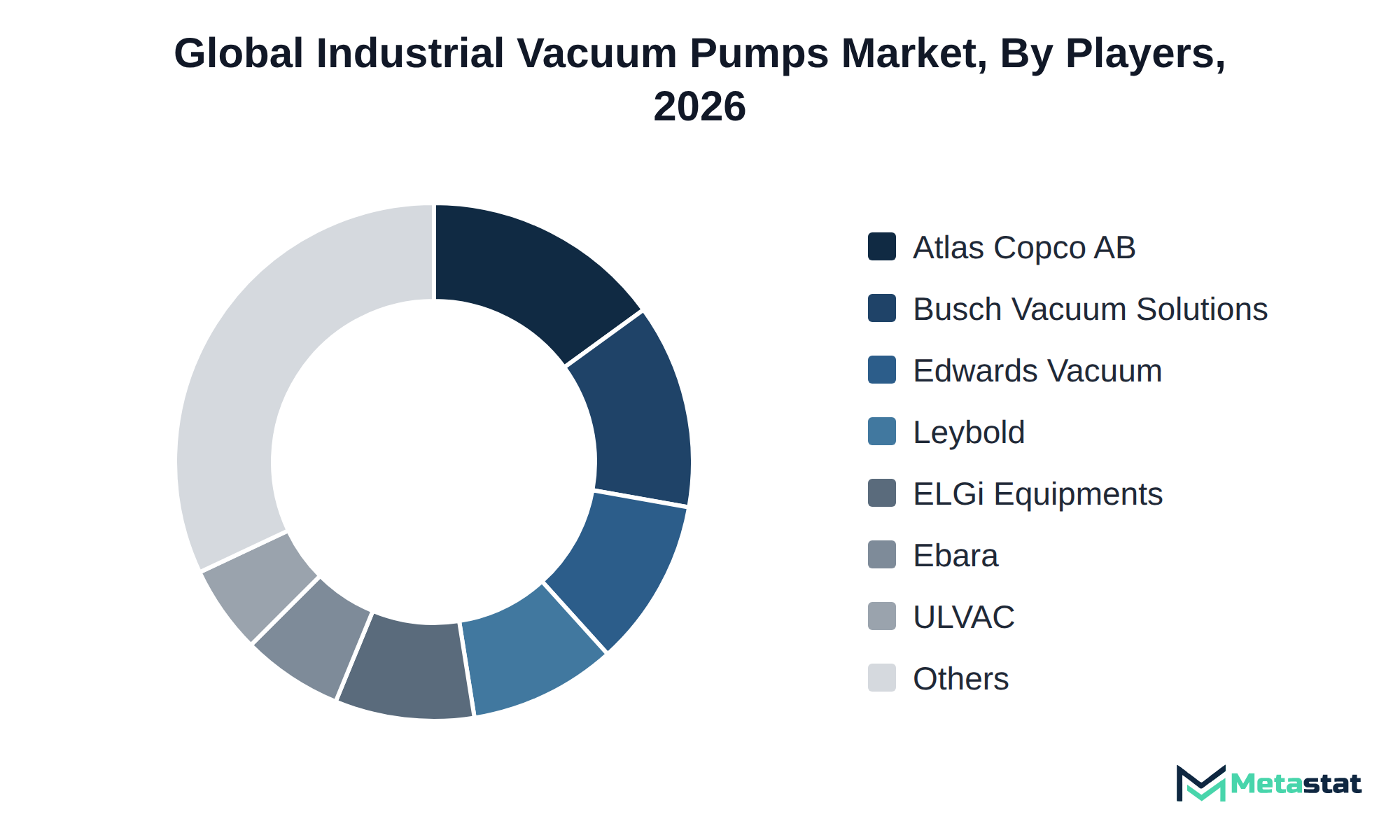
The Industrial Vacuum Pumps market features companies with diverse strategic approaches. Many organizations differentiate themselves through technology type, including rotary vane, dry screw, and liquid ring vacuum pumps. Buyers prioritize factors including price, customization, and service when selecting products, ensuring that specific operational requirements are met.
ELGi Equipments Limited focuses on innovation in product design and efficiency, appealing to cost-sensitive buyers. Atlas Copco AB emphasizes a broad service portfolio and strong after-sales support, catering to customers requiring comprehensive solutions. Edwards Vacuum highlights technological advancements and sustainability initiatives, attracting buyers interested in environmentally friendly options within the market.
Achieving this growth requires a combination of factors, including increasing demand from the food and beverage sector, which significantly influences the end-use industry. The growth within this industry, projected at a CAGR of 5.3%, will contribute to a higher adoption of Industrial Vacuum Pumps for packaging and processing applications.
Advancements in technology, specifically in dry screw vacuum pumps, which are expected to reach USD 1,539.8 million by 2033, will enhance operational efficiencies and lower overall costs for users. This segment, with a CAGR of 5.9%, reflects the ongoing need for highly efficient pumping solutions across various applications, including manufacturing and materials handling.
Potential economic downturns could restrict investment in new technologies and infrastructure, posing a risk to growth in the market. Such external factors, combined with fluctuations in raw material prices, hinder the overall progress expected through 2033.
By Technology: Rotary Vane Vacuum Pumps, Dry Screw Vacuum Pumps, Liquid Ring Vacuum Pumps, Dry Claw Vacuum Pumps, Roots Vacuum Pumps and Mechanical Boosters, Scroll Vacuum Pumps, Diaphragm Vacuum Pumps, Turbomolecular Vacuum Pumps, Diffusion Vacuum Pumps, Others (Rotary Piston and Side-Channel Vacuum Pumps)
By Lubrication and Sealing Configuration: Oil-Sealed, Dry-Running, Water-Sealed, Others (Grease-Sealed and Other Configurations)
By Application: Packaging and Food Processing, Material Handling and Pneumatic Conveying, Drying, Distillation, and Evaporation, Degassing and Impregnation, Forming, Pressing, and Lamination, Coating and Metallization, Semiconductor and Electronics Manufacturing, Leak Testing, Others (Freeze Drying, Sterilization, Filtration)
By End-Use Industry: Food and Beverage, Chemicals and Petrochemicals, Pharmaceuticals and Biotechnology, Semiconductor and Electronics, Automotive and Transportation, Oil and Gas, Metals and Mining, Power and Renewable Energy, Plastics and Rubber, Others (Pulp and Paper, Aerospace)
The report strategically identifies and profiles the key market players and analyses their core competencies in each sub-segment of the Industrial Vacuum Pumps market.
Report Attributes | Details |
Study Period | 2021-2033 |
Base Year | 2025 |
Estimated Year | 2026 |
Forecast Period | 2026-2033 |
Historical Period | 2021-2025 |
Growth Rate | CAGR 5.5% from 2026 to 2033 |
Revenue Unit | USD million |
Segmentation | By Technology, Lubrication and Sealing Configuration, Application, End-Use Industry, and Region |
By Region | North America (By Technology, Lubrication and Sealing Configuration, Application, End-Use Industry, and Country)
|
Europe (By Technology, Lubrication and Sealing Configuration, Application, End-Use Industry, and Country)
| |
Asia Pacific (By Technology, Lubrication and Sealing Configuration, Application, End-Use Industry, and Country)
| |
South America (By Technology, Lubrication and Sealing Configuration, Application, End-Use Industry, and Country)
| |
Middle East and Africa (By Technology, Lubrication and Sealing Configuration, Application, End-Use Industry, and Country)
|
Find answers to common questions about this report
The Industrial Vacuum Pumps market size was valued at USD 5,963.1 million in 2025.
The market is projected to grow at a CAGR of 5.5% during the forecast period from 2026 to 2033.
The North America Industrial Vacuum Pumps market size is estimated to reach USD 2,331.6 million by 2033.
Dry Screw Vacuum Pumps lead the Industrial Vacuum Pumps market with a projected value of USD 1,539.8 million by 2033. This segment's growth reflects a compound annual growth rate of 5.9%.
Automation in manufacturing processes drives significant expenditures in advanced machinery, including vacuum technologies. Increasing regulatory emission standards compel manufacturers to adopt advanced filtration mechanisms and closed-loop systems, enhancing operational efficiency and supporting environmental sustainability.
High equipment prices significantly restrain Industrial Vacuum Pumps market growth, particularly affecting small to medium-sized enterprises that prioritize cost-effective solutions. Rising input costs further challenge suppliers, impacting profit margins and creating pressure to adjust pricing structures while maintaining competitiveness.
Increasing demand for energy-efficient solutions, particularly in the dry-running vacuum pump segment, supports adoption across industries including pharmaceuticals and food processing. The focus on operational efficiencies and lower maintenance costs enhances the appeal of these technologies, driving further market growth.
The Industrial Vacuum Pumps market is estimated to reach a valuation of USD 9,154.4 million by 2033.
Key players operating in the Industrial Vacuum Pumps market include ELGi Equipments Limited, Atlas Copco AB, Busch Vacuum Solutions, Edwards Vacuum, Leybold GmbH, ULVAC, Inc., Ebara Corporation, and Agilent Technologies, Inc.
The dry-running vacuum pump segment is projected to achieve a compound annual growth rate (CAGR) of 6.2% through 2033, driven by increasing demand for energy-efficient solutions.
The analysts below cover Machinery & Equipment research at Metastat Insights.
LEAD ANALYST
Utkarsh Khirodkar is a Lead Market Research Analyst at MetaStat Insight, specializing in market intelligence, technology sector assessments, and competitive strategy.

INDUSTRY CONSULTANT - CHEMICALS & ADVANCED MATERIALS
Chemicals and Materials · Machinery & Equipment · Packaging
Amit Gadhekar Consultant for Chemicals and Materials at MetaStat Insight, directing sector-specific intelligence, research, and strategic consulting across global chemical and processing markets.

PRINCIPAL CONSULTANT - QUALITY SYSTEMS & COMPLIANCE
Electronics and Semiconductor · Machinery & Equipment · Professional Services
Omkar Phadtare is an Industry Consultant at MetaStat Insight, specializing in quality systems, regulatory compliance, and standards benchmarking to drive data-driven market intelligence and strategic industry research.

ENERGY & INFRASTRUCTURE INDUSTRY CONSULTANT
Automotive and Transportation · Electronics and Semiconductor · Energy and Power · Machinery & Equipment
Saurabh Vasant Ganvir consults for Energy & Infrastructure Industry at MetaStat Insight, specializing in renewable energy, solar EPC, and electric vehicle (EV) infrastructure markets.

LEAD CONSULTANT - COMMUNICATION, TELECOM, AND IT
Electronics and Semiconductor · Information & Technology · Machinery & Equipment · Professional Services
Ravindra Sathe Consultants for Communication, Telecom, and IT at MetaStat Insight. He leads the firm's industry research initiatives across telecommunications infrastructure, digital connectivity, enterprise networking, and emerging information technology domains.
Assessing 200mm wafer transition schedules and substrate supply bottlenecks requires precise technical intelligence. MetaStat Insight supplied an actionable breakdown comparing planar and trench MOSFET architectures across automotive and industrial drive markets. The regional capacity estimates for Asia-Pacific foundries helped clarify lead-time uncertainties during our strategic planning session. When we needed additional clarification on high-purity raw material sourcing, their analyst team responded with helpful context within twenty-four hours.
Tracking maintenance cycle demand for secondary flight display units and terrain collision avoidance systems across regional jet fleets involves complex aftermarket dynamics. MetaStat Insight provided practical analysis separating airline retrofit programs from OEM forward-fit production schedules in North America and Southeast Asia. The supplier matrix highlighted component obsolescence timelines without resorting to vague generalizations. The dataset served as a dependable reference during our annual program review meetings.
Evaluating secondary resin quality across post-consumer packaging streams requires reliable technical segmentation. MetaStat Insight delivered an objective assessment that distinguished between extrusion-grade flake pricing and optical sorting throughput limitations across Western Europe. The competitive positioning breakdown for licensed depolymerization technology providers answered several questions during our feedstock feasibility audit. Their team clarified regional trade restrictions on mixed plastic scrap quickly when our team submitted follow-up requests.
Explore related market intelligence reports worth reading alongside this one.