
LEAD ANALYST
Utkarsh Khirodkar is a Lead Market Research Analyst at MetaStat Insight, specializing in market intelligence, technology sector assessments, and competitive strategy.

Global Electronics Manufacturing Services (EMS) Market Size, Share, By Service Type (Electronics Manufacturing and Assembly, Design and Engineering Services, Testing and Inspection Services, Supply Chain Management and Logistics, Aftermarket Repair and Refurbishment), By Business Model (Contract Manufacturing (CM), Original Design Manufacturing (ODM), Hybrid / Turnkey / Other Business Models), By Manufacturing Process (Surface-Mount Technology (SMT), Through-Hole Technology (THT), Mixed-Technology Assembly, Flexible and Rigid-Flex Circuit Assembly, Others (Specialized Electronic and Microelectronic Assembly)), By End-Use Industry (Consumer Electronics, Home Appliances, Information Technology, Telecommunications, Automotive, Industrial Manufacturing, Healthcare, Aerospace and Defense, Energy and Utilities, Others (Retail, Education)), Industry Analysis, Growth, Trends, and Forecast, 2026-2033
Report ID
MSI-5511
Published
October, 2026
Pages
272 Pages
Format
Historical
Base year
Forecast
Forecast period
Report Details
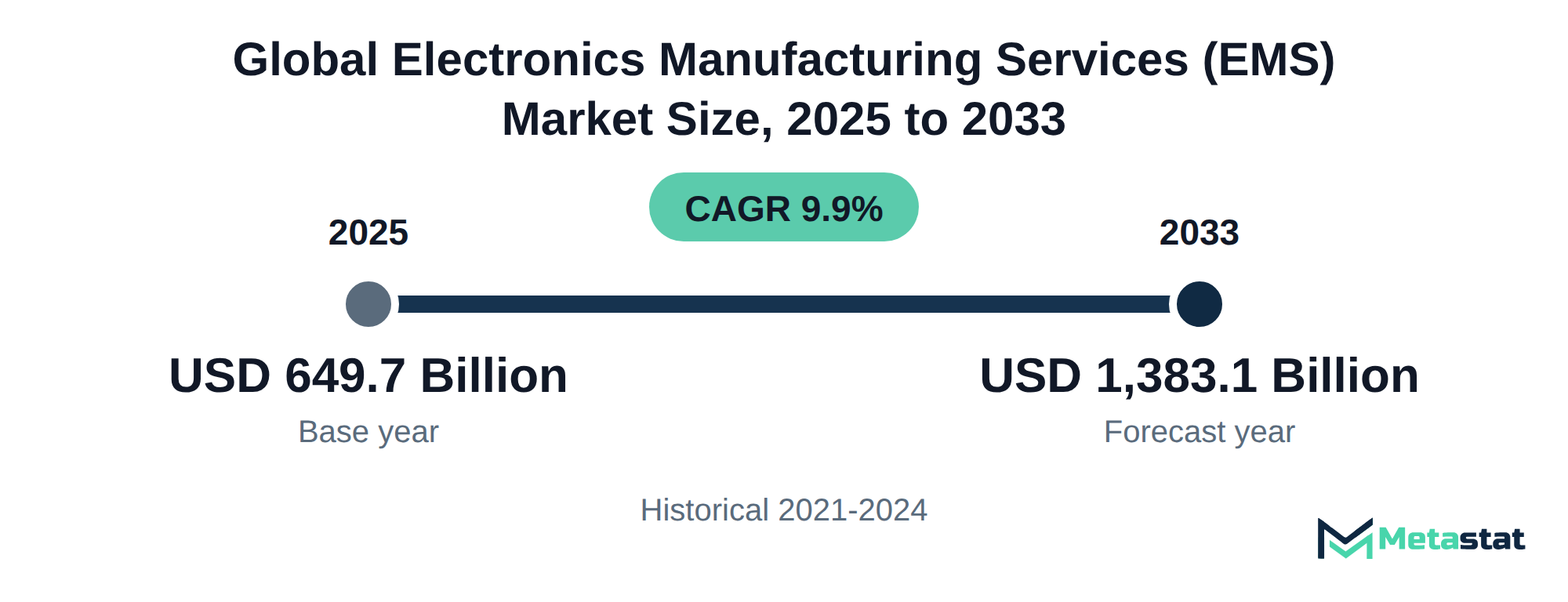
Market Valuation: Valued at $649.7 Billion in 2025, projected to reach $1,383.1 Billion by 2033 at a 9.9% CAGR.
Dominant Segment: Electronics Manufacturing and Assembly leads the market, driven by robust consumer demand for smartphones and laptops, with a projected CAGR of 9.5% from 2026 to 2033.
Geographic Lead: The Asia Pacific region holds the largest share at 54.8%, benefiting from a strong electronics manufacturing base and increasing production capabilities.
What's Inside: The report provides comprehensive competitive coverage, detailed analyses of service types, business models, and manufacturing processes, along with a forecast window extending to 2033.
Emerging Demand for Design Services: The Design and Engineering Services segment is expected to grow at a CAGR of 12.2%, reflecting the increasing complexity of product designs and the need for specialized expertise.
Technological Advancements: Innovations such as automation and robotics are enhancing production efficiency, driving growth across various sectors within the EMS market.
Choose Your License
Global Electronics Manufacturing Services (EMS) Market
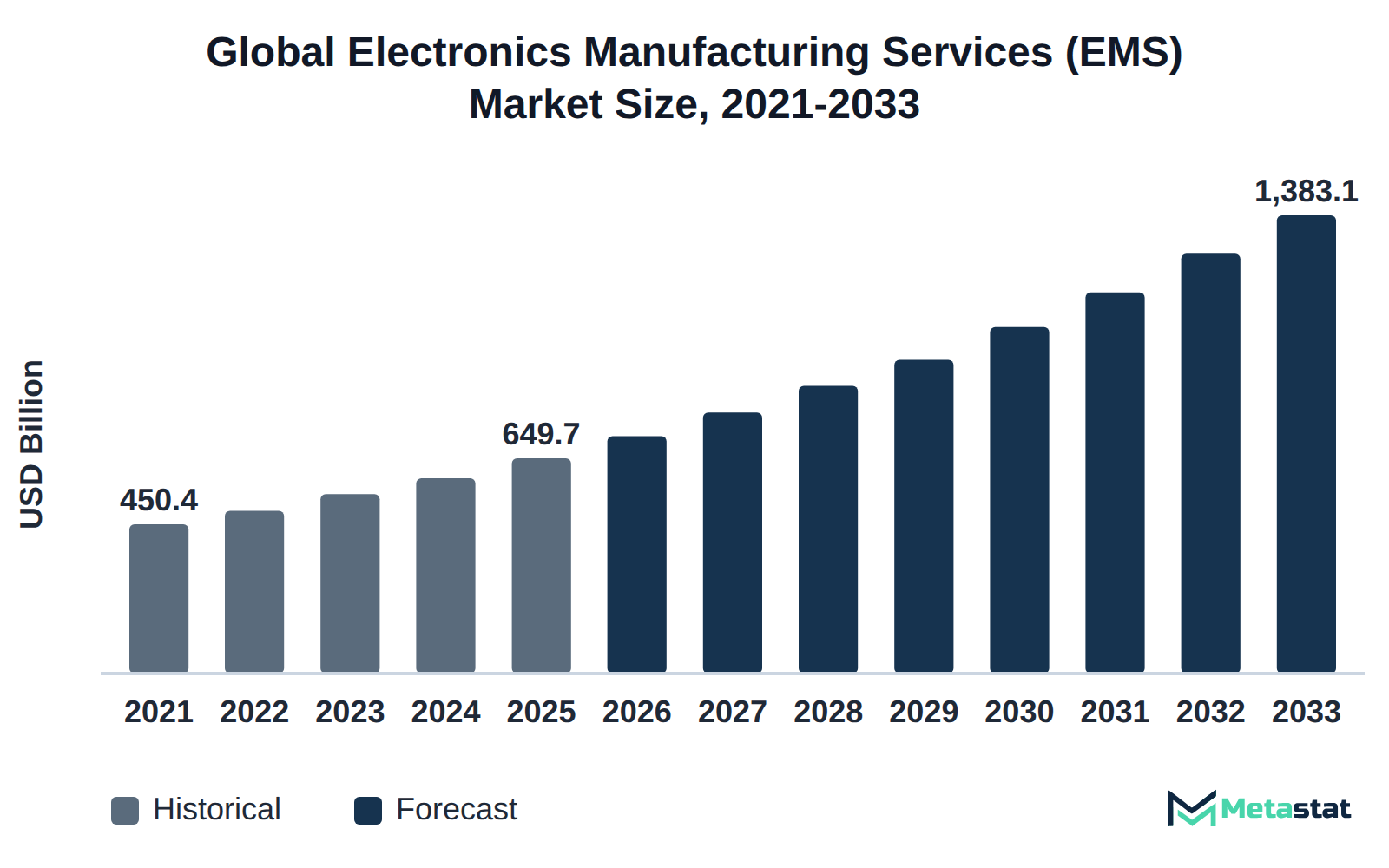
The global Electronics Manufacturing Services (EMS) market was valued at USD 649.7 billion in 2025 and is projected to reach USD 1,383.1 billion by 2033, growing at a CAGR of 9.9% over the forecast period.
The Electronics Manufacturing Services (EMS) market covers electronics manufacturing, assembly, design, engineering, testing, and inspection services. Buyers invest in these services to improve production efficiency, shorten time-to-market, and access specialized expertise. This segment proves essential for industries that require high-quality electronic components and systems, particularly in consumer electronics and information technology.
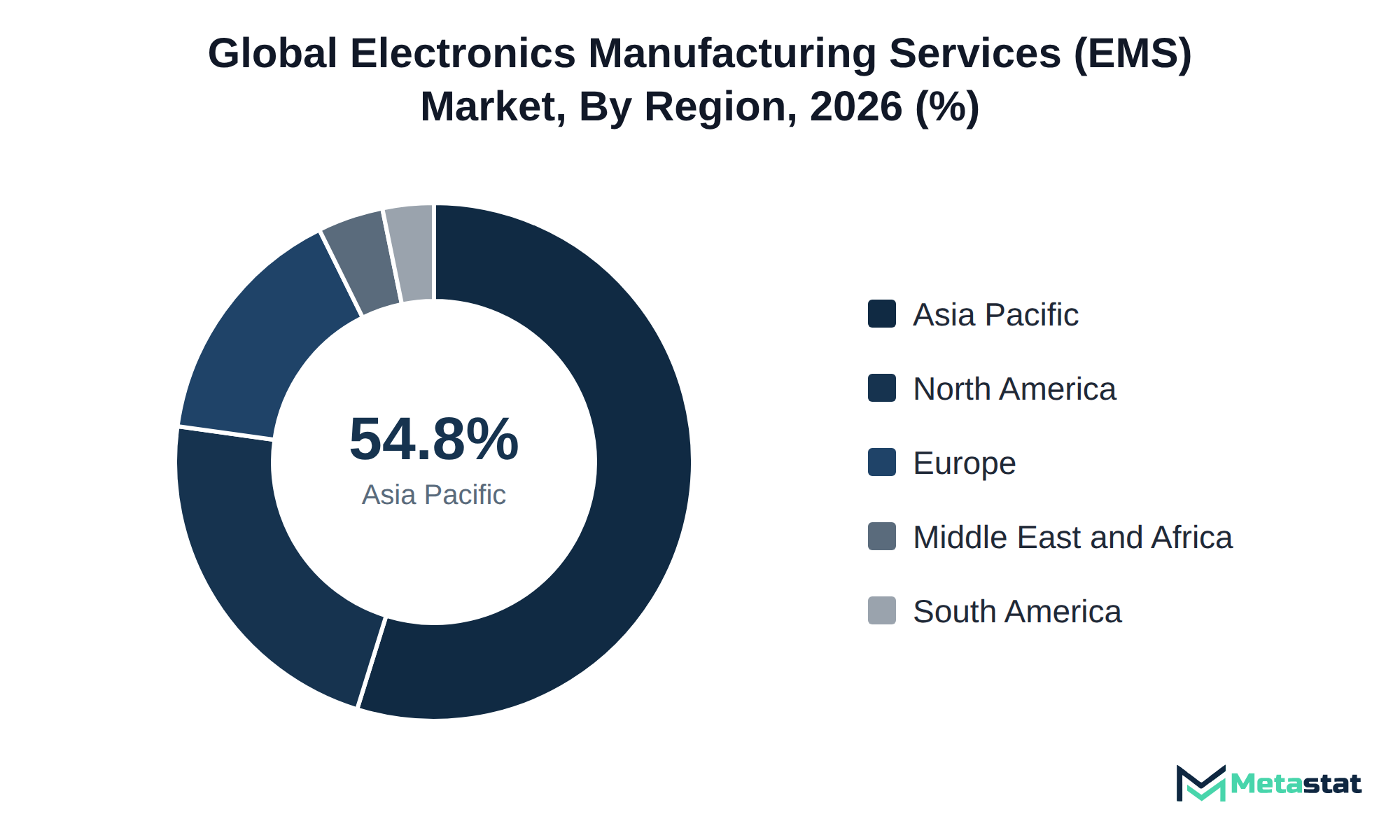
Growth in the market is driven by increasing demand for innovative electronic devices and advancements in manufacturing technologies. The consumer electronics segment holds the highest value within the market, reflecting strong consumer demand for smartphones, laptops, and other electronic gadgets. North America holds 22.4% of the market in 2025, with the US leading in 2026. The Asia Pacific region represents the largest share at 54.8%, highlighting its dominance in electronics production and assembly.
Rapid technological advancements serve as a primary growth driver, facilitating efficiency improvements and cost reductions across the manufacturing process. This environment encourages firms to invest in EMS to remain competitive. The need for high-quality standards and compliance with safety regulations influences buyer decisions, driving sustained growth in the sector.
The Electronics Manufacturing Services (EMS) market provides essential capabilities to manufacturers, enabling efficient production and assembly of electronic components. Buyers invest in these services to enhance operational efficiency, lower costs, and accelerate product time-to-market. This focus on increasing competitiveness drives expenditure across various sectors, particularly in consumer electronics, where demand for innovative and high-quality products remains robust.
Growth in the market is driven by rising demand for advanced electronic devices, which requires sophisticated manufacturing processes and services. Electronics Manufacturing and Assembly represents the segment with the highest value, with a CAGR of 9.5% from 2026 to 2033. The region benefits from a strong electronics manufacturing base and a growing consumer market.
Investment in design and engineering services reflects the need for tailored solutions that meet specific client requirements. Industries increasingly adopt smart technologies, driving demand for broad EMS offerings that support market expansion. This trend highlights the importance of innovation and adaptability in maintaining competitive advantage within the Electronics Manufacturing Services (EMS) market.
The emergence of high-density printed circuit board (PCB) assembly within the Electronics Manufacturing Services (EMS) market reflects a significant shift in manufacturing capabilities, particularly for advanced technologies like AI servers. This transition arises from increasing demand for compact, efficient, and powerful electronic components, driven by the proliferation of artificial intelligence applications across various industries.
In 2026, the market for Electronics Manufacturing and Assembly, a crucial service type within EMS, is expected to reach USD 479.8 billion and expand to USD 902.9 billion by 2033, indicating a compound annual growth rate of 9.5%. Advanced PCB assembly supports sophisticated electronics, including AI servers that require higher performance while occupying less space.
The integration of high-density PCB assembly techniques enables manufacturers to produce smaller, more efficient circuit boards that support the complex functionalities needed for AI applications. This capability improves AI server performance and operational efficiency for companies that use these technologies. Consequently, this trend leads to increased competitiveness in the market, encouraging investment in advanced manufacturing processes that keep pace with technological advancements.
Purchasing practices for Automotive Electronics Manufacturing Services (EMS) focus on the integration of Advanced Driver Assistance Systems (ADAS) and Battery Management Systems (BMS). Contractual agreements with EMS providers typically emphasize compliance with stringent quality standards, driven by the automotive industry's demand for reliability and safety. In 2025, the market value reached USD 649.7 billion, highlighting the commercial significance of maintaining high-quality manufacturing processes.
The pricing structure within the EMS market for automotive applications often reflects the complexity of the components involved. Pricing strategies incorporate factors including material costs, labor, and technological advancements. For instance, the shift towards electric vehicles intensifies the need for efficient battery management systems, influencing contract negotiations and pricing models. Contract Manufacturing (CM) in this segment is anticipated to rise from USD 413.4 billion in 2026 to USD 750 billion by 2033, signifying significant growth opportunities tied to demand for these services.
Long-term relationships with EMS providers facilitate cost management while ensuring innovation in product development. Buyers prioritize providers with proven track records in ADAS and BMS, enhancing their competitive positioning in the evolving automotive landscape. The growing focus on electric vehicles and autonomous driving technologies means EMS firms must adapt their offerings to meet these emerging automotive requirements.
The shift towards nearshoring in the Electronics Manufacturing Services (EMS) market is increasingly evident, driven by companies' efforts to enhance supply chain resilience. Rapid global changes and recent disruptions have prompted manufacturers to prioritize local sourcing, reducing dependency on distant suppliers. In 2026, the market is projected to reach USD 716 billion, reflecting the growing emphasis on regional production capabilities.
Many firms seek to minimize risks associated with international shipping and geopolitical tensions. This transition shortens lead times and improves responsiveness to market demands. For instance, the contract manufacturing segment, which includes nearshoring initiatives, is expected to experience a compound annual growth rate (CAGR) of 8.9% from 2026 to 2033, indicating strong investment in localized production models.
Embracing nearshoring strategies enhances operational flexibility and provides competitive advantages through faster product launches. This shift aligns with rising demand for tailored solutions that cater to specific consumer preferences, ultimately leading to increased customer satisfaction and loyalty in the market.
Original Equipment Manufacturers (OEMs) evaluate multiple factors when selecting between Contract Manufacturing (CM), Original Design Manufacturing (ODM), and Turnkey Electronics Manufacturing Services (EMS). Each model presents unique advantages tailored to different operational needs. For instance, OEMs often opt for CM when requiring a service provider to manufacture products based solely on their specifications, allowing them to retain design control while benefiting from external production capabilities.
The CM segment is projected to reach USD 750 billion by 2033, reflecting an 8.9% compound annual growth rate (CAGR). This growth indicates a steady demand for CM services among OEMs focused on cost efficiency and scalability. On the other hand, ODM offers OEMs a partnership that includes both design and manufacturing, which appeals to companies looking to optimize product development timelines and accelerate market entry.
Ultimately, choices between these service models hinge on specific project requirements, resource availability, and strategic goals. The ongoing evolution of the Electronics Manufacturing Services (EMS) market encourages OEMs to explore the best alignment for their manufacturing strategies, influencing their long-term operational success.
Consumer electronics manufacturers drive significant growth within the market, reflecting a shift in buyer preferences towards advanced technologies and connected devices. This shift stems from rising consumer demand for smart home devices, wearables, and other electronics that enhance lifestyle and productivity. Increased investment in innovative electronic solutions accelerates production volumes, impacting pricing strategies across the industry. The market is projected to grow from USD 178.6 billion in 2026 to USD 320 billion by 2033, representing a compound annual growth rate of 8.7%. This growth presents opportunities for manufacturers to expand their offerings and improve operational efficiencies, positioning them to capture greater market share.
The increasing application of advanced technologies in manufacturing processes significantly influences growth within the Electronics Manufacturing Services (EMS) market. Innovations including automation, robotics, and artificial intelligence enhance production efficiency, enabling firms to optimize output and reduce operational costs. Automation streamlines assembly lines, enabling rapid production cycles while minimizing human error. Robotics contributes precision in tasks including component placement, further improving product quality and consistency.
The integration of these technologies attracts diverse industries, including consumer electronics, telecommunications, and automotive sectors. Increased efficiency in manufacturing facilitates larger production volumes, which aligns with the rising demand for complex electronic products. Enhanced capabilities in data analytics provide manufacturers with insights into production performance and customer preferences, driving better decision-making. Technological advancements in manufacturing significantly impact the competitive landscape, prompting firms to invest in upgrading their operational processes to meet evolving market demands.
Price sensitivity among buyers significantly hinders adoption of advanced Electronics Manufacturing Services (EMS). The cost of services, particularly in Contract Manufacturing (CM) and Original Design Manufacturing (ODM), influences purchasing decisions, especially among small to medium-sized enterprises (SMEs). These SMEs operate with tighter budgets and face challenges in committing to substantial upfront investments for manufacturing services. Such financial constraints lead to smaller order sizes and delayed procurement timelines, impacting overall growth in the market.
Fluctuations in material prices and labor costs affect service pricing, leading to increased operational budgets for buyers. The need for efficient cost management drives SMEs to seek alternative solutions or delay investment in new technologies. This price sensitivity ultimately restricts broader adoption of EMS across various sectors, limiting the market's growth potential.
Rising material costs present a significant challenge for suppliers within the market. The demand for quality components, alongside inflationary pressures, drives up expenses associated with raw materials and production inputs. Suppliers face pressure to maintain profitability while fulfilling contracts at competitive prices.
In response, several suppliers are exploring strategies to optimize their supply chain management. This includes investing in technology to enhance operational efficiency and reduce overhead costs. Several suppliers are renegotiating contracts with vendors to secure better pricing and terms. Others focus on diversifying their supplier base to mitigate risks associated with single-source dependency. These approaches aim to stabilize profit margins while ensuring capacity to meet growing demand across various sectors, including consumer electronics and telecommunications.
The Design and Engineering Services segment within the Electronics Manufacturing Services (EMS) market is anticipated to grow at a CAGR of 12.2%, reaching USD 198.7 billion by 2033. This growth is driven by increasing complexity in product design, with manufacturers seeking specialized expertise to innovate and expedite time-to-market. Original Equipment Manufacturers (OEMs) within sectors including consumer electronics and telecommunication actively require these services to enhance product functionality and aesthetics, thus improving competitiveness. The rising adoption of advanced technologies, including Internet of Things (IoT) devices, necessitates tailored design solutions that address specific consumer needs and regulatory requirements. Firms that provide strong design and engineering capabilities deliver higher value to clients, promoting growth and investment in this segment.
The Global Electronics Manufacturing Services (EMS) market is segmented based on Service Type, Business Model, Manufacturing Process, and End-Use Industry.
This segment serves multiple industries, including consumer electronics and telecommunications, which rely on high-quality manufacturing and assembly processes for their products. Key drivers of growth include increasing demand for electronic devices and the need for advanced manufacturing techniques to ensure precision and reliability. Compared to other service types, this segment exhibits significant growth, influenced by consumer electronics manufacturers who prioritize efficient assembly operations. Testing and Inspection Services, for example, grow at a slower rate, reflecting varying demand dynamics across different segments of the market. The Electronics Manufacturing Services (EMS) market benefits from these trends, highlighting the critical role that Electronics Manufacturing and Assembly plays in meeting the evolving needs of diverse sectors.
This segment focuses on providing innovative design solutions and engineering expertise to manufacturers, primarily serving industries including consumer electronics, telecommunications, and information technology. A strong driver for this segment stems from the demand for customized and efficient product designs, facilitating faster time-to-market for companies. This segment distinguishes itself from others in the group through its higher growth rate and emphasis on advanced engineering capabilities, reflecting a growing trend towards specialization. In contrast, other segments, including Supply Chain Management and Logistics, experience lower growth rates and differ in their operational focus. The emphasis on design and engineering services highlights a shift in the market towards delivering more complex and tailored solutions to meet evolving consumer demands.
The Testing and Inspection Services segment is expected to reach USD 112.2 billion by 2033. This segment is essential for manufacturers aiming to ensure product quality and compliance with industry standards. It is used by various sectors, including consumer electronics and telecommunications, which demand high reliability in their products. The increasing complexity of electronic devices drives the growth of this segment, evident in its CAGR of 8.6% through 2033. While the overall testing and inspection sector benefits from technological advancements, it grows slower than the Design and Engineering Services segment, which has a higher CAGR of 12.2%. Testing and inspection services face pressure from rapid technological changes and the heightened regulatory environment, compelling firms to invest in advanced testing methodologies to maintain a competitive advantage. The market's focus on quality assurance increases demand, creating growth opportunities across various end-use industries.
Supply Chain Management and Logistics segment is projected to grow at a CAGR of 7.9% during the forecast period. This segment focuses on optimizing the flow of materials and information between suppliers, manufacturers, and customers. Key players in various industries, including consumer electronics and telecommunications, employ these services to enhance operational efficiency and reduce lead times. Demand for improved supply chain visibility and responsiveness drives growth in this segment, reflecting a shift towards just-in-time manufacturing practices. Compared to other segments, including Design and Engineering Services, this segment experiences slower growth, evidenced by its CAGR of 7.9%, which contrasts with the higher growth rates of 12.2% for design services. The evolving landscape of global trade and logistics further influences the market, compelling firms to adopt advanced technologies, such as smart logistics systems, for supply chain integration and management.
Aftermarket repair and refurbishment services provide essential maintenance and restoration capabilities for electronic devices post-consumer use. This segment serves various industries including consumer electronics, telecommunications, and healthcare, where end-users require reliable performance and longevity from their products. Growing environmental awareness drives demand for refurbishment, with businesses and consumers alike seeking sustainable solutions to extend the life cycle of electronic devices. This segment typically experiences slower growth compared to others like Design and Engineering Services, which has a higher CAGR of 12.2%. The need for effective and cost-efficient repair solutions remains critical, positioning this segment as a crucial element within the broader Electronics Manufacturing Services market, despite its comparatively restrained growth trajectory.
This segment primarily serves original equipment manufacturers (OEMs) seeking to outsource production of electronic devices, allowing them to focus on core competencies, including design and marketing. The increasing demand for consumer electronics, driven by technological advancements and consumer preferences, significantly supports growth. Unlike other segments, CM growth reflects a stable demand trajectory, evident in its steady CAGR of 8.9%, compared to the higher rate of 12.2% projected for Design and Engineering Services. Price sensitivity among buyers influences the operational strategies of contract manufacturers; competitive pricing and efficiency in production processes are essential to attract a diverse client base seeking cost-effective solutions. The market structure thus creates a dynamic competitive environment.
Original Design Manufacturing (ODM) segment is estimated to reach USD 455.2 billion by 2033, at a CAGR of 10.7% during the forecast period. This segment focuses on providing comprehensive design and manufacturing solutions for electronics, enabling companies to bring innovative products to market quickly. Key players in this segment include various original equipment manufacturers (OEMs) and technology firms looking to enhance their product offerings. The growth of ODM is driven by increasing demand for customized solutions and faster time-to-market, particularly in consumer electronics and information technology sectors. Compared to other business models in the market, ODM demonstrates faster growth, reflecting a CAGR of 10.7%, surpassing the 8.9% growth rate observed in Contract Manufacturing. Enhanced capabilities in product design and development differentiate ODM from other segments, establishing it as a preferred choice for companies seeking agility and innovation.
Hybrid / Turnkey / Other Business Models segment is expected to reach USD 177.9 billion by 2033. This segment encompasses integrated solutions that combine manufacturing and design, appealing to businesses seeking streamlined processes. It primarily serves companies in sectors including consumer electronics and telecommunications, where efficiency and speed are critical. Growth in this segment is driven by increasing demand for customized production and faster time-to-market, reflecting a shift towards more agile manufacturing practices. Compared to other business models, including Contract Manufacturing, this segment displays a unique advantage in flexibility, allowing for rapid adjustments to production lines in response to market changes. With a CAGR of 10.7%, it is projected to outpace many competitors, highlighting its significant role in the evolving dynamics of the market.
Surface-Mount Technology (SMT) segment is valued at USD 466.7 billion in 2026 and is projected to reach USD 915.4 billion by 2033, at a CAGR of 10.1% during the forecast period. This technology is for mounting electronic components directly onto the surface of printed circuit boards (PCBs), primarily in consumer electronics and telecommunications equipment. The demand for SMT is driven by increasing complexity and miniaturization of electronic devices. This segment differs from others in the manufacturing process category through its higher growth rate, compared to Through-Hole Technology (THT), which has a CAGR of 6.1%. The need for efficient assembly methods contributes to SMT's prominence, enabling higher component density and reduced manufacturing costs, thus appealing to OEMs seeking competitive advantage. In turn, this growth reflects the overall upward trend in the Electronics Manufacturing Services (EMS) market, linked to advancements in technology and consumer demands.
Through-Hole Technology (THT) segment is estimated to reach USD 109.5 billion by 2033, at a CAGR of 6.1% during the forecast period. THT is a crucial manufacturing process, primarily used for assembling electronic components in various devices. This segment finds application in sectors including telecommunications and consumer electronics, where reliable connections are essential. The ongoing demand for robust and high-performance electronics drives growth in this segment. THT distinguishes itself from other manufacturing processes, including Surface-Mount Technology (SMT), which exhibits a faster growth rate of 10.1%. Companies focusing on THT target applications requiring greater mechanical strength, leading to a unique customer base that values durability over the rapid production capabilities offered by SMT. The market evolves, reflecting changing preferences and technological advancements.
Mixed-Technology Assembly segment is expected to reach USD 186.4 billion by 2033. This segment enables the integration of various technologies and components into a single assembly process, serving industries including telecommunications and consumer electronics. Demand for Mixed-Technology Assembly arises from the increasing complexity of electronic devices that require diverse assembly techniques. This segment distinguishes itself with a projected growth rate of 10.1%, surpassing the growth rates of Through-Hole Technology (THT) at 6.1%. The rising demand for compact and multifunctional devices drives the need for innovative assembly solutions, influencing market dynamics significantly. Technological advancements in flexible circuit assembly enhance capabilities, further supporting market expansion. While manufacturers seek to optimize production processes and reduce time-to-market, Mixed-Technology Assembly serves as a crucial component in meeting evolving consumer and industry demands.
Flexible and Rigid-Flex Circuit Assembly segment is projected to grow at a CAGR of 12.4% during the forecast period. This segment finds applications in a variety of electronic devices, including smartphones, wearables, and medical equipment, serving manufacturers that require compact and lightweight circuitry. The increasing demand for lightweight and flexible designs drives growth in this segment, with developers seeking to optimize product performance while minimizing space. Compared to other manufacturing processes, this segment exhibits a higher CAGR, indicating robust interest and investment in flexible circuit technology. This growth reflects a trend towards innovation in electronics, with buyers prioritizing advanced manufacturing solutions that facilitate enhanced functionality and design versatility. In the broader context of the Electronics Manufacturing Services (EMS) market, the push for flexible circuit solutions aligns with ongoing advancements in consumer preferences and technological capabilities.
Specialized Electronic and Microelectronic Assembly focuses on the production of intricate electronic components that require high precision and specialized manufacturing techniques. This segment serves industries including telecommunications, automotive, and aerospace, where the demand for advanced electronic components is significant. Growth in this segment is driven by the increasing complexity of electronic products, necessitating specialized manufacturing capabilities. Advancements in technology facilitate the production of smaller and more efficient components, leading to heightened adoption among manufacturers. Compared to other manufacturing processes, this segment often commands higher prices due to the specialized skills and equipment required, distinguishing it from more standardized production methods. With the Electronics Manufacturing Services (EMS) market evolving, the emphasis on high-quality, specialized components is expected to continue to grow, influencing investment and development within this niche.
Consumer Electronics segment is valued at USD 178.6 billion in 2026 and is projected to reach USD 320 billion by 2033, at a CAGR of 8.7% during the forecast period. This segment encompasses the production of devices including smartphones, tablets, and personal computers, serving both individual consumers and businesses. The demand for innovative and feature-rich electronics drives growth, with technological advancements pushing design and functionality. Competing segments like Home Appliances and Information Technology exhibit different growth rates; for instance, the Information Technology segment is anticipated to reach USD 310.8 billion by 2033. The Electronics Manufacturing Services (EMS) market reflects an increasing focus on consumer preferences, influencing manufacturers to enhance product quality and reduce time to market. This competitive environment encourages continuous adaptation to consumer trends and technological shifts.
Home Appliances segment is estimated to reach USD 94.2 billion by 2033, at a CAGR of 8.8% during the forecast period. This segment encompasses various household devices including refrigerators, washing machines, and microwaves, serving residential consumers and businesses in the appliance retail sector. Growth in this segment is primarily driven by increasing consumer demand for energy-efficient and smart appliances, reflecting a shift in purchasing preferences. Compared to other segments, including Consumer Electronics, which has a CAGR of 8.7%, the Home Appliances segment demonstrates a slightly higher growth rate, indicating a robust market for manufacturers focused on innovation and sustainability. The rising trend toward smart home technology enhances the competitive landscape, fueling investments in advanced manufacturing processes to meet evolving consumer expectations.
The Information Technology segment is essential in developing and deploying technology solutions, particularly in computing, networking, and data management. Companies in this sector leverage EMS to enhance their product offerings, improve efficiencies, and drive innovation. The demand for advanced technology solutions fuels the growth of this segment, with a projected CAGR of 8.6%. Unlike other segments, Information Technology emphasizes rapid technological advancements and high-value electronics, reflecting its unique position in the market. Growing requirements for cloud computing, data analytics, and cybersecurity services significantly influence this segment's trajectory, distinguishing it from slower-growing sectors and ensuring robust investment and expansion opportunities.
Telecommunications segment is projected to grow at a CAGR of 8.6% during the forecast period. This segment encompasses the production of electronic devices and components used in communication systems, including mobile phones, network equipment, and infrastructure. Key players in this segment include telecommunications companies that rely on efficient manufacturing services to meet the growing demand for advanced communication technologies. Rapid advancements in technology drive the need for innovative solutions, influencing both production and pricing strategies. Telecommunications distinguishes itself from other segments through its focus on high-demand, high-value components, which often necessitate specialized manufacturing processes. Projections indicate this segment will experience significant growth, driven by increasing consumer demand for connectivity and improvements in wireless communication technologies. The Electronics Manufacturing Services (EMS) market is expected to see a strong push from this segment, contributing substantially to overall revenue growth.
Automotive involves the production and assembly of electronic components used in vehicles, including advanced driver-assistance systems and in-vehicle infotainment systems. This segment serves automotive manufacturers and suppliers, focusing on high precision and compliance with stringent safety standards. Increased demand for electrification and autonomous vehicles drives this segment, pushing manufacturers to enhance electronic integration in vehicles. Compared to other segments, the automotive segment experiences distinct challenges, including higher regulatory scrutiny and the need for advanced technologies, which lead to increased production costs. In contrast to other end-use industries, the automotive segment often requires longer development cycles and involves larger contracts with fewer buyers, highlighting its unique position in the market. Ongoing advancements in automotive technology and growing connectivity trends contribute to the segment's significance, influencing investment and innovation strategies among market participants.
Industrial manufacturing involves the production of goods in sectors including machinery, equipment, and tools. This segment serves various industries, including construction, aerospace, and heavy machinery. Demand for advanced manufacturing technologies drives growth, enhancing efficiency and productivity. Factors including automation and IoT integration shape smart manufacturing operations, increasing reliance on electronic components. Compared to other segments, industrial manufacturing experiences slower growth due to dependence on broader economic conditions and capital investments. The market's focus on innovation and cost efficiency positions it uniquely, attracting buyers seeking tailored solutions. Sustainability and regulatory requirements take precedence, leading manufacturers to seek EMS providers that demonstrate compliance and adaptability. The Electronics Manufacturing Services (EMS) market continues evolving, with industrial manufacturing playing a significant role in meeting demands for high-quality and reliable electronic components.
Healthcare involves the design, manufacturing, and assembly of electronic devices in medical applications, including diagnostic equipment, patient monitoring systems, and therapeutic devices. Various stakeholders, including hospitals, clinics, and medical device manufacturers, rely on specialized EMS providers to ensure high-quality standards and regulatory compliance. The segment experiences growth driven by increasing demand for advanced medical technologies and a rising aging population, creating a need for sophisticated healthcare solutions. Compared to other segments, healthcare typically requires higher precision and compliance standards, contributing to distinct operational requirements. This segment stands out due to the critical nature of its applications, influencing demand for reliable and efficient manufacturing services. In the context of the Electronics Manufacturing Services (EMS) market, emphasis on regulatory compliance and technological advancements continues to shape the competitive landscape.
Aerospace and Defense encompasses the production of advanced electronic systems, including avionics, radar, and communication equipment, integral to military and civilian applications. This segment primarily serves defense contractors and government agencies requiring high reliability and precision in their electronic components. Accelerating demand for innovative technologies, including unmanned aerial vehicles and satellite systems, drives growth in this area. Stringent regulatory standards regarding quality and safety further influence this segment, necessitating significant investment in compliance and testing processes. Compared to other segments, Aerospace and Defense often faces longer development cycles and higher costs due to the specialized nature of its products. This dynamic shapes its unique position within the Electronics Manufacturing Services (EMS) market, differentiating it from sectors including Consumer Electronics, which experience faster product turnover and lower price points.
The Energy and Utilities segment focuses on the design and manufacturing of electronic components used in energy management systems and utility infrastructure. This sector serves various stakeholders, including utility companies, renewable energy providers, and energy management firms seeking to enhance operational efficiency. Increasing investments in renewable energy technologies and smart grid solutions drive growth. The segment stands out with a distinct emphasis on sustainability and efficiency, attracting firms committed to reducing their carbon footprint. Compared to other segments, this area experiences different growth dynamics due to regulatory pressures aimed at promoting renewable energy sources and reducing emissions. The Electronics Manufacturing Services (EMS) market provides advanced manufacturing solutions tailored to the unique demands of energy and utility applications.
This segment encompasses the production of electronic components used in retail and educational applications. Retailers leverage electronics to enhance customer experience, streamline operations, and optimize inventory management. The education sector employs electronic components for various purposes, including interactive learning tools and educational devices. Demand for innovative educational technologies drives growth in this area. Adoption barriers include budget constraints faced by educational institutions, limiting the potential for investment in advanced electronic solutions. Compared to other segments, the retail and education segment experiences slower growth due to prioritization of budget allocations and competing technological needs. The Electronics Manufacturing Services (EMS) market addresses these challenges by offering scalable solutions tailored to the specific requirements of retailers and educational providers.
Based on geography, the Global Electronics Manufacturing Services (EMS) market is divided into North America, Europe, Asia-Pacific, South America, Middle East, and Africa.
Demand for EMS in North America is driven by growth in industries including consumer electronics, telecommunications, and information technology. The increasing adoption of advanced manufacturing technologies supports the expansion of these sectors, contributing to the overall growth of the Electronics Manufacturing Services (EMS) market. Significant investments in infrastructure and technology upgrades enhance competitiveness across the market. A strong focus on contract manufacturing within the United States, Canada, and Mexico creates partnerships that improve production capabilities. North America is projected to reach USD 314.1 billion by the end of 2033, reflecting a growing share of 22.4% of the global market in 2025. This growth trajectory positions the region as a key player in the evolution of the market.
Demand for Electronics Manufacturing Services (EMS) in Europe stems from industries including consumer electronics, information technology, and automotive manufacturing. Countries including Germany and France play important roles in driving investments in advanced technologies and innovative manufacturing processes. The market faces unique challenges due to increasing labor costs and regulatory frameworks that emphasize sustainability in manufacturing practices. This additional cost pressure influences pricing strategies across the sector. With a market share of 15.5% in 2025, Europe remains a significant player in the global EMS landscape, creating competitive dynamics that enhance innovation and efficiency in service delivery.
Asia Pacific dominates the global Electronics Manufacturing Services (EMS) market, contributing 54.8% of total market share in 2025. Countries including China, Japan, and India drive significant demand due to their extensive consumer electronics and information technology sectors. The region benefits from a robust manufacturing infrastructure, with advanced capabilities in Surface-Mount Technology (SMT) and Original Design Manufacturing (ODM). Competitive labor costs enhance the attractiveness of this region for electronics production. The focus on innovation and technological advancement in South Korea and Australia strengthens market positioning. Southeast Asia emerges as an essential hub for contract manufacturing, capitalizing on favorable trade agreements and investments in technological infrastructure. Rising consumer demand and increasing integration of electronics in various industrial applications support growth in this region.
Brazil and Argentina represent key countries in the Electronics Manufacturing Services (EMS) market, driven by growth in consumer electronics and information technology sectors. Local manufacturers focus on meeting the rising demand for electronic components, including home appliances and telecommunications equipment. The region benefits from various investment initiatives aimed at enhancing manufacturing capabilities. Specific challenges include infrastructure limitations and fluctuating costs, which raise operational expenses and complicate supply chain management. Addressing these conditions presents opportunities for growth in the market, potentially attracting further investments and innovations.
Demand for the Electronics Manufacturing Services (EMS) market in the Middle East and Africa is driven by several key industries, including telecommunications and consumer electronics. Countries including Saudi Arabia and the UAE invest significantly in technology infrastructure, enhancing the need for advanced electronic solutions in various sectors. South Africa presents a growing market for electronics, supported by improvements in manufacturing capabilities and a focus on innovation. The region's market share is projected at 4.1% in 2025, reflecting a steady rise in demand for EMS solutions. The combination of increasing consumer electronics and a strong emphasis on telecommunications creates an environment conducive to growth within the market.
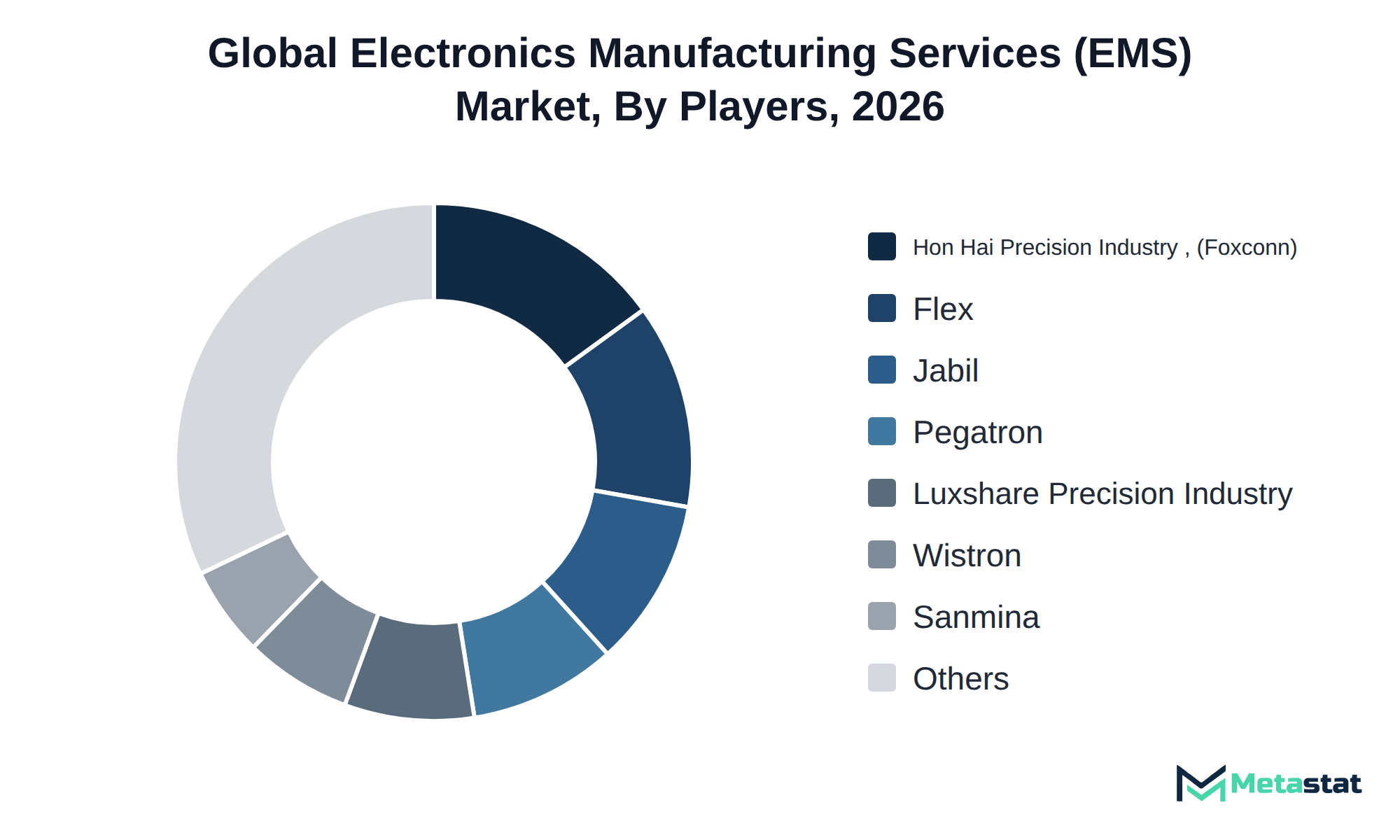
Competition within the Electronics Manufacturing Services (EMS) market manifests through various service types and business models. Companies differentiate themselves based on price, certification, customization, and service quality. For example, original design manufacturers, including Luxshare Precision Industry Co., Ltd. and Pegatron Corporation, focus on providing innovative design solutions that cater to specific buyer requirements, enhancing their appeal in the consumer electronics segment.
Contract manufacturers like Hon Hai Precision Industry Co., Ltd. (Foxconn) and Jabil Inc. emphasize cost efficiency and scalability, appealing to clients seeking high-volume production capabilities. In contrast, firms including Sanmina Corporation prioritize advanced testing and inspection services, ensuring product quality and compliance with industry standards. This strategic positioning enables these companies to capture diverse customer segments throughout the market.
This growth correlates with several key developments in the Electronics Manufacturing Services (EMS) market. Second, the rise of Original Design Manufacturing (ODM) models, expected to reach USD 455.2 billion by 2033, reflects a trend towards collaborative product development, enhancing operational efficiencies. Third, Design and Engineering Services, with a projected value of USD 198.7 billion by 2033, signify a growing emphasis on innovative design processes across various sectors.
However, challenges including supply chain disruptions pose significant risks to achieving the forecasted growth. The EMS market's reliance on efficient logistics and material availability hinders progress if obstacles in transportation and procurement arise, particularly affecting regions like Asia Pacific, which dominates the market with a share of 54.8%. Addressing these variables will be essential for realizing the full potential of the market by 2033.
By Service Type: Electronics Manufacturing and Assembly, Design and Engineering Services, Testing and Inspection Services, Supply Chain Management and Logistics, Aftermarket Repair and Refurbishment
By Business Model: Contract Manufacturing (CM), Original Design Manufacturing (ODM), Hybrid / Turnkey / Other Business Models
By Manufacturing Process: Surface-Mount Technology (SMT), Through-Hole Technology (THT), Mixed-Technology Assembly, Flexible and Rigid-Flex Circuit Assembly, Others (Specialized Electronic and Microelectronic Assembly)
By End-Use Industry: Consumer Electronics, Home Appliances, Information Technology, Telecommunications, Automotive, Industrial Manufacturing, Healthcare, Aerospace and Defense, Energy and Utilities, Others (Retail, Education)
The report strategically identifies and profiles the key market players and analyses their core competencies in each sub-segment of the Electronics Manufacturing Services (EMS) market.
Report Attributes | Details |
Study Period | 2021-2033 |
Base Year | 2025 |
Estimated Year | 2026 |
Forecast Period | 2026-2033 |
Historical Period | 2021-2025 |
Growth Rate | CAGR 9.9% from 2026 to 2033 |
Revenue Unit | USD billion |
Segmentation | By Service Type, Business Model, Manufacturing Process, End-Use Industry, and Region |
By Region | North America (By Service Type, Business Model, Manufacturing Process, End-Use Industry, and Country)
|
Europe (By Service Type, Business Model, Manufacturing Process, End-Use Industry, and Country)
| |
Asia Pacific (By Service Type, Business Model, Manufacturing Process, End-Use Industry, and Country)
| |
South America (By Service Type, Business Model, Manufacturing Process, End-Use Industry, and Country)
| |
Middle East and Africa (By Service Type, Business Model, Manufacturing Process, End-Use Industry, and Country)
|
Find answers to common questions about this report
The Electronics Manufacturing Services (EMS) market size was valued at USD 649.7 billion in 2025.
The market is projected to grow at a CAGR of 9.9% during the forecast period from 2026 to 2033.
The North America Electronics Manufacturing Services (EMS) market size is estimated to reach USD 314.1 billion by 2033.
Electronics Manufacturing and Assembly leads the market with a projected value of USD 902.9 billion by 2033, based on its significant growth rate of 9.5% from 2026.
Consumer electronics manufacturers drive significant growth, reflecting rising consumer demand for advanced technologies and connected devices. The increasing application of automation, robotics, and artificial intelligence in manufacturing processes enhances production efficiency and reduces operational costs.
Price sensitivity among buyers significantly hinders adoption of advanced services, particularly affecting small to medium-sized enterprises that face financial constraints. Rising material costs present a challenge for suppliers, driving up expenses while pressuring them to maintain profitability in a competitive market.
Several factors favor adoption in the Electronics Manufacturing Services (EMS) industry. The increasing complexity of product design drives demand for specialized expertise, while the rising application of advanced technologies enhances production efficiency. the growth of consumer electronics and telecommunications sectors contributes to a favorable environment for EMS adoption.
The Electronics Manufacturing Services (EMS) market is estimated to reach a valuation of USD 1,383.1 billion by 2033.
Key players operating in the Electronics Manufacturing Services (EMS) industry include Hon Hai Precision Industry Co., Ltd. (Foxconn), Pegatron Corporation, Flex Ltd., Jabil Inc., Luxshare Precision Industry Co., Ltd., Wistron Corporation, and Sanmina Corporation.
The Design and Engineering Services segment is expected to grow at a compound annual growth rate of 12.2%, reaching USD 198.7 billion by 2033.
The analysts below cover Electronics and Semiconductor research at Metastat Insights.
LEAD ANALYST
Utkarsh Khirodkar is a Lead Market Research Analyst at MetaStat Insight, specializing in market intelligence, technology sector assessments, and competitive strategy.

PRINCIPAL CONSULTANT - ENTERPRISE AI & EMERGING TECHNOLOGIES
Banking & Finance · Electronics and Semiconductor · Energy and Power · Healthcare IT · Information & Technology · Professional Services
Vijay Gunti is a Principal Consultant at MetaStat Insight, bringing over two decades of experience across enterprise digital transformation, technology strategy, and intelligent systems.

PRINCIPAL CONSULTANT - QUALITY SYSTEMS & COMPLIANCE
Electronics and Semiconductor · Machinery & Equipment · Professional Services
Omkar Phadtare is an Industry Consultant at MetaStat Insight, specializing in quality systems, regulatory compliance, and standards benchmarking to drive data-driven market intelligence and strategic industry research.

ENERGY & INFRASTRUCTURE INDUSTRY CONSULTANT
Automotive and Transportation · Electronics and Semiconductor · Energy and Power · Machinery & Equipment
Saurabh Vasant Ganvir consults for Energy & Infrastructure Industry at MetaStat Insight, specializing in renewable energy, solar EPC, and electric vehicle (EV) infrastructure markets.

LEAD CONSULTANT - COMMUNICATION, TELECOM, AND IT
Electronics and Semiconductor · Information & Technology · Machinery & Equipment · Professional Services
Ravindra Sathe Consultants for Communication, Telecom, and IT at MetaStat Insight. He leads the firm's industry research initiatives across telecommunications infrastructure, digital connectivity, enterprise networking, and emerging information technology domains.
Decarbonizing industrial thermal processes hinges on refrigerant regulations and compressor efficiency limits. Metastat Insights delivered a thorough market analysis that evaluated natural refrigerants like CO2 and hydrocarbons against synthetic low-GWP alternatives. The breakdown of utility incentives and grid capacity constraints across key European manufacturing hubs offered valuable perspective. The follow-up conversation with their sector analysts addressed our specific questions on mechanical vapor recompression systems efficiently.
Assessing 200mm wafer transition schedules and substrate supply bottlenecks requires precise technical intelligence. MetaStat Insight supplied an actionable breakdown comparing planar and trench MOSFET architectures across automotive and industrial drive markets. The regional capacity estimates for Asia-Pacific foundries helped clarify lead-time uncertainties during our strategic planning session. When we needed additional clarification on high-purity raw material sourcing, their analyst team responded with helpful context within twenty-four hours.
Tracking maintenance cycle demand for secondary flight display units and terrain collision avoidance systems across regional jet fleets involves complex aftermarket dynamics. MetaStat Insight provided practical analysis separating airline retrofit programs from OEM forward-fit production schedules in North America and Southeast Asia. The supplier matrix highlighted component obsolescence timelines without resorting to vague generalizations. The dataset served as a dependable reference during our annual program review meetings.
Explore related market intelligence reports worth reading alongside this one.
Starting from
$2950