
LEAD ANALYST
Utkarsh Khirodkar is a Lead Market Research Analyst at MetaStat Insight, specializing in market intelligence, technology sector assessments, and competitive strategy.

Global HVAC Systems Market Size, Share, By Equipment Type (Heating Equipment, Cooling Equipment, Ventilation Equipment), By System Configuration (Centralized HVAC Systems, Ductless and VRF Systems, Packaged and Unitary Systems), By Application (Residential, Commercial, Industrial), By Distribution Channel (Retail Stores, Wholesale Stores, Direct Sales and Online), Industry Analysis, Growth, Trends, and Forecast, 2026-2033
Report ID
MSI-5738
Published
November, 2026
Pages
279 Pages
Format
Historical
Base year
Forecast
Forecast period
Report Details
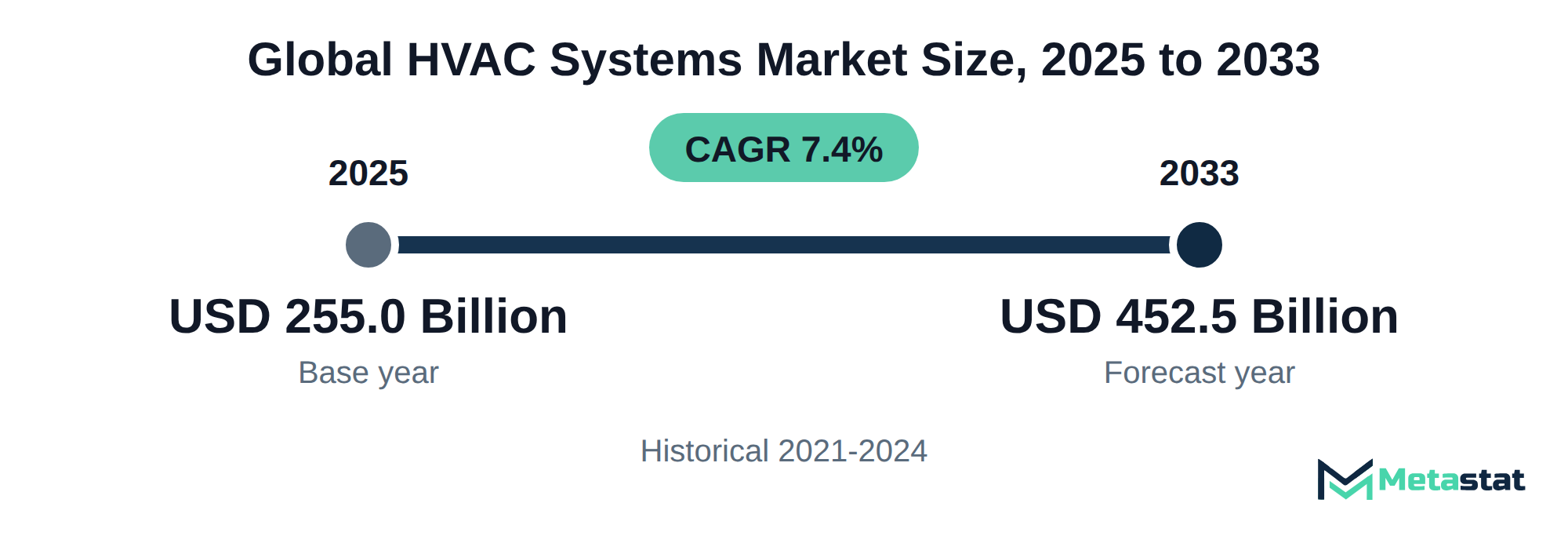
Market Valuation: Valued at $255 Billion in 2025, projected to reach $452.5 Billion by 2033 at a 7.4% CAGR.
Dominant Segment: Cooling equipment leads the HVAC Systems market, driven by the increasing demand for reliable temperature control in warmer climates. This segment is projected to grow significantly, reflecting a strong preference for advanced cooling solutions.
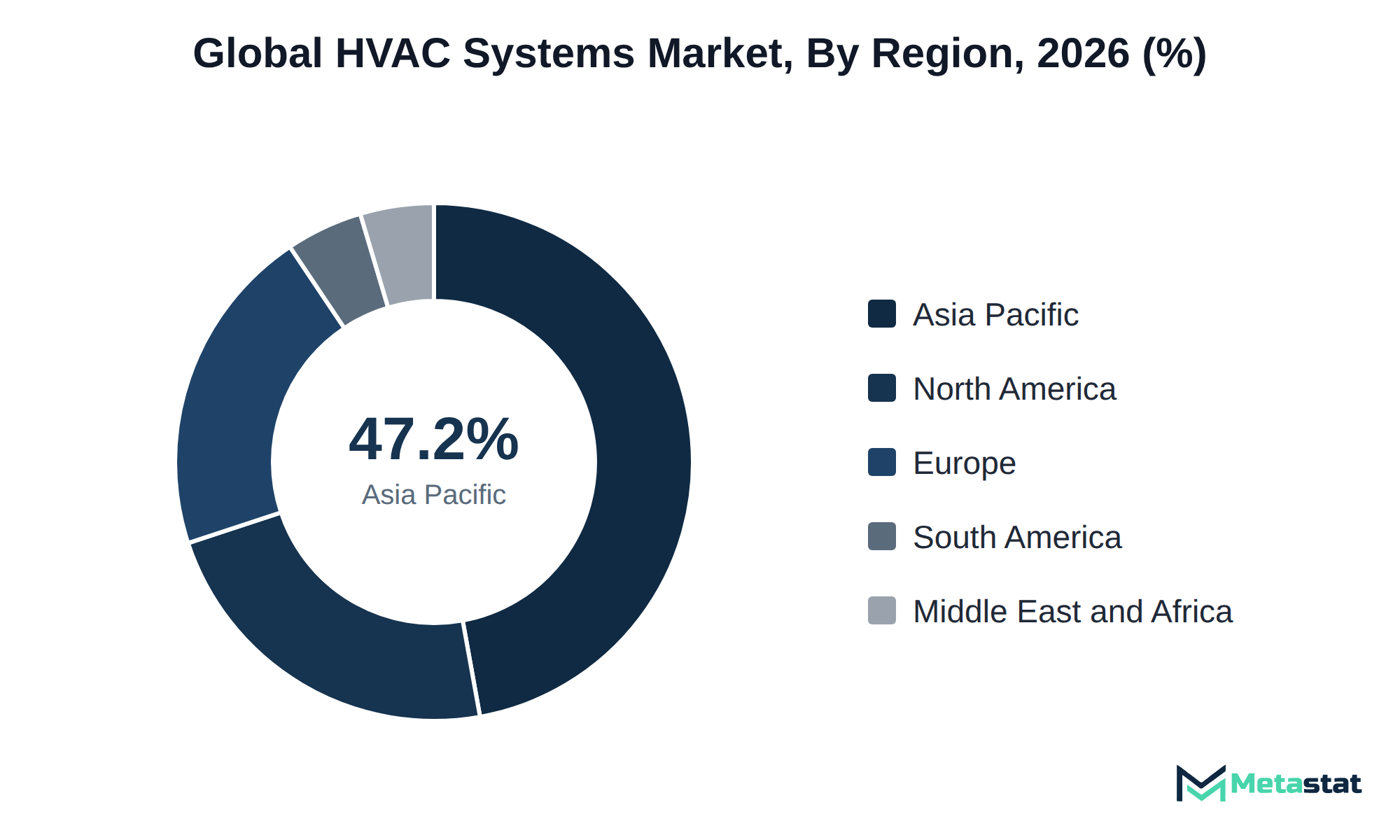
Geographic Lead: The Asia Pacific region dominates the HVAC Systems market, accounting for 47.2% of the total share. This growth is fueled by rapid urbanization and significant investments in infrastructure.
What's Inside: The report provides comprehensive coverage of the HVAC Systems market, including detailed analyses of equipment types, system configurations, applications, and distribution channels. It also includes competitive insights and future market forecasts.
Emerging Opportunities: Ductless and VRF systems are expected to achieve a CAGR of 8.5% through 2033, driven by rising consumer demand for energy-efficient and flexible climate control solutions.
Technological Advancements: Innovations such as variable-speed drives and smart HVAC controls are enhancing energy performance, addressing the growing emphasis on sustainability and operational efficiency.
Choose Your License
Global HVAC Systems Market
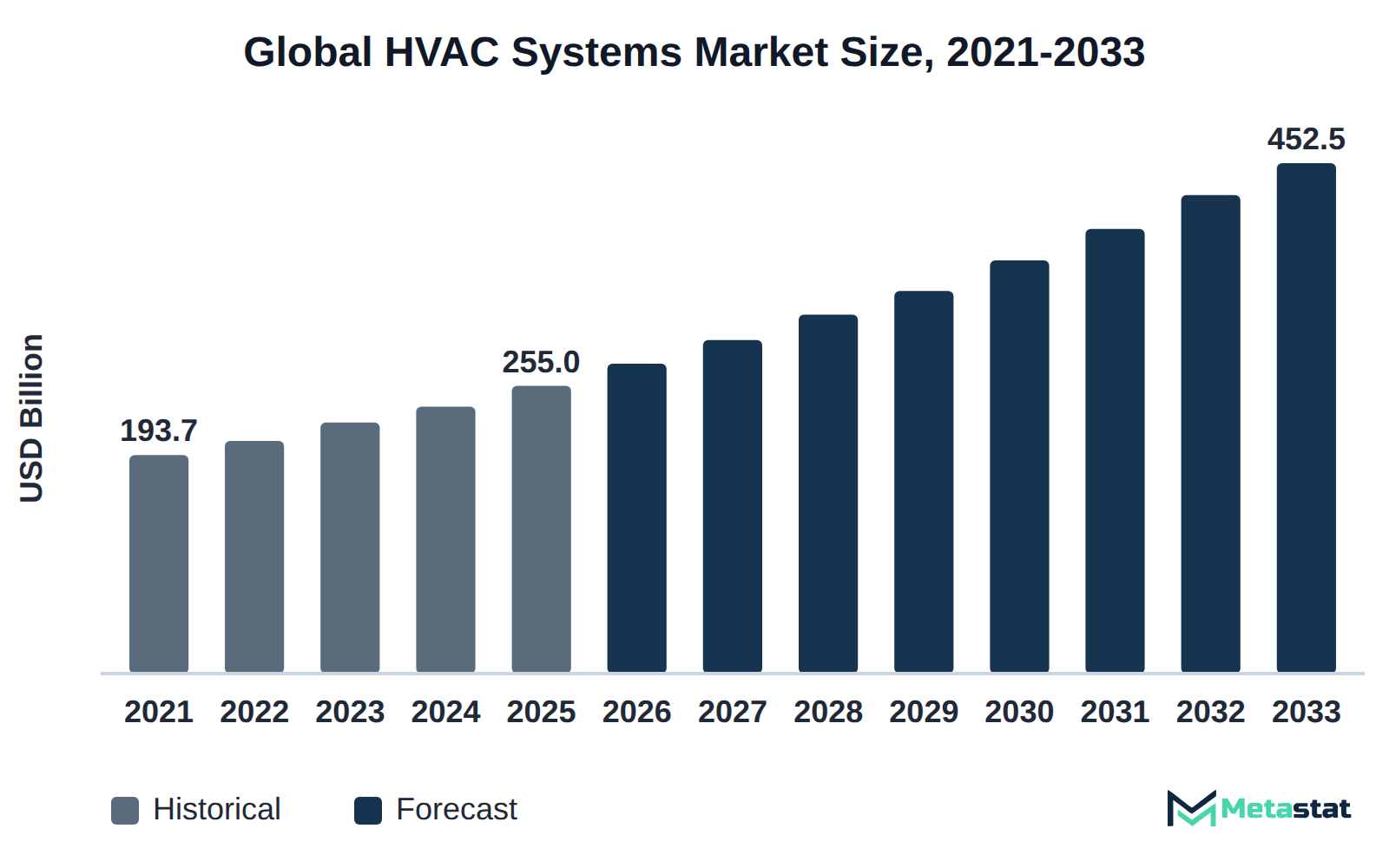
The global HVAC Systems market was valued at USD 255 billion in 2025 and is projected to reach USD 452.5 billion by 2033, growing at a CAGR of 7.4% over the forecast period.
The HVAC Systems market covers heating, cooling, and ventilation equipment that provide essential climate control for residential, commercial, and industrial applications. Buyers invest in these systems to enhance comfort, improve energy efficiency, and reduce operational costs. The growing emphasis on indoor air quality and energy-efficient technologies significantly influences purchasing decisions, driving demand across multiple sectors.
Growth in the market is primarily driven by increasing urbanization and a rising global population, which heighten the demand for effective heating and cooling solutions. Among the segments, cooling equipment holds the most value, reflecting the need for reliable temperature control in warmer climates. The Asia Pacific region accounts for the largest share of the market, with 47.2% of the total, indicating a strong preference for HVAC systems in this rapidly expanding market.
North America holds 22.8% of the market in 2025, with the US leading in 2026. The shift toward smart HVAC technologies further supports market expansion, with consumers and businesses seeking integrated solutions that offer enhanced control and efficiency. This trend illustrates a significant shift in consumer preferences toward modern, technologically advanced systems.
The HVAC Systems market addresses the growing demand for efficient climate control solutions across various sectors. Buyers invest in these systems to enhance energy efficiency, reduce operational costs, and improve indoor air quality. The increasing emphasis on sustainable practices and regulatory compliance drives expenditures, particularly in residential and commercial applications.
Growth in the market is propelled by technological advancements and increasing urbanization, with cooling equipment representing the highest value segment due to rising temperatures globally. Asia Pacific holds the largest market share at 47.2%, reflecting significant investments in infrastructure and expanding urban populations, while North America holds 22.8% of the market in 2025, with the US leading in 2026.
Investment in HVAC Systems is expected to continue rising, driven by compliance with stringent energy efficiency standards and improved environmental sustainability. This investment is essential for businesses and consumers alike, enhancing comfort levels and contributing to overall productivity and health in indoor environments. Indoor conditions are commonly verified with air quality monitoring systems.
The HVAC Systems market experiences a notable shift toward heat pumps, variable refrigerant flow (VRF) systems, and high-efficiency cooling technologies. These advancements in equipment are driven by rising energy efficiency standards and an increasing emphasis on sustainability. Cooling equipment is projected to reach USD 168.2 billion by 2033, reflecting a compound annual growth rate (CAGR) of 8%. This shift is particularly significant in regions where efficiency regulations are becoming stricter, pushing end-users to upgrade their systems. Such upgrades often form part of wider energy retrofit programs.
Heat pumps and VRF systems efficiently manage both heating and cooling, catering to diverse climates while minimizing energy consumption. The growing adoption of these technologies among residential and commercial sectors demonstrates a clear response to the demand for more eco-friendly solutions. Companies focusing on high-efficiency equipment gain a competitive edge as the HVAC Systems market evolves. Investment in these advanced systems enhances operational performance and positions firms favorably in an increasingly environmentally conscious marketplace.
Investment in data centers and green buildings significantly influences purchasing decisions within the HVAC Systems market. These sectors prioritize energy efficiency and sustainability, often leading to the adoption of advanced HVAC technologies that offer lower operational costs and improved environmental performance. In the commercial application segment, the market is projected to reach USD 174.7 billion by 2033, reflecting strong demand for systems tailored to meet stringent energy regulations and sustainability goals.
Buyers engage in long-term contractual agreements with manufacturers or service providers, facilitating financing options for HVAC solutions. Such contracts include performance-based pricing models, ensuring that costs align with energy savings realized over time. The emphasis on efficiency drives manufacturers to innovate, leading to competitive pricing structures that benefit buyers seeking cost-effective solutions.
The focus on energy-efficient HVAC systems positions suppliers strategically within the market, enabling them to cater to the increasing demand from data centers and green buildings. This trend sharpens competition, promoting technological advancements and improving the sustainability of HVAC solutions.
Variable-speed drives are transforming energy performance in commercial HVAC systems, enhancing efficiency and reducing operational costs for facility managers. These drives dynamically adjust the speed of HVAC components, optimizing energy consumption based on real-time demand. This technology addresses the growing emphasis on sustainability and energy efficiency within the HVAC Systems market, where energy costs comprise a significant portion of operational expenses.
In 2023, the HVAC Systems market reached USD 222.5 billion, reflecting a competitive landscape driven by technological advancements. The integration of variable-speed drives aligns with regulatory pressures urging businesses to adopt energy-efficient solutions. The market is projected to grow to USD 452.5 billion by 2033, indicating strong demand for innovative technologies that enhance system performance.
Facility managers who adopt variable-speed drive technology benefit from improved system reliability and reduced wear on equipment. These gains are especially relevant to facilities management, where equipment uptime and maintenance costs are closely tracked. This translates to longer service life and lower maintenance costs, ultimately resulting in higher returns on investment. The commercial adoption of variable-speed drives represents a strategic move to comply with energy regulations and drive operational efficiency in the HVAC Systems market.
Building owners prioritize connected HVAC controls and predictive maintenance to enhance energy efficiency and reduce operational costs. The integration of smart technology leads to better monitoring and management of heating, ventilation, and air conditioning systems. For instance, the HVAC Systems market is projected to reach USD 452.5 billion by 2033, reflecting continued investment in advanced solutions that support these initiatives.
Connected HVAC systems provide real-time data analytics, enabling building owners to optimize energy consumption according to demand. This capability translates to substantial savings on energy bills. Predictive maintenance is essential for identifying potential issues before they escalate, ensuring uninterrupted operation and extending the lifespan of equipment. With the expected growth in the HVAC Systems market, this focus on technology adoption drives demand across various sectors, including residential and commercial applications.
Implementing these advanced controls and maintenance strategies positions building owners to achieve significant cost efficiencies while enhancing occupant comfort. Such innovations increasingly position connected HVAC systems and predictive maintenance as essential components for competitive advantage.
Increasing energy costs drive a significant shift toward energy-efficient HVAC Systems. Residential and commercial buyers prioritize solutions that reduce long-term operational expenses, motivating them to invest in advanced equipment. Rising awareness of climate change and environmental regulations further supports the trend toward sustainable practices. The market is projected to reach USD 452.5 billion by 2033, highlighting the strong demand for energy-efficient systems. This transition enhances the overall value proposition for end-users, leading to greater adoption rates and a competitive environment among suppliers striving to meet evolving consumer expectations.
An ongoing trend toward energy-efficient HVAC Systems originates from the growing residential segment, with buyers focusing on eco-friendly solutions. This demographic shift influences purchasing behavior, compelling manufacturers to innovate and offer products aligned with sustainability goals. The impact on volume is evident, as increased sales of energy-efficient models contribute to market growth, driving innovation and investment within the sector.
Innovations in HVAC technologies significantly enhance system performance and efficiency. Suppliers increasingly integrate advanced features including smart thermostats, predictive maintenance tools, and automation capabilities. These innovations lead to optimized energy consumption, allowing users to achieve lower operational costs and improved comfort levels. Demand for advanced cooling and heating solutions escalates as consumers prioritize energy savings and sustainability. The introduction of IoT-enabled smart devices enables real-time monitoring and control, further driving operational excellence in the HVAC Systems market.
Integration of artificial intelligence in HVAC systems facilitates predictive analytics, leading to proactive maintenance and system management. This capability reduces downtime and extends equipment lifespans, resulting in enhanced customer satisfaction. As technology evolves, the market continues to shift toward interconnected systems in which components interact effectively. Enhanced system efficiency and reduced energy consumption contribute to the market's growth trajectory, positioning it favorably in a competitive landscape. These technological advancements reflect a broader trend toward smarter, more efficient HVAC solutions.
The HVAC Systems market faces significant constraints due to high equipment costs. Buyers in the residential and commercial segments experience slower uptake when initial investment exceeds budgetary limits. High prices for advanced heating and cooling technologies deter smaller businesses and homeowners from upgrading existing systems. Consequently, this results in delayed replacements and reduced demand for new installations. The market sees a more pronounced effect in areas where financing options remain limited, further complicating the purchase decision. While buyers recognize the long-term savings associated with energy-efficient solutions, the upfront financial burden restricts immediate adoption. Overall, the high costs associated with HVAC equipment directly impact purchasing behavior and growth prospects within the market.
Rising input costs present a significant challenge for suppliers operating within the HVAC Systems market. Fluctuations in prices for raw materials, including metals and refrigerants, heighten financial pressure on manufacturers. Suppliers face the necessity of maintaining competitive pricing while dealing with these escalating costs, leading to thinner profit margins. This situation compels many companies to explore alternative sourcing strategies, aiming to secure more stable prices and ensure supply chain reliability.
Suppliers invest in research and development to enhance production efficiency and reduce dependence on volatile raw materials. Innovations in manufacturing processes and materials emerge in response to these challenges, enabling companies to offer competitive pricing without compromising quality. The need for sustainable practices and energy-efficient solutions drives demand within the market, allowing suppliers to differentiate their offerings while addressing cost pressures. Rising input costs are expected to shape the future of the HVAC Systems market.
The HVAC Systems market presents a significant opportunity within ductless and variable refrigerant flow (VRF) systems, projected to achieve a compound annual growth rate (CAGR) of 8.5% through 2033. This growth stems from rising consumer demand for energy-efficient and flexible climate control solutions in residential and commercial applications. The increasing trend toward smaller living spaces and energy-efficient designs drives adoption, particularly in urban areas where installation challenges exist. With homeowners and businesses prioritizing cost-effective and space-saving solutions, ductless systems emerge as an ideal choice. This segment addresses the growing need for tailored climate control solutions while capitalizing on innovations in technology and design. The HVAC Systems market stands to benefit from this shift, with consumers seeking alternatives that enhance comfort and efficiency without significant renovation costs.
The Global HVAC Systems market is segmented based on Equipment Type, System Configuration, Application, and Distribution Channel.
Heating Equipment is valued at USD 133.1 billion in 2026 and is projected to reach USD 213.1 billion by 2033, at a CAGR of 7% during the forecast period. This segment serves various applications, primarily in residential and commercial settings, where it provides essential heating solutions for comfort and safety. Increased demand for energy-efficient heating solutions drives this segment, particularly in regions experiencing colder climates. Electric heaters are one product line serving this demand. Compared to other segments, including Cooling Equipment, which has a higher CAGR of 8%, Heating Equipment exhibits relatively slower growth. The focus on sustainability and regulatory pressures for energy efficiency further influences the heating segment. Adoption of advanced technologies, including smart thermostats and heat pumps, enhances energy savings and improves performance, setting this segment apart from others in the market.
This segment includes air conditioning units, chillers, and refrigeration systems, primarily used in residential, commercial, and industrial applications. Air conditioning compressors are a core component of these units. The ongoing transition toward energy-efficient and eco-friendly cooling solutions drives demand, particularly in urban areas experiencing rising temperatures. Increasing awareness of energy conservation leads to greater investment in advanced cooling technologies. Compared to heating equipment, which expands at a CAGR of 7%, cooling equipment exhibits faster growth, reflecting heightened consumer preference for comfort and climate control in diverse settings. Commercial buyers, in particular, show a strong inclination toward innovative and high-efficiency systems, differentiating this segment from others within the market.
Ventilation Equipment segment is expected to reach USD 71.2 billion by 2033. This segment is essential for providing fresh air circulation and maintaining indoor air quality in various settings, including residential, commercial, and industrial applications. Increasing awareness of air quality and the importance of energy-efficient systems drives interest in this segment. Compared to other equipment types, ventilation equipment experiences a moderate growth rate, with a compound annual growth rate (CAGR) influenced by regulatory standards emphasizing improved air quality. The segment serves distinct buyers including facility managers and homeowners, focusing on energy efficiency and operational performance. The market shows a notable shift toward advanced ventilation systems, reflecting evolving customer preferences and technological advancements in energy management strategies.
Centralized HVAC Systems segment is valued at USD 89 billion in 2026 and is projected to reach USD 142.2 billion by 2033, at a CAGR of 6.9% during the forecast period. This configuration is commonly found in commercial and institutional buildings, offering efficient climate control across multiple spaces. The growing demand for energy-efficient solutions drives the adoption of centralized systems, particularly in large facilities where consistent temperature regulation is crucial. Compared to other segments, including ductless and VRF systems, centralized HVAC Systems exhibit slower growth, reflecting a more traditional approach to climate control. The focus on sustainability and energy savings pushes stakeholders to consider advanced technology integration into these systems, enhancing their overall performance and appeal to cost-conscious users. Overall, the shift toward energy-efficient centralized solutions aligns with broader trends in the HVAC Systems market, emphasizing efficiency while maintaining comfort.
Ductless and VRF Systems segment is estimated to reach USD 132.9 billion by 2033, at a CAGR of 8.5% during the forecast period. This segment serves residential and commercial users by providing efficient climate control solutions tailored to specific needs. Increasing energy efficiency awareness drives demand for these systems, allowing customers to reduce operational costs while improving comfort. Growth in this segment outpaces others within the same category, highlighting its appeal. The pricing structure differs, appealing to budget-conscious buyers while maintaining advanced technology that distinguishes it from centralized HVAC systems. The market's growth reflects an ongoing trend toward energy-efficient installations and rising adoption of smart technologies. Integration of advanced features further enhances user experience, making Ductless and VRF Systems a preferred choice among consumers focused on sustainability and performance.
Packaged and Unitary Systems segment is expected to reach USD 124.2 billion by 2033. This segment delivers integrated solutions for heating and cooling in various settings, primarily serving residential and commercial applications. Demand for these systems often stems from consumer preferences for compact and efficient designs, facilitating installation and maintenance. The segment distinguishes itself through a projected growth rate of 7.4% CAGR, slightly slower than the Ductless and VRF Systems segment, which anticipates 8.5% growth. Packaged and Unitary Systems attract buyers seeking straightforward installations that require minimal space, unlike more complex centralized HVAC systems. Such dynamics contribute to the competitive positioning of this segment within the HVAC Systems market.
Projected to grow at a CAGR of 7.4% during the forecast period, the Others (Window and Portable Systems) segment serves various residential and commercial applications where space constraints are a consideration. These systems are particularly useful in settings requiring temporary or flexible heating and cooling solutions. Demand rises from urban environments with limited installation options, driving decisions among budget-conscious consumers seeking affordable alternatives. This segment's growth is somewhat slower compared to Ductless and VRF Systems, which achieve a CAGR of 8.5%. The price point for window and portable air conditioners typically remains lower than centralized options, catering to a different buyer demographic. The HVAC Systems market reflects evolving consumer preferences for convenience and quick installation, aligning with the trend toward versatile and efficient cooling solutions.
The residential segment is valued at USD 113.4 billion in 2026 and is projected to reach USD 184.7 billion by 2033, at a CAGR of 7.2% during the forecast period. This segment focuses on heating, ventilation, and air conditioning solutions for homes, catering primarily to homeowners and housing developers. Factors driving growth include increasing consumer awareness of energy-efficient systems and rising demand for improved indoor air quality. Compared to other segments, including commercial and industrial, the residential segment experiences steadier growth, driven by the necessity for comfortable living conditions. The market for residential HVAC systems benefits significantly from technological advancements that enhance efficiency and reduce energy consumption, appealing to environmentally conscious consumers.
The commercial segment is estimated to reach USD 174.7 billion by 2033, at a CAGR of 7.6% during the forecast period. This segment includes HVAC systems installed in office buildings, retail spaces, and other commercial facilities requiring climate control. Increasing demand for energy-efficient systems significantly influences purchasing decisions among commercial property owners, with operational costs directly impacting profitability. Technological advancements in HVAC systems enhance energy performance, attracting investments in upgrades. Compared to the residential segment, which has a CAGR of 7.2%, the commercial segment experiences higher growth due to the scaling needs of businesses and regulatory pressures for sustainability. The HVAC Systems market continues to evolve, with commercial applications driving demand for innovative solutions and integrated systems that optimize energy consumption.
The industrial segment is expected to reach USD 93.1 billion by 2033. This segment serves various sectors including manufacturing, construction, and processing industries, where effective temperature and air quality control are critical. Demand is driven by an increased focus on energy efficiency and stringent regulatory standards requiring improved environmental performance. Compared to other application segments, the industrial segment experiences a slower growth trajectory, reflecting the higher initial investments required for HVAC systems tailored to industrial needs. In contrast to the commercial and residential segments, industrial applications typically involve larger system configurations and more complex installations, further impacting cost structures and adoption rates. Consequently, the HVAC Systems market evolves in response to the unique requirements of industrial users, driving innovation in technology development and service delivery.
Retail Stores segment is valued at USD 109.4 billion in 2026 and is projected to reach USD 168 billion by 2033, at a CAGR of 6.3% during the forecast period. This segment serves various retail businesses that require HVAC systems for climate control, enhancing customer comfort and preserving products. Demand in this segment is driven by rising consumer expectations for comfortable shopping environments and stricter building regulations requiring efficient HVAC solutions. Unlike other segments, Retail Stores experiences steady growth due to consistent demand for climate control in commercial spaces. This segment’s growth rate is slower compared to the Commercial segment, which is projected to reach USD 174.7 billion by 2033, reflecting a CAGR of 7.6%. Reliable solutions tailored to retail environments give suppliers in the HVAC Systems market a competitive edge.
Wholesale Stores segment is estimated to reach USD 153.7 billion by 2033, at a CAGR of 7.1% during the forecast period. This distribution channel serves various customers, including contractors, installers, and retailers, providing them with the HVAC equipment necessary for projects and commercial applications. A key demand driver for this segment involves increasing construction activities, which require efficient HVAC solutions. This segment experiences significant growth due to its focus on bulk purchasing, which helps customers save costs on large orders. Compared to other distribution channels, Wholesale Stores present a unique advantage by offering competitive pricing and a diverse range of products. The HVAC Systems market benefits from this channel's ability to quickly adapt to market trends, ensuring that customers receive the latest technologies and solutions.
Direct Sales segment is expected to reach USD 92.4 billion by 2033. This channel serves buyers seeking direct engagement with suppliers, often ensuring tailored solutions and enhanced communication. Growth in this segment is driven by increasing consumer preference for personalized purchasing experiences, particularly in the residential and commercial sectors. Unlike Retail and Wholesale channels, which often compete on price, Direct Sales focuses on relationship-building and customized offerings. This approach allows suppliers to differentiate their products, aiming for higher margins. Higher growth rates in Direct Sales, compared to other distribution channels, reflect evolving market dynamics where consumers prioritize direct interactions with HVAC Systems manufacturers.
Online channels are projected to grow at a CAGR of 8.7% during the forecast period. This segment facilitates the direct purchase of HVAC systems through digital platforms, appealing to both residential and commercial buyers seeking convenience and competitive pricing. Increasing digital adoption among consumers drives this segment, with users increasingly preferring online purchasing options for their HVAC needs. Compared to other distribution channels, the online segment demonstrates faster growth, reflecting shifts in consumer behavior toward e-commerce. Retail and wholesale stores serve different market dynamics, focusing on physical presence and direct interaction, while online channels emphasize accessibility and streamlined purchasing processes. This shift supports the overall growth of the HVAC Systems market, catering to evolving consumer preferences for convenient and efficient purchasing solutions.
Based on geography, the Global HVAC Systems market is divided into North America, Europe, Asia-Pacific, South America, Middle East, and Africa.
North America is a significant contributor to the HVAC Systems market, projected to reach USD 99.4 billion by the end of 2033. The presence of established industries, particularly in the residential and commercial sectors, drives strong demand for advanced heating, ventilation, and air conditioning solutions. Regulatory initiatives aimed at improving energy efficiency further enhance market growth opportunities. In the United States, energy performance standards promote the adoption of innovative HVAC technologies, ensuring compliance with environmental regulations. Canada and Mexico benefit from increasing construction activities, which heighten the need for efficient HVAC systems. By 2025, North America will account for 22.8% of the global market share, reflecting its influence on the HVAC market.
The HVAC Systems market in Europe is expected to experience significant growth driven by increasing demand across various sectors. The commercial and residential sectors in particular contribute to this demand, focusing on energy efficiency and sustainability. Regulatory frameworks aiming to reduce carbon emissions enhance the shift toward modern HVAC solutions. Countries like Germany and France prioritize green building initiatives, promoting advanced technologies in heating and cooling systems. Europe demonstrates a strong position in the global market, reflecting its established infrastructure and investment potential. The regional market is projected to benefit from innovations in system configurations, supporting strong expansion through 2033.
Demand within the HVAC Systems market in Asia-Pacific registers strong growth driven by rapid urbanization and industrialization. Countries including China and India contribute significantly to this expansion due to increasing infrastructure development and rising living standards. The demand for efficient heating and cooling solutions arises from the growing residential and commercial sectors. Effective government initiatives focusing on energy efficiency and sustainability further support market growth. By 2033, the region is projected to capture 47.2% of the global market share, reflecting the region's significant investment in HVAC technologies. The diversity of climates across Southeast Asia influences specific requirements in HVAC systems, with varying needs for cooling and heating solutions. The Asia-Pacific market is expected to expand strongly throughout the forecast period.
Brazil and Argentina represent significant markets for HVAC Systems. Rapid urbanization in these countries drives demand for efficient heating and cooling solutions across residential and commercial sectors. Infrastructure development initiatives, including new housing projects and commercial buildings, contribute to this growth. The HVAC Systems market in South America reflects a share of the global market in 2025, indicating substantial potential for growth. Increased focus on energy efficiency and sustainability influences buyer preferences, prompting investments in advanced technology. Market growth aligns with broader economic recovery and rising disposable incomes, leading to greater adoption of HVAC solutions.
Demand across the HVAC Systems market in the Middle East and Africa is influenced by the growing residential and commercial sectors, particularly in Saudi Arabia and the UAE. Urbanization and economic development in these countries prompt investments in energy-efficient solutions. The market benefits from initiatives aimed at enhancing energy efficiency and reducing carbon emissions, aligning with global sustainability trends. South Africa's focus on improving infrastructure supports the adoption of advanced HVAC technologies. In 2025, the region captures 4.6% of the global market share, reflecting the increasing importance of local markets. The overall market is projected to develop further due to rising urbanization and increased construction activities across various sectors.
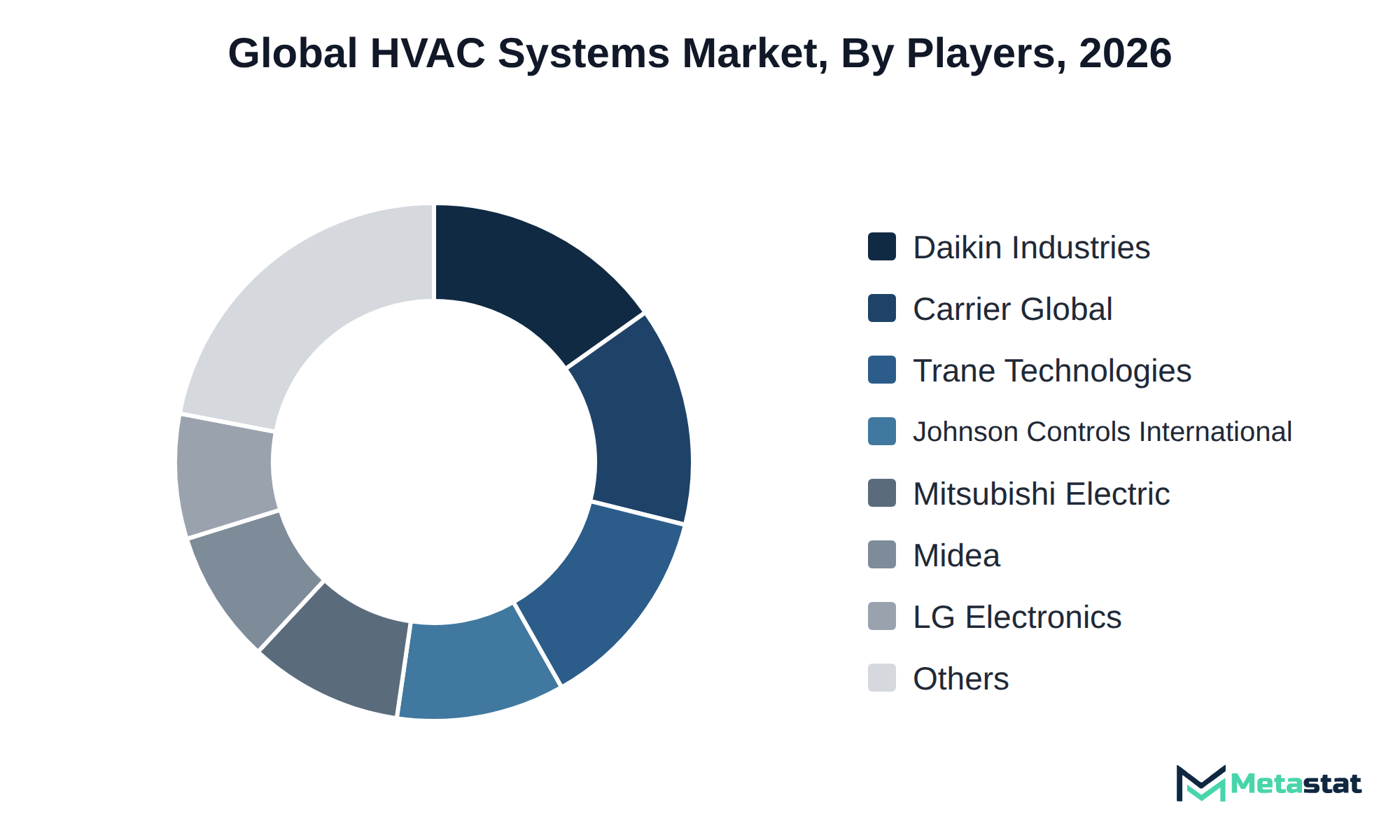
Competition within the HVAC Systems market is shaped by several strategic approaches among major players. Companies differentiate themselves through customization options, pricing strategies, service offerings, and certifications. Buyers prioritize factors including cost, reliability, and energy efficiency when selecting HVAC systems, influencing purchasing decisions across various segments.
Daikin Industries, Ltd. focuses on advanced technology and energy-efficient solutions, appealing to buyers seeking performance and sustainability. Mitsubishi Electric Corporation emphasizes innovative applications in ductless and variable refrigerant flow systems, catering to diverse residential and commercial needs. Carrier Global Corporation uses its extensive network for service and maintenance, enhancing customer support while maintaining competitive pricing within the market.
Achieving this growth relies on several critical developments within the HVAC Systems market. First, increasing demand for energy-efficient solutions drives investments in innovative heating and cooling technologies, benefiting the residential and commercial segments. Second, the expansion of distribution channels, particularly through online platforms, facilitates wider access to HVAC products, contributing to market growth. The online channel is projected to experience a strong compound annual growth rate (CAGR) of 8.7%, addressing consumer preferences for convenience. Potential risks include supply chain disruptions and rising material costs, which could impede growth across regions. For example, the Asia Pacific region, accounting for 47.2% of the market share, relies heavily on timely access to components. Addressing these challenges effectively remains crucial for the HVAC Systems market to reach its projected value by 2033.
By System Configuration: Centralized HVAC Systems, Ductless and VRF Systems, Packaged and Unitary Systems, Others (Window and Portable Systems)
By Application: Residential, Commercial, Industrial
By Distribution Channel: Retail Stores, Wholesale Stores, Direct Sales, Online
The report strategically identifies and profiles the key market players and analyses their core competencies in each sub-segment of the HVAC Systems market.
Report Attributes | Details |
Study Period | 2021-2033 |
Base Year | 2025 |
Estimated Year | 2026 |
Forecast Period | 2026-2033 |
Historical Period | 2021-2025 |
Growth Rate | CAGR 7.4% from 2026 to 2033 |
Revenue Unit | USD billion |
Segmentation | By Equipment Type, System Configuration, Application, Distribution Channel, and Region |
By Region | North America (By Equipment Type, System Configuration, Application, Distribution Channel, and Country)
|
Europe (By Equipment Type, System Configuration, Application, Distribution Channel, and Country)
| |
Asia Pacific (By Equipment Type, System Configuration, Application, Distribution Channel, and Country)
| |
South America (By Equipment Type, System Configuration, Application, Distribution Channel, and Country)
| |
Middle East and Africa (By Equipment Type, System Configuration, Application, Distribution Channel, and Country)
|
Find answers to common questions about this report
The HVAC Systems market size was valued at USD 255 billion in 2025.
The market is projected to grow at a CAGR of 7.4% during the forecast period from 2026 to 2033.
The North America HVAC Systems market size is estimated to reach USD 99.4 billion by 2033.
Cooling Equipment leads the HVAC Systems market with a projected value of USD 168.2 billion by 2033. This segment surpasses others in terms of growth potential and revenue generation.
Key drivers for the HVAC Systems market include increasing energy costs that drive demand for energy-efficient solutions among residential and commercial buyers. rising awareness of climate change and environmental regulations supports the shift toward sustainable practices.
Asia Pacific holds the dominant share of the HVAC Systems market, accounting for 47.2 percent in 2025. This region's significant share reflects its extensive industrial and residential demand.
High equipment costs restrain HVAC Systems market growth, with buyers in residential and commercial segments experiencing slower uptake when initial investments exceed budgetary limits. Rising input costs challenge suppliers, as fluctuations in raw material prices lead to thinner profit margins and necessitate competitive pricing strategies.
Rising consumer demand for energy-efficient and flexible climate control solutions significantly favors adoption in the HVAC Systems market. The increasing trend toward smaller living spaces and energy-efficient designs, particularly in urban areas, drives interest in ductless and variable refrigerant flow systems.
The HVAC Systems market is estimated to reach a valuation of USD 452.5 billion by 2033.
Key players operating in the HVAC Systems market include Daikin Industries, Ltd., Carrier Global Corporation, Trane Technologies plc, Johnson Controls International plc, Mitsubishi Electric Corporation, and Danfoss A/S.
The analysts below cover Machinery & Equipment research at Metastat Insights.
LEAD ANALYST
Utkarsh Khirodkar is a Lead Market Research Analyst at MetaStat Insight, specializing in market intelligence, technology sector assessments, and competitive strategy.

INDUSTRY CONSULTANT - CHEMICALS & ADVANCED MATERIALS
Chemicals and Materials · Machinery & Equipment · Packaging
Amit Gadhekar Consultant for Chemicals and Materials at MetaStat Insight, directing sector-specific intelligence, research, and strategic consulting across global chemical and processing markets.

PRINCIPAL CONSULTANT - QUALITY SYSTEMS & COMPLIANCE
Electronics and Semiconductor · Machinery & Equipment · Professional Services
Omkar Phadtare is an Industry Consultant at MetaStat Insight, specializing in quality systems, regulatory compliance, and standards benchmarking to drive data-driven market intelligence and strategic industry research.

ENERGY & INFRASTRUCTURE INDUSTRY CONSULTANT
Automotive and Transportation · Electronics and Semiconductor · Energy and Power · Machinery & Equipment
Saurabh Vasant Ganvir consults for Energy & Infrastructure Industry at MetaStat Insight, specializing in renewable energy, solar EPC, and electric vehicle (EV) infrastructure markets.

LEAD CONSULTANT - COMMUNICATION, TELECOM, AND IT
Electronics and Semiconductor · Information & Technology · Machinery & Equipment · Professional Services
Ravindra Sathe Consultants for Communication, Telecom, and IT at MetaStat Insight. He leads the firm's industry research initiatives across telecommunications infrastructure, digital connectivity, enterprise networking, and emerging information technology domains.
Tracking ceramic matrix composite adoption in high-bypass aero engines requires strict attention to material qualification cycles and FAA airworthiness testing milestones. The MetaStat Insight team provided a detailed timeline of silicon carbide fiber manufacturing capacity and commercial foundry lead times. Having clear visibility into upstream thermal barrier coating supply helped us stress-test our long-term component procurement strategy.
Transitioning ultra-class mining haul trucks to alternative power requires concrete data on remote hydrogen refueling infrastructure economics. The report evaluated megawatt-scale electrolyzer installation expenses, onsite storage safety mandates, and heavy-duty fuel cell stack degradation under continuous duty cycles. That technical rigor helped our engineers benchmark realistic total operating cost horizons for off-highway fleet decarbonization.
Enterprise zero-trust network rollouts are often slowed down by multi-cloud transit latency and proprietary hardware retirement schedules. This study provided realistic total cost of ownership models comparing cloud-delivered security edge solutions against traditional hardware refreshes. The analysis of contract renewal lengths and software maintenance fees gave us clear visibility into enterprise replacement cycles over the next three to five years.
Explore related market intelligence reports worth reading alongside this one.