
LEAD ANALYST
Utkarsh Khirodkar is a Lead Market Research Analyst at MetaStat Insight, specializing in market intelligence, technology sector assessments, and competitive strategy.

Global Portable Air Conditioner Market Size, Share, By Product Type (Single-Hose Monoblock Portable Air Conditioner, Dual-Hose / Hose-in-Hose Monoblock Portable Air Conditioner, and Portable Split Air Conditioner), By Capacity (Up to 8,000 BTU/h, Above 8,000-10,000 BTU/h, Above 10,000-12,000 BTU/h, Above 12,000-14,000 BTU/h, and Above 14,000 BTU/h), By Application (Residential and Commercial), By Sales Channel (Online Retail, Specialty Appliance & Electronics Retail, Home Improvement & Mass-Merchandise Retail, and Other Offline Retail), Industry Analysis, Growth, Trends, and Forecast, 2026-2033
Report ID
MSI-5399
Published
September, 2026
Pages
277 Pages
Format
Historical
Base year
Forecast
Forecast period
Report Details
Market Valuation: Valued at $3,560.5 Million in 2025, projected to reach $5,549.4 Million by 2033 at a 5.7% CAGR.
Dominant Segment: The Dual-Hose / Hose-in-Hose Monoblock Portable Air Conditioner segment leads the market, driven by increasing consumer awareness of energy efficiency and optimal cooling performance.
Geographic Lead: North America is the leading region, expanding at a CAGR of 5.7% due to rising temperatures and a strong focus on energy-efficient solutions.
What's Inside: This report provides a comprehensive analysis of the Portable Air Conditioner market, including market segmentation, competitive landscapes, and forecasts from 2026 to 2033.
Choose Your License
Global Portable Air Conditioner Market
The global Portable Air Conditioner market was valued at USD 3,560.5 million in 2025 and is projected to reach USD 5,549.4 million by 2033, growing at a CAGR of 5.7% over the forecast period.
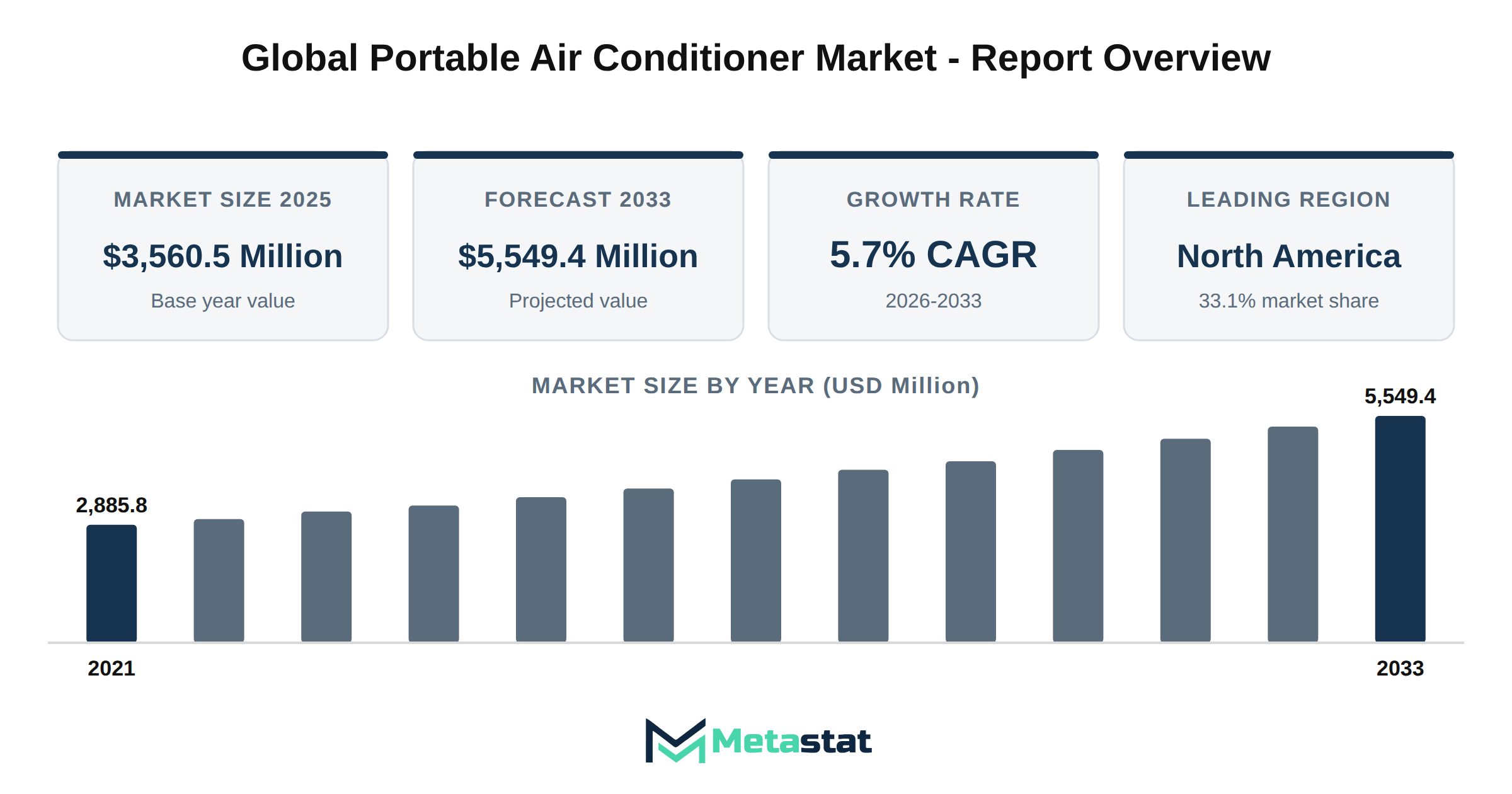
The Portable Air Conditioner market, valued at USD 3,560.5 million in 2025, is projected to reach USD 5,549.4 million by 2033, reflecting a compound annual growth rate (CAGR) of 5.7%. This growth is influenced by rising residential demand driven by increasing temperatures and the need for effective cooling solutions in homes. The trend towards smart portable air conditioners equipped with Wi-Fi connectivity enhances user convenience and control, further driving market expansion.
Adoption of dual-hose and inverter portable air conditioners has gained momentum due to their superior efficiency and cooling capabilities. These units offer enhanced performance, particularly in high-temperature environments. Energy-efficient portable air conditioner technology trends align with consumer preferences for sustainable products, compelling manufacturers to innovate in this area.
The demand for portable air conditioners across apartments and rental housing has surged, owing to urban living spaces often lacking central air conditioning systems. Heatwaves and climate change contribute to heightened demand for portable cooling solutions, prompting consumers to seek adaptable and easy-to-install options. This trend is particularly pronounced in regions experiencing extreme weather conditions.
Commercial spaces increasingly adopt portable air conditioners to address temporary cooling needs or during equipment failures. The growth of online retail has reshaped portable air conditioner sales, providing consumers with greater access to a variety of brands and models. This shift enhances competition and enables manufacturers to reach a broader audience.
The adoption of R290 refrigerant in portable air conditioners reflects the industry's commitment to environmentally friendly practices. This refrigerant offers lower global warming potential compared to traditional options, aligning with emerging energy efficiency regulations and standards in the market. Innovations in compact and low-noise portable air conditioners cater to consumer demands for quieter operation and space-saving designs.
High-capacity portable air conditioners gain traction because consumers seek effective cooling solutions for larger spaces. Competitive strategies among portable air conditioner manufacturers focus on product differentiation, pricing dynamics, and enhanced features to capture market share. The Portable Air Conditioner market anticipates growth opportunities in the Asia Pacific region, driven by rising disposable incomes and urbanization trends.
North America presents a favorable demand outlook for portable air conditioners, supported by increasing awareness of energy-efficient solutions. Europe faces unique regulatory environments shaping market dynamics, necessitating compliance with stringent energy efficiency standards. Supply chain and compressor sourcing trends impact production costs and availability, influencing the overall pricing strategies of portable air conditioner manufacturers.
Product innovation, particularly in smart home integration, influences the future of the Portable Air Conditioner market. Manufacturers increasingly focus on developing advanced features that enhance user experience and energy efficiency. Future growth opportunities in the market will likely stem from continued innovation and adaptation to evolving consumer preferences.
Rising demand in the residential sector significantly influences the Portable Air Conditioner market. Customers increasingly seek effective cooling solutions for their homes, particularly in regions experiencing warmer climates and longer summers. This trend is driven by a growing awareness of comfort and convenience, leading to a shift towards portable air conditioning units that offer flexible installation and mobility.
Smart technology integration, including Wi-Fi connectivity, enhances the appeal of portable air conditioners. Consumers appreciate the ability to control their devices remotely through smartphones and smart home systems. This trend aligns with the increasing demand for home automation and energy management solutions, further driving market growth.
The adoption of dual-hose and inverter models reflects a consumer preference for energy-efficient options. These systems provide improved cooling performance and reduced energy consumption. While energy costs rise, buyers prioritize products that deliver cost savings while maintaining comfort levels, which supports a shift towards these advanced technologies.
Innovations in energy-efficient technology contribute to the market's expansion. Manufacturers focus on developing units that consume less power while maintaining effective cooling capabilities. This commitment to sustainability appeals to environmentally conscious consumers, enhancing competition.
Portable air conditioners find applications in apartments and rental housing, where installation limitations exist. The flexibility of these units allows renters to cool their living spaces without permanent modifications. This convenience drives demand, particularly in urban areas with a high concentration of rental properties.
Climate change and increasing occurrences of heatwaves significantly impact the demand for portable cooling solutions. Extreme weather conditions prompt consumers to seek immediate relief from rising temperatures, driving sales in the market. This urgency highlights the necessity for reliable cooling options during peak summer months.
The commercial sector experiences growing interest in portable air conditioners. Businesses require adaptable cooling solutions for temporary events, outdoor spaces, and areas without fixed air conditioning. The ability to reposition units quickly adds value in dynamic environments, supporting increased adoption in this sector.
Online retail growth reshapes sales channels in the Portable Air Conditioner market. Consumers increasingly prefer purchasing appliances through e-commerce platforms, attracted by convenience and a broader selection of products. This shift compels traditional retailers to enhance their online presence, impacting overall sales dynamics.
The adoption of R290 refrigerant in portable air conditioners aligns with global sustainability efforts. This environmentally friendly refrigerant offers low global warming potential, appealing to consumers prioritizing eco-friendly products. Manufacturers incorporating R290 into their designs position themselves favorably in a market increasingly focused on sustainability.
Energy efficiency regulations and standards influence product development in the market. Compliance with these regulations ensures that manufacturers deliver units that meet consumer expectations for performance and environmental responsibility. Adhering to these standards becomes crucial for maintaining market competitiveness.
Compact and low-noise innovations enhance the usability of portable air conditioners. Consumers favor models that operate quietly, allowing for comfortable use in various settings, including bedrooms and offices. This focus on noise reduction caters to a growing demographic concerned with indoor acoustics.
High-capacity portable air conditioners attract attention due to rising demand for powerful cooling solutions. Larger units capable of cooling extensive spaces become increasingly relevant in both residential and commercial applications. This trend reflects a consumer desire for efficiency and effectiveness in managing indoor climates.
Competitive strategies among manufacturers focus on innovation, quality, and pricing. Companies leverage technology advancements to differentiate their products and capture market share. Strategic partnerships and investments in research and development contribute to a competitive environment, driving continuous improvement in product offerings.
Pricing dynamics in the Portable Air Conditioner market reflect variations in technology, capacity, and brand reputation. Manufacturers face challenges in balancing affordability with quality, impacting consumer purchasing decisions. Understanding these dynamics becomes essential for companies aiming to optimize their market positioning.
Growth opportunities exist in the Asia Pacific region due to rising disposable incomes and urbanization driving demand for portable air conditioners. The increasing prevalence of extreme weather conditions further supports this trend, positioning the region because a significant contributor to market expansion.
The outlook for portable air conditioner demand in North America remains strong. Emphasis on energy efficiency and convenience continues to shape consumer preferences. This trend, coupled with the region's climate challenges, reinforces the market's potential for significant growth.
Regulatory developments in Europe influence market dynamics, with a strong focus on energy efficiency and environmental standards. Compliance with these regulations encourages innovation among manufacturers, ultimately benefiting consumers through improved product offerings.
Supply chain and compressor sourcing trends impact the Portable Air Conditioner market. Manufacturers increasingly seek reliable suppliers to ensure stable production capabilities and meet rising consumer demand. Effective supply chain management becomes critical in maintaining competitiveness and fulfilling market requirements.
Product innovation and smart home integration represent key trends in the Portable Air Conditioner market. Manufacturers prioritize the development of units compatible with smart technology, enhancing user interactions and overall efficiency. This focus on integration aligns with consumer expectations for modern, connected living environments.
Future growth opportunities in the Portable Air Conditioner market arise from ongoing advancements in technology and changing consumer preferences. Companies that adapt to these trends and invest in innovative solutions position themselves for success in a changing environment.
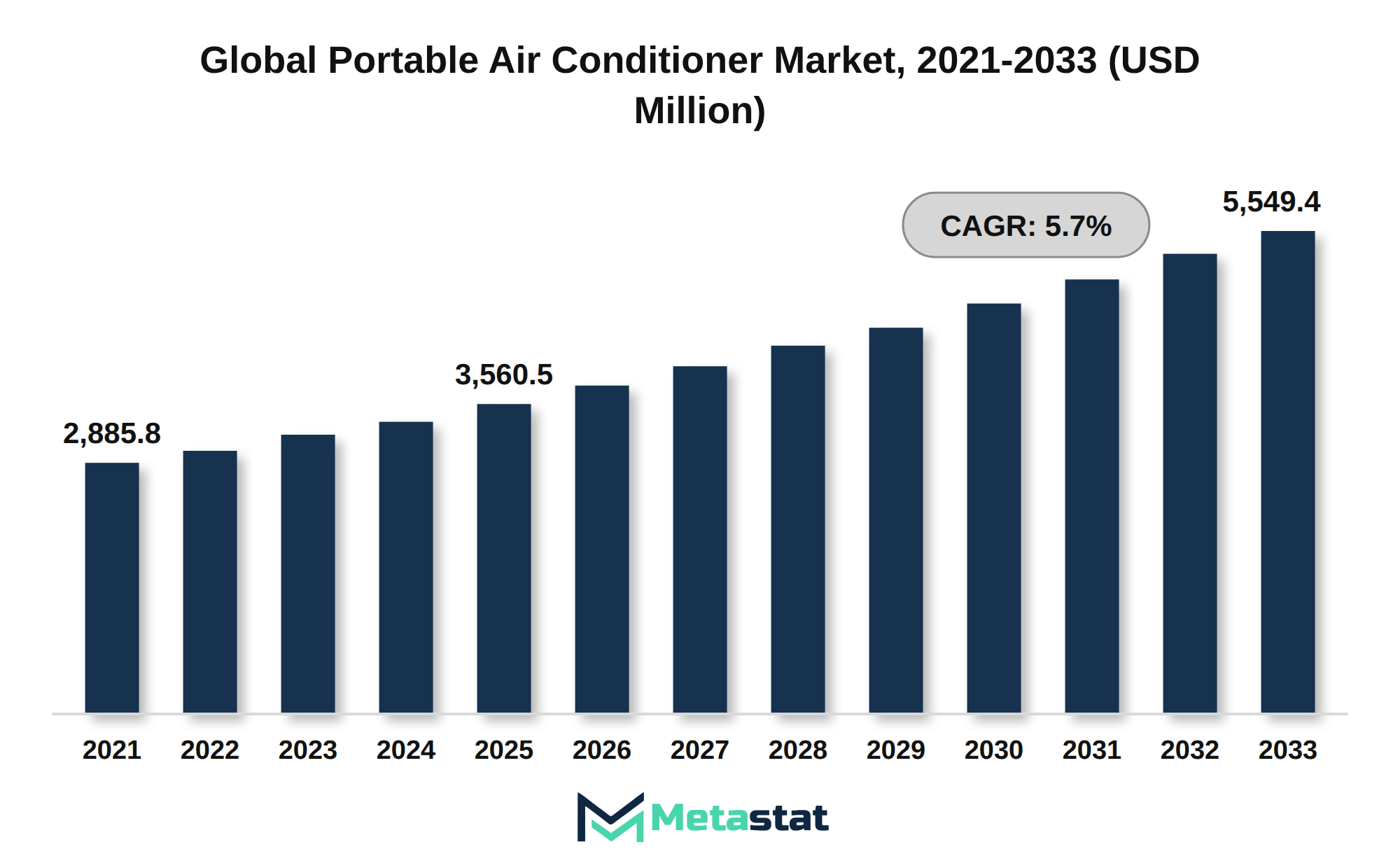
The Portable Air Conditioner market benefits from economic growth, which enhances consumer spending power and increases demand for comfort products. Rising disposable income, urbanization, and lifestyle changes contribute to a stronger market position. Consumers prioritize efficient cooling solutions, particularly in densely populated urban centers where climate conditions create a pressing need for effective air conditioning.
Investment in residential and commercial construction directly impacts the market, with increased building activity generating greater demand for portable air conditioning units. Businesses and households invest in these products to improve comfort and productivity, driving revenue growth. The trend toward energy-efficient appliances gains momentum, aligning with consumer preferences for sustainability and supporting market expansion.
Overall, economic growth creates a favorable environment for the Portable Air Conditioner market, resulting in increased sales and innovation. Companies focusing on meeting evolving consumer needs and enhancing product efficiency will capture significant market share during the forecast period.
Technological advancements significantly enhance the Portable Air Conditioner market, with automation and AI integration improving operational efficiency. Automation of various processes reduces manual labor requirements, ultimately driving cost efficiencies for manufacturers and suppliers. AI technologies enhance predictive maintenance, optimizing unit performance and reducing downtime, which translates to higher customer satisfaction and retention.
Integration of advanced software solutions allows for better monitoring of energy consumption and efficiency, aligning with consumer preferences for sustainable products. Increased adoption of these technologies by manufacturers accelerates market growth, driven by enhanced product functionality and user experience. Overall, technological integration facilitates innovation, allowing the Portable Air Conditioner market to adapt to shifting consumer demands while maintaining competitive pricing and operational effectiveness.
Regulatory compliance challenges significantly impede the growth of the Portable Air Conditioner market. Stringent regulations regarding energy efficiency and environmental standards necessitate significant investments in research and development. Manufacturers absorb these costs, leading to higher retail prices and reduced market competitiveness.
Legal mandates around emissions and refrigerant management create additional operational hurdles for manufacturers. These requirements compel companies to invest in compliant technologies, often resulting in delayed product launches and market entry. Compliance costs divert resources away from innovation and market expansion, limiting overall growth potential.
Macroeconomic headwinds, including inflationary pressures and supply chain disruptions, exacerbate these challenges. Fluctuating costs for raw materials impact pricing strategies. Global supply chain uncertainties delay procurement and production timelines. These factors contribute to a constrained operating environment, hindering the overall development of the Portable Air Conditioner market.
Geopolitical instability disrupts trade routes and hinders the acquisition of critical components. Such disruptions necessitate alternative sourcing strategies, which incur additional costs and logistical complexities. The cumulative effect of these challenges influences market dynamics, leading to slower adoption rates in various regions.
Infrastructure gaps and connectivity deficits in certain areas limit the availability of energy-efficient solutions. These challenges create barriers to entry, particularly in emerging markets, where the lack of established infrastructure deters investment in portable air conditioners. Addressing these issues is essential for facilitating growth in the Portable Air Conditioner market.
Geopolitical tensions contribute to supply chain instability, which directly affects the Portable Air Conditioner market. Trade deficits and tariff friction create barriers for manufacturers, driving up costs and complicating international transactions. This environment challenges companies in sourcing components and raw materials, resulting in unexpected delays and increased operational expenses.
The rising complexity of research and development integrations further complicates market dynamics. Companies face hurdles in aligning technologies and products across fragmented regulatory landscapes, leading to inefficiencies that hinder innovation. Intellectual property protection deficits expose firms to potential risks, deterring investment in new technologies and product development.
Pricing compression becomes a critical concern due to intensified competition. Manufacturers experience margin pressures from rising input costs while maintaining competitive pricing. This dynamic forces companies to either absorb costs or risk losing market share, impacting overall profitability in the Portable Air Conditioner market.
Environmental pressures, including decarbonization mandates and sustainability demands, force businesses to reconsider operational practices. The necessity for compliance with stringent global standards adds additional layers of complexity, requiring significant investments in technology and processes. Companies that do not adapt to these demands face penalties and reputational risks.
Ultimately, these challenges create a complex environment for the Portable Air Conditioner market, where firms navigate geopolitical risks, supply chain disruptions, and shifting regulatory environments to maintain competitive advantages and achieve growth.
Significant opportunities exist in the Portable Air Conditioner market driven by emerging regional demands, particularly in Asia Pacific and North America. Rapid urbanization and increasing temperature fluctuations in these regions enhance the appeal of portable air conditioning solutions. Consumers seek flexibility and convenience, leading to higher adoption rates in both residential and commercial applications.
Infrastructure modernization contributes to market expansion, particularly in developing countries. Upgrading power supply systems and enhancing residential and commercial buildings facilitate the integration of modern air conditioning solutions. This modernization aligns with growing consumer expectations for comfort, directly boosting demand for portable air conditioners.
Technological disruptions occurring within the market advance product capabilities and drive innovation. Next-generation features including smart connectivity, energy efficiency, and compact design appeal to tech-savvy consumers and environmentally conscious buyers. This shift towards digital transformation supports increased sales across diverse sales channels, including online retail, which experiences higher growth rates.
Sustainability imperatives significantly influence purchasing decisions, leading manufacturers to adopt eco-friendly practices. The focus on energy-efficient systems aligns with global initiatives aimed at reducing carbon footprints, enhancing the attractiveness of portable air conditioners. Buyers prioritize products that demonstrate compliance with sustainability standards, positively impacting market growth.
Investment in strategic consolidation through mergers and acquisitions strengthens competitive positioning within the market. Companies leverage synergies to expand product portfolios, improve distribution networks, and enhance customer reach. This consolidation allows firms to adapt to evolving buying behaviors, encouraging more frequent purchases and greater customer loyalty.
Localized supply chains support resilience in the Portable Air Conditioner market, minimizing import dependencies. Manufacturers benefit from reduced operational costs and improved efficiency, allowing them to respond quickly to market demands. Such strategies prove essential for sustaining long-term growth and maintaining competitive advantage.
The Global Portable Air Conditioner market is segmented based on Product Type, Capacity, Application, and Sales Channel.
Valued at USD 2,512.6 million in 2026, the Single-Hose Monoblock Portable Air Conditioner segment is projected to reach USD 3,280.8 million by 2033, representing a CAGR of 3.9% during the forecast period. This segment benefits from increased consumer preference for compact and efficient cooling solutions, particularly in urban environments where space constraints influence purchasing decisions. The growing trend toward energy-efficient appliances drives demand, aligning with consumer awareness of sustainability and cost-saving opportunities attributed to reduced energy consumption.
The segment expansion is supported by advancements in product design and technology, enabling manufacturers to enhance performance while maintaining portability. Innovations including improved refrigerants and smart technologies that allow remote operation appeal to tech-savvy consumers, boosting market penetration. Rising residential air conditioning adoption, particularly in regions experiencing extreme heat, reinforces the segment’s growth trajectory.
Wider distribution channels, including online retail platforms, play a critical role in enhancing accessibility for consumers. Expanding e-commerce capabilities provide consumers with a convenient purchasing experience, influencing overall sales dynamics in the market. Competitive pricing strategies and promotional initiatives stimulate consumer interest, contributing to sustained revenue growth.
Looking ahead, the segment's performance will rely on ongoing technological maturation and the introduction of next-generation upgrades, which promise enhanced efficiency and user experience. Strategic investments by key players into research and development signify a commitment to product evolution, addressing shifting consumer needs and regulatory compliance standards. The overall health of the Portable Air Conditioner market will hinge on balancing these factors, ensuring suppliers maintain competitive advantage while meeting evolving consumer expectations.
Interest in the Dual-Hose / Hose-in-Hose Monoblock Portable Air Conditioner segment is set to accelerate, driven by increasing consumer awareness regarding energy efficiency and optimal cooling performance. This sub-segment is expected to reach USD 1,711.4 million by 2033, at a CAGR of 8.3% during the forecast period. Technological maturation plays a critical role, with advancements in design and functionality enhancing product adoption across diverse applications. The segment's appeal lies in its ability to provide effective cooling solutions in various residential and commercial environments.
Growing demand for energy-efficient appliances significantly influences purchasing decisions, particularly among environmentally conscious consumers. This consumer trend aligns with regulatory compliance standards promoting energy-saving technologies, which support the segment's growth prospects. Rising temperatures attributed to climate change create a pressing need for efficient cooling systems, further fueling the market for portable air conditioners.
Strategic opportunity windows arise from product evolution, with manufacturers focusing on next-gen upgrades including smart connectivity and improved user interfaces. These enhancements not only attract tech-savvy consumers but open avenues for new market entrants. Competition within the portable air conditioner market intensifies, driven by brands innovating to stay relevant, introducing features that improve user experience and energy efficiency.
Raw material sourcing for this segment encounters challenges due to fluctuating costs and supply chain vulnerabilities. These factors compel manufacturers to adopt efficient procurement strategies and diversify their supplier networks. Overall, the Dual-Hose / Hose-in-Hose Monoblock Portable Air Conditioner segment exemplifies a dynamic market characterized by innovation, evolving consumer preferences, and regulatory influences that shape its trajectory.
Demand for Portable Split Air Conditioners reflects the growing preference for efficient cooling solutions across residential and commercial applications. Rising temperatures globally drive consumers toward advanced cooling systems that offer flexibility and convenience. Portable Split Air Conditioners address these needs while providing cost-effective alternatives to traditional units.
Segment growth benefits from technological maturation, leading to improved energy efficiency and performance. Next-generation models feature enhanced cooling capabilities, catering to specific consumer preferences for quiet operation and aesthetic design. These innovations attract environmentally conscious consumers, driven by energy-efficient units that contribute to lower utility costs and reduced carbon footprints.
Regulatory compliance standards push manufacturers to innovate and develop products that meet stringent energy efficiency guidelines. Such compliance supports sustainability efforts and enhances brand reputation in the marketplace. Investments in research and development are expected to increase, positioning companies favorably within the market.
The Portable Split Air Conditioner segment is projected to reach USD 557.2 million by 2033. This projection highlights the segment's significant growth potential, with consumers shifting toward portable and versatile cooling solutions. Strategic opportunity windows exist for manufacturers to capitalize on evolving consumer preferences and expand their market share.
Valued at USD 681.3 million in 2026, the Up to 8,000 BTU/h segment is projected to reach USD 933.4 million by 2033, at a CAGR of 4.6% during the forecast period. Demand for this segment primarily stems from residential applications where energy efficiency and cost-effectiveness remain critical. Key drivers include rising energy costs, which compel consumers to seek efficient cooling solutions, and increasing global temperatures that heighten the need for reliable air conditioning systems.
The expansion of e-commerce provides a robust platform for the segment, enhancing consumer access to various products. Online retailing presents an effective channel for buyers seeking competitive pricing and convenience, with many consumers turning to digital platforms for their cooling needs. The increasing popularity of smart home technologies contributes to product evolution, with consumers favoring portable air conditioners that integrate with existing smart home systems.
Regulatory compliance standards regarding energy consumption continue to shape the segment, leading manufacturers to innovate and enhance their offerings. These regulations promote the development of more sustainable products that comply with international energy efficiency guidelines. Consequently, manufacturers investing in next-generation upgrades position themselves favorably in the market by aligning with consumer expectations and regulatory requirements, ultimately driving growth in the Portable Air Conditioner market.
Growth in the Above 8,000-10,000 BTU/h segment derives from increasing consumer preferences for efficient cooling solutions in residential and commercial applications. A shift towards energy-efficient products influences purchasing decisions, driving demand in this segment. Regulatory standards that promote sustainable technologies further enhance market adoption. While environmental concerns rise, manufacturers focus on innovations and improvements, aligning with consumer expectations for reduced energy consumption and enhanced performance.
The Above 8,000-10,000 BTU/h segment is estimated to reach USD 1,299.1 million by 2033, at a CAGR of 5% during the forecast period. This growth reflects heightened consumer awareness regarding energy efficiency and environmental impact, supporting increased investments in advanced cooling technologies. The Portable Air Conditioner market anticipates further expansion driven by manufacturers developing products that meet evolving consumer needs, ultimately boosting competitiveness in this segment.
Growth in the Above 10,000-12,000 BTU/h segment aligns with increasing consumer demand for more efficient cooling solutions. Rising temperatures and climate change pressures influence purchasing decisions across residential and commercial spaces. The segment benefits from advancements in cooling technology, enabling manufacturers to enhance performance while reducing energy consumption. These innovations contribute to an expanding market presence and positioning within the Portable Air Conditioner market.
Consumer preferences shift towards energy-efficient appliances, driving the adoption of models within this capacity range. Expansion in this segment correlates with a projected market value of USD 1,588.8 million by 2033. Competitive pricing and product versatility play significant roles in shaping the market landscape, enabling suppliers to capture a broader customer base. Regulatory standards promoting energy efficiency reinforce the growth trajectory, enhancing market appeal among environmentally conscious consumers.
Demand for air conditioning solutions continues to grow, particularly for units with higher capacity ratings. The Above 12,000-14,000 BTU/h segment is projected to grow at a CAGR of 6.3% during the forecast period. This growth correlates with rising temperatures and increased consumer awareness regarding energy efficiency and performance. High-capacity units cater effectively to both residential and commercial applications, addressing the need for powerful cooling solutions in larger spaces.
Technological advancements contribute significantly to the evolution of this segment. Innovations in energy-efficient compressor technologies, smart controls, and eco-friendly refrigerants enhance the performance of portable air conditioners in this category. The Portable Air Conditioner market benefits from these advancements, leading to a surge in adoption among consumers seeking both comfort and energy savings.
Regulatory compliance regarding energy consumption standards influences market dynamics, pushing manufacturers to innovate and improve their product offerings. Compliance with these regulations ensures that units not only provide effective cooling but minimize environmental impact. The growing trend towards sustainable and efficient products creates a competitive landscape where companies strive to meet these standards while addressing consumer preferences.
Market players actively pursue strategic opportunities within the Above 12,000-14,000 BTU/h segment. Increased capital investment in R&D facilitates the development of next-generation products that align with evolving consumer expectations. Competition intensifies, and firms focusing on product differentiation through advanced features and sustainability initiatives are positioned to gain significant market share.
Growing consumer awareness regarding energy efficiency drives demand for portable air conditioners with higher capacities, particularly in the Above 14,000 BTU/h segment. This trend aligns with preferences for cooling systems that deliver enhanced performance and reduced operational costs. The residential and commercial sectors increasingly prioritize energy-efficient solutions, leading to a shift in purchasing behaviors towards units that meet higher cooling needs.
Advancements in technology drive innovation in the design and functionality of portable air conditioners, enabling manufacturers to introduce products that cater to specific consumer requirements. Features including smart connectivity and improved refrigerants enhance the customer experience while addressing environmental concerns. These technological enhancements not only attract consumers but strengthen competitive positioning within the market.
Increased construction activities in urban areas stimulate demand for powerful air conditioning solutions, with applications spanning large residential spaces and commercial establishments. While infrastructure development progresses, the need for effective cooling systems escalates, particularly in regions experiencing rising temperatures. This creates a favorable environment for the market, driven by manufacturers responding to these changes by tailoring offerings to meet evolving consumer demands.
Cost structures associated with high-capacity units often reflect the quality of components and technology used. Strategic sourcing of raw materials and efficient manufacturing processes become critical to maintaining competitive pricing while ensuring product reliability. Manufacturers are expected to address pricing volatility, which influences buyer decisions, particularly in price-sensitive markets.
Operational challenges related to logistics and supply chain management impact the market dynamics significantly. Ensuring timely delivery and availability of parts for high-capacity units is essential for meeting consumer expectations. This focus on supply chain resilience supports manufacturers in optimizing production schedules and maintaining consistent product availability.
Investment in research and development remains essential for companies aiming to gain a competitive edge in the Portable Air Conditioner market. This commitment allows organizations to explore innovative solutions and expand their product lines, capturing emerging opportunities within the Above 14,000 BTU/h segment. Strategic partnerships and collaborations with technology providers further enhance product offerings, driving overall market growth.
Valued at USD 2,704.7 million in 2026, the residential segment is projected to reach USD 3,839.1 million by 2033, at a CAGR of 5.1% during the forecast period. Increased disposable income and rising urbanization contribute to growth in the residential sector, driving demand for portable air conditioners. Homeowners prioritize energy efficiency and flexibility, which portable air conditioners provide through their mobility and ease of installation. The trend toward smaller living spaces in urban areas necessitates efficient cooling solutions, enhancing market opportunities.
Technological advancements in energy-efficient designs and smart functionalities promote consumer interest. Next-generation upgrades, including mobile connectivity and smart home integration, enhance product appeal in the residential segment. Consumer preferences reflect a shift toward eco-friendly options, aligning with global sustainability initiatives. This evolution in product offerings presents strategic opportunity windows for manufacturers to innovate and capture market share.
Pricing volatility in raw materials impacts production costs, influencing retail prices of portable air conditioners. Manufacturers face pressures to balance cost structures while delivering competitive pricing. Regulatory compliance standards related to energy efficiency and environmental impact shape product development, compelling firms to adapt. Such dynamics highlight the importance of supply chain resilience in maintaining operational continuity and meeting consumer expectations.
Increasing adoption of Portable Air Conditioners in commercial settings significantly influences market dynamics. The rise is attributed to the need for efficient temperature control in offices, retail spaces, and other commercial environments, particularly in regions with high temperatures. Businesses recognize that effective cooling solutions enhance employee productivity and improve customer experiences, driving demand for reliable air conditioning products.
Technological advancements support the expansion of the segment, with innovations leading to energy-efficient models and smart capabilities. These developments attract commercial buyers focusing on long-term cost savings and sustainability. The Portable Air Conditioner market benefits from evolving consumer preferences towards energy-efficient and environmentally friendly solutions, aligning with corporate sustainability goals.
The commercial segment is projected to reach USD 1,710.3 million by 2033, at a CAGR of 6.9% during the forecast period. The segment's growth reinforces the importance of regulatory compliance regarding energy consumption and emissions, pushing suppliers to innovate further and meet stringent standards. Enhanced competition among manufacturers drives product evolution, which includes features including advanced filtration and integrated smart technology.
Downstream applications of Portable Air Conditioners in commercial settings, including retail and hospitality, contribute to the segment's revenue. Shifts in consumption patterns, particularly in response to climate change, drive the need for portable solutions that offer flexibility and adaptability. While businesses expand and seek efficient cooling options, the market experiences strong growth, indicating a positive outlook for the commercial segment.
Consumer preference for online shopping increasingly influences the Portable Air Conditioner market dynamics. The Online Retail segment is valued at USD 1,519.5 million in 2026 and is projected to reach USD 2,592.1 million by 2033, at a CAGR of 7.9% during the forecast period. Enhanced digital platforms and e-commerce strategies enable greater accessibility and convenience, driving demand among tech-savvy consumers. This shift aligns with broader trends toward online purchasing across various product categories, contributing significantly to segment growth.
The rise of home automation and smart technologies fuels consumer interest in portable air conditioning solutions. Innovations in product design, energy efficiency, and user-friendly interfaces play a crucial role in attracting online consumers. Competitive pricing and promotional strategies enhance the attractiveness of online retail channels, positioning them because preferred shopping avenues.
Challenges in traditional retail, including inventory management and fluctuating in-store traffic, further emphasize the importance of online sales channels. Manufacturers adapt by integrating advanced analytics and customer feedback mechanisms to refine online offerings. While consumers increasingly seek value and convenience, the Online Retail segment demonstrates robust potential within the overall market, reflecting shifting consumption patterns and evolving buyer preferences.
Projected growth in the Specialty Appliance & Electronics Retail segment reflects a shift towards specialized retail channels among consumers. This trend arises from a desire for personalized service and expert advice, often unavailable in larger retail settings. Customers increasingly seek tailored solutions for their cooling needs, which specialty retailers provide by offering a curated selection of Portable Air Conditioners. Valued at USD 1,305.2 million by 2033, this segment experiences a CAGR of 4.1% during the forecast period.
Technological advancements play a significant role in driving sales within this sub-segment. Retailers offering the latest innovations attract tech-savvy consumers seeking efficient and high-performing products. The elevation of consumer expectations regarding product features and functionalities influences retailers to update their inventory. Increasing environmental awareness leads customers to seek energy-efficient models, compelling retailers to emphasize sustainable product options.
The evolving nature of consumer shopping habits highlights the importance of robust online platforms for specialty retailers. A significant portion of sales generates from online channels, where convenience and accessibility enhance customer engagement. This shift towards digital sales channels allows retailers to reach a broader audience, particularly during peak shopping seasons. Investment in e-commerce capabilities remains crucial for capturing market share in the Portable Air Conditioner market.
Competition among players within the Specialty Appliance & Electronics Retail segment intensifies, fueled by the entry of new brands and the continuous introduction of innovative products. Retailers prioritize strategic partnerships with manufacturers to ensure a diverse product lineup, catering to varying consumer preferences and price points. This collaboration enhances the availability of advanced Portable Air Conditioners and enables retailers to maintain a competitive edge in the market.
Growing interest in Home Improvement & Mass-Merchandise Retail reflects a shift in consumer preferences toward accessible air conditioning solutions. This segment benefits from the increasing emphasis on energy-efficient appliances, enhancing its appeal to environmentally conscious consumers. Retailers focusing on this category adapt their offerings to align with trends in sustainable living and practical home improvement. Investment in marketing strategies emphasizing energy savings and performance fuels segment growth.
Projected sales in this segment indicate robust performance, with expectations to reach USD 1,269.7 million by 2033. This growth trajectory highlights significant potential within the Portable Air Conditioner market, driven by evolving consumer behaviors and an expanding product portfolio that includes innovative models tailored for residential applications. Technological advancements in portable air conditioning, including smart features and improved energy efficiency, play a critical role in attracting a diverse customer base.
In the Portable Air Conditioner market, the Other Offline Retail segment exhibits a unique growth trajectory influenced by various factors. This segment targets consumers seeking immediate availability and personal assistance during the purchase process, appealing to those who prefer to physically inspect products before making a decision. The demand for portable air conditioners continues to rise, driven by shifting consumer preferences toward convenience and accessibility.
Promotional activities and in-store demonstrations enhance product visibility and encourage purchases, particularly among customers unfamiliar with portable air conditioning technology. Retailers often highlight energy efficiency and advanced features to attract environmentally conscious consumers, which aligns with broader market trends emphasizing sustainability.
The Other Offline Retail segment is projected to grow at a CAGR of 2.4% during the forecast period. This growth reflects an ongoing adaptation of retailers to changing consumer behaviors, integrating omnichannel strategies to enhance customer experience. With a focus on personalized service and product education, retailers in this segment contribute significantly to overall market revenue while building brand loyalty among consumers.
While manufacturers launch innovative models and upgrade existing product lines, the appeal of portable air conditioners in offline retail settings strengthens. This evolution aligns with the market's increasing emphasis on consumer engagement, positioning the Other Offline Retail segment because a vital component of the overall Portable Air Conditioner market.
Based on geography, the Global Portable Air Conditioner market is divided into North America, Europe, Asia-Pacific, South America, Middle East, and Africa.
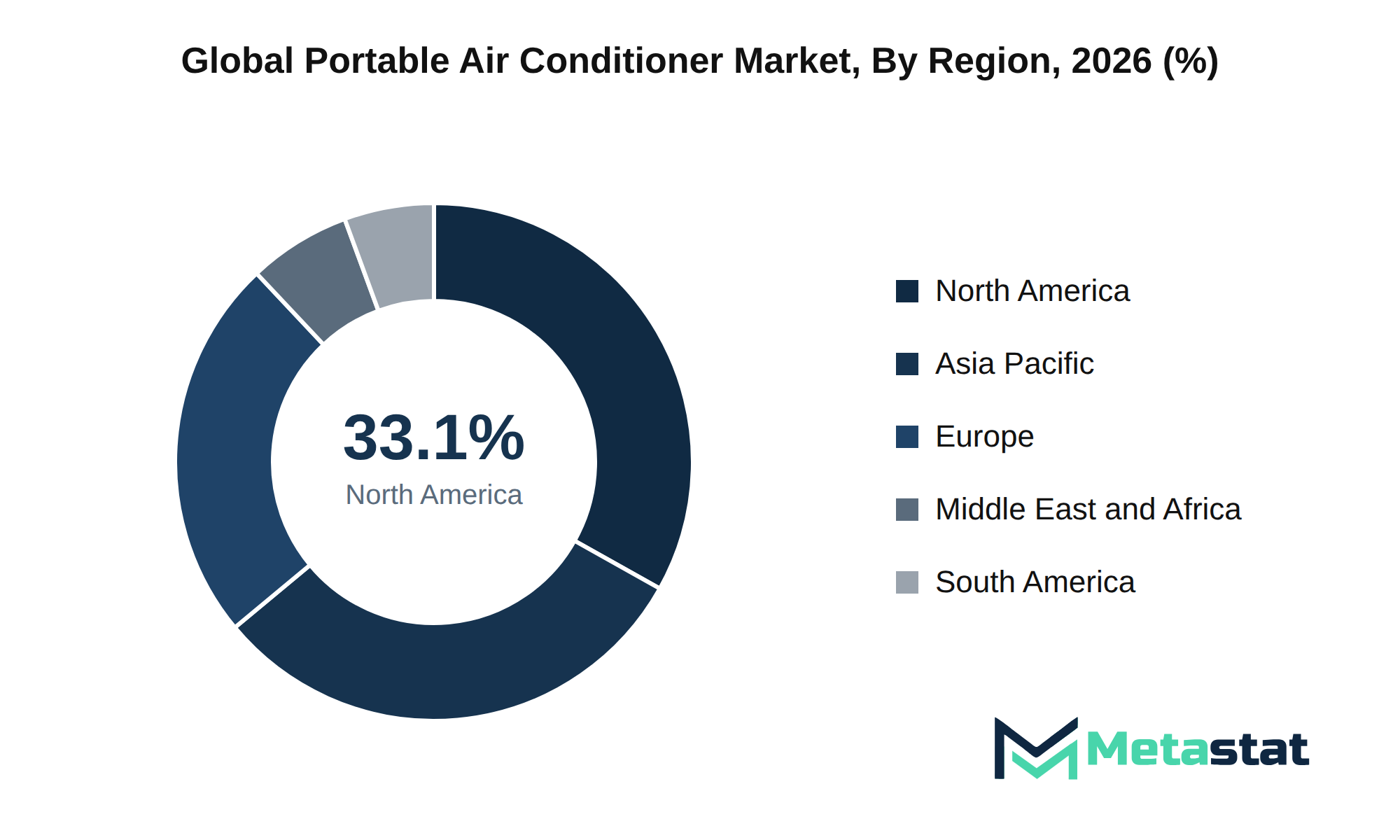
North America accounts for 33.1% of the Portable Air Conditioner market in 2025. This region expands at a CAGR of 5.7% within the forecast period, reaching a market size (TAM) of USD 1,730.3 million by the end of 2033.
The demand for portable air conditioning solutions in North America stems from various factors, including increasing temperatures and a growing focus on energy efficiency. Well-established distribution channels support accessibility, enabling consumers in the United States, Canada, and Mexico to easily acquire the latest models. Regional players introduce innovative products to cater to diverse consumer needs, driving market growth.
Significant opportunities exist for manufacturers to explore advancements in technology, enhancing energy efficiency and user convenience. Emerging trends in online retailing offer an effective platform for product launches and promotions, influencing purchasing decisions. The competitive landscape features several domestic market participants that invest in marketing strategies to capture a larger market share.
Infrastructure modernization across North America contributes positively to market dynamics. Improved energy grid resiliency facilitates greater consumer adoption of portable air conditioning units. Localized manufacturing densities support timely supply chain responses while aligning with regional compliance mandates. The overall outlook for the Portable Air Conditioner market in North America remains promising, with incremental growth vectors enhancing the sector's resilience amid evolving consumer preferences.
The Portable Air Conditioner market in Europe demonstrates considerable potential due to various factors within the region. Countries including Germany, France, the UK, Italy, Spain, and Russia exhibit significant demand for portable cooling solutions, driven by climate variations and increasing consumer comfort expectations.
Infrastructure modernization efforts enhance the accessibility and availability of Portable Air Conditioners, specifically in urban areas. These advancements support the adoption of energy-efficient cooling technologies, which align with growing environmental awareness among consumers.
Emerging market participants in Europe focus on innovative product offerings and enhanced customer service, positioning themselves strategically to capture market share. Localized manufacturing densities and supply chain regionalization initiatives contribute to cost efficiencies, enabling suppliers to respond effectively to regional demand fluctuations.
High-value replacement cycles are prominent in mature markets, with consumers increasingly opting for upgraded models equipped with advanced features. This trend fuels revenue growth and reinforces the competitive landscape of the Portable Air Conditioner market.
Geopolitical fragmentation and changing trade policies influence procurement strategies and vendor consolidation trends, affecting pricing structures and availability. Domestic market participants adapt to these dynamics to maintain competitive advantages in the evolving market.
Energy grid resiliency in the region supports increased demand for energy-efficient cooling solutions, while localized procurement dynamics cater to unique regional preferences and buying behaviors. Such factors contribute to sustained growth opportunities for stakeholders in the Portable Air Conditioner market.
The Portable Air Conditioner market in Asia-Pacific is anticipated to thrive due to rapid urbanization and increasing disposable income among consumers. The demand for portable air conditioning units is driven by the region's hot and humid climate, particularly in countries like India and Southeast Asia. Rising temperatures and the frequency of heatwaves increase the need for efficient cooling solutions.
China and Japan stand out because significant players, with established manufacturing sectors and evolving consumer preferences towards energy-efficient appliances. The presence of major brands enhances the competitive landscape, encouraging innovation and price competitiveness in the market. Local compliance mandates and energy regulations further promote the adoption of energy-efficient portable air conditioners.
Infrastructure modernization initiatives in South Korea and Australia contribute to market growth. These countries invest in upgrading residential and commercial properties. The increasing penetration of e-commerce channels facilitates access to a broader customer base, enhancing sales through online platforms.
Emerging markets within Southeast Asia present valuable opportunities for expansion. The Portable Air Conditioner market is expected to experience growth fueled by low penetration rates in these territories, allowing companies to gain footholds in underrepresented regions. The ongoing trend of urban migration increases the demand for portable cooling solutions, particularly in densely populated areas.
With a share of 5.6% in the global market in 2025, the Portable Air Conditioner market in South America presents distinct characteristics influenced by regional factors. Brazil and Argentina represent significant contributors to market growth, driven by rising temperatures and increasing demand for cooling solutions.
Cultural preferences and local buying behaviors shape the market dynamics, where portable air conditioners are viewed because convenient and cost-effective alternatives to traditional systems. The region experiences a growing trend toward energy-efficient products, aligning with global sustainability goals.
Infrastructure modernization plays a critical role. Urbanization in major cities enhances the need for efficient cooling solutions. Limited penetration in certain areas creates opportunities for market players to expand their presence through targeted strategies and localized offerings.
Competitive dynamics reflect a mix of domestic players and international brands, with companies innovating to meet the specific requirements of South American consumers. This competition encourages price adjustments and improved service delivery, enhancing the overall value proposition of the market.
In the Middle East and Africa, the Portable Air Conditioner market accounts for a 6.4% share of the global market in 2025. Saudi Arabia and the UAE represent key markets, driven by rapid urbanization and a growing demand for energy-efficient cooling solutions. Increasing temperatures and humidity levels in these regions have heightened the need for effective climate control options, influencing consumer preferences toward portable air conditioning units.
South Africa is emerging because a significant player in the market, driven by a combination of rising disposable incomes and a growing middle class. The demand for energy-efficient cooling solutions has spurred investments in infrastructure modernization, allowing for enhanced distribution networks and localized manufacturing. These factors contribute to improving market penetration across the region.
Localized manufacturing initiatives play a crucial role in enhancing supply chain efficiencies and reducing costs. Domestic vendors collaborate with international brands to address regional needs, thereby strengthening competitive dynamics. This strategy encourages vendor consolidation trends, enabling a more streamlined product offering tailored to local preferences.
Geopolitical factors and trade considerations influence market dynamics, while cultural nuances shape the B2B buying behaviors seen across varying countries. With a focus on sustainability, energy-efficient solutions are becoming increasingly desirable across all customer segments, further supporting the Portable Air Conditioner market's growth potential in this region.
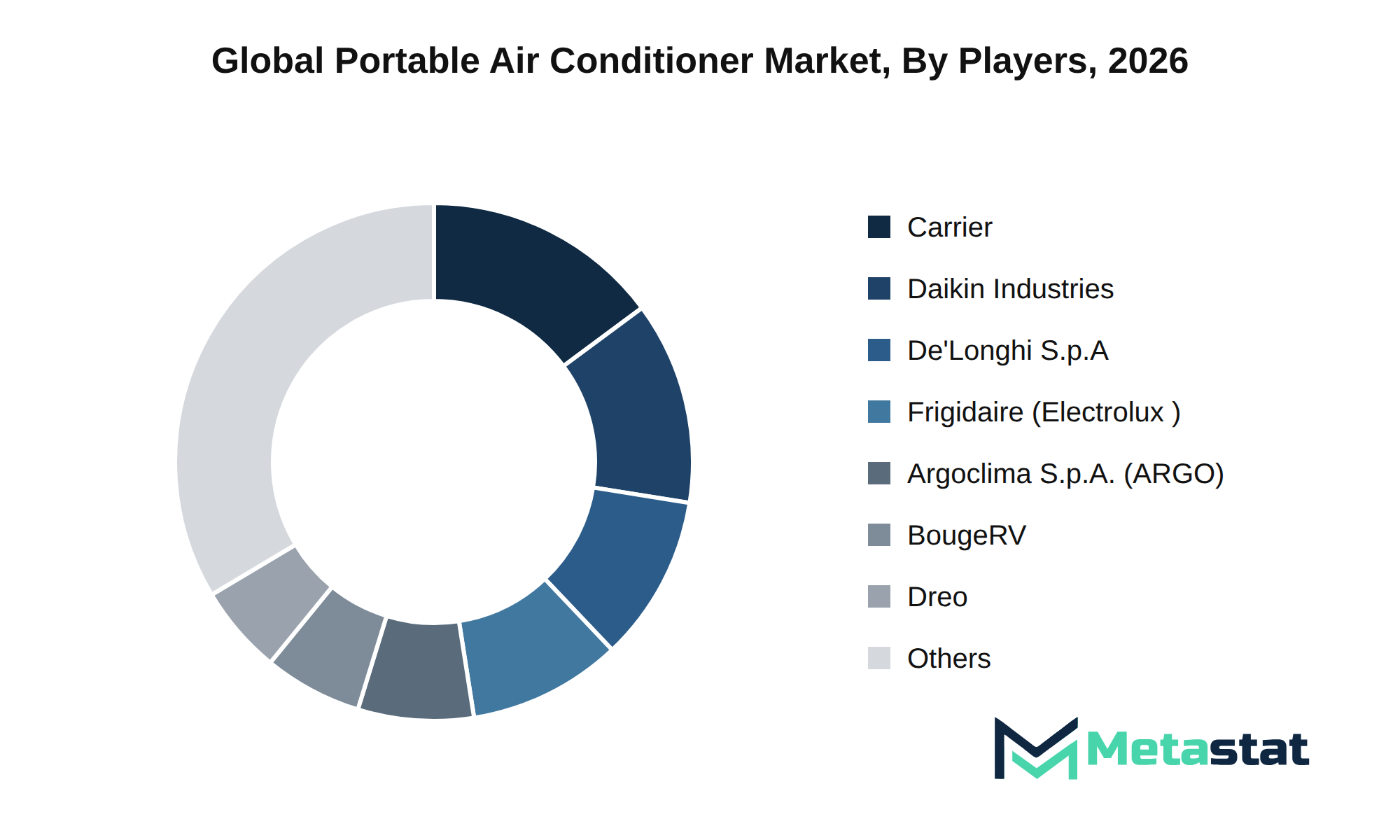
The Portable Air Conditioner market features a competitive landscape shaped by various strategic behaviors among key players. Companies including Daikin Industries Ltd., Carrier Corporation, and LG Electronics, Inc. focus on product differentiation through advanced technology and innovative designs, enhancing their market presence. These firms invest considerably in research and development to establish unique offerings that address customer needs and preferences, which improves brand equity.
Pricing architectures play a critical role in the market, with companies like Friedrich Air Conditioning and De'Longhi S.p.A. employing aggressive pricing strategies to capture market share. They leverage their supply chain dominance and procurement leverage to maintain competitive pricing, which is essential for attracting cost-sensitive consumers.
Collaborative efforts through strategic alliances and joint ventures allow players to enhance their market reach and operational efficiencies. Partnerships between companies including Honeywell International Inc. and smaller innovators facilitate the integration of new technologies into existing product lines. These collaborations contribute to a comprehensive ecosystem that promotes customer retention strategies and strengthens market positioning.
The market faces challenges from barriers to entry, including significant capital requirements for technological development and established brand loyalty among consumers. Startups and new entrants strive to disrupt the market by offering innovative solutions, yet they contend with the strong competitive advantage held by established players. Overall, the competitive outlook in the Portable Air Conditioner market indicates continued evolution driven by innovation, strategic partnerships, and a focus on customer-centric solutions.
Market size is forecast to rise from USD 3,560.5 million in 2025 to over USD 5,549.4 million by 2033. This growth reflects a compound annual growth rate (CAGR) of 5.7%. Various factors influence this trajectory, including macroeconomic conditions, evolving consumer preferences, and advancements in technology integration.
In a bull case scenario, significant investments in next-generation technologies, including smart home integration and enhanced energy efficiency, are expected to accelerate market growth. Strategic capital allocation toward research and development (R&D) could lead to innovative products that address unmet consumer needs. Conversely, a bear case emerges from global supply chain constraints and regulatory challenges that could hinder production timelines and market access.
The Portable Air Conditioner market experiences shifting demand based on core industry maturation and structural consumption shifts. Rising urbanization and changing climate patterns contribute to increased adoption in residential and commercial segments. Regulatory evolution and policy enforcement around energy efficiency standards create compliance milestones that manufacturers navigate to maintain competitiveness.
Geopolitical realignments and trade corridor adjustments affect supply chain dynamics, influencing production costs and distribution strategies. Companies focused on aligning their operations with evolving trade policies gain a competitive edge. Emerging white-space opportunities exist for innovative players targeting high-growth pockets within underserved markets, particularly in developing regions.
Future growth recommendations include prioritizing executive-level strategic imperatives to enhance product differentiation and market positioning. Establishing defensibility roadmaps that mitigate risks associated with regulatory pressures and external market forces will be crucial for sustained success in the Portable Air Conditioner market.
The report strategically identifies and profiles the key market players and analyses their core competencies in each sub-segment of the Portable Air Conditioner market.
Report Attributes | Details |
Study Period | 2021-2033 |
Base Year | 2025 |
Estimated Year | 2026 |
Forecast Period | 2026-2033 |
Historical Period | 2021-2025 |
Growth Rate | CAGR 5.7% from 2026 to 2033 |
Revenue Unit | USD million |
Segmentation | By Product Type, Capacity, Application, Sales Channel, and Region |
By Region | North America (By Product Type, Capacity, Application, Sales Channel, and Country)
|
Europe (By Product Type, Capacity, Application, Sales Channel, and Country)
| |
Asia Pacific (By Product Type, Capacity, Application, Sales Channel, and Country)
| |
South America (By Product Type, Capacity, Application, Sales Channel, and Country)
| |
Middle East and Africa (By Product Type, Capacity, Application, Sales Channel, and Country)
|
Find answers to common questions about this report
The Portable Air Conditioner market size was valued at USD 3,560.5 million in 2025, according to the Metastat Insights study.
The Portable Air Conditioner market is projected to grow at a CAGR of 5.7% during the forecast period from 2026 to 2033.
The North America Portable Air Conditioner market size is estimated to reach USD 1,730.3 million by 2033.
The Single-Hose Monoblock Portable Air Conditioner segment leads the Portable Air Conditioner market, with a projected value of USD 3,280.8 million by 2033. This segment's growth reflects a compound annual growth rate (CAGR) of 3.9% from 2026 to 2033.
Economic growth enhances consumer spending power, increasing demand for portable air conditioners. Rising disposable income, urbanization, and lifestyle changes contribute to this demand, particularly in densely populated areas where efficient cooling solutions are essential. investment in residential and commercial construction drives further market growth.
North America holds the dominant share of the Portable Air Conditioner market, with a value of USD 1,730.3 million projected for 2033, representing 33.1 percent of the total market.
Regulatory compliance challenges significantly impede growth in the Portable Air Conditioner market. Stringent regulations regarding energy efficiency and environmental standards necessitate substantial investments, which lead to higher retail prices and reduced competitiveness. macroeconomic headwinds, including inflation and supply chain disruptions, further complicate the operating environment, hindering overall market development.
Economic growth enhances consumer spending power, increasing demand for portable air conditioners. Rising disposable income, urbanization, and lifestyle changes contribute to a stronger market position, particularly in densely populated urban centers where effective cooling solutions are essential. Investment in residential and commercial construction further drives product adoption.
The Portable Air Conditioner market is estimated to reach a valuation of USD 5,549.4 million by 2033.
Key players operating in the Portable Air Conditioner market include Carrier Corporation, Daikin Industries Ltd., Friedrich Air Conditioning, Frigidaire (Electrolux Group), Honeywell International Inc., LG Electronics, Inc., Midea Group Co. Ltd., and Panasonic Holdings Corporation.
The analysts below cover Consumer Goods research at Metastat Insights.
LEAD ANALYST
Utkarsh Khirodkar is a Lead Market Research Analyst at MetaStat Insight, specializing in market intelligence, technology sector assessments, and competitive strategy.
Assessing 200mm wafer transition schedules and substrate supply bottlenecks requires precise technical intelligence. MetaStat Insight supplied an actionable breakdown comparing planar and trench MOSFET architectures across automotive and industrial drive markets. The regional capacity estimates for Asia-Pacific foundries helped clarify lead-time uncertainties during our strategic planning session. When we needed additional clarification on high-purity raw material sourcing, their analyst team responded with helpful context within twenty-four hours.
Tracking maintenance cycle demand for secondary flight display units and terrain collision avoidance systems across regional jet fleets involves complex aftermarket dynamics. MetaStat Insight provided practical analysis separating airline retrofit programs from OEM forward-fit production schedules in North America and Southeast Asia. The supplier matrix highlighted component obsolescence timelines without resorting to vague generalizations. The dataset served as a dependable reference during our annual program review meetings.
Evaluating secondary resin quality across post-consumer packaging streams requires reliable technical segmentation. MetaStat Insight delivered an objective assessment that distinguished between extrusion-grade flake pricing and optical sorting throughput limitations across Western Europe. The competitive positioning breakdown for licensed depolymerization technology providers answered several questions during our feedstock feasibility audit. Their team clarified regional trade restrictions on mixed plastic scrap quickly when our team submitted follow-up requests.
Explore related market intelligence reports worth reading alongside this one.