
LEAD ANALYST
Utkarsh Khirodkar is a Lead Market Research Analyst at MetaStat Insight, specializing in market intelligence, technology sector assessments, and competitive strategy.

Global Medical Titanium Mesh Market Size, Share, By Product Type (Titanium Mesh Plates, Titanium Mesh Sheets, and Titanium Mesh Discs), By Application (Cranial Implants, Dental Implants, Spinal Implants, Maxillofacial Implants, and Others), By End-User (Hospitals, Ambulatory Surgical Centers, Specialty Clinics, and Others), Industry Analysis, Growth, Trends, and Forecast, 2026-2033
Report ID
MSI-4642
Published
April, 2026
Pages
320 Pages
Format
Report Details
Choose Your License
Medical Titanium Mesh Market
Global Medical Titanium Mesh market size is valued at USD 453.8 million in 2025 and projected to grow at a CAGR of 6.2% during the forecast period, reaching USD 733.8 million by 2033.
North America holds 35.5% in 2025 with US leading the market share in 2026.
Titanium Mesh Plates segment account for a market share of 48.3% in 2025.
Key trends driving growth: Rising incidence of trauma and orthopedic disorders requiring reconstructive surgeries, along with increasing adoption of patient-specific implants enabled by 3D printing technologies.
Opportunities include growing demand for customized and minimally invasive surgical solutions.
Key insight: Rising preference for biocompatible and high-strength materials in orthopedic, dental, and reconstructive surgeries is steadily driving adoption of titanium mesh solutions globally.
Global Medical Titanium Mesh market is gaining steady momentum owing to rising use of advanced reconstructive materials across cranial, maxillofacial, orthopedic, and dental procedures. Titanium mesh remains widely preferred for its biocompatibility, high strength-to-weight ratio, corrosion resistance, and contouring flexibility, which support precision in complex surgical reconstruction. Rising incidence of traumatic injuries, congenital deformities, and bone defect repair procedures continues to strengthen product adoption across hospitals and specialized surgical centers.
Ongoing advancement in implant manufacturing, particularly in 3D printing and patient-specific design, is reshaping the competitive landscape of the Global Medical Titanium Mesh market. Medical device companies are increasingly focusing on customized mesh structures that align with anatomical requirements and improve surgical fit, procedural efficiency, and long-term outcomes. Increasing integration of digital imaging, preoperative planning, and precision-guided reconstruction will support broader use of titanium mesh solutions across advanced healthcare systems.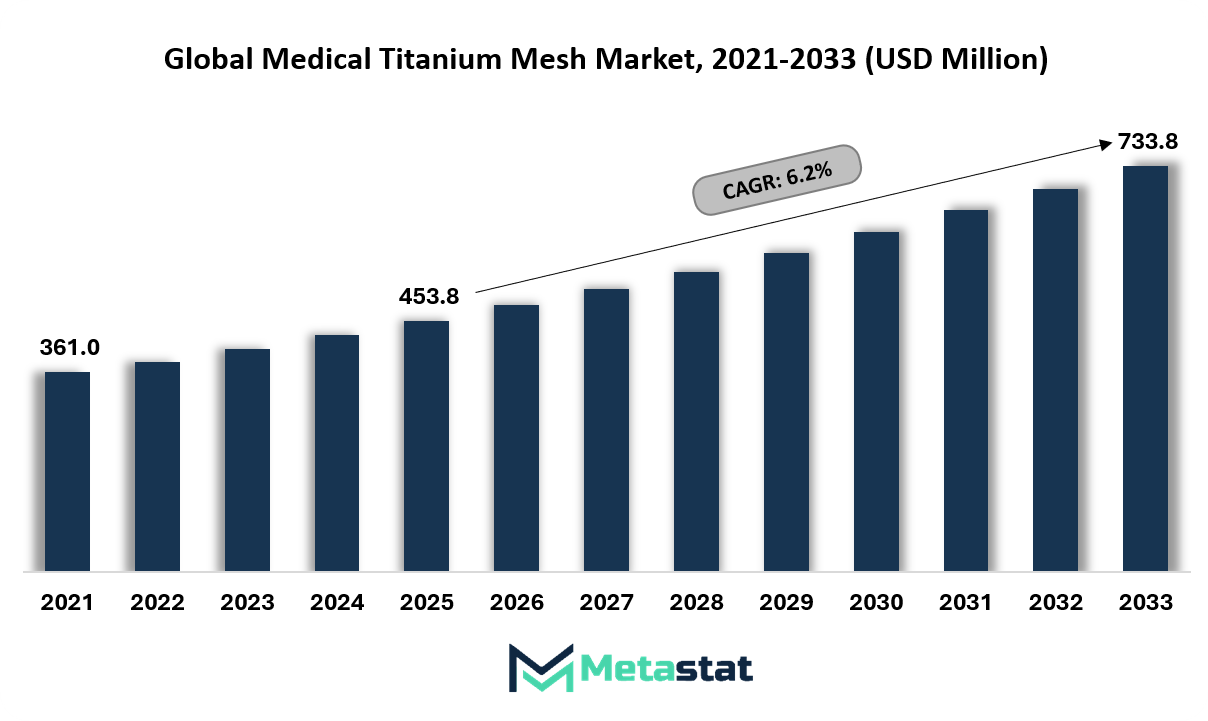
Rising incidence of trauma and orthopaedic disorders requiring reconstructive surgeries.
Rising incidence of trauma and orthopedic disorders is supporting sustained demand for medical titanium mesh across reconstructive procedures. Road accidents, sports injuries, cranial trauma, and age-related skeletal conditions are increasing the volume of surgeries requiring durable and biocompatible implant materials. Titanium mesh continues to gain preference in these procedures owing to its structural stability, lightweight properties, and compatibility with human tissue, which together support reliable surgical outcomes.
Increasing adoption of patient-specific implants enabled by 3D printing technologies
Increasing adoption of patient-specific implants enabled by 3D printing technologies is accelerating product innovation across the market. Advanced design and additive manufacturing processes support the development of customized titanium mesh implants tailored to patient anatomy, improving fit, surgical precision, and postoperative recovery. Wider use of digital surgical planning and personalized implant fabrication is strengthening the role of titanium mesh in complex reconstructive interventions.
High cost associated with titanium implants and surgical procedures
High cost associated with titanium implants and related surgical procedures remains a key challenge for market expansion. Material processing requirements, customization needs, and specialized surgical expertise increase the overall treatment cost, which limits wider penetration across price-sensitive healthcare settings. Budget constraints in developing markets and reimbursement limitations in selected healthcare systems continue to restrict adoption despite strong clinical benefits.
Risk of post-surgical complications such as infection or implant-related issues
Risk of post-surgical complications such as infection, implant exposure, and revision-related issues remains an important concern across reconstructive applications. Clinical success depends not only on implant quality but also on surgical precision, sterilization standards, and patient-specific healing conditions. Manufacturers are therefore under continued pressure to improve implant design, surface treatment, and clinical validation in order to strengthen long-term safety and performance.
Growing demand for customized and minimally invasive surgical solutions
Growing demand for customized and minimally invasive surgical solutions is creating strong opportunity across the Global Medical Titanium Mesh market. Surgeons are increasingly adopting lightweight, contourable, and patient-specific materials that support procedural precision, reduced operating time, and improved recovery pathways. Continued advancement in implant design, digital planning, and specialized reconstruction techniques will expand the application scope of titanium mesh over the forecast period.
The Global Medical Titanium Mesh market is classified based on Product Type, Application, and End-User.
Titanium Mesh Plates segment is valued at USD 232.5 million in 2026 and is projected to reach USD 335.1 million by 2033, at a CAGR of 5.4% during the forecast period.
Titanium Mesh Plates segment holds a leading position in the market owing to its broad use in cranial and maxillofacial reconstruction procedures that require structural support and fixation stability. Strong biocompatibility, corrosion resistance, and ease of contouring continue to support product adoption across complex surgical applications. Manufacturers are focusing on improved shaping characteristics and lightweight configurations to enhance intraoperative handling and clinical outcomes.
Titanium Mesh Sheets segment is valued at USD 149.9 million in 2026 and is projected to reach USD 235.3 million by 2033, at a CAGR of 6.7% during the forecast period.
Titanium Mesh Sheets are widely used in procedures that require flexible shaping and broader anatomical coverage. Product demand is supported by rising adoption in cranial, dental, and orthopedic reconstruction where surgeons require materials that offer adaptability without compromising durability. Continued improvement in fabrication precision and uniform thickness is strengthening the role of titanium mesh sheets across customized surgical treatments.
Titanium Mesh Discs segment is valued at USD 99.0 million in 2026 and is projected to reach USD 163.4 million by 2033, at a CAGR of 7.4% during the forecast period.
Titanium Mesh Discs serve targeted reconstructive procedures that require compact implant geometry and precise structural reinforcement. Adoption is increasing in specialized surgical applications where localized repair and implant accuracy are important. Advancements in sizing consistency, surface finishing, and mechanical integrity are supporting broader acceptance of titanium mesh discs across niche reconstructive segments.
Cranial Implants segment is projected to reach USD 197.6 million by 2033, at a CAGR of 5.3% during the forecast period.
Cranial implants represent a major application area for medical titanium mesh owing to increasing incidence of traumatic brain injuries, decompressive craniectomy procedures, and skull defect reconstruction. Titanium mesh supports effective contouring and defect coverage while maintaining strength, biocompatibility, and radiographic compatibility. Rising use of patient-specific cranial reconstruction solutions is further reinforcing segment expansion.
Dental Implants segment is projected to reach USD 189.0 million by 2033, at a CAGR of 7.5% during the forecast period.
Dental implant applications are supporting steady demand for titanium mesh, particularly in guided bone regeneration and complex oral reconstruction procedures. The material plays an important role in maintaining structural space for bone growth and supporting implant stability in challenging dental cases. Rising awareness of restorative dentistry and increased preference for long-lasting implant support materials continue to strengthen segment demand.
Spinal Implants segment is projected to reach USD 110.9 million by 2033, at a CAGR of 5.5% during the forecast period.
Spinal implant applications are gaining traction with increasing incidence of degenerative spine conditions, vertebral defects, and trauma-related surgical procedures. Titanium mesh is used in selected spinal reconstruction cases where load-bearing support, structural reinforcement, and biocompatibility are critical. Ongoing focus on improved implant strength and surgical precision is supporting segment development across specialized orthopedic and neurosurgical settings.
Maxillofacial Implants segment is projected to reach USD 169.4 million by 2033, at a CAGR of 7% during the forecast period.
Maxillofacial implants remain a strong application segment owing to rising reconstructive procedures related to facial trauma, congenital abnormalities, and corrective surgeries. Titanium mesh offers effective contouring, secure fixation, and favorable tissue compatibility, making it well suited for complex facial bone repair. Product innovation aimed at improved shaping flexibility and patient-specific fit continues to support wider adoption in this segment.
Others segment is projected to reach USD 67.0 million by 2033, at a CAGR of 5% during the forecast period.
Other applications include orthopedic trauma repair and additional reconstructive procedures that require durable reinforcement across irregular bony structures. Titanium mesh offers versatility across multiple surgical specialties and continues to gain clinical acceptance in broader treatment settings. Expanding research activity and procedural innovation will support further diversification of application areas over time.
Hospitals segment is projected to reach USD 378.6 million by 2033.
Hospitals account for the largest share of market demand owing to advanced surgical infrastructure, high patient inflow, and strong availability of multidisciplinary specialists. Complex cranial, orthopedic, spinal, and maxillofacial procedures are predominantly performed in hospital settings, supporting sustained use of titanium mesh implants. Continued investment in surgical planning technologies and advanced reconstruction capabilities is reinforcing hospital leadership across the market.
Ambulatory Surgical Centers segment is projected to reach USD 133.6 million by 2033.
Ambulatory Surgical Centers are emerging as an important end-user segment for selected reconstructive and minimally invasive procedures supported by efficient workflows and reduced length of stay. Product adoption in these centers is increasing with rising preference for cost-efficient surgical care and faster procedural turnaround. Improvement in surgical tools and outpatient procedure capabilities is supporting gradual segment expansion.
Specialty Clinics segment is projected to reach USD 161.9 million by 2033.
Specialty Clinics are witnessing increasing use of medical titanium mesh across focused treatment areas such as dental, cosmetic, and maxillofacial reconstruction. Product adoption is supported by the growing need for precision-driven and customized surgical interventions delivered by specialized practitioners. Expansion of expert-led care models and patient preference for targeted treatment settings continue to strengthen this segment.
Others segment is projected to reach USD 59.7 million by 2033.
Other end users include research institutions, smaller surgical facilities, and rehabilitation-linked care settings involved in limited reconstructive use and clinical evaluation activities. Adoption across these settings remains comparatively moderate but is supported by expanding clinical exposure and increasing awareness of advanced implant materials. Broader validation and accessibility will improve long-term penetration.
Based on geography, the Global Medical Titanium Mesh market is divided into North America, Europe, Asia-Pacific, South America, Middle East, and Africa.
North America holds a leading position in the Medical Titanium Mesh market owing to strong healthcare infrastructure, high reconstructive surgery volumes, and early adoption of advanced implant technologies.
Europe represents a significant market for medical titanium mesh supported by established surgical care systems, strong regulatory standards, and rising use of advanced cranio-maxillofacial and orthopedic reconstruction procedures.
Asia-Pacific is emerging as a high-potential region owing to rising healthcare investment, expanding hospital infrastructure, and increasing procedure volumes across trauma, dental, and reconstructive surgery.
South America is witnessing gradual market expansion supported by improving healthcare access, rising awareness of reconstructive procedures, and increasing use of advanced surgical materials in major urban healthcare centers.
Middle East and Africa market development is being supported by gradual healthcare infrastructure improvement, rising awareness of advanced surgical reconstruction, and expanding access to specialty care in selected countries.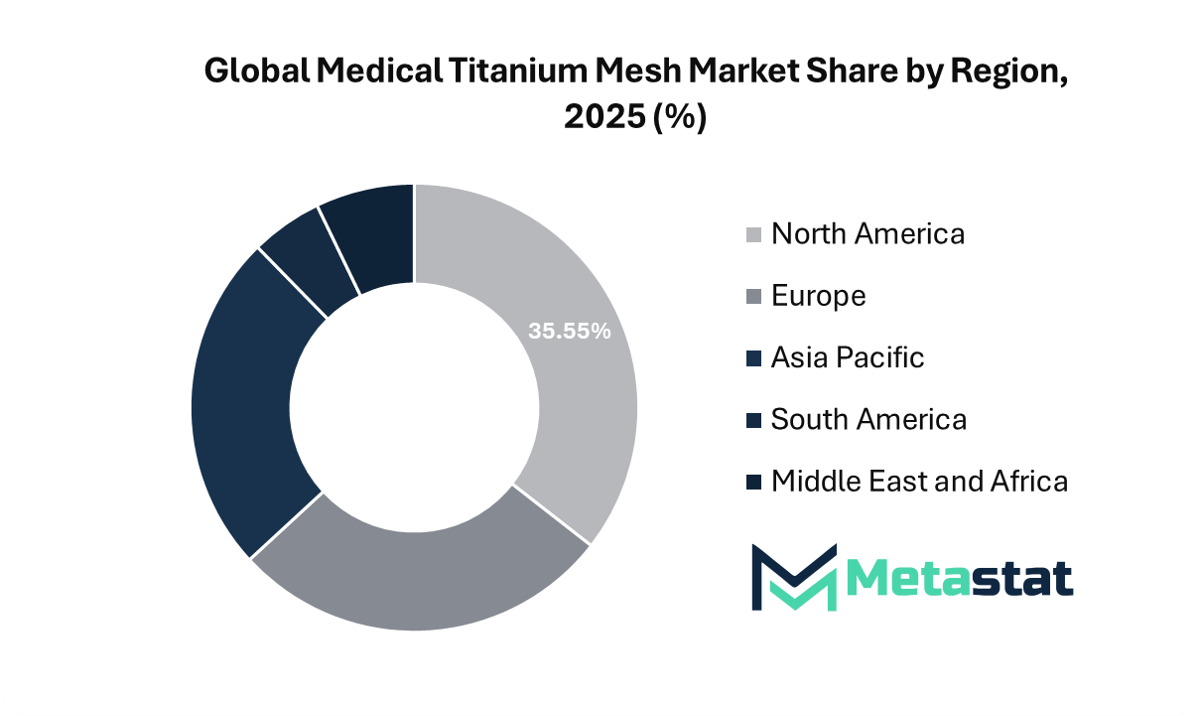
The Global Medical Titanium Mesh market is gaining steady traction owing to rising adoption across surgical procedures that require structural strength, contouring flexibility, and high biocompatibility. Titanium mesh is widely used in cranial reconstruction, dental restoration, and orthopedic procedures, supported by its corrosion resistance, mechanical stability, and compatibility with human tissue. Strong clinical preference for durable implant materials continues to support its use in procedures where precision, long-term performance, and reliable healing outcomes remain important.
Healthcare providers across major regions are increasingly adopting advanced surgical techniques, which is strengthening the use of titanium mesh in both complex and routine reconstructive procedures. Rising patient awareness regarding treatment quality and surgical outcomes is encouraging wider acceptance of implant materials that offer predictable performance. Manufacturers are focusing on products that are easier to shape, position, and adapt during surgery, helping reduce procedure time and improve recovery outcomes. Increased use of customized implant development, supported by 3D printing and digital surgical planning, is further strengthening market expansion through patient-specific solutions.
Competition among market participants remains strong, with several companies contributing to product innovation, portfolio expansion, and geographic reach. Key Global Medical Titanium Mesh industry players include Zimmer Biomet Holdings, Inc., Medtronic, KLS Martin Group, Acumed LLC, Double Medical Technology Inc., Geistlich Pharma AG, ReOss GmbH, Globus Medical, Inc., Hiossen, Inc., Medartis AG, Bioplate, Inc., MCTBio Co., Ltd., Beijing Chunli Zhengda Medical Instruments Co., Ltd., GPC Medical Ltd., CZMeditech Co., Ltd., ZMD Orthopedics Co., Ltd., DentalMaster Med, Cranial Cut, Lyka Smith Biomaterials, Biometric Dental, BondWellOrtho, GDT Implants, Ambani Metals, DSI Dental Solutions, Meticuly, Modern Development Medical Co., digimed Medical Technology, AOSYS Private Limited, CUSTİMESH, and Jiangsu Shuangyang Medical Instrument Co., Ltd. Strategic investments in research, product development, and partnerships are helping these companies strengthen their market position and expand across regional healthcare systems.
Market size is forecast to rise from USD 453.8 million in 2025 to over USD 733.8 million by 2033.
The Global Medical Titanium Mesh market is expected to witness steady growth driven by increasing surgical demand, technological advancements, and expanding healthcare access. Future developments will focus on personalized implants, improved material performance, and integration with digital surgical planning tools. The market is likely to evolve into a more innovation-driven landscape, supporting improved clinical outcomes and broader adoption across healthcare systems.
By Product Type:
By Application:
By End-User:
This research report categorizes the Medical Titanium Mesh market based on key segments and regions, forecasts revenue growth, and analyses trends in each submarket. The report analyses the key growth drivers, opportunities, and challenges influencing the Medical Titanium Mesh market. Recent market developments and competitive strategies such as expansion, product launch, partnership, merger, and acquisition have been included to draw the competitive landscape in the market.
The report strategically identifies and profiles the key market players and analyses their core competencies in each sub-segment of the Medical Titanium Mesh market.
|
Report Attributes |
Details |
|
Study Period |
2021-2033 |
|
Base Year |
2025 |
|
Estimated Year |
2026 |
|
Forecast Period |
2026-2033 |
|
Historical Period |
2021-2025 |
|
Growth Rate |
CAGR 6.2% from 2026 to 2033 |
|
Revenue Unit |
USD million |
|
Segmentation |
By Product Type, Application, End-User, and Region |
|
By Region |
North America (By Product Type, Application, End-User, and Country)
|
|
Europe (By Product Type, Application, End-User, and Country)
|
|
|
Asia Pacific (By Product Type, Application, End-User, and Country)
|
|
|
South America (By Product Type, Application, End-User, and Country)
|
|
|
Middle East and Africa (By Product Type, Application, End-User, and Country)
|
Find answers to common questions about this report
Top players operating in the Medical Titanium Mesh industry include Zimmer Biomet Holdings, Inc., Medtronic, KLS Martin Group, Acumed LLC, Double Medical Technology Inc., Geistlich Pharma AG, and ReOss GmbH.
Global Medical Titanium Mesh market is estimated to reach USD 733.8 million by 2033.
The Titanium Mesh Plates is the leading type segment in the Global market.
Rising incidence of trauma and orthopedic disorders requiring reconstructive surgeries and Increasing adoption of patient-specific implants enabled by 3D printing technologies are key driving factors, boosting the market.
North America region dominates the market.
The Metastat Insights analysis shows that the North America Medical Titanium Mesh market size is estimated to be USD 230 million by 2033.
High cost associated with titanium implants and surgical procedures will hamper the market growth within the forecast period.
The Metastat Insights study shows that the Global Medical Titanium Mesh market size was USD 453.8 million in 2025.
The Global Medical Titanium Mesh market is expected to grow at a CAGR of 6.2% over the forecast period (2026-2033).
The analysts below cover Medical Devices research at Metastat Insights.
LEAD ANALYST
Utkarsh Khirodkar is a Lead Market Research Analyst at MetaStat Insight, specializing in market intelligence, technology sector assessments, and competitive strategy.

LEAD PRINCIPAL ANALYST, PHARMA AND HEALTHCARE
Food and Beverages · Healthcare · Healthcare IT · Medical Devices
Ajay Devgire is the Lead Healthcare Analyst at MetaStat Insight, leading strategic research and market intelligence initiatives across the global healthcare domain.

SENIOR RESEARCH ANALYST
Biotechnology · Food and Beverages · Medical Devices · Packaging
Snehal Pasalkar is a Research Analyst at MetaStat Insight, operating at the intersection of life sciences research, competitive strategy, and market intelligence.
When planning edge sensor rollouts across refinery environments, generic IoT reports typically miss the harsh-environment certification bottlenecks. MetaStat Insight gave an objective evaluation of ATEX and Class 1 Division 2 hardware availability, along with realistic five-year maintenance cycle cost projections. The comparison of wireless mesh versus private cellular backhaul helped our team pressure-test network reliability models for remote processing facilities.
In the biological seed treatment space, registration timelines vary drastically between the European Union, Brazil, and North America. The MetaStat Insight research handled these cross-border regulatory barriers with genuine nuance, mapping commercialization pathways alongside historical field adoption rates. The segmentation between microbial strains and biochemical active ingredients was particularly well structured.
Our team was tracking whether regional recycling infrastructure could realistically absorb the growing volume of lithium iron phosphate batteries over the next decade. The report did a solid job separating announced hydrometallurgical plant capacity from active, permitted operational throughput. That distinction made the feedstock availability projections and regional recovery rate models far more credible than standard commercial overviews.
Explore related market intelligence reports worth reading alongside this one.