
LEAD ANALYST
Utkarsh Khirodkar is a Lead Market Research Analyst at MetaStat Insight, specializing in market intelligence, technology sector assessments, and competitive strategy.

UK Aesthetic Combination Therapy Market Size, Share, By Combination Type (Injectable-Only Combinations, Device-Only Combinations, Injectable and Device Combinations), By Application (Skin Rejuvenation and Anti-Ageing, Acne and Scar Revision, Pigmentation and Vascular Concerns, Body Contouring and Cellulite Reduction, Hair Removal), By Provider Type (Medical Aesthetic Clinics, Dermatology Clinics, Medical Spas, Hospitals and Cosmetic Surgery Centres), By Age Group (18-24 Years, 25-34 Years, 35-44 Years, 45-54 Years, 55 Years and Above), Industry Analysis, Growth, Trends, and Forecast, 2026-2033
Report ID
MSI-5696
Published
November, 2026
Pages
284 Pages
Format
Historical
Base year
Forecast
Forecast period
Report Details
Market Valuation: Valued at $178.3 Million in 2025, projected to reach $631.9 Million by 2033 at a 17.1% CAGR.
Dominant Segment: Injectable-Only Combinations lead the market, driven by increasing consumer preference for non-invasive procedures that deliver immediate results. This segment is projected to grow significantly, reflecting a strong demand for effective aesthetic solutions.
Geographic Lead: The UK market is witnessing rapid growth, particularly among younger demographics aged 18-34, who are increasingly investing in aesthetic treatments. This trend is fueled by heightened awareness and acceptance of aesthetic procedures.
What's Inside: The report provides a comprehensive analysis of market segmentation by combination type, application, provider type, and age group, along with competitive coverage and growth forecasts through 2033.
Technological Advancements: Recent innovations in treatment techniques and devices are enhancing efficacy and safety, attracting a wider audience and driving significant growth in the aesthetic combination therapy market.
Choose Your License
UK Aesthetic Combination Therapy Market
The UK Aesthetic Combination Therapy market was valued at USD 178.3 million in 2025 and is projected to reach USD 631.9 million by 2033, growing at a CAGR of 17.1% over the forecast period.
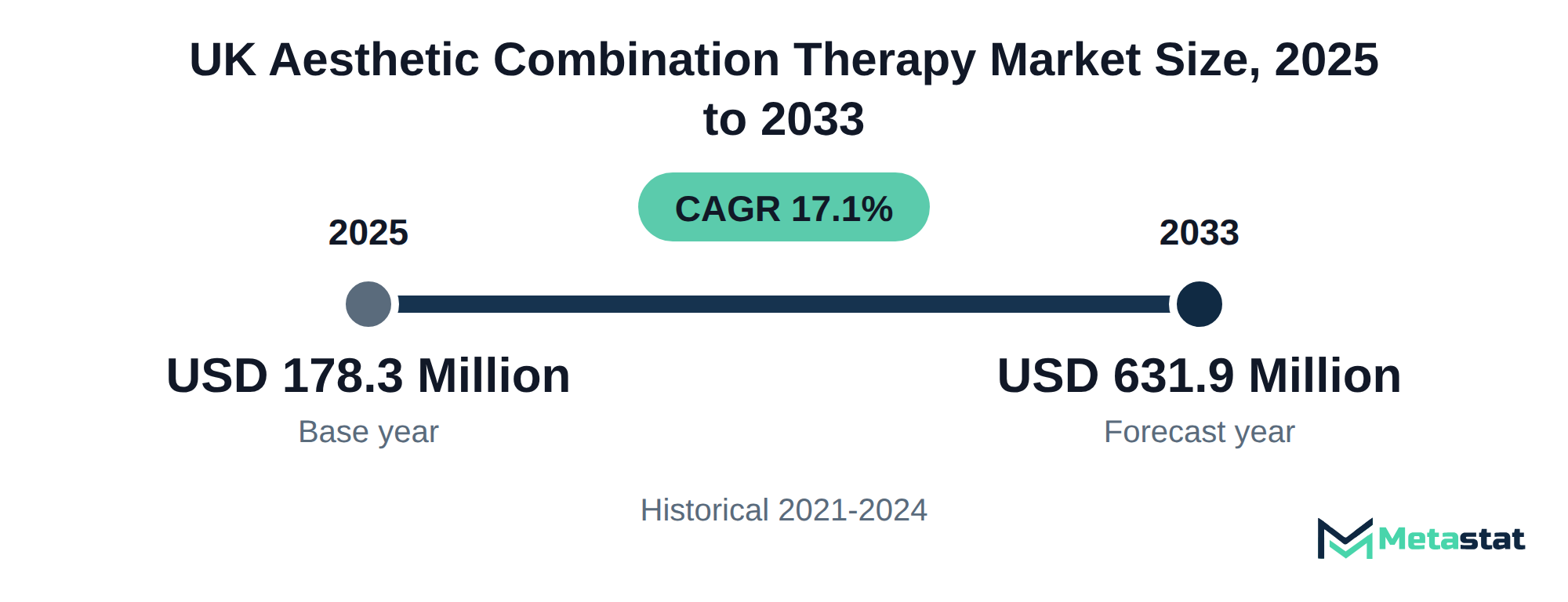
The UK Aesthetic Combination Therapy market encompasses a wide range of procedures that combine various aesthetic treatments to enhance appearance and address skin concerns. Buyers invest in these therapies due to the growing emphasis on personal aesthetics and the desire for non-invasive solutions. The primary customer segments include individuals seeking skin rejuvenation, acne and scar revision, and body contouring, reflecting a broader trend toward maintaining youthful appearances and improving self-confidence.
Significant growth within the market is driven by increasing demand for injectable-only combinations, which represent the highest value segment. Over the forecast period, these combinations are projected to expand, largely due to technology advances and wider availability of new products. The UK Aesthetic Combination Therapy market benefits from a diverse customer base, with a notable focus on younger age groups seeking preventive and corrective treatments.
The market experiences expansion, further supported by an increasing number of medical aesthetic clinics and aesthetic dermatology clinics providing these services. This growth aligns with rising consumer awareness regarding various treatment options and their benefits. The demand for combination therapies continues to rise, resulting in a competitive environment where service providers enhance their offerings to attract a broader clientele.
Demand for effective aesthetic solutions is growing as consumers focus more on personal appearance and wellness. Buyers invest in these therapies to achieve visible results in skin rejuvenation, body contouring, and anti-aging treatments. Rising disposable income among consumers facilitates greater spending on aesthetic procedures, with a particular emphasis on enhancing self-esteem and confidence.
Injectable and Device Combinations represent the largest segment within the market, reflecting a significant shift towards more advanced and tailored treatment options. The application of Skin Rejuvenation and Anti-Ageing therapies demonstrates growth, fueled by the rising prevalence of aesthetic concerns and the desire for non-invasive procedures. Increasing acceptance of aesthetic treatments across various demographics underpins this trend, with a notable impact on overall market expansion.
The UK Aesthetic Combination Therapy market experiences growth momentum driven by technological advancements in treatment techniques and devices. Enhanced efficacy and safety profiles attract a wider audience, including younger consumers seeking preventive measures against aging. This shift contributes to a competitive landscape characterized by innovation and diversity in service offerings, positioning the market for continued expansion in the coming years.
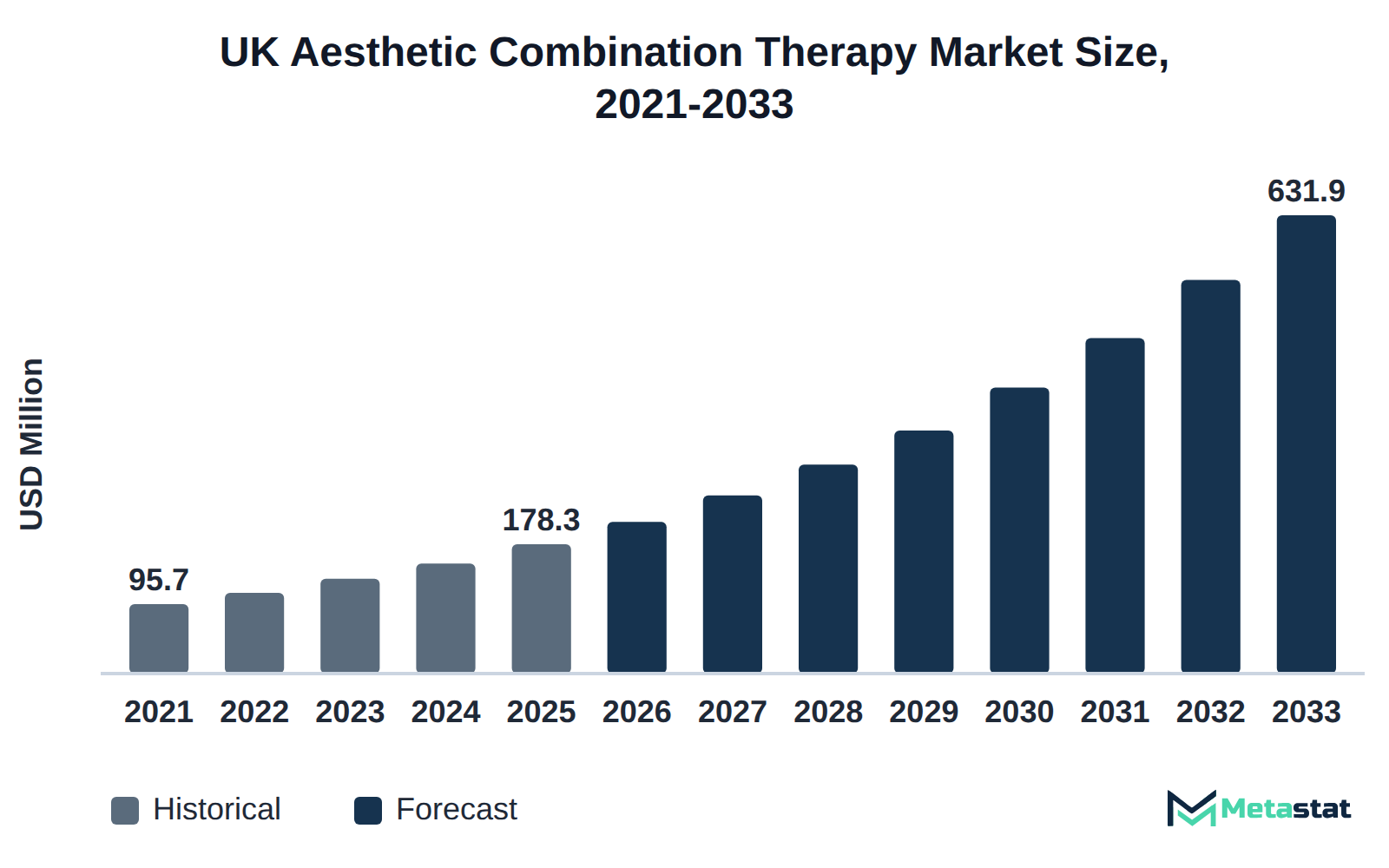
The integration of injectables and energy-based treatments represents a significant shift in the personalised facial rejuvenation approach within the UK Aesthetic Combination Therapy market. This trend reflects growing consumer interest in tailored solutions that address individual skin concerns effectively. The market shows promising growth, with the Injectable-Only Combinations segment projected to expand from USD 91.1 million in 2026 to USD 254.1 million by 2033, reflecting a compound annual growth rate (CAGR) of 15.8%.
The combination of injectables, including dermal fillers and botulinum toxins, with energy-based treatments like laser therapy and intense pulsed light (IPL) enhances treatment efficacy while minimising recovery time. This convergence allows practitioners to offer comprehensive solutions that cater to diverse patient needs, from skin rejuvenation to acne scar revision. The Skin Rejuvenation and Anti-Ageing application segment demonstrates a similar trajectory, with expected growth from USD 125.6 million in 2026 to USD 370.5 million by 2033, achieving a CAGR of 16.7%.
This collaboration meets rising consumer demand for effective aesthetic solutions and helps clinics and medical spas attract a broader clientele. By adopting these advanced techniques, providers enhance their competitive edge, driving revenue growth within the market.
Paired laser and light treatments for pigmentation and acne scarring reflect a growing trend in the UK Aesthetic Combination Therapy market, driven by rising consumer demand for effective and non-invasive solutions. The increasing awareness of the benefits of these combined modalities enhances treatment outcomes. For instance, the application segment for acne and scar revision is projected to reach USD 86.8 million by 2033, indicating significant market potential.
Pricing for these treatments varies based on factors including clinic location, provider expertise, and the complexity of the procedures. Buyers often engage in package deals that offer multiple sessions at a reduced rate, effectively lowering the per-treatment cost. This model appeals to those seeking comprehensive skin improvement solutions, encouraging higher expenditure on aesthetic services.
Understanding pricing helps consumers make informed purchasing decisions, which affects clinic revenues. Competition intensifies within the market, and providers emphasize transparent pricing strategies and flexible financing options. Such approaches enhance customer satisfaction and retention, positioning clinics for sustained growth in the evolving aesthetic sector.
Combination body contouring increasingly focuses on fat reduction, muscle stimulation, and skin tightening, meeting the needs of consumers seeking aesthetic solutions with multiple benefits. Buyers in this segment prioritize procedures that deliver multiple benefits simultaneously, enhancing overall body appearance and health. The UK Aesthetic Combination Therapy market is poised for growth, with body contouring and cellulite reduction segments projected to expand significantly. Factors driving this trend include rising consumer awareness of aesthetic treatments and an increasing desire for minimally invasive options.
Market data indicates the body contouring segment experiences considerable growth, with a compound annual growth rate (CAGR) of 18.0%. This growth reflects a shift in consumer preferences toward innovative treatments that streamline results without extensive recovery times. Emerging technologies in fat reduction and muscle stimulation have gained traction, making these procedures more accessible to a broader audience.
In this context, businesses specializing in body contouring benefit from adopting these combination therapies. By offering integrated solutions, clinics enhance their service portfolios, attract new customers, and differentiate themselves in a competitive market. A focus on combination therapies meets changing consumer demand for efficient and effective aesthetic treatments.
Aesthetic combination therapy packages in the UK exhibit a wide range of pricing based on various factors, including the combination type and treatment complexity. This increase reflects growing consumer interest in minimally invasive procedures that deliver effective results.
The pricing strategy often aligns with market demand for specific applications. This segment attracts clients seeking visible improvements in skin health and appearance, reinforcing demand for bundled treatments that offer value through comprehensive care.
Providers including medical aesthetic clinics and dermatology facilities play a significant role in setting prices based on service quality, expertise, and market positioning. Medical aesthetic clinics are projected to grow from USD 123.5 million in 2026 to USD 384 million by 2033, and pricing strategies will evolve to reflect anticipated demand within the UK Aesthetic Combination Therapy market. This competitive environment encourages providers to innovate and tailor their offerings to meet consumer preferences, driving both service enhancements and pricing adjustments in the market.
Growing interest in skin rejuvenation treatments among younger consumers drives a significant increase in spending in the UK Aesthetic Combination Therapy market. This demographic shift, particularly among individuals aged 18-34 years, emphasizes the importance of aesthetic procedures for maintaining and enhancing personal appearance. Increased awareness of available treatment options contributes to heightened demand, resulting in a notable volume increase for combination therapy services. Such growth indicates a strong preference for innovative and effective solutions that cater to the evolving needs of younger consumers.
Recent technological advancements enhance the efficacy and safety of combination therapies, driving significant growth within the UK Aesthetic Combination Therapy market. Innovations in devices and techniques improve treatment outcomes, appealing to a broader audience seeking aesthetic enhancements. For example, the introduction of more precise laser systems allows for tailored treatments, effectively addressing individual skin concerns without extensive downtime. These advancements attract patients from various demographics, increasing market penetration.
The integration of artificial intelligence in treatment planning optimizes procedures, enabling providers to deliver personalized experiences. Enhanced patient engagement through digital platforms and virtual consultations further supports this trend, leading to higher consumer satisfaction and repeat business. Market players leverage these technologies to differentiate their offerings, intensifying competition among providers.
Overall, these technological innovations improve treatment effectiveness and contribute to the market's anticipated growth, which makes continued investment in research and development important across the aesthetic sector.
Price sensitivity among potential buyers significantly impacts the UK Aesthetic Combination Therapy market, particularly for medical aesthetic clinics and dermatology clinics. High treatment costs deter patients from pursuing combination therapies, leading to slower uptake among these provider types. Many prospective consumers prioritize affordability and delay treatments or seek alternative, lower-cost options. This restraint is pronounced among younger age groups, where budget constraints limit access to advanced therapies. The resulting trend of smaller orders and delayed adoption reinforces the challenge for providers seeking to expand their customer base. Efforts to provide point-of-sale finance options and promotional packages could alleviate these concerns, enhancing affordability and encouraging more clients to engage with the therapies offered in the market. Without addressing price sensitivity, growth in the market stays constrained, which limits revenue for providers in this competitive sector.
Rising input costs challenge suppliers and squeeze profit margins in the market. Increased demand for high-quality materials and advanced technologies escalates expenses, forcing providers to reconsider pricing strategies and operational efficiencies. Suppliers respond by streamlining processes and optimizing resource utilization, aiming to maintain competitiveness without sacrificing service quality. Investment in technology that enhances efficiency allows for cost reduction while addressing the growing consumer demand for innovative aesthetic solutions. Partnerships among suppliers help share costs and mitigate financial impacts. The market experiences shifts, with businesses adapting to these pressures, leading to potential alterations in service offerings and pricing structures.
The segment of injectable and device combinations represents a significant opportunity within the UK Aesthetic Combination Therapy market. This approach addresses the increasing consumer interest in multi-faceted treatment options that deliver enhanced results. With a projected compound annual growth rate (CAGR) of 17.7%, this segment highlights the market's potential to attract diverse consumer groups seeking effective aesthetic improvements. The combination of injectables and devices optimizes treatment outcomes, appealing to individuals focused on both immediate and long-lasting effects. The growing preference for personalized aesthetic solutions supports the expansion of this segment. Aesthetic practitioners refine their techniques and offerings, enhancing treatment efficacy and safety, which drives demand. This growth potential favors providers that invest in new technologies and full treatment packages.
The UK Aesthetic Combination Therapy market is segmented based on Combination Type, Application, Provider Type, and Age Group.
This segment focuses on treatments that enhance facial aesthetics through injectables, primarily targeting individuals seeking non-surgical solutions for skin rejuvenation and anti-ageing. Driven by increasing consumer preference for minimally invasive procedures, this segment stands out for its relatively rapid growth compared to others. Advances in injectable formulations and growing awareness of aesthetic treatments among younger consumers shape its trajectory. In contrast to Device-Only Combinations, which are projected to grow at a CAGR of 17.7%, the Injectable-Only Combinations segment emphasizes immediate visual results with less recovery time, catering primarily to clients in aesthetic clinics and medical spas seeking quicker treatments.
Device-Only Combinations segment is estimated to reach USD 148.9 million by 2033, at a CAGR of 17.7% during the forecast period. This segment primarily targets skin rejuvenation through advanced devices designed for non-invasive aesthetic procedures. Medical aesthetic clinics and dermatology clinics frequently employ these devices to enhance treatment efficacy. The increasing prevalence of skin concerns, including pigmentation and signs of aging, drives demand within this segment. Compared to other combination types, Device-Only Combinations exhibit a faster growth trajectory due to rising consumer preference for non-invasive solutions. The segment's appeal lies in its ability to deliver significant results without the need for surgical intervention, attracting a wider audience concerned about recovery times and potential complications. Increased marketing efforts and consumer awareness regarding the benefits of device-based treatments further support its growth potential, positioning it as a critical component of the UK Aesthetic Combination Therapy market.
Injectable and Device Combinations segment is expected to reach USD 179.8 million by 2033. This segment focuses on combining both injectable treatments and devices to enhance aesthetic outcomes, appealing to clients seeking comprehensive solutions for skin rejuvenation and other concerns. Growth within this segment aligns with increasing consumer demand for effective anti-ageing treatments, particularly among younger demographics. The integration of injectables, including dermal fillers, with device-based therapies, including lasers and radio frequency, creates synergies that enhance results. The CAGR for this segment stands at 15.8%, indicating a steady increase compared to other combination types. Factors including technological advancements in treatment methods and heightened awareness of aesthetic options significantly influence its trajectory. The combination of injectables and devices offers unique advantages, setting it apart from purely injectable or device-only options, potentially capturing a larger share of the UK Aesthetic Combination Therapy market.
USD 178.3 million in 2025 marks the starting point for Others (Peel-Based and Thread-Based Combinations) segment, projected to grow at a CAGR of 15.2% during the forecast period. This segment focuses on treatments employing chemical peels and thread lifts, appealing to consumers seeking non-surgical solutions for skin rejuvenation. Patients, often looking for alternatives to more invasive procedures, drive demand due to their desire for less downtime and natural-looking results. Growth in this area reflects a broader trend in the market towards minimally invasive therapies. Compared to the Injectable-Only and Device-Only segments, which show CAGRs of 15.8% and 17.7% respectively, this segment experiences a relatively slower growth rate. The unique offerings of peel-based and thread-based combinations appeal to a distinct consumer base, influenced by rising awareness of aesthetic treatments and growing acceptance of non-invasive options in the UK Aesthetic Combination Therapy market.
This segment targets individuals seeking to restore a youthful appearance and address signs of ageing. Increasing consumer awareness regarding aesthetic solutions drives demand, particularly among those aged 25 to 44 years, who represent a significant portion of buyers. The segment stands out due to its focus on non-invasive procedures, setting it apart from alternatives like Body Contouring, which experiences a CAGR of 18%. Advances in technology improve treatment efficacy, attracting a broader clientele. The combination of injectables and devices enhances results, reinforcing its position in the market. Customer preferences for minimally invasive solutions contribute to the segment's growth trajectory.
Acne and Scar Revision segment is estimated to reach USD 86.8 million by 2033, at a CAGR of 18% during the forecast period. This segment focuses on addressing the concerns of individuals seeking treatment for acne scars and related skin issues, primarily appealing to younger demographics and adults experiencing acne-related challenges. Rising awareness regarding the effectiveness of combination therapies contributes to the segment's growth, coupled with increasing consumer desire for improved skin aesthetics. Compared to other applications, the Acne and Scar Revision segment demonstrates faster growth driven by heightened demand for targeted treatments. Advanced technologies in scar revision treatments improve patient outcomes and satisfaction, which further drives demand in this segment.
The Pigmentation and Vascular Concerns segment is expected to reach USD 72.5 million by 2033. This segment addresses issues related to skin pigmentation and vascular lesions, commonly sought by individuals seeking to enhance skin appearance and health. Patients typically include adults experiencing age-related pigmentation changes or vascular concerns including spider veins. Growth in this segment is driven by increasing consumer awareness regarding skin health and aesthetic appearance. Compared to other applications in the market, this segment experiences a relatively brisk growth rate, supported by advancements in technology and treatment options. The segment is projected to grow at a compound annual growth rate (CAGR) of 18% over the forecast period, reflecting strong demand driven by changing beauty standards and effective treatment outcomes.
Body Contouring and Cellulite Reduction segment is projected to grow at a CAGR of 18% during the forecast period. This segment addresses the specific needs of consumers seeking to enhance body shape and reduce the appearance of cellulite through various aesthetic treatments. Typically, clients include individuals seeking non-invasive or minimally invasive solutions to improve body contouring. Increasing awareness of personal aesthetics and body image fuels demand in this area. Competition among providers intensifies, driving innovation and quality in treatment options. Compared to other applications, Body Contouring and Cellulite Reduction experiences faster growth, with significant interest from younger demographics. This trend reflects a shift towards personalized aesthetic solutions, which makes the segment a key part of the UK Aesthetic Combination Therapy market.
Hair removal procedures employ various technologies to eliminate unwanted body hair, appealing to a diverse clientele seeking smoother skin. This segment attracts both men and women, with a growing preference for long-lasting and effective solutions. Demand for hair removal continues to rise due to increasing awareness of grooming and aesthetics.
Technological advancements in laser and light-based therapies enhance treatment efficacy, positioning this segment for significant interest. Consumer preferences shift toward minimally invasive methods, driving growth within this area of the UK Aesthetic Combination Therapy market. Compared to other applications, hair removal exhibits a different pricing structure and clientele, focusing on individuals seeking routine maintenance rather than one-time corrective solutions. This aspect distinguishes it from segments focused on skin rejuvenation and anti-ageing, which often involve larger financial commitments and longer-term treatment plans.
This segment encompasses hair restoration procedures and treatments focused on mitigating the appearance of stretch marks. Consumers increasingly seek solutions for hair loss and skin imperfections, driving demand for innovative therapies and combination treatments. The segment appeals primarily to individuals experiencing hair thinning or concerns about stretch marks, influenced by personal aesthetics or changes in body image. Factors including societal beauty standards and the rising acceptance of cosmetic procedures drive growth in this area. Compared to other segments, growth remains moderate, with potential for expansion through new technologies and methodologies. The market for hair restoration and stretch mark treatments differs from segments like acne and scar revision, which exhibit faster growth due to more immediate consumer concerns. The UK Aesthetic Combination Therapy market reflects diverse consumer interests, with this segment focusing on unique aesthetic needs.
These clinics offer a range of non-surgical cosmetic procedures primarily aimed at enhancing physical appearance, attracting a clientele focused on skin health and rejuvenation. A primary demand driver includes increasing consumer awareness regarding aesthetics and the desire for minimally invasive treatments. This segment demonstrates faster growth compared to other provider types, driven by its ability to offer tailored services suited to individual client needs. In contrast, hospitals and cosmetic surgery centres, while significant, operate in a more regulated environment with higher costs, limiting growth potential to a CAGR of 14.6%. Their focus on personalized aesthetic treatments gives them a strong position in the competitive landscape of the UK Aesthetic Combination Therapy market.
Dermatology Clinics segment is estimated to reach USD 110.2 million by 2033, at a CAGR of 17.6% during the forecast period. These clinics focus on the diagnosis and treatment of skin conditions, catering primarily to patients seeking solutions for issues including acne, skin aging, and pigmentation concerns. A significant force driving growth in this segment is the increasing demand for effective skin treatment options among various age groups, particularly those aged 25 to 34 years. Compared to other provider types, dermatology clinics typically offer specialized care, resulting in higher treatment costs. This segment's growth is supported by rising awareness of skin health and the effectiveness of combination therapies, distinguishing it from medical aesthetic clinics that focus on broader aesthetic procedures. The market continues to experience strong interest, reflecting the ongoing shift towards professional dermatological care.
The Medical Spas segment is expected to reach USD 82.8 million by 2033. This segment provides a range of aesthetic treatments in a relaxing environment, appealing to clients seeking both cosmetic and therapeutic benefits. Patients typically include individuals looking for rejuvenation and anti-ageing solutions. Demand is influenced by the growing preference for non-invasive procedures that offer minimal downtime, further enhancing customer appeal. Compared to other provider types, Medical Spas offer a unique combination of aesthetics and wellness, attracting a broader clientele. The segment's growth rate aligns closely with the overall market, with a CAGR of 17.6%. This positioning highlights the rise in consumer interest in aesthetic treatments that prioritize comfort and care. In a market where traditional clinics focus primarily on medical outcomes, Medical Spas create differentiated experiences that meet evolving consumer expectations.
This segment serves patients seeking comprehensive aesthetic solutions, often combining surgical and non-surgical treatments. Increasing demand for minimally invasive procedures drives growth, with a focus on offering advanced aesthetic therapies. Hospitals and Cosmetic Surgery Centres typically attract clients who prioritize safety, quality, and expertise, distinguishing them from other provider types, including medical spas and dermatology clinics. In contrast to the Medical Aesthetic Clinics segment, which targets a broader clientele, this segment focuses on individuals undergoing significant cosmetic procedures, reflected in its anticipated value of USD 384 million by 2033.
This segment comprises dental practices and mobile clinics that provide aesthetic combination therapy services. These settings offer convenience and flexibility, appealing to clients seeking treatments without the visit to larger clinics. Typically, these providers cater to a diverse clientele, including younger patients who increasingly prioritize aesthetic treatments. Demand in this segment is fueled by growing awareness of aesthetic options, often facilitated through social media and influencer marketing. Compared to other segments, this one experiences unique operational dynamics, reflecting both the lower overhead costs associated with mobile services and the potential for slower growth due to regulatory challenges in certain regions. The UK Aesthetic Combination Therapy market continues to evolve, with mobile clinics increasing accessibility to treatments while allowing dental practices to expand their service offerings.
Segment valued at USD 17.8 million in 2026 is projected to reach USD 50 million by 2033, at a CAGR of 15.9% during the forecast period. This age group primarily engages in aesthetic combination therapy for skin rejuvenation and addressing early signs of aging. The rising interest among younger consumers in maintaining youthful appearances drives growth in this segment. Compared to the 25-34 Years segment, which is anticipated to reach USD 146.2 million by 2033, the 18-24 Years segment exhibits a slower growth trajectory. A noticeable shift toward preventive treatments has increased demand, with younger individuals seeking options that include injectables and devices for aesthetic enhancement. The market reflects a growing inclination toward non-invasive procedures targeting specific concerns, highlighting the unique position of this age group in the overall UK Aesthetic Combination Therapy market.
Segment valued at USD 146.2 million by 2033, with a CAGR of 17.4% during the forecast period, primarily attracts younger adults seeking aesthetic enhancements. Individuals aged 25-34 pursue skin rejuvenation and anti-ageing treatments, focusing on maintaining a youthful appearance. The increasing awareness of aesthetic options among this age group drives demand, prioritizing personal aesthetics and self-care. This segment distinguishes itself from others due to its higher growth rate compared to age groups including 18-24 years, which records a CAGR of 15.9%. The trend towards minimally invasive procedures and advancements in technology support greater adoption of combination therapies in this demographic, enhancing the market's expansion. Factors influencing this segment include increased disposable income and changing beauty standards, both driving growth in the UK Aesthetic Combination Therapy market.
USD 187.5 million by 2033 highlights the 35-44 Years segment's anticipated growth within the UK Aesthetic Combination Therapy market. This age group primarily seeks treatments aimed at skin rejuvenation and anti-ageing, reflecting increasing concerns about appearance and aging. The demand for effective anti-ageing solutions drives substantial interest from both women and men in this segment. With a projected CAGR of 17.4%, this segment exhibits faster growth compared to older age groups, driven by a higher willingness to invest in aesthetic procedures among younger middle-aged consumers. The rising popularity of minimally invasive treatments and greater awareness of available options contribute significantly to this segment's expansion, differentiating it from others that focus on broader demographics. Treatment providers targeting this age group emphasize personalized solutions to cater to specific skin concerns, enhancing overall customer satisfaction.
Segment valued at USD 187.5 million by 2033 is projected to grow at a CAGR of 17.2% during the forecast period. This age group primarily comprises individuals pursuing aesthetic enhancements focused on maintaining youthful appearances. Demand is driven by increasing awareness of aesthetic treatments among individuals aged 45-54, alongside a growing acceptance of these therapies within personal care routines. Compared to the 35-44 years segment, which enjoys a higher projected value of USD 187.5 million, this group experiences slightly slower growth; however, its distinct focus on anti-ageing treatments sets it apart. The market sees investment in innovative treatments tailored for this demographic, addressing skin elasticity and rejuvenation. Rising disposable incomes influence purchasing decisions within this sub-segment, with clients prioritizing aesthetic therapies and contributing to the overall growth seen in the UK Aesthetic Combination Therapy market.
The segment targets individuals aged 55 and above, focusing on aesthetic preferences that enhance facial and body features. This demographic typically seeks treatments to address signs of aging, including wrinkles and sagging skin. Older adults, particularly women, often desire procedures that improve their overall appearance while maintaining a natural look. The growing emphasis on self-care and personal aesthetics among older populations fuels demand for these services. Compared to younger segments, this group exhibits slower adoption rates due to higher sensitivity to pricing and potential health concerns linked to procedures. However, the stronger emphasis on quality and safety in this age group highlights the market's adaptability to meet these specific needs.
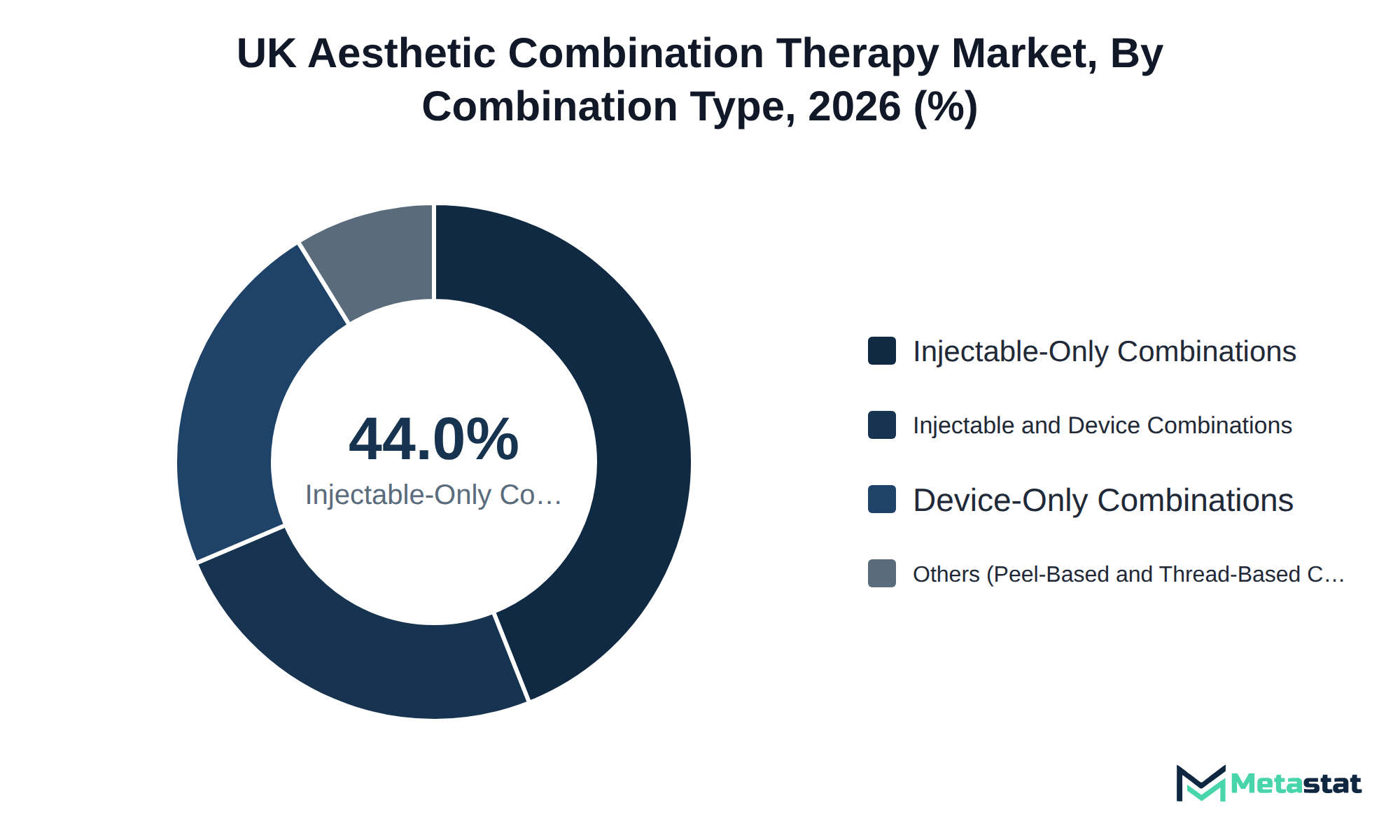
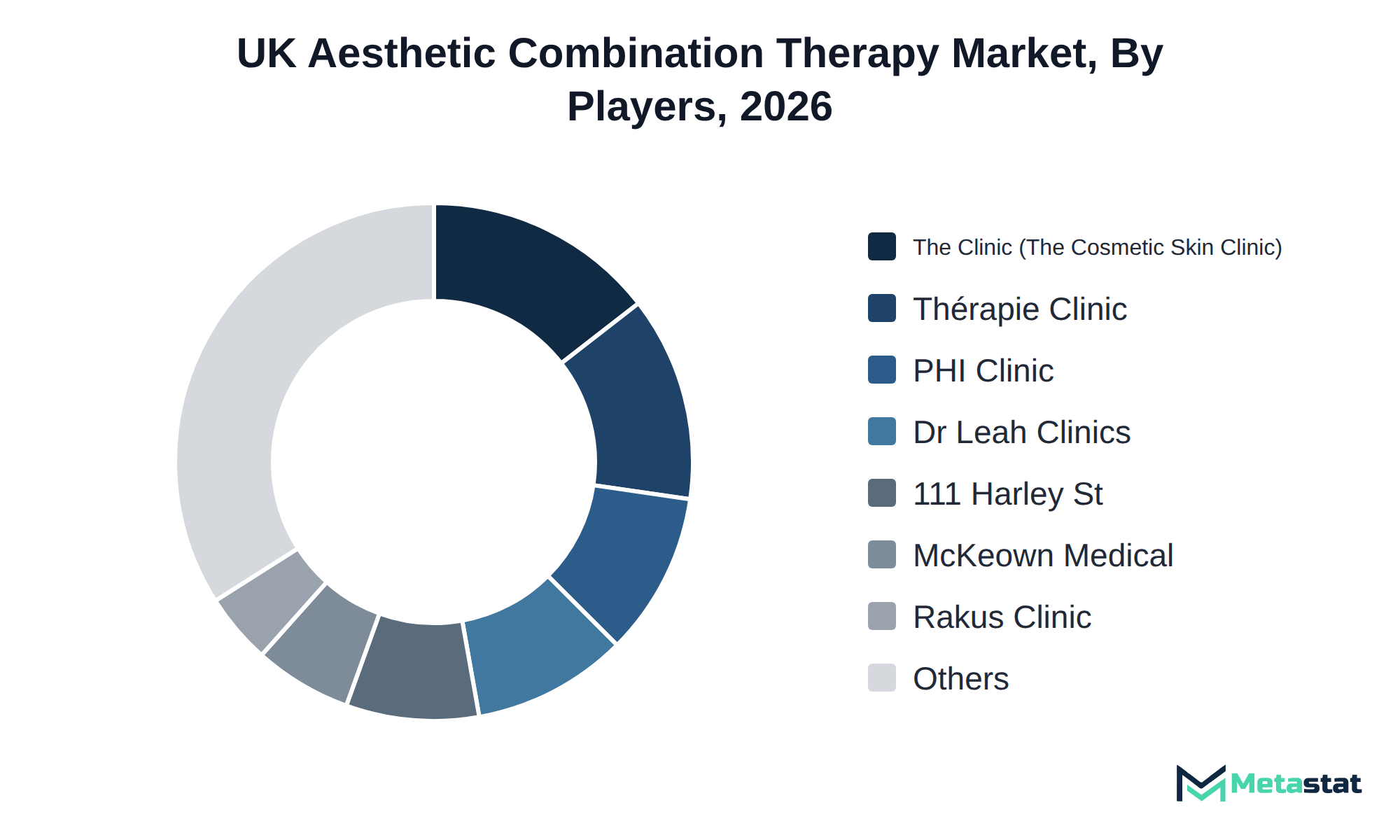
The UK Aesthetic Combination Therapy market features a variety of companies competing across different service models, primarily including medical aesthetic clinics, dermatology clinics, and medical spas. Buyers prioritize factors including price, service quality, customization options, and certification when selecting providers. This multifaceted approach significantly influences their decisions.
The Private Clinic Group (The Cosmetic Skin Clinic) emphasizes a broad range of aesthetic treatments tailored to skin rejuvenation and anti-aging applications. Thérapie Clinic specializes in value-driven cosmetic solutions, appealing to cost-conscious consumers. PHI Clinic integrates advanced technologies into its service offerings, focusing on innovative treatment combinations that enhance patient outcomes.
The market growth relies on several key developments. A rise in consumer awareness about aesthetic treatments and their benefits contributes to market expansion, especially among younger age groups. Regulatory challenges impede growth, affecting investment in new technologies and treatment options. Stricter regulations could slow down the market's potential, with providers weighing compliance costs against operational feasibility. Overall, achieving the forecasted value of USD 631.9 million requires sustained demand across various segments, driven by technological advancements and a supportive regulatory environment within the UK Aesthetic Combination Therapy market.
By Combination Type: Injectable-Only Combinations, Device-Only Combinations, Injectable and Device Combinations, Others (Peel-Based and Thread-Based Combinations)
By Application: Skin Rejuvenation and Anti-Ageing, Acne and Scar Revision, Pigmentation and Vascular Concerns, Body Contouring and Cellulite Reduction, Hair Removal, Others (Hair Restoration and Stretch Marks)
By Provider Type: Medical Aesthetic Clinics, Dermatology Clinics, Medical Spas, Hospitals and Cosmetic Surgery Centres, Others (Dental Practices and Mobile Clinics)
By Age Group: 18-24 Years, 25-34 Years, 35-44 Years, 45-54 Years, 55 Years and Above
The report strategically identifies and profiles the key market players and analyses their core competencies in each sub-segment of the Aesthetic Combination Therapy market.
Report Attributes | Details |
Study Period | 2021-2033 |
Base Year | 2025 |
Estimated Year | 2026 |
Forecast Period | 2026-2033 |
Historical Period | 2021-2025 |
Growth Rate | CAGR 17.1% from 2026 to 2033 |
Revenue Unit | USD million |
Segmentation | By Combination Type, Application, Provider Type, Age Group, and Region |
Find answers to common questions about this report
The Aesthetic Combination Therapy market size was valued at USD 178.3 million in 2025.
The market is projected to grow at a CAGR of 17.1% during the forecast period from 2026 to 2033.
Injectable-Only Combinations lead the Aesthetic Combination Therapy market, with a projected value of USD 254.1 million by 2033. This segment demonstrates significant growth potential, driven by increasing demand for injectable treatments.
Growing interest in skin rejuvenation treatments among younger consumers drives significant spending in the market. Price sensitivity among potential buyers impacts the uptake of combination therapies, particularly among medical aesthetic and dermatology clinics.
Price sensitivity among potential buyers significantly impacts market growth, particularly for medical aesthetic and dermatology clinics. Rising input costs challenge suppliers, affecting profit margins and forcing providers to reconsider pricing strategies and operational efficiencies.
Factors favoring adoption in the UK Aesthetic Combination Therapy market include rising consumer interest in multi-faceted treatment options and technological advancements that enhance treatment efficacy and safety. The segment of injectable and device combinations, projected to grow at a compound annual growth rate of 17.7%, exemplifies this trend.
The Aesthetic Combination Therapy market is estimated to reach a valuation of USD 631.9 million by 2033.
Key players operating in the Aesthetic Combination Therapy market include The Private Clinic Group (The Cosmetic Skin Clinic), Thérapie Clinic, PHI Clinic, Dr Leah Clinics, 111 Harley St., and EF MEDISPA.
The injectable-only combinations segment is projected to grow from USD 91.1 million in 2026 to USD 254.1 million by 2033, reflecting a compound annual growth rate of 15.8%.
The acne and scar revision application segment is expected to grow significantly, reaching USD 86.8 million by 2033, with a compound annual growth rate of 18%.
The analysts below cover Medical Devices research at Metastat Insights.
LEAD ANALYST
Utkarsh Khirodkar is a Lead Market Research Analyst at MetaStat Insight, specializing in market intelligence, technology sector assessments, and competitive strategy.

LEAD PRINCIPAL ANALYST, PHARMA AND HEALTHCARE
Food and Beverages · Healthcare · Healthcare IT · Medical Devices
Ajay Devgire is the Lead Healthcare Analyst at MetaStat Insight, leading strategic research and market intelligence initiatives across the global healthcare domain.

SENIOR RESEARCH ANALYST
Biotechnology · Food and Beverages · Medical Devices · Packaging
Snehal Pasalkar is a Research Analyst at MetaStat Insight, operating at the intersection of life sciences research, competitive strategy, and market intelligence.
Tracking maintenance cycle demand for secondary flight display units and terrain collision avoidance systems across regional jet fleets involves complex aftermarket dynamics. MetaStat Insight provided practical analysis separating airline retrofit programs from OEM forward-fit production schedules in North America and Southeast Asia. The supplier matrix highlighted component obsolescence timelines without resorting to vague generalizations. The dataset served as a dependable reference during our annual program review meetings.
Evaluating secondary resin quality across post-consumer packaging streams requires reliable technical segmentation. MetaStat Insight delivered an objective assessment that distinguished between extrusion-grade flake pricing and optical sorting throughput limitations across Western Europe. The competitive positioning breakdown for licensed depolymerization technology providers answered several questions during our feedstock feasibility audit. Their team clarified regional trade restrictions on mixed plastic scrap quickly when our team submitted follow-up requests.
Evaluating sovereign cloud deployments for core banking platforms demands a clear view of data residency regulations and migration exit strategies. MetaStat Insight delivered an exhaustive review of regional latency tolerances, mainframe decommission milestones, and third-party vendor concentration risk. The regulatory compliance mapping across European and Asian financial jurisdictions gave our team a dependable baseline for multi-cloud infrastructure discussions.
Explore related market intelligence reports worth reading alongside this one.