
LEAD ANALYST
Utkarsh Khirodkar is a Lead Market Research Analyst at MetaStat Insight, specializing in market intelligence, technology sector assessments, and competitive strategy.

Global 720P Projectors Market Size, Share, By Product Type (DLP, LCD, and LCoS), By Light Source (LED, Lamp-Based, Laser, Hybrid, and Others), By Application (Home Entertainment, Business & Corporate Presentation, Education & Training, Gaming, Large Venues & Commercial Display, Portable & Outdoor Entertainment, and Others), By Distribution Channel (Online Retail, Consumer Electronics Retail, Direct Sales, System Integrators & Professional AV Channels, and Others), Industry Analysis, Growth, Trends, and Forecast, 2026-2033
Report ID
MSI-4971
Published
August, 2026
Pages
303 Pages
Format
Historical
Base year
Forecast
Forecast period
Report Details
Choose Your License
Global 720P Projectors Market
The global 720P Projectors market was valued at USD 1.3 billion in 2025 and is projected to reach USD 2.1 billion by 2033, growing at a CAGR of 5.9% over the forecast period.
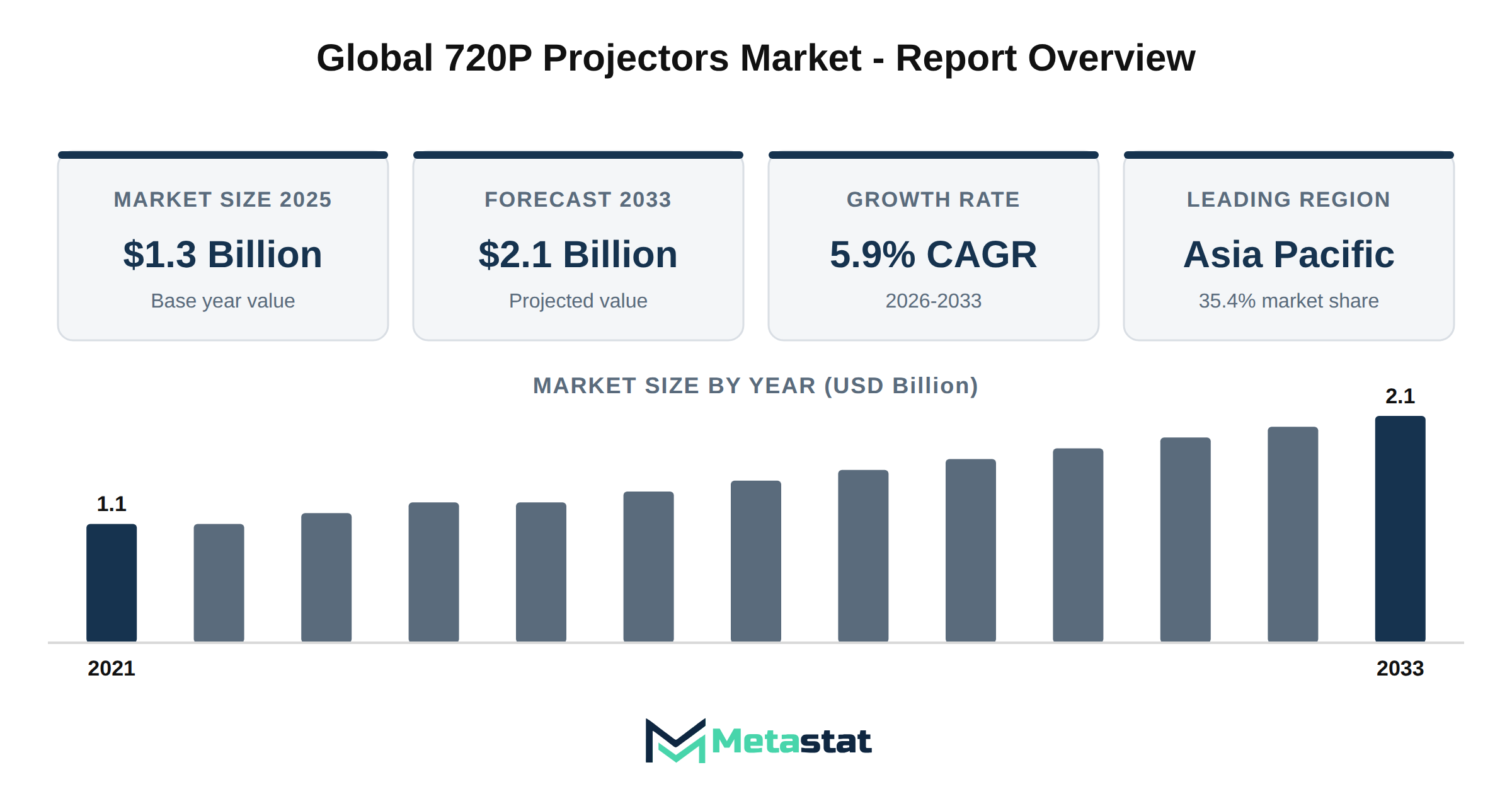
The 720P Projectors market demonstrates significant growth potential, with a base value of USD 1.3 billion in 2025, projected to reach USD 2.1 billion by 2033. The compound annual growth rate (CAGR) of 5.9 percent indicates a steady increase in demand during this period.
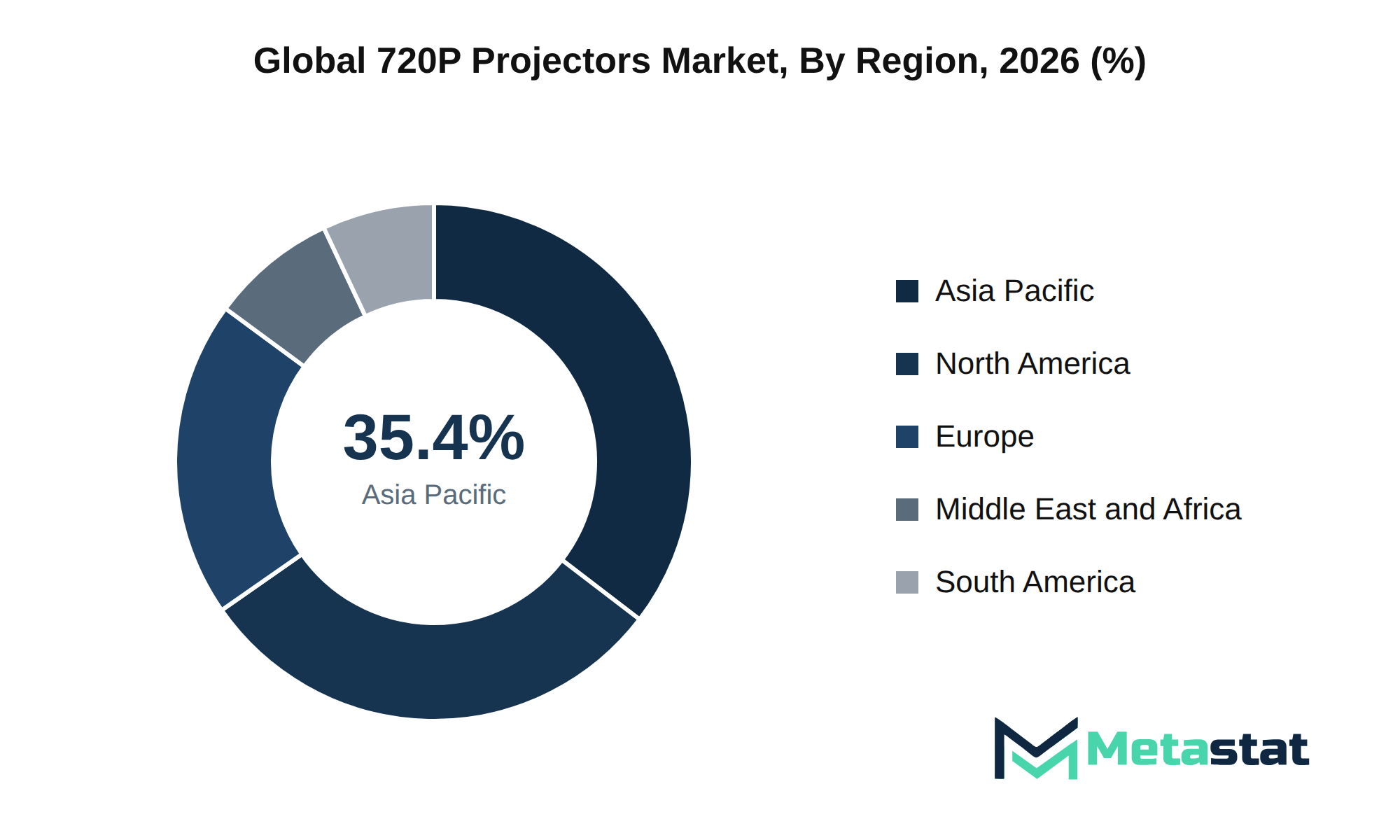
Regional distribution shows that Asia Pacific holds the largest share at 35.4 percent, followed by North America at 29.9 percent, and Europe at 19.8 percent. The remaining shares are held by South America and the Middle East and Africa at 7 percent and 7.9 percent, respectively. This geographical diversity presents varied opportunities across different markets.
Product segmentation within the 720P Projectors market includes DLP, LCD, and LCoS technologies, with LCD expected to achieve a market value of USD 1.1 billion by 2033, reflecting a strong growth trajectory. DLP projectors, starting at USD 0.7 billion in 2026, are projected to increase to USD 0.9 billion by the end of the forecast period, while LCoS technology remains a niche segment.
Factors influencing the market include advancements in display technology, increasing demand for home entertainment solutions, and a growing trend toward portable and outdoor entertainment applications. Research and development trajectories focus on enhancing image quality, portability, and energy efficiency, driving the need for innovation and investment within the sector.
The 720P Projectors market faces challenges related to regulatory compliance and standards that vary across different regions. Companies operating in this market align their products with diverse regulations to ensure market access, which influences operational strategies and affects overall competitiveness. Geopolitical risks disrupt supply chains and impact the availability of components, leading to potential delays in product delivery and increased costs for manufacturers.
Research and development trajectories play a crucial role in the evolution of the market. Continuous innovation in technology enhances product features and performance, meeting the growing demands of consumers for higher quality and more versatile projection solutions. The market prioritizes next-generation innovations, driving manufacturers to invest in advanced technologies that improve user experience and expand application areas.
Sustainable transformation emerges because a critical focus, with companies exploring decarbonization strategies and circular economy dynamics. Adoption of sustainable practices addresses environmental concerns and aligns with consumer preferences for eco-friendly products. This shift enhances brand loyalty and opens new market opportunities for companies committed to sustainability.
The current supply chain landscape is characterized by complexity, necessitating robust logistics architecture and effective sourcing strategies. Disruptions in the supply chain lead to fluctuations in component availability, impacting production schedules and overall market stability. Companies adapt by diversifying their supplier base to mitigate risks associated with reliance on specific regions or suppliers.
Market fragmentation poses a challenge, with numerous players operating across various segments. This fragmentation leads to intense competition, compelling companies to differentiate their offerings through innovation and superior customer service. Mergers and acquisitions reflect an ongoing consolidation trend aimed at strengthening market positions and enhancing capabilities.
In the context of the global economic environment, macroeconomic headwinds including inflationary pressures and currency volatility influence the market's performance. Companies navigate these challenges while considering capital allocation strategies to ensure sustainable growth. Infrastructure investments are essential for expanding production capacity and improving distribution networks, ensuring that businesses remain competitive in the evolving market.
The future strategic outlook for the 720P Projectors market indicates a positive trajectory, driven by increasing demand across various applications including home entertainment and corporate presentations. Companies that capitalize on emerging trends, invest in innovation, and enhance customer engagement strategies are likely to achieve significant growth in the coming years.
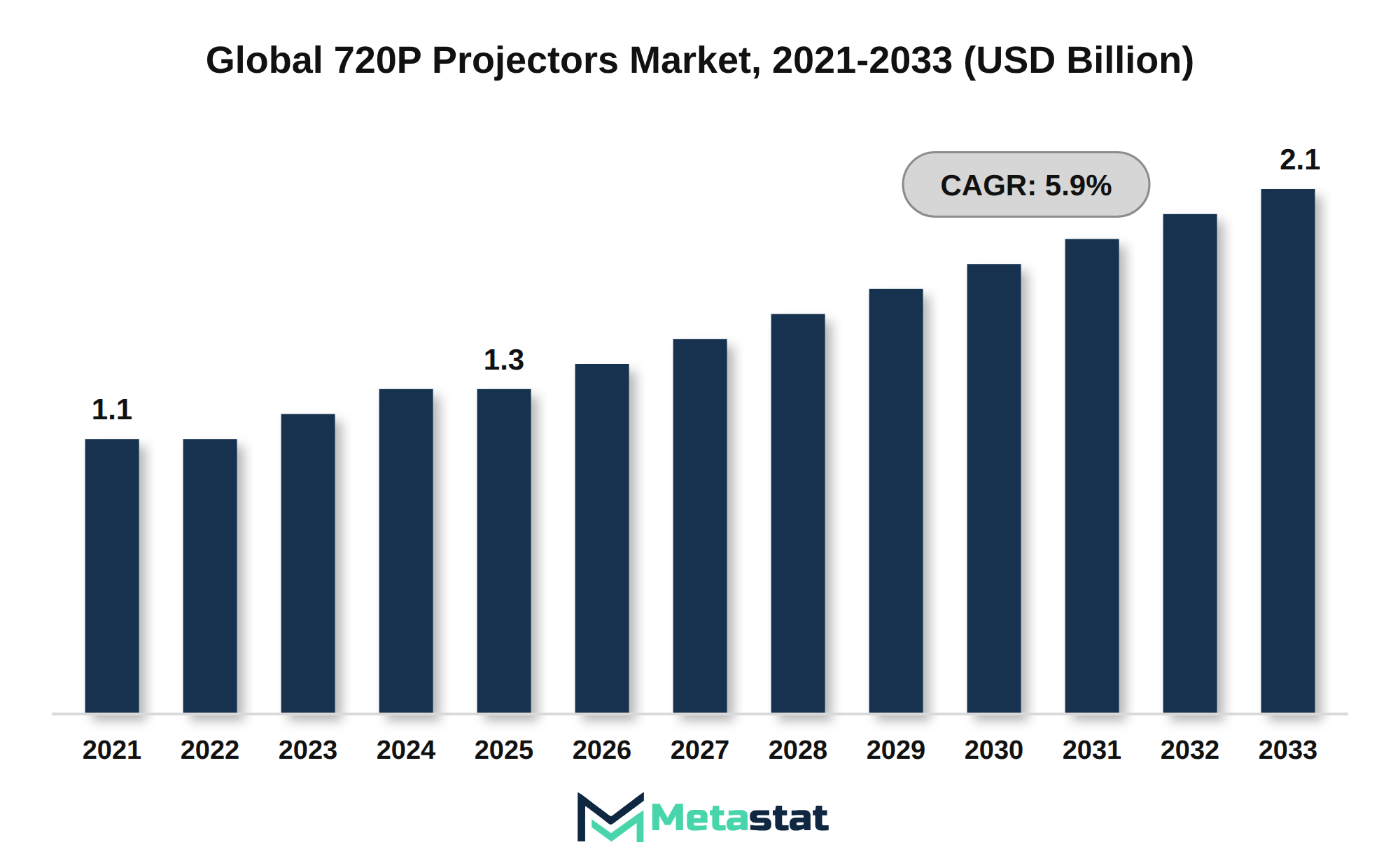
Increased consumer interest in home entertainment solutions drives growth within the 720P Projectors market. Factors influencing this trend include the shift toward at-home leisure activities, prompted by lifestyle changes and urbanization. A growing base of consumers, especially younger generations, seeks high-quality viewing experiences for gaming, movies, and other entertainment options. This consumer behavior influences manufacturers to enhance projector offerings tailored for home use, resulting in increased competition among suppliers.
Technological advancements play a critical role in supporting this demand. Innovations in projector technology, including improved resolution, portability, and connectivity features, enhance user experiences. Enhanced accessibility and versatility of projectors support rising consumer adoption, further stimulating market growth. The expanding market aligns with the broader trend of digital transformation in consumer electronics, facilitating enhanced integration with various devices and platforms, which strengthens overall demand.
This evolving market landscape positions manufacturers to capitalize on changing consumer preferences, ultimately contributing to the projected growth of the market. Enhanced products that meet the rising demand for quality home entertainment options are expected to capture significant market share in the coming years.
Rapid digital transformation and technological integration drive substantial advancements within the 720P Projectors market. Increasing reliance on automated systems, artificial intelligence, and software adoption enhances operational capabilities across various sectors, including entertainment and corporate environments. These factors contribute to heightened demand for projectors featuring advanced functionalities, aligning with evolving customer expectations for high-quality visual experiences.
Investment in infrastructure development creates an environment conducive to adopting innovative technologies. Businesses prioritize upgrading their digital assets and network capabilities to remain competitive. This trend leads to increased capital investment in 720P projectors featuring enhanced connectivity and integration with existing systems. Operational productivity gains from using these advanced projectors further support market growth.
Consumer behaviors shift towards preferences for integrated and modernized solutions that offer convenience and enhanced performance. The transition towards digitalization across sectors emphasizes the necessity for projectors delivering superior resolution and adaptability. This evolution significantly influences purchasing decisions and drives market growth.
The 720P Projectors market encounters significant restraints stemming from increasing regulatory compliance requirements and economic challenges. Regulatory frameworks impose strict standards on energy efficiency and emissions, leading to heightened compliance costs for manufacturers. These costs pressure pricing strategies and limit the ability to innovate, particularly for smaller players striving to compete in the market.
Macroeconomic headwinds, including inflationary pressures, contribute to operational difficulties. Rising material costs and labor expenses create an environment where capital investment remains constrained. Consequently, companies experience delays in technology upgrades and product releases, hindering market advancement.
Supply chain disruptions have intensified recently, impacting the availability of key components necessary for projector manufacturing. Geopolitical instability exacerbates these issues, creating uncertainty in procurement and logistics. This instability affects pricing models and consumer confidence, resulting in reduced demand across various segments of the 720P Projectors market.
Infrastructure gaps impede market growth, particularly in emerging regions where access to high-quality audiovisual technology remains limited. Connectivity deficits in rural and remote areas restrict the adoption of 720P projectors for educational and business applications. Deployment bottlenecks related to skilled labor shortages hinder the effective installation and maintenance of these devices, limiting their market potential.
Investment in advanced technology presents challenges, particularly when competing with alternative offerings. The rise of substitutes, including large-screen displays and enhanced home entertainment systems, pressures traditional projector sales. While these alternatives gain popularity, the 720P Projectors market experiences increased competition, complicating growth prospects.
Overall, the combination of regulatory compliance, economic pressures, supply chain disruptions, and the emergence of alternative technologies creates a complex environment for the 720P Projectors market. Manufacturers navigate these challenges to achieve sustainable growth and maintain competitive positioning in a shifting market landscape.
The 720P Projectors market experiences significant challenges stemming from geopolitical fragmentation and trade deficits. Heightened tensions between countries lead to tariff frictions, impacting the pricing strategies of manufacturers. These trade barriers restrict market access, complicating the importation of essential components and finished products. Increased operational costs due to these tariffs constrain profit margins for manufacturers.
Technological disruptions further complicate the market landscape. Rapid advancements in projection technology demand continuous investment in research and development, creating pressure on companies to innovate. Firms struggling with complex R&D integrations fall behind competitors, resulting in reduced market share. Interoperability friction between evolving technologies complicates product compatibility, driving up development costs and lengthening product launch timelines.
Volatility in feedstock and component availability impacts production schedules and costs. Frequent disruptions in the supply chain, combined with rising input costs, create additional hurdles for manufacturers. Ongoing instability threatens the timely delivery of products and leads to excess inventory or stock shortages. Such challenges require firms to reassess supply chains and adopt more resilient strategies.
Workforce skill gaps and talent retention pressures further exacerbate these challenges. Companies within the market struggle to find skilled labor capable of adapting to new technologies, limiting growth potential. Automation displacements, while improving efficiency, lead to workforce reductions, causing additional strains on talent management. This scenario creates an environment where businesses invest in training and development to maintain competitive advantage.
Environmental sustainability demands place further pressures on operational practices. Increasing requirements for decarbonization and reducing lifecycle footprints drive companies to invest in greener technologies. Failure to adapt to evolving legal liabilities results in non-compliance costs and reputational risks. The complexity of meeting these sustainability goals diverts resources away from core business operations, impacting profitability within the 720P Projectors market.
The 720P Projectors market experiences growing opportunities driven by emerging regional demands, particularly in Asia Pacific and North America. Rapid urbanization and rising disposable incomes in these regions fuel demand for advanced projection technologies in home entertainment and business applications. Infrastructure modernization efforts further enhance market prospects, facilitating the integration of 720P projectors into educational institutions and corporate settings.
Technological disruptions, including the development of more efficient light sources and improved display technologies, contribute to market expansion. Innovations including laser and LED projection systems offer enhanced performance and energy efficiency, aligning with sustainability imperatives. The trend towards eco-friendly compliance supports brands that adopt greener technologies, appealing to environmentally conscious consumers.
Strategic consolidation within the industry enables companies to diversify product offerings and enhance market reach. Cross-industry mergers and acquisitions play a significant role in broadening capabilities, integrating next-generation innovations into existing portfolios. This trend positions players for competitive advantage and drives growth in niche applications, including portable and outdoor entertainment solutions.
Shifts in buying behaviors, influenced by digital procurement trends, lead to evolving commercial models. Buyers increasingly prefer online retail channels, aligning with broader digital transformation initiatives. This transition allows for streamlined purchasing processes and improved accessibility to a broader range of products in the 720P Projectors market.
Supply chain localization enhances resilience, ensuring timely availability of components and reducing lead times. Strategic buffering and import substitution frameworks enable companies to mitigate risks associated with global supply chain disruptions. These strategies support growth initiatives while maximizing operational yield through value-chain optimization and process automation.
Asset life-cycle extensions through maintenance upgrades and retrofitting strategies ensure long-term customer satisfaction. This approach enhances product longevity and encourages brand loyalty, contributing to sustained revenue streams in the competitive environment of the 720P Projectors market.
The Global 720P Projectors market is segmented based on Product Type, Light Source, Application, and Distribution Channel.
DLP projectors exhibit a valuation of USD 0.7 billion in 2026, with projections indicating growth to USD 0.9 billion by 2033, at a CAGR of 5.5% during the forecast period. Demand for DLP projectors arises from superior image quality and reliability, appealing to both home entertainment enthusiasts and corporate users. The increasing adoption of advanced display technologies drives segment expansion, with businesses seeking high-quality visuals for presentations and consumers desiring enhanced movie-watching experiences.
Technological maturation in DLP systems enhances performance, promoting next-generation upgrades that attract consumers. The evolution of DLP technology, particularly in the context of brighter and more energy-efficient models, supports wider applications across various sectors. The gaming industry benefits from rapid advancements in DLP projectors, because players desire larger displays and enhanced clarity for immersive experiences.
Cost structures for DLP projectors remain competitive, facilitating broader market penetration. Pricing volatility persists due to fluctuating raw material costs, impacting profit margins across the supply chain. However, suppliers strategically manage these factors by optimizing production processes and sourcing materials efficiently. The ongoing development of innovative features in DLP projectors creates a competitive edge, opening strategic opportunity windows for manufacturers striving to capture market share.
The DLP segment within the 720P Projectors market reflects strong growth potential, driven by technological advancements, evolving consumer preferences, and strategic market positioning. The projected growth trajectory reinforces the significance of DLP technology in the competitive environment of projectors.
Growth in the LCD segment of the 720P Projectors market is driven by increasing demand for high-quality visual presentations across various applications, including home entertainment, education, and business settings. This segment benefits from advancements in display technologies, offering enhanced image quality and energy efficiency. Factors including affordability and user-friendly features contribute to rising adoption among consumers and businesses, creating a favorable environment for expansion.
The LCD segment is projected to reach USD 1.1 billion by 2033, at a CAGR of 6.2% during the forecast period. This growth trajectory reflects a shift towards more immersive viewing experiences, aligning with evolving consumer preferences for larger, high-definition displays. Increased investment in educational institutions and corporate environments highlights the significance of this segment within the 720P Projectors market.
Emerging applications, particularly in portable entertainment and large venue displays, further enhance the market's potential. The segment's versatility allows it to address diverse needs, from casual home use to professional presentations. Strategic opportunities arise from ongoing technological maturation and the introduction of next-generation upgrades, ensuring the LCD segment remains competitive and relevant.
Demand for LCoS projectors within the 720P Projectors market demonstrates a gradual increase, reflecting rising consumer interest in high-quality visual experiences. This growth is driven by the enhanced image quality and color accuracy provided by LCoS technology, appealing to both home entertainment and business presentation sectors. The anticipated market value of LCoS projectors is USD 0.1 billion by 2033, indicating a steady upward trajectory.
Technological advancements in LCoS projectors contribute to their appeal, particularly in applications requiring sharp imagery and accurate colors. End-users across education and corporate environments recognize the advantages of LCoS projectors for training, presentations, and collaborative work, further supporting segment expansion. Increasing integration of these projectors into larger commercial displays enhances their visibility and usage in diverse settings.
Cost structures associated with LCoS projectors reflect advanced technology and production processes. Pricing volatility arises from fluctuations in raw materials and manufacturing costs, influencing overall market dynamics. Despite these pressures, strategic opportunity windows for LCoS projectors continue to grow, driven by ongoing investments in product evolution and next-generation upgrades. Such developments ensure that the market maintains its competitive edge and meets evolving consumer demands.
In the 720P Projectors market, demand for LED light source projectors emerges from their energy efficiency and long lifespan. A growing emphasis on cost-effective solutions in both residential and commercial sectors encourages adoption, driven by consumers and businesses seeking devices that reduce operational expenses. This shift aligns with the trends towards sustainability and reduced environmental impact, further increasing interest in LED technology.
Technological advancements in LED projectors enhance image quality and brightness, meeting the increasing expectations of consumers for high-definition displays. The evolution of product features, including wireless connectivity and smart integration, attracts new customer segments, particularly among younger demographics who prioritize convenience and advanced functionalities. This technological maturation significantly influences consumer preferences and purchasing decisions, shaping the market landscape.
End-use dynamics reflect a broadening application scope, with LED projectors gaining traction in diverse environments including home entertainment, education, and corporate settings. Increased utilization in portable and outdoor entertainment venues demonstrates the flexibility of LED projectors, catering to a wide range of consumer needs. This adaptability opens strategic opportunity windows for manufacturers aiming to capture emerging markets.
Pricing volatility linked to raw material sourcing and production costs affects profit margins. Ongoing innovations and competitive strategies among key players help mitigate these pressures. Supply chain resilience remains crucial for ensuring consistent availability of components, which is vital for maintaining market stability. Overall, the outlook for LED projectors within the 720P Projectors market is positive, supported by evolving consumer preferences and technological advancements.
Growing interest in lamp-based projectors stems from their affordability and versatility in various applications. Users in home entertainment, education, and corporate settings frequently favor these projectors due to their reliable performance and cost-effective operation. The longevity of lamp-based projectors contributes to their sustained appeal, because consumers invest in devices offering extended usage before requiring lamp replacement.
Technological maturation leads to enhanced lamp efficiency, significantly reducing energy consumption over time. Increased focus on energy-efficient solutions influences consumer purchasing decisions, prompting manufacturers to innovate in this segment. The market experiences rising adoption driven by advancements in lamp technology, including improvements in brightness and color accuracy. These enhancements cater to diverse end-use dynamics, creating synergies across multiple sectors.
Regulatory compliance standards regarding energy efficiency and waste management impact the segment. Manufacturers focus on meeting these standards while ensuring product performance aligns with consumer expectations. This compliance not only enhances the product's marketability but opens opportunities for market expansion, particularly among environmentally conscious consumers.
Competitive pressures within the market have prompted players to refine cost structures while addressing pricing volatility. This environment encourages manufacturers to optimize supply chains and explore alternative sourcing strategies for raw materials. These adaptations mitigate risks associated with fluctuating component costs and enhance profitability in a competitive landscape.
Strategic opportunity windows arise because the market evolves, with manufacturers looking to capitalize on emerging trends including hybrid and smart projector features. Investment in research and development remains critical for stakeholders aiming to innovate within the lamp-based segment. By focusing on next-gen upgrades and product evolution, companies strengthen their positions in the growing 720P Projectors market.
Technological advancements in laser projectors enhance image quality and operational efficiency, contributing to the increasing adoption of this light source in the 720P Projectors market. The shift towards laser technology aligns with consumer preferences for high-definition visuals and longer-lasting performance. Educational institutions and corporate environments exhibit a growing inclination towards laser projectors due to low maintenance requirements and consistent brightness over time.
Cost structures for laser projectors reflect higher initial investments compared to traditional lamp-based options. However, reduced maintenance and operational costs support long-term savings and present a compelling value proposition for purchasers. This competitive pricing strategy highlights growth potential in the segment.
End-use dynamics continue to evolve, with applications across various sectors, including education, corporate presentations, and entertainment. The trend towards immersive experiences in gaming and large venues drives demand for high-quality projection solutions, reinforcing the relevance of laser technology. While technological maturation progresses, features including smart connectivity and enhanced image processing capabilities enhance product evolution, attracting a broader customer base.
Strategic opportunity windows arise from the increasing demand for energy-efficient and environmentally friendly products. Regulatory compliance and certifications in relation to energy consumption standards further support the transition to laser projectors. The market adapts to these shifts, and businesses investing in laser technology position themselves advantageously within the competitive environment.
Hybrid light sources in the 720P Projectors market reflect a convergence of technologies, enabling projectors to deliver enhanced brightness and energy efficiency. The shift towards hybrid systems results from the demand for versatile solutions that cater to various applications, including home entertainment and business presentations. This segment experiences growth owing to consumer preferences for high-quality visuals and lower operational costs, positioning it favorably within the broader market.
Adoption of hybrid projectors is driven by advancements in LED and lamp-based technologies, which enhance image clarity and longevity. Educational institutions and corporate sectors increasingly embrace these projectors for their ability to support diverse display needs, driving significant uptake. The trend towards hybrid systems aligns with the industry's focus on sustainability, appealing to environmentally conscious consumers seeking energy-efficient options.
Next-generation upgrades play a crucial role in the evolution of hybrid projectors, ensuring compatibility with modern display standards and connectivity options. This adaptability encourages innovation, allowing manufacturers to introduce features that cater to the evolving preferences of end-users. Overall, the hybrid segment is projected to expand, driven by technological maturation and rising consumer demand in the 720P Projectors market.
Innovations in HID and niche solid-state configurations drive interest within the 720P Projectors market, particularly in specialized applications that require unique lighting solutions. These technologies offer advantages in energy efficiency and lifespan compared to traditional light sources, appealing to customers seeking longer-lasting products. The integration of such configurations in business, education, and large venues enhances performance and operational flexibility.
Demand for these specialized configurations receives support from advancements in technology, including miniaturization and improved thermal management. Companies exploring opportunities in this sub-segment focus on creating products that cater to specific market needs, including mobile presentations or high-end cinema experiences. This strategic focus enables manufacturers to differentiate themselves within the competitive environment.
Emerging trends in environmental sustainability create an additional layer of demand for HID and niche solid-state configurations. Organizations strive to reduce their carbon footprint, and greener technologies align with regulatory compliance objectives and corporate responsibility initiatives. This alignment of sustainability goals with product offerings increases market penetration for manufacturers.
Overall, the evolution of HID and niche solid-state configurations in the 720P Projectors market highlights the importance of technological maturation and product evolution. By investing in innovative solutions, companies position themselves for growth and capitalize on strategic opportunity windows arising from changing consumer preferences and industry dynamics.
Consumer preferences toward immersive home entertainment experiences have spurred growth in the market for 720P projectors. While individuals increasingly seek high-quality visual experiences for movie nights, gaming, and parties, projectors serve because an appealing alternative to traditional televisions. The shift toward larger display sizes without occupying significant space drives adoption, particularly among urban consumers with limited living areas.
Technological advancements in projector capabilities enhance appeal, with features including improved brightness, contrast ratio, and resolution. Enhanced connectivity options, including wireless capabilities, allow easy integration with streaming devices and smart home systems, further increasing attractiveness for home users. The evolution of projector designs, including compact and portable models, caters to diverse consumer needs, making projectors suitable for various settings, from living rooms to outdoor environments.
Next-generation upgrades focusing on image quality and user experience significantly contribute to segment expansion. Innovations in light source technologies, including LED and laser, deliver superior longevity and efficiency while reducing maintenance costs. These advancements support the growing preference for projectors within residential markets, influencing purchasing decisions and consumer loyalty.
Home entertainment applications align with broader consumption shifts toward personalized viewing experiences. The increasing adoption of streaming services multiplies the appeal of high-quality projected images, encouraging consumers to invest in suitable home entertainment technology. This alignment between consumer habits and technological advancements positions the market favorably for sustained growth during the forecast period.
In the area of Business & Corporate Presentation, demand for 720P projectors demonstrates strong potential driven by the increasing need for effective communication tools in professional settings. Organizations increasingly prioritize high-quality visual aids for presentations, training sessions, and corporate events. This shift creates an environment where projectors that deliver clear and high-quality images become essential.
Technological advancements contribute significantly to the evolution of projectors designed for business applications. Enhanced connectivity options, including wireless capabilities and compatibility with various devices, facilitate integration into existing corporate ecosystems. Such features support the growing trend toward remote work and virtual meetings, allowing businesses to adapt their presentation strategies accordingly.
Investment in next-generation upgrades remains critical for suppliers within the market. Companies focus on improving product features, including brightness levels, resolution, and portability, to meet the evolving demands of corporate environments. This ongoing innovation creates a competitive landscape, encouraging suppliers to refine their offerings and capture greater market share.
End-use dynamics indicate a distinct preference for projectors that provide versatility across multiple applications. The ability to transition from traditional corporate presentations to educational or entertainment uses enhances the appeal of 720P projectors. This adaptability aligns with consumption shifts favoring multifunctional devices that maximize utility for businesses.
Regulatory compliance standards influence design and manufacturing processes within the market. Suppliers adhere to specific guidelines concerning energy efficiency and environmental sustainability, driving innovation in the development of eco-friendly projectors. This focus not only meets regulatory demands but attracts environmentally conscious consumers.
Price volatility represents a noteworthy challenge for manufacturers in the Business & Corporate Presentation segment. Fluctuations in raw material costs impact pricing strategies, necessitating careful management of cost structures. Companies are increasingly seeking ways to enhance supply chain resilience, mitigating risks associated with sourcing and logistics vulnerabilities.
Strategic opportunity windows emerge owing to businesses looking to capitalize on the growing demand for high-quality presentation equipment. Capital investment in research and development allows suppliers to explore disruptive alternatives that differentiate their products from competitors. This proactive approach positions companies to respond effectively to shifts in market preferences and consumer expectations.
Growing adoption of 720P projectors within educational institutions stems from the need for enhanced learning experiences. These projectors facilitate interactive learning, making lessons more engaging and effective, which aligns with the educational sector's evolving demands. Institutions increasingly seek technology that supports collaborative and multimedia-rich instruction, increasing the market's appeal.
Technological maturation significantly influences the education and training sub-segment. Advanced features, including wireless connectivity and compatibility with various devices, improve user experience, leading to broader implementation in classrooms. The transition from traditional teaching methods to technology-enhanced learning environments highlights the necessity for integrated and accessible visual solutions.
Investment in next-generation upgrades enhances the performance and capabilities of projectors, driving demand in this segment. Educational institutions aim to keep pace with technological advancements, ensuring they provide students with the best learning tools. Consequently, demand for innovative features and streamlined performance is strengthening the market.
Shifts in consumption patterns highlight a growing preference for portable and easy-to-use projectors among educators. The increasing focus on hybrid and remote learning environments fuels the need for flexible and adaptable audiovisual solutions. This trend encourages manufacturers to develop lightweight and compact models tailored for classroom settings.
Regulatory compliance standards and certifications play a vital role in shaping the market environment. Educational institutions prioritize equipment that meets safety and environmental regulations, reinforcing the demand for compliant projectors. Manufacturers that adhere to these standards gain a competitive edge in the education sector.
Overall, the evolution of educational methodologies and the integration of technology in teaching practices significantly impact the 720P Projectors market. Institutions that invest in advanced projector solutions enhance their teaching capabilities, driving growth and creating a more interactive learning environment.
Gaming applications within the 720P Projectors market experience heightened demand driven by the increasing popularity of immersive gaming experiences. Gamers seek high-quality visuals and responsive performance, prompting a shift towards projectors that deliver superior image clarity and reduced input lag. Growing accessibility of high-definition content enhances consumer interest, pushing manufacturers to innovate and refine projector technology.
Technological maturation influences the development of gaming projectors, featuring advancements in resolution and brightness. Next-gen upgrades, including enhanced color accuracy and contrast ratios, attract gaming enthusiasts demanding optimized performance. This evolution in product capabilities supports competitive positioning in the market, enabling manufacturers to differentiate offerings based on unique features and specifications.
Consumer preferences toward larger display formats encourage the adoption of projectors for gaming setups, expanding market opportunities. Gamers prioritize screen size for an immersive experience, making projectors a favorable alternative to traditional displays. Integration of features tailored to the gaming community, including customizable settings and connectivity options, enhances acceptance among users.
Several gaming-focused manufacturers invest in specialized projectors that cater to this segment. Strategic opportunities arise from addressing gaps in performance and features specific to gaming applications, creating avenues for growth. By directing capital investments towards innovative designs and technologies, companies enhance their offerings while responding to consumer demands.
Large venues and commercial displays increasingly rely on high-performance projection solutions. Growing demand for immersive visual experiences in event spaces, cinemas, and exhibition centers drives the adoption of advanced projectors. This segment benefits from technological advancements that enhance image clarity, brightness, and overall performance, catering to the specific needs of large-scale presentations.
Several factors contribute to the expansion of this segment within the 720P Projectors market. Increased investment in infrastructure for entertainment and corporate events supports the need for reliable projection systems. Users prioritize quality and reliability, leading to demand for projectors that withstand prolonged usage in diverse environments.
Technological maturation significantly influences segment growth. Enhanced connectivity features, including wireless capabilities and compatibility with a range of media devices, improve user experience and operational efficiency. These technological upgrades build consumer confidence in investing in high-quality projectors for large venues.
End-use dynamics indicate a shift towards higher-quality visual displays in various applications, including corporate presentations and live events. Consumers seek projectors that provide clear visuals and accurate colors, driving demand for products that meet these evolving expectations.
Cost structures and pricing volatility remain critical considerations in this segment. Competitive pricing strategies among manufacturers influence consumer purchasing decisions while ensuring product accessibility across various market segments. The focus on maintaining quality while managing costs continues to shape the competitive environment.
Strategic opportunities exist for manufacturers to innovate and refine their product offerings. By leveraging advancements in projection technology and addressing the specific needs of large venues, suppliers enhance their market positioning and capitalize on emerging trends within the market.
Growing interest in portable and outdoor entertainment significantly influences the 720P Projectors market. Applications for outdoor movie screenings, sporting events, and gatherings drive demand for high-quality projection solutions capable of delivering clear images in various lighting conditions. Technological maturation in battery life and enhanced portability of projectors facilitates their use in diverse settings, thus expanding their appeal among consumers.
Shifts in consumer behavior, leaning toward outdoor and experiential entertainment, support the adoption of portable projectors. Users increasingly seek flexibility, enabling easy transport and setup in outdoor environments. This trend aligns with a broader cultural movement toward outdoor activities and social gatherings, enhancing the potential for growth in the market.
Next-gen upgrades focus on improving image quality, connectivity options, and resilience against environmental factors. Manufacturers invest in developing lightweight designs and rugged features, which cater to the specific demands of outdoor usage. Such innovation enhances user experiences, positioning these projectors competitively within the broader entertainment technology sector.
Downstream applications extend to community events and commercial screenings, where reliable, portable projection solutions are essential. Businesses, schools, and organizations increasingly adopt these projectors for presentations and entertainment, creating a steady demand stream. This trend highlights the importance of understanding end-use dynamics within the market.
Demand for projectors in hospitality and specialized institutional applications reflects a significant trend within the 720P Projectors market. Increasing adoption of advanced presentation technologies enhances the user experience, supporting the need for high-quality visual displays in diverse settings. Institutions including hotels and conference centers recognize the value of incorporating projectors in their offerings, driving demand for reliable and versatile projection solutions.
Technological maturation plays a critical role, with enhancements in image quality, connectivity, and ease of use influencing purchasing decisions. Customers in this segment prioritize features including portability, installation flexibility, and compatibility with various media devices, which cater to diverse presentation needs. Enhanced features support expanded application areas, including training sessions, corporate events, and specialized functions.
Cost structures represent a major consideration, driven by organizations evaluating the total cost of ownership involving projector acquisition, maintenance, and operation. Organizations require efficient energy consumption and long operational lifespans to minimize ongoing expenses. Fluctuations in pricing influence purchasing behavior, prompting buyers to assess the balance between initial investment and long-term value.
The regulatory landscape surrounding audiovisual equipment impacts compliance standards for safety and performance. Adherence to these standards is essential for institutions to ensure reliable operation during events and presentations. Meeting these regulations builds trust among end-users, driving further investment in 720P projectors.
Strategic opportunity windows arise because businesses seek to modernize their audiovisual setups. Organizations increasingly incorporate projectors into their offerings, enhancing customer engagement through interactive and immersive experiences. This trend encourages investment in advanced technologies and innovative projector designs, stimulating growth within the market.
Consumer trends favor online retail because a primary distribution channel for 720P projectors. The convenience of purchasing projectors through online platforms enhances accessibility for customers, driving sales growth. Digital marketing strategies employed by retailers attract a wider audience, creating a competitive edge in the market. The proliferation of e-commerce platforms facilitates an increase in product variety, allowing consumers to compare options and make informed purchasing decisions.
Adoption of advanced payment options and improved online shopping experiences support user engagement, encouraging higher conversion rates. The availability of comprehensive product information and customer reviews on online platforms influences buyer decisions, building trust in purchases. Competitive pricing strategies among retailers enhance affordability for consumers, promoting a shift toward online purchasing over traditional retail channels.
Online retail in the 720P projectors market aligns with the growing trend of consumers seeking convenience and efficiency in their shopping experiences. Increased smartphone penetration and internet access contribute to the expansion of this channel, enabling more consumers to explore and purchase projectors online. These factors collectively support the growth trajectory of the online retail segment, reflecting a significant shift in how consumers engage with the market.
Consumer electronics retail is a vital component in the distribution of 720P projectors, driven by increasing consumer demand for home entertainment solutions. The preference for high-quality projection systems in residential settings results from enhanced viewing experiences and the proliferation of streaming services. Retailers capitalize on this trend by presenting the latest models, which feature advanced technologies including DLP, LCD, and LCoS.
Strong competition among brands further fuels innovation within this segment, leading to product evolution that appeals to tech-savvy consumers. Retailers respond to shifting consumer preferences by offering various models tailored to different applications, including gaming and home theater setups.
Effective marketing strategies, focusing on product features and competitive pricing, help drive sales in this channel. Retailers emphasize the importance of maintaining a diverse inventory to cater to a wide range of customer needs. This approach supports the growth of the market, ensuring that consumers find suitable projectors that meet their specific requirements.
While technology matures, retailers increasingly highlight next-generation upgrades in projectors, enhancing the overall customer experience. With the continuous introduction of new features and improvements, the consumer electronics retail channel serves because a vital link between manufacturers and end-users, influencing purchasing decisions and building brand loyalty in the 720P projectors market.
Direct sales serve because a significant distribution channel within the 720P Projectors market, providing consumers with direct access to products from manufacturers or authorized dealers. This channel benefits from the increasing customization options and personalized service, appealing to buyers seeking specific projector features tailored to their needs. Direct sales often result in enhanced customer engagement, building brand loyalty and repeat purchases.
Promotional efforts and strategic partnerships drive the expansion of the direct sales segment, giving rise to various promotional campaigns that highlight the advantages of purchasing directly from suppliers. This approach emphasizes quality assurance and post-purchase support, further attracting customers. Strong online platforms enhance the accessibility and convenience of shopping directly, allowing consumers to compare products and make informed decisions.
Technological advancements continue to influence the direct sales segment, enabling manufacturers to present innovative features and designs. This evolution attracts tech-savvy consumers seeking the latest developments in projection technology. The market experiences a shift in consumer behavior, with an increasing preference for online purchasing, which enhances the viability of direct sales because a primary distribution channel.
Price sensitivity remains a notable factor affecting purchasing decisions within the direct sales landscape. Competitive pricing strategies adopted by manufacturers and dealers create an environment that appeals to budget-conscious buyers. Effective pricing models and promotional discounts significantly influence purchasing trends, enhancing market growth potential.
While the market evolves, opportunities for capital investment and strategic collaborations arise, creating openings for new entrants and existing players to enhance their market presence. This dynamic environment encourages continual product evolution and innovation, ensuring that the direct sales channel remains a vital aspect of the 720P Projectors market.
Demand for system integrators and professional AV channels directly correlates with advancements in technology and evolving user requirements. Increased emphasis on high-quality audio-visual presentations within corporate environments encourages the integration of sophisticated 720P projectors into meeting spaces. Enhanced visual experiences are critical for effective communication, particularly in sectors where presentations play a central role, including business, education, and entertainment.
Technological maturation has positioned 720P projectors because reliable solutions in professional settings. The shift toward next-generation upgrades facilitates the adoption of these systems in various applications, leading to increased demand. With continuous product evolution, manufacturers emphasize features that enhance usability and performance, including improved connectivity options and integration with existing systems.
End-use dynamics within the market highlight the importance of customization and scalability. Businesses increasingly seek tailored solutions that align with specific operational requirements, creating a competitive environment among suppliers. Consumption shifts toward environmentally friendly options influence the selection of projection technology, with many organizations prioritizing energy-efficient models that meet regulatory compliance standards.
Pricing volatility remains a crucial factor affecting this sub-segment. Fluctuations in raw material costs impact overall pricing strategies, challenging suppliers to maintain profitability while providing quality products. Strategic opportunity windows arise for companies that effectively manage these dynamics while capitalizing on emerging trends in system integration and professional AV channels.
Distribution through IT distributors, specialty AV, and projector dealers presents unique dynamics within the 720P Projectors market. This channel captures attention due to its specialized focus on high-quality audio-visual products, catering to niche segments and professional applications. Increased demand for advanced projection solutions drives distributors to curate product offerings that align with technological advancements and user preferences.
Technological maturation in projection technology encourages these distributors to emphasize next-generation upgrades. Customers actively seek enhanced features including higher resolution, improved brightness, and innovative light sources, which drive inventory and sales strategies. This focus on evolving product lines enables distributors to capture market share and meet the growing expectations of end-users.
Downstream applications encompass various industries, including education, corporate environments, and large venues, which rely on projectors for effective visual communication. The adoption of 720P projectors in these sectors reflects a shift towards enhanced engagement and interactivity. Regulatory compliance standards influence purchasing decisions, compelling distributors to ensure that products meet necessary certifications and industry requirements.
Pricing volatility in the market impacts margin pressures on distributors. Fluctuations in raw material costs and supply chain challenges necessitate strategic pricing strategies that allow distributors to maintain profitability while remaining competitive. Substitution risks from alternative projection technologies and formats create a need for ongoing innovation and quality assurance from suppliers.
Strategic opportunity windows arise owing to the market evolution, enabling distributors to seize growth prospects. Increased capital investment towards advanced projection solutions supports expansion in this distribution channel. Strengthening relationships with manufacturers and building brand loyalty among customers contribute to the resilience and growth of this segment within the market.
Based on geography, the Global 720P Projectors market is divided into North America, Europe, Asia-Pacific, South America, Middle East, and Africa.
North America represents a significant portion of the global 720P Projectors market. The market is set to expand at a CAGR of 5.9% within the forecast period, reaching a market size (TAM) of USD 0.6 billion by the end of 2033. Key drivers include a strong demand for home entertainment systems, enhanced corporate presentations, and educational tools that employ advanced projection technology. The United States, Canada, and Mexico serve because major contributors to this growth, reflecting established consumer preferences and institutional investments.
Technological advancements and increasing disposable incomes support the adoption of high-quality projectors across various sectors. The emphasis on immersive and interactive experiences drives demand within the home entertainment market, while corporate environments prioritize efficient and effective communication tools. Educational institutions benefit from the integration of 720P projectors, facilitating an engaging learning atmosphere.
Supply chain regionalization and localized manufacturing strategies enhance the competitiveness of domestic players, ensuring timely product availability and responsiveness to market needs. Companies actively invest in developing innovative projection technologies and expanding their distribution networks to cater to diverse customer preferences. Cross-border trade corridors enhance accessibility to international markets, promoting collaboration among regional suppliers.
Overall, robust infrastructure and energy grid resiliency contribute to the favorable growth environment for the 720P Projectors market in North America. Consumer behavior reflects a shift towards online retail channels, emphasizing the importance of efficient procurement experiences. This combination of factors positions the region for sustained growth and increased market penetration in the coming years.
Demand for 720P projectors in Europe benefits from a diverse array of applications, including home entertainment, business presentations, and educational settings. Countries including Germany, France, and the UK display strong adoption rates attributed to advanced technological infrastructure and consumer awareness. The increasing emphasis on high-quality visual displays drives growth within the market, driven by consumers seeking enhanced viewing experiences.
In Italy and Spain, the market experiences upward momentum fueled by rising disposable incomes and a shift toward immersive entertainment solutions. Russia contributes to this growth with a significant focus on modernization efforts across various sectors, including education and corporate environments. Regional stakeholders invest in infrastructure upgrades, making accessibility to high-performance projectors more prevalent.
Localized manufacturing capacities enhance supply chain efficiencies, facilitating quicker access to advanced projector technologies. This trend, combined with favorable regulatory frameworks, positions Europe because a mature market for 720P projectors. Ongoing competition among domestic market participants ensures a robust environment, promoting innovation and expanded offerings tailored to specific customer needs.
The market's growth trajectory highlights the importance of cultural nuances in procurement dynamics, influencing business-to-business buying behaviors. The combination of regional resource availability and energy grid resiliency supports the shift toward high-value replacement cycles. Investment flows into the region, and European countries are expected to continue playing a significant role in shaping the global 720P projectors market.
Asia-Pacific represents a growing share of the global 720P Projectors market, accounting for 35.4% in 2025. The region benefits from rapid technological advancements and increased consumer spending on home entertainment systems, contributing to robust market growth.
China, Japan, and India emerge because key players driving demand, with escalating adoption of projectors in various applications, including education, business presentations, and gaming. Infrastructure modernization initiatives enhance the market potential by improving access to advanced technologies and facilitating consumer engagement.
Local manufacturing capabilities and favorable investment environments encourage the emergence of domestic brands, influencing competitive dynamics within the market. Increased demand for energy-efficient and high-performance projectors aligns with regional regulatory frameworks promoting sustainability.
Market players focus on localized procurement dynamics, adjusting their strategies to meet the unique preferences and cultural nuances of consumers in the region. This tailored approach drives the growth of the 720P Projectors market and encourages lasting relationships between vendors and buyers.
Market dynamics in South America, which includes countries like Brazil and Argentina, present unique opportunities for 720P Projectors. The region's share of the global market reached 7.00% in 2025, reflecting a growing interest in projection technology among consumers and businesses alike. Demand is influenced by the increasing adoption of digital technologies across various sectors, including education and entertainment.
The diverse cultural environment in South America drives demand for 720P projectors in home entertainment, public displays, and business presentations. Brazil, being a major market player, leads in consumption, while Argentina follows closely. The rising middle class and urbanization contribute to higher disposable incomes, resulting in increased investments in home and corporate entertainment systems.
Infrastructure modernization facilitates the growth of the 720P Projectors market. Enhanced connectivity and improved energy grid resiliency have strengthened the distribution of projectors across urban and rural areas. Localized manufacturing initiatives and procurement dynamics are becoming more prominent due to international brands seeking to establish a foothold in the region, aligning with consumer preferences.
Vendor consolidation trends highlight the competitive landscape, where established players aim for strategic partnerships and collaborations to enhance market presence. Market entrants focus on localized compliance mandates to ensure regulatory adherence while catering to specific regional demands. These dynamics contribute to the expansion of the 720P Projectors market within South America.
The Middle East and Africa region demonstrates a growing interest in 720P projectors, driven by factors unique to the area. Rapid urbanization and an increasing emphasis on modern educational tools enhance the demand for projectors, particularly in countries like Saudi Arabia, the UAE, and South Africa. The market reflects potential through infrastructure modernization efforts, which improve access to advanced technologies in both educational and corporate environments.
Emerging market front-runners, Saudi Arabia and the UAE, show significant investments in educational infrastructure and corporate training programs. This investment facilitates greater adoption of 720P projectors, impacting local procurement dynamics and influencing purchasing decisions in the market. Cultural nuances around business and education emphasize the importance of visual presentation tools, which drive demand.
Regional competitive landscapes identify local players who serve the market effectively, providing tailored solutions that align with regional preferences. Increased foreign direct investment (FDI) flows into these countries contribute to localized manufacturing densities, which strengthen supply chain regionalization efforts. The market expands consistently through a combination of high-value replacement cycles and incremental growth vectors, particularly in urban centers.
Energy grid resiliency and local infrastructure readiness play crucial roles in the adoption of 720P projectors within the region. Geopolitical factors, alongside trade policy shifts, impose specific challenges that local vendors navigate adeptly. Overall, the Middle East and Africa region represents a valuable and developing segment of the global 720P Projectors market, demonstrating strong potential for growth and increased market share.
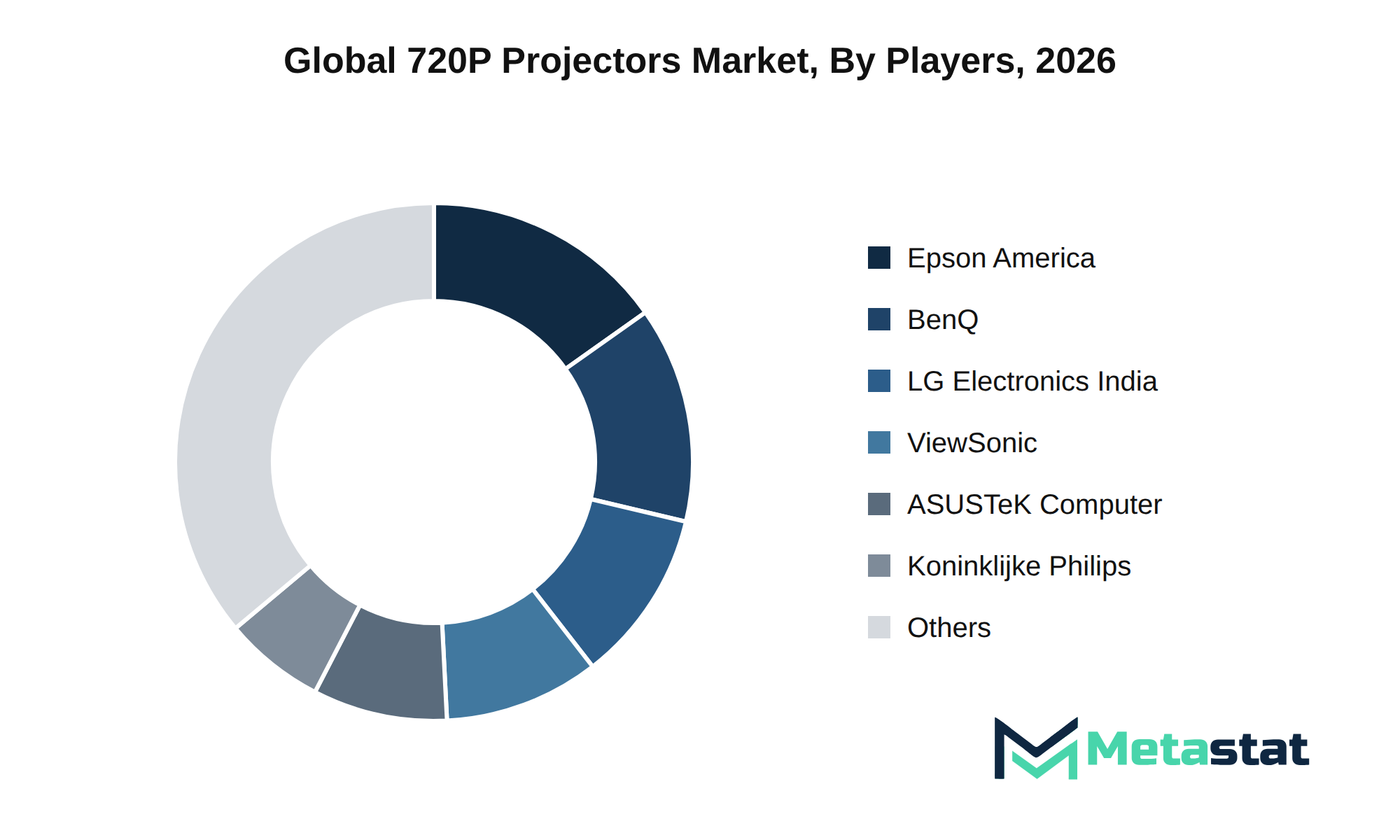
The 720P Projectors market exhibits significant competitive dynamics, driven by various strategic behaviors among key players. Companies including Epson America, Inc., BenQ, and LG Electronics India Limited focus on product differentiation and technological advancements to maintain market relevance. Investments in research and development of proprietary technologies and innovative product features contribute to competitive positioning.
Strategic alliances and joint ventures among suppliers enhance market penetration and distribution efficiencies. Companies leverage these partnerships to extend their reach across different regions, including North America, Europe, and Asia Pacific. The competitive environment remains intense, with players including ViewSonic Corporation and ASUSTeK Computer Inc. adopting aggressive go-to-market strategies to capture market share.
Barriers to entry in the market are significant due to established brand equity and customer retention strategies implemented by major players. The presence of strong intellectual property portfolios further complicates the landscape for new entrants. This competitive framework ultimately shapes future growth vectors and defensive imperatives within the 720P Projectors market.
Market size is forecast to rise from USD 1.3 billion in 2025 to over USD 2.1 billion by 2033. The base case projects a growth trajectory at a 5.9% CAGR, driven by increasing demand across various sectors including home entertainment and business presentations. In a bullish scenario, heightened consumer interest in high-definition viewing experiences and advancements in technology could further accelerate market expansion. Economic downturns or shifts in consumer preferences inhibit growth.
The 720P Projectors market exhibits potential for structural consumption shifts, particularly driven by next-generation technologies integrating into existing frameworks. R&D commercialization timelines play a critical role in determining the pace of innovation and product life-cycles. Regulatory evolution continues to influence market dynamics, particularly concerning compliance with environmental standards and technological advancements.
Geopolitical realignments and evolving trade corridors significantly impact global supply chains, creating opportunities for strategic capital allocation and infrastructure commitments. Emerging white-space opportunities arise from unmet enterprise needs, positioning the market to identify high-growth pockets across various applications. Executive-level strategic imperatives focus on enhancing product offerings and establishing defensibility roadmaps to secure future growth.
The report strategically identifies and profiles the key market players and analyses their core competencies in each sub-segment of the 720P Projectors market.
Report Attributes | Details |
Study Period | 2021-2033 |
Base Year | 2025 |
Estimated Year | 2026 |
Forecast Period | 2026-2033 |
Historical Period | 2021-2025 |
Growth Rate | CAGR 5.9% from 2026 to 2033 |
Revenue Unit | USD billion |
Segmentation | By Product Type, Light Source, Application, Distribution Channel, and Region |
By Region | North America (By Product Type, Light Source, Application, Distribution Channel, and Country)
|
Europe (By Product Type, Light Source, Application, Distribution Channel, and Country)
| |
Asia Pacific (By Product Type, Light Source, Application, Distribution Channel, and Country)
| |
South America (By Product Type, Light Source, Application, Distribution Channel, and Country)
| |
Middle East and Africa (By Product Type, Light Source, Application, Distribution Channel, and Country)
|
Find answers to common questions about this report
The 720P Projectors market size was valued at USD 1.3 billion in 2025, according to the Metastat Insights study.
The 720P Projectors market is projected to grow at a CAGR of 5.9% during the forecast period from 2026 to 2033.
The North America 720P Projectors market size is estimated to reach USD 0.6 billion by 2033.
The LCD segment leads the 720P Projectors market with a projected value of USD 1.1 billion by 2033. This figure surpasses the other product types, indicating strong demand in this category.
Increased consumer interest in home entertainment solutions drives growth within the 720P Projectors market. Factors include a shift towards at-home leisure activities, technological advancements in projector features, and a growing demand for high-quality viewing experiences among younger consumers. These elements collectively enhance adoption rates and stimulate market expansion.
Asia Pacific holds the dominant share of the 720P Projectors market, accounting for 35.4% in 2025. This region's significant share positions it ahead of North America, which holds 29.9%.
The 720P Projectors market faces significant restraints due to increasing regulatory compliance costs, economic challenges like inflation, and supply chain disruptions. These factors create operational difficulties for manufacturers, limit innovation, and hinder market advancement, particularly for smaller players striving to compete effectively.
Increased consumer interest in home entertainment solutions significantly drives product adoption within the 720P Projectors market. Technological advancements, including improved resolution and connectivity features, enhance user experiences, while a growing base of consumers, particularly younger generations, seeks high-quality viewing options for gaming and movies.
The 720P Projectors market is estimated to reach a valuation of USD 2.1 billion by 2033.
Key players in the 720P Projectors market include Epson America, Inc., BenQ, LG Electronics India Limited, ViewSonic Corporation, ASUSTeK Computer Inc., and Vivitek (Delta Electronics, Inc.).
The analysts below cover Electronics and Semiconductor research at Metastat Insights.
LEAD ANALYST
Utkarsh Khirodkar is a Lead Market Research Analyst at MetaStat Insight, specializing in market intelligence, technology sector assessments, and competitive strategy.

PRINCIPAL CONSULTANT - ENTERPRISE AI & EMERGING TECHNOLOGIES
Banking & Finance · Electronics and Semiconductor · Energy and Power · Healthcare IT · Information & Technology · Professional Services
Vijay Gunti is a Principal Consultant at MetaStat Insight, bringing over two decades of experience across enterprise digital transformation, technology strategy, and intelligent systems.

PRINCIPAL CONSULTANT - QUALITY SYSTEMS & COMPLIANCE
Electronics and Semiconductor · Machinery & Equipment · Professional Services
Omkar Phadtare is an Industry Consultant at MetaStat Insight, specializing in quality systems, regulatory compliance, and standards benchmarking to drive data-driven market intelligence and strategic industry research.

ENERGY & INFRASTRUCTURE INDUSTRY CONSULTANT
Automotive and Transportation · Electronics and Semiconductor · Energy and Power · Machinery & Equipment
Saurabh Vasant Ganvir consults for Energy & Infrastructure Industry at MetaStat Insight, specializing in renewable energy, solar EPC, and electric vehicle (EV) infrastructure markets.

LEAD CONSULTANT - COMMUNICATION, TELECOM, AND IT
Electronics and Semiconductor · Information & Technology · Machinery & Equipment · Professional Services
Ravindra Sathe Consultants for Communication, Telecom, and IT at MetaStat Insight. He leads the firm's industry research initiatives across telecommunications infrastructure, digital connectivity, enterprise networking, and emerging information technology domains.
Most industry reports on warehouse automation bundle autonomous mobile robots and fixed conveyor installations into the same top-level numbers, which complicates advisory work. This study split the market cleanly by payload tiers, navigation technology, and fleet management software layers. The regional forecast for Western Europe gave our team defensible adoption benchmarks when evaluating capital allocation for logistics clients, saving us days of secondary data scrubbing.
Analyzing the transition from natural gas to green hydrogen in iron ore reduction requires realistic infrastructure timelines. Meta stat insight supplied a detailed regional assessment of DRI plant conversion costs and scrap metal availability in North America and Western Europe. Their report carefully examined pellet quality specs and electrical grid access constraints without making oversimplified market assumptions. The research material served as a practical reference during internal technology roadmap discussions.
Integrating zero-trust access controls across legacy electronic health record systems involves complex compliance overhead. Team produced an analysis that clearly separated identity governance and administration tools from privileged access management platforms. Their evaluation of HIPAA and GDPR compliance features across cloud native solutions gave our architecture group clear baseline criteria. The custom data request regarding biometric authentication adoption in hospital networks was returned promptly with clear documentation.
Explore related market intelligence reports worth reading alongside this one.