
LEAD ANALYST
Utkarsh Khirodkar is a Lead Market Research Analyst at MetaStat Insight, specializing in market intelligence, technology sector assessments, and competitive strategy.

Global Advanced Air Mobility Market Size, Share, By Type (Air Taxis, Drones and Others), By Propulsion Type (Gasoline, Electric and Hybrid), By Operating Range (Short Range, Medium Range and Long Range), By Application (Cargo Transport, Passenger Transport, Mapping & Surveying, Special Mission, Surveillance & Monitoring and Others), Industry Analysis, Growth, Trends, and Forecast, 2026-2033
Report ID
MSI-5135
Published
September, 2026
Pages
309 Pages
Format
Historical
Base year
Forecast
Forecast period
Report Details
Choose Your License
Global Advanced Air Mobility Market
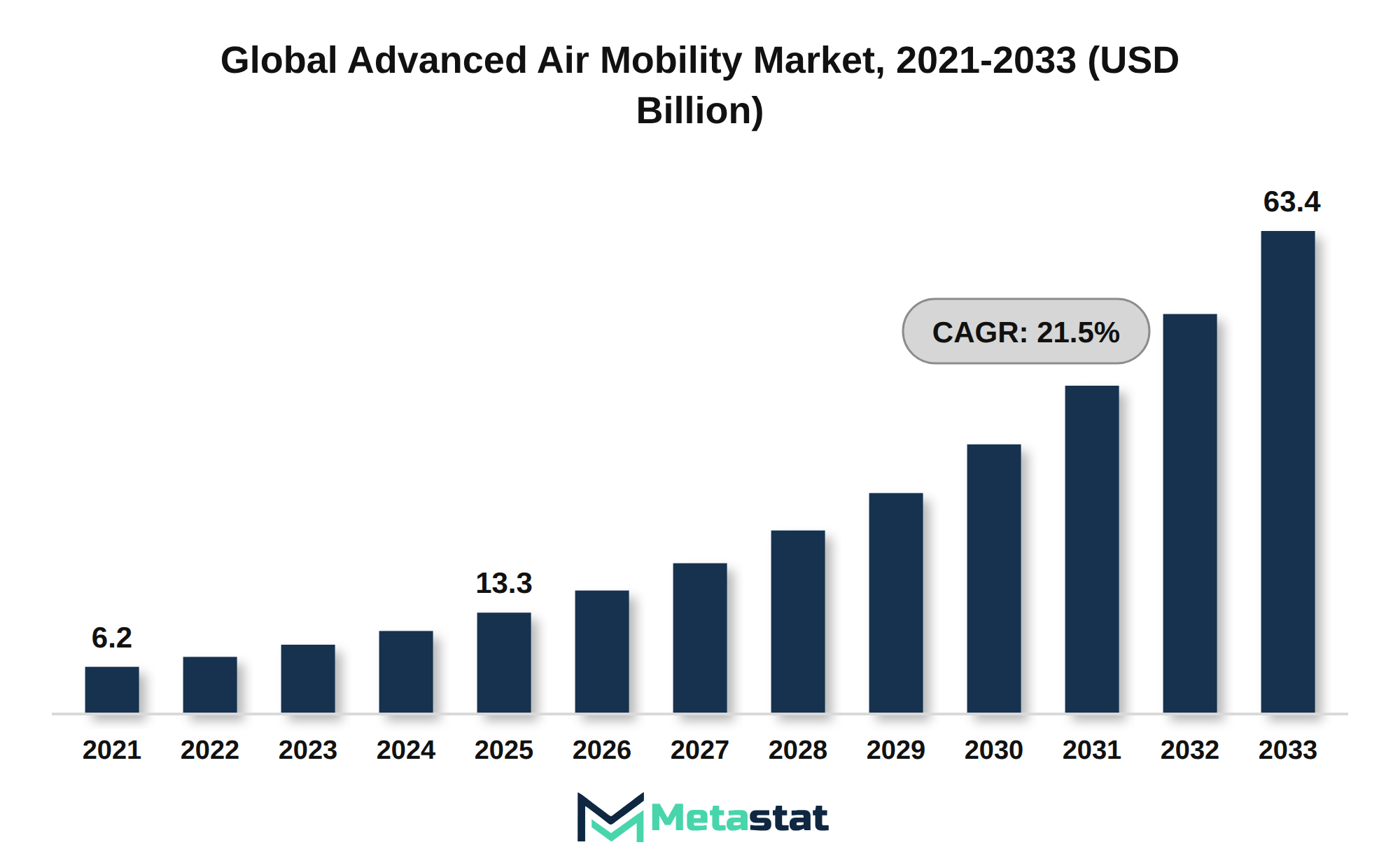
The global Advanced Air Mobility market was valued at USD 13.3 billion in 2025 and is projected to reach USD 63.4 billion by 2033, growing at a CAGR of 21.5% over the forecast period.
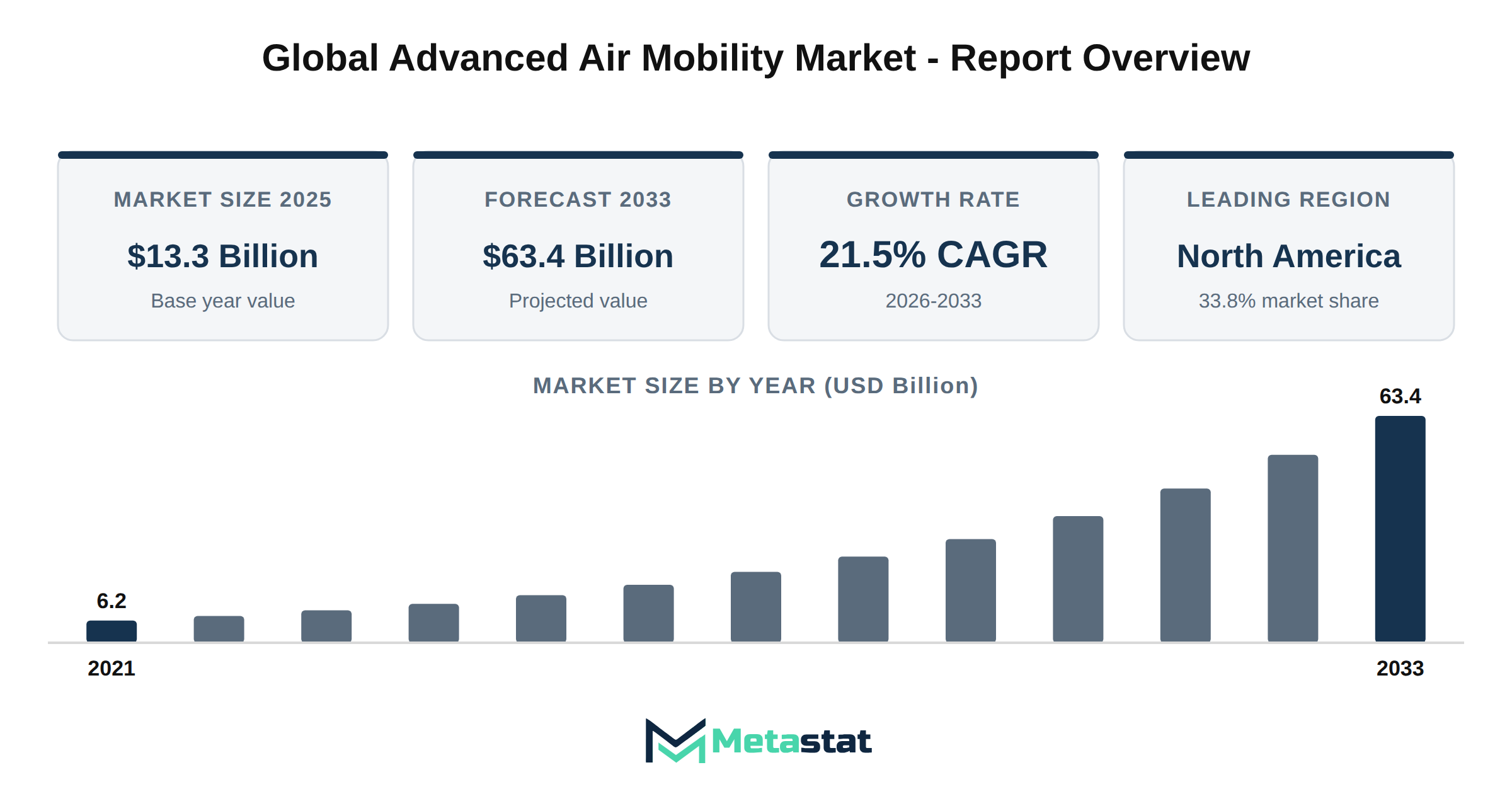
The Advanced Air Mobility market had a base value of USD 13.3 billion in 2025, with projections indicating significant growth, reaching USD 63.4 billion by 2033. This expansion corresponds to a compound annual growth rate (CAGR) of 21.5%. Historical data shows a steady increase in value, starting from USD 6.2 billion in 2021 and rising to USD 10.9 billion in 2024.
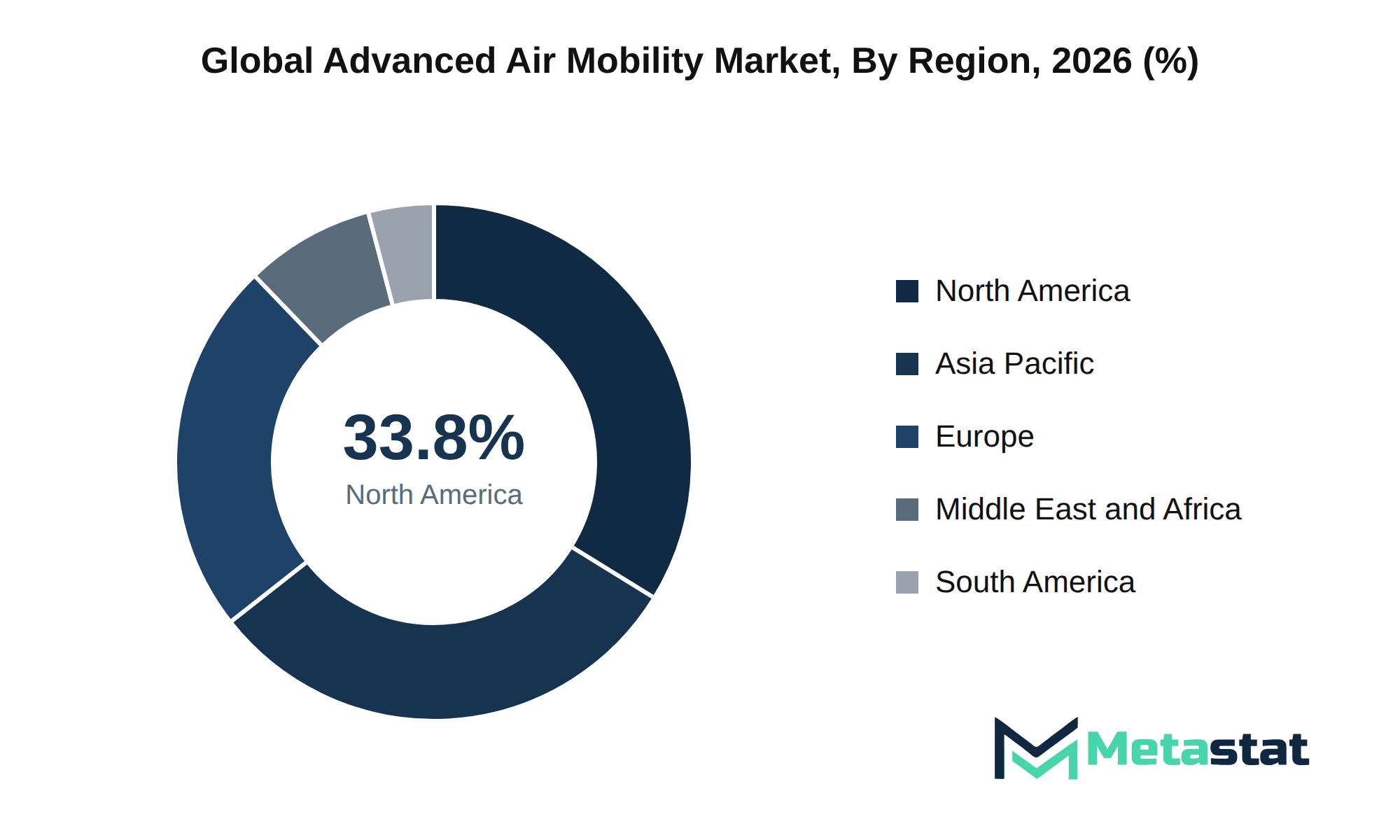
Regional dynamics play a critical role in shaping the market. North America holds the largest share at 33.8%, followed by Asia Pacific at 30.6%, and Europe at 23.4%. The Middle East and Africa account for 8.1%, while South America represents 4.1%. By 2033, North America's market value is expected to reach USD 19.8 billion, reflecting a CAGR of 21.5%.
Segment analysis highlights distinct categories within the market. Air Taxis, projected to grow from USD 4.8 billion in 2026 to USD 21.9 billion in 2033, exhibit a CAGR of 24.2%. Drones are anticipated to reach USD 36.4 billion by 2033, with a CAGR of 19.8%. The category of Others, which includes experimental and recreational aircraft, is set to achieve a value of USD 5.1 billion by 2033.
The market's trajectory is influenced by various factors, including regulatory compliance and standards that shape operational frameworks. Disruptive technologies and next-generation innovations drive advancements in the market, contributing to sustainable transformation and decarbonization efforts. These elements highlight the importance of strategic investments in infrastructure and supply chain optimization to meet growing demand.
The Advanced Air Mobility market faces evolving regulatory frameworks that influence operational standards and compliance requirements. Governments and regulatory bodies continuously assess safety, environmental impact, and technological advancements, driving the need for alignment with emerging guidelines. This dynamic regulatory landscape shapes market entry strategies for new players and existing operators.
Research and development trajectories within the market focus on innovative propulsion systems, airframe designs, and advanced autonomy solutions. Investment in R&D is essential for companies seeking to establish competitive advantages, enhance operational efficiency, and meet evolving consumer demands. The emphasis on next-generation innovation fuels collaborations between aerospace manufacturers, technology firms, and research institutions.
Environmental considerations drive the market's transition towards sustainable transformation. Efforts in decarbonization and circular economy dynamics seek to minimize carbon footprints and promote resource efficiency across the value chain. Companies prioritize eco-friendly technologies and sustainable practices, contributing to enhanced market positioning and customer appeal.
The supply chain landscape plays a critical role in the operational success of the market. Strategic sourcing and logistics architecture require optimization to ensure timely delivery and cost-effectiveness. A robust supply chain supports resilience and adaptability, allowing companies to navigate disruptions effectively and maintain competitive advantage.
Market fragmentation presents both challenges and opportunities for participants. Numerous startups and established firms compete, resulting in a diverse array of products and services. This fragmentation drives innovation while necessitating strategic collaboration and partnerships to leverage complementary strengths and enhance market presence.
Investment in infrastructure remains critical for the market's growth trajectory. Development of vertiports, maintenance facilities, and air traffic management systems requires substantial capital allocation. Such infrastructure investments are vital for supporting increasing operational demands and facilitating integration into existing transportation networks.
The future strategic outlook for the Advanced Air Mobility market indicates significant potential for growth and expansion. Companies prioritizing strategic imperatives, including customer-centric solutions and technological advancements, are positioned to capture market share. High-value recommendations include encouraging collaborations, investing in R&D, and enhancing operational efficiencies to align with market demands.
Growing concerns over environmental sustainability fuel demand for advanced air mobility solutions. Increasing focus on reducing emissions and carbon footprints drives investments in innovative technologies that support cleaner air transportation. Industries including logistics, passenger transport, and emergency services seek alternatives to traditional aviation methods that contribute to greenhouse gas emissions.
Investment in advanced air mobility systems results from a convergence of macro-economic factors, including rising GDP growth and venture funding aimed at developing electric and hybrid aircraft. This market expansion aligns with the global shift toward sustainable practices, responding to changing consumer preferences for greener transport options. Technological integration enhances capabilities, enabling operators to offer efficient, low-emission air transportation solutions.
The advanced air mobility market is expected to benefit from continued governmental and private sector initiatives that promote green aviation technologies. By adopting these innovative solutions, stakeholders achieve operational efficiencies and meet regulatory requirements. The resulting growth in this sector highlights a significant opportunity for players investing in air taxis and drones, positioning them for success in a changing environment.
Capital investment environments, particularly in infrastructure development, significantly influence the Advanced Air Mobility market. Increased public-private spending power translates into enhanced projects for upgrading physical and digital infrastructure. This investment enables the establishment of necessary facilities and networks for advanced air mobility solutions, ensuring greater accessibility and operational efficiency.
Technological integration supports the market by optimizing infrastructure capabilities. Adoption of automation and artificial intelligence streamlines processes, leading to improved operational productivity. Enhanced software solutions facilitate the digitization of legacy systems, ensuring that the infrastructure aligns with modern requirements. This integration improves the overall efficiency of operations, further driving demand within the market.
Infrastructure development aligns with shifting demographic patterns and urbanization trends. Rising urban populations create greater demand for efficient transportation solutions, leading to increased investment in advanced air mobility infrastructure. The market responds by expanding capabilities to accommodate the evolving needs of consumers, thereby enhancing market growth prospects.
Investment in infrastructure modernization addresses current demands while anticipating future trends, reinforcing the market's resilience. By focusing on sustainable development and resource stewardship, the market positions itself because a forward-thinking solution provider, appealing to environmentally conscious consumers. This approach enhances overall market acceptance and drives further investment, supporting continued expansion in the Advanced Air Mobility market.
The Advanced Air Mobility market encounters significant hurdles due to stringent regulatory compliance requirements. These regulations often impose high standards for safety, emissions, and noise, which delays the approval processes for new technologies and aircraft types. Regulatory bodies impose lengthy certification processes, causing lengthy delays in market entry for new players, which directly impacts investment and innovation.
Compliance hurdles create barriers for manufacturers and operators seeking to introduce advanced air mobility solutions. These challenges often necessitate substantial investments in research and development to meet regulatory criteria, diverting resources from other critical areas including marketing and operational scaling. The resulting financial strain limits the market's potential for rapid expansion and restricts the ability of smaller firms to compete effectively.
Legal mandates and compliance requirements result in increased operational costs, which deter investment in the Advanced Air Mobility market. These financial burdens contribute to capital stagnation, particularly in regions with stringent regulations. The relationship between compliance and market dynamics creates an environment where innovation slows, leading to a competitive disadvantage compared to industries with fewer regulatory constraints.
Macroeconomic headwinds, including inflationary pressures and supply chain disruptions, further exacerbate the challenges faced by the market. Rising costs of materials and components result in higher price points for consumers and operators, potentially limiting market penetration. The cumulative effect of these factors constrains growth opportunities and contributes to market fragmentation, driven by various players navigating differing regulatory landscapes.
Ultimately, the Advanced Air Mobility market's potential faces considerable risks from regulatory compliance challenges and associated costs. Addressing these issues becomes crucial for realizing the market's full growth potential and facilitating broader adoption of advanced air mobility solutions.
The Advanced Air Mobility market experiences challenges stemming from geopolitical fragmentation, leading to trade deficits and tariff friction. These issues create an environment where international collaboration becomes difficult, impacting the supply chain for components critical to advanced air mobility systems. Increased costs and delays confront manufacturers, contributing to pricing compression and margin pressures while navigating the complexities of sourcing materials globally.
Technological disruptions further complicate development efforts. Rapid advancements require ongoing investments in research and development. The fragmented geopolitical landscape leads to uncertainties in technology transfer and intellectual property protection. Companies operating within the market struggle to secure the necessary innovations while managing compliance overhead and evolving legal liabilities arising from varying regulations across regions.
The market contends with volatility in feedstock prices and component availability, which disrupt logistics and create instability in production schedules. This situation necessitates strategic investments to mitigate supply chain risks and ensure timely delivery of products. These factors collectively hamper stakeholders' ability to meet changing downstream demands while striving for sustainability and decarbonization mandates.
Workforce skill gaps present another significant challenge. The need for specialized talent in advanced air mobility technologies continues to grow. The existing workforce lacks the necessary skills to keep pace with innovation. This talent retention pressure affects operational efficiency and impacts market growth while companies compete for a limited pool of qualified professionals.
The Advanced Air Mobility market benefits from significant technological disruptions that enhance operational capabilities and efficiency. Innovations in electric propulsion, autonomous systems, and advanced materials reduce costs and improve performance across various applications, leading to increased adoption among different segments. Manufacturers focus on developing air taxis, drones, and experimental aircraft to cater to evolving consumer demands and operational requirements. This technological evolution supports the market’s projected growth, with a compound annual growth rate of 21.5 percent from 2026 to 2033.
Investments in research and development enable the emergence of next-generation innovations, allowing companies to deliver products that align with sustainability imperatives. These advancements not only reduce carbon footprints but enhance operational efficiencies, appealing to environmentally conscious consumers and businesses alike. The integration of digital technologies transforms operational models, leading to streamlined processes and improved service delivery across the market.
Market players focusing on product integration and diversification tap into niche applications, expanding their service offerings and enhancing customer value. This strategic approach captures a broader market share, driving overall growth within the Advanced Air Mobility market. Ongoing advancements in supply chain localization and strategic buffering contribute to mitigating risks associated with global supply disruptions, ensuring consistent product availability and timely service delivery.
The strong alignment of technological advancements with evolving buying behaviors and digital procurement shifts indicates a significant transformation in how customers engage with the market. Companies that adapt their commercial models to these changes position themselves to capitalize on emerging opportunities and enhance their competitive edge. The Advanced Air Mobility market is poised for expansion, driven by a combination of evolving technologies and shifts in consumer preferences.
The Global Advanced Air Mobility market is segmented based on Type, Propulsion Type, Operating Range, and Application.
Valued at USD 4.8 billion in 2026, the Air Taxis segment is projected to reach USD 21.9 billion by 2033, reflecting a CAGR of 24.2% during this period. This growth stems from increasing urbanization and a growing need for efficient transportation solutions. Urban congestion drives demand for aerial mobility solutions, effectively positioning air taxis because an attractive alternative to traditional ground transportation. Technological advancements in electric vertical takeoff and landing (eVTOL) aircraft drive innovation, improving the operational efficiency and safety of air taxi services, which enhances passenger appeal.
Regulatory frameworks around urban air mobility evolve, further supporting the segment's expansion. Governments actively implement policies that facilitate the integration of air taxis into existing transportation networks, contributing to a favorable investment environment. Market players invest substantially in research and development to meet regulatory standards while enhancing flight capabilities. This strategic focus on compliance ensures the provision of safe and reliable services, thereby increasing consumer confidence in air taxi solutions.
Market adoption grows alongside investment in charging infrastructure and urban air traffic management systems. Improved logistics and supply chain resilience enhance operational efficiency, optimizing service delivery and reducing costs. While the Advanced Air Mobility market matures, competition intensifies, driving innovation in service offerings and pricing structures. Companies continuously seek to differentiate themselves through advanced technology, superior customer experiences, and strategic partnerships, ultimately facilitating the segment's growth.
Drones represent a significant segment within the Advanced Air Mobility market, driven by increasing adoption in various applications including cargo transport, mapping, and surveillance. Technological advancements in drone design and functionality contribute to enhanced operational efficiency and reduced costs, encouraging industry stakeholders to invest in this area. Regulatory compliance standards are evolving, which facilitates safer integration into airspace and expands potential use cases. The market for drones is estimated to reach USD 36.4 billion by 2033, at a CAGR of 19.8% during the forecast period.
Investment in next-generation upgrades and product evolution strengthens the competitive landscape by introducing innovative solutions tailored to specific market demands. Persistent shifts in consumption patterns emphasize the need for efficient and reliable delivery systems, further propelling the adoption of drones. Strategic opportunity windows arise owing to industries seeking faster and more cost-effective methods of operation, enhancing the overall growth trajectory of the market.
Significant growth in the Others (Experimental Aircraft, Recreational Aircraft) segment of the Advanced Air Mobility market is anticipated, with expectations to reach USD 5.1 billion by 2033. This expansion is driven by the increasing interest in innovative aircraft designs and recreational applications, which attract both enthusiasts and investors. Adoption of experimental aircraft technology reflects a broader trend toward diversification within the aerospace sector, catering to niche markets that prioritize unique flying experiences and advanced technology integration.
Technological maturation is essential, driven by advancements in propulsion systems and materials that enhance aircraft capabilities while reducing operational costs. The development of electric and hybrid propulsion systems aligns with a growing emphasis on sustainable aviation solutions, appealing to environmentally conscious consumers and regulatory bodies. Strategic investments in research and development support these advancements, opening avenues for new products that address emerging market needs.
Regulatory compliance standards contribute to the segment's dynamics, influencing design specifications and operational protocols. While regulations evolve to accommodate experimental and recreational aircraft, manufacturers face the challenge of meeting stringent certification requirements while maintaining innovation pace. This regulatory landscape encourages collaboration among industry players, creating a culture of knowledge exchange that accelerates growth and enhances market resilience.
Downstream applications, including leisure aviation and niche transportation solutions, drive demand within the segment, highlighting the potential for diverse use cases. Increasing consumer interest in personal air mobility options creates new opportunities for manufacturers to capitalize on. Overall, the Others (Experimental Aircraft, Recreational Aircraft) segment is positioned for significant growth, underpinned by technological advancements, strategic investments, and evolving consumer preferences within the Advanced Air Mobility market.
Gasoline propulsion systems in the Advanced Air Mobility market reflect a unique segment focused on traditional energy sources. Demand derives from applications where existing infrastructure supports gasoline usage, particularly in regions with established fuel supply chains. Adoption remains prevalent among early entrants aiming to leverage familiar technologies while transitioning to advanced aerial solutions. The segment's growth depends on factors including regulatory compliance, which impacts operational requirements for gasoline-powered vehicles.
Expansion catalysts include technological maturation that enables improved efficiency and emission controls in gasoline-powered aircraft. Downstream applications, including cargo transport and passenger mobility, benefit from the versatility of gasoline propulsion. Evolving consumption patterns highlight an increasing preference for mixed propulsion systems, creating a dynamic environment for gasoline-powered aircraft.
Regulatory compliance standards, certifications, and policy headwinds shape the development landscape for gasoline propulsion. Adaptation to environmental regulations influences operational viability and market positioning. Supply chain resilience and raw material sourcing provide critical support for the segment, ensuring that manufacturers maintain consistent fuel availability.
Strategic opportunity windows arise from manufacturers exploring next-generation upgrades, aligning gasoline technology with emerging market demands. The relationship of cost structures and margin pressures highlights the competitive landscape, where pricing volatility influences profitability. Evaluating substitution risks and disruptive alternatives facilitates informed investment decisions within the gasoline propulsion segment, ultimately influencing the overall trajectory of the Advanced Air Mobility market.
Electric propulsion systems play a significant role in advancing the capabilities of the Advanced Air Mobility market. The transition towards electric solutions addresses increasing environmental regulations and consumer demand for sustainable transport options. Innovations in battery technology and energy management systems enhance operational efficiency while reducing emissions. Adoption of electric systems significantly influences the operational cost structures of air mobility vehicles, enhancing profit margins over time.
Regulatory bodies prioritize the development and integration of electric aircraft due to their lower environmental impact, which aligns with global sustainability goals. Manufacturers focus on adapting their designs to comply with these regulations, accelerating the pace of innovation in electric propulsion technologies. Investments in research and development facilitate continuous upgrades, positioning electric systems because a key element of the market.
End-use dynamics reflect a shift towards electric vehicles in both passenger and cargo transport applications. Strategic opportunity windows emerge because market players capitalize on technological advancements to improve flight ranges and operational capabilities. Downstream applications, including urban air mobility, benefit from the reduced noise levels associated with electric propulsion, further driving consumer acceptance and market penetration.
Supply chain resilience remains crucial because manufacturers secure raw materials necessary for battery production. Disruptive alternatives, including hybrid systems, coexist within the market, presenting a competitive landscape where electric propulsion continues to gain traction. Investment in electric technology strengthens its position because a core component of future air mobility solutions.
Technological advancements drive the growth of the hybrid propulsion type within the Advanced Air Mobility market. Innovations in battery technologies and energy management systems enhance operational efficiency, addressing the demand for sustainable transportation solutions. Hybrid systems effectively combine the benefits of electric and gasoline propulsion, allowing for greater range and flexibility in urban air mobility applications.
Adoption of hybrid propulsion systems benefits from increasing investment in research and development, with manufacturers focusing on next-generation upgrades to improve performance and reduce emissions. This segment experiences heightened interest from various sectors, including cargo transport and passenger transport, where the need for reliable and efficient air mobility solutions is crucial.
Regulatory compliance shapes the hybrid market, driven by authorities establishing standards for emissions and safety. These regulations encourage manufacturers to innovate and adhere to sustainability goals, ultimately enhancing market penetration. While the focus shifts toward environmentally friendly alternatives, hybrid propulsion systems are positioned for growth amid evolving consumer preferences.
Challenges related to cost structures and pricing volatility impact the hybrid segment, influenced by manufacturers navigating the complexities of sourcing materials and managing production expenses. Fluctuating raw material prices pressure profit margins, necessitating strategic planning and supply chain resilience. Addressing these challenges positions hybrid systems because a competitive option within the Advanced Air Mobility market, with potential for enhanced adoption in the coming years.
Short-range aerial vehicles, operating below 100 kilometers, serve a critical role in the Advanced Air Mobility market by enhancing urban mobility and addressing local transportation needs. Demand for this segment arises from increasing urban congestion and the desire for efficient, quick transit solutions. Adoption trends reflect a shift toward more localized passenger transport and cargo delivery, driven by logistics companies aiming to streamline operations and reduce delivery times. Technological maturation in battery efficiency and propulsion systems significantly supports segment growth, allowing for innovations in design and functionality that enhance operational capabilities.
Next-generation upgrades focus on integrating automation and artificial intelligence, providing enhanced safety and operational efficiency. Product evolution in this segment emphasizes modular designs and scalability, facilitating entry into various markets, including emergency services and tourism. Regulatory compliance standards continue to evolve, influencing design and operational protocols, with an emphasis on safety and environmental impact. End-use dynamics indicate a growing preference for electric and hybrid propulsion systems, aligning with sustainability goals and governmental regulations aimed at reducing carbon emissions.
Consumption shifts reflect a trend toward increased acceptance of aerial mobility solutions among consumers, prompted by successful pilot programs and demonstrations. Capital investment outlooks for this segment remain positive, driven by heightened interest from venture capitalists and established aerospace companies recognizing the potential revenue streams from air mobility solutions. Strategic opportunity windows arise from emerging markets eager to adopt innovative transport methods, positioning aerial vehicles because viable alternatives to traditional transportation modes.
Growing interest in medium-range air mobility solutions highlights significant demand drivers within the Advanced Air Mobility market. Urbanization and increased congestion in metropolitan areas fuel the need for efficient transportation alternatives. Medium-range vehicles, defined by operational capabilities between 100-300 kilometers, directly address these challenges, providing a compelling solution for passenger and freight movement.
Technological maturation in electric and hybrid propulsion systems enhances the viability of medium-range aircraft. These advancements enable manufacturers to develop systems that meet performance and sustainability standards. The trend toward more efficient and environmentally friendly designs supports the expansion of this segment, attracting investments from established aerospace firms and new entrants focused on innovative solutions.
Downstream applications for medium-range air mobility include passenger transport, cargo logistics, and emergency medical services. The increasing integration of air mobility into existing transport ecosystems facilitates greater operational efficiencies. Regulatory compliance and certifications ensure safety and reliability in operations while influencing market dynamics and adoption rates.
Strategic opportunity windows emerge due to cities investing in air mobility infrastructure, creating a supportive environment for medium-range solutions. Demand shifts toward aviation products that emphasize speed and efficiency. The Advanced Air Mobility market stands poised for substantial growth. Supply chain resilience, raw material sourcing, and logistics strategies will remain critical factors for sustained success in this evolving sector.
Long-range capabilities above 300 kilometers represent a strategic focus within the Advanced Air Mobility market. This segment addresses the growing demand for efficient and rapid transportation solutions, particularly for cargo and passenger applications requiring greater distances. Technological maturation in battery efficiency and propulsion systems directly supports the expansion of this segment, enabling vehicles to achieve longer operational ranges without compromising performance.
Regulatory compliance shapes the operational framework for long-range vehicles. Adherence to developing standards ensures safety and reliability, which enhances consumer confidence and facilitates broader adoption. The evolving landscape of certifications and policy frameworks promotes innovation while addressing safety concerns, creating a balanced environment for market participants.
Primary demand drivers for long-range capabilities include urbanization and the need for flexible transportation solutions that connect traditionally underserved regions. Increased investment in infrastructure and air traffic management systems supports growth, enabling advanced air mobility applications. The competitive dynamics of the market highlight opportunities for key players to leverage unique technological advancements and establish a strong market presence.
Operational cost structures remain critical in determining the commercial viability of long-range vehicles. Manufacturers focus on optimizing efficiency to reduce overhead while maintaining robust margins. Strategic opportunity windows arise from market participants exploring novel applications and partnerships that enhance service offerings and broaden market reach.
Logistics vulnerabilities associated with long-range operations necessitate resilient supply chains that ensure timely delivery of components and services. Players in the market actively seek solutions to mitigate these risks, enhancing overall operational stability. Addressing the challenges of sourcing raw materials and maintaining cost-effectiveness positions companies to capitalize on the expanding long-range segment of the Advanced Air Mobility market.
Growing demand for efficient and rapid delivery solutions drives interest in cargo transport applications within the Advanced Air Mobility market. The need for innovative logistics solutions reflects a shift in consumer preferences towards faster and more reliable transport options. Increasing urbanization and e-commerce growth further reinforce this trend, leading to heightened expectations for swift cargo deliveries.
Technological advancements significantly influence product evolution in the cargo transport segment. The integration of autonomous systems enhances operational efficiency, while developments in battery technology reduce operational costs and extend vehicle range. Consequently, this segment attracts various industries, including retail and healthcare, looking for effective logistics solutions.
Regulatory compliance standards present both challenges and opportunities within the market. Adherence to safety regulations and air traffic management policies influences operational frameworks and shapes investment strategies. Companies focusing on obtaining necessary certifications position themselves strategically to capture emerging opportunities in the evolving cargo transport sector.
Supply chain resilience becomes essential because businesses seek to mitigate risks associated with logistics vulnerabilities. Investing in advanced air mobility solutions offers a strategic opportunity to enhance flexibility and responsiveness in supply chains. Manufacturers and service providers recognize that adopting cargo transport capabilities leads to significant competitive advantages in the marketplace.
Passenger transport in the Advanced Air Mobility market represents a vital application driving the adoption of aerial solutions. Demand for efficient and rapid transportation alternatives fuels interest from urban planners and commuters seeking to alleviate congestion in metropolitan areas. Technological maturation enhances operational capabilities and safety, with advancements in electric vertical takeoff and landing (eVTOL) aircraft. Next-generation upgrades, including improved battery technologies and autonomous navigation systems, support the evolution of this segment.
Regulatory compliance standards significantly influence development timelines, with certifications required to ensure safety and reliability becoming essential. The market experiences consumption shifts driven by changing consumer preferences for sustainable and time-efficient transport options. Several strategic opportunity windows exist for manufacturers and investors targeting urban air mobility solutions. This segment's growth potential aligns with broader trends in environmental consciousness and the quest for innovative urban transportation models.
Mapping and surveying applications within the Advanced Air Mobility market represent an important area of growth, driven by the increasing demand for efficient and accurate data collection methods. These applications benefit from advancements in aerial technology, which allow for more effective mapping solutions across various industries, including urban planning, agriculture, and environmental monitoring. The rise in urbanization and the need for rapid infrastructure development contribute to the segment's expansion, because stakeholders seek innovative aerial solutions to meet their surveying needs.
Technological maturation in unmanned aerial vehicles (UAVs) enhances the capabilities of mapping and surveying applications. The integration of high-resolution imaging and data analytics tools enables precise data capture and analysis, addressing the requirements of various sectors. Consequently, this advancement promotes greater adoption of aerial mapping solutions, allowing organizations to improve project efficiencies and reduce operational costs.
Regulatory compliance standards increasingly influence the mapping and surveying segment. While governments introduce guidelines for drone operations, companies that leverage advanced air mobility solutions ensure adherence to these regulations. This compliance builds consumer confidence in aerial technologies while promoting a safer operational environment.
Strategic investment in the segment reflects a robust capital investment outlook. While more players enter the Advanced Air Mobility market, innovation and upgrades become essential to maintain competitive advantage. The continued evolution of mapping and surveying technologies provides opportunities for stakeholders to explore new market avenues and enhance their service offerings.
Utilization of Advanced Air Mobility solutions for special mission applications reflects an expanding sector driven by the increasing need for efficiency in operations including surveillance, disaster response, and emergency services. Rapid response capabilities fuel interest within various sectors, including government agencies and private enterprises focused on security and environmental monitoring.
Technological maturation supports the evolution of specialized aerial vehicles designed for unique operational requirements. Next-generation upgrades, including enhanced autonomy and advanced sensor integration, enhance the effectiveness of vehicles in performing complex missions. These advancements contribute to market expansion, ensuring vehicles meet the diverse needs of end users.
Regulatory compliance standards and certifications play a vital role in shaping product developments within the special mission segment. Adhering to safety regulations ensures operational integrity and builds trust among users. This process influences purchasing decisions, impacting market growth by establishing a clear framework for manufacturers.
Continued investment in research and development focuses on enhancing vehicle capabilities, leading to improved performance in special mission applications. The introduction of disruptive alternatives, including advanced drone technologies, creates strategic opportunity windows for players within the market. These developments position companies to capitalize on evolving end-use dynamics and drive market expansion.
Surveillance and monitoring applications within the Advanced Air Mobility market play a crucial role in enhancing security and operational efficiency. Increasing concerns over public safety and environmental monitoring fuel demand for advanced technologies capable of providing real-time data and situational awareness. Various sectors, including law enforcement, disaster response, and environmental agencies, drive adoption, recognizing the value of aerial solutions for surveillance tasks.
Technological maturation significantly influences this segment, with advancements in sensor technology and data analytics enabling more effective surveillance platforms. Next-generation upgrades, including improved imaging systems and AI-driven analytics, enhance the capabilities of aerial vehicles, making them more attractive for diverse applications. This evolution aligns with the market's expansion, driven by stakeholders striving to leverage innovative solutions to meet growing operational demands.
End-use dynamics highlight a shift towards integrated surveillance systems that combine aerial monitoring with ground-based operations. Regulatory compliance standards and certifications create necessary frameworks that ensure safety and reliability, further encouraging investment in advanced aerial surveillance technologies. The current landscape reflects a focus on robust solutions capable of addressing the challenges posed by traditional methods, establishing strategic opportunity windows for market participants.
Cost structures and pricing volatility present challenges specific to this sub-segment, influencing procurement strategies among end-users. Organizations prioritize solutions that offer a favorable balance between performance and cost-effectiveness, which shapes purchasing decisions in this competitive environment. Overall, surveillance and monitoring applications represent a critical area of growth within the Advanced Air Mobility market, with ongoing innovations driving increased adoption and investment opportunities.
Innovative applications within the Others segment play a vital role in enhancing the Advanced Air Mobility market. This sub-segment encompasses various uses, including specialized missions and experimental aircraft, which cater to unique operational needs across different industries. The diverse applications enable exploration of new technology and operational functionalities, driving growth and expanding market reach.
Investment in advanced technologies enables significant opportunities for product evolution within this segment. Stakeholders focus on developing next-generation aircraft that leverage advancements in automation and propulsion systems. This shift enhances operational efficiency while addressing regulatory compliance standards and certifications necessary for market penetration.
Consumer preferences increasingly align with specialized aerial solutions that meet specific application requirements. These preferences influence purchasing decisions and drive innovation in the design and functionality of aircraft. While market dynamics evolve, the need for strategic opportunity windows becomes more apparent, encouraging players to explore white-space analysis to identify gaps in the current offerings.
The segment's evolution reflects ongoing consumption shifts driven by a growing demand for customized air mobility solutions. These shifts prompt suppliers to adapt their product portfolios and invest in technologies that align with emerging trends in the market. By addressing these dynamics, participants in the Others segment enhance their competitive positioning and capitalize on new market opportunities.
Based on geography, the Global Advanced Air Mobility market is divided into North America, Europe, Asia-Pacific, South America, Middle East, and Africa.
North America Advanced Air Mobility market is set to expand at a CAGR of 21.5% within the forecast period, reaching a market size (TAM) of USD 19.8 billion by the end of 2033. The region accounts for a 33.8% share of the global market in 2025, driven by robust demand for air mobility solutions in the United States, Canada, and Mexico.
Primary demand drivers in this region include increasing investment in urban air mobility and the need for efficient transportation solutions. The expansion of infrastructure tailored to Advanced Air Mobility enhances operational capabilities and supports adoption among commercial operators. Emerging market front-runners, particularly within the United States, contribute to innovations that shape segment growth. Localized manufacturing densities and nearshoring initiatives strengthen supply chain regionalization, addressing demand with agility and responsiveness.
Healthcare logistics, cargo transport, and passenger transport applications present significant opportunities within the market. The growing number of domestic market leaders, including Airbus S.A.S. and Joby Aviation, promotes competitive dynamics that push technological advancements and service improvements. Cultural nuances and regional B2B buying behaviors influence procurement strategies, ensuring solutions align with local requirements and expectations.
Energy grid resiliency and regional resource availability impact operational readiness, supporting the effective deployment of Advanced Air Mobility solutions. Strategic entry barriers, alongside foreign direct investment flows, facilitate geographic expansion for existing and new players. Overall, North America's combination of technological innovation, regulatory compliance, and robust market demand positions it because a key region in the Advanced Air Mobility market.
Europe holds a growing share of the Advanced Air Mobility market, accounting for 23.4% in 2025. Key countries driving this market include Germany, France, the UK, Italy, Spain, Russia, and the Rest of Europe. The region benefits from a mature infrastructure and a strong regulatory framework that supports innovative air mobility solutions.
Increased investment in electric and hybrid propulsion systems aligns with European sustainability goals, enhancing the market's growth potential. Adoption of air taxis, particularly in urban centers, represents a strategic focus for local governments aiming to alleviate congestion and enhance connectivity. Major technology players in Europe collaborate with local authorities to develop air mobility solutions tailored to regional needs and compliance mandates.
Demand for cargo transport applications in the Advanced Air Mobility market expands due to rising e-commerce. Localized manufacturing capabilities and supply chain regionalization trends contribute to efficiency and cost-effectiveness. The presence of established aviation manufacturers and emerging start-ups creates a competitive landscape that drives innovation and market dynamics.
Investment in infrastructure modernization, including vertiports and charging stations, supports the operational readiness of air mobility solutions. Nearshoring initiatives enable companies to establish localized production facilities, enhancing supply chain resilience. These factors collectively position Europe because a leading market for Advanced Air Mobility solutions.
The Asia-Pacific region represents a substantial share of the Advanced Air Mobility market, with expectations of growth driven by increasing urbanization and technological advancements. Countries including China, Japan, India, and South Korea exhibit high levels of investment in aviation infrastructure, supporting the growth of air mobility solutions. Australia and Southeast Asia are emerging markets with important players enhancing local innovation and partnerships to improve regional capabilities.
Infrastructure modernization in urban centers facilitates the integration of Advanced Air Mobility solutions into existing transportation networks. Government initiatives promoting electric and hybrid propulsion systems encourage adoption, addressing environmental concerns and emphasizing sustainability. The demand for air taxis and drones aligns with urban mobility challenges, driving interest from multiple sectors, including logistics and passenger transportation.
Several domestic market participants are establishing themselves within the region, leveraging localized manufacturing and strategic partnerships to enhance operational efficiencies. These players focus on meeting local compliance mandates and adapting to cultural nuances in B2B buying behaviors, ensuring successful market penetration. Cross-border trade corridors further facilitate the movement of goods and services, enriching the competitive environment and promoting collaboration.
Investment in regional resource availability and energy grid resiliency supports the expansion of the market. Localized production and supply chain regionalization enhance responsiveness to market demands, creating a dynamic environment for growth. The Asia-Pacific region is expected to capitalize on incremental growth vectors, driven by technological advancements and strategic entry barriers.
South America, although currently representing a smaller share of the Advanced Air Mobility market at 4.1% in 2025, shows potential for growth driven by increasing urbanization and the need for efficient transportation solutions. Countries including Brazil and Argentina will experience an uptick in demand for air mobility solutions owing to infrastructure modernization progress and local governments emphasizing sustainable transportation initiatives.
The expansion of air taxi services and drone applications will likely emerge because key segments in the region. Brazil, in particular, will lead in air mobility innovation, supported by investments in technology and local manufacturing capabilities. Argentina's growing interest in aerial solutions will contribute to overall market dynamics, enhancing competition among domestic and international players.
Regional challenges, including infrastructure readiness and regulatory frameworks, will influence market entry strategies. Domestic leaders in the Advanced Air Mobility market will navigate these complexities, balancing compliance with innovative service offerings. Investment in localized manufacturing and strategic partnerships will enhance operational efficiencies, positioning South America because a noteworthy player in the global landscape.
The Advanced Air Mobility market in the Middle East and Africa reflects a growing engagement with innovative aerial solutions. Countries including Saudi Arabia, the UAE, and South Africa exhibit notable interest in adopting air taxi and drone technologies. This regional engagement stems from significant investments in infrastructure modernization and an increasing emphasis on urban mobility solutions.
Local compliance mandates and regulatory frameworks contribute to shaping market dynamics. Governments in the region focus on enhancing compliance structures to facilitate the integration of advanced aerial technologies. Strategies aimed at improving regional infrastructure readiness support the adoption of air mobility solutions.
Market participants in this region establish localized procurement dynamics to address specific needs. Cultural nuances influence B2B buying behaviors, leading to tailored approaches by suppliers. The advanced solutions offered align with regional priorities focused on efficiency and rapid transportation.
With an 8.1% share of the global market in 2025, the region holds potential for future expansion. Strategic entry barriers and foreign direct investment flows indicate a favorable environment for market growth. The focus on geographic expansion windows by domestic market participants enhances competitive positioning within the Advanced Air Mobility market. This combination of factors is expected to drive increased investment and adoption in the coming years.
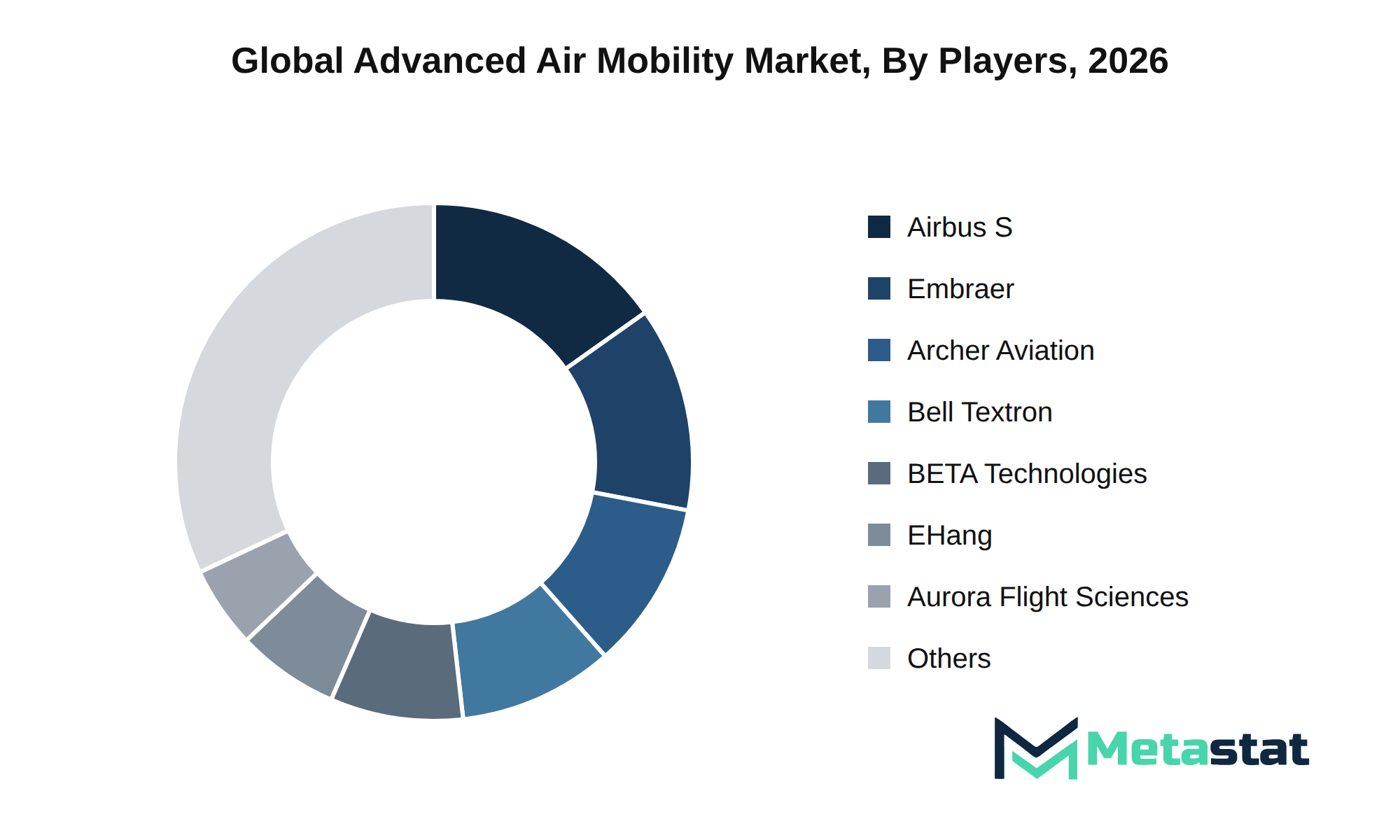
The Advanced Air Mobility market features a diverse array of players, each implementing distinct strategies to enhance their position. Companies like Airbus S.A.S. and Joby Aviation, Inc. focus on advancing technology through significant investments in R&D pipelines, driving innovation in air taxi and drone solutions.
Strategic alliances emerge because a key tactic enabling firms including Honda Motor Co. (eVTOL Initiatives) and Hyundai to leverage complementary strengths in electric and hybrid propulsion technologies. Partnerships with established aerospace organizations enhance market entry for startups, supporting collaboration on regulatory compliance and market access.
Competitive positioning emphasizes product differentiation, where companies like EHang Holdings Limited and Elroy Air Inc. emphasize unique features in cargo transport and surveillance applications. This differentiation, combined with robust intellectual property portfolios, reinforces the technological defensibility of their offerings and enhances their market presence.
Market dynamics present barriers to entry, including high capital investment requirements and regulatory hurdles, which limit new entrants. Existing players benefit from procurement leverage and established customer bases, contributing to brand equity and customer retention strategies. The future competitive outlook suggests a focus on integrating value chains and enhancing operational efficiencies across the Advanced Air Mobility ecosystem.
Market size is forecast to rise from USD 13.3 billion in 2025 to over USD 63.4 billion by 2033. The base case presents a growth trajectory at a 21.5% CAGR, indicating significant expansion potential within the Advanced Air Mobility market. Directionally, bullish conditions highlight increasing investments in infrastructure and technology integration, driving demand across various sectors. Conversely, bearish scenarios suggest challenges arising from regulatory hurdles and geopolitical tensions impacting supply chains.
Economic cycles influence downstream demand, with mature core industries adapting their operations to incorporate advanced air mobility solutions. Technological advancements, particularly in electric and hybrid propulsion systems, reshape product life cycles and encourage innovative applications. Timelines for R&D commercialization remain crucial, driven by emerging companies striving to meet the evolving regulatory landscape and compliance benchmarks.
Global supply chain shifts align with strategic capital allocation directives, enhancing market responsiveness. Investment in infrastructure commitments and capital expenditures (CapEx) plays a significant role in revealing high-growth pockets within the industry. The Advanced Air Mobility market presents emerging white-space opportunities, addressing unmet enterprise needs and facilitating new applications across urban air transport, logistics, and emergency services.
Executive-level strategic imperatives focus on defensibility roadmaps and future growth recommendations, ensuring stakeholders remain aligned with market dynamics. The combination of technological innovation and regulatory evolution will define how players navigate the competitive environment, ultimately influencing the market's expansion trajectory.
The report strategically identifies and profiles the key market players and analyses their core competencies in each sub-segment of the Advanced Air Mobility market.
Report Attributes | Details |
Study Period | 2021-2033 |
Base Year | 2025 |
Estimated Year | 2026 |
Forecast Period | 2026-2033 |
Historical Period | 2021-2025 |
Growth Rate | CAGR 21.5% from 2026 to 2033 |
Revenue Unit | USD billion |
Segmentation | By Type, Propulsion Type, Operating Range, Application, and Region |
By Region | North America (By Type, Propulsion Type, Operating Range, Application, and Country)
|
Europe (By Type, Propulsion Type, Operating Range, Application, and Country)
| |
Asia Pacific (By Type, Propulsion Type, Operating Range, Application, and Country)
| |
South America (By Type, Propulsion Type, Operating Range, Application, and Country)
| |
Middle East and Africa (By Type, Propulsion Type, Operating Range, Application, and Country)
|
Find answers to common questions about this report
The Advanced Air Mobility market size was valued at USD 13.3 billion in 2025, according to the Metastat Insights study.
The Advanced Air Mobility market is projected to grow at a CAGR of 21.5% during the forecast period from 2026 to 2033.
The North America Advanced Air Mobility market size is estimated to reach USD 19.8 billion by 2033.
The Air Taxis segment leads the Advanced Air Mobility market with a projected value of USD 21.9 billion by 2033, based on its higher growth rate compared to other segments.
Growing concerns over environmental sustainability and the reduce emissions drive demand for advanced air mobility solutions. Investment in innovative technologies is fueled by macro-economic factors including rising GDP growth and venture funding aimed at developing electric and hybrid aircraft. This creates significant opportunities for stakeholders in logistics, passenger transport, and emergency services.
North America holds the dominant share of the Advanced Air Mobility market, with a projected value of USD 19.8 billion in 2033, representing 33.8 percent of the total market.
The Advanced Air Mobility market faces significant hurdles due to stringent regulatory compliance requirements, which impose high standards for safety, emissions, and noise, delaying new technology approvals. macroeconomic headwinds, including inflationary pressures and supply chain disruptions, contribute to rising costs, limiting market penetration and growth opportunities.
Growing concerns over environmental sustainability and the reduce emissions drive demand for advanced air mobility solutions. Investment in innovative technologies aligns with shifting consumer preferences for greener transport options, while infrastructure modernization enhances operational efficiency and accessibility, further favoring product adoption in this industry.
The Advanced Air Mobility market is estimated to reach a valuation of USD 63.4 billion by 2033.
Key players operating in the Advanced Air Mobility market include Airbus S.A.S., Archer Aviation Inc., Bell Textron Inc., BETA Technologies, Embraer S.A., Joby Aviation, The Boeing Company, and Hyundai.
The analysts below cover Aerospace and Defense research at Metastat Insights.
LEAD ANALYST
Utkarsh Khirodkar is a Lead Market Research Analyst at MetaStat Insight, specializing in market intelligence, technology sector assessments, and competitive strategy.
Our team was tracking whether regional recycling infrastructure could realistically absorb the growing volume of lithium iron phosphate batteries over the next decade. The report did a solid job separating announced hydrometallurgical plant capacity from active, permitted operational throughput. That distinction made the feedstock availability projections and regional recovery rate models far more credible than standard commercial overviews.
Tracking capacity expansion in single-use bioprocessing requires dependable data on raw material availability and cleanroom-grade polymer supply chains. The competitive landscape chapter gave a grounded evaluation of secondary component suppliers across North America and Asia-Pacific rather than simply reprinting press releases. Having that level of supplier benchmarking helped clarify dual-sourcing considerations for our clinical pipeline planning.
When evaluating distributed energy resource management systems, standard research summaries tend to gloss over the operational differences between front-of-the-meter utility deployments and behind-the-meter industrial sites. The MetaStat Insight report addressed those distinctions directly, especially regarding software interoperability standards and grid interconnection backlogs. The five-year market sizing across regional transmission organizations provided actionable context for our grid modernization strategy.
Explore related market intelligence reports worth reading alongside this one.
Starting from
$2950