
LEAD ANALYST
Utkarsh Khirodkar is a Lead Market Research Analyst at MetaStat Insight, specializing in market intelligence, technology sector assessments, and competitive strategy.

Global After-the-Event Legal Insurance Market Size, Share, By Application (Personal Injury Claims, Clinical Negligence Claims, Commercial Contract and Corporate Disputes, Professional Negligence Claims, Financial Mis-selling Claims, Insolvency Litigation, Competition and Antitrust Claims, Property and Housing Disputes, Intellectual Property Disputes and Others (Contentious Probate, Defamation, Privacy Claims)), By Coverage (Adverse Costs Only, Own Costs Only and Combined Adverse and Own Costs), By Type (Single-Case Policies and Multi-Case Portfolio Policies), By Distribution Channel (Direct Sales, Insurance Brokers and Solicitors and Law Firms), Industry Analysis, Growth, Trends, and Forecast, 2026-2033
Report ID
MSI-5423
Published
October, 2026
Pages
298 Pages
Format
Historical
Base year
Forecast
Forecast period
Report Details
Market Valuation: Valued at $4,222.6 Million in 2025, projected to reach $7,993.7 Million by 2033 at a 8.3% CAGR.
Dominant Segment: Commercial contract and corporate disputes generate the highest value among applications, reflecting strong commercial demand from businesses facing significant financial exposure in contentious litigation.
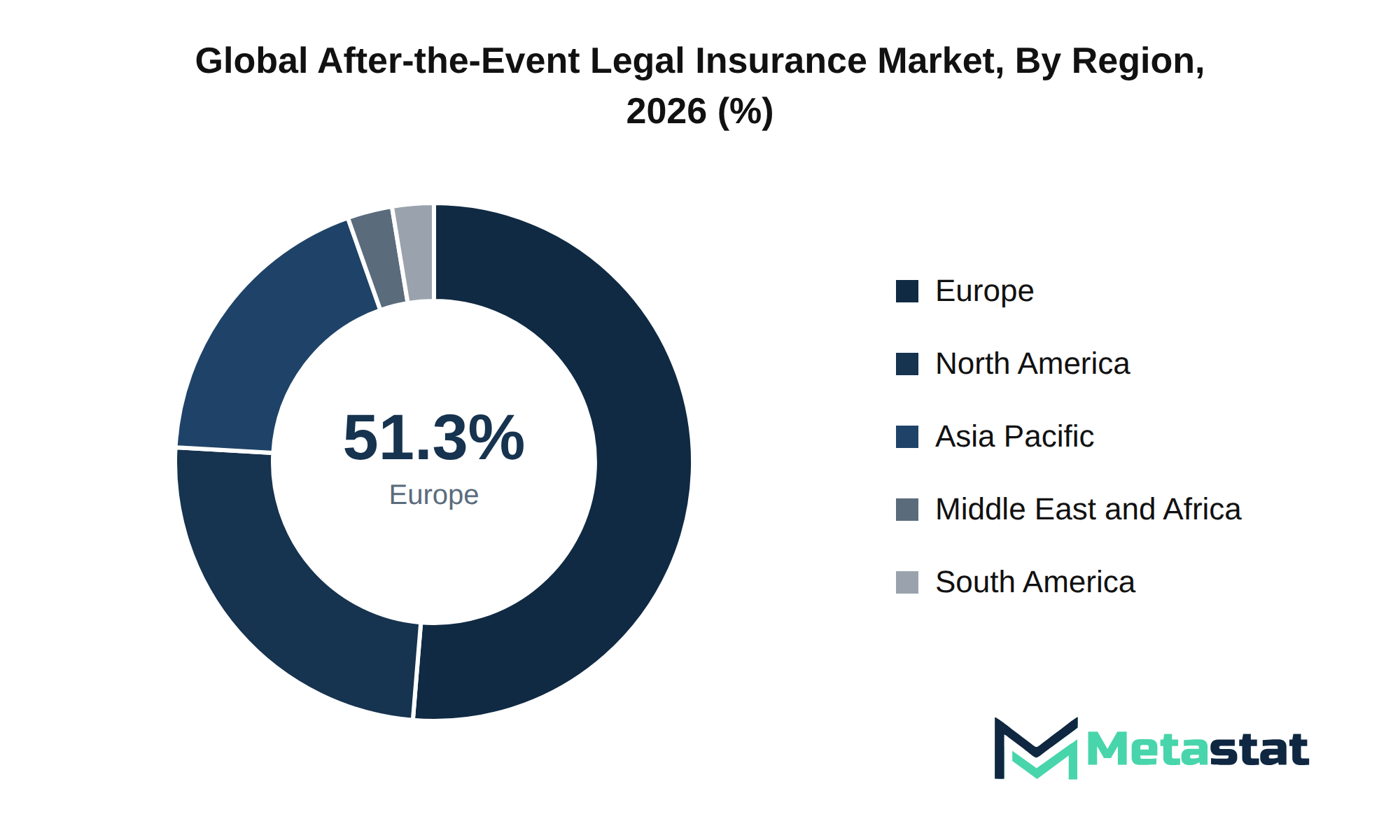
Geographic Lead: Europe holds 51.3% of the global market share, supported by mature legal funding frameworks and established litigation cultures in the UK, Germany, and France.
Fastest-Growing Segment: Multi-case portfolio policies are projected to reach USD 3,060 million by 2033 and are forecast to grow at a 10.6% CAGR, outpacing single-case policies as law firms seek scalable risk management solutions.
What's Inside: The report provides detailed segmentation by application, coverage, type, and distribution channel, with market sizing, growth trends, and forecasts through 2033, as well as analysis of competitive dynamics and regional shares.
Choose Your License
Global After-the-Event Legal Insurance Market
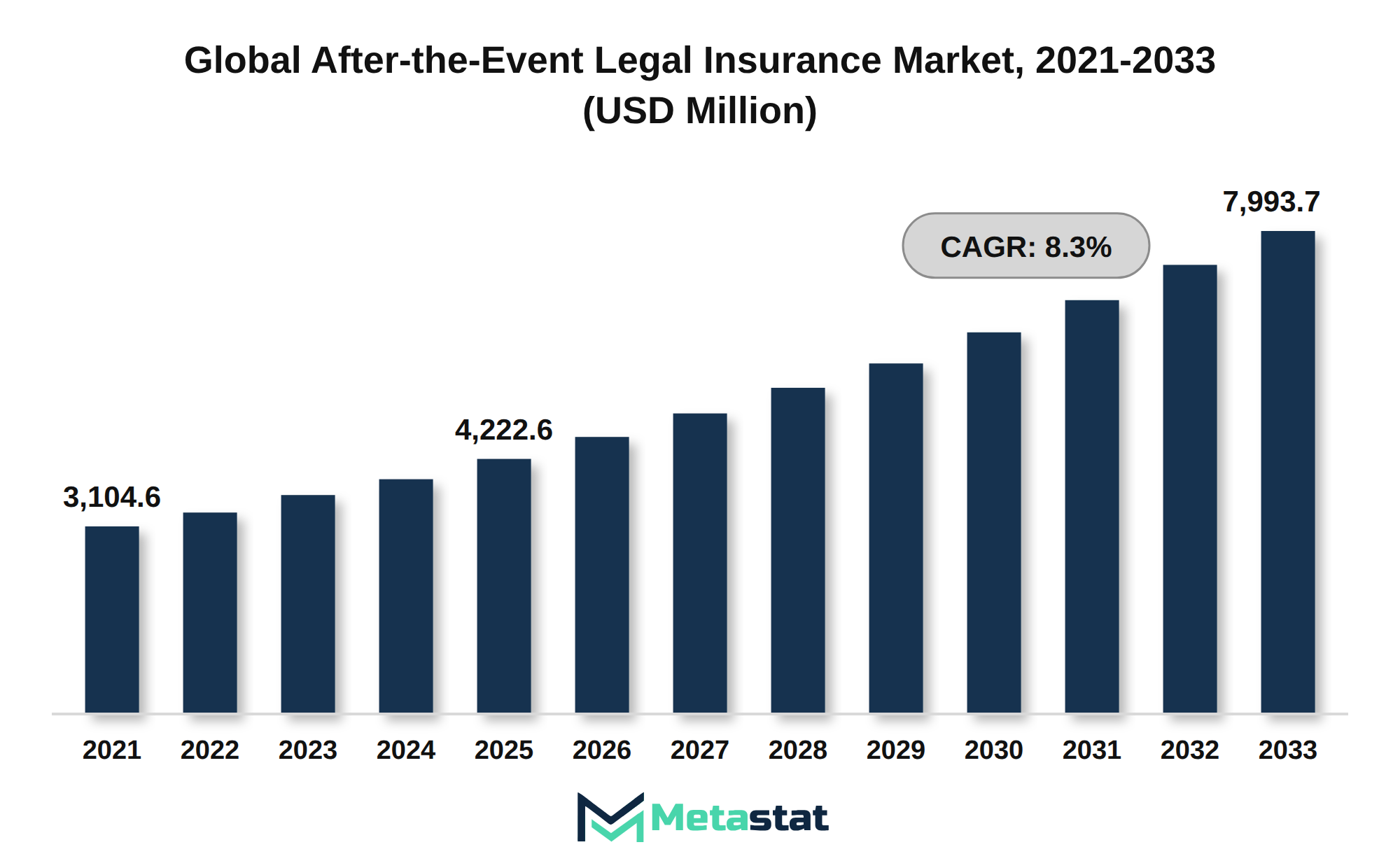
The global After-the-Event Legal Insurance market was valued at USD 4,222.6 million in 2025 and is projected to reach USD 7,993.7 million by 2033, growing at a CAGR of 8.3% over the forecast period.
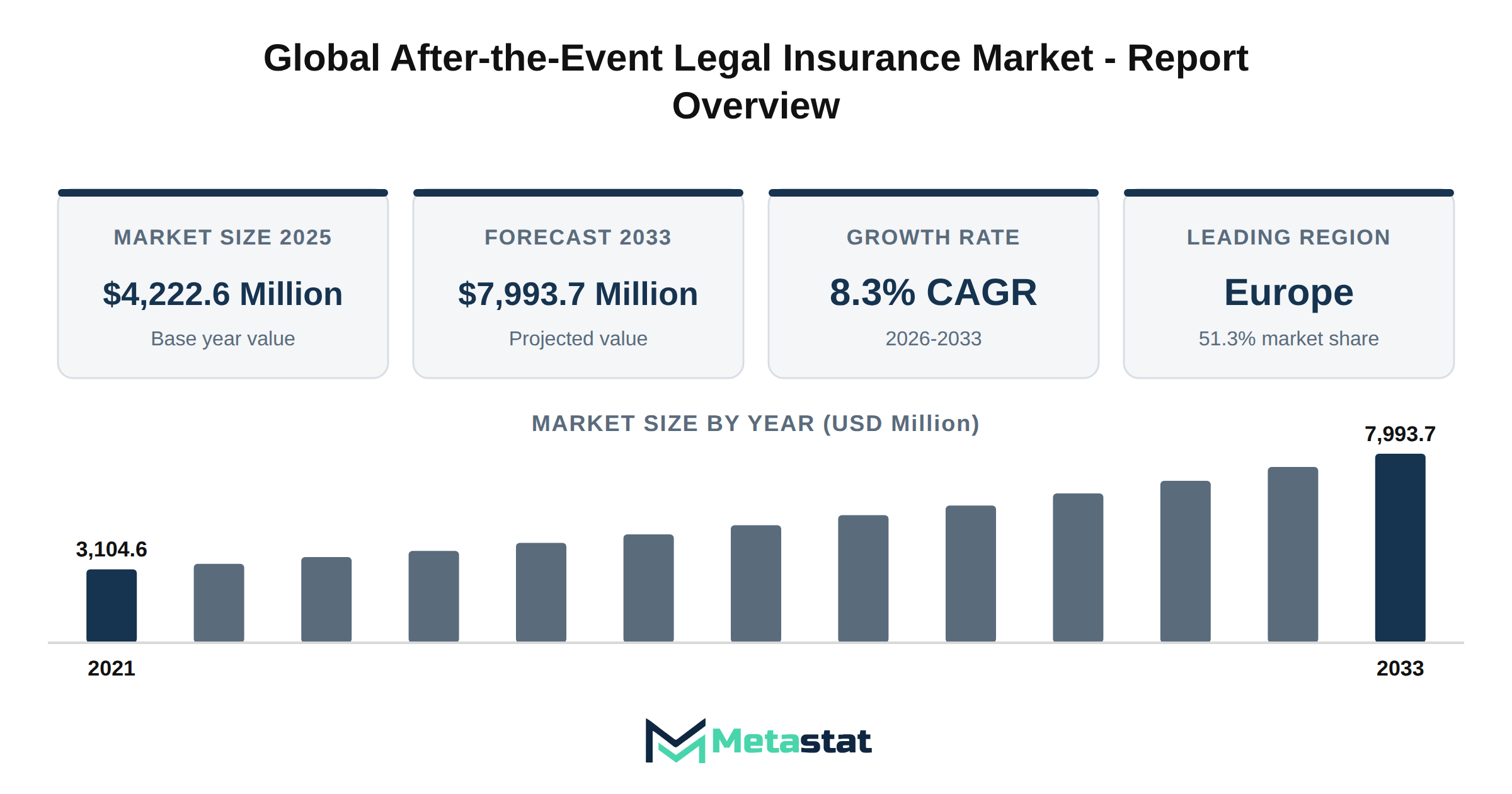
The After-the-Event Legal Insurance market addresses the financial risks associated with pursuing litigation by covering legal costs if the case is lost. Buyers, including individuals and businesses, purchase these policies to mitigate the potential burden of adverse costs and their own legal expenses. Demand is often triggered by increasing litigation complexity and the rising cost of legal proceedings, making this insurance an attractive solution for claimants seeking to manage risk exposure and strengthen access to justice.
Within the market, solicitors and law firms represent the largest distribution channel by value, indicating that buyers frequently acquire coverage through legal professionals rather than direct channels or brokers. Commercial contract and corporate disputes generate the highest value among applications, reflecting the strong commercial demand from businesses facing significant financial exposure in contentious litigation. Europe leads all regions, holding 51.3% of the global share, while North America holds 24.6% of the market in 2025, with the US leading in 2026.
Growth is driven primarily by the rising number of complex and high-value disputes, particularly in commercial and corporate sectors. This increase in litigation risk leads both individuals and businesses to seek tailored insurance solutions, supporting market expansion and encouraging policy innovation among providers. Demand is further supported by evolving legal environments and a growing understanding of the benefits offered by these products.
Buyers rely on After-the-Event Legal Insurance solutions to secure financial protection against adverse legal outcomes, especially in cases with uncertain prospects or substantial costs. This insurance appeals to individuals and businesses pursuing claims where the risk of losing and paying the opposing party’s legal fees presents a significant barrier. Spending is driven by the desire to enable access to justice in personal injury claims, clinical negligence disputes, commercial contract disagreements, and professional negligence cases, with the most prominent demand stemming from commercial contract and corporate disputes.
Coverages are structured to address different financial exposures, with combined adverse and own costs policies holding the largest value in the market. Buyers in this segment seek comprehensive protection that not only covers opponents’ costs but their own, making these policies especially attractive for complex or high-value litigation. Solicitors and law firms account for the largest distribution channel by value, reflecting their central role in advising clients and facilitating policy adoption throughout the legal process.
Europe accounts for the highest share of the After-the-Event Legal Insurance market, supported by mature legal funding frameworks and established litigation cultures in the UK, Germany, and France. The most significant growth driver is the rising complexity and cost of litigation, which prompts both individuals and corporate clients to seek risk mitigation through tailored insurance solutions.
Deferred and contingent premium structures are transforming risk accessibility and client selection in the After-the-Event Legal Insurance market. These approaches allow policyholders to delay or conditionally reduce premium payment until the successful conclusion of a legal case, shifting both cash flow and risk exposure for claimants and insurance providers. Traditional upfront premium models often limited participation to those with readily available funds or high-risk tolerance. In contrast, deferred and contingent premiums lower the entry barrier for individuals and small businesses pursuing legal action, particularly in segments with complex or lengthy litigation processes.
This product innovation is most significant in applications involving commercial contract and corporate disputes, which constitute a high-value segment in the After-the-Event Legal Insurance market and are projected to reach USD 2,032.8 million by 2033. Claimants facing unpredictable timelines and adverse cost risks benefit from premium models that align payment obligations more closely with case outcomes. Insurers, in response, refine underwriting and case assessment protocols to mitigate the increased exposure to adverse results inherent in these premium models.
Commercially, these premium structures expand the market’s accessible client pool and increase the volume of insured cases, while encouraging more law firms to recommend coverage for clients with limited liquidity. Insurers differentiate offerings not only by coverage terms but by the flexibility of premium timing, intensifying competition and supporting broader adoption of After-the-Event Legal Insurance market products in both high-value corporate and individual claims.
Law firms handling large volumes of litigation increasingly select portfolio After-the-Event Legal Insurance policies to manage both risk and cost predictability across multiple claims. These multi-case portfolio policies account for a projected USD 3,060 million by 2033 and are forecast to grow at a 10.6% CAGR, outpacing single-case policies. Buyers in this segment secure coverage for a range of cases under a unified contract, simplifying administration and often improving terms compared to purchasing individual policies case by case. This approach appeals to firms managing recurring claim types, including commercial contract and corporate disputes, or those handling group litigation, where aggregate risk management and cost control are priorities.
Pricing models for portfolio ATE policies tend to be more competitive on a per-case basis, reflecting lower average risk per matter for underwriters and the administrative efficiencies of bulk contract negotiation. Law firms benefit from streamlined claims processing, consolidated premium payment schedules, and, in many instances, increased negotiating power with insurers. The shift toward portfolio policy adoption signals a preference among high-volume legal practices for scalable and predictable risk transfer solutions. The adoption of portfolio ATE policies supports closer insurer-law firm relationships and expands access among firms that face challenges managing litigation risk through traditional single-case policies.
Commercial dispute resolution buyers in the After-the-Event Legal Insurance market increasingly prioritize adverse costs protection, particularly for high-value litigation and cross-border arbitration. For law firms and corporate clients engaging in international disputes, the financial exposure from adverse costs awards represents a material risk to balance sheets and cash flow. This protection is essential for multi-jurisdictional claims, where cost orders from foreign courts or arbitration panels introduce additional complexity and unpredictability.
Within the market’s Application segmentation, Commercial Contract and Corporate Disputes is projected to reach USD 2,032.8 million by 2033, reflecting a sustained demand among business clients for comprehensive risk transfer solutions. These buyers are motivated by the potential for substantial liabilities that arise from losing a case, especially when facing counterparties with significant resources. Adverse costs cover provides the assurance that, if unsuccessful, the insurer absorbs the legal costs owed to the opposing party, enabling corporate litigants to pursue or defend claims without deterring financial risk. Demand in this sector is further supported by the complexity of modern commercial arrangements, growth in cross-border trade, and the rising frequency of international arbitration proceedings.
Insurance providers specializing in adverse costs cover build bespoke products tailored for the intricacies of international arbitration and large-scale commercial litigation. Premiums reflect the case’s risk profile, claim value, and probabilities of success, creating opportunities for insurers with deep legal expertise and strong capital backing to secure business from the most sophisticated clients in the After-the-Event Legal Insurance market.
When a legal claim fails, After-the-Event Legal Insurance typically covers the adverse costs that the losing party has to pay to the successful party, which often include the opponent’s legal fees and disbursements. Most policies in this market extend coverage to the insured’s own legal costs, but the structure depends on the chosen policy. In the Coverage segment, "Adverse Costs Only" policies protect against liability for the opponent’s expenses, with this segment expected to reach USD 2,572.4 million by 2033. "Own Costs Only" policies focus on reimbursing the insured’s outlays if the case is unsuccessful. "Combined Adverse and Own Costs" policies deliver the broadest protection, reaching a projected USD 4,433.3 million by 2033.
This differentiation is critical for buyers. Law firms and claimants select policy types aligned with their risk appetite and the likely costs of litigation. The market responds by offering tailored products for commercial disputes, personal injury, and clinical negligence claims, where adverse cost exposure is substantial. Flexible coverage options enable participants to manage risk at a predictable premium and support access to justice by reducing the financial barriers for meritorious cases. The market supports claimants and legal professionals in pursuing complex or high-value cases with greater confidence, even when the outcome is uncertain.
Rising awareness among claimants and legal professionals regarding the financial risks of litigation is intensifying demand across the After-the-Event Legal Insurance market. While more individuals and organizations recognize that adverse judgments or settlements generate substantial cost exposure, the appetite for products that transfer this risk is growing. This shift is particularly evident in segments including personal injury claims and clinical negligence claims, where the fear of unexpected financial liability often deters pursuit of valid claims. Increased communication from solicitors and insurance brokers informs potential policyholders of the benefits and mechanisms of coverage, lowering barriers to entry. This awareness expansion supports both volume growth and an upward trend in policy values, with the market advancing from USD 4,222.6 million in 2025 to a projected USD 7,993.7 million by 2033. A more informed claimant population pursues legal recourse with greater confidence in cost containment, supporting the expansion of coverage adoption.
High premium costs present a significant barrier for individual claimants and small law firms, restricting the reach of the After-the-Event Legal Insurance market. Premiums for certain policies exceed the financial thresholds that these buyers are willing or able to commit, particularly for lower-value personal injury or professional negligence claims. Uptake remains concentrated among buyers engaged in higher-value disputes or firms with substantial litigation budgets. This dynamic leads to slower expansion into underserved segments and reduces policy volumes in applications including property disputes and financial mis-selling claims. The market faces slower growth in these areas, with many potential claimants opting to self-insure or forego coverage entirely due to cost sensitivity.
Recruiting and retaining underwriters with litigation expertise is driving up operating costs for suppliers in the After-the-Event Legal Insurance market. Competition for professionals with a deep understanding of both insurance risk and complex legal proceedings is intensifying, and salary expectations have risen. This is particularly pronounced in Europe, where the segment commands more than half the global share and legal systems require nuanced knowledge of jurisdiction-specific litigation trends. These specialists not only underwrite policies but advise on case selection, which directly influences claim outcomes and loss ratios. To offset margin pressure, insurers invest in internal training programs and selectively automate elements of the underwriting workflow. While such measures improve efficiency, the net effect is a sustained increase in talent-related expenses that suppliers in the After-the-Event Legal Insurance market absorb to maintain quality and reputation.
Multi-case portfolio policies represent the most attractive growth pocket in the After-the-Event Legal Insurance market, driven by their projected compound annual growth rate of 10.6 % through 2033. This segment addresses the requirements of law firms and litigation funders managing multiple simultaneous claims, offering risk pooling and streamlined underwriting. Portfolio solutions reduce per-case administrative overhead and enable suppliers to price products more competitively, attracting high-volume commercial litigators. With the value of multi-case portfolio policies expected to reach USD 3,060 million by 2033, suppliers able to structure scalable, customizable portfolio offerings are positioned to benefit from the segment’s above-market growth. Increased adoption among institutional buyers supports wider penetration in high-frequency litigation sectors, strengthening recurring revenue streams for established providers. Portfolio policy innovation is expected to reshape demand dynamics over the forecast period.
The Global After-the-Event Legal Insurance market is segmented based on Application, Coverage, Type, and Distribution Channel.
Personal Injury Claims segment is valued at USD 1,100.6 million in 2026 and is projected to reach USD 1,709 million by 2033, at a CAGR of 6.5% during the forecast period. This segment covers insurance purchased by individuals and claimants pursuing compensation for bodily harm or loss resulting from accidents, workplace incidents, or third-party liability events. The primary buyers are individuals, legal representatives, and specialized claimant law firms seeking to manage personal financial exposure during litigation. Rising litigation rates involving road traffic accidents and workplace injuries have supported steady segment growth. Unlike Clinical Negligence Claims, which is projected to see a higher CAGR of 7.1%, Personal Injury Claims expand at a slightly slower pace, reflecting broader accessibility and a higher volume of lower-value claims. Demand in this segment is driven by heightened public awareness of legal rights and the increasing willingness of claimants to pursue legal remedies when sustained injuries disrupt their livelihoods. Strong participation from both individual claimants and legal practices aiming to reduce out-of-pocket risks continues to characterize this segment.
Clinical Negligence Claims segment is estimated to reach USD 1,408.5 million by 2033, at a CAGR of 7.1% during the forecast period. This segment covers policies purchased by individuals and families pursuing legal action over alleged medical malpractice or substandard clinical care. Hospitals, healthcare professionals, and insurers face rising exposure, which, in turn, drives demand for tailored risk transfer solutions by claimants confronting high litigation expenses and uncertain outcomes. A key force moving this segment is the growing volume and complexity of medical negligence cases, driven by both expanding patient awareness and more frequent recourse to legal action following adverse events. Compared to Personal Injury Claims, which are expected to grow at a 6.5% CAGR, Clinical Negligence Claims are forecast for faster expansion, reflecting a higher incidence of high-value claims and the greater financial risk faced by plaintiffs in this category. The market, in turn, sees more sophisticated underwriting in this segment, given the intricate medical evidence and expert testimony often required.
Expected to reach USD 2,032.8 million by 2033, the commercial contract and corporate disputes segment covers insurance for businesses involved in litigation over contractual breaches, partnership disagreements, and shareholder actions. This segment serves corporate legal teams and commercial litigators seeking to protect against the risk of adverse costs when pursuing or defending complex disputes. Demand is driven by rising litigation volumes in sectors with intricate contractual relationships, including construction, professional services, and cross-border trade. Compared to personal injury or clinical negligence claims, disputes in this segment typically involve higher-value cases and more sophisticated buyers, resulting in a distinct risk profile and premium structure. Expanded risk appetite among insurers supports the market, but this segment stands out for its concentration of corporate buyers with strong incentives to transfer litigation risk. Regulatory scrutiny of commercial litigation financing influences product design in this segment, prompting insurers to refine coverage terms and underwriting standards. Growth in this segment reflects the increasing importance of legal risk management in corporate strategy for large organizations.
Projected to grow at a CAGR of 8.6% during the forecast period, the Professional Negligence Claims segment addresses litigation against professionals including solicitors, accountants, and architects. These policies are sought by individuals and businesses affected by alleged breaches of professional duty, who face potentially high legal costs and complex liability disputes. The increase in high-value, expert-driven claims is driving strong adoption from buyers seeking reassurance against the risk of losing expensive cases, particularly in sectors where reputational and financial stakes are high.
Compared to Personal Injury Claims and Clinical Negligence Claims, the Professional Negligence Claims segment is forecast to expand at a faster pace, reflecting growing awareness of professional accountability and an expanding claimant pool. In this segment, rising regulatory scrutiny across professions and a trend toward more claimants pursuing redress for financial loss or reputational harm are shaping demand. Insurers address a more specialized risk profile, requiring in-depth case assessment and often resulting in higher premium rates relative to lower-value, higher-frequency segments.
Claims related to financial mis-selling involve customers seeking redress for unsuitable or misleading financial product recommendations, often targeting banking, investment, or pension advice. Purchasers are typically individual investors or small businesses who face significant financial loss after receiving poor guidance from financial advisors or institutions. Demand in this segment is influenced by regulatory scrutiny and regulatory actions, which increase claim volume when high-profile mis-selling cases attract media attention or result in compensation schemes. Relative to segments like personal injury or professional negligence, financial mis-selling claims exhibit more volatile year-to-year demand patterns due to the episodic nature of regulatory investigations and the release of new compensation programs. Buyers in this segment are especially price-sensitive, and claims often present higher complexity, requiring insurers to underwrite risk with greater caution. This dynamic shapes both premium structures and risk appetite among insurers active in this segment.
Insolvency litigation coverage addresses financial protection for parties involved in disputes that arise out of bankruptcies or company liquidations. Legal professionals, insolvency practitioners, and corporate claimants frequently drive demand for this segment, since litigation in insolvency situations often involves complex multi-party disputes, higher legal expenses, and uncertain recoveries. Businesses exposed to creditor actions or directors contesting liability are adopting these products more widely, reflecting heightened risk sensitivity and increasing reliance on risk transfer solutions. Across the Application segmentation, insolvency litigation stands apart by skewing toward business-to-business disputes and requiring specialized underwriting proficiency. Unlike segments including personal injury or property disputes, which are more standardized, insolvency-related cases fluctuate sharply in scope and cost, impacting premium structures and claim frequency. Suppliers respond by tailoring policy terms, exclusions, and limits to reflect the distinctive risk profile of insolvency-related litigation, supporting both claimants and legal advisors in pursuing or defending complex claims with less exposure to financial loss.
Legal expense protection for competition and antitrust claims appeals to corporates, industry consortia, and specialist law firms confronting allegations of anti-competitive conduct or seeking redress for cartel activity. Demand in this segment intensifies when regulatory scrutiny and private enforcement actions increase, prompting companies to seek solutions that cap litigation exposure. A distinguishing factor for competition and antitrust claims is the complexity and scale of cases, which often span multiple jurisdictions and entail higher legal fees and expert costs compared with segments focused on individual or medical-related claims. This dynamic leads to a buyer profile weighted toward larger enterprises and well-capitalized plaintiffs rather than individual litigants. The market in this area is influenced by changes in antitrust regulation and enforcement trends, which drive the perceived risk and the appeal of transferring potential cost liabilities to insurers. Compared with segments like Personal Injury Claims or Clinical Negligence Claims, adoption is shaped by both regulatory developments and the scale of financial risk at stake, reinforcing a distinct pattern of uptake within this segment.
Disputes over property and housing often lead individual claimants and landlords to seek financial protection against adverse costs, especially in high-value or protracted cases. This segment serves those involved in tenant evictions, boundary disagreements, landlord-tenant contract disputes, and housing disrepair claims. Buyers include private landlords, property management companies, and homeowners facing litigation where the financial stakes are significant but legal budgets remain limited compared to large commercial entities. Demand for coverage in property and housing disputes rises due to the relatively high frequency of such cases and the unpredictability of outcomes, resulting in heightened risk aversion among these clients. Compared to commercial or professional negligence claims, property-related disputes tend to attract buyers sensitized to upfront cost and premium structure, driving interest in products that minimize immediate outlay while providing robust protection. Regulatory changes in tenancy law and housing standards periodically shift the risk landscape, prompting both insurers and insured parties to adapt coverage terms and eligibility criteria. The market responds to these fluctuations with tailored policy offerings specific to the property and housing sector.
Intellectual property disputes involve litigation over patents, trademarks, copyrights, or trade secrets, typically brought by companies or inventors seeking to protect or enforce their rights. Demand for After-the-Event Legal Insurance coverage in this segment is largely driven by technology companies, pharmaceutical firms, and creative industries facing high legal costs and the risk of adverse costs orders if claims fail. The market addresses a buyer group with higher average claim values and more complex evidentiary requirements compared to segments including personal injury or property disputes. Intellectual property claims often involve international parties and cross-border enforcement issues, adding to the financial exposure and uncertainty for claimants. Unlike personal injury or clinical negligence claims, where individual claimants and small firms dominate, buyers in the intellectual property space tend to be corporations and IP-rich startups with access to legal counsel and active risk management strategies. In this segment, technical complexity of claims and the involvement of specialist law firms and underwriters with domain expertise distinguish it from other applications.
Coverage for contentious probate, defamation, and privacy claims addresses legal actions involving disputes over inheritance, allegations of reputational harm, and violations of personal or data privacy. Individuals, families, and organizations pursue this cover when legal costs present a financial hurdle or when cases involve sensitive personal issues or media exposure. Demand in this segment is shaped by the increasing public profile of privacy and reputational cases, with rapid growth in digital communication and expanded online publication channels leading to a higher incidence of defamation and privacy-related litigation. Buyers in this segment often include high-net-worth individuals and public figures, who face unique risks compared to the broader claimant base for personal injury or clinical negligence policies. Compared with faster-growing segments including professional negligence claims, demand is strongly linked to social and technological change rather than systemic litigation trends. Suppliers in the market respond by refining risk assessment tools to account for the unpredictability of jury or judicial decisions in these complex areas.
Valued at USD 1,631.8 million in 2026 and projected to reach USD 2,572.4 million by 2033, this segment targets clients seeking coverage solely for adverse costs if litigation is lost, without extending protection to their own legal expenses. Law firms, claimants, and litigation funders with a primary interest in limiting downside risk from opponent-recoverable costs remain the dominant buyers. Within the After-the-Event Legal Insurance market, this segment appeals to those pursuing straightforward claims or operating under tight cost-control mandates, particularly where claimants prefer a lower premium relative to comprehensive protection. Growth at a CAGR of 6.7% positions this segment behind the Combined Adverse and Own Costs segment on revenue expansion, highlighting different risk appetites between buyers. Heightened cost sensitivity among smaller firms and individual litigants drives demand for the Adverse Costs Only product, which provides a pragmatic entry point to litigation funding. Compared to the Own Costs Only option, the market for this segment is broader, reflecting the greater commercial risk imposed by adverse cost awards in contested claims.
Own Costs Only coverage is estimated to reach USD 988 million by 2033, posting a CAGR of 6.9% over the forecast period. This segment reimburses policyholders for their own legal expenses incurred during litigation, regardless of the outcome. Individuals and law firms that engage in complex or high-value cases without certainty of recovery frequently select this coverage to manage their financial risk. Demand is influenced by claimants seeking to pursue matters without the deterrence of high up-front costs, especially when adverse costs coverage is not required or when combined policies are deemed too expensive. Compared to Adverse Costs Only, Own Costs Only segment grows at a slightly slower rate, with Adverse Costs Only posting a CAGR of 6.7%. Buyers in this segment often include smaller firms or individuals who prioritize protection against legal bills over exposure to their opponent’s costs. Own Costs Only policies appeal to cost-sensitive clients looking for targeted financial protection, supporting modest but steady segment expansion relative to broader combined coverage products.
Expected to reach USD 4,433.3 million by 2033, this coverage segment insures both a claimant’s own legal expenses and the risk of paying an opponent’s costs if the case is lost. Demand is concentrated among corporate clients, high-net-worth individuals, and law firms handling complex or high-stakes litigation where both adverse and own costs represent major financial exposure. Clients turn to this solution to reduce out-of-pocket risk in disputes that involve substantial legal fees and a heightened likelihood of protracted proceedings. The segment differs from Adverse Costs Only and Own Costs Only products by offering comprehensive protection, which appeals to those with larger or more unpredictable liabilities. Unlike Adverse Costs Only, which is projected to reach USD 2,572.4 million by 2033, Combined Adverse and Own Costs coverage captures buyers with greater risk aversion and higher-value cases, supporting its leading position. Growth in this segment is influenced by increasing complexity of commercial litigation and a preference for broader coverage among institutional buyers seeking to stabilize legal budgets in unpredictable environments.
Single-Case Policies are projected to reach USD 4,933.7 million by 2033, starting from USD 3,074.6 million in 2026 and posting a CAGR of 7%. These policies serve claimants or businesses pursuing individual legal cases and provide tailored protection against adverse litigation outcomes. Demand rises among claimants and legal professionals managing one-off or high-stakes disputes where adverse cost risk deters litigation. Individuals and small to mid-sized enterprises with lower case volumes prefer this segment over portfolio coverage. Consistent growth in Single-Case Policies results from their flexibility and accessibility for less frequent litigants. Multi-Case Portfolio Policies post a higher CAGR of 10.6%, while Single-Case Policies expand at a slower pace, reflecting broader accessibility but lower scale per client. Pricing in this segment is generally higher per case since risk is not pooled across multiple disputes. Insurers address these buyers with customized underwriting and case-specific analysis.
Designed for law firms, litigation funders, and corporates managing multiple similar claims, these policies streamline risk management across a portfolio rather than addressing cases individually. Their appeal increases for organizations seeking administrative efficiency, cost predictability, and improved bargaining power when pursuing high-volume litigation. The segment outpaces Single-Case Policies, which have a CAGR of 7.0%, reflecting much faster adoption where economies of scale and bundled underwriting offer stronger pricing leverage. Rising demand is driven by growth in institutional investors funding group actions, and by law firms specializing in class actions or mass torts. The structure of multi-case policies supports higher upfront capital commitment from buyers, differentiating this category from single-case coverage in both buyer profile and pricing. Increasing litigation complexity and an expanding pool of claimants continue to direct premium growth toward this segment.
Valued at USD 601.8 million in 2026, direct sales are projected to reach USD 1,141.5 million by 2033, reflecting a CAGR of 9.6%. This segment delivers services directly to policyholders, often targeting individual claimants and small businesses seeking immediate coverage without intermediary involvement. Growth in direct sales is driven by buyers prioritizing speed, transparency, and straightforward policy terms, particularly in legal disputes where time sensitivity is critical. Unlike insurance brokers and solicitors or law firms, channels that serve clients requiring advisory support or complex risk assessment, direct sales attract buyers looking to reduce acquisition costs and streamline the purchasing process. The segment’s faster growth rate, compared to brokers at a 9.2% CAGR, highlights its appeal for buyers with less complex insurance requirements. Product digitization and the integration of automated underwriting further support the segment’s expansion by shortening decision cycles and lowering administrative burdens for both insurers and clients.
Insurance Brokers segment is estimated to reach USD 2,811.4 million by 2033, at a CAGR of 9.2% during the forecast period. Insurance brokers act as intermediaries, connecting clients with the most suitable After-the-Event Legal Insurance products based on specific litigation needs, risk appetite, and pricing requirements. This channel primarily attracts law firms, corporate clients, and individual claimants seeking expert guidance through complex policy options and negotiation of terms. Increased demand for customized solutions and impartial advice has driven adoption via brokers, setting this segment apart from direct sales, which involve more self-directed purchasing. With a CAGR of 9.2%, insurance brokers are growing faster than direct sales, reflecting buyers’ preference for advisory-driven procurement in this market. Regulatory changes and heightened litigation activity further incentivize buyers to use brokers for access to a broader range of insurers and policy structures.
Solicitors and Law Firms are projected to reach USD 4,040.8 million by 2033, making this the highest-value distribution channel for After-the-Event Legal Insurance market providers. This segment is used primarily by individuals, claimants, and business clients engaged by legal professionals who require comprehensive protection from adverse or own costs arising from high-stakes litigation. Growth in this channel is driven by client demand for expert guidance and bundled policy offerings that integrate with case management, enabling solicitors to match specific risk profiles with tailored insurance solutions. Unlike Direct Sales or Insurance Brokers, Solicitors and Law Firms provide specialized legal knowledge and direct access to policy customization, often resulting in higher average policy values. The market sees this channel drive adoption particularly in complex or multi-party disputes, where trust in the legal advisor’s expertise and established insurer relationships influences client purchasing decisions more than price-driven factors.
Based on geography, the Global After-the-Event Legal Insurance market is divided into North America, Europe, Asia-Pacific, South America, Middle East, and Africa.
United States, Canada, and Mexico account for the region’s projected value of USD 2,092.7 million by 2033. Uptake of After-the-Event Legal Insurance solutions in North America is driven by the high frequency of complex litigation in sectors including commercial disputes, clinical negligence, and financial services malpractice. Clients in the United States tend to seek protection against adverse costs in class actions or mass torts, where exposure to legal expenses is substantial. Regulatory frameworks in the United States and Canada support access to litigation funding while maintaining distinct requirements for disclosure and ethical conduct, which shapes the product offerings of insurers operating in these countries. Canada’s legal system, with its loser-pays cost regime, increases demand for specialized coverage options. The diversity of claims and the high litigation costs across the United States and Canada support strong demand for products tailored to both individual and corporate clients.
Europe accounted for 51.3% of global demand in 2025, giving it the largest regional share in the After-the-Event Legal Insurance market. Demand in this region is driven by high volumes of complex litigation and regulatory-driven claims activity, particularly in the United Kingdom, Germany, and France. Buyers in these countries include both individual claimants and corporate clients engaged in commercial contract, clinical negligence, and financial mis-selling disputes. The presence of established legal frameworks, combined with a mature insurance intermediary network, supports significant uptake of specialized policies. In Italy and Spain, evolving dispute resolution practices and rising awareness of litigation funding contribute to expanding demand, while Russia and the Rest of Europe show moderate adoption due to varying levels of legal infrastructure and insurance penetration. Extensive involvement of specialist brokers and law firms in distribution reinforces the market’s scale and complexity in this region.
In Asia Pacific, demand for After-the-Event Legal Insurance coverage is strongly influenced by rising corporate litigation and growing awareness of litigation funding solutions among businesses and individuals in China, India, and Australia. Key buyer groups include corporate entities involved in contractual disputes and law firms managing class actions or mass claims in major cities including Shanghai, Mumbai, and Sydney. Expanding access to justice initiatives and the gradual standardization of legal finance products in these jurisdictions support adoption. Distinct regulatory frameworks and court processes in Japan, South Korea, and Southeast Asia create varying uptake rates, with several countries seeing interest from local insurers and international legal financing providers. In 2025, Asia Pacific accounted for 18.7% of global revenue, reflecting the region’s expanding legal services sector and increasing sophistication in litigation risk management. The market in this region is shaped by the diversity of legal systems and increasing demand for cost-effective dispute resolution solutions.
In South America, participation in the After-the-Event Legal Insurance market remains modest, with the region representing a small share of global value in 2025. Brazil and Argentina are the key contributors, driven by the prevalence of commercial contract disputes and professional liability claims involving both local and multinational entities. Litigation financing remains relatively limited compared to developed markets. Increasing complexity in business transactions and cross-border operations prompts law firms and corporate legal teams to explore risk transfer solutions. Economic volatility in Brazil, coupled with efforts to manage legal cost exposures, encourages interest in insurance products that address the unpredictability of adverse awards and litigation expenses. The regulatory environment is maturing while awareness of litigation funding options is expanding, which is expected to attract a broader mix of clients seeking financial certainty during protracted legal proceedings. Argentina is emerging with a secondary hub for demand, particularly where insolvency proceedings and contractual disputes pose significant financial risk to claimants and defendants.
Specialist litigation and corporate clients in Saudi Arabia, the UAE, and South Africa generate most of the region’s demand for After-the-Event Legal Insurance market services. In this region, buyers are driven by a combination of increased cross-border commercial transactions and the growing use of international arbitration, which often exposes parties to substantial legal cost risk. Local insurers and international providers see opportunity in supporting high-stakes business disputes where legal funding infrastructure remains less established than in Europe or North America. Demand in this region is supported by the adoption of risk-mitigation solutions among businesses dealing with regulatory change and complex litigation. South Africa stands out for its concentration of legal service providers and a sophisticated financial market, while the UAE and Saudi Arabia show heightened activity in the corporate and construction sectors, both of which frequently encounter prolonged legal disputes.
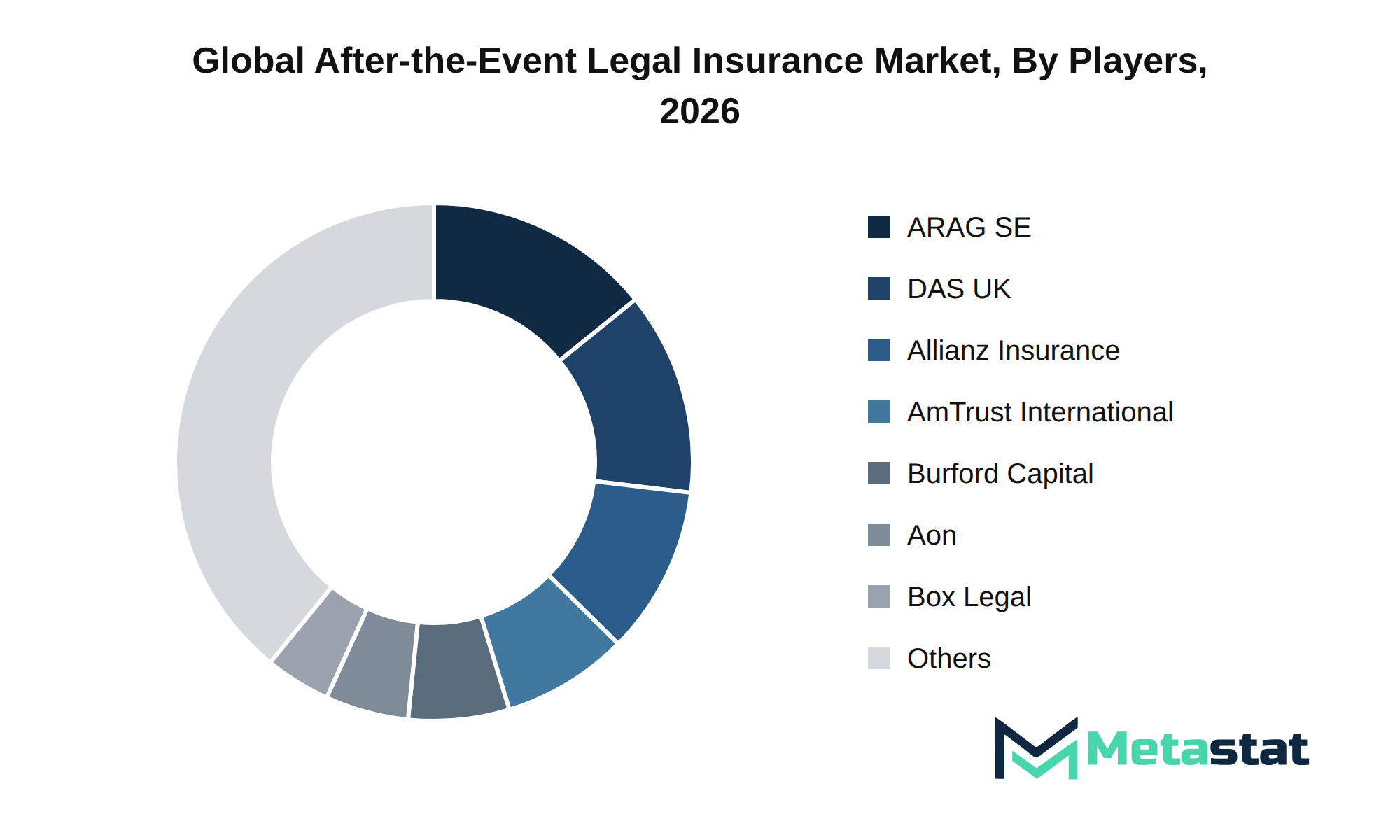
The After-the-Event Legal Insurance market features a diverse field of providers, with competition centering on service specialization, distribution channel expertise, and the breadth of insurance solutions offered. Buyers in this sector prioritize product customization, claims management efficiency, and the ability to cover complex litigation scenarios, often selecting suppliers for their reputation in risk assessment and responsiveness to evolving legal environments. Price sensitivity influences decisions for both individual and corporate clients, especially where high-value disputes or class action portfolios are involved.
Several companies in the market position themselves through differentiated offerings. ARAG SE emphasizes comprehensive legal protection products and adapts to a wide range of claims types. Burford Capital LLC focuses on funding large and complex litigation, targeting clients seeking financial support for high-cost cases. Box Legal Limited specializes in schemes tailored for solicitors and law firms, providing streamlined processes that attract volume-driven legal practices. Miller Insurance Services LLP concentrates on bespoke policy structuring for commercial litigation, capturing demand from corporate entities requiring tailored solutions. This segmentation by focus area enables providers to align with distinct buyer groups, whether individuals seeking personal injury coverage or organizations pursuing multi-case portfolio policies. Insurers strengthen relationships with solicitors, brokers, and law firms to expand reach and reinforce client trust, shaping the direction of the market while product portfolios and distribution models evolve to meet sophisticated legal needs.
Achieving this projection depends on three key developments. First, growth in commercial contract and corporate disputes coverage is expected to accelerate, with increased adoption driven by a rising incidence of complex litigation in both Europe and North America. Higher premium volumes in this segment contribute to overall expansion, with large corporate clients seeking tailored risk mitigation solutions. Second, the increasing use of multi-case portfolio policies, which are projected to advance at a faster growth rate than single-case policies, supports scalable adoption among institutional claimants and law firms. This product shift reflects changing purchasing behavior among high-volume litigators seeking efficiency and broader coverage. Third, insurance broker distribution is expected to expand its influence, with market share gains resulting from specialized broker expertise in structuring policies for complex claims. The main risk to the forecast is ongoing regulatory uncertainty, particularly in jurisdictions outside Europe where less mature legal funding frameworks introduce unpredictability for both providers and clients. Delays or reversals in supportive regulation restrict new product launches and slow market entry, especially in Asia Pacific and North America.
By Application: Personal Injury Claims, Clinical Negligence Claims, Commercial Contract and Corporate Disputes, Professional Negligence Claims, Financial Mis-selling Claims, Insolvency Litigation, Competition and Antitrust Claims, Property and Housing Disputes, Intellectual Property Disputes, Others (Contentious Probate, Defamation, Privacy Claims)
By Distribution Channel: Direct Sales, Insurance Brokers, Solicitors and Law Firms
The report strategically identifies and profiles the key market players and analyses their core competencies in each sub-segment of the After-the-Event Legal Insurance market.
|
Report Attributes |
Details |
|
Study Period |
2021-2033 |
|
Base Year |
2025 |
|
Estimated Year |
2026 |
|
Forecast Period |
2026-2033 |
|
Historical Period |
2021-2025 |
|
Growth Rate |
CAGR 8.3% from 2026 to 2033 |
|
Revenue Unit |
USD million |
|
Segmentation |
By Application, Coverage, Type, Distribution Channel, and Region |
|
By Region |
North America (By Application, Coverage, Type, Distribution Channel, and Country)
|
|
Europe (By Application, Coverage, Type, Distribution Channel, and Country)
|
|
|
Asia Pacific (By Application, Coverage, Type, Distribution Channel, and Country)
|
|
|
|
|
Middle East and Africa (By Application, Coverage, Type, Distribution Channel, and Country)
|
Find answers to common questions about this report
The After-the-Event Legal Insurance market size was valued at USD 4,222.6 million in 2025.
The projected CAGR is 8.3% for the forecast period from 2026 to 2033.
The North America After-the-Event Legal Insurance market size is estimated to reach USD 2,092.7 million by 2033.
Single-Case Policies lead by type, reaching USD 4,933.7 million in 2033, ahead of Multi-Case Portfolio Policies at USD 3,060 million. This ranking is based on forecast value for 2033.
Rising awareness among claimants and legal professionals about litigation cost risks is intensifying demand for risk-transfer products. Multi-case portfolio policies are attracting high-volume buyers by offering risk pooling and streamlined underwriting, supporting above-market growth.
Europe holds the dominant share with 51.3 %of the total market, leading all other regions by a significant margin. North America follows with a 24.6% share.
Multi-case portfolio policies are supporting adoption by enabling law firms and litigation funders to manage risk across multiple claims with greater efficiency and reduced per-case costs. Innovation in portfolio offerings is attracting high-volume commercial litigators and expanding penetration among institutional buyers.
The After-the-Event Legal Insurance market is estimated to reach a valuation of USD 7,993.7 million by 2033.
Companies active in the After-the-Event Legal Insurance sector include ALIGNED Insurance Inc., Allianz Insurance plc, ARAG SE, AmTrust International, Box Legal Limited, DAS UK Group, Burford Capital LLC, and Miller Insurance Services LLP.
Professional Negligence Claims is projected to grow the fastest among application segments, with a compound annual growth rate of 8.6 % through 2033.
The analysts below cover Professional Services research at Metastat Insights.
LEAD ANALYST
Utkarsh Khirodkar is a Lead Market Research Analyst at MetaStat Insight, specializing in market intelligence, technology sector assessments, and competitive strategy.

PRINCIPAL CONSULTANT - ENTERPRISE AI & EMERGING TECHNOLOGIES
Banking & Finance · Electronics and Semiconductor · Energy and Power · Healthcare IT · Information & Technology · Professional Services
Vijay Gunti is a Principal Consultant at MetaStat Insight, bringing over two decades of experience across enterprise digital transformation, technology strategy, and intelligent systems.

PRINCIPAL CONSULTANT - QUALITY SYSTEMS & COMPLIANCE
Electronics and Semiconductor · Machinery & Equipment · Professional Services
Omkar Phadtare is an Industry Consultant at MetaStat Insight, specializing in quality systems, regulatory compliance, and standards benchmarking to drive data-driven market intelligence and strategic industry research.

LEAD CONSULTANT - COMMUNICATION, TELECOM, AND IT
Electronics and Semiconductor · Information & Technology · Machinery & Equipment · Professional Services
Ravindra Sathe Consultants for Communication, Telecom, and IT at MetaStat Insight. He leads the firm's industry research initiatives across telecommunications infrastructure, digital connectivity, enterprise networking, and emerging information technology domains.
Tracking capacity expansion in single-use bioprocessing requires dependable data on raw material availability and cleanroom-grade polymer supply chains. The competitive landscape chapter gave a grounded evaluation of secondary component suppliers across North America and Asia-Pacific rather than simply reprinting press releases. Having that level of supplier benchmarking helped clarify dual-sourcing considerations for our clinical pipeline planning.
When evaluating distributed energy resource management systems, standard research summaries tend to gloss over the operational differences between front-of-the-meter utility deployments and behind-the-meter industrial sites. The MetaStat Insight report addressed those distinctions directly, especially regarding software interoperability standards and grid interconnection backlogs. The five-year market sizing across regional transmission organizations provided actionable context for our grid modernization strategy.
Most industry reports on warehouse automation bundle autonomous mobile robots and fixed conveyor installations into the same top-level numbers, which complicates advisory work. This study split the market cleanly by payload tiers, navigation technology, and fleet management software layers. The regional forecast for Western Europe gave our team defensible adoption benchmarks when evaluating capital allocation for logistics clients, saving us days of secondary data scrubbing.
Explore related market intelligence reports worth reading alongside this one.