
LEAD ANALYST
Utkarsh Khirodkar is a Lead Market Research Analyst at MetaStat Insight, specializing in market intelligence, technology sector assessments, and competitive strategy.

Global Automotive Collision Repair Market Size, Share, By Product (Crash Parts, Paints & Coatings, Adhesives & Sealants, Abrasives and Finishing Compound), By Repair Type (Dent Removal, Auto Glass Replacement, Straightening Out Bent Metal, Replacing Doors or Panels, Paint Matching, Scratch Removal and Auto Detailing), By Vehicle Type (Passenger Cars and HCV & LCV), By Service Channel (OE and DIFM (Do it for Me)), Industry Analysis, Growth, Trends, and Forecast, 2026-2033
Report ID
MSI-5325
Published
September, 2026
Pages
264 Pages
Format
Historical
Base year
Forecast
Forecast period
Report Details
Market Valuation: Valued at $204.3 Billion in 2025, projected to reach $241.4 Billion by 2033 at a 2.1% CAGR.
Dominant Segment: The Crash Parts segment leads the market, valued at USD 100.5 billion in 2026 and projected to reach USD 113.2 billion by 2033, driven by the increasing number of vehicles and collision frequency.
Geographic Lead: The Asia Pacific region is anticipated to grow rapidly, fueled by rising vehicle ownership and urbanization trends, creating a heightened demand for collision repair services.
What's Inside: The report provides a comprehensive analysis of market dynamics, competitive landscape, and detailed forecasts covering the period from 2026 to 2033, ensuring informed decision-making.
Emerging Trends: The adoption of digital transformation strategies and advanced repair technologies is reshaping the market, enhancing operational efficiency and customer engagement.
Choose Your License
Global Automotive Collision Repair Market
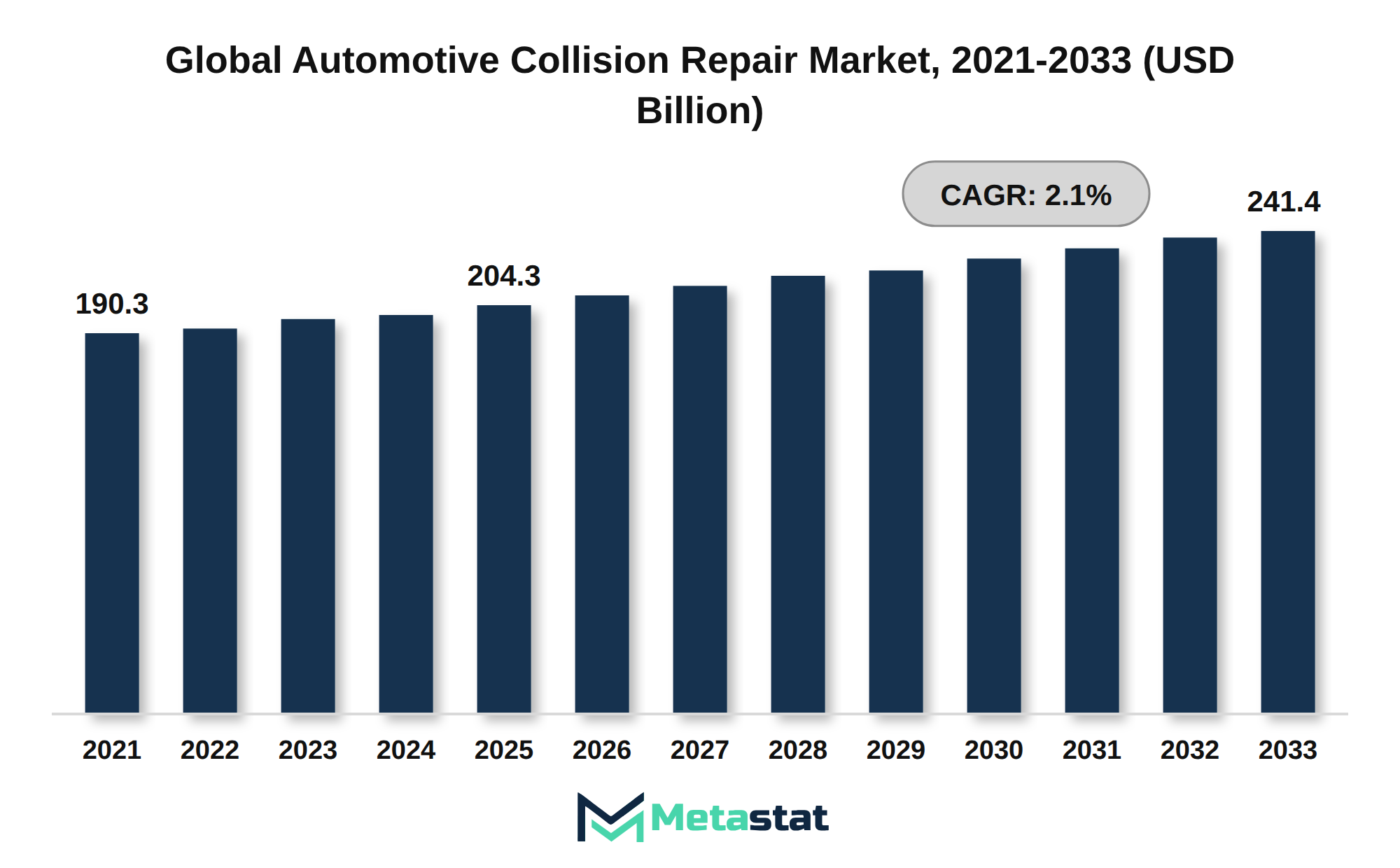
The global Automotive Collision Repair market was valued at USD 204.3 billion in 2025 and is projected to reach USD 241.4 billion by 2033, growing at a CAGR of 2.1% over the forecast period.
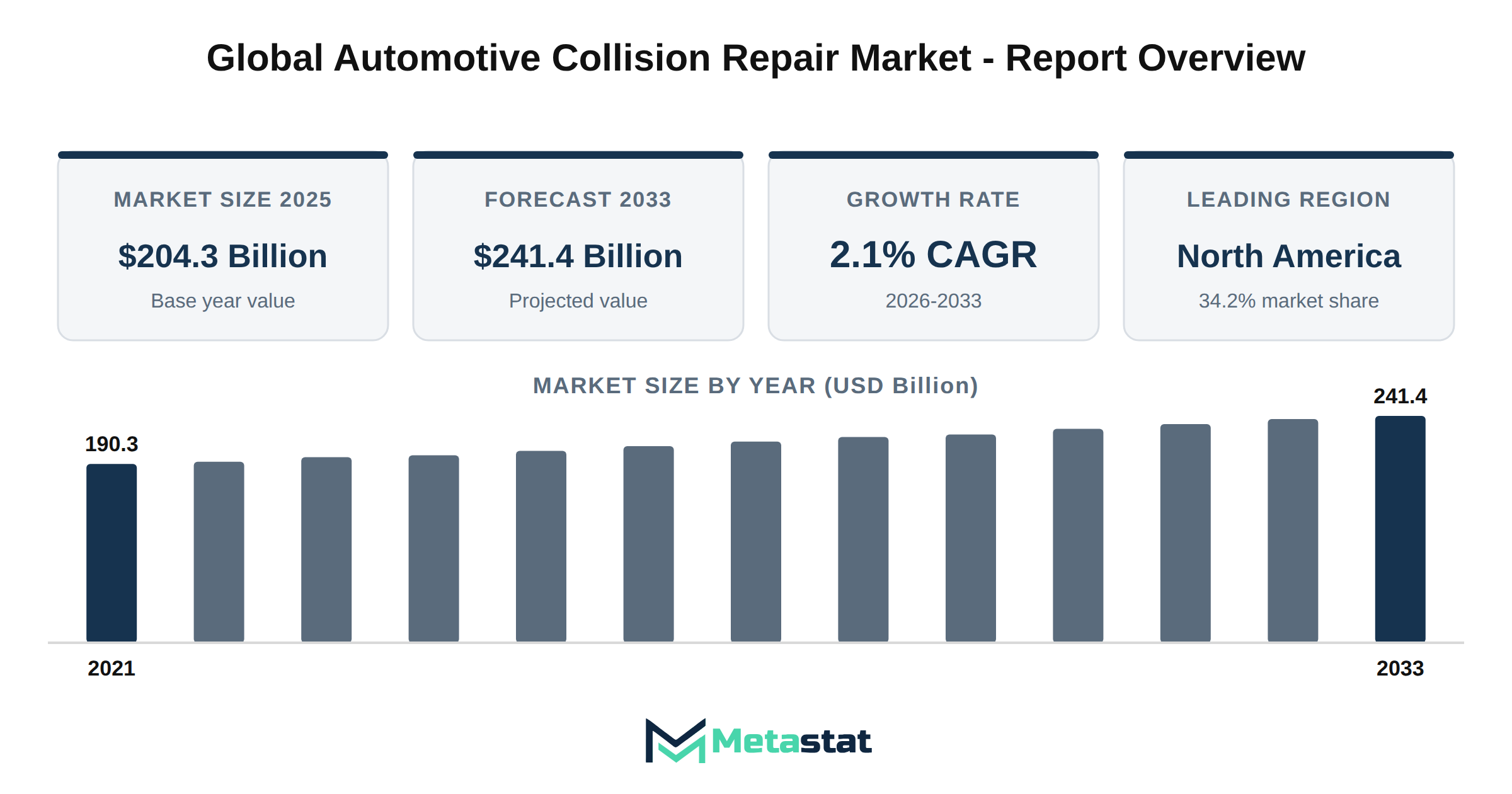
The global Automotive Collision Repair market was valued at USD 204.3 billion in 2025 and is projected to reach USD 241.4 billion by 2033, exhibiting a CAGR of 2.1% during the forecast period from 2026 to 2033. The market demonstrates steady growth driven by various factors influencing repair demand.
Rising vehicle parc and accident rates significantly impact collision repair demand. While the number of vehicles on the road continues to increase, the frequency of accidents correspondingly rises, resulting in heightened need for repair services. The growing number of vehicles, particularly passenger cars, contributes to the overall expansion of the market.
Advanced driver assistance systems (ADAS) have reshaped collision repair complexity. These technologies, designed to enhance vehicle safety, introduce new challenges for repair facilities. Repair shops adapt to the sophisticated nature of these systems, which require specialized knowledge and training for effective repairs.
The adoption of electric vehicles (EVs) introduces new collision repair requirements. EVs often feature distinct components and materials that necessitate specialized repair techniques. This shift in vehicle technology demands that collision repair centers invest in new tools and training, further driving market evolution.
Increasing use of lightweight materials in automotive body repair influences repair processes. Lightweight materials, while beneficial for fuel efficiency, present unique challenges during repairs. The market integrates advanced techniques to effectively address the complexities associated with these materials.
The growth of paintless dent repair and advanced refinishing technologies enhances repair options. These innovative methods not only streamline the repair process but improve customer satisfaction by reducing turnaround times. Adoption of these technologies reflects an ongoing trend toward efficiency and quality in the market.
Digital damage assessment and AI-based repair estimation adoption transform traditional repair practices. These technologies enable more accurate assessments of repair needs and costs, facilitating improved efficiency in operations. The integration of digital tools represents a significant advancement within the market, positioning repair shops to enhance service delivery.
OEM certification programs are reshaping collision repair networks. These programs establish standards for repair quality, ensuring that vehicles are restored to manufacturer specifications. Certification builds trust among consumers, promoting higher standards throughout the market.
Rising labor costs and technician shortages impact repair economics. The collision repair industry faces challenges in attracting and retaining skilled technicians, leading to increased labor expenses. This trend influences the overall profitability of repair shops and affects pricing strategies across the market.
Developments in the supply chain for automotive collision repair parts and materials influence market dynamics. Ensuring a reliable supply of quality parts is critical for repair operations, particularly with the increasing complexity of modern vehicles. Efficient supply chain management becomes essential for maintaining competitiveness within the market.
The Automotive Collision Repair market experiences significant trends that shape demand for repair services. A rising vehicle parc, coupled with increasing accident rates, drives higher demand for collision repair. The expansion of vehicle ownership and the frequency of road incidents directly correlate with the need for effective repair solutions.
Advanced Driver Assistance Systems (ADAS) contribute to the complexity of collision repairs. These systems require specialized knowledge and tools for proper repair and recalibration, influencing both the cost and the duration of repair processes. Technicians adapt to new technologies, demanding ongoing training and investment in advanced equipment.
The adoption of electric vehicles introduces unique challenges for collision repair. These vehicles often contain specialized materials and components that require specific repair techniques, leading to a need for updated training and resources within repair facilities. Repair shops integrate these new requirements into their service offerings to remain competitive.
Lightweight materials in automotive body construction are becoming more prevalent, impacting repair methods. The shift towards materials including aluminum and high-strength steel necessitates different approaches in repair techniques, affecting both labor and material costs. Advanced training on these materials enhances repair quality and efficiency.
Paintless dent repair and advanced refinishing technologies are gaining traction within the market. These methods improve repair turnaround times and reduce the need for traditional painting processes, providing cost-effective solutions for vehicle owners. Adoption of these innovative techniques enhances customer satisfaction and leads to increased market share for repair facilities.
Digital damage assessment and AI-based repair estimation technologies offer opportunities for improving accuracy and efficiency in the repair process. These tools streamline the estimation process, allowing repair shops to provide quicker and more precise quotes, enhancing overall customer experience and operational efficiency.
OEM certification programs transform the collision repair landscape by setting standards for repair quality and safety. Certified shops attract more business due to their credibility and assurance of high-quality repairs, influencing consumer choices and repair shop profitability.
Rising labor costs and technician shortages present challenges to the market. The demand for skilled technicians exceeds supply, resulting in higher wages that impact repair economics. Repair facilities explore strategies to attract and retain talent while managing operational costs.
Supply chain developments for automotive collision repair parts and materials influence the availability and pricing of essential components. Disruptions in the supply chain lead to delays in repairs and increased costs, necessitating strong relationships with suppliers to ensure consistent access to high-quality materials.
Calibration services for advanced vehicle technologies are increasingly demanded following collision repairs. Proper calibration is essential to maintain the functionality of advanced systems, including ADAS, ensuring vehicle safety. Repair facilities offering these services differentiate themselves in a competitive market.
Insurance claims trends significantly influence spending in the automotive collision repair market. Changes in insurance policies and coverage options affect consumer behavior and repair shop profitability. Understanding these trends enables repair facilities to adapt their business models accordingly.
The consolidation of collision repair shops and the expansion of multi-shop operators reshape the competitive environment. Larger operators benefit from economies of scale, enhancing their market presence and operational efficiencies. This trend leads to increased pressure on smaller, independent repair shops to adapt or partner with larger networks.
Innovation in automotive refinish coatings and sustainable paint technologies plays a critical role in the market's evolution. The demand for environmentally friendly solutions drives manufacturers to develop low-VOC coatings, meeting regulatory requirements and consumer preferences for sustainability.
Increasing repair costs associated with sensors, cameras, and vehicle electronics significantly affect the market. Vehicles become more technologically advanced, leading to rising repair costs, necessitating repair facilities to invest in new tools and training to handle these sophisticated systems.
Connected vehicles and diagnostic technologies are transforming collision repair processes. These advancements allow for efficient diagnostics and streamlined repairs, improving service quality and customer satisfaction. Repair facilities adopting these technologies enhance their competitive edge.
Regulatory and safety standards continue to impact automotive collision repair operations. Compliance with these evolving regulations requires repair shops to stay informed and adjust their practices, which entails additional costs but ultimately enhances consumer trust and safety.
Sustainable collision repair practices, including low-VOC coating adoption, are increasingly prioritized within the market. Repair facilities implementing environmentally friendly practices appeal to a growing segment of eco-conscious consumers, contributing to a positive brand image and customer loyalty.
The competition between independent repair shops and OEM-authorized collision repair centers remains significant. Each type of facility offers unique advantages, with independents providing competitive pricing while OEM centers emphasize high-quality repairs and manufacturer standards. Consumers weigh these factors when choosing a repair provider.
Growth opportunities in the Asia Pacific automotive collision repair market are substantial. Rapid urbanization, increasing vehicle ownership, and evolving consumer preferences drive demand for collision repair services in this region. Repair facilities tailoring their offerings to local market conditions capitalize on these trends.
North America continues to experience demand for automotive collision repair, with industry consolidation shaping the competitive landscape. The expansion of larger repair networks enhances service accessibility and quality, influencing consumer choices and market dynamics.
Europe's automotive collision repair market faces unique trends and regulatory impacts. Stricter environmental regulations and the push for sustainable practices drive innovation within the sector, prompting repair facilities to adopt more eco-friendly methods and materials, aligning with consumer expectations.
Future growth prospects for the automotive collision repair market through 2033 appear promising. Ongoing advancements in vehicle technology, coupled with evolving consumer behaviors, create new opportunities for repair facilities to enhance their service offerings and achieve sustainable growth.
Growing macro-economic factors drive expansion in the Automotive Collision Repair market. Increased GDP growth enhances consumer spending power, creating demand for vehicle maintenance and repair services. A favorable capital investment environment, characterized by low-interest rates, incentivizes investments in repair facilities and technologies.
Urbanization trends contribute to rising vehicle ownership, increasing the need for collision repair services. Shifting demographic patterns, including an aging population, further influence consumer behaviors toward maintaining vehicles for longer periods. This shift increases the frequency of collision repairs, positively influencing market growth.
Technological integration enhances operational productivity within the market. Automation and digitization of legacy processes streamline repair operations, reduce turnaround times, and improve customer experiences. Investments in advanced repair technologies and software solutions facilitate increased efficiency, contributing to the market's overall expansion.
Growing awareness of environmental, social, and governance (ESG) mandates encourages businesses to adopt sustainable practices. Initiatives focused on carbon footprint reduction and resource stewardship influence consumers, impacting their choices in repair services. The market responds by integrating eco-friendly materials and processes into collision repair operations, further supporting demand.
Investment in infrastructure development significantly influences the Automotive Collision Repair market. Upgrading physical facilities and enhancing digital capabilities improves operational efficiency within repair services. Increased public and private spending on infrastructure projects directly correlates with higher vehicle usage, resulting in a greater volume of collision events that require repair.
Modernized repair facilities equipped with advanced technologies facilitate quicker and more efficient service delivery. This integration of technology, including automation and digitization of legacy processes, effectively streamlines operations, reduces turnaround times, and enhances customer satisfaction. While the market evolves, strategic investments in infrastructure enhance service capabilities and support the overall growth trajectory of the Automotive Collision Repair market.
Localized production strategies within the infrastructure framework contribute to supply chain resilience. This approach enables repair providers to mitigate risks associated with global supply chain disruptions and maintain consistent service levels. The focus on modernizing assets aligns with consumer expectations for quality and efficiency, further driving demand in the Automotive Collision Repair market.
The Automotive Collision Repair market faces significant challenges stemming from regulatory tightening and compliance hurdles. These obstacles create delays in obtaining necessary certifications and approvals, directly impacting operational timelines for service providers and manufacturers. Companies that engage in collision repair operations experience increased costs associated with compliance, which restricts their ability to invest in growth and innovation.
Macroeconomic factors introduce additional complexities, including inflationary pressures that increase operational costs and dampen consumer spending. Rising costs for materials and services contribute to reduced profit margins for repair shops, compelling them to adjust pricing structures. This adjustment results in diminished demand for repair services, driven by consumers seeking alternative solutions or delaying necessary repairs.
Supply chain disruptions further exacerbate challenges within the market, leading to delays in the availability of essential parts and materials. These disruptions stem from geopolitical instability, which affects global trade routes and supplier reliability. Consequently, repair facilities experience operational bottlenecks that impact their capacity to meet customer demand efficiently.
Technological obsolescence and the introduction of alternative offerings present additional restraints. Rapid advancements in vehicle technology increase the complexity of repairs, requiring specialized training and equipment. Many facilities struggle to keep pace with these developments, limiting their competitiveness in the Automotive Collision Repair market. This situation creates a gap that affects overall operational efficiency.
Finally, skilled labor deficiencies pose a significant barrier to market growth. A shortage of trained technicians increases recruitment and retention costs, straining resources for repair businesses. Without an adequate workforce, the market experiences inefficiencies that hinder overall performance, ultimately affecting service delivery and customer satisfaction.
Geopolitical fragmentation significantly affects the Automotive Collision Repair market, introducing complexities in supply chain management. Heightened trade tensions and tariff friction impede the flow of essential materials and components, leading to increased costs and delays. Market participants face challenges in securing reliable supply sources, particularly in regions experiencing political instability.
Volatility in feedstock prices exacerbates operational pressures within the market. Fluctuations in raw material costs create uncertainties, influencing pricing strategies and profit margins for repair service providers. Many firms experience heightened competition while attempting to maintain profitability during rising input costs.
Workforce skill gaps pose another challenge, particularly with the ongoing automation of repair processes. The transition to advanced technologies requires a skilled labor force adept in both traditional techniques and modern systems, creating talent retention pressures that inhibit market growth. Consequently, companies face the invest in training and development to meet evolving industry demands.
The complex environment of technological disruptions introduces interoperability friction among various systems and components. Repair facilities often struggle to integrate new technologies with existing infrastructure, leading to inefficiencies and increased operational costs. This challenge becomes particularly pronounced with the rise of electric and autonomous vehicles, necessitating significant investments in equipment and expertise.
Market saturation contributes to pricing compression, where intense competition drives down service costs, further squeezing profit margins. With numerous players vying for market share, maintaining a competitive edge requires innovative service offerings and strategic partnerships. Failure to adapt to changing consumer demands risks relegating companies to lower market positions.
The Automotive Collision Repair market benefits from emerging digital transformation strategies that enhance operational processes and improve customer engagement. Increased reliance on digital platforms creates more efficient procurement and service delivery, addressing evolving consumer preferences for convenience and accessibility. While businesses adopt online solutions, the shift toward e-commerce and digital procurement becomes increasingly evident, allowing for streamlined operations and improved customer interaction.
Geographical expansion into underserved markets represents a significant opportunity. Regions experiencing economic growth, including parts of Asia Pacific and South America, demonstrate increasing vehicle ownership rates and subsequent demand for collision repair services. Companies targeting these emerging markets through localized strategies effectively capture new customer bases. This expansion boosts sales revenue and aids in establishing brand presence in competitive landscapes.
Technological disruptions, particularly advancements in repair technologies and materials, contribute positively to market dynamics. Innovations including lightweight materials and eco-friendly products align with sustainability imperatives, attracting environmentally conscious consumers. Integration of next-generation technologies in repair processes improves service quality and reduces operational costs, thereby enhancing profitability for service providers.
Strategic consolidation shapes the competitive environment. Mergers and acquisitions among service providers enhance market share and operational efficiencies, allowing participants to scale their offerings and expand service capabilities. This consolidation simplifies access to resources and technology, ultimately benefiting customer experience and operational effectiveness in the Automotive Collision Repair market.
Asset life-cycle extensions through advanced maintenance practices provide an avenue for sustained revenue growth. Companies prioritizing retrofitting and upgrading existing assets build customer loyalty by ensuring vehicles meet safety and performance standards over time. This focus on maintenance and durability reinforces long-term customer relationships and supports a recurring revenue model.
The Global Automotive Collision Repair market is segmented based on Product, Repair Type, Vehicle Type, and Service Channel.
Valued at USD 100.5 billion in 2026, the Crash Parts segment is projected to reach USD 113.2 billion by 2033, at a CAGR of 1.7% during the forecast period. Demand within this segment is driven by the increasing number of vehicles on the road and the rising frequency of collisions, which require the replacement of damaged parts. Technological advancements in crash parts production enhance quality and performance, aligning with evolving consumer expectations for safety and durability.
Product evolution shapes the market landscape, with manufacturers introducing lightweight materials and innovative designs that improve vehicle efficiency. Regulatory compliance standards regarding safety and emissions influence the adoption of new crash parts, compelling manufacturers to innovate to meet stringent requirements. The growing trend towards electric vehicles leads to changes in crash parts specifications, presenting opportunities for manufacturers to address the needs of a shifting market.
Cost structures associated with producing crash parts affect pricing volatility and margin pressures within the market. Variations in raw material prices contribute to fluctuations in production costs, prompting manufacturers to explore alternative sourcing strategies and streamline supply chains. Strategic opportunity windows arise from the demand for high-quality replacement parts, encouraging investment in advanced manufacturing technologies that enhance production efficiency. The Crash Parts segment stands poised for sustained growth driven by these dynamic factors within the Automotive Collision Repair market.
Growth in the Paints & Coatings segment results from increasing vehicle ownership and a rise in the frequency of collision repairs. The demand for high-quality automotive paints that ensure durability and aesthetics drives this segment's expansion. Evolving technology in paint formulations, including improvements in eco-friendly and water-based options, enhances performance while meeting stringent regulatory compliance standards. These advancements contribute to an increasing preference for innovative coatings that offer superior protection against environmental factors.
The Paints & Coatings segment is projected to reach USD 53.8 billion by 2033, at a CAGR of 2.5% during the forecast period. The segment faces cost structures influenced by raw material sourcing volatility, impacting pricing strategies. Increased competition among suppliers encourages innovation while creating opportunities for strategic partnerships. The integration of advanced technologies in application methods, including automation, streamlines processes and boosts efficiency in the market.
Shifts in consumer preferences toward personalized vehicle aesthetics further enhance demand within the segment. While environmental concerns gain prominence, manufacturers increasingly focus on developing sustainable and compliant products. This trend reflects a broader commitment to sustainability across the Automotive Collision Repair market, positioning the Paints & Coatings segment for continued growth and adaptation in a competitive environment.
Investments in advanced formulations and improved performance characteristics drive demand for adhesives and sealants within the Automotive Collision Repair market. Upgrades in automotive manufacturing, alongside the increasing complexity of vehicle structures, necessitate high-performance adhesives that provide durability and flexibility. This demand represents a significant opportunity for producers focusing on product innovation, particularly in light of evolving vehicle designs requiring advanced bonding solutions.
Regulatory compliance standards regarding environmental impact influence the adhesives and sealants segment. Stricter regulations on volatile organic compounds (VOCs) lead manufacturers to innovate with low-emission products, enhancing market competitiveness. The shift towards electric and hybrid vehicles increases demand for specialized adhesives that cater to unique manufacturing processes and materials.
The Adhesives & Sealants segment is projected to reach USD 25.6 billion by 2033. Rising adoption in vehicle assembly lines and repair shops will significantly contribute to revenue growth. The movement towards automation and digital solutions in repair facilities further drives the need for efficient and reliable bonding materials, reinforcing the segment’s growth trajectory.
Competitive pressures and pricing volatility present challenges for manufacturers. Increasing costs of raw materials and supply chain disruptions impact profit margins. Strategic partnerships and effective supplier management mitigate these risks, enabling firms to enhance their market positioning and ensure consistent product availability.
The growth trajectory of the abrasives segment aligns with the overall expansion of the Automotive Collision Repair market. This segment is projected to grow at a CAGR of 1.5% during the forecast period. Increasing vehicle ownership and the need for maintenance contribute to higher demand for abrasives used in repair processes. Continuous evolution of vehicle designs and materials influences product development in this segment, necessitating advanced abrasives that accommodate various surfaces and finishes.
Technological advancements in abrasive materials and formulations enhance performance and efficiency, attracting more end-users in the automotive sector. The growing trend toward sustainability drives demand for eco-friendly abrasives, aligning with regulatory compliance standards focused on reducing environmental impact. Expansion of online retail channels facilitates access to abrasives, broadening market reach and creating strategic opportunity windows for suppliers.
Cost structures and pricing volatility impact competitive dynamics within the abrasives segment. Manufacturers focus on optimizing production processes to manage margins while maintaining product quality. Supply chain resilience remains a focal point, particularly in sourcing raw materials essential for abrasive production. The market's evolution adapts to these challenges while leveraging emerging opportunities for growth and innovation.
Innovation and technological maturation drive demand for finishing compounds in the Automotive Collision Repair market. The increasing focus on vehicle aesthetics and durability encourages the use of advanced finishing solutions that enhance surface quality and performance. The expansion of electric vehicles and advanced driver-assistance systems influences product development, necessitating upgrades in finishing compounds to meet new specifications and performance standards.
End-use dynamics emphasize quality and longevity, prompting manufacturers to adopt premium finishing compounds that reduce rework and enhance overall customer satisfaction. Consumption shifts toward environmentally friendly and sustainable formulations align with evolving regulatory compliance standards, pushing the industry toward greener alternatives. This transition supports companies investing in research and development to create innovative, eco-friendly products and positions them favorably in a competitive market.
Supply chain resilience plays a critical role in maintaining consistent quality and availability of raw materials essential for producing finishing compounds. Ongoing fluctuations in raw material prices introduce margin pressures, compelling manufacturers to optimize cost structures and enhance operational efficiencies. Strategic opportunity windows arise for firms navigating these challenges, allowing for the development of alternative formulations that address both cost and performance needs.
In light of these developments, companies actively explore white-space analysis to identify unmet needs in the market. This proactive approach drives capital investment in new technologies and product lines that cater to specific customer demands, laying the groundwork for future growth in the finishing compound segment within the Automotive Collision Repair market.
Product innovation within the Others sub-segment contributes to evolving consumer preferences in the Automotive Collision Repair market. Diverse applications of materials that do not fall into traditional categories require attention, especially owing to automakers incorporating advanced technologies into vehicle design. These advancements enhance vehicle safety and contribute to rising repair costs, intensifying the need for specialized repair solutions.
End-use dynamics emphasize increasing demand for high-quality, specialized products that address unique repair challenges. Regulatory compliance standards promote the adoption of safer and more environmentally friendly materials, influencing manufacturers to invest in product development. While the market evolves, proactive adaptation to regulatory changes provides a competitive edge for participants in the Others sub-segment.
Technological maturation presents opportunities for integrating new materials and processes, creating potential strategic advantages. Enhanced performance characteristics and extended service life of materials contribute to market competitiveness. Continuous monitoring of consumption shifts indicates a move toward innovative solutions, driving manufacturers to diversify offerings and refine existing products to meet emerging needs within the Automotive Collision Repair market.
Supply chain resilience is significant in the Others sub-segment, especially owing to raw material sourcing challenges. Suppliers navigate complexities related to logistics vulnerabilities and fluctuating prices to ensure consistent material availability. Strategic investment in supply chain management positions companies to mitigate potential risks associated with disruptions and capitalize on growth opportunities.
Overall, the Others sub-segment's growth hinges on a combination of technological advancements, regulatory compliance, and agile supply chain strategies. By focusing on these key factors, participants secure their place in the competitive landscape of the Automotive Collision Repair market.
Growth in the Dent Removal segment aligns with increasing vehicle use and the rising number of road accidents, contributing to higher demand for repair services. Valued at USD 38.9 billion in 2026, this segment is projected to reach USD 43.3 billion by 2033, at a CAGR of 1.5% during the forecast period. Consumers prioritize vehicle aesthetics and safety, driving the need for effective dent removal solutions. Technological advancements in dent removal techniques enhance efficiency and accuracy, making services more appealing to customers.
Shifts in consumer behavior toward maintaining vehicle condition and appearance increase demand in the market. The rise of insurance coverage for minor vehicle repairs facilitates easier access to dent removal services, further contributing to market growth. Regulatory compliance standards requiring vehicle safety checks support the need for dent removal services, creating a favorable environment for market expansion. The segment's adaptability to technological changes and consumer expectations significantly influences its development.
Demand for the Auto Glass Replacement segment reflects increasing vehicle ownership and the growing emphasis on safety and compliance with regulatory standards. Rising consumer awareness regarding the importance of transparent and undamaged auto glass influences purchasing decisions, ensuring optimal visibility and structural integrity. The market benefits from advancements in glass technology, enhancing durability and performance, which supports adoption among vehicle owners.
Auto Glass Replacement is projected to reach USD 42.6 billion by 2033, at a CAGR of 2.9% during the forecast period. The segment's growth aligns with expanding automotive manufacturing, necessitating efficient repair solutions. Technological maturation within the sector drives innovations in adhesive technologies, facilitating quicker and more effective replacement processes.
Consumer preferences shift toward professional replacement services, reflecting a growing trend of outsourcing maintenance tasks. The proliferation of mobile service units contributes to increased accessibility for consumers, further driving market growth. Competitive dynamics among suppliers of auto glass and repair services lead to price optimization, influencing margins across the supply chain.
Strategic opportunities for market participants emerge from evolving regulatory frameworks that mandate stricter safety standards. Enhanced product offerings, including advanced driver-assistance systems (ADAS) integration, position players favorably in a competitive environment. Investments in capital and technology upgrades support long-term growth and resilience in the market.
Growth in the Straightening Out Bent Metal segment is driven by increasing demand for effective repair solutions in the Automotive Collision Repair market. The rise in vehicle accidents and the resulting need for efficient repairs contribute significantly to this demand. The automotive sector's ongoing shift toward advanced materials and design techniques drives the adoption of specialized metal straightening technologies. Technological advancements enhance the efficiency and effectiveness of metal straightening processes, leading to improved customer satisfaction and reduced turnaround times.
Regulatory compliance standards regarding vehicle safety further emphasize the importance of proper metal repairs. Tightening regulations prompt vehicle owners to seek reliable services that meet these standards, leading to a greater reliance on professional repair services. Pricing volatility in raw materials, including steel and aluminum, adds complexity to the cost structures within this segment, impacting profit margins for service providers. Strategic opportunity windows arise for companies that adapt swiftly to market trends and invest in advanced repair technologies.
Valued at USD 31.2 billion by 2033, this segment reflects the broader growth trajectory of the market, highlighting its critical role in the automotive repair ecosystem. Capital investments in new technologies and training for repair personnel ensure that service providers remain competitive and capable of meeting evolving consumer expectations.
Growth in the Replacing Doors or Panels segment is projected to grow at a CAGR of 2.5% during the forecast period. Increasing vehicle accidents and damage incidences drive demand for timely repairs, emphasizing the necessity for replacement services. The segment's growth benefits from rising consumer awareness regarding vehicle safety and aesthetics, pushing owners to prioritize repairs over neglect. Evolving automotive designs, which often integrate advanced materials, necessitate specialized repair techniques and components, directly stimulating demand within the automotive collision repair market.
Investment in next-generation technologies for improved repair efficiency is crucial. The market experiences a shift towards sustainable practices, including the use of eco-friendly materials for replacement parts. Regulatory compliance regarding safety standards influences repair protocols, prompting service providers to adopt advanced techniques and materials to meet these requirements. Increased collaboration between manufacturers and service providers enhances product development, leading to innovations that support rapid repair solutions and improved customer satisfaction. This collaboration creates an environment ripe for expansion, enabling firms to capitalize on emerging opportunities within the market.
Considering the overall supply chain dynamics, efficient raw material sourcing and logistics management play important roles in maintaining competitive pricing structures. Fluctuations in material costs impact profit margins, necessitating strategic planning to mitigate pricing volatility. The market observes an increasing inclination towards data-driven decision-making, supporting firms in optimizing operations and enhancing service delivery. The strategic opportunity windows continue to expand due to consumer preferences shifting towards quality and reliability in automotive repair services.
Increasing demand for Paint Matching reflects the growing emphasis on aesthetic restoration in the Automotive Collision Repair market. Consumers prioritize the visual appearance of their vehicles following repairs, driving adoption of high-quality paint matching processes. This trend is supported by advancements in technology that enhance the accuracy of color matching, ensuring that repairs meet customer expectations and maintain vehicle value.
Efforts to standardize paint matching techniques across the industry improve processes for service providers. Enhanced training programs for technicians contribute to better results in achieving precise color matches, thereby increasing customer satisfaction and repeat business. Regulatory compliance standards, including those related to environmental safety and materials used in paints, influence product development and adoption strategies within the segment.
While competition increases among service providers, differentiation through superior paint matching capabilities becomes a strategic advantage. Investment in high-quality equipment and materials enables businesses to position themselves favorably in the market. This focus on product evolution aligns with broader trends within the Automotive Collision Repair market, where quality and customer experience drive market dynamics.
Shifts towards premium vehicle models with advanced finishes contribute to the need for sophisticated paint matching solutions. Technological maturation within the sector supports the integration of digital tools that streamline color matching processes, reducing time and costs for repair services. Overall, developments within the Paint Matching segment reflect critical factors influencing growth trajectories in the Automotive Collision Repair market.
Consumer preferences increasingly favor effective solutions for maintaining vehicle aesthetics, stimulating demand for scratch removal services within the Automotive Collision Repair market. Factors influencing this demand encompass the growing awareness of vehicle appearance, coupled with the rising importance of retaining vehicle value. The evolving nature of automotive finishes, including clear coats and specialized paints, necessitates advanced scratch removal techniques to avoid damaging these surfaces during repair.
Technological maturation in the repair process, including the development of innovative products and equipment, enhances the precision and effectiveness of scratch removal. Technicians equipped with advanced tools and training perform repairs that meet consumer expectations, thereby boosting customer satisfaction and loyalty. The trend towards environmentally friendly products aligns with consumer sentiment, promoting the use of sustainable materials in scratch removal processes.
Regulatory compliance standards regarding vehicle repair practices impact the operational framework for scratch removal services. Adhering to these standards ensures that service providers maintain quality and integrity in their offerings. The market experiences shifts in consumption patterns, with consumers increasingly opting for professional services rather than DIY solutions. This shift reflects the complexity and technicality associated with effective scratch removal.
Strategic opportunity windows emerge due to technological advancements that continue to enhance service capabilities. Companies investing in advanced training and equipment capture a stronger market position, catering to the growing consumer base seeking high-quality services. Investment in marketing and consumer education regarding the benefits of professional scratch removal contributes to market expansion, aligning with overall growth trends in the Automotive Collision Repair market.
Growing interest in vehicle aesthetics drives demand for auto detailing services within the Automotive Collision Repair market. Consumers prioritize maintaining their vehicle's appearance and longevity, fueling adoption across various demographics. Service providers respond to this trend by offering innovative detailing solutions that improve vehicle value and appeal.
Segment expansion stems from technological maturation, which facilitates the introduction of advanced cleaning products and equipment. These innovations enhance efficiency and effectiveness, meeting the evolving needs of consumers. Increased awareness of vehicle maintenance benefits further supports growth, encouraging regular detailing services.
Consumer preferences shift towards high-quality detailing products that deliver superior results. This trend influences service channels, with Original Equipment Manufacturers (OEM) and other service providers incorporating detailing into their offerings. Enhanced service quality and customer education contribute to higher standards in the market.
Regulatory compliance standards related to environmental sustainability influence product offerings within the segment. Eco-friendly cleaning solutions gain traction, responding to consumer awareness of environmental impacts. This shift presents an opportunity for service providers to differentiate themselves by adopting sustainable practices.
Pricing volatility impacts consumer spending on detailing services. Economic fluctuations lead to shifts in consumer behavior, prompting providers to offer diverse pricing options to retain clientele. Strategic opportunity windows arise for companies that adapt quickly to changing market conditions, ensuring resilience amid economic challenges.
The auto detailing segment within the Automotive Collision Repair market remains poised for growth, driven by evolving consumer demands, technological advancements, and regulatory influences. Companies that leverage these factors effectively stand to capture significant market share and enhance overall profitability.
Demand for various collision repair methods within the Automotive Collision Repair market reflects advancements in technology and evolving consumer preferences. Increased focus on high-quality repair solutions drives growth within the Others sub-segment, encompassing diverse services that address specific issues not classified in primary categories. While vehicles become more sophisticated, repair techniques adapt, incorporating innovative methods that enhance repair outcomes and customer satisfaction.
Consumer trends indicate a shift towards comprehensive vehicle maintenance, with owners seeking services that address not only visible damage but underlying structural integrity. This shift drives the adoption of advanced repair methodologies that improve overall vehicle performance. Regulatory compliance standards increasingly emphasize safety and sustainability, motivating repair shops to integrate advanced solutions that align with environmental considerations and consumer expectations.
The introduction of next-gen upgrades in materials and processes creates a competitive atmosphere in the market. Repair businesses invest in training and equipment to offer specialized services, enhancing their operational capabilities and ensuring high-quality results. While this segment expands, operational efficiency and customer service quality become essential factors in maintaining market share.
Market players recognizing strategic opportunity windows within the Others sub-segment position themselves to capitalize on emerging technologies and consumer demands. Supply chain resilience, particularly in sourcing raw materials, plays a critical role in maintaining competitive pricing while meeting quality standards. This evolving environment reflects an ongoing evolution in the Automotive Collision Repair market, highlighting the significance of innovation and adaptability in driving sustained growth.
Valued at USD 153 billion in 2026, the Passenger Cars segment is projected to reach USD 174.2 billion by 2033, at a CAGR of 1.9% during the forecast period. Strong consumer preference for personal vehicles drives demand for collision repair services. Increased vehicle usage and the corresponding wear and tear contribute to a greater need for maintenance and repair solutions. Technological advancements in vehicle design and materials enhance repair complexity, requiring specialized services and parts. Regulatory compliance strengthens the focus on safety and environmental standards, influencing repair practices within the market. Competitive pressures prompt service providers to innovate, offering enhanced solutions and customer experiences. Strategic investment in capabilities and partnerships with suppliers ensures access to advanced repair materials, aligning with evolving consumer expectations and market dynamics. This growth reflects ongoing shifts in consumer behavior and the automotive landscape, reinforcing the significance of the Automotive Collision Repair market.
Valued at USD 50.8 billion by 2033, the HCV & LCV segment experiences a CAGR of 2.5% during the forecast period. Increasing commercial transportation activities drive demand, prompting investments in fleet maintenance and repair services. Regulatory compliance standards impose strict safety requirements, enhancing the need for reliable collision repair solutions for heavy commercial vehicles and light commercial vehicles. This segment's growth reflects the rising focus on operational efficiency and cost-effectiveness among businesses relying on transportation.
Advancements in repair technologies, including automated systems and high-strength materials, enhance repair quality and reduce turnaround times. Consumer preferences lean towards service providers offering comprehensive solutions, boosting the adoption of specialized repair services tailored for HCV and LCV. Market participants in the Automotive Collision Repair market strategize to capture opportunities through innovative service offerings and improved customer experiences.
Increased urbanization and infrastructure development contribute to a heightened number of commercial vehicles on the road, further driving demand for HCV and LCV collision repair services. Strategic investments are anticipated in developing regional service networks to cater to this expanding consumer base, ensuring timely access to repair solutions. The ongoing evolution of the market aligns with the industry's shift towards sustainability and eco-friendly repair practices.
Growing engagement in motorcycle ownership increases the need for collision repair services. Enthusiasts often seek high-quality repairs to ensure safety and maintain performance. The rising number of motorcycles on the road contributes significantly to the demand for specialized repair services. Factors including increased urbanization and the associated congestion drive consumers towards motorcycles because an efficient mode of transport, further increasing the segment's importance.
Motorcycles segment is expected to reach USD 16.3 billion by 2033. Advancements in materials and repair technologies play a crucial role, enabling more efficient and effective repair methods. Innovations in adhesives and coatings specifically cater to motorcycle components, enhancing longevity and performance. This technological maturation allows service providers to offer improved solutions, addressing both aesthetic and functional aspects of motorcycle repairs.
Regulatory compliance regarding safety standards influences the market, necessitating adherence to specific guidelines during repairs. Service providers invest in training and certifications to stay compliant, which strengthens consumer trust. The segment benefits from evolving consumer preferences towards environmentally friendly repair solutions, leading to shifts in material usage and practices.
Pricing volatility in raw materials presents challenges, impacting overall cost structures in the repair process. Strategic sourcing and efficient procurement practices enable companies to mitigate these risks, maintaining competitive pricing. Profit margins remain sensitive to fluctuations in material costs, necessitating ongoing monitoring and adaptation within the market.
Overall, the motorcycles segment of the Automotive Collision Repair market reflects a dynamic environment influenced by consumer behavior, technological trends, and regulatory frameworks. Investment in this segment continues to grow because businesses aim to capitalize on the expanding opportunities presented by increasing motorcycle ownership and the resulting repair needs.
Valued at USD 52 billion in 2026, the OE segment is projected to reach USD 61.5 billion by 2033, at a CAGR of 2.4% during the forecast period. Primary demand drivers for the OE segment derive from the increasing emphasis on original equipment quality among consumers and the need for reliable and durable collision repair solutions. Rising vehicle ownership contributes to the expanding customer base seeking OE services, leading to growth in the Automotive Collision Repair market.
Technological maturation within the OE segment enhances repair precision, supporting the integration of advanced equipment and tools. This shift towards innovation facilitates the adoption of next-generation upgrades, which deliver improved performance and efficiency. Regulatory compliance standards increasingly mandate the use of certified components, positioning OE services favorably in the market. Operators within this segment gain a strengthened competitive edge.
Cost structures influence pricing strategies over the forecast period. Pricing volatility arises from fluctuations in raw material costs, necessitating careful management to maintain margins. Supply chain resilience remains crucial, with operators focusing on sourcing high-quality materials to satisfy evolving consumer demands. The strategic opportunity window for investment in technology and service quality presents potential avenues for enhancing market share and profitability within the OE segment.
DIFM (Do it for Me) segment is estimated to reach USD 162.4 billion by 2033, at a CAGR of 2.2% during the forecast period. The increasing complexity of vehicle repairs influences the shift toward professional services, with consumers prioritizing quality over cost. Enhanced customer service experiences offered by collision repair centers strengthen the segment's appeal, driving growth in the Automotive Collision Repair market. Consumer perceptions favor the reliability of professional repair services, encouraging adoption among vehicle owners seeking timely and effective solutions.
Technological advancements in repair techniques and equipment enhance the efficiency of DIFM services. Innovations including automated repair systems and advanced diagnostic tools streamline processes, reducing overall repair time and costs. These developments attract investment from industry players seeking to improve operational efficiency and service quality, further supporting the market's expansion. Rising disposable incomes across various regions enable consumers to allocate more resources toward professional repair services, contributing to a robust demand outlook.
Regulatory compliance standards regarding vehicle safety and environmental impact create significant pressure on repair facilities. Stricter regulations necessitate investment in equipment and training, impacting overall cost structures. Adherence to these standards enhances consumer trust, reinforcing the importance of professional repair services within the Automotive Collision Repair market. Overall, the DIFM segment presents a strategic opportunity for growth, characterized by evolving consumer preferences and an increasingly regulated environment.
Engagement in DIY (Do it Yourself) activities reflects shifting consumer behavior, with individuals increasingly taking on vehicle maintenance and repair tasks. This trend aligns with rising costs of professional services, prompting consumers to seek cost-effective solutions. The DIY segment within the Automotive Collision Repair market is projected to reach USD 17.4 billion by 2033, reflecting the growing preference for accessible repair options.
Improvements in product availability and quality drive this segment’s expansion. Innovations in repair kits, adhesives, and tools enhance user experience and effectiveness. Consumers increasingly access information about repair processes through digital platforms, resulting in a higher willingness to undertake repairs independently.
Influential factors including regulatory compliance and consumer education further shape market dynamics. Increased awareness of repair standards and safety regulations motivates consumers to invest in quality DIY products. This segment's growth reflects broader trends in consumer empowerment and engagement in vehicle upkeep within the Automotive Collision Repair market.
Based on geography, the Global Automotive Collision Repair market is divided into North America, Europe, Asia-Pacific, South America, Middle East, and Africa.
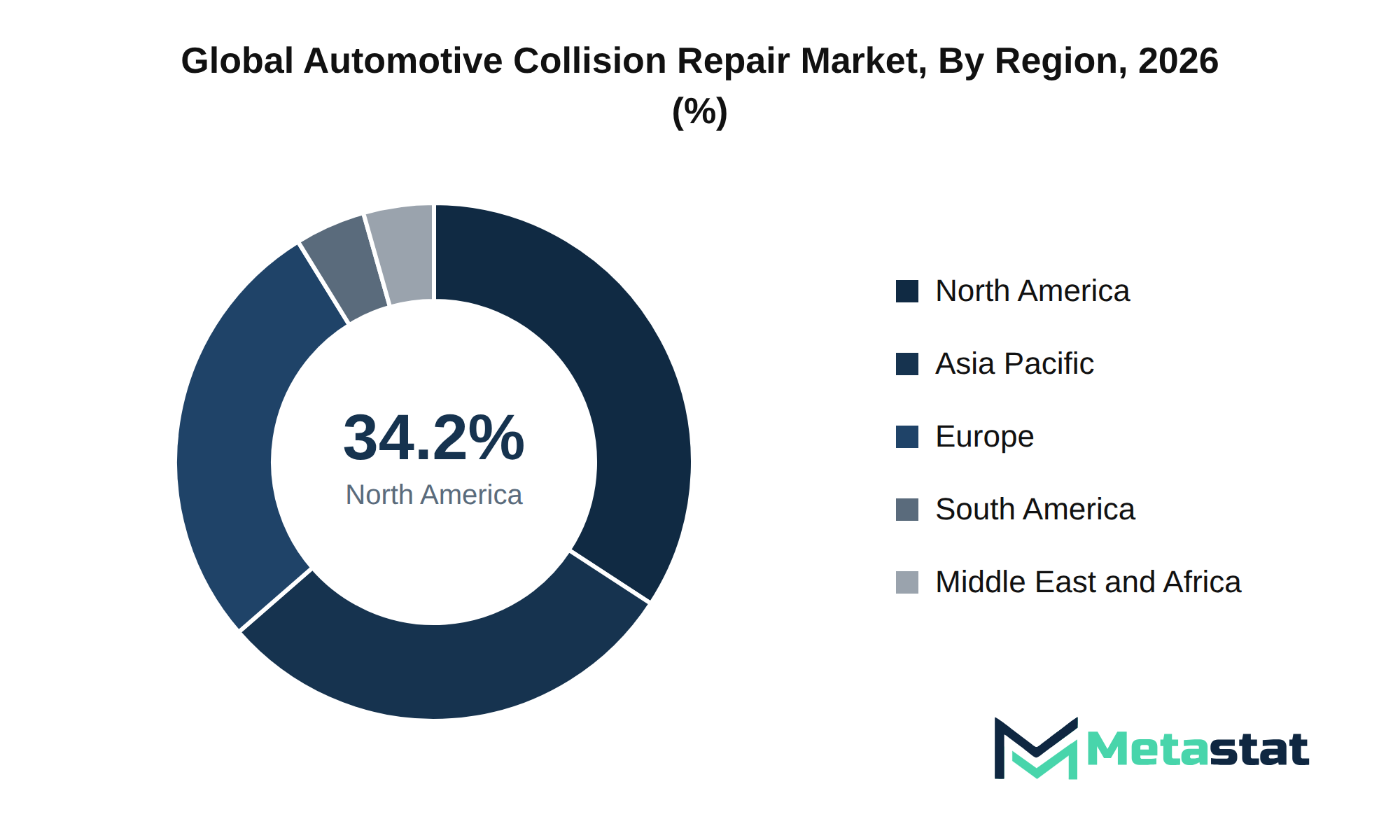
North America Automotive Collision Repair market is set to expand at a CAGR of 2.1% within the forecast period, reaching a market size (TAM) of USD 81.1 billion by the end of 2033. The region accounts for several market participants of the global market in 2025. The increasing focus on vehicle safety and aesthetics drives demand for collision repair services, particularly among consumers in the United States, Canada, and Mexico.
Infrastructure modernization initiatives will contribute to market growth, addressing the need for efficient and effective repair facilities. Local compliance mandates related to environmental standards and safety regulations will further shape operational dynamics, requiring companies to adopt advanced technologies in their repair processes. Regional competitive landscapes feature a blend of established players and emerging service providers, encouraging innovation and improving service offerings.
Changing vehicle ownership patterns, including an increase in ride-sharing services and changes in consumer purchasing behavior, impact the market. The presence of domestic market leaders enhances competitive positioning, while localized procurement dynamics emphasize the importance of regional supply chains. The focus on high-value replacement cycles reflects the growing trend toward comprehensive repair solutions that extend vehicle lifespans.
Strategic entry barriers, including the need for substantial capital investment in repair infrastructure, impact new market entrants. Meanwhile, foreign direct investment flows into the region signify confidence in the market's potential for growth. Overall, these factors contribute to a robust outlook for the Automotive Collision Repair market in North America, positioning it because a key area for both investment and development.
The Automotive Collision Repair market in Europe, valued at USD 204.3 billion in 2025, benefits from several primary demand drivers, including a robust vehicle ownership rate and increasing road safety regulations. Countries including Germany, France, and the UK exhibit high levels of vehicle usage, resulting in a steady influx of collision repair requirements. Enhanced vehicle technologies and the rise of electric vehicles contribute to evolving repair practices and preferences among consumers.
Segment expansion is fueled by advancements in vehicle manufacturing processes and materials, leading to a higher demand for specialized repair services. The penetration of high-value replacement cycles, particularly among aging vehicles, supports incremental growth vectors in repair services. Localized manufacturing densities and supply chain regionalization initiatives enhance operational efficiencies within the collision repair sector.
Infrastructure modernization efforts across several European countries aim to facilitate logistics and improve service delivery. Cross-border trade corridors assist in the movement of replacement parts and services, promoting competition within the market. Geopolitical factors shape industry dynamics, influencing compliance mandates and trade policy shifts that affect market operations.
Regional competitive landscapes display a mix of domestic market leaders and emerging players, with companies like Caliber Holdings LLC and Crash Champions establishing significant presences. Vendor consolidation trends impact the market by enhancing service capabilities and broadening geographic reach. Localized procurement dynamics align with cultural nuances that dictate B2B buying behaviors, ensuring that service providers meet specific regional demands.
The Automotive Collision Repair market in Europe presents a unique blend of opportunities driven by consumer trends, regulatory frameworks, and competitive dynamics. The outlook remains positive, with growth anticipated because companies adapt to technological advancements and changing customer preferences.
The Asia-Pacific region holds a share of 29.4% in the global Automotive Collision Repair market in 2025. Emerging economies including China and India drive substantial growth through increasing vehicle ownership and subsequent repair needs. The rapid expansion of urban areas in these countries leads to enhanced demand for collision repair services, particularly in high-density urban centers.
Infrastructure modernization supports market growth. Investments in road safety and vehicle maintenance facilities contribute to improving service quality. Countries like Australia and South Korea exhibit high-value replacement cycles, driven by consumers prioritizing safety and aesthetics in their vehicles.
Localized manufacturing densities support the supply chain dynamics within the region. Regional players focus on aligning production capabilities with local demands, optimizing operational efficiencies. Cross-border trade corridors facilitate the movement of parts and materials, further enabling market expansion.
Competitive landscapes show strong domestic market leaders, which include companies that adapt to localized procurement dynamics and cultural nuances in buyer behavior. The presence of established vendors encourages innovation in service offerings, enhancing customer satisfaction and retention.
Investment in energy grid resiliency and local infrastructure readiness enhances the overall market environment. Strategic entry barriers for new players exist, but foreign direct investment (FDI) flows promote geographic expansion opportunities. Ultimately, these factors collectively position the Asia-Pacific region for sustained growth in the Automotive Collision Repair market.
The Automotive Collision Repair market in South America is positioned to gain momentum, driven by a combination of emerging market dynamics and localized consumer preferences. Brazil and Argentina serve because key players, with an increasing focus on vehicle maintenance and aesthetics. The market benefits from gradual improvements in local infrastructure, allowing easier access to repair services and parts. This evolution encourages higher adoption rates across various segments, particularly in paints and coatings, which is expected to enhance the overall repair quality.
High-value replacement cycles contribute significantly to market opportunities, with consumers showing a willingness to invest in quality repairs. The region's competitive landscape is shaped by several domestic market leaders, which influences pricing and service offerings. Localized procurement dynamics and cultural nuances play a critical role in shaping B2B buying behaviors, creating relationships between suppliers and repair service providers.
Strategic entry barriers, including regulatory frameworks and compliance mandates, impact the pace of market growth. Ongoing foreign direct investment inflows signal confidence in the sector's potential. The Automotive Collision Repair market stands to benefit from geographical expansion windows, allowing players to diversify their offerings and capture untapped demand in underpenetrated territories.
The Middle East and Africa region accounts for 4.4% of the global Automotive Collision Repair market in 2025, reflecting specific dynamics within this territory. Demand in this region arises from increasing vehicle ownership and a growing emphasis on vehicle maintenance and repair. Countries like Saudi Arabia and the UAE benefit from rising disposable incomes, prompting consumers to invest in quality vehicle repair services. South Africa shows a distinct trend toward the adoption of advanced collision repair technologies, driven by a competitive landscape that includes both domestic and international players.
Infrastructure modernization efforts across the region enhance the service capabilities of collision repair centers, facilitating quicker turnaround times and improved service delivery. The market experiences significant activity from local vendors, which influences procurement dynamics and shapes consumer preferences. Partnerships between local repair shops and larger automotive manufacturers contribute to the market's expansion, providing consumers with reliable options for collision repair. Emerging markets within the region present opportunities for increased investment, with vendors seeking to capitalize on underpenetrated territories.
Geopolitical factors impact trade corridors, influencing the supply chain for automotive parts and repair services. Local compliance mandates and regulatory frameworks guide operational practices, ensuring that vendors adhere to quality and safety standards. The competitive landscape reflects a mix of established companies and new entrants, each vying for market share within this evolving environment. The Automotive Collision Repair market in the Middle East and Africa is projected to experience steady growth, driven by localized demands and strategic investments aimed at enhancing customer satisfaction and operational efficiency.
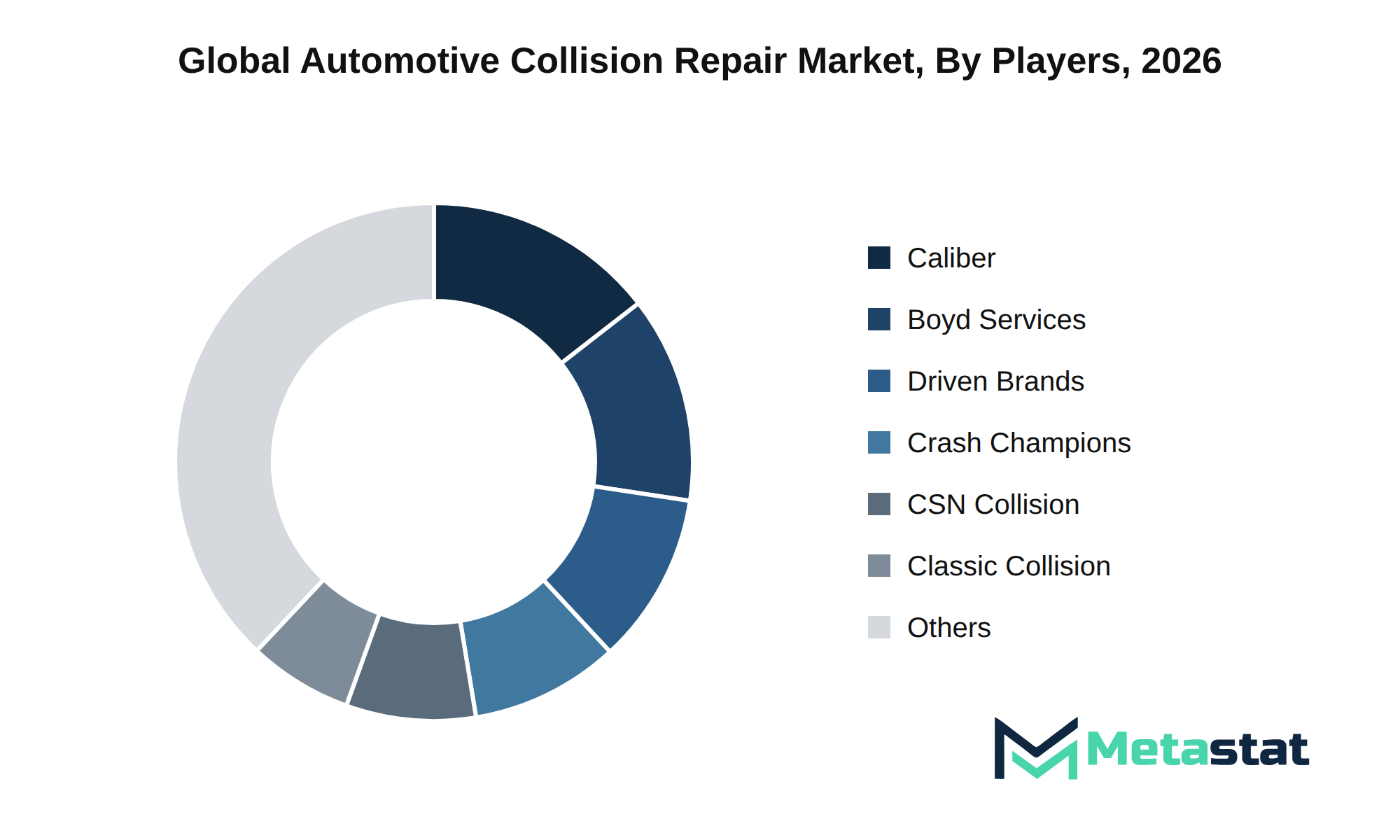
The Automotive Collision Repair market experiences significant activity driven by mergers, acquisitions, and strategic consolidation. Companies including Caliber Holdings LLC, Crash Champions, and Boyd Group Services Inc. actively pursue growth through acquisitions, expanding their presence and capabilities within the market. Driven Brands Holdings Inc. and Mondofix Inc. adopt strategic partnerships and alliances to enhance service offerings and geographical reach, allowing them to compete effectively.
Pricing architectures in the market reflect competitive dynamics, with firms like CSN Collision and Classic Collision, LLC employing diverse pricing strategies to attract different customer segments. The shift towards value-based pricing among key players emphasizes customer retention strategies and brand equity dynamics. Innovations in product differentiation have become crucial, with companies investing in proprietary technology moats and R&D pipelines to maintain competitive advantages.
Barriers to entry in the Automotive Collision Repair market remain significant due to established brand loyalty and the complex regulatory environment. New entrants face challenges in securing distribution channels and establishing a customer base. However, startups that leverage technology for streamlined repair processes present notable disruption dynamics, creating a competitive landscape that drives innovation and efficiency across the value chain.
Strategic growth vectors focus on enhancing operational efficiencies and integrating supply chain capabilities. Companies like Craftsman Collision Ltd. and Kirmac Collision & Autoglass optimize procurement leverage to reduce costs while maintaining quality. The future competitive outlook for the market emphasizes the importance of technological defensibility and the potential for continued restructuring driven by companies responding to evolving consumer demands and market trends.
Market size is forecast to rise from USD 204.3 billion in 2025 to over USD 241.4 billion by 2033. The base case anticipates steady growth driven by improvements in vehicle technology and increasing vehicle ownership, along with rising repair and maintenance costs. Growth is projected to continue at a CAGR of 2.1%, indicating ongoing demand for high-quality repair services and products.
In a bullish scenario, the market experiences accelerated growth due to advancements in next-generation technologies, including electric vehicle repairs and enhanced collision repair processes. Increased emphasis on sustainability and regulatory compliance could capture greater investment, enhance operational efficiency, and drive technological innovations.
Conversely, a bearish outlook arises from potential economic downturns, which could lead to reduced consumer spending on vehicle repairs and maintenance. Geopolitical uncertainties and evolving trade corridors disrupt supply chains, impacting the availability of critical components and materials in the Automotive Collision Repair market. Delays in regulatory compliance could further complicate the operational landscape for repair service providers, hindering growth.
Strategic capital allocation plays a crucial role in navigating these changes. Companies that invest in infrastructure and focus on emerging white-space opportunities will likely secure their competitive position in a maturing market. Identifying unmet enterprise needs and high-growth pockets aids firms in enhancing their service offerings and ensuring long-term sustainability.
The report strategically identifies and profiles the key market players and analyses their core competencies in each sub-segment of the Automotive Collision Repair market.
Report Attributes | Details |
Study Period | 2021-2033 |
Base Year | 2025 |
Estimated Year | 2026 |
Forecast Period | 2026-2033 |
Historical Period | 2021-2025 |
Growth Rate | CAGR 2.1% from 2026 to 2033 |
Revenue Unit | USD billion |
Segmentation | By Product, Repair Type, Vehicle Type, Service Channel, and Region |
By Region | North America (By Product, Repair Type, Vehicle Type, Service Channel, and Country)
|
Europe (By Product, Repair Type, Vehicle Type, Service Channel, and Country)
| |
Asia Pacific (By Product, Repair Type, Vehicle Type, Service Channel, and Country)
| |
South America (By Product, Repair Type, Vehicle Type, Service Channel, and Country)
| |
Middle East and Africa (By Product, Repair Type, Vehicle Type, Service Channel, and Country)
|
Find answers to common questions about this report
The Automotive Collision Repair market size was valued at USD 204.3 billion in 2025, according to the Metastat Insights study.
The Automotive Collision Repair market is projected to grow at a CAGR of 2.1% during the forecast period from 2026 to 2033.
The North America Automotive Collision Repair market size is estimated to reach USD 81.1 billion by 2033.
The segment leading the Automotive Collision Repair market is the Product segment, with Crash Parts generating USD 100.5 billion in 2026. This figure establishes it because the largest segment based on revenue.
Key drivers for the Automotive Collision Repair market include growing macro-economic factors including increased GDP, which enhances consumer spending power. Urbanization trends and demographic shifts contribute to rising vehicle ownership and longer vehicle maintenance periods, increasing demand for collision repair services. Technological integration and investments in advanced repair technologies improve operational efficiency and service delivery.
North America holds the dominant share of the Automotive Collision Repair market, with a value of USD 81.1 billion projected for 2033, representing 34.2 percent of the total market.
The Automotive Collision Repair market faces significant challenges from regulatory tightening and compliance hurdles, which lead to delays in obtaining necessary certifications and approvals. skilled labor deficiencies and technological obsolescence hinder operational efficiency, limiting competitiveness and affecting service delivery. Rising operational costs due to inflation further restrain market growth.
Growing macro-economic factors, including increased GDP and urbanization, enhance consumer spending power and vehicle ownership, driving demand for collision repair services. technological integration and investments in advanced repair technologies improve operational productivity, further favoring product adoption in the Automotive Collision Repair market.
The Automotive Collision Repair market is estimated to reach a valuation of USD 241.4 billion by 2033.
Key players in the Automotive Collision Repair market include Caliber Holdings LLC, Crash Champions, Boyd Group Services Inc., Driven Brands Holdings Inc., CSN Collision, Classic Collision, LLC, and AutoNation, Inc.
The analysts below cover Automotive and Transportation research at Metastat Insights.
LEAD ANALYST
Utkarsh Khirodkar is a Lead Market Research Analyst at MetaStat Insight, specializing in market intelligence, technology sector assessments, and competitive strategy.

ENERGY & INFRASTRUCTURE INDUSTRY CONSULTANT
Automotive and Transportation · Electronics and Semiconductor · Energy and Power · Machinery & Equipment
Saurabh Vasant Ganvir consults for Energy & Infrastructure Industry at MetaStat Insight, specializing in renewable energy, solar EPC, and electric vehicle (EV) infrastructure markets.
When planning edge sensor rollouts across refinery environments, generic IoT reports typically miss the harsh-environment certification bottlenecks. MetaStat Insight gave an objective evaluation of ATEX and Class 1 Division 2 hardware availability, along with realistic five-year maintenance cycle cost projections. The comparison of wireless mesh versus private cellular backhaul helped our team pressure-test network reliability models for remote processing facilities.
In the biological seed treatment space, registration timelines vary drastically between the European Union, Brazil, and North America. The MetaStat Insight research handled these cross-border regulatory barriers with genuine nuance, mapping commercialization pathways alongside historical field adoption rates. The segmentation between microbial strains and biochemical active ingredients was particularly well structured.
Our team was tracking whether regional recycling infrastructure could realistically absorb the growing volume of lithium iron phosphate batteries over the next decade. The report did a solid job separating announced hydrometallurgical plant capacity from active, permitted operational throughput. That distinction made the feedstock availability projections and regional recovery rate models far more credible than standard commercial overviews.
Explore related market intelligence reports worth reading alongside this one.
Starting from
$2950