
LEAD ANALYST
Utkarsh Khirodkar is a Lead Market Research Analyst at MetaStat Insight, specializing in market intelligence, technology sector assessments, and competitive strategy.

Global Carbon Disulfide Market Size, Share, By Grade (Technical Grade and Reagent Grade), By Production Process (Natural Gas-Sulfur Process and Solid Carbon-Sulfur Process), By Application (Viscose Fiber Production, Rubber Chemical Synthesis, Agrochemical Synthesis, Mining Reagent Synthesis, Cellophane Production, Pharmaceutical Synthesis, Laboratory Analysis and Others (Specialty Chemical Synthesis and Solvent Uses)), By Sales Channel (Direct Manufacturer Sales and Distributor Sales), Industry Analysis, Growth, Trends, and Forecast, 2026-2033
Report ID
MSI-5593
Published
October, 2026
Pages
262 Pages
Format
Historical
Base year
Forecast
Forecast period
Report Details
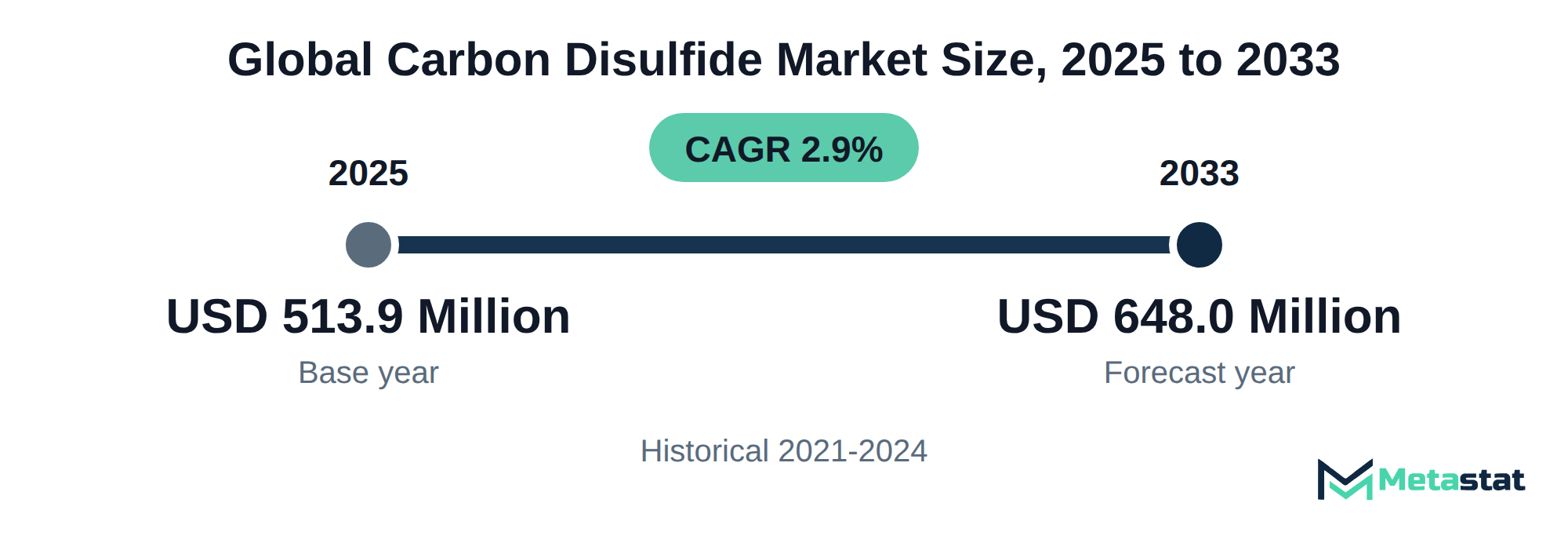
Market Valuation: Valued at $513.9 Million in 2025, projected to reach $648 Million by 2033 at a 2.9% CAGR.
Dominant Segment: The technical grade segment leads the Carbon Disulfide market, driven by its essential role in viscose fiber production, which is crucial for the textile industry.
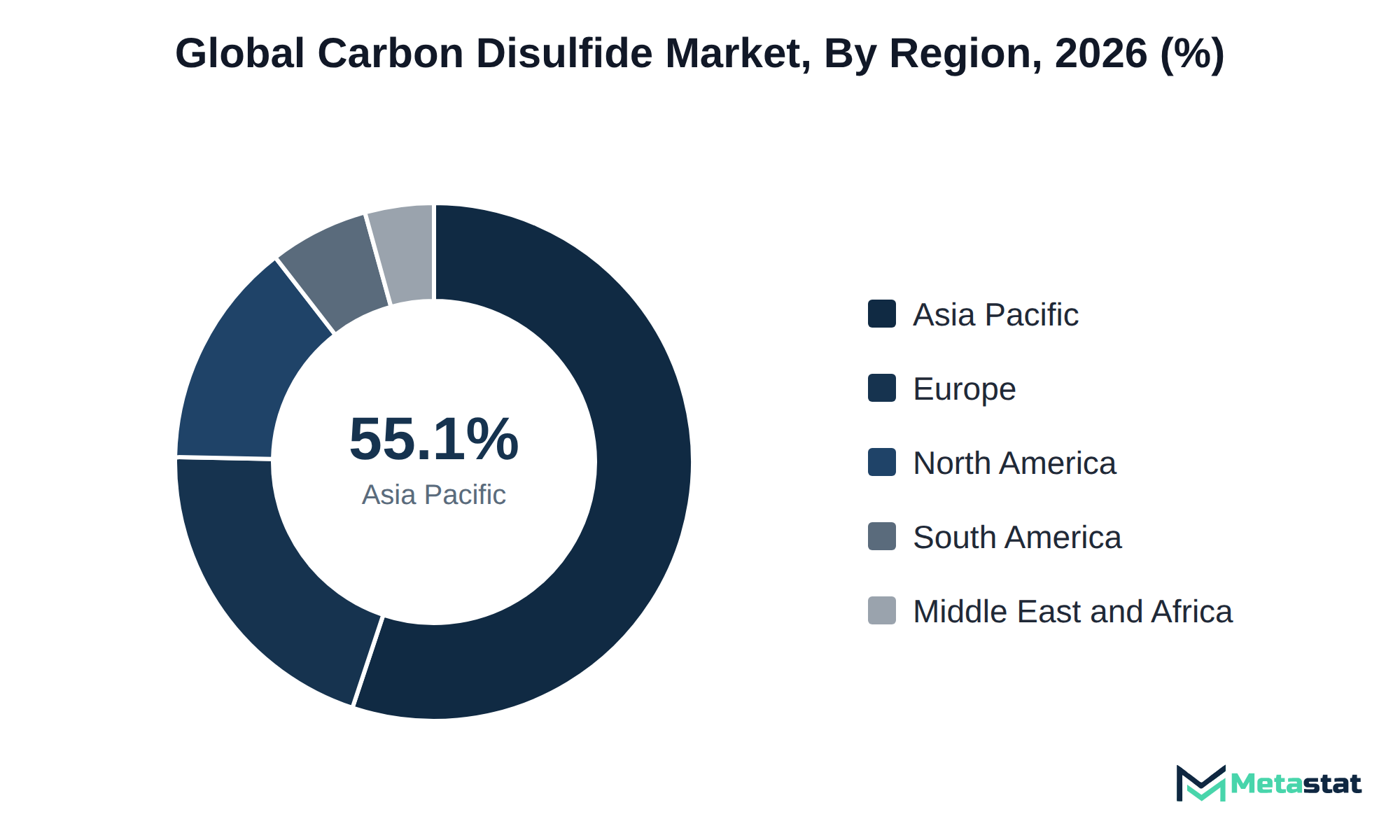
Geographic Lead: Asia Pacific dominates the market with a 55.1% share, supported by strong industrial activities and high demand in countries like China and India.
What's Inside: The report provides comprehensive coverage of market dynamics, competitive analysis, and a detailed forecast from 2026 to 2033, focusing on various production processes and applications.
Emerging Trends: Sustainable production processes are gaining traction, with manufacturers increasingly adopting methods that minimize environmental impact, thus driving demand for carbon disulfide in eco-friendly applications.
Input Cost Pressures: Fluctuating prices of natural gas and sulfur significantly impact production costs, influencing pricing strategies and procurement decisions among buyers.
Choose Your License
Global Carbon Disulfide Market
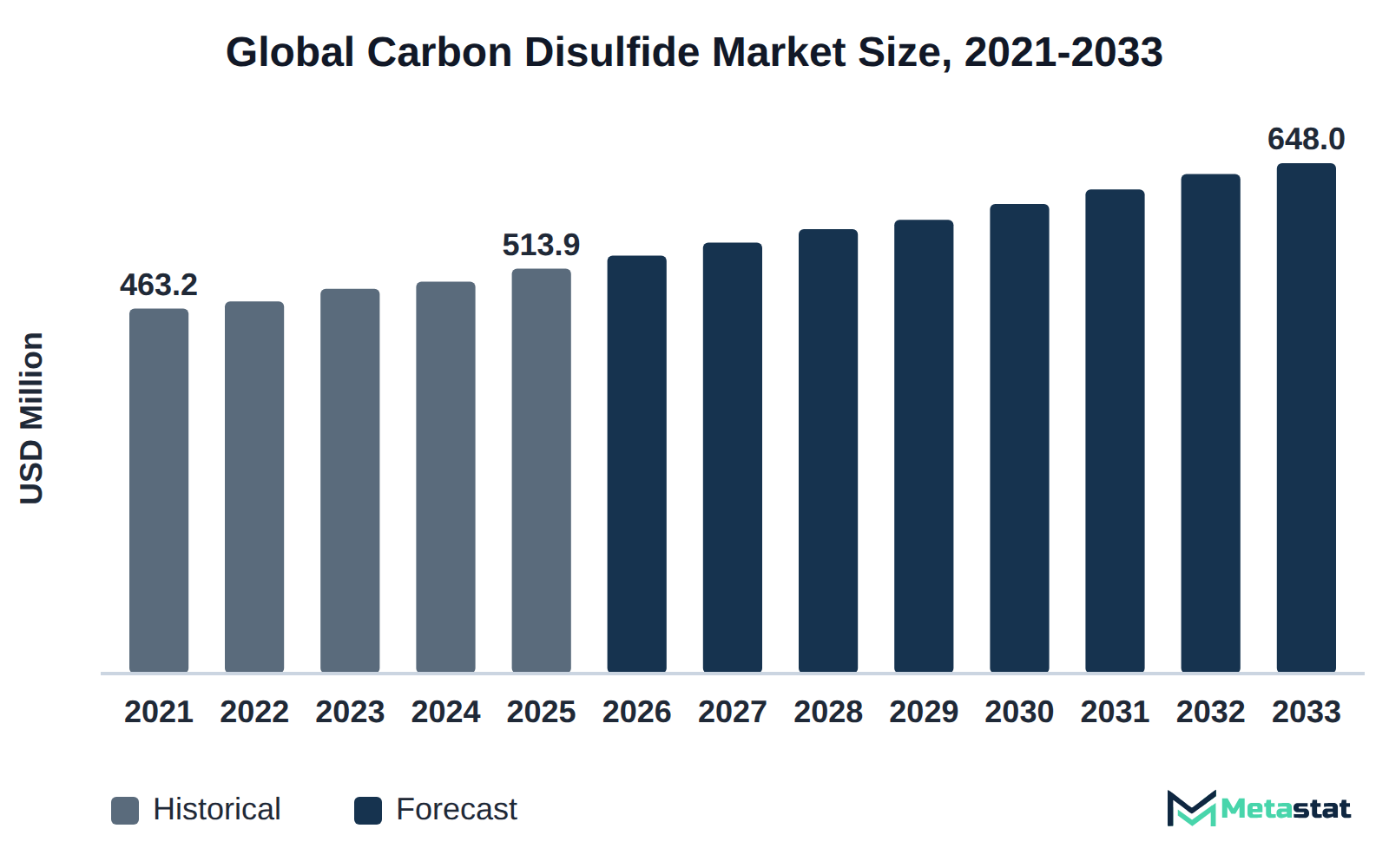
The global Carbon Disulfide market was valued at USD 513.9 million in 2025 and is projected to reach USD 648 million by 2033, growing at a CAGR of 2.9% over the forecast period.
The Carbon Disulfide market encompasses the production and distribution of carbon disulfide, a versatile chemical used in various applications, including viscose fiber production and rubber chemical synthesis. Buyers invest in carbon disulfide to secure high-quality inputs for the textile and chemical sectors, which rely on it for essential processes and products. Demand for this chemical is primarily influenced by its role in manufacturing and the growth of industries that depend on it.
Recent growth in the market reflects a compound annual growth rate of 2.9%. The technical grade segment holds the largest share of the market, driven by increasing demand in the production of viscose fibers. Asia Pacific leads the market share with 55.1%, significantly higher than North America's 14.2%. North America holds 14.2% of the market in 2025, with the US leading in 2026. This regional dominance stems from established manufacturing capabilities and strong demand for specialized industrial applications.
A primary growth driver for the Carbon Disulfide market is the expanding use of carbon disulfide in agrochemical synthesis. This trend is supported by the increasing need for agricultural productivity and advancements in chemical formulations. Innovation and demand for sustainable production methods continue to shape the market, in line with global trends toward greater efficiency and reduced environmental impact.
The Carbon Disulfide market spans technical and reagent grades, with applications in viscose fiber production, rubber chemical synthesis, and agrochemical synthesis. Buyers invest in carbon disulfide due to its essential role in these applications, which require high purity and specific performance characteristics. The versatility of this chemical makes it a critical component for manufacturers aiming to meet production demands and enhance product quality.
Growth in the market is driven primarily by the increasing demand for viscose fibers, which are important in textiles and non-woven materials. This segment represents the largest share of market value, reflecting robust consumption patterns across the fashion and home textiles sectors. Among the regions, Asia Pacific dominates with a 55.1% share, fueled by strong industrial activities and consumption in countries like China and India.
North America presents opportunities for growth due to expanding applications in specialty chemicals and pharmaceuticals, alongside rising investments in sustainable practices. The market experiences steady growth, supported by continuous innovation and the evolving needs of various industries.
In the Carbon Disulfide market, rubber accelerators and dithiocarbamates emerge as essential components driving specialty chemical demand. The growth of the rubber industry fuels the need for high-performance accelerators that enhance the curing process, resulting in superior rubber products. This demand reflects an increasing focus on durable and high-quality rubber materials across various applications.
The market for rubber chemical synthesis, specifically through dithiocarbamates, is projected to achieve a compound annual growth rate of 3.5% through 2033. Factors contributing to this growth include advancements in rubber processing technologies and heightened specifications for performance characteristics in finished products. These innovations position dithiocarbamates as key players in the formulation of rubber accelerators.
Producers within the market benefit from aligning production capabilities to accommodate the rising demand for specialty Carbon Disulfide. Sustained interest in better rubber product performance points to a strong commercial opportunity for manufacturers supplying high-quality accelerators and dithiocarbamates. Meeting this demand supports market growth and reinforces competitive positioning within the evolving specialty chemicals sector.
Pricing strategies in the Carbon Disulfide market reflect the influence of input costs, particularly natural gas and sulfur. These feedstocks significantly determine the margins for producers. With the market projected to reach USD 648 million by 2033, buyers need to understand pricing dynamics to manage procurement effectively.
Producers often adopt long-term contracts to stabilize their revenue against fluctuating feedstock costs. For instance, the Natural Gas-Sulfur Process, which accounted for USD 448.2 million in 2026 and is anticipated to grow to USD 571.3 million by 2033, highlights how feedstock prices directly impact production costs and, consequently, pricing strategies. Buyers typically negotiate contracts that account for these costs, ensuring a balance between securing stable pricing and managing the risk associated with market volatility.
Flexibility in contract terms enhances buyer relationships and facilitates smoother transactions. The emergence of spot market mechanisms allows buyers to take advantage of lower prices during favorable market conditions while securing supply through longer-term agreements. This dual approach provides buyers with a strategic advantage, allowing them to mitigate risks associated with price increases in the market.
Buyers in the Carbon Disulfide market encounter a complex environment where understanding feedstock costs and pricing mechanisms directly influences their purchasing decisions. This awareness enables more effective negotiation strategies, ultimately leading to better management of procurement costs and enhancing profit margins.
In the Carbon Disulfide market, viscose solvent recovery stands out as a significant strategy to minimize reliance on fresh carbon disulfide. This process allows manufacturers to reclaim and reuse solvents, effectively reducing the overall consumption of fresh carbon disulfide in viscose fiber production. By implementing solvent recovery systems, companies lower operational costs while maintaining product quality.
The market for viscose fiber production is projected to experience steady growth, with an increase from USD 307.5 million in 2026 to USD 366.1 million by 2033, reflecting a compound annual growth rate (CAGR) of 2.5%. This growth highlights the importance of solvent recovery, which promotes environmental sustainability and enhances economic efficiency for manufacturers.
Adoption of this recovery method enhances competitive positioning within the market, allowing companies to improve margins and reduce waste. The shift towards more sustainable production practices aligns with consumer preferences for eco-friendly products, further driving demand for viscose fibers. Viscose solvent recovery therefore helps buyers optimize operations while supporting environmental goals.
The purity of carbon disulfide significantly influences industrial processing costs. Higher purity grades, including Technical Grade carbon disulfide, result in more efficient production processes. For instance, the Technical Grade segment is projected to grow from USD 510.8 million in 2026 to USD 621.2 million by 2033, reflecting a compound annual growth rate of 2.8%. This trend is driven by industries requiring high-purity chemicals for applications including viscose fiber production and rubber chemical synthesis.
Companies encounter increased operational costs when using lower purity grades, leading to higher consumption rates and additional purification steps. Lower-grade products typically result in higher waste production and potential quality issues in end products. The demand for Technical Grade carbon disulfide in the market highlights the need for businesses to prioritize purity levels, ensuring cost-effective operations while maintaining product integrity. Investing in higher purity carbon disulfide translates to improved industrial processes and overall economic efficiency.
Rising demand for viscose fibers drives substantial investment in carbon disulfide, particularly from textile and apparel manufacturers. These sectors increasingly rely on carbon disulfide for producing viscose fibers, resulting in higher consumption levels. The shift toward sustainable textile production prompts manufacturers to adopt viscose fibers, leading to increased purchases of carbon disulfide for fiber synthesis. This evolving landscape enhances market dynamics and contributes to overall growth in the carbon disulfide market. Viscose fibers also find use in nonwoven fabrics, adding a further outlet for carbon disulfide demand.
Investment in sustainable production processes influences growth within the Carbon Disulfide market. The adoption of methods that minimize environmental impact aligns with increasing scrutiny over chemical manufacturing practices. Suppliers focusing on sustainable approaches to carbon disulfide production experience enhanced competitive positioning. This shift attracts manufacturers seeking to align with evolving consumer preferences for eco-friendly products. The market benefits from heightened demand for carbon disulfide in applications including viscose fiber production and rubber chemical synthesis, where adherence to environmental standards boosts operational efficiency and brand reputation.
The transition toward natural gas-sulfur processes further exemplifies this trend. These processes employ more efficient feedstocks, resulting in lower emissions and reduced energy consumption. Producers refine their practices, and the integration of advanced technologies into production enables improved yield and quality of carbon disulfide. Suppliers that embrace these innovations strengthen their market share, positioning themselves to capture a significant portion of the growing global demand for sustainable chemical solutions.
Price fluctuations in raw materials impact the Carbon Disulfide market, leading to heightened costs for manufacturers. Increased production expenses deter potential buyers, particularly within the textile and rubber industries, which rely on carbon disulfide for various applications. Buyers respond to these rising costs through smaller orders or delayed purchasing decisions, ultimately slowing the market's growth trajectory. Manufacturers experiencing increased input costs often pass these expenses onto customers, further affecting demand dynamics. Such financial pressures contribute to cautious investment strategies among buyers, who evaluate their long-term requirements in relation to current pricing trends. This cautious approach leads to a preference for alternative chemicals or methods, ultimately challenging market expansion. In light of these constraints, long-term projections for the Carbon Disulfide market indicate moderated growth potential, emphasizing the importance of stable pricing for sustained buyer interest.
Input cost pressures present a significant challenge for suppliers in the Carbon Disulfide market. Fluctuating prices of key raw materials, particularly natural gas and sulfur, directly impact production expenses. Suppliers face the burden of maintaining profit margins while addressing these rising input costs. Many suppliers adopt strategies to mitigate these pressures by improving operational efficiencies and optimizing resource allocation. For instance, investments in advanced production technologies contribute to reducing unit costs, enhancing competitiveness. Suppliers explore alternative feedstock sources to diversify their supply chains and minimize dependence on volatile raw materials. By implementing these measures, suppliers aim to sustain profitability and remain agile in the shifting market environment.
The technical grade segment of the Carbon Disulfide market presents a significant opportunity, driven by increasing demand in viscose fiber production. The textile and apparel industries, which primarily seek high-quality inputs for production processes, are central to this demand growth. Enhanced quality requirements from these sectors will lead to a sustained focus on technical grade carbon disulfide, which is essential for producing high-performance fibers. Increased investment in production capacities tailored to meet the needs of these industries is anticipated. With the anticipated growth in the technical grade segment, stakeholders positioned to supply high-purity carbon disulfide will likely capture a larger share of the market, enhancing profitability and competitive advantage.
The Global Carbon Disulfide market is segmented based on Grade, Production Process, Application, and Sales Channel.
This segment is primarily used in the production of viscose fibers, rubber chemicals, and agrochemicals by various manufacturers. The increasing demand for viscose fibers significantly influences the growth of this segment, particularly from textile and apparel sectors. In comparison to the Reagent Grade segment, which experiences a higher CAGR of 4.5%, the Technical Grade segment shows a more stable growth trajectory. Proven applications and reliable quality of Technical Grade carbon disulfide sustain consistent demand from established industrial buyers, positioning this segment against emerging alternatives that attract price-sensitive customers.
Reagent Grade segment is estimated to reach USD 26.8 million by 2033, at a CAGR of 4.5% during the forecast period. This segment finds application in various laboratory processes and chemical synthesis, primarily used by research facilities and chemical manufacturers. Growth in the reagent grade segment is significantly driven by advancements in agrochemical synthesis and laboratory analysis, where high purity and specific formulations are critical. Compared to the technical grade segment, which has a CAGR of 2.8%, the reagent grade segment demonstrates faster growth due to increasing investments in research and development. Demand for high-grade chemicals in industrial operations supports this expansion. While the technical grade segment caters to broader industrial applications, the reagent grade segment serves specialized needs, resulting in its higher growth potential in the market.
This process serves primarily in the production of carbon disulfide for applications including viscose fiber and rubber chemical synthesis. The increasing demand for viscose fibers from the textile industry drives this segment, reflecting a broader trend in the market. Compared to other production processes, the Natural Gas-Sulfur Process demonstrates higher growth due to its favorable cost structure driven by stable natural gas supply and pricing. In contrast, the Solid Carbon-Sulfur Process faces challenges related to cost and efficiency, positioning the Natural Gas-Sulfur Process as the preferred choice among manufacturers aiming for cost-effective production while addressing rising demand.
Solid Carbon-Sulfur Process segment is estimated to reach USD 76.7 million by 2033, at a CAGR of -1% during the forecast period. This process is essential in the production of carbon disulfide, primarily in the manufacture of rubber chemicals and agrochemical synthesis. Demand drivers include cost efficiency and a push towards lower environmental impact processes, prompting industries to explore alternatives. This segment's slower growth rate contrasts with the more robust performance seen in the Natural Gas-Sulfur Process segment, which is expected to grow at a CAGR of 3.5%. The Solid Carbon-Sulfur Process faces challenges related to pricing and operational efficiency, leading to a focus on innovation and efficiency improvements by industry players. Despite these pressures, this process still serves essential applications in rubber chemicals and agrochemical synthesis.
This application focuses on producing viscose fibers, which are widely used in textiles and apparel by manufacturers pursuing sustainable fashion and biodegradable fabric options. The demand for viscose fibers drives investment from textile companies responding to consumer preferences shifting towards eco-friendly products. Competitive pricing in the viscose fiber production segment influences buyer decisions, affecting overall market growth. Compared to other segments, this application exhibits slower growth due to the established nature of production processes and the gradual adoption of alternative materials within the textile industry. The market emphasis on sustainability supports long-term demand, positioning viscose fiber production as a vital component in the Carbon Disulfide market.
Rubber Chemical Synthesis segment is estimated to reach USD 87.3 million by 2033, at a CAGR of 3.5% during the forecast period. This segment focuses on the utilization of carbon disulfide in the production of chemicals used for rubber manufacturing. Primary buyers include chemical manufacturers and rubber producers who rely on high-quality chemical inputs for producing rubber products. Strong demand for rubber materials in automotive and consumer goods sectors drives growth in this segment. Unlike the Viscose Fiber Production segment, which has a CAGR of 2.5%, the Rubber Chemical Synthesis segment exhibits a higher growth rate, driven by the expanding automotive industry and rising demand for durable rubber products. This segment's growth is further influenced by technological advancements that enhance production efficiency and product quality.
The Agrochemical Synthesis segment is expected to reach USD 72.6 million by 2033. This segment is important for producing various agrochemicals, which are essential for agricultural applications designed to enhance crop yield and protect plants. Key users include agricultural manufacturers and chemical companies focusing on developing fertilizers and pesticides. Growth in this segment is driven by increasing agricultural productivity requirements, pushing demand for effective agrochemical solutions. Compared to other segments, Agrochemical Synthesis shows a slower growth rate, as it competes with alternative solutions and innovations. The expected CAGR reflects more cautious expansion than segments such as Rubber Chemical Synthesis, which is projected to reach USD 87.3 million by 2033 at a CAGR of 3.5%. This competitive dynamic highlights the distinct positioning of the Agrochemical Synthesis segment within the market.
Mining Reagent Synthesis segment is projected to grow at a CAGR of 4.1% during the forecast period. This segment finds extensive application in the extraction of valuable minerals, where carbon disulfide functions as a reagent in various chemical processes. Mining companies leverage this segment for its efficiency in separating metals from ores during metal mining. Growth in this segment benefits from increasing mineral exploration, particularly in developing regions with rich mineral deposits. Unlike other applications, Mining Reagent Synthesis experiences a more stable demand driven by long-term mining projects. In contrast to more volatile segments, the consistent need for mineral extraction supports a steady rise in market value. This sets it apart from viscose fiber production, which faces fluctuating demand driven by fashion trends. The projected growth reflects a solid foundation for investment and development within the market.
Cellophane Production employs Carbon Disulfide, a crucial solvent in the manufacturing of cellophane, a biodegradable film used primarily in food packaging and various industrial applications. This segment attracts attention from packaging manufacturers focused on sustainable materials. A key driver of this segment is the increasing consumer preference for green packaging solutions that align with environmental sustainability initiatives. In comparison to other applications, Cellophane Production experiences slower growth due to the more limited consumer base and specialized production techniques required. This segment differs from Viscose Fiber Production, which benefits from higher demand and broader commercial applications, highlighting a divergence in growth potential within the market.
Pharmaceutical Synthesis is essential in the development of various pharmaceuticals, serving chemical manufacturers and pharmaceutical companies. This sub-segment employs Carbon Disulfide for the synthesis of active pharmaceutical ingredients (APIs) and intermediates. The growing focus on drug formulation and innovation drives demand among pharmaceutical manufacturers, who require high-quality chemicals for their production processes. Regulatory compliance and safety standards in pharmaceutical applications create additional scrutiny for suppliers, influencing procurement decisions. Unlike segments including Viscose Fiber Production, which experiences slower growth due to market saturation, Pharmaceutical Synthesis benefits from robust demand for novel drug formulations. The market sees increased investments in research and development, emphasizing the need for continuous innovation and quality assurance among manufacturers.
Laboratory Analysis involves the use of carbon disulfide in chemical testing and research applications, serving laboratories and research institutions. This application supports various experimental processes, including synthesis and analytical testing. Demand for reliable chemical analysis in academic and industrial settings drives the need for carbon disulfide in laboratory environments. Growth in this segment aligns with advancements in research methodologies, although its pace is slower compared to other applications like viscose fiber production or rubber chemical synthesis, which experience heightened demand. Specific buyers in this segment include educational institutions, chemical manufacturers, and pharmaceutical companies that require precise chemical properties for their studies and product development. Differences in growth rates stem from broader industrial applications influencing segments like viscose fiber production, resulting in quicker expansion compared to laboratory analysis.
This sub-segment focuses on specialty chemical synthesis and solvent uses, which span applications across various industries. Key users include chemical manufacturers and laboratories that require versatile solvents for diverse processes. Demand for specialty chemicals, driven by innovation in production technologies, influences this sub-segment's growth trajectory. A notable factor is the increasing push toward more sustainable and environmentally friendly solvents, prompting manufacturers to seek alternatives to traditional solvents. This sub-segment experiences different growth dynamics compared to others, particularly due to its niche applications and the premium prices often associated with specialty chemicals. The market values innovation and quality, leading to potential differentiation from other segments characterized by larger volumes and lower margins.
Direct Manufacturer Sales segment is valued at USD 471.2 million in 2026 and is projected to reach USD 579.8 million by 2033, at a CAGR of 3% during the forecast period. This segment primarily involves the direct supply of carbon disulfide to manufacturers, facilitating its use in various applications including viscose fiber production and rubber chemical synthesis. Growth in this segment is driven by increasing demand for carbon disulfide from industries focused on textile production and rubber manufacturing. Compared to distributor sales, which are expected to reach USD 68.2 million by 2033, the direct manufacturer sales segment demonstrates a higher growth trajectory, attracting buyers seeking reliable and consistent supply sources. Technological advances in production processes raise efficiency and reduce costs associated with carbon disulfide procurement, which adds to the appeal of direct purchasing arrangements for industrial users.
Distributor Sales segment is estimated to reach USD 68.2 million by 2033, at a CAGR of 2% during the forecast period. This segment primarily serves distributors who facilitate the supply of carbon disulfide to various industries, including textiles and chemicals. Growth in this segment is driven by increasing demand from end-users seeking reliable sources for carbon disulfide. Compared to Direct Manufacturer Sales, which is anticipated to grow at a higher CAGR of 3%, Distributor Sales faces more competition in pricing and availability. The need for strong distributor networks enhances market accessibility, especially in regions where manufacturers lack direct outreach. Evolving requirements and standards further emphasize the importance of efficient distribution channels, positioning Distributor Sales as a vital component in the broader carbon disulfide market.
Based on geography, the Global Carbon Disulfide market is divided into North America, Europe, Asia-Pacific, South America, Middle East, and Africa.
Demand for carbon disulfide in North America is driven primarily by industries including viscose fiber production and rubber chemical synthesis. The presence of established chemical manufacturers in the United States, Canada, and Mexico creates a supportive environment for market growth. North America holds a share of 14.2% of the global market in 2025. Investments in production processes, particularly the natural gas-sulfur process, contribute to increasing efficiency and cost-effectiveness. The region is projected to reach USD 85.1 million by the end of 2033, reflecting a steady growth trajectory. Regulatory frameworks supporting sustainable practices further enhance market dynamics. The carbon disulfide market in this region benefits from strong demand in the textile and chemical sectors, positioning it for continued expansion.
Demand in Europe for carbon disulfide stems from its application in the production of viscose fibers and rubber chemicals. The market benefits from a robust textile sector, particularly in countries like Germany and Italy, which drives demand for viscose fibers. France and the UK exhibit a strong need for rubber chemical synthesis due to their automotive industries. Regulatory frameworks across Europe emphasize sustainability, prompting manufacturers to adopt cleaner production processes. With a market share of 20.2% in 2025, Europe's contributions are significant, and projected growth in the market reflects ongoing investments in technology and production efficiency. The region’s focus on innovation within specialty chemicals aligns with broader economic goals, creating a conducive environment for market expansion.
Asia Pacific represents a significant portion of the Carbon Disulfide market, accounting for 55.1% of global share in 2025. The region's demand is driven by industries including viscose fiber production and rubber chemical synthesis, where carbon disulfide plays an essential role. Countries like China, India, and Japan exhibit strong manufacturing capabilities, contributing to regional growth. Infrastructure improvements and rising production capacities enhance market access for suppliers. The adoption of advanced production processes, particularly the Natural Gas-Sulfur Process, supports efficiency and cost-effectiveness. Overall, the market in Asia Pacific is projected to experience steady growth, driven by increasing demand from key industrial sectors.
Brazil and Argentina represent key markets within the Carbon Disulfide market, driven by demand from the textile and rubber industries. The increasing production of viscose fibers in Brazil enhances the need for carbon disulfide, which serves as a solvent in the manufacturing process. Meanwhile, Argentina's rubber industry experiences growth, resulting in heightened demand for chemical synthesis applications. Infrastructure improvements in both countries support the distribution of carbon disulfide, ensuring smoother supply chains. With a market share of 6.2% in 2025, South America contributes to the global market, presenting opportunities for further investment and expansion in the sector.
In the Middle East and Africa, demand for carbon disulfide is influenced primarily by industries including agrochemicals and rubber chemical synthesis. Saudi Arabia and the UAE represent key markets, driven by growing agricultural needs and industrial applications. South Africa contributes to regional demand through its mining sector, which uses carbon disulfide for reagent synthesis. The region holds a share of 4.3% of the global carbon disulfide market in 2025, reflecting a steady growth trajectory. Infrastructure development in these countries supports market expansion, allowing better access to production facilities and enhancing supply chains. This regional context highlights opportunities for growth in the carbon disulfide market, with increasing investments expected in the upcoming years.
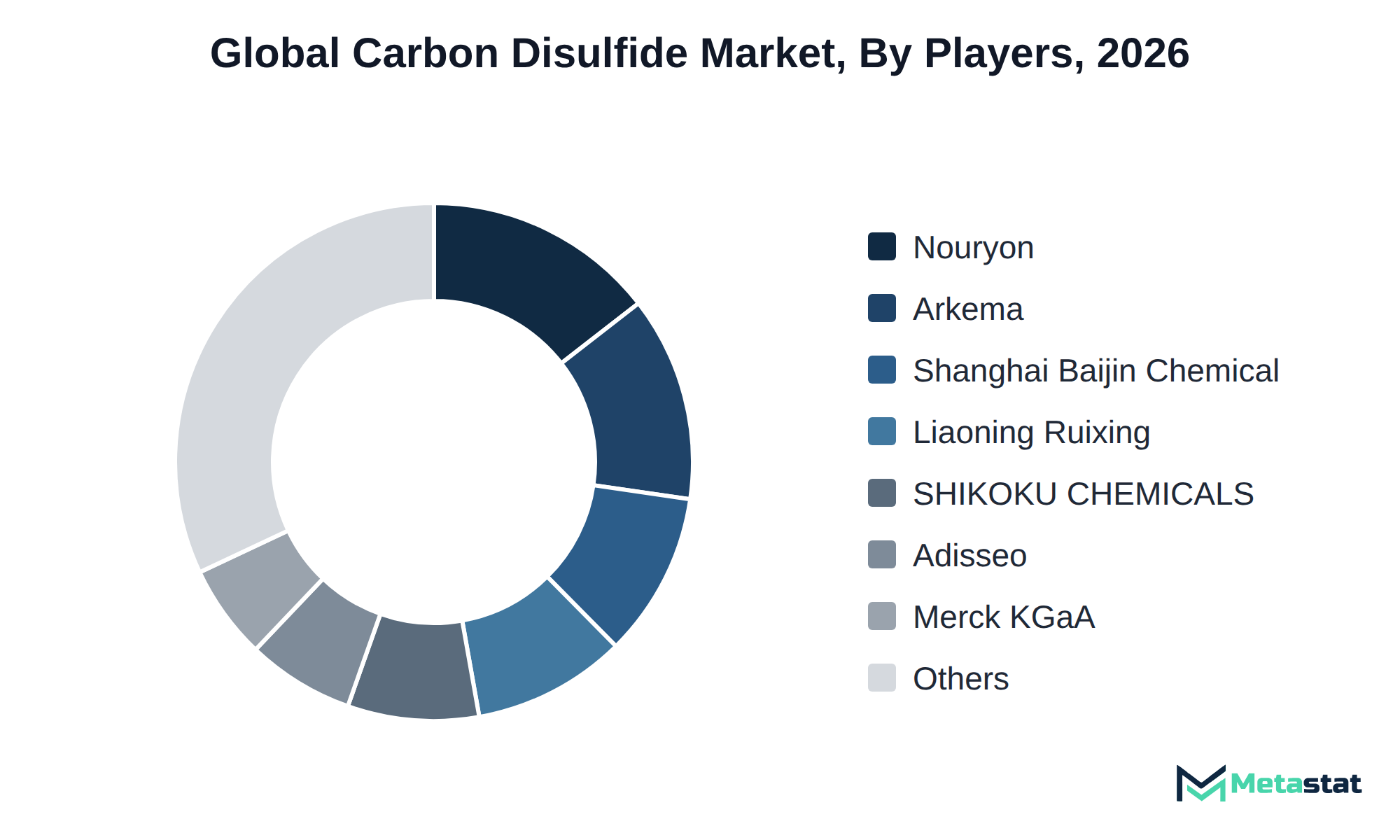
Competition within the Carbon Disulfide market involves various strategies adopted by key players. Companies position themselves based on product grade and production processes, focusing on meeting specific customer requirements. Buyers select suppliers based on factors including price, certification, and service quality, alongside the ability to customize solutions for unique applications.
Nouryon and Arkema S.A. prioritize innovative production processes and high-quality technical grades, catering to industries including viscose fiber production and rubber chemical synthesis. Shanghai Baijin Chemical Group Co., Ltd. and Liaoning Ruixing Holding Co., Ltd. focus on price competitiveness and distribution networks to enhance market penetration. In contrast, companies like Merck KGaA and Thermo Fisher Scientific Inc. emphasize specialized applications in pharmaceutical synthesis and laboratory analysis, targeting niche segments within the market.
Achieving this growth relies on several key developments within the Carbon Disulfide market. A significant risk that could impede this growth involves supply chain disruptions impacting the Asia Pacific region, which holds a 55.1% share of the market. Constraints on this segment could delay the anticipated rise in overall market value.
By Grade: Technical Grade, Reagent Grade
By Application: Viscose Fiber Production, Rubber Chemical Synthesis, Agrochemical Synthesis, Mining Reagent Synthesis, Cellophane Production, Pharmaceutical Synthesis, Laboratory Analysis, Others (Specialty Chemical Synthesis, Solvent Uses)
By Sales Channel: Direct Manufacturer Sales, Distributor Sales
The report strategically identifies and profiles the key market players and analyses their core competencies in each sub-segment of the Carbon Disulfide market.
|
Report Attributes |
Details |
|
Study Period |
2021-2033 |
|
Base Year |
2025 |
|
Estimated Year |
2026 |
|
Forecast Period |
2026-2033 |
|
Historical Period |
2021-2025 |
|
Growth Rate |
CAGR 2.9% from 2026 to 2033 |
|
Revenue Unit |
USD million |
|
Segmentation |
By Grade, Production Process, Application, Sales Channel, and Region |
|
By Region |
North America (By Grade, Production Process, Application, Sales Channel, and Country)
|
|
Europe (By Grade, Production Process, Application, Sales Channel, and Country)
|
|
|
Asia Pacific (By Grade, Production Process, Application, Sales Channel, and Country)
|
|
|
South America (By Grade, Production Process, Application, Sales Channel, and Country)
|
|
|
Middle East and Africa (By Grade, Production Process, Application, Sales Channel, and Country)
|
Find answers to common questions about this report
The Carbon Disulfide market size was valued at USD 513.9 million in 2025.
The market is projected to grow at a CAGR of 2.9% during the forecast period from 2026 to 2033.
The North America Carbon Disulfide market size is estimated to reach USD 85.1 million by 2033.
Technical Grade leads the Carbon Disulfide market with a projected value of USD 621.2 million by 2033, compared to Reagent Grade, which is expected to reach USD 26.8 million in the same year.
Rising demand for viscose fibers drives substantial investment in carbon disulfide, particularly from textile and apparel manufacturers. The transition toward sustainable production processes influences growth within the market, as suppliers focusing on eco-friendly approaches enhance their competitive positioning.
Asia Pacific holds the dominant share of the Carbon Disulfide market, accounting for 55.1% of the total market. This region's significant share reflects its extensive industrial activities and demand for carbon disulfide applications.
Rising demand for high-quality inputs in viscose fiber production drives adoption of technical grade carbon disulfide within the textile and apparel industries. This trend leads to increased investment in production capacities to meet the quality requirements of these sectors.
The Carbon Disulfide market is estimated to reach a valuation of USD 648 million by 2033.
Key players operating in the Carbon Disulfide market include Nouryon, Arkema S.A., Shanghai Baijin Chemical Group Co., Ltd., Liaoning Ruixing Holding Co., Ltd., SHIKOKU CHEMICALS CORPORATION, and Span Chemie.
The technical grade segment is expected to grow from USD 510.8 million in 2026 to USD 621.2 million by 2033, reflecting a compound annual growth rate of 2.8 percent.
The analysts below cover Chemicals and Materials research at Metastat Insights.
LEAD ANALYST
Utkarsh Khirodkar is a Lead Market Research Analyst at MetaStat Insight, specializing in market intelligence, technology sector assessments, and competitive strategy.

INDUSTRY CONSULTANT - CHEMICALS & ADVANCED MATERIALS
Chemicals and Materials · Machinery & Equipment · Packaging
Amit Gadhekar Consultant for Chemicals and Materials at MetaStat Insight, directing sector-specific intelligence, research, and strategic consulting across global chemical and processing markets.
Ambulatory surgical centers have very different purchasing cycles for robotic-assisted surgery platforms than major hospital networks. The MetaStat Insight study focused squarely on capital expenditure depreciation, procedural reimbursement pathways, and surgeon training overhead. That operational clarity made it much simpler to validate multi-year procedure growth forecasts against actual ambulatory center adoption patterns.
When planning edge sensor rollouts across refinery environments, generic IoT reports typically miss the harsh-environment certification bottlenecks. MetaStat Insight gave an objective evaluation of ATEX and Class 1 Division 2 hardware availability, along with realistic five-year maintenance cycle cost projections. The comparison of wireless mesh versus private cellular backhaul helped our team pressure-test network reliability models for remote processing facilities.
In the biological seed treatment space, registration timelines vary drastically between the European Union, Brazil, and North America. The MetaStat Insight research handled these cross-border regulatory barriers with genuine nuance, mapping commercialization pathways alongside historical field adoption rates. The segmentation between microbial strains and biochemical active ingredients was particularly well structured.
Explore related market intelligence reports worth reading alongside this one.
Starting from
$2950