
LEAD ANALYST
Utkarsh Khirodkar is a Lead Market Research Analyst at MetaStat Insight, specializing in market intelligence, technology sector assessments, and competitive strategy.

Global Compute Express Link (CXL) Market Size, Share, By Product Type (CXL Switches, CXL Memory Expanders, CXL Controllers, CXL Retimers and CXL Network Interface Cards (NICs)), By CXL Device Type (Type 1 CXL Devices, Type 2 CXL Devices and Type 3 CXL Devices), By Protocol (CXL.io, CXL.cache and CXL.mem), By Application (AI/ML Workloads, Memory Pooling and Expansion, High-Performance Computing (HPC) and Composable Infrastructure), Industry Analysis, Growth, Trends, and Forecast, 2026-2033
Report ID
MSI-5413
Published
October, 2026
Pages
292 Pages
Format
Historical
Base year
Forecast
Forecast period
Report Details
Market Valuation: Valued at $834.3 Million in 2025, projected to reach $5,472.4 Million by 2033 at a 26.5% CAGR.
Dominant Segment: CXL Switches lead the market, driven by the increasing demand for high-performance computing and AI/ML workloads. This segment is projected to achieve a compound annual growth rate of 29.2% through 2033.
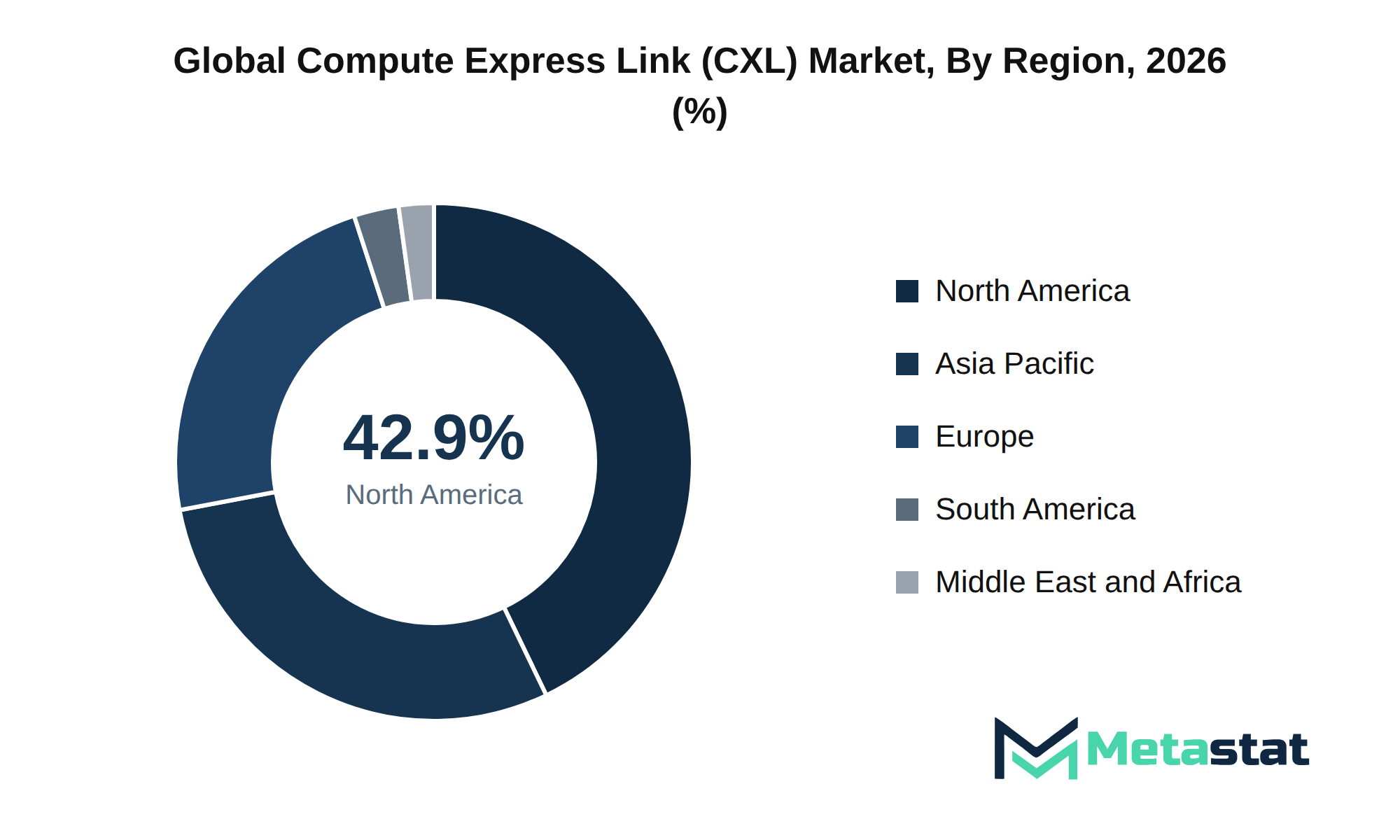
Geographic Lead: North America is the leading region in the CXL market, holding 42.9% of the market share in 2025. The US is expected to maintain this dominance due to its robust technology infrastructure and innovation capabilities.
What's Inside: The report provides comprehensive coverage of the competitive landscape, detailed analyses of market dynamics, and forecasts extending to 2033. It includes insights on product types, device types, protocols, and applications.
Emerging Opportunities: The CXL Memory Expanders segment is set to reach USD 1,891.8 million by 2033, reflecting a growing demand for enhanced memory capacity and performance across various applications.
Choose Your License
Global Compute Express Link (CXL) Market
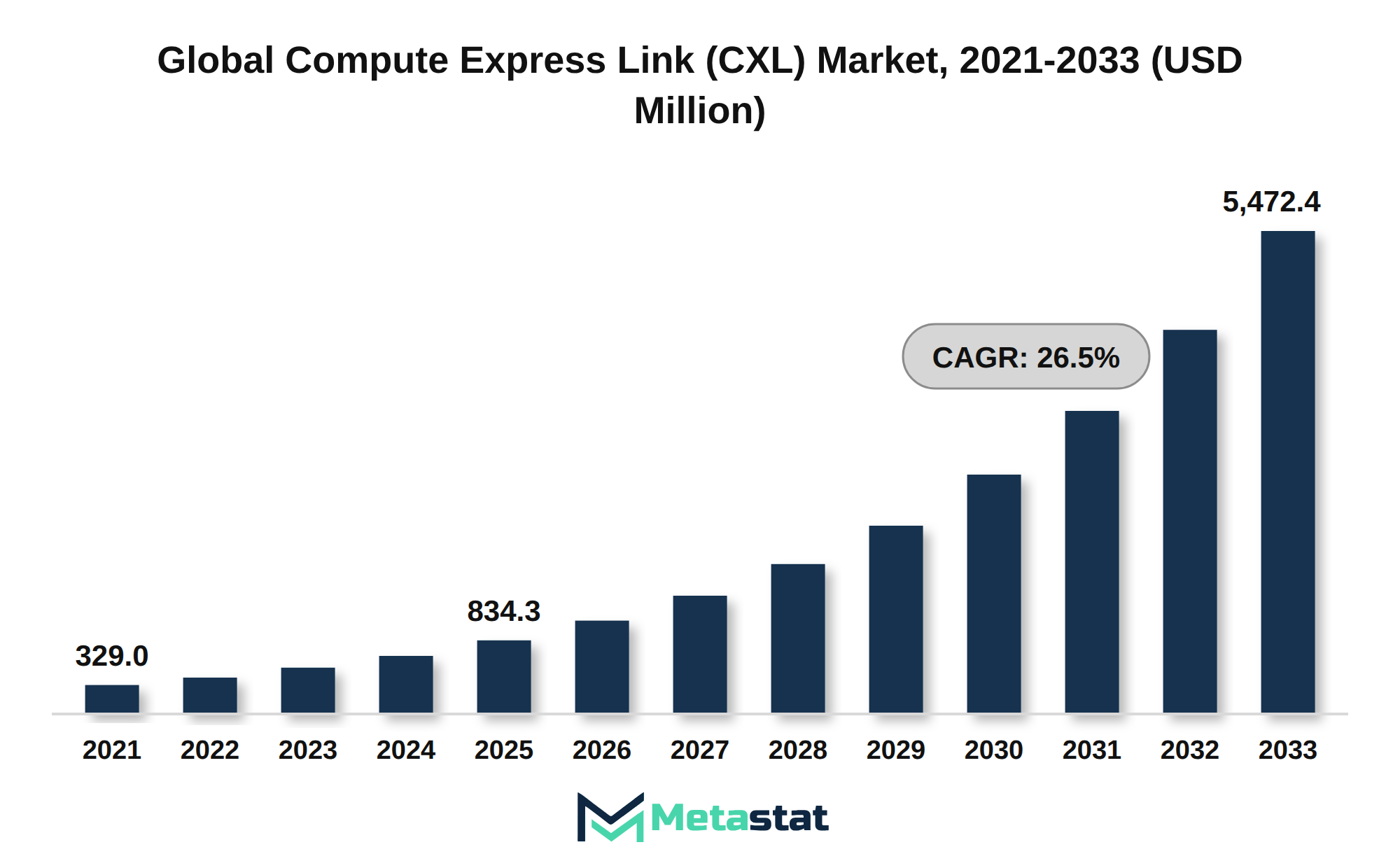
The global Compute Express Link (CXL) market was valued at USD 834.3 million in 2025 and is projected to reach USD 5,472.4 million by 2033, growing at a CAGR of 26.5% over the forecast period.
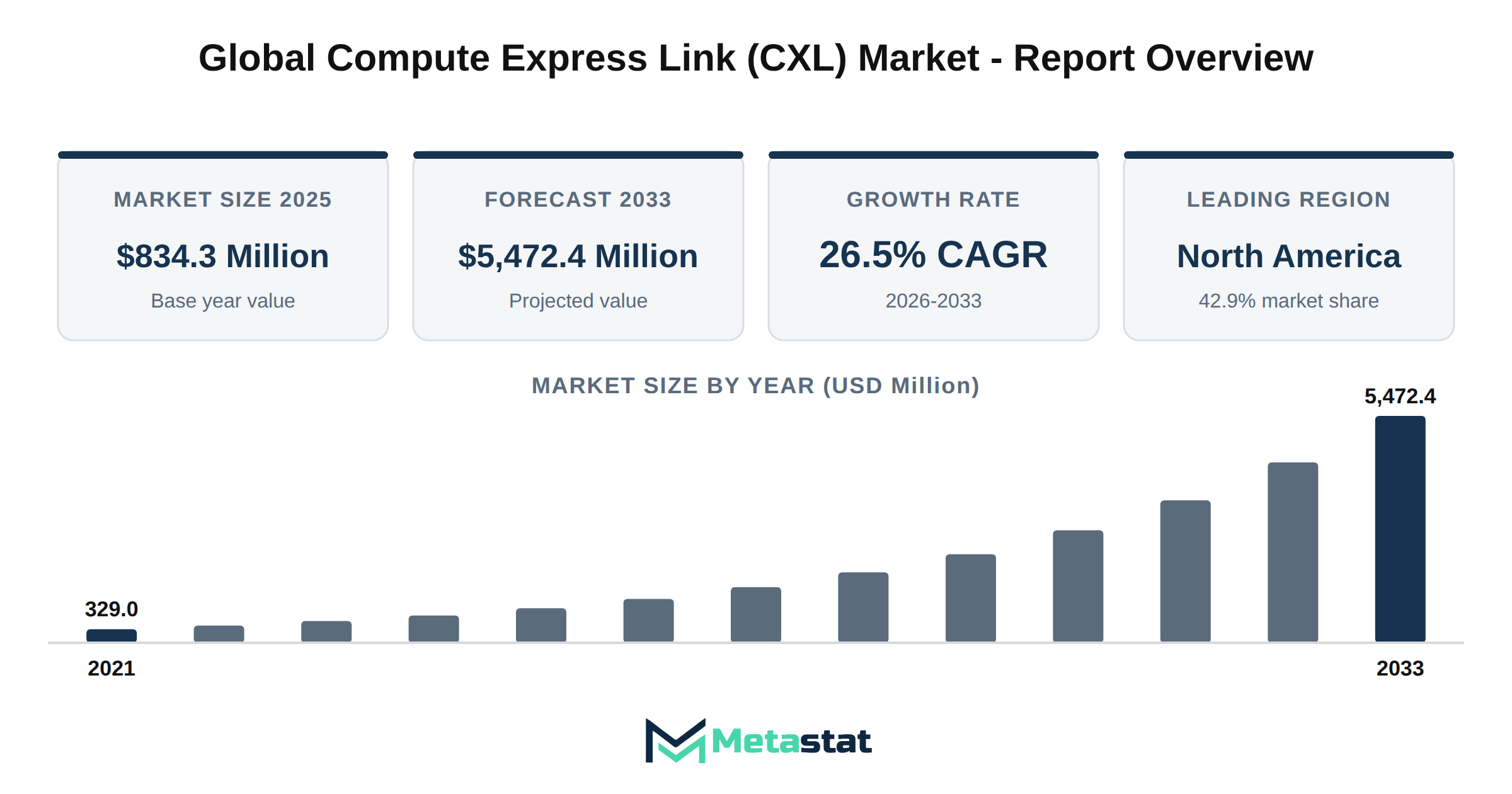
The Compute Express Link (CXL) market encompasses advanced technology solutions designed to enhance data transfer between processors and memory devices. With a projected increase from USD 834.3 million in 2025 to USD 5,472.4 million by 2033, this significant growth reflects heightened demand for higher performance and efficiency in computing. North America holds 42.9% in 2025, with the US leading the market share in 2026.
Key segments within the market include CXL Switches, CXL Memory Expanders, and CXL Controllers, each serving unique functions and applications across various industries. The rise in AI and machine learning workloads drives demand for CXL-enabled solutions, with organizations investing in infrastructure that supports rapid data processing and improved memory pooling. Integrating CXL technology into high-performance computing environments remains essential for organizations striving to maintain a competitive edge.
North America stands out due to its robust technology infrastructure, while Europe and Asia Pacific follow with distinct growth drivers. Overall, the market reflects an ongoing shift towards innovative computing solutions, highlighting opportunities for suppliers to meet evolving customer needs.
The increasing adoption of Compute Express Link (CXL) technology reflects a significant shift in data management strategies across various industries. Buyers prioritize advanced solutions that enhance data transfer efficiency, particularly in AI/ML workloads and high-performance computing applications. The demand for products including CXL switches and memory expanders drives substantial investment, with these segments projected to achieve a compound annual growth rate of 29.2% and 27.9%, respectively, through 2033. North America holds 42.9% in 2025, with the US leading the market share in 2026, reflecting the region's strong technological infrastructure and innovation capabilities.
Growth in the market is fueled by the increasing complexity of data-intensive applications and the need for improved memory architecture. The rising demand for Type 2 and Type 3 CXL devices further illustrates this trend, with Type 3 devices projected to reach a value of USD 3,986.7 million by 2033. The competitive landscape features key players including Montage Technology Co., Ltd. and Marvell Technology, Inc., which actively develop and promote solutions that align with evolving market needs. Overall, the market presents significant opportunities for growth and expansion, driven by technological advancements and evolving customer requirements.
Hyperscale AI workloads significantly influence the adoption of disaggregated memory architectures within the Compute Express Link (CXL) market. Increased demand for high-performance computing and low-latency data processing creates a strong push for advanced memory solutions. The AI/ML workloads segment is projected to reach USD 1,253.7 million by 2033, demonstrating a compound annual growth rate of 26.8% from 2026. This growth indicates a clear preference for faster access to memory and enhanced data handling capabilities.
Disaggregated memory architectures allow for more efficient resource allocation, enabling enterprises to optimize their data center infrastructure. By separating compute and memory resources, organizations scale each component independently while addressing fluctuating workloads effectively. This flexibility becomes essential in environments demanding rapid processing and analysis of large datasets.
Increased investment in AI technologies drives the need for architecture that supports these advanced applications. Enterprises adopting CXL-based solutions benefit from reduced latency and higher bandwidth, leading to improved performance and lower operational costs. The evolution of memory architectures in response to hyperscale AI workloads represents a significant opportunity for stakeholders within the market, aligning their offerings to meet emerging requirements.
Protocol maturation serves as a critical factor influencing enterprise adoption within the Compute Express Link (CXL) market. Enhanced protocols, including CXL.io, CXL.cache, and CXL.mem, facilitate increased data transfer efficiency and lower latency. The transition to these advanced protocols results in a projected market value of USD 5,472.4 million by 2033, highlighting the growing importance of optimized communication standards. Enterprises gravitate towards these technologies due to their ability to enhance performance in data-intensive applications, particularly in artificial intelligence and high-performance computing environments.
Latency penalties represent a significant challenge for enterprise adoption of the CXL market. High latency in data transfer hinders performance in critical applications, compelling enterprises to seek solutions that mitigate these delays. Enterprises focused on real-time analytics and machine learning workloads demand low-latency solutions to maintain operational efficiency. The anticipated growth within AI/ML workloads, reaching USD 1,253.7 million by 2033, emphasizes the necessity for advancements in latency management to ensure optimal performance.
Technological advancements in the CXL market continuously reshape enterprise needs, particularly through the development of faster and more efficient hardware components. Innovations in CXL switches and controllers enhance system performance, enabling improved scalability and resource management. The expected CAGR of 29.2% for CXL switches between 2026 and 2033 reflects the increasing reliance on such technologies. Enterprises actively invest in these advancements to streamline operations and optimize resource allocation, facilitating a more agile response to market demands.
Innovations in silicon controllers play a critical role in shaping the Compute Express Link (CXL) market. These advancements enhance the performance and efficiency of data processing systems, catering to the growing demand for high-speed communication between processors, memory, and accelerators. CXL Switches are projected to grow significantly by 2033, reflecting a compound annual growth rate of 29.2 percent. This surge highlights the increasing reliance on high-performance computing solutions across various sectors, particularly in artificial intelligence and machine learning workloads.
The move towards commercialization of switch fabric solutions significantly influences the competitive landscape of the market. Enhanced switch fabrics facilitate better data transfers and resource sharing among multiple devices, promoting scalability and flexibility in server architecture. The demand for CXL Memory Expanders is expected to reach USD 1,891.8 million by 2033, supporting the growing emphasis on efficient memory utilization in data centers. Investments in switch fabric technology reshape infrastructure investments within organizations seeking to optimize their computing capabilities.
Ongoing developments in CXL protocols, particularly CXL.io, CXL.cache, and CXL.mem, drive adoption rates in the market. CXL.io is anticipated to increase significantly by 2033, with a compound annual growth rate of 25.9 percent. These protocols streamline communication between various types of devices, enhancing interoperability and enabling smoother integration within diverse computing ecosystems. Consequently, organizations are inclined to adopt CXL-enabled solutions, resulting in substantial growth opportunities across multiple applications.
Server total cost of ownership (TCO) optimization has emerged as a critical consideration in the Compute Express Link (CXL) market. Companies increasingly prioritize efficient resource allocation, leading to rising investments in CXL technologies that enhance DRAM utilization. The expected market growth from USD 834.3 million in 2025 to USD 5,472.4 million by 2033, reflecting a compound annual growth rate (CAGR) of 26.5%, highlights the imperative for organizations to adopt advanced procurement strategies that align with TCO objectives.
Effective DRAM utilization strategies enhance performance and lower operational costs, appealing to organizations focused on optimizing their IT infrastructures. The shift towards AI/ML workloads further necessitates advanced memory solutions; the CXL Memory Expanders segment is anticipated to achieve a revenue of USD 1,891.8 million by 2033. Organizations seek solutions that support these emerging applications while ensuring cost efficiency, influencing procurement decisions.
In parallel, the integration of CXL Controllers and Switches significantly influences procurement processes. With CXL Switches projected to grow from USD 265.6 million in 2026 to USD 1,595.8 million in 2033, buyers increasingly recognize the value of investing in high-performance interconnect technologies. This investment not only enhances system capabilities but optimizes the overall TCO associated with server deployments, positioning organizations for long-term success.
Growing demand for artificial intelligence and machine learning (AI/ML) workloads significantly influences the market. Organizations increasingly adopt these technologies to enhance processing capabilities and improve system performance, prompting a shift toward advanced memory architectures. This shift results in heightened investments in CXL solutions, driven by businesses recognizing the need for efficient data management and effective integration between processors and memory devices. The evolving requirements of these workloads translate into increased volume and pricing for CXL products, reinforcing their importance within data centers.
AI/ML continues to be a core focus for many industries, leading to an expanding ecosystem of CXL technology. The capabilities of CXL enable systems to support complex computational tasks while ensuring optimal resource allocation. Companies leveraging these innovations achieve superior operational efficiencies and maintain competitive advantages. Consequently, the market exhibits strong growth potential, with projections signaling substantial financial gains driven by the heightened prioritization of AI/ML applications.
High costs associated with advanced technology solutions act as a significant restraint on adoption within various buyer segments. Enterprises focused on integrating Compute Express Link (CXL) solutions face increased financial barriers owing to the investment required in infrastructure and equipment upgrades. This impact leads to a slower uptake of CXL technologies and results in reduced order sizes among budget-conscious buyers, particularly in sectors with limited financial flexibility.
Small and medium-sized enterprises, often lacking extensive resources, experience heightened challenges in keeping pace with larger competitors that allocate substantial budgets for CXL technologies. The high costs associated with implementing these solutions create delays in replacing existing systems, further limiting the expansion of the market. Such financial constraints influence the overall growth trajectory, leading to a cautious approach among potential adopters, which ultimately curtails market potential in the near term.
Rising input costs for raw materials challenge suppliers within the Compute Express Link (CXL) market, impacting profitability. The increasing prices of components required for production, including advanced semiconductors and specialized memory modules, increase overall production expenses. Suppliers actively address these challenges through strategic partnerships and vertical integration to secure lower prices on critical materials. This strategy enhances their bargaining power and reduces dependency on fluctuating market prices.
Investment in efficient manufacturing processes emerges as a response to mitigate cost impacts. By adopting automation and optimizing production workflows, suppliers improve operational efficiency, further controlling costs. Suppliers in the market increasingly focus on research and development to innovate product designs that reduce material usage while maintaining performance standards. Such initiatives not only buffer against rising input costs but position suppliers competitively in the evolving landscape. These proactive measures facilitate sustained growth and market penetration despite external cost pressures.
Rapid growth in the adoption of CXL memory expanders drives significant opportunities within the sector. This segment, projected to reach USD 1,891.8 million by 2033, benefits from increasing demand for enhanced memory capacity and performance across various applications. Industries focused on artificial intelligence, high-performance computing, and memory pooling continue to leverage this technology to meet their evolving data needs. The shift towards larger, more complex data sets necessitates solutions that efficiently manage and expand memory resources, leading to heightened investment and innovation in CXL memory expanders.
While enterprises seek to optimize their infrastructure for efficiency and scalability, CXL memory expanders provide necessary enhancements to traditional memory architectures. This technological evolution supports both cost-effective solutions and improved performance for end-users. The ability to integrate memory expansion seamlessly into existing systems positions CXL memory expanders as a significant advancement in the market. Overall, the growth forecast within this specific segment reflects broader trends in technology adoption, indicating a substantial opportunity for suppliers and investors in the Compute Express Link (CXL) market.
The Global Compute Express Link (CXL) market is segmented based on Product Type, CXL Device Type, Protocol, and Application.
These switches serve critical roles in facilitating high-speed data transfer between processors and memory devices, catering to industries reliant on rapid data access and processing speeds. The growing demand for AI and machine learning workloads significantly drives this segment, owing to enterprises requiring advanced infrastructure to support complex computations and vast datasets. In contrast to other product types like CXL Memory Expanders, which are projected to grow at a CAGR of 27.9%, CXL Switches demonstrate a more rapid growth trajectory, reflecting the increasing focus on enhancing data transfer capabilities in high-performance computing environments. With ongoing technological advancements, the market is positioned for robust expansion, fueling investment in infrastructure and innovation.
CXL Memory Expanders segment is estimated to reach USD 1,891.8 million by 2033, at a CAGR of 27.9% during the forecast period. These devices facilitate enhanced memory capacity for advanced computing applications, primarily benefiting sectors focused on artificial intelligence and high-performance computing. The growing emphasis on memory pooling and expansion fuels demand for these solutions, allowing organizations to optimize their data management strategies. In contrast to CXL Switches, which experience a CAGR of 29.2%, CXL Memory Expanders exhibit a slightly more measured growth trajectory, reflecting varying adoption rates across different user bases. This segment attracts investments aimed at developing scalable memory solutions that meet the expanding requirements of emerging technologies, ensuring organizations remain competitive in the evolving digital landscape. Continuous advancements in technology and increasing reliance on data-intensive applications further drive the segment's potential, providing significant opportunities for suppliers and innovators in the market.
CXL Controllers are anticipated to reach USD 1,249.9 million by 2033. Serving critical roles in managing data flow between memory and processing units, these controllers find extensive applications within data centers and high-performance computing environments. The demand for advanced memory solutions fuels the growth of this segment, driven by the increasing complexity of memory architectures and the need for efficient data handling. CXL Controllers experience a notable growth rate, differentiating themselves from other product types, including CXL Switches, which are expected to achieve USD 1,595.8 million with a CAGR of 29.2 percent. The ongoing integration of AI/ML workloads significantly impacts the dynamics of this sector, enhancing the necessity for robust and scalable solutions. In contrast to CXL Memory Expanders, which aim for different operational functions, the CXL Controllers segment emphasizes high-speed and efficient data processing, reflecting the evolving demands within the compute landscape. The market expects a strong upward trajectory for this segment driven by technology advances.
CXL Retimers segment is projected to grow at a CAGR of 27.9% during the forecast period. These components facilitate signal integrity across high-speed data connections, primarily used by designers of advanced computing architectures. Demand for CXL Retimers stems from the increasing complexity of data handling in applications including artificial intelligence and machine learning, leading to higher bandwidth requirements. This segment is distinguished by its critical role in maintaining data accuracy and reliability at elevated speeds, setting it apart from other product types including CXL Switches and Memory Expanders, which focus more on data routing and storage expansion. With the projected market value reaching USD 1,249.9 million by 2033, further investment in CXL Retimers is evident, driven by their essential function in meeting the demands of next-generation computational frameworks.
CXL Network Interface Cards (NICs) facilitate high-speed data transfer between network devices and computing systems, supporting various applications. These devices serve critical roles in environments requiring rapid communication, including data centers and enterprise networks. Growth in this segment is driven by increasing demand for cloud computing and virtualization technologies. Organizations invest in NICs to enhance network performance and reduce latency, particularly in AI and machine learning applications. Compared to other product types in the market, CXL NICs typically exhibit different pricing dynamics due to their specialized capabilities and limited availability. This segment's unique focus on network connectivity sets it apart from other CXL products, highlighting its significance in modern computing architectures.
Products categorized under Others include CXL Accelerators, CXL Bridges, and CXL Interface Modules, which facilitate advanced data transfer and connectivity in computing environments. These components find application in data centers and high-performance computing environments, where efficient data handling and memory management are critical. The increasing complexity of computing applications drives demand for these products, particularly in sectors focused on artificial intelligence and machine learning. Their growth trajectory differs from sibling segments, influenced by demand for specialized solutions that address unique challenges in memory architecture. Competitive pricing and technological advancements further increase interest in these products, aligning with broader trends observed in the market. The integration of these components enhances system performance and flexibility, making them essential for organizations striving for optimal operational efficiency.
Type 1 CXL Devices segment is valued at USD 75 million in 2026 and is projected to reach USD 310.8 million by 2033, at a CAGR of 22.5% during the forecast period. These devices are primarily used in environments requiring enhanced data transfer capabilities, particularly in high-performance computing and memory-intensive applications. Demand for Type 1 CXL Devices is driven by the increasing prevalence of advanced computing applications that require rapid data access and processing. This segment experiences significant growth relative to other device types, distinguishing itself with its focus on specific performance enhancements, unlike broader categories including CXL Memory Expanders. The importance of smooth data flow in AI/ML workloads adds further pressure to suppliers, promoting innovation and competitive pricing strategies while improving the overall value proposition in the market.
Type 2 CXL Devices segment is estimated to reach USD 1,174.9 million by 2033, at a CAGR of 28.8% during the forecast period. This segment primarily supports high-performance computing (HPC) applications and artificial intelligence/machine learning (AI/ML) workloads, appealing to data centers and enterprises seeking enhanced processing capabilities. Rapid advancements in memory technology drive demand for Type 2 CXL Devices, enabling improved data throughput and reduced latency. Compared to other segments, including Type 1 CXL Devices, this segment exhibits a faster growth trajectory driven by increased reliance on data-intensive applications. Organizations invest significantly in these devices to optimize data transfer and processing efficiency, creating competitive advantages. Heightened interest in Type 2 CXL Devices is anticipated due to their important role in advancing computational capabilities for demanding workloads.
These devices function primarily in high-performance computing environments, where efficient data handling is critical. The growing adoption of artificial intelligence and machine learning applications significantly drives demand for this segment. While organizations increasingly require powerful processing capabilities to support complex workloads, Type 3 CXL Devices emerge as a key solution. This segment demonstrates a higher growth trajectory compared to its counterparts, reflecting a CAGR of 28.8%. The enhanced performance and scalability characteristics set these devices apart from other CXL Device Types, catering to buyers focused on maximizing computing power and efficiency. In the context of the Compute Express Link (CXL) market, this segment's expansion aligns with increased investments in advanced computing technologies, further enhancing its appeal to enterprises seeking innovative solutions.
CXL.io segment is valued at USD 359.3 million in 2026 and is projected to reach USD 1,797.2 million by 2033, at a CAGR of 25.9% during the forecast period. This protocol finds extensive use in applications requiring high-speed, low-latency data transfer, particularly in environments focused on artificial intelligence and machine learning workloads. The growth of this segment is driven by increasing data volumes and the need for efficient resource utilization in computing systems. Compared to its sibling segments, CXL.io demonstrates a distinctive growth trajectory, characterized by higher adoption rates in advanced computing environments. In contrast, segments like CXL.cache or CXL.mem demonstrate varied performance due to differing application requirements and market dynamics. The increasing complexity of applications heightens the demand for CXL.io, positioning it as a vital element in the evolving landscape of the Compute Express Link (CXL) market.
CXL.cache is estimated to reach USD 1,612.2 million by 2033, at a CAGR of 27.3% during the forecast period. This segment is primarily used for caching data in memory, significantly enhancing data retrieval speed and efficiency. Companies using CXL.cache often focus on applications in artificial intelligence and machine learning, where rapid data processing is crucial. The segment benefits from increasing demand for high-performance computing solutions, driven by the growing complexity of workloads. Compared to sibling segments, CXL.cache features a higher growth rate and specific applications, positioning itself as a key technology in advanced computing environments. This focus on performance-driven solutions differentiates it from other protocols, supporting the growth trajectory within the Compute Express Link (CXL) market.
CXL.mem segment is expected to reach USD 2,063.1 million by 2033. This protocol serves critical functions in optimizing memory access for advanced computing applications, particularly in environments handling large-scale data processing. The segment's growth is driven by increasing demand for efficient memory pooling and expansion technologies, which support artificial intelligence and machine learning workloads. With a projected CAGR of 27.3%, CXL.mem stands out due to its focus on high-performance computing applications, differentiating it from other protocols. The growing reliance on memory-intensive applications enhances the value proposition, positioning this segment as a key driver of the market's expansion during the forecast period, enabling organizations to maximize performance while managing costs effectively.
This segment primarily serves organizations involved in advanced data analytics and artificial intelligence applications, leveraging high-performance computing resources. The increasing demand for AI-driven solutions drives growth, owing to businesses seeking to enhance operational efficiency and decision-making through machine learning models. Compared to other segments, this area experiences rapid expansion due to the rising integration of AI technologies across various industries. The ability of these workloads to handle large datasets and complex algorithms distinguishes them from traditional computing tasks, positioning the segment uniquely within the market.
The Memory Pooling and Expansion segment is estimated to reach USD 1,173.3 million by 2033, at a CAGR of 27.3% during the forecast period. This segment manages and optimizes memory resources for applications requiring significant data throughput, including artificial intelligence and machine learning. Major players in the technology and financial sectors demand efficient memory pooling solutions to enhance performance and reduce operational costs. The rapid growth of AI workloads drives this segment, distinguishing it from other application segments that do not experience similar growth rates. The projected CAGR of 27.3% highlights the increasing reliance on advanced memory management strategies, offering substantial opportunities for suppliers in the market. Innovations in memory technology and the need for high-performance computing further contribute to expanding market dynamics.
The High-Performance Computing (HPC) segment is expected to reach USD 1,040.9 million by 2033. This segment targets industries requiring intense computational capabilities, including scientific research, financial modeling, and big data analytics. A significant demand driver includes the growing need for advanced processing power to support AI and machine learning applications, leading to increased adoption of HPC solutions. This segment experiences a higher growth rate compared to others in the market, driven by technological advancements that enhance processing speeds and efficiency. The adoption of CXL technology enables improved data transfer rates, aligning with the requirements of high-performance computing tasks. This segment's CAGR demonstrates robust potential for growth, distinguishing it from lower-performing applications that do not share the same urgency for speed and efficiency in data handling.
Composable Infrastructure segment is projected to grow at a CAGR of 26% during the forecast period. This segment supports the dynamic allocation of resources and enhances the efficiency of data centers, particularly in enterprises focused on optimizing their computing capabilities. Demand for flexibility and scalability in data management drives the growth of this segment, particularly among businesses engaged in high-performance computing and AI/ML workloads. Unlike other segments, Composable Infrastructure benefits from the increasing adoption of cloud-based solutions, allowing organizations to configure infrastructure resources on demand. The growing need for agile data management solutions contributes to the segment's unique positioning, distinguishing it from peers that focus on more static or legacy infrastructure solutions. With the projected value reaching USD 1,040.9 million by 2033, this segment presents a significant opportunity in the broader market.
In-Memory Databases and Analytics focus on enhancing data processing capabilities in real-time applications. These solutions primarily support organizations that rely on instantaneous data retrieval and processing, including financial services and e-commerce sectors. The increasing demand for rapid data access drives the growth of this application, owing to businesses requiring efficient handling of large volumes of transactions. This segment stands out from others, including AI/ML Workloads, due to its specific emphasis on data management rather than complex algorithmic processing. Thus, In-Memory Databases and Analytics serve a distinct role in the market, catering to businesses that prioritize speed and efficiency in data handling and analytics.
Products categorized under Others include Edge Computing, Real-Time Computing, and Virtualized Computing. These applications serve industries requiring rapid data processing and analytics, including telecommunications and cloud computing. The rise of data-intensive workloads drives demand for these solutions, pushing organizations to adopt more efficient architectures that CXL technology supports. Enhanced data transfer speeds and low latency significantly contribute to operational efficiency, distinguishing this segment from others with different performance requirements. This segment experiences demand driven by the increasing emphasis on processing capabilities, particularly for enterprises focused on minimizing latency and maximizing throughput. Consequently, organizations investing in these technologies realize considerable improvements in their operational frameworks, reinforcing the value proposition of CXL technology while supporting future technological advancements.
Based on geography, the Global Compute Express Link (CXL) market is divided into North America, Europe, Asia-Pacific, South America, Middle East, and Africa.
The region stands out due to significant investment in advanced computing technologies. The United States, being a leader in technology innovation, drives demand for high-performance computing, AI, and machine learning applications that support Compute Express Link (CXL). Canadian enterprises actively participate, focusing on sectors including telecommunications and cloud services. Mexico's growing tech community contributes to this landscape by adopting new computing solutions. North America's share of the global market is substantial. The market is projected to reach USD 2,143 million by the end of 2033, reflecting strong growth in demand driven by evolving technological requirements and infrastructure enhancements. This momentum ensures North America remains an important region in the Compute Express Link (CXL) market throughout the forecast period.
Demand in Europe receives significant support from the technology sector, particularly in Germany, France, and the UK, where organizations increasingly invest in advanced computing solutions for AI and machine learning applications. Growing interest in data-intensive workloads drives purchases of products that support enhanced memory pooling and expansion capabilities. Regulations promoting digital transformation and innovation further stimulate spending in this region. With an estimated share of 23.0% of the global market in 2025, Europe stands out due to its commitment to research and development, particularly in high-performance computing environments. Countries like Germany and France play leading roles due to their well-established tech industries and government initiatives aimed at enhancing technology adoption. Future expansion within the market hinges on these nations' ongoing investments in infrastructure and emerging technologies.
Asia-Pacific represents 29.2% of the global market, accounting for USD 1,004.1 million in 2025. Major countries driving demand include China, Japan, India, South Korea, and Australia. In particular, the proliferation of technology companies in these regions creates extensive applications in artificial intelligence and high-performance computing. Increased investments in infrastructure and digital transformation programs enhance the adoption of advanced computing solutions. Countries including India and China are focusing on developing local talent and expertise in semiconductor technologies, contributing to innovation in the Compute Express Link (CXL) market. These dynamics position the region for strong growth, with the potential for new entrants to leverage local capabilities and drive competitive advantages in the marketplace.
South America contributes 2.8% to the global market share in 2025, driven primarily by increasing demand from the technology and telecommunications sectors. Brazil and Argentina emerge as significant players, with investments in data centers and cloud infrastructure fueling growth. The region's limited existing infrastructure presents both challenges and opportunities for innovation. Local enterprises prioritize cost efficiency in adopting Compute Express Link (CXL) solutions, focusing on improving data processing capabilities while managing operational expenses. The market benefits from the rising adoption of AI and machine learning technologies, which require efficient and scalable memory solutions. Continual advancements in these technologies play a crucial role in shaping the demand within South America, promoting further growth in the coming years.
The Middle East and Africa region contributes to 2.2% of the global market, with Saudi Arabia, UAE, and South Africa playing vital roles. Growing interest in advanced computing technologies, particularly within the artificial intelligence and machine learning sectors, drives demand. Industries in these countries increasingly pursue modern data processing solutions to enhance operational efficiency. Infrastructure improvements, aimed at supporting digital transformation initiatives, further stimulate this growth. Investment in research and development within the technology sector aims to develop new applications for Compute Express Link (CXL) technology, positioning these countries for future advancements. The market evolves in response to local needs, creating opportunities for manufacturers and suppliers to tap into emerging demands.
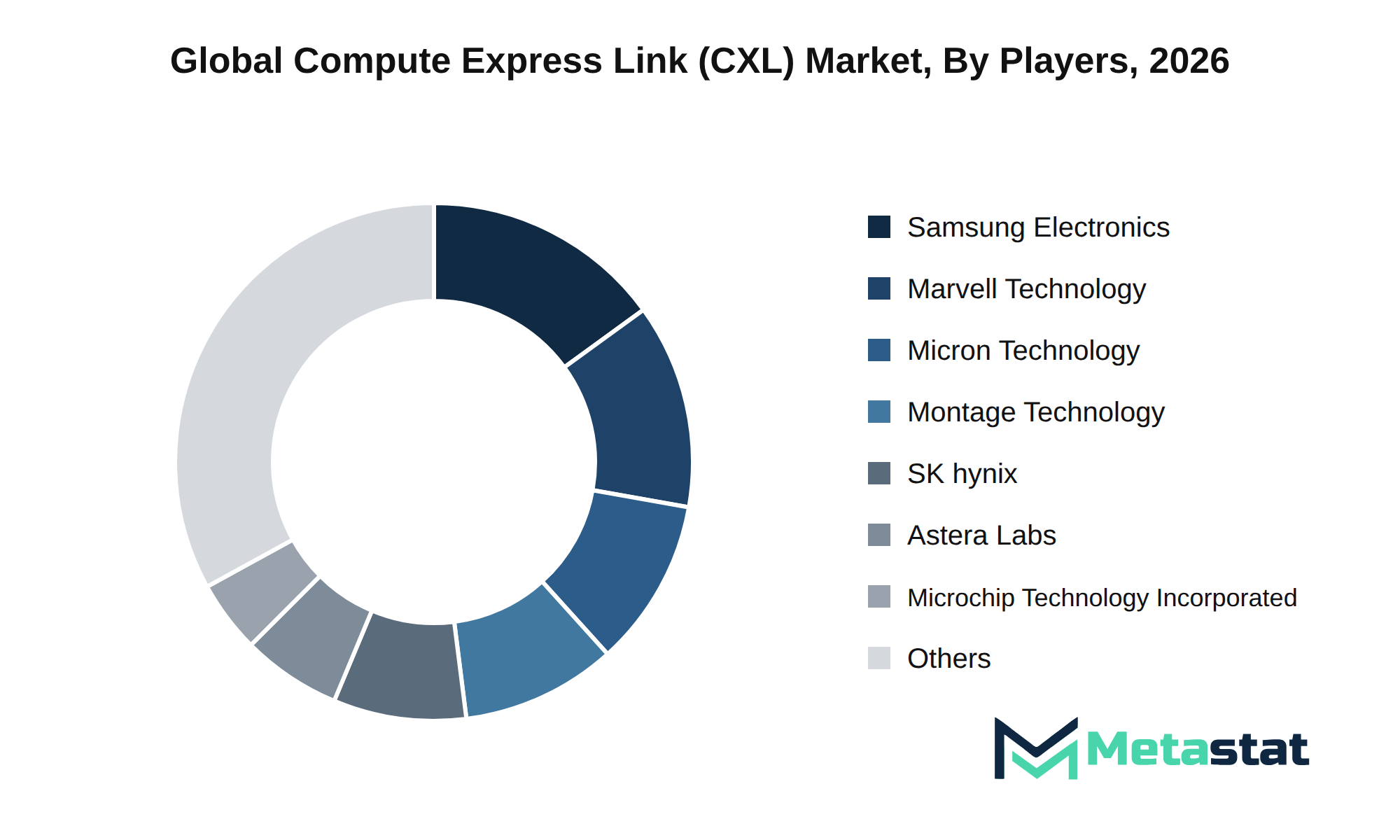
The competitive landscape in the Compute Express Link (CXL) market shows diverse strategies among key players, influencing how companies position themselves. Organizations focus on specific product categories, including CXL switches, memory expanders, and controllers, which shape competitive dynamics and affect buyer choices.
Buyers prioritize criteria including price, customization, and service when selecting suppliers in the market. Montage Technology Co., Ltd. emphasizes innovation in CXL switches while maintaining competitive pricing. Marvell Technology, Inc. focuses on comprehensive solutions across various CXL device types, ensuring compatibility and performance. Samsung Electronics Co., Ltd. leverages its extensive experience in memory expanders, offering high-quality products tailored to meet the demands of advanced computing applications.
This strategic diversity among players allows for a range of offerings, enabling buyers to select based on specific needs and preferences within the market.
Achieving this growth requires significant advancements in technology adoption and scaling efforts by key buyer groups. A widespread acceptance of CXL Memory Expanders and CXL Switches is essential to support high-performance computing applications and artificial intelligence workloads. The Asia Pacific region, with its rapidly growing technology sector, will play a crucial role in this adoption. Regulatory support for improved data transfer protocols will encourage investments in CXL solutions. However, potential risks include supply chain disruptions that could hinder production capabilities and delay market growth. The market remains sensitive to technological advancements and regulatory environments, influencing its trajectory toward the projected market value.
By Product Type: CXL Switches, CXL Memory Expanders, CXL Controllers, CXL Retimers, CXL Network Interface Cards (NICs), Others (CXL Accelerators, CXL Bridges, CXL Interface Modules)
By Protocol: CXL.io, CXL.cache, CXL.mem
By Application: AI/ML Workloads, Memory Pooling and Expansion, High-Performance Computing (HPC), Composable Infrastructure, In-Memory Databases and Analytics, Others (Edge Computing, Real-Time Computing, Virtualized Computing)
The report strategically identifies and profiles the key market players and analyses their core competencies in each sub-segment of the Compute Express Link (CXL) market.
|
Report Attributes |
Details |
|
Study Period |
2021-2033 |
|
Base Year |
2025 |
|
Estimated Year |
2026 |
|
Forecast Period |
2026-2033 |
|
Historical Period |
2021-2025 |
|
Growth Rate |
CAGR 26.5% from 2026 to 2033 |
|
Revenue Unit |
USD million |
|
Segmentation |
|
|
By Region |
North America (By Product Type, CXL Device Type, Protocol, Application, and Country)
|
|
|
|
Asia Pacific (By Product Type, CXL Device Type, Protocol, Application, and Country)
|
|
|
|
|
Middle East and Africa (By Product Type, CXL Device Type, Protocol, Application, and Country)
|
Find answers to common questions about this report
The Metastat Insights study reveals that the Compute Express Link (CXL) market size was valued at USD 834.3 million in 2025.
The Compute Express Link (CXL) market is projected to grow at a CAGR of 26.5% during the forecast period from 2026 to 2033.
According to Metastat Insights analysis, the North America Compute Express Link (CXL) market size is estimated to reach USD 2,143 million by 2033.
CXL Memory Expanders lead the market with a projected value of USD 1,891.8 million by 2033, serving as the highest revenue-generating segment. This segment's growth reflects strong demand for memory expansion solutions in various applications.
North America emerges as the dominant region in the Compute Express Link market, with a projected value of USD 2,143 million by 2033. CXL Switches serve as the leading segment, expected to reach USD 1,595.8 million during the same period.
North America holds the dominant share of the market, with a projected value of USD 2,143 million by 2033, representing 42.9 percent of the total market. This region acts as the largest contributor to market growth compared to other regions.
Restraints include high initial costs and limited awareness among potential users. North America emerges as the dominant region with a projected value of USD 2,143 million by 2033, while CXL Switches serve as the leading segment, expected to reach USD 1,595.8 million in the same year.
Rapid growth in the adoption of CXL memory expanders drives significant opportunities within the sector. Industries focused on artificial intelligence, high-performance computing, and memory pooling leverage this technology to meet evolving data needs.
The Compute Express Link (CXL) market is estimated to reach a valuation of USD 5,472.4 million by 2033.
Top players operating in the Compute Express Link (CXL) industry include Montage Technology Co., Ltd., Marvell Technology, Inc., Astera Labs, Inc., Microchip Technology Incorporated, Samsung Electronics Co., Ltd., SK hynix Inc., and Micron Technology, Inc.
The analysts below cover Electronics and Semiconductor research at Metastat Insights.
LEAD ANALYST
Utkarsh Khirodkar is a Lead Market Research Analyst at MetaStat Insight, specializing in market intelligence, technology sector assessments, and competitive strategy.

PRINCIPAL CONSULTANT - ENTERPRISE AI & EMERGING TECHNOLOGIES
Banking & Finance · Electronics and Semiconductor · Energy and Power · Healthcare IT · Information & Technology · Professional Services
Vijay Gunti is a Principal Consultant at MetaStat Insight, bringing over two decades of experience across enterprise digital transformation, technology strategy, and intelligent systems.

PRINCIPAL CONSULTANT - QUALITY SYSTEMS & COMPLIANCE
Electronics and Semiconductor · Machinery & Equipment · Professional Services
Omkar Phadtare is an Industry Consultant at MetaStat Insight, specializing in quality systems, regulatory compliance, and standards benchmarking to drive data-driven market intelligence and strategic industry research.

ENERGY & INFRASTRUCTURE INDUSTRY CONSULTANT
Automotive and Transportation · Electronics and Semiconductor · Energy and Power · Machinery & Equipment
Saurabh Vasant Ganvir consults for Energy & Infrastructure Industry at MetaStat Insight, specializing in renewable energy, solar EPC, and electric vehicle (EV) infrastructure markets.

LEAD CONSULTANT - COMMUNICATION, TELECOM, AND IT
Electronics and Semiconductor · Information & Technology · Machinery & Equipment · Professional Services
Ravindra Sathe Consultants for Communication, Telecom, and IT at MetaStat Insight. He leads the firm's industry research initiatives across telecommunications infrastructure, digital connectivity, enterprise networking, and emerging information technology domains.
Replacing petrochemical surfactants with bio-based alternatives requires realistic timelines on industrial precision fermentation scaling. The market research broke down commercialization timelines, feedstock sugar price sensitivities, and regional cosmetic ingredient regulatory approvals in Europe and East Asia. That supplier readiness mapping gave our formulations team reliable context when comparing renewable chemical sourcing roadmaps.
Tracking ceramic matrix composite adoption in high-bypass aero engines requires strict attention to material qualification cycles and FAA airworthiness testing milestones. The MetaStat Insight team provided a detailed timeline of silicon carbide fiber manufacturing capacity and commercial foundry lead times. Having clear visibility into upstream thermal barrier coating supply helped us stress-test our long-term component procurement strategy.
Transitioning ultra-class mining haul trucks to alternative power requires concrete data on remote hydrogen refueling infrastructure economics. The report evaluated megawatt-scale electrolyzer installation expenses, onsite storage safety mandates, and heavy-duty fuel cell stack degradation under continuous duty cycles. That technical rigor helped our engineers benchmark realistic total operating cost horizons for off-highway fleet decarbonization.
Explore related market intelligence reports worth reading alongside this one.
Starting from
$2950