
LEAD ANALYST
Utkarsh Khirodkar is a Lead Market Research Analyst at MetaStat Insight, specializing in market intelligence, technology sector assessments, and competitive strategy.

Global Cranial Flap Fixation Market Size, Share, By Type (Cranial Plate, Cranial Screw, Cranial Clamp, Cranial LOOP and Cranial Mesh), By Absorbability (Non-Absorbable and Absorbable), By Material (Titanium & Titanium Alloys, PEEK (Polyetheretherketone) and Other Polymers (PLLA, PLGA, PGA and POM)), By End-User (Hospitals, Surgical Centers and Others), Industry Analysis, Growth, Trends, and Forecast, 2026-2033
Report ID
MSI-5101
Published
August, 2026
Pages
259 Pages
Format
Historical
Base year
Forecast
Forecast period
Report Details
Choose Your License
Global Cranial Flap Fixation Market
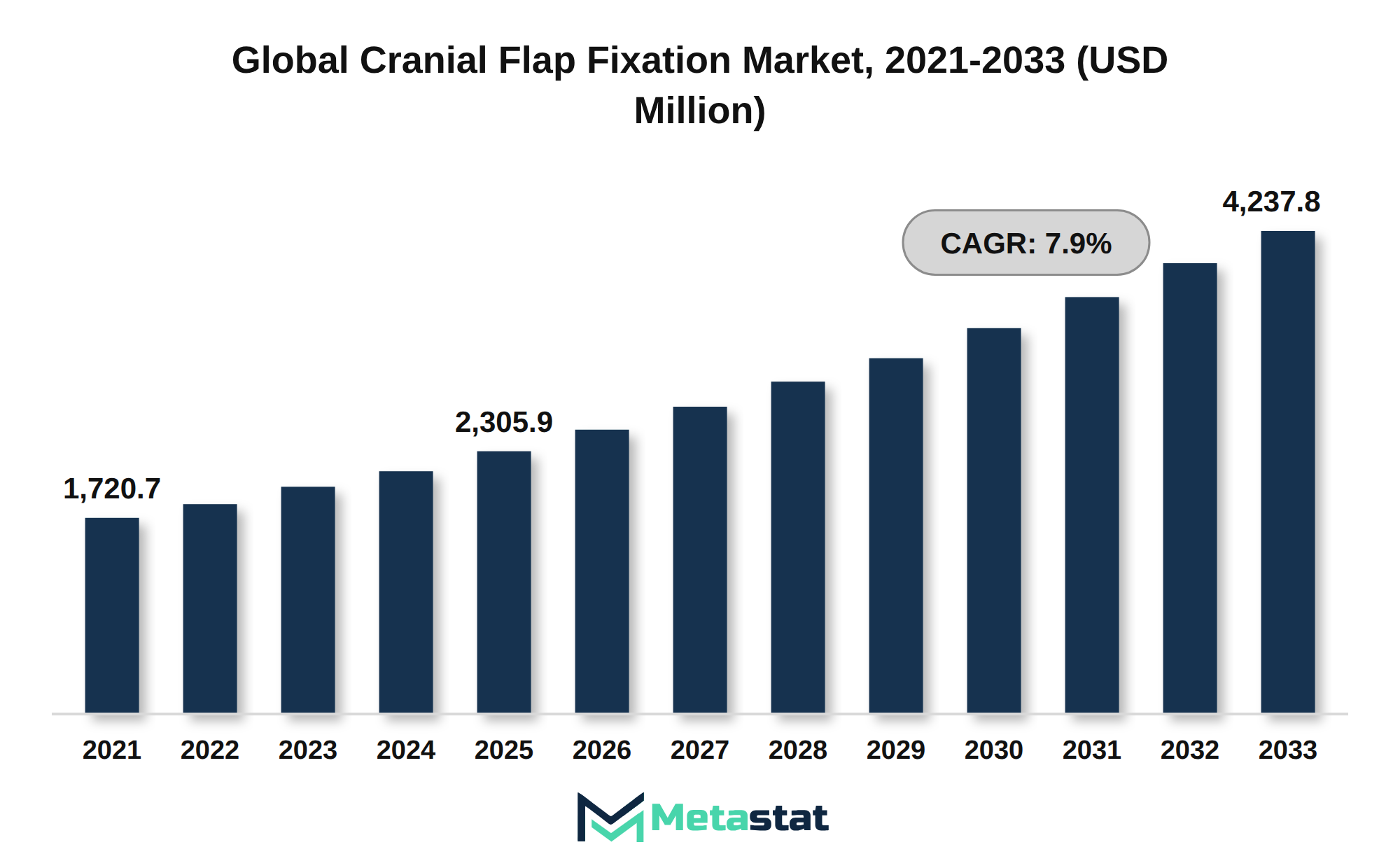
The global Cranial Flap Fixation market was valued at USD 2,305.9 million in 2025 and is projected to reach USD 4,237.8 million by 2033, growing at a CAGR of 7.9% over the forecast period.
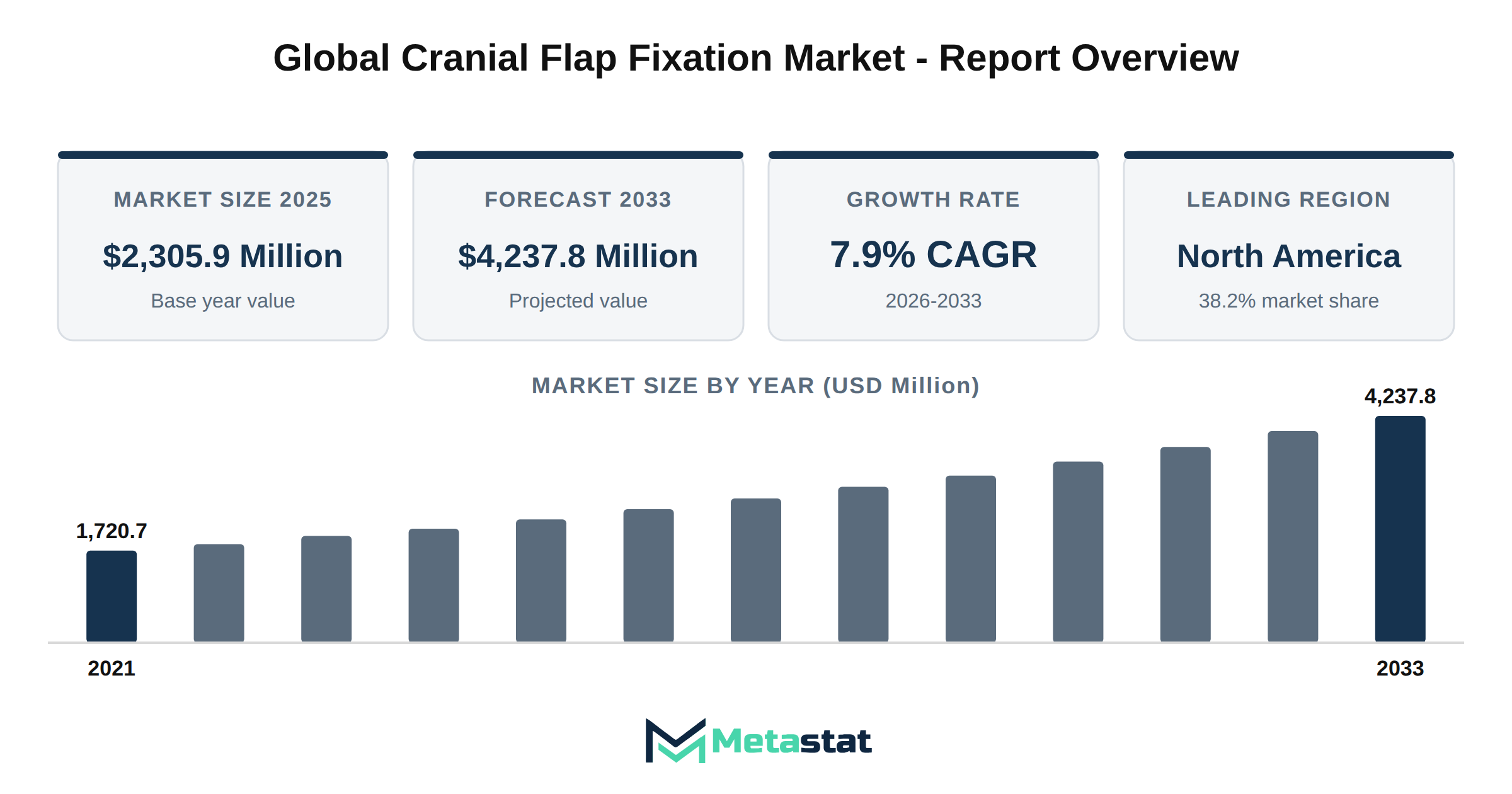
The Cranial Flap Fixation market reached a value of USD 2,305.9 million in 2025, with a projected growth to USD 4,237.8 million by 2033, reflecting a compound annual growth rate (CAGR) of 7.9%. Historical data shows the market value starting from USD 1,720.7 million in 2021, progressing to USD 2,129.8 million in 2024.
The regulatory landscape surrounding cranial flap fixation plays a critical role in shaping market dynamics. Compliance with various regulations, including FDA 510(k) clearance, ensures that products meet safety and efficacy standards. This regulatory framework influences manufacturers and medical practitioners, impacting product development timelines and market entry strategies.
Biocompatibility remains a vital consideration in the market. Materials used in cranial fixation devices require thorough testing to ensure they do not elicit adverse biological reactions. Manufacturers focus on developing materials that meet biocompatibility standards, enhancing patient safety and overall acceptance of cranial fixation procedures.
Reimbursement policies significantly affect the adoption of cranial flap fixation technologies. Health insurance coverage for these procedures varies by region and institution, influencing the decision-making process of healthcare providers. Understanding reimbursement landscapes enables manufacturers to tailor their offerings to meet the financial needs of healthcare facilities.
Cranial flap fixation involves a variety of surgical techniques and procedures. These methods are designed to securely attach cranial plates, screws, or clamps, ensuring stability during the healing process. Surgeons select techniques based on the specific clinical indications, which include traumatic brain injuries, tumors, and congenital defects.
Complications and risk factors associated with cranial fixation procedures include infection, hardware failure, and neurological impairments. Recognizing these risks is essential for healthcare providers to implement effective mitigation strategies, enhancing patient outcomes and minimizing adverse events.
Post-operative outcomes and success rates serve because critical indicators of the effectiveness of cranial fixation techniques. High success rates contribute to increased confidence among surgeons and patients, driving further adoption of advanced fixation technologies within the market.
Innovation in cranial fixation technology continues to advance, with new materials and designs enhancing functionality and patient outcomes. Developments in patient-specific fixation designs have emerged, allowing for customized solutions tailored to individual anatomical needs. This trend reflects a growing focus on personalized medicine within the cranial flap fixation market.
3D-printed cranial reconstruction workflows introduce efficiencies in the manufacturing process, enabling rapid prototyping and production of tailored fixation devices. This technological advancement enhances precision and reduces operational costs for manufacturers.
Imaging artifact reduction techniques improve the accuracy of pre-operative assessments, contributing to better surgical planning. Regulatory compliance regarding imaging technologies ensures that these advancements align with industry standards, promoting innovation in cranial flap fixation procedures.
The regulatory landscape for cranial flap fixation involves a series of pathways and FDA 510(k) clearances that facilitate the introduction of new technologies into the market. Compliance with regulatory standards ensures that products meet the necessary safety and efficacy benchmarks, influencing market entry and adoption rates. This environment encourages innovation while maintaining patient safety.
Biocompatibility remains a critical factor in product development within the cranial flap fixation market. Materials used in cranial fixation devices demonstrate compatibility with biological tissues to minimize adverse reactions. Manufacturers invest in rigorous testing protocols to ensure their products fulfill these biocompatibility requirements, directly impacting market acceptance.
The reimbursement landscape significantly affects the adoption of cranial flap fixation technologies. Coverage policies from insurance providers dictate the financial viability for healthcare facilities adopting new procedures and technologies. Evolving reimbursement frameworks create opportunities for increased utilization of innovative fixation solutions.
Surgical techniques and procedures for cranial flap fixation continually advance, enhancing precision and patient outcomes. Techniques including minimally invasive approaches gain traction, allowing for reduced recovery times and improved success rates. This evolution in surgical practice aligns with the growing demand for effective cranial reconstruction solutions.
Clinical indications for cranial flap fixation encompass a variety of neurosurgical applications, including trauma, tumor resection, and congenital defects. Understanding these indications allows for targeted marketing strategies and aligns product offerings with the needs of healthcare providers in the market.
Complications and risk factors in cranial fixation procedures necessitate careful consideration during product design and selection. Manufacturers focus on mitigating risks associated with infection, device failure, and other complications to enhance patient safety and satisfaction.
Post-operative outcomes and success rates serve because critical metrics for evaluating cranial flap fixation technologies. High success rates contribute to positive clinical results and drive demand for specific products within the market, influencing purchasing decisions among healthcare providers.
Innovation in cranial fixation technology drives competitive differentiation and market growth. Advancements including patient-specific fixation designs and 3D-printed cranial reconstruction workflows enhance the customization and effectiveness of procedures, capturing the interest of healthcare professionals.
Imaging artifact reduction ensures accuracy in pre-operative planning and intraoperative assessments. Regulatory compliance and adherence to standards govern the development of imaging technologies that support these procedures, impacting their integration into surgical workflows.
The landscape for cranial flap fixation continues to evolve, driven by research and development trajectories focused on next-generation innovations. Sustainable practices and decarbonization efforts within the industry align with broader environmental goals, encouraging a circular economy dynamic in cranial fixation technologies.
Fragmentation within the market presents both challenges and opportunities for manufacturers. M&A dynamics shape competitive positioning, while effective value chain management enhances supply chain resilience. Strategic capital allocation and infrastructure investments are essential for companies aiming to thrive in the evolving cranial flap fixation market.
Future strategic outlooks emphasize the importance of corporate imperatives focused on innovation, market penetration, and customer-centric solutions. High-value recommendations for stakeholders include investing in R&D, understanding reimbursement trends, and addressing regulatory challenges to enhance growth prospects in the cranial flap fixation market.
Increasing prevalence of neurological disorders and rising population percentages of elderly individuals contribute significantly to the growth of the Cranial Flap Fixation market. Aging populations demonstrate higher incidences of conditions that necessitate cranial surgeries, including traumatic brain injuries, tumors, and congenital abnormalities. This demographic shift prompts healthcare providers to enhance surgical capabilities and invest in advanced cranial fixation solutions.
Hospitals and surgical centers expand their service offerings to accommodate the needs of this demographic, driving an increase in demand for cranial plates, screws, and other fixation devices. Rising demand influences capital investment in technologies and methods that improve surgical outcomes while aligning with the broader push for enhanced patient care and operational efficiency.
Key factors including urbanization and evolving consumer preferences further drive this demand. Urban populations experience lifestyle changes, leading to higher risks associated with accidents and injuries. Consequently, healthcare systems adapt by prioritizing cranial flap fixation solutions that ensure swift recovery and improved quality of life for patients.
The Cranial Flap Fixation market benefits from these shifts. Stakeholders recognize the importance of addressing the specific needs of a growing patient demographic. The focus on innovative, effective solutions creates opportunities for revenue growth and market expansion in the coming years.
Increased investments in healthcare infrastructure significantly contribute to the growth of the Cranial Flap Fixation market. Expanding economies and rising GDP levels lead to higher spending on medical technologies and services. Enhanced public-private partnerships facilitate funding for advanced medical equipment, allowing hospitals and surgical centers to upgrade their facilities and offer improved patient care, which strengthens long-term demand for cranial flap fixation solutions.
Technological advancements play a crucial role in driving market expansion. Innovations in materials and manufacturing processes enhance product performance, while automation and artificial intelligence enable efficient operations. These developments reduce operational costs and improve patient outcomes, attracting more healthcare providers to adopt cranial flap fixation solutions, thereby expanding the addressable base.
Shifting consumer preferences towards minimally invasive surgical techniques influence market dynamics. Healthcare professionals increasingly favor products that minimize recovery time and complications, creating a favorable environment for cranial flap fixation technologies. This trend aligns with the growing emphasis on patient-centered care and outcomes, reinforcing the segment's position in the market.
Regulatory tightening creates significant challenges for the Cranial Flap Fixation market. Compliance hurdles arise from stringent regulations governing medical devices, which require manufacturers to meet rigorous safety and efficacy standards. This environment demands considerable investment in regulatory affairs and quality assurance, diverting resources from product development and innovation.
Legal mandates further complicate market dynamics. Companies face increasing scrutiny regarding product safety, leading to longer approval timelines and higher costs associated with clinical trials and testing. These factors restrict the ability of new entrants to compete effectively, consolidating market power among established firms that navigate the regulatory environment more efficiently.
Macroeconomic headwinds, including inflationary pressures, impact operational costs within the market. Rising prices for raw materials and labor contribute to higher production costs, pressuring profit margins. Companies balance these increasing expenses while maintaining competitive pricing, limiting growth opportunities.
Supply chain disruptions triggered by geopolitical instability add another layer of complexity. Manufacturers experience delays and increased costs in procuring essential materials, hindering timely product availability in the market. Such disruptions lead to reduced consumer confidence and lower demand.
These factors shape a challenging environment for the Cranial Flap Fixation market, resulting in slower growth rates and increased competition among existing players. Companies adapt their strategies to navigate these restraints effectively while addressing evolving consumer needs and market expectations.
Geopolitical fragmentation presents significant challenges for the Cranial Flap Fixation market, affecting trade relationships and increasing uncertainty in supply chains. Disruptions caused by political tensions and economic sanctions lead to delays in the procurement of essential materials and components, raising costs for manufacturers and limiting their ability to meet market demand. This instability complicates operational planning and forecasts, creating barriers to timely product delivery.
Trade deficits and tariff frictions exacerbate these challenges by increasing the cost of imported materials. Manufacturers face pressure to absorb these higher costs, which compress pricing structures and negatively impact profit margins. Consequently, suppliers of cranial flap fixation products struggle to maintain competitiveness in a market characterized by rising input costs and pricing pressures.
Technological disruptions, resulting from rapid advancements in medical devices and surgical techniques, necessitate complex research and development integrations. Manufacturers continuously adapt to evolving technologies while ensuring compliance with tightening global regulatory standards. This environment increases compliance overhead, placing additional burdens on companies and complicating product development processes.
Workforce skill gaps hinder the ability of companies within the Cranial Flap Fixation market to leverage new technologies effectively. Talent retention pressures stemming from competitive labor markets impact operational efficiency and innovation capacity. These factors collectively challenge the ability of manufacturers to respond to changing downstream demands, driving the need for strategic investments in workforce development and technology integration.
The Cranial Flap Fixation market experiences robust opportunities due to emerging regional demands across various geographies. Rapid urbanization and improved healthcare access in developing nations create a surge in surgical procedures, increasing the need for cranial fixation solutions. Infrastructure modernization, particularly in Asia Pacific and South America, drives advancements in medical facilities, enhancing the capacity for cranial surgeries.
Technological disruptions in materials and manufacturing processes contribute substantially to the market landscape. Innovations in absorbable materials and improved surgical techniques enhance the efficiency and effectiveness of cranial flap fixation products. The integration of digital technologies in surgical procedures streamlines operations and improves patient outcomes, attracting investments and focus from key industry players.
Sustainability imperatives push manufacturers towards eco-friendly practices and materials, aligning with global environmental standards. This shift leads to the introduction of next-generation products that appeal to environmentally conscious healthcare providers and patients. The emphasis on green transformations creates a niche within the market, presenting additional growth avenues for forward-thinking companies.
Strategic consolidation and cross-industry mergers further enhance market dynamics. Collaborations among medical device manufacturers, technology firms, and healthcare providers streamline product development and distribution. This integrated approach improves market accessibility, allowing for a broader reach and diversification of offerings.
Shifts in buying behaviors towards digital procurement reflect the evolving landscape of the cranial flap fixation market. Healthcare providers increasingly seek efficient procurement methods, prompting suppliers to enhance their online presence and supply chain management. This trend drives operational yield maximization and aligns with changing commercial models in the industry.
Overall, the combination of emerging regional demands, technological advancements, sustainability trends, and strategic collaborations positions the cranial flap fixation market for significant growth and expansion through 2033.
The Global Cranial Flap Fixation market is segmented based on Type, Absorbability, Material, and End-User.
Cranial Plate segment is valued at USD 987.9 million in 2026 and is projected to reach USD 1,614.6 million by 2033, at a CAGR of 7.3% during the forecast period. Primary demand drivers for this segment include the increasing incidence of cranial surgeries and advancements in surgical techniques, which boost the adoption of reliable fixation devices. Enhanced product features, including biocompatibility and improved mechanical properties, influence the segment's expansion. The evolution of materials used in cranial plates, particularly titanium and advanced polymers, leads to superior outcomes for patients and surgeons alike.
Regulatory compliance and certification standards play a critical role in the development and market entry of cranial plates. Meeting these standards ensures safety and efficacy, which builds trust among healthcare providers and patients. The growing preference for minimally invasive surgical options shifts consumption patterns towards innovative cranial fixation solutions. The surgical centers and hospitals, because the primary end-users, seek products that offer both quality and value, driving competition among suppliers.
Raw material sourcing and supply chain resilience present challenges and opportunities within the market. Strategic investments in raw material procurement enhance production stability and mitigate pricing volatility. The emergence of disruptive alternatives, including absorbable plates, creates strategic opportunity windows for manufacturers to innovate. Overall, the Cranial Flap Fixation market continues to expand due to stakeholders investing in advanced technologies and materials to meet evolving clinical demands.
Adoption of cranial screws in the Cranial Flap Fixation market reflects significant growth driven by advancements in surgical techniques and increasing demand for minimally invasive procedures. The segment is estimated to reach USD 991.7 million by 2033, at a CAGR of 7.6% during the forecast period. Factors driving demand include the rise in traumatic brain injuries and the need for effective fixation solutions in neurosurgical applications.
Technological maturation within the segment has spurred innovations in cranial screw designs, enhancing safety and reliability. These upgrades provide surgeons with improved tools, increasing confidence in these devices during complex procedures. Hospitals and surgical centers experience greater operational efficiency and improved patient outcomes, which further drives market growth.
Regulatory compliance standards play a crucial role in shaping the market landscape. Strict guidelines ensure product safety and efficacy, compelling manufacturers to innovate continuously. Such compliance enhances consumer trust and opens strategic opportunity windows for new entrants and established players.
Cost structures and pricing volatility remain critical factors influencing the cranial screw segment. Rising raw material costs impact pricing strategies, prompting suppliers to optimize their supply chains. Strategic investment in research and development supports ongoing product evolution, positioning players to capitalize on emerging market trends.
End-use dynamics reflect a shift towards integrated solutions that combine cranial screws with other fixation devices. This integration enhances operational convenience and presents opportunities for product bundling, catering to the evolving preferences of healthcare providers.
Growth in the Cranial Clamp segment stems from increasing demand for innovative cranial fixation solutions in surgical procedures. Rising incidences of traumatic brain injuries and neurological disorders drive the necessity for effective cranial fixation devices. Enhanced product designs and advancements in materials improve the efficiency and safety of cranial clamps, encouraging adoption within hospitals and surgical centers.
The Cranial Clamp segment is projected to reach USD 652.6 million by 2033. Continuous technological maturation contributes to market growth, with manufacturers focusing on next-generation upgrades that enhance performance and reduce complications. Demand for absorbable and non-absorbable options influences consumption patterns, aligning with evolving surgical practices.
Regulatory compliance and certification standards shape the landscape for cranial flap fixation products, ensuring safety and efficacy in clinical settings. Competitive pricing pressures compel organizations to optimize cost structures while maintaining quality. Strategic opportunities arise from the need for innovative solutions that address specific surgical challenges and improve patient outcomes.
Growth in the Cranial LOOP segment aligns with advancements in surgical techniques and the increasing emphasis on minimally invasive procedures. Enhanced procedural efficiencies and reduced recovery times drive demand for innovative fixation solutions. The growing focus on patient safety and outcomes significantly influences purchasing decisions, prompting hospitals and surgical centers to invest in advanced cranial flap fixation products.
Cranial LOOP segment is projected to grow at a CAGR of 9.1% during the forecast period. Rising adoption of absorbable materials within this segment enhances its appeal, because these products mitigate complications associated with non-absorbable options. The introduction of next-generation products demonstrates a commitment to improving surgical outcomes, attracting a broader base of healthcare providers.
Increased investments in research and development fuel the evolution of cranial fixation technologies, enabling manufacturers to introduce innovative solutions that respond to evolving market demands. The market benefits from a robust supply chain that ensures timely availability of high-quality materials, further enhancing product offerings. Regulatory compliance and standards enhance consumer confidence, facilitating market expansion.
Overall, the Cranial Flap Fixation market reflects strong growth potential, particularly within the Cranial LOOP segment, driven by strategic opportunities and advancements in surgical methodologies.
Growing awareness and advancements in surgical techniques drive the demand for cranial mesh in the Cranial Flap Fixation market. Surgeons increasingly seek materials that provide optimal stability and support during cranial reconstruction procedures. Innovations in cranial mesh design, including lighter weights and improved biocompatibility, enhance product adoption among healthcare professionals. Enhanced patient outcomes from the use of modern cranial mesh contribute to its acceptance within hospitals and surgical centers.
Expansion in this segment benefits from the increasing number of neurosurgical procedures performed globally. Aging populations and the rising incidence of traumatic brain injuries necessitate effective cranial fixation solutions. Regulatory compliance remains vital, owing to manufacturers working to meet stringent safety and performance standards. This dynamic influences product evolution and necessitates ongoing investments in research and development to address evolving market requirements.
Strategic partnerships among key players in cranial flap fixation enhance supply chain resilience and product availability. Collaborations with hospitals and surgical centers facilitate the integration of cranial mesh in surgical protocols, ensuring that these products reach healthcare providers effectively. Growth opportunities for the cranial mesh segment depend on ongoing innovations and responsiveness to emerging trends within the market.
Valued at USD 2,125.5 million in 2026, the Non-Absorbable segment is projected to reach USD 3,475 million by 2033, with a CAGR of 7.3% during the forecast period. The increasing focus on long-term stability in cranial surgeries drives demand for non-absorbable fixation solutions. Surgeons prefer these materials for procedures requiring durable support, particularly in complex cranial repairs.
Technological maturation in material science enhances product performance and reliability. Innovations in titanium and titanium alloys used in non-absorbable fixation devices contribute to their effectiveness and market appeal. The growing adoption of advanced surgical techniques further supports segment expansion, driven by medical professionals seeking high-quality solutions to ensure patient safety and recovery.
Regulatory compliance and certifications establish critical standards for non-absorbable products, reinforcing their credibility in the medical community. Patients' increasing awareness of surgical options influences end-user dynamics, with hospitals seeking reliable suppliers for cranial flap fixation. This trend emphasizes the importance of supplier partnerships to maintain competitive pricing and access to innovative technology.
Cost structures and pricing volatility remain relevant factors for suppliers in the cranial flap fixation market. Fluctuations in raw material costs exert pressure on margins, necessitating effective sourcing strategies. Strategic opportunity windows arise for manufacturers that invest in research and development. This ensures their product offerings align with evolving market demands.
Emerging trends in the cranial flap fixation market reflect significant growth potential attributed to advancements in absorbable materials. This segment is estimated to reach USD 762.8 million by 2033, at a CAGR of 10.9% during the forecast period. The increasing preference for absorbable fixation devices arises from their ability to eliminate the need for removal surgeries and reduce patient recovery time. Enhanced biocompatibility and improved healing outcomes associated with absorbable materials further drive adoption among healthcare providers.
Technological maturation influences the evolution of absorbable products, with ongoing research focusing on the development of innovative materials and designs. These advancements facilitate improved performance characteristics, including strength and degradation rates, addressing prior limitations. The shift towards minimally invasive surgical techniques supports increased demand for absorbable devices, aligning with broader trends in surgical practices.
Regulatory compliance standards influence market dynamics by ensuring product safety and efficacy. The presence of established certifications enhances market confidence, encouraging wider acceptance among healthcare professionals. Cost structures associated with absorbable products show favorable margins due to reduced long-term healthcare costs, appealing to hospitals and surgical centers focused on improving patient care while managing expenses. This segment's growth reflects strategic opportunity windows for manufacturers investing in research and development, indicating a robust outlook for the absorbable category within the cranial flap fixation market.
Growth in the Titanium & Titanium Alloys segment is driven by superior biocompatibility and strength, making these materials a preferred choice in cranial flap fixation procedures. Valued at USD 1,596.1 million in 2026, the segment is projected to reach USD 2,521.5 million by 2033, at a CAGR of 6.8% during the forecast period. Innovations in manufacturing processes and enhancements in material properties facilitate the introduction of advanced titanium-based products that efficiently cater to the evolving requirements of cranial surgeries.
The market for cranial flap fixation benefits from increasing adoption of titanium and its alloys in various medical applications, primarily due to favorable mechanical properties and corrosion resistance. Surgeons prioritize these materials for complex surgical procedures involving cranioplasty and trauma repairs, leading to a consistent rise in demand. Continuous research and development activities aimed at improving performance characteristics and reducing production costs further enhance growth opportunities within this segment.
The segment's expansion aligns with heightened investments in healthcare infrastructure and advanced surgical technologies, driving demand for innovative cranial flap fixation solutions. Regulatory compliance standards and certification requirements play a crucial role in shaping the market landscape, ensuring that products meet safety and efficacy benchmarks. The focus on enhancing supply chain resilience and sourcing strategies for titanium and titanium alloys contributes to overall market stability, supporting sustained growth through 2033.
Valued at USD 974.7 million by 2033, the PEEK (Polyetheretherketone) segment demonstrates a significant growth trajectory, with a CAGR of 10.8% throughout the forecast period. This growth results from increasing preference for lightweight, durable, and biocompatible materials in cranial flap fixation applications. Enhanced properties of PEEK, including superior mechanical strength and resistance to chemical degradation, position it favorably among surgeons and medical device manufacturers.
Technological maturation in manufacturing processes contributes to the expansion of the PEEK segment within the Cranial Flap Fixation market. Advances in 3D printing and polymer processing enable improved customization of cranial implants, leading to heightened adoption rates in surgical procedures. The versatility of PEEK in various applications aligns with evolving surgical techniques, thus driving demand across hospitals and surgical centers.
Increasing collaborations between material scientists and medical professionals drive innovation in PEEK-related products. These partnerships facilitate the development of next-generation cranial flap fixation solutions that address specific clinical requirements. Consequently, this segment attracts significant capital investment, enhancing market dynamics and expanding the scope of PEEK applications within the cranial flap fixation domain.
Increasing adoption of advanced materials in the Cranial Flap Fixation market positions the Other Polymers (PLLA, PLGA, PGA, POM) segment for substantial growth. These polymers exhibit desirable properties, including biocompatibility and biodegradability, which align with the demands of modern surgical practices. Hospitals and surgical centers seek innovative solutions that enhance patient outcomes while minimizing recovery times.
This segment is projected to reach USD 593.3 million by 2033, driven by technological maturation and evolving product specifications. Continuous investment in research and development drives advancements in polymer formulations and manufacturing processes, facilitating the emergence of next-generation products. The increasing focus on patient-centric care encourages the integration of absorbable materials, offering benefits including reduced post-operative complications.
End-user dynamics reflect a shift toward minimally invasive procedures, propelling demand for materials that support such methodologies. While healthcare systems emphasize cost efficiency and improved patient care, the market for Other Polymers (PLLA, PLGA, PGA, POM) expands. Ongoing regulatory compliance and the pursuit of certifications further enhance the credibility and market acceptance of these materials, reinforcing their presence within the broader Cranial Flap Fixation market.
Emerging applications for Other Materials (Ceramic & Composite Materials) in the Cranial Flap Fixation market attract attention due to their unique properties. These materials offer enhanced biocompatibility and mechanical strength, contributing to improved patient outcomes. The segment is projected to grow at a CAGR of 6.6% during the forecast period, reflecting increased interest from healthcare providers seeking innovative solutions for cranial surgeries.
Technological advancements play a crucial role in the expansion of this segment. Continuous research and development efforts focus on refining the properties of ceramic and composite materials, enabling better integration with biological tissues. This evolution supports wider adoption in clinical settings, particularly in hospitals and surgical centers where the demand for reliable and effective fixation solutions is significant.
End-user dynamics significantly influence consumption trends in the market. Hospitals prioritize materials that offer durability and ease of application, driving the preference towards advanced composites. Favorable reimbursement policies and growing surgical volumes contribute positively to the segment's growth. Strategic opportunities for industry players lie in capitalizing on these trends by enhancing product offerings and ensuring compliance with regulatory standards.
Overall, the Other Materials (Ceramic & Composite Materials) segment presents various avenues for growth within the Cranial Flap Fixation market, driven by technological maturation and evolving end-user requirements.
Valued at USD 1,981 million in 2026, the Hospitals segment is projected to reach USD 3,267.8 million by 2033, with a CAGR of 7.4% throughout the forecast period. Several factors drive this growth, including advancements in surgical techniques and increased healthcare investments. Hospitals increasingly adopt innovative cranial flap fixation solutions to enhance surgical outcomes and patient recovery times.
The growing focus on improving surgical precision and safety influences demand in the Hospitals segment. Investment in state-of-the-art medical equipment and technologies supports the integration of cranial flap fixation products into surgical practices. Hospitals prioritize effective solutions that reduce complications and optimize patient care, contributing to market expansion.
Technological maturation plays a critical role in shaping the product offerings within the Cranial Flap Fixation market. Next-generation upgrades and product evolution driven by research and development efforts ensure that hospitals access advanced, reliable fixation solutions. Regulatory compliance standards and certifications influence procurement decisions, emphasizing the importance of quality and safety in surgical environments.
The segment's growth trajectory reflects evolving end-use dynamics and consumption shifts within healthcare settings. Aging patient populations and rising neurological disorders increase the requirement for cranial flap fixation products in hospitals. This increased demand reinforces the necessity for reliable suppliers capable of meeting the quality standards expected in hospital settings.
Growing investments in healthcare infrastructure significantly influence the Surgical Centers segment within the Cranial Flap Fixation market. Increasing preference for outpatient surgical procedures and minimally invasive techniques enhances the demand for advanced fixation solutions. Rising patient volumes and the need for efficient surgical operations drive revenue growth across surgical centers.
Technological advancements in cranial flap fixation products represent a catalyst for adoption. Continuous innovation leads to the introduction of next-generation devices that reduce surgical time and improve patient outcomes. Such advancements attract investment in surgical centers, which focus on maintaining competitive advantages through the adoption of state-of-the-art equipment.
Regulatory compliance and certification standards impact operational dynamics within the segment. Surgical centers adhere to strict regulations regarding product safety and efficacy. Compliance ensures the adoption of high-quality cranial flap fixation devices, thereby enhancing patient safety while driving market growth.
Cost structures and pricing strategies play a crucial role in shaping the competitive landscape. Surgical centers manage operational expenses while providing quality care. Competitive pricing of cranial flap fixation products allows these centers to optimize their service offerings, resulting in improved financial performance.
Valued at USD 805.2 million by 2033, the Surgical Centers segment reflects strong growth potential, with a compound annual growth rate of 9.9% during the forecast period. The ongoing shift toward outpatient services emphasizes the importance of this segment in the overall market, highlighting the need for innovative fixation solutions tailored to evolving surgical practices.
Based on geography, the Global Cranial Flap Fixation market is divided into North America, Europe, Asia-Pacific, South America, Middle East, and Africa.
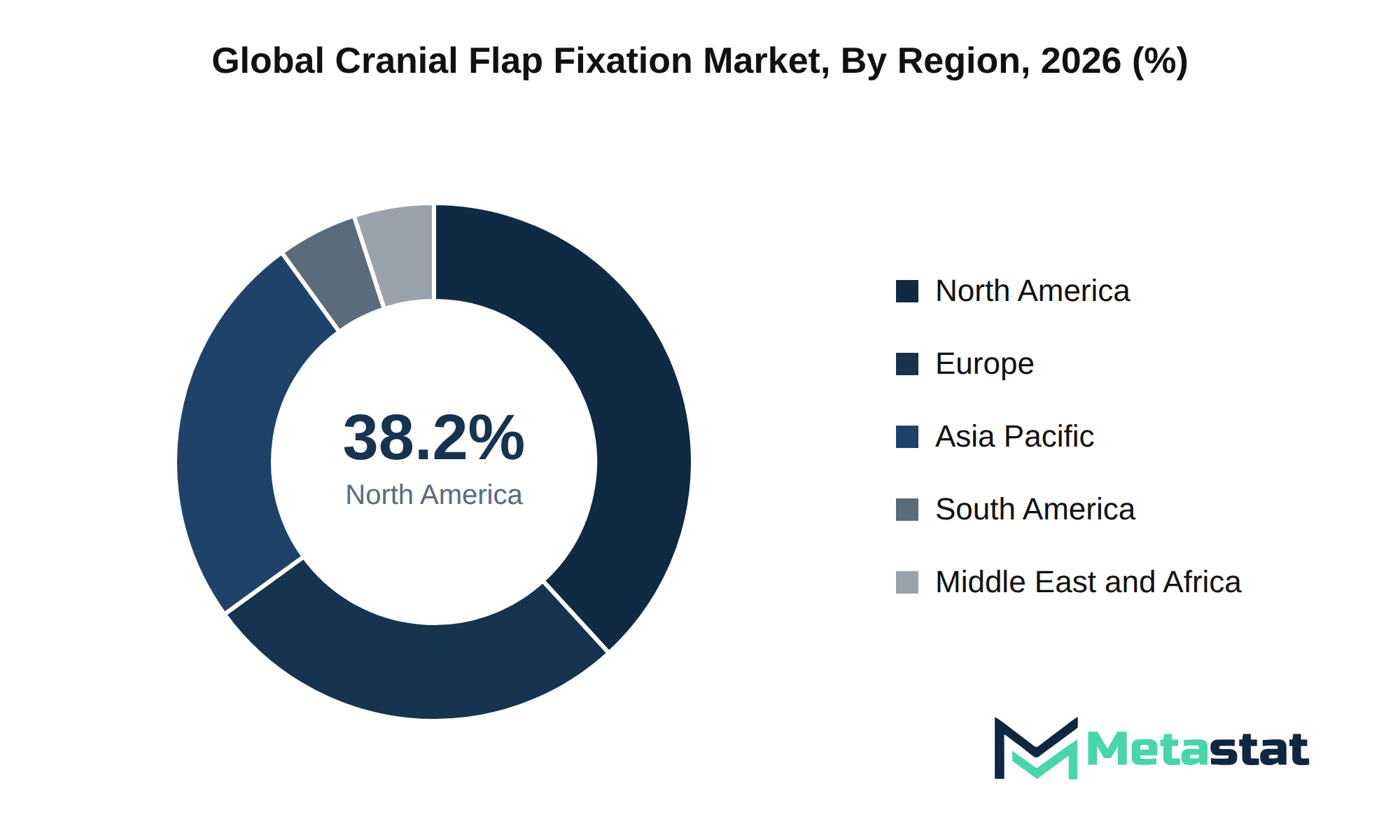
North America represents a significant portion of the Cranial Flap Fixation market, accounting for 38.2% of the global share in 2025. The market is set to expand at a CAGR of 7.9% within the forecast period, reaching a market size (TAM) of USD 1,496 million by the end of 2033.
The United States, Canada, and Mexico drive demand in this region owing to increasing healthcare expenditures and advancements in surgical procedures. Hospitals lead the end-user segment, with a projected value of USD 3,267.8 million by 2033, spurred by the growing prevalence of neurological disorders and cranial surgeries.
Regional investment in healthcare infrastructure enhancement supports market expansion. Adoption of innovative cranial flap fixation technologies aligns with rising patient expectations for minimally invasive solutions. The emphasis on localized manufacturing and supply chain regionalization further contributes to the competitiveness of the market, particularly because healthcare providers increasingly seek reliable and efficient procurement channels.
Overall, the combination of technological advancements, increased surgical volumes, and a focus on efficient supply chains positions North America because a vital market for cranial flap fixation products in the coming years.
Europe accounts for 26.8% of the global Cranial Flap Fixation market in 2025. Countries including Germany, France, the UK, Italy, Spain, and Russia contribute to this robust market landscape.
The healthcare sector in Europe experiences strong investments aimed at enhancing surgical capabilities and patient care. This commitment drives the demand for advanced cranial fixation technologies, creating growth opportunities within the region. The presence of established healthcare infrastructure supports the adoption of innovative products, including cranial plates and screws.
Competitive dynamics in Europe involve a mix of domestic and international players striving for market share. Local compliance mandates, along with regulatory frameworks, influence procurement patterns and purchasing behaviors. The market's maturity encourages high-value replacement cycles, further propelling the growth of cranial flap fixation solutions.
Emerging trends within the market indicate a shift towards absorbable materials, reflecting a growing preference for products that minimize post-operative complications. The increasing demand for these materials aligns with evolving surgical practices aimed at improving patient outcomes.
Localized manufacturing densities enhance the supply chain resilience, enabling quicker response times and more efficient distribution. Cross-border trade corridors facilitate the exchange of cranial flap fixation products, improving market accessibility across the region.
Overall, the Cranial Flap Fixation market in Europe is poised for continued growth, driven by advancements in technology, strong healthcare investment, and evolving consumer preferences.
The Asia-Pacific region accounts for 25.0% of the global Cranial Flap Fixation market in 2025. Countries including China, Japan, India, South Korea, and Australia contribute to the increasing demand for cranial flap fixation solutions. Factors driving this demand include advancements in surgical procedures, a growing elderly population, and rising incidences of neurological disorders. Infrastructure modernization initiatives across Asia-Pacific enhance access to advanced medical technologies, which supports market growth.
Emerging market front-runners, particularly in Southeast Asia, exhibit high adoption rates for cranial flap fixation devices, creating opportunities for localized manufacturing and distribution. This region is characterized by a dynamic competitive environment, featuring several domestic market participants and an increasing number of suppliers entering the sector. Vendor consolidation trends influence pricing strategies and product offerings, enabling more streamlined procurement processes.
Regional resource availability, including skilled labor and medical expertise, supports the development of advanced cranial flap fixation products. Growing foreign direct investment (FDI) flows contribute to the expansion of manufacturing capabilities in the region. The ongoing development of cross-border trade corridors encourages collaboration between countries, ensuring a steady supply of cranial flap fixation solutions to meet local demand.
The combination of these factors positions the Asia-Pacific region for continued growth within the Cranial Flap Fixation market, with projections indicating sustained market expansion through 2033.
The Cranial Flap Fixation market in South America is projected to reach USD 2,305.9 million by 2025, representing a 5% share of the global market. Brazil and Argentina are key players driving demand, with a focus on enhancing healthcare delivery and surgical capabilities. A growing population and increasing incidence of neurological disorders contribute to rising demand for cranial flap fixation solutions.
Investment in healthcare infrastructure significantly influences market dynamics, driven by the region's ongoing modernization of facilities to meet international standards. The expansion of surgical centers and hospitals, alongside the adoption of advanced medical technologies, influences the availability of cranial flap fixation products. Local manufacturers gain traction through strategic partnerships with international suppliers, enhancing supply chain efficiencies.
Increased focus on region-specific healthcare challenges shapes the competitive landscape, with domestic players striving to meet the rising demand for effective cranial flap fixation solutions. A growing emphasis on localized procurement and production helps cater to unique regional needs, with initiatives supporting nearshoring to strengthen the supply chain. The anticipated growth trajectory of the market reflects these evolving dynamics, driving innovation and investment in the sector.
The Middle East and Africa represent a developing market for cranial flap fixation products, contributing 5.00% to the global market share in 2025. This region experiences gradual advancements in healthcare infrastructure, influenced by increasing investments in medical facilities and technologies. Key countries including Saudi Arabia, UAE, and South Africa lead the region in healthcare expenditure, promoting the adoption of cranial flap fixation solutions.
Regional dynamics include rising demand for innovative medical devices driven by a growing population and an increase in neurological disorders. Local manufacturers are establishing their presence, enhancing competition and product availability. The market benefits from a diverse set of end-users, including hospitals and surgical centers, which support the overall growth trajectory.
Regulatory policies and compliance mandates specific to the Middle East and Africa impact market entry and distribution strategies. Companies seeking to penetrate this market navigate local regulations effectively, which differ significantly across countries. While domestic players strengthen their capabilities, foreign direct investment flows into localized manufacturing operations enhance production efficiencies and reduce supply chain vulnerabilities.
The landscape of the cranial flap fixation market in this region indicates potential for future growth, driven by improved healthcare access and evolving consumer preferences. Continued focus on technological advancements and localized procurement strategies shapes market dynamics and deepens penetration into underdeveloped territories.
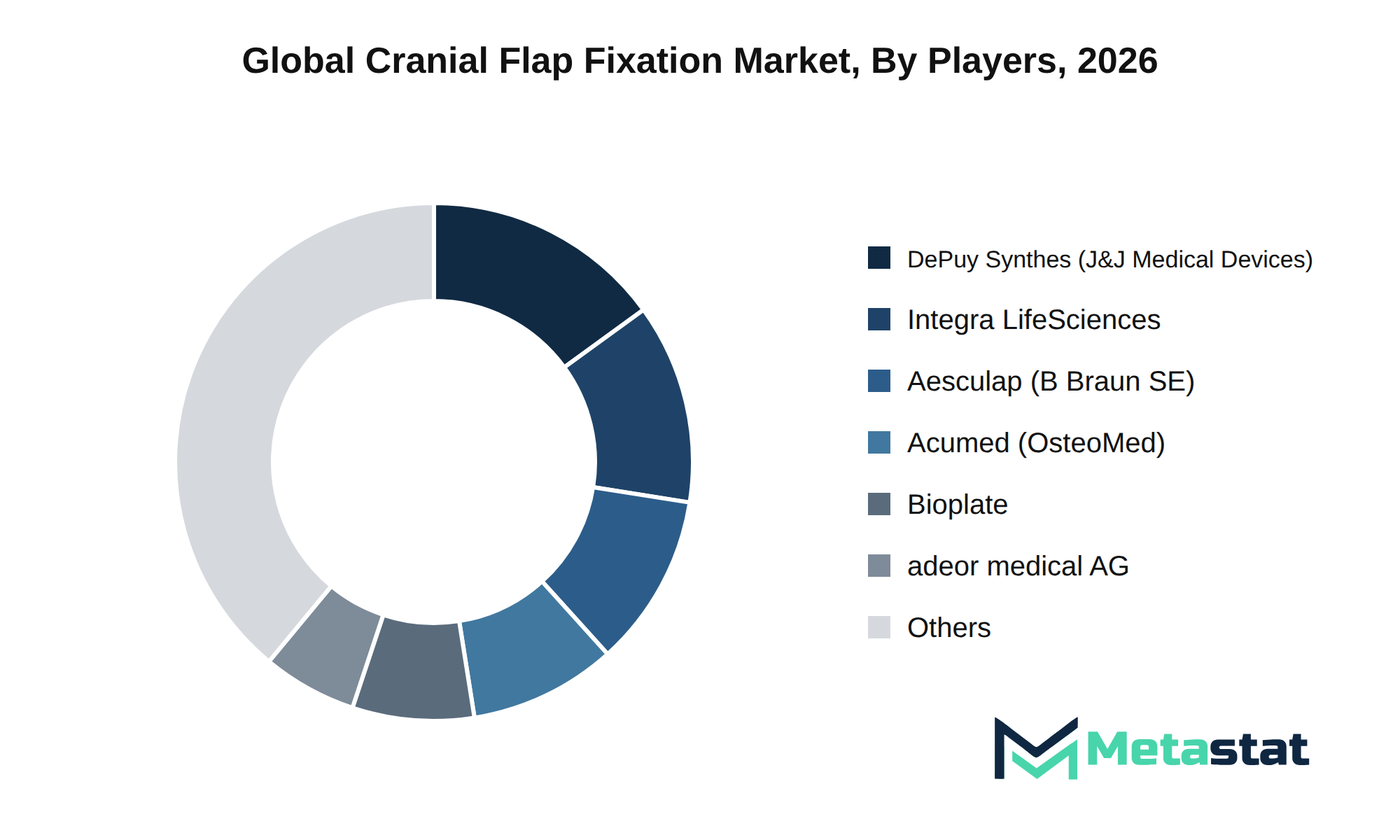
The Cranial Flap Fixation market features several prominent players actively engaging in strategic actions to strengthen their market positions. Companies including Acumed LLC (OsteoMed), Bioplate, Inc, and Medtronic focus on product differentiation through innovative designs and advanced materials. Investment in research and development remains essential, with firms like Integra LifeSciences Corporation and Stryker Corporation enhancing their portfolios with proprietary technologies to maintain competitive advantages.
Partnerships and alliances are increasingly important in the market, with companies like DePuy Synthes (J&J Medical Devices) and KLS Martin Group pursuing strategic collaborations to expand distribution channels and improve customer access. The presence of significant barriers to entry, including high capital requirements and regulatory challenges, limits the influx of new entrants, thereby shaping a landscape where established players dominate.
Pricing architectures are crucial, with firms employing competitive pricing strategies to enhance their market reach while ensuring customer retention. The Cranial Flap Fixation market evolves through these strategic dynamics, setting the foundation for sustained growth and innovation.
Market size is forecast to rise from USD 2,305.9 million in 2025 to over USD 4,237.8 million by 2033. The base case envisions a gradual increase at a 7.9% CAGR, reflecting ongoing advancements and adoption within the Cranial Flap Fixation market. The bull case anticipates heightened growth driven by rapid technological integration, improved healthcare infrastructure, and rising demand for cranial fixation devices in various surgical applications. Potential challenges include regulatory hurdles, economic downturns, and supply chain disruptions, which could constrain the market expansion.
Strategic capital allocation and infrastructure commitments significantly influence Cranial Flap Fixation market dynamics. Investments geared towards research and development, along with the commercialization timelines for next-generation technologies, shape the competitive landscape. Companies focusing on product life-cycle management and regulatory evolution secure a stronger position in the market. Shifts in geopolitical alignments and trade corridors impact supply chain efficiency, emphasizing the need for adaptable strategies.
Emerging white-space opportunities arise from unmet enterprise needs within healthcare facilities, particularly in hospitals and surgical centers. Identifying high-growth pockets within the market enables stakeholders to align offerings with evolving consumer demands. Executive-level strategic imperatives focus on building defensibility roadmaps that accommodate these shifts, ensuring sustained growth and competitiveness in the coming years.
The report strategically identifies and profiles the key market players and analyses their core competencies in each sub-segment of the Cranial Flap Fixation market.
|
Report Attributes |
Details |
|
Study Period |
2021-2033 |
|
Base Year |
2025 |
|
Estimated Year |
2026 |
|
Forecast Period |
2026-2033 |
|
Historical Period |
2021-2025 |
|
Growth Rate |
CAGR 7.9% from 2026 to 2033 |
|
Revenue Unit |
USD million |
|
Segmentation |
By Type, Absorbability, Material, End-User, and Region |
|
By Region |
North America (By Type, Absorbability, Material, End-User, and Country)
|
|
Europe (By Type, Absorbability, Material, End-User, and Country)
|
|
|
Asia Pacific (By Type, Absorbability, Material, End-User, and Country)
|
|
|
South America (By Type, Absorbability, Material, End-User, and Country)
|
|
|
Middle East and Africa (By Type, Absorbability, Material, End-User, and Country)
|
Find answers to common questions about this report
The Cranial Flap Fixation market size was valued at USD 2,305.9 million in 2025, according to the Metastat Insights study.
The Cranial Flap Fixation market is projected to grow at a CAGR of 7.9% during the forecast period from 2026 to 2033.
The North America Cranial Flap Fixation market size is estimated to reach USD 1,496 million by 2033.
Cranial flap fixation involves securing a section of the skull after surgical procedures. It is medically necessary for conditions including traumatic brain injuries, tumors, and congenital abnormalities, particularly among aging populations that demonstrate higher incidences of these conditions.
Hospital purchasing decisions for fixation systems are influenced by the increasing prevalence of neurological disorders and the aging population, which necessitate enhanced surgical capabilities. the focus on innovative, minimally invasive solutions and improved patient outcomes drives hospitals to invest in advanced cranial fixation technologies.
The Cranial Plate segment leads the Cranial Flap Fixation market, with a projected value of USD 1,614.6 million by 2033. This segment's growth reflects a compound annual growth rate (CAGR) of 7.3% from 2026 to 2033.
Increasing prevalence of neurological disorders and the rising elderly population significantly drive the Cranial Flap Fixation market. These demographic trends lead to higher incidences of conditions requiring cranial surgeries, prompting healthcare providers to invest in advanced fixation solutions to enhance surgical capabilities and improve patient care.
North America holds the dominant share of the Cranial Flap Fixation market, with a value of USD 1,496 million projected for 2033, representing 38.2% of the total market.
Regulatory tightening presents challenges for the Cranial Flap Fixation market, because compliance with stringent medical device regulations requires significant investment in quality assurance. macroeconomic headwinds, including inflationary pressures and supply chain disruptions, increase operational costs and complicate timely product availability, further restraining market growth.
Increasing prevalence of neurological disorders and a growing elderly population significantly favor product adoption in the Cranial Flap Fixation market. advancements in minimally invasive surgical techniques and enhanced healthcare infrastructure support the demand for innovative cranial fixation solutions, improving patient outcomes and operational efficiency.
The Cranial Flap Fixation market is estimated to reach a valuation of USD 4,237.8 million by 2033.
Key players in the Cranial Flap Fixation market include Acumed LLC (OsteoMed), Aesculap (B Braun SE), DePuy Synthes (J&J Medical Devices), Integra LifeSciences Corporation, Medartis AG, Stryker Corporation, and Zimmer Biomet Holdings, Inc.
The analysts below cover Medical Devices research at Metastat Insights.
LEAD ANALYST
Utkarsh Khirodkar is a Lead Market Research Analyst at MetaStat Insight, specializing in market intelligence, technology sector assessments, and competitive strategy.

LEAD PRINCIPAL ANALYST, PHARMA AND HEALTHCARE
Food and Beverages · Healthcare · Healthcare IT · Medical Devices
Ajay Devgire is the Lead Healthcare Analyst at MetaStat Insight, leading strategic research and market intelligence initiatives across the global healthcare domain.

SENIOR RESEARCH ANALYST
Biotechnology · Food and Beverages · Medical Devices · Packaging
Snehal Pasalkar is a Research Analyst at MetaStat Insight, operating at the intersection of life sciences research, competitive strategy, and market intelligence.
Evaluating secondary resin quality across post-consumer packaging streams requires reliable technical segmentation. MetaStat Insight delivered an objective assessment that distinguished between extrusion-grade flake pricing and optical sorting throughput limitations across Western Europe. The competitive positioning breakdown for licensed depolymerization technology providers answered several questions during our feedstock feasibility audit. Their team clarified regional trade restrictions on mixed plastic scrap quickly when our team submitted follow-up requests.
Evaluating sovereign cloud deployments for core banking platforms demands a clear view of data residency regulations and migration exit strategies. MetaStat Insight delivered an exhaustive review of regional latency tolerances, mainframe decommission milestones, and third-party vendor concentration risk. The regulatory compliance mapping across European and Asian financial jurisdictions gave our team a dependable baseline for multi-cloud infrastructure discussions.
Replacing petrochemical surfactants with bio-based alternatives requires realistic timelines on industrial precision fermentation scaling. The market research broke down commercialization timelines, feedstock sugar price sensitivities, and regional cosmetic ingredient regulatory approvals in Europe and East Asia. That supplier readiness mapping gave our formulations team reliable context when comparing renewable chemical sourcing roadmaps.
Explore related market intelligence reports worth reading alongside this one.