
LEAD ANALYST
Utkarsh Khirodkar is a Lead Market Research Analyst at MetaStat Insight, specializing in market intelligence, technology sector assessments, and competitive strategy.

Crew Management Market Size, Share, By Deployment Mode (Cloud-based, On-premises, and Hybrid), By Solution Type (Crew Planning, Scheduling, Training, Qualification Management, Rostering, Duty Time Management, Travel Management, Logistics Management, Payroll, Compensation Management, and Others), By End User Industry (Aviation, Maritime, Shipping, Rail, Transit, Defense, Offshore, and Others), Industry Analysis, Growth, Trends, and Forecast, 2026-2033
Report ID
MSI-4675
Published
April, 2026
Pages
315 Pages
Format
Report Details
Choose Your License
Crew Management Market
The Global Crew Management market size was valued at USD 2,562.8 million in 2025 and projected to grow at a CAGR of 7.8% during the forecast period, reaching USD 4,671.0 million by 2033.
North America accounted for 37.9% of the global market in 2025, with the United States leading the regional market.
The cloud-based segment accounted for 47.2% of the market in 2025.
Key trends driving growth: Rising demand for aviation workforce optimization, Increasing digital transformation and cloud adoption.
Opportunities include expansion of cloud-based crew solutions.
Key insight: Digital fleet optimization and regulatory compliance pressures accelerate transformation across Global Crew Management market.
The Global Crew Management market is expanding far beyond basic roster planning and duty allocation. It is evolving into a digital operating framework that supports certification tracking, cross-border compliance, fatigue monitoring, payroll coordination, and workforce deployment across aviation, maritime, rail, and offshore operations. In the coming years, operators will increasingly adopt predictive scheduling engines that interpret route plans, operational cycles, and regulatory requirements, helping organizations manage crew transitions efficiently and reduce disruptions.
Crew information will move beyond manual spreadsheets into integrated platforms that map certification status, medical compliance, visa validity, training records, and performance metrics through unified dashboards. Interoperable systems will connect operators, regulators, training providers, and service partners in a single workflow, while digital credential verification and biometric authentication will strengthen transparency, reduce documentation risk, and improve operational integrity.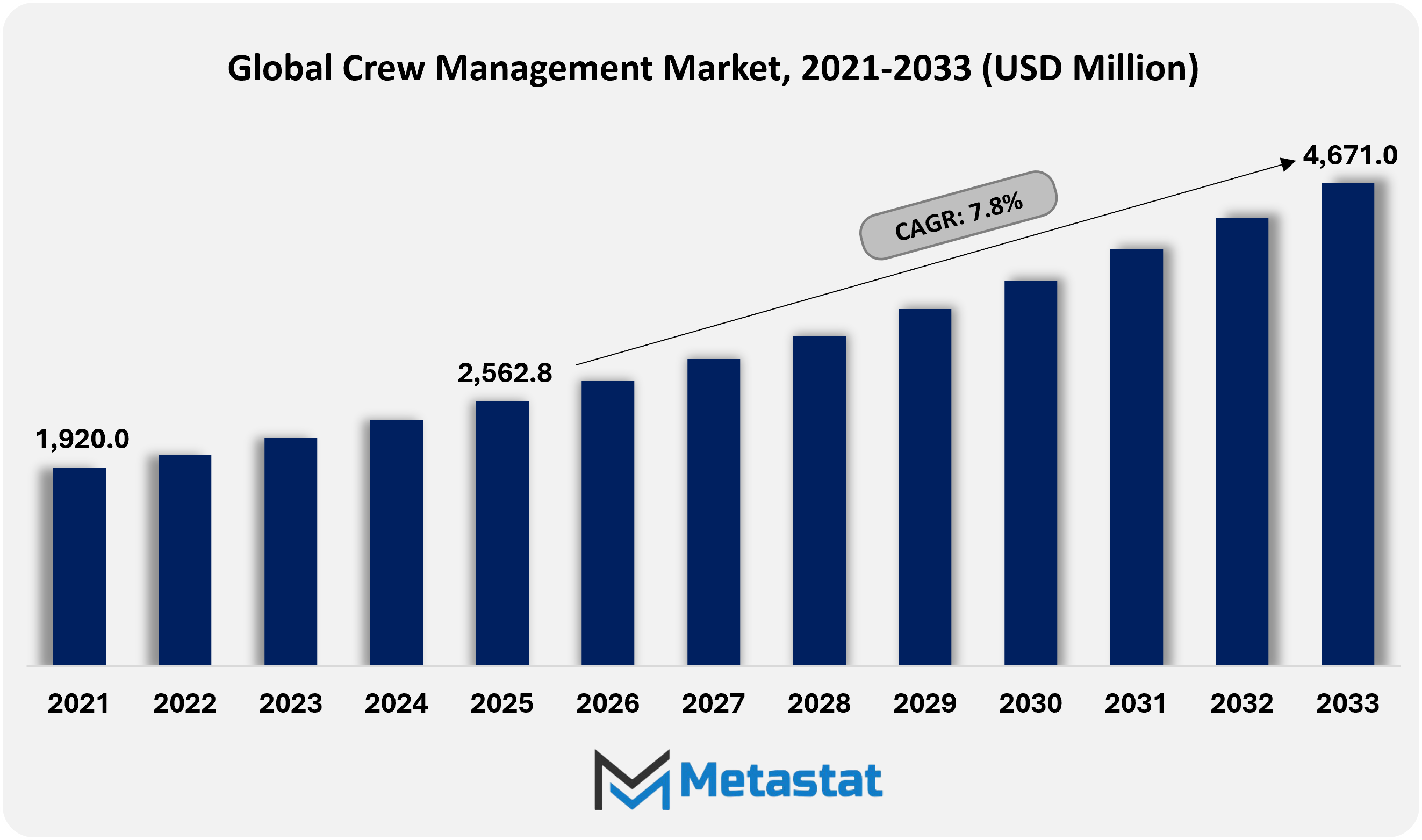
Rising demand for aviation workforce optimization.
Rising focus on workforce optimization is strengthening demand for advanced crew management platforms across transportation and offshore industries. Airlines, shipping companies, rail operators, and offshore service providers are seeking better crew allocation, fatigue control, and schedule reliability to improve operational efficiency. Within the Global Crew Management market, predictive analytics and automation support optimized staffing, lower downtime, and stronger utilization of skilled personnel.
Increasing digital transformation and cloud adoption
Digital transformation and cloud adoption are accelerating modernization across crew-intensive industries. Organizations are replacing fragmented legacy systems with integrated digital platforms that offer centralized data access, real-time updates, and scalable performance across multiple operating locations. The Global Crew Management market is gaining traction through stronger data synchronization, mobility support, and faster decision-making enabled by connected digital infrastructure.
High implementation and integration costs
High implementation and integration costs remain a major challenge for market adoption. Advanced crew management systems often require substantial investment in software licensing, customization, migration, training, and integration with payroll, operations, and compliance databases. Within the Global Crew Management market, smaller operators will face budget limitations that slow deployment despite long-term efficiency benefits.
Cybersecurity and compliance risks
Cybersecurity and compliance risks continue to restrain market growth. Crew management systems store sensitive employee, scheduling, payroll, and operational data, increasing exposure to data breaches and regulatory penalties. The Global Crew Management market requires continued investment in encryption, access control, audit trails, and compliance frameworks to preserve operational reliability and protect critical workforce information.
Expansion of cloud-based crew solutions
Expansion of cloud-based crew management solutions presents a strong market opportunity. Cloud-native platforms offer scalability, remote accessibility, automatic updates, and lower infrastructure dependence, making them suitable for both established operators and expanding regional players. The Global Crew Management market will benefit from modular cloud applications that support scheduling, training management, compliance monitoring, and performance analytics across diverse operational environments.
The Global Crew Management market is classified based on Deployment Mode, Solution Type, and End User Industry.
Cloud-based segment is estimated at USD 1,303.4 million in 2026 and is projected to reach USD 2506.9 million by 2033, at a CAGR of 9.8% during the forecast period.
Cloud-based deployment is gaining strong preference in the Global Crew Management market owing to centralized data management, remote accessibility, and flexible scalability. Organizations are increasingly adopting subscription-based platforms to improve workforce visibility across locations and streamline compliance oversight. Real-time analytics, automated updates, and stronger integration capabilities are helping cloud solutions improve forecasting accuracy, operational efficiency, and crew coordination.
On-premises segment is estimated at USD 902.2 million in 2026 and is projected to reach USD 1,221.5 million by 2033, at a CAGR of 4.4% during the forecast period.
On-premises deployment remains relevant for organizations that require direct control over infrastructure, internal governance, and sensitive workforce data. Large operators with established IT environments continue to prefer localized systems to meet internal security protocols and regulatory requirements. Within the Global Crew Management market, on-premises solutions support deep customization, controlled upgrade cycles, and stable long-term performance for complex operational environments.
Hybrid segment is estimated at USD 554.4 million in 2026 and is projected to reach USD 942.6 million by 2033, at a CAGR of 7.9% during the forecast period.
Hybrid deployment is emerging as a practical model for organizations balancing legacy infrastructure with modern cloud capabilities. Enterprises are retaining critical databases on-site while adopting cloud modules for analytics, mobility, and collaboration. In the Global Crew Management market, hybrid frameworks support gradual digital transformation while preserving compliance standards, operational continuity, and data control.
Crew Planning & Scheduling segment is projected to reach USD 1,315.8 million by 2033, at a CAGR of 7.6% during the forecast period.
Crew Planning & Scheduling solutions are central to the Global Crew Management market owing to their role in workforce allocation, route optimization, and regulatory compliance. Advanced scheduling engines help organizations balance staffing requirements, duty hours, skill availability, and fatigue thresholds across dynamic operating conditions. Automated schedule adjustments improve resource utilization, reduce disruptions, and strengthen long-term manpower planning.
Training & Qualification Management segment is projected to reach USD 586.2 million by 2033, at a CAGR of 8.5% during the forecast period.
Training & Qualification Management solutions are becoming increasingly important in the Global Crew Management market as operators seek tighter control over certification validity, recurring training, and workforce readiness. Digital tracking tools help organizations monitor qualifications, simulation records, and compliance milestones through centralized dashboards. Structured visibility into training status improves safety, reduces compliance gaps, and supports efficient workforce development.
Rostering & Duty Time Management segment is projected to reach USD 936.1 million by 2033, at a CAGR of 7% during the forecast period.
Rostering & Duty Time Management solutions are supporting stronger compliance and workforce efficiency across the Global Crew Management market. These tools help operators track duty hours, rest periods, overtime exposure, and fatigue risk through automated controls and real-time visibility. Intelligent rostering improves schedule balance, reduces conflicts, and strengthens both employee welfare and operational predictability.
Travel & Logistics Management segment is projected to reach USD 508.7 million by 2033, at a CAGR of 8.7% during the forecast period.
Travel & Logistics Management solutions are gaining relevance in the Global Crew Management market through their ability to coordinate transportation, accommodation, visa documentation, and itinerary changes in a centralized workflow. Integrated dashboards improve visibility across vendor coordination, travel costs, and operational disruptions. Digital logistics management reduces administrative burden, improves response time, and strengthens workforce mobility.
Payroll & Compensation Management segment is projected to reach USD 618.4 million by 2033, at a CAGR of 6.6% during the forecast period.
Payroll & Compensation Management solutions remain essential within the Global Crew Management market for aligning workforce payments with duty records, allowances, contracts, and tax structures. Automated payroll processing improves financial accuracy, audit readiness, and transparency across large and geographically distributed workforces. Integration with scheduling and HR systems further enhances consistency, reporting quality, and employee trust.
Others segment is projected to reach USD 705.8 million by 2033, at a CAGR of 9.5% during the forecast period.
Other solution categories include analytics dashboards, compliance reporting tools, mobile workforce applications, and specialized communication modules. These offerings are expanding functional depth across crew-intensive industries through stronger visibility and faster decision support. Continued innovation in artificial intelligence and predictive risk analysis is broadening the role of these solutions in workforce management.
Aviation segment is projected to reach USD 1,541.9 million by 2033.
Aviation remains a major end-user segment in the Crew Management market owing to strict operational schedules, safety requirements, and regulatory oversight. Airlines rely on advanced crew management platforms to coordinate pilot qualifications, cabin crew assignments, duty hours, and route-based schedule changes. Data-driven oversight strengthens compliance, improves resource utilization, and supports service reliability.
Maritime & Shipping segment is projected to reach USD 820.2 million by 2033.
Maritime & Shipping operators are increasingly adopting digital crew management systems to improve seafarer deployment, certification control, contract administration, and rotation planning across international routes. The Global Crew Management market is benefiting from stronger demand for systems that reduce documentation complexity and improve coordination between fleet operators, manning agencies, and port-side stakeholders. Digital visibility is helping maritime employers strengthen compliance and operational transparency.
Rail & Transit segment is projected to reach USD 748.3 million by 2033.
Rail & Transit organizations are adopting crew management platforms to address route expansion, workforce scheduling complexity, and regulatory compliance across passenger and freight networks. Automated shift planning, certification tracking, and attendance visibility are improving service continuity and labor efficiency. Within the Global Crew Management market, rail operators are using digital workforce tools to support modernization and long-term operational planning.
Defense & Offshore segment is projected to reach USD 638.5 million by 2033.
Defense & Offshore operations require secure and resilient crew management systems that support mission-critical staffing, qualification validation, and deployment readiness. These sectors place strong emphasis on confidentiality, controlled access, and accurate scheduling across remote and high-risk environments. In the Global Crew Management market, advanced encryption, compliance tracking, and predictive planning capabilities are strengthening adoption in this segment.
Others segment is projected to reach USD 922.1 million by 2033.
Other end-user industries in the Global Crew Management market include energy, logistics, emergency response, and specialized field services that depend on structured workforce coordination. These industries are investing in digital platforms to improve compliance visibility, cost control, and centralized reporting. Integration with broader enterprise systems is supporting a more connected approach to workforce governance and operational planning.
Based on geography, the Global Crew Management market is divided into North America, Europe, Asia-Pacific, South America, Middle East, and Africa.
North America Crew Management Market is set to expand at a CAGR of 7.8% within the forecast period, reaching a market size (TAM) of USD 1,679.7 million by the end of 2033.
North America is a leading regional market for crew management solutions, supported by strong digital adoption across aviation, maritime, rail, and offshore operations.
Demand in North America is supported by strict labor regulations, high operating costs, and the presence of major transportation and energy operators seeking better workforce transparency.
Asia Pacific presents significant growth opportunities in the Crew Management market owing to expanding commercial fleets, rising air traffic, increasing freight movement, and ongoing investment in transport and port infrastructure.
Rising outsourcing of crew administration and operational support services across Asia Pacific is creating favorable conditions for cloud-based crew management platforms.
Across the Middle East, Africa, and South America, the Crew Management market is gaining momentum via offshore oil expansion, growing service provider transport interest, and modernization of maritime workforce management systems.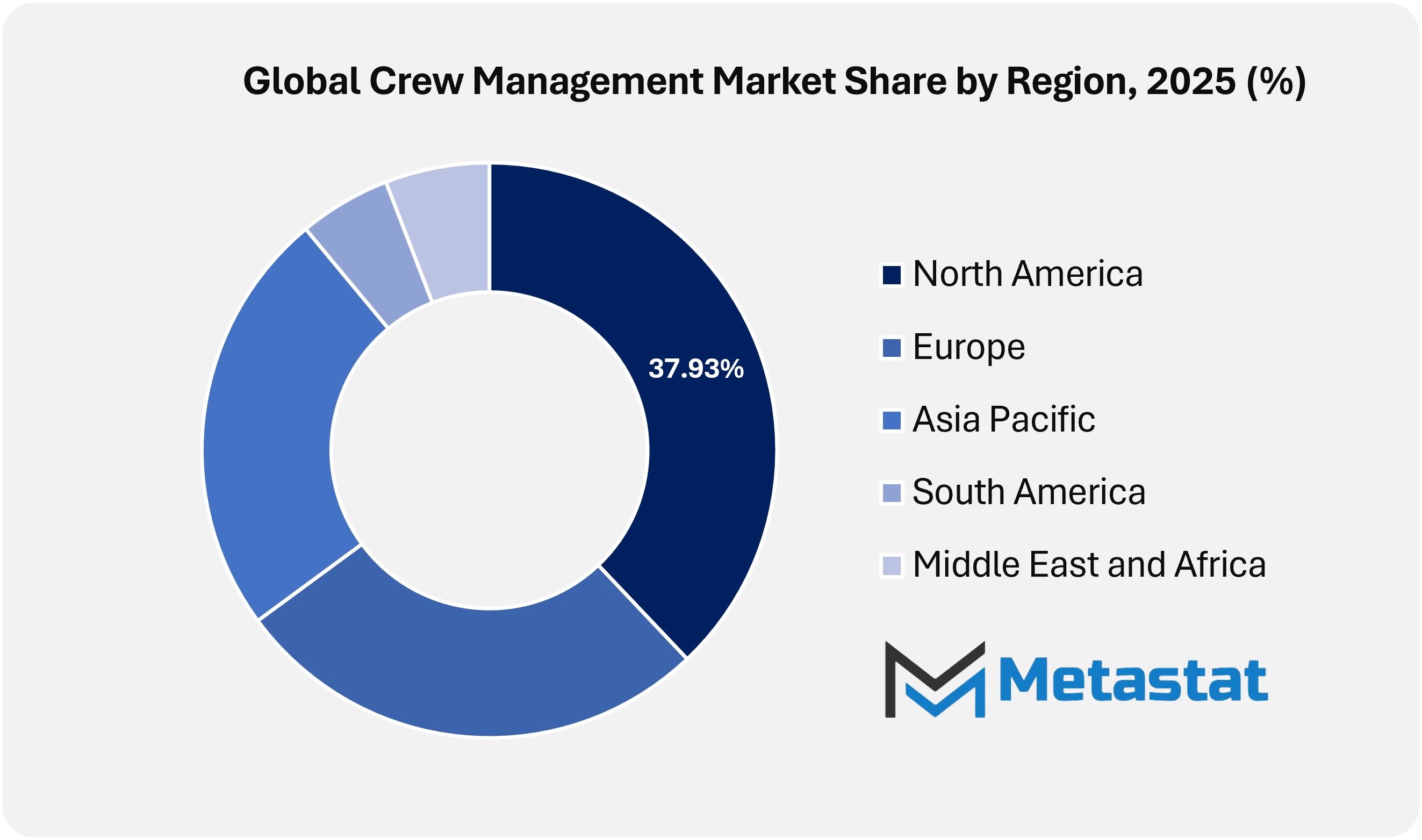
The Global Crew Management market is gaining sustained attention as transportation, offshore operations, and logistics networks place greater emphasis on structured workforce coordination. Companies are investing in digital platforms that unify scheduling, compliance monitoring, payroll administration, certification tracking, and workforce analytics. The shift away from manual processes is improving transparency, reducing operational errors, and supporting stronger regulatory alignment across complex operating environments.
Established technology providers are shaping the competitive landscape through specialized crew planning, training, and operational management capabilities. CAE Inc., SITA, Lufthansa Systems GmbH & Co. KG, IBS Software Pvt. Ltd., and Hexaware Technologies are supporting operators with digital tools that improve workforce visibility, training coordination, and scheduling efficiency. These companies are strengthening their market position through automation, analytics, and deeper enterprise integration.
Major enterprise and aerospace technology companies also play a strong role in market development. The Boeing Company, Fujitsu Limited, SAP SE, Oracle Corporation, Navblue SAS, Advanced Optimization Systems Inc., and AIMS International, Inc. provide platforms that support crew planning, operational integration, payroll alignment, and workforce analytics across large-scale organizations. Their presence is raising the standard for system interoperability, data accuracy, and process efficiency.
Specialized maritime and offshore service providers remain important participants in the Global Crew Management market. V.Group, Anglo-Eastern, Bernhard Schulte Shipmanagement, Danica Maritime Services, Marlow Navigation, Wilhelmsen Ship Management AS, SpecTec AS, and MariApps Group are strengthening the market through seafarer deployment, compliance management, and fleet-focused digital solutions. Combined with broader enterprise software providers, these companies reflect a market that is moving toward greater automation, centralized control, and predictive workforce planning.
Market size is forecast to rise from USD 2,562.8 million in 2025 to over USD 4,671.0 million by 2033.
Over the forecast period, the market will continue evolving into a strategic workforce intelligence layer that supports scheduling accuracy, regulatory compliance, payroll transparency, and crew welfare across transportation and offshore sectors. Artificial intelligence, predictive analytics, digital credential verification, and integrated workforce dashboards will strengthen the role of crew management platforms in improving operational efficiency and long-term workforce planning.
This research report categorizes the Crew Management market based on key segments and regions, forecasts revenue growth, and analyses trends in each submarket. The report analyses the key growth drivers, opportunities, and challenges influencing the Crew Management market. Recent market developments and competitive strategies such as expansion, product launch, partnership, merger, and acquisition have been included to draw the competitive landscape in the market.
The report strategically identifies and profiles the key market players and analyses their core competencies in each sub-segment of the Crew Management market.
|
Report Attributes |
Details |
|
Study Period |
2021-2033 |
|
Base Year |
2025 |
|
Estimated Year |
2026 |
|
Forecast Period |
2026-2033 |
|
Historical Period |
2021-2025 |
|
Growth Rate |
CAGR 7.8% from 2026 to 2033 |
|
Revenue Unit |
USD million |
|
Segmentation |
By Deployment Mode, Solution Type, End User Industry |
|
By Region |
North America (By Deployment Mode, Solution Type, End User Industry, and Country)
|
|
Europe (By Deployment Mode, Solution Type, End User Industry, and Country)
|
|
|
Asia Pacific (By Deployment Mode, Solution Type, End User Industry, and Country)
|
|
|
South America (By Deployment Mode, Solution Type, End User Industry, and Country)
|
|
|
Middle East and Africa (By Deployment Mode, Solution Type, End User Industry, and Country)
|
Find answers to common questions about this report
Top players operating in the Crew Management industry include CAE Inc., SITA, Lufthansa Systems GmbH & Co. KG, IBS Software Pvt. Ltd., Hexaware Technologies, and The Boeing Company.
The Crew Planning & Scheduling is the leading type segment in the Global market.
High implementation and integration costs will hamper the market growth within the forecast period.
Rising demand for aviation workforce optimization and Increasing digital transformation and cloud adoption are key driving factors, boosting the market.
North America region dominates the market.
The Metastat Insights study shows that the Global Crew Management market size was USD 2,562.8 million in 2025.
The Global Crew Management market is expected to grow at a CAGR of 7.8% over the forecast period (2026-2033).
Global Crew Management market is estimated to reach USD 4,671.0 million by 2033.
The Metastat Insights analysis shows that the North America Crew Management market size is estimated to be USD 1,679.7 million by 2033.
The analysts below cover Automotive and Transportation research at Metastat Insights.
LEAD ANALYST
Utkarsh Khirodkar is a Lead Market Research Analyst at MetaStat Insight, specializing in market intelligence, technology sector assessments, and competitive strategy.

ENERGY & INFRASTRUCTURE INDUSTRY CONSULTANT
Automotive and Transportation · Electronics and Semiconductor · Energy and Power · Machinery & Equipment
Saurabh Vasant Ganvir consults for Energy & Infrastructure Industry at MetaStat Insight, specializing in renewable energy, solar EPC, and electric vehicle (EV) infrastructure markets.
Tracking maintenance cycle demand for secondary flight display units and terrain collision avoidance systems across regional jet fleets involves complex aftermarket dynamics. MetaStat Insight provided practical analysis separating airline retrofit programs from OEM forward-fit production schedules in North America and Southeast Asia. The supplier matrix highlighted component obsolescence timelines without resorting to vague generalizations. The dataset served as a dependable reference during our annual program review meetings.
Evaluating secondary resin quality across post-consumer packaging streams requires reliable technical segmentation. MetaStat Insight delivered an objective assessment that distinguished between extrusion-grade flake pricing and optical sorting throughput limitations across Western Europe. The competitive positioning breakdown for licensed depolymerization technology providers answered several questions during our feedstock feasibility audit. Their team clarified regional trade restrictions on mixed plastic scrap quickly when our team submitted follow-up requests.
Evaluating sovereign cloud deployments for core banking platforms demands a clear view of data residency regulations and migration exit strategies. MetaStat Insight delivered an exhaustive review of regional latency tolerances, mainframe decommission milestones, and third-party vendor concentration risk. The regulatory compliance mapping across European and Asian financial jurisdictions gave our team a dependable baseline for multi-cloud infrastructure discussions.
Explore related market intelligence reports worth reading alongside this one.
Starting from
$2950