
Germany Commercial and Industrial Solar PV Market
Germany Commercial and Industrial Solar PV Market Size, Share, By Installation Type (Rooftop PV, Ground-Mounted PV, Solar Carports, Building-Integrated PV and Other Installations), By Solution Configuration (PV-Only Systems, PV + Battery Energy Storage Systems, PV + EV Charging Systems and PV + Battery Energy Storage + EV Charging Systems), By Grid Connection (On Grid and Off Grid), By End-Use Sector (Industrial Manufacturing, Logistics & Warehousing, Retail Facilities, Office & Business Campuses, Hotels, Restaurants & Leisure Facilities, Healthcare Facilities, Agricultural & Agribusiness Facilities and Others), Industry Analysis, Growth, Trends, and Forecast, 2026-2033
MSI-4993
August 20, 2026
Updated
300 Pages
Historical
Base year
Forecast
Forecast period
Report Details
Comprehensive Market Analysis And Insights
Market Overview
The Germany Commercial and Industrial Solar PV market was valued at USD 6,664.9 million in 2025 and is projected to reach USD 11,033.8 million by 2033, growing at a CAGR of 6.5% over the forecast period.
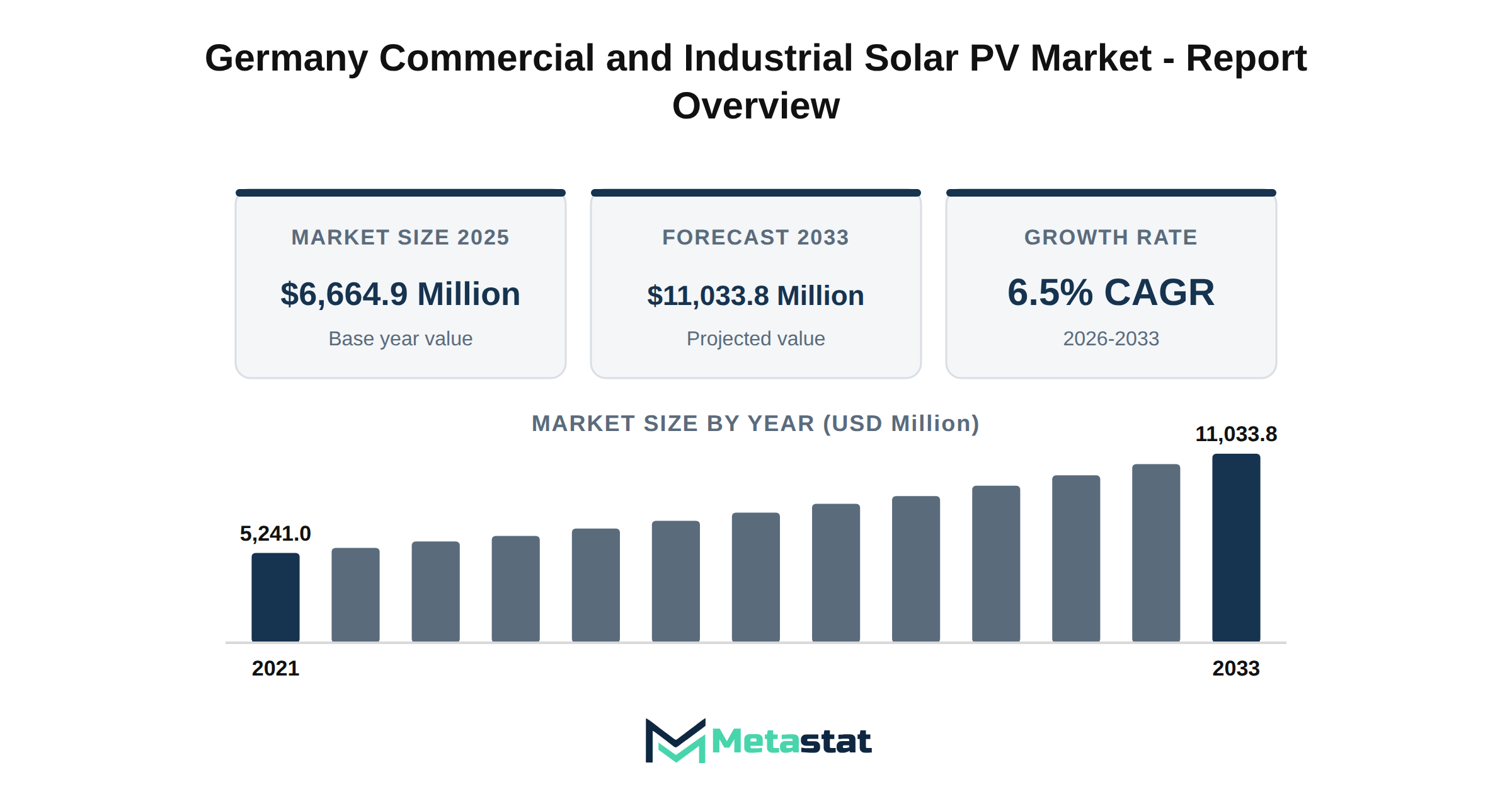
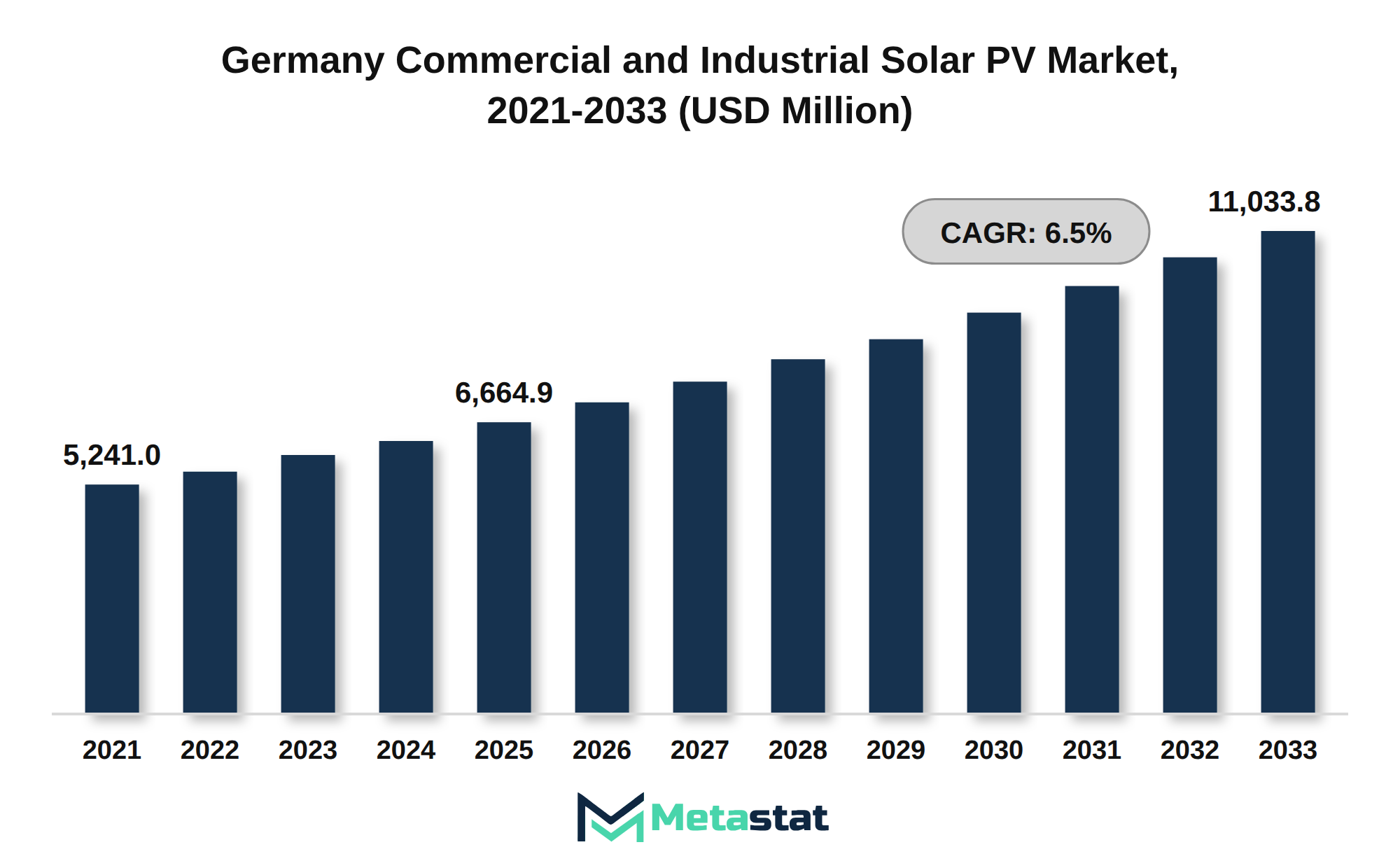
The Germany Commercial and Industrial Solar PV market is expected to experience robust growth, with a base value of USD 6,664.9 million in 2025. Projections indicate an increase to USD 11,033.8 million by 2033, reflecting a compound annual growth rate (CAGR) of 6.5% during the forecast period from 2026 to 2033. Historical data shows steady growth from USD 5,241 million in 2021 to USD 6,664.9 million in 2025, reflecting a strong upward trend in market adoption.
In terms of installation types, the market features a diverse range of applications, including rooftop PV, ground-mounted PV, solar carports, and building-integrated PV. Rooftop PV is projected to remain the dominant segment, increasing from USD 5,347.7 million in 2026 to USD 7,903.5 million in 2033, representing a CAGR of 5.7%. Ground-mounted PV is anticipated to achieve a value of USD 1,880.2 million by 2033, with a CAGR of 7.2%.
Regulatory compliance within the Germany Commercial and Industrial Solar PV market emphasizes adherence to environmental standards and local regulations, ensuring sustainable development in the sector. The evolving geopolitical landscape influences market dynamics, affecting supply chains and investment strategies. Companies operating in this market navigate these complexities by aligning their operations with stringent compliance requirements, contributing to enhanced operational efficiencies and brand reputation.
Disruption in the energy sector, particularly through advancements in renewable technologies, drives research and development trajectories. Innovations in solar panel efficiency and energy storage systems reshape market offerings, enhancing competitiveness. By investing in next-generation innovations, stakeholders support the transition toward sustainable energy solutions, aligning with global decarbonization goals.
The market experiences significant transformations influenced by circular economy dynamics, promoting resource efficiency and waste reduction. Companies increasingly adopt sustainable practices, integrating circular principles into their operations, which enhances resilience and long-term profitability. This shift not only enhances brand value but attracts environmentally conscious consumers.
The supply chain landscape for the Germany Commercial and Industrial Solar PV market reflects a complex web of logistics architecture, requiring strategic sourcing decisions. Efficient procurement practices contribute to cost optimization while ensuring timely delivery of high-quality materials. Companies that excel in supply chain management strengthen their competitive position in the market.
Market fragmentation presents both challenges and opportunities, with numerous players competing for market share. This landscape encourages mergers and acquisitions because firms seek to consolidate resources and enhance their technological capabilities. Strategic partnerships facilitate access to innovative solutions, driving growth and expanding market reach.
Capital allocation strategies play a critical role in the market's development, with significant investments directed toward infrastructure enhancements. Companies prioritize capital expenditures that yield long-term operational efficiencies and competitive advantages. Economic factors, including inflationary pressures and currency volatility, influence these financial decisions, requiring adaptability and strategic foresight.
The future strategic outlook for the Germany Commercial and Industrial Solar PV market hinges on corporate imperatives focused on sustainability and innovation. Organizations that prioritize high-value recommendations, including investing in advanced technologies and sustainable practices, position themselves for success in an evolving market. By aligning strategic goals with market trends, stakeholders enhance their resilience and capitalize on emerging opportunities.
Market Dynamics
Capital investment environments drive market expansion
Investment environments significantly influence the Germany Commercial and Industrial Solar PV market. Factors including interest rates, GDP growth, and public-private spending power directly affect capital availability for solar projects. Rising GDP boosts business confidence, prompting increased investment in renewable energy solutions. Higher rates of venture funding enhance the financial landscape, enabling firms to undertake larger solar installations, which strengthens market growth.
The push for cost-efficient energy solutions drives various industries toward solar adoption. Companies recognize the long-term savings associated with solar technologies, which contribute to operational productivity improvements. Enhanced access to capital for solar projects supports market growth and encourages the development of advanced solar technologies, resulting in increased installation and efficiency rates across multiple sectors.
The market benefits from digital transformation initiatives. Automation and the adoption of software solutions streamline processes, reducing overhead costs associated with solar energy systems. These advancements enable organizations to optimize energy management strategies, enhancing the appeal of solar investments and increasing competitive positioning in the market.
Technological integration enhances operational efficiency
Technological integration significantly influences the growth trajectory of the Germany Commercial and Industrial Solar PV market. Businesses increasingly adopt advanced automation, artificial intelligence, and software solutions to optimize operations. These technologies improve processes, enhance decision-making, and increase overall productivity, directly impacting the cost-effectiveness of solar PV installations.
The push for digital transformation aligns with shifting consumer demands for sustainable energy solutions. Companies in the market leverage data analytics to assess energy consumption patterns, enabling tailored solar PV systems that meet specific client needs. This targeted approach results in higher adoption rates across various sectors, including industrial manufacturing, logistics, and healthcare facilities, contributing to market expansion.
Investment in research and development further drives innovation within the market. Firms prioritizing technological advancements create proprietary solutions that enhance system performance and energy efficiency. Growing demand for customized and efficient solar PV solutions enables organizations that integrate these technologies to strengthen their competitive position within the Germany Commercial and Industrial Solar PV market.
Efficient grid connections, enabled through technological integration, promote the effective deployment of solar PV systems. Companies increasingly focus on solutions that improve on-grid connections, boosting accessibility for commercial and industrial users. This emphasis on efficient integration results in increased energy savings and enhances the overall appeal of solar PV investments, supporting sustained growth in the market.
Regulatory compliance challenges hinder market growth
Regulatory compliance challenges represent a significant restraint within the Germany Commercial and Industrial Solar PV market. Increasing complexity in regulations and compliance hurdles raises costs for manufacturers and developers. Companies face heightened scrutiny in meeting evolving standards, leading to delays in project approvals and implementation. This situation creates uncertainty for stakeholders, reducing the appetite for investment in new solar initiatives.
Macroeconomic headwinds, including inflationary pressures, impact operational costs across the market. Rising material costs and labor expenses create barriers for entry and expansion, particularly affecting smaller players lacking the financial resources to absorb these changes. This dynamic constrains competition and limits the overall growth potential of the market.
Supply chain disruptions pose another challenge, impacting the availability of critical components necessary for solar PV installations. Geopolitical instability exacerbates these issues, resulting in delays and increased costs for suppliers. Market participants encounter obstacles in maintaining adequate inventory levels and fulfilling project timelines.
Infrastructure gaps and connectivity deficits further hinder market efficiency. Inadequate grid infrastructure affects the integration of solar installations, limiting the potential for energy distribution. This situation delays the realization of installed capacity and reduces the attractiveness of the market for large-scale projects.
Skilled labor deficiencies present a notable concern within the sector. A shortage of qualified professionals limits the ability of companies to scale operations and meet increasing demand for solar PV installations. Rising workforce overhead paired with technological obsolescence creates challenges in maintaining competitive operational efficiencies. These factors collectively contribute to a fragmented market landscape, undermining the overall growth trajectory of the Germany Commercial and Industrial Solar PV market.
Geopolitical tensions create market challenges
Geopolitical fragmentation results in significant challenges for the Germany Commercial and Industrial Solar PV market. Trade deficits and tariff friction disrupt supply chains, leading to increased costs for components and technologies. This environment complicates sourcing strategies for manufacturers and developers, subsequently affecting project timelines and pricing structures.
Technological disruptions further complicate the landscape, driven by businesses striving to integrate advanced solutions amid varying regional capabilities and standards. Complex research and development integrations hinder the agility required to adapt to evolving market demands. These obstacles contribute to interoperability friction among systems, impacting operational efficiency and raising implementation costs.
The market faces rising input cost structures due to global supply chain instability and feedstock volatility. Manufacturers encounter pressures on profit margins, limiting their ability to invest in innovation and capacity expansion. A skills gap within the workforce exacerbates these issues, challenging firms to find qualified personnel to support advancing technologies and maintenance requirements.
Environmental lifecycle footprints and decarbonization mandates introduce additional pressures. Companies align their practices with sustainability demands, requiring investments in retrofitting and compliance with tightening regional regulatory standards. These factors contribute to implementation bottlenecks, which delay the expansion of the Germany Commercial and Industrial Solar PV market.
Emerging market demands drive strategic opportunities
The Germany Commercial and Industrial Solar PV market experiences notable opportunities stemming from emerging regional demands. Increasing awareness of sustainability imperatives compels various industries to adopt solar technologies. The growing emphasis on environmental, social, and governance (ESG) criteria influences corporate strategies, pushing businesses to transition toward greener operations. This transition drives demand for innovative solar solutions tailored to specific applications.
Infrastructure modernization across Germany enhances market potential by facilitating the integration of advanced solar technologies. Investments in grid enhancements support the deployment of both on-grid and off-grid solutions, catering to diverse customer needs. Commercial sectors increasingly seek energy independence and resilience, prompting market expansion to meet these evolving requirements.
Geographical expansion presents another layer of opportunity. Regions with underutilized solar potential offer avenues for growth through targeted investments and technology deployment. Companies leveraging localized strategies capitalize on these opportunities, optimizing operational efficiencies while responding to the unique characteristics of each area.
Technological disruptions reshape the market, with advancements in energy storage and digital solutions enhancing the appeal of solar PV systems. Integration of battery energy storage solutions improves energy management and reliability, making solar installations more attractive to commercial buyers. Digital transformation in procurement processes streamlines customer engagement, enabling improved access to solar options and customized solutions.
Next-generation innovations contribute to market dynamism. Solutions combining solar PV with electric vehicle charging or smart grid technologies represent growing segments. These advancements diversify product offerings and address niche applications, driving further adoption across various end-use sectors.
Strategic consolidation through partnerships and collaborations among key players facilitates knowledge sharing and resource optimization. Such alliances enhance competitive positioning, enabling companies to navigate the evolving market landscape effectively. Overall, the combination of emerging demands, infrastructural advancements, and innovative solutions positions the Germany Commercial and Industrial Solar PV market for significant growth in the coming years.
Market Segmentation Analysis
The Germany Commercial and Industrial Solar PV market is segmented based on Installation Type, Solution Configuration, Grid Connection, and End-Use Sector.
By Installation Type, the market is further segmented into:
- Rooftop PV
- Ground-Mounted PV
- Solar Carports
- Building-Integrated PV and Other Installations
Rooftop PV
Valued at USD 5,347.7 million in 2026, the Rooftop PV segment is projected to reach USD 7,903.5 million by 2033, reflecting a CAGR of 5.7% during the forecast period. Demand for rooftop installations derives from several factors, including increasing energy costs and a growing emphasis on sustainability among businesses. Numerous industries, particularly retail and logistics, adopt rooftop PV systems to reduce operational expenses and improve energy independence.
Technological advancements in solar panel efficiency and energy storage solutions drive segment expansion. Innovations in photovoltaic technology, including bifacial panels and integrated energy management systems, facilitate higher energy yields. These developments enable businesses to utilize solar energy more effectively, aligning with the escalated focus on renewable energy within the Germany Commercial and Industrial Solar PV market.
Regulatory frameworks promoting renewable energy adoption further support the Rooftop PV segment. Policies encouraging the use of solar technology, alongside financial incentives for installations, create an attractive environment for businesses to invest in solar energy solutions. Compliance with stringent environmental standards motivates companies to explore renewable energy options, generating additional demand for rooftop systems.
Cost structures associated with rooftop PV systems continue to evolve, with decreasing installation costs benefiting end-users. Competitive pricing among suppliers contributes to greater accessibility, encouraging a broader range of businesses to consider solar solutions. The introduction of financing options alleviates the initial capital burden associated with these installations, enhancing market penetration.
While consumption patterns shift towards greater energy self-sufficiency, rooftop PV systems become a strategic asset for enterprises. The transition aligns with a significant trend towards decarbonization in the Germany Commercial and Industrial Solar PV market. Growing awareness of environmental impacts and energy security concerns plays a critical role in promoting the widespread adoption of rooftop solar technologies.
Ground-Mounted PV
Ground-Mounted PV segment is estimated to reach USD 1,880.2 million by 2033, at a CAGR of 7.2% during the forecast period. Increasing adoption of renewable energy sources drives demand for ground-mounted solar photovoltaic systems in various commercial and industrial sectors. These installations appeal to businesses seeking to reduce energy costs and minimize carbon footprints, aligning with sustainability objectives. Regulatory frameworks promoting clean energy contribute to the growth of this segment, encouraging firms to invest in solar infrastructure. Technological advancements in solar panel efficiency and storage solutions enhance the viability of ground-mounted systems, further attracting investment. Expanding interest in energy independence and resilience particularly influences industries with high energy consumption. Overall, the ground-mounted PV segment significantly influences the overall expansion of the Germany Commercial and Industrial Solar PV market, supporting broader goals of energy transition and sustainability.
Solar Carports
Growth in the Solar Carports segment reflects rising demand for sustainable energy solutions within the Germany Commercial and Industrial Solar PV market. Factors driving this demand include increasing awareness of environmental sustainability and a strategic push towards integrating renewable energy into infrastructure. Commercial establishments recognize the potential of solar carports to provide dual functionality - energy generation and vehicle protection. This dual purpose enhances the appeal of such installations across various industries, including logistics, retail, and hospitality.
Technological maturation enhances the efficiency and aesthetics of solar carports. Innovations in solar panel design, coupled with advancements in energy storage solutions, contribute to the segment's attractiveness. This evolution aligns with the market's broader trends towards integrated energy systems, which facilitate energy self-sufficiency for businesses. Wider acceptance of solar carports among end-users, including businesses looking to enhance their green credentials, supports growth in this segment.
Solar Carports segment is expected to reach USD 785.6 million by 2033. The regulatory landscape further encourages adoption through incentives and support programs aimed at reducing the upfront costs associated with solar installations. Compliance with regulatory standards ensures that these installations meet safety and performance criteria, thereby enhancing trust among potential adopters.
The capital investment outlook for solar carports indicates a favorable trajectory, with increasing funding flowing into renewable energy projects. Investors view this segment because a promising opportunity, supported by the anticipated returns on investment associated with energy savings and sustainability initiatives. The combination of technological advancements, supportive regulations, and growing market interest positions the Solar Carports segment for growth within the Germany Commercial and Industrial Solar PV market.
Building-Integrated PV and Other Installations
Building-Integrated PV and Other Installations segment is projected to grow at a CAGR of 10.5% during the forecast period. Demand for this segment derives from increasing awareness of sustainable building practices and energy efficiency among developers and architects. Integration into new constructions enhances aesthetic appeal and functionality while reducing energy costs for end-users. The segment benefits from evolving technologies that enable integration of solar panels into building structures, driving adoption among commercial and industrial players.
Market dynamics reflect a strong push towards building adaptation and retrofitting, influencing demand for Building-Integrated PV solutions. Developers prioritize energy-efficient designs to comply with stringent regulations, creating a favorable environment for growth. This trend aligns with the broader goals of the Germany Commercial and Industrial Solar PV market, where sustainability and innovation dictate competitive strategies.
The market anticipates that consumer preferences will continue to shift towards renewable energy sources, creating significant opportunities for companies specializing in Building-Integrated PV solutions. While the segment evolves, manufacturers focus on enhancing product offerings to meet diverse architectural needs, further stimulating demand. With a commitment to reducing carbon footprints, businesses increasingly view these installations because strategic investments that yield long-term operational savings.
Investment in Building-Integrated PV is expected to surge, fueled by advancements in technology and increasing collaboration between stakeholders. Developers and contractors leverage these innovations to deliver comprehensive energy solutions that not only meet regulatory requirements but enhance the value proposition for end-users. The collaboration between construction and renewable energy positions the Building-Integrated PV segment because a key contributor to the overall growth of the Germany Commercial and Industrial Solar PV market.
By Solution Configuration, the market is further segmented into:
- PV-Only Systems
- PV + Battery Energy Storage Systems
- PV + EV Charging Systems
- PV + Battery Energy Storage + EV Charging Systems
PV-Only Systems
Valued at USD 4,651.3 million in 2026, the PV-Only Systems segment is projected to reach USD 5,932.9 million by 2033, with a CAGR of 3.5% during the forecast period. Growing interest in energy independence drives demand for PV-Only Systems, particularly among commercial and industrial end-users seeking to mitigate energy costs and enhance sustainability. Adoption occurs primarily in sectors including industrial manufacturing, logistics, and agricultural facilities, reflecting a trend toward integrated energy solutions. The segment benefits from advancements in solar technology that improve efficiency and decrease installation costs. These developments facilitate broader acceptance and integration into various operational frameworks. Regulatory support, including incentives for renewable energy utilization, strengthens market dynamics by encouraging investment in such systems. Overall, the PV-Only Systems segment significantly contributes to the broader growth narrative of the Germany Commercial and Industrial Solar PV market.
PV + Battery Energy Storage Systems
Increasing interest in energy efficiency and sustainability drives demand for PV + Battery Energy Storage Systems within the Germany Commercial and Industrial Solar PV market. This segment is estimated to reach USD 2,983.5 million by 2033, at a CAGR of 10.1% during the forecast period. Corporate end-users increasingly recognize the advantages of integrating battery storage with solar PV systems, facilitating better energy management and reducing reliance on grid power during peak times. Enhanced grid stability and energy independence emerge, driven by significant factors influencing adoption among industrial and commercial customers.
Technological advancements play a critical role in segment expansion, with improvements in battery efficiency and cost reductions making these systems more accessible. The connection between PV and energy storage systems supports energy resilience, particularly in sectors that experience variable energy demands. Regulatory incentives and financial support frameworks further increase the attractiveness of these solutions, aligning with wider energy transition goals in Germany. This trend highlights an opportunity for stakeholders within the market to invest in innovative energy solutions that meet the evolving demands of various end-use sectors.
PV + EV Charging Systems
Rising adoption of electric vehicles fuels demand for PV + EV Charging Systems within the Germany Commercial and Industrial Solar PV market. This trend aligns with the broader push for sustainable energy solutions and the increasing need for efficient charging infrastructure in urban areas. The integration of photovoltaic systems with electric vehicle charging stations enhances the viability of renewable energy sources, providing a dual benefit to users.
By 2033, the segment is expected to reach USD 1,006.3 million, reflecting steady growth driven by technological advancements and supportive government policies. Industry players actively invest in innovative solutions that promote integration between solar power generation and electric vehicle charging capabilities. Such developments attract various sectors, including logistics, retail, and commercial facilities, which seek to optimize energy usage and reduce operational costs.
End-use dynamics show a shift towards sustainability, with companies increasingly prioritizing carbon reduction strategies. This shift creates opportunities for businesses to leverage solar energy in their operational frameworks, positioning them advantageously in a competitive environment. The Germany Commercial and Industrial Solar PV market benefits from these dynamics, with the PV + EV Charging Systems segment influencing the future of energy consumption in the commercial sector.
PV + Battery Energy Storage + EV Charging Systems
Growing awareness of renewable energy solutions drives demand for PV + Battery Energy Storage + EV Charging Systems within the Germany Commercial and Industrial Solar PV market. This segment achieves a CAGR of 15.1% during the forecast period. Increasing adoption of electric vehicles enhances the relevance of integrated charging systems, aligning with sustainability goals across various industries. Enterprises prioritize energy resilience and sustainability, leading to investments in comprehensive energy solutions that integrate solar PV with storage and charging capabilities.
The shift toward decentralized energy generation models, combined with regulatory support for renewable technologies, drives growth in this segment. Companies recognize the potential cost savings from energy independence, which motivates adoption among industrial manufacturers, logistics providers, and commercial facilities. Technological advancements in battery storage systems enhance the efficiency and reliability of these solutions, further encouraging uptake among end-users seeking robust energy management systems.
Energy transition policies favoring renewable energy integration into the grid support market expansion. Increased energy demands in urban areas drive investments in innovative solutions that combine solar PV, battery storage, and EV charging. This combination not only supports operational efficiency but complies with emerging regulatory standards for renewable energy usage within commercial sectors.
Future growth within the PV + Battery Energy Storage + EV Charging Systems segment contributes significantly to the overall market dynamics. The integration of advanced technologies and ongoing investments in grid connectivity ensure sustained momentum, positioning this segment because a key component of the Germany Commercial and Industrial Solar PV market.
By Grid Connection, the market is further segmented into:
- On Grid
- Off Grid
On Grid
Valued at USD 7,002.2 million in 2026, the On Grid segment is projected to reach USD 10,797.7 million by 2033, achieving a CAGR of 6.4% during the forecast period. Increasing reliance on renewable energy sources fuels demand for grid-connected solar photovoltaic systems, driven by the need for sustainable energy solutions across various sectors. Industrial manufacturing, logistics, and office campuses actively adopt On Grid systems to enhance energy efficiency and reduce operational costs.
Technological advancements in solar photovoltaic systems support the On Grid segment's expansion. Innovations in energy management systems and smart grid technologies enable integration of solar energy into existing energy infrastructures, appealing to businesses focused on optimizing energy consumption. The growing emphasis on energy independence and cost savings positions the Germany Commercial and Industrial Solar PV market for sustained growth, particularly within the On Grid segment.
Regulatory frameworks supporting renewable energy installations significantly influence market dynamics. Policies encouraging the transition to clean energy sources create favorable conditions for businesses investing in solar technologies. Compliance with sustainability standards enhances the appeal of On Grid solutions, aligning with corporate social responsibility goals.
Investment in grid-connected solar systems presents strategic opportunities for market participants. The increasing focus on energy resilience and security drives capital flow into this segment, promoting innovations and enhancing system performance. While businesses seek to leverage renewable resources, the On Grid market is poised for significant advancements, highlighting its vital role within the broader Germany Commercial and Industrial Solar PV market.
Off Grid
Demand for Off Grid solar photovoltaic (PV) systems reflects a shift in energy sourcing strategies among commercial and industrial players in Germany. This system configuration supports energy independence, attracting interest from sectors including logistics, healthcare, and agriculture that require reliable, uninterrupted power supply. The forecast indicates that this segment is estimated to reach USD 236.1 million by 2033, at a CAGR of 10.8% during the forecast period.
Adoption of Off Grid solutions aligns with increasing energy costs and concerns about energy security. Organizations in remote areas or those requiring backup power are integrating Off Grid systems to mitigate risks associated with energy supply. The Germany Commercial and Industrial Solar PV market experiences significant growth driven by manufacturers and suppliers enhancing product offerings, focusing on advanced battery technologies and integration capabilities.
Technological advancements in energy storage solutions enable businesses to optimize operational efficiency while reducing reliance on traditional power sources. Investments in research and development enhance the performance and affordability of Off Grid systems, driving their adoption across various industries. The market reflects a growing trend toward sustainability, where businesses prioritize renewable energy solutions to meet regulatory compliance standards and corporate social responsibility goals.
Pricing volatility in fossil fuels and grid electricity further encourages stakeholders to explore Off Grid alternatives. These conditions create strategic opportunity windows for suppliers to expand their market presence. By developing tailored solutions that meet specific client needs, businesses position themselves to capitalize on the increasing demand for Off Grid solar PV systems within the commercial and industrial sectors.
By End-Use Sector, the market is further segmented into:
- Industrial Manufacturing
- Logistics & Warehousing
- Retail Facilities
- Office & Business Campuses
- Hotels, Restaurants & Leisure Facilities
- Healthcare Facilities
- Agricultural & Agribusiness Facilities
- Others (Education, Sports, Mixed-Use Commercial Sites)
Industrial Manufacturing
Industrial manufacturing contributes significantly to the demand for solar PV solutions in Germany. This sector faces increasing pressure to enhance energy efficiency and reduce operational costs. Fluctuating energy prices drive businesses to seek alternatives that lower expenses, with solar PV installations providing a viable option. The transition towards renewable energy sources aligns with regulatory requirements for emission reductions and sustainability initiatives, motivating industrial manufacturers to adopt solar technologies.
Technological advancements play a crucial role in the evolution of solar PV applications within this sector. The maturation of energy storage systems and innovative configurations, including PV coupled with battery solutions, enhance overall energy management for manufacturers. This integration allows for optimized energy consumption patterns and effective load balancing, which further drives adoption rates. Supportive government policies and incentives encourage investments in solar PV infrastructure, facilitating market growth.
Investment in solar technologies within industrial manufacturing reflects broader consumption shifts towards sustainable practices. Companies focus on meeting regulatory compliance standards while enhancing their brand image through environmental stewardship. Rising demand for renewable energy solutions positions the market for further expansion, offering challenges and opportunities for stakeholders involved in the Germany Commercial and Industrial Solar PV market.
Supply chain resilience becomes critical in the context of raw material sourcing and logistics. Industrial manufacturers evaluate their supply chains to mitigate vulnerabilities associated with reliance on traditional energy sources. Disruptive alternatives and emerging technologies present strategic opportunity windows for solar PV adoption, enabling manufacturers to secure energy independence and operational reliability. Overall, dynamics within the industrial manufacturing sector signal strong potential for solar PV growth in the coming years.
Logistics & Warehousing
Logistics and warehousing sectors increasingly adopt solar photovoltaic systems to enhance energy efficiency and reduce operational costs. Strong demand for sustainable energy solutions arises from rising energy prices and the push for carbon neutrality. This segment experiences considerable interest from various industries seeking long-term cost savings and energy independence. Integration of solar PV systems into logistics and warehousing facilities generates significant operational benefits, including reduced reliance on traditional energy sources and lower energy expenditure.
Technological advancements in solar PV systems facilitate the development of more efficient and economically viable solutions tailored to the unique needs of the logistics and warehousing sectors. Increased investments in next-generation upgrades, including battery storage systems and smart grid connections, further enhance the efficiency of energy consumption within these facilities. The combination of solar energy and storage solutions provides a robust response to peak demand challenges, supporting effective warehouse operations.
The competitive landscape encourages firms in the logistics and warehousing segments to explore strategic opportunities in the Germany Commercial and Industrial Solar PV market. Increased regulatory support and incentives for renewable energy deployment create an environment conducive to solar PV adoption. While businesses recognize the potential for enhanced sustainability and operational efficiency, investment in solar solutions represents a priority, positioning the logistics and warehousing sectors for substantial growth in the coming years.
Retail Facilities
Retail facilities increasingly recognize the value of solar photovoltaic systems in reducing operational costs and enhancing sustainability profiles. Primary demand drivers include rising energy prices and growing pressure from consumers for environmentally friendly practices. Adoption of solar technology in this sector reflects a strategic shift towards energy independence and long-term cost savings, aligning with broader trends in the Germany Commercial and Industrial Solar PV market. Expansion catalysts for this segment involve advancements in solar technology, which improve efficiency and reduce installation costs. The technological maturation of solar systems facilitates greater adoption among retail facilities, ensuring reliable energy supply and contributing to corporate social responsibility goals.
Next-generation upgrades, including smart solar energy management systems, enhance the effective utilization of solar power, enabling retail facilities to optimize consumption patterns and reduce waste. This focus on efficiency aligns with a shift in consumption patterns, where businesses increasingly seek to integrate renewable energy solutions into their operational frameworks. Regulatory compliance standards play a significant role in shaping market dynamics, driven by retail facilities striving to meet stringent emissions targets and energy efficiency guidelines. These standards encourage investments in solar systems, creating a more competitive landscape while enhancing the overall attractiveness of the market.
Cost structures related to solar installation and maintenance have experienced volatility, influenced by fluctuations in raw material prices and supply chain constraints. However, the long-term economic benefits of solar adoption outweigh initial investment concerns. Through strategic opportunity windows, retail facilities leverage available government incentives and financing options to mitigate upfront costs. This proactive approach aligns with increasing interest in energy resilience and sustainability, ultimately positioning retail businesses because leaders in the transition towards renewable energy within the market.
Office & Business Campuses
Demand for solar photovoltaic systems in Office & Business Campuses reflects a growing emphasis on sustainability within corporate environments. Organizations increasingly recognize the benefits of integrating renewable energy solutions, contributing to operational efficiency and long-term cost savings. This focus enhances corporate social responsibility initiatives and meets stakeholder expectations regarding environmental impact.
Regulatory compliance standards play a significant role in this market segment. Government incentives and tax benefits for solar installations create a favorable investment climate. Companies seeking to align with these regulations enhance their competitive positioning and lower energy costs, driving more firms toward solar adoption.
Technological maturation in solar PV systems supports this segment's growth. Innovations in photovoltaic technology, including increased efficiency and reduced installation costs, facilitate quicker returns on investment. The market presents strategic opportunities for next-generation upgrades, including battery energy storage systems and electric vehicle charging stations, complementing existing solar installations.
Consumption shifts within office environments favor energy-efficient solutions, further motivating the transition to solar energy. This trend illustrates a broader movement toward green building practices, where businesses implement sustainable technologies to decrease their carbon footprints. Capital investment outlooks for solar projects in this sector remain positive, promoting further adoption of solar PV systems across various office and business campuses within the Germany Commercial and Industrial Solar PV market.
Hotels, Restaurants & Leisure Facilities
In the context of the Germany Commercial and Industrial Solar PV market, hotels, restaurants, and leisure facilities demonstrate increasing investment in solar photovoltaic systems. This trend connects to a growing emphasis on sustainability and energy efficiency within the hospitality sector. Facilities in this segment increasingly seek to reduce operational costs and enhance their environmental profiles, driving the demand for solar energy solutions.
Technological advancements in solar PV systems contribute to the attractiveness of these solutions for hotels, restaurants, and leisure facilities. Improved efficiency and decreasing costs of solar technology enhance return on investment for these facilities. The integration of next-generation upgrades, including smart energy management systems, further supports energy optimization and aligns with the sector's sustainability goals.
Regulatory compliance plays a critical role in shaping the adoption of solar PV systems. Stricter energy efficiency regulations and incentives for renewable energy adoption motivate the hospitality segment to invest in solar solutions. This evolving regulatory framework creates a conducive environment for market expansion, encouraging hotels, restaurants, and leisure facilities to incorporate solar energy because a core component of their operational strategies.
Supply chain resilience regarding solar technology components remains critical. The availability of materials and logistics efficiencies influence the market’s ability to meet the rising demand from the hospitality sector. While hotels and restaurants look for reliable sources of energy, the focus on sourcing sustainable materials and ensuring consistent supply chains heightens, positioning the market for future growth.
The hotels, restaurants, and leisure facilities segment within the Germany Commercial and Industrial Solar PV market represents a substantial opportunity. The combination of rising demand driven by sustainability initiatives, technological advancements, and regulatory influences creates an environment conducive to significant investment and expansion in solar energy applications.
Healthcare Facilities
Healthcare facilities increasingly adopt solar photovoltaic systems to enhance energy efficiency and reduce operational costs. This sector emphasizes sustainability, contributing to a significant demand for clean energy solutions within the Germany Commercial and Industrial Solar PV market. Regulatory compliance standards that promote renewable energy utilization further support the integration of solar technologies in healthcare environments.
Investment in solar technology aligns with the healthcare sector's objectives to minimize carbon footprints and operational expenses. The potential for energy independence and resilience against grid failures positions solar PV systems because a strategic asset for healthcare facilities. The adoption of solar solutions reflects a broader consumption shift toward sustainable practices in facility management.
The market benefits from technological advancements that improve the efficiency and scalability of solar installations. Next-gen upgrades, including energy storage solutions, enhance the reliability of power supply, which is critical for healthcare operations. This evolution supports the segment's expansion, attracting investments and partnerships that drive further growth.
The healthcare facilities segment within the Germany Commercial and Industrial Solar PV market illustrates a compelling alignment of demand drivers, regulatory initiatives, and technological advancements. These factors collectively enhance the sector's attractiveness for capital investment and long-term sustainability goals.
Agricultural & Agribusiness Facilities
Growing interest in sustainable practices within the agricultural sector drives increased adoption of solar photovoltaic systems in Agricultural & Agribusiness Facilities. These facilities utilize solar technology to lower energy costs and reduce their carbon footprint. Integration of solar installations aligns with the goals of operational efficiency and enhanced resource management, which are crucial in a competitive food production landscape.
Regulatory compliance, including government incentives for renewable energy, supports investment in solar solutions. Agricultural producers benefit from financial incentives that enable them to offset initial installation costs significantly. The presence of such policies encourages a shift towards renewable energy sources, providing strategic opportunities for long-term cost savings.
Technological advancements in solar PV systems enhance energy conversion efficiencies and reliability, contributing to broader adoption in this sector. Next-generation solar panels, designed for higher performance in varied weather conditions, particularly appeal to agribusinesses with fluctuating energy demands. Evolution in product offerings allows for customization tailored to specific agricultural needs, driving further integration.
End-use dynamics indicate a trend toward comprehensive energy solutions that integrate solar with battery storage and grid connectivity. This approach enables Agricultural & Agribusiness Facilities to manage energy consumption effectively while ensuring a continuous power supply during peak usage times. The market experiences evolving consumption patterns, with agricultural stakeholders seeking innovative ways to utilize renewable energy effectively.
Investment in solar technology represents a significant opportunity for growth within the Germany Commercial and Industrial Solar PV market. Stakeholders recognize the long-term benefits of solar deployment, with expectations of increased resilience against energy price volatility. This strategic positioning creates a favorable environment for agricultural entities aiming to secure their energy future while contributing to sustainability goals.
Others (Education, Sports, Mixed-Use Commercial Sites)
Education, sports, and mixed-use commercial sites increasingly adopt solar photovoltaic (PV) systems to enhance energy efficiency and reduce operational costs. These sectors experience a shift towards sustainable practices, driven by regulatory pressures and societal expectations for environmental responsibility. Educational institutions implement solar PV systems to lower energy expenses and promote sustainability education. Sports facilities recognize the potential for substantial savings on energy bills, which redirect funds towards operational improvements and community engagement initiatives.
Mixed-use commercial sites benefit from versatile solar PV applications, allowing for the integration of energy solutions that cater to diverse tenant needs. The growing trend towards creating self-sustaining properties encourages landlords to invest in solar technologies, enhancing their appeal and marketability. This strategic move aligns with broader sustainability goals and responds to increasing consumer preferences for eco-friendly spaces within the Germany Commercial and Industrial Solar PV market.
Investment in solar PV solutions for these end-use sectors is expected to accelerate due to advancements in technology and decreasing installation costs. Enhanced grid connectivity and innovative financing options support the integration of solar energy into these facilities. This dynamic contributes positively to the overall growth trajectory of the market, reflecting a commitment to clean energy and long-term operational efficiency.
Competitive Landscape and Strategic Insights
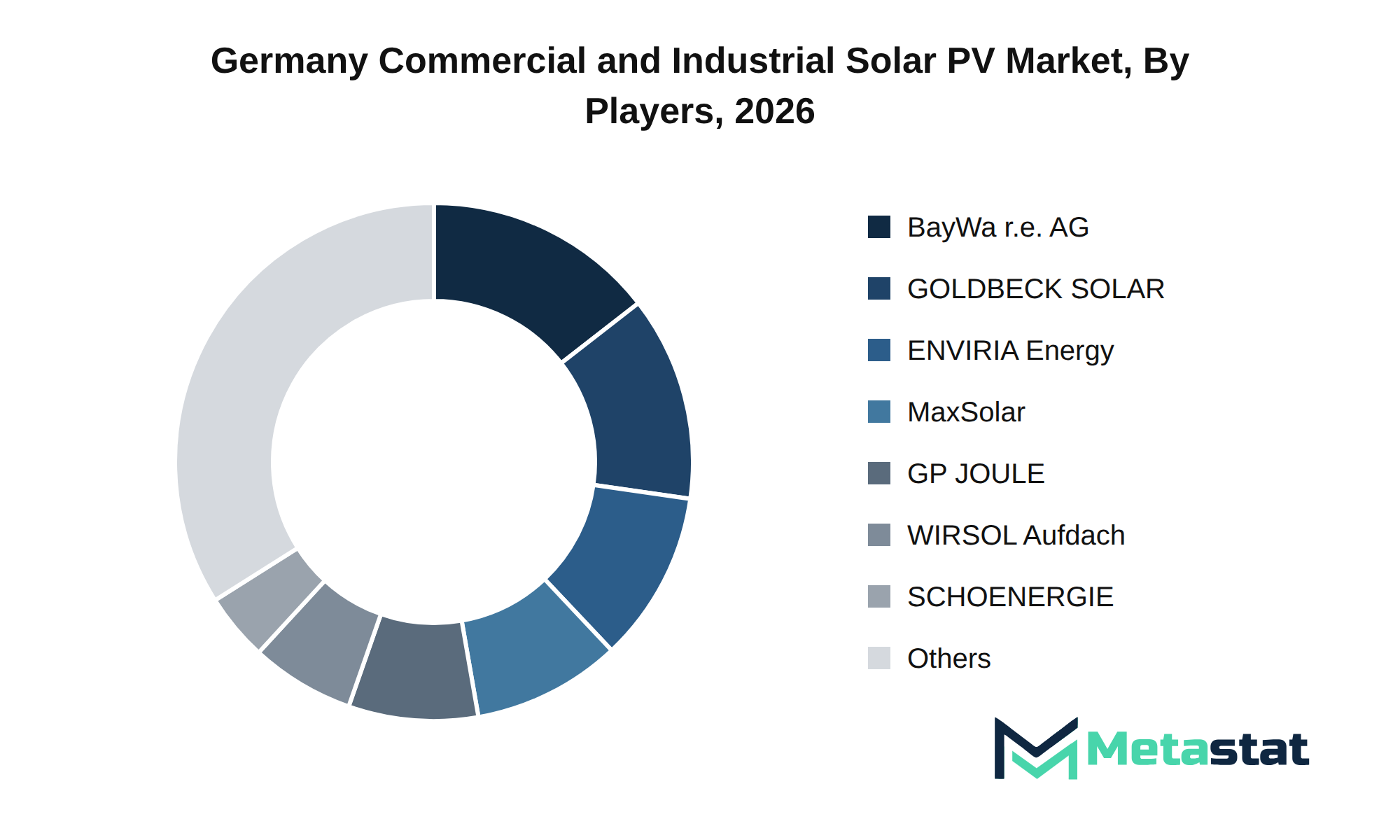
The Germany Commercial and Industrial Solar PV market experiences significant activity characterized by strategic alliances and partnerships among key players. Companies including BayWa r.e. AG and GP JOULE GmbH focus on strengthening their market position through collaborations, enhancing their service offerings and expanding their geographical reach. Joint ventures among firms facilitate access to new technologies and resources, allowing for innovation in product development.
Product differentiation remains a critical strategy, with firms like SOLARWATT GmbH and GOLDBECK SOLAR GmbH investing in research and development to create advanced solar solutions. These companies leverage proprietary technologies to enhance performance and efficiency, thereby increasing their competitive advantage. The emphasis on tailored solutions addresses specific customer requirements across various sectors, including industrial manufacturing and healthcare facilities.
Pricing architecture influences market dynamics, with companies adopting competitive pricing strategies to attract diverse customer segments. The integration of service offerings, including combining PV systems with battery energy storage, represents an emerging trend that enhances customer value and retention. Firms including 1KOMMA5° GmbH and energielenker capitalize on this trend, creating integrated solutions that address the evolving energy needs of end-users.
The future competitive outlook for the Germany Commercial and Industrial Solar PV market indicates sustained growth driven by technological advancements and expanding applications. Companies face challenges related to barriers to entry and the threat of new entrants disrupting established market dynamics. While firms navigate these complexities, strategic growth vectors focused on innovation, customer satisfaction, and operational excellence remain essential for success.
Market size is forecast to rise from USD 6,664.9 million in 2025 to over USD 11,033.8 million by 2033. The base case anticipates growth at a 6.5% CAGR during the forecast period. Factors influencing this growth include the maturation of core industries adopting solar technology, alongside structural consumption shifts towards sustainable energy solutions. Increased investment in next-generation technology integration and R&D commercialization timelines will further enhance market dynamics.
Economic cycles will shape downstream demand, with regulatory evolution and imminent compliance milestones playing significant roles in market expansion. Strategic capital allocation directives will support infrastructure commitments and capital expenditure investment vectors, allowing for a robust market environment. Geopolitical realignments and evolving trade corridors will influence regional supply chain shifts, ensuring that the market adapts to changing global conditions.
Emerging white-space opportunities exist in addressing unmet enterprise needs, highlighting high-growth pockets that executives leverage for strategic imperatives. Defensibility roadmaps developed around technological advancements will create paths for future growth in the Germany Commercial and Industrial Solar PV market. Commitment to sustainable practices and regulatory compliance will shape competitive landscapes and drive innovation within the sector.
Germany Commercial and Industrial Solar PV Market Key Segments
By Installation Type:
- Rooftop PV
- Ground-Mounted PV
- Solar Carports
- Building-Integrated PV and Other Installations
By Solution Configuration:
- PV-Only Systems
- PV + Battery Energy Storage Systems
- PV + EV Charging Systems
- PV + Battery Energy Storage + EV Charging Systems
By Grid Connection:
- On Grid
- Off Grid
By End-Use Sector:
- Industrial Manufacturing
- Logistics & Warehousing
- Retail Facilities
- Office & Business Campuses
- Hotels, Restaurants & Leisure Facilities
- Healthcare Facilities
- Agricultural & Agribusiness Facilities
- Others (Education, Sports, Mixed-Use Commercial Sites)
Key Germany Commercial and Industrial Solar PV Industry Players
- ENVIRIA Energy Holding GmbH
- CUBE CONCEPTS GmbH
- GOLDBECK SOLAR GmbH
- BayWa r.e. AG
- MaxSolar GmbH
- GP JOULE GmbH
- WIRSOL Aufdach GmbH
- SCHOENERGIE GmbH
- energielenker
- SOLARWATT GmbH
- Sunrock
- Solnet Group
- 1KOMMA5° GmbH
- E.ON Energie Deutschland GmbH
- IBC SOLAR AG
- KRAFTWERK Renewable Power Solutions GmbH
- Rheinland Solar GmbH
- MVV Enamic GmbH
- RheinEnergie AG
- JUWI GmbH
- PFALZWERKE Aktiengesellschaft
- RWE Renewables Europe & Australia GmbH
- ENERPARC AG
Report Coverage
The report strategically identifies and profiles the key market players and analyses their core competencies in each sub-segment of the Commercial and Industrial Solar PV market.
Report Attributes | Details |
Study Period | 2021-2033 |
Base Year | 2025 |
Estimated Year | 2026 |
Forecast Period | 2026-2033 |
Historical Period | 2021-2025 |
Growth Rate | CAGR 6.5% from 2026 to 2033 |
Revenue Unit | USD million |
Segmentation | By Installation Type, Solution Configuration, Grid Connection, End-Use Sector, and Region |
What Report Provides
- Company Market Share, Revenue and Ranking for the Germany Commercial and Industrial Solar PV Market
- Key Market Leaders in the Germany Commercial and Industrial Solar PV Sector
- Full In-Depth Analysis of the Parent Industry Dynamics
- Industry Statistics and Important Changes Impacting the Market
- Segmentation Details of the Germany Commercial and Industrial Solar PV Market
- Historical, Ongoing and Projected Market Analysis Through 2033
- Assessment of Niche Industry Developments and Opportunities
- Key Strategies of Major Players in the Market
Frequently Asked Questions
Find answers to common questions about this report
The Commercial and Industrial Solar PV market size in Germany was valued at USD 6,664.9 million in 2025.
The Commercial and Industrial Solar PV market is projected to grow at a CAGR of 6.5% during the forecast period from 2026 to 2033.
Rooftop PV leads the Germany Commercial and Industrial Solar PV market, with a projected value of USD 7,903.5 million by 2033. This segment's growth reflects its significant share compared to other installation types.
Investment environments, including rising GDP and enhanced access to capital, significantly drive the Germany Commercial and Industrial Solar PV market. Technological integration and digital transformation initiatives further support market growth by optimizing operations and improving energy management strategies across various sectors.
Regulatory compliance challenges create significant restraints within the Germany Commercial and Industrial Solar PV market, because increasing complexity raises costs and leads to project delays. Macroeconomic headwinds, including inflationary pressures and rising material costs, further constrain competition and limit growth potential, particularly affecting smaller players. Supply chain disruptions and skilled labor deficiencies exacerbate these challenges, undermining market efficiency.
Investment environments influence product adoption in the Germany Commercial and Industrial Solar PV market. Rising GDP increases business confidence and investment in renewable energy solutions, while improved access to capital supports solar project development. Technological integration and digital transformation initiatives streamline processes, enhancing the appeal of solar investments.
The Commercial and Industrial Solar PV market is estimated to reach a valuation of USD 11,033.8 million by 2033.
Key players in the Germany Commercial and Industrial Solar PV market include ENVIRIA Energy Holding GmbH, GOLDBECK SOLAR GmbH, BayWa r.e. AG, MaxSolar GmbH, GP JOULE GmbH, and IBC SOLAR AG.
The rooftop PV segment is projected to reach USD 7,903.5 million by 2033, growing from USD 5,347.7 million in 2026.
The building-integrated PV and other installations segment is anticipated to grow at a CAGR of 10.5% during the forecast period.
Choose Your License
Germany Commercial and Industrial Solar PV Market
Related Reports
Explore related market intelligence reports worth reading alongside this one.