
Global Battery Energy Management System Market
Global Battery Energy Management System Market Size, Share, By Battery Type (Lithium Iron Phosphate (LFP), Lithium Nickel Manganese Cobalt (NMC), Lithium Titanate (LTO), and Lithium Nickel Cobalt Aluminum Oxide (NCA)), By BMS Topology (Centralized BMS, Modular BMS, and Distributed BMS), By Component (Battery Control Unit (BCU), Cell Monitoring Unit (CMU), Current & Voltage Sensors, Temperature Sensors, and Others (Communication Interfaces (CAN, RS485, Ethernet), Battery Management Software & Diagnostics, and Balancing Circuits)), By Application (Electric Forklifts, Automated Guided Vehicles (AGVs), Autonomous Mobile Robots (AMRs), Aerial Work Platforms, Industrial Cleaning Equipment, Terminal Tractors & Port Equipment, and Mining & Construction Electric Equipment), Industry Analysis, Growth, Trends, and Forecast, 2026-2033
MSI-4853
August 4, 2026
Updated
292 Pages
Historical
Base year
Forecast
Forecast period
Report Details
Comprehensive Market Analysis And Insights
Market Overview
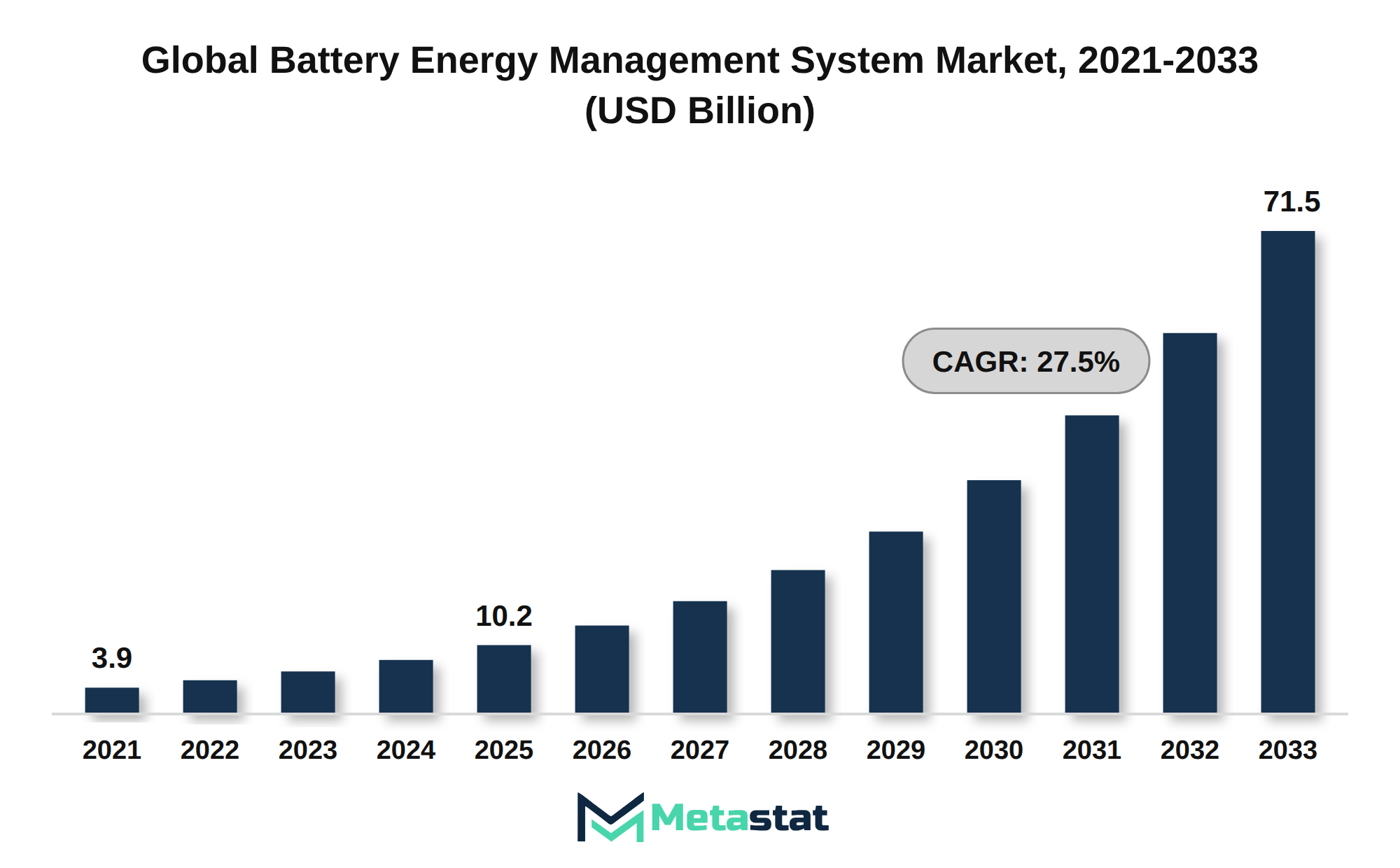
The global Battery Energy Management System market was valued at USD 10.2 billion in 2025 and is projected to reach USD 71.5 billion by 2033, growing at a CAGR of 27.5% over the forecast period.
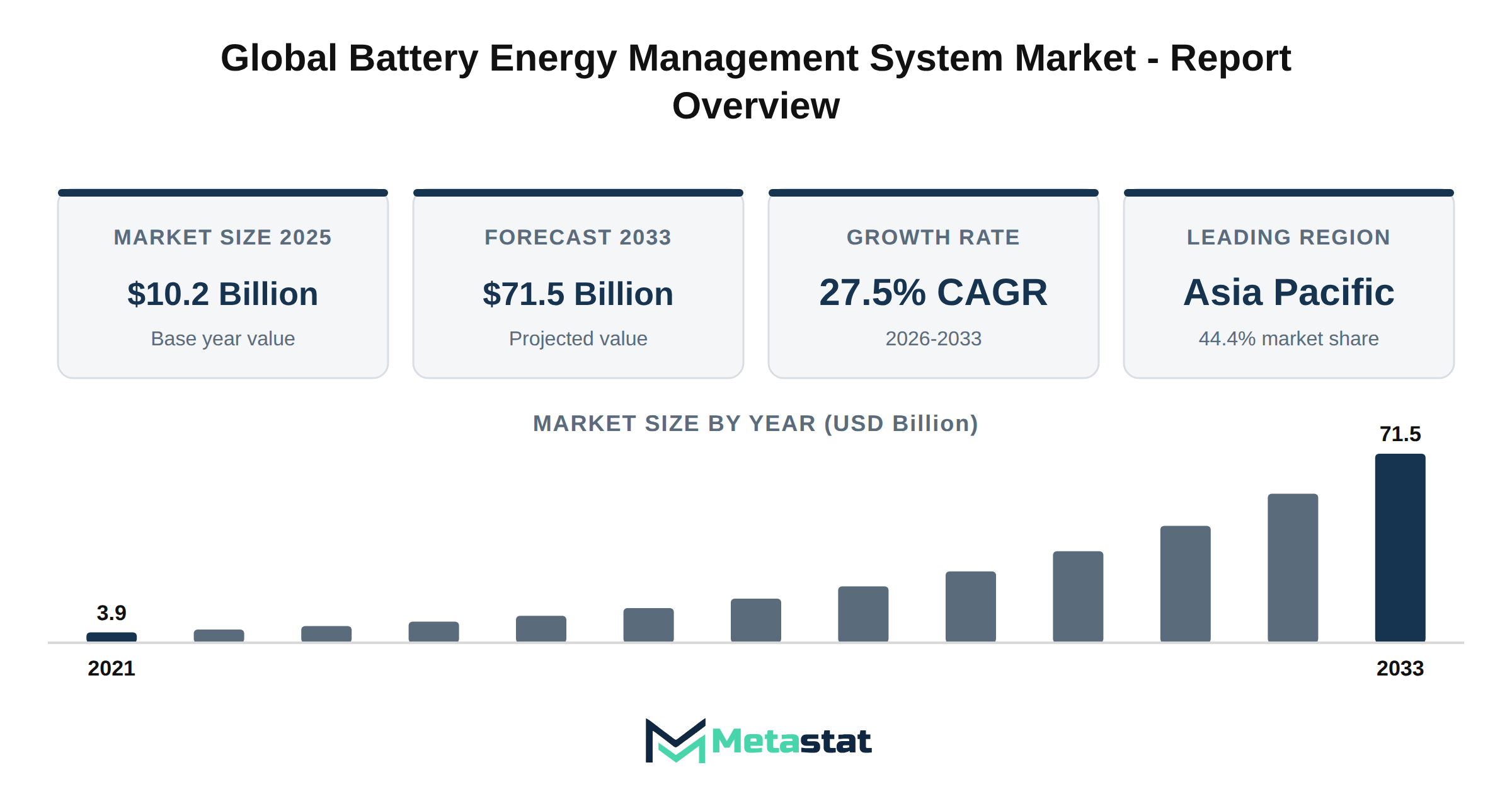
The Battery Energy Management System market demonstrates significant growth potential, with a base value of USD 10.2 billion in 2025, projected to reach USD 71.5 billion by 2033. This expansion reflects a robust compound annual growth rate (CAGR) of 27.5 percent during the forecast period from 2026 to 2033. Historical performance shows a steady increase from USD 3.9 billion in 2021 to USD 10.2 billion in 2025, indicating a strong upward trajectory.
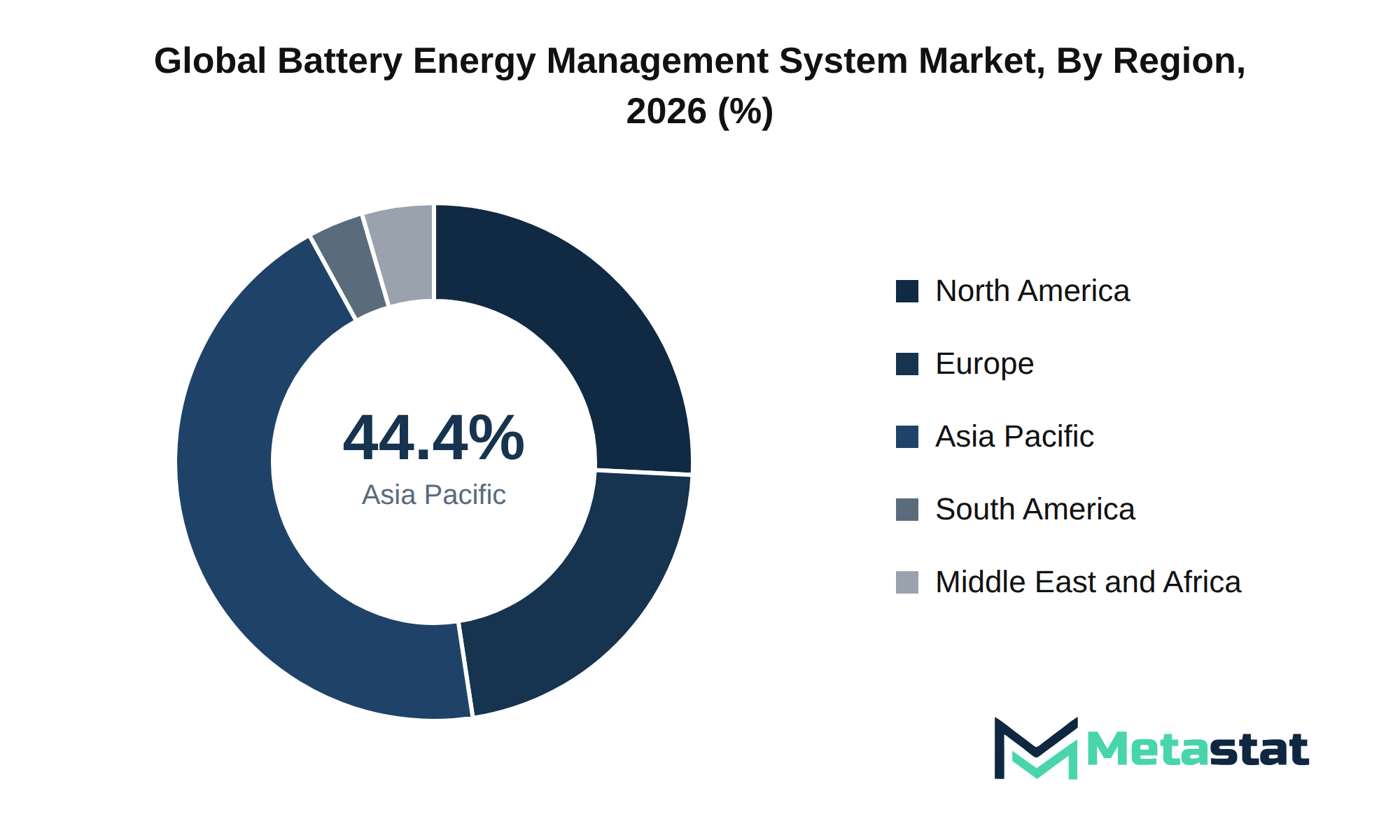
In the regional distribution of the market, Asia Pacific holds the largest share at 44.4 percent, followed by North America at 25.8 percent and Europe at 21.8 percent. Market growth is driven by increasing adoption of advanced battery technologies across various applications, including electric vehicles, renewable energy storage, and industrial automation. Rising emphasis on sustainable practices and regulatory compliance fuels demand for efficient energy management systems.
Technological advancements in battery types, including Lithium Iron Phosphate (LFP) and Lithium Nickel Manganese Cobalt (NMC), shape the market landscape. The LFP segment is expected to grow from USD 7.4 billion in 2026 to USD 37.2 billion by 2033, achieving a CAGR of 25.9 percent. The NMC segment is projected to reach USD 21.1 billion by 2033, reflecting a CAGR of 31.6 percent. These developments highlight the market's focus on next-generation innovations aimed at enhancing battery performance and safety.
The Battery Energy Management System market faces challenges related to supply chain dynamics and geopolitical risks. Companies operating within the market navigate these complexities, ensuring compliance with evolving regulations while managing inflationary pressures and currency volatility. Successful navigation of these challenges is essential for maintaining competitive advantages and achieving long-term growth.
Regulatory compliance significantly influences the Battery Energy Management System market. Various regional authorities enforce strict regulations regarding battery safety, efficiency, and end-of-life management. Compliance with these regulations necessitates investment in advanced technology and processes, impacting operational costs and overall market growth.
Geopolitical risk frameworks affect market dynamics, particularly in regions with high dependency on imports. Political instability or trade restrictions disrupt supply chains, leading to fluctuations in pricing and availability of key components, which ultimately challenges manufacturers and suppliers within the market.
Research and development trajectories are critical in advancing battery technologies, including improvements in energy density, longevity, and sustainability. Investment in R&D accelerates innovation, allowing companies to introduce next-generation solutions that meet evolving consumer demands and support widespread adoption.
Sustainable transformation and decarbonization initiatives drive substantial interest in the market. Companies increasingly focus on reducing their carbon footprint through efficient energy management systems, aligning with global sustainability goals. This trend enhances market attractiveness and generates new revenue streams for participants.
The supply chain landscape has become increasingly complex, with emphasis on logistics architecture and sourcing strategies. Efficient supply chain management ensures timely delivery of components, which is essential for maintaining competitive pricing and meeting customer expectations in a dynamic market.
Market fragmentation arises from the diverse range of products and solutions available. A variety of battery types, topologies, and applications caters to specific customer needs, resulting in numerous players competing for market share. This fragmentation intensifies competition, influencing pricing strategies and innovation rates.
Mergers and acquisitions dynamics play a role in shaping the competitive landscape. Companies pursue strategic partnerships and acquisitions to enhance their technological capabilities, expand market access, or consolidate resources. These movements lead to shifts in market power and influence overall market trends.
The value chain in the Battery Energy Management System market encompasses various stages, from raw material sourcing to end-user applications. Each stage presents opportunities for optimization and cost reduction, ultimately impacting profitability for companies involved in the market.
Capital allocation strategies are crucial for sustaining growth within the market. Companies prioritize investments in infrastructure and technological advancements to enhance operational efficiency and customer satisfaction. This focus on capital allocation supports long-term growth potential.
Infrastructure investments are essential to support the increasing demand for energy management systems. Upgrading existing facilities and developing new production capabilities facilitate higher output levels, meeting the growing needs of various industries adopting battery technologies.
Macroeconomic headwinds, including inflationary pressures and currency volatility, affect market performance. Fluctuations in material costs and exchange rates influence pricing strategies and overall market stability, which companies navigate effectively to maintain profitability.
The strategic outlook for the Battery Energy Management System market involves anticipating future trends and adapting to changing consumer needs. Companies prioritize innovation, sustainability, and operational efficiency to remain competitive in this environment.
Corporate imperatives focus on aligning business strategies with evolving market conditions. By promoting a culture of adaptability and innovation, companies position themselves for success in the competitive landscape of the Battery Energy Management System market.
High-value recommendations for participants in the market include investing in R&D, optimizing supply chains, and enhancing customer engagement strategies. These actions drive growth and reinforce competitive positioning in an increasingly complex market.
Market Dynamics
Macro-economic factors drive investment in technology
The Battery Energy Management System market experiences significant growth driven by various macro-economic factors influencing technology investment. Economic expansion, characterized by rising GDP and increased venture funding, fuels demand for advanced energy management solutions. Businesses across sectors recognize the value of energy efficiency and cost reduction, prompting them to adopt Battery Energy Management Systems to optimize operations.
Investments in infrastructure development and asset modernization support the integration of digital technologies. Organizations focusing on upgrading their capabilities enhance productivity and streamline processes. This shift towards digital transformation facilitates the adoption of Battery Energy Management Systems, enabling improved performance and sustainability outcomes.
Consumer behaviors evolve alongside demographic patterns, with an increasing emphasis on sustainability and resource stewardship. Companies aligning strategies with these trends capture greater market share. The focus on reducing carbon footprints and adapting to changing consumer preferences highlights the market's expansion potential.
Given these dynamics, the market is projected to achieve substantial growth, reaching USD 71.5 billion by 2033, supported by sustained capital investment and the ongoing transition towards greener technologies.
Digital transformation accelerates battery management systems
Rapid digital transformation drives the Battery Energy Management System market by enabling advanced automation, artificial intelligence, and software adoption. This shift towards digital technologies supports enhanced operational efficiency, data analytics, and real-time monitoring capabilities, ultimately leading to informed decision-making and improved system performance. Organizations increasingly focus on digitizing legacy processes, which enhances productivity and reduces costs.
Technological integration drives the growth of the market by allowing diverse industries to adopt innovative solutions. This integration streamlines operations, optimizes resource allocation, and enhances energy utilization, contributing to overall sustainability efforts. Industries focusing on electric vehicles, renewable energy, and energy storage systems prioritize battery energy management solutions driven by a means to advance efficiency and reduce their carbon footprints.
The demand for automation technologies and data-driven insights positions the market for substantial growth. While organizations recognize the potential for improved operational productivity and cost-efficiency, investments in Battery Energy Management Systems expand, driving innovation and competition among key players. The market is projected to grow from USD 10.2 billion in 2025 to USD 71.5 billion by 2033, reflecting a compound annual growth rate of 27.5% during the forecast period.
Regulatory compliance and operational costs
Regulatory tightening introduces significant hurdles for the Battery Energy Management System market. Compliance with evolving regulations raises operational costs for manufacturers and slows adoption rates among potential users. Stricter legal mandates require companies to invest in advanced technologies and processes to meet stringent standards. This shift creates additional financial burdens that impact profitability, particularly for smaller enterprises that lack the resources to adapt quickly.
Macroeconomic factors exacerbate these challenges, with inflationary pressures and supply chain disruptions increasing costs further. Rising material prices, coupled with geopolitical instability, hinder the ability to source critical components, delaying product development and market entry. These conditions lead to higher prices for end-users, ultimately curtailing demand in various sectors.
Infrastructure gaps present another significant restraint. Many regions lack the necessary framework to support widespread deployment of battery energy management systems, resulting in connectivity deficits that impede efficiency. Deployment bottlenecks arise from insufficient skilled labor, which limits the ability to implement and maintain these systems effectively. Consequently, the market faces a slower growth trajectory due to these interconnected challenges.
Data security vulnerabilities pose additional risks. Privacy concerns surrounding user data impact trust in battery energy management technologies. Organizations hesitate to adopt new systems if they perceive potential threats to sensitive information. This hesitation results in market fragmentation, where varying levels of adoption create disparities in deployment across different industries and regions.
Regional adoption resistors further complicate market dynamics. Cultural barriers and differing attitudes toward technology hinder acceptance and integration of battery management systems in certain areas. Slowing downstream demand from industries transitioning to alternative energy sources diminishes the urgency for adoption, contributing to stagnant growth rates. Overall, these multifaceted restraints challenge the evolution of the market and necessitate strategic navigation for long-term success.
Geopolitical fragmentation and supply chain instability
The Battery Energy Management System market faces significant challenges owing to geopolitical fragmentation and supply chain instability. Ongoing trade tensions and tariffs disrupt the procurement of critical components, impacting production timelines and costs. Manufacturers struggle to secure reliable sources for feedstock and components, resulting in increased operational expenses that affect overall pricing strategies in the market.
Technological disruptions further complicate the environment. Rapid advancements in battery management technologies necessitate continuous investment in research and development. This situation creates stress on companies to integrate new technologies seamlessly while managing rising input costs. The need for skilled labor in these evolving technological domains introduces workforce skill gaps, leading to challenges in attracting and retaining qualified personnel.
Evolving legal liabilities and tightening global regulatory standards impose compliance overhead that burdens manufacturers. Organizations face increased scrutiny regarding environmental impacts and sustainability demands, pushing them to implement costly retrofitting solutions. These factors collectively contribute to heightened market pressures, hindering the growth trajectory of the Battery Energy Management System market while placing additional strain on profit margins.
Geopolitical fragmentation, technological disruptions, compliance pressures, and supply chain instability create formidable challenges for stakeholders in the Battery Energy Management System market. The combination of these factors necessitates strategic adaptation among manufacturers, ultimately influencing the trajectory of market growth.
Emerging demands drive battery energy management systems
The Battery Energy Management System market presents notable opportunities driven by emerging regional demands and technological advancements. Increasing emphasis on sustainability and energy efficiency encourages various sectors to adopt advanced battery management systems, aligning with green transformations and environmental, social, and governance (ESG) objectives. Industries including electric vehicles, renewable energy storage, and industrial automation require enhanced battery management capabilities for improved operational efficiency and longer asset life cycles.
Infrastructure modernization significantly influences market growth, with many regions investing in new energy solutions to support the transition to cleaner technologies. Investments in digital transformation enable stakeholders to leverage data analytics and process automation, enhancing operational yield. This technological disruption increases demand for innovative battery management solutions designed to optimize energy use and extend battery life.
Geographical expansion marks another critical opportunity, particularly in emerging economies where energy infrastructure undergoes substantial development. These regions increasingly recognize the need for effective energy management solutions, leading to heightened market penetration. Evolving buying behaviors and digital procurement shifts prompt suppliers to rethink their commercial models, facilitating closer alignment with customer needs and preferences.
Strategic consolidation through mergers and acquisitions strengthens the competitive position of key players in the market. This activity enhances product integration and diversification while enabling participants to address niche applications effectively. While manufacturers strive to optimize their value chains, localized supply chains and strategic buffering efforts mitigate risks associated with global trade uncertainties, further enhancing market resilience.
The Battery Energy Management System market is projected to experience sustained growth, driven by these multifaceted opportunities that cater to a diverse range of applications across various industries. This growth trajectory presents significant potential for stakeholders, urging proactive engagement with market dynamics to capture emerging trends effectively.
Market Segmentation Analysis
The Global Battery Energy Management System market is segmented based on Battery Type, BMS Topology, Component, and Application.
By Battery Type, the market is further segmented into:
- Lithium Iron Phosphate (LFP)
- Lithium Nickel Manganese Cobalt (NMC)
- Lithium Titanate (LTO)
- Lithium Nickel Cobalt Aluminum Oxide (NCA)
- Others (LMO, LCO)
Lithium Iron Phosphate (LFP)
Lithium Iron Phosphate (LFP) segment is valued at USD 7.4 billion in 2026 and is projected to reach USD 37.2 billion by 2033, at a CAGR of 25.9% during the forecast period. Significant demand for Lithium Iron Phosphate batteries arises from their superior thermal stability and environmental safety, which align with growing regulatory pressures for greener energy solutions. The automotive sector, particularly electric vehicles, increasingly adopts LFP technology due to its cost-effectiveness and long lifecycle, enhancing the segment's growth prospects within the Battery Energy Management System market.
Technological maturation further enhances LFP adoption, with advancements in battery management systems improving efficiency and performance. Manufacturers enhance product offerings with next-generation upgrades, and market competitiveness increases, driving further investments. Downstream applications, including electric forklifts and automated guided vehicles, create substantial consumption shifts that favor LFP batteries, contributing to overall segment expansion. The market benefits from ongoing innovation, ensuring LFP remains a viable option in a changing energy storage environment.
Cost structures and pricing volatility significantly impact market dynamics, with fluctuations in raw material sourcing affecting overall profitability. Strategic opportunity windows exist for players that optimize supply chain resilience while addressing logistics vulnerabilities. The competitive environment encourages manufacturers to mitigate substitution risks and technological obsolescence by focusing on R&D initiatives. Investment in Lithium Iron Phosphate technology remains robust, indicating strong confidence in the segment's potential within the Battery Energy Management System market.
Lithium Nickel Manganese Cobalt (NMC)
Demand for Lithium Nickel Manganese Cobalt (NMC) batteries reflects increasing requirements for high-performance energy storage solutions across multiple sectors. The automotive industry, particularly electric vehicles, drives this demand, propelled by the need for enhanced energy density and efficiency. Advancements in battery technologies and manufacturing processes facilitate the adoption of NMC batteries, enabling longer ranges and faster charging times. This segment is projected to reach USD 21.1 billion by 2033, with a CAGR of 31.6% during the forecast period.
Market expansion occurs alongside rising investments in renewable energy and energy storage systems. Increased focus on reducing carbon emissions and transitioning to sustainable energy sources supports the demand for NMC batteries. Regulatory compliance with stringent environmental standards accelerates the shift towards cleaner technologies, enhancing the segment's appeal. End-use dynamics favor industries seeking reliable and efficient battery solutions, reinforcing the strategic importance of NMC in the Battery Energy Management System market.
Technological maturation and next-generation upgrades contribute to the continuous evolution of NMC batteries. Innovations in materials and manufacturing techniques enhance performance, reduce costs, and address issues related to supply chain resilience. Raw material sourcing challenges, particularly concerning cobalt, necessitate strategic partnerships and investments in alternative materials to mitigate risks. The increasing focus on energy storage and the potential for disruptive alternatives create significant strategic opportunities for participants within this segment.
Lithium Titanate (LTO)
Strong growth in the Lithium Titanate (LTO) segment of the Battery Energy Management System market occurs owing to several factors. Increasing demand for fast-charging batteries, particularly in electric vehicles and grid energy storage applications, drives interest in this technology. The unique characteristics of LTO batteries, including high cycle life and safety, enhance their attractiveness for various end-user applications.
Technological maturation significantly impacts the expansion of the LTO segment. Advancements in battery management systems (BMS) enable improved charge and discharge management, optimizing performance and lifespan. This technological progress allows manufacturers to enhance battery efficiency while reducing costs associated with production and maintenance.
Investment in research and development fuels product evolution in the segment. Companies focus on enhancing energy density and reducing size, which translates to better performance in electric vehicles and stationary storage applications. A growing trend towards electrification in transportation and energy sectors further increases the market's appeal, with the segment projected to reach USD 6.8 billion by 2033.
End-use dynamics indicate increasing adoption of LTO batteries in commercial and industrial applications. Demand from sectors including logistics, manufacturing, and public transportation demonstrates the versatility and reliability of these batteries. Environmental regulations push organizations to transition to cleaner energy sources, benefiting the uptake of energy-efficient LTO solutions.
Pricing volatility in raw materials influences the cost structures of LTO battery production. Fluctuations in prices of key materials affect profit margins for manufacturers, creating a challenging environment for sustaining growth. Strategic partnerships with suppliers and investments in alternative materials mitigate these pressures, ensuring competitive positioning in the market.
Looking ahead, strategic opportunity windows emerge for companies engaging in LTO technology. Identifying white-space analysis within the market allows players to target underserved segments and innovate new applications. This proactive approach contributes to the anticipated expansion and competitiveness of the LTO segment within the broader Battery Energy Management System market.
Lithium Nickel Cobalt Aluminum Oxide (NCA)
Projected growth for the Lithium Nickel Cobalt Aluminum Oxide (NCA) segment stands at a CAGR of 24.3% during the forecast period. Demand drivers include the increasing adoption of NCA batteries in electric vehicles, which offer a balance between energy density and thermal stability. This segment experiences significant interest from automotive manufacturers seeking to enhance battery performance and efficiency in their electric vehicle offerings.
Implementation of next-generation upgrades plays a critical role in segment expansion, particularly with advancements in battery management systems that optimize performance and lifecycle. The move towards sustainable energy solutions continues to fuel demand, with NCA batteries proving advantageous due to lower environmental impact compared to traditional battery materials. Increasing regulatory compliance standards further stimulate adoption, particularly in regions emphasizing stringent emissions targets.
Pricing volatility in raw materials including cobalt and nickel influences market dynamics, affecting overall cost structures and margin pressures. Producers focus on securing supply chains to mitigate risks associated with sourcing. Strategic investment in raw material alternatives and recycling technologies offers potential pathways for improving sustainability and cost efficiency, enhancing the competitive landscape for NCA batteries within the Battery Energy Management System market.
Market participants, including established companies like Lithium Balance A/S, Texas Instruments, and Bosch Engineering GmbH, actively engage in research and development to enhance NCA technology. This competitive environment drives innovation and encourages further investment, strengthening the segment's position in the market.
Others (LMO, LCO)
Significant factors drive demand for the Others (LMO, LCO) segment within the Battery Energy Management System market. Diverse applications in consumer electronics, automotive, and industrial sectors increase adoption. Technological maturation enhances battery performance and safety, influencing purchasing decisions. The evolution of battery technologies encourages innovation, aligning with the growing trend towards sustainability. Regulatory compliance standards and certifications contribute to market acceptance, ensuring safety and reliability. The evolving landscape of raw material sourcing and cost structures impacts pricing volatility, influencing strategies for manufacturers. Strategic opportunity windows emerge owing to industries seeking to enhance energy efficiency and reduce operational costs. Overall, these dynamics shape the competitive environment and influence investment strategies within this sub-segment.
By BMS Topology, the market is further segmented into:
- Centralized BMS
- Modular BMS
- Distributed BMS
Centralized BMS
Valued at USD 5 billion in 2026, the Centralized BMS segment is projected to reach USD 24.3 billion by 2033, exhibiting a CAGR of 25.5% during the forecast period. This segment benefits from increasing demand for efficient energy management solutions across diverse applications. Technological maturation within battery management systems enables enhanced performance, driving adoption among industries focused on sustainability and energy efficiency.
Regulatory compliance standards significantly influence market dynamics, compelling manufacturers to adopt centralized systems for improved monitoring and control. The evolution of battery technologies and the growing focus on electric vehicles contribute to increased investments in centralized BMS. Strategic opportunity windows arise from the need for next-generation upgrades and product evolution, further supporting market expansion.
Demand for centralized BMS is evident across various end-use applications, including electric forklifts and automated guided vehicles. Consumption shifts towards more energy-efficient solutions, aligning with global sustainability goals and attracting substantial capital investment. With competitive pricing structures and a focus on supply chain resilience, the market positions itself for significant growth, driven by a robust ecosystem of players and continuous innovation.
Modular BMS
Significant growth in the Modular BMS segment reflects advancements in battery technology and increased applications across various industries. This segment is driven by rising demand for energy efficiency and enhanced performance in energy storage systems. Industries including electric vehicles, renewable energy, and industrial automation contribute to this demand, driving the adoption of modular systems that offer scalability and flexibility.
Technological maturation facilitates the development of next-generation modular BMS solutions, which provide improved monitoring and control capabilities. These systems enhance operational efficiency, reduce downtime, and optimize battery performance, leading to increased adoption rates. The modular approach supports easy integration with diverse battery types and configurations, making it suitable for a wide range of applications.
Valued at USD 35 billion by 2033, this segment is projected to experience a compound annual growth rate (CAGR) of 29.3% during the forecast period. Regulatory compliance standards and environmental policies promoting sustainable energy solutions further drive the market. Investment in research and development ensures continuous innovation, providing strategic opportunity windows for players within the Modular BMS segment.
Supply chain resilience and raw material sourcing remain crucial factors influencing the market. Ensuring access to essential components and materials helps mitigate potential disruptions. Increased focus on cost structures and pricing strategies enhances competitiveness, allowing manufacturers to respond effectively to market dynamics. Overall, the Modular BMS segment represents a dynamic area within the Battery Energy Management System market, characterized by strong growth and expansive opportunities.
Distributed BMS
Significant growth in the Distributed BMS segment stems from escalating demand for efficient battery management across various applications. Industries including electric vehicles, renewable energy storage, and industrial automation drive this demand, necessitating advanced energy management solutions. Key factors include the need for enhanced safety, longevity, and performance of battery systems, which directly impact operational efficiencies and reduce lifecycle costs for end-users.
Technological advancements play a crucial role in the expansion of this segment. Innovations in monitoring and control technologies contribute to improved system performance and reliability. The focus on next-generation upgrades generates opportunities for product evolution, allowing manufacturers to introduce enhanced features that attract more customers. Regulatory compliance standards push the market towards adopting more sophisticated battery management systems, ensuring safety and performance criteria receive consistent attention.
Cost structures and pricing volatility in raw materials influence the profitability of Distributed BMS products. Manufacturers face margin pressures due to fluctuating component prices, which necessitate strategies to maintain competitive pricing without compromising quality. Supply chain resilience becomes essential to mitigate risks associated with raw material sourcing and logistics vulnerabilities.
The Distributed BMS segment is projected to reach USD 12.2 billion by 2033, reflecting a strong adoption trend among key sectors. Strategic opportunity windows emerge owing to companies investing in advanced battery management technologies. This investment strengthens the market’s capacity to offer tailored solutions that align with evolving consumer needs and regulatory requirements. Ultimately, the growth trajectory for the Battery Energy Management System market hinges on continuous technological maturation and innovations that enhance the performance and cost-effectiveness of distributed systems.
By Component, the market is further segmented into:
- Battery Control Unit (BCU)
- Cell Monitoring Unit (CMU)
- Current & Voltage Sensors
- Temperature Sensors
Battery Control Unit (BCU)
Battery Control Units (BCUs) serve because critical components in managing battery systems within various applications. The demand for BCUs rises significantly owing to the increasing adoption of electric vehicles and renewable energy storage solutions. These units facilitate effective monitoring and control of battery performance, driving efficiency in energy usage across various sectors.
Technological maturation significantly influences the advancement of BCUs. Innovations in microcontroller technologies and software algorithms enhance the functionality and reliability of these units. This evolution supports next-generation upgrades that focus on improved energy density, faster charging times, and enhanced safety features, further driving adoption in sectors including transportation and industrial applications.
Downstream applications for BCUs span a wide range, including electric forklifts, automated guided vehicles, and autonomous mobile robots. Each application presents unique requirements, compelling manufacturers to tailor their BCUs to meet specific operational demands. This customization promotes competitive differentiation and attracts a diverse clientele.
Regulatory compliance standards significantly impact the development and implementation of BCUs. Manufacturers face increasing pressure to meet stringent safety and performance regulations, influencing design choices and production costs. Meeting these standards not only ensures market access but establishes brand credibility among consumers.
Supply chain resilience remains crucial for the BCU segment, particularly regarding raw material sourcing. The increasing demand for advanced battery technologies intensifies competition for critical materials, which introduces pricing volatility and margin pressures. Manufacturers actively pursue strategic partnerships and alternative sourcing strategies to mitigate these risks.
Strategic opportunity windows exist for players within the BCU market. While the push for sustainable energy solutions accelerates, capital investment in research and development becomes essential. Companies that successfully innovate and expand their product offerings are positioned to capture significant market share while evolving consumer preferences and technological landscapes.
Cell Monitoring Unit (CMU)
Cell Monitoring Units (CMUs) play a critical role in the Battery Energy Management System market by ensuring the health and performance of battery cells. Demand for CMUs arises from the need for accurate monitoring of individual cell voltages and temperatures, enhancing battery safety and efficiency. This demand aligns with the increasing adoption of electric vehicles and renewable energy storage systems, where CMUs contribute to maximizing battery lifespan and performance.
Technological maturation in the field of battery management has led to improved functionalities in CMUs, including advanced algorithms for data processing and analytics capabilities. Such advancements drive more precise monitoring, facilitating better decision-making in energy usage and management. Consequently, industries adopting these technologies experience enhanced operational efficiency and reduced costs associated with battery maintenance and replacement.
Regulatory compliance standards regarding safety and emissions significantly impact the adoption of CMUs. Manufacturers prioritize compliance, resulting in advancements in sensor technologies and communication protocols. This adherence to regulations not only improves product reliability but builds consumer confidence in battery systems, promoting broader market acceptance.
Investment in research and development by key players supports the evolution of CMUs, leading to the introduction of next-generation upgrades. Strategic opportunities arise from identifying white-space areas where current technologies fall short, allowing for innovative solutions that meet emerging market demands. This proactive approach positions companies favorably within the competitive landscape, enhancing their market presence.
Consumers increasingly shift toward integrated battery management solutions that include CMUs, driven by essential components. Such preference for comprehensive systems reflects a broader trend in the electrification of transport and energy sectors, driving demand for robust battery management systems that ensure sustainability and efficacy. Overall, the growing emphasis on reliable energy management solutions supports the expansion of the market.
Current & Voltage Sensors
Growing emphasis on the accuracy of battery performance drives demand for Current & Voltage Sensors in the Battery Energy Management System market. These sensors play a critical role in monitoring and regulating battery charge levels and voltage stability, essential for optimizing battery life and ensuring safety in various applications. Industries including electric vehicles, renewable energy storage, and consumer electronics increasingly adopt these sensors to enhance operational efficiency and reliability.
Technological advancements in sensor technology enhance the functionality and precision of Current & Voltage Sensors. Innovations including miniaturization and integration with smart technologies expand capabilities, enabling real-time monitoring and advanced data analytics. These developments align with the increasing adoption of smart grid solutions and electric mobility, contributing to the segment's growth.
End-use dynamics highlight the necessity for high-performance sensors to meet regulatory compliance and safety standards. Stricter regulations regarding energy efficiency and environmental impact compel manufacturers to integrate sophisticated monitoring solutions. Consequently, this regulatory environment promotes the adoption of Current & Voltage Sensors across various industries, reinforcing market demand.
Pricing volatility and margin pressures influence the cost structures specific to this segment. Fluctuations in raw material prices and the need for high-quality components affect overall costs, prompting manufacturers to explore cost-effective sourcing strategies. These financial dynamics necessitate a focus on supply chain resilience to maintain profitability while meeting growing demand.
Strategic opportunity windows emerge owing to industries investing in electric and hybrid technologies. This shift creates a favorable environment for suppliers of Current & Voltage Sensors, enabling them to capitalize on rising demand. Understanding consumption shifts and capital investment outlook remains vital for stakeholders aiming to navigate the evolving dynamics of the Battery Energy Management System market.
Temperature Sensors
Temperature sensors play a vital role in the Battery Energy Management System market by ensuring optimal operational efficiency and safety in battery management processes. The increasing adoption of electric vehicles and renewable energy storage systems drives demand for accurate temperature monitoring, enhancing battery performance and longevity. While the need for advanced battery management solutions expands, integration of temperature sensors into various applications becomes essential for maintaining battery health and preventing thermal runaway incidents.
Technological maturation of temperature sensing technologies leads to enhanced accuracy, faster response times, and improved reliability. Advances in materials and miniaturization techniques allow for the development of compact and efficient temperature sensors. These innovations support market growth by enabling high-performance batteries required in electric vehicles, industrial equipment, and consumer electronics. The trend towards next-generation upgrades in battery systems creates opportunities for temperature sensor integration, driving demand.
Regulatory compliance standards surrounding battery safety significantly influence temperature sensor adoption. Stringent regulations promote the installation of effective monitoring systems, compelling manufacturers to invest in robust temperature sensing solutions. Rising consumer awareness regarding battery safety leads organizations to prioritize certifications that guarantee the reliability of their battery management systems.
Cost structures associated with temperature sensors affect pricing dynamics within the market. Increasing raw material costs and supply chain vulnerabilities present challenges for manufacturers aiming to offer competitive pricing while ensuring high-quality products. Consequently, industry players focus on optimizing production processes and exploring alternative materials to reduce costs without compromising performance.
Strategic opportunity windows emerge in sectors with growing demand for battery technologies, including electric vehicles, renewable energy, and industrial automation. Companies recognize the significance of integrating advanced temperature sensors into their offerings to capture market share. The potential for innovation in temperature sensing technologies positions companies favorably to address evolving consumer demands and regulatory pressures, enhancing the value proposition within the Battery Energy Management System market.
By Application, the market is further segmented into:
- Electric Forklifts
- Automated Guided Vehicles (AGVs)
- Autonomous Mobile Robots (AMRs)
- Aerial Work Platforms
- Industrial Cleaning Equipment
- Terminal Tractors & Port Equipment
- Mining & Construction Electric Equipment
- Others (Electric Tow Tractors, Utility Vehicles)
Electric Forklifts
Growing demand for electric forklifts drives interest in the Battery Energy Management System market. Increasing emphasis on operational efficiency and sustainability pushes manufacturers to adopt advanced battery management solutions that optimize battery performance and extend lifespan. Stakeholders in logistics and warehousing sectors recognize the advantages of electric forklifts over traditional fuel-operated equipment, including reduced emissions and lower operational costs.
Technological maturation further influences adoption rates, with continuous advancements in battery technology enhancing the capabilities of electric forklifts. Improved energy density and charging efficiency make these systems more appealing for heavy-duty applications. Next-gen upgrades in battery management systems integrate real-time monitoring and predictive analytics, allowing operators to manage fleet usage more effectively. These enhancements significantly improve operational capabilities.
Regulatory compliance standards increasingly mandate cleaner operations, compelling industries to transition to electric forklifts. Government incentives and support for green technologies accelerate this shift, encouraging investments in battery energy management systems. The evolving regulatory landscape creates a favorable environment for electric forklift adoption, contributing to significant growth in the market.
Supply chain resilience impacts the electric forklift segment, with raw material sourcing and logistics vulnerabilities influencing production costs. Manufacturers face challenges in obtaining critical components, which affect pricing and availability in the market. Strategic opportunity windows arise for companies investing in local sourcing and developing alternative supply chains, enhancing competitive positioning.
Focusing on product evolution and addressing challenges associated with pricing volatility and margin pressures, electric forklift manufacturers enhance their offerings. With an increasing number of industries adopting electric solutions, the Battery Energy Management System market stands poised for expansion, driven by technological advancements and changing consumer preferences. This growth trajectory is expected to strengthen market dynamics.
Automated Guided Vehicles (AGVs)
Adoption of Automated Guided Vehicles (AGVs) reflects significant advancements in automation technology, which drives demand in various sectors including logistics, manufacturing, and warehousing. Efficiency improvements and cost reductions associated with AGVs lead to increased competitiveness for companies integrating these vehicles into their operations. The rise in e-commerce has heightened the need for efficient material handling solutions, further accelerating AGV deployment.
Technological maturation in navigation and battery technologies enhances the effectiveness of AGVs in dynamic environments. The integration of sophisticated sensors and artificial intelligence significantly improves operational capabilities, allowing AGVs to navigate complex spaces without human intervention. This progress in technology leads to broader acceptance of AGVs within industries seeking to streamline processes.
Investment in next-generation upgrades continues to reshape the operating landscape. Companies focus on enhancing battery performance, which directly influences the efficiency and lifespan of AGVs. Improved Battery Energy Management Systems optimize battery usage, ensuring extended operational hours and reduced downtime, contributing to cost savings for end users.
Regulatory compliance standards play a critical role in shaping AGV adoption. Adherence to safety and operational regulations drives market growth while ensuring that manufacturers meet evolving industry demands. Compliance ensures that AGVs operate safely alongside human workers, which is essential for acceptance in warehouses and manufacturing facilities.
Pricing volatility in raw materials influences AGV production costs, impacting overall profitability for manufacturers. Fluctuations in the availability and costs of essential components lead to margin pressures, prompting manufacturers to seek cost-effective solutions in sourcing and production. This situation creates opportunities for companies that develop innovative materials or alternative solutions.
Strategic investment windows arise due to companies exploring avenues to enhance AGV adoption. Increased interest in sustainable practices aligns with the growing demand for energy-efficient vehicles, leading to the development of environmentally friendly battery technologies. The continuous evolution of battery technologies contributes to lower operational costs and supports the expansion of the Battery Energy Management System market.
Autonomous Mobile Robots (AMRs)
Demand for Autonomous Mobile Robots (AMRs) has strengthened significantly, driven by advancements in automation and efficiency across various industries, including manufacturing and logistics. Increased labor costs and the need for improved operational efficiency fuel the demand for these robots, resulting from businesses seeking solutions that reduce manual labor and enhance productivity. The integration of sophisticated technologies including artificial intelligence (AI) and machine learning enables AMRs to execute complex tasks autonomously, further propelling their adoption in sectors that require high precision and reliability.
Technological maturation is essential for expanding this segment, with ongoing innovations leading to improved capabilities and functionalities in AMRs. The shift towards next-generation upgrades, including enhanced battery energy management systems, provides significant advantages in terms of performance and operational longevity. These upgrades contribute to a more resilient supply chain. AMRs efficiently manage logistics and inventory, delivering essential cost efficiencies while adapting to increasing demands in various applications.
Regulatory compliance standards increasingly influence the development and deployment of AMRs, resulting from industries aligning with safety and operational regulations. Certifications regarding safety and performance standards further assure end-users of the reliability and effectiveness of AMRs. This alignment with regulatory frameworks supports growth and adoption across market segments, enabling a broader acceptance of these technologies in mainstream operations.
Capital investment in AMR technology continues to rise, reflecting confidence in the long-term benefits these systems deliver. Businesses increasingly recognize the potential return on investment from adopting AMRs, which enhances productivity and reduces operational costs. Overall, the Battery Energy Management System market shows strong potential for expansion within the AMR segment, driven by evolving technological landscapes and market dynamics.
Aerial Work Platforms
Aerial work platforms exhibit a growing demand driven by the increasing need for safe and efficient access solutions in construction, maintenance, and industrial applications. This segment benefits from the trend towards mechanization in various sectors, which emphasizes the importance of advanced battery energy management systems to ensure optimal performance and safety in operation.
Technological maturation plays a critical role in the evolution of aerial work platforms. Enhanced battery management systems enable longer operational durations and faster charging times, facilitating extended usage in demanding environments. This improvement supports a shift towards electric models, aligning with global sustainability initiatives and regulatory compliance standards aimed at reducing carbon emissions.
Next-generation upgrades within this segment focus on integrating smart technology, allowing for real-time monitoring and diagnostics of battery performance. Such advancements drive operational efficiency and reduce maintenance costs, making aerial work platforms more attractive to end-users. The growing complexity of these systems enhances the strategic opportunity windows for manufacturers to innovate further and capture market share.
Downstream applications for aerial work platforms extend beyond traditional construction roles, including usage in logistics, warehousing, and emergency response scenarios. This diversification increases their relevance across several industries, thereby expanding the overall market. End-use dynamics reflect a notable shift towards electric-powered equipment, driven by lower operating costs and environmental regulations.
Pricing volatility in the market influences cost structures, particularly owing to raw material sourcing for battery production facing challenges. Fluctuations in lithium and cobalt prices affect the overall profitability of manufacturers in this segment. Strategic planning and supply chain resilience are essential to mitigate these risks and maintain competitive pricing.
Substitution risks arise owing to alternative energy sources and equipment becoming available, necessitating continuous innovation in battery energy management systems. Technological obsolescence poses a threat if manufacturers fail to keep pace with advancements in energy efficiency and performance. Collaboration with technology partners enhances product offerings and extends the lifecycle of existing models.
The aerial work platforms segment represents a significant area of focus within the battery energy management system market, driven by evolving user needs and technological advancements. Companies investing in this sector stand to benefit from the anticipated growth in the years ahead.
Industrial Cleaning Equipment
Demand for industrial cleaning equipment drives growth in the Battery Energy Management System market, supported by increasing automation and the need for efficient energy usage. Industries including manufacturing and logistics increasingly adopt advanced cleaning technologies to enhance operational efficiency. Innovations in battery energy management systems facilitate the development of energy-efficient cleaning equipment, enabling longer operating times and reducing downtime for maintenance.
Regulatory compliance regarding environmental standards and emissions further influences the market. Stricter regulations require the use of equipment that minimizes environmental impact, pushing manufacturers toward battery-powered solutions. This shift addresses compliance needs and contributes to a reduction in operating costs, appealing to businesses looking to optimize their budgets.
Investment in next-generation upgrades shapes the competitive landscape. Firms prioritize research and development to enhance battery technologies, resulting in improvements in energy density and cycle life. These advancements support longer usage periods for cleaning equipment, aligning with increasing expectations of end-users for reliability and performance.
The evolution of products within the industrial cleaning sector contributes to a dynamic market environment. Traditional cleaning methods face challenges from disruptive alternatives, prompting a shift toward battery-powered equipment that offers convenience and efficiency. These trends highlight a strategic opportunity for manufacturers focusing on innovation and sustainability.
Overall, the combination of technological maturation, regulatory pressures, and evolving consumer preferences drives the adoption of battery energy management systems in industrial cleaning equipment, creating a robust market environment poised for continuous growth.
Terminal Tractors & Port Equipment
Demand for terminal tractors and port equipment reflects significant developments in the Battery Energy Management System market. Key drivers include the increasing need for efficient logistics and sustainable operations in ports and terminals. Industry players focus on enhancing operational efficiency through the integration of advanced battery management systems that optimize energy consumption and extend operating ranges. This trend aligns with broader shifts towards electrification in heavy-duty vehicles, reducing reliance on fossil fuels and minimizing emissions.
Technological maturation influences adoption rates. Innovations in battery technology and energy management systems enable higher performance and longer lifespans for terminal tractors and port equipment. Next-generation upgrades are increasingly embedded in new models, allowing for better energy efficiency and real-time monitoring of battery health. While these technologies evolve, the capacity for integrating renewable energy sources into the systems enhances overall sustainability.
Compliance with regulatory standards fuels investment in battery energy management solutions. Stricter emissions regulations and environmental policies promote the transition to electric alternatives in various applications, including terminal tractors and port equipment. Companies responding to these regulations invest in advanced battery technologies that meet compliance requirements while delivering cost-effective operational solutions. These strategic moves create opportunities for growth within the market.
Price volatility in raw materials impacts cost structures for manufacturers. Fluctuations in lithium and other essential materials influence the overall pricing strategies of battery energy systems. Logistics vulnerabilities and supply chain challenges create pressures on margins, prompting manufacturers to seek alternative materials and solutions. Companies that effectively navigate these challenges position themselves to maintain competitiveness in the evolving market.
Strategic opportunity windows arise for companies that focus on product evolution and disruptive alternatives. Innovations in energy storage technologies and battery systems provide avenues for distinct competitive advantages. Identifying white-space opportunities enables firms to cater to specific needs within the terminal tractors and port equipment sector, enhancing market penetration and customer engagement.
Mining & Construction Electric Equipment
Interest in Battery Energy Management System solutions for mining and construction electric equipment arises from a focus on sustainability and efficiency in these industries. Organizations pursue electrification to reduce emissions and enhance performance in demanding environments.
Technological advancements drive adoption of battery systems that offer higher energy densities, improved safety features, and better lifecycle management. These innovations allow equipment manufacturers to meet the challenging operational requirements of mining and construction applications, enhancing overall productivity.
Regulatory compliance standards pertaining to emissions create a favorable environment for electric equipment. Companies striving to meet these regulations benefit from investing in advanced battery management systems, aligning operations with sustainability targets.
Cost structures in mining and construction increasingly reflect the integration of battery solutions, which offer lower operational costs over time compared to traditional fuel systems. Initial investments in electric equipment present barriers; however, long-term savings and efficiency gains offset these costs, making adoption more attractive.
Supply chain resilience remains crucial for the mining and construction sectors, particularly in sourcing raw materials for batteries. Manufacturers exploring alternative materials and recycling options enhance operational stability and reduce dependency on volatile markets, ensuring consistent production capabilities.
Strategic opportunities exist for companies that develop next-generation battery technologies tailored to specific needs in mining and construction. Companies investing in research and development capture significant market share, driven by intensifying competition in this evolving landscape.
Overall, the Battery Energy Management System market continues to evolve, driven by dynamic demand factors and an increasing emphasis on sustainable practices within the mining and construction electric equipment sectors.
Others (Electric Tow Tractors, Utility Vehicles)
Electric tow tractors and utility vehicles represent a niche within the Battery Energy Management System market, driven by a growing need for efficient material handling in various industries. Increasing adoption of electric solutions across sectors, including logistics and manufacturing, contributes to this demand, highlighting a shift towards sustainable transportation options. Innovations in battery technologies improve the performance and operational efficiency of these vehicles, aligning with broader trends toward electrification.
Regulatory compliance and sustainability initiatives push organizations to seek alternatives to traditional fuel-powered equipment. Consequently, businesses invest in battery energy management systems to enhance the performance and lifespan of electric tow tractors and utility vehicles. This transition supports efforts to meet emissions targets and reduce operational costs, providing a competitive edge in the marketplace.
The segment benefits from advancements in battery management technologies, which enable better monitoring and control of energy use. Enhanced energy efficiency contributes to lower operational costs, making electric tow tractors and utility vehicles increasingly attractive for long-term investment. While industries prioritize sustainability, the market for battery energy management systems in this segment is projected to experience continued growth.
Challenges including pricing volatility and supply chain resilience impact the overall landscape. Fluctuations in raw material costs influence investment decisions, while securing reliable supply chains remains critical to maintaining operational efficiency. Strategic opportunities arise from technological maturation, enabling next-gen upgrades that improve product offerings and meet evolving consumer expectations.
By Region
Based on geography, the Global Battery Energy Management System market is divided into North America, Europe, Asia-Pacific, South America, Middle East, and Africa.
North America
The North America Battery Energy Management System market demonstrates significant growth potential, driven by advancements in electric vehicle adoption and the increasing need for energy efficiency across various sectors. The United States, Canada, and Mexico emerge because key players in this development, supported by substantial investments in infrastructure modernization and technological innovations.
The market is set to expand at a CAGR of 27.5% within the forecast period, reaching a market size of USD 17.2 billion by the end of 2033. The rising demand for Lithium Iron Phosphate (LFP) and Lithium Nickel Manganese Cobalt (NMC) battery types significantly influences market dynamics, particularly in electric mobility and energy storage systems.
The region emphasizes the strategic importance of North America in the Battery Energy Management System market. Localized manufacturing densities and supply chain regionalization contribute to enhanced market responsiveness and reduced lead times, benefiting end-users.
Geographic regulatory frameworks and local compliance mandates further influence the market landscape, ensuring that products meet stringent performance and safety standards. Collaborative efforts among domestic market participants and emerging technology providers enable the introduction of innovative solutions and create competitive advantages within the region.
Europe
Europe represents a growing share of the global Battery Energy Management System market. The region's growth is driven by increasing investments in infrastructure modernization, particularly in countries like Germany, France, and the UK. These countries prioritize energy efficiency and sustainability, driving demand for advanced battery management solutions.
The adoption of Battery Energy Management Systems is gaining momentum due to the region's strong focus on renewable energy sources and electric mobility. Italy and Spain experience a surge in electric vehicle adoption, which necessitates efficient battery management to optimize performance and extend lifespan. Russia, despite its unique market dynamics, contributes to regional demand through its growing industrial sectors.
Emerging market front-runners in Europe leverage localized manufacturing densities to meet rising demand. Increased foreign direct investment flows into the battery energy sector support supply chain regionalization, enhancing access to innovative technologies. Geopolitical fragmentation and regulatory frameworks influence market strategies, prompting companies to adapt to local compliance mandates.
Domestic market participants play a significant role in shaping the competitive landscape, focusing on vendor consolidation trends to enhance market positioning. The cultural nuances and regional B2B buying behaviors significantly impact procurement dynamics, requiring tailored solutions for diverse customer needs.
Energy grid resiliency and local infrastructure readiness remain vital factors for the market's expansion. The anticipated growth in the Battery Energy Management System market across Europe is projected to provide opportunities for stakeholders, encouraging continuous innovation and investment in the sector.
Asia-Pacific
The Asia-Pacific region represents a growing share of the Battery Energy Management System market. Rapid urbanization and industrialization across countries including China, India, and Japan drive the demand for efficient energy management solutions. Increased investments in electric vehicle infrastructure and renewable energy projects further stimulate market growth within this region. Countries like South Korea and Australia are actively modernizing their energy grids, enhancing the resilience and efficiency of their systems.
Emerging market front-runners in Southeast Asia present substantial opportunities for localized manufacturing and adoption of Battery Energy Management Systems. Factors including regulatory frameworks, energy grid readiness, and cultural nuances influence procurement dynamics, shaping buyer behavior in the region. The competitive landscape features both domestic participants and international players, contributing to vendor consolidation trends. Strategic entry barriers, including foreign direct investment flows, highlight the attractiveness of the region for global investors.
Incremental growth vectors, including high-value replacement cycles and supply chain regionalization, present additional opportunities for stakeholders. Countries prioritize localized manufacturing densities to reduce reliance on imports, encouraging innovation and operational efficiency. The Battery Energy Management System market is projected to expand significantly within Asia-Pacific, driven by the increasing need for advanced energy solutions across various sectors.
South America
Brazil and Argentina significantly contribute to the Battery Energy Management System market in South America. In Brazil, growing industrial activity and advancements in renewable energy technology drive the demand for efficient energy management solutions. The country's push for modernization in energy infrastructure facilitates the adoption of battery systems across various sectors, including automotive and renewable energy.
Argentina exhibits similar trends, with its energy sector undergoing transformation and increased investment in battery technology. The focus on sustainable energy sources enhances the appeal of Battery Energy Management System solutions among local industries. The Rest of South America includes emerging markets that show potential for growth but require further infrastructure development to fully exploit battery management technologies.
Collectively, these dynamics support the market's expansion in South America, driven by regional demand for innovative energy solutions and the need for improved grid resilience. Investment in local manufacturing and supply chain regionalization is expected to enhance market accessibility and create competitive advantages among domestic players.
Middle East and Africa
The Battery Energy Management System market in the Middle East and Africa is expected to reflect the increasing emphasis on energy efficiency and renewable energy sources within the region. Factors including infrastructural modernization and the drive for localized manufacturing support the expansion of energy management systems in various sectors, including automotive and utilities.
Saudi Arabia and the UAE stand out because front-runners in adopting battery energy management technology, supported by substantial investments in renewable energy projects and ambitious sustainability goals. South Africa contributes significantly to market growth, propelled by its focus on addressing energy shortages and enhancing grid stability through innovative energy solutions.
Underpenetrated territories within the Middle East and Africa present opportunities for market players to introduce advanced battery management solutions. Increased foreign direct investment flows into the region enhance the development of localized manufacturing capabilities, creating a more competitive market landscape.
Diverse regional competitive dynamics, including the presence of key domestic market participants, shape the operational strategies of suppliers. Companies in the market focus on aligning their offerings with regional compliance mandates and cultural nuances, which influence B2B buying behaviors across the Middle East and Africa.
The demand for battery energy management systems is expected to gain momentum, driven by the region's increasing energy grid resiliency and readiness of local infrastructure. Strategic entry barriers continue to evolve, with geographic expansion windows presenting new avenues for market participants.
Competitive Landscape and Strategic Insights
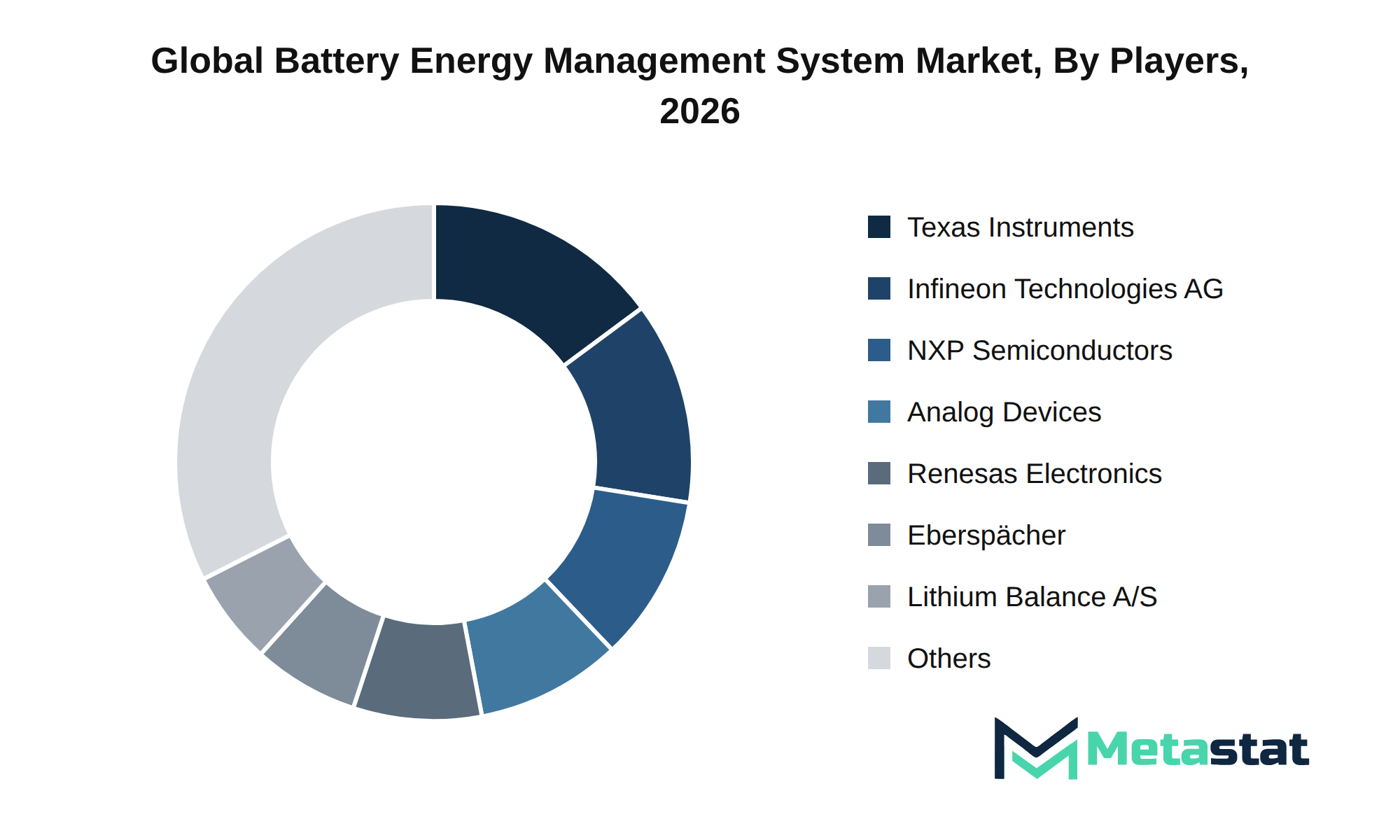
The competitive dynamics of the Battery Energy Management System market reflect a landscape characterized by strategic alliances, technological advancement, and evolving customer preferences. Companies including Lithium Balance A/S, Eberspächer, and Nuvation Energy engage in strategic consolidation and partnerships, enhancing their product offerings and expanding market reach.
Key players invest in research and development to differentiate their products, creating proprietary technology moats. Companies including Texas Instruments and Analog Devices, Inc. leverage extensive intellectual property portfolios to maintain technological defensibility. Market participants like Infineon Technologies AG and Monolithic Power Systems, Inc. focus on value chain integration, ensuring supply chain dominance and procurement leverage within the industry.
The ongoing threat of new entrants creates a competitive environment, compelling established firms to enhance customer retention strategies and improve brand equity dynamics. Current market trends indicate an increased focus on modular BMS and advanced battery types, driving innovation across the sector. While the market evolves, companies face new defensive imperatives and strategic growth vectors, shaping the future competitive outlook.
Forecast and Future Outlook
Market size is forecast to rise from USD 10.2 billion in 2025 to over USD 71.5 billion by 2033, driven by a compound annual growth rate (CAGR) of 27.5%. This growth reflects increased adoption of Battery Energy Management Systems across various sectors, including electric vehicles, renewable energy storage, and industrial applications.
The base case forecasts a steady transition towards advanced battery technologies and energy solutions. In bullish scenarios, rapid advancements in next-generation technology integration and R&D commercialization timelines could accelerate growth further. In bearish scenarios, geopolitical realignments and evolving trade corridors introduce uncertainties, potentially impacting supply chains and capital allocation. Core industry maturation and structural consumption shifts in the market signify a strong foundation for future expansion.
Strategic capital allocation directives and infrastructure commitments enhance market penetration. Emerging white-space opportunities and unmet enterprise needs highlight high-growth pockets, particularly in regions like Asia Pacific, where demand for energy storage solutions remains robust. Executive-level strategic imperatives shape the competitive landscape, ensuring sustained investment and innovation.
This market demonstrates resilience amid changing macroeconomic conditions, with compliance milestones and policy enforcement horizons driving regulatory evolution. These factors collectively create a favorable environment for investment and operational growth, reinforcing the position of Battery Energy Management Systems in the global energy ecosystem.
Battery Energy Management System Market Key Segments
By Battery Type:
- Lithium Iron Phosphate (LFP)
- Lithium Nickel Manganese Cobalt (NMC)
- Lithium Titanate (LTO)
- Lithium Nickel Cobalt Aluminum Oxide (NCA)
- Others (LMO, LCO)
By BMS Topology:
- Centralized BMS
- Modular BMS
- Distributed BMS
By Component:
- Battery Control Unit (BCU)
- Cell Monitoring Unit (CMU)
- Current & Voltage Sensors
- Temperature Sensors
- Others (Communication Interfaces (CAN, RS485, Ethernet), Battery Management Software & Diagnostics, and Balancing Circuits)
By Application:
- Electric Forklifts
- Automated Guided Vehicles (AGVs)
- Autonomous Mobile Robots (AMRs)
- Aerial Work Platforms
- Industrial Cleaning Equipment
- Terminal Tractors & Port Equipment
- Mining & Construction Electric Equipment
- Others (Electric Tow Tractors, Utility Vehicles)
By Region:
- North America
- Europe
- Asia-Pacific
- South America
- Middle East and Africa
Key Global Battery Energy Management System Industry Players
- Lithium Balance A/S
- Eberspächer
- Nuvation Energy
- AVL
- Texas Instruments
- Analog Devices, Inc.
- Renesas Electronics Corporation
- NXP Semiconductors
- Infineon Technologies AG
- Monolithic Power Systems, Inc.
- Elithion Inc.
- Orion BMS (Ewert Energy Systems, Inc.)
- Dukosi Limited
- LiBat (Togi Teknoloji LTD.)
- ENJIE
- JBD (Jiabaida) (Dongguan Jiabaida Electronic Technology Co.)
- EYBMS
- ReVx Energy
- BMT
- Electra EV
- Leclanché SA
- Bosch Engineering GmbH
- Epec, LLC
- Movicom Electric
- STMicroelectronics
Report Coverage
The report strategically identifies and profiles the key market players and analyses their core competencies in each sub-segment of the Battery Energy Management System market.
|
Report Attributes |
Details |
|
Study Period |
2021-2033 |
|
Base Year |
2025 |
|
Estimated Year |
2026 |
|
Forecast Period |
2026-2033 |
|
Historical Period |
2021-2025 |
|
Growth Rate |
CAGR 27.5% from 2026 to 2033 |
|
Revenue Unit |
USD billion |
|
Segmentation |
By Battery Type, BMS Topology, Component, Application, and Region |
|
By Region |
North America (By Battery Type, BMS Topology, Component, Application, and Country)
|
|
Europe (By Battery Type, BMS Topology, Component, Application, and Country)
|
|
|
Asia Pacific (By Battery Type, BMS Topology, Component, Application, and Country)
|
|
|
South America (By Battery Type, BMS Topology, Component, Application, and Country)
|
|
|
Middle East and Africa (By Battery Type, BMS Topology, Component, Application, and Country)
|
WHAT REPORT PROVIDES
- Key Company Market Share, Revenue and Ranking for the Battery Energy Management System Market
- Key Market Leaders and Their Competitive Strategies
- Full In-Depth Analysis of the Battery Energy Management System Industry
- Industry Statistics and Important Changes in Market Dynamics
- Segmentation Details of the Battery Energy Management System Market
- Historical, Ongoing and Projected Market Analysis
- Assessment of Niche Industry Developments and Emerging Segments
- Company Profiles of Key Players and Their Unique Selling Propositions
Frequently Asked Questions
Find answers to common questions about this report
The Battery Energy Management System market size was valued at USD 10.2 billion in 2025, according to the Metastat Insights study.
The Battery Energy Management System market is projected to grow at a CAGR of 27.5% during the forecast period from 2026 to 2033.
The North America Battery Energy Management System market size is estimated to reach USD 17.2 billion by 2033.
Lithium Nickel Manganese Cobalt (NMC) leads the Battery Energy Management System market with a projected value of USD 21.1 billion by 2033, based on its growth potential compared to other battery types.
The key drivers for the Battery Energy Management System market include economic expansion, rising demand for energy efficiency, and investments in digital technologies. Organizations prioritize sustainability and resource stewardship, leading to increased adoption of advanced energy management solutions. This market is projected to grow significantly, reaching USD 71.5 billion by 2033, driven by sustained capital investment and technological integration.
Regulatory tightening increases operational costs for manufacturers, slowing adoption rates among potential users. Infrastructure gaps and a lack of skilled labor further impede deployment, while data security vulnerabilities create trust issues that hinder market growth. Geopolitical fragmentation and supply chain instability add to the challenges faced by the Battery Energy Management System market.
Economic expansion, rising GDP, and increased venture funding drive demand for Battery Energy Management Systems. Factors favoring product adoption include a focus on energy efficiency and sustainability, prompting organizations across various sectors to integrate advanced energy management solutions. Investments in digital transformation enhance operational efficiency, supporting substantial market growth projected to reach USD 71.5 billion by 2033.
The Battery Energy Management System market is estimated to reach a valuation of USD 71.5 billion by 2033.
Key players in the Battery Energy Management System market include Lithium Balance A/S, Eberspächer, Nuvation Energy, AVL, Texas Instruments, Analog Devices, Inc., and Renesas Electronics Corporation.
Asia Pacific leads the Battery Energy Management System market, holding a share of 44.4%.
Choose Your License
Global Battery Energy Management System Market
Related Reports
Explore related market intelligence reports worth reading alongside this one.
Global High Voltage (HV) Battery Management System (BMS) Market
Starting from
$2950