Banking & Finance
Global Private Consumer Debt Relief & Restructuring Services Market
Starting from
$2950

Global Debt Recovery and Collection Services Market Size, Share, By Service Type (Accounts Receivable Management and Pre-Collection Services, Amicable / Non-Judicial Debt Collection, Debt Settlement and Negotiated Resolution, Debt Management Plans and Credit Counseling, Hardship and Forbearance Program Administration, NPL and Charged-Off Portfolio Servicing, Legal and Judicial Debt Recovery, Insolvency and Bankruptcy Recovery, Others (Skip Tracing, Field Recovery and Specialized Collections)), By Debt Type (Credit Card and Revolving Credit Debt, Personal and Consumer Loan Debt, Auto Finance Debt, Mortgage and Secured Consumer Debt, Student and Education Debt, Medical and Healthcare Receivables, Telecom, Utility and Subscription Receivables, Commercial and SME Receivables, Government and Public-Sector Receivables, Others (Retail Installment, Lease and Specialty Receivables)), By End-User (Banks and Consumer Finance Companies, Fintechs, Digital Lenders and BNPL Providers, Credit Unions and Microfinance Institutions, Healthcare Providers, Telecom, Utilities and Subscription Service Providers, Retailers, E-commerce and Consumer Services Companies, Commercial Enterprises and SMEs, Government and Public-Sector Organizations, Individuals and Households, Others (Education Providers, Insurers and Specialty Creditors)), Industry Analysis, Growth, Trends, and Forecast, 2026-2033
MSI-5061
August 26, 2026
279 Pages
Historical
Base year
Forecast
Forecast period
Report Details
Comprehensive Market Analysis And Insights
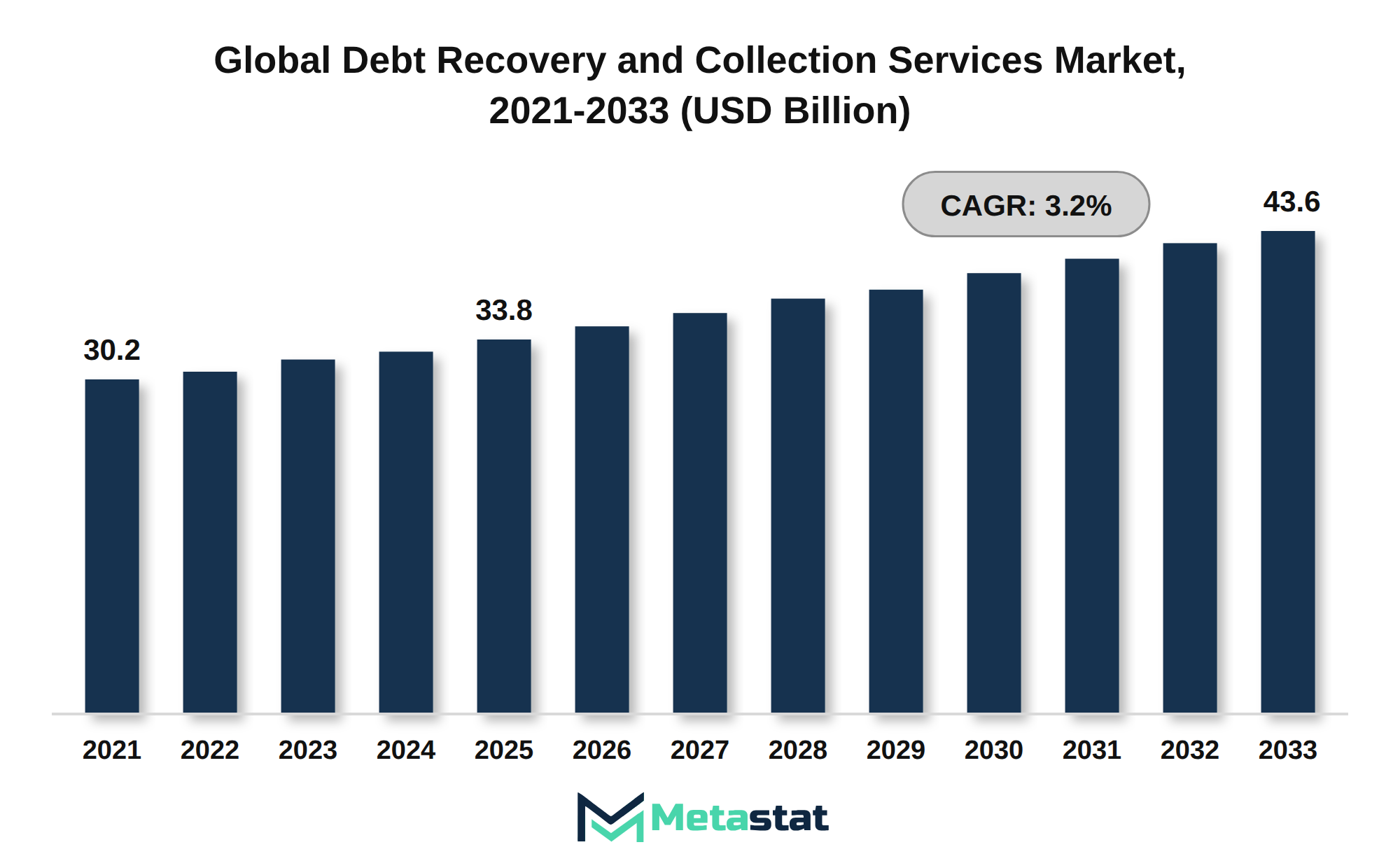
The global Debt Recovery and Collection Services market was valued at USD 33.8 billion in 2025 and is projected to reach USD 43.6 billion by 2033, growing at a CAGR of 3.2% over the forecast period.
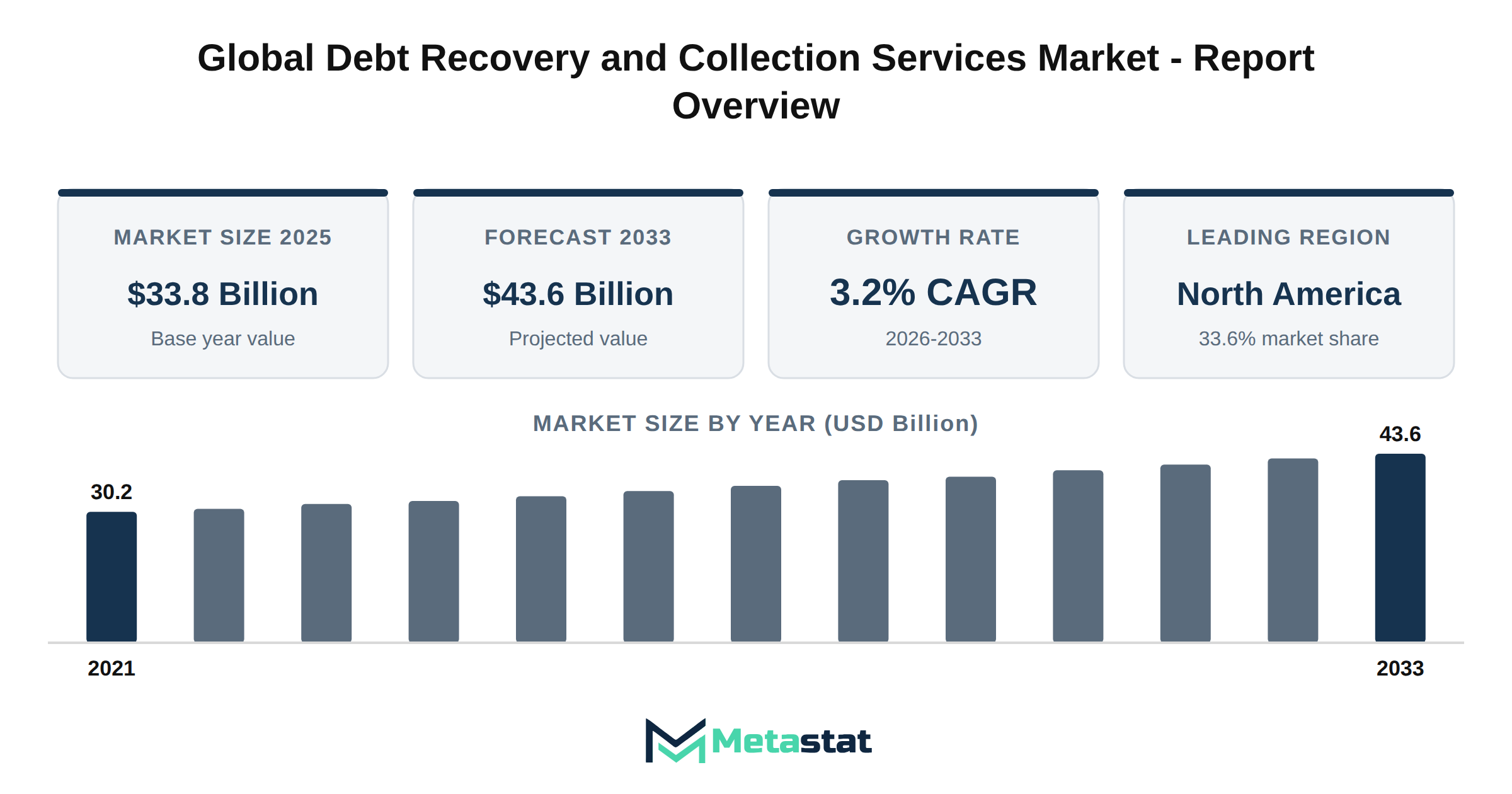
The global Debt Recovery and Collection Services market reached a base value of USD 33.8 billion in 2025, reflecting steady growth from USD 30.2 billion in 2021. Projections indicate an increase to USD 43.6 billion by 2033, representing a compound annual growth rate (CAGR) of 3.2%. This growth trajectory highlights increasing demand for efficient debt recovery solutions across various sectors.
Regional analysis shows that North America holds the largest share of the market, accounting for 33.6% of the total. Europe follows with a share of 28.2%, while the Asia Pacific region contributes 26%. South America and the Middle East and Africa hold smaller shares of 6.5% and 5.6%, respectively. By 2033, the North American market is projected to reach USD 13.6 billion, maintaining a CAGR of 3.2%.
Service type segmentation includes various categories driving demand. Accounts Receivable Management and Pre-Collection Services are expected to grow from USD 5.8 billion in 2026 to USD 7.3 billion by 2033, with a CAGR of 3.3%. The Amicable / Non-Judicial Debt Collection segment aims to reach USD 9 billion by 2033, reflecting a CAGR of 2.2%. Meanwhile, Debt Settlement and Negotiated Resolution is anticipated to achieve a value of USD 5 billion by the same year.
Debt type segmentation indicates that Credit Card and Revolving Credit Debt will rise from USD 6.8 billion in 2026 to USD 8.5 billion by 2033, with a CAGR of 3.2%. The Personal and Consumer Loan Debt segment is projected to reach USD 5.9 billion, experiencing a CAGR of 3.7%. Auto Finance Debt and Mortgage and Secured Consumer Debt contribute to overall market dynamics.
The Debt Recovery and Collection Services market faces various influences from regulatory compliance and standards. Adherence to regulations ensures that service providers operate within legal frameworks, which maintains trust among clients. Compliance with evolving standards adds operational costs but contributes positively to long-term sustainability and market acceptance.
Geopolitical factors introduce additional complexities to the market landscape. Trade policies and international relations influence operational strategies, especially for firms with cross-border dealings. Companies engaged in debt recovery navigate these dynamics to optimize their service offerings and remain competitive.
Disruption stemming from technological advancements continues to reshape service delivery and customer engagement in the market. The rise of digital platforms facilitates faster transactions and improves customer experience, pushing traditional firms to innovate their processes. Investment in technology enhances operational efficiency, which leads to reduced costs and improved recovery rates.
Research and development trajectories drive innovation within the market. Companies focusing on next-generation solutions develop advanced tools for data analytics and customer interaction, allowing them to offer tailored services. These innovations drive market growth and enhance competitive positioning.
Sustainable transformation becomes increasingly important owing to rising consumer awareness regarding corporate responsibility. Firms in the market adopt practices that promote environmental stewardship, appealing to clients who prioritize sustainability. This shift not only aligns with broader societal goals but enhances brand reputation and customer loyalty.
Market fragmentation presents both challenges and opportunities. A diverse array of service providers caters to varying client needs, enabling customization. However, this diversity complicates competitive dynamics, necessitating strategic approaches to capture market share effectively.
Capital allocation remains a significant factor influencing growth trajectories. Firms directing investments towards technology upgrades and service enhancements position themselves for future success. Infrastructure investments ensure that service delivery remains robust, meeting the demands of a changing market landscape.
Macroeconomic headwinds, including inflationary pressures and currency volatility, affect operational costs and pricing strategies within the market. Companies adopt agile financial strategies to mitigate risks associated with these external economic factors, ensuring stability and profitability.
The future strategic outlook for the Debt Recovery and Collection Services market reflects a convergence of technological advancements and regulatory compliance. Companies that align their operations with these trends are set to thrive, capturing emerging opportunities and maintaining a competitive edge.
Growth in the Debt Recovery and Collection Services market correlates with various macro-economic factors, particularly GDP growth and capital investment environments. Increasing GDP often leads to higher consumer spending and borrowing, resulting in higher levels of debt. This trend compels businesses and financial institutions to improve their debt recovery strategies, driving demand for services in the market.
Interest rates play a significant role in shaping the market. Lower interest rates facilitate greater borrowing, which leads to higher default rates in the long term. Organizations within the Debt Recovery and Collection Services market experience increased operational needs to manage outstanding debts effectively.
Public-private spending power influences the market. Increased government investments in infrastructure and public services stimulate economic activity, enhancing consumer confidence and spending. This positive economic environment supports the growth of debt recovery efforts, driven by businesses and individuals seeking to capitalize on new opportunities, resulting in higher debt volumes.
These macro-economic factors contribute to an evolving environment for the Debt Recovery and Collection Services market. The combination of GDP growth, interest rates, and public-private spending power creates a situation where businesses proactively seek effective debt management solutions, ultimately driving market expansion.
The ongoing digital transformation significantly influences the Debt Recovery and Collection Services market. Organizations increasingly prioritize the adoption of advanced technologies, including automation and artificial intelligence, to streamline processes and enhance operational efficiency. This shift supports increased accuracy in debt collection efforts and reduces the time required for recovery, positively impacting bottom-line performance.
Investment in software solutions that digitize legacy processes facilitates improved data management and analytics capabilities. These advancements allow companies to better understand customer profiles and tailor collection strategies accordingly, leading to higher recovery rates. Efficient data-driven management of accounts enhances customer relations, reducing friction and improving overall service delivery.
While digital platforms evolve, the accessibility of collection services increases, accommodating consumers' changing preferences for communication. Organizations adapting to these trends gain a competitive edge in the market, attracting new clients and retaining existing ones. Overall, the digital transformation within the Debt Recovery and Collection Services market is projected to drive sustained growth through enhanced operational productivity and cost efficiency.
The Debt Recovery and Collection Services market encounters significant constraints due to regulatory and economic pressures. Regulatory tightening introduces compliance hurdles that raise operational costs for service providers, forcing them to allocate resources toward meeting legal mandates. Increased costs reduce profit margins and slow growth opportunities across various segments of the market.
Macroeconomic headwinds, including inflationary pressures, contribute to rising costs of goods and services, affecting consumers' ability to repay debts. Inflation reduces disposable income, which slows demand for debt recovery services. Economic uncertainty leads to capital stagnation, impacting investment in new technologies and service enhancements, presenting challenges for growth and innovation within the sector.
Market fragmentation and cultural barriers hinder effective service delivery in certain regions. Differing regulations across jurisdictions complicate operations and create inconsistencies in service quality. The shortage of skilled labor, exacerbated by rising workforce overheads, limits the ability of firms to manage collections efficiently, affecting overall market performance.
Technological obsolescence represents an ongoing risk, with several providers struggling to keep pace with advancements. The emergence of alternative offerings introduces substitution risks that could divert business away from traditional service models. Addressing these complexities is crucial for stakeholders in the Debt Recovery and Collection Services market to navigate the current environment.
The Debt Recovery and Collection Services market experiences significant challenges owing to geopolitical tensions that lead to trade deficits and tariff frictions. These conditions disrupt cross-border collections and complicate operations for service providers who rely on international partnerships. Variability in regulatory environments across countries further exacerbates compliance overhead, making it difficult for firms to maintain standard practices while adhering to diverse legal frameworks.
Technological disruptions add another layer of complexity, driven by firms navigating interoperability issues among various debt management systems. Integration of advanced technologies, including automation and data analytics, requires significant investment and a skilled workforce, which creates barriers to effective operation. Talent retention pressures arising from competition for skilled professionals in a changing market heighten the challenge.
Pricing compression stemming from market saturation creates margin pressures for existing players. Rising costs of inputs further strain operational budgets, compelling firms to find innovative ways to optimize services while managing customer expectations. In addition, evolving legal liabilities related to data protection and consumer rights place an additional burden on organizations within the market.
While the market continues to adjust to these dynamics, strategic planning and adaptability become essential for navigating the complexities presented by geopolitical fragmentation and economic pressures. Firms that successfully address these challenges position themselves to thrive in an increasingly competitive environment.
The Debt Recovery and Collection Services market anticipates growth driven by emerging regional demands across North America, Europe, and Asia Pacific. North America represents the largest share, with a projected market value of USD 13.6 billion by 2033, reflecting a compound annual growth rate (CAGR) of 3.2 percent. European markets follow closely, supported by increasing consumer debt levels and heightened regulatory scrutiny. Asia Pacific experiences significant growth opportunities attributed to expanding economies, alongside rising consumer lending and credit utilization.
Infrastructure modernization provides avenues for growth, particularly in regions investing in digital technologies to enhance debt recovery processes. Investments in technologies including artificial intelligence and machine learning facilitate improved efficiencies in collections and customer engagement. Organizations transitioning to these advanced technologies position themselves competitively, capturing increased market share.
Geographical expansion into underserved areas offers additional opportunities for service providers. Companies create tailored solutions that meet local needs while adhering to regional regulations. This strategic focus enables the market to capture revenue streams from diverse demographic segments, enhancing overall profitability.
Technological disruptions and digital transformation significantly contribute to the evolution of the Debt Recovery and Collection Services market. The integration of digital platforms streamlines operations, reduces costs, and enhances customer experience. The shift towards automated processes ensures organizations maintain operational yield, maximizing financial performance.
Next-generation innovations continue to shape the market, with sustainability imperatives driving demand for eco-friendly compliance solutions. Firms aligning their offerings with environmental, social, and governance (ESG)-driven expectations attract clients prioritizing responsible business practices. This alignment builds trust and loyalty, encouraging long-term relationships.
Demand for specialized debt recovery services, including niche application growth in sectors including healthcare and commercial finance, illustrates evolving buyer preferences. Strategic consolidation through mergers and acquisitions enhances competitive positioning and expands service offerings. By addressing diverse client needs, the Debt Recovery and Collection Services market promotes resilience and adaptability in fluctuating economic conditions.
The Global Debt Recovery and Collection Services market is segmented based on Service Type, Debt Type, and End-User.
Valued at USD 5.8 billion in 2026, the Accounts Receivable Management & Pre-Collection Services segment is projected to reach USD 7.3 billion by 2033, at a CAGR of 3.3% during the forecast period. Increasing consumer debt levels drive demand for effective receivables management. Businesses face challenges related to cash flow and liquidity, prompting greater reliance on these services to minimize write-offs and enhance recovery rates.
Technological advancements in data analytics and automation facilitate enhanced efficiency in receivable management processes. These innovations enable organizations to streamline operations, improve customer interactions, and optimize collection strategies. Consequently, businesses across various sectors, including finance and healthcare, are increasingly adopting these services to mitigate risks associated with outstanding debts.
Regulatory compliance standards surrounding debt collection have intensified, necessitating a more transparent approach to accounts receivable management. Companies that adhere to these evolving regulations position themselves favorably in the market, attracting clients seeking reliable solutions. This trend creates an environment where service providers differentiate themselves based on compliance capabilities, enhancing customer trust and loyalty.
Cost structures in this segment are influenced by technology investments and ongoing operational expenses. Players in the Debt Recovery and Collection Services market that effectively balance these costs improve profitability. The competitive landscape encourages firms to innovate continuously, adapting to market dynamics and client needs. This adaptability is essential for maintaining a competitive edge.
Strategic opportunity windows exist for organizations to expand their service offerings, particularly in ancillary areas including financial consulting and credit counseling. By addressing a broader spectrum of client needs, companies enhance their value propositions, ultimately driving growth in the Accounts Receivable Management & Pre-Collection Services segment.
Demand for amicable and non-judicial debt collection services is projected to reach USD 9 billion by 2033, reflecting a compound annual growth rate (CAGR) of 2.2% during the forecast period. This growth stems from increasing consumer awareness of debt recovery options and the preference for non-confrontational methods. While businesses seek to maintain customer relationships while recovering debts, amicable approaches become essential in various sectors, including retail and healthcare.
Technological advancements enhance the efficiency of amicable debt collection processes. Digital platforms facilitate communication between debt collectors and consumers, reducing friction and encouraging positive interactions. The adoption of customer relationship management (CRM) systems and advanced analytics aids in identifying suitable debt collection strategies, further driving segment expansion. The increasing prevalence of flexible payment plans and tailored debt management solutions supports the growing acceptance of amicable debt collection services.
Cost pressures associated with traditional debt collection methods encourage businesses to explore amicable options, minimizing the need for legal actions and associated expenses. Regulatory compliance significantly influences consumer preferences, resulting from consumers favoring companies that adhere to ethical practices in debt recovery. By implementing amicable collection methods, businesses enhance their reputational standing, attracting more clients and encouraging long-term engagement in the Debt Recovery and Collection Services market.
Demand for Debt Settlement & Negotiated Resolution services continues to rise, driven by increasing consumer debt levels. Economic pressures and financial hardships push individuals and businesses to seek structured solutions for their financial obligations. Expansion of this segment is evident, reflecting the growing need for alternative debt resolutions outside traditional collection practices.
Technological advancements enhance service delivery within this segment, allowing for more efficient negotiation processes and client communication. The integration of digital platforms and data analytics supports tailored solutions, improving customer satisfaction and success rates in debt resolution. Regulatory compliance related to fair debt collection practices shapes operations, ensuring ethical standards are met while facilitating the negotiation processes.
Debt Settlement & Negotiated Resolution segment is expected to reach USD 5 billion by 2033. This growth reflects a broader trend within the Debt Recovery and Collection Services market, where shifting consumer behaviors and preferences for amicable resolutions become more pronounced. Firms operating in this segment are likely to focus on strategic partnerships and technology investments to maintain competitive advantages and meet evolving consumer demands.
Forecasts indicate the Debt Management Plans & Credit Counseling segment is projected to grow at a CAGR of 2.3% during the forecast period. Increasing financial literacy and awareness regarding debt management options serve because primary demand drivers within this segment. Growing numbers of individuals facing financial challenges and seeking structured repayment plans fuel adoption among consumers looking to improve their financial health.
Financial institutions, including banks and credit unions, actively promote these services to enhance customer retention and reduce default risks. This collaboration between service providers and financial institutions strengthens market presence and encourages innovation in debt management solutions. The emergence of digital platforms enhances accessibility, allowing consumers to engage with debt management services conveniently.
Regulatory compliance standards play a significant role in shaping service delivery within the Debt Recovery and Collection Services market. Adhering to consumer protection regulations and maintaining transparency in service offerings builds trust and credibility. This environment enhances consumer engagement and drives demand for effective debt management plans.
Pricing volatility and margin pressures specific to this segment derive from evolving market dynamics and competitive forces. Continuous advancements in technology and service delivery methods motivate investments in next-gen upgrades, ensuring that service providers remain agile and responsive to market changes. The segment's growth trajectory reflects a combination of consumer demand, strategic partnerships, regulatory influences, and technological advancements in the Debt Recovery and Collection Services market.
Demand for hardship and forbearance program administration arises from a complex landscape where consumers increasingly seek flexible repayment options during financial distress. Economic fluctuations, rising living costs, and unplanned expenditures contribute to a growing need for these services among individuals and businesses facing payment challenges. Providers in the Debt Recovery and Collection Services market respond to this demand by offering tailored solutions that align with regulatory standards and consumer protection laws, ensuring compliance while addressing client needs.
Adoption of hardship programs benefits from advances in technology, enabling more efficient processing and management of client cases. Innovative platforms facilitate communication between lenders and borrowers, streamlining the administration process. This technological maturation supports enhanced customer experiences, building trust and engagement in financial relationships. Institutions offering these services position themselves competitively in the market, contributing to overall sector growth.
Shifts in consumer behavior play a significant role in driving interest in hardship and forbearance programs. With an increasing focus on customer-centric approaches, financial institutions prioritize solutions that support borrowers in difficult times. This trend encourages collaboration among stakeholders, including lenders, collection agencies, and regulatory bodies, to develop best practices that improve success rates in debt recovery while maintaining ethical standards.
The landscape surrounding hardship and forbearance program administration demonstrates resilience amid economic pressures. Insights into cost structures and pricing volatility within the sector show a pressing balance of operational efficiency with competitive pricing strategies. Providers that adapt to these challenges enhance their market positioning, capturing opportunities for strategic investment and expansion.
Strategic opportunity windows arise owing to regulatory frameworks evolving, creating space for innovative service offerings. Organizations that align their strategies with emerging policy standards enhance their credibility and operational effectiveness. By investing in compliance measures and advanced analytics, firms enhance potential in this segment, contributing to the broader momentum within the Debt Recovery and Collection Services market.
Investment in NPL & Charged-Off Portfolio Servicing aligns with increasing financial challenges faced by consumers and businesses, prompting creditors to seek professional assistance in recovering outstanding debts. A rise in consumer credit defaults has intensified the demand for specialized services aimed at managing non-performing loans, significantly impacting the Debt Recovery and Collection Services market.
Technological advancements play a crucial role in optimizing recovery processes. Enhanced data analytics and artificial intelligence facilitate more efficient portfolio management and recovery efforts, allowing service providers to better assess risk and tailor their strategies. These developments improve operational efficiencies and boost the effectiveness of recovery efforts.
Regulatory compliance remains vital for service providers operating in this sub-segment. Adherence to evolving regulations ensures transparency and mitigates risks associated with debt recovery practices. Compliance builds trust among clients, leading to increased collaboration with financial institutions seeking effective recovery solutions.
Market participants face cost pressures stemming from fluctuating operational expenses and the need for ongoing technological upgrades. Balancing cost structures while maintaining high service standards poses challenges. Strategic investments in technology and process improvement provide avenues for enhancing margins and sustaining competitive advantages within the market.
Overall, the NPL & Charged-Off Portfolio Servicing segment stands poised for growth. Financial institutions navigate the complexities of debt recovery, leveraging technology and regulatory compliance to enhance their service offerings. This evolution reflects broader trends within the Debt Recovery and Collection Services market, creating opportunities for established players and new entrants.
Adoption of Legal & Judicial Debt Recovery services responds to rising default rates, particularly in challenging economic climates. Regulatory requirements increasingly demand formal recovery processes, prompting organizations to seek legal intervention for effective debt recovery. This trend surfaces prominently among financial institutions and businesses managing significant outstanding debts. These entities prioritize securing their financial assets through legal means. Legal frameworks support this necessity, facilitating recoveries and reinforcing compliance with industry standards.
Expansion catalysts for this sub-segment include technological advancements that enhance efficiency and accuracy in legal processes. Automation and digital tools streamline case management, allowing organizations to handle larger volumes of cases while maintaining compliance with evolving regulations. The introduction of innovative legal technologies directly impacts end-user dynamics within the Debt Recovery and Collection Services market. These advancements enable firms to navigate complex legal landscapes more effectively.
Cost structures in Legal & Judicial Debt Recovery reflect the need for specialized legal expertise, leading to pricing volatility. Fluctuations in legal service rates impact overall debt recovery costs, compelling organizations to evaluate their strategies continually. Margin pressures arise from the necessity to balance legal expenses against potential recovery outcomes. Firms focus on enhancing operational efficiency to optimize profitability.
Strategic opportunity windows exist for firms that leverage these advancements and expand service offerings. The integration of next-generation technologies presents a competitive edge, enabling organizations to adapt swiftly to market changes and client needs. Firms investing in these innovations position themselves favorably within the market and capitalize on emerging trends and consumer preferences.
Increasing insolvency rates and financial distress among individuals and businesses drive demand for Insolvency & Bankruptcy Recovery services. Economic downturns, regulatory changes, and shifting consumer behaviors necessitate effective debt recovery strategies, impacting various sectors including banking, finance, and healthcare. This segment assists in managing financial crises, helping organizations recover outstanding debts and navigate complex insolvency proceedings, which is expected to strengthen long-term demand.
Investment in technology-driven solutions enhances service delivery and operational efficiency. Adoption of advanced analytics and automated processes streamlines operations, improving recovery rates and reducing costs for service providers. Increased focus on compliance with regulatory standards further shapes the landscape, compelling players to adopt best practices that align with consumer protection laws. This proactive approach is projected to position the Debt Recovery and Collection Services market for sustainable growth and innovation.
End-user dynamics reflect a growing preference for collaborative debt resolution strategies and personalized consumer interactions. Financial institutions prioritize maintaining relationships with clients while recovering debts, leading to the adoption of amicable collection practices. This shift addresses immediate financial recovery and supports long-term client retention, influencing strategic decisions across the market.
Investment in skip tracing, field recovery, and specialized collections reflects heightened demand from businesses aiming to locate debtors and recover outstanding debts efficiently. This sub-segment benefits from advancements in technology, including data analytics and AI, facilitating more effective debtor identification and engagement. The evolving landscape of consumer credit, characterized by rising debt levels, highlights the necessity for effective recovery strategies, driving firms to seek specialized services that enhance collection rates.
Growing adoption of digital tools enhances the efficacy of skip tracing and field recovery efforts. Companies operating in the Debt Recovery and Collection Services market increasingly leverage innovative technologies to streamline processes, improve outcomes, and reduce operational costs. This technological maturation provides businesses with the agility to respond to fluctuating market conditions while maintaining compliance with regulatory standards governing debt recovery practices.
Increased focus on customer experience influences the demand for specialized collections services. Firms prioritize amicable approaches that preserve customer relationships while effectively recovering debts. The trend towards more customer-centric practices encourages the integration of specialized collections services into broader recovery strategies, expanding the relevance and application of this sub-segment across various industries. This integration enhances the overall effectiveness of debt recovery efforts.
Strategic partnerships between recovery service providers and technology firms emerge due to a key catalyst for growth within the segment. Such collaborations enhance service offerings through improved data access and analytical capabilities, positioning businesses to capture opportunities in a competitive environment. This dynamic contributes to the overall expansion of the Debt Recovery and Collection Services market.
Valued at USD 6.8 billion in 2026, the Credit Card & Revolving Credit Debt segment is projected to reach USD 8.5 billion by 2033, at a CAGR of 3.2% during the forecast period. Continuous growth in consumer spending and increasing reliance on credit cards drive demand within this segment. Financial institutions strive to manage risk effectively, focusing on the collection of outstanding balances, which significantly contributes to revenue streams.
Technological advancements play a crucial role in the evolution of collection strategies. Innovations including AI-driven analytics enhance debt recovery processes, allowing companies to identify patterns and optimize collection efforts. Increased adoption of digital communication channels facilitates engagement with consumers, improving recovery rates. The market's focus on customer experience aligns with the trend towards amicable debt collection methods, creating positive relationships between lenders and borrowers.
Shifts in consumer behavior, including heightened awareness of financial management, influence market dynamics. Individuals increasingly seek assistance with credit card debt, prompting growth in services tailored to address these needs. Regulatory compliance around fair debt collection practices further shapes operational strategies, compelling organizations to adopt more responsible collection methods. Practices that prioritize consumer protection and transparency enhance trust, benefiting both parties involved.
The competitive landscape remains dynamic, with numerous players investing in collections technology. The market experiences robust activity driven by organizations striving to differentiate their services. These efforts contribute to more efficient debt recovery processes, ultimately supporting overall growth in the Debt Recovery and Collection Services market. Increased investment in technology and innovative solutions drives competition, enhancing service offerings and operational efficiencies.
Strong growth in the Personal & Consumer Loan Debt segment reflects the increasing reliance on loans for personal and consumer expenditures. Factors driving this trend include rising living costs and the growing acceptance of credit because a financial tool. With consumers increasingly using loans for various purposes, including education, home improvement, and medical expenses, the volume of personal and consumer loan debt continues to rise. Increased competition among lenders creates more flexible loan terms and increased promotional efforts, further encouraging borrowing.
Regulatory compliance standards play a significant role in shaping the dynamics of the market. Financial institutions navigate evolving regulations regarding lending practices and consumer protections, influencing how they manage outstanding debts. With the segment estimated to reach USD 5.9 billion by 2033, at a CAGR of 3.7% during the forecast period, these regulations impact operational strategies and lead to enhanced debt recovery practices across the market.
Technological advancements contribute significantly to the efficacy of debt recovery strategies within the personal and consumer loan debt sphere. Adoption of artificial intelligence and machine learning for consumer profiling allows debt recovery agencies to tailor their approaches, improving recovery rates. The integration of digital communication channels enhances engagement with consumers, promoting more amicable resolutions and reducing the stigma of debt collection.
While the market adapts to these trends, evolving consumer preferences toward financial literacy and responsible borrowing create opportunities for education and support services. Financial institutions and recovery agencies that offer robust guidance on managing debt position themselves favorably in a competitive environment. The relationship between technological innovations, regulatory frameworks, and shifting consumer attitudes drives the growth of the Personal & Consumer Loan Debt segment within the broader Debt Recovery and Collection Services market.
Growth in the Auto Finance Debt segment aligns with rising vehicle financing activities and increased consumer debt levels in the automotive industry. Factors including low-interest rates and flexible financing options stimulate vehicle purchases, leading to a higher volume of financed vehicles. This trend results in an increase in outstanding loans, which directly impacts the demand for recovery and collection services related to auto finance debt.
Investment in digital collection techniques and data analytics enhances the efficiency of debt recovery processes. Technology-driven solutions facilitate improved communication with borrowers, enabling more effective collection strategies. Businesses within the Debt Recovery and Collection Services market focus on adopting innovations to streamline operations and enhance recovery rates.
Regulatory compliance standards play a crucial role in shaping the auto finance debt segment. Adherence to consumer protection laws and guidelines ensures ethical collection practices, promoting fair treatment for borrowers. These regulations influence operational practices and impact the overall strategy of service providers in the market.
The Auto Finance Debt segment is projected to reach USD 3.8 billion by 2033. This growth reflects a substantial demand for collection services resulting from the increase in the number of financed vehicles. Strategic opportunities arise for service providers to cater to evolving consumer needs while managing collection processes effectively.
Growth in the Mortgage & Secured Consumer Debt segment aligns with rising home and consumer loan defaults, which drives demand for effective debt recovery solutions. Financial institutions, including banks and credit unions, seek efficient strategies to recover outstanding debts from defaulted mortgage loans. Regulatory compliance standards surrounding debt collection practices influence operational strategies, leading to increased investment in compliance training and technology. Technological maturation in debt recovery processes enhances efficiency, enabling providers to better manage collections while maintaining adherence to regulations.
This segment is projected to grow at a CAGR of 2.3% during the forecast period. The debt recovery and collection services market continues to evolve, with providers focusing on digital solutions and data analytics to optimize collection strategies. Increased consumer awareness of rights and available options for debt management influences end-user dynamics, prompting financial institutions to adopt more customer-centric approaches in their recovery practices.
Increasing focus on higher education financing significantly impacts the Student & Education Debt segment of the Debt Recovery and Collection Services market. Rising tuition costs lead to higher student loan balances, creating a demand for effective debt recovery solutions. Educational institutions and lenders increasingly seek efficient collection methods to recover outstanding debts, driving growth in this segment.
Developments in technology improve the evolution of debt recovery services tailored for educational debts. Innovations including automated communication systems and advanced analytics enhance recovery rates and reduce operational costs for service providers. Educational institutions benefit from improved collection efficiencies, enabling them to allocate resources more effectively.
Regulatory compliance shapes strategies within the market. Adhering to guidelines concerning student loan collections ensures ethical practices while maintaining recovery rates. Compliance with evolving standards influences service providers to adopt best practices, reinforcing their market position.
Increased competition among educational lenders leads to heightened scrutiny of debt recovery performance, prompting service providers to refine their approaches. Effective management of collection strategies allows educational institutions to maintain positive relationships with students and their families, fostering an environment conducive to timely repayments.
Shifts in consumer behavior toward greater financial literacy and awareness contribute to the dynamics of the Student & Education Debt segment. Borrowers increasingly seek solutions that prioritize flexibility and understanding of their financial situations, compelling providers to innovate and adapt their services. This evolution supports the overall growth trajectory of the Debt Recovery and Collection Services market.
Healthcare providers increasingly seek efficient solutions for managing Medical & Healthcare Receivables. Rising patient debt levels and the complex nature of healthcare billing contribute to demand for specialized collection services. The sector experiences pressure from regulatory compliance standards that require transparent and ethical debt collection practices. This regulatory environment compels service providers to adopt best practices, enhancing the credibility and efficiency of their operations, which supports long-term growth in the Debt Recovery and Collection Services market.
Technological maturation in the healthcare sector influences strategies for collections. The integration of advanced data analytics, automation, and artificial intelligence into collection processes enables more effective recovery strategies. These innovations streamline operations, reduce administrative costs, and improve recovery rates, resulting in favorable financial outcomes for healthcare providers and increasing demand for debt recovery services.
End-use dynamics indicate that hospitals, clinics, and other healthcare organizations prioritize reducing outstanding receivables to maintain cash flow. This focus on operational efficiency drives investment in debt management solutions tailored to the unique challenges of the healthcare system. The Debt Recovery and Collection Services market responds to these developments by evolving service offerings that align with the specific needs of healthcare providers, reinforcing the segment's position in the industry.
Consumption shifts towards digital solutions highlight the necessity for collection agencies to adapt to changing consumer preferences. Patients increasingly engage with digital platforms for billing and payment processes, creating opportunities for service providers to enhance engagement through technology. This evolution supports segment growth, allowing healthcare organizations to improve patient experiences while effectively managing receivables, ultimately expanding the addressable base for debt recovery services.
Growing consumer dependency on telecom and utility services drives demand for effective collection strategies within the Debt Recovery and Collection Services market. Efficient management of subscription receivables becomes essential, driven by increasing competition and price sensitivity in these sectors. Providers prioritize innovative debt recovery solutions that enhance customer relationships and reduce friction during the collection process.
Adoption of technology in accounts receivable management supports improved tracking and engagement with customers. Enhanced digital platforms facilitate streamlined communication and payment options, significantly influencing customer satisfaction. This technological maturation leads to higher recovery rates and minimizes the risk of customer churn.
Pricing volatility and margin pressures arise from fluctuating operational costs, prompting companies to adapt their strategies for debt recovery. Regulatory compliance standards further influence operational dynamics. Adherence to these standards helps businesses maintain their reputations while ensuring service continuity in a competitive landscape.
End-use dynamics reflect the changing landscape of consumer behavior, with increased reliance on digital services. This shift necessitates a responsive approach to collection efforts that aligns with consumer preferences for flexible payment options. The evolving needs of consumers generate strategic opportunity windows for participants in the market.
Investment in next-gen upgrades and service evolution remains critical for maintaining competitiveness. This phenomenon highlights the importance of continuous improvement in service offerings, particularly in addressing the unique challenges posed by telecom, utility, and subscription receivables. In this context, companies that leverage data analytics and tailored collection strategies are well-positioned to enhance recovery efficiency and drive growth.
Commercial and SME Receivables represent a crucial segment within the Debt Recovery and Collection Services market. Demand for these services arises from the increasing number of small and medium enterprises facing cash flow challenges. Growing awareness among businesses regarding the importance of efficient cash management drives this demand. The adoption of advanced technological solutions in debt collection processes enhances efficiency, allowing for better recovery rates and faster resolution of outstanding receivables.
Businesses increasingly recognize the importance of maintaining healthy cash flow, influencing their willingness to invest in debt recovery services. This trend aligns with the overall growth within the market, where rising delinquency rates in commercial loans contribute to an expanded need for specialized recovery services. The push for regulatory compliance across various industries encourages firms to engage professional services that ensure adherence to legal standards while recovering debts.
Technological advancements play a significant role in shaping the Commercial and SME Receivables segment. Digital platforms streamline communication and enhance the recovery process, leading to improved success rates for debt collection agencies. Increasing reliance on data analytics enables firms to tailor their recovery strategies effectively, thus optimizing operations. Market players focus on integrating next-generation technologies to maintain a competitive edge while adapting to the evolving market.
End-user dynamics within this segment reflect the diverse needs of businesses, from retail to service-oriented sectors. The ability of recovery firms to cater to different industries strengthens their market position. Businesses increasingly seek partners that demonstrate a comprehensive understanding of their sector-specific challenges, ensuring tailored solutions that align with their operational models. This trend indicates a shift towards specialized services within the broader Debt Recovery and Collection Services market.
Increasing focus on government initiatives and public funding influences demand for Government & Public-Sector Receivables, positioning this segment within the broader Debt Recovery and Collection Services market. Financial constraints experienced by government entities necessitate effective recovery of outstanding debts, driving the need for specialized collection services tailored to public-sector requirements.
Regulatory compliance standards play a critical role, requiring collection agencies to operate within legal frameworks. This aspect shapes operational strategies and influences the adoption of advanced technologies to enhance compliance and efficiency. Technological maturation supports the integration of data analytics and automation, facilitating improved recovery strategies for government receivables.
Public sector entities recognize the importance of strategic partnerships with recovery services to optimize collections. These collaborations enhance operational capacity and improve cash flow management. The emphasis on transparency and accountability in public financial management further accentuates the demand for robust debt recovery solutions within this segment.
Investment in next-generation upgrades enables providers to adopt innovative solutions that address the unique challenges associated with public-sector collections. The market reflects a heightened focus on efficiency, cost structures, and pricing volatility, driving competition among service providers to deliver cost-effective and compliant debt recovery solutions.
Shifts in consumer behavior toward retail installment and lease financing create opportunities within the Debt Recovery and Collection Services market. Increasing reliance on specialty receivables, including retail purchases and leasing agreements, drives demand for effective debt recovery solutions. Retailers and financial institutions invest in strategies that enhance recovery processes, reflecting the evolving nature of consumer financing.
Technological maturation plays a critical role, with advancements in data analytics and artificial intelligence enabling more efficient collection methods. Companies leverage these tools to optimize debt recovery efforts, ensuring tailored approaches to various customer segments. Enhanced customer engagement strategies within this segment improve communication, ultimately leading to improved recovery rates.
Regulatory compliance standards exert significant influence on operational practices in the market. Organizations prioritize adherence to evolving regulations governing debt collection, which necessitates ongoing investment in training and system upgrades to sustain compliance. This emphasis on regulatory alignment enhances trust with consumers and stakeholders, positively impacting recovery outcomes in retail installment and specialty receivables.
Cost structures within the Debt Recovery and Collection Services market reflect the need for continuous adaptation. Ongoing pricing volatility impacts recovery strategies, compelling organizations to reevaluate their approaches to align with market conditions. Effective management of these pressures influences profitability and operational efficiency, shaping the competitive environment.
Strategic opportunity windows present possibilities for market players to expand their offerings. Companies focusing on innovative solutions and technology-driven enhancements position themselves to capture an increased share of the growing demand for specialized receivables recovery. Capital investment in these areas signifies confidence in the segment's potential for growth.
Banks and consumer finance companies face increasing pressure to enhance their debt recovery strategies amid rising delinquency rates. Digitization within the sector drives the adoption of advanced collection technologies and customer engagement platforms, enabling firms to streamline operations and improve recovery rates. Valued at USD 8.3 billion in 2026, the segment is projected to reach USD 9.7 billion by 2033, at a CAGR of 2.3% during the forecast period. This growth results from a combination of factors, including the ongoing shift towards digital lending and the increasing complexity of consumer debt portfolios.
Financial institutions invest in next-generation upgrades and product evolution to meet regulatory compliance standards and consumer expectations. The demand for innovative debt management solutions, including tailored repayment plans and credit counseling services, has intensified owing to banks' aim to mitigate risks associated with non-performing loans. This focus on consumer-centric approaches enhances customer loyalty and drives repeat business, contributing to growth within the Debt Recovery and Collection Services market.
While competition within the market intensifies, banks and consumer finance companies explore strategic opportunity windows to optimize their recovery processes. Partnerships with fintech firms and technology providers facilitate access to new tools and platforms, enabling improved analytics and predictive modeling capabilities. This transformation positions financial institutions to address changing consumer behaviors and implement more effective debt collection strategies.
Growth in the Fintechs, Digital Lenders & BNPL Providers segment is driven by the increasing demand for flexible payment solutions and innovative financial technologies. Consumers increasingly prefer digital experiences for managing their finances, leading to significant adoption of Buy Now Pay Later (BNPL) services and digital lending platforms. This trend enhances accessibility to credit, particularly among younger demographics who favor instant and online financial services.
The segment is estimated to reach USD 6.6 billion by 2033, at a CAGR of 5.9% during the forecast period. Competition intensifies owing to various players innovating their service offerings, resulting in improved customer engagement and satisfaction. Fintechs and digital lenders continue to enhance their debt recovery capabilities by integrating advanced technologies including artificial intelligence and machine learning, which improve collection processes and enhance efficiency.
Regulatory compliance remains a critical factor influencing the operations of fintechs and digital lenders. Adherence to evolving regulations ensures that companies maintain consumer trust while minimizing risks associated with non-compliance. The Debt Recovery and Collection Services market reflects a shift towards more consumer-friendly practices, aligning with broader trends in financial services focused on transparency and ethical treatment of borrowers.
Strategic investment in next-generation upgrades and technological advancements strengthens the position of fintechs and digital lenders in the market. Enhanced analytics capabilities and data-driven decision-making facilitate effective debt management strategies. This proactive approach not only improves recovery rates but builds long-term relationships with customers, positioning the segment for sustained growth within the wider Debt Recovery and Collection Services market.
Increasing awareness of financial literacy among consumers drives demand for tailored debt recovery solutions from Credit Unions and Microfinance Institutions. This segment provides accessible financial services to underserved populations, contributing to its anticipated growth. Regulatory compliance standards concerning responsible lending and debt collection practices significantly influence operational strategies within this segment. Providers focus on enhancing customer relationships through amicable debt collection and financial counseling, aligning with contemporary consumer preferences for supportive engagement in financial matters. The segment is projected to reach USD 3 billion by 2033, reflecting a commitment to expand operational capabilities in response to evolving market dynamics.
Investment in technology facilitates improved debt recovery processes and enhances service delivery efficiency. The integration of digital tools streamlines operations, enabling Credit Unions and Microfinance Institutions to adapt to consumer behavior shifts and regulatory requirements. Strategic partnerships with technology providers create opportunities for innovation and product evolution, allowing these institutions to offer comprehensive debt management solutions. Overall, the Debt Recovery and Collection Services market for Credit Unions and Microfinance Institutions is anticipated to expand, driven by a combination of demand drivers and ongoing investment in technological advancements.
Increasing financial pressures within the healthcare sector drive demand for efficient debt recovery solutions. Rising costs associated with healthcare services create challenges in revenue cycle management, leading healthcare providers to seek specialized services that enhance collections while maintaining patient relationships. This trend encourages investments in advanced technologies and strategies aimed at optimizing accounts receivable management, strengthening long-term demand for these services.
Healthcare providers experience unique dynamics that influence their approach to debt recovery. Factors including regulatory compliance, patient billing complexities, and the need for improved patient experiences heighten the demand for tailored collection services. This segment is projected to grow at a CAGR of 3.1% during the forecast period, reflecting sustained interest in effective debt management solutions within the Debt Recovery and Collection Services market.
The integration of technology within healthcare debt recovery processes enhances operational efficiency, allowing providers to manage collections more effectively. Robust data analytics and automated systems facilitate timely communications with patients regarding outstanding balances, further improving recovery rates. These technological advancements are essential for adapting to changing consumer expectations and compliance requirements in the market.
While healthcare organizations focus on enhancing financial performance, partnerships with specialized debt recovery firms become strategic. Such collaborations offer healthcare providers access to expertise and resources that streamline the collections process, ultimately contributing to improved cash flow and financial stability. The ongoing evolution of the debt recovery landscape emphasizes the importance of agility and responsiveness in addressing industry-specific challenges.
Telecom, Utilities, and Subscription Service Providers represent a significant focus within the Debt Recovery and Collection Services market. Strong demand arises from increasing consumer reliance on these essential services, driving operational challenges related to outstanding debts. The rise in subscription-based models contributes to the complexity of managing receivables, necessitating effective recovery strategies tailored to diverse customer segments.
The shift toward digital payment solutions facilitates easier tracking of customer accounts, enhancing collection efforts. Technological advancements enable the integration of data analytics and customer relationship management tools, improving engagement with consumers and reducing delinquency rates. Regulatory compliance standards influence operational frameworks, requiring providers to adapt their practices around consumer rights and debt recovery processes.
Considerable opportunities exist for leveraging next-generation technologies to optimize operational efficiencies and enhance customer interactions. Strategic partnerships with tech firms lead to innovative solutions that streamline the recovery process, benefiting both service providers and consumers. Investment in advanced technologies supports proactive debt management and improves financial health across the sector.
Price volatility associated with service delivery impacts margin pressures within this segment, necessitating a focus on cost structures and efficient resource allocation. Addressing these challenges while capitalizing on emerging trends creates a strategic opportunity window for telecom and utility providers. Continuous improvement initiatives ensure resilience within the supply chain, enabling adaptation to changing market dynamics.
Digital transformation trends heavily influence the debt recovery practices among retailers, e-commerce, and consumer services companies. Adoption of advanced technologies including artificial intelligence (AI) and machine learning improves efficiency in debt collection processes. These technologies enable businesses to analyze consumer behavior and tailor communication strategies, increasing the likelihood of successful collections. The ubiquity of digital payments escalates the need for effective debt recovery solutions within these sectors, driving demand for innovative approaches that align with evolving consumer preferences.
Regulatory compliance significantly impacts the operations of retailers and e-commerce companies. Adherence to data protection laws and consumer rights regulations necessitates that firms implement robust and transparent debt recovery practices. This compliance helps maintain consumer trust and prevents potential legal repercussions, contributing to operational stability. Companies investing in compliance-friendly solutions position themselves favorably in the competitive landscape of the Debt Recovery and Collection Services market.
Shifts in consumer spending patterns, especially towards online platforms, lead to a corresponding increase in debt levels within the retail and e-commerce sectors. Increased engagement in online shopping results in a growing volume of unpaid debts, necessitating efficient and effective recovery methods. Organizations that recognize and adapt to these trends enhance their recovery rates and improve overall customer relations by applying empathetic and customer-centric approaches.
Strategic partnerships and collaborations with technology providers enhance the capabilities of retailers and e-commerce companies in managing debt recovery. By integrating specialized software solutions, these firms streamline their processes, reduce operational costs, and improve recovery outcomes. Such initiatives create a competitive edge within the market, promoting sustained growth and responsiveness to market dynamics.
Increasing financial pressures among commercial enterprises and SMEs drive demand for effective debt recovery and collection services. These businesses require tailored solutions to manage outstanding debts while maintaining customer relationships. Traditional collection methods often do not align with the customer-centric approach favored by many enterprises. Therefore, the adoption of amicable and non-judicial debt collection practices becomes crucial. Such strategies enable businesses to recover debts while preserving goodwill with their clientele.
Technological advancements support the evolution of debt recovery solutions for commercial enterprises and SMEs. Integration of digital platforms streamlines the collection process, enhancing efficiency and accuracy. Companies increasingly leverage data analytics to gain insights into debtor behavior, allowing for more informed decision-making. These advancements facilitate proactive engagement with debtors, reducing delinquency rates and improving cash flow.
Regulatory compliance standards heavily influence the debt recovery process. Businesses navigate a complex landscape of regulations that govern how they communicate with debtors. Adherence to these standards mitigates legal risks and enhances the reputation of enterprises within the market. Firms that prioritize regulatory compliance demonstrate a commitment to ethical practices, which attracts and retains customers.
The need for strategic opportunities in debt recovery and collection drives investment in innovative solutions. Commercial enterprises and SMEs actively seek partners that offer comprehensive services aligning with their operational goals. This trend creates a favorable environment for service providers to develop specialized offerings tailored to the unique challenges faced by smaller businesses. The focus on enhancing service delivery strengthens competition within the market.
Cost structures and pricing volatility remain critical considerations for commercial enterprises and SMEs when selecting debt recovery services. Service providers offer transparent pricing models that clearly outline costs associated with their services. Businesses require assurance that they receive value for their investment in debt recovery solutions. Competitive pricing strategies are essential for attracting clientele in a market characterized by diverse options.
The demand for debt recovery and collection services among commercial enterprises and SMEs continues to grow. Factors including technological maturation, regulatory compliance, and the need for strategic partnerships play vital roles in shaping market dynamics. Service providers that adapt to these factors capture opportunities for expansion and enhance their competitive positioning in the debt recovery and collection services market.
Increasing requirements for effective debt management strategies within Government and Public-Sector Organizations drive demand within the Debt Recovery and Collection Services market. These organizations aim to recover funds efficiently while maintaining adherence to regulatory frameworks and public accountability standards. Rising public expenditure and the growing emphasis on fiscal responsibility further influence the demand for specialized debt recovery services. Implementing advanced technologies for data analysis and customer engagement enhances the effectiveness of debt collection processes.
Adoption of innovative debt recovery solutions reflects the sector's shift towards digital processes and automation, streamlining operations and improving customer interactions. Increased focus on compliance with governmental regulations ensures that recovery practices align with ethical standards. Distributing resources across various departments strengthens overall service delivery, enabling organizations to address diverse debt issues more effectively. Evolving consumer expectations for transparency and communication in debt recovery services lead to strategic adjustments among providers.
Investment in training and development of personnel within Government and Public-Sector Organizations promotes efficiency and effectiveness in debt collection practices. Emphasizing customer service and conflict resolution capabilities enhances relationships with citizens, creating a more positive perception of recovery efforts. These dynamics ensure that the Debt Recovery and Collection Services market continues to expand, driven by the need for organizations to optimize their financial recovery strategies.
Financial pressures on individuals and households significantly influence demand for debt recovery and collection services. Rising living costs, unemployment, and unexpected financial emergencies lead to increased reliance on credit, creating a greater demand for effective debt management solutions. The regulatory environment surrounding consumer protection plays a critical role in shaping the strategies employed by debt recovery agencies, with compliance requirements impacting operational processes and service delivery. An enhanced focus on consumer rights and ethical collection practices drives a shift toward amicable and non-judicial debt collection methods, aligning with changing consumer expectations.
Technological advancements continually reshape the debt recovery landscape, enabling innovations including automated communication and digital payment solutions that enhance engagement with consumers. These tools support the efficient management of debts, ultimately leading to improved recovery rates. The shift toward digital platforms and online services influences consumer habits, prompting a preference for streamlined interactions and self-service options. While individuals navigate financial challenges, the need for tailored debt management plans and credit counseling services becomes critical, reflecting a trend toward personalized support in navigating debt recovery.
The Debt Recovery and Collection Services market experiences growth driven by increased consumer awareness of financial literacy, which emphasizes the importance of proactive debt management. Educational initiatives promote a better understanding of financial obligations among individuals, encouraging them to seek assistance before debts escalate. This proactive stance enhances the willingness of consumers to engage with recovery services, creating a cooperative approach to debt resolution. The combination of technological maturity and evolving consumer preferences expands opportunities within this segment, positioning it for sustained relevance in the market.
Education providers, insurers, and specialty creditors represent a unique category within the Debt Recovery and Collection Services market. The rise in student debt, increasing healthcare costs, and the growing need for specialized financial products drive demand within this segment. Educational institutions and insurers require effective strategies for managing outstanding debts, ensuring timely payment from students and policyholders, respectively. Specialty creditors, characterized by their niche offerings, encounter distinct challenges related to debt recovery that require tailored approaches in collection practices.
Consumer behavior trends indicate a focus on financial management and debt resolution services, influencing how education providers and insurers engage with debt recovery solutions. Regulatory compliance standards specific to these industries enhance the complexity of collections, necessitating the adoption of innovative technologies that streamline recovery processes without compromising legal standards. This evolving landscape highlights the importance of strategic opportunity windows for players operating in the market, enabling adaptation to the specific needs of educational institutions and insurance companies.
Investment in advanced collection technologies plays a critical role in optimizing operations within this sub-segment. The integration of data analytics and customer relationship management tools enhances recovery rates and improves client relationships. Through these investments, firms achieve better outcomes in managing debts while navigating the complexities associated with regulatory frameworks. Overall, the segment reflects significant potential for growth within the broader Debt Recovery and Collection Services market, driven by evolving client needs and technological advancements.
Based on geography, the Global Debt Recovery and Collection Services market is divided into North America, Europe, Asia-Pacific, South America, Middle East, and Africa.
The North America Debt Recovery and Collection Services market presents significant growth opportunities driven by a combination of economic factors and changing consumer behaviors. In the region, the projected expansion at a CAGR of 3.2% will lead to a market size of USD 13.6 billion by the end of 2033. The presence of well-established financial institutions in the United States, Canada, and Mexico facilitates the demand for debt recovery services, owing to these institutions seeking to optimize their accounts receivable management.
The influence of regulatory frameworks significantly shapes market dynamics. North American countries maintain stringent compliance mandates that govern debt recovery practices, ensuring industry players adhere to ethical standards and consumer protection laws. These regulations encourage transparency and build trust between consumers and service providers, thereby stimulating demand for efficient debt recovery solutions.
Infrastructure modernization initiatives across North America enhance the operational capacity of debt recovery firms. Investments in technology and digital solutions streamline processes, reduce operational costs, and improve recovery rates. The adoption of advanced data analytics tools enables service providers to identify and target delinquent accounts more effectively, contributing to the overall growth of the market.
Competition within the market remains robust, with several domestic players striving to capture market share. Companies operating in the region focus on enhancing service offerings, improving customer experience, and expanding their reach through strategic partnerships and collaborations. This competitive landscape drives innovation and encourages investment in new technologies, further supporting the growth trajectory of the Debt Recovery and Collection Services market. The ongoing evolution of service strategies reflects the dynamic nature of the industry.
Localized procurement dynamics influence service delivery, with firms tailoring their offerings to meet the unique needs of regional clients. Cultural nuances and distinct consumer behaviors across the United States, Canada, and Mexico shape the strategies employed by debt recovery firms. Understanding these regional differences is essential for providers aiming to optimize their engagement with clients and improve recovery outcomes.
The Debt Recovery and Collection Services market in Europe shows significant potential for growth, driven by various factors unique to the region. Countries including Germany, France, and the UK exhibit mature market dynamics characterized by established financial infrastructure and stringent regulatory frameworks. In Italy and Spain, rising consumer debt levels create robust demand for effective debt management solutions, while Russia's evolving economic landscape presents both opportunities and challenges for service providers.
Localized procurement dynamics influence purchasing decisions in the market, with buyers seeking vendors that understand regional cultural nuances and compliance mandates. The ongoing modernization of financial services infrastructure across Europe facilitates the adoption of innovative debt recovery practices, enhancing efficiency. Emerging market participants in the region include established firms leveraging advanced technologies to streamline operations and improve collection rates.
Despite a mature market, underpenetrated territories remain, presenting growth vectors for new entrants. The competitive landscape features domestic firms alongside international participants, leading to regional vendor consolidation trends. Strategic entry barriers, including regulatory compliance and cultural differences, dictate the dynamics of market participation, influencing foreign direct investment flows and geographic expansion strategies.
Energy grid resiliency and local infrastructure readiness play crucial roles in supporting the operational capabilities of debt recovery firms. Regional resource availability, particularly in technology and human capital, enhances the ability of firms to adapt to changing market requirements. Overall, the European Debt Recovery and Collection Services market reflects a complex set of factors, positioning it for gradual yet steady growth through the forecast period.
The Asia-Pacific region presents significant growth opportunities within the Debt Recovery and Collection Services market, driven by increasing consumer debt levels and the evolving financial landscape. Countries like China, Japan, and India are experiencing a surge in personal and consumer loan debt, prompting financial institutions to adopt more efficient debt recovery strategies. The region's expanding fintech sector, particularly in nations including Australia and South Korea, reflects a shift towards digitized solutions that streamline debt collection processes and enhance customer engagement.
Emerging markets within Southeast Asia present untapped potential, characterized by rising smartphone penetration and internet access. This demographic shift enables debt recovery firms to leverage technology for improved outreach and communication with consumers. The region's diverse economic conditions necessitate tailored approaches to debt collection, encouraging localized strategies that align with cultural nuances and consumer behavior.
The regulatory framework across Asia-Pacific varies significantly, influencing operational practices and compliance requirements within the market. Countries with established financial regulations, including Japan, exhibit mature market dynamics that encourage collaboration between debt recovery agencies and financial institutions. In contrast, regions with less stringent regulations, like India, experience heightened competition among service providers striving to capture a larger market share.
Investment in infrastructure modernization enhances the operational readiness of debt recovery firms, facilitating faster and more efficient service delivery. Cross-border trade corridors and regional supply chain considerations further impact service dynamics, driven by businesses adopting localized manufacturing and procurement strategies. This trend encourages the growth of domestic market leaders and vendor consolidation, reshaping the competitive environment.
While the Asia-Pacific Debt Recovery and Collection Services market evolves, continuous adaptation to changing economic conditions, regulatory landscapes, and consumer preferences will dictate success. The region's rapid growth trajectory, alongside increasing financial literacy and awareness among consumers, positions it because a vital contributor to the global debt recovery ecosystem.
The South American Debt Recovery and Collection Services market faces distinct dynamics shaped by regional characteristics. Brazil and Argentina, leading markets in this territory, exhibit unique demand drivers driven by rising consumer credit levels and increased financial literacy. The need for effective debt management strategies remains essential, influenced by economic fluctuations and consumer behavior patterns.
Infrastructure modernization enhances service delivery within the market. Investment in technology and digital solutions strengthens operational efficiencies for debt recovery firms, allowing for improved customer engagement and enhanced collection rates. The convergence of traditional and digital debt collection methods facilitates broader market penetration.
Brazil accounts for a substantial share of the market, supported by its large population and growing demand for consumer credit. Argentina, while smaller, demonstrates significant growth potential owing to improving economic conditions and a shift towards more structured debt recovery processes. The Rest of South America includes emerging markets that present opportunities for localized service providers seeking to capture market share.
The Debt Recovery and Collection Services market exhibits a competitive landscape populated by both domestic players and international firms. Increasing consolidation trends among service providers enhance operational capacities, allowing for a broader geographic reach. This competitive environment creates opportunities for innovative service offerings tailored to meet regional demand.
Regulatory frameworks across South America influence debt recovery practices. Compliance with local regulations ensures that service providers operate within legal parameters, building trust and confidence among consumers. Adherence to these regulations remains critical in shaping the market's overall growth trajectory.
The Debt Recovery and Collection Services market in the Middle East and Africa reflects a developing landscape characterized by unique regional dynamics. Countries including Saudi Arabia, UAE, and South Africa play key roles in shaping market trends, fueled by increasing consumer awareness and financial challenges.
Significant growth derives from rising demand for debt recovery solutions across various sectors, including banks and consumer finance companies. The financial technology sector experiences notable expansion, driven by digital lenders and BNPL providers seeking efficient recovery methods.
Market participants face specific challenges, including regulatory compliance and localized procurement dynamics. Cultural nuances affect B2B buying behaviors, requiring tailored approaches to address the distinct needs of clients in the region. The market share for this area stands at 5.6% of the global total in 2025, indicating the potential for further growth resulting from recovery services adapting to evolving regional demands.
Infrastructure modernization initiatives enhance the operational capabilities of service providers, while foreign direct investment flows indicate confidence in market potential. The Debt Recovery and Collection Services market in this region experiences incremental growth vectors, contributing to overall industry expansion.
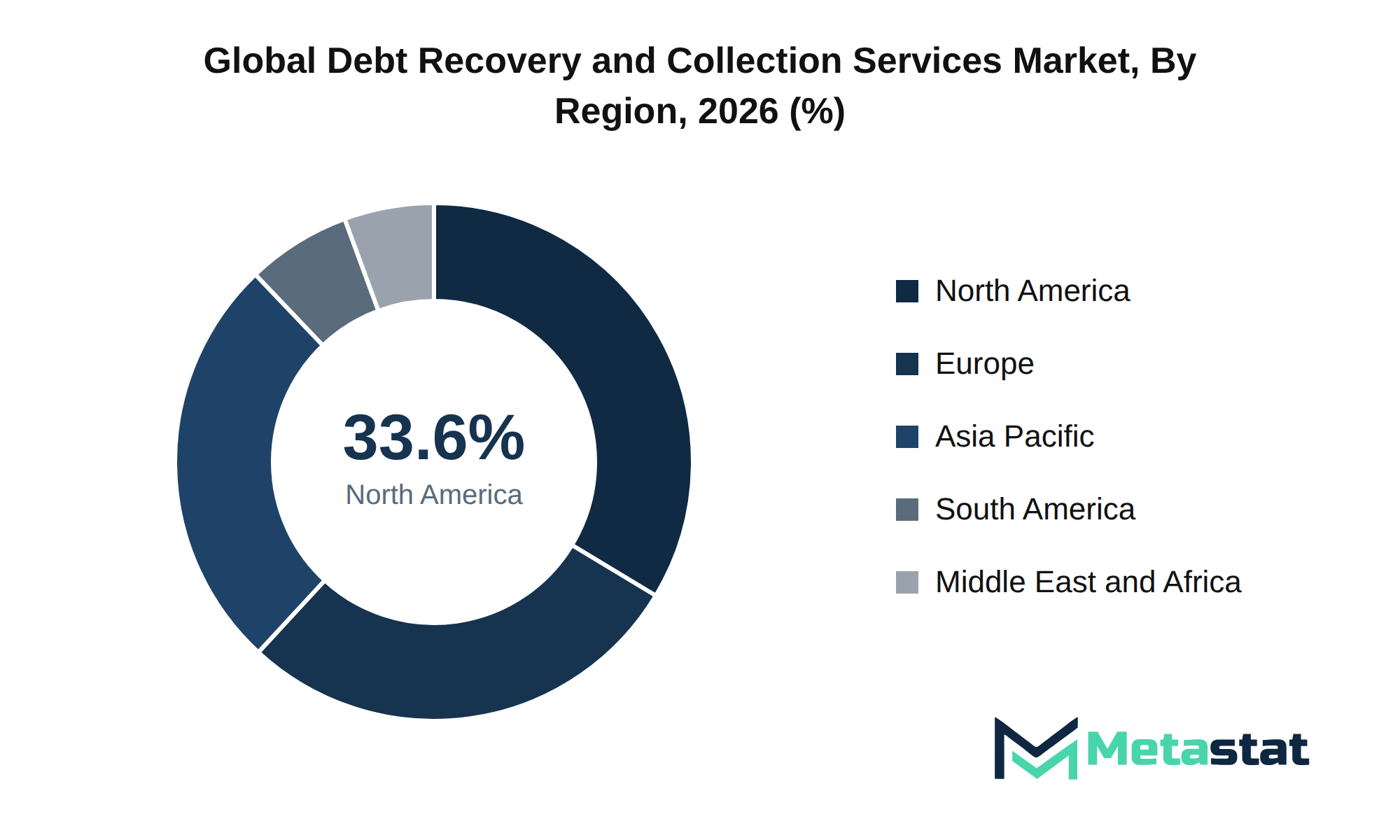
The Debt Recovery and Collection Services market experiences notable activity driven by mergers and acquisitions, strategic consolidation, and partnerships. Companies like Intrum AB (publ) and EOS Holding GmbH / EOS Group pursue strategic alliances to enhance service offerings and optimize operational efficiencies. Riverty and B2 Impact ASA leverage joint ventures to expand their market reach and scale their operations effectively.
Pricing architectures in the market evolve owing to firms adapting to competitive pressures and shifting consumer expectations. For instance, organizations including Axactor ASA and Myntro AB (formerly Alektum Group) implement differentiated pricing models to attract diverse client segments while maintaining service quality. Companies focus on customer retention strategies, emphasizing brand equity and creating switching costs to secure long-term relationships with clients.
The presence of established players like KRUK S.A. and doValue S.p.A. adds to the competitive dynamics by creating barriers to entry for new entrants. The Debt Recovery and Collection Services market faces challenges from startups aiming to disrupt traditional business models through innovative technology solutions. This environment encourages continuous improvement and adaptation among existing participants.
Future competitive outlook suggests a focus on leveraging technology to enhance operational capabilities and improve customer experiences. Companies including TrueAccord Corp. and Radius Global Solutions LLC prioritize research and development to create proprietary technology moats, ensuring a competitive edge in the evolving landscape.
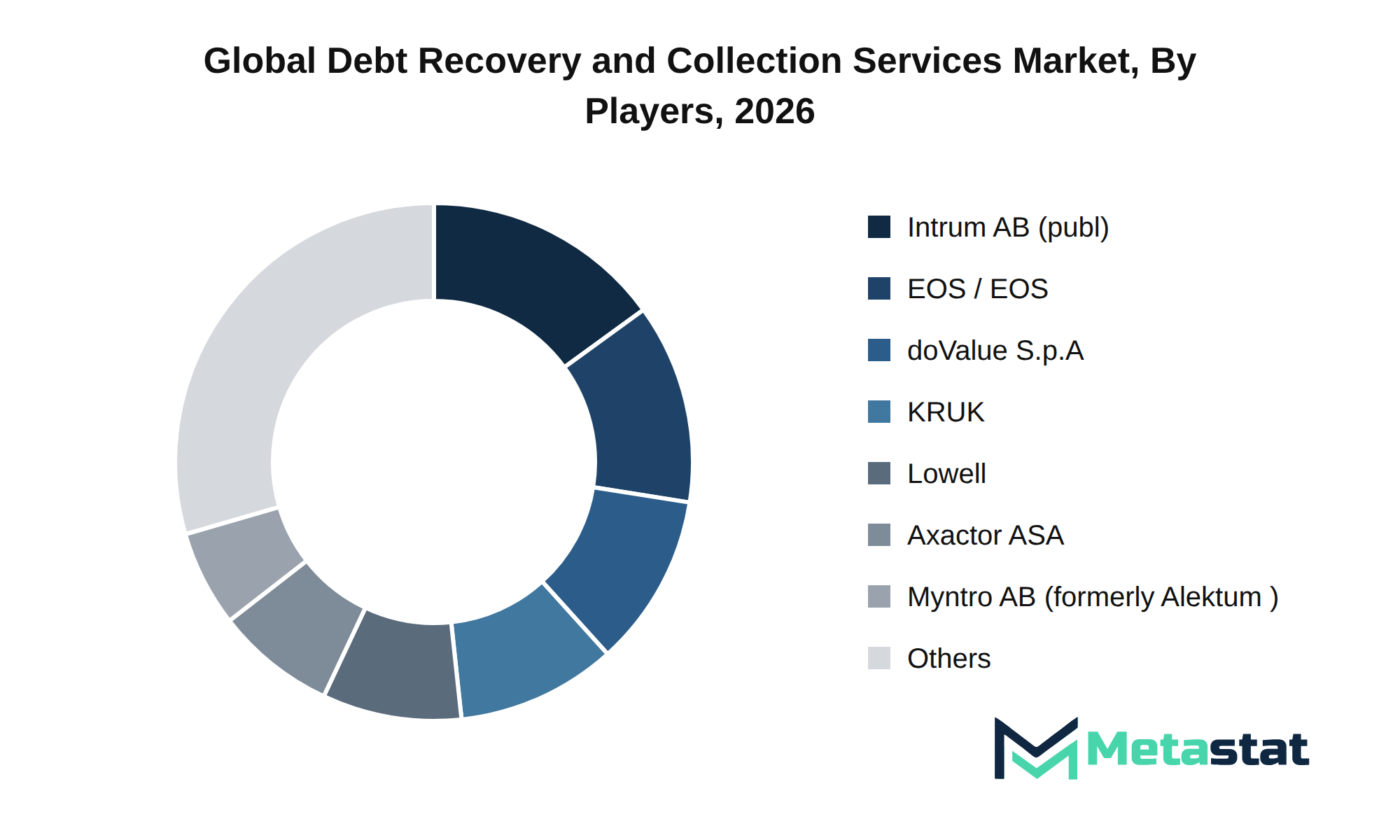
Market size is forecast to rise from USD 33.8 billion in 2025 to over USD 43.6 billion by 2033. This growth reflects the stable performance of the Debt Recovery and Collection Services market, driven by several macroeconomic factors and evolving industry dynamics. The base case reflects a compound annual growth rate (CAGR) of 3.2%. The bullish scenario anticipates accelerated recovery in consumer spending, leading to higher demand for debt recovery solutions, while the bearish outlook considers potential economic downturns that could constrain growth.
The integration of next-generation technologies, including automation and AI, enhances operational efficiency within the market. These technologies improve processes, reduce operational costs, and increase recovery rates. Regulatory changes continue to shape the industry, with compliance milestones influencing operational strategies and investment allocations. Organizations are increasingly focusing on infrastructure commitments and capital expenditure investments to strengthen their market position.
Shifts in consumer behavior and the increasing prevalence of digital lending platforms create high-growth pockets within the Debt Recovery and Collection Services market. Strategic capital allocation directives emphasize investments in technologies that facilitate efficient transaction processes and enhance customer experiences. Evolving geopolitical landscapes and trade corridors further influence operational strategies, compelling firms to adapt to new regulatory environments and compliance requirements.
Future growth recommendations stress the importance of understanding emerging white-space opportunities and unmet enterprise needs within the debt recovery sector. Businesses that align their offerings with these demands and leverage technological advancements are well-positioned to capture significant market share. Continued investment in research and development will play a crucial role in maintaining competitiveness within the sector.
The report strategically identifies and profiles the key market players and analyses their core competencies in each sub-segment of the Debt Recovery and Collection Services market.
Report Attributes | Details |
Study Period | 2021-2033 |
Base Year | 2025 |
Estimated Year | 2026 |
Forecast Period | 2026-2033 |
Historical Period | 2021-2025 |
Growth Rate | CAGR 3.2% from 2026 to 2033 |
Revenue Unit | USD billion |
Segmentation | By Service Type, Debt Type, End-User, and Region |
By Region | North America (By Service Type, Debt Type, End-User, and Country)
|
Europe (By Service Type, Debt Type, End-User, and Country)
| |
Asia Pacific (By Service Type, Debt Type, End-User, and Country)
| |
South America (By Service Type, Debt Type, End-User, and Country)
| |
Middle East and Africa (By Service Type, Debt Type, End-User, and Country)
|
Find answers to common questions about this report
The Debt Recovery and Collection Services market size was valued at USD 33.8 billion in 2025, according to the Metastat Insights study.
The Debt Recovery and Collection Services market is projected to grow at a CAGR of 3.2% during the forecast period from 2026 to 2033.
The North America Debt Recovery and Collection Services market size is estimated to reach USD 13.6 billion by 2033.
The segment "Amicable / Non-Judicial Debt Collection" leads the Debt Recovery and Collection Services market, with a projected value of USD 9 billion by 2033. This figure reflects the highest anticipated revenue among the service type segments.
Growth in the Debt Recovery and Collection Services market is driven by macro-economic factors including GDP growth, interest rates, and public-private spending power. Increasing GDP results in higher consumer spending and borrowing, while lower interest rates lead to higher default rates, compelling businesses to enhance their debt recovery strategies. The ongoing digital transformation supports operational efficiency and recovery rates.
North America holds the dominant share of the Debt Recovery and Collection Services market, with a value of USD 13.6 billion projected for 2033, representing 33.6 percent of the total market.
The Debt Recovery and Collection Services market faces constraints from regulatory tightening, which raises operational costs and reduces profit margins. Macroeconomic headwinds, including inflation, decrease disposable income and slow demand for recovery services. market fragmentation and cultural barriers hinder effective service delivery, complicating operations for providers.
Growth in the Debt Recovery and Collection Services market is driven by increasing GDP, which boosts consumer borrowing and spending. The ongoing digital transformation encourages the adoption of advanced technologies, enhancing operational efficiency and improving recovery rates. These factors create a favorable environment for product adoption in the industry.
The Debt Recovery and Collection Services market is estimated to reach a valuation of USD 43.6 billion by 2033.
Key players operating in the Debt Recovery and Collection Services market include Intrum AB (publ), EOS Holding GmbH / EOS Group, Lowell, Riverty, B2 Impact ASA, Axactor ASA, and Myntro AB (formerly Alektum Group).
Choose Your License
Global Debt Recovery and Collection Services Market
Explore related market intelligence reports worth reading alongside this one.
Starting from
$2950
Starting from
$2950