
LEAD ANALYST
Utkarsh Khirodkar is a Lead Market Research Analyst at MetaStat Insight, specializing in market intelligence, technology sector assessments, and competitive strategy.

Global Private Consumer Debt Relief & Restructuring Services Market Size, Share, By Service Type (Debt Consolidation & Refinancing, Debt Management Plans, Debt Settlement & Negotiated Debt Reduction, Consumer Debt Restructuring, Credit Counseling & Financial Advisory, Formal Insolvency / Consumer Proposal Services), By Debt Type (Credit Card & Revolving Credit Debt, Unsecured Personal Loans, Consumer Finance & Installment Loans, Payday & High-Cost Short-Term Loans, Medical Debt, Private Student Loans, Buy Now, Pay Later Debt, Utility & Telecom Arrears, Others (Unsecured Tax Liabilities, Personal Guarantees)), By Service Delivery Mode (Digital / Online Platforms, Telephone-Based Services, In-Person / Branch-Based Services, Hybrid Advisory Services), Industry Analysis, Growth, Trends, and Forecast, 2026-2033
Report ID
MSI-5062
Published
August, 2026
Pages
303 Pages
Format
Historical
Base year
Forecast
Forecast period
Report Details
Choose Your License
Global Private Consumer Debt Relief & Restructuring Services Market
The global Private Consumer Debt Relief & Restructuring Services market was valued at USD 35.2 billion in 2025 and is projected to reach USD 68.1 billion by 2033, growing at a CAGR of 8.6% over the forecast period.
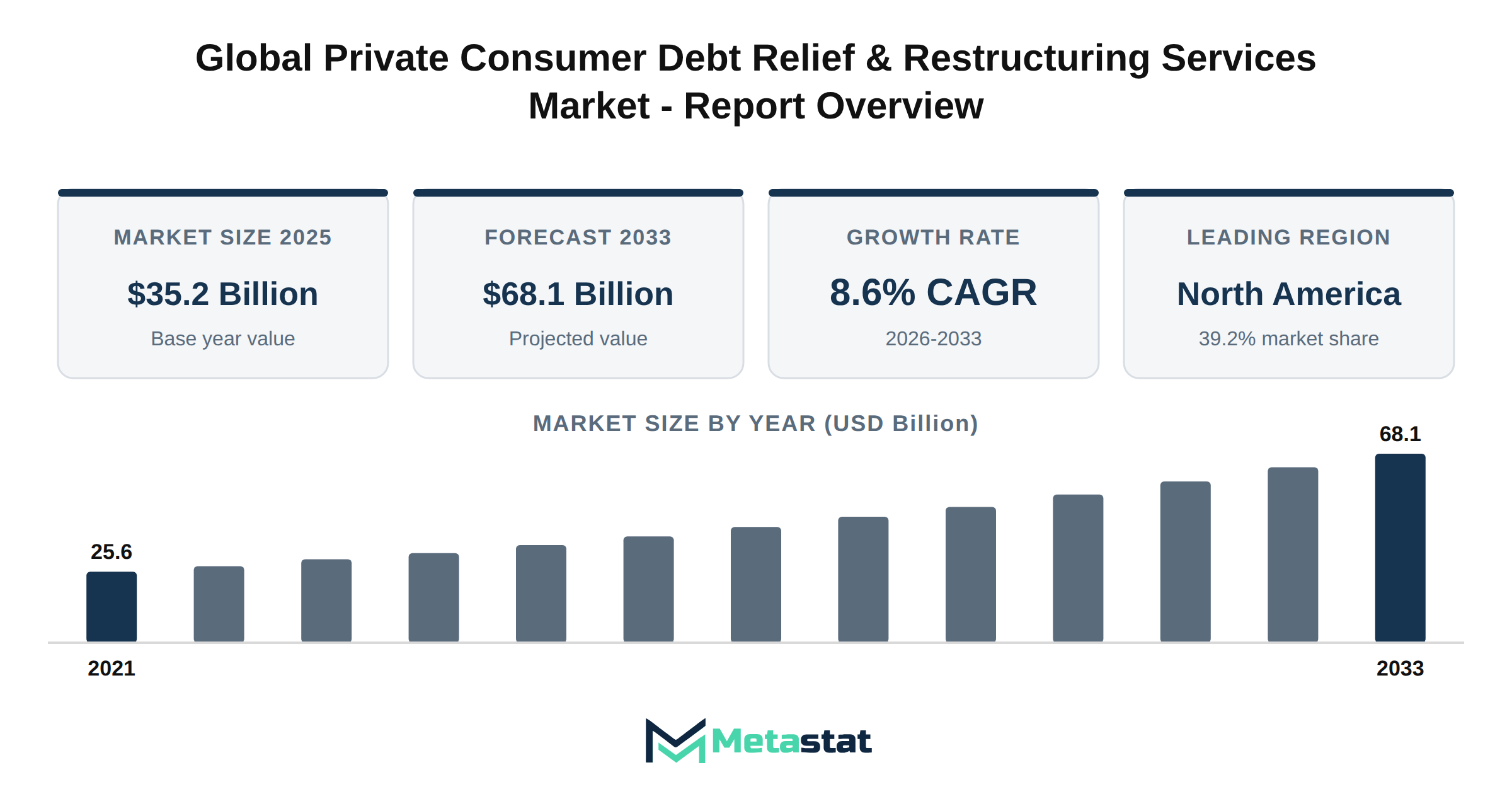
The Private Consumer Debt Relief & Restructuring Services market reached a valuation of USD 35.2 billion in 2025, reflecting significant growth from USD 25.6 billion in 2021. This upward trend is anticipated to continue, with projections indicating an increase to USD 68.1 billion by 2033, resulting in a compound annual growth rate (CAGR) of 8.6% throughout the forecast period.
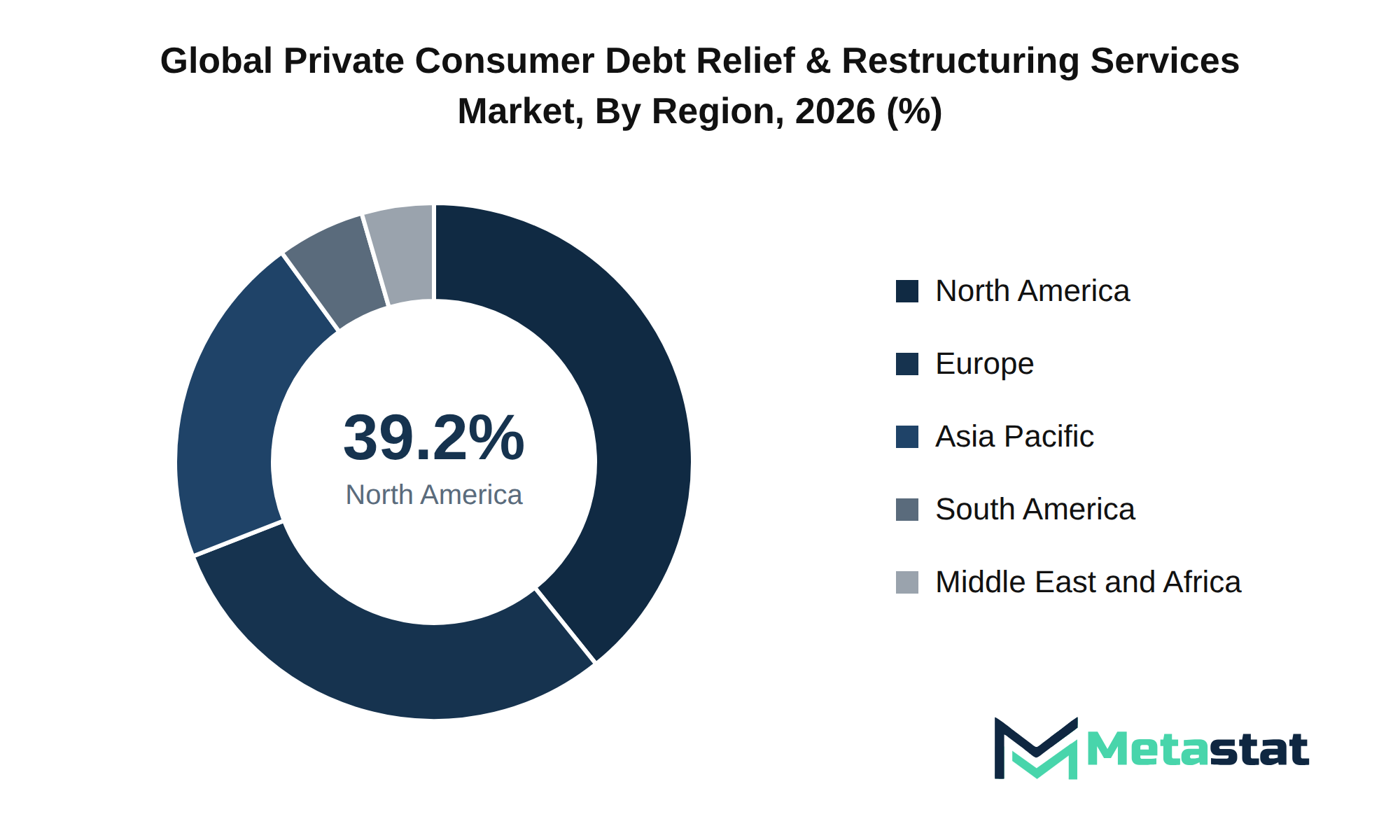
North America dominates the market with a share of 39.2%, driven by high consumer debt levels and increasing awareness of debt relief options among individuals. Europe follows with a 29.8% share, where regulatory frameworks supporting consumer rights enhance market growth. The Asia Pacific region captures 20.9% of the market, reflecting a growing demand for debt management solutions in emerging economies.
Debt Consolidation & Refinancing services, valued at USD 11.6 billion in 2026, are expected to expand to USD 21.4 billion by 2033, achieving a CAGR of 9.1%. Debt Management Plans are projected to reach USD 11.6 billion during the same period, with a CAGR of 7.9%. The segment for Debt Settlement & Negotiated Debt Reduction is set to reach USD 13.3 billion by 2033. Consumer Debt Restructuring services exhibit a CAGR of 9.8%.
The market for Credit Card & Revolving Credit Debt is projected to grow from USD 11.8 billion in 2026 to USD 20.1 billion by 2033, with a CAGR of 7.9%. Unsecured Personal Loans are anticipated to reach USD 14.1 billion by 2033, contributing to the overall growth. Digital and Online Platforms are expected to drive service delivery, with a projected value increase from USD 13.6 billion in 2026 to USD 26.7 billion by 2033, reflecting a CAGR of 10.2%.
The Private Consumer Debt Relief & Restructuring Services market operates within a complex ecosystem influenced by various factors. Regulatory compliance plays a critical role, driven by service providers adhering to laws governing consumer protection and financial practices. This environment shapes operational strategies and impacts market growth trajectories.
Market fragmentation remains significant, with a diverse array of players competing for market share. This competition drives innovation in service delivery, encouraging firms to explore digital platforms and hybrid advisory models. Consequently, firms invest in enhancing customer experiences, aligning offerings with changing consumer preferences.
Macroeconomic headwinds, including inflationary pressures and currency volatility, pose challenges for both consumers and service providers. These economic factors influence consumer behavior, driving demand for debt relief solutions. Firms strategically navigate these variables to maintain profitability and market presence.
Future strategic outlooks for the Private Consumer Debt Relief & Restructuring Services market focus on capital allocation and infrastructure investments. Companies prioritize investment in technology and service enhancements to capture emerging opportunities. This proactive approach positions firms to respond effectively to evolving market dynamics and consumer needs.
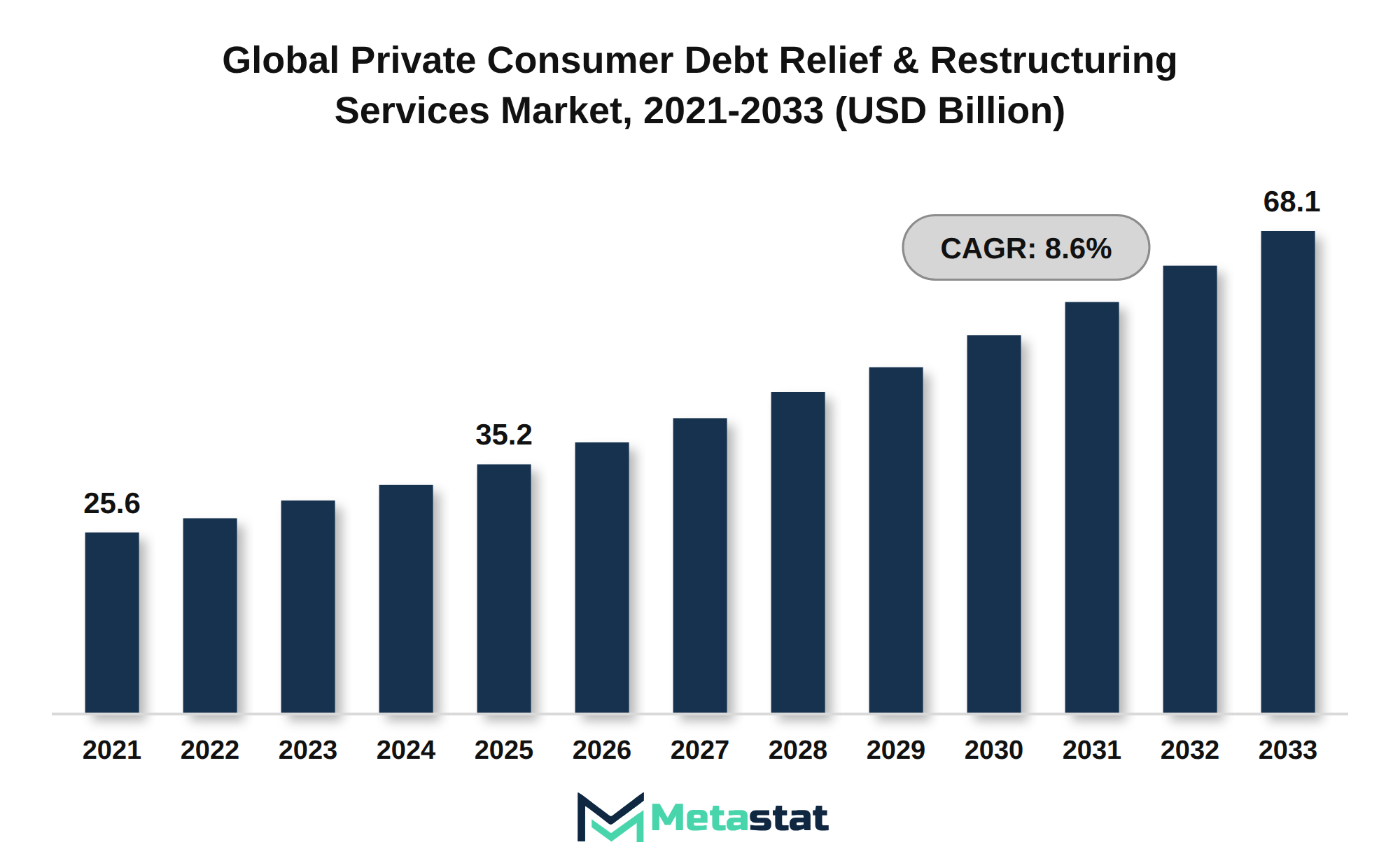
The expansion of the Private Consumer Debt Relief & Restructuring Services market aligns closely with macro-economic factors, particularly economic growth and fluctuations in interest rates. Rising consumer debt levels, fueled by increased disposable income and higher spending, contribute to demand for debt relief solutions. Economic conditions including GDP growth influence consumers' ability to manage debt, prompting a shift toward restructuring services.
Low-interest rates enhance access to credit, leading to higher borrowing among consumers. This scenario creates a parallel rise in debt levels, stimulating demand for services that assist in managing and restructuring these debts. The evolving capital investment environment, characterized by venture funding and public-private spending power, supports growth of platforms that provide debt relief and restructuring services.
The ongoing digital transformation modernizes the delivery of these services. Automation and software adoption streamline operations, allowing service providers to cater to a larger audience efficiently. Such advancements improve operational productivity and enhance client experiences, driving greater engagement in the Private Consumer Debt Relief & Restructuring Services market.
Overall, the combination of these macro-economic elements creates a strong growth trajectory for the market, with sustained demand anticipated through evolving economic landscapes and consumer behaviors.
Investment in digital transformation significantly influences the Private Consumer Debt Relief & Restructuring Services market. Organizations are increasingly adopting advanced technologies, including automation and artificial intelligence, to streamline operations and enhance service delivery. This trend arises from the urgent modernize legacy systems, reduce costs, and improve customer engagement. Enhanced digital platforms enable service providers to offer efficient solutions tailored to consumer needs, ultimately attracting a larger client base.
The shift toward digitalization aligns with evolving consumer behaviors, where clients prioritize convenient, online access to debt relief services. This transformation caters to a growing demographic that values user-friendly digital experiences. The increased accessibility of services through digital channels enhances competitive positioning for providers within the market.
Investment in these technologies is projected to improve operational productivity and reduce overhead costs, contributing to the overall growth trajectory of the market. With organizations focusing on integrating innovative solutions, the Private Consumer Debt Relief & Restructuring Services market is anticipated to experience significant expansion, driven by the imperative for efficiency and enhanced consumer satisfaction.
Challenges related to regulatory compliance and legal mandates present significant hurdles for the Private Consumer Debt Relief & Restructuring Services market. Increasing scrutiny from regulators regarding consumer protection and financial transparency affects operational practices for service providers. Compliance with evolving regulations often incurs heightened costs, straining smaller firms and limiting competitive positioning against larger companies with more resources.
Macroeconomic headwinds, including inflationary pressures and capital stagnation, contribute to market challenges. Rising costs associated with service delivery erode profit margins, leaving firms struggling to maintain service quality while managing expenses. Inflation's impact on consumer spending influences the demand for debt relief services; individuals prioritize essential expenditures over financial restructuring.
Infrastructure gaps and connectivity deficits further hinder market expansion. Limited access to reliable communication channels in certain regions delays service delivery and impedes the ability to support clients effectively. This results in a fragmented market where service availability varies, creating disparities in consumer access to debt relief options.
Technological obsolescence and the risk of substitution from alternative financial solutions create additional pressure on market players. Firms continuously innovate to remain relevant, which requires significant investment in technology and talent. The potential for new entrants offering alternative debt management solutions intensifies competition, challenging established players to adapt rapidly.
The Private Consumer Debt Relief & Restructuring Services market faces a complex array of constraints linked to regulatory compliance, economic conditions, infrastructure limitations, and technological advancements. These factors collectively shape the operational landscape and influence market dynamics, necessitating strategic adjustments from industry participants to sustain growth and competitiveness.
The Private Consumer Debt Relief & Restructuring Services market faces challenges arising from geopolitical fragmentation, which influences consumer confidence and financial behavior. Trade deficits and tariff frictions between major economies contribute to market uncertainties, affecting the overall economic climate. These conditions lead consumers to reassess their financial health, impacting demand for debt relief services.
Technological disruptions further complicate the landscape, necessitating complex integrations and adaptations among service providers. A lack of interoperability between new technologies and existing systems creates friction, hindering the efficiency of service delivery. Rising input costs and margin pressures challenge operational profitability. Increased pricing compression forces service providers to seek innovative solutions while maintaining service quality.
Rising workforce skill gaps and challenges in talent retention impact the market's ability to deliver effective services. The ongoing transition towards digital platforms requires skilled personnel who understand both technology and consumer debt management. Environmental sustainability demands and decarbonization mandates add layers of complexity to operational practices, compelling firms to invest in compliance and eco-friendly solutions.
The combination of these factors leads to an unstable market environment, affecting growth potential and investment strategies within the Private Consumer Debt Relief & Restructuring Services market. Companies that adapt swiftly to these challenges maintain competitive advantages, while others struggle to meet evolving consumer demands and regulatory expectations.
The Private Consumer Debt Relief & Restructuring Services market experiences significant opportunities driven by emerging regional demands across various global markets. Specific regions, including North America, Europe, and Asia Pacific, demonstrate increasing consumer awareness regarding debt management solutions, promoting the need for tailored services. Fluctuating disposable incomes and persistent economic uncertainties intensify demand for effective debt relief strategies, particularly in regions with high consumer debt levels.
Infrastructure modernization enhances market prospects by enabling service providers to offer more efficient and accessible solutions. Digital transformation initiatives result in the proliferation of online platforms that facilitate consumer access to debt relief services. Coupled with technological disruptions, these developments lead to innovative service delivery modes, including hybrid advisory services and digital consultations, which cater to evolving consumer preferences.
Geographical expansion remains essential for growth, with companies actively seeking to penetrate underserved markets. This pursuit creates strategic opportunities for cross-industry partnerships, particularly in regions where financial literacy programs gain traction. The market benefits from collaborations that leverage diverse expertise, ensuring consumers receive comprehensive debt management solutions.
Next-generation innovations, including artificial intelligence and machine learning, enhance service offerings by improving consumer engagement and personalized recommendations. These technological advancements contribute to higher operational yield maximization, allowing providers to optimize service delivery and client satisfaction. Evolving consumer buying behaviors, influenced by increased reliance on digital platforms, further support market expansion.
The convergence of emerging regional demands, infrastructure modernization, and technological disruptions presents substantial opportunities for the Private Consumer Debt Relief & Restructuring Services market. These factors collectively establish a conducive environment for growth, driving investments and encouraging competitive dynamics among service providers.
The Global Private Consumer Debt Relief & Restructuring Services market is segmented based on Service Type, Debt Type, and Service Delivery Mode.
Valued at USD 11.6 billion in 2026, the Debt Consolidation & Refinancing segment is projected to reach USD 21.4 billion by 2033, at a CAGR of 9.1% during the forecast period. Increasing consumer debt levels drive demand for debt consolidation services, driven by individuals seeking effective ways to manage multiple debt obligations. Economic factors, including rising interest rates and inflation, prompt consumers to explore refinancing options to secure lower rates and more favorable terms.
This segment experiences significant expansion catalysts from technological advancements, particularly through digital platforms. Enhanced online services enable consumers to access debt consolidation and refinancing options more conveniently, leading to higher adoption rates. The shift toward digital delivery modes increases accessibility, particularly among younger consumers who prefer online interactions over traditional in-person services.
End-use dynamics reflect a growing preference for customized financial solutions. Consumers increasingly prioritize tailored debt repayment strategies, leading to an evolution in service offerings within the Private Consumer Debt Relief & Restructuring Services market. Increased awareness of financial literacy among consumers contributes to a shift toward informed decision-making regarding debt management.
Regulatory compliance standards reinforce the importance of transparent practices within the segment, promoting consumer trust and encouraging higher engagement levels. Consequently, service providers invest in compliance measures, which ultimately enhances their market credibility and helps mitigate policy-related risks.
Cost structures in this segment fluctuate due to pricing volatility driven by interest rate changes and competitive pressures. Service providers adapt to these fluctuations, ensuring profitability while maintaining competitive pricing to attract and retain clients. Strategic opportunity windows arise from evolving consumer preferences, necessitating continuous innovation and adaptation within the Debt Consolidation & Refinancing segment.
Increased consumer awareness regarding financial health drives demand for Debt Management Plans within the Private Consumer Debt Relief & Restructuring Services market. Clients seek structured solutions to manage their debts effectively and regain financial stability. Financial literacy initiatives encourage individuals to explore these plans, highlighting their benefits in negotiating favorable repayment terms and reducing overall debt burdens.
Technological advancements enhance the accessibility and efficiency of Debt Management Plans. Digital platforms facilitate communication between consumers and service providers. This advancement improves customer experiences, allowing for tailored solutions that meet specific needs. The ongoing integration of technology in service delivery is expected to attract more clients, contributing to the segment’s growth.
The Debt Management Plans segment is estimated to reach USD 11.6 billion by 2033, at a CAGR of 7.9% during the forecast period. This expansion results from rising debt levels among consumers across various demographics, particularly amid economic fluctuations. The shift in consumer attitudes towards debt management emphasizes proactive measures, propelling demand for structured repayment plans.
Regulatory compliance remains a critical factor influencing the market. Adherence to standards ensures transparency and consumer protection, establishing trust in service providers. These regulations incentivize companies to enhance their offerings, promoting a competitive environment that encourages innovation. Compliance strengthens the overall credibility of the sector, influencing consumer decisions when selecting service providers.
The evolving nature of the Private Consumer Debt Relief & Restructuring Services market creates strategic opportunities for investment and expansion. Companies investing in innovative solutions and customer service improvements position themselves favorably in this growing segment. By focusing on consumer-centric approaches, providers capture a larger market share and drive long-term growth in Debt Management Plans.
Market trends indicate a significant growth trajectory for the Debt Settlement & Negotiated Debt Reduction segment, which is expected to reach USD 13.3 billion by 2033. This expansion stems from increasing consumer awareness of debt relief options and rising financial stress among households. High levels of consumer debt, particularly from credit cards and unsecured loans, drive demand for effective debt settlement strategies.
Technological advancements in communication and service delivery enhance the efficiency of debt negotiation processes. Digital platforms facilitate quicker access to services, allowing consumers to engage with debt relief providers remotely. The shift towards digital service delivery serves because a significant catalyst for growth, aligning with consumer preferences for convenience and accessibility.
Regulatory compliance influences market dynamics. Legal frameworks governing debt settlement services require providers to adhere to strict guidelines, thus influencing their operational strategies. Focusing on compliance mitigates risks and builds consumer trust, creating a more secure market environment.
Cost structures impact pricing strategies for debt settlement services. Increased competition encourages firms to refine their pricing models while maintaining service quality. This competitive pricing landscape benefits consumers, offering them more choices and potentially lower costs for debt relief solutions.
The Private Consumer Debt Relief & Restructuring Services market reflects a growing consumer inclination towards structured financial solutions. With a focus on innovative service delivery and a commitment to compliance, the segment positions itself for sustained growth in the coming years.
Growth within the Consumer Debt Restructuring segment reflects a strong demand for tailored financial solutions that help individuals manage their debt more effectively. This demand arises from increasing consumer debt levels, which lead to greater financial stress among households. With a projected CAGR of 9.8% during the forecast period, this segment plays a critical role in the overall Private Consumer Debt Relief & Restructuring Services market.
Technological advancements further drive adoption by enhancing the accessibility and efficiency of debt restructuring services. The rise of digital platforms enables consumers to engage with services remotely, streamlining the debt management process. While online solutions gain traction, financial service providers are compelled to invest in innovative technologies that improve user experience. This trend drives substantial market growth and positions companies favorably within a competitive environment.
Regulatory changes shape the dynamics of the Consumer Debt Restructuring segment. Compliance with evolving legal standards builds consumer confidence in using debt relief services, stimulating demand. Financial institutions that adhere to these regulations not only improve their reputations but create opportunities to expand their customer bases. Consequently, the market demonstrates resilience and adaptability in response to shifting regulatory environments.
Ultimately, increased consumer awareness regarding debt management strategies contributes to the expansion of this segment. Individuals become more informed about available solutions, and the shift towards proactive debt restructuring initiatives gains momentum. This proactive approach to financial health positions the Consumer Debt Restructuring segment because a vital component of the broader Private Consumer Debt Relief & Restructuring Services market.
Consumer demand for credit counseling and financial advisory services within the Private Consumer Debt Relief & Restructuring Services market stems from the growing need for effective financial management solutions. Increased consumer debt levels, particularly in credit card and personal loans, create a pressing requirement for expert guidance in navigating complex debt situations. Clients seek assistance not only to manage their debts but to improve their overall financial health.
Technological advancements facilitate the expansion of this segment through digital platforms, which offer greater accessibility and convenience for users. These platforms enhance client engagement by providing real-time advice and personalized financial planning tools, driving user adoption. The integration of artificial intelligence and machine learning supports the development of tailored solutions, improving the effectiveness of counseling services.
Regulatory compliance shapes service delivery within this segment. Adherence to established financial regulations ensures trust and credibility among consumers, creating a more favorable market environment. The evolving regulatory landscape requires providers to remain agile and responsive to meet compliance standards while delivering high-quality services.
Amid these dynamics, pricing pressures emerge due to increased competition among service providers. Companies strive to differentiate themselves by offering innovative solutions and enhanced customer experiences. This competitive environment encourages continuous improvement and adaptation, allowing organizations to better address the diverse needs of consumers seeking debt relief.
The strategic opportunity window for credit counseling and financial advisory services continues to expand, driven by ongoing economic fluctuations and shifts in consumer behavior. Investments in marketing and outreach initiatives are vital for capturing the attention of potential clients. Partnerships with financial institutions enhance service offerings, further strengthening market positions within the Private Consumer Debt Relief & Restructuring Services market.
Growing economic pressures and increasing consumer debt levels drive demand for Formal Insolvency and Consumer Proposal Services. Many consumers facing financial distress seek structured alternatives to bankruptcy that these services offer. The rising prevalence of unsecured debts, including personal loans and credit card debts, increases this segment's relevance within the Private Consumer Debt Relief & Restructuring Services market.
Technological advancements streamline service delivery, enhancing accessibility for consumers navigating financial challenges. Digital platforms facilitate engagement, providing clients with timely information and support to address their financial situations. Consumers increasingly prefer online solutions for managing debt, prompting service providers to adopt innovative technologies to improve their offerings.
Regulatory changes impact this segment, driven by governments implementing measures to protect consumers during financial crises. Compliance with these regulations becomes essential for service providers, establishing trust and reliability within the market. Adapting to evolving compliance standards enhances the credibility of Formal Insolvency and Consumer Proposal Services, contributing to increased consumer adoption.
The demand for these services aligns with broader economic trends, including rising living costs and stagnant wage growth, which intensify the financial strain on consumers. Consequently, industry players focus on improving their service portfolios, ensuring they address changing consumer needs while maintaining competitive pricing structures. This emphasis on affordability and effectiveness positions the segment for sustainable growth within the Private Consumer Debt Relief & Restructuring Services market.
Valued at USD 11.8 billion in 2026, the Credit Card & Revolving Credit Debt segment is projected to reach USD 20.1 billion by 2033, at a CAGR of 7.9% during the forecast period. Increasing consumer reliance on credit cards drives heightened demand for debt relief solutions aimed at this segment. Economic fluctuations and rising interest rates increase financial strain on consumers, resulting in a growing need for effective debt management strategies. Regulatory changes and compliance requirements shape the landscape of this market segment, leading to enhanced service offerings tailored to meet evolving standards.
Adoption of digital platforms transforms service delivery modes, providing access for consumers in need of support. Technological advancements enable service providers to enhance customer engagement and streamline processes, leading to improved outcomes for clients. Strategic collaborations between financial institutions and debt relief service providers create a comprehensive approach to managing credit-related challenges, addressing both immediate consumer needs and long-term financial wellness goals. This collaborative framework strengthens the overall market, driving investment and innovation in the Private Consumer Debt Relief & Restructuring Services market.
Growing credit accessibility and rising consumer borrowing patterns directly influence the demand for Unsecured Personal Loans. This segment is characterized by individuals seeking financial flexibility without collateral requirements, appealing to a broad demographic. A notable driver stems from the increased reliance on digital platforms, facilitating easier access to loan applications and approvals. Enhanced technological integration within financial institutions further streamlines the process, enabling faster turnaround times for loan disbursement.
Adoption rates reflect a significant shift towards unsecured borrowing solutions, prompted by economic conditions and shifting consumer preferences. Regulatory changes focusing on consumer protection and transparency contribute to a more favorable lending environment, building trust in unsecured personal loan offerings. This environment encourages market growth, driven by borrowers feeling more secure in their financial transactions.
The Unsecured Personal Loans segment is estimated to reach USD 14.1 billion by 2033, at a CAGR of 9% during the forecast period. This trajectory indicates a strong market expansion, driven by increasing consumer confidence and evolving financial behaviors. The competitive landscape sees established players and new entrants enhancing product offerings to meet diverse consumer needs, intensifying market dynamics.
Financial institutions emphasize personalization and customer experience to differentiate their services. The integration of advanced data analytics allows lenders to tailor products to individual requirements, presenting a strategic opportunity to capture market share. While the market adapts to these trends, it positions itself for sustained growth within the larger Private Consumer Debt Relief & Restructuring Services market.
Consumer Finance & Installment Loans represent a critical component of the Private Consumer Debt Relief & Restructuring Services market, facilitating access to credit and financial solutions for consumers. This segment is projected to reach USD 9.4 billion by 2033, reflecting a growing need for manageable repayment options in a landscape marked by increasing debt levels. Enhanced consumer awareness regarding the implications of financial decisions drives adoption, prompting a shift toward structured repayment plans.
Technological advancements in digital platforms streamline application processes and improve user experiences, significantly impacting segment growth. The integration of fintech solutions into traditional lending practices supports a more efficient service delivery model, positioning companies to cater more effectively to consumer demands. Strategic investment in next-generation solutions enhances the competitive edge of service providers, ensuring responsiveness to market dynamics.
Regulatory compliance standards shape operational frameworks within the segment, influencing pricing strategies and service offerings. Adhering to these standards enhances consumer trust and builds long-term relationships, which are essential for sustained market presence. Pricing volatility remains a challenge, impacting profit margins and necessitating adaptive strategies from service providers within the market.
Heightened competition among players fuels innovation, driving the evolution of products and services relevant to Consumer Finance & Installment Loans. Downstream applications across various consumer demographics present strategic opportunity windows for further growth, enabling firms to expand their offerings and meet diverse consumer needs. This segment's trajectory aligns with broader trends in the market, where consumer empowerment and financial literacy take center stage.
Consumer preferences for short-term financial solutions contribute significantly to growth within the Payday & High-Cost Short-Term Loans segment. The segment is projected to grow at a CAGR of 8.1% during the forecast period. Increasing reliance on these financial products stems from urgent cash needs and limited access to traditional credit avenues. Consumers facing unexpected expenses turn to payday and high-cost short-term loans for a quick source of funding, impacting their financial health in the long run.
Regulatory scrutiny surrounding high-cost lending practices influences market dynamics. Governments implement regulations to protect consumers from predatory lending, affecting how companies operate within this space. Despite challenges from regulatory changes, demand for these loans persists due to their accessibility and convenience. This ongoing demand signifies a critical aspect of the Private Consumer Debt Relief & Restructuring Services market.
Competition within the segment encourages providers to explore innovative service delivery models, including digital platforms. Enhanced technology and user-friendly online applications streamline the borrowing process, attracting younger consumers comfortable with digital transactions. Such advancements cater to consumer preferences and support market expansion by creating more efficient lending processes.
Increased attention on healthcare costs among consumers stimulates demand for medical debt relief services. Rising medical expenses contribute to a growing number of individuals facing financial distress, prompting interest in specialized debt relief options. The tendency of healthcare providers and insurers to charge high prices creates notable challenges for consumers, leading to an increase in medical debt levels. This scenario drives a greater need for effective restructuring services that address the unique circumstances surrounding medical debt.
Segment expansion derives from heightened consumer awareness about the available options for managing medical debt. Financial education initiatives highlight the importance of addressing medical-related financial burdens, promoting the adoption of specific services. The Private Consumer Debt Relief & Restructuring Services market continues to evolve, with an increasing number of providers offering tailored solutions to meet this demand.
Technological advancements enhance service delivery for medical debt relief. Digital platforms enable consumers to access debt counseling and management services more conveniently, streamlining the process of obtaining assistance. Service providers offer sophisticated tools and resources to facilitate effective debt management.
Regulatory compliance introduces additional complexities in the provision of medical debt relief services. Legislative changes regarding debt collection practices and consumer protections impact how services are structured and delivered. Providers in the market adapt to these changes to ensure compliance with standards while delivering effective solutions to consumers.
The ongoing evolution in the medical debt relief sector creates strategic opportunities for market participants. By enhancing service offerings and focusing on customer-centric solutions, companies capture a larger share of the growing market. Innovations in service delivery and a commitment to consumer education remain vital in responding to the challenges presented by rising medical debt and increased competition within the sector.
Private student loans represent a growing concern within the Private Consumer Debt Relief & Restructuring Services market. Increasing tuition costs and a higher reliance on education financing drive a surge in private student loan debt. Many borrowers face challenges in managing these debts, resulting in increased demand for restructuring services and repayment assistance. The evolving educational landscape, coupled with rising interest rates, contributes to the complexity of managing these loans, pushing consumers to seek professional help in debt management.
This segment experiences unique dynamics influenced by the regulatory environment surrounding education loans. Changes in policy and consumer protection regulations affect borrower rights and repayment options, encouraging more individuals to engage with debt relief services. Shifting consumer behavior towards seeking support for financial planning and loan restructuring further highlights the importance of effective debt management solutions in this sector. The market adapts to these demands through innovative service offerings and strategic partnerships, enhancing the consumer experience.
Increasing adoption of Buy Now, Pay Later (BNPL) services reflects a significant shift in consumer borrowing behaviors. Rising popularity of BNPL options stems from consumer preferences for flexibility and immediate access to products without upfront costs. This shift enhances financial accessibility for consumers, particularly among younger demographics who prioritize convenience and affordability. Businesses increasingly integrate BNPL solutions to attract customers and drive sales, strengthening long-term demand.
Regulatory scrutiny around BNPL offerings presents challenges for service providers. Compliance with emerging regulations shapes product development and marketing strategies. Adapting to these standards is essential for maintaining consumer trust and ensuring sustainable growth. The segment's evolution aligns with broader trends in the Private Consumer Debt Relief & Restructuring Services market, reflecting the need for continuous innovation and responsiveness to regulatory changes.
Technological advancements support the expansion of BNPL services, enabling integration with e-commerce platforms and enhancing user experiences. The shift towards digital payment methods aligns with consumer expectations for convenient and efficient financial solutions. Increasing online shopping drives demand for BNPL services, further embedding these services into everyday purchasing behaviors.
The competitive landscape for BNPL providers continues to evolve, with established financial institutions and fintech startups vying for market share. Innovation and differentiated offerings become crucial in attracting consumers in a crowded marketplace. Strategic partnerships between technology providers and financial institutions enable enhanced service offerings, creating opportunities for differentiation and growth within the market.
In the context of the Private Consumer Debt Relief & Restructuring Services market, the Utility & Telecom Arrears segment experiences significant demand owing to the rising number of consumers struggling with utility and telecommunication bills. Economic fluctuations and the increasing cost of living lead to difficulties in managing these essential expenses. This segment’s growth reflects a broader trend where consumers prioritize managing housing, utility, and telecommunication debts, driven by the necessity of maintaining access to vital services.
Adoption of utility and telecom debt relief services sees acceleration alongside advancements in digital platforms that streamline access to assistance. Technological maturation enables consumers to engage with services through mobile applications and online platforms, enhancing convenience and accessibility. This evolution creates a more supportive environment for consumers facing financial hardships related to utility and telecom payments, ultimately positioning these services because essential in the broader financial wellness ecosystem.
Certain regulations impact service delivery, with compliance playing a critical role in shaping operational standards. Providers navigate various legal frameworks to offer solutions that align with consumer protections and ensure sustainable business practices. Consequently, the segment emphasizes transparency, ethical practices, and consumer education, which are essential in building trust and facilitating long-term relationships with clients.
Costs associated with utility and telecom debts vary widely, influenced by geographic location and service providers. Fluctuations in pricing and potential margin pressures challenge service providers to develop resilient strategies for managing expenses while offering competitive pricing. The presence of disruptive alternatives, including peer-to-peer lending platforms and community-based assistance programs, creates a dynamic competitive environment that compels innovation and responsiveness among service providers.
Investment outlook in this segment remains strong, driven by an increasing recognition of the importance of financial stability. Service providers focus on capitalizing on strategic opportunity windows through enhanced service offerings and tailored solutions, thereby strengthening market positioning. The Private Consumer Debt Relief & Restructuring Services market is poised for continued evolution, with utility and telecom arrears representing a vital focus area for growth and consumer support.
The presence of unsecured tax liabilities and personal guarantees significantly influences consumer behavior within the Private Consumer Debt Relief & Restructuring Services market. Increasing complexities in tax regulations contribute to rising instances of tax-related debt, prompting consumers to seek specialized assistance. This demand creates opportunities for service providers to cater to clients facing financial challenges related to tax liabilities.
Expanding awareness of personal financial management enhances the urgency for services addressing these specific debts. Consumers actively seek solutions to alleviate financial burdens exacerbated by tax obligations, driving competition among providers to develop tailored services. The evolving regulatory landscape surrounding tax compliance further complicates consumers' financial situations, increasing the need for effective debt relief strategies.
Strategic investments in technology and service delivery modes strengthen providers' capacities to offer innovative solutions for managing unsecured tax liabilities and personal guarantees. The market experiences a gradual shift towards digital platforms, enabling more accessible and efficient service delivery, which attracts a broader customer base. This trend enhances consumer engagement and retention, ultimately benefiting stakeholders within the Private Consumer Debt Relief & Restructuring Services market.
Valued at USD 13.6 billion in 2026, the Digital / Online Platforms segment is projected to reach USD 26.7 billion by 2033, at a CAGR of 10.2% during the forecast period. Rising consumer preference for digital solutions significantly influences this segment's expansion, driven by customers increasingly seeking accessible and efficient debt relief options through online channels. Technological advancements, including enhanced user interfaces and streamlined processes, facilitate the adoption of digital platforms, aligning with the growing trend of online financial services. Integration of advanced analytics and artificial intelligence within these platforms enhances personalization, improving customer engagement and satisfaction.
While consumers prioritize convenience and immediate access to financial assistance, demand shifts towards digital offerings. Regulatory compliance standards for online services ensure that these platforms maintain transparency, thereby building consumer trust. In the context of the Private Consumer Debt Relief & Restructuring Services market, the increasing shift towards online transaction methods and the expansion of internet accessibility support continued growth. The transition from traditional service delivery modes to digital platforms reflects a broader trend of modernization within the industry, driving innovation and competitive advantage.
Emerging technologies aimed at enhancing the user experience create strategic opportunity windows for service providers, allowing them to differentiate their offerings. Investment in cybersecurity measures becomes crucial due to concerns regarding data privacy and security persisting among consumers using digital platforms. The increase in online service adoption reinforces the market's growth trajectory. Stakeholders focus on optimizing their digital presence to capture the expanding customer base.
Increasing reliance on telephone-based support for debt relief services aligns with consumer preferences for personalized assistance. This segment is projected to reach USD 12.4 billion by 2033, at a CAGR of 6.3% during the forecast period. Enhanced customer engagement through direct communication builds trust and rapport, which is critical in the Private Consumer Debt Relief & Restructuring Services market. With rising concern over financial literacy and debt management, consumers increasingly seek guidance from expert advisors through this service delivery mode.
Adoption of telephone-based services is supported by technological advancements in communication platforms. Organizations invest in training and technology to improve service delivery efficiency, enhancing operational capabilities. Rising competition among service providers encourages innovation in service offerings, driving the evolution of telephone-based solutions. This evolution addresses diverse consumer needs through tailored debt relief strategies, which further enhances market presence.
Regulatory compliance influences the dynamics of telephone-based services. Adherence to industry standards and consumer protection regulations ensures that service providers maintain credibility and consumer trust. This compliance creates a favorable environment for market expansion, positioning telephone-based services because a vital component of the broader Private Consumer Debt Relief & Restructuring Services market.
Consumer behavior shifts towards personalized and accessible financial solutions enhance the demand for In-Person / Branch-Based Services. Clients prefer face-to-face interactions when addressing complex financial issues, creating a distinct competitive advantage for organizations offering these services. Clients value the personalized attention and tailored solutions available through in-person consultations, leading to increased customer satisfaction and loyalty within the Private Consumer Debt Relief & Restructuring Services market.
Adoption of these services aligns with broader trends in consumer finance, including rising levels of personal debt and a heightened focus on financial literacy. Regulatory compliance standards in various regions emphasize the importance of transparent communication and ethical practices in debt relief, further driving the growth of branch-based offerings. Organizations providing these services leverage established relationships within local communities to enhance their market reach and penetration.
Investment in training and development of staff within branches supports the delivery of high-quality services. This segment is projected to reach USD 9 billion by 2033. Organizations prioritizing customer service and employee expertise create a strong foundation for long-term success. The Private Consumer Debt Relief & Restructuring Services market anticipates that firms focusing on in-person interactions will benefit from ongoing consumer demand for personalized financial guidance.
Hybrid Advisory Services segment is projected to grow at a CAGR of 10.1% during the forecast period. This growth results from increasing consumer demand for integrated financial solutions that combine technology with personalized advisory services. Adoption of these services aligns with a broader trend toward digital transformation in the financial sector, driven by advancements in technology and changing consumer expectations.
Financial stress affects a growing number of consumers, intensifying the requirement for effective debt management solutions. Hybrid Advisory Services offer a comprehensive approach by combining digital tools and human expertise, addressing the diverse needs of consumers in the Private Consumer Debt Relief & Restructuring Services market. This segment meets demand for accessibility and convenience, allowing consumers to receive tailored advice while using user-friendly online platforms.
The expansion of this segment correlates with heightened awareness of financial literacy among consumers. Educational initiatives and increased access to financial resources facilitate informed decision-making, encouraging adoption of Hybrid Advisory Services. Industry players enhancing their offerings with next-generation upgrades and customer-focused features capture greater market share, significantly impacting growth rates.
Cost structures within this segment benefit from the digital delivery model, which reduces overhead and enhances scalability. Providers focusing on strategic investments in technology and infrastructure are better positioned to optimize margins. The integration of artificial intelligence and machine learning into advisory services allows for personalized and efficient customer interactions, further strengthening the value proposition of Hybrid Advisory Services.
Competition within the market drives innovation, creating strategic opportunity windows for companies to differentiate themselves. Emphasis on regulatory compliance and consumer protection standards builds trust and loyalty, ensuring that Hybrid Advisory Services remain a vital component of debt relief strategies. While the market evolves, continuous adaptation to consumer behavior and regulatory changes facilitates sustained growth in this segment.
Based on geography, the Global Private Consumer Debt Relief & Restructuring Services market is divided into North America, Europe, Asia-Pacific, South America, Middle East, and Africa.
Consumer debt levels in North America have experienced notable increases, directly impacting the Private Consumer Debt Relief & Restructuring Services market. Economic conditions, including inflation and rising interest rates, have compelled many individuals to seek relief options. The significant market share of 39.2% in 2025 highlights the region's prominence in this sector.
Debt Consolidation & Refinancing services represent a driving force in market expansion, projected to grow from USD 11.6 billion in 2026 to USD 21.4 billion by 2033, reflecting a CAGR of 9.1%. The Debt Management Plans segment anticipates growth with an expected value of USD 11.6 billion by 2033. This growth results from increasing consumer awareness and the pursuit of structured repayment solutions.
Technological advancements contribute to the rising demand for Digital / Online Platforms, with projections indicating growth from USD 13.6 billion in 2026 to USD 26.7 billion by 2033, achieving a CAGR of 10.2%. The shift towards digital solutions provides accessibility and convenience, aligning with evolving consumer preferences in the market.
Regional competitive dynamics highlight the presence of established players including Freedom Debt Relief, National Debt Relief, and Beyond Finance. These companies operate in the market to create tailored solutions for various consumer segments. Increased competition drives innovation within service delivery, enhancing consumer options.
North America’s market expansion aligns with economic recovery trends and demographic shifts. The anticipated market size of USD 25 billion by 2033 reflects the region's robust demand for Private Consumer Debt Relief & Restructuring Services. Continued investment in infrastructure and localized service models will further enhance growth opportunities in the market.
The European market for Private Consumer Debt Relief & Restructuring Services demonstrates a share projected at 29.8% of the global market by 2025. Consumer debt levels in countries like Germany, France, the UK, Italy, Spain, and Russia create a favorable environment for debt relief solutions, particularly amid fluctuating economic conditions and rising living costs. The increasing prevalence of unsecured personal loans and credit card debt necessitates innovative debt management strategies, driving growth within this sector.
Digital and online platforms serve because integral channels for delivering debt relief services across Europe. The trend towards online services aligns with the region's high internet penetration rates and consumer preference for convenience. Localized compliance mandates influence how companies operate, requiring tailored strategies to meet diverse regulatory frameworks across nations.
Market dynamics in Europe feature established domestic players alongside emerging entrants, leading to competitive pricing and service innovation. The presence of companies including Freedom Debt Relief and National Debt Relief, LLC strengthens operational frameworks and drives service excellence in the market. This competitive environment encourages continuous improvement and adaptation in response to evolving consumer needs and regulatory changes.
Infrastructure modernization initiatives play a critical role in enhancing service delivery modes and improving overall market efficiency. Countries investing in financial technology and service integration experience accelerated adoption of debt relief solutions, ensuring comprehensive support for consumers. The Private Consumer Debt Relief & Restructuring Services market thus benefits from a collaborative atmosphere between established firms and new entrants aiming to capture market share.
The Asia-Pacific region holds a share of 20.9% in the global Private Consumer Debt Relief & Restructuring Services market for 2025. This growth stems from rapid urbanization and an expanding middle class, particularly in countries including China, India, and Southeast Asia, where an increasing number of consumers face financial challenges. Growing awareness of debt management solutions fuels demand for services like debt consolidation and management plans, thereby enhancing market prospects.
Technological advancements play a crucial role in reshaping service delivery modes within the region. The rise of digital and online platforms facilitates easier access to debt relief services, appealing to tech-savvy consumers. This trend aligns with a broader shift towards digital financial solutions, significantly impacting operational efficiencies and customer engagement strategies across service providers.
Emerging market front-runners in the region, including players like Freedom Debt Relief and National Debt Relief, LLC, contribute to expanding service capabilities and increasing competition. Companies focus on tailoring their offerings to meet regional consumer preferences and cultural nuances, which often dictate financial behavior and decision-making processes. This localized approach strengthens customer trust and loyalty, further driving market penetration.
Infrastructure modernization remains a vital factor influencing market dynamics. Countries including Japan and South Korea feature well-established financial systems that enhance consumer access to debt relief services. However, underserved areas in countries like India and regions within Southeast Asia present opportunities for growth, prompting service providers to expand their reach into these underpenetrated territories.
Competitive landscapes in the Asia-Pacific region reflect diverse market participants, from established firms to emerging startups, each vying for market share. Vendor consolidation trends often lead to strategic partnerships and acquisitions, enhancing the overall value proposition for consumers. By leveraging local procurement dynamics, companies optimize service delivery and gain a competitive edge.
The regulatory environment in Asia-Pacific influences the market landscape. Varying geographic compliance mandates and trade policies necessitate that companies adapt their strategies accordingly. Navigating these complexities presents challenges, yet adherence to local regulations establishes credibility and reliability within the market, vital for sustained growth in the Private Consumer Debt Relief & Restructuring Services market.
The South American market for Private Consumer Debt Relief & Restructuring Services exhibits growth potential, driven by increasing consumer debt levels in key countries including Brazil and Argentina. Improving financial literacy influences residents to seek effective solutions to address their debt challenges, further propelling demand for these services. The market share for South America is estimated at 5.5% in 2025, highlighting its emerging status in the global market.
Current debt dynamics in the region reflect a growing reliance on digital and online platforms, which facilitate easier access to consumer debt relief services. This trend aligns with the increasing adoption of technology-driven solutions among consumers, particularly younger demographics. Economic fluctuations in South America create financial uncertainties, prompting a rise in interest for debt management plans and restructuring services.
Brazil leads the market in service uptake, supported by its large population and urbanization trends, while Argentina experiences similar growth trajectories in consumer debt management. The potential for expanding consumer finance options in Rest of South America presents opportunities for market players to strengthen their presence and offer tailored solutions. Overall, the future prospects for the Private Consumer Debt Relief & Restructuring Services market in South America indicate consistent growth driven by evolving consumer needs and preferences.
The Middle East and Africa exhibit unique dynamics in the Private Consumer Debt Relief & Restructuring Services market, characterized by lower market penetration compared to global averages. With a share of 4.5% in 2025, this region's growth hinges on various factors, including regulatory frameworks and cultural attitudes toward debt management. Countries including Saudi Arabia, UAE, and South Africa demonstrate varying levels of demand, influenced by their economic conditions and consumer behavior. Regional participants, alongside emerging players, focus on adapting services to local compliance mandates and cultural nuances, enhancing overall accessibility to debt relief solutions. Ongoing infrastructure modernization efforts contribute to increased service delivery capabilities, particularly through digital and online platforms, which cater to a growing demand for accessible financial solutions. The market in this region is structured around distinct consumer needs, with significant opportunities arising from local procurement dynamics and the expansion of service delivery modes. While awareness of debt management options increases, particularly among younger demographics, the potential for incremental growth within the Private Consumer Debt Relief & Restructuring Services market becomes evident, further supported by steady foreign direct investment flows aimed at enhancing service availability and quality.
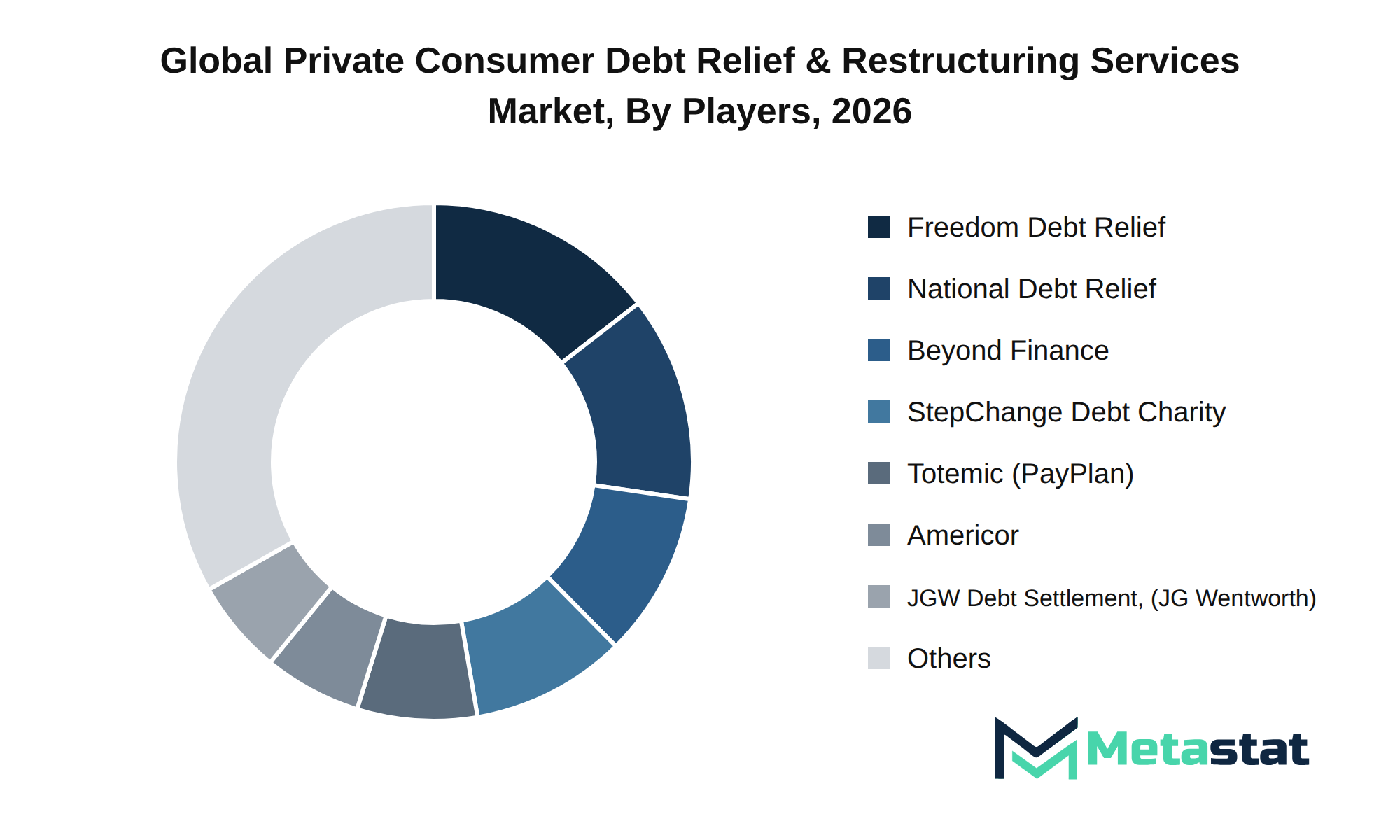
The Private Consumer Debt Relief & Restructuring Services market features a diverse array of players with various strategic approaches. Key companies including Freedom Debt Relief, National Debt Relief, LLC, and Beyond Finance emphasize service differentiation through innovative digital platforms. The integration of technology enhances customer engagement and streamlines service delivery, aligning with evolving consumer preferences.
Strategic partnerships and alliances emerge owing to vital components for companies like StepChange Debt Charity and Totemic Limited (PayPlan), enabling expanded service offerings and geographic reach. These collaborations enhance brand equity and customer loyalty in a competitive environment that increasingly values comprehensive solutions.
Pricing strategies reflect market dynamics, with companies like Americor and JGW Debt Settlement, LLC (JG Wentworth) leveraging competitive rates to attract diverse customer segments. Maintaining an adaptive pricing architecture is essential for sustaining market share during ongoing economic pressures.
The market presents barriers to new entrants, primarily through established brand recognition and operational efficiencies achieved by legacy players. Companies including Century Support Services, LLC and ClearOne Advantage, LLC benefit from their long-standing presence, which builds customer trust and retention.
Looking ahead, the competitive outlook involves a focus on technological advancement and customer-centric solutions. Firms like Pacific Debt Relief and New Era Debt Solutions explore proprietary technologies that secure a competitive edge, ensuring they meet the demands of a rapidly changing financial environment.
Overall, the Private Consumer Debt Relief & Restructuring Services market reflects a competitive environment characterized by strategic consolidation, innovative product offerings, and a focus on customer retention, positioning players for sustained growth and adaptability.
Market size is forecast to rise from USD 35.2 billion in 2025 to over USD 68.1 billion by 2033. This growth results from several macroeconomic factors, including changes in consumer behavior and the evolution of debt types. The market reflects increasing financial pressures experienced by consumers, driving demand for effective debt relief solutions.
The bull case scenario indicates robust expansion in demand, fueled by heightened awareness of financial literacy and growing adoption of digital platforms for debt management. These factors contribute to accelerated growth in segments including Debt Consolidation & Refinancing and Digital / Online Platforms, which show promising adoption rates. Conversely, the bear case scenario points to potential economic downturns impacting disposable income, leading to a temporary slowdown in market growth.
Structural consumption shifts, evolving regulations, and changing geopolitical dynamics will shape future market trajectories. Compliance with new regulations will drive innovation in service delivery modes, while strategic capital allocation will enhance service capabilities and infrastructure investments. Emerging white-space opportunities provide avenues for market participants to address unmet enterprise needs, thereby tapping into high-growth pockets.
Next-generation technologies and R&D commercialization timelines will refine service offerings, leading to improved consumer experiences and operational efficiencies. While organizations navigate these complexities, executive-level strategic imperatives and defensibility roadmaps play a crucial role in ensuring sustainable growth within the Private Consumer Debt Relief & Restructuring Services market.
The report strategically identifies and profiles the key market players and analyses their core competencies in each sub-segment of the Private Consumer Debt Relief & Restructuring Services market.
Report Attributes | Details |
Study Period | 2021-2033 |
Base Year | 2025 |
Estimated Year | 2026 |
Forecast Period | 2026-2033 |
Historical Period | 2021-2025 |
Growth Rate | CAGR 8.6% from 2026 to 2033 |
Revenue Unit | USD billion |
Segmentation | By Service Type, Debt Type, Service Delivery Mode, and Region |
By Region | North America (By Service Type, Debt Type, Service Delivery Mode, and Country)
|
Europe (By Service Type, Debt Type, Service Delivery Mode, and Country)
| |
Asia Pacific (By Service Type, Debt Type, Service Delivery Mode, and Country)
| |
South America (By Service Type, Debt Type, Service Delivery Mode, and Country)
| |
Middle East and Africa (By Service Type, Debt Type, Service Delivery Mode, and Country)
|
Find answers to common questions about this report
The Private Consumer Debt Relief & Restructuring Services market size was valued at USD 35.2 billion in 2025.
The Private Consumer Debt Relief & Restructuring Services market is projected to grow at a CAGR of 8.6% during the forecast period from 2026 to 2033.
The North America Private Consumer Debt Relief & Restructuring Services market size is estimated to reach USD 25 billion by 2033.
The segment leading the Private Consumer Debt Relief & Restructuring Services market is Debt Consolidation & Refinancing, with a projected value of USD 21.4 billion by 2033. This segment shows the highest growth potential compared to others in the market.
Rising consumer debt levels, driven by increased disposable income and higher spending, significantly contribute to demand for debt relief solutions. low-interest rates enhance access to credit, further stimulating the need for restructuring services. The ongoing digital transformation and investment in advanced technologies support market growth by improving service delivery and operational efficiency.
North America holds the dominant share of the Private Consumer Debt Relief & Restructuring Services market, with a value of USD 25 billion in 2033, representing 39.2 percent of the total market.
Challenges related to regulatory compliance and legal mandates significantly restrain the growth of the Private Consumer Debt Relief & Restructuring Services market. Increasing scrutiny from regulators raises operational costs, particularly for smaller firms, while macroeconomic pressures, including inflation and rising service delivery costs, further limit profitability and consumer demand for debt relief services.
Rising disposable income and increased consumer debt levels drive demand for debt relief solutions. the ongoing digital transformation enhances service delivery, attracting a larger client base that prioritizes convenient online access to services. These factors collectively support product adoption in the Private Consumer Debt Relief & Restructuring Services market.
The Private Consumer Debt Relief & Restructuring Services market is estimated to reach a valuation of USD 68.1 billion by 2033.
Key players in the Private Consumer Debt Relief & Restructuring Services market include Freedom Debt Relief, National Debt Relief, LLC, Beyond Finance, StepChange Debt Charity, Totemic Limited (PayPlan), and Americor.
The analysts below cover Banking & Finance research at Metastat Insights.
LEAD ANALYST
Utkarsh Khirodkar is a Lead Market Research Analyst at MetaStat Insight, specializing in market intelligence, technology sector assessments, and competitive strategy.

PRINCIPAL CONSULTANT - ENTERPRISE AI & EMERGING TECHNOLOGIES
Banking & Finance · Electronics and Semiconductor · Energy and Power · Healthcare IT · Information & Technology · Professional Services
Vijay Gunti is a Principal Consultant at MetaStat Insight, bringing over two decades of experience across enterprise digital transformation, technology strategy, and intelligent systems.
Tracking capacity expansion in single-use bioprocessing requires dependable data on raw material availability and cleanroom-grade polymer supply chains. The competitive landscape chapter gave a grounded evaluation of secondary component suppliers across North America and Asia-Pacific rather than simply reprinting press releases. Having that level of supplier benchmarking helped clarify dual-sourcing considerations for our clinical pipeline planning.
When evaluating distributed energy resource management systems, standard research summaries tend to gloss over the operational differences between front-of-the-meter utility deployments and behind-the-meter industrial sites. The MetaStat Insight report addressed those distinctions directly, especially regarding software interoperability standards and grid interconnection backlogs. The five-year market sizing across regional transmission organizations provided actionable context for our grid modernization strategy.
Most industry reports on warehouse automation bundle autonomous mobile robots and fixed conveyor installations into the same top-level numbers, which complicates advisory work. This study split the market cleanly by payload tiers, navigation technology, and fleet management software layers. The regional forecast for Western Europe gave our team defensible adoption benchmarks when evaluating capital allocation for logistics clients, saving us days of secondary data scrubbing.
Explore related market intelligence reports worth reading alongside this one.
Starting from
$2950