
Global Educational Tourism Market
Global Educational Tourism Market Size, Share, By Education Type (Primary, Secondary, College, Post-Graduation), By Age Group (Less Than 15 Years, 16-25 Years, 26-40 Years, 41-55 Years), By Occupation (Students, Teachers, Government Officials, Corporation Managers, Enterprise Owners, Workers), By Purpose (Academic Learning, Language Learning, Cultural Exchange, Skill Development, Career Development, Research & Training, Personal Development), Industry Analysis, Growth, Trends, and Forecast, 2026-2033
MSI-4996
August 20, 2026
Updated
308 Pages
Historical
Base year
Forecast
Forecast period
Report Details
Comprehensive Market Analysis And Insights
Market Overview
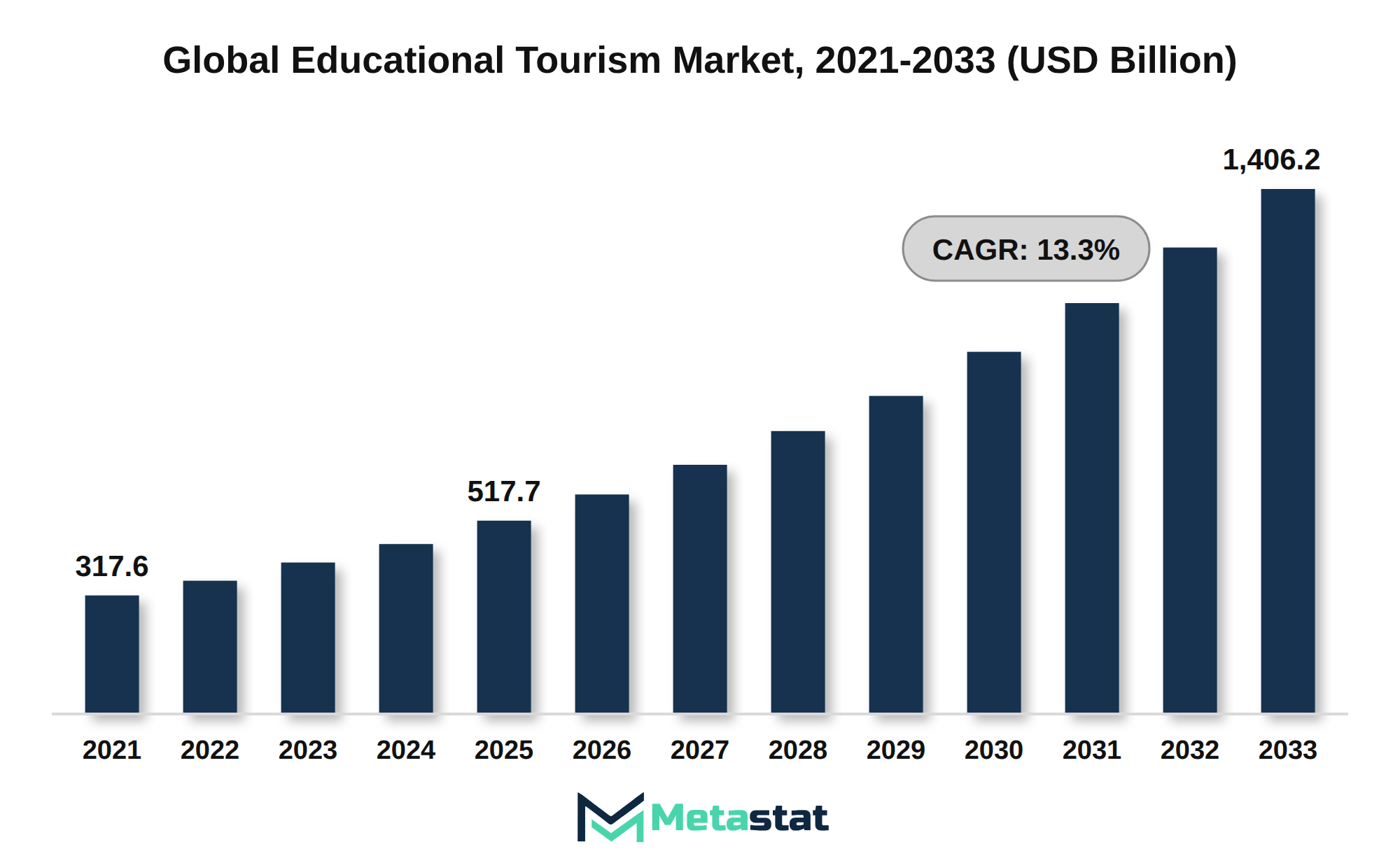
The global Educational Tourism market was valued at USD 517.7 billion in 2025 and is projected to reach USD 1,406.2 billion by 2033, growing at a CAGR of 13.3% over the forecast period.
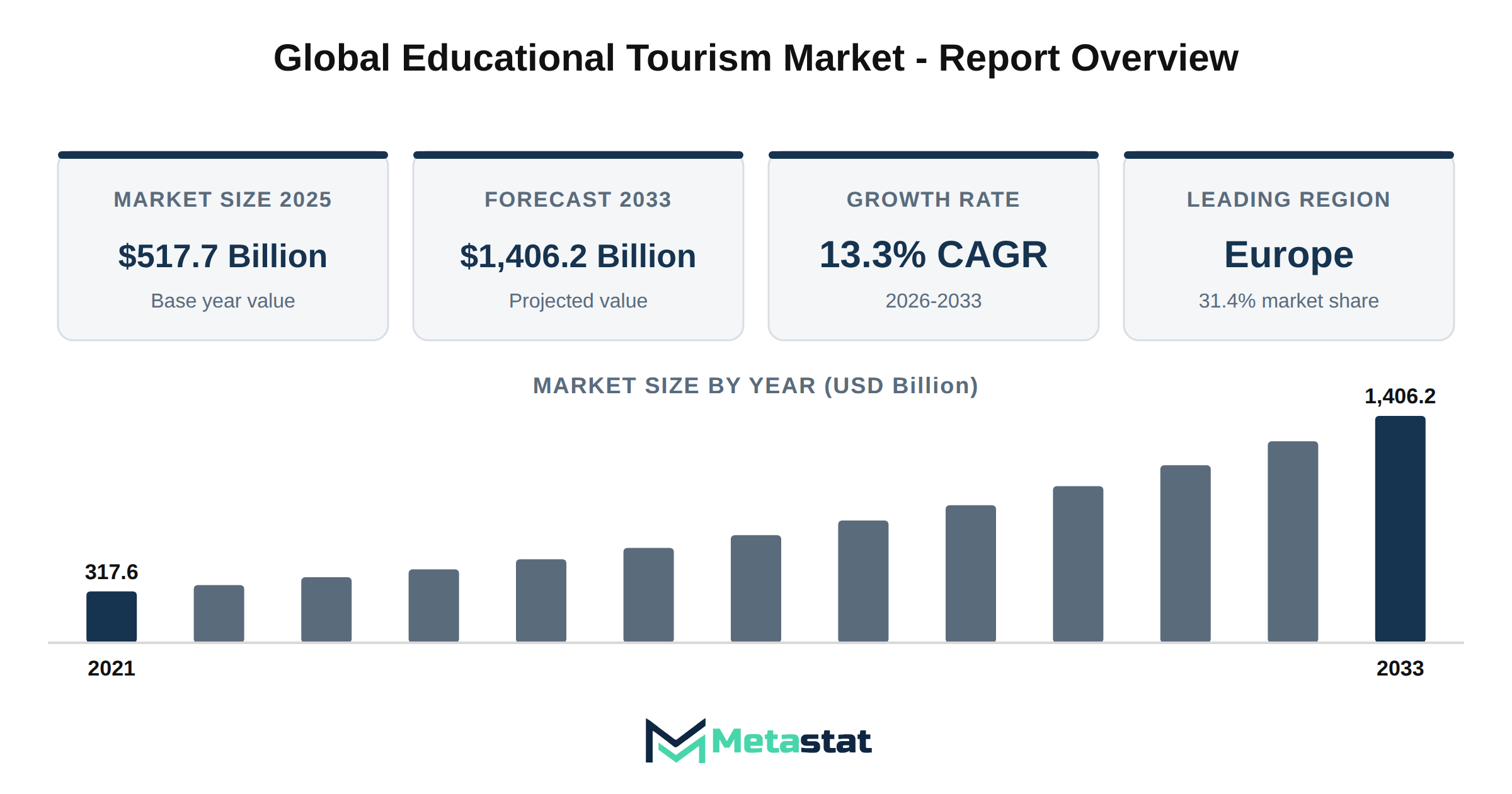
The Educational Tourism market reached a valuation of USD 517.7 billion in 2025, reflecting an increase from USD 317.6 billion in 2021. The market is projected to grow at a compound annual growth rate (CAGR) of 13.3%, reaching USD 1,406.2 billion by 2033. This growth trajectory highlights the increasing global focus on educational experiences that extend beyond traditional classroom settings.
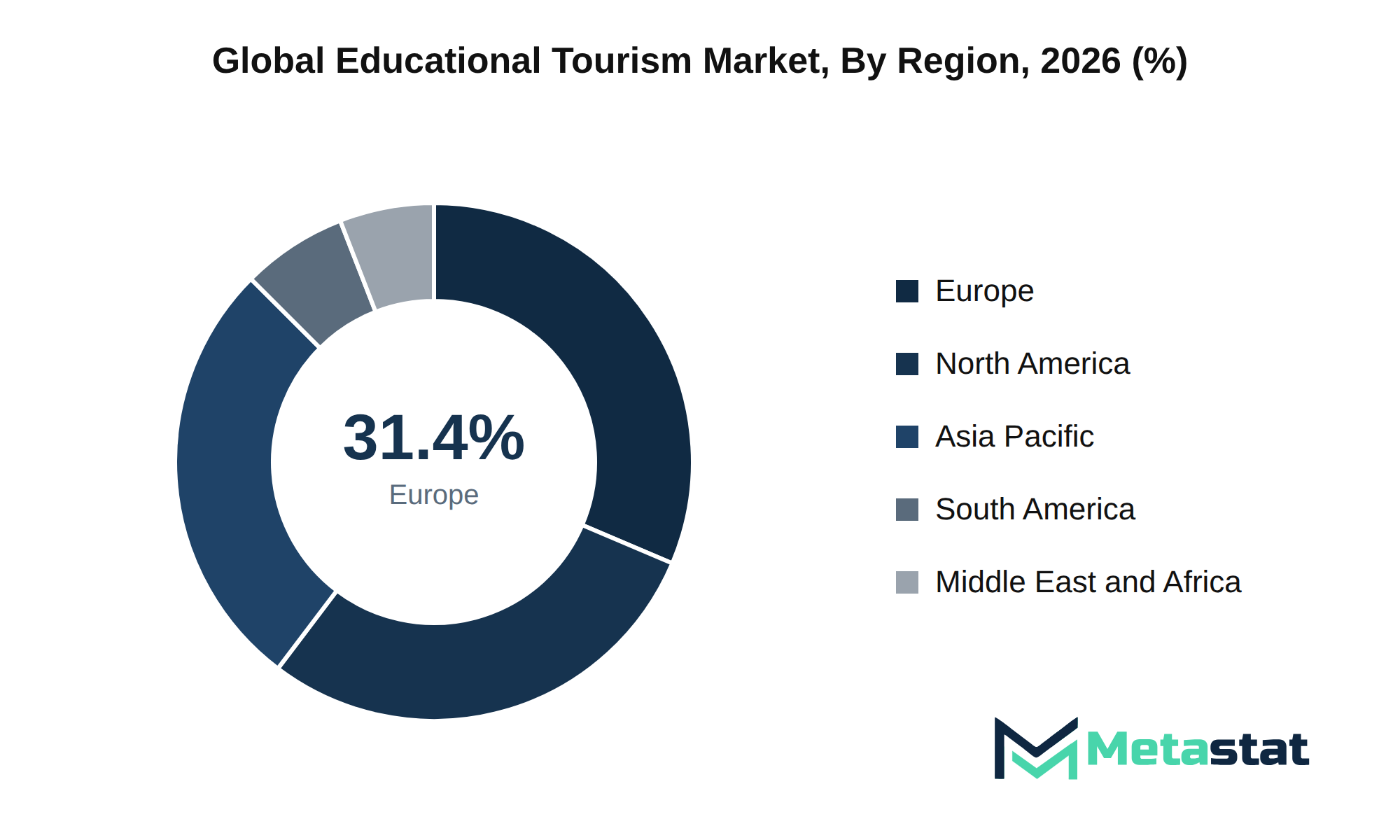
North America holds a share of the market at 28.9%, with a projected value of USD 388.8 billion by 2033. Europe follows closely, accounting for 31.4% of the market share, while the Asia Pacific region represents 27.2%. The diverse geographic distribution of educational tourism reflects varying cultural and economic factors influencing demand across regions.
The segmentation of the market shows distinct trends based on education type, age group, occupation, and purpose. The primary education segment is expected to expand from USD 59.8 billion in 2026 to USD 149.2 billion by 2033, growing at a CAGR of 13.9%. The secondary education segment anticipates reaching USD 280.5 billion by 2033. In the college segment, the market is projected to achieve a value of USD 513.1 billion by 2033, driven by rising enrollment rates and international student mobility.
Age demographics play a critical role in shaping the market. The segment comprising individuals under 15 years is projected to grow from USD 89.4 billion in 2026 to USD 269.9 billion by 2033, reflecting a CAGR of 17.1%. Meanwhile, the 16-25 years age group is expected to contribute significantly, reaching a value of USD 547.6 billion by 2033. The demand from students continues to drive overall market expansion, with the segment projected to grow from USD 178.9 billion in 2026 to USD 442.4 billion by 2033.
Several factors contribute to this growth, including increasing global mobility, rising disposable incomes, and heightened interest in cultural exchange and skill development. The educational tourism market is expected to experience significant changes, emphasizing sustainability and innovation in educational offerings.
The Educational Tourism market experiences significant dynamics due to various factors influencing its growth trajectory. Regulatory compliance and geopolitical risks present challenges for stakeholders, impacting investment decisions and operational strategies. Adherence to local and international regulations remains critical for market participants, because failure to comply leads to financial penalties and reputational damage.
Disruption driven by technological advancements reshapes the market, creating opportunities for innovation and improved service delivery. Research and development trajectories focus on enhancing educational experiences and integrating new learning methodologies, which strengthens market competitiveness. Next-generation innovations, including digital platforms and immersive learning experiences, attract a diverse range of participants, transforming traditional educational tourism frameworks.
Sustainable transformation within the market reflects a growing emphasis on environmentally responsible practices. The decarbonization efforts align with global sustainability goals, influencing consumer preferences and regulatory requirements. Circular economy dynamics gain traction, prompting businesses to adopt practices that minimize waste and promote resource efficiency, thereby enhancing their market position.
The supply chain landscape in the Educational Tourism market undergoes continuous evolution due to changing consumer demands and operational efficiencies. Logistics architecture requires optimization to ensure timely service delivery while managing costs effectively. Sourcing landscape adjustments enhance flexibility and responsiveness, enabling organizations to meet diverse educational needs.
Market fragmentation presents both challenges and opportunities, with numerous players operating across various segments. M&A dynamics shape competitive strategies, because companies seek to expand their reach and capabilities through strategic partnerships. Value chain optimization becomes essential for maximizing profitability and enhancing customer satisfaction throughout the travel experience.
Capital allocation strategies significantly impact infrastructure investments, driving growth in educational facilities and related services. CapEx and OpEx realities influence financial planning, affecting stakeholders' ability to invest in new opportunities. Macroeconomic headwinds, including inflationary pressures and currency volatility, further complicate the financial landscape, necessitating strategic planning and risk management.
The future strategic outlook for the Educational Tourism market indicates strong growth potential. Corporate imperatives focus on adapting to evolving market conditions and consumer preferences, positioning organizations for long-term success. High-value recommendations include investing in technology, enhancing customer engagement, and prioritizing sustainability initiatives to secure a competitive advantage in this dynamic market.
Market Dynamics
Consumer behaviors drive educational tourism growth
Shifting consumer behaviors significantly influence the educational tourism market. The increase in interest for experiential learning, coupled with evolving preferences for immersive educational experiences, fuels demand. Consumers prioritize educational trips that provide cultural exchange, language learning, and skill development, reflecting contemporary lifestyle choices.
Societal trends, including urbanization and demographic changes, contribute to this growth dynamic. Younger generations, particularly those aged 16-25 years, exhibit a higher inclination toward educational tourism opportunities that combine travel with skill enhancement and academic pursuits. This age group represents a substantial segment of the market, seeking personal development through diverse educational experiences.
Advancements in digital platforms and technology streamline access to information, facilitating the planning and booking processes for prospective travelers. The market benefits from increased online engagement, enabling educational tourism providers to reach a broader audience. This shift in consumer behaviors indicates a promising trajectory for the market, with continued growth projected through the forecast period.
Infrastructure development drives educational tourism growth
Investment in infrastructure significantly influences the educational tourism market. Improved transportation networks, including airports and railways, enhance access to educational destinations, facilitating travel for students and educators. Urbanization trends prompt governments and private sectors to invest in modern facilities, supporting growing demand for educational experiences. The expansion of digital infrastructure improves connectivity, enabling online learning platforms and virtual exchanges, which appeal to a technology-savvy demographic.
Regional infrastructure projects aimed at enhancing educational tourism within North America, Europe, and Asia Pacific show promising returns. Increased public-private partnerships create funding opportunities that fuel development in educational institutions and tourism-related facilities. Investments in smart technologies enhance the visitor experience, allowing for customized learning journeys that align with evolving consumer preferences. These developments contribute to operational efficiencies and cost reductions for service providers, driving growth in the market.
Regulatory compliance and economic challenges
The Educational Tourism market experiences significant challenges owing to regulatory compliance and macroeconomic headwinds. Stringent legal mandates often require educational institutions and tourism providers to meet various standards, increasing operational complexity and costs. These requirements deter smaller operators from entering or expanding within the market, thus limiting competition and innovation.
Macroeconomic factors, including inflationary pressures and capital stagnation, further compound these challenges. Rising costs associated with educational programs and travel inhibit consumer spending, directly affecting demand in the market. High operational costs, particularly in regions with unstable economic conditions, restrict operators' ability to invest in quality services and infrastructure, creating barriers to growth.
Supply chain disruptions and geopolitical instability impact the Educational Tourism market. These issues lead to uncertainties in travel schedules, affecting both students and educational institutions. Resource scarcity, particularly for specialized educational materials or services, limits program offerings and reduces attractiveness to potential international students.
Technological obsolescence presents a further risk for operators within the market. Rapid advancements in educational technologies necessitate ongoing investment to maintain competitive offerings. Failure to adopt the latest technologies results in declining enrollment numbers, driven by students increasingly seeking modern, tech-enabled learning experiences. Significant infrastructure gaps exist in many regions, limiting accessibility and connectivity for potential educational tourists, particularly in less developed areas.
Overall, these constraints create a challenging environment for the Educational Tourism market, impacting growth potential and requiring strategic adaptation by operators and stakeholders. Addressing these issues will be crucial for creating a more resilient and responsive market landscape.
Geopolitical fragmentation increases market challenges
Geopolitical fragmentation significantly influences the educational tourism market by creating uncertainties in international relations and travel policies. Heightened trade deficits and tariff friction between nations complicate cross-border educational programs, resulting in increased costs for students and educational institutions. This situation restricts the growth potential of various educational tourism segments, particularly those reliant on international partnerships and collaborations.
Technological disruptions create additional pressures on the market. Rapid advancements outpace traditional educational methods. Educational institutions face challenges integrating new technologies into existing frameworks, which increases the complexity of research and development efforts. Consequently, educational tourism providers adapt their offerings to meet evolving technological demands, impacting operational costs and resource allocation.
Supply chain instability further exacerbates market challenges, particularly in logistics and component availability. Disruptions in logistics networks lead to delayed program offerings and increased costs, which directly affect the pricing structures of educational tourism services. Rising input costs heighten margin pressures for providers, forcing reassessment of pricing strategies.
Workforce skill gaps pose another significant challenge for the educational tourism market. The increasing demand for specialized skills in the industry necessitates investment in talent development and retention strategies. Addressing these skill gaps enhances the market's ability to provide quality educational experiences, impacting overall growth.
Environmental lifecycle footprints and sustainability demands increasingly shape consumer expectations within the educational tourism market. Providers face pressure to adopt more sustainable practices, which often entail significant upfront investments. Balancing these environmental responsibilities with operational efficiency remains a critical challenge for market players striving to meet both business and sustainability objectives.
Emerging opportunities in educational tourism
The Educational Tourism market presents multiple opportunities driven by emerging regional demands and technological advancements. Increased interest in cultural exchange and academic learning fuels growth, particularly in regions with expanding educational infrastructures. Countries in Asia Pacific, North America, and Europe exhibit rising participation rates, indicating a shift toward international educational experiences. The market benefits from geographical expansion owing to educational institutions enhancing global partnerships, enabling students to access diverse learning environments.
Technological disruptions significantly influence the landscape, with digital transformation facilitating effective learning experiences. Online platforms enable institutions to reach broader audiences, enhancing engagement and accessibility. Next-generation innovations in educational tourism, including virtual reality and immersive learning experiences, attract younger demographics, expanding market reach. Sustainability imperatives further drive market interest because environmentally conscious travelers seek eco-friendly educational experiences.
Evolving buying behaviors reflect a shift toward digital procurement and adaptable commercial models. Institutions increasingly prioritize service integration to offer comprehensive educational packages, combining travel with learning opportunities. Market players recognizing this trend align their offerings with consumer preferences, leading to greater participation in the Educational Tourism market.
Strategic consolidation through cross-industry partnerships enhances market capabilities, allowing suppliers to diversify and strengthen their position. The localization of supply chains further supports resilience, reducing dependency on external markets. These dynamics shape a robust framework for future growth, positioning the Educational Tourism market for sustained expansion through 2033.
Market Segmentation Analysis
The Global Educational Tourism market is segmented based on Education Type, Age Group, Occupation, and Purpose.
By Education Type, the market is further segmented into:
- Primary
- Secondary
- College
- Post-Graduation
Primary
Valued at USD 59.8 billion in 2026, the Primary segment is projected to reach USD 149.2 billion by 2033, at a CAGR of 13.9% during the forecast period. Growing global interest in educational experiences drives demand for primary educational tourism, leading to increased participation from students and families. Enhanced international collaboration among educational institutions facilitates cross-border educational programs, enriching student experiences with cultural exchanges and language learning opportunities.
Investment in technology shapes the market. Digital platforms streamline information dissemination and facilitate engagement between educational institutions and potential participants. Consequently, this technological maturation attracts a wider audience, enabling more individuals to explore educational tourism options tailored to their needs.
Consumption shifts towards experiential learning fuel growth in the market. Families and educators increasingly recognize the value of immersive learning experiences that extend beyond traditional classroom settings. This trend contributes to a growing emphasis on educational travel programs that combine academic and cultural enrichment, enhancing the overall value proposition of educational tourism.
Regulatory compliance standards and certifications impact segment growth. Governments and educational bodies establish frameworks to ensure quality and safety, influencing consumer confidence and enhancing program credibility. Adhering to these standards creates a competitive environment where quality-driven providers gain a significant advantage.
Strategic opportunity windows arise from evolving consumer preferences and market dynamics. Organizations focused on primary educational tourism capitalize on emerging trends by developing innovative programs that meet the changing demands of students and families. This proactive approach positions stakeholders favorably within the expanding educational tourism market.
Secondary
Growth in the Secondary segment of the Educational Tourism market reflects strong demand for educational experiences among youth. This demand arises from an increasing emphasis on international education and cultural exchange programs, which enhance students' academic and personal development. The segment is projected to reach USD 280.5 billion by 2033, at a CAGR of 12% during the forecast period.
Adoption of educational tourism in this segment benefits from technological advancements that facilitate learning and travel. Online platforms streamline access to educational resources and create opportunities for young learners to participate in programs abroad. Government policies supporting international educational exchanges contribute positively to market expansion.
Changing consumer preferences towards experiential learning drive participation and investment in secondary education-focused travel. Parents and stakeholders prioritize programs that offer immersive experiences, thus increasing the appeal of travel-based education. This shift in priorities ensures growth within the segment.
Challenges include pricing volatility and margin pressures, which impact service providers. These factors necessitate strategic pricing strategies to maintain competitiveness while ensuring quality experiences. The need for compliance with international education standards influences market dynamics, compelling organizations to adapt their offerings accordingly.
College
Rapid growth characterizes the College segment within the Educational Tourism market, projected to reach USD 513.1 billion by 2033. This expansion results from increasing global demand for higher education, particularly from international students seeking enriching academic experiences abroad. The appeal of studying in diverse cultural environments generates strong interest in educational travel, driving enrollment numbers in colleges and universities worldwide.
Adoption of innovative educational methodologies and technological advancements contributes to segment growth. Institutions leverage online learning tools and virtual exchanges to enhance traditional education, making international experiences more accessible. This technological maturation attracts a wider range of students, particularly those interested in skill development and cultural exchange.
The rising emphasis on global competence and multicultural understanding within curricula raises the importance of overseas education programs. Educational institutions and governments recognize the value of promoting international collaboration, prompting investments in partnerships and exchange programs. These initiatives contribute to the segment's resilience and sustainable growth, enhancing its overall attractiveness in the market.
Continued shifts in consumption patterns further influence the College segment, with students prioritizing international experiences within their education. Growing competition among educational institutions highlights the necessity of unique offerings, including specialized programs and immersive cultural experiences. Such differentiation strengthens market positioning and enhances overall enrollment rates.
Strategic opportunities emerge through targeted marketing campaigns that promote the benefits of international education. Stakeholders, including colleges and tour operators, collaborate to create immersive travel packages tailored to the needs of prospective students. This collaborative approach boosts visibility for educational institutions and broadens appeal, ultimately driving growth within the market.
Post-Graduation
The Post-Graduation segment is projected to grow at a CAGR of 14.3% during the forecast period. Factors driving this growth include increasing demand for advanced qualifications and professional development opportunities among graduates. Educational institutions worldwide expand their offerings in response to this demand, leading to a rise in global student mobility. Enhanced access to information about international programs and financial aid options facilitates this trend, encouraging students to pursue postgraduate studies abroad.
Increased emphasis on skill development and practical experience in postgraduate education contributes to the segment's expansion. Programs focusing on research opportunities, internships, and mentorship align with employer expectations, making international educational experiences more appealing. The global nature of today’s workforce drives students to seek qualifications that provide a competitive edge in the job market.
While the segment evolves, institutions prioritize partnerships and collaborations with global organizations, enhancing their offerings and creating new pathways for student engagement. Investment in technology to deliver innovative learning experiences boosts the attractiveness of postgraduate programs in the educational tourism market, catering to the needs of a diverse global student body.
By Age Group, the market is further segmented into:
- Less Than 15 Years
- 16-25 Years
- 26-40 Years
- 41-55 Years
Less Than 15 Years
Valued at USD 89.4 billion in 2026, the Less Than 15 Years segment is projected to reach USD 269.9 billion by 2033, at a CAGR of 17.1% during the forecast period. This rapid growth reflects an increasing recognition of the benefits of educational tourism for younger age groups, emphasizing experiential learning opportunities. Families increasingly seek travel experiences that enhance educational outcomes, driving demand in this segment.
A surge in interest in international exposure among children enhances opportunities for educational tourism providers to cater to young learners. Programs focusing on language acquisition, cultural immersion, and skill development contribute to this growth, creating a dynamic environment for market expansion. The emphasis on academic learning through travel reinforces the role of educational tourism because a supplement to traditional education.
Growing parental support for educational experiences abroad acts because a catalyst for segment expansion. Parents prioritize comprehensive development for their children, leading to increased enrollment in educational travel programs. This trend not only boosts market potential but encourages providers to innovate and enhance their offerings in response to evolving consumer preferences.
Overall, the segment benefits from a convergence of factors, including heightened awareness of global education trends and a supportive regulatory environment. Investment in educational tourism infrastructure further supports growth, enabling providers to deliver quality experiences that connect with families. The educational tourism market, therefore, expands significantly driven by the Less Than 15 Years segment's robust demand dynamics.
16-25 Years
Growth within the 16-25 Years demographic reflects increasing participation in educational tourism, driven by heightened interest in academic and cultural experiences abroad. This age group exhibits strong demand for immersive learning opportunities, which contributes to its expansion in the market. The segment is estimated to reach USD 547.6 billion by 2033, at a CAGR of 13% during the forecast period. Young adults increasingly seek education that combines travel with language acquisition and cultural exchange, thereby enhancing their global competencies.
Factors influencing this segment include the growing emphasis on experiential learning and the desire for personal development, leading to a rise in demand for programs that offer both educational and travel experiences. The market benefits from partnerships between educational institutions and travel organizations, facilitating access to international programs tailored to this age group. These partnerships enhance the overall value proposition, attracting more participants and driving revenue growth.
Advancements in technology play a significant role in shaping the educational tourism landscape for this demographic. Digital platforms provide easy access to information about programs, simplifying the process for students to compare options and make informed decisions. This technological maturation supports the segment's expansion by enabling efficient communication and streamlined booking processes.
Consumption shifts toward unique, tailored experiences characterize the preferences of this age group. The demand for educational programs that incorporate cultural exchange and skill development aligns with broader trends in educational tourism. Young adults prioritize experiences that contribute to their academic and professional growth, reinforcing the segment's contribution to the overall market.
26-40 Years
Demand for educational tourism among individuals aged 26-40 years drives significant market growth, propelled by increasing travel for academic and professional development. This demographic values experiential learning opportunities that enhance both personal and professional skills. Enrichment through international educational experiences enhances cultural understanding and networking, appealing to professionals seeking to broaden their horizons.
Investment in innovative educational programs and partnerships with institutions fuels segment expansion, leading to enhanced offerings that align with industry trends. The growing recognition of the importance of lifelong learning boosts the popularity of language and skill development programs among this age group. Consequently, the segment is projected to reach USD 350.7 billion by 2033, highlighting the robust demand for educational tourism in this demographic.
Regulatory compliance and certification standards play crucial roles in shaping the market landscape, ensuring that programs meet quality benchmarks. The impact of globalization and technological advancements continues to influence consumer preferences, driving a shift toward online and hybrid learning models. This evolution in educational delivery methods creates diverse opportunities for engagement and participation within the educational tourism market.
41-55 Years
Increasing interest in lifelong learning drives the 41-55 Years segment of the Educational Tourism market, reflecting a desire for personal and professional development. This demographic seeks opportunities for academic and cultural experiences. Educational programs tailored to adult learners support this trend, emphasizing flexibility and relevance. The rise of online courses and hybrid learning models allows individuals in this age group to pursue education without disrupting their careers.
The 41-55 Years segment is projected to grow at a CAGR of 12.4% during the forecast period. This growth signifies broader acceptance of educational tourism among older adults, who prioritize travel that enhances their knowledge and skills. Institutions targeting this demographic increasingly design programs that combine travel with learning experiences, facilitating greater engagement and participation.
Challenges related to pricing and competition influence market dynamics. Increasing costs of travel and accommodation impact affordability, prompting institutions to develop more competitive pricing strategies. Effective marketing strategies targeted at this age group enhance awareness and accessibility of educational tourism offerings, contributing to overall segment growth.
By Occupation, the market is further segmented into:
- Students
- Teachers
- Government Officials
- Corporation Managers
- Enterprise Owners
- Workers
- Others
Students
Valued at USD 178.9 billion in 2026, the Students segment is projected to reach USD 442.4 billion by 2033, at a CAGR of 13.8% during the forecast period. Key demand drivers include a growing emphasis on global education, alongside increased awareness of cultural exchanges and skill development. The rising number of students pursuing studies abroad contributes to the expansion of this segment, indicating a strong inclination toward immersive educational experiences.
Adoption within the Students segment benefits from technological advancements that facilitate remote learning and access to international educational resources. Institutions increasingly invest in partnerships with foreign educational entities, promoting language learning and cultural exchange programs that attract students seeking global exposure. Regulatory frameworks supporting international student mobility enhance the segment's growth prospects in the educational tourism market.
Consumption shifts reflect a growing preference for experiential learning, with students seeking opportunities that extend beyond traditional classroom settings. This trend increases demand for programs that combine academic learning with travel, allowing students to engage in hands-on experiences and gain practical knowledge. Consequently, the market experiences a transformation in educational offerings to accommodate these evolving preferences.
Pricing volatility influences the Students segment, driven by fluctuations in travel costs and accommodation expenses that impact students' decisions to participate in international programs. Institutions and educational providers face challenges in maintaining competitive pricing while ensuring high-quality experiences. Strategic opportunity windows exist for stakeholders to innovate and enhance service offerings, addressing both affordability and quality to capture a larger share of the growing market.
Teachers
Significant growth within the Teachers segment of the Educational Tourism market reflects increasing investments in professional development and educational exchange programs for educators. This segment is estimated to reach USD 196.2 billion by 2033, at a CAGR of 12.4% during the forecast period. Factors driving this expansion include rising global mobility for education professionals and heightened emphasis on skill enhancement through international experiences. Increasing collaboration between educational institutions and organizations specializing in experiential learning further increases demand for educational tourism among teachers.
Adoption of innovative teaching methodologies generates interest in international professional development, with many educators seeking opportunities to gain new insights and practices from diverse educational systems. The demand for specialized language training programs enhances teacher participation in educational tourism, creating a pathway for educators to refine their language skills while engaging in cultural exchanges. This dual focus on skill development and cultural immersion strengthens the segment's position within the broader educational landscape.
Regulatory frameworks that support international educational initiatives serve because catalysts for growth within this sub-segment. While countries prioritize educational innovation, policies encouraging cross-border educational experiences create favorable conditions for teachers to engage in educational tourism. Consequently, this segment not only contributes to individual professional development but supports broader educational objectives across various regions.
Government Officials
Valued at USD 182 billion by 2033, the Government Officials segment experiences robust demand within the Educational Tourism market, driven by increasing investment in educational initiatives and international collaboration. The necessity for Government Officials to engage in language learning, cultural exchange, and academic learning enhances awareness of diverse educational practices and global policies. This segment's growth aligns with a broader trend of enhancing educational standards and promoting international partnerships.
Heightened focus on professional development for Government Officials creates a greater understanding of best practices across various sectors. Educational tourism evolves, leading to opportunities for training programs and workshops abroad that encourage officials to pursue skill development and innovative educational methodologies. This shift supports the segment's expansion, contributing to rising participation rates in educational tourism activities.
Continuous investment in strategic partnerships and collaboration with educational institutions enhances the market's offerings, ensuring Government Officials access quality educational experiences. The segment's expansion contributes to the overall growth trajectory of the market, positioning it for significant gains in the coming years.
Corporation Managers
Strong growth is anticipated in the Corporation Managers segment, projected to grow at a CAGR of 12.3% during the forecast period. This expansion arises from the increasing emphasis on professional development and skills enhancement among corporate leaders. Organizations recognize the value of educational tourism because a means to drive innovation and a competitive edge in the workforce. The market sees significant investments in international training programs and workshops aimed at enhancing managerial capabilities.
Corporation Managers, often seeking knowledge in diverse cultural settings, contribute to the demand for tailored educational experiences. This demographic pursues educational tourism not only for skill development but for networking opportunities with global peers. Enhanced understanding of international markets and best practices leads to a more effective and adaptable management style.
In the context of the Educational Tourism market, the focus on specialized programs targeted at Corporation Managers expands service offerings. Providers adapt to changing preferences and demands, ensuring relevance in curricula while integrating local insights and global perspectives. This approach enhances engagement and provides high value for corporate clients investing in their managers' education.
By 2033, the segment is expected to reach a valuation of USD 182 billion, reflecting the ongoing commitment of organizations to invest in their leaders. The educational tourism landscape continues to evolve, driven by a clear recognition of the benefits associated with international learning experiences. This upward trend indicates a robust future for the market, aligning with the broader goals of corporate education and leadership enhancement.
Enterprise Owners
Interest in educational tourism from enterprise owners has increased owing to a growing recognition of the value of international experiences in enhancing knowledge and skills relevant to their businesses. These owners seek opportunities for professional development, cross-cultural exchange, and networking, contributing to the expansion of the market. The rising demand for skill development and innovative perspectives drives this segment's growth.
Expansion catalysts include a heightened focus on global business strategies, which emphasize the importance of understanding diverse markets and consumer behavior. This awareness encourages enterprise owners to invest in educational tourism experiences that provide insights into different educational systems and practices worldwide. The ongoing evolution of educational programs tailored for corporate needs supports this trend and enhances the appeal of the market.
Technological maturation plays a role in the development of educational tourism offerings, with digital platforms facilitating easier access to information about available programs. This accessibility enables enterprise owners to make informed decisions about educational opportunities that align with their professional goals. While organizations seek to enhance employee capabilities, educational tourism presents an effective approach to workforce development.
Consumption shifts indicate that enterprise owners increasingly prioritize experiences that combine learning with cultural engagement. This trend reflects a broader societal move towards experiential learning, which aligns with the values of innovation and adaptability in the business landscape. Consequently, educational tourism emerges because a strategic investment for businesses aiming to develop a more skilled and globally aware workforce.
Regulatory compliance and certifications related to educational offerings influence the choices made by enterprise owners. Ensuring that programs meet established standards enhances credibility and attracts individuals seeking quality educational experiences. Cost structures and pricing volatility are critical considerations in decision-making, because enterprise owners evaluate the return on investment associated with educational tourism initiatives.
Overall, the enterprise owners segment within the Educational Tourism market reflects significant opportunities for growth driven by evolving educational needs and a desire for global engagement. The continuous adaptation of educational programs and the emphasis on cultural understanding position this segment well for future expansion.
Workers
Growing interest in educational opportunities fuels demand within the Workers sub-segment of the Educational Tourism market. Many professionals seek skill enhancement and career development through educational travel, enabling them to acquire valuable knowledge and experience. This trend reflects a broader shift towards continuous learning in the workforce, with individuals pursuing education because a means to improve their employability and adapt to changing job markets.
Adoption of educational tourism among workers is driven by the need for practical skills and certifications, which enhance their competitive edge. Language learning and cultural exchange programs serve because effective tools for workers looking to expand their global perspective and improve communication skills in diverse environments. Organizations increasingly recognize the value of supporting employee participation in educational tourism, incorporating it into professional development strategies.
Investment in educational tourism for workers generates long-term benefits for both individuals and employers. Workers equipped with enhanced skills contribute to increased productivity, innovation, and adaptability within their organizations. Consequently, educational tourism emerges because a strategic opportunity for businesses aiming to cultivate a highly skilled workforce, aligning with the broader goals of economic growth and workforce development in the educational tourism market.
Others
Interest in the Others sub-segment of the Educational Tourism market stems from diverse occupations that seek educational experiences beyond traditional categories. This segment encompasses a wide range of participants including enterprise owners and workers who pursue skill development or personal growth through educational travel. Significant opportunities arise from increasing global interconnectedness, prompting individuals in various occupations to seek educational experiences that enhance their professional and personal lives.
Consumption shifts indicate a growing desire for experiences that facilitate personal and professional development. Individuals in the Others category pursue educational tourism to gain practical knowledge, apply newly acquired skills, or engage in cultural exchanges. Innovative offerings that cater to these needs contribute to the segment's expansion. The market displays resilience against economic fluctuations, driven by the intrinsic value that participants find in educational experiences.
Investment in marketing strategies targeting this sub-segment presents opportunities for providers to enhance their offerings. Creating tailored programs that address the specific learning objectives of diverse occupations encourages greater participation. This approach aligns with broader trends in experiential learning, enhancing the overall appeal of the Educational Tourism market.
By Purpose, the market is further segmented into:
- Academic Learning
- Language Learning
- Cultural Exchange
- Skill Development
- Career Development
- Research & Training
- Personal Development
- Others
Academic Learning
Valued at USD 178.5 billion in 2026, the Academic Learning segment is projected to reach USD 441.3 billion by 2033, at a CAGR of 13.8% during the forecast period. The surge in demand for academic learning within educational tourism results from increased global mobility and the desire for quality education. Students and professionals pursuing language skills, cultural understanding, and academic credentials drive this growth. Various educational institutions are expanding their international programs in response to rising demand for immersive educational experiences and enhanced academic offerings abroad.
Technological advancements play a crucial role in shaping the academic learning segment. Online platforms and digital resources facilitate access to various educational programs, enhancing the learning experience. The integration of technology into traditional education systems attracts more participants to educational tourism, enabling global collaborations and partnerships. Educational institutions increasingly focus on safeguarding compliance with regulatory standards, ensuring the quality and integrity of their programs.
Pricing strategies significantly impact the growth of the academic learning segment. Institutions continuously adapt pricing models to attract a broader audience while maintaining profitability. This adaptation requires careful assessment of market conditions and competition within the educational tourism market. The segment's expansion aligns with evolving consumption patterns, particularly among younger generations valuing experiential learning opportunities.
Investment in marketing and strategic partnerships enhances visibility and accessibility within the academic learning segment. Institutions that effectively promote their unique educational offerings attract diverse demographics, including international students and professionals seeking career development. The ongoing evolution of educational tourism emphasizes the importance of adapting to market dynamics and remaining responsive to the needs of prospective learners.
Language Learning
Significant expansion within the Language Learning segment highlights the growing global emphasis on language acquisition and cultural understanding. Educational institutions and language schools increasingly prioritize immersive learning experiences, driving demand for travel that combines education and cultural exchange. In this context, the market for educational tourism focuses on individuals seeking language proficiency through structured programs abroad.
Language Learning segment is estimated to reach USD 266.5 billion by 2033, at a CAGR of 12.6% during the forecast period. This growth aligns with the increasing recognition of language skills because essential for personal and professional development. Educational tourism caters to diverse age groups and occupations, including students and professionals, further contributing to market dynamics.
The expansion of digital learning platforms influences the demand for traditional in-person language learning experiences. Many learners seek to complement online courses with immersive travel experiences, which enhance language retention and cultural appreciation. This trend reflects a broader consumption shift within the educational tourism market, emphasizing experiential learning over conventional classroom settings.
The Language Learning segment significantly shapes the educational tourism landscape, driven by evolving consumer preferences, a focus on language skills, and the pursuit of immersive experiences. Growth in this segment signifies a robust opportunity for educational tourism providers to innovate and adapt to the changing needs of learners.
Cultural Exchange
Projected growth in the Cultural Exchange segment will lead to a market value of USD 210.1 billion by 2033. This growth aligns with increasing globalization and the expansion of educational programs that emphasize cultural understanding. The market responds to heightened interest in cross-cultural experiences among students and professionals alike. Educational institutions encourage participation in cultural exchange programs, creating connections between diverse communities.
Demand for these experiences stems from a societal shift toward valuing multicultural perspectives. Increasing numbers of educational travelers seek opportunities to immerse themselves in different cultures, enhancing their academic and professional competencies. Cultural exchange programs often blend education with tourism, providing enriching experiences that extend beyond traditional classroom learning. This trend benefits the market, resulting from participants returning home with enhanced knowledge and personal growth.
Strategic investments in digital technologies further enhance the market's potential. Online platforms facilitate connections between educational institutions and potential participants, streamlining the enrollment process for cultural exchange programs. This technological maturation encourages the development of innovative educational experiences that attract a wider audience, reinforcing the market's expansion. Educational Tourism market stakeholders focus on adapting to evolving consumer preferences to capitalize on these opportunities.
Regulatory compliance standards governing educational exchanges and visa regulations impact the market dynamics. Adhering to these guidelines ensures that programs meet safety and quality benchmarks, building trust among participants. Institutions that prioritize compliance enhance their reputations and attract more students, fueling growth in the Cultural Exchange segment of the educational tourism landscape.
Skill Development
Growing emphasis on skill enhancement contributes significantly to the expansion of the Skill Development segment, projected to grow at a CAGR of 14.2% during the forecast period. Individuals increasingly seek opportunities to acquire new competencies and certifications, which increases participation in educational tourism. The market benefits from a shift in priorities among both students and professionals who recognize the importance of continuous learning in a competitive job landscape.
Global economic conditions and technological advancements influence demand, driving learners to pursue skill development programs internationally. Organizations invest in educational tourism, recognizing its potential to improve employee capabilities and productivity. The rising popularity of remote work arrangements has prompted many professionals to seek skill development training abroad, further propelling market growth.
Educational Tourism market expansion aligns with the diversification of offerings, accommodating various learning needs and preferences. Institutions adapt their programs to meet the evolving demands of learners, integrating practical experiences alongside traditional education. This dynamic evolution ensures that participants gain relevant skills applicable across industries.
Collaborations between educational institutions and tourism organizations facilitate access to diverse learning environments. These partnerships enable participants to engage in immersive experiences, enhancing their skill sets while exploring new cultures. Such strategic collaborations create a richer educational journey, ultimately benefiting the broader market.
Career Development
Career development opportunities increasingly attract individuals seeking to enhance their professional skills through travel-based education. This segment experiences growth driven by rising global demand for skill enhancement and vocational training. Educational institutions and training organizations play a vital role in supplying tailored programs that address industry-specific needs, contributing to segment expansion.
Demand for career development tourism aligns with trends in workforce changes and the need for continuous learning in a competitive job market. Industries requiring specialized skills increasingly endorse educational tourism because a valuable investment in employee development. This alignment influences the market, encouraging further investment in career-focused educational programs.
Technological advancements enhance the delivery and accessibility of career development programs, enabling institutions to offer innovative and flexible learning formats. Digital platforms facilitate global connections between learners and educators, creating new opportunities for collaboration and knowledge sharing. While businesses prioritize professional growth, educational tourism serves because a strategic avenue for achieving relevant skill development.
Cost structures within the career development segment reflect the necessity for high-quality training and certification programs. Organizations recognize the value of investing in their workforce, leading to increased profitability and competitiveness. This focus on professional growth enhances the overall appeal of educational tourism, driving participation.
Regulatory compliance standards and certifications specific to career development programs enhance credibility and assurance for participants. Institutions that meet these standards gain a competitive advantage, reinforcing confidence in their offerings. The market's emphasis on compliance supports sustained growth, creating an environment conducive to strategic opportunities.
Research & Training
Interest in research and training within the Educational Tourism market reflects a growing emphasis on skill enhancement and professional development. Educational institutions and organizations increasingly seek partnerships that facilitate access to international research opportunities, allowing participants to engage in immersive training experiences. This trend results from heightened demand for specialized skills in various sectors, influencing individuals and organizations to prioritize educational travel aimed at enhancing competencies.
Factors driving adoption include rapid technological advancements affecting multiple industries, necessitating ongoing education and training. The integration of next-generation technologies and methodologies in educational programs creates opportunities for expanded research initiatives. Educational institutions recognize the align training with evolving market requirements, prompting investments in international educational experiences. Institutions that adapt to these changes often see positive outcomes, including improved engagement and higher rates of participant satisfaction.
Shifts in consumption patterns highlight a preference for personalized and experiential learning opportunities. Participants increasingly favor hands-on experiences over traditional classroom settings, enhancing the value of research and training travel. Regulatory compliance standards play a significant role in shaping these educational experiences, ensuring that programs meet established benchmarks for quality and effectiveness. Adherence to these standards assures participants of the educational value offered through international experiences.
Strategic opportunity windows arise from industries facing skill shortages, emphasizing the importance of professional development programs. Educational tourism for research and training aligns with the demand for continuous learning and adaptation in a competitive landscape. Market participants investing in educational tourism initiatives are well-positioned to capitalize on emerging opportunities, enhancing their market presence and contributing to overall growth in the sector.
Personal Development
Increased interest in personal development significantly drives engagement within the Educational Tourism market. Individuals increasingly seek experiences that promote personal growth, self-improvement, and skill enhancement. This trend reflects a broader societal shift toward lifelong learning and personal enrichment.
The desire for enriching experiences drives participation in various educational tourism activities aimed at personal development. Workshops, seminars, and retreats focusing on personal effectiveness, coaching, and wellness are gaining traction, appealing to a diverse audience.
Technological advancements facilitate access to online courses and virtual learning environments, enhancing opportunities for learning in personal development. The flexibility offered by these platforms attracts individuals aiming to balance personal and professional commitments while pursuing growth.
Competition among providers intensifies due to new entrants emerging, emphasizing unique offerings tailored to personal development. This competitive environment encourages innovation, prompting existing players to enhance their service portfolios through specialized programs and collaborations with experienced facilitators.
Overall, the focus on personal development within the educational tourism sector aligns with global trends emphasizing self-improvement and lifelong education, contributing positively to market expansion.
The Others sub-segment within the Educational Tourism market encompasses a diverse array of educational purposes beyond the traditional categories. Demand drivers for this segment include growing global connectivity and the increasing recognition of the importance of international exposure for personal and professional development. Educational institutions recognize the value of experiential learning opportunities, which enable cultural immersion, networking, and skill acquisition outside the standard curriculum.
Adoption of educational tourism initiatives emphasizes unique learning experiences tailored to individual needs, integrating adventure, exploration, and cultural understanding. Segment expansion catalysts, including advancements in technology and communication, enhance accessibility to information and resources, encouraging participants to seek customized educational experiences. The ongoing evolution of educational programs and partnerships creates a competitive environment, spurring innovation within the market.
End-use dynamics reflect a shift in consumption patterns, driven by learners increasingly prioritizing personal growth and experiential education. This transformation leads to a broader acceptance of diverse educational formats, creating a more inclusive atmosphere for various learners. Strategic opportunity windows arise from emerging trends, including the growing focus on personal development and lifelong learning, which prompt increased investment in educational tourism initiatives. The Educational Tourism market stands to benefit from these dynamics, reinforcing the significance of the Others sub-segment in shaping future educational experiences.
By Region
Based on geography, the Global Educational Tourism market is divided into North America, Europe, Asia-Pacific, South America, Middle East, and Africa.
North America
North America Educational Tourism market is set to expand at a CAGR of 13.3% within the forecast period, reaching a market size (TAM) of USD 388.8 billion by the end of 2033. The significant market share of 28.9% in 2025 indicates robust demand for educational tourism services across the region, particularly in the United States, Canada, and Mexico.
Primary demand drivers include rising interest in international education and cultural exchanges, leading to increased student mobility and participation in educational programs abroad. This trend is supported by favorable government policies promoting educational tourism, which enhance accessibility and affordability for students and their families.
The market exhibits strong adoption rates among age groups, particularly those aged 16-25 years, which represent a substantial portion of the educational tourism demographic. The prevalence of institutions offering tailored programs specifically for this age group accelerates growth in sectors including language learning and academic enrichment.
Emerging trends within the market highlight the importance of localized experiences and customized educational offerings. Providers focusing on cultural experiences and skill development increasingly capture interest from a diverse range of participants, including students, teachers, and corporate professionals.
Infrastructure modernization plays a critical role in supporting market growth in North America. Enhanced transportation and communication networks, along with the establishment of new educational facilities, enable access for travelers. Continued investment in these areas creates a favorable environment for the educational tourism market in the region.
Regional competitive landscapes reflect a concentration of key players, including EF Education First and Kaplan International, which contribute extensive resources to develop innovative programs that appeal to a broad audience. These domestic market participants engage in vendor consolidation trends, strengthening their market positions and expanding their service offerings.
The Educational Tourism market in North America benefits from a diverse demographic that embraces cultural nuances and regional B2B buying behaviors. Increased collaboration between educational institutions and tourism providers creates opportunities for growth, enhancing the overall attractiveness of educational experiences across the region.
Europe
Europe's share of the global Educational Tourism market in 2025 reaches 31.4%. Countries including Germany, France, the UK, Italy, Spain, and Russia contribute to this robust performance. A combination of high academic standards and rich cultural heritage enhances the appeal of educational tourism in this region.
Factors driving demand include an increasing number of international students seeking higher education opportunities in Europe. The presence of esteemed educational institutions attracts students from all over the world. The market experiences significant growth driven by countries investing in infrastructure development, making travel and educational experiences more accessible.
Emerging markets within the region, particularly in Eastern Europe, show potential for expansion. Countries in this area exhibit underpenetrated territories, indicating opportunities for growth in the Educational Tourism market. Local compliance mandates and favorable regulations encourage investment in these regions.
Competitive dynamics remain strong, with domestic market participants establishing their presence alongside international players. This competition drives innovation, enhancing the quality of services offered to educational tourists. Cultural nuances and regional B2B buying behaviors influence procurement strategies, shaping the market.
With a focus on localized procurement dynamics and strategic entry barriers, suppliers adapt to changing market conditions. Ongoing investment in energy grid resiliency and local infrastructure readiness supports the overall growth of the Educational Tourism market across Europe.
Asia-Pacific
The Asia-Pacific region represents a growing share of the global Educational Tourism market, accounting for 27.2% in 2025. Rapid urbanization and increasing disposable incomes in countries including China, India, and South Korea drive this growth. The demand for educational opportunities is heightened by the growing emphasis on language learning and cultural exchange, particularly among younger demographics. Educational institutions in Australia and Japan are emerging because important players, attracting international students seeking high-quality education.
Infrastructure modernization enhances accessibility to educational tourism services. Investments in transport and communication networks facilitate cross-border movement, making it easier for students to travel for academic purposes. Countries in Southeast Asia capitalize on their proximity to major markets, positioning themselves because attractive destinations for educational programs.
Underpenetrated territories within the region present opportunities for expansion. Areas with limited educational tourism offerings leverage local cultural assets and educational excellence to attract international students. Geopolitical dynamics and regulatory frameworks influence market sentiment, encouraging foreign direct investment in educational institutions.
Regional competitive landscapes include a variety of domestic market participants and emerging players. Companies in the market adapt to localized procurement dynamics, tailoring their services to meet the unique cultural nuances of different countries. This adaptability strengthens their positioning and enhances customer engagement.
South America
South America accounts for a share of the global Educational Tourism market in 2025. Brazil and Argentina emerge because key contributors to the market, driven by rising educational aspirations and an increasing willingness to invest in overseas educational experiences. This growth aligns with a broader trend among youths seeking academic and vocational opportunities that extend beyond their local education systems.
Infrastructure modernization supports educational tourism. Enhancements in transport networks and accommodation facilities facilitate greater access for international students. Countries like Brazil and Argentina benefit from improved connectivity, enabling smoother travel experiences for students and educators alike.
Underpenetrated territories within the region present significant growth vectors. Emerging market front-runners including Brazil demonstrate increasing investment in educational programs that attract foreign students. This influx contributes to a competitive landscape where local institutions compete for international engagement, further stimulating the market.
Localized procurement dynamics and cultural nuances influence buying behaviors within the market. Educational institutions increasingly tailor programs and offerings to align with the preferences of various demographic segments, enhancing appeal among students seeking unique learning experiences. This strategic focus on cultural relevance supports the development of programs that attract prospective learners.
The regional competitive landscape features domestic market participants that adapt strategies to capture growing interest in educational tourism. Vendors focus on consolidating resources and enhancing service offerings, creating a robust environment for sustained growth. With foreign direct investment flows targeting educational infrastructure, the market stands poised for expansion through 2033.
Middle East and Africa
Growth in the Educational Tourism market within the Middle East and Africa is driven by increasing investment in educational infrastructure and a rising number of educational institutions. Countries including Saudi Arabia and the UAE focus on modernizing their educational systems, attracting both local and international students. This emphasis on quality education enhances the region's appeal to students seeking academic learning and cultural exchange opportunities.
The market benefits from a diverse demographic landscape, with various age groups engaging in educational travel. Individuals under 15 years exhibit significant interest in educational tourism, which is expected to grow alongside the region's youthful population. This demographic trend, combined with government support for educational initiatives, positions the market for growth.
Regional players actively expand their offerings, enhancing competition within the market. Local companies, educational institutions, and international organizations collaborate to provide a wide range of programs focused on academic learning, language acquisition, and skill development. Such collaboration creates a dynamic educational ecosystem, driving participation in the market.
Despite the potential for growth, challenges persist, including geopolitical tensions and regional disparities in educational resources. Addressing these issues requires strategic investment and concerted efforts from stakeholders across the region. Overall, the Middle East and Africa present opportunities for expansion in the Educational Tourism market, driven by increasing demand for educational experiences and ongoing modernization efforts.
Competitive Landscape and Strategic Insights
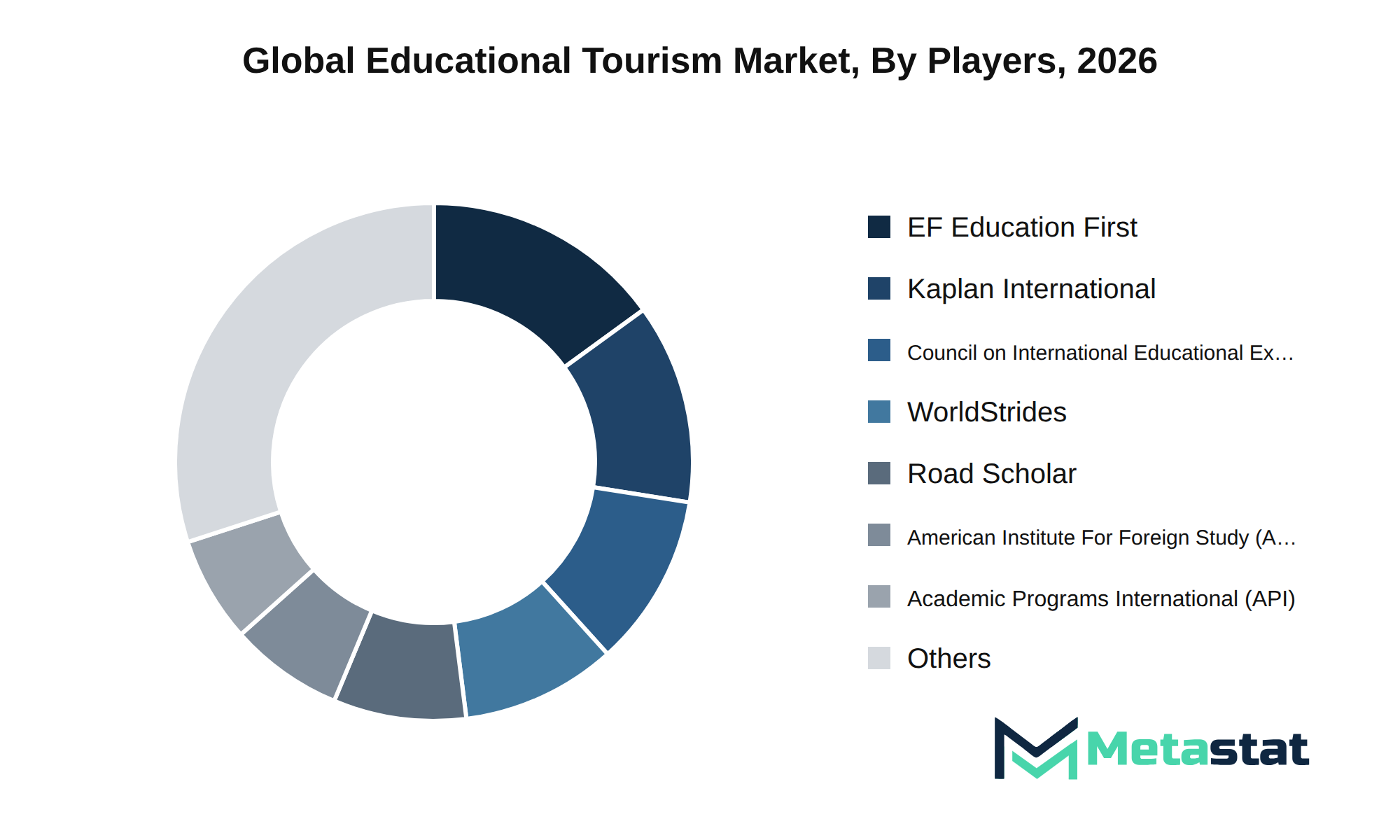
The Educational Tourism market features a diverse range of players, each employing distinct strategies to secure market share and enhance customer engagement. Key companies including EF Education First, Kaplan International, and WorldStrides, Inc. differentiate themselves through unique educational offerings and tailored experiences to attract various age groups and occupation segments. Strategic alliances and partnerships, particularly among organizations like the Council on International Educational Exchange (CIEE) and Academic Programs International (API), strengthen their positioning by expanding service networks and enhancing educational content.
Pricing architectures in the market exhibit significant variations, influenced by factors including geographic location, educational type, and occupation. Companies like Road Scholar and Rustic Pathways leverage competitive pricing to appeal to budget-conscious travelers while offering premium services that enhance brand equity. The presence of established firms creates high barriers to entry for new entrants, limiting disruption dynamics and maintaining a stable competitive environment.
The future competitive outlook indicates ongoing consolidation trends, with collaborations expected to enhance value chain integration and drive innovation in educational offerings. This consolidation creates opportunities for cross-industry partnerships, enabling players like Cultural Experiences Abroad (CEA CAPA Education Abroad) and Explorica, Inc. to expand their market reach. Customer retention strategies rooted in brand loyalty and high-quality educational experiences serve because critical growth vectors for sustaining market relevance.
Market size is forecast to rise from USD 517.7 billion in 2025 to over USD 1,406.2 billion by 2033. This growth reflects an annual compound growth rate (CAGR) of 13.3%. The base case presents a stable trajectory driven by increasing adoption of educational tourism across various demographics and an evolving landscape that embraces technological enhancements.
In a bullish scenario, heightened consumer interest and investment in educational experiences accelerate market growth. Expanding global connectivity and infrastructure improvements facilitate greater access to educational destinations, leading to higher participation rates in educational tourism. Conversely, a bearish outlook arises from geopolitical tensions and economic downturns that hinder travel and educational spending. These dynamics influence demand patterns and overall engagement in the market.
Strategic capital allocation directed towards infrastructure development enhances accessibility to educational tourism. Investments in technology integration streamline educational offerings and provide personalized experiences, securing competitive advantages for providers. Regulatory evolution and compliance with international standards impact market operations, influencing capacity and service delivery.
Emerging white-space opportunities exist where unmet enterprise needs drive innovation in educational tourism. Increasing demand for skill development and cultural exchange programs highlights significant growth pockets. This evolution necessitates continuous adaptation to changing consumer preferences and regulatory landscapes, ensuring sustained growth and relevance in the market.
Educational Tourism Market Key Segments
By Education Type:
- Primary
- Secondary
- College
- Post-Graduation
By Age Group:
- Less Than 15 Years
- 16-25 Years
- 26-40 Years
- 41-55 Years
By Occupation:
- Students
- Teachers
- Government Officials
- Corporation Managers
- Enterprise Owners
- Workers
- Others
By Purpose:
- Academic Learning
- Language Learning
- Cultural Exchange
- Skill Development
- Career Development
- Research & Training
- Personal Development
- Others
By Region:
- North America
- Europe
- Asia-Pacific
- South America
- Middle East and Africa
Key Global Educational Tourism Industry Players
- EF Education First
- Kaplan International
- Council on International Educational Exchange (CIEE)
- WorldStrides, Inc.
- Road Scholar
- American Institute For Foreign Study (AIFS)
- Academic Programs International (API)
- Cultural Vistas
- WEP International
- Explorica, Inc.
- Rustic Pathways
- Brightspark Travel Inc.
- ACIS Educational Tours
- ACE Cultural Tours
- Educational Tours, Inc.
- AAI Edutourz Pvt. Ltd.
- Capital Tours, Inc.
- Atlantis Erudition & Travel Services Pvt. Ltd.
- Global Educational Travel
- Kesari Tours Pvt. Ltd.
- International Education Services (IES Abroad)
- GoAbroad.com
- Cultural Experiences Abroad (CEA CAPA Education Abroad)
- Straight A Tours
- Wessex Educational Travel
- NST Student Travel
- American Councils for International Education
- Language International
- World Expeditions Travel Group Pty Ltd
- Study Group
Report Coverage
The report strategically identifies and profiles the key market players and analyses their core competencies in each sub-segment of the Educational Tourism market.
|
Report Attributes |
Details |
|
Study Period |
2021-2033 |
|
Base Year |
2025 |
|
Estimated Year |
2026 |
|
Forecast Period |
2026-2033 |
|
Historical Period |
2021-2025 |
|
Growth Rate |
CAGR 13.3% from 2026 to 2033 |
|
Revenue Unit |
USD billion |
|
Segmentation |
By Education Type, Age Group, Occupation, Purpose, and Region |
|
By Region |
North America (By Education Type, Age Group, Occupation, Purpose, and Country)
|
|
Europe (By Education Type, Age Group, Occupation, Purpose, and Country)
|
|
|
Asia Pacific (By Education Type, Age Group, Occupation, Purpose, and Country)
|
|
|
South America (By Education Type, Age Group, Occupation, Purpose, and Country)
|
|
|
Middle East and Africa (By Education Type, Age Group, Occupation, Purpose, and Country)
|
What Report Provides
- Key Company Market Share, Revenue and Ranking for the Educational Tourism Market
- Key Market Leaders and Their Strategies in Educational Tourism
- Full In-Depth Analysis of the Educational Tourism Industry
- Comprehensive Industry Statistics and Trends for Educational Tourism
- Important Changes in Educational Tourism Market Dynamics
- Segmentation Details of the Educational Tourism Market
- Historical, Ongoing and Projected Market Analysis for Educational Tourism
- Emerging Segments and Regional Growth Potential in Educational Tourism
Frequently Asked Questions
Find answers to common questions about this report
The Educational Tourism market size was valued at USD 517.7 billion in 2025, according to the Metastat Insights study.
The Educational Tourism market is projected to grow at a CAGR of 13.3% during the forecast period from 2026 to 2033.
The North America Educational Tourism market size is estimated to reach USD 388.8 billion by 2033.
The College segment leads the Educational Tourism market with a projected value of USD 513.1 billion by 2033. This figure surpasses other segments, indicating significant demand for college-level educational travel.
Shifting consumer behaviors, particularly the interest in experiential learning and immersive educational experiences, drive demand in the Educational Tourism market. Younger generations prioritize educational trips that facilitate cultural exchange and skill development, supported by advancements in digital platforms that streamline access to information and planning.
Europe holds the dominant share of the Educational Tourism market, with a value of USD 388.8 billion in 2033, representing 31.4 percent of the total market.
Regulatory compliance and macroeconomic headwinds present significant challenges for the Educational Tourism market. Stringent legal mandates increase operational complexity and costs, deterring smaller operators from entering the market. inflationary pressures and rising travel costs inhibit consumer spending, directly affecting demand for educational programs and travel.
Shifting consumer behaviors favor product adoption in the educational tourism market. Increased interest in experiential learning, cultural exchange, and skill development drives demand, particularly among younger generations aged 16-25 years. Advancements in digital platforms facilitate access to information, enhancing the planning and booking processes for prospective travelers.
The Educational Tourism market is estimated to reach a valuation of USD 1,406.2 billion by 2033.
Key players operating in the Educational Tourism market include EF Education First, Kaplan International, Council on International Educational Exchange (CIEE), WorldStrides, Inc., Road Scholar, and American Institute For Foreign Study (AIFS).
Choose Your License
Global Educational Tourism Market
Related Reports
Explore related market intelligence reports worth reading alongside this one.