
LEAD ANALYST
Utkarsh Khirodkar is a Lead Market Research Analyst at MetaStat Insight, specializing in market intelligence, technology sector assessments, and competitive strategy.

Global Electric Fan Market Size, Share, By Product Type (Ceiling Fans, Table Fans, Wall-Mounted Fans, Pedestal Fans, Exhaust Fans, Tower Fans, and Industrial Fans), By Technology Type (AC Electric Fans, DC Electric Fans, Smart Electric Fans (IoT Enabled), Energy-Efficient Fans, Remote-Controlled Fans, and Solar-Powered Fans), By Application (Residential, Commercial, Industrial, Healthcare Facilities, Retail Spaces, Hospitality Sector, and Educational Institutions), By Distribution Channel (Supermarkets and Hypermarkets, Specialty Stores, Online Retail Platforms, Direct Sales, Wholesale Distributors, Brand Outlets, and B2B Sales), Industry Analysis, Growth, Trends, and Forecast, 2026-2033
MSI-5022
August 21, 2026
Updated
284 Pages
Historical
Base year
Forecast
Forecast period
Report Details
Comprehensive Market Analysis And Insights
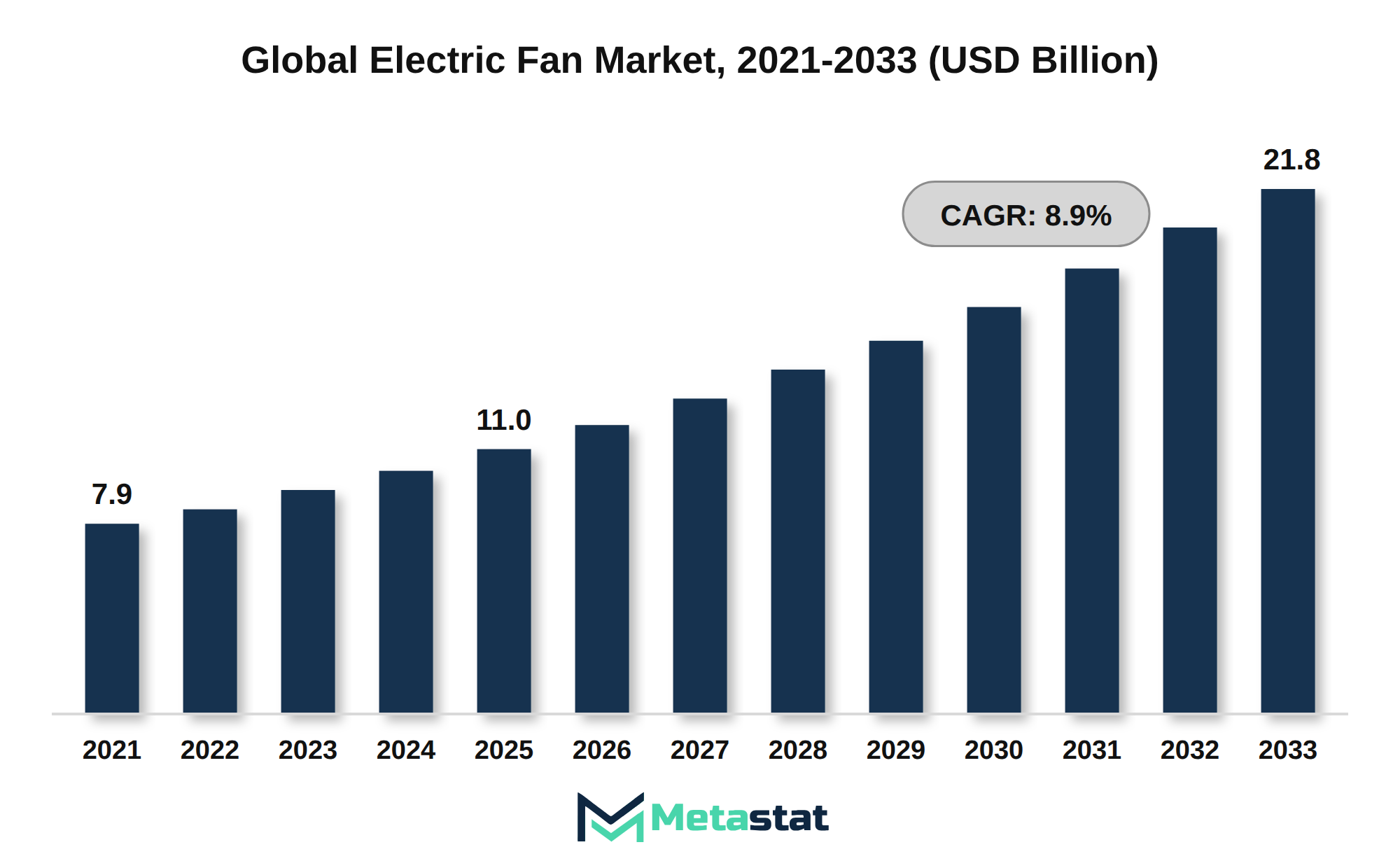
The global Electric Fan market was valued at USD 11 billion in 2025 and is projected to reach USD 21.8 billion by 2033, growing at a CAGR of 8.9% over the forecast period.
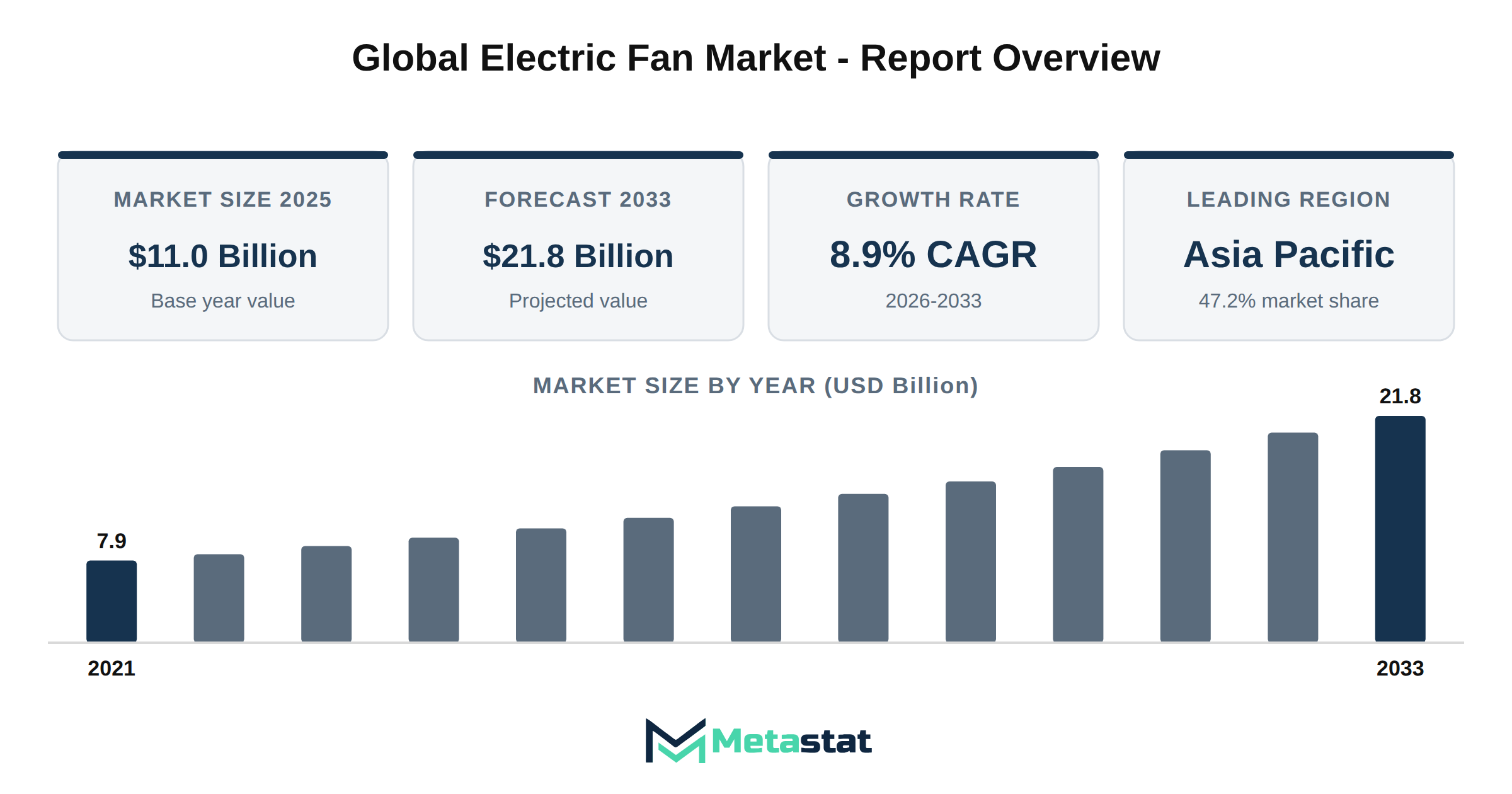
The Electric Fan market reached a valuation of USD 11 billion in 2025, with a projected growth trajectory indicating an increase to USD 21.8 billion by 2033. This development represents a compound annual growth rate (CAGR) of 8.9% over the forecast period from 2026 to 2033. Historical data shows a steady progression from USD 7.9 billion in 2021 to USD 10.1 billion in 2024, demonstrating a strong upward trend in consumer demand and market expansion.
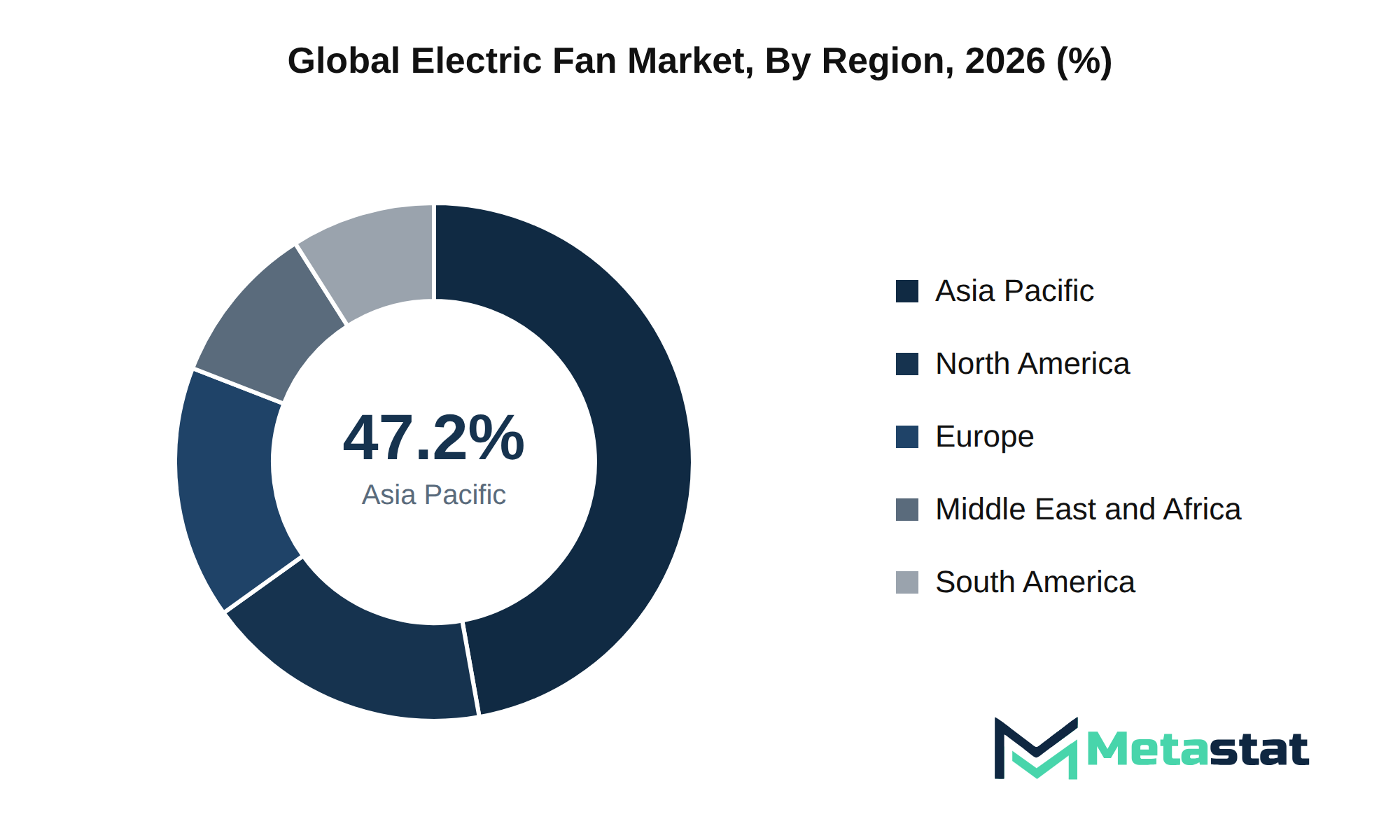
Regional dynamics significantly influence the Electric Fan market, with Asia Pacific leading globally, accounting for 47.2% of the total market share. North America and Europe follow, representing 17.9% and 15.8% of the market, respectively. The Middle East and Africa contribute 10.1%, while South America accounts for 9%. This geographic distribution highlights varying consumer preferences and purchasing power across different regions, shaping product offerings and marketing strategies.
Product diversity within the Electric Fan market includes several segments, including ceiling fans, table fans, wall-mounted fans, and pedestal fans. Ceiling fans, projected to grow from USD 5.8 billion in 2026 to USD 10.4 billion by 2033, exhibit a CAGR of 8.8%. Table fans and pedestal fans are noteworthy segments, with growth rates of 8.4%. These trends reflect evolving consumer needs and preferences for effective cooling solutions in various environments.
Technological advancements drive innovation in the Electric Fan market. The shift towards energy-efficient and smart electric fans aligns with consumer demand for sustainable and connected solutions. Energy-efficient fans are set to capture market share, while smart electric fans are projected to gain traction driven by IoT-enabled technologies increasingly integrated into household appliances. The anticipated growth of DC electric fans, from USD 3.4 billion in 2026 to USD 4.9 billion in 2033, indicates a shift towards more efficient alternatives.
The Electric Fan market experiences significant transformation driven by the increasing focus on sustainable practices and energy efficiency. Regulatory compliance related to energy consumption and environmental standards plays a critical role in shaping product development and market dynamics. Companies invest in research and development to innovate new technologies that enhance performance while minimizing environmental impact. This trend aligns with the broader global push towards decarbonization and the circular economy, influencing design and manufacturing processes.
Supply chain resilience remains a focal point, driven by logistics architecture adapting to changing consumer demands and geopolitical challenges. The sourcing landscape reflects a shift towards more localized supply chains, reducing reliance on international suppliers and mitigating risks associated with currency volatility and inflationary pressures. Market fragmentation introduces challenges and opportunities for businesses, requiring strategic partnerships and collaborations to enhance competitive positioning.
Future strategic outlooks for the Electric Fan market emphasize the importance of capital allocation towards innovative projects and sustainable practices. Corporate imperatives focus on integrating high-value recommendations that enhance operational efficiency and drive profitability. Infrastructure investments will support the growing demand for advanced electric fan technologies, ensuring that companies remain competitive in a dynamic market environment.
Changes in consumer behaviors significantly influence the Electric Fan market. Urbanization, evolving buying preferences, and an aging population drive increased demand for various fan types, including energy-efficient and smart models. Consumers seek products that offer convenience, comfort, and sustainability, prompting manufacturers to innovate and diversify their offerings. Rising interest in energy-efficient fans aligns with growing environmental consciousness, leading to a focus on products that reduce carbon footprints and support sustainability efforts.
The expansion of online retail platforms facilitates easier access to a broader range of electric fan options. This shift in purchasing habits encourages consumers to explore various brands and models, enhancing competition among suppliers. Consumers prioritize features including smart technology and energy efficiency, prompting manufacturers to adapt their product lines to satisfy these demands. Consequently, this dynamic environment positions the market for significant growth, reinforcing long-term demand.
The Electric Fan market experiences growth fueled by increased investment in renewable energy initiatives. Governments and private investors prioritize sustainable energy projects, enhancing the overall infrastructure and efficiency of electrical systems. This investment directly correlates with rising consumer demand for energy-efficient products, including electric fans that incorporate advanced technologies.
Technological integration contributes to this growth, with manufacturers focusing on automation and improving production processes to create more efficient products. Enhanced manufacturing capabilities lower operational costs while improving product quality, benefiting consumers and impacting market dynamics. The adoption of smart electric fans, equipped with IoT features, reflects this trend, aligning with shifting consumer preferences toward energy efficiency and advanced technology.
The transition toward sustainable and energy-efficient solutions results in a competitive environment where companies strive to innovate. Diversification of product offerings and enhancements to existing models generate new revenue streams within the Electric Fan market. Businesses position themselves to capture a larger share of a growing market driven by macro-economic factors and consumer demands.
Supply chain disruptions severely impact the Electric Fan market, leading to delays in production and distribution. Ongoing geopolitical instability and resource scarcity contribute to these disruptions, creating challenges for manufacturers who rely on timely access to raw materials and components. Increased lead times and fluctuating costs result from these issues, ultimately affecting the market's overall performance and growth potential.
Inflationary pressures increase operational costs, straining profit margins across the industry. High capital investment requirements further restrict smaller players from entering the market, limiting competition and innovation. This economic environment deters investments in new technologies or product development, stalling advancements that otherwise enhance the Electric Fan market.
Technological obsolescence poses an additional threat, driven by the emergence of newer, more energy-efficient products. Established manufacturers face risks of losing market share to emerging competitors offering innovative solutions. The presence of alternative offerings, including air conditioning systems, adds to the competitive pressure, potentially shifting consumer preferences away from traditional electric fans.
Infrastructure gaps and connectivity deficits hinder market penetration in certain regions, impacting adoption rates. Areas with inadequate electrical infrastructure experience slower growth, limiting the reach of electric fan products. Cultural barriers and regional adoption resistors further complicate market dynamics, particularly in regions where traditional cooling methods prevail.
These factors create a challenging environment for the Electric Fan market, impacting efficiency, investment, and overall growth potential. Addressing these constraints will be essential for stakeholders aiming to navigate the complexities of this evolving market.
Geopolitical fragmentation significantly disrupts the Electric Fan market, affecting trade relationships and leading to increased tariff friction. These tensions create uncertainties that hinder smooth international trade operations, resulting in inflated costs for manufacturers and suppliers. Rising trade deficits impact the availability of raw materials and components, restricting production capacity and inflating consumer prices.
Technological disruptions pose challenges within the market, particularly in the integration of advanced features including smart technology and energy efficiency. Complex research and development integrations lead to increased timeframes and costs for product innovation, deterring smaller companies from competing effectively. Larger players operate in the market, limiting diversity and competition.
Increasing logistical disruptions and supply chain instability heighten the challenges faced by the market. Transportation bottlenecks and fluctuating transportation costs create barriers to timely product delivery, affecting both manufacturers and consumers. Instability in logistics impacts overall market efficiency, preventing companies from maintaining optimal inventory levels and fulfilling consumer demand.
Rising input costs and pricing compression exert pressure on profit margins across the market. Manufacturers confront escalating expenses related to raw materials, which directly influence final product pricing and consumer purchasing behavior. These pressures necessitate strategic cost management and innovation to sustain profitability.
Environmental sustainability demands, alongside regulatory frameworks, further complicate operational strategies within the Electric Fan market. Companies face evolving legal liabilities related to environmental impacts and compliance overhead, requiring investment in sustainable practices. Firms aiming to remain competitive adapt their product offerings and production processes to align with these environmental standards.
The Electric Fan market benefits from the integration of advanced technology, leading to increased demand for innovative solutions. The rise of smart electric fans equipped with IoT capabilities attracts tech-savvy consumers, enhancing energy efficiency and user convenience. This trend aligns with the growing preference for connected devices, reflecting a shift toward digital transformation within consumer electronics.
Geographical expansion of manufacturing capabilities in regions including Asia Pacific and increased investments in infrastructure modernization contribute to market growth. Emerging economies demonstrate significant potential, driven by urbanization and rising disposable incomes, which increase demand for electric fans in residential and commercial applications.
Strategic consolidation through mergers and acquisitions enhances market competitiveness, enabling companies to diversify product offerings and achieve economies of scale. This trend facilitates the entry of niche applications, particularly in sectors including healthcare facilities and educational institutions, where specific cooling requirements arise.
Environmental considerations influence purchasing decisions, with sustainability imperatives driving the shift toward energy-efficient fans. The market experiences heightened interest in eco-friendly products, aligned with consumer preferences for environmentally responsible solutions. This focus on sustainability promotes long-term growth and positions the market favorably in an increasingly eco-conscious society.
Overall, these dynamics create a favorable environment for growth in the Electric Fan market, where technological advancements and strategic initiatives respond to evolving consumer demands while addressing sustainability challenges.
The Global Electric Fan market is segmented based on Product Type, Technology Type, Application, and Distribution Channel.
Valued at USD 5.8 billion in 2026, the Ceiling Fans segment is projected to reach USD 10.4 billion by 2033, at a CAGR of 8.8% during the forecast period. Growth in this segment stems from rising consumer awareness regarding energy efficiency and the increasing adoption of ceiling fans in residential and commercial applications. Enhanced product designs integrating advanced technology, including smart features, respond to evolving end-user preferences, driving segment expansion.
Technological maturation influences the development of next-generation ceiling fans, with manufacturers focusing on energy-efficient models that comply with regulatory standards. Innovations in design and functionality contribute to increased consumer interest, particularly in urban environments where space optimization becomes essential. The shift toward sustainable living further enhances market dynamics, driven by consumers seeking products that align with eco-friendly practices.
Cost structures within the segment reflect the balance between quality and affordability, influencing pricing strategies. Raw material sourcing and supply chain resilience significantly affect production costs, compelling manufacturers to optimize their operational processes. Market players face pricing volatility due to fluctuating raw material prices, impacting profit margins.
Strategic opportunity windows arise from rising demand in emerging markets, with increasing urbanization contributing to the growth of the electric fan market. The trend toward smart home integration further opens avenues for innovation, allowing companies to differentiate their offerings. Ongoing investment in product evolution and advancements in technology positions the Ceiling Fans segment for substantial growth in the coming years.
Strong demand for Table Fans stems from their affordability and versatility, appealing to consumers across various demographics. Increased awareness regarding energy-efficient cooling solutions drives interest in these products, particularly in residential applications. The segment experiences a market value of USD 3.3 billion by 2033, with a CAGR of 8.4% during the forecast period.
The rising trend of urbanization leads to smaller living spaces where Table Fans serve because an effective cooling alternative. This growing urban population generates a boost in consumer preferences for compact and portable cooling solutions. Technological advancements enhance fan performance, increasing adoption rates among residential and commercial users.
Health-conscious consumers prioritize air circulation, benefiting from Table Fans' ability to improve indoor air quality. Enhanced comfort levels during hot weather increase demand, particularly in regions with high temperatures. Retailers tap into this segment by offering a wider range of designs and features, further stimulating growth in the Electric Fan market.
Strategic opportunities arise from expanding distribution channels, including online retail platforms, which cater to the evolving shopping habits of consumers. Increased visibility and accessibility of Table Fans lead to higher sales volumes. Continuous product evolution, including the incorporation of smart technology, positions Table Fans favorably in the competitive environment.
Investment in marketing strategies targeting lifestyle-oriented consumers enhances market penetration. The focus on aesthetics alongside functionality appeals to design-conscious buyers, creating additional growth avenues. The Table Fans segment demonstrates resilience, positioning itself because a critical component of the broader Electric Fan market.
Market dynamics surrounding Wall-Mounted Fans demonstrate strong potential, with the segment expected to reach USD 2.2 billion by 2033. Demand for these fans arises from their space-saving design, making them ideal for various settings, particularly in residential and commercial applications where floor space is limited. Technological advancements lead to the development of more energy-efficient and quiet operation models, enhancing appeal among consumers.
Consumption shifts reflect an increasing preference for energy-efficient products, aligning with global sustainability goals. Regulatory compliance standards support this trend, driving manufacturers to innovate and improve product performance. Competitive pricing strategies play a key role in attracting a broader consumer base, with manufacturers offering a range of models to meet diverse market needs.
Adoption of smart technology within the Electric Fan market provides an additional catalyst for growth. Integration of IoT features into wall-mounted fans enhances functionality and convenience, catering to tech-savvy consumers. This trend aligns with broader industry movements toward connected devices, positioning the segment favorably for future expansion.
Rapid expansion in the Pedestal Fans segment reflects a growing preference for portable and versatile cooling solutions in various environments. This segment is projected to grow at a CAGR of 8.4% during the forecast period. Increased awareness regarding energy efficiency influences consumer choices, driving demand for advanced models that optimize power consumption while enhancing performance. Innovations including remote control functionalities and smart integration further attract consumers seeking modern solutions, expanding market opportunities.
Residential applications dominate the segment, leveraging rising temperature levels and the need for effective cooling solutions. Commercial and industrial sectors increasingly adopt pedestal fans due to their mobility and effective airflow management capabilities, enhancing workplace comfort and productivity. The market anticipates sustained growth driven by consumer gravitation towards convenient and cost-effective cooling options, shaping future investment strategies and influencing competitive dynamics across the Electric Fan market.
Adoption of Exhaust Fans is driven by rising awareness regarding indoor air quality and ventilation needs across various sectors. This segment maintains air circulation, especially in residential and commercial settings, where air stagnation leads to discomfort and health issues. Increasingly stringent regulatory compliance standards related to air quality and energy efficiency fuel demand for these products, prompting manufacturers to innovate and enhance their offerings.
Technological maturation in fan design and energy efficiency further supports market expansion. Incorporating features including noise reduction and improved airflow characteristics appeals to consumers seeking high-performance solutions. Evolving consumer preferences towards smart home applications lead to a rise in demand for IoT-enabled Exhaust Fans, which integrate seamlessly into home automation systems.
End-use dynamics indicate a shift towards energy-efficient solutions, with a growing number of customers opting for products that reduce energy consumption while maintaining effectiveness. This trend aligns with broader sustainability goals and cost-saving initiatives. Capital investment outlook remains positive, with manufacturers focusing on research and development to advance product capabilities, addressing consumption shifts towards sustainable technologies.
Logistics vulnerabilities and raw material sourcing challenges pose risks to the market, impacting production timelines and pricing strategies. However, strategic opportunity windows emerge for companies that leverage innovative supply chain solutions and local sourcing to mitigate these vulnerabilities. The Exhaust Fan segment within the Electric Fan market holds strong potential, driven by a blend of regulatory pressures, consumer demand for better air quality, and technological advancements.
Consumer preferences increasingly favor Tower Fans due to their space-saving designs and efficiency in cooling. This segment's appeal stems from its versatility, making it suitable for various environments, including residential, commercial, and even industrial applications. The growing trend towards compact living spaces and multifunctional furniture drives demand, driven by consumers seeking effective cooling solutions that occupy minimal floor space.
Market expansion for Tower Fans aligns with advancements in technology, particularly the integration of energy-efficient features and smart functionalities. Energy-efficient models attract environmentally conscious consumers, while smart fans, equipped with IoT capabilities, provide enhanced control and convenience, appealing to tech-savvy buyers. These next-gen upgrades signal a shift in consumer expectations towards greater functionality and sustainability.
Regulatory compliance standards regarding energy consumption and environmental impact influence product development in the Tower Fans segment. Manufacturers navigate these regulations while balancing innovation and cost structures, ensuring their products meet governmental standards without significantly inflating prices. This regulatory landscape encourages competition among manufacturers, pushing them to invest in research and development to maintain compliance and meet evolving consumer demands.
Supply chain resilience significantly influences the production of Tower Fans, because disruptions affect the availability of raw materials and components. An efficient supply chain strengthens manufacturers' ability to respond to market fluctuations and maintain consistent product quality. Companies emphasizing local sourcing strategies enhance their resilience, mitigating risks associated with global supply chain vulnerabilities.
The evolving dynamics of Tower Fans highlight the potential for substitution risks. Traditional cooling methods, including air conditioning, face competition from more energy-efficient and environmentally friendly alternatives like Tower Fans. While consumers become more aware of the environmental implications of their choices, the market shifts towards solutions that align with sustainability goals. Strategic opportunity windows open for manufacturers that prioritize eco-friendly innovations and effective marketing strategies.
Industrial fans play a critical role in the Electric Fan market, primarily due to their widespread application in various sectors, including manufacturing, warehousing, and construction. Demand drivers for industrial fans include the growing need for effective ventilation solutions in large spaces and the emphasis on energy efficiency. Technological maturation leads to advancements in fan design and functionality, producing models that operate more quietly and efficiently.
The expansion of this segment reflects increased industrial activity and the ongoing trend toward automation and enhanced operational efficiency. Next-generation upgrades, including IoT-enabled features, streamline operations and facilitate remote monitoring, generating interest among end-users. Regulatory compliance standards regarding energy consumption and emissions push manufacturers to innovate and develop more efficient models.
Cost structures in the industrial fans segment hinge on raw material sourcing and the integration of advanced technology. Pricing volatility arises from fluctuations in the costs of components, impacting profit margins. Strategic opportunity windows emerge for manufacturers who adapt quickly to changing market conditions and consumer preferences.
Consumption shifts toward energy-efficient solutions create pressure on stakeholders to address environmental concerns while maintaining performance standards. Ongoing investment in infrastructure and industrial facilities is anticipated, leading to a positive outlook for the industrial fans segment. Overall, strong demand supported by effective product evolution positions this segment favorably within the broader Electric Fan market.
Valued at USD 3.4 billion in 2026, the AC Electric Fans segment is projected to reach USD 4.9 billion by 2033, at a CAGR of 5.4% during the forecast period. Demand stems from increasing consumer preferences for energy-efficient and cost-effective cooling solutions, particularly in residential and commercial applications. Growth in this segment aligns with heightened awareness regarding energy conservation, stimulating interest in AC Electric Fans that provide effective cooling while minimizing electricity usage.
Technological advancements in electric fan designs contribute significantly to market expansion. Manufacturers invest in developing innovative features including improved motor efficiency and enhanced airflow capabilities, aligning products with consumer expectations for performance and sustainability. Next-generation upgrades, including smart technology integration, facilitate greater control and customization for users, further attracting buyers.
Distribution channels play a crucial role in connecting consumers with AC Electric Fans. Online retail platforms increasingly dominate the market, providing convenient access to a diverse range of products. Specialty stores continue to serve essential touchpoints, allowing consumers to experience product features firsthand before purchasing. This multi-channel approach enhances accessibility, driving overall market growth.
In the context of end-use dynamics, residential applications account for a growing share of AC Electric Fans. While urbanization continues to rise, the need for effective cooling solutions in homes intensifies, with consumers seeking reliable products that enhance comfort. Commercial and industrial sectors contribute to demand, with facilities requiring effective cooling systems to maintain optimal working conditions.
Regulatory compliance standards related to energy efficiency influence market dynamics, because manufacturers adapt to meet evolving guidelines. Certifications from recognized organizations enhance consumer trust, ensuring that products align with performance expectations. Such compliance not only supports market credibility but encourages technology adoption, propelling the overall growth of the electric fan market.
Rising demand for energy-efficient solutions drives growth in the DC Electric Fans segment. Environmental awareness influences consumer preference for eco-friendly products, making DC Electric Fans an attractive option. This segment is estimated to reach USD 5.5 billion by 2033, at a CAGR of 9% during the forecast period. Technological advancements enhance performance and efficiency, propelling market expansion. Integration of smart technology in DC fans enables remote control and energy management, appealing to tech-savvy consumers. The market benefits from increased adoption in residential, commercial, and industrial applications, driven by end-users seeking reliable and cost-effective cooling solutions. Price competitiveness and innovations in design contribute to shifting consumption patterns, while regulatory compliance with energy standards supports the segment's growth trajectory.
Technological advancements drive significant interest in the Smart Electric Fans (IoT Enabled) segment, enhancing consumer engagement through increased connectivity and control. The integration of Internet of Things (IoT) technology allows for remote operation and monitoring, appealing to tech-savvy customers who prioritize convenience and efficiency. This segment is expected to reach USD 3.1 billion by 2033. Rising awareness of energy consumption and sustainability influences the demand for smart solutions, because these fans often incorporate energy-efficient features that align with environmental concerns.
The evolution of smart home ecosystems supports the adoption of IoT-enabled fans across various applications, including residential, commercial, and healthcare facilities. While end-users prioritize integration with existing smart devices, manufacturers focus on developing compatible products to enhance user experience. Regulatory compliance standards promoting energy efficiency support market growth, driving innovation in smart fan technologies.
Competition within the Electric Fan market intensifies due to players innovating to differentiate their offerings. Companies invest in research and development to create next-generation upgrades, which facilitate enhanced functionalities and performance. Strategic opportunity windows arise because consumer interest shifts towards advanced features, providing avenues for market expansion and revenue growth.
Strong interest in Energy-Efficient Fans stems from increasing consumer awareness regarding environmental sustainability and rising energy costs. This segment benefits from advancements in technology that improve energy conservation while maintaining performance. Adoption of these fans occurs primarily in residential and commercial applications, where energy efficiency directly influences operational costs. Demand for Energy-Efficient Fans reflects a trend toward sustainable living, aligning with regulatory compliance standards emphasizing energy conservation. The Energy-Efficient Fans segment is projected to grow at a CAGR of 10.8% during the forecast period. With increasing energy efficiency initiatives, manufacturers face opportunities for innovation and product evolution. Continued investment in next-generation upgrades is expected to enhance product appeal, further stimulating segment growth within the Electric Fan market.
Technological maturation drives product evolution, with manufacturers focusing on innovative designs and features. Next-generation upgrades, including increased energy efficiency and improved smart functionalities, position these fans because attractive options for consumers prioritizing sustainability and advanced capabilities. End-use dynamics shift toward environments demanding flexible climate control solutions, further increasing the relevance of remote-controlled fans in various applications.
Awareness of energy consumption influences purchasing decisions, prompting consumers to seek solutions that optimize power usage. Regulatory compliance standards continue to shape product offerings, pushing manufacturers to innovate while adhering to energy efficiency benchmarks. The competitive landscape drives continuous improvements in product features and performance, ensuring remote-controlled fans remain a viable choice in the broader Electric Fan market.
Strategic opportunities arise from growing demand in developing regions, where urbanization and rising disposable incomes create a robust market for advanced fan technologies. Capital investment in research and development accelerates the introduction of disruptive alternatives, positioning remote-controlled fans because significant players in the evolving Electric Fan market.
Growing consumer interest in sustainable energy solutions fuels demand for solar-powered fans, a segment within the Electric Fan market that reflects a shift toward eco-friendly applications. Increased awareness of environmental issues promotes adoption in residential and commercial settings, where energy savings align with consumer preferences for cost-effective products.
Technological advancements facilitate the evolution of solar-powered fan designs, integrating efficient solar panels and energy storage systems to enhance functionality. These innovations support the segment's expansion and present opportunities for manufacturers seeking to differentiate their offerings in a competitive environment.
End-users, including households and businesses, recognize the benefits of solar-powered fans in reducing energy consumption. The segment's growth aligns with broader sustainability goals and contributes to a favorable outlook for future installations, driving investments in related technologies.
Regulations promoting renewable energy sources support the segment's potential and influence product development and market entry strategies for key players. Compliance with environmental standards enhances the appeal of solar-powered fans, positioning them favorably among consumers seeking sustainable options in the Electric Fan market.
Expansion in the residential segment of the Electric Fan market reflects a growing emphasis on home comfort and convenience. Valued at USD 6.1 billion in 2026, this segment is projected to reach USD 10.2 billion by 2033, at a CAGR of 7.7% during the forecast period. Increased consumer awareness regarding energy-efficient products drives significant demand for fans that reduce energy consumption while providing effective cooling solutions. Technological advancements in fan designs, including improved blade shapes and motor efficiency, enhance performance and user satisfaction.
The shift toward smart home technologies fuels interest in residential electric fans equipped with IoT capabilities. Consumers prioritize features that integrate with smart systems, allowing for remote operation and energy monitoring. The development of innovative products caters to the tech-savvy homeowner. The rise of home renovation projects generates demand for aesthetically pleasing and functional fans that complement interior design.
Distribution channels evolve in response to changing consumer shopping behaviors, with a notable increase in online retail platforms facilitating access to a wider variety of products. Retailers focus on enhancing the shopping experience through detailed product information and customer reviews, contributing to informed purchasing decisions. The residential segment's growth trajectory aligns with broader trends in the Electric Fan market, predicting strong performance driven by evolving consumer preferences.
Rising demand for Electric Fans in the Commercial segment reflects an increased focus on maintaining comfortable environments in workplaces and retail spaces. Businesses invest in efficient cooling solutions, particularly in regions experiencing hot climates, driving market growth. Enhanced productivity and employee satisfaction influence this trend, leading organizations to prioritize effective air circulation, which supports long-term demand for Electric Fans.
The Commercial segment is estimated to reach USD 5.2 billion by 2033, at a CAGR of 9.9% during the forecast period. The availability of advanced features in modern Electric Fans, including energy efficiency and smart technology, appeals to commercial buyers seeking cost-effective solutions. Rising energy costs drive businesses to seek products that reduce consumption while maintaining adequate cooling, propelling the adoption of innovative fan technologies and expanding the addressable base.
Consumer preferences in the commercial landscape increasingly favor Electric Fans that offer versatility and ease of use. Products that provide reliable performance and adaptability to various environments, including offices, restaurants, and retail spaces, perform well in this segment. In response, manufacturers focus on developing high-performance fans that cater to the unique needs of commercial applications within the Electric Fan market, reinforcing their competitive position.
Demand for electric fans in the industrial segment thrives due to the increasing need for effective air circulation in various settings. Industries including manufacturing, warehousing, and logistics require reliable cooling solutions to maintain optimal working conditions and enhance productivity. This segment is expected to reach USD 2.4 billion by 2033, reflecting growth driven by rising industrial activities and infrastructural development.
Technological advancements contribute significantly to the electric fan market's expansion within the industrial sector. Innovations in energy-efficient designs and smart technologies enable enhanced performance and lower operational costs. Increased adoption of energy-efficient fans across industrial facilities supports sustainability initiatives while reducing energy consumption, aligning with global regulatory compliance standards.
The market experiences shifts in consumption patterns resulting from businesses seeking more versatile and durable fan solutions. Companies prioritize products that withstand harsh operational environments while providing reliable performance. This demand encourages manufacturers to invest in product evolution, leading to the introduction of advanced models that meet specific industrial requirements.
Investment in healthcare facilities drives significant demand for electric fans, particularly for ventilation and air circulation purposes. This segment is projected to grow at a CAGR of 10.8% during the forecast period. Increasing patient comfort and safety standards necessitate adequate air circulation in medical environments, prompting hospitals and clinics to prioritize effective cooling solutions. The rising prevalence of respiratory conditions and the need for infection control further enhance the uptake of electric fans in healthcare settings. Enhanced air quality and temperature regulation contribute to better patient outcomes, influencing budget allocations toward electric fan solutions. The electric fan market remains poised for growth, driven by technological advancements that enable innovative product designs tailored to healthcare applications.
Recent trends in retail spaces highlight a significant emphasis on creating comfortable environments for shoppers. The integration of electric fans into these settings provides effective cooling and enhances overall air circulation. Rising consumer expectations for comfort and improved shopping experiences drive adoption. Retailers recognize the importance of maintaining optimal temperature levels to encourage longer visits and increased spending.
Advancements in technology contribute to the evolution of electric fans within retail spaces. Smart electric fans equipped with IoT capabilities offer enhanced control and energy efficiency. Retailers prioritize energy-efficient solutions to align with sustainability initiatives and reduce operational costs. Adopting energy-efficient fans reflects a commitment to environmentally responsible practices while addressing cost pressures arising from rising energy prices.
Expansion of retail spaces, particularly in urban areas, fuels demand for electric fans. Increased foot traffic necessitates effective climate control solutions in shops and malls. Enhanced aesthetic designs of modern electric fans appeal to retailers seeking to improve their store ambiance. This trend facilitates greater integration of fans within the overall store design, aligning with consumer preferences for visually appealing environments.
The electric fan market continually evolves to meet the changing dynamics of retail spaces. Upcoming regulatory standards regarding energy consumption and efficiency will influence future product offerings. Retailers will benefit from compliance with these standards, positioning themselves favorably in an increasingly competitive environment.
In the hospitality sector, demand for electric fans reflects an ongoing focus on enhancing guest comfort and energy efficiency. Hotels and resorts prioritize installations that promote a pleasant atmosphere while adhering to sustainability initiatives. The integration of energy-efficient fans significantly reduces operational costs related to energy consumption, aligning with both environmental goals and budgetary constraints.
Technology advancements create opportunities for next-generation electric fans that cater to the hospitality sector's unique requirements. Smart electric fans with IoT capabilities enable centralized control, improving user experience while optimizing energy usage. This evolution in product offerings attracts investments from hospitality providers seeking to modernize their facilities and meet guest expectations for innovative amenities.
Changes in consumer preferences indicate a shift towards environmentally responsible practices in the hospitality sector. Establishments actively seek compliance with regulatory standards that govern energy consumption, positioning energy-efficient solutions because essential components of their operational strategies. This trend influences purchasing decisions and reinforces the role of electric fans within the broader electric fan market.
Strategic opportunities emerge because hospitality providers evaluate the impact of climate change on guest comfort. Increased temperatures drive the demand for effective cooling solutions, making electric fans an attractive option for maintaining a suitable indoor environment. This dynamic encourages continuous investment and innovation within the segment, creating a robust competitive environment.
In educational institutions, the demand for electric fans grows owing to the emphasis on creating comfortable learning environments. Increased student enrollment and the need for climate control in classrooms contribute to this demand. Educational facilities invest in maintenance and upgrades to ensure optimal conditions for both staff and students.
Technological maturation leads to the adoption of modern fan designs and energy-efficient options in educational institutions. These advancements enhance user experience and reduce operational costs, attracting more institutions to consider electric fans because a viable solution. The trend towards sustainable energy solutions prompts educational facilities to explore options that align with sustainability goals.
Regulatory compliance standards drive institutions to invest in electric fans equipped with energy-efficient technologies. Certifications for energy efficiency and environmental impact play an essential role in decision-making processes, influencing purchasing criteria. Institutional budgets allocate funds for upgrades, recognizing the importance of comfort and energy savings in educational settings.
The growing focus on creating conducive learning environments reflects broader societal shifts towards prioritizing health and well-being. Educational institutions aim to enhance the overall experience for students. Electric fans represent a practical choice that contributes to improved air circulation and temperature regulation. This segment's evolution continues to shape the electric fan market, with institutions increasingly adopting innovative solutions to meet their specific needs.
Valued at USD 2.9 billion in 2026, the Supermarkets and Hypermarkets segment is projected to reach USD 4.5 billion by 2033, at a CAGR of 6.8% during the forecast period. Rising consumer preference for one-stop shopping experiences significantly drives growth in this segment, driven by customers seeking convenience and accessibility in purchasing electric fans. The expansion of retail networks enhances the availability of electric fans, facilitating adoption among diverse consumer segments.
Increased promotional activities, including discounts and in-store demonstrations, contribute to heightened visibility and consumer engagement with electric fans. Retailers emphasize energy-efficient models that align with environmental sustainability trends, appealing to eco-conscious shoppers. This strategic alignment supports the growth of the Electric Fan market within the Supermarkets and Hypermarkets segment.
Technological advancements in product offerings, including IoT-enabled fans, attract tech-savvy consumers, further driving demand. Retailers focusing on these innovative products position themselves competitively, enhancing their market share and profitability. The segment's growth trajectory reflects broader trends in the electric fan market, where consumer preferences shift towards advanced features and energy efficiency.
Growth in the Specialty Stores segment benefits from increasing consumer preference for personalized shopping experiences. These stores provide curated selections of electric fans, presenting various styles and technological features that appeal to discerning customers. The presence of knowledgeable staff enhances customer engagement, influencing purchasing decisions. Specialty stores have established themselves because key players in the Electric Fan market by offering unique products and building brand loyalty among consumers.
Specialty Stores segment is estimated to reach USD 3.4 billion by 2033, at a CAGR of 7.2% during the forecast period. This expansion reflects a shift towards premium and innovative electric fan solutions, driven by consumers seeking high-quality products that meet specific needs. The growing trend of home improvement projects enhances consumer willingness to invest in specialized fans. The market for electric fans continues to evolve, with specialty retailers playing an important role in meeting diverse consumer demands.
Growing interest in Online Retail Platforms stems from the rapid shift in consumer purchasing behavior towards online shopping. This segment of the Electric Fan market is expected to reach USD 6 billion by 2033, supported by the increasing availability of diverse electric fan options through e-commerce. The convenience and accessibility of online platforms attract consumers seeking competitive pricing and a wide variety of products.
Technological advancements in e-commerce infrastructure enable effective shopping experiences, supporting broader consumer adoption of electric fans. Enhanced delivery options and digital marketing strategies promote product visibility and consumer engagement, stimulating growth in this segment. Retailers investing in robust online channels capture significant market share, using analytics to optimize inventory and tailor offerings to specific consumer preferences.
While environmental sustainability becomes a consumer priority, demand for energy-efficient electric fans gains traction online. The Online Retail Platforms segment capitalizes on this trend by highlighting eco-friendly options, effectively aligning with consumer values. Enhanced product descriptions and customer reviews on these platforms facilitate informed purchasing decisions, driving sales and enhancing customer satisfaction.
Targeted promotions and strategic partnerships with influencers increase reach and attract new customers to the segment. Increased competition among online retailers encourages innovation in marketing techniques, promoting unique product offerings and specialized services. This evolving environment supports the segment's growth, allowing it to adapt rapidly to changing consumer demands and preferences.
Growth in the Direct Sales segment aligns with increasing consumer preference for personalized shopping experiences. Enhanced online platforms facilitate purchasing, catering to a growing base of tech-savvy customers. This segment is projected to grow at a CAGR of 9% during the forecast period, reflecting strong demand within the Electric Fan market. Direct sales represent a strategic opportunity window for manufacturers aiming to connect with consumers directly, improving brand loyalty and customer engagement.
Shifts in consumer purchasing behavior highlight a transition towards direct purchasing rather than traditional retail channels. This trend emphasizes the importance of robust digital marketing strategies for suppliers. Effective engagement strategies through social media and targeted advertising enhance visibility, driving sales through direct channels.
Advancements in e-commerce technology enable suppliers to leverage data analytics for refining marketing strategies and optimizing inventory management. This adaptability supports growth in the Direct Sales channel, where efficiency and responsiveness to consumer trends impact outcomes in the Electric Fan market.
Wholesale distribution serves because a vital channel in the Electric Fan market, facilitating the movement of products from manufacturers to retailers and end users. Increased demand for electric fans across various applications, particularly in residential and commercial sectors, reinforces the importance of this distribution method. Efficient wholesale distributors streamline supply chains, ensuring timely product availability and lower costs for retailers, which enhances overall market participation.
Technological advancements in fan design and energy efficiency contribute to heightened interest from distributors, who seek to offer next-generation products. The integration of smart technologies within electric fans aligns with consumer preferences for automation and energy savings, prompting wholesalers to adapt their offerings. This evolution enables market penetration because distributors respond to shifting consumer demands and preferences.
Regulatory compliance and certification requirements impact the operations of wholesale distributors in the Electric Fan market. Adherence to safety standards ensures product reliability and consumer trust while establishing long-term business relationships. Market players increasingly invest in maintaining compliance, which positions them competitively in this growing market.
With increasing competition, pricing volatility presents challenges that distributors navigate through strategic partnerships and bulk procurement. By leveraging relationships with manufacturers, distributors mitigate margin pressures and maintain profitability. Continued investments in supply chain resilience are crucial for adapting to market fluctuations and consumer demand shifts.
Overall, wholesale distributors play a significant role in shaping the Electric Fan market, directly influencing product availability and consumer access. Their ability to adapt to evolving market dynamics and technological advancements will determine their success in this competitive environment.
Consumer preferences increasingly favor personalized shopping experiences, driving interest in brand outlets for electric fans. These outlets offer a unique opportunity for consumers to interact directly with products, enhancing the understanding of features and benefits. The ability to present diverse product varieties, including energy-efficient and smart electric fans, positions brand outlets because vital touchpoints for consumer education and engagement.
Retail strategies focusing on customer experience enhance brand loyalty and encourage repeat purchases. With increasing competition, brand outlets play a significant role in product differentiation within the electric fan market. The emphasis on interactive displays and knowledgeable staff creates an environment where consumers feel confident in their purchasing decisions.
Technological advancements in fan design and efficiency further support the growth of brand outlets. These locations effectively highlight next-generation upgrades, catering to the evolving demand for smart, IoT-enabled fans and energy-efficient models. Strategic marketing and promotional efforts within brand outlets contribute to higher consumer engagement and sales conversion rates.
Overall, brand outlets are essential for capturing consumer interest and enhancing market presence. Their ability to deliver tailored experiences strengthens the competitive position, influencing the broader dynamics of the electric fan market.
Increasing focus on energy efficiency in various sectors drives interest in B2B sales of electric fans. Businesses across industries seek cost-effective solutions for climate control and ventilation, leading to a rise in demand for electric fans that meet these criteria. The integration of smart technologies into electric fans enhances their appeal in B2B sales, allowing companies to leverage IoT capabilities for improved energy management and operational efficiency.
Commercial establishments prioritize reliable and effective cooling solutions, spurring growth in this segment. The uptake of energy-efficient fans aligns with corporate sustainability goals, making them an attractive option for businesses looking to reduce environmental impact and energy costs. This trend promotes investment in electric fan technologies that fulfill operational and ecological objectives in the electric fan market.
Technological advancements in fan design, including quiet operation and adjustable settings, contribute to their appeal in B2B applications. Industries including hospitality, retail, and office environments increasingly adopt electric fans to enhance comfort for clients and employees. This shift in consumption patterns reflects a broader trend of prioritizing user experience and energy management in commercial settings.
Access to reliable supply chains for raw materials and components supports the growth of B2B sales in the electric fan market. Establishments benefit from partnerships with manufacturers that provide timely delivery and quality assurance, ensuring operational continuity. Strategic opportunities arise from businesses seeking to collaborate with suppliers that offer innovative products and reliable service.
Based on geography, the Global Electric Fan market is divided into North America, Europe, Asia-Pacific, South America, Middle East, and Africa.
North America exhibits strong potential for growth in the Electric Fan market, fueled by increasing consumer awareness regarding energy efficiency and sustainability. The market is set to expand at a CAGR of 8.9% within the forecast period, reaching a market size (TAM) of USD 3.7 billion by the end of 2033. The demand is primarily driven by rising temperatures and changing climate patterns, prompting consumers in the United States, Canada, and Mexico to invest in efficient cooling solutions.
Residential applications dominate the market, with a notable shift towards energy-efficient and smart electric fans. The trend toward home automation drives interest in IoT-enabled products, appealing to tech-savvy consumers seeking convenience and control. Retail channels, particularly online platforms, gain prominence owing to consumers increasingly preferring shopping from the comfort of their homes, enhancing accessibility to a wide range of electric fan options.
The competitive landscape features numerous domestic market participants, including established players that focus on innovation and sustainability. Companies strategically enhance product offerings to capture consumer interest and expand their market share. Regional resource availability and a resilient energy grid further support growth prospects, ensuring that suppliers meet increasing demand effectively.
Localized manufacturing capacities strengthen supply chain dynamics, encouraging businesses to streamline operations and reduce lead times. While cross-border trade corridors facilitate the flow of goods, companies in North America are well-positioned to leverage these advantages, boosting their competitive stance in the electric fan market.
In Europe, the electric fan market benefits from robust demand driven by rising temperatures and the need for energy-efficient cooling solutions. Countries including Germany, France, the UK, Italy, and Spain exhibit increasing consumer awareness regarding energy consumption, prompting investments in energy-efficient products. Russia and the Rest of Europe contribute to this trend due to modernization efforts in residential and commercial infrastructures.
Competitive dynamics in the market highlight several domestic players focusing on innovative designs and functionalities, catering to diverse consumer preferences. Local manufacturing capabilities enable suppliers to respond swiftly to market demands, enhancing operational efficiencies. The electric fan market experiences significant growth due to high-value replacement cycles, particularly in urban areas where older models require upgrades.
Regional procurement strategies reflect a preference for localized sourcing, creating closer relationships between suppliers and buyers. This approach supports efficiency in the supply chain and enhances customer trust, aligning with the expectations of consumers prioritizing sustainability. Investments in smart technologies, including IoT-enabled fans, present opportunities for market expansion, especially among tech-savvy consumers.
The European market's growth trajectory is supported by increasing emphasis on compliance with local regulations that promote energy efficiency and public health. These regulations drive demand for advanced cooling solutions, further strengthening the electric fan market's position within the region. Europe remains a critical player in the overall market, demonstrating potential for continued expansion.
The Asia-Pacific region stands because a crucial hub for the Electric Fan market, representing a 47.2% share of the global market in 2025. Rapid urbanization and rising disposable incomes in countries like China, India, and Japan intensify demand for electric fans, particularly in residential and commercial sectors. The strong presence of manufacturing and the availability of localized production further support market growth, enabling efficient supply chains and responsive distribution networks.
Innovations in technology, including the rise of smart electric fans and energy-efficient models, attract consumer attention. Increasing concerns over energy consumption drive adoption of these products, aligning with regional regulatory frameworks promoting sustainability. The trend towards modernization of infrastructure in Southeast Asia creates an environment conducive to the expansion of electric fan applications in various settings.
Competitive dynamics within Asia-Pacific display a blend of established domestic players and emerging entrants. Major companies, including Panasonic Corporation and Midea Group, leverage their extensive capabilities to cater to diverse consumer needs. This strategic positioning enhances their market share and strengthens their standing in the Electric Fan market.
In South America, the Electric Fan market is shaped by growing demand driven by increasing temperatures and a rising preference for energy-efficient products. Brazil and Argentina lead the regional market, influenced by urbanization and rising disposable incomes that enable consumers to invest in residential cooling solutions. This shift reflects a broader trend towards modernizing infrastructures, where consumers seek comfort in residential and commercial spaces.
The market benefits from a diverse distribution landscape that includes supermarkets and hypermarkets, specialty stores, and online retail platforms, which enhance accessibility for consumers. The expansion of online retail platforms supports a trend towards convenience, enabling consumers to access a variety of products including ceiling fans, table fans, and energy-efficient models. This penetration of digital channels is particularly pronounced in urban areas.
Emerging market characteristics present untapped opportunities within the Rest of South America, where localized manufacturing contributes to reduced costs and improved supply chain efficiency. Increasing energy costs drive interest in energy-efficient fan options, which are expected to see growth during the forecast period. While regulatory frameworks encourage sustainable practices, the appeal of energy-efficient fans is anticipated to strengthen.
Overall, the South American Electric Fan market benefits from a combination of rising temperatures, evolving consumer preferences, and enhanced distribution channels, positioning it for continued growth during the forecast period.
The Electric Fan market in the Middle East and Africa demonstrates notable growth potential, driven by rising temperatures and increasing urbanization in countries like Saudi Arabia and the UAE. High population density in urban areas contributes to significant demand for cooling solutions, enhancing adoption rates across residential and commercial applications.
Infrastructure modernization plays a critical role in expanding the market. Investments in construction and real estate projects within the region create opportunities for electric fan installations in new buildings. This trend is particularly evident in the UAE, where luxury residential and commercial spaces increasingly incorporate advanced air circulation systems.
Emerging market front-runners, including South Africa, benefit from growing disposable income levels, which enable consumers to invest in energy-efficient technologies. The emphasis on sustainability fuels demand for energy-efficient fans, aligning with global environmental trends and government initiatives promoting energy conservation.
Localized manufacturing densities and initiatives focused on nearshoring enhance supply chain resilience, reducing dependence on imports and strengthening local economies. Such strategies allow regional players to respond swiftly to market changes while ensuring compliance with local regulations.
The market faces strategic entry barriers, including the need for foreign direct investment (FDI) and the establishment of distribution channels that cater to the unique cultural nuances of buyers. Understanding regional purchasing behaviors remains vital for companies aiming to succeed in the competitive marketplace.
Growth in localized procurement dynamics influences supplier strategies, with businesses increasingly partnering with local manufacturers to enhance product offerings. This collaboration encourages innovation while enabling cost efficiencies across the supply chain.
The Electric Fan market in the Middle East and Africa is projected for substantial growth, driven by urbanization, infrastructure investments, and a shift towards energy-efficient solutions. The evolving environment presents opportunities for both established players and new entrants, highlighting the importance of understanding regional trends and consumer preferences.
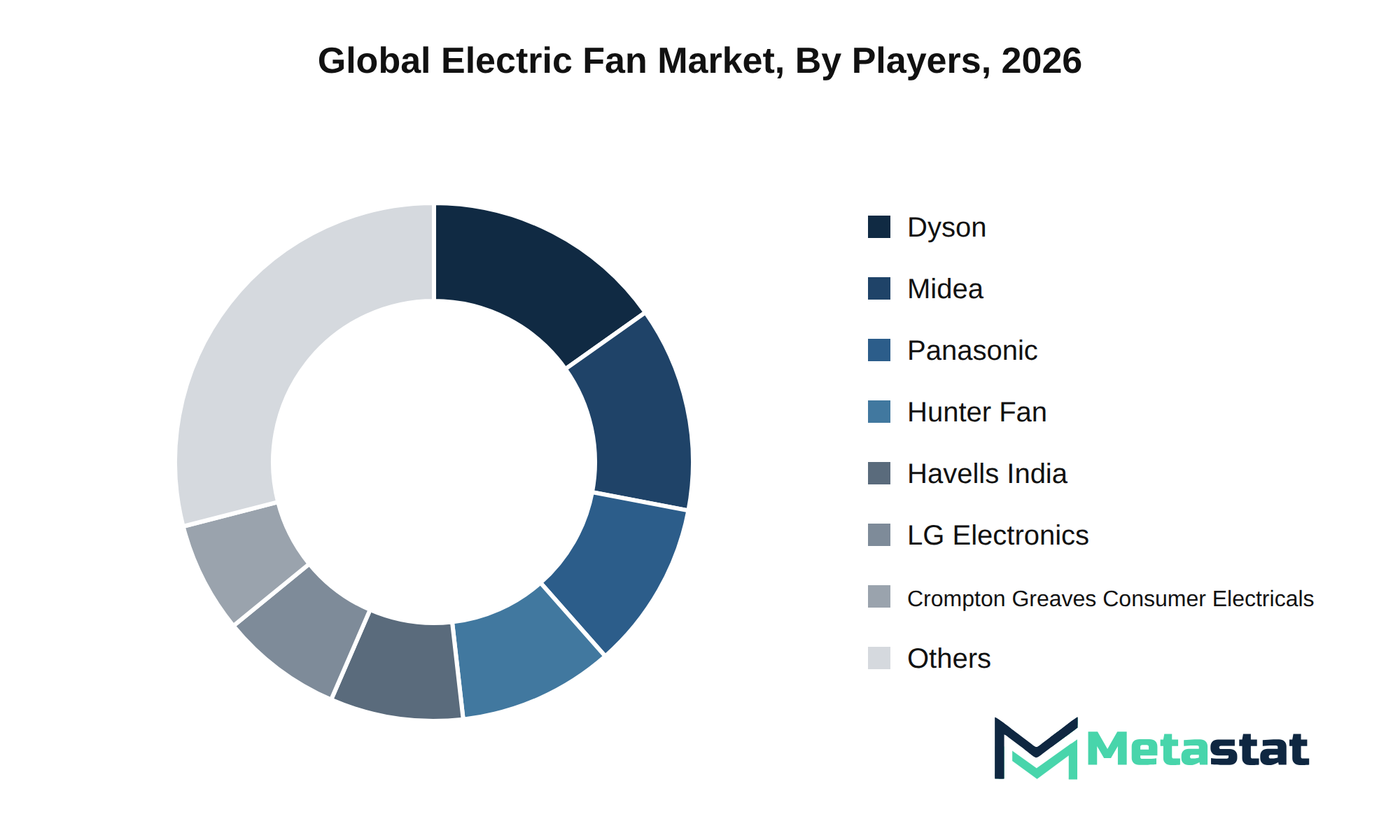
The Electric Fan market features various strategic behaviors among key players, highlighting a landscape of mergers, acquisitions, and product differentiation. Companies including Hunter Fan Company and Dyson Ltd. focus on innovative designs and energy-efficient technologies, while Panasonic Corporation and Havells India Ltd. prioritize competitive pricing and market penetration strategies.
Strategic alliances and joint ventures shape market dynamics, enabling collaboration between established manufacturers and emerging players. Companies including Midea Group and LG Electronics Inc. leverage proprietary technology moats and robust R&D pipelines to enhance product offerings, addressing growing demand for smart and energy-efficient fans.
The presence of several strong brands alongside significant barriers to entry creates a competitive atmosphere where customer retention strategies and brand equity dynamics play critical roles. Firms including Usha International Ltd. and Vornado Air LLC emphasize building customer loyalty through superior service and product quality, reinforcing their positions within the market.
Intellectual property portfolios and patent landscapes significantly influence the future competitive outlook. Companies like Haier Smart Home Co., Ltd. and Atomberg Technologies Private Limited invest in innovative technologies to secure market share, ensuring a competitive edge against potential new entrants.
Market size is forecast to rise from USD 11 billion in 2025 to over USD 21.8 billion by 2033. The base case anticipates a growth trajectory characterized by an 8.9% CAGR. In a bullish scenario, heightened consumer demand from emerging markets and increased adoption of energy-efficient solutions could drive market expansion beyond initial expectations. Conversely, a bearish outlook arises from potential supply chain disruptions or economic downturns impacting consumer spending.
Macroeconomic factors, including global inflation rates and shifts in consumer behavior, significantly influence the Electric Fan market. Structural consumption shifts toward energy-efficient and smart technologies reflect evolving consumer preferences, promoting the demand for advanced fan systems. The integration of next-generation technologies, including IoT-enabled fans, enhances product value propositions and supports sustained market growth.
Regulatory evolution, focusing on energy efficiency standards and environmental compliance, shapes product development timelines within the market. Manufacturers align with imminent compliance milestones driven by regional policies, ensuring adherence to sustainability requirements. Geopolitical dynamics and evolving trade corridors impact supply chain strategies, necessitating agile responses to international market fluctuations.
Strategic capital allocation directives direct investments towards R&D initiatives and infrastructure enhancements, driving innovation within the market. Emerging white-space opportunities exist, addressing unmet enterprise needs in commercial and industrial segments. High-growth pockets, particularly in developing regions, create avenues for market players aiming to capture untapped customer bases and cultivate brand loyalty.
The report strategically identifies and profiles the key market players and analyses their core competencies in each sub-segment of the Electric Fan market.
|
Report Attributes |
Details |
|
Study Period |
2021-2033 |
|
Base Year |
2025 |
|
Estimated Year |
2026 |
|
Forecast Period |
2026-2033 |
|
Historical Period |
2021-2025 |
|
Growth Rate |
CAGR 8.9% from 2026 to 2033 |
|
Revenue Unit |
USD billion |
|
Segmentation |
By Product Type, Technology Type, Application, Distribution Channel, and Region |
|
By Region |
North America (By Product Type, Technology Type, Application, Distribution Channel, and Country)
|
|
Europe (By Product Type, Technology Type, Application, Distribution Channel, and Country)
|
|
|
Asia Pacific (By Product Type, Technology Type, Application, Distribution Channel, and Country)
|
|
|
South America (By Product Type, Technology Type, Application, Distribution Channel, and Country)
|
|
|
Middle East and Africa (By Product Type, Technology Type, Application, Distribution Channel, and Country)
|
Find answers to common questions about this report
The Electric Fan market size was valued at USD 11 billion in 2025.
The Electric Fan market is projected to grow at a CAGR of 8.9% during the forecast period from 2026 to 2033.
The North America Electric Fan market size is estimated to reach USD 3.7 billion by 2033.
The Ceiling Fans segment leads the Electric Fan market, with a projected value of USD 10.4 billion by 2033. This figure represents the highest anticipated revenue among all product types in the market.
Key drivers for the Electric Fan market include changing consumer behaviors influenced by urbanization and an aging population, leading to increased demand for energy-efficient and smart models. rising investments in renewable energy initiatives and technological integration enhance product efficiency, further supporting market growth.
Supply chain disruptions, geopolitical instability, and inflationary pressures significantly restrain Electric Fan market growth. These factors lead to increased production costs, delays in manufacturing, and limited competition, ultimately impacting market efficiency and consumer prices. Addressing these challenges is crucial for stakeholders aiming to enhance market performance.
Increased consumer demand for energy-efficient and smart electric fans drives product adoption in the Electric Fan market. Urbanization and evolving buying preferences, along with a focus on sustainability, encourage manufacturers to innovate and diversify their offerings, enhancing competition and expanding market reach.
The Electric Fan market is estimated to reach a valuation of USD 21.8 billion by 2033.
Key players in the Electric Fan market include Hunter Fan Company, Dyson Ltd., Panasonic Corporation, Havells India Ltd., Midea Group, Orient Electric Limited, and Usha International Ltd.
Ceiling fans are projected to grow from USD 5.8 billion in 2026 to USD 10.4 billion by 2033, reflecting a CAGR of 8.8.
Choose Your License
Global Electric Fan Market
The analysts below cover Electronics and Semiconductor research at Metastat Insights.
LEAD ANALYST
Utkarsh Khirodkar is a Lead Market Research Analyst at MetaStat Insight, specializing in market intelligence, technology sector assessments, and competitive strategy.

PRINCIPAL CONSULTANT - ENTERPRISE AI & EMERGING TECHNOLOGIES
Banking & Finance · Electronics and Semiconductor · Energy and Power · Healthcare IT · Information & Technology · Professional Services
Vijay Gunti is a Principal Consultant at MetaStat Insight, bringing over two decades of experience across enterprise digital transformation, technology strategy, and intelligent systems.

PRINCIPAL CONSULTANT - QUALITY SYSTEMS & COMPLIANCE
Electronics and Semiconductor · Machinery & Equipment · Professional Services
Omkar Phadtare is an Industry Consultant at MetaStat Insight, specializing in quality systems, regulatory compliance, and standards benchmarking to drive data-driven market intelligence and strategic industry research.

ENERGY & INFRASTRUCTURE INDUSTRY CONSULTANT
Automotive and Transportation · Electronics and Semiconductor · Energy and Power · Machinery & Equipment
Saurabh Vasant Ganvir consults for Energy & Infrastructure Industry at MetaStat Insight, specializing in renewable energy, solar EPC, and electric vehicle (EV) infrastructure markets.

LEAD CONSULTANT - COMMUNICATION, TELECOM, AND IT
Electronics and Semiconductor · Information & Technology · Machinery & Equipment · Professional Services
Ravindra Sathe Consultants for Communication, Telecom, and IT at MetaStat Insight. He leads the firm's industry research initiatives across telecommunications infrastructure, digital connectivity, enterprise networking, and emerging information technology domains.
Last Updated: August 2026
Evaluating sovereign cloud deployments for core banking platforms demands a clear view of data residency regulations and migration exit strategies. MetaStat Insight delivered an exhaustive review of regional latency tolerances, mainframe decommission milestones, and third-party vendor concentration risk. The regulatory compliance mapping across European and Asian financial jurisdictions gave our team a dependable baseline for multi-cloud infrastructure discussions.
Replacing petrochemical surfactants with bio-based alternatives requires realistic timelines on industrial precision fermentation scaling. The market research broke down commercialization timelines, feedstock sugar price sensitivities, and regional cosmetic ingredient regulatory approvals in Europe and East Asia. That supplier readiness mapping gave our formulations team reliable context when comparing renewable chemical sourcing roadmaps.
Tracking ceramic matrix composite adoption in high-bypass aero engines requires strict attention to material qualification cycles and FAA airworthiness testing milestones. The MetaStat Insight team provided a detailed timeline of silicon carbide fiber manufacturing capacity and commercial foundry lead times. Having clear visibility into upstream thermal barrier coating supply helped us stress-test our long-term component procurement strategy.
Explore related market intelligence reports worth reading alongside this one.