Global Energy Retrofit Market Size, Share, By Retrofit Depth (Deep Energy Retrofits and Shallow/Light Energy Retrofits), By Retrofit Measure (Building Envelope & Thermal Insulation, Windows, Doors & Energy-Efficient Glazing, Space Heating & Heat Pump Systems, Cooling & Air-Conditioning Systems, Ventilation & Heat Recovery Systems, Lighting & Lighting Controls, Building Automation, Controls & Energy Management, and Others (Pumps, Motors and Auxiliary Building Systems)), By Building Type (Residential Buildings, Commercial Buildings, Industrial Buildings, and Public and Institutional Buildings), Industry Analysis, Growth, Trends, and Forecast, 2026-2033
Report ID
MSI-4956
Published
August 18, 2026
Pages
307 Pages
Format
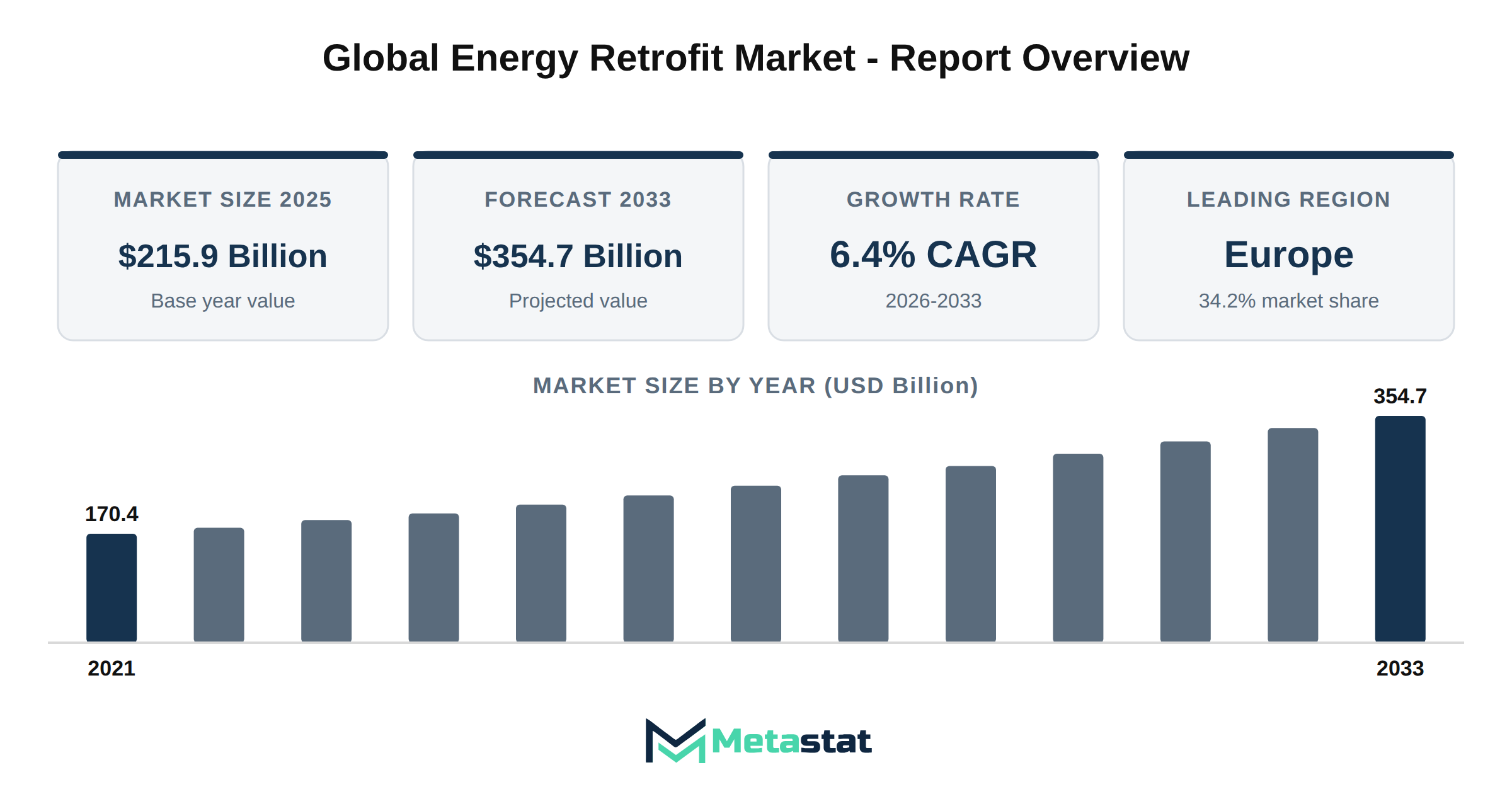
Market Size 2021
$170.4 Billion
Historical
Market Size 2025
$215.9 Billion
Base year
Market Size 2033
$354.7 Billion
Forecast
CAGR 2025-2033
6.4%
Forecast period
Report Details
Comprehensive Market Analysis And Insights
Market Overview
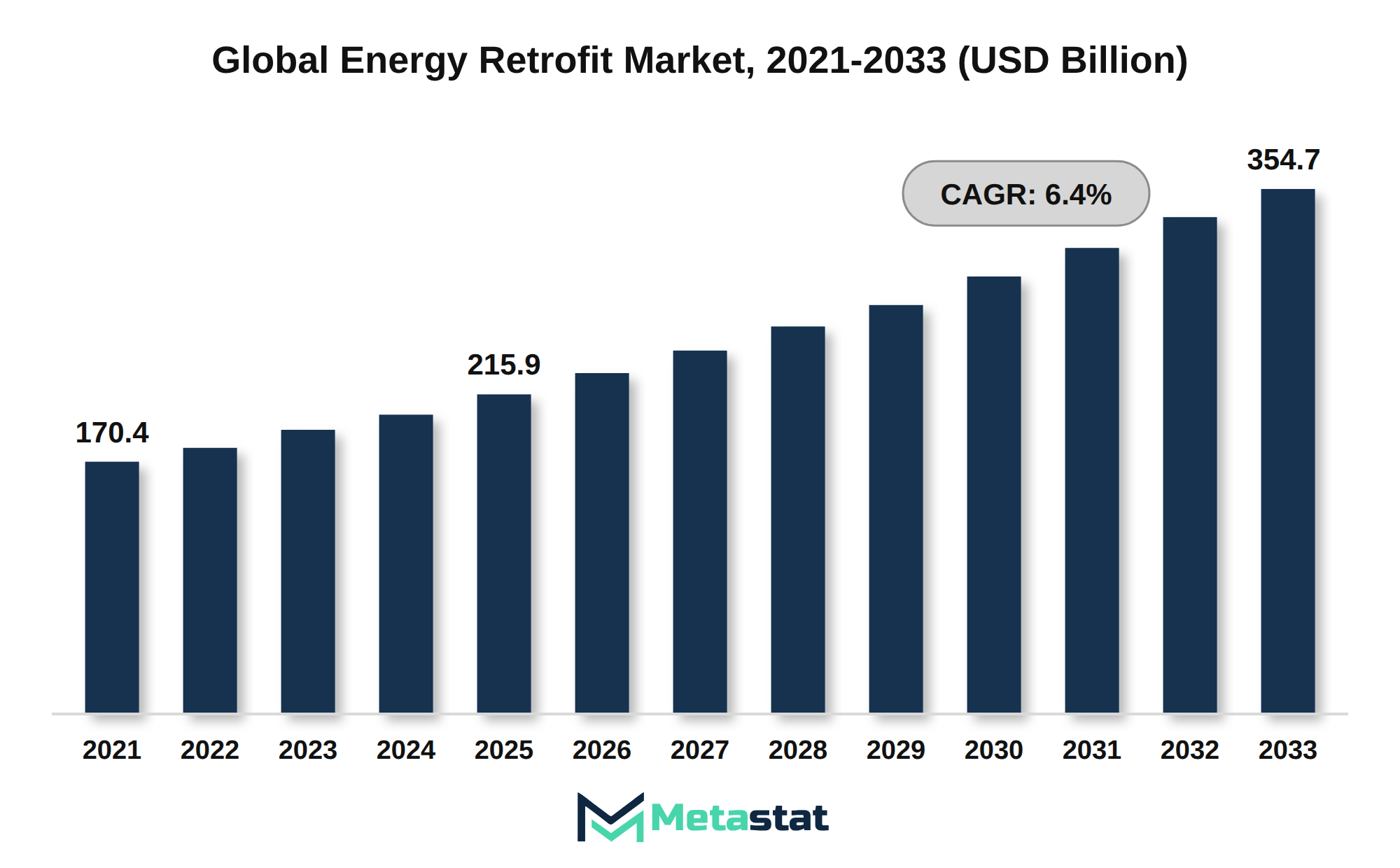
The global Energy Retrofit market was valued at USD 215.9 billion in 2025 and is projected to reach USD 354.7 billion by 2033, growing at a CAGR of 6.4% over the forecast period.
The Energy Retrofit market reached USD 215.9 billion in 2025, following a steady increase from USD 170.4 billion in 2021. Projections indicate growth to USD 354.7 billion by 2033, representing a compound annual growth rate (CAGR) of 6.4%. The market's expansion results from rising demand for energy-efficient upgrades across existing buildings, driven by renovation needs and increasing regulatory pressures.
Technological advancements significantly shape the energy retrofit landscape. Adoption of next-generation solutions enhances energy efficiency, contributing to sustainable transformation initiatives. Growth opportunities exist across various sectors, including residential and commercial properties, where energy retrofits align with decarbonization goals and circular economy dynamics.
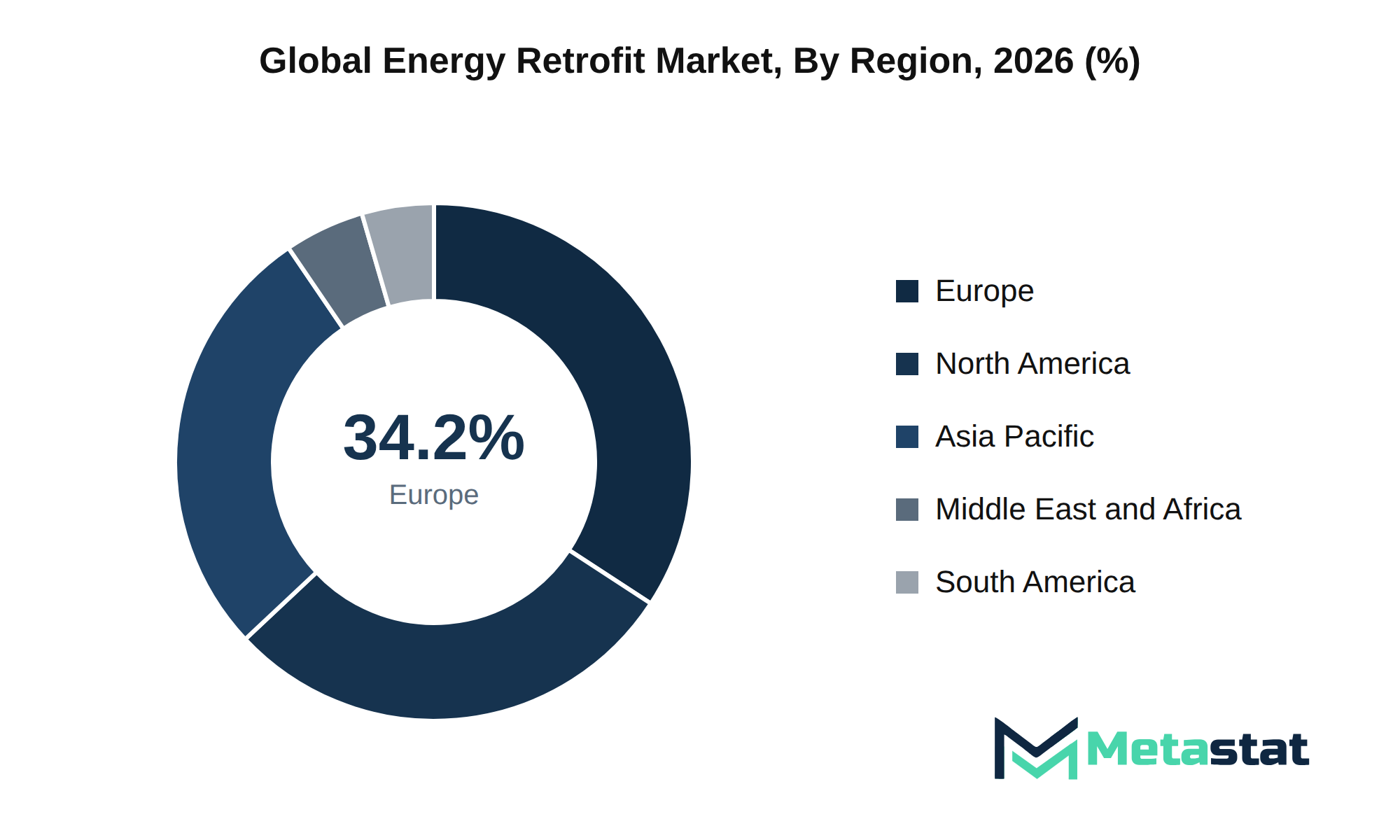
Regional dynamics show North America accounting for 28.8% of the market share, while Europe leads with 34.2%. The Asia Pacific region follows closely at 27.5%. These regions experience distinct regulatory compliance and funding developments that influence investment strategies and infrastructure planning within the energy retrofit sector.
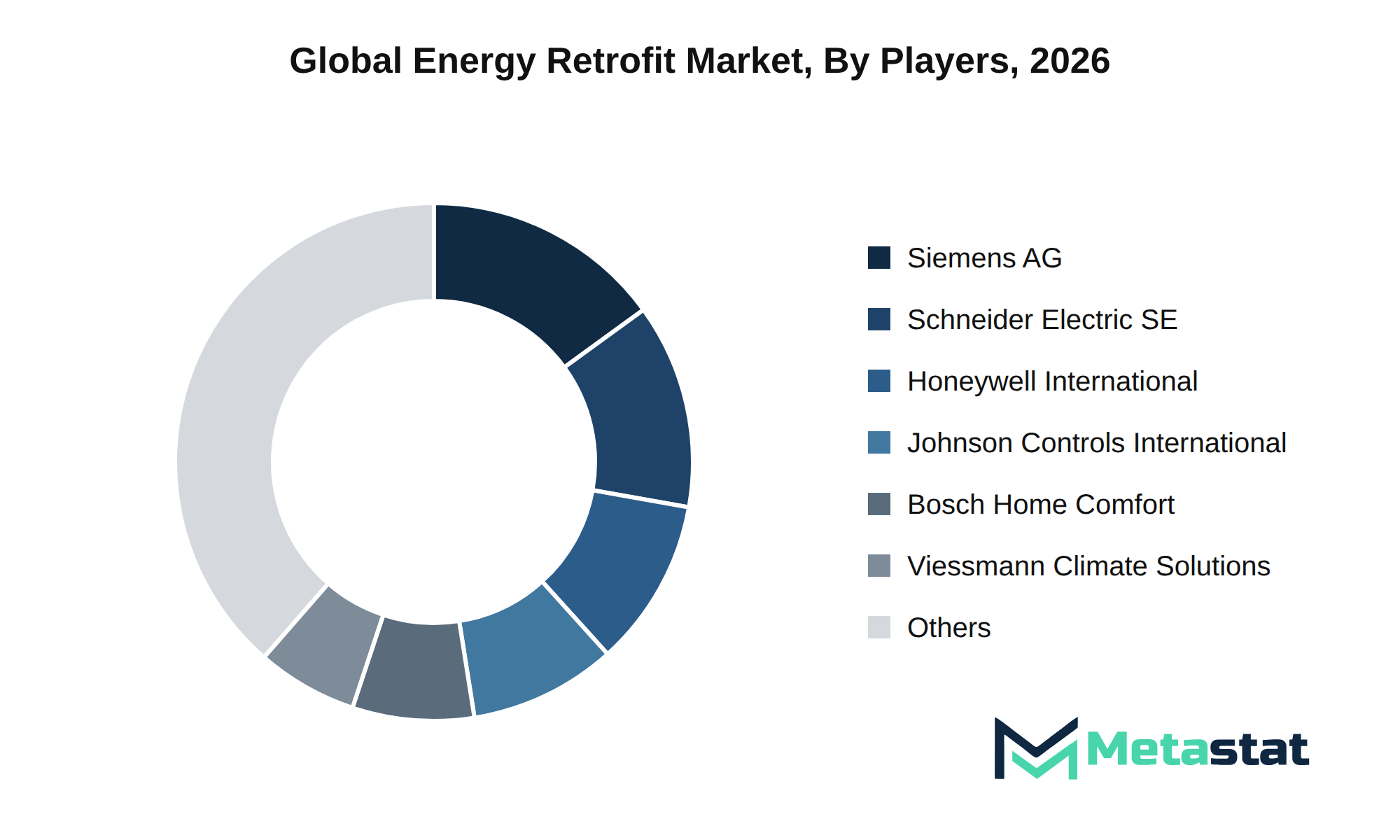
Market fragmentation presents both challenges and opportunities. A diverse array of players, including Siemens AG, Schneider Electric SE, and Honeywell International Inc., contributes to a competitive landscape. Companies invest continuously in research and development trajectories to innovate and adapt to evolving market demands. This competitive environment encourages collaboration and strategic mergers and acquisitions, further shaping the value chain.
Energy-efficiency upgrades across existing buildings drive demand in the Energy Retrofit market. Renovation demand stems from an increasing focus on enhancing building performance and reducing energy consumption. Regulatory and funding developments, particularly those aimed at promoting sustainability and energy efficiency, support this trend. For instance, various government initiatives incentivize investments in energy-efficient technologies and practices, further stimulating market growth.
Regulatory compliance and standards significantly influence the market. Stringent regulations surrounding energy efficiency and emissions reduction compel building owners to undertake retrofitting projects. Geopolitical risk frameworks affect investment decisions, with stability in regions encouraging funding for energy retrofit projects. Organizations increasingly prioritize compliance with these regulations to avoid penalties and enhance their market reputation.
Disruption in traditional construction practices, fueled by technology adoption, reshapes the market. Innovations including advanced building materials, energy management systems, and automation technologies streamline retrofit processes. Research and development trajectories focus on next-generation innovations that enhance energy efficiency and sustainability, reflecting a shift towards greener practices in the construction and renovation sectors.
The ongoing emphasis on sustainable transformation, decarbonization, and circular economy dynamics creates growth opportunities within the market. Companies adopt strategies that align with sustainability goals, ensuring that their operations contribute to a more sustainable future. This shift attracts investments and partnerships focused on innovative solutions that support the transition towards a low-carbon economy.
The supply chain landscape plays a critical role in shaping market dynamics. Logistics architecture and sourcing strategies directly impact project timelines and costs. Effective supply chain management enhances operational efficiency, enabling firms to respond promptly to changing market demands and customer expectations.
Market fragmentation presents both challenges and opportunities. A diverse range of players, from established firms to emerging startups, creates a competitive environment, driving innovation and differentiation. M&A dynamics contribute to consolidation efforts, allowing companies to enhance their capabilities and expand their market reach.
The value chain in the Energy Retrofit market encompasses various stages, from procurement to project execution. Understanding customer journey dynamics allows firms to tailor their offerings effectively, addressing specific needs and preferences. Capital allocation towards energy retrofit projects reflects a strategic approach to balancing short-term operational expenditures with long-term investment returns.
Infrastructure investments remain a critical component of market growth. While cities and municipalities prioritize energy efficiency initiatives, significant capital expenditures are allocated to upgrading existing facilities. This trend influences CapEx and OpEx realities, with firms seeking to optimize their financial strategies while pursuing energy retrofit projects.
Macroeconomic headwinds, including inflationary pressures and currency volatility, impact the market landscape. These factors influence project costs and financing conditions, prompting firms to adopt adaptive strategies to mitigate financial risks. Future strategic outlooks focused on resilience and sustainability will guide companies in navigating these challenges effectively.
Corporate imperatives increasingly emphasize sustainable practices, aligning business objectives with environmental goals. High-value recommendations for stakeholders include investing in advanced technologies, enhancing operational efficiency, and promoting collaboration across the value chain. These strategies position firms to capitalize on the growing demand for energy retrofit solutions.
Market Dynamics
Emission limits drive closed-loop adoption
Increasing attention on carbon emissions significantly influences the Energy Retrofit market. Governments and organizations worldwide prioritize strategies to reduce greenhouse gas emissions, prompting investments in energy-efficient renovations. This focus on sustainability leads to greater demand for retrofitting existing buildings with modern energy-efficient technologies, enhancing performance and reducing environmental impacts.
Investment environments characterized by favorable interest rates and GDP growth facilitate the financing of energy retrofit projects. Enhanced public-private spending power enables organizations to allocate resources toward infrastructure upgrades, creating opportunities for suppliers in the market. These financial conditions stimulate activities across various sectors, including residential, commercial, and industrial buildings, resulting in heightened demand for energy retrofit solutions.
Technological integration plays a significant role in shaping the market. The adoption of advanced automation, artificial intelligence, and software solutions streamlines energy management processes in retrofitting activities. These improvements enhance operational efficiencies, enabling faster project execution while maintaining cost-effectiveness. Organizations embracing digital transformation experience accelerated growth driven by innovative practices in energy retrofitting.
Shifting demographic patterns further impact the Energy Retrofit market. An aging population and urbanization increase the need for energy-efficient building solutions to meet evolving consumer preferences. Homeowners and businesses prioritize sustainability, seeking upgrades that lower energy costs while enhancing comfort and health. This evolving consumer behavior directly correlates with increased investments in energy retrofit projects, driving market expansion.
Growing infrastructure investment significantly boosts the Energy Retrofit market. Increased public and private spending on updating aging facilities and enhancing energy efficiency creates a favorable environment for retrofitting projects. Governments worldwide allocate resources toward infrastructure development, aiming to modernize buildings and improve sustainability. This investment encourages stakeholders across various sectors, including residential, commercial, and industrial, to pursue energy-efficient upgrades.
The rising trend of urbanization demands efficient energy solutions, prompting investments in retrofitting existing buildings. Growing populations in urban centers create pressure to improve infrastructure and reduce energy consumption, leading to heightened demand for energy retrofit solutions. Financial incentives, including tax breaks and grants for sustainable upgrades, enhance the appeal of investing in energy retrofits, ultimately driving market growth.
Technological advancements further contribute to this expansion, with automation and digital tools facilitating the integration of energy-efficient systems. Enhanced operational productivity through these technologies streamlines the retrofitting process, reducing costs and improving project timelines. Consequently, the Energy Retrofit market experiences sustained growth driven by stakeholders recognizing the long-term benefits associated with energy efficiency and sustainability initiatives.
Regulatory compliance and economic constraints
The Energy Retrofit market faces significant challenges owing to regulatory compliance hurdles and the increasing complexity of legal mandates. While governments tighten regulations surrounding energy efficiency and building standards, companies operating in the market encounter additional costs related to compliance. These compliance requirements hinder timely project completion and create obstacles that delay adoption among stakeholders, particularly in the commercial and industrial sectors.
Macroeconomic headwinds exert further pressure on the market. High capital investment requirements discourage potential adopters, especially smaller businesses that operate with limited financial flexibility. Inflationary pressures contribute to escalating operating costs, complicating investment decisions. These factors create a cautious environment, affecting growth and adoption rates across various segments.
Supply chain disruptions significantly impact the Energy Retrofit market, complicating access to essential materials and technologies required for retrofitting projects. Geopolitical instability exacerbates these disruptions, leading to uncertainty in pricing and availability. The resulting resource scarcity contributes to project delays and increased costs, restricting market potential.
Technological obsolescence poses another challenge, driven by rapid advancements in building systems and materials that outpace existing retrofitting solutions. Companies navigate risks associated with substitution and alternative offerings, complicating strategic planning and investment. Infrastructure gaps and connectivity deficits impede the successful implementation of retrofitting initiatives, while deployment bottlenecks related to skilled labor deficiencies further constrain market growth.
The Energy Retrofit market experiences cultural barriers and regional adoption resistors that decelerate expansion efforts. Slowing downstream demand, influenced by industry cycle maturation, limits opportunities for growth. Market fragmentation complicates competition, making it difficult for players to establish a unified approach to overcoming these multifaceted constraints.
Geopolitical tensions complicate energy retrofit initiatives
The Energy Retrofit market encounters significant challenges stemming from geopolitical fragmentation and trade deficits. Fluctuations in international relations produce tariff frictions, which increase the cost of materials and components essential for retrofitting projects. This volatility creates barriers for suppliers, resulting in increased pricing pressure and diminishing profit margins. The need for compliance with tightening global regulatory standards adds complexity, because organizations grapple with evolving legal liabilities and mounting compliance overheads.
Technological disruptions further complicate the landscape. Rapid advancements in energy-efficient technologies require substantial investment in research and development, increasing the complexity of integration efforts. This complexity poses risks related to interoperability between systems, creating potential implementation bottlenecks that hinder progress within the market. Gaps in workforce skills challenge firms striving to adopt innovative retrofitting solutions, limiting talent retention and exacerbating automation displacements.
The market faces pressure from rising input cost structures and environmental sustainability demands. Fluctuating feedstock availability and component volatility contribute to unpredictable pricing scenarios, which challenge budget forecasts for energy retrofit projects. In response to these pressures, companies prioritize effective supply chain management and operational efficiencies to navigate the competitive landscape.
Overall, the multifaceted challenges, including geopolitical tensions, technological disruptions, and rising operational costs, create a complex environment for the Energy Retrofit market. Stakeholders adapt to these dynamics while pursuing growth opportunities in this evolving sector.
Emerging regional demands drive market growth
The Energy Retrofit market benefits from increasing demands across various regions, driven by urbanization and population growth. Rapid urbanization in Asia Pacific and the increasing focus on energy efficiency in North America and Europe create substantial opportunities for market participants. The ongoing push for sustainability emphasizes the importance of energy retrofits in reducing energy consumption and carbon emissions, aligning with global climate goals.
Infrastructure modernization contributes to the expansion of the Energy Retrofit market. Aging infrastructure in many regions necessitates improvements to enhance energy efficiency and performance. Countries investing in modernization programs drive demand for retrofitting solutions, particularly in commercial and public buildings that require significant upgrades to meet contemporary energy standards.
The geographical expansion of market players into untapped regions supports growth. Emerging markets in South America and parts of Asia present opportunities for energy retrofit solutions. Increased investment in energy-efficient technologies and practices in these regions aligns with global sustainability efforts, attracting both local and international companies seeking to establish a presence in these markets.
Technological disruptions play a critical role in shaping the Energy Retrofit market. Advancements in energy management systems, smart technologies, and IoT (Internet of Things) integrations enable more efficient retrofitting solutions. These innovations enhance operational yield and provide consumers with improved monitoring and management capabilities, driving adoption across various building types.
Digital transformation within the market streamlines processes and enhances customer engagement. Evolving buying behaviors emphasize the importance of online platforms for procurement, making it essential for suppliers to adopt digital solutions. This shift facilitates more efficient interactions between buyers and suppliers, ultimately leading to increased sales and market penetration.
Strategic consolidation among key players influences market dynamics, enhancing competitiveness. Mergers and acquisitions enable companies to diversify their offerings and expand their geographical reach, positioning them to capitalize on emerging opportunities. These strategic moves allow companies to integrate next-generation innovations and enhance their portfolios, catering to diverse customer needs. This activity enhances overall market competitiveness.
Value-chain optimization remains a priority within the Energy Retrofit market. Firms focus on improving operational efficiencies through automation and process enhancements. Streamlined operations reduce costs and allow companies to respond more effectively to market demands, ensuring sustained growth in an evolving environment.
Market Segmentation Analysis
The Global Energy Retrofit market is segmented based on Retrofit Depth, Retrofit Measure, Building Type.
By Retrofit Depth, the market is further segmented into:
Deep Energy Retrofits
Shallow/Light Energy Retrofits
Deep Energy Retrofits
Valued at USD 97.5 billion in 2026, the Deep Energy Retrofits segment is projected to reach USD 165.7 billion by 2033, at a CAGR of 7.9% during the forecast period. This segment experiences growth driven by increasing demand for energy efficiency and sustainability in various building types, including residential, commercial, and institutional structures. Strict regulatory compliance standards and incentives from governments further support adoption, pushing stakeholders to prioritize deep energy retrofits because a viable solution for reducing energy consumption and carbon emissions.
Technological maturation in energy systems supports the expansion of this segment, with innovations in insulation materials, HVAC systems, and energy management solutions enhancing overall performance. Next-gen upgrades create opportunities for existing buildings to achieve higher energy efficiency ratings, leading to decreased operational costs and improved occupant comfort. These advancements attract investments, resulting in a competitive landscape characterized by various established players and emerging companies within the energy retrofit market.
Downstream applications like building automation, controls, and energy management systems reinforce demand, because organizations look to optimize energy usage and reduce waste. Consumption shifts towards more sustainable practices influence purchasing decisions, leading to increased interest in comprehensive deep energy retrofits. Consequently, this segment's growth trajectory continues to strengthen, driven by a combination of technological advancements, regulatory pressures, and evolving consumer preferences for enhanced energy efficiency solutions.
Shallow/Light Energy Retrofits
Growing interest in energy efficiency among consumers increases the demand for Shallow/Light Energy Retrofits. This segment enhances the performance of existing buildings with relatively lower investment compared to deep retrofits. Adoption of energy-efficient technologies in residential and commercial buildings drives market growth. Increased awareness of environmental sustainability and governmental policies supporting energy efficiency significantly influence this trend. Advancements in technologies have led to more accessible and affordable solutions, broadening the customer base for this segment.
The Shallow/Light Energy Retrofits segment is estimated to reach USD 189 billion by 2033, at a CAGR of 5.2% during the forecast period. This growth reflects an increasing focus on optimizing energy consumption while minimizing disruption to occupants during retrofitting processes. Market players prioritize innovations in products including energy-efficient glazing, thermal insulation, and advanced HVAC systems that collectively enhance energy performance. The focus on regulatory compliance and certifications further strengthens the segment, ensuring that solutions meet governmental standards for energy efficiency.
Strategic investment in marketing and education about the benefits of shallow retrofitting enables companies to capitalize on emerging opportunities. Building types including residential and commercial structures show significant interest in these upgrades due to their cost-effectiveness and quick return on investment. The market displays resilience against potential supply chain disruptions, with manufacturers adapting to shifts in raw material availability and pricing pressures. Overall, the Shallow/Light Energy Retrofits segment demonstrates strong growth potential within the Energy Retrofit market, driven by evolving end-use dynamics and technological advancements.
By Retrofit Measure, the market is further segmented into:
Building Envelope & Thermal Insulation
Windows, Doors & Energy-Efficient Glazing
Space Heating & Heat Pump Systems
Cooling & Air-Conditioning Systems
Ventilation & Heat Recovery Systems
Lighting & Lighting Controls
Building Automation, Controls & Energy Management
Others (Pumps, Motors and Auxiliary Building Systems)
Building Envelope & Thermal Insulation
Building envelope and thermal insulation solutions drive significant value within the Energy Retrofit market. Growing emphasis on energy efficiency and sustainability establishes a strong demand for advanced insulation materials and building envelope improvements. Increasing regulatory pressures surrounding energy consumption and emissions standards further stimulate investment in these areas, compelling building owners and managers to adopt modern insulation technologies.
Technological maturation enhances product performance and expands applications. Innovations in materials, including aerogels and phase change materials, provide superior thermal resistance and contribute to energy savings in residential, commercial, and industrial sectors. Rising awareness of the benefits of energy-efficient buildings influences the selection of insulation solutions that enhance comfort and reduce operational costs.
Market participants face challenges in raw material sourcing and pricing volatility, affecting margins and operational strategies. Supply chain resilience remains critical, particularly in regions where demand surges coincide with resource constraints. Strategic opportunities arise in developing sustainable materials and alternative insulation solutions that align with environmental regulations, driving growth in this segment. Evolving consumer preferences, regulatory compliance, and technological advancements position the market for continued expansion.
Increased emphasis on energy efficiency directly influences the demand for windows, doors, and energy-efficient glazing solutions within the Energy Retrofit market. These products play a critical role in improving building performance and reducing energy consumption, specifically in residential and commercial sectors. The ongoing transition towards sustainable construction practices enhances the adoption of energy-efficient products, driven by evolving consumer preferences and heightened awareness of environmental impact.
Technological advancements significantly enhance the performance and appeal of windows, doors, and energy-efficient glazing. Innovations in materials and design contribute to superior insulation, which not only improves energy savings but boosts aesthetic appeal. The growing availability of smart technologies integrated into these products captures consumer interest, aligning with the shift towards smart homes and buildings.
Regulatory compliance standards and certifications exert considerable influence on the market. Governments worldwide implement stringent regulations aimed at increasing energy efficiency in buildings, which in turn drives demand for compliant windows, doors, and energy-efficient glazing solutions. These regulations create a competitive landscape where manufacturers strive to innovate and meet the evolving standards.
Cost structures and pricing dynamics present challenges and opportunities for the market. Fluctuations in raw material prices impact production costs, while the potential for long-term energy savings enhances the value proposition of energy-efficient products. Consumers recognize the benefits of investing in high-quality, energy-efficient windows and doors, which ultimately contribute to reduced energy bills and improved comfort.
Adoption rates of these products continue to rise, influenced by a combination of consumer demand for sustainability and governmental incentives. The market's expansion reflects a broader shift towards energy-efficient building practices, positioning windows, doors, and energy-efficient glazing because essential components in the Energy Retrofit landscape.
Space Heating & Heat Pump Systems
Demand for Space Heating & Heat Pump Systems drives significant advancements within the Energy Retrofit market. Rising energy costs and increased awareness of climate change drive investments in efficient heating solutions. Key industries including residential and commercial sectors prioritize energy-efficient systems, contributing to growth. Strategic incentives and government policies enhance the attractiveness of heat pump technologies, making them a preferred choice for many property owners.
Regulatory compliance standards increasingly emphasize energy efficiency, pushing organizations to upgrade existing systems. This trend fuels demand for innovative technologies and installations, particularly in regions with stringent emission regulations. Technological maturation in heat pump systems enables higher efficiency rates, transforming them into viable solutions for a wider range of applications.
Next-generation upgrades in controls and integration with smart home technologies enhance performance and user experience. Energy management systems increasingly incorporate these functionalities, allowing for better monitoring and optimization of energy use across different settings. Shifts in consumer preferences towards sustainable living significantly influence the market, leading to a more substantial emphasis on energy-efficient heating solutions.
Cost structures for these systems evolve owing to manufacturers adopting new materials and methods, impacting pricing strategies. Pricing volatility occurs in response to fluctuations in raw material costs, while margin pressures challenge suppliers to maintain competitiveness. Strategic opportunity windows arise from the growing need for reliable heating systems and increasing consumer demand for sustainable solutions.
Supply chain resilience plays a critical role in ensuring timely delivery and installation of heat pump systems. Raw material sourcing strategies adapt to address global supply challenges, enabling companies to mitigate risks associated with disruptions. Disruptive alternatives, including new heating technologies, push traditional providers to innovate or face obsolescence.
Investment in research and development continues to influence advancements in Space Heating & Heat Pump Systems, positioning them because integral components of the Energy Retrofit market. The focus on improving energy efficiency aligns with broader environmental goals, ensuring that these systems remain critical to minimizing energy consumption and reducing greenhouse gas emissions.
Cooling & Air-Conditioning Systems
Demand for Cooling and Air-Conditioning Systems within the Energy Retrofit market stems from a heightened emphasis on energy efficiency and climate control. Increasing temperatures globally push consumers and businesses to enhance cooling solutions, aligning with sustainability goals. The focus on reducing energy consumption and operational costs drives investments in these systems, reflecting organizations' efforts to optimize their energy usage.
Technological maturation within this segment enables the adoption of advanced cooling technologies, including variable refrigerant flow systems and smart thermostats. These innovations enhance energy efficiency and improve user experience. Upgrades in existing systems allow for better integration with renewable energy sources, further contributing to environmental objectives.
Regulatory requirements regarding energy efficiency and emissions standards compel organizations to invest in retrofitting their cooling and air-conditioning systems. Compliance with these regulations ensures that businesses meet modern standards while reducing overall carbon footprints. Such mandates stimulate competition among manufacturers, driving product evolution and advancements in system performance.
Supply chain resilience remains critical for ensuring the availability of materials necessary for these systems. While demand increases, raw material sourcing becomes a crucial factor in maintaining production flow. Companies are exploring alternative materials and technologies to mitigate risks associated with supply chain disruptions.
Strategic opportunities arise from the push toward next-generation cooling solutions. The market anticipates significant growth driven by innovations that enhance energy efficiency and reduce operating costs. The evolution of cooling technologies positions companies to capture market share by meeting the needs of environmentally conscious consumers and compliance demands.
Ventilation & Heat Recovery Systems
Incorporating ventilation and heat recovery systems significantly enhances energy efficiency in commercial and residential buildings. Growing awareness regarding indoor air quality influences demand for these systems, prompting consumers and businesses to seek solutions that reduce energy consumption while improving air circulation. Advanced technologies in this segment include next-generation upgrades, including smart controls and integrated solutions that optimize performance and minimize operational costs.
Regulatory compliance standards play an important role in shaping this segment, driving the adoption of energy-efficient ventilation solutions aligned with sustainability goals. While governments implement stricter energy efficiency regulations, businesses recognize the importance of upgrading their systems to meet compliance, which positively impacts the market. Evolving certifications for energy-efficient solutions enhance consumer confidence and drive market growth.
The market experiences considerable pressure regarding cost structures and pricing volatility, which directly influence project feasibility and investment decisions. Suppliers focus on establishing resilient supply chains to mitigate risks related to raw material sourcing and logistics vulnerabilities. This strategic approach aids in countering potential disruptions while ensuring timely project execution.
Technological obsolescence emerges owing to a critical factor, requiring ongoing investment in research and development to keep pace with market demands and innovation. Strategic opportunity windows exist for companies that invest in the evolution of ventilation and heat recovery systems, enabling them to capture value from emerging trends and consumer preferences. Overall, the segment continues to contribute to energy efficiency and sustainability objectives within the broader Energy Retrofit market.
Lighting & Lighting Controls
Rapid advancements in intelligent lighting technologies enhance energy efficiency and reduce overall operational costs for building owners. Integration of smart controls and sensors allows for precise management of lighting systems, driven by increasing demand for energy-efficient solutions within the Energy Retrofit market. Significant adoption of LED technologies contributes to reduced energy consumption and lower maintenance costs, supporting segment growth.
Escalating regulations regarding energy consumption and emissions compel organizations to invest in advanced lighting systems that comply with sustainability standards. Regulatory compliance standards push companies toward the integration of energy-efficient lighting and control solutions, enhancing the market's competitive landscape. The emphasis on energy conservation across various sectors creates an environment conducive to innovation and product evolution in the lighting and controls segment.
Investment in next-generation upgrades and smart technologies strengthens the segment's resilience against disruptive alternatives. Building owners increasingly prioritize the long-term financial benefits associated with energy-efficient lighting systems, influencing downstream application dynamics. Consequently, the market benefits from a strategic opportunity window, enabling organizations to capitalize on growing awareness of environmental stewardship and sustainability.
Building Automation, Controls & Energy Management
Sub-segment Building Automation, Controls & Energy Management (By Retrofit Measure)
Integration of Building Automation, Controls & Energy Management solutions represents a crucial aspect of the Energy Retrofit market. Enhanced energy efficiency and automation capabilities drive adoption across residential, commercial, and industrial sectors, leading to improved operational performance and reduced energy consumption. Investments in advanced technologies, including Internet of Things (IoT) devices and smart controls, facilitate real-time monitoring and management of energy systems, aligning with sustainability goals.
While organizations prioritize sustainability, regulatory compliance further supports the shift toward energy management solutions. Strict energy efficiency regulations and incentives promote the installation of automated systems that optimize energy use and enhance overall building performance. Compliance with these standards continues to shape market dynamics, driving innovation in product offerings.
Technological advancements significantly influence the evolution of building automation systems. Enhanced interoperability and integration capabilities allow various systems to communicate, enabling effective management of energy resources. This evolution ensures that the market remains competitive, with key players consistently introducing next-generation upgrades designed to meet evolving consumer expectations.
Investment in energy management solutions reflects a strategic opportunity for organizations aiming to reduce operational costs and enhance energy efficiency. Demand for energy-efficient solutions drives capital investment, further supporting market growth. End-use dynamics indicate a strong preference for automated systems, which streamline energy consumption and promote a culture of sustainability across various sectors. This trend positions the Energy Retrofit market strategically for expansion and innovation.
Others (Pumps, Motors and Auxiliary Building Systems)
Sub-segment Others (Pumps, Motors and Auxiliary Building Systems) (By Retrofit Measure)
In the context of the Energy Retrofit market, the segment encompassing Others (Pumps, Motors and Auxiliary Building Systems) enhances overall energy efficiency across various applications. Demand drivers for this segment stem from increasing energy consumption and a growing focus on sustainability initiatives. Organizations seek solutions that improve operational efficiency while minimizing environmental impact, thus fueling the adoption of innovative technologies in this area.
Technological maturation significantly influences the segment, with advancements in pump and motor technologies driving product evolution. Next-generation upgrades focus on integrating smart technologies that enable better performance monitoring and management. This evolution enhances energy savings and operational efficiency across residential, commercial, and industrial settings.
End-use dynamics reflect a shift towards more integrated systems for energy management. Regulatory compliance standards and certifications require adherence to energy efficiency guidelines, compelling companies to invest in advanced pumping and motor solutions. These standards impact cost structures, prompting suppliers to optimize their offerings while addressing pricing volatility and margin pressures.
Supply chain resilience remains a critical consideration for manufacturers and distributors. Raw material sourcing challenges and logistics vulnerabilities necessitate strategic planning to mitigate risks. Organizations actively seek alternatives and disruptive technologies to ensure uninterrupted supply and maintain competitiveness. The focus on capital investment outlook highlights opportunities for stakeholders to innovate and capture market share within the Energy Retrofit market.
By Building Type, the market is further segmented into:
Residential Buildings
Commercial Buildings
Industrial Buildings
Public and Institutional Buildings
By, the market is further segmented into
Residential Buildings
Investment in residential buildings increasingly aligns with global energy efficiency standards, driving adoption of energy retrofitting solutions. Homeowners prioritize enhanced comfort, reduced utility costs, and environmental sustainability, influencing the demand for energy-efficient upgrades. Growing awareness of climate change and the need for sustainable living further increases interest in energy retrofit measures among residential users.
Technological maturation significantly influences this sector, with advancements in materials and systems improving performance and cost-effectiveness of retrofitting solutions. Demand for next-generation solutions, including smart home technologies, creates opportunities for integrating energy management systems within residential buildings. Increasingly sophisticated products enable homeowners to monitor and optimize energy consumption, enhancing the value of energy retrofitting.
Regulatory compliance standards increasingly emphasize energy efficiency, prompting homeowners to invest in upgrades that align with local mandates. Rising building code requirements compel residential property owners to explore retrofitting options to meet or exceed minimum efficiency targets, leading to increased market activity. Consequently, the economic benefits associated with energy efficiency create a strong incentive for homeowners to participate in energy retrofit projects.
Market dynamics exhibit shifting consumption patterns, with homeowners increasingly opting for comprehensive retrofit solutions over incremental upgrades. The rise in environmental consciousness among consumers influences purchasing decisions, with preferences shifting toward products that offer demonstrable sustainability benefits. This trend influences the overall energy retrofit market.
Supply chain resilience and raw material sourcing challenges heighten awareness regarding the availability and pricing of retrofit materials. Market participants increasingly focus on securing reliable supply chains, which mitigates risks associated with logistics vulnerabilities and substitution risks. The ongoing interest in energy retrofit solutions encourages strategic investments, creating a favorable environment for companies operating in the residential retrofit space.
Commercial Buildings
In the context of energy efficiency, retrofitting commercial buildings presents a lucrative opportunity within the Energy Retrofit market. Significant regulatory compliance standards drive demand, with policies focusing on emissions reduction and energy consumption minimization influencing building upgrades. Increasing operational costs, linked to energy prices, motivate property owners to invest in retrofitting solutions that enhance efficiency and reduce long-term expenses. Sustainability becomes a core concern for businesses, and market dynamics shift towards integrating innovative technologies that support energy conservation.
Technological maturation in energy-efficient systems drives adoption among commercial entities. Solutions including advanced HVAC systems, smart lighting, and energy management controls evolve continuously, enabling more effective energy use and operational cost reduction. The evolution of these products, alongside the growing trend of next-gen upgrades, appeals to businesses aiming for modernized facilities that comply with current standards and attract environmentally conscious tenants.
Market expansion catalysts include the increasing awareness of sustainability among consumers and corporations, pushing companies towards greener practices. Demand for certifications in energy efficiency enhances the credibility of retrofit solutions, further driving investment. Shifts in consumption patterns reflect a preference for energy-efficient commercial spaces, compelling firms to adapt their real estate strategies to meet emerging expectations.
Cost structures within this segment face pressures from fluctuating raw material prices and the need for specialized labor, affecting overall project budgets. Pricing volatility necessitates strategic planning among stakeholders to manage expenses effectively. Supply chain resilience becomes critical, especially in sourcing materials that align with evolving environmental standards.
Strategic opportunity windows arise from businesses seeking to differentiate themselves through sustainable practices. Organizations that invest in comprehensive energy retrofits position themselves favorably in competitive markets, enhancing brand reputation and customer loyalty. The Energy Retrofit market continues to grow, driven by these factors, and presents avenues for substantial capital investment in the coming years.
Industrial Buildings
Sub-segment Industrial Buildings (By Building Type)
Increasing investment in energy efficiency initiatives within industrial buildings influences the growth of the Energy Retrofit market. Businesses focus on reducing operational costs while adhering to stringent regulations aimed at sustainability. This dual pressure encourages facility managers to adopt retrofitting solutions that enhance energy performance and compliance with environmental standards.
Technological advancements, including smart systems for energy management, facilitate the retrofit process in industrial settings. These innovations provide real-time data and insights, optimizing energy usage and promoting informed decision-making. Industrial operators experience improved efficiency and reduced energy waste, aligning with broader sustainability goals.
Regulatory compliance remains a critical factor driving retrofitting activities within industrial buildings. Governments implement stringent energy efficiency targets, leading organizations to seek upgrades that comply with emerging standards. This trend encourages a proactive approach to facility upgrades, with operators prioritizing investments that enhance long-term viability and competitiveness.
Collaborations with technology providers and service firms enhance the capacity for effective retrofitting in industrial buildings. Such partnerships enable access to advanced solutions and expertise that streamline the retrofit process. By leveraging these relationships, industrial players realize improvements in their energy profiles, contributing to market expansion.
Overall, the focus on energy efficiency, regulatory compliance, and technological innovation collectively drives the demand for retrofitting in industrial buildings, positioning this segment because a vital component of the Energy Retrofit market.
Public and Institutional Buildings
Sub-segment Public and Institutional Buildings (By Building Type)
Investment in public and institutional buildings significantly influences the Energy Retrofit market. This segment experiences strong demand driven by increasing regulatory compliance standards and sustainability goals among governmental and educational institutions. These entities prioritize energy efficiency upgrades to reduce operational costs and meet environmental targets, enhancing overall building performance and occupant comfort.
Technological maturation in energy-efficient solutions further supports segment growth. Developments in smart building technologies, including advanced HVAC systems and energy management platforms, facilitate effective monitoring and management of energy consumption. These innovations play a critical role in driving adoption, providing tangible benefits in energy savings and operational efficiency.
End-use dynamics heavily impact the segment, with institutions placing higher emphasis on long-term value creation through energy-efficient upgrades. This shift in consumption patterns creates a competitive environment where organizations increasingly seek to differentiate themselves based on sustainability initiatives. Consequently, the market experiences a steady evolution of products tailored to meet the diverse requirements of public and institutional buildings.
Cost structures and pricing volatility within the market remain crucial factors influencing decisions in this segment. Fluctuations in raw material prices affect project budgets and timelines, prompting institutions to carefully evaluate potential investments. Strategic opportunity windows arise owing to organizations navigating these challenges, aligning their retrofit projects with fiscal planning and external funding sources.
Supply chain resilience emerges because a pressing concern, particularly in sourcing sustainable materials. Public and institutional buildings often face unique challenges in logistics and procurement, necessitating strategic partnerships with suppliers who ensure a steady flow of quality products. This aspect highlights the importance of collaboration within the market, creating a robust ecosystem that supports the successful implementation of energy retrofit initiatives.
By, the market is further segmented into
Investment trends in the Energy Retrofit market reflect a heightened focus on sustainability and energy efficiency across various building types. Factors driving this trend include increasing regulatory pressures to meet compliance standards and growing consumer demand for eco-friendly solutions. These dynamics create a conducive environment for advanced technologies that enhance energy performance in buildings.
Public and institutional buildings often prioritize energy-efficient upgrades due to mandates for sustainability and operational cost reductions. The integration of next-generation technologies facilitates significant improvements in building performance, accommodating evolving regulatory frameworks and enhancing user comfort. Consequently, this segment of the market expands steadily, aligning with global initiatives aimed at reducing carbon footprints and enhancing energy resilience.
Residential buildings reflect a distinct set of preferences and influences. Homeowners exhibit an increasing inclination toward retrofitting solutions that promise long-term savings and environmental benefits. This trend influences manufacturers and service providers to innovate and refine their offerings to meet the unique needs of residential consumers. The Energy Retrofit market experiences substantial shifts driven by adaptations to these consumer-driven dynamics.
Segments focused on commercial buildings continue to evolve, with businesses recognizing energy upgrades because integral to enhancing operational efficiency and sustainability. Investments in retrofitting commercial structures align with corporate sustainability goals, contributing to a more competitive market landscape. The increasing integration of energy-efficient practices within these buildings positions the market favorably for sustained growth.
By Region
Based on geography, the Global Energy Retrofit market is divided into North America, Europe, Asia-Pacific, South America, Middle East, and Africa.
North America
North America represents a significant portion of the global Energy Retrofit market, accounting for 28.8% in 2025, with an anticipated market size of USD 95.3 billion by the end of 2033. The region benefits from strong demand drivers, including stringent regulatory frameworks promoting energy efficiency, which influence both residential and commercial sectors.
Investment in infrastructure modernization plays a critical role in shaping market dynamics. The United States, Canada, and Mexico experience a push toward retrofitting existing buildings to enhance energy performance, driven by high-value replacement cycles and the need for updated systems. This trend results in substantial opportunities for Deep Energy Retrofits, projected to grow at a CAGR of 7.9% through 2033.
Localized manufacturing densities further strengthen the market landscape, facilitating quicker response times and cost efficiencies in the supply chain. Nearshoring initiatives increase, allowing companies to tap into regional resources and reduce reliance on international supply chains.
Competitive landscapes feature several domestic participants, including Siemens AG and Schneider Electric SE, which contribute to vendor consolidation trends. This consolidation enhances service offerings and streamlines procurement processes, aligning with regional B2B buying behaviors.
Energy grid resiliency remains a focal point, with increasing investments in localized infrastructure aimed at supporting expanding energy demands. The Energy Retrofit market in North America is poised for growth, influenced by strategic entry barriers and foreign direct investment flows that open geographic expansion windows for market participants.
Europe
Europe is significant in the global Energy Retrofit market, holding a share of 34.2% in 2025. Several factors contribute to the growth in this region. Strong regulatory frameworks and local compliance mandates drive investment in energy-efficient solutions across various sectors, including residential, commercial, and industrial buildings.
The market in Europe benefits from a mature environment characterized by high-value replacement cycles, particularly in countries like Germany, France, and the UK. These nations exhibit significant demand for deep energy retrofits, which include comprehensive measures aimed at maximizing energy efficiency. Ongoing infrastructure modernization initiatives and emerging market front-runners within Europe enhance growth prospects.
Localized manufacturing densities and nearshoring initiatives enhance the supply chain, ensuring availability and reducing lead times for energy retrofit solutions. Cultural nuances and regional B2B buying behaviors shape procurement dynamics, influencing how businesses approach energy efficiency investments. Countries including Italy and Spain show increasing interest in modernizing their energy systems, prompted by public initiatives and investment opportunities.
Geopolitical fragmentation contributes to a shifting competitive landscape, encouraging domestic market participants to consolidate their positions. Strategic entry barriers remain, but foreign direct investment flows support geographic expansion windows, allowing new players to enter the market effectively. Overall, the Energy Retrofit market in Europe demonstrates potential for sustained growth through 2033, fueled by a combination of regulatory support, infrastructure investment, and evolving consumer preferences.
Asia-Pacific
Asia-Pacific represents a market share of 27.5% in the Energy Retrofit market in 2025. The region benefits from various factors driving demand, including increasing investment in energy efficiency across multiple sectors, particularly in countries like China, Japan, and India. Modernizing infrastructure and enhancing energy performance remain critical in emerging markets where energy consumption is rapidly growing.
The presence of domestic market participants including Mitsubishi Electric and Daikin Airconditioning Germany GmbH strengthens the competitive landscape. These companies drive innovation and offer tailored solutions that align with regional requirements. Cultural nuances in B2B buying behaviors influence procurement dynamics, with businesses in Asia-Pacific prioritizing localized solutions to enhance energy efficiency.
Geopolitical factors and supply chain regionalization impact the market, with nearshoring initiatives promoting localized manufacturing densities. Countries within the region, including South Korea and Australia, focus on creating resilient energy grids, facilitating market growth. Investment in deep energy retrofits, particularly in commercial and public buildings, plays a prominent role in achieving sustainability targets.
The Energy Retrofit market in Asia-Pacific is poised for continued growth, driven by a combination of established energy efficiency measures and emerging opportunities in underpenetrated territories. The cumulative effect of these factors supports a robust market framework, positioning the region because a key player in the global energy retrofit landscape.
South America
Market dynamics in South America indicate potential for growth within the Energy Retrofit market, primarily driven by increasing energy efficiency awareness. Brazil and Argentina lead in the adoption of energy-efficient retrofitting solutions, supported by government initiatives and investment in infrastructure modernization. The region experiences a growing need for high-value replacement cycles, particularly in older buildings requiring upgrades to meet modern energy standards.
Localized manufacturing densities and regional resource availability contribute to the market's expansion. Companies in South America capitalize on emerging markets by developing tailored solutions that address specific energy needs. Cultural nuances influence procurement dynamics, with buyers increasingly valuing energy savings and sustainability in purchasing decisions.
Energy grid resiliency influences the Energy Retrofit market, driving demand for solutions that enhance infrastructure capabilities. Domestic companies leverage foreign direct investment (FDI) flows to strengthen their positions, while geopolitical factors and regulatory frameworks impact cross-border trade corridors. The competitive environment reflects a trend toward vendor consolidation, further shaping market dynamics and enhancing service offerings.
Middle East and Africa
The Energy Retrofit market in the Middle East and Africa faces dynamic shifts influenced by regional priorities for sustainability and energy efficiency. Countries like Saudi Arabia and UAE exhibit significant growth potential driven by government initiatives aimed at diversifying economies and enhancing energy performance across various sectors. South Africa presents its own opportunities, with a focus on modernization efforts in both residential and commercial buildings.
Investment in infrastructure modernization remains critical, especially in underpenetrated territories. The demand for deep energy retrofits, particularly in the residential segment, positions the market for substantial transformation by 2033. Local compliance mandates and geographic regulatory frameworks support this transition, promoting the adoption of advanced technologies and practices.
Emerging market front-runners in the region continue to attract foreign direct investment (FDI) owing to stakeholders recognizing the long-term benefits of energy efficiency upgrades. Vendor consolidation trends contribute to a more competitive landscape, creating an environment where localized procurement dynamics thrive. Companies engage in strategic initiatives to enhance their supply chains, aligning with regional resource availability and strengthening energy grid resiliency.
Cross-border trade corridors and geopolitical factors further influence the Energy Retrofit market, positioning it for growth. The unique cultural nuances and regional B2B buying behaviors shape purchasing decisions, leading to tailored solutions that meet local demands. Overall, the region's commitment to energy efficiency and sustainability drives the market towards achieving its potential.
Competitive Landscape and Strategic Insights
Competitive dynamics within the Energy Retrofit market reflect a structure shaped by strategic alliances, mergers, acquisitions, and ongoing innovation. Companies including Siemens AG, Schneider Electric SE, and Honeywell International Inc. actively pursue partnerships to enhance service offerings and expand market reach. The integration of advanced technologies in product development highlights the importance of proprietary technology moats, which create competitive advantages for companies like Johnson Controls International plc and Bosch Home Comfort.
Firms focus on differentiated products and innovative pricing architectures to meet diverse customer needs in the energy retrofit domain. Players like Viessmann Climate Solutions and Vaillant GmbH emphasize energy efficiency and sustainability, aligning product lines with evolving consumer preferences. Strategic consolidation among key players enhances operational capabilities, while robust R&D pipelines drive technological advancements and market growth.
Barriers to entry remain significant due to established brand equity and customer retention strategies employed by market participants. Strong intellectual property portfolios among companies including ABB Ltd. and Panasonic Heating & Cooling Solutions fortify their positions in the competitive environment. The future outlook for the Energy Retrofit market indicates sustained growth, driven by ongoing investment in innovative solutions and strategic initiatives that enhance value chain integration.
Forecast and Future Outlook
Forecast and Future Outlook
Market size is forecast to rise from USD 215.9 billion in 2025 to over USD 354.7 billion by 2033. This growth trajectory reflects a compound annual growth rate (CAGR) of 6.4%, driven by ongoing advancements in energy efficiency technologies and regulatory pressures directed towards reducing carbon emissions.
Under a bullish scenario, increased investment in next-generation technologies and sustainability initiatives could accelerate market expansion, leading to heightened demand from industries focused on improving energy performance and reducing operational costs. Economic slowdowns or geopolitical tensions hinder capital allocation and disrupt supply chains, impacting the pace of retrofit projects across various sectors.
Strategic capital allocation directives and infrastructure commitments play critical roles in shaping the market landscape. Organizations focusing on compliance with evolving regulations face imminent milestones that influence investments in energy retrofits. While firms prioritize energy efficiency, opportunities for innovation and unmet enterprise needs become apparent, creating high-growth pockets within the energy retrofit market.
Executive-level strategic imperatives dictate how businesses navigate these changes. The ongoing maturation of core industries, coupled with structural consumption shifts, underlines the necessity for companies to adapt to emerging trends. Emphasis on research and development commercialization timelines and product life cycles shapes competitive positioning in the market, driving enterprises towards sustainable practices and enhanced operational efficiencies.
Energy Retrofit Market Key Segments
By Retrofit Depth:
Deep Energy Retrofits
Shallow/Light Energy Retrofits
By Retrofit Measure:
Building Envelope & Thermal Insulation
Windows, Doors & Energy-Efficient Glazing
Space Heating & Heat Pump Systems
Cooling & Air-Conditioning Systems
Ventilation & Heat Recovery Systems
Lighting & Lighting Controls
Building Automation, Controls & Energy Management
Others (Pumps, Motors and Auxiliary Building Systems)
The report strategically identifies and profiles the key market players and analyses their core competencies in each sub-segment of the Energy Retrofit market.
Report Attributes
Details
Study Period
2021-2033
Base Year
2025
Estimated Year
2026
Forecast Period
2026-2033
Historical Period
2021-2025
Growth Rate
CAGR 6.4% from 2026 to 2033
Revenue Unit
USD billion
Segmentation
By Retrofit Depth, Retrofit Measure, Building Type, and Region
By Region
North America (By Retrofit Depth, Retrofit Measure, Building Type, and Country)
United States
Canada
Mexico
Europe (By Retrofit Depth, Retrofit Measure, Building Type, and Country)
Germany
France
UK
Italy
Spain
Russia
Rest of the Europe
Asia Pacific (By Retrofit Depth, Retrofit Measure, Building Type, and Country)
China
Japan
India
South Korea
Australia
Southeast Asia
Rest of Asia Pacific
South America (By Retrofit Depth, Retrofit Measure, Building Type, and Country)
Brazil
Argentina
Rest of South America
Middle East and Africa (By Retrofit Depth, Retrofit Measure, Building Type, and Country)
Saudi Arabia
UAE
South Africa
Rest of Middle East and Africa
What Report Provides
Key Company Market Share, Revenue and Ranking for the Energy Retrofit Market
Key Market Leaders and Their Competitive Positioning
Full In-Depth Analysis of the Parent Industry Dynamics
Industry Statistics and Important Market Changes
Segmentation Details of the Energy Retrofit Market
Historical, Ongoing and Projected Market Analysis
Assessment of Niche Industry Developments and Trends
Key Strategic Recommendations for Market Participants
End of Report Overview
Frequently Asked Questions
Find answers to common questions about this report
The Energy Retrofit market size was valued at USD 215.9 billion in 2025.
The Energy Retrofit market is projected to grow at a CAGR of 6.4% during the forecast period from 2026 to 2033.
The North America Energy Retrofit market size is estimated to reach USD 95.3 billion by 2033.
Deep Energy Retrofits lead the Energy Retrofit market, with a projected value of USD 165.7 billion by 2033, compared to Shallow/Light Energy Retrofits, which will reach USD 189 billion in the same year.
Key drivers for the Energy Retrofit market include increasing attention on carbon emissions, which prompts investments in energy-efficient renovations. favorable financial conditions and technological advancements enhance operational efficiencies, facilitating faster project execution and driving market growth.
Europe holds the dominant share of the Energy Retrofit market, accounting for 34.2 percent of the total market in 2033. This share surpasses that of North America and Asia Pacific.
Regulatory compliance hurdles and increasing complexity of legal mandates create significant challenges for the Energy Retrofit market. These requirements lead to additional costs and delays in project completion, particularly affecting stakeholders in the commercial and industrial sectors. high capital investment requirements and inflationary pressures further complicate investment decisions, hindering market growth.
Increasing attention on carbon emissions and favorable financial conditions significantly favor product adoption in the Energy Retrofit market. Governments and organizations prioritize energy-efficient renovations, while technological advancements streamline processes, enhancing operational efficiencies and reducing costs. These factors create a favorable environment for investments in energy retrofit projects across various sectors.
The Energy Retrofit market is estimated to reach a valuation of USD 354.7 billion by 2033.
Key players operating in the Energy Retrofit market include Siemens AG, Schneider Electric SE, Honeywell International Inc., Johnson Controls International plc, Bosch Home Comfort, and Daikin Airconditioning Germany GmbH.
Global Well Stimulation market size: USD 9.1 billion in 2025, forecast USD 15.1 billion by 2033 at a 6.6% CAGR. Segment, region and competitor analysis.
Well Stimulation market, Well Stimulation Market Size, Well Stimulation Market Share, Well Stimulation Market Analysis, Well Stimulation Market Growth, Well Stimulation Market Trends, Well Stimulation Market Research Report, Well Stimulation Market Forecast, Well Stimulation, Well Stimulation Market Research, Well Stimulation Industry, Well Stimulation Industry Report, Well Stimulation Market Data, Well Stimulation Statistics, Well Stimulation Market Statistics, Well Stimulation Industry Trends, Well Stimulation Market Report, Well Stimulation Market Trends, Well Stimulation Market News, Well Stimulation Forecasts, Well Stimulation Market Intelligence Report, Well Stimulation market 2033, Well Stimulation market outlook, Well Stimulation market segmentation, Well Stimulation market drivers, Well Stimulation market restraints, Well Stimulation market opportunities, Well Stimulation market CAGR, Well Stimulation suppliers, Well Stimulation manufacturers, Well Stimulation market by region, North America Well Stimulation market, Asia Pacific Well Stimulation market, Europe Well Stimulation market, Well Stimulation market competitive landscape, Well Stimulation market key players, Hydraulic Fracturing Well Stimulation, Matrix Acidizing Well Stimulation, Offshore Well Stimulation, Onshore Well Stimulation, Shale Well Stimulation, Tight Oil and Gas Well Stimulation, Carbonate Well Stimulation, Sandstone Well Stimulation, Coalbed Methane Well Stimulation, Conventional Reservoirs Well Stimulation, International Oil Companies Well Stimulation, National Oil Companies Well Stimulation, Independent Oil & Gas Operators Well Stimulation, Oilfield Service Companies Well Stimulation
Global Forest Bathing (Shinrin-Yoku) Services market size reached USD 8.6 billion in 2025 and is forecast to hit USD 16.9 billion by 2033 at a 8.8% CAGR.
Lighting as a Service (LaaS) Market Size, Share, 2033
Global Lighting because a Service (LaaS) market size: USD 10.7 billion in 2025, forecast USD 101.9 billion by 2033 at a 32.5% CAGR. Segment and regional data.
Lighting as a Service (LaaS) market, Lighting as a Service (LaaS) Market Size, Lighting as a Service (LaaS) Market Share, Lighting as a Service (LaaS) Market Analysis, Lighting as a Service (LaaS) Market Growth, Lighting as a Service (LaaS) Market Trends, Lighting as a Service (LaaS) Market Research Report, Lighting as a Service (LaaS) Market Forecast, Lighting as a Service (LaaS), Lighting as a Service (LaaS) Market Research, Lighting as a Service (LaaS) Industry, Lighting as a Service (LaaS) Industry Report, Lighting as a Service (LaaS) Market Data, Lighting as a Service (LaaS) Statistics, Lighting as a Service (LaaS) Market Statistics, Lighting as a Service (LaaS) Industry Trends, Lighting as a Service (LaaS) Market Report, Lighting as a Service (LaaS) Market Trends, Lighting as a Service (LaaS) Market News, Lighting as a Service (LaaS) Forecasts, Lighting as a Service (LaaS) Market Intelligence Report, Lighting as a Service (LaaS) Market Outlook, Lighting as a Service (LaaS) Market Segmentation, Lighting as a Service (LaaS) Market Drivers, Lighting as a Service (LaaS) Market Restraints, Lighting as a Service (LaaS) Market Opportunities, Lighting as a Service (LaaS) Market CAGR, Lighting as a Service (LaaS) Suppliers, Lighting as a Service (LaaS) Manufacturers, Lighting as a Service (LaaS) Market by Region, North America Lighting as a Service (LaaS) Market, Asia Pacific Lighting as a Service (LaaS) Market, Europe Lighting as a Service (LaaS) Market, Lighting as a Service (LaaS) Market Competitive Landscape, Lighting as a Service (LaaS) Market Key Players, Indoor Lighting as a Service (LaaS) Market, Outdoor Lighting as a Service (LaaS) Market, Commercial Lighting as a Service (LaaS) Market, Industrial Lighting as a Service (LaaS) Market, LED Lighting as a Service (LaaS) Market, Software & Communication Systems in Lighting as a Service (LaaS) Market.