
Global Exchange-Traded and OTC Derivatives Market
Global Exchange-Traded and OTC Derivatives Market Size, Share, By Instrument (Futures, Options, Forwards, Swaps, Contracts for Difference (CFDs), Others (Warrants, Structured and Exotic Derivative Contracts)), By Asset Class (Interest Rate Derivatives, Foreign Exchange Derivatives, Equity & Equity Index Derivatives, Commodity Derivatives, Credit Derivatives, Digital Asset Derivatives, Others (Fund-Linked, Freight and Weather Derivatives)), By Structure (Exchange-Traded Derivatives and Over-the-Counter Derivatives), Industry Analysis, Growth, Trends, and Forecast, 2026-2033
MSI-4998
August 20, 2026
Updated
303 Pages
Historical
Base year
Forecast
Forecast period
Report Details
Comprehensive Market Analysis And Insights
Market Overview
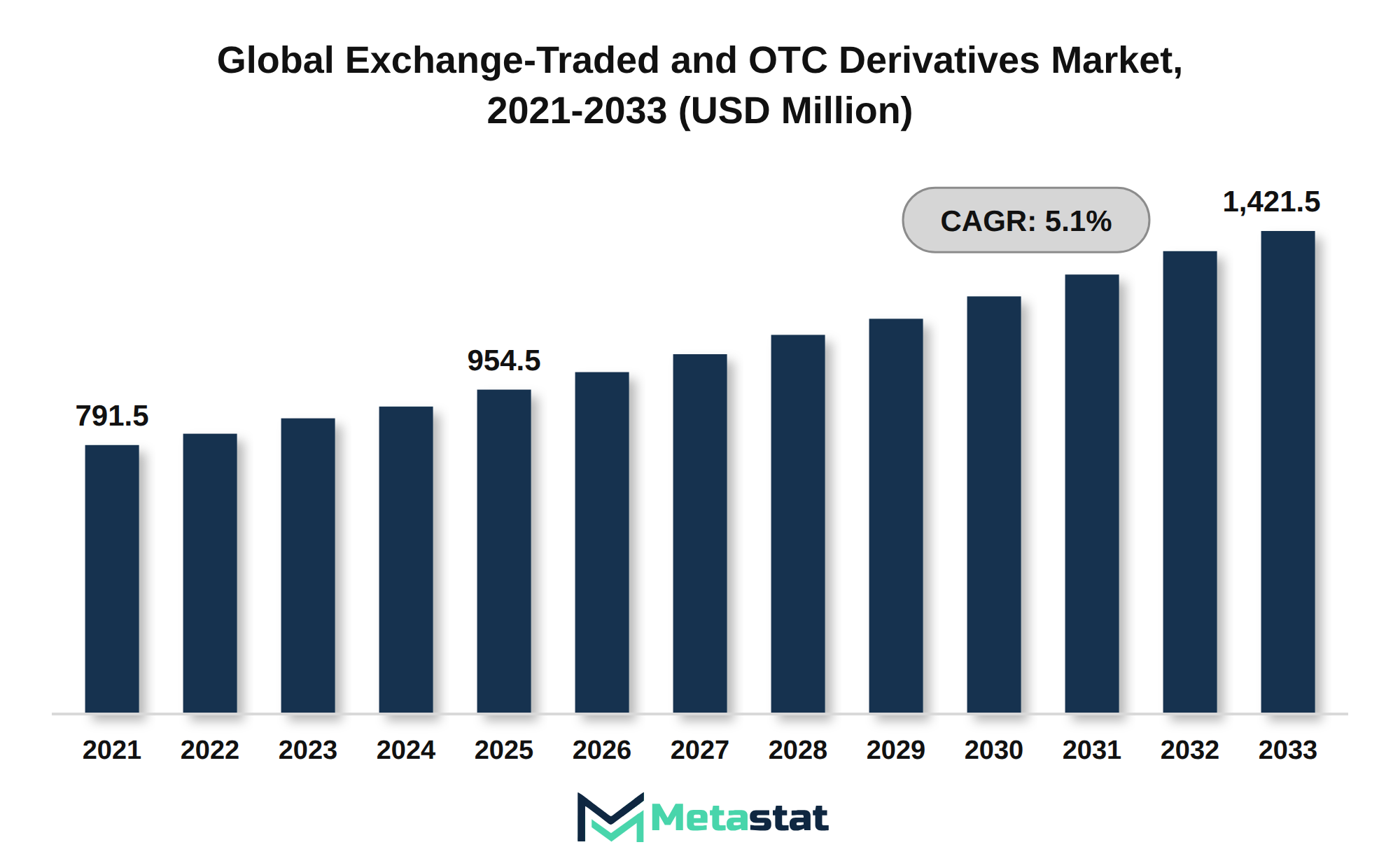
The global Exchange-Traded and OTC Derivatives market was valued at USD 954.5 million in 2025 and is projected to reach USD 1,421.5 million by 2033, growing at a CAGR of 5.1% over the forecast period.
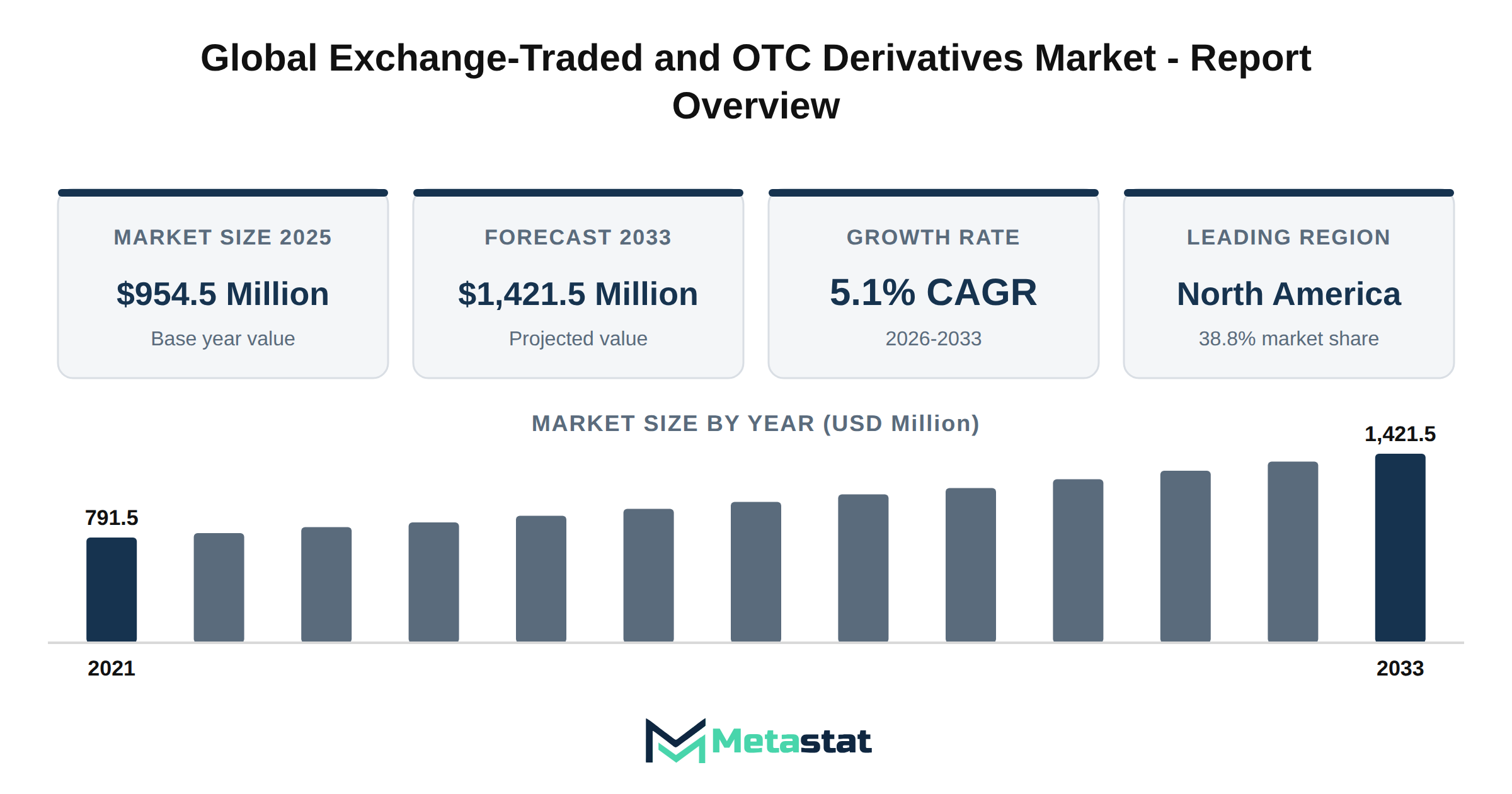
The Exchange-Traded and OTC Derivatives market reached a value of USD 954.5 million in 2025, marking a significant growth trajectory since its value of USD 791.5 million in 2021. This upward trend reflects an increase over four years, indicating robust demand and expanding participation in derivative trading.
Forecasts project that the market is expected to attain USD 1,421.5 million by 2033, achieving a compound annual growth rate (CAGR) of 5.1% during the forecast period from 2026 to 2033. This substantial growth is driven by increased trading volumes and the diversification of trading strategies among institutional and retail investors.
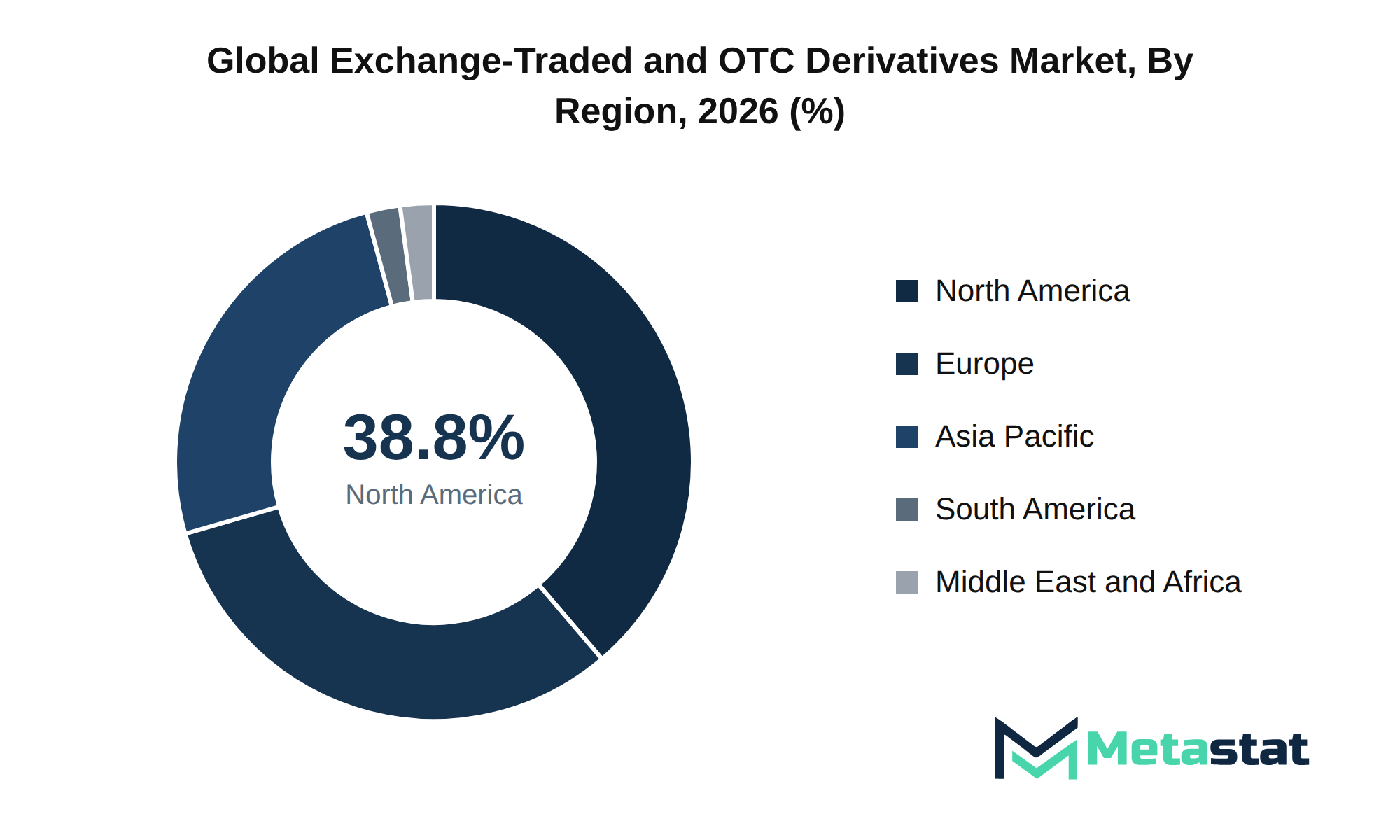
Regional dynamics illustrate that North America holds the largest share, accounting for 38.8% of the market in 2025, followed by Europe at 31.8% and Asia Pacific at 25.3%. The concentration of financial institutions and sophisticated trading platforms in North America contributes significantly to its leading position within the Exchange-Traded and OTC Derivatives market.
Within the market, the instrument segment displays notable diversity. Futures, for instance, are projected to grow from USD 245.7 million to USD 362.5 million by 2033, reflecting a CAGR of 5.7%. Options exhibit an even stronger growth trajectory, reaching USD 298.5 million by 2033, with a CAGR of 6.2%. This growth in instruments highlights the increasing complexity and sophistication of trading strategies employed by market participants.
In terms of asset class, interest rate derivatives dominate the market, with projections indicating an increase from USD 559.6 million to USD 767.6 million by 2033, translating to a CAGR of 4.6%. Foreign exchange derivatives follow closely, with expected growth to USD 263 million, driven by heightened global trading activities and currency fluctuations.
The Exchange-Traded and OTC Derivatives market faces several influences that shape its trajectory. Regulatory compliance remains a vital concern, with evolving frameworks impacting operational practices across the industry. Financial institutions invest in strategies to navigate these regulations effectively, ensuring adherence while optimizing their market positions. This focus on compliance creates a competitive landscape where agility and responsiveness to regulatory changes drive innovation.
Disruption within the market stems from advancements in technology and shifting consumer expectations. Financial firms increasingly leverage digital solutions, enhancing their service offerings and improving operational efficiency. The adoption of next-generation technologies facilitates the development of innovative financial products, enabling market participants to meet evolving demands and preferences.
Sustainable transformation is gaining momentum within the Exchange-Traded and OTC Derivatives market. Institutional investors emphasize environmental, social, and governance (ESG) criteria, prompting firms to develop sustainable investment products. This shift aligns with global sustainability goals and attracts a broader range of investors focused on ethical considerations.
Macroeconomic headwinds, including inflationary pressures and currency volatility, challenge the market's growth outlook. Firms implement strategic measures to mitigate risks associated with these economic factors, maintaining competitiveness in a fluctuating environment. Capital allocation strategies prioritize resilience, enabling organizations to navigate uncertainties while pursuing growth opportunities.
The future strategic outlook for the Exchange-Traded and OTC Derivatives market indicates a positive growth trajectory. Market participants are projected to enhance their focus on innovative solutions and sustainable practices, driving demand for new financial instruments. Investments in infrastructure and technology will play a critical role in shaping the competitive landscape, positioning firms to capitalize on emerging opportunities and address evolving market dynamics.
Market Dynamics
Macro-economic factors drive investment growth
Growth in the Exchange-Traded and OTC Derivatives market is primarily driven by macro-economic factors including GDP growth and capital investment environments. Increasing GDP levels in major economies enhance investors' confidence, leading to greater participation in derivatives trading. This trend results in a more dynamic market, attracting both institutional and retail investors.
Interest rate fluctuations significantly influence investment patterns in this market. Low-interest rates reduce borrowing costs, facilitating increased capital allocations towards derivatives. Investors seek to optimize returns through diversified instruments, including options and futures. Consequently, rising interest in these products is evident because stakeholders leverage favorable economic conditions.
Venture funding plays a critical role in shaping the market landscape. The influx of capital into innovative financial technologies drives the growth of new trading platforms and enhances accessibility for traders. This transformation supports the overall expansion of the market, enabling participants to access a broader array of derivative instruments.
Public-private spending power further impacts the market by creating opportunities for growth in various sectors. Increased governmental and corporate investments in infrastructure and technology enhance market efficiency, leading to improved operational productivity among traders and institutions. This investment climate promotes the development of new products and services within the Exchange-Traded and OTC Derivatives market.
Investment in technology fuels growth
Significant investment in technology acts because a catalyst for the Exchange-Traded and OTC Derivatives market. Digital transformation initiatives drive firms to automate processes, enhance operational efficiency, and adopt advanced financial technologies. For instance, the integration of artificial intelligence and sophisticated software solutions allows firms to streamline trading operations and improve risk management practices. These advancements reduce costs, enhance productivity, and create opportunities for innovative product offerings within the market.
Growing digital infrastructure supports a transition towards more efficient trading platforms. Enhanced connectivity and data analytics capabilities enable firms to respond to market movements swiftly and accurately. This agility is vital for attracting a broader range of participants, including institutional investors and retail traders. The enhanced efficiency and reliability of trading mechanisms stimulate demand for exchange-traded and OTC derivatives, contributing to market expansion.
Venture funding in fintech has accelerated the development of next-generation trading solutions. The influx of capital into this sector promotes innovation and competition, ultimately benefiting users through improved services. This dynamic investment environment, combined with the ongoing pursuit of efficiency and technology adoption, supports the Exchange-Traded and OTC Derivatives market's growth trajectory.
Regulatory compliance hinders market growth
The Exchange-Traded and OTC Derivatives market encounters significant challenges stemming from stringent regulatory compliance requirements. Regulatory frameworks impose considerable burdens on firms, increasing operational complexities and costs associated with adherence. Compliance hurdles, including the need for extensive documentation and reporting, divert resources from core activities, impacting efficiency and profitability. Regulatory uncertainty deters investment, creating an environment where firms hesitate to engage in new projects or expand existing operations.
Macroeconomic headwinds contribute to a cautious approach among market participants, influencing trading volumes and overall market activity. Inflationary pressures and rising operational costs constrain the financial flexibility of firms, prompting them to adopt more conservative strategies. Geopolitical instability creates a sense of unpredictability, leading to reluctance in entering new markets or investing in innovative offerings within the Exchange-Traded and OTC Derivatives market.
The combination of these factors results in heightened market fragmentation. Firms face challenges in achieving scale, which affects competitive positioning and limits growth opportunities. Regional adoption resistors, including cultural barriers and varying regulatory environments, complicate efforts to establish a cohesive market presence. Slowing downstream demand and industry cycle maturation contribute to a saturated market, compelling firms to strategize on differentiation and innovation while navigating these constraints.
Geopolitical fragmentation and trade deficits
The Exchange-Traded and OTC Derivatives market encounters challenges from geopolitical fragmentation and escalating trade deficits. These factors disrupt global trade relationships, leading to tariff friction and complicating cross-border derivatives transactions. Market participants face increased compliance overhead due to evolving legal liabilities, with firms navigating a complex network of regulations across multiple jurisdictions. These conditions heighten operational costs and limit market participation.
Technological disruptions further complicate the market. Firms strive to integrate new trading platforms within existing frameworks. The lack of interoperability among these systems creates friction that hinders efficiency and increases operational costs. Fluctuations in feedstock prices and component availability introduce additional volatility, impacting pricing strategies within the market and affecting profitability.
Margin pressures arise from competitive pricing strategies and shifting downstream demands, forcing firms to reassess their operational models. Rising input cost structures require significant investment to maintain profitability. Workforce skill gaps contribute to challenges in talent retention and automation displacements, restricting firms' abilities to adapt to changing market conditions and potentially limiting growth opportunities.
Environmental lifecycle footprints and decarbonization mandates create additional pressures, compelling firms to implement sustainable practices. Infrastructure gaps and retrofitting barriers hinder effective solutions, while cybersecurity risks and data vulnerabilities necessitate enhanced protections against potential threats. These interconnected challenges define the operational landscape of the Exchange-Traded and OTC Derivatives market, requiring strategic responses to ensure resilience and long-term growth.
Emerging regional demands drive market expansion
The Exchange-Traded and OTC Derivatives market experiences substantial opportunities driven by emerging regional demands. Growth in North America, Europe, and Asia Pacific highlights the expanding adoption of derivatives in various financial sectors. Countries within these regions allocate significant resources for infrastructure modernization, enhancing trading platforms and operational capabilities. This modernization supports increased transaction volumes, attracting additional participants to the market.
Technological disruptions facilitate digital transformation, allowing financial institutions to leverage advanced analytics, algorithmic trading, and blockchain technology. These innovations streamline processes, reduce latency, and enhance overall trading efficiency. Buyers benefit from improved pricing models and access to a broader range of derivatives products. This shift contributes to higher market engagement and investment, resulting in an anticipated compound annual growth rate of 5.1% through 2033.
The market sees a strategic consolidation trend driven by cross-industry mergers and acquisitions, creating synergies among financial services providers. This consolidation enables firms to broaden their product offerings, thereby catering to diverse customer needs and preferences. Diversification into niche applications, including green derivatives and ESG-compliant products, aligns with sustainability imperatives, which increasingly influence investor decisions.
Evolving buying behaviors and digital procurement shifts reshape how clients engage with financial products. A preference for agile and responsive trading solutions leads firms to adopt advanced digital platforms. This transition supports operational yield maximization and value-chain optimization, creating a more competitive environment within the market.
The Exchange-Traded and OTC Derivatives market remains well-positioned to capitalize on these emerging trends. While firms adapt to regulatory shifts and prioritize eco-friendly compliance, the market is projected to see sustained growth driven by innovation and regional expansion.
Market Segmentation Analysis
The Global Exchange-Traded and OTC Derivatives market is segmented based on Instrument, Asset Class, and Structure.
By Instrument, the market is further segmented into:
- Futures
- Options
- Forwards
- Swaps
- Contracts for Difference (CFDs)
- Others (Warrants, Structured and Exotic Derivative Contracts)
Futures
Valued at USD 245.7 million in 2026, the Futures segment is projected to reach USD 362.5 million by 2033, reflecting a CAGR of 5.7% during the forecast period. Key demand drivers in this segment include the increasing need for risk management among institutional investors and corporations. The growing complexity of financial markets fuels the adoption of Futures because a hedging tool, contributing to expansion within the Exchange-Traded and OTC Derivatives market.
Technological maturation in trading platforms enhances access to Futures trading, facilitating participation from a broader range of market participants. These advancements drive operational efficiency, leading to lower transaction costs. Product evolution, characterized by the introduction of innovative Futures contracts, accommodates varying investment strategies, further promoting market penetration.
End-use dynamics indicate that commercial and industrial sectors increasingly turn to Futures for price stabilization of underlying assets. Regulatory compliance standards influence market operations, prompting firms to adopt Futures for meeting hedging requirements. Consequently, this segment shows resilience amid fluctuating market conditions, positioning itself because a strategic tool for portfolio diversification.
Cost structures and pricing volatility remain critical factors affecting market dynamics. Increased demand for transparency and accountability shapes the Futures trading environment, compelling firms to invest in compliance and risk management solutions. The strategic opportunity windows presented by market fluctuations support significant capital investments, ensuring sustained growth within the Futures segment of the Exchange-Traded and OTC Derivatives market.
Options
In the Exchange-Traded and OTC Derivatives market, the Options segment is essential for facilitating trading strategies and risk management. This segment is estimated to reach USD 298.5 million by 2033, at a CAGR of 6.2% during the forecast period. Adoption of options is driven by increasing demand for hedging against market volatility, particularly in sectors including finance and commodities. Traders and institutional investors leverage options to enhance returns and minimize risks, highlighting the importance of this segment.
The evolution of financial technology has significantly impacted trading and execution processes within the options space. Advanced algorithms and trading platforms improve efficiency and accessibility, attracting a broader range of participants, including retail investors. Technological maturation within the market supports the integration of options trading into broader portfolios, enhancing liquidity and market depth.
Regulatory compliance and evolving market standards play a critical role in shaping the Options segment. Adapting to new regulations, participants invest in systems that ensure adherence to compliance requirements. This focus on regulatory challenges drives innovation and the development of new products and services within the options market.
Cost structures associated with trading options influence participant strategies. Market fluctuations lead to pricing volatility, impacting margins and profitability. Investors continuously seek strategies to optimize trading costs, driving demand for innovative options products and services designed to enhance value while minimizing risk.
Overall, the Options segment within the Exchange-Traded and OTC Derivatives market demonstrates substantial growth potential driven by technological advancements, regulatory compliance, and evolving demand from diverse market participants. The increasing complexity of financial markets necessitates sophisticated risk management solutions, further supporting the segment's expansion and relevance in upcoming years.
Forwards
Forwards trading within the Exchange-Traded and OTC Derivatives market offers unique advantages, particularly in risk management strategies for various asset classes. The demand for these instruments has seen consistent growth, driven primarily by the need for hedging against price fluctuations and uncertainties in the financial markets. Financial institutions and corporate entities actively apply forwards to manage their exposure to currency and interest rate risks, ensuring greater stability in their operations.
With advancements in technology and trading platforms, the market for forwards has become more accessible and efficient. Integration of electronic trading systems enhances transparency and reduces transaction costs, facilitating broader participation from institutional and retail investors alike. Increased trading volumes and liquidity in the forwards market result from this trend.
The forwards segment is expected to reach USD 142.1 million by 2033. Continuous improvements in regulatory frameworks and compliance standards further enhance the segment's growth potential. These regulations promote standardization, ensuring a level of security and trust among market participants, which in turn encourages more firms to engage in forwards trading.
Emerging trends, including the growing integration of environmental, social, and governance (ESG) factors into investment decisions, contribute to the expansion of the forwards market. Investors increasingly seek products that align with ESG principles, creating new opportunities for forwards that cater to these evolving preferences.
Overall, the combination of demand drivers, technological advancements, and regulatory support positions the forwards segment for significant growth within the Exchange-Traded and OTC Derivatives market, reflecting increasing confidence among market participants and a promising outlook for the coming years.
Swaps
Growth in the swaps segment reflects increasing demand for risk management solutions within the financial sector. This demand originates from institutions seeking to hedge against fluctuating interest rates and currency risks, particularly amid global economic uncertainty. The segment is projected to grow at a CAGR of 4.1% during the forecast period, indicating steady expansion of trading activities. Key players in the Exchange-Traded and OTC Derivatives market invest in advanced technologies to enhance the efficiency and reliability of swaps trading.
Technological maturation influences the swaps market. Innovations in trading platforms streamline operations, allowing institutions to execute trades more effectively and transparently. Regulatory compliance standards, particularly following financial crises, compel firms to adopt more sophisticated risk management tools, including swaps. Consequently, rising regulatory scrutiny supports market expansion by increasing the need for compliant and strategic financial instruments.
Investments in next-gen upgrades drive product evolution within the swaps segment. Financial institutions adapt their offerings to include more complex swap structures tailored to meet the diverse needs of their clients. This evolution enhances deeper integration of swaps into broader financial strategies, increasing their appeal among institutional investors. Overall, growing reliance on swaps for hedging and speculation contributes to their integral role in the overall dynamics of the market.
Contracts for Difference (CFDs)
Contracts for Difference (CFDs) represent a critical component of the Exchange-Traded and OTC Derivatives market, driving engagement from a diverse array of traders and investors. The appeal of CFDs stems from their ability to offer exposure to price movements in various underlying assets without requiring physical ownership. This feature aligns with the growing trend toward leveraging technology and digital platforms for trading, enhancing accessibility and efficiency for market participants.
Increased adoption of CFDs reflects a broader shift toward online trading solutions, driven by retail and institutional investors seeking flexible options for hedge and speculation. This segment benefits from advancements in trading technology, which streamline transaction processes and improve user experiences. The market environment encourages further integration of advanced algorithms and analytics, enabling traders to make informed decisions based on real-time data.
Regulatory compliance remains a significant factor influencing the growth of CFDs. Adherence to evolving standards plays a crucial role in shaping market dynamics and ensuring a level playing field among participants. Firms operating in this segment continually assess regulatory changes, adjusting their offerings to maintain compliance while optimizing performance.
Cost structures and pricing volatility present ongoing challenges and opportunities within the CFD market. Competitive pricing strategies become essential for attracting and retaining clients, particularly in a landscape characterized by rapid technological advancements and shifting consumer preferences. Market players actively explore strategic partnerships and innovation to enhance offerings, aiming to capture a larger share of the expanding market.
Strategic opportunity windows emerge because market conditions evolve, allowing firms to introduce differentiated products catering to specific investor needs. By capitalizing on these opportunities, participants in the CFDs segment position themselves favorably within the broader Exchange-Traded and OTC Derivatives market, driving growth and expansion over the coming years.
Others (Warrants, Structured and Exotic Derivative Contracts)
Investment in Warrants, Structured, and Exotic Derivative Contracts reflects a shift in investor strategies, favoring innovative financial instruments. The growing complexity of market demands increases interest in these derivatives, driven by investors seeking to hedge risks and optimize portfolio returns. Increased participation from hedge funds and institutional investors highlights the segment's appeal, driving growth in the Exchange-Traded and OTC Derivatives market.
Technological advancements enhance the trading platforms used for these derivatives, enabling more efficient transactions and improved accessibility for investors. Enhanced analytical tools and algorithmic trading systems support strategic decision-making, allowing traders to capitalize on market movements effectively. This evolution contributes to a more dynamic trading environment and encourages further investment in exotic derivatives.
Regulatory compliance stands because a critical factor influencing investment in this segment. Adhering to emerging standards promotes transparency and instills investor confidence. Consequently, firms actively develop innovative products that align with regulatory expectations, ensuring competitive positioning in the market.
Increased demand for tailored financial solutions drives growth in Warrants, Structured, and Exotic Derivative Contracts. This trend reflects broader consumption shifts towards personalized investment strategies, particularly among high-net-worth individuals and institutional investors. The segment's adaptability to changing market conditions illustrates its resilience and potential for future expansion within the Exchange-Traded and OTC Derivatives market.
By Asset Class, the market is further segmented into:
- Interest Rate Derivatives
- Foreign Exchange Derivatives
- Equity & Equity Index Derivatives
- Commodity Derivatives
- Credit Derivatives
- Digital Asset Derivatives
- Others (Fund-Linked, Freight and Weather Derivatives)
Interest Rate Derivatives
Valued at USD 559.6 million in 2026, the Interest Rate Derivatives segment is projected to reach USD 767.6 million by 2033, at a CAGR of 4.6% during the forecast period. Growth in interest rate derivatives stems from increasing demand for effective risk management strategies among financial institutions and corporations. These instruments offer a crucial method for hedging against fluctuations in interest rates, providing stability in an uncertain economic environment.
Investment in the segment is supported by advances in technology that enhance trading efficiency and streamline operations. Market participants increasingly adopt electronic trading platforms, which facilitate quicker transactions and greater accessibility to a wider range of instruments. While financial instruments evolve, end-users benefit from improved liquidity and pricing dynamics, leading to a more robust trading environment.
Regulatory compliance standards, including those implemented post-financial crisis, drive institutional demand for transparent and effective risk management tools. Financial institutions increasingly seek to adhere to these regulations, thus increasing the importance of interest rate derivatives. This trend encourages investment in innovative solutions that integrate regulatory requirements while maximizing operational efficiency.
Market dynamics indicate a shift in consumption patterns resulting from institutions diversifying their portfolios to include various asset classes. The evolving landscape of interest rate derivatives highlights strategic opportunity windows for market players, enabling them to capitalize on emerging trends and customer needs. With a focus on long-term growth and sustainability, firms are strategically investing to enhance their offerings in the interest rate derivatives market, aligning with overall market expansion within the Exchange-Traded and OTC Derivatives market.
Foreign Exchange Derivatives
Growth in Foreign Exchange Derivatives directly correlates with expanding global trade and heightened financial market activities. Major drivers include the increasing demand for cross-border transactions and the need for firms to hedge against currency fluctuations. Financial institutions and corporations, particularly those engaged in international business, significantly contribute to this rising demand. Regulatory compliance standards, including those governing anti-money laundering and counter-terrorism financing, compel firms to manage risk with derivatives for risk management and reporting purposes.
Foreign Exchange Derivatives segment is estimated to reach USD 263 million by 2033, at a CAGR of 5.4% during the forecast period. Product evolution and technological maturation drive innovation within this segment, enabling enhanced trading platforms and improved liquidity options. Market participants benefit from next-gen upgrades that streamline execution processes and reduce transaction costs, thereby attracting more participants.
End-use dynamics significantly influence the growth trajectory of the Foreign Exchange Derivatives segment. Corporations and institutional investors increasingly leverage these instruments to manage exposure to currency volatilities effectively. Consumption shifts towards more sophisticated financial products indicate a preference for tools that provide greater flexibility and customization. Strategic opportunity windows emerge owing to firms seeking to navigate market volatility, driving further adoption of Foreign Exchange Derivatives.
Equity & Equity Index Derivatives
Growth in the Equity & Equity Index Derivatives segment results from increased participation by institutional investors and hedge funds seeking to hedge risks and enhance portfolio performance. Technological advancements in trading platforms facilitate rapid execution and access to data-driven insights, increasing investor confidence. This segment is expected to reach USD 184.8 million by 2033.
Regulatory compliance, particularly around transparency and risk management, acts because a significant driver by enhancing market integrity and increasing investor trust. The evolving landscape of equity derivatives reflects shifts in consumption patterns, with increasing demand for customized products that meet specific investment strategies. The market responds to these dynamics through innovative product development and tailored offerings.
Margin pressures from trading costs and competition influence pricing strategies within the market. Firms actively seek operational efficiencies to mitigate these pressures while maintaining competitive pricing. The strategic opportunity windows created by regulatory changes and technological advancements position the market for continued growth, enabling investment in next-generation products and services.
Commodity Derivatives
In the Exchange-Traded and OTC Derivatives market, the Commodity Derivatives segment is projected to grow at a CAGR of 4.9% during the forecast period. Rising interest in hedging strategies significantly influences demand within this segment. Industries including agriculture, energy, and metals increasingly rely on commodity derivatives to manage price volatility and mitigate risk. While consumers and producers seek more stable pricing, the adoption of these instruments expands, strengthening long-term demand.
Regulatory compliance continues to shape market dynamics, with entities adhering to evolving standards to ensure transparency and reduce systemic risks. This regulatory environment affects cost structures, impacting pricing strategies for commodity derivatives. Increased investment in technology enhances trading capabilities, allowing market participants to react swiftly to price fluctuations and market changes, thereby improving operational efficiency.
Another factor contributing to segment growth is the diversification of product offerings. New products tailored to specific commodities expand the available options for investors. Enhanced trading platforms improve accessibility, attracting more participants to the market and increasing competition among providers. This competitive environment encourages innovation and the development of more sophisticated trading tools to meet diverse investor needs, reinforcing the segment's position.
Market forecasts indicate that commodity derivatives will play a crucial role in financial markets, accommodating growing demand from various sectors. The evolution of digital asset derivatives introduces additional opportunities for participants, ensuring the market remains relevant in changing economic landscapes, which is expected to drive market growth.
Credit Derivatives
Investors increasingly recognize the significance of credit derivatives in the broader context of risk management and financial innovation. Demand for these instruments arises from the necessity for entities to hedge against credit risk, while evolving regulatory frameworks impact the market's dynamics. Financial institutions manage exposure to borrowers and counterparties, driving investment and trading activities within the market.
The evolution of financial markets influences the adoption of credit derivatives. Businesses seek to diversify their portfolios and enhance capital efficiency, making the integration of these products vital for risk mitigation strategies. Continuous innovation within the financial sector promotes the development of new products that align with market needs, enabling greater engagement with credit derivatives. This adaptation supports the strategic goals of financial institutions while enhancing competitive positioning.
Shifts in consumption patterns reflect institutional preferences for sophisticated risk management tools. The market responds to increased demand for transparency and liquidity, resulting in the emergence of advanced credit derivative structures. Regulatory compliance standards shape the framework within which these instruments operate, influencing their attractiveness to a broad range of market participants.
Price volatility and margin pressures pose challenges for stakeholders navigating the complexities of credit derivatives. Market participants adapt to fluctuations in underlying asset values, which directly impact derivative valuations. Consequently, strategic opportunities arise for firms that effectively manage these risks while investing in innovative solutions to address emerging market dynamics.
Capital investment in technology plays a critical role in the evolution of credit derivatives. Enhanced analytical tools and platforms facilitate improved pricing and risk assessment capabilities, allowing institutions to optimize trading strategies. This technological maturation highlights the importance of agility in responding to market demands, creating a resilient ecosystem for credit derivatives within the Exchange-Traded and OTC Derivatives market.
Digital Asset Derivatives
In recent years, interest in Digital Asset Derivatives has surged, driven by the rapid growth of cryptocurrencies and blockchain technology. This surge stems from increasing adoption among institutional investors seeking diversification and innovative trading strategies. The segment draws attention due to its potential for high returns, attracting a diverse range of market participants looking to capitalize on price volatility.
The expansion of Digital Asset Derivatives significantly benefits from technological advancements, which enhance trading platforms and risk management tools. These developments improve market accessibility, resulting in increased participation. The continuous evolution of digital assets leads to the creation of new derivative products, appealing to both seasoned traders and newcomers.
End-use dynamics reflect a growing acceptance of digital assets in mainstream finance. Financial institutions increasingly explore ways to integrate these derivatives into existing portfolios, driven by demand for innovative investment solutions. Regulatory compliance standards influence the market, prompting firms to adopt best practices and strengthen governance frameworks to ensure adherence to evolving regulations.
Strategic opportunity windows arise owing to firms seeking to expand their offerings in the Digital Asset Derivatives market. Investment in infrastructure, technology, and partnerships with blockchain providers supports growth by enhancing operational capabilities. This proactive approach enables firms to position themselves competitively in the evolving market of Exchange-Traded and OTC Derivatives.
Looking ahead, the Digital Asset Derivatives segment stands poised for significant developments. The ongoing maturation of the market encourages further innovation, attracting new entrants and capital investment. This evolving environment necessitates a keen focus on managing cost structures and mitigating pricing volatility, ensuring firms maintain healthy margins while navigating the complexities associated with digital assets.
Others (Fund-Linked, Freight and Weather Derivatives)
Diverse applications across various industries drive demand for Others (Fund-Linked, Freight and Weather Derivatives) within the Exchange-Traded and OTC Derivatives market. The unique nature of these derivatives caters to specific needs, including hedging against market volatility and managing risks associated with fluctuating weather conditions and commodity prices. Firms increasingly apply these financial instruments to protect investments and ensure stability in operations, reflecting a strategic approach to risk management.
The evolution of these derivatives continues to gain traction, influenced by technological advancements and growing awareness of risk management strategies among investors. Enhanced trading platforms and data analytics play a significant role in facilitating transactions, ensuring higher efficiency and transparency in trading. This evolution aligns with broader trends within the market, creating an environment conducive to innovation.
Compliance with regulatory standards remains crucial for participants operating within this segment. Adherence to established guidelines ensures that market players maintain integrity and instill confidence among investors. Regulatory compliance directly influences pricing strategies and margins by necessitating investments in compliance infrastructure, shaping the operational landscape for firms engaged in the market.
Recent consumption shifts indicate a growing interest in alternative investment strategies, with Others (Fund-Linked, Freight and Weather Derivatives) appealing to a diverse clientele seeking diversified portfolios. Strategic opportunity windows created by market dynamics encourage firms to explore innovative product offerings, enhancing competitive positioning within the market.
Overall, the segment reflects resilience and adaptive strategies, aligning with evolving demands of investors and market participants. The focus on product evolution, regulatory compliance, and strategic opportunities contributes to the segment's potential for growth and expansion in the coming years.
By Structure, the market is further segmented into:
- Exchange-Traded Derivatives
- Over-the-Counter Derivatives
Exchange-Traded Derivatives
Exchange-Traded Derivatives segment is valued at USD 118.3 million in 2026 and is projected to reach USD 191.9 million by 2033, at a CAGR of 7.2% during the forecast period. Growth in this segment is driven by increased interest from institutional investors seeking to hedge risks and enhance portfolio returns. The expansion of trading platforms and advancements in technology facilitate wider access to Exchange-Traded Derivatives, increasing participation from retail investors. Regulatory advancements support market transparency and efficiency, attracting more participants to the market.
Adoption of Exchange-Traded Derivatives exhibits a strong correlation with market volatility, where investors leverage these instruments to manage risk exposure effectively. Favorable cost structures associated with trading these derivatives compared to Over-the-Counter counterparts further enhance their attractiveness. The segment benefits from the evolution of product offerings that cater to diverse trading strategies and risk appetites.
Technological maturation contributes to the segment's resilience, allowing for faster execution times and reduced transaction costs. Ongoing development of next-generation trading platforms provides enhanced user experiences and innovative tools that assist traders. While global financial markets evolve, the Exchange-Traded and OTC Derivatives market stands to benefit from continuous influx of capital and interest in derivatives trading.
Over-the-Counter Derivatives
Over-the-Counter Derivatives segment is estimated to reach USD 1,229.6 million by 2033, at a CAGR of 4.8% during the forecast period. This segment benefits from increased flexibility and customization options provided to market participants, allowing them to tailor products to meet specific risk management and investment strategies. Regulatory compliance standards have pushed many firms toward using OTC derivatives to hedge risks that are not easily addressed by standardized contracts.
Growing demand for innovative financial instruments drives adoption of OTC derivatives. Institutions seek to manage various risks associated with interest rates, foreign exchange, and credit, leading to greater utilization of these instruments. The potential for enhanced liquidity in specific asset classes attracts participants seeking opportunities in the Exchange-Traded and OTC Derivatives market.
Pricing volatility associated with traditional instruments influences a strategic shift toward OTC derivatives, which offer bespoke solutions to clients. Firms face margin pressures stemming from increased competition and the necessity to provide cost-effective products. This dynamic encourages greater investment in technology that enhances trading capabilities and risk assessment processes, further supporting market growth.
The market's evolution reflects ongoing integration of technological advancements, improving operational efficiency for participants. Next-gen upgrades, including algorithmic trading and artificial intelligence, enhance decision-making capabilities, reducing latency and improving trade execution. Strategic opportunity windows presented by these developments position firms favorably for future growth in the OTC derivatives space.
By Region
Based on geography, the Global Exchange-Traded and OTC Derivatives market is divided into North America, Europe, Asia-Pacific, South America, Middle East, and Africa.
North America
North America accounts for 38.8% of the Exchange-Traded and OTC Derivatives market, contributing USD 1,004.1 million of the global market in 2025. The region benefits from a robust financial infrastructure, which supports a diverse range of instruments, including futures, options, and swaps. High trading volumes and liquidity enhance the attractiveness of these products for various market participants, including institutional investors and hedge funds.
The anticipated expansion at a CAGR of 5.1% throughout the forecast period reflects a growing appetite for derivatives in North America, driven by demand for risk management and hedging strategies among companies and financial institutions. This trend aligns with the increasing complexity of financial markets and the need for sophisticated financial instruments.
The presence of major financial centers in the United States, Canada, and Mexico creates a competitive landscape characterized by strong domestic players. These firms, including Goldman Sachs Group, Inc., JPMorgan Chase & Co., and Morgan Stanley, actively develop innovative solutions to meet evolving client needs. The ongoing pursuit of technological advancements enhances trading capabilities and drives further growth.
Cross-border trade corridors and localized procurement dynamics influence the market. Financial institutions adapt to regional compliance mandates and regulatory frameworks. This responsiveness ensures alignment with local regulations while addressing the specific needs of diverse client bases across the three countries.
Market participants increasingly focus on underpenetrated territories, seeking opportunities to expand their reach and enhance service offerings. With strategic entry barriers gradually lowering, North America represents a landscape ripe for continued investment in the Exchange-Traded and OTC Derivatives market.
Overall, the North America Exchange-Traded and OTC Derivatives market is set to expand at a CAGR of 5.1% within the forecast period, reaching a market size (TAM) of USD 525.9 million by the end of 2033.
Europe
The Exchange-Traded and OTC Derivatives market in Europe holds a share of the global market in 2025. This region benefits from a well-established financial infrastructure, enabling robust trading activities across various segments, including Futures and Options. The strong presence of key players including Deutsche Bank AG and Barclays PLC enhances competitive dynamics, driving innovation and efficiency in derivative trading.
Germany, France, the UK, Italy, and Spain exhibit high demand for Interest Rate Derivatives, reflecting the region's diverse economic landscape and monetary policies. The ongoing modernization of financial markets and technology adoption supports growth in this segment. Evolving regulatory frameworks and compliance standards in these countries shape market practices, ensuring a stable environment for investors.
Geopolitical factors, including trade relations and economic cooperation within the European Union, significantly impact the Exchange-Traded and OTC Derivatives market. These dynamics facilitate the movement of capital and resources, allowing market participants to leverage opportunities across borders. Emerging markets within the region, including Eastern European countries, present additional growth vectors, offering potential for increased adoption of derivatives.
Localized procurement dynamics influence the strategic decisions of market participants, with companies focusing on regional suppliers to enhance operational resilience. Cultural nuances in B2B buying behaviors further tailor the approach to market engagement, impacting product offerings and service delivery. An increasing emphasis on sustainability and responsible investing drives market players to align their strategies with the evolving preferences of European investors.
Asia-Pacific
The Asia-Pacific region represents a significant player in the Exchange-Traded and OTC Derivatives market, holding a share of 25.3% in 2025. Countries including China, Japan, India, South Korea, and Australia contribute to this strong market presence. Ongoing financial market reforms and technological advancements in these nations create favorable conditions for the adoption of derivatives. The increasing complexity of financial instruments drives demand for sophisticated risk management tools, enhancing the appeal of both exchange-traded and over-the-counter products.
Infrastructure modernization across Asia-Pacific supports the growth of the derivatives market. Investments in financial technology facilitate smoother trading processes and enhance overall market accessibility. Countries like China and India focus on improving their financial infrastructures, which positions them because emerging market front-runners in this sector. Localized manufacturing densities and the push for supply chain regionalization contribute to an environment conducive to derivatives trading.
Increased foreign direct investment flows into the region signal confidence in the market's potential. Strategic entry barriers, including regulatory requirements, influence the competitive landscape, leading to vendor consolidation trends among domestic market participants. Local compliance mandates shape the operations of firms within the market, ensuring that products meet regional standards. Cultural nuances and regional B2B buying behaviors further impact how financial products are marketed and adopted.
The Asia-Pacific region stands poised for incremental growth vectors, driven by ongoing financial innovation and evolving market dynamics. The Exchange-Traded and OTC Derivatives market is expected to thrive because stakeholders adapt to changing economic conditions and capitalize on emerging opportunities within this marketplace.
South America
The Exchange-Traded and OTC Derivatives market in South America exhibits notable characteristics, driven by the unique economic landscape of the region. Brazil and Argentina emerge because the primary markets, supported by growing interest in financial instruments and derivatives trading. Economic reforms and increasing participation of institutional investors contribute to market growth.
Infrastructure modernization initiatives enhance the market's potential, facilitating smoother trading processes and better access to international markets. The region's underpenetrated territories present opportunities for expansion, particularly in the adoption of more sophisticated financial instruments.
Local compliance mandates and regulatory frameworks influence operational strategies for market players. Vendor consolidation trends reflect a shift towards efficiency in service delivery, aligning with regional procurement dynamics.
Brazil, with its large financial market, significantly influences the trajectory of derivatives trading in South America. Argentina follows with increasing participation, while the Rest of South America holds potential for future growth owing to improvements in financial literacy.
The market represents 2.1% of the global exchange-traded and OTC derivatives space in 2025, indicating a solid foundation for future growth. Enhanced cross-border trade corridors and localized manufacturing densities support the ongoing evolution of the derivatives landscape in the region.
Middle East and Africa
The Exchange-Traded and OTC Derivatives market in the Middle East and Africa shows a limited share, accounting for 2.1% of the global market in 2025. Saudi Arabia and the UAE exhibit strong growth potential due to increasing financial market sophistication and regulatory advancements, which enhance their roles in derivatives trading. South Africa reflects a mature financial sector that contributes to stable demand for derivatives products.
Infrastructure modernization remains essential in the region, particularly in Saudi Arabia and the UAE, where investments in technology and financial services continue to reshape market dynamics. Emerging markets within the region, including Saudi Arabia, benefit from government initiatives aimed at diversifying their economies, which supports growth in the derivatives market.
Geopolitical factors, including regional stability and trade agreements, influence the market landscape in the Middle East and Africa. Local compliance mandates and regulatory frameworks require adherence, impacting operational strategies for market participants.
Competitive dynamics reflect a mix of domestic and international players, with increasing vendor consolidation trends. Local procurement practices, influenced by cultural nuances and B2B buying behaviors, shape demand patterns in the market. Overall, the Exchange-Traded and OTC Derivatives market in this region presents opportunities for growth, driven by strategic investments and regulatory advancements.
Competitive Landscape and Strategic Insights
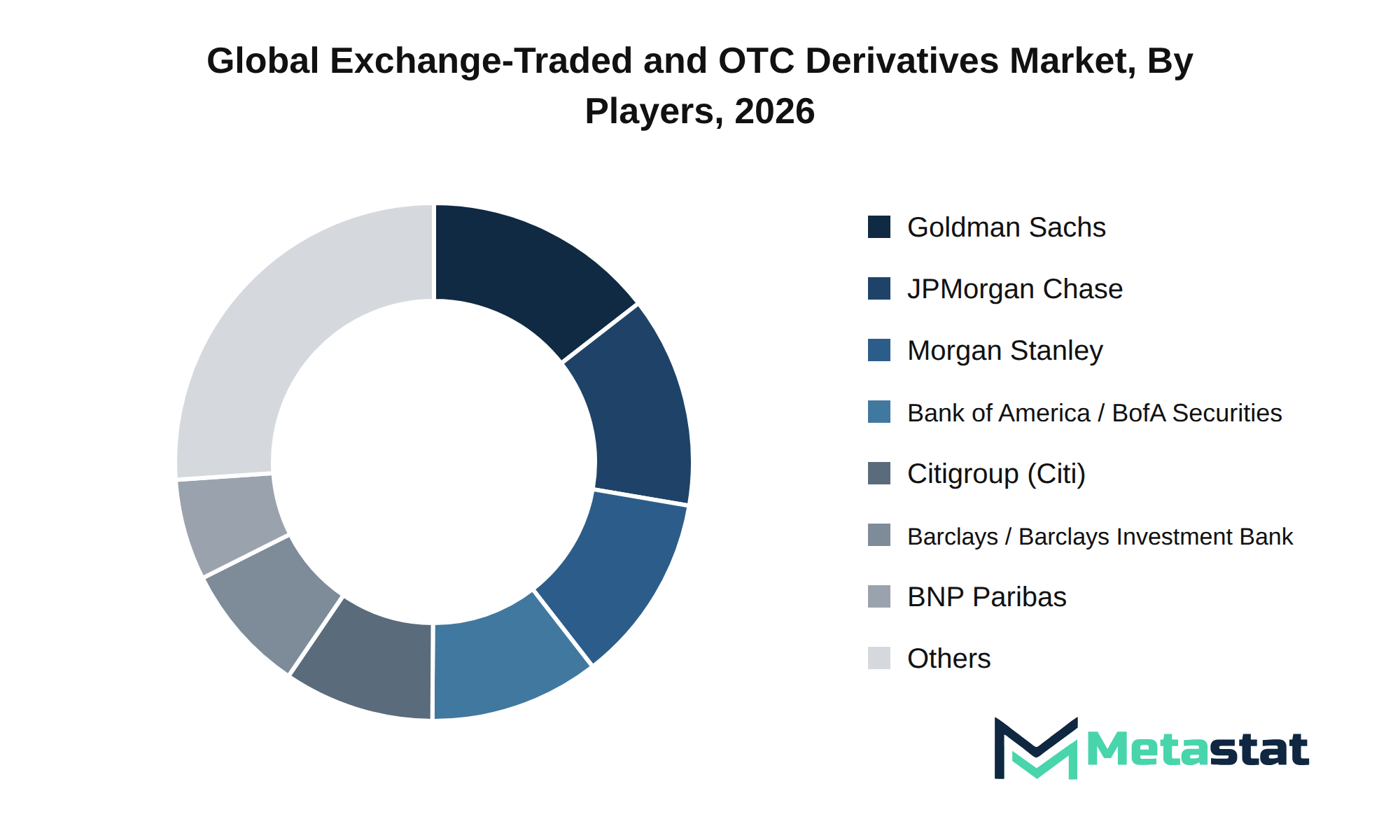
The Exchange-Traded and OTC Derivatives market features significant activity among key players focusing on strategic consolidation through mergers and acquisitions. Major institutions including Goldman Sachs Group, Inc., JPMorgan Chase & Co., and Morgan Stanley seek to enhance their market positions through strategic alliances and partnerships. These strategies drive innovation and improve product differentiation, ultimately leading to increased customer retention and brand equity.
Pricing architectures play a crucial role in the competitive dynamics of the market. Firms like Bank of America Corporation / BofA Securities and Citigroup Inc. (Citi) develop commercial models that leverage their extensive client networks to optimize pricing strategies. This competitive pricing strategy aligns with value chain integration efforts, enabling players to maintain procurement leverage while navigating market fluctuations.
The future competitive outlook remains influenced by technological advancements and intellectual property portfolios. Companies including Barclays PLC / Barclays Investment Bank and BNP Paribas invest heavily in R&D pipelines, creating proprietary technology moats that enhance their market positioning. These efforts contribute to the overall resilience and adaptability of participants in the Exchange-Traded and OTC Derivatives market.
Market size is forecast to rise from USD 954.5 million in 2025 to over USD 1,421.5 million by 2033, reflecting a CAGR of 5.1%. Steady growth is driven by macroeconomic stability and increased adoption of derivatives across various industries. A bull case signifies enhanced market performance, fueled by accelerated technological advancements and a favorable regulatory environment. A bear case indicates slower growth, influenced by economic downturns, geopolitical tensions, or restrictive policies that impact trading activities.
The exchange-traded and OTC derivatives market operates within a complex macroeconomic scenario shaped by evolving demand patterns and structural consumption shifts. Maturation of core industries drives the need for more sophisticated financial instruments to manage risks. Next-generation technology integration enhances market accessibility and efficiency, while R&D commercialization timelines and product life cycles impact the introduction of innovative derivative products.
Regulatory evolution and imminent compliance milestones shape the operational landscape, influencing trading behavior and market dynamics. Geopolitical realignments and changing trade corridors alter the competitive landscape, affecting supply chain strategies and capital allocation directives. Emerging white-space opportunities exist for market participants to address unmet enterprise needs, particularly in regions experiencing high growth. Strategic imperatives at the executive level focus on developing defensibility roadmaps to navigate future uncertainties and capitalize on growth recommendations.
Exchange-Traded and OTC Derivatives Market Key Segments
By Instrument:
- Futures
- Options
- Forwards
- Swaps
- Contracts for Difference (CFDs)
- Others (Warrants, Structured and Exotic Derivative Contracts)
By Asset Class:
- Interest Rate Derivatives
- Foreign Exchange Derivatives
- Equity & Equity Index Derivatives
- Commodity Derivatives
- Credit Derivatives
- Digital Asset Derivatives
- Others (Fund-Linked, Freight and Weather Derivatives)
By Structure:
- Exchange-Traded Derivatives
- Over-the-Counter Derivatives
By Region:
- North America
- Europe
- Asia-Pacific
- South America
- Middle East and Africa
Key Global Exchange-Traded and OTC Derivatives Industry Players
- Goldman Sachs Group, Inc.
- JPMorgan Chase & Co.
- Morgan Stanley
- Bank of America Corporation / BofA Securities
- Citigroup Inc. (Citi)
- Barclays PLC / Barclays Investment Bank
- BNP Paribas
- Société Générale
- UBS Group AG
- Deutsche Bank AG
- HSBC Holdings plc
- Standard Chartered PLC
- Nomura Holdings, Inc.
- Mizuho Financial Group, Inc.
- Mitsubishi UFJ Financial Group, Inc. (MUFG)
- Sumitomo Mitsui Financial Group, Inc. (SMFG)
- Macquarie Group Limited
- Wells Fargo & Company
- Royal Bank of Canada / RBC Capital Markets
- The Toronto-Dominion Bank / TD Securities
- Crédit Agricole Corporate and Investment Bank
- NatWest Markets Plc
- Banco Santander, S.A. / Santander Corporate & Investment Banking
- Jefferies Financial Group Inc.
- CLSA Limited (CITIC CLSA)
Report Coverage
The report strategically identifies and profiles the key market players and analyses their core competencies in each sub-segment of the Exchange-Traded and OTC Derivatives market.
Report Attributes | Details |
Study Period | 2021-2033 |
Base Year | 2025 |
Estimated Year | 2026 |
Forecast Period | 2026-2033 |
Historical Period | 2021-2025 |
Growth Rate | CAGR 5.1% from 2026 to 2033 |
Revenue Unit | USD trillion |
Segmentation | By Instrument, Asset Class, Structure, and Region |
By Region | North America (By Instrument, Asset Class, Structure, and Country)
|
Europe (By Instrument, Asset Class, Structure, and Country)
| |
Asia Pacific (By Instrument, Asset Class, Structure, and Country)
| |
South America (By Instrument, Asset Class, Structure, and Country)
| |
Middle East and Africa (By Instrument, Asset Class, Structure, and Country)
|
What Report Provides
- Company Market Share, Revenue and Ranking for the Exchange-Traded and OTC Derivatives Market
- Key Market Leaders in the Exchange-Traded and OTC Derivatives Market
- Full In-Depth Analysis of the Parent Industry
- Industry Statistics for the Exchange-Traded and OTC Derivatives Market
- Important Changes in Market Dynamics and Trends
- Segmentation Details of the Exchange-Traded and OTC Derivatives Market
- Historical, Ongoing, and Projected Market Analysis
- Key Strategies of Major Players in the Market
Frequently Asked Questions
Find answers to common questions about this report
The Exchange-Traded and OTC Derivatives market size was valued at USD 954.5 trillion in 2025, according to the Metastat Insights study.
The Exchange-Traded and OTC Derivatives market is projected to grow at a CAGR of 5.1% during the forecast period from 2026 to 2033.
The North America Exchange-Traded and OTC Derivatives market size is estimated to reach USD 525.9 trillion by 2033.
The leading segment in the Exchange-Traded and OTC Derivatives market is Over-the-Counter Derivatives, projected to reach USD 1,229.6 million by 2033. This segment's growth reflects a compound annual growth rate of 4.8%.
Growth in the Exchange-Traded and OTC Derivatives market is driven by macro-economic factors including GDP growth and capital investment environments. Increasing investor confidence, low-interest rates, and venture funding in fintech enhance market dynamics, accessibility, and innovation in trading platforms. These factors collectively support the expansion of derivative instruments and trading activities.
North America holds the dominant share of the Exchange-Traded and OTC Derivatives market, with a value of USD 525.9 million projected for 2033, representing 38.8 percent of the total market.
Significant challenges restraining the Exchange-Traded and OTC Derivatives market growth include stringent regulatory compliance requirements, which increase operational complexities and costs. Geopolitical instability and inflationary pressures further contribute to a cautious approach among market participants, limiting investment and trading volumes. These factors create an environment of unpredictability, affecting overall market activity.
The Exchange-Traded and OTC Derivatives market is estimated to reach a valuation of USD 1,421.5 trillion by 2033.
Key players in the Exchange-Traded and OTC Derivatives market include Goldman Sachs Group, Inc., JPMorgan Chase & Co., Morgan Stanley, Bank of America Corporation / BofA Securities, Citigroup Inc. (Citi), Barclays PLC / Barclays Investment Bank, and BNP Paribas.
Futures in the Exchange-Traded and OTC Derivatives market is projected to reach USD 362.5 million by 2033, growing at a CAGR of 5.7%.
Choose Your License
Global Exchange-Traded and OTC Derivatives Market
Related Reports
Explore related market intelligence reports worth reading alongside this one.