
Global Gelatine Market
Global Gelatine Market Size, Share, By Source (Bovine, Porcine, Poultry, Marine and Others), By Application (Functional Foods, Meat Processing, Functional Beverages, Dietary Supplements, Confectionery, Healthcare, Cosmetics and Others), By Function (Stabilizer, Thickener and Gelling Agent), By Nature (Conventional and Organic), Industry Analysis, Growth, Trends, and Forecast, 2026-2033
MSI-5041
August 25, 2026
Updated
253 Pages
Historical
Base year
Forecast
Forecast period
Report Details
Comprehensive Market Analysis And Insights
Market Overview
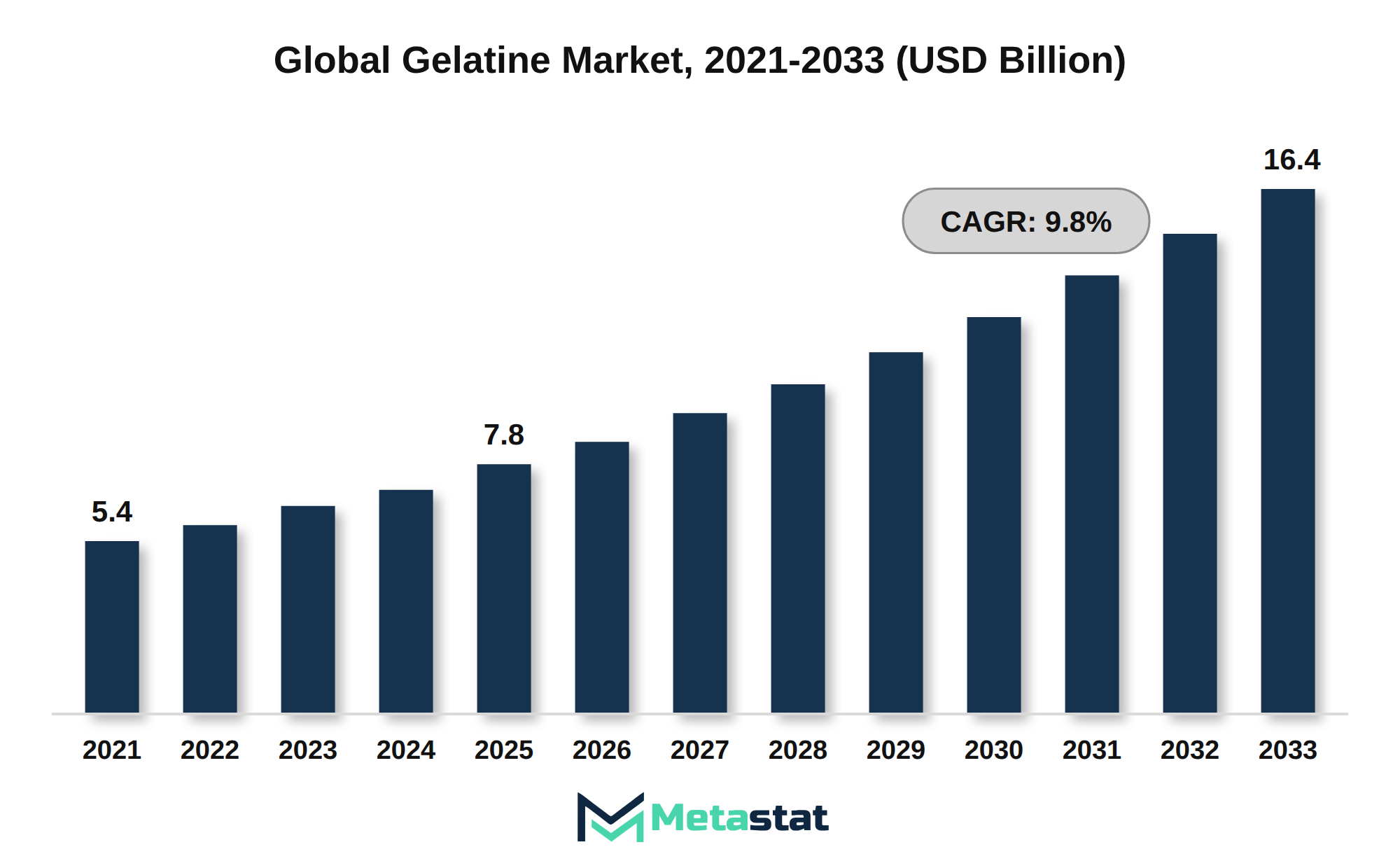
The global Gelatine market was valued at USD 7.8 billion in 2025 and is projected to reach USD 16.4 billion by 2033, growing at a CAGR of 9.8% over the forecast period. Moreover, the market volume is estimated at 477.1 kilotons in 2025 and is expected to reach 528.6 kilotons by 2033, representing a volume CAGR of 1.29% during the 2026 - 2033 forecast period.
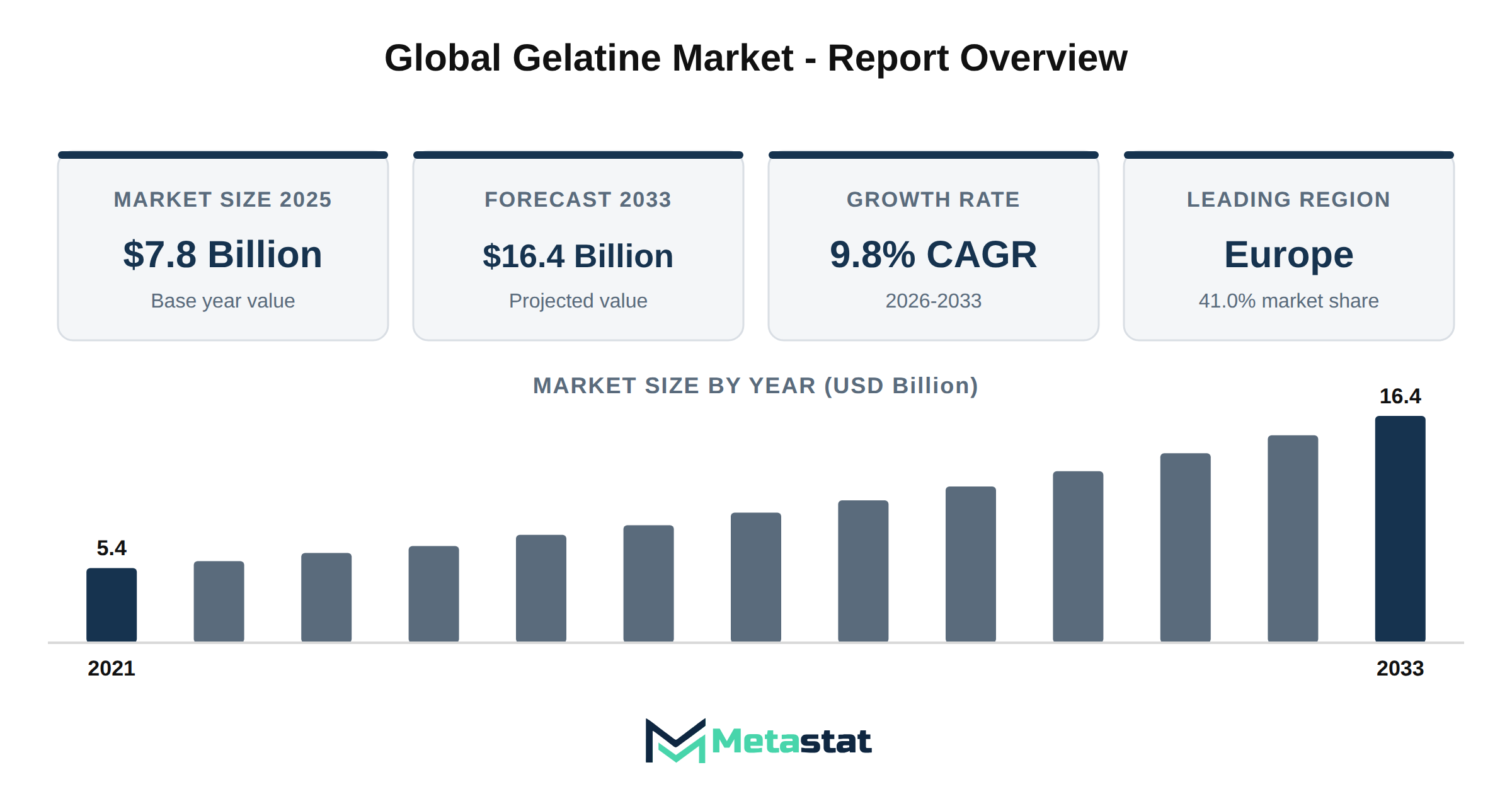
The global Gelatine market is projected to experience growth, moving from a base value of USD 7.8 billion in 2025 to an estimated USD 16.4 billion by 2033. This expansion represents a compound annual growth rate (CAGR) of 9.8% throughout the forecast period from 2026 to 2033. The historical growth indicates a steady increase from USD 5.4 billion in 2021 to USD 7 billion in 2024, reflecting rising demand across multiple industries.
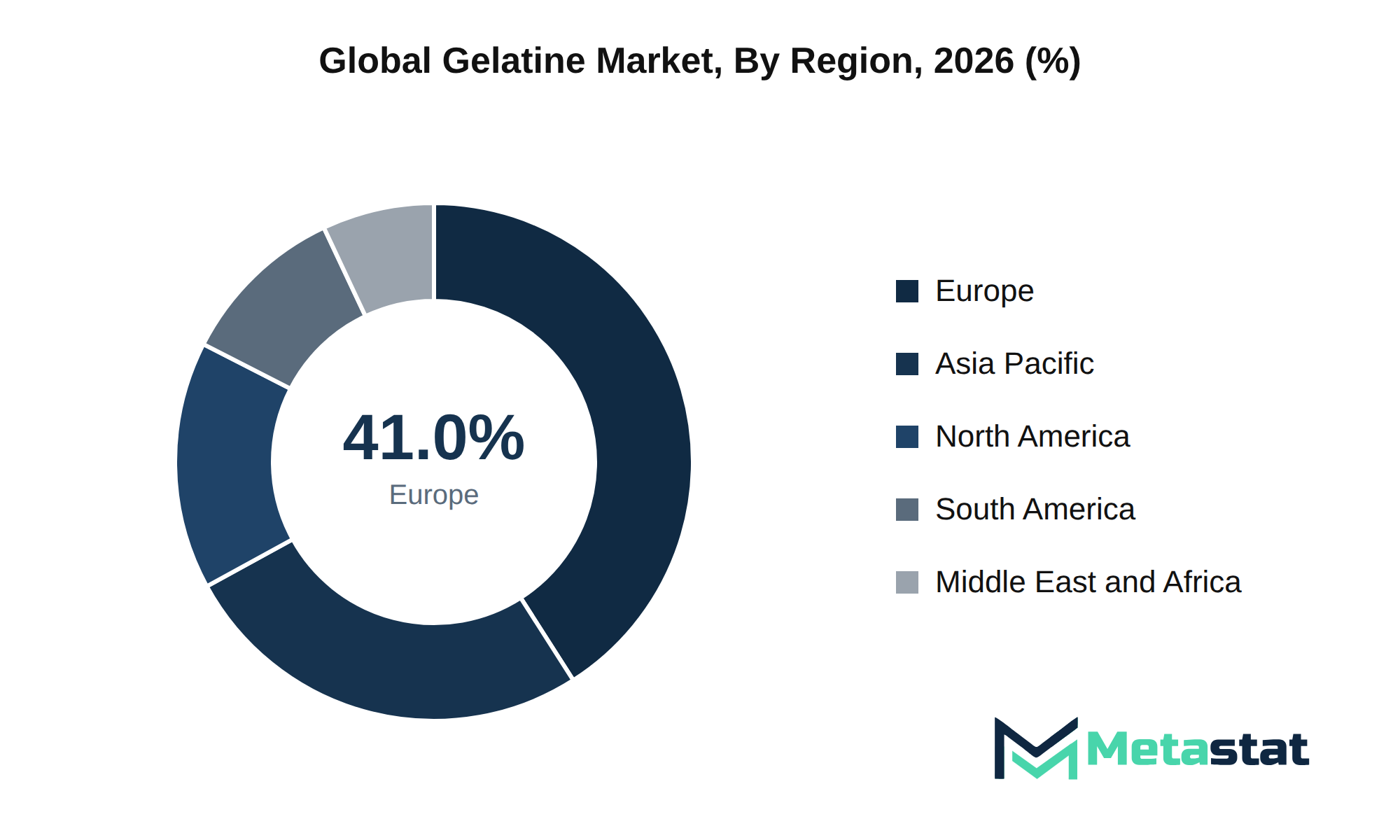
Regional dynamics play a crucial role in shaping the market environment. Europe holds the largest share at 41%, followed by Asia Pacific with 26.1%, North America at 15.5%, South America at 10.5%, and the Middle East and Africa at 7%. By 2033, North America's market value is projected to reach USD 2.5 billion, with a CAGR of 9.8%. These figures highlight varying levels of demand and supply chain capabilities across different regions.
The Gelatine market faces challenges related to regulatory compliance and standards that vary across regions. Ensuring adherence to these requirements requires investment in quality management systems and certifications, affecting operational costs for suppliers. Companies navigating this landscape prioritize compliance to maintain market access and consumer trust.
Disruptions in the supply chain, driven by geopolitical factors and economic uncertainties, influence the availability of raw materials crucial for gelatine production. Sourcing strategies adapt to mitigate these risks, affecting pricing and inventory management. The market's ability to respond to such disruptions impacts competitive positioning and profitability.
Research and development trajectories within the Gelatine market are evolving, focusing on next-generation innovations that cater to consumer preferences for organic and sustainable products. Companies investing in innovative applications and formulations position themselves advantageously, responding to rising demand for health-conscious options.
Sustainable transformation remains a crucial factor, with a growing emphasis on decarbonization and circular economy dynamics. Manufacturers actively exploring eco-friendly practices, including reducing waste and optimizing resource use, enhance their market appeal and meet sustainability targets set by consumers and regulatory bodies.
Capital allocation strategies in the Gelatine market influence infrastructure investments and operational efficiency. Companies prioritizing capital toward technology upgrades and production capacity expansion position themselves for future growth. This strategic focus supports the market's expansion and enhances long-term viability.
Macroeconomic headwinds, including inflationary pressures and currency volatility, impact cost structures and profitability for manufacturers. These economic factors necessitate strategic pricing adjustments and cost management initiatives to maintain competitiveness in a dynamic market environment.
The future strategic outlook for the Gelatine market emphasizes agility and responsiveness to changing consumer demands and market conditions. Companies adopting a proactive approach to innovation, sustainability, and operational efficiency thrive in this evolving environment.
Market Dynamics
Growing demand for functional foods drives market growth
The increasing consumer focus on health and wellness significantly influences the Gelatine market. This trend arises from a shift towards healthier lifestyles and dietary preferences, prompting a rise in the demand for functional foods that offer nutritional benefits. Consumers actively seek products that support their health, and manufacturers are expanding their offerings to include gelatine-based functional foods, aligning with evolving buying preferences.
The aging population contributes to the growing interest in dietary supplements and health-oriented products. This demographic shift results in heightened demand for gelatine, particularly in applications including functional foods and supplements, where its health benefits are prominently featured. The market experiences an upward trajectory driven by companies innovating to meet these specific consumer needs.
The expansion of the gelatine market correlates with capital investment in product development, enabling firms to introduce new formulations that cater to health-conscious consumers. Such investments are essential for enhancing operational productivity and driving revenue streams. Overall, the focus on health and wellness continues to fuel demand for gelatine in various applications, establishing a significant growth driver for the market.
Rising focus on sustainability drives market demand
The Gelatine market experiences increased demand driven by a heightened focus on sustainability and ethical governance. Consumers increasingly prioritize products that reflect environmental responsibility, prompting suppliers to adopt practices that reduce carbon footprints and promote resource stewardship. This trend influences various sectors, including food and beverage, pharmaceuticals, and cosmetics, where sustainable sourcing and production methods align with consumers seeking eco-friendly options.
This emphasis on sustainability enhances operational productivity and supports cost-efficiency initiatives by encouraging companies to streamline processes and optimize labor. By investing in technologies that facilitate resource management and reduce waste, businesses improve their profit margins while aligning with consumer expectations for sustainable practices.
Innovation-led product diversification supports the Gelatine market, driven by companies developing new formulations that incorporate sustainable ingredients. This shift not only meets market demand but opens avenues for expanding revenue streams through innovative offerings. The overall impact of sustainability on the market leads to increased competitiveness and growth opportunities across multiple applications.
Regulatory compliance hinders market expansion
The Gelatine market encounters significant challenges owing to stringent regulatory compliance requirements. Legal mandates regarding food safety and product labeling increase operational complexities for manufacturers. Compliance hurdles often result in delayed product approvals and higher costs associated with meeting safety standards. This environment places additional pressure on companies to invest in compliance measures, which restrict overall market growth.
Macroeconomic headwinds, including inflationary pressures, further exacerbate the situation. Rising costs of raw materials and labor lead to increased production expenses, which deter new entrants from engaging with the market. Geopolitical instability has introduced uncertainties in supply chains, causing disruptions that affect product availability and pricing.
Resource scarcity presents another challenge, particularly for firms relying on specific animal sources for gelatine production. High capital investment requirements associated with modernizing facilities to maintain compliance create barriers to entry. Operating costs escalate alongside regulatory demands, impacting profitability for existing players.
Technological obsolescence represents a concern within the market, driven by advancements in gelatine alternatives. Substitution risks from plant-based and synthetic products threaten traditional gelatine applications. Infrastructure gaps and connectivity deficits hinder distribution and accessibility, particularly in emerging markets. These factors collectively contribute to a challenging environment for the Gelatine market, where firms navigate numerous obstacles while striving for growth.
Geopolitical tensions heighten market uncertainties
The Gelatine market encounters substantial challenges owing to geopolitical fragmentation and trade deficits affecting global supply chains. Tariff friction between nations leads to increased costs for producers, impacting pricing strategies and profit margins. This situation creates instability, making it difficult for manufacturers to source raw materials and maintain consistent production levels.
Technological disruptions further complicate market dynamics. Innovations in processing and production require significant investments in research and development. Complex integration processes hinder swift adaptation. Interoperability friction among varying technological systems causes delays, affecting the market's ability to respond to evolving customer demands.
The volatility of feedstock and component availability presents another hurdle. Fluctuations in raw material prices create uncertainty, impacting production costs and influencing retail prices. Supply chain instability, compounded by logistics disruptions, limits the timely delivery of products to consumers, affecting overall market performance.
Tightening global regulatory standards impose compliance challenges, which increase operational overhead for manufacturers. Evolving legal liabilities add to the complexity, necessitating heightened vigilance in adherence to regulations. Pricing compression and margin pressures intensify owing to companies striving to maintain competitiveness while managing rising input costs.
Skilled workforce shortages pose a significant barrier, particularly in adapting to automation and advanced production techniques. Talent retention pressures exacerbate these challenges, leading to potential inefficiencies in production processes. Environmental lifecycle footprints and decarbonization mandates impose additional demands on the industry, requiring investments in sustainable practices that align with consumer expectations.
Infrastructure gaps hinder the adoption of new technologies, while retrofitting barriers complicate the transition to more efficient systems. Intellectual property protection deficits and cybersecurity risks expose companies to potential data vulnerabilities, complicating operations. The evolving landscape of the Gelatine market necessitates strategic navigation to address these multifaceted challenges while striving for growth and sustainability.
Emerging regional demands drive market growth
The Gelatine market presents substantial opportunities driven by emerging regional demands, particularly in Asia Pacific and South America. The growing middle class and increasing discretionary income in these regions enhance consumption of gelatine-based products, including functional foods and dietary supplements. This shift aligns with local preferences for healthy and nutritious options, prompting manufacturers to innovate and diversify product offerings.
Infrastructure modernization in developing regions supports efficient production and distribution channels, improving accessibility to gelatine products. Investments in processing capabilities and supply chain optimization enhance operational efficiencies, enabling manufacturers to meet rising demand effectively. Technological disruptions, particularly in extraction and processing techniques, drive new product development and improve cost-effectiveness.
Sustainability imperatives shape market dynamics, with increasing emphasis on eco-friendly practices. Consumers and manufacturers seek sustainable sourcing of gelatine, leading to heightened competition among suppliers focusing on organic and eco-conscious products. This trend encourages innovation and the development of niche applications, expanding the market's breadth and depth.
Strategic consolidation and cross-industry collaborations enhance competitive positioning within the Gelatine market. Mergers and acquisitions allow companies to leverage complementary strengths, leading to diversified product portfolios and improved market reach. Such partnerships facilitate the introduction of next-generation innovations that align with evolving consumer preferences.
Shifts in buying behaviors influenced by digital procurement and commercial model transitions impact the market. Businesses increasingly adopt online platforms for sourcing ingredients, enhancing transparency and efficiency in the purchasing process. This trend encourages suppliers to optimize their digital presence, ensuring they meet the demands of a tech-savvy consumer base.
Overall, the Gelatine market's growth potential is robust, fueled by regional demand shifts, technological advancements, and a strong focus on sustainability. The alignment of these factors positions market players to capitalize on emerging opportunities while navigating the competitive environment.
Market Segmentation Analysis
The Global Gelatine market is segmented based on Source, Application, Function, and Nature.
By Source, the market is further segmented into:
- Bovine
- Porcine
- Poultry
- Marine
- Others
Bovine
Bovine gelatine represents a significant segment within the Gelatine market, valued at USD 2.9 billion in 2026 and projected to reach USD 5.8 billion by 2033, at a CAGR of 10.2% during the forecast period. Increased consumer awareness regarding the health benefits of gelatine, particularly in functional foods and dietary supplements, drives demand for bovine sources. The expansion of the food and beverage industry contributes to this growth, highlighting the rising popularity of gelatine-based products among health-conscious consumers.
Technological maturation in the extraction and processing of bovine gelatine enhances product quality and yields, attracting investment in next-gen upgrades. Regulatory compliance standards related to food safety and quality assurance support the market, ensuring that producers adhere to rigorous guidelines that enhance consumer confidence. Challenges in sourcing raw materials and maintaining consistent quality affect pricing strategies, influencing market dynamics and margin pressures.
While the market evolves, strategic opportunity windows arise from increasing applications of bovine gelatine in various sectors, including cosmetics and healthcare. This versatility in downstream applications positions bovine gelatine because a competitive option within the Gelatine market, driving growth and adoption across diverse industries. The forecast indicates robust expansion, driven by continuous innovation and a shift towards sustainable sourcing practices.
Porcine
Growing consumer awareness regarding health benefits drives demand for porcine gelatine, particularly in functional foods and dietary supplements. This segment is anticipated to reach USD 6.4 billion by 2033, at a CAGR of 8.6% during the forecast period. Innovations in gelatine extraction and processing technologies enhance product quality and functionality, attracting food manufacturers focused on premium offerings. Shifts in dietary preferences towards protein-rich foods contribute to expanding applications of porcine gelatine in various food products. Regulatory compliance regarding sourcing and safety standards influences market dynamics, prompting suppliers to adopt best practices in raw material sourcing. Increasing investments in product development and strategic partnerships among industry players enhance competition and drive growth in the gelatine market.
Poultry
Growth in the poultry segment reflects increasing consumer preference for protein-rich diets, contributing to rising demand for gelatine in various applications. The market is anticipated to reach USD 1.5 billion by 2033, driven by the expanding use of poultry-derived gelatine in food products and dietary supplements. Innovations in extraction processes and product formulations enhance the segment's appeal, aligning with consumer trends favoring natural and organic ingredients.
Technological advancements in extraction and processing techniques improve the efficiency of poultry gelatine production. These improvements enable manufacturers to deliver high-quality products with enhanced functionalities, supporting applications in functional foods and beverages. The growing focus on health and wellness inspires consumers to opt for products containing essential nutrients, further driving demand for gelatine in this segment.
Regulatory compliance and certifications significantly influence market dynamics, with adherence to food safety standards gaining importance. Manufacturers investing in quality assurance and transparency strengthen their market position, appealing to health-conscious consumers. The combination of these factors creates a favorable environment for segment expansion within the gelatine market.
Marine
Growth in the Marine sub-segment of the Gelatine market results from increasing demand for marine-derived products across various applications. Rising awareness regarding the health benefits of marine gelatine, particularly in functional foods and dietary supplements, drives adoption among consumers focused on nutrition and wellness. Technological advancements in extraction and purification processes enhance product quality, supporting market expansion. The Marine segment is projected to grow at a CAGR of 11.7% during the forecast period, reflecting interest in sustainable and eco-friendly sourcing. The segment benefits from evolving consumer preferences that favor natural ingredients over synthetic alternatives. Market participants investing in research and development enhance their product offerings, aligning with the needs of health-conscious consumers. The market expansion is influenced by regulatory compliance surrounding food safety and quality, which reinforces the credibility of marine gelatine products among manufacturers and end-users.
Others
Growing interest in sustainable sourcing and alternative protein sources prompts the exploration of "Others" in the Source segment of the Gelatine market. This segment encompasses various non-traditional sources that attract attention due to changing consumer preferences and the demand for diverse applications.
Innovation in extraction methods enhances the appeal of alternative gelatine sources. Companies invest in research and development to refine these processes, increasing product functionality while addressing environmental concerns. The rising trend of veganism and vegetarianism contributes to shifts in downstream applications, aligning with consumer preferences for plant-based ingredients.
Regulatory compliance standards impact the adoption of alternative gelatine sources. Manufacturers navigate complexities associated with labeling and certifications, ensuring products meet consumer expectations for transparency and sustainability. Compliance shapes market dynamics, influencing how companies position and market these alternatives.
Pricing volatility and margin pressures characterize the market landscape. Fluctuations in raw material costs affect production expenses, prompting suppliers to enhance supply chain resilience. Strategic partnerships and collaborations emerge to mitigate risks associated with sourcing and logistics, contributing to stability in the market.
Technological advancements drive product evolution within the "Others" segment. Companies focus on next-generation upgrades, enhancing the functionality of alternative gelatine products. Investment in this segment reflects a strategic opportunity, enabling brands to capture emerging consumer segments seeking innovative and sustainable solutions within the Gelatine market.
By Application, the market is further segmented into:
- Functional Foods
- Meat Processing
- Functional Beverages
- Dietary Supplements
- Confectionery
- Deserts
- Healthcare
- Cosmetics
- Others
Functional Foods
Valued at USD 1.1 billion in 2026, the Functional Foods segment is projected to reach USD 2.4 billion by 2033, at a CAGR of 11.1% during the forecast period. Rising consumer demand for health-focused products drives the expansion of this segment within the gelatine market. Manufacturers prioritize the incorporation of gelatine into functional foods to enhance nutritional profiles and improve product texture. The growing trend of clean label products compels producers to source high-quality gelatine that meets consumer expectations for transparency and health benefits.
Technological advancements in food processing and formulation facilitate the development of innovative functional food products that utilize gelatine. Evolving consumer preferences toward healthier dietary options drive substantial interest and investment in this segment. Increasing awareness surrounding the health benefits of gelatine, including its role in promoting joint health and aiding digestion, supports segment growth. Enhanced regulatory compliance standards regarding food safety further increase the significance of quality-assured gelatine in functional foods.
Investment in research and development to explore new applications of gelatine in functional foods allows for the introduction of diverse product offerings, attracting a broader consumer base. The ongoing shift toward plant-based diets introduces opportunities for alternative sources of gelatine, including algae, which caters to vegan consumers seeking functional food options. Overall, the Functional Foods segment within the gelatine market reflects a dynamic relationship between consumer trends, technological innovation, and regulatory developments, positioning it for significant growth in the coming years.
Meat Processing
Growing demand for convenience food significantly drives the Meat Processing segment within the Gelatine market. Producers increasingly focus on enhancing the quality and texture of meat products, leading to higher utilization of gelatine because a binding agent and stabilizer. Rising consumer preferences for processed meat products, combined with increased production capabilities, fuel segment growth. Adoption of advanced processing technologies drives innovation and efficiency, contributing to an expanded product range in meat applications.
Meat Processing segment is estimated to reach USD 1.5 billion by 2033, at a CAGR of 8.5% during the forecast period. The influence of health-conscious consumers prompts manufacturers to explore innovative formulations that incorporate gelatine, reflecting market demand for healthier options. Regulatory compliance regarding food safety standards further shapes the landscape, necessitating rigorous quality control measures in production processes. Increased investment in market research and development enhances competitive positioning, aligning with evolving consumer trends.
Functional Beverages
Increasing interest in health-conscious products fuels the demand for gelatine in functional beverages. This sub-segment benefits from consumers seeking nutritional benefits, convenience, and flavor enhancement in their drink choices. The versatility of gelatine allows for its integration into various beverage formulations, appealing to health-oriented consumers.
This segment is expected to reach USD 1.5 billion by 2033. The growth in functional beverages aligns with trends in dietary supplements and wellness drinks, highlighting the rising consumer preference for products that offer health benefits. Strategic product development in the gelatine market focuses on innovative formulations, attracting both manufacturers and consumers.
Regulatory compliance and certification standards impact market dynamics, driven by companies striving to ensure their products meet safety and quality requirements. The ongoing evolution in product offerings, influenced by consumer preferences and technological advancements, positions gelatine because a key ingredient in the functional beverages sub-segment. This trend enhances the market's potential for future growth.
Dietary Supplements
Growing consumer interest in health and wellness drives demand for dietary supplements within the Gelatine market. This segment is projected to grow at a CAGR of 11.4% during the forecast period. Increased incorporation of gelatine in various dietary supplements enhances appeal, particularly among fitness enthusiasts and health-conscious consumers. The shift towards natural and organic ingredients boosts demand for gelatine derived from credible sources, influencing product formulations. Regulatory compliance regarding health claims and ingredient transparency strengthens consumer trust and encourages market growth. Investment in innovative product development focused on dietary supplements is expected to rise, ensuring that offerings meet evolving consumer preferences.
Confectionery
Consumer preferences shift increasingly towards indulgent treats, driving growth in the confectionery sector of the Gelatine market. The rise of premium confectionery products and innovative flavors contributes to this demand. The use of gelatine enhances texture and stability in a variety of sweets, making it a preferred ingredient among manufacturers.
Technological advancements influence the production of gelatine, enabling manufacturers to develop customized solutions tailored to specific confectionery applications. Innovations in formulation techniques allow for the creation of vegan and organic gelatine alternatives, catering to growing consumer interest in health-conscious options. These developments encourage an expanded product portfolio, enhancing market competitiveness.
Regulatory standards concerning food safety and labeling continue to shape production practices within the market. Manufacturers focus on compliance with these standards to maintain consumer trust and ensure product quality. Fluctuating raw material prices present challenges, impacting overall cost structures and requiring companies to implement strategic sourcing practices.
Investment in research and development advances product offerings and addresses consumer demands. A proactive approach towards sustainability and responsible sourcing enhances brand reputation and market positioning. The evolving landscape of the confectionery segment in the Gelatine market presents significant opportunities for growth and adaptation to changing consumer preferences.
Deserts
Consumer interest in desserts continues to evolve, emphasizing the demand for innovative and diverse offerings. Gelatine plays a key role in creating unique textures and enhancing flavor profiles in various dessert applications, aligning with trends towards artisanal and gourmet food experiences. The market benefits from the increasing popularity of plant-based diets, encouraging manufacturers to explore alternative sources of gelatine while maintaining product integrity.
Product evolution drives the creation of new dessert options that cater to health-conscious consumers, integrating functional ingredients into recipes. Brands increasingly focus on clean-label products, aligning with regulatory compliance standards that prioritize transparency in ingredient sourcing. This trend enhances consumer trust and expands market opportunities.
Pricing volatility remains a concern for manufacturers in the desserts segment, impacting overall margins. Strategic investments in supply chain resilience and raw material sourcing improve operational efficiency, mitigating risks associated with fluctuating ingredient prices. Manufacturers seek to optimize formulations and reduce production costs to maintain competitiveness in the gelatine market.
Technological maturation facilitates the development of next-generation gelatine products, allowing for enhanced functionality and performance in dessert applications. Innovations in production processes and ingredient formulations support the creation of products that meet evolving consumer preferences. This proactive approach positions companies to capitalize on emerging market trends and address changing demands within the industry.
Healthcare
Rising health consciousness among consumers significantly impacts the demand for gelatine in the healthcare sector. This trend aligns with the increasing interest in dietary supplements and functional foods that promote overall wellness. Innovations in product formulations drive the expansion of the healthcare segment, enhancing the appeal of gelatine-based products. New applications for gelatine in pharmaceutical forms, including capsules and tablets, further support consumption growth. Regulatory compliance standards ensure that products meet safety and quality requirements, influencing market dynamics. The segment benefits from strategic partnerships between suppliers and manufacturers, enabling advancements in product development and formulation. The gelatine market reflects an evolving environment, emphasizing the importance of health-centric applications and the ongoing evolution of consumer preferences.
Cosmetics
Elevated demand for skin care products and cosmetics increasingly contributes to the growth of the Gelatine market. Cosmetic applications use gelatine for its beneficial properties, enhancing product texture, stability, and moisture retention. Manufacturers seek innovative formulations that integrate gelatine, aligning with consumer preferences for natural and effective ingredients. This trend reflects ongoing advancements in product evolution and technological maturation within the cosmetics sector.
The rise in consumer consciousness regarding ingredient sourcing impacts market dynamics, leading to a preference for sustainably sourced gelatine. Regulatory compliance standards surrounding cosmetics push manufacturers to prioritize high-quality ingredients, ensuring product safety and efficacy. The evolving landscape of beauty and skin care creates strategic opportunity windows for gelatine producers, encouraging investments in next-generation upgrades and formulations tailored to consumer demands.
While competition intensifies within the cosmetics sector, brands explore diverse applications for gelatine, enhancing product offerings and meeting shifting consumer expectations. The market faces challenges related to pricing volatility and margin pressures, necessitating robust supply chain resilience and effective raw material sourcing strategies. Overall, the cosmetics segment of the gelatine market reflects a dynamic relationship of consumer trends, regulatory frameworks, and evolving product innovations, creating opportunities for growth.
Demand for gelatine in the "Others" application segment reflects diverse uses across various industries. Innovations in product formulations enhance the functionality of gelatine, driving interest in applications including cosmetics, healthcare, and confectionery. Growth in this market results from increasing awareness of the benefits of gelatine in these sectors.
Technological advancements support the development of new gelatine products tailored for specific applications. Enhanced properties improve the effectiveness and appeal of gelatine in various goods, attracting manufacturers seeking to differentiate their offerings. This evolution in product development highlights the necessity of adapting to consumer preferences and regulatory standards.
Regulatory compliance significantly influences production processes within this segment. Meeting certification standards ensures product safety and quality, attracting more customers in the gelatine market. Ongoing shifts in consumer preferences towards natural and organic products create opportunities for innovation in this category.
Supply chain resilience ensures consistent raw material sourcing for gelatine producers. Strategic partnerships with suppliers mitigate risks associated with raw material availability, ensuring stability in production. This strategic approach supports overall segment growth while addressing potential vulnerabilities in logistics.
Heightened interest in alternative applications for gelatine demonstrates the segment's potential for expansion. Exploring unconventional uses creates strategic opportunity windows for manufacturers, enabling them to capture new revenue streams. This ongoing exploration enhances the dynamic nature of the gelatine market.
By Function, the market is further segmented into:
- Stabilizer
- Thickener
- Gelling Agent
- Others
Stabilizer
Valued at USD 1.9 billion in 2026, the Stabilizer segment is projected to reach USD 3.7 billion by 2033, with a CAGR of 10% during the forecast period. Increasing demand for clean-label products drives growth in the segment, driven by consumers seeking transparency in ingredient sourcing. Technological advancements in processing and formulation enhance the functionality of stabilizers in various applications, enabling manufacturers to meet evolving consumer preferences.
Regulatory requirements regarding food safety and labeling standards create further opportunities for stabilizer adoption in the Gelatine market. The versatility of stabilizers in applications including functional foods and beverages supports their integration into diverse product formulations. While product innovation accelerates, manufacturers focus on developing next-generation stabilizers that meet specific consumer needs, including health benefits and sustainability.
Investment in research and development ensures continuous improvement and adaptation to market demands. The segment's growth outlook aligns with increasing consumption of convenience foods and health-oriented products, which contribute to heightened demand for stabilizers. Strengthening supply chains and sourcing raw materials responsibly remain critical for sustaining production and addressing market volatility.
Thickener
Projected growth in the Thickener sub-segment of the Gelatine market stems from rising demand across diverse industries including food and beverage, pharmaceuticals, and cosmetics. Gelatine serves because an essential ingredient that enhances product texture and stability, driving manufacturers to integrate it into formulations. Innovations in gelatin production techniques and the introduction of next-generation thickening agents contribute to segment expansion, addressing evolving consumer preferences for healthier and more natural products.
The Thickener segment is estimated to reach USD 3.1 billion by 2033, at a CAGR of 9.3% during the forecast period. This growth reflects an increasing emphasis on clean label products, encouraging manufacturers to seek out high-quality gelatine sources. Enhanced awareness regarding the advantages of gelatine in improving product quality boosts its application in various end-use sectors, further reinforcing its position within the market.
Regulatory compliance standards pertaining to food safety and quality significantly impact gelatine sourcing and utilization. These standards ensure that products meet consumer expectations, ultimately driving the demand for high-quality gelatine because a thickening agent. Shifts in consumer consumption patterns towards convenience and ready-to-eat meals increase the need for effective thickening agents, highlighting the important role of gelatine in product formulation.
Gelling Agent
Demand for Gelling Agents in the Gelatine market shows strong growth, driven by the increasing need for texture and stability in various food products. This segment is expected to reach USD 7.6 billion by 2033, reflecting a strategic opportunity window for manufacturers to innovate and cater to evolving consumer preferences.
Technological advancements contribute significantly to the expansion of this segment. Producers focus on developing next-generation gelling agents with improved functional properties, which enhances their applicability in diverse industries, including food and pharmaceuticals. The rise in the consumption of functional foods and dietary supplements acts because a catalyst for the growth of Gelling Agents, addressing health-conscious consumer trends.
Shifts in end-use dynamics towards convenience foods continue to boost demand for Gelling Agents. Consumers increasingly seek products offering enhanced sensory experiences, which Gelling Agents effectively provide. Regulatory compliance standards and certifications shape market dynamics, ensuring that products meet safety and quality benchmarks.
Pricing volatility and margin pressures specific to raw material sourcing have emerged because critical factors in this segment. Companies actively seek to mitigate risks associated with fluctuations in supply chains, focusing on sustainable sourcing practices that align with consumer preferences for transparency and environmental responsibility. These measures enhance supply chain resilience and position manufacturers favorably within the competitive environment.
Growing applications of gelatine in various industries drive the expansion of the Others sub-segment. This growth is attributed to the versatility of gelatine in specialty applications, including pharmaceuticals and personal care. Increasing demand for functional and health-focused products supports innovation within the segment, leading to a rise in diverse product offerings. Regulatory compliance standards regarding safety and quality further strengthen market dynamics, ensuring that producers meet evolving consumer expectations. Pricing volatility linked to raw material sourcing impacts the overall cost structure, influencing profit margins across the segment. The Others segment is projected to grow at a CAGR of 8.6% during the forecast period. While the gelatine market evolves, strategic investment in research and development is expected to enhance product differentiation, securing a competitive edge for key players.
By Nature, the market is further segmented into:
- Conventional
- Organic
Conventional
Valued at USD 7.6 billion in 2026, the Conventional segment of the Gelatine market is projected to reach USD 14.1 billion by 2033, at a CAGR of 9.2% during the forecast period. Increasing demand for conventional gelatine across various industries supports this growth trend. The food and beverage sector drives significant consumption, with applications in products including desserts, confectionery, and functional foods. Enhanced product formulations and rising health awareness among consumers contribute to the segment's expansion. Technological advancements enable manufacturers to improve production efficiency and product quality, aligning with evolving consumer preferences. Regulatory compliance regarding food safety standards influences market dynamics, prompting manufacturers to adapt processes. Overall, growth in the Conventional segment reflects strong alignment with consumer trends and technological innovation within the gelatine market.
Organic
Growing consumer awareness surrounding organic products drives the Organic segment of the Gelatine market. Increasing preferences for natural ingredients in food, beverages, and personal care products enhance the segment's appeal. Regulatory compliance with organic certification standards supports market expansion, reassuring consumers regarding the integrity of their purchases. This trend encourages investments in organic gelatine production, improving product availability across various applications.
Organic segment is estimated to reach USD 2.3 billion by 2033, at a CAGR of 13.9% during the forecast period. This growth reflects a shift toward sustainable sourcing practices, influencing raw material selection and production methodologies. Enhanced focus on health and wellness among consumers further increases demand, positioning organic gelatine because a key ingredient in functional foods and dietary supplements.
While the Gelatine market evolves, competition intensifies among suppliers to meet the increasing demand for organic options. Companies investing in innovative processes and technologies capitalize on this trend, ensuring they remain relevant and competitive. The Organic segment's growth aligns with broader consumption shifts toward wellness-focused products, creating significant opportunities for market players.
By Region
Based on geography, the Global Gelatine market is divided into North America, Europe, Asia-Pacific, South America, Middle East, and Africa.
North America
North America exhibits strong potential in the Gelatine market, projected to expand at a CAGR of 9.8% within the forecast period, reaching a market size of USD 2.5 billion by the end of 2033. The region accounts for 15.5% of the global market in 2025, driven by increasing demand for gelatine in various applications.
In the United States, Canada, and Mexico, a growing emphasis on health and wellness trends enhances the adoption of gelatine across functional foods and dietary supplements. Rising consumer preferences for clean-label products create opportunities for market growth through innovative applications and formulations. Increased investments in local manufacturing facilities and supply chain regionalization support the production of gelatine, ensuring timely availability and affordability.
Competitive dynamics within the region feature strong domestic players and their strategies to strengthen market presence. Companies emphasize product diversification and sustainability initiatives to cater to evolving consumer tastes and regulatory standards. Regional resource availability for sourcing raw materials significantly influences local procurement dynamics, ensuring high-quality gelatine production to meet market demands.
The Gelatine market in North America reflects a mature yet expanding sector, driven by high-value replacement cycles and the integration of functional ingredients in various consumer products. Ongoing innovation in processing technologies and formulations enhances product functionalities, further supporting the market's growth trajectory.
Europe
The European region represents a substantial share of the Gelatine market, accounting for 41% in 2025. Countries including Germany, France, the UK, Italy, Spain, and Russia exhibit robust demand driven by diverse applications including functional foods and dietary supplements. This region's emphasis on health and wellness products contributes to the increasing adoption of gelatine in food and beverage formulations.
Infrastructure modernization enhances the growth of the market, with investments in processing facilities improving production capabilities. The presence of established players facilitates competitive dynamics, with companies focusing on innovation and product differentiation to capture consumer interest.
Localized procurement dynamics further shape the market, with regional manufacturers responding to specific consumer preferences and regulatory frameworks. These factors contribute to a favorable environment for gelatine suppliers, allowing them to align closely with market demands and regulatory standards.
Cross-border trade corridors within Europe support the distribution of gelatine products, ensuring accessibility for both manufacturers and consumers. Geopolitical factors influence market stability, prompting companies to adapt their strategies in response to emerging local market trends.
The European Gelatine market benefits from a mature landscape characterized by high-value replacement cycles, where established brands seek to innovate and expand their product offerings. This leads to incremental growth vectors, reinforcing the region's position because a key player in the global gelatine market.
Asia-Pacific
The Asia-Pacific region holds a 26.1% share of the global Gelatine market in 2025. Growing health trends and a rising population drive increasing demand for gelatine across multiple applications, including functional foods and dietary supplements. Countries like China and India exhibit notable expansion in consumption, driven by their large populations and shifting dietary habits.
Infrastructure modernization enhances production capabilities and distribution networks within the region. Investment in local manufacturing facilities supports the market's growth, minimizing reliance on imports and strengthening regional supply chains. The trend towards nearshoring initiatives improves local procurement dynamics and boosts competitive positioning among domestic players.
Emerging market front-runners, particularly in Southeast Asia, exhibit growth vectors driven by rising consumer awareness regarding health benefits associated with gelatine products. Local compliance mandates drive manufacturers to innovate, catering to evolving consumer preferences while maintaining regulatory standards.
Geopolitical fragmentation impacts trade corridors, creating opportunities for localized manufacturing and distribution. Domestic market participants adapt to cultural nuances and regional B2B buying behaviors, enhancing their market strategies. The market continues to evolve, with incremental growth stemming from high-value replacement cycles across various applications, ensuring sustained demand throughout the forecast period.
South America
In South America, the Gelatine market presents opportunities driven by increasing consumer demand for functional foods and dietary supplements. Brazil and Argentina serve because key players in the market, significantly influencing regional trends. The market share for South America in 2025 stands at 10.5%, reflecting the importance of the region in the global landscape.
Local manufacturing capabilities and a growing preference for healthy food options support market expansion. Increasing investments in infrastructure modernization facilitate improved supply chain efficiencies, leading to enhanced market dynamics. The presence of domestic market participants strengthens competitive advantages, while localized procurement dynamics cater to specific consumer preferences.
The region experiences a gradual shift towards organic gelatine products, aligning with global health trends. Cultural nuances affect purchasing behaviors, impacting product formulations tailored to local tastes. The Gelatine market's growth trajectory in South America reflects a combination of these factors, influencing future developments.
Middle East and Africa
The Gelatine market in the Middle East and Africa accounts for a share of 7.00% in 2025. The region experiences growing demand for gelatine driven by increased applications in the food, pharmaceutical, and cosmetic sectors. Countries including Saudi Arabia and the UAE exhibit strong investment in infrastructure modernization, enhancing local production capabilities and supply chain efficiencies. South Africa sees significant growth in the dietary supplements sector, reflecting changing consumer preferences toward health and wellness products.
Emerging market front-runners in this region leverage geopolitical dynamics to attract foreign direct investment (FDI), contributing to the overall expansion of the market. Localized procurement dynamics influence the purchasing behavior of businesses, aligning with cultural preferences and regional regulations. The economic landscape encourages vendor consolidation trends, enhancing competitive positioning among domestic suppliers. The market demonstrates incremental growth vectors through strategic entry barriers and localized manufacturing densities.
Competitive Landscape and Strategic Insights
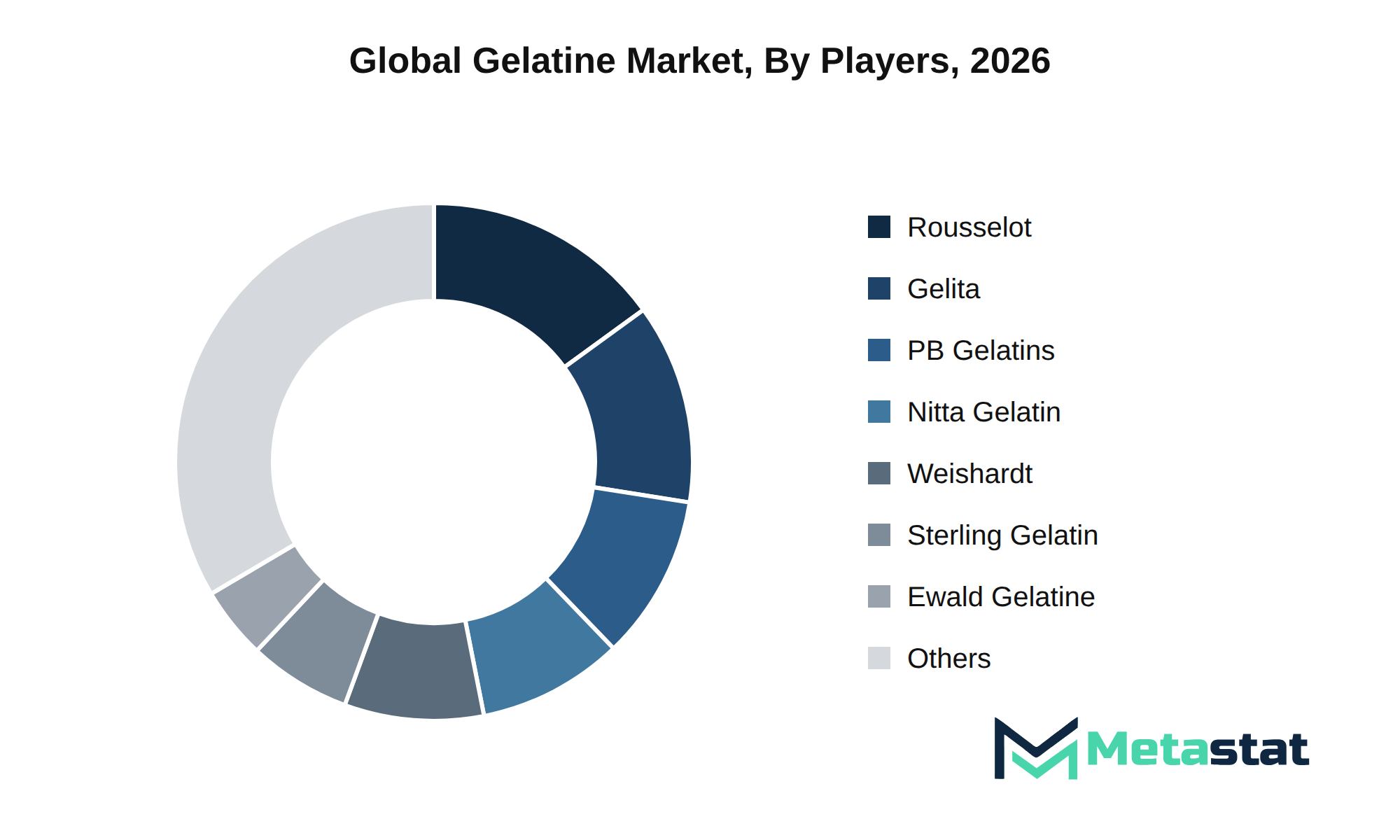
The Gelatine market features a diverse range of players, with significant activity in mergers and acquisitions, strategic consolidation, and industry restructuring. Companies including Gelita, Rousselot, and PB Gelatins operate in the market through strategic alliances and joint ventures, enhancing their competitive advantage while responding to customer demands.
Product differentiation remains a key focus, with firms investing in research and development pipelines to create unique offerings. For instance, Nitta Gelatin and Weishardt Group emphasize proprietary technology while exploring new applications in functional foods and dietary supplements. Pricing architectures and value chain integration strategies adopted by players like Sterling Gelatin and Ewald Gelatine reflect ongoing efforts to streamline operations and improve procurement leverage within the market.
Customer retention strategies play a crucial role in building brand equity, with companies implementing switching cost dynamics to secure customer loyalty. The competitive outlook indicates that emerging players including Dongbao Bio-Tec and BBCA Gelatin will continue to challenge established firms, driving innovation and growth in the market.
Strategic growth vectors highlight the importance of cross-industry partnerships and technological defensibility, ensuring players maintain their competitive edge. The Gelatine market remains dynamic, with ongoing developments shaping future growth.
Forecast and Future Outlook
Market size is forecast to rise from USD 7.8 billion in 2025 to over USD 16.4 billion by 2033. The base case presents a growth trajectory characterized by a 9.8% CAGR during this period. Factors influencing this growth include macroeconomic developments, downstream demand shifts, and evolving core industry dynamics.
The gelatine market experiences structural changes driven by advancements in next-generation technologies and R&D commercialization. Regulatory evolution continues to reshape the market, with compliance milestones emerging alongside geopolitical realignments and shifts in global trade corridors. These dynamics necessitate strategic capital allocation and infrastructure commitments to support market expansion.
Identifying emerging white-space opportunities and high-growth pockets remains critical for stakeholders. Executive-level strategic imperatives will shape competitive positioning, driven by firms navigating unmet enterprise needs. The outlook highlights the importance of robust defensibility roadmaps and future growth recommendations to capitalize on evolving market conditions.
Gelatine Market Key Segments
By Source:
- Bovine
- Porcine
- Poultry
- Marine
- Others
By Application:
- Functional Foods
- Meat Processing
- Functional Beverages
- Dietary Supplements
- Confectionery
- Deserts
- Healthcare
- Cosmetics
- Others
By Function:
- Stabilizer
- Thickener
- Gelling Agent
- Others
By Nature:
- Conventional
- Organic
By Region:
- North America
- Europe
- Asia-Pacific
- South America
- Middle East and Africa
Key Global Gelatine Industry Players
- Gelita
- Rousselot
- PB Gelatins
- Nitta Gelatin
- Weishardt Group
- Sterling Gelatin
- Ewald Gelatine
- Italgelatine
- Lapi Gelatine
- Great Lakes Gelatin
- Dongbao Bio-Tec
- BBCA Gelatin
- Qunli Gelatin Chemical
- Yasin Gelatin Manufacturer
- Xiamen Hyfine Gelatin
- Cda Gelatin
Report Coverage
The report strategically identifies and profiles the key market players and analyses their core competencies in each sub-segment of the Gelatine market.
|
Report Attributes |
Details |
|
Study Period |
2021-2033 |
|
Base Year |
2025 |
|
Estimated Year |
2026 |
|
Forecast Period |
2026-2033 |
|
Historical Period |
2021-2025 |
|
Growth Rate |
CAGR 9.8% from 2026 to 2033 |
|
Revenue Unit |
USD billion |
|
Segmentation |
By Source, Application, Function, Nature, and Region |
|
By Region |
North America (By Source, Application, Function, Nature, and Country)
|
|
Europe (By Source, Application, Function, Nature, and Country)
|
|
|
Asia Pacific (By Source, Application, Function, Nature, and Country)
|
|
|
South America (By Source, Application, Function, Nature, and Country)
|
|
|
Middle East and Africa (By Source, Application, Function, Nature, and Country)
|
What Report Provides
- Key Company Market Share, Revenue and Ranking for the Gelatine Market
- Key Market Leaders in the Gelatine Industry
- Full In-Depth Analysis of the Gelatine Parent Industry
- Industry Statistics Relevant to the Gelatine Market
- Important Changes in Gelatine Market Dynamics
- Segmentation Details of the Gelatine Market
- Historical, Ongoing and Projected Gelatine Market Analysis
- Key Strategies of Major Players in the Gelatine Market
Frequently Asked Questions
Find answers to common questions about this report
The Gelatine market size was valued at USD 7.8 billion in 2025.
The Gelatine market is projected to grow at a CAGR of 9.8% during the forecast period from 2026 to 2033.
The North America Gelatine market size is estimated to reach USD 2.5 billion by 2033.
The Bovine segment leads the Gelatine market with a projected value of USD 5.8 billion by 2033, compared to other segments.
The Gelatine market experiences growth driven by increasing consumer focus on health and wellness, alongside heightened demand for sustainability and ethical governance. The aging population and rising interest in functional foods and dietary supplements further contribute to market expansion, while companies invest in innovative formulations to meet these evolving consumer preferences.
Europe holds the dominant share of the Gelatine market, accounting for 41% in 2025. This regional share surpasses that of North America, which holds 15.5%.
The Gelatine market experiences significant challenges due to stringent regulatory compliance requirements, rising production costs, and geopolitical fragmentation. These factors increase operational complexities, delay product approvals, and create instability in supply chains, ultimately restraining market growth.
Growing consumer focus on health and wellness significantly favors product adoption in the Gelatine market. The demand for functional foods and dietary supplements aligns with evolving consumer preferences, particularly among the aging population seeking health-oriented products. the emphasis on sustainability and ethical governance enhances market attractiveness, because consumers prioritize environmentally responsible options.
The Gelatine market is estimated to reach a valuation of USD 16.4 billion by 2033.
Key players in the Gelatine market include Gelita, Rousselot, PB Gelatins, Nitta Gelatin, Weishardt Group, and Sterling Gelatin.
Choose Your License
Global Gelatine Market
Related Reports
Explore related market intelligence reports worth reading alongside this one.