Global Gift Cards Market Size, Share, By Card Type (Closed-Loop Gift Cards and Open-Loop Gift Cards), By Format (Physical Gift Cards and Digital and eGift Cards), By Application (Personal Gifting, Employee Rewards and Recognition, Customer Loyalty and Retention, Sales and Channel Incentives, Promotional Campaigns and Customer Acquisition, Research and Survey Incentives), By Distribution Channel (Direct-to-Consumer Brand Websites and Mobile Apps, Consumer Gift Card Marketplaces and Aggregators, Business Rewards and Incentive Platforms, Brand-Owned Physical Stores, Supermarkets and Hypermarkets, Convenience Stores and Pharmacies, Electronics and Specialty Retailers), Industry Analysis, Growth, Trends, and Forecast, 2026-2033
Report ID
MSI-4885
Published
August 8, 2026
Pages
304 Pages
Format
Market Size 2021
USD 403.7 Billion
Historical
Market Size 2025
USD 713.3 Billion
Base year
Market Size 2033
USD 2,275.4 Billion
Forecast
CAGR 2025-2033
15.6%
Forecast period
Report Details
Comprehensive Market Analysis And Insights
Market Overview
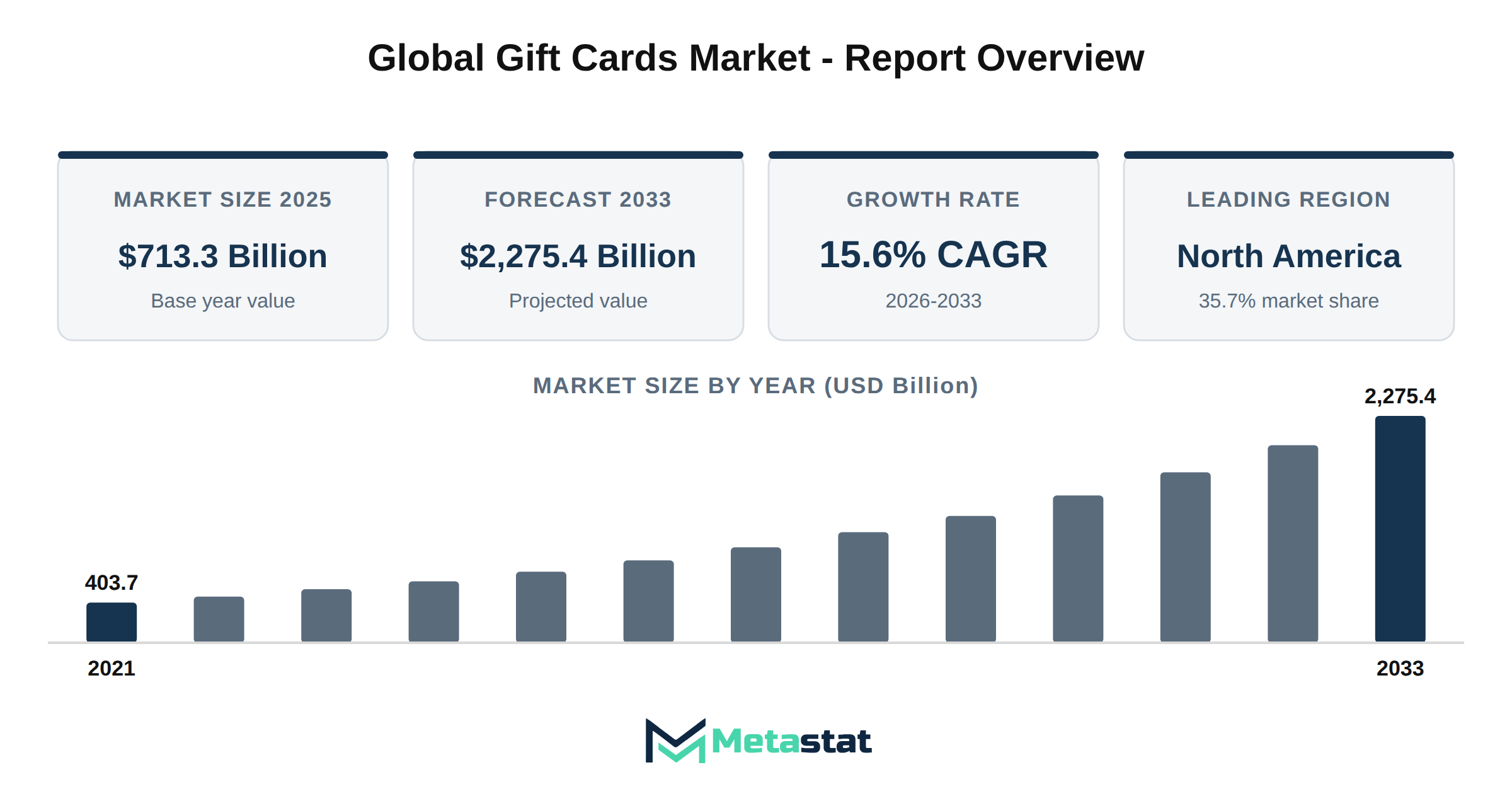
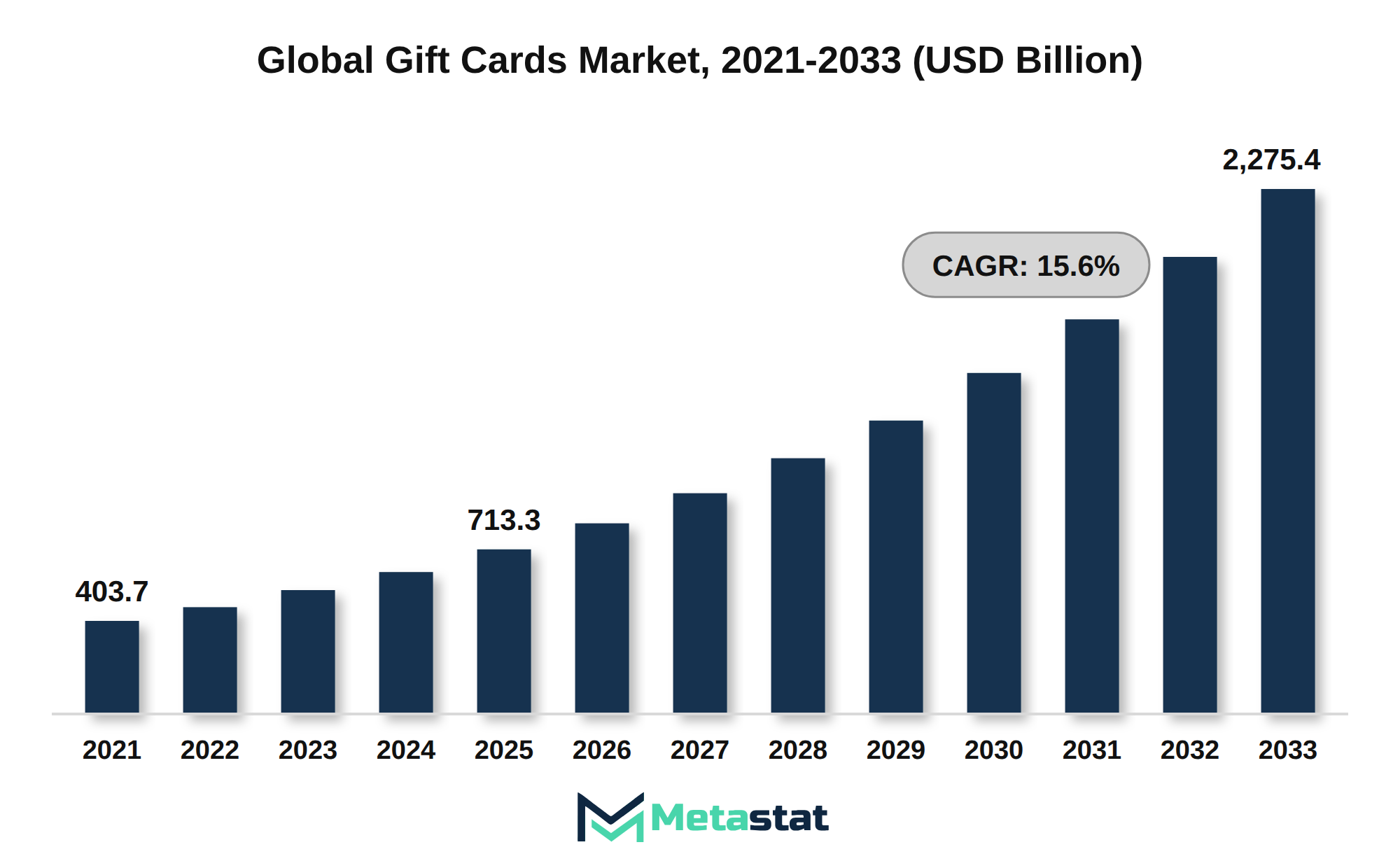
The global Gift Cards market was valued at USD 713.3 billion in 2025 and is projected to reach USD 2,275.4 billion by 2033, growing at a CAGR of 15.6% over the forecast period.
The global Gift Cards market, valued at USD 713.3 billion in 2025, is projected to reach USD 2,275.4 billion by 2033, reflecting a compound annual growth rate (CAGR) of 15.6%. The market has shown significant growth from USD 403.7 billion in 2021 to USD 615.1 billion in 2024. This upward trajectory indicates a robust increase in consumer adoption and utilization of gift cards across various sectors.
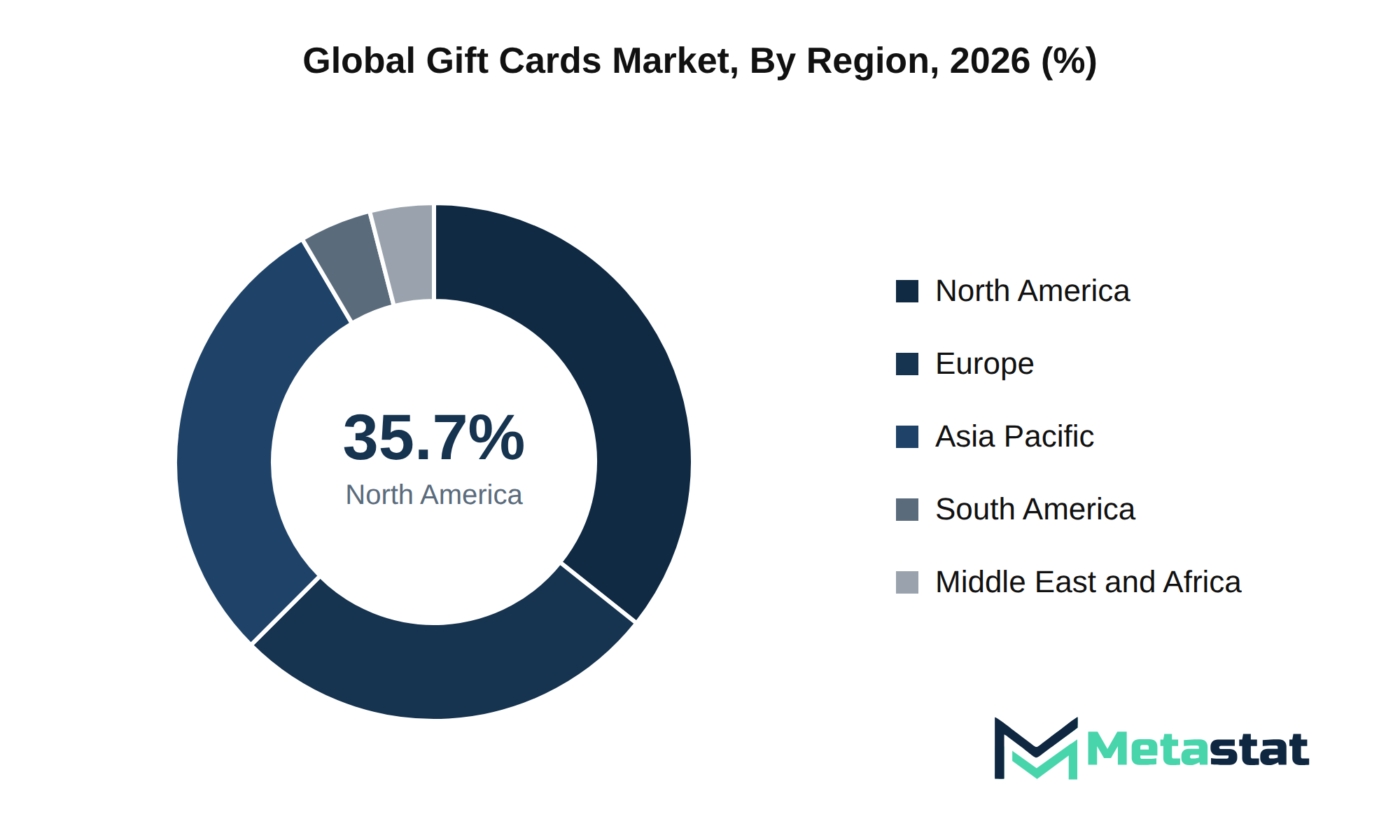
North America holds the largest share of the market at 35.7%, followed by Europe at 26.8% and Asia Pacific at 29%. The regional distribution reveals varying preferences and market dynamics. By 2033, North America's market value is anticipated to reach USD 740.2 billion, maintaining a CAGR of 15.6%.
Closed-loop gift cards, a prominent segment, are expected to grow from USD 588.2 billion in 2026 to USD 1,547.3 billion by 2033, at a CAGR of 14.8%. In contrast, open-loop gift cards will see a significant increase, reaching USD 728.1 billion by 2033, with a CAGR of 17.3%. The growth in these segments highlights shifting consumer preferences and the versatility of gift cards in various applications.
The market encompasses diverse applications including personal gifting, employee rewards, customer loyalty, and promotional campaigns. Increasing acceptance of gift cards because a payment method across retail, hospitality, and online platforms fuels demand. The evolution of digital and eGift cards has further enhanced accessibility and consumer engagement, contributing to the overall growth of the Gift Cards market.
The increasing adoption of digital solutions significantly influences the Gift Cards market. The shift towards e-commerce and mobile payment platforms creates a smooth purchasing experience for consumers. Digital and eGift cards attract younger demographics, driving demand in the market. Retailers and brands utilize these digital formats to enhance customer engagement and build brand loyalty. This trend is supporting higher revenue growth and accelerating market penetration.
Regulatory compliance frameworks play a crucial role in shaping the Gift Cards market. Adhering to regulations ensures consumer protection and financial transparency. Companies that navigate these requirements effectively enhance their credibility and trust among consumers, resulting in increased sales. Regulatory dynamics vary across regions, impacting strategic decisions for key players in the market.
Supply chain dynamics critically influence the operational efficiency of the Gift Cards market. Efficient logistics architecture and sourcing strategies optimize product availability and reduce operational costs. Companies invest in supply chain innovations to enhance distribution channels, ensuring timely delivery of gift cards to consumers. This operational efficiency directly contributes to improved customer satisfaction and retention.
Market fragmentation presents both challenges and opportunities for growth in the Gift Cards market. Numerous players, including established brands and emerging startups, compete for market share. This competitive landscape stimulates innovation and diversification in product offerings. Strategic mergers and acquisitions among players lead to enhanced capabilities and market expansion, driving the overall growth of the market.
Macroeconomic factors exert substantial influence on the Gift Cards market. Inflationary pressures and currency volatility affect consumer purchasing power and spending habits. Companies that strategically manage these economic headwinds position themselves to maintain profitability and market share. Future strategic outlooks for the market emphasize adaptability and resilience in the face of economic fluctuations.
Market Dynamics
Digital transformation drives gift card adoption
The rapid advancement of digital technology significantly impacts the Gift Cards market by enabling more accessible and convenient purchasing options. Increased smartphone penetration, coupled with enhanced online payment systems, encourages consumers to choose digital gift cards over traditional physical alternatives. Consumers' growing preference for online transactions influences retailers to adopt digital gift card solutions to meet this demand.
This shift towards digital solutions encourages participation from various sectors, including retail, hospitality, and entertainment. Retailers recognize the potential of digital gift cards to enhance customer engagement and loyalty. By integrating gift card options into e-commerce platforms, businesses improve their service offerings and enhance customer experiences, resulting in increased sales revenue.
The market is projected to expand significantly, with estimates showing a growth from USD 713.3 billion in 2025 to USD 2,275.4 billion by 2033, reflecting a compound annual growth rate of 15.6%. Digital transformation continues to reshape consumer behaviors and preferences, and the Gift Cards market is expected to benefit from sustained growth opportunities.
Emerging trends in consumer behaviors
The Gift Cards market experiences growth driven by evolving consumer preferences and demographic changes. Growing urbanization and lifestyle shifts influence purchasing decisions, leading to increased interest in gift card solutions. Consumers value convenience, flexibility, and the ability to select personalized gifts, making gift cards an attractive option.
Aging populations contribute significantly to market demand, owing to older consumers appreciating the ease of gift cards for personal and family gifting. Younger generations, particularly millennials and Gen Z, prioritize digital solutions, further enhancing the appeal of digital and eGift cards. These trends highlight the importance of aligning product offerings with consumer expectations.
The market is expected to benefit from innovative product features, including customizable designs and integration with digital wallets, which align with modern buying preferences. Retailers and service providers that adapt to these changing behaviors enhance their market position by catering to diverse consumer segments.
Regulatory challenges hinder gift card growth
The Gift Cards market faces several regulatory challenges that impede growth. Regulatory tightening and compliance hurdles create complexities for companies operating in this space. These challenges result in increased operational costs, requiring firms to allocate resources to navigate legal mandates and compliance requirements effectively.
Macroeconomic headwinds, including inflationary pressures and capital stagnation, exert additional burdens on businesses. Rising operating costs associated with these economic conditions limit investment in marketing and innovative offerings, impacting overall demand in the market.
Supply chain disruptions and geopolitical instability compound challenges for industry players. These factors lead to delays in product availability and increased costs, which deter retailers from expanding their gift card offerings. Consequently, this environment creates uncertainty for businesses, influencing their strategies related to the Gift Cards market.
Resource scarcity presents another significant restraint, resulting from companies struggling to secure the necessary materials to produce and distribute gift cards. Infrastructure gaps and connectivity deficits hinder the efficiency of operations, leading to deployment bottlenecks that affect service delivery.
Skilled labor deficiencies, including talent gaps and rising workforce overhead, impact operational efficiency in the market. Staffing challenges limit the capacity of organizations to meet growing consumer demand, further constraining growth opportunities.
Data security vulnerabilities and privacy concerns pose additional risks for businesses involved in the Gift Cards market. Companies invest in robust security measures to protect customer information, diverting funds from other growth initiatives.
Cultural barriers and regional adoption resistors complicate market penetration in diverse geographical areas. Slowing downstream demand and industry cycle maturation contribute to market saturation, making it difficult for new entrants to gain traction.
Geopolitical tensions impact market stability
The Gift Cards market faces significant challenges stemming from geopolitical fragmentation and economic instability. Political tensions and trade deficits disrupt supply chains, leading to increased tariffs and regulatory barriers. These factors create uncertainty for businesses that rely on cross-border transactions, affecting pricing strategies and operational efficiency.
Technological disruptions further complicate the market. Rapid advancements in payment technologies and consumer preferences for digital solutions exert pressure on traditional gift card models. Companies adapt their offerings to meet changing consumer demands, straining resources and diverting attention from core business operations.
Interoperability friction presents another challenge. Fragmented platforms and varying standards among digital payment systems limit transactions across markets. This situation complicates integration for businesses looking to expand their gift card services, resulting in potential revenue losses and customer dissatisfaction.
Supply chain instability, driven by feedstock volatility and logistics disruptions, poses additional risks. Companies face rising input costs and margin pressures, which could hinder growth prospects. Managing these fluctuations while maintaining competitive pricing represents a critical challenge for players in the market.
Finally, evolving legal liabilities and tightening global regulatory standards create a complex compliance environment. The need for robust data protection measures and adherence to diverse regional regulations increases operational overhead. Companies navigate these complexities to safeguard operations and reputation, impacting investment strategies and market positioning.
Emerging trends drive gift cards market opportunity
The Gift Cards market presents significant opportunities driven by emerging regional demands and infrastructure modernization. Growth in developing regions, particularly in Asia Pacific and South America, reflects increasing consumer adoption of digital payment solutions and enhanced access to retail platforms. The modernization of infrastructure in these areas supports smooth transaction experiences, facilitating broader acceptance of gift cards across various sectors.
Technological disruptions contribute to market evolution, particularly through digital transformation initiatives. The shift towards eGift cards and mobile payments enhances convenience and accessibility, attracting tech-savvy consumers. Next-generation innovations, including personalized and customizable gift card offerings, are gaining traction, appealing to diverse consumer preferences and expanding market reach.
Sustainability imperatives and ESG-driven alignments have become vital considerations for market participants. Companies engaging in eco-friendly practices and aligning with consumer values around sustainability enhance brand loyalty and customer retention. This focus on green transformations influences product integration, enabling firms to capture niche applications that appeal to environmentally conscious consumers.
Strategic consolidation and cross-industry mergers reshape competitive dynamics. Collaborative efforts between technology and retail sectors facilitate diversified product offerings, enhancing value propositions in the market. Evolving buying behaviors, driven by digital procurement shifts, further enhance the market, with businesses increasingly adopting gift cards for employee rewards, customer loyalty, and promotional campaigns.
Supply chain localization and asset life-cycle extensions optimize operational efficiencies. Companies implementing strategic buffering and import substitution frameworks reduce risks associated with global supply chain disruptions. This approach, combined with process automation and operational yield maximization, positions firms to capture growth in the Gift Cards market effectively.
Market Segmentation Analysis
The Global Gift Cards market is segmented based on Card Type, Format, Application, and Distribution Channel.
By Card Type, the market is further segmented into:
Closed-Loop Gift Cards
Open-Loop Gift Cards
Closed-Loop Gift Cards
Growth in the Closed-Loop Gift Cards segment reflects strong consumer preference for store-specific cards, catering to targeted spending in retail and dining sectors. Increased acceptance of these cards across various merchants fuels demand, particularly in regions with established brand loyalty. This trend is exemplified by a valuation of USD 588.2 billion in 2026, projected to reach USD 1,547.3 billion by 2033, at a CAGR of 14.8% during the forecast period.
The segment benefits from technological advancements that enhance user experience, including mobile integration and instant delivery options. Retailers leverage these improvements to create customized promotional strategies, driving engagement and sales. The shift towards digital solutions further accelerates the adoption of closed-loop gift cards, especially among younger consumers, who prefer quick and instantaneous gifting experiences.
Shifts in consumer behavior during economic fluctuations influence spending patterns, with closed-loop gift cards often serving because a budget-friendly gifting option. Regulatory compliance standards focusing on consumer protection and fraud prevention increase market confidence, attracting investments and encouraging innovation in product offerings. The connection between pricing strategies and margin pressures challenges suppliers to optimize operational efficiency while maintaining competitive pricing.
Strategic partnerships among key players enhance distribution channels, expanding market reach and accessibility. Notable participants in the ecosystem include BHN, Inc. (Blackhawk Network), InComm Payments, Pine Labs Private Limited, and others, collectively shaping the competitive landscape. This collaborative effort strengthens supply chain resilience, ensuring consistent product availability while mitigating risks associated with logistics vulnerabilities.
Overall, the Closed-Loop Gift Cards segment presents significant opportunities for expansion, driven by changing consumer preferences and ongoing technological maturation. While the market evolves, capital investment outlook appears positive, indicating a strong growth trajectory in the coming years.
Open-Loop Gift Cards
Rapid growth in the Open-Loop Gift Cards segment reflects changing consumer preferences and increased adoption across various industries. The segment is projected to reach USD 728.1 billion by 2033, at a CAGR of 17.3% during the forecast period. Key demand drivers include enhanced convenience and flexibility offered by open-loop gift cards, which allow consumers to use funds across multiple retail locations or online platforms.
Technological advancements contribute significantly to the segment's expansion. Integration of digital solutions, including mobile wallet compatibility and online purchasing options, enhances user experience and accessibility. This technological maturation increases acceptance among different demographics, particularly younger consumers seeking efficient transaction methods.
Growth in e-commerce and the trend towards cashless transactions further fuel the demand for open-loop gift cards. Retailers leverage these gift cards to boost sales and customer engagement, which enhances overall market dynamics. Businesses recognize the value of open-loop gift cards because effective tools for customer loyalty and retention, driving further investment in this area.
Challenges within the market include regulatory compliance and potential security risks associated with digital transactions. However, companies are actively addressing these issues through improved cybersecurity measures and adherence to industry standards. Continuous innovation and strategic partnerships position players favorably to capitalize on emerging opportunities.
By Format, the market is further segmented into:
Physical Gift Cards
Digital and eGift Cards
Physical Gift Cards
Consumer preferences increasingly shift towards physical gift cards owing to their tangible nature, making them popular for occasions like birthdays and holidays. Convenience in purchasing these cards from retail outlets contributes to their continued relevance in the market. Retailers and businesses leverage physical gift cards because effective promotional tools to attract customers and enhance brand loyalty. The trend of personalized gifting further enhances demand, with consumers seeking customized options that reflect individual tastes and preferences.
Technological advancements influence the physical gift card segment through the introduction of innovative designs and security features that address concerns around counterfeiting and fraud. Established players in the market continuously adapt these technologies to ensure enhanced user experience and satisfaction. Expanding retail channels, including supermarkets and pharmacies, facilitate greater accessibility to physical gift cards, driving sales in regions like North America and Europe.
Consumer sentiment towards gifting drives the evolution of physical gift cards. Organizations understand their value in employee recognition and customer loyalty programs. This segment aligns with broader trends in the gift cards market that emphasize customized user experiences and engagement. Ongoing investments in marketing strategies and distribution channels position companies favorably to capitalize on growth opportunities within this segment.
Digital and eGift Cards
Digital and eGift cards experience growth driven by increased consumer preference for convenience and speed in gift-giving. The shift towards digital transactions aligns with broader technological advancements and the proliferation of mobile applications that facilitate instant gifting options. Retailers and e-commerce platforms increasingly adopt these cards to enhance customer engagement and loyalty programs. Integration with mobile wallets and social media applications further enhances their appeal, providing a straightforward experience for users.
Consumption shifts towards digital formats reflect changing consumer behavior, particularly among younger demographics who prioritize the ease of digital transactions. These segments demonstrate a preference for virtual gifting options that eliminate shipping delays and offer immediate gratification. Retailers benefit from lower operational costs associated with digital distribution, resulting in improved margins. The evolving landscape of consumer preferences actively influences market dynamics for digital and eGift cards.
Technological maturation plays a critical role in the segment's development. Innovations including enhanced security features, customizable options, and advanced data analytics enable retailers to tailor their offerings. These advancements enhance customer loyalty and increase the frequency of repeat purchases. Regulatory compliance standards regarding digital transactions further facilitate the adoption of digital gift cards, ensuring consumer protection and trust in electronic payment methods.
Segments within the market continue to expand, driven by strategic opportunity windows that arise from emerging consumer trends. Companies invest in marketing initiatives that promote the benefits of digital gifting, targeting both corporate clients and individual consumers. This proactive approach leads to increased brand visibility and market penetration. Overall, the digital and eGift cards segment contributes significantly to the growth of the Gift Cards market, reflecting a strong alignment with current and future consumer demands.
By Application, the market is further segmented into:
Personal Gifting
Employee Rewards and Recognition
Customer Loyalty and Retention
Sales and Channel Incentives
Promotional Campaigns and Customer Acquisition
Research and Survey Incentives
Others (Rebates, Social Assistance and Event Rewards)
Personal Gifting
Personal gifting represents a significant application within the Gift Cards market, driven by increasing consumer preferences for convenient and versatile gifting options. Consumers increasingly favor gift cards for their ease of use and flexibility, allowing recipients to choose their desired products or experiences. This application particularly appeals to younger demographics, who prioritize personalization and practicality that gift cards provide.
The expansion of the personal gifting segment benefits from technological advancements, including the rise of digital and eGift cards, which enhance user experience and convenience. This shift aligns with the growing trend of online shopping, encouraging consumers to opt for digital solutions that facilitate immediate gifting. Integration with social media platforms further supports this trend, promoting the sharing of gift card options among peers and family.
Consumer behavior reflects a shift towards experiential gifts, driving demand for gift cards that offer access to entertainment, dining, and travel experiences. This tendency aligns with broader consumption patterns favoring experiences over material possessions. Consequently, brands incorporating gift card offerings into their loyalty and rewards programs strengthen customer engagement and drive repeat purchases.
Regulatory compliance and security standards continue to evolve, influencing the market's dynamics. Companies prioritize enhancing cybersecurity measures to protect consumer data, which is essential for maintaining trust in digital transactions. Adherence to these regulations not only ensures consumer safety but provides a competitive advantage in the market.
Strategic opportunities exist in expanding gift card offerings through partnerships and collaborations with various brands, enabling cross-promotional campaigns. Such initiatives enhance market penetration and diversify product offerings, catering to various customer preferences. Investments in marketing strategies emphasizing the emotional connection associated with gifting drive growth within this segment.
Employee Rewards and Recognition
Employee rewards and recognition programs play a critical role in enhancing employee engagement and satisfaction. Organizations increasingly implement gift cards because a means to incentivize and acknowledge employee efforts, creating a culture of appreciation and motivation. This trend is driven by a growing emphasis on employee well-being and retention, with companies recognizing the financial benefits of a motivated workforce.
Adoption of gift cards within employee rewards programs reflects a shift towards more flexible, personalized recognition methods. Companies prioritize the integration of customizable rewards that cater to individual preferences, enhancing the overall effectiveness of incentive strategies. Flexible reward options support diverse employee demographics, making gift cards an appealing solution across various industries.
Expansion catalysts include the rise of digital platforms that facilitate the distribution and management of gift card programs. Organizations leverage technology to streamline the process of rewarding employees, allowing for more efficient tracking and reporting of incentive programs. Improved accessibility and ease of use promote the integration of gift cards into corporate recognition initiatives.
Technological maturation enhances the appeal of gift cards in employee recognition, with advancements enabling real-time tracking and efficient transactions. While companies invest in next-generation rewards platforms, the effectiveness of gift cards continues to grow, leading to increased adoption rates. This evolution positions gift cards because a strategic tool within broader employee engagement frameworks.
Consumption shifts toward digital solutions influence the landscape of employee rewards. The preference for electronic gift cards aligns with broader trends in consumer behavior, driven by convenience and immediacy. This shift supports a more agile approach to employee recognition, enabling organizations to respond promptly to employee achievements and milestones.
Regulatory compliance standards impact the implementation of employee reward programs, prompting organizations to prioritize transparency and ethical practices in their recognition efforts. Adherence to established guidelines ensures that companies maintain trust and accountability in their incentive strategies.
Strategic opportunity windows arise because organizations seek to enhance their employee engagement frameworks. By incorporating gift cards into recognition programs, companies capitalize on the evolving landscape of workforce management, reinforcing their commitment to employee satisfaction. This focus on employee recognition translates into tangible benefits for organizational performance and culture.
While the market continues to evolve, the importance of employee rewards and recognition through gift cards remains evident, with organizations striving to create meaningful connections with their workforce. The integration of gift cards into incentive strategies strengthens employee loyalty and builds a positive work environment, ultimately contributing to a more engaged and productive workforce.
Customer Loyalty and Retention
Increasing emphasis on customer loyalty and retention significantly impacts the Gift Cards market. Companies adopt gift cards because a strategic tool to enhance customer engagement and encourage repeat purchases. This approach builds stronger brand loyalty and creates a lasting connection with consumers. By integrating gift cards into loyalty programs, businesses incentivize customers to return, creating a sense of belonging and appreciation.
Adoption of advanced technologies drives the evolution of loyalty programs, enabling businesses to offer personalized experiences through gift cards. Enhanced data analytics capabilities allow companies to track consumer behavior and preferences, tailoring promotions to individual needs. This targeted approach strengthens customer relationships and increases the effectiveness of marketing strategies.
Challenges related to pricing volatility and margin pressures necessitate robust strategies for managing gift card programs. Companies navigate complex regulatory compliance standards and emerging market dynamics to maintain competitive advantage. Strategic opportunity windows arise because businesses innovate their loyalty offerings, positioning themselves to capitalize on shifts in consumer preferences.
Investment in next-gen upgrades, including digital platforms and mobile applications, enhances the accessibility and appeal of gift cards. Such advancements improve the purchasing process and facilitate integration into customer journeys. While the market matures, companies that prioritize customer loyalty through gift card initiatives stand to gain significant growth and market share.
Overall, the focus on customer loyalty and retention within the Gift Cards market reflects a broader trend towards personalized consumer experiences. Companies leveraging gift cards effectively build lasting relationships, drive sales, and enhance brand loyalty, ultimately leading to sustained growth in this dynamic segment.
Sales and Channel Incentives
Sales and channel incentives represent a prominent application within the Gift Cards market. Increasing reliance on gift cards, driven by tools for promotions and incentives, drives demand among businesses seeking to enhance customer engagement and loyalty. Brands leverage these cards to incentivize sales teams, reward channel partners, and attract new customers through promotional campaigns.
Adoption of gift cards within sales and channel incentives reflects evolving marketing strategies that emphasize customer retention and acquisition. Businesses increasingly recognize the value of integrating gift cards into their promotional toolkits, aligning with broader trends in customer experience and engagement. This shift encourages companies to innovate in their offerings, enhancing the appeal and functionality of gift cards.
Segment expansion drives growth in the market, with organizations seeking to maximize return on investment through effective incentive programs. Technological maturation facilitates easier implementation and tracking of gift card usage, allowing businesses to analyze performance metrics and optimize incentives accordingly. This data-driven approach provides a competitive edge in attracting and retaining customers.
Next-gen upgrades introduce enhanced features in gift card solutions, including customizable designs and integration with digital wallets. These advancements cater to consumer preferences for personalized experiences, further driving adoption across various industries. Companies actively invest in evolving their offerings and seek partnerships with technology providers to remain competitive.
End-use dynamics reflect shifts in consumer behavior, with an increasing number of consumers expecting rewards and incentives from brands. This trend prompts businesses to adopt gift card programs within a broader strategy to enhance customer satisfaction and drive loyalty. Consumption shifts towards more versatile and engaging products influence how organizations structure their incentive programs.
Regulatory compliance standards impact gift card offerings, necessitating adherence to local and federal regulations governing their use. Companies remain vigilant in ensuring compliance with these standards to avoid potential penalties and maintain consumer trust. This attention to regulation shapes product development and marketing strategies within the market.
Strategic opportunity windows arise because businesses increasingly seek cost-effective methods for driving sales and enhancing customer interactions. Gift cards present a flexible and appealing option for companies aiming to implement incentive programs without significant upfront costs. This capability provides a compelling argument for continued investment in the segment.
Promotional Campaigns and Customer Acquisition
Promotional campaigns enhance gift cards to improve customer acquisition strategies. Brands adopt these cards owing to incentives that drive both awareness and engagement among target audiences. The effectiveness of gift cards in promotions stems from their versatility, allowing customers to select preferred products or services. This flexibility attracts a wide range of consumers, encouraging loyalty and repeat business. Companies increasingly recognize the importance of aligning promotional campaigns with customer preferences, contributing to heightened demand in the market.
Marketing strategies integrating gift cards facilitate brand visibility while creating an emotional connection with consumers. The appeal of gift cards aligns with trends in personalized marketing, where tailored experiences connect more effectively with potential customers. Companies focusing on this segment adapt their promotional offerings to maximize impact, ensuring alignment with consumer behavior and market dynamics. This adaptation supports growth in promotional campaigns, positioning gift cards because essential tools in attracting new customers.
The shift towards digital solutions impacts promotional strategies significantly, with eGift cards gaining traction. Digital platforms enable brands to distribute gift cards seamlessly, enhancing the reach of promotional campaigns. This shift not only streamlines the customer experience but reduces operational complexities for businesses. By embracing digital offerings, companies optimize their customer acquisition efforts, ultimately contributing to sustained growth within the Gift Cards market.
Research and Survey Incentives
Incentives for research and surveys represent a growing application within the Gift Cards market, driven by companies seeking innovative approaches to gather data and improve engagement with participants. Organizations value these incentives for their ability to encourage participation and response rates in market research, thereby enabling more comprehensive data collection. Various sectors, including marketing and social research, leverage gift cards to motivate individuals to share their insights and experiences, recognizing the effectiveness of tangible rewards in incentivizing engagement.
Technological advancements play a crucial role in evolving the landscape of research and survey incentives. Digital platforms enable efficient distribution of gift cards, allowing businesses to reach a broader audience instantaneously. Increased adoption of online surveys drives the demand for effective incentives, supporting growth in the segment. Companies engaging in market research increasingly recognize the strategic importance of leveraging gift cards to boost survey participation and enhance data quality.
Pricing dynamics exert influence on the effectiveness of research and survey incentives. Organizations allocate budgets for incentives, balancing costs while pursuing higher response rates. Competitive pressures prompt companies to evaluate the value proposition associated with various incentive types, including gift cards. The ability to offer diverse gift card options enhances the appeal of incentives, promoting engagement across different demographics and preferences.
Regulatory compliance surrounding consumer rewards and incentives influences the implementation of gift cards in research and surveys. Adherence to industry guidelines ensures organizations maintain ethical standards while engaging participants. This adherence builds trust and transparency, essential for maintaining participant willingness to engage in surveys and share valuable insights.
Overall, growth in the research and survey incentives segment aligns with the broader trends in the Gift Cards market, reflecting an increasing emphasis on data-driven decision-making and consumer engagement strategies. The strategic integration of gift cards, driven by incentives, enhances the effectiveness of research efforts, leading to improved data collection and analysis.
Others (Rebates, Social Assistance and Event Rewards)
Demand for gift cards in the Others (Rebates, Social Assistance and Event Rewards) segment derives from various initiatives aimed at enhancing customer engagement and loyalty. Programs offering rebates and social assistance provide financial flexibility to consumers, creating a positive perception and potentially increasing the adoption of gift cards in these contexts. Event rewards contribute to this demand, driven by businesses leveraging gift cards to incentivize attendance and participation in events, driving engagement and satisfaction.
Adoption of gift cards in this segment experiences support from the growing trend of personalized rewards and recognition initiatives within companies. Organizations recognize the value of tailored incentives to improve employee morale and retention, thus using gift cards for their versatility and ease of use. This shift towards personalized offerings enhances the market's overall appeal, leading to increased participation from businesses across industries.
Segment expansion is influenced by technological maturation, which enhances the integration of gift card solutions into digital platforms. The rise of mobile apps and online portals facilitates the distribution of gift cards for rebates and social assistance programs, streamlining the redemption process for consumers. These advancements ensure a smooth experience, thereby encouraging greater acceptance of gift cards in various applications.
Cost structures present unique challenges within this segment, owing to companies balancing the financial implications of offering gift cards against the benefits of increased customer loyalty and engagement. Pricing volatility impacts the margin pressures experienced by suppliers and retailers, requiring strategic adjustments to maintain competitiveness. To address these challenges, organizations often implement budgeting strategies that account for potential fluctuations in reward program costs.
While the market evolves, strategic opportunity windows emerge, enabling businesses to innovate their offerings within this segment. Companies that capitalize on consumer insights to tailor their gift card solutions effectively position themselves for growth. This approach creates deeper connections with customers, ultimately enhancing brand loyalty and driving demand for gift cards across diverse applications.
By Distribution Channel, the market is further segmented into:
Direct-to-Consumer Brand Websites and Mobile Apps
Consumer Gift Card Marketplaces and Aggregators
Business Rewards and Incentive Platforms
Brand-Owned Physical Stores
Supermarkets and Hypermarkets
Convenience Stores and Pharmacies
Electronics and Specialty Retailers
Others (Kiosks and Institutional Direct Sales)
Direct-to-Consumer Brand Websites and Mobile Apps
Growing interest in online shopping drives the adoption of gift card sales through direct-to-consumer brand websites and mobile applications. Enhanced convenience and accessibility provide consumers with effective purchasing experiences. In addition, promotional campaigns leveraging digital platforms effectively engage customers, driving sales within this sub-segment.
Technological advancements contribute to the maturation of these platforms. Integrating user-friendly interfaces and secure payment gateways builds customer trust and enhances user experience. Improved features attract a broader audience, leading to increased transactions and customer loyalty.
Changing consumer behaviors significantly influence the market dynamics. The trend towards digital gifting, facilitated by mobile applications, aligns with the growing preference for quick and easy gifting solutions. This shift towards convenience positions direct-to-consumer channels because essential in driving growth within the gift cards market.
Pricing strategies play a crucial role in maintaining competitiveness in the market. Retailers focus on offering attractive deals and promotions to entice customers. This competitive pricing environment creates margin pressures, pushing brands to optimize their operational efficiencies while ensuring value for consumers.
Regulatory compliance standards shape operational frameworks for direct-to-consumer platforms. Adhering to these regulations ensures consumer protection and builds brand credibility. The evolving regulatory landscape requires brands to remain agile and responsive to changes, ultimately impacting their strategic planning and investment decisions in this dynamic market.
Supply chain resilience is essential for sustaining growth in this segment. Disruptive alternatives and substitution risks from emerging digital wallets highlight the importance of robust supply chains. Brands that prioritize adaptability in their operations will better position themselves to navigate challenges and capitalize on opportunities within the gift cards market.
Consumer Gift Card Marketplaces and Aggregators
Consumer gift card marketplaces and aggregators play a vital role in the distribution of gift cards, enabling consumers to access a diverse range of options from various brands in one location. The increasing popularity of online shopping stimulates the growth of these platforms, driven by consumers seeking convenience and variety in their gift card purchases. Integration of user-friendly interfaces and personalized recommendations enhances the shopping experience, making it easier for customers to choose suitable gift cards for their needs.
Adoption of digital solutions within these marketplaces accelerates, driven by technological advancements and a growing preference for eGift cards. Enhanced security features and efficient transaction processes contribute to consumer confidence, further propelling demand. The competitive nature of the landscape encourages marketplaces to innovate, providing unique incentives and promotions that attract a broader customer base.
Market expansion aligns with the increasing use of gift cards in various settings, including personal gifting, employee rewards, and promotional campaigns. This versatility in application increases the relevance of consumer gift card marketplaces and aggregators. Strategic partnerships with retailers and brands enhance the product offerings available on these platforms, improving market penetration and visibility.
Regulatory compliance standards impact operations, with marketplaces ensuring adherence to consumer protection laws and financial regulations. This focus on compliance strengthens trust among consumers, promoting repeat purchases and customer loyalty. Pricing volatility associated with gift card offerings affects margins, prompting marketplaces to develop pricing strategies that maintain competitiveness while sustaining profitability.
Logistics vulnerabilities present challenges, particularly in managing inventory and distribution networks. Marketplaces navigate these risks by leveraging technology to optimize supply chain operations, ensuring timely delivery of products. The emergence of disruptive alternatives, including blockchain-based gift card solutions, introduces competition and encourages traditional marketplaces to adapt their strategies.
Investment in marketing and promotional activities becomes essential for driving traffic to these platforms. Marketplaces that capitalize on social media and digital marketing effectively reach target audiences and increase visibility within the gift cards market. Continuous analysis of consumer behavior and preferences informs the development of targeted campaigns, helping to capture emerging trends and maximize potential revenue streams.
Business Rewards and Incentive Platforms
Increasing adoption of business rewards and incentive platforms drives demand for gift cards within corporate environments. Organizations employ these platforms to enhance employee engagement and retention, creating a supportive atmosphere that promotes productivity. Companies implement rewards programs focused on recognizing outstanding performance and building loyalty among their workforce, which translates to an increased preference for gift cards owing to a flexible reward option.
Technological advancements play a significant role in the evolution of business rewards and incentive platforms. Enhanced digital solutions streamline the redemption process, allowing employees to easily access and redeem their gift cards. This technological maturation facilitates a smoother integration into existing incentive programs, thereby encouraging businesses to incorporate gift cards into their reward strategies.
Industry shifts towards remote work and digital operations have influenced consumption patterns, leading to a preference for digital gift cards. Businesses recognize the need for flexible and convenient reward mechanisms that align with the evolving work environment. This shift enhances the relevance of gift cards, making them a preferred choice for corporate incentives.
Regulatory compliance standards impact the operations of platforms offering business rewards and incentives. Companies navigate these regulations to ensure their reward programs maintain compliance while effectively engaging their employees. Adhering to these standards contributes to the long-term sustainability of incentive strategies, reinforcing the role of gift cards in corporate settings.
Strategic opportunity windows emerge owing to businesses seeking innovative ways to enhance their reward offerings. Organizations that capitalize on the growing trend of gamification within rewards programs leverage gift cards within engaging experiences, driving participation and supporting overall market growth.
Capital investment outlooks indicate an increasing focus on enhancing incentive offerings within the corporate sector. Businesses are likely to allocate resources towards developing comprehensive rewards programs, which include gift cards because a key component. This investment enhances competitive positioning and aligns with shifting employee expectations, ultimately contributing to the growth of the gift cards market.
Brand-Owned Physical Stores
Strong consumer interest in brand-owned physical stores significantly influences the Gift Cards market. These stores provide a tactile shopping experience, appealing to consumers who prefer physical interaction with products before purchase. Increased promotional activities within these stores enhance visibility and drive foot traffic, contributing to higher sales volumes. Brands leverage their physical presence to establish emotional connections with customers, enhancing brand loyalty and repeat purchases.
Technological advancements, including the integration of mobile payment options and self-service kiosks, facilitate smoother transactions in brand-owned physical stores. These upgrades enhance customer experience, streamline operations, and reduce transaction times, making physical stores more appealing to consumers. The ongoing evolution of product offerings, tailored to local market preferences, attracts customers and encourages gift card purchases.
Consumption shifts towards experiential gifts drive demand for gift cards within brand-owned physical locations. This trend reflects changing consumer preferences for gifting experiences rather than physical products. Regulatory compliance standards regarding gift card issuance and usage ensure that brand-owned stores maintain trust with consumers, further supporting growth in the market.
Cost structures in brand-owned physical stores often reflect higher overhead expenses related to staffing and leasing. Despite these pressures, strategic capital investments in marketing and store design yield strong returns through enhanced customer engagement and increased sales. The resilience of the supply chain, particularly in sourcing popular gift card brands, ensures that these stores remain competitive in the market.
Supermarkets and Hypermarkets
Consumer preferences increasingly shift towards convenient shopping experiences, with supermarkets and hypermarkets serving because prominent distribution channels for gift cards. These retailers offer a diverse selection of gift card options, catering to varying customer needs and preferences. The ability to purchase gift cards alongside everyday shopping items enhances convenience, driving greater adoption among consumers.
Seasonal promotions and marketing strategies implemented by supermarkets and hypermarkets significantly influence gift card sales. Retailers often bundle gift cards with discounts or special offers, attracting customers seeking value in their purchases. This strategy boosts sales during peak seasons and encourages repeat purchases, enhancing market penetration.
Technological advancements play a vital role in the evolution of gift cards within this segment. Digital integration, including mobile applications and online platforms, enhances the shopping experience, allowing consumers to purchase and redeem gift cards seamlessly. These advancements improve user engagement and streamline the purchasing process, contributing to growth within the market.
Consumer demand for personalized gifting experiences influences the dynamics within the supermarkets and hypermarkets segment. Retailers increasingly offer customizable gift cards, allowing customers to tailor their choices according to recipient preferences. This trend enhances customer satisfaction and loyalty, driving higher sales volumes.
Competitive pressures compel supermarkets and hypermarkets to innovate continuously. Retailers focus on enhancing the visibility of gift card displays and optimizing in-store placements to capture consumer attention. Such strategies increase the prominence of gift cards, leading to increased sales and strengthening the overall market presence.
Regulatory compliance standards impact the operations of supermarkets and hypermarkets involved in gift card distribution. Adhering to relevant legal frameworks ensures consumer protection and builds trust in the marketplace. This compliance enhances the reputation of retailers, positioning them favorably within the competitive landscape.
Convenience Stores and Pharmacies
Consumer preferences increasingly favor the convenience offered by gift cards, particularly in convenience stores and pharmacies. These retail locations serve because accessible points for consumers seeking quick purchasing options, making them attractive for impulse buys and spontaneous gifting. The rise of digital payment solutions enhances the purchase experience, allowing customers to acquire gift cards efficiently at checkout counters.
Adoption of gift cards in this segment is supported by promotional efforts and marketing strategies that these retailers implement. Engaging customers through targeted campaigns drives foot traffic and contributes to overall sales growth. Retailers benefit from the integration of gift cards into loyalty programs, which encourages repeat purchases and enhances customer retention.
Convenience stores and pharmacies play a significant role in the distribution of gift cards across various brands and services. The accessibility and customer engagement strategies boost their visibility in the gift cards market. This segment experiences pressure from competitive pricing, prompting retailers to refine their offerings to maximize profit margins and improve their competitive position.
Shifts in consumer behavior promote increased reliance on gift cards for personal gifting and special occasions. This trend aligns with a broader shift toward digital solutions, enhancing the segment's viability in an evolving market. Increased emphasis on customer experience in retail environments positions convenience stores and pharmacies because vital players in the growth of the gift cards market.
Electronics and Specialty Retailers
Growing consumer interest in electronics and specialty items significantly fuels the demand for gift cards in this retail channel. Retailers leverage gift cards to enhance customer engagement and drive sales, particularly during peak shopping seasons. The adoption of digital gift cards aligns with the increasing preference for online shopping, allowing consumers to purchase gift cards conveniently through various platforms.
Technological advancements contribute to the growth of this segment. Enhancements in mobile payment systems and digital wallet integrations streamline the purchasing process, encouraging more consumers to opt for electronic gift cards. The integration of gift cards within loyalty programs encourages repeat visits to electronics and specialty retailers, enhancing brand loyalty.
Strategic partnerships between retailers and gift card issuers expand the variety of options available to consumers. This collaboration enables the introduction of co-branded gift cards, which appeal to a broader audience. The growth of e-commerce platforms facilitates the distribution of gift cards, allowing retailers to reach customers beyond traditional brick-and-mortar locations.
Pricing strategies play a critical role in this segment. Competitive pricing on gift cards attracts consumers, especially during promotional events and holidays. Retailers frequently offer discounts or incentives to boost gift card sales, enhancing the perceived value for customers. This tactic encourages greater acceptance of gift cards, reinforcing their position within the market.
Demand fluctuations in electronics and specialty items influence the seasonal performance of gift cards. During holidays and events, including back-to-school or Black Friday, the demand for gift cards typically peaks. Retailers strategically align their offerings with these occasions to maximize sales opportunities. Understanding consumer behavior remains essential for retailers in this segment. Insights into preferences and purchasing trends guide product offerings and marketing strategies. Data analytics allows retailers to tailor gift card promotions, ensuring alignment with customer expectations. This focus on consumer-centric approaches is expected to drive growth within the gift cards market.
Others (Kiosks and Institutional Direct Sales)
Adoption of gift cards through kiosks and institutional direct sales captures interest across various sectors. Factors include the convenience of purchasing and the ability to access gift cards at physical locations. Retailers and institutional clients recognize the potential for immediate sales boosts and customer engagement through this distribution channel.
Institutional direct sales, targeting organizations and businesses, enable bulk purchases for employee rewards and client incentives. This approach enhances brand visibility and strengthens customer relations, positioning gift cards because effective tools for loyalty programs and promotional activities.
Technological advancements support kiosks in integrating with payment systems and inventory management. This development aligns with evolving consumer preferences for convenient purchasing avenues, driving growth within the gift cards market. The segment continues to expand owing to organizations seeking innovative ways to enhance customer experiences and streamline gift card distribution.
Shifts in consumer behavior towards digital solutions influence the evolution of kiosks and institutional direct sales. The growing trend of online gifting prompts businesses to explore hybrid models, combining physical and digital gift card offerings. This strategic move captures a broader audience and provides a competitive advantage in the market.
By Region
Based on geography, the Global Gift Cards market is divided into North America, Europe, Asia-Pacific, South America, Middle East, and Africa.
North America
North America presents a significant opportunity within the Gift Cards market, driven by a strong cultural affinity for gift-giving and a robust retail infrastructure. The region is set to expand at a CAGR of 15.6% within the forecast period, reaching a market size (TAM) of USD 740.2 billion by the end of 2033. The United States, Canada, and Mexico play important roles in shaping market dynamics, with the United States accounting for a large share of the market.
The market's growth stems from various factors, including increasing adoption of digital payment methods and the rise of e-commerce platforms. Consumers demonstrate a preference for convenience and flexibility, leading to higher demand for both closed-loop and open-loop gift cards. Closed-loop gift cards, projected to grow from USD 588.2 billion in 2026 to USD 1,547.3 billion by 2033, reflect a CAGR of 14.8%. In contrast, open-loop gift cards are expected to reach USD 728.1 billion by 2033, experiencing a higher growth rate of 17.3%.
Regional dynamics show a competitive landscape marked by several key players, including Amazon.com, Inc., Walmart Inc., and Target Corporation, which significantly influence purchasing behavior. Domestic market participants invest in technology and marketing strategies to enhance customer engagement and retention. Local compliance mandates and regulatory frameworks shape operational strategies, ensuring adherence to consumer protection and financial regulations.
Infrastructure modernization and increased digital literacy contribute to the rising penetration of gift cards among consumers and businesses alike. The synchronization of cross-border trade corridors and localized procurement dynamics further supports market expansion. Ultimately, evolving consumer behaviors and preferences necessitate innovative approaches to capture emerging market opportunities within North America.
Europe
The Gift Cards market in Europe is characterized by significant growth and various contributing factors. Strong demand for gift card offerings across several key countries, including Germany, France, the UK, Italy, Spain, and Russia, drives market dynamics. This demand arises from cultural influences and the increasing prevalence of digital shopping platforms that support gift card sales.
Germany stands out with robust penetration rates, driven by a high adoption of closed-loop gift cards, particularly for retail and entertainment purposes. France exhibits a similar trend, with consumers increasingly seeking gift cards for various occasions, enhancing overall market dynamics. The UK remains a leader in the gift card space, focusing on corporate gifting and employee rewards, which fuels demand within the market.
Italy and Spain reflect emerging trends with growing digital engagement, leading to increased adoption of eGift cards. Russia experiences a unique market landscape with preferences leaning towards both physical and digital formats, catering to diverse consumer habits. The Rest of Europe reflects a mix of mature and developing markets, presenting opportunities for growth through market-specific strategies.
Investment in infrastructure modernization enhances the distribution channels available for gift cards, including direct-to-consumer brand websites and marketplaces. While local compliance mandates evolve, this segment benefits from an increase in market accessibility, facilitating broader consumer reach. Competitive dynamics continue to shape the operational environment, with several domestic market participants actively consolidating their positions.
Overall, the regional analysis illustrates a robust Gift Cards market in Europe, supported by changing consumer behaviors, technological advancements, and strategic market initiatives. The outlook remains positive owing to various segments, including personal gifting and employee rewards, continuing to expand, driving further revenue growth within the market.
Asia-Pacific
Asia-Pacific holds a share of the global Gift Cards market, representing 29.0% in 2025. The market experiences strong demand driven by rising disposable incomes and increased consumer spending in countries including China, Japan, India, South Korea, Australia, and the Southeast Asia region. The proliferation of e-commerce platforms has further accelerated the adoption of digital and eGift cards, creating a favorable environment for growth.
Cultural preferences greatly influence purchasing behaviors. For example, gifting practices during festivals and holidays in regions like India enhance the appeal of gift cards, reflecting versatile presents. Local compliance mandates and regulatory frameworks in each country shape the market dynamics, affecting how gift cards are marketed and distributed.
Innovative distribution channels, including direct-to-consumer brand websites and mobile apps, contribute to the expansion of the market. Businesses recognize the value of gift cards in employee rewards and customer loyalty programs, further driving demand across various segments. The market is expected to experience substantial growth, with projections indicating a value of USD 2,275.4 billion by 2033.
With the emergence of localized manufacturing and supply chain regionalization, companies capitalize on the heightened consumer interest in gift cards. Domestic market participants, including BHN, Inc. (Blackhawk Network), InComm Payments, and Pine Labs Private Limited, play crucial roles in maintaining competitive advantage through vendor consolidation trends and tailored offerings that appeal to local consumers.
South America
Brazil and Argentina represent significant contributors to the Gift Cards market in South America. The region shows promising growth potential influenced by rising consumer preferences for digital payment solutions and gifting options. Increasing penetration of smartphones and internet access enhances the appeal of digital and eGift cards, facilitating wider adoption among consumers.
Infrastructure modernization plays a critical role in enabling the expansion of gift card offerings, particularly in urban centers. Brazil, with its robust retail landscape, serves because a primary market for physical gift cards. Argentina's shifting economic conditions drive innovation in gift card initiatives tailored to local consumer behaviors. The market anticipates continuous development, shaped by localized procurement dynamics and cultural nuances that influence purchasing decisions.
The market experiences a competitive landscape characterized by various domestic players and international brands striving for market share. Key companies including BHN, Inc. (Blackhawk Network) and InComm Payments actively engage in regional strategies to enhance visibility and distribution channels. These initiatives contribute to incremental growth vectors, positioning South America because an emerging front-runner in the global Gift Cards market.
Middle East and Africa
The Gift Cards market in the Middle East and Africa represents a growing segment, with a share of 4.00% of the global market in 2025. A surge in digital payment adoption significantly drives the demand for gift cards across Saudi Arabia, UAE, and South Africa. Increased internet penetration and smartphone usage contribute to the rising popularity of digital and eGift cards, enhancing convenience for consumers and businesses alike.
Cultural nuances play a vital role in shaping consumer preferences within this region. Local traditions and gifting practices influence the popularity of specific card types, including closed-loop and open-loop gift cards. Retailers and brands increasingly tailor their offerings to cater to these preferences, enabling greater market penetration and encouraging repeat purchases.
Infrastructure modernization efforts enhance the distribution channels for gift cards, facilitating access through brand-owned physical stores, supermarkets, and online platforms. This improved infrastructure supports regional vendors in reaching a wider audience, ultimately contributing to the market growth.
Emerging market front-runners like the UAE excel in adopting innovative marketing strategies that engage consumers and enhance brand loyalty. Businesses in this region prioritize customer loyalty and retention through personalized gift card offerings, aligning their strategies with local buying behaviors.
Cross-border trade corridors significantly influence the competitive landscape, allowing for improved collaboration between domestic and international vendors. Increased foreign direct investment (FDI) flows into the region support localized manufacturing densities, further augmenting market growth.
While the market evolves, companies including Blackhawk Network and InComm Payments show strong presence and engagement with regional consumers. By leveraging localized procurement dynamics, these players enhance their competitiveness and capture a larger share of this expanding market.
Competitive Landscape and Strategic Insights
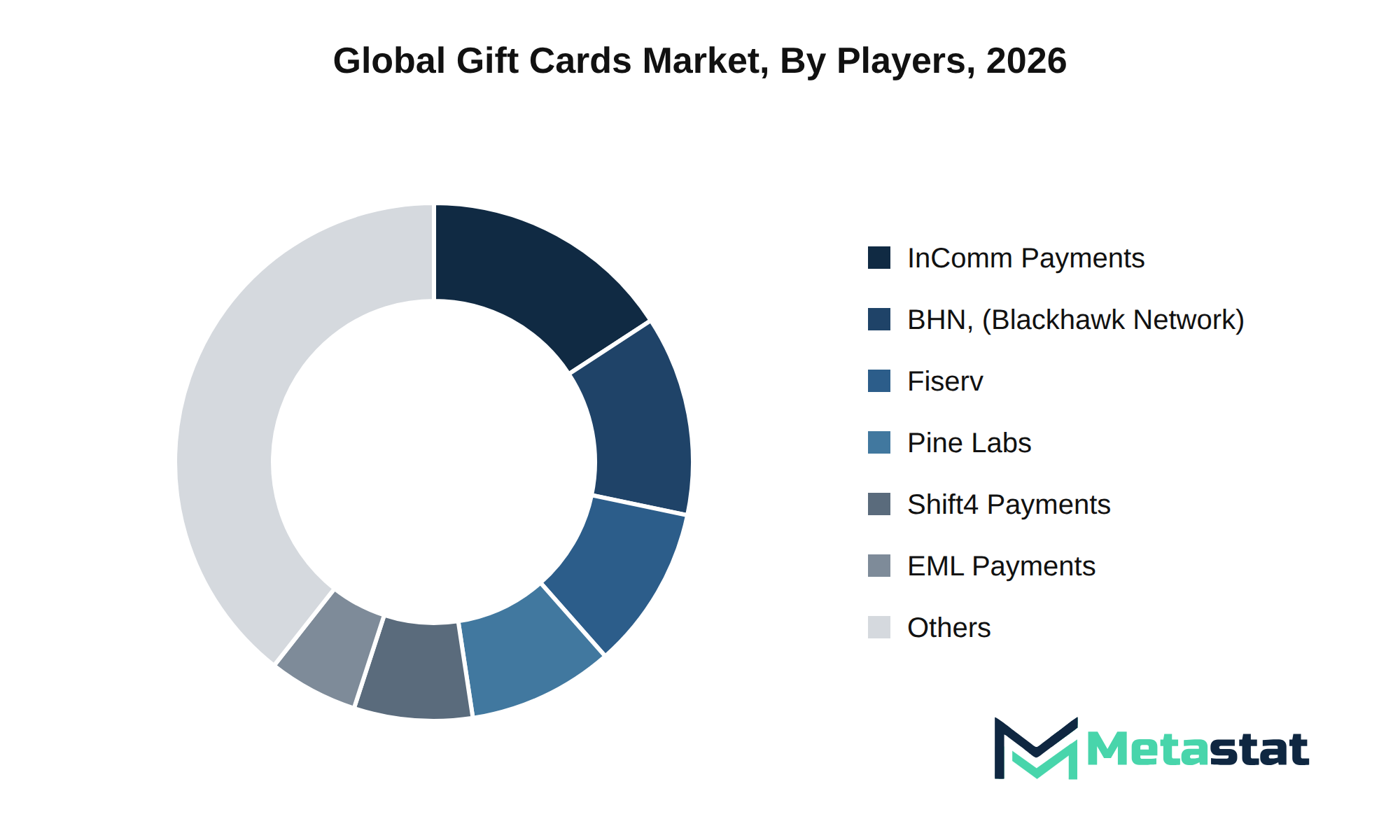
The competitive landscape in the Gift Cards market reflects a dynamic environment characterized by mergers, acquisitions, and strategic consolidations. Several companies actively pursue partnerships and alliances to enhance their market presence and product offerings. Notable players include BHN, Inc. (Blackhawk Network), InComm Payments, and Fiserv, Inc., all of which focus on integrating services to streamline their customer offerings and increase operational efficiency.
Product differentiation remains vital in this competitive landscape. Companies including Pine Labs Private Limited and Shift4 Payments, Inc. invest in proprietary technology to create unique value propositions for their customers. This emphasis on technological innovation contributes to establishing significant barriers to entry, deterring new entrants from penetrating the market. Established firms leverage brand equity and customer retention strategies to maintain a competitive edge in a changing marketplace.
Forecast and Future Outlook
Market size is forecast to rise from USD 713.3 billion in 2025 to over USD 2,275.4 billion by 2033. The base case reflects a compound annual growth rate (CAGR) of 15.6%. Factors influencing this trajectory include macroeconomic conditions, evolving consumer preferences, and advancements in payment technologies.
In a bullish scenario, increased consumer spending and the integration of next-generation technologies will drive higher demand for gift cards across various markets. This situation leads to accelerated growth in segments including open-loop gift cards, which serve diverse applications and adapt to changing consumer needs.
In a bearish scenario, economic downturns and regulatory challenges could hinder growth in the gift cards market. Heightened compliance requirements and geopolitical uncertainties negatively impact consumer confidence, resulting in reduced spending on non-essential items.
A focus on strategic capital allocation and infrastructure commitments enhances growth opportunities. Emerging white-space opportunities, particularly in digital applications, present potential for innovation and increased market penetration. Firms should invest in research and development to capitalize on unmet enterprise needs and high-growth pockets within the market.
Gift Cards Market Key Segments
By Card Type:
Closed-Loop Gift Cards
Open-Loop Gift Cards
By Format:
Physical Gift Cards
Digital and eGift Cards
By Application:
Personal Gifting
Employee Rewards and Recognition
Customer Loyalty and Retention
Sales and Channel Incentives
Promotional Campaigns and Customer Acquisition
Research and Survey Incentives
Others (Rebates, Social Assistance and Event Rewards)
The report strategically identifies and profiles the key market players and analyses their core competencies in each sub-segment of the Gift Cards market.
Report Attributes
Details
Study Period
2021-2033
Base Year
2025
Estimated Year
2026
Forecast Period
2026-2033
Historical Period
2021-2025
Growth Rate
CAGR 15.6% from 2026 to 2033
Revenue Unit
USD billion
Segmentation
By Card Type, Format, Application, Distribution Channel, and Region
By Region
North America (By Card Type, Format, Application, Distribution Channel, and Country)
United States
Canada
Mexico
Europe (By Card Type, Format, Application, Distribution Channel, and Country)
Germany
France
UK
Italy
Spain
Russia
Rest of the Europe
Asia Pacific (By Card Type, Format, Application, Distribution Channel, and Country)
China
Japan
India
South Korea
Australia
Southeast Asia
Rest of Asia Pacific
South America (By Card Type, Format, Application, Distribution Channel, and Country)
Brazil
Argentina
Rest of South America
Middle East and Africa (By Card Type, Format, Application, Distribution Channel, and Country)
Saudi Arabia
UAE
South Africa
Rest of Middle East and Africa
WHAT REPORT PROVIDES
Key Company Market Share, Revenue and Ranking for the Gift Cards Market
Key Market Leaders in the Gift Cards Industry
Full In-Depth Analysis of the Gift Cards Market
Industry Statistics and Trends for Gift Cards
Important Changes in Gift Cards Market Dynamics
Segmentation Details of the Gift Cards Market
Historical, Ongoing and Projected Gift Cards Market Analysis
Key Strategies of Major Players in the Gift Cards Market
Company Profiles of Key Players in the Gift Cards Market
Unique Selling Propositions of Leading Gift Cards Providers
Find answers to common questions about this report
The Gift Cards market size was valued at USD 713.3 billion in 2025.
The Gift Cards market is projected to grow at a CAGR of 15.6% during the forecast period from 2026 to 2033.
The North America Gift Cards market size is estimated to reach USD 740.2 billion by 2033.
Open-Loop Gift Cards lead the Gift Cards market with a projected value of USD 728.1 billion by 2033, surpassing Closed-Loop Gift Cards, which are expected to reach USD 1,547.3 billion in the same year.
The Gift Cards market experiences growth driven by the rapid advancement of digital technology, evolving consumer preferences, and demographic changes. Increased smartphone penetration and the demand for convenient online transactions encourage the adoption of digital gift cards across various sectors, enhancing customer engagement and loyalty.
North America holds the dominant share of the Gift Cards market, accounting for 35.7 percent in 2025. The region is projected to reach USD 740.2 billion by 2033.
The Gift Cards market growth faces several restraints, including regulatory challenges that increase operational costs, macroeconomic headwinds like inflation, and supply chain disruptions. Resource scarcity, skilled labor deficiencies, and data security vulnerabilities further complicate market dynamics, creating uncertainty for businesses and limiting their ability to expand gift card offerings.
Rapid advancements in digital technology significantly impact product adoption in the Gift Cards market by facilitating accessible and convenient purchasing options. Increased smartphone penetration and improved online payment systems drive consumers to prefer digital gift cards over traditional physical alternatives. Retailers respond by integrating digital gift card solutions to enhance customer engagement and loyalty, contributing to overall market growth.
The Gift Cards market is estimated to reach a valuation of USD 2,275.4 billion by 2033.
Key players in the Gift Cards market include BHN, Inc. (Blackhawk Network), InComm Payments, Pine Labs Private Limited, Fiserv, Inc., Shift4 Payments, Inc., and Amazon.com, Inc.
Luxury Resort Hotel Market Size, Share, Trends, 2033
Luxury Resort Hotel market is valued at USD 42.2 billion in 2025 and projected to reach USD 81.7 billion by 2033, growing at a CAGR of 8.6%.
Luxury Resort Hotel market, Luxury Resort Hotel Market Size, Luxury Resort Hotel Market Share, Luxury Resort Hotel Market Analysis, Luxury Resort Hotel Market Growth, Luxury Resort Hotel Market Trends, Luxury Resort Hotel Market Research Report, Luxury Resort Hotel Market Forecast, Luxury Resort Hotel, Luxury Resort Hotel Market Research, Luxury Resort Hotel Industry, Luxury Resort Hotel Industry Report, Luxury Resort Hotel Market Data, Luxury Resort Hotel Statistics, Luxury Resort Hotel Market Statistics, Luxury Resort Hotel Industry Trends, Luxury Resort Hotel Market Report, Luxury Resort Hotel Market Trends, Luxury Resort Hotel Market News, Luxury Resort Hotel Forecasts, Luxury Resort Hotel Market Intelligence Report, Luxury Resort Hotel Market 2033, Luxury Resort Hotel Market Outlook, Luxury Resort Hotel Market Segmentation, Luxury Resort Hotel Market Drivers, Luxury Resort Hotel Market Restraints, Luxury Resort Hotel Market Opportunities, Luxury Resort Hotel Market CAGR, Luxury Resort Hotel Suppliers, Luxury Resort Hotel Manufacturers, Luxury Resort Hotel Market by Region, North America Luxury Resort Hotel Market, Asia Pacific Luxury Resort Hotel Market, Europe Luxury Resort Hotel Market, Luxury Resort Hotel Market Competitive Landscape, Luxury Resort Hotel Market Key Players, Mainland Beach & Coastal Resorts, Island Resorts, Mountain & Alpine Resorts, Luxury Guest Rooms, Online Travel Agencies, Luxury Tents & Lodges, Tour Operators & Destination Management Companies.
Small Kitchen Appliances Market Size, Share, Trends, 2033
Small Kitchen Appliances market size is valued at USD 37.2 billion in 2025 and projected to reach USD 59.3 billion by 2033, growing at a CAGR of 6.0%.
Small Kitchen Appliances market, Small Kitchen Appliances Market Size, Small Kitchen Appliances Market Share, Small Kitchen Appliances Market Analysis, Small Kitchen Appliances Market Growth, Small Kitchen Appliances Market Trends, Small Kitchen Appliances Market Research Report, Small Kitchen Appliances Market Forecast, Small Kitchen Appliances, Small Kitchen Appliances Market Research, Small Kitchen Appliances Industry, Small Kitchen Appliances Industry Report, Small Kitchen Appliances Market Data, Small Kitchen Appliances Statistics, Small Kitchen Appliances Market Statistics, Small Kitchen Appliances Industry Trends, Small Kitchen Appliances Market Report, Small Kitchen Appliances Market Trends, Small Kitchen Appliances Market News, Small Kitchen Appliances Forecasts, Small Kitchen Appliances Market Intelligence Report, Small Kitchen Appliances Market 2033, Small Kitchen Appliances Market Outlook, Small Kitchen Appliances Market Segmentation, Small Kitchen Appliances Market Drivers, Small Kitchen Appliances Market Restraints, Small Kitchen Appliances Market Opportunities, Small Kitchen Appliances Market CAGR, Small Kitchen Appliances Suppliers, Small Kitchen Appliances Manufacturers, Small Kitchen Appliances Market by Region, North America Small Kitchen Appliances Market, Asia Pacific Small Kitchen Appliances Market, Europe Small Kitchen Appliances Market, Small Kitchen Appliances Market Competitive Landscape, Small Kitchen Appliances Market Key Players, Food Preparation Appliances Market, Coffee Machines Market, Electric Kettles Market, Cooking Appliances Market, Residential Small Kitchen Appliances Market, Foodservice Small Kitchen Appliances Market
Home Organization Products Market Size, Share, Trends, 2033
Home Organization Products market size is valued at USD 14.4 billion in 2025 and projected to reach USD 20.4 billion by 2033, growing at a CAGR of 4.4%.
Home Organization Products market, Home Organization Products Market Size, Home Organization Products Market Share, Home Organization Products Market Analysis, Home Organization Products Market Growth, Home Organization Products Market Trends, Home Organization Products Market Research Report, Home Organization Products Market Forecast, Home Organization Products, Home Organization Products Market Research, Home Organization Products Industry, Home Organization Products Industry Report, Home Organization Products Market Data, Home Organization Products Statistics, Home Organization Products Market Statistics, Home Organization Products Industry Trends, Home Organization Products Market Report, Home Organization Products Market Trends, Home Organization Products Market News, Home Organization Products Forecasts, Home Organization Products Market Intelligence Report, Home Organization Products market 2033, Home Organization Products market outlook, Home Organization Products market segmentation, Home Organization Products market drivers, Home Organization Products market restraints, Home Organization Products market opportunities, Home Organization Products market CAGR, Home Organization Products suppliers, Home Organization Products manufacturers, Home Organization Products market by region, North America Home Organization Products market, Asia Pacific Home Organization Products market, Europe Home Organization Products market, Home Organization Products market competitive landscape, Home Organization Products market key players, Home Organization Products by material type, Home Organization Products by product type, Home Organization Products by application area, Home Organization Products by distribution channel.