Global Gluten-Free Food Market Size, Share, By Product Type (Bakery & Confectionery, Snacks & RTE Products, Dairy Products, Sauces & Dressings, Meat & Meat Substitutes and Others), By Source (Plant-Based and Animal-Based), By Distribution Channel (Supermarkets and Hypermarkets, Convenience and Grocery Stores, Specialty and Health-Food Stores, Online Retail and E-Commerce and Foodservice and Institutional Channels), By Price Point (Mass and Premium), Industry Analysis, Growth, Trends, and Forecast, 2026-2033
Report ID
MSI-4887
Published
August 10, 2026
Pages
283 Pages
Format
Market Size 2021
USD 5.7 Billion
Historical
Market Size 2025
USD 7.9 Billion
Base year
Market Size 2033
USD 15.4 Billion
Forecast
CAGR 2025-2033
8.7%
Forecast period
Report Details
Comprehensive Market Analysis And Insights
Market Overview
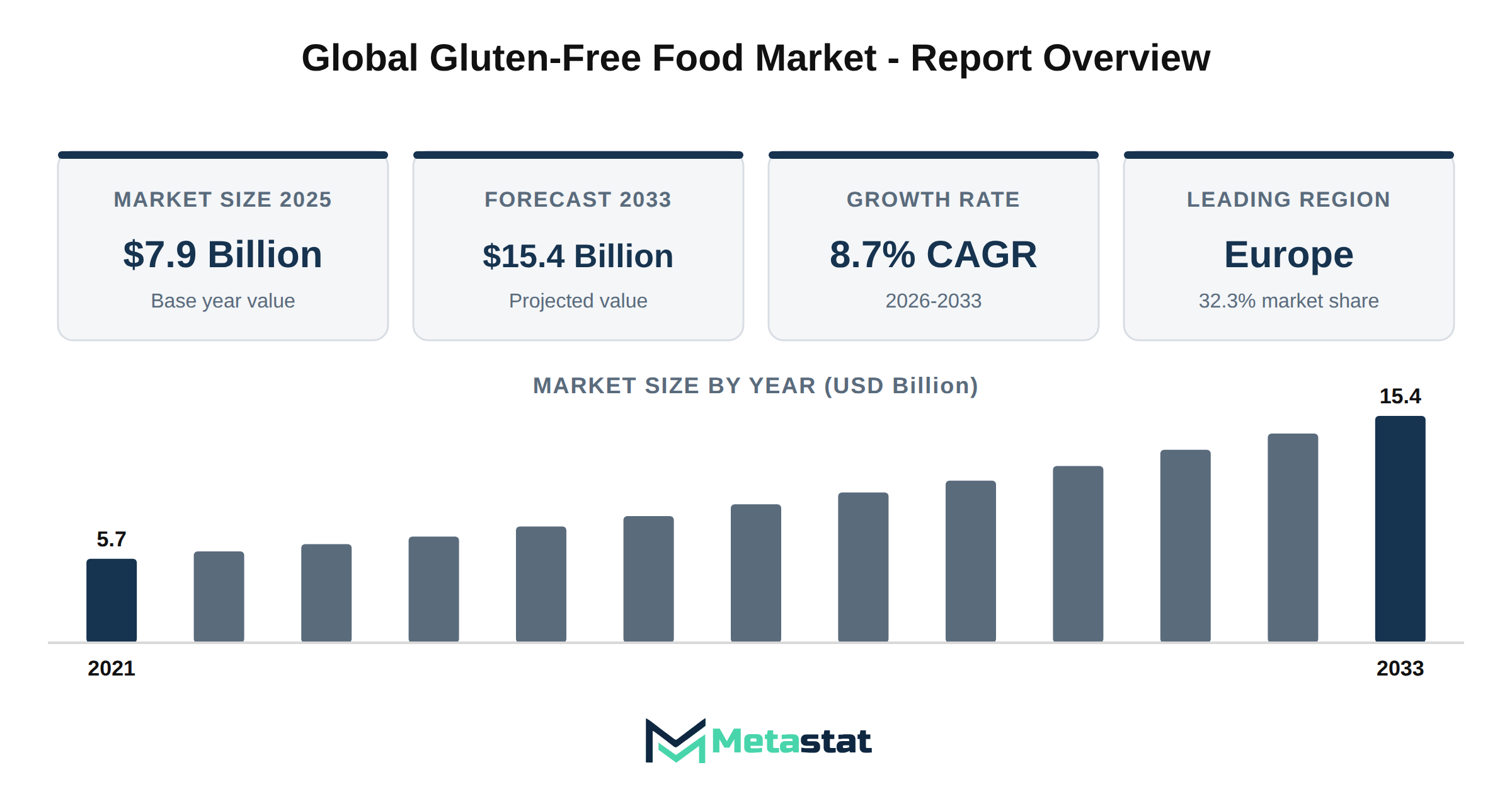
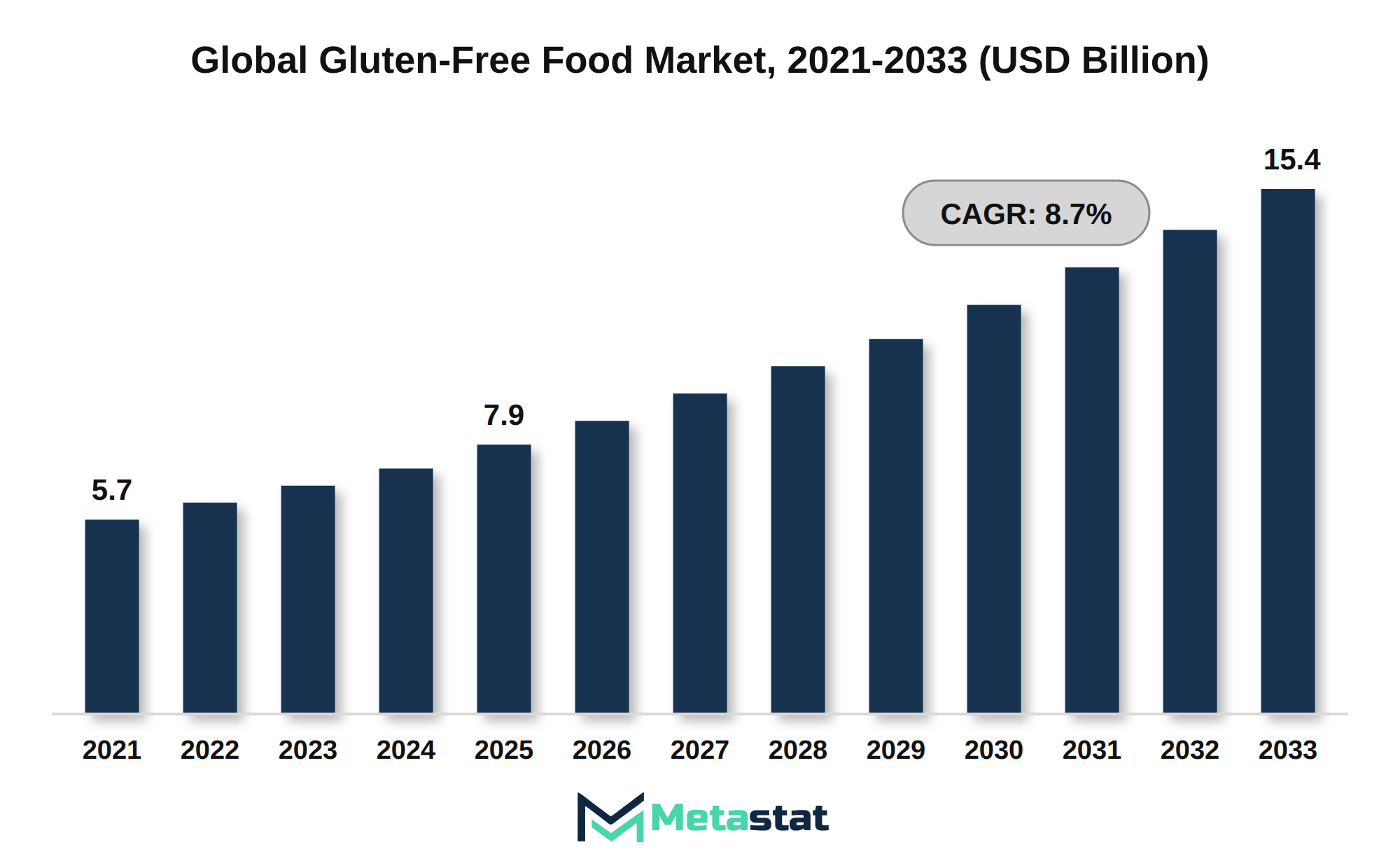
The global Gluten-Free Food market was valued at USD 7.9 billion in 2025 and is projected to reach USD 15.4 billion by 2033, growing at a CAGR of 8.7% over the forecast period.
The global Gluten-Free Food market reached a value of USD 7.9 billion in 2025, reflecting significant growth from USD 5.7 billion in 2021. This upward trend is expected to continue, with projections estimating the market is anticipated to achieve USD 15.4 billion by 2033, representing a compound annual growth rate (CAGR) of 8.7% during the forecast period.
Consumer preferences play a crucial role in shaping the market. Increasing awareness of gluten intolerance and celiac disease drives demand for gluten-free products across various demographics. Product innovation, particularly in the bakery and snacks segments, has led to enhanced offerings that cater to health-conscious consumers, further propelling market expansion.
The distribution landscape involves diverse channels, including supermarkets, specialty stores, and e-commerce platforms. Online retail continues to gain traction, offering convenience and a wider selection of gluten-free options. Retailers implementing robust e-commerce strategies are likely to enhance their market presence, catering to shifting consumer shopping habits.
Regulatory compliance and standards significantly influence market dynamics. Manufacturers are required to adhere to strict labeling requirements and safety standards, ensuring the integrity of gluten-free claims. Compliance builds consumer trust, which is essential for brand loyalty and market penetration.
Geopolitical risks and supply chain disruptions present challenges for the market. Fluctuations in ingredient availability and pricing impact production costs. Companies navigate these complexities to maintain competitive pricing while ensuring product quality and availability.
The Gluten-Free Food market experiences significant shifts in consumer preferences, driven by increasing awareness of health benefits associated with gluten-free diets. This trend prompts product innovation, encouraging manufacturers to develop a wider array of gluten-free items, including snacks, bakery products, and ready-to-eat meals. Retail and e-commerce trends indicate a rising demand for convenience products, which aligns with the growing trend of online shopping, enhancing product accessibility for consumers.
Regulatory compliance and standards play a crucial role in shaping the market landscape, driven by manufacturers adapting to stringent labeling requirements and safety regulations. Geopolitical risk frameworks impact supply chain dynamics, contributing to fluctuations in ingredient availability and pricing. Current disruptions in the global supply chain necessitate agile responses from companies, influencing their sourcing and production strategies.
Research and development trajectories focus on next-generation innovations, including enhanced formulations and alternative ingredients that cater to evolving dietary preferences. Sustainable transformation efforts emphasize decarbonization and circular economy dynamics, aligning with consumer demand for environmentally friendly products. The market fragmentation observed indicates a diverse range of players, from established brands to emerging startups, all vying for market share.
M&A dynamics within the Gluten-Free Food market highlight strategic consolidations, enabling companies to expand their product lines and distribution channels. Value chain analyses identify opportunities for improved procurement strategies and enhanced customer journey dynamics, ultimately affecting capital allocation and infrastructure investments. Macroeconomic headwinds, including inflationary pressures and currency volatility, challenge companies while simultaneously creating opportunities for growth through innovative pricing strategies and value offerings.
The future strategic outlook for the market remains optimistic, supported by high-value recommendations for stakeholders. Companies that prioritize consumer insights and adapt to market trends position themselves favorably in the competitive landscape, driving growth in the Gluten-Free Food market.
Market Dynamics
Shifting consumer preferences for health
Increasing awareness of health and wellness among consumers drives significant interest in gluten-free products. Demographic trends, including aging populations and lifestyle changes, encourage consumers to seek healthier food options, including gluten-free alternatives. This shift in consumer behavior creates opportunities for brands in the Gluten-Free Food market to innovate and diversify their product offerings to meet evolving preferences.
The growing prevalence of gluten sensitivity and celiac disease enhances demand for gluten-free products across various segments. More individuals adopt gluten-free diets for health reasons, and brands focus on enhancing the taste and quality of their offerings, which further attracts a broader audience. This trend leads to increased competition among manufacturers, prompting them to invest in research and development to create appealing gluten-free options.
Widespread urbanization contributes to changing eating habits, with consumers gravitating towards convenience and ready-to-eat gluten-free options. Retailers expand their gluten-free product lines to cater to this increasing demand, supporting market growth by providing accessible choices for health-conscious consumers. Consequently, the Gluten-Free Food market is projected to experience significant growth, with an anticipated value of USD 15.4 billion by 2033.
Growing investment in health-oriented products
The Gluten-Free Food market experiences growth driven by increasing consumer interest in health and wellness. Rising disposable incomes in various regions contribute to an environment where health-oriented food products become a priority for consumers. The aging population, coupled with lifestyle changes, boosts demand for gluten-free options among health-conscious individuals seeking dietary alternatives. Urbanization intensifies this trend, driven by consumers in metropolitan areas prioritizing convenient, nutritious choices that align with their health goals.
Technological integration further enhances market growth through innovations in food production and distribution. Automation and advanced processing techniques enable manufacturers to improve product quality while streamlining operations. This results in higher efficiency and cost reductions, allowing producers to meet consumer demand effectively. The Gluten-Free Food market benefits from these efficiencies, positioning brands to capitalize on the growing desire for gluten-free products.
Investment in research and development supports product diversification within the market. Companies are expanding their portfolios, creating new gluten-free offerings that cater to specific dietary needs, including allergen-free and nutrient-rich options. This focus on innovation attracts a broader consumer base, creating an environment ripe for growth. The combination of these factors contributes to a projected market value increase from USD 7.9 billion in 2025 to USD 15.4 billion by 2033, translating to a compound annual growth rate of 8.7% over the forecast period.
Regulatory compliance presents significant challenges for the Gluten-Free Food market, impacting manufacturing processes and product labeling requirements. Stringent regulations necessitate rigorous testing and certification, leading to increased operational costs for producers. Companies face hurdles in demonstrating compliance with evolving standards, resulting in delays and reduced product availability in the market.
Macroeconomic headwinds, including inflationary pressures and rising operating costs, further complicate compliance efforts. These factors contribute to higher prices for gluten-free products, potentially diminishing consumer demand. Market players absorb these costs, limiting investment in innovation and expansion efforts. Regulatory demands and economic conditions hinder the overall growth trajectory of the market.
Supply chain disruptions and geopolitical instability create additional obstacles, complicating ingredient sourcing and logistics for gluten-free food manufacturers. Fluctuations in raw material availability and pricing lead to unpredictable production schedules, impacting market stability and availability. Consequently, these challenges restrict the ability of companies to meet rising consumer demand for gluten-free products while maintaining consistent quality and pricing.
Technological obsolescence poses another restraint. Companies in the market require continual investments in new technologies to enhance production efficiency and comply with updated regulatory standards. Firms that fall behind in adopting advanced technologies risk losing competitive advantages. This dynamic leads to market fragmentation, where only those with sufficient resources thrive, while smaller players struggle to remain viable.
Cultural barriers and regional adoption resistors further limit market penetration in certain demographics. Consumer perceptions surrounding gluten-free diets vary significantly, affecting willingness to pay premium prices. This cultural divide slows growth and restricts market expansion into diverse consumer segments. Overall, these multifaceted challenges create a complex environment that impacts the future prospects of the Gluten-Free Food market.
Geopolitical fragmentation and trade deficits
Geopolitical fragmentation significantly impacts the Gluten-Free Food market, causing fluctuations in trade dynamics and supply chain disruptions. Tariff frictions and trade deficits constrain cross-border transactions, leading to increased operational costs for producers. These challenges particularly affect industries reliant on imported ingredients and components, resulting in higher prices for gluten-free products. Consequently, consumers face higher prices, which limit overall market growth.
Technological disruptions pose challenges for the market. Rapid advancements in food technology lead to interoperability friction between new processing methods and existing production systems. This lack of compatibility complicates the integration of innovative solutions, hindering efficiency improvements and increasing production costs. Companies investing in research and development face complex integration challenges, elongating timelines and inflating budgets.
Rising input costs driven by feedstock volatility create additional pressure on market participants. Increased prices for raw materials directly influence overall product pricing and margins, compelling manufacturers to make difficult decisions regarding product formulation or pricing strategies. Such pressures stifle market expansion opportunities, resulting from producers striving to balance profitability with consumer affordability.
Workforce skill gaps further exacerbate operational challenges within the market. The demand for skilled labor in specialized areas including gluten-free product development and quality assurance exceeds current supply levels. Manufacturers experience difficulties in talent retention, which hinders production efficiency and innovation. Firms with insufficient skilled labor struggle to meet rising consumer expectations for product quality and variety.
Environmental lifecycle footprints and sustainability demands drive operational changes across the market. Increased consumer focus on sustainability compels companies to adopt eco-friendly practices and materials, which raise costs. Implementing new sustainable practices requires capital investment, potentially diverting funds from other critical areas of growth. This dynamic creates friction because firms navigate the balance between meeting sustainability goals and maintaining competitive pricing.
Overall, geopolitical fragmentation, tariff frictions, rising input costs, and workforce skill gaps create significant challenges for the Gluten-Free Food market. Addressing these issues requires strategic planning and investment to ensure sustained growth and competitiveness in an evolving market.
Market opportunity driven by technological disruptions
The Gluten-Free Food market presents substantial opportunities driven by technological disruptions, particularly in production processes and distribution channels. Innovations in food technology enable manufacturers to improve product quality while enhancing efficiency and reducing costs. Advanced manufacturing techniques, including 3D food printing and high-pressure processing, facilitate the creation of diverse gluten-free products that meet rising consumer expectations for taste and texture.
Geographical expansion in emerging markets contributes to the market's growth potential. Regions including Asia Pacific experience increasing demand for gluten-free options driven by urbanization and rising disposable incomes. Retailers adapting to local preferences, supported by digital transformation in e-commerce, enhance the availability of gluten-free products in these regions. This strategic adaptation allows suppliers to penetrate new markets and cater to evolving consumer needs.
Sustainability imperatives play a critical role in shaping future market dynamics. Consumers increasingly prioritize eco-friendly products, prompting manufacturers to adopt green transformations in sourcing and production. Aligning with environmental, social, and governance (ESG) criteria improves brand loyalty and enhances competitive advantages. Companies focusing on responsible sourcing and sustainable packaging enhance their appeal in the gluten-free food sector.
Next-generation innovations in product development capture market interest by addressing specific dietary requirements and preferences. The rise of plant-based sources expands the gluten-free product range and meets the growing demand for vegan and health-oriented foods. This expansion drives downstream market diversification, leading to increased revenue avenues for suppliers in the gluten-free food market.
Strategic consolidation through mergers and acquisitions strengthens market positioning among key players. By combining resources and capabilities, companies enhance their operational efficiencies and broaden their portfolios. This trend enables investment in research and development, facilitating the introduction of innovative gluten-free solutions tailored to consumer preferences.
Market Segmentation Analysis
The Global Gluten-Free Food market is segmented based on Product Type, Source, Distribution Channel, and Price Point.
By Product Type, the market is further segmented into:
Bakery & Confectionery
Snacks & RTE Products
Dairy Products
Sauces & Dressings
Meat & Meat Substitutes
Others (Gluten-Free Beverages, and Processed Meat)
Bakery & Confectionery
Significant growth characterizes the Bakery & Confectionery segment within the Gluten-Free Food market, valued at USD 2.7 billion in 2026 and projected to reach USD 4.7 billion by 2033, at a CAGR of 8% during the forecast period. Increasing consumer awareness regarding health and dietary restrictions drives demand for gluten-free bakery products. This segment benefits from a rising prevalence of celiac disease and gluten sensitivity, leading to a more health-conscious consumer base. Product innovation is essential, with manufacturers focusing on improving taste and texture to closely mimic traditional baked goods.
Consumer preference continues to shift towards gluten-free options, resulting in increased adoption across various demographics, including those without gluten-related disorders seeking healthier eating alternatives. The demand for gluten-free confectionery items rises owing to manufacturers enhancing their offerings, developing products with organic and natural ingredients that appeal to health-focused consumers. Regulatory compliance regarding gluten-free labeling standards influences product development, ensuring that consumer expectations align with market offerings.
The Bakery & Confectionery segment experiences competitive dynamics, with both established food corporations and emerging companies striving to capture market share. Strategic partnerships and collaborations facilitate the expansion of product portfolios, allowing for greater market penetration. Fluctuations in raw material prices and supply chain challenges impact production costs, urging companies to optimize their supply chain resilience. Overall, the Bakery & Confectionery segment demonstrates potential for growth and innovation within the wider Gluten-Free Food market.
Snacks & RTE Products
Growth in the Snacks & RTE Products segment of the Gluten-Free Food market reflects changing consumer preferences for healthier snacking options. Increasing awareness of dietary restrictions, particularly celiac disease and gluten sensitivity, enhances demand for gluten-free snack products. The segment is projected to reach USD 3.9 billion by 2033, with a CAGR of 9.5% during the forecast period. Innovations in product formulation and marketing strategies broaden the appeal of gluten-free snacks, attracting health-conscious consumers and individuals seeking convenient meal solutions.
Technological advancements in food processing and ingredient sourcing enable manufacturers to develop high-quality gluten-free snacks that replicate the taste and texture of traditional products. The trend toward clean labels and natural ingredients drives product evolution within this segment. An increasing number of consumers are aware of gluten-free options, while retail distribution expands through supermarkets, health-food stores, and online platforms, increasing accessibility and visibility of these products.
Regulatory compliance and certifications for gluten-free labeling contribute to consumer trust and market growth. Companies that achieve gluten-free certification benefit from a competitive edge in attracting health-conscious buyers. Pricing pressures persist, driven by raw material costs, but effective supply chain management and strategic partnerships enhance resilience against market volatility. Overall, the Snacks & RTE Products segment represents a dynamic area within the Gluten-Free Food market, influenced by evolving consumer needs and market trends.
Dairy Products
Growing consumer awareness regarding dietary choices significantly influences the Dairy Products segment within the Gluten-Free Food market. Increased health consciousness drives demand for gluten-free dairy alternatives, appealing to individuals with celiac disease or gluten sensitivity. Innovations in product formulation, including lactose-free and plant-based options, enhance consumer acceptance and expand the product range. This shift toward healthier options creates competitive dynamics among manufacturers, encouraging investment in research and development to create next-generation dairy products.
Changing consumption patterns further support the growth of this segment. Young consumers prioritize gluten-free options, increasing adoption rates among diverse demographics. Regulatory compliance with gluten-free labeling standards strengthens consumer trust in gluten-free dairy products, creating a favorable market environment. The Dairy Products segment is projected to reach USD 2.2 billion by 2033, reflecting robust demand and strategic opportunities for players operating in this space.
Pressure on pricing structures and margins remains a concern, influenced by fluctuating raw material costs and supply chain vulnerabilities. Effective sourcing strategies and potential partnerships enhance resilience, allowing brands to streamline operations while maintaining product quality. Key players strive to differentiate their offerings through innovative marketing and premium product lines, thereby capturing a larger market share. This strategic focus on consumer preferences is expected to drive sustained growth and investment in the segment.
Sauces & Dressings
Growing interest in gluten-free diets significantly enhances demand for sauces and dressings within the Gluten-Free Food market. This segment is projected to grow at a CAGR of 8.5% during the forecast period. Factors including the rise in celiac disease awareness and increasing consumer inclination towards healthy eating contribute to this growth. Innovative product formulations and improved flavor profiles attract a broader customer base, promoting adoption among gluten-sensitive consumers and those opting for gluten-free options.
Consumer trends toward clean-label products further drive the market, driven by sauces and dressings featuring transparent ingredient lists gaining popularity. The increasing availability of these products in various retail channels, including supermarkets and online platforms, enhances accessibility for consumers. Strategic investments by key players in developing new flavors and formulations cater to diverse culinary preferences, thus boosting market expansion.
Regulatory compliance and certification processes for gluten-free products establish a trust factor among consumers, supporting sustained demand. The segment benefits from ongoing research and development focused on enhancing product quality and safety standards. With a focus on innovation and responding to consumer preferences, the sauces and dressings segment within the Gluten-Free Food market is positioned for significant growth during the forecast period.
Meat & Meat Substitutes
Increasing consumer awareness regarding health and dietary choices significantly influences the demand for gluten-free meat and meat substitutes. A rise in the prevalence of gluten intolerance and celiac disease underlines the necessity for compliant food options, prompting manufacturers to develop specialized products. Innovation in this segment focuses on enhancing flavors and textures, meeting consumer expectations for taste and quality while adhering to gluten-free standards.
Shifts in dietary preferences, driven by trends including plant-based diets, create further opportunities for growth within the meat and meat substitutes category. Consumers seek sustainable and healthier alternatives to traditional meat products, encouraging investment in plant-based options that align with gluten-free criteria. This transition supports expansion in various downstream applications, including retail and foodservice channels.
Regulatory compliance plays a critical role in shaping product offerings within the market. Adhering to strict standards for gluten-free labeling and certification ensures consumer trust and product integrity. Evolving consumer preferences and regulatory landscapes necessitate continuous adaptation and innovation in gluten-free meat and meat substitutes.
Market players actively explore strategic opportunities, particularly in raw material sourcing and supply chain resilience. Reliable sourcing of gluten-free ingredients influences cost structures and pricing strategies, impacting profit margins. Developing relationships with suppliers and investing in production capabilities enhance competitiveness within the market.
Technological advancements drive product evolution, enabling manufacturers to create more appealing meat substitutes that meet consumer demands. Continuous research and development efforts focus on improving nutritional profiles and product functionality, ensuring alignment with health trends. This emphasis on innovation positions the market for significant growth, driven by consumers increasingly gravitating toward gluten-free food options across various applications.
Others (Gluten-Free Beverages, and Processed Meat)
Increasing consumer interest in health and wellness significantly influences the demand for gluten-free beverages and processed meat. This shift in dietary preferences aligns with a growing awareness of gluten-related health issues, prompting consumers to seek alternatives that support dietary restrictions. Manufacturers innovate by introducing various gluten-free beverage options, including plant-based drinks and gluten-free alcoholic beverages, enhancing market diversity.
Product evolution drives segment expansion. Brands invest in research and development to create gluten-free processed meat products that maintain taste and texture while appealing to health-conscious consumers. This evolution attracts a broader audience, including individuals without gluten sensitivities who prefer healthier snack options.
Regulatory compliance standards for food safety and labeling directly affect the market, ensuring transparency and authenticity in gluten-free claims. Brands that meet these standards gain consumer trust, further driving growth in the gluten-free food market. Certifications establish credibility for products within the segment.
Consumption shifts toward convenience-driven options support the growth of gluten-free beverages and processed meat. Busy lifestyles fuel demand for ready-to-eat and on-the-go alternatives, prompting brands to offer accessible gluten-free options in various distribution channels, including supermarkets, health-food stores, and online platforms.
Pricing volatility and margin pressures represent challenges within the segment. Fluctuations in raw material costs, particularly for gluten-free grains and additives, impact production expenses. Effective supply chain management and strategic sourcing become essential for maintaining competitiveness and profitability in the market.
Strategic opportunity windows emerge in response to the increasing trend of plant-based diets. Brands that focus on sourcing plant-based ingredients for gluten-free beverages and processed meat cater to both health-conscious and environmentally aware consumers. This alignment with broader dietary trends positions businesses favorably within the gluten-free food market.
By Source, the market is further segmented into:
Plant-Based
Animal-Based
Plant-Based
Increasing consumer preference for plant-based diets drives substantial growth in the Plant-Based segment of the Gluten-Free Food market. This segment is valued at USD 5.4 billion in 2026 and is projected to reach USD 9.8 billion by 2033, at a CAGR of 9% during the forecast period. Factors including rising health consciousness, the pursuit of sustainable food options, and the increase in the prevalence of food allergies contribute to expanding demand for gluten-free plant-based products.
Technological advancements enhance product evolution, leading to innovative formulations and improved taste and texture in plant-based offerings. The expansion of distribution channels, particularly through online retail and e-commerce, enhances accessibility and convenience for consumers, further stimulating market growth. Regulatory compliance, including certifications for gluten-free labeling, strengthens consumer trust and influences purchasing behavior, creating a favorable environment for market participants.
Cost structures within the plant-based segment reflect varying raw material prices and supply chain dynamics. Pricing volatility impacts the margins of producers, necessitating strategic adjustments to maintain competitiveness. Despite these challenges, the segment presents numerous strategic opportunity windows for brands willing to invest in research and development, enabling them to capture a larger market share.
Shifts in consumption patterns toward healthier and more sustainable options continue to influence the dynamics of the Gluten-Free Food market. The demand for plant-based products aligns with broader trends in health and wellness, presenting significant potential for growth in the coming years.
Animal-Based
Growth in the Animal-Based segment of the Gluten-Free Food market reflects increasing consumer demand for gluten-free protein sources. Factors contributing to this demand include rising awareness of dietary choices and health benefits associated with gluten-free products. Consumers favor animal-based gluten-free options, including meat and meat substitutes, which enhance the nutritional profile of their diets.
This segment is projected to reach USD 5.5 billion by 2033, at a CAGR of 8% during the forecast period. Enhanced product variety and innovation in animal-based offerings drive segment expansion and attract a broader customer base. Companies in this segment focus on developing high-quality products that cater to shifting consumer preferences, ensuring compliance with regulatory standards to maintain market relevance.
The growing trend of clean-label products further influences the market, driven by consumers seeking transparency in ingredient sourcing and production practices. Strategic opportunities arise from the increasing demand for convenient and ready-to-eat gluten-free options, positioning animal-based products favorably in the competitive environment. Companies operating in the market prioritize investment in research and development to enhance product offerings, ensuring alignment with evolving consumer expectations.
By Distribution Channel, the market is further segmented into:
Supermarkets and Hypermarkets
Convenience and Grocery Stores
Specialty and Health-Food Stores
Online Retail and E-Commerce
Foodservice and Institutional Channels
Supermarkets and Hypermarkets
Growing consumer preference for one-stop shopping experiences significantly boosts the role of supermarkets and hypermarkets in the Gluten-Free Food market. These retail formats offer a wide variety of gluten-free products, catering to diverse customer needs. The convenience of having multiple options available in a single location enhances the shopping experience and encourages consumers to explore gluten-free alternatives.
Increased health consciousness among consumers drives demand for gluten-free products, resulting in supermarkets and hypermarkets expanding their offerings. This adaptation aligns with the rising number of individuals adopting gluten-free diets for health-related reasons, including celiac disease and gluten sensitivity. The emphasis on health and wellness provides a competitive edge for retailers prioritizing gluten-free options within their product lines.
Promotional campaigns and in-store tastings enhance consumer awareness and acceptance of gluten-free products. Supermarkets and hypermarkets leverage these strategies to facilitate product trials, which lead to increased sales. Such initiatives not only boost consumer confidence but support market growth by introducing gluten-free products to those unfamiliar with them.
Competitive pricing strategies play a crucial role in the success of supermarkets and hypermarkets within this segment. Offering gluten-free products at various price points allows retailers to appeal to a broad customer base, including price-sensitive consumers. This pricing flexibility facilitates market penetration and contributes to the overall growth of the gluten-free food sector.
Strategic partnerships with gluten-free product manufacturers enhance supply chain resilience for supermarkets and hypermarkets. Collaborating with reliable suppliers secures consistent product availability and maintains quality standards. Such partnerships enable retailers to respond effectively to changing consumer demands while ensuring product freshness and availability.
Convenience and Grocery Stores
Demand for gluten-free products in convenience and grocery stores aligns with rising health consciousness among consumers. An increasing number of shoppers seek gluten-free options, contributing to the expansion of product offerings in these retail channels. Consumers often prioritize accessibility and convenience, driving retailers to stock diverse gluten-free products to meet evolving preferences.
Product evolution within this segment focuses on enhancing flavor profiles and texture, addressing prior perceptions regarding gluten-free options. Retailers recognize that improved product appeal leads to higher consumer interest and greater sales volumes. The segment benefits from strategic marketing efforts that highlight gluten-free certifications, which enhance consumer confidence in product quality.
Shifts in consumer purchasing behavior, particularly during health-related trends, drive demand for gluten-free foods. Retailers adapt their strategies to emphasize the availability of gluten-free items, capturing the attention of health-oriented shoppers. This trend reflects broader societal movements towards wellness and dietary considerations.
Pricing strategies within convenience and grocery stores remain critical to the gluten-free segment's success. Competitive pricing and promotional activities influence consumer purchasing decisions, impacting overall sales performance. Retailers that effectively manage pricing volatility enhance profitability while meeting consumer expectations for value.
Technological advancements play a vital role in the resilience of the supply chain for gluten-free products. Improved logistics and sourcing methods support efficient distribution, ensuring product availability across various regions. Retailers focus on establishing robust partnerships with suppliers, enhancing the security of gluten-free product offerings.
Strategic opportunity windows arise due to shifts in consumer preferences towards gluten-free diets. Retailers that effectively leverage these shifts capture market share, reinforcing their position within the gluten-free food market. Continued investment in product variety and quality is expected to enhance competitiveness in this dynamic environment.
Specialty and Health-Food Stores
Increasing emphasis on health and wellness drives consumers towards specialty and health-food stores for gluten-free products. These stores often provide a curated selection of items that meet specific dietary requirements, appealing directly to health-conscious consumers. The rising prevalence of health conditions related to gluten consumption increases demand for gluten-free alternatives, strengthening sales within this distribution channel.
Innovation in product offerings attracts customers to specialty and health-food stores. Health-food retailers frequently stock an array of unique gluten-free products, enhancing customer engagement through diverse options. This variety encourages consumers to explore and experiment with new gluten-free foods, further expanding the market.
Regulatory compliance standards significantly impact the operations of specialty and health-food stores. Strict regulations concerning gluten labeling and product safety necessitate that retailers maintain high-quality standards, helping to build consumer trust. Compliance with certification standards enhances brand credibility, which is vital for retailers in this sector.
Consumer preferences towards personalized shopping experiences reinforce the growth of specialty and health-food stores. Many shoppers prioritize specialized retailers for their expertise and product knowledge, finding value in tailored recommendations. This trend provides a competitive edge for these stores over larger supermarket chains, strengthening their market position.
Supply chain resilience remains essential for specialty and health-food stores, particularly in sourcing raw materials for gluten-free products. Establishing strong relationships with local suppliers and farmers contributes to a reliable supply chain, mitigating risks associated with sourcing challenges. This approach not only ensures product availability but aligns with the increasing consumer demand for locally sourced goods.
Technological advancements in retail operations enhance customer engagement within specialty and health-food stores. Implementing e-commerce solutions and digital marketing strategies enables these retailers to reach a broader audience, driving sales both in-store and online. The ability to adapt to changing consumer shopping habits through technology presents strategic opportunities for growth in the gluten-free food market.
Online Retail and E-Commerce
Rapid growth in online retail and e-commerce for gluten-free products reflects changing consumer purchasing behavior. Shifts toward convenience, variety, and accessibility drive this trend, resulting from more consumers seeking gluten-free options from the comfort of their homes. The segment benefits from technological advancements, including user-friendly platforms and improved logistics, enhancing the overall shopping experience.
Demand drivers include increasing awareness of gluten intolerance and celiac disease, prompting consumers to explore gluten-free alternatives. The expansion of online grocery shopping during the pandemic has established e-commerce because a primary distribution channel for gluten-free products. The convenience of home delivery and the ability to compare a wide range of products without visiting multiple stores significantly influence consumer choices.
Investment in digital marketing strategies and targeted promotions further enhances visibility for gluten-free brands within the e-commerce space. Retailers are leveraging social media and influencer partnerships to reach a broader audience and educate potential customers about gluten-free dietary options. This strategic focus on online presence contributes to the ongoing growth of the gluten-free food market.
Consumer preferences for personalized shopping experiences continue to evolve, encouraging companies to adopt innovative technologies like artificial intelligence and data analytics. These technologies provide insights into consumer behavior, enabling retailers to tailor their offerings and improve product recommendations, thereby enhancing customer satisfaction and loyalty.
Regulatory compliance remains crucial for businesses operating in this segment, ensuring that gluten-free products meet safety and labeling standards. Adhering to these regulations not only protects consumers but strengthens brand credibility within the competitive environment.
The relationship between supply chain resilience and raw material sourcing influences pricing structures and competitive dynamics in the online retail segment. Companies that effectively manage sourcing relationships and logistics challenges position themselves advantageously in the gluten-free food market. Overall, growth in online retail and e-commerce aligns with the broader shifts in consumer behavior, creating significant opportunities for gluten-free products.
Foodservice and Institutional Channels
Demand for gluten-free products within foodservice and institutional channels experiences acceleration driven by heightened consumer awareness regarding health and dietary preferences. Operators in this segment increasingly adopt gluten-free offerings to cater to diverse dietary requirements, including those arising from celiac disease and gluten sensitivity. Expanding menus with gluten-free options allows establishments to attract a broader customer base, directly influencing revenue growth.
Technological maturation contributes to product development, allowing foodservice operators to source and prepare gluten-free items without compromising taste or quality. Advances in food processing technology facilitate improved formulations, leading to gluten-free products that align with consumer expectations for flavor and texture. This evolution supports the integration of gluten-free options in various culinary applications, enhancing the overall dining experience.
Regulatory compliance standards regarding gluten labeling further support the growth of gluten-free offerings in foodservice. Adherence to strict guidelines ensures that consumers receive accurate information about gluten content, building trust between establishments and patrons. Certifications from recognized bodies validate gluten-free claims, enhancing credibility and driving demand within institutional channels.
Cost structures and pricing volatility play crucial roles in shaping the market landscape. Fluctuations in raw material prices and supply chain vulnerabilities impact operational costs for foodservice providers. Strategic sourcing and partnerships with suppliers mitigate these pressures, allowing operators to maintain competitive pricing while expanding gluten-free offerings. This approach strengthens resilience within the supply chain, ensuring consistent availability of gluten-free products.
Consumption shifts, driven by a growing commitment to healthier lifestyles, impact the types of products offered in foodservice settings. Consumers increasingly seek nutritious, gluten-free alternatives, prompting operators to enhance their portfolios with innovative items. This demand for variety and quality positions foodservice and institutional channels favorably within the broader gluten-free food market.
Strategic opportunity windows arise from evolving consumer preferences and increasing demand for gluten-free products, encouraging investment in new product lines. Capital investment in research, development, and marketing of gluten-free offerings aids foodservice operators in capturing market share. The ability to adapt to changing dietary trends strengthens the position of gluten-free products within institutional channels, driving sustained growth in the market.
By Price Point, the market is further segmented into:
Mass
Premium
Mass
Increasing consumer demand for affordable gluten-free options significantly impacts the Mass segment. Budget-conscious buyers contribute to heightened interest in lower-priced gluten-free products, driving manufacturers to expand their offerings in this category. Retailers respond with promotions and discounts to attract price-sensitive consumers, resulting in greater visibility for Mass gluten-free items in stores. The rising prevalence of gluten intolerance and related health concerns influences this trend, driven by individuals seeking accessible dietary alternatives. Strategic partnerships among brands and retailers improve the distribution of Mass gluten-free products, enhancing their market presence.
Cost pressures associated with raw material sourcing for gluten-free ingredients challenge producers in the Mass segment. Fluctuations in ingredient prices impact profit margins, necessitating efficient supply chain management to maintain affordability. Manufacturers invest in optimizing production processes to mitigate costs while ensuring product quality. Regulatory compliance, including certifications for gluten-free labeling, plays a role in shaping product development within the segment. Adherence to these standards ensures consumer confidence and expands market reach.
Continued innovation in gluten-free formulations drives product evolution within the Mass segment. Manufacturers explore new ingredients and technologies to enhance taste and texture, attracting a broader consumer base. The flexibility in developing gluten-free alternatives for various food categories, including snacks and baked goods, creates market expansion opportunities. Collaborative efforts between producers and health organizations further raise awareness and acceptance of gluten-free products among mainstream consumers.
Premium
Consumer trends increasingly favor premium gluten-free options, driven by enhanced product quality and superior ingredient sourcing. This shift arises from a rise in health-conscious consumers seeking higher nutritional value, along with preferences for organic and non-GMO ingredients. The premium segment captures attention within the Gluten-Free Food market, appealing to discerning buyers who prioritize taste, texture, and overall eating experience.
Innovative product development underlines premium offerings, with brands focusing on unique flavors and formulations that stand out in a competitive environment. Investments in research and development play a crucial role in evolving product lines, while collaborations with health and wellness influencers enhance brand credibility. Companies in this segment emphasize transparency in sourcing, catering to consumers interested in ethical and sustainable choices.
End-use dynamics indicate that premium gluten-free products find strong adoption in upscale restaurants and specialty health food stores, where consumers seek high-quality dining experiences. This trend aligns with growing consumer spending on premium food products, reflecting a willingness to pay higher prices for perceived value. Regulatory compliance across different markets ensures that premium products meet stringent safety and quality standards, enhancing consumer trust and brand loyalty.
Supply chain resilience and raw material sourcing remain essential in maintaining the integrity of premium offerings. Companies establish direct relationships with suppliers to secure high-quality ingredients, mitigating risks associated with price volatility and ensuring consistent supply. These strategic partnerships contribute to driving growth within the premium segment, encouraging innovation and responsiveness to market demands.
Strategic opportunity windows arise from the increasing demand for gluten-free products among health-focused consumers, including those with dietary restrictions and food sensitivities. The premium segment positions itself to capitalize on this trend, aligning product offerings with consumer expectations for taste and quality. Overall, the premium price point within the Gluten-Free Food market provides a notable avenue for growth, reflecting evolving consumer preferences and market dynamics.
By Region
Based on geography, the Global Gluten-Free Food market is divided into North America, Europe, Asia-Pacific, South America, Middle East, and Africa.
North America
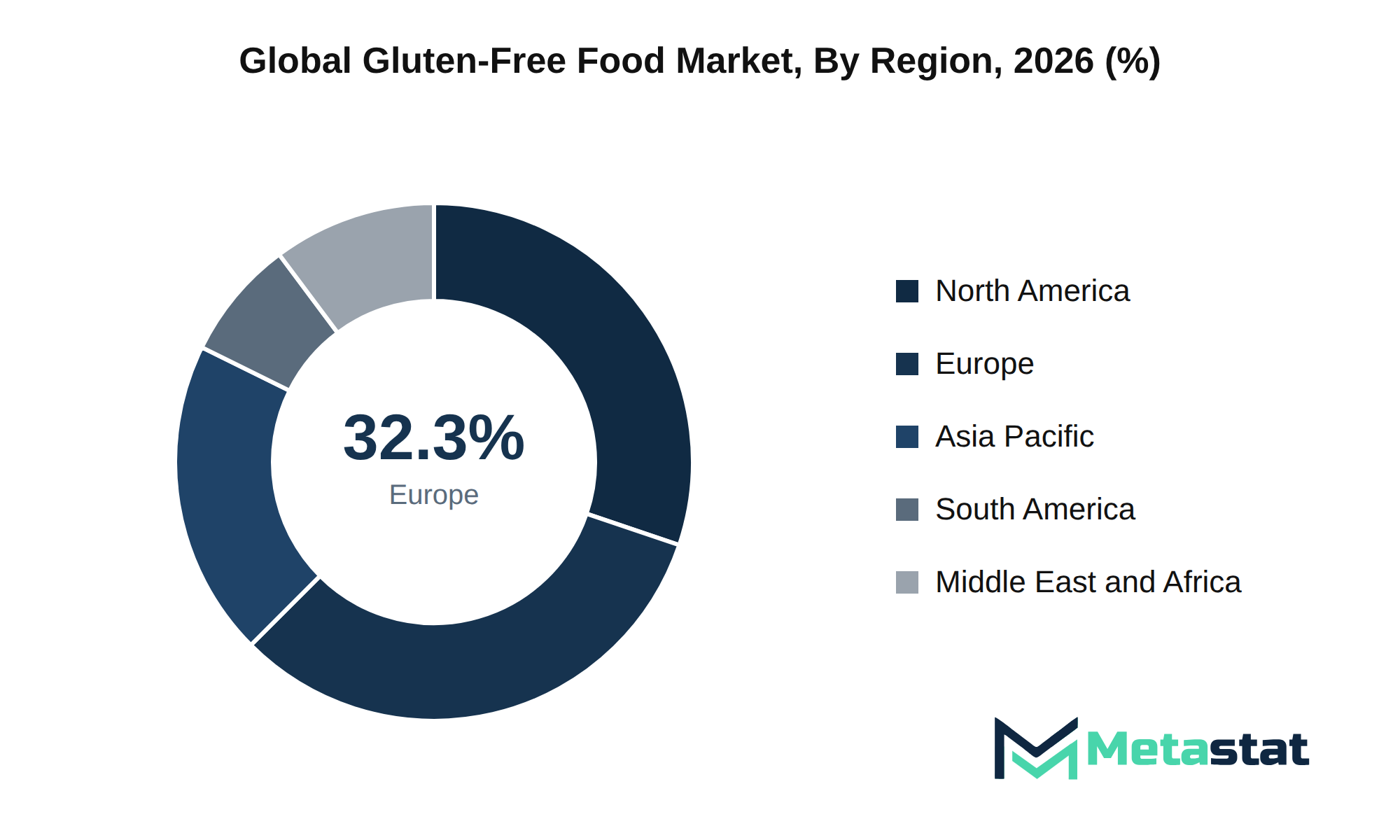
North America represents a significant portion of the global Gluten-Free Food market, accounting for 30.2% of the share in 2025. The market is projected to expand at a CAGR of 8.7% within the forecast period, reaching a market size (TAM) of USD 4.3 billion by the end of 2033.
Consumer trends increasingly focus on health and wellness, driving the demand for gluten-free foods. The rise in celiac disease diagnoses and gluten sensitivity awareness among consumers in the United States, Canada, and Mexico fuels this demand. Retail environments, including supermarkets, health food stores, and online platforms, provide convenient access to gluten-free options, enhancing market penetration.
Investment in localized manufacturing and supply chain optimization strengthens the market infrastructure. Companies engage in developing partnerships with local suppliers to improve product availability and reduce transportation costs. These strategies support competitive pricing and enhance customer satisfaction, contributing to the overall growth of the market.
Innovation within product categories significantly impacts the market dynamics. The Bakery & Confectionery segment is anticipated to exhibit strong growth, driven by the introduction of new gluten-free offerings. Snacks and ready-to-eat products gain increasing popularity, reflecting consumer preferences for convenience and healthier choices.
The presence of key players including Dr. Schär AG / SPA, General Mills, and Conagra Brands enhances competitive intensity. These companies invest in research and development to create diverse gluten-free products that cater to the evolving consumer palate, further stimulating market expansion.
Europe
Europe accounts for a substantial share of the global Gluten-Free Food market. This high share results from growing health consciousness among consumers, especially in countries like Germany, France, and the UK, where gluten-free diets gain popularity. Increased awareness regarding gluten intolerance and celiac disease drives consumers to adopt gluten-free options, leading to rising demand for a variety of products, including snacks and bakery items.
The market experiences notable segment expansion, particularly in bakery and confectionery, alongside snacks and ready-to-eat products. The dairy products segment shows potential, driven by consumers seeking gluten-free alternatives to traditional dairy. The anticipated growth of plant-based sources within the gluten-free sector further contributes to the market's evolution, with a projected increase in product offerings catering to diverse dietary preferences.
Infrastructural developments across Europe support the expansion of localized manufacturing and procurement dynamics, enhancing supply chain efficiencies. Countries including Italy and Spain exhibit robust localized production capacities, which facilitate increased availability of gluten-free products. Cross-border trade corridors further enhance market opportunities, enabling easy access to consumers seeking gluten-free offerings.
Regional players, including Dr. Schär AG / SPA and General Mills, play a crucial role in shaping market dynamics through strategic partnerships and product innovation. Competitive landscapes experience consolidation trends because vendors aim to enhance their market presence and operational efficiencies. Consumer preferences for premium options drive industry players to innovate and expand product lines, addressing the increasing demand for high-quality gluten-free foods.
The Gluten-Free Food market in Europe is positioned for significant growth, supported by consumer trends focusing on health and wellness, strong regional manufacturing capabilities, and active participation from leading market players. The outlook remains positive, with expected growth in various product segments through 2033.
Asia-Pacific
The Asia-Pacific region represents a significant portion of the Gluten-Free Food market, driven by rising health concerns among consumers, particularly in countries including China, Japan, and India. The growing prevalence of gluten intolerance and celiac disease drives awareness and interest in gluten-free options. In addition, cultural trends towards healthier lifestyles contribute to the market's expansion. The region's diverse consumer base and varying dietary preferences present opportunities for product innovation and segment diversification. Convenience foods, particularly snacks and ready-to-eat products, are expected to see substantial growth, driven by an increasingly busy lifestyle among consumers. Investment in local manufacturing capabilities and distribution networks supports development within the market. Companies respond to the rising demand by localizing their supply chains, optimizing production processes, and expanding their distribution channels. Australia and South Korea serve because important hubs for gluten-free food supply, supported by their advanced food manufacturing sectors. Southeast Asia presents significant growth potential for gluten-free products, with increasing awareness of health benefits and a shift towards specialty foods. The Rest of Asia Pacific region displays an emerging trend towards gluten-free products, reflecting rising consumer demand for healthier alternatives. Major players in the market, including General Mills and Mondelēz International, actively explore opportunities for expansion and consolidation, enhancing their product portfolios to cater to regional tastes and preferences. The Asia-Pacific Gluten-Free Food market is projected to grow significantly, driven by these trends and the commitment to meeting evolving consumer needs.
South America
South America accounts for a share of the global Gluten-Free Food market in 2025. The growing interest in gluten-free products in Brazil and Argentina drives market expansion. Increased awareness of health and wellness concerns pushes consumers towards gluten-free dietary options, enhancing product demand in the region.
The adoption of gluten-free products is influenced by changing lifestyles and dietary preferences. Urban consumers increasingly seek alternative food options that align with their health goals. Brazil and Argentina, with their larger populations, serve because key markets, while the rest of South America experiences gradual growth.
Segment expansion in bakery and confectionery products contributes to the regional market. The market for snacks and ready-to-eat (RTE) products demonstrates strong growth due to busy lifestyles. Local manufacturers invest in product innovation to cater to these trends, enhancing competitiveness within the market.
Infrastructure improvements and localized manufacturing support the market's growth trajectory. Increased investment in supply chain capabilities enables quicker distribution of gluten-free products. The presence of major players like General Mills and Mondelēz International contributes to competitive dynamics, driving innovation and product diversification within the market.
Middle East and Africa
The Gluten-Free Food market in the Middle East and Africa experiences significant growth driven by increasing awareness of gluten-related health issues and rising demand for gluten-free products among health-conscious consumers. Countries including Saudi Arabia and the UAE report heightened adoption rates, supported by cultural shifts towards healthier lifestyle choices.
The South African market demonstrates a growing interest in gluten-free offerings, driven by a rising health food movement. Retailers in the region are expanding their gluten-free product lines to cater to this demand, which improves market visibility and availability. Emerging markets across the region stimulate competition, leading to innovative product launches and strategic partnerships among local and international players.
Infrastructure modernization and localized manufacturing initiatives further strengthen the supply chain in the Middle East and Africa. These developments facilitate efficient distribution channels, ensuring that gluten-free products reach a broader consumer base. Increased foreign direct investment flows into the region highlight the potential for growth, encouraging the emergence of new brands and expanding the market.
Geopolitical dynamics and regulatory frameworks influence the operational strategies of companies within the market. Domestic market participants, including established global brands, adapt to local compliance mandates while addressing cultural nuances in consumer preferences. This adaptability positions them favorably to capture market share in a competitive environment.
Competitive Landscape and Strategic Insights
The competitive landscape within the Gluten-Free Food market highlights several strategic behaviors among key players. Companies engage in mergers and acquisitions to enhance market share and expand their product portfolios. Significant consolidation activities have been observed, aimed at creating more comprehensive offerings that cater to the diverse needs of consumers. This environment enables innovation, allowing firms to establish stronger product differentiation through unique formulations and proprietary technologies.
Strategic alliances and joint ventures enhance capabilities by leveraging complementary strengths. Partnerships across different industries facilitate access to new consumer segments, often resulting in improved brand visibility and market penetration. The presence of established brands, including General Mills and Conagra Brands, Inc., contributes to competitive differentiation, while new entrants face barriers in the form of brand equity and established distribution networks. Market dynamics encourage substantial investment in research and development pipelines, focusing on areas including plant-based options and alternative ingredients to cater to evolving consumer preferences.
Supply chain integration maintains competitive advantage. Major players implement procurement strategies that ensure cost efficiencies while securing reliable access to gluten-free ingredients. This approach enhances operational resilience and supports customer retention strategies through consistent product availability. The competitive outlook anticipates continued growth, driven by increasing demand for gluten-free products across various distribution channels, including supermarkets, online retail, and specialty stores.
Forecast and Future Outlook
Market size is forecast to rise from USD 7.9 billion in 2025 to over USD 15.4 billion by 2033, reflecting a compound annual growth rate (CAGR) of 8.7%. This growth is attributed to increased consumer awareness regarding gluten-related health issues, rising demand for gluten-free products across various food categories, and innovation in product offerings. Significant investments in research and development drive the introduction of next-generation gluten-free products, enhancing appeal among health-conscious consumers.
In a bullish scenario, heightened consumer interest and favorable regulatory conditions could accelerate growth above the base forecast. Conversely, in a bearish outlook, economic downturns affecting disposable income limit consumer spending on premium gluten-free products. Regional trends indicate North America and Europe will contribute substantially to market growth, driven by strong brand presence and extensive distribution networks. The strategic focus of market participants on expanding product lines and strengthening supply chains ensures long-term market stability.
Emerging opportunities in the Gluten-Free Food market arise from unmet consumer needs, particularly in the snack and ready-to-eat product segments. Companies are likely to invest in infrastructure and capital expenditures to enhance production capabilities, targeting high-growth pockets in Asia Pacific and South America. Strategic capital allocation efforts will direct resources toward developing innovative product offerings that cater to diverse dietary preferences, which will support overall market expansion.
Gluten-Free Food Market Key Segments
By Product Type:
Bakery & Confectionery
Snacks & RTE Products
Dairy Products
Sauces & Dressings
Meat & Meat Substitutes
Others (Gluten-Free Beverages, and Processed Meat)
The report strategically identifies and profiles the key market players and analyses their core competencies in each sub-segment of the Gluten-Free Food market.
Report Attributes
Details
Study Period
2021-2033
Base Year
2025
Estimated Year
2026
Forecast Period
2026-2033
Historical Period
2021-2025
Growth Rate
CAGR 8.7% from 2026 to 2033
Revenue Unit
USD billion
Segmentation
By Product Type, Source, Distribution Channel, Price Point, and Region
By Region
North America (By Product Type, Source, Distribution Channel, Price Point, and Country)
United States
Canada
Mexico
Europe (By Product Type, Source, Distribution Channel, Price Point, and Country)
Germany
France
UK
Italy
Spain
Russia
Rest of the Europe
Asia Pacific (By Product Type, Source, Distribution Channel, Price Point, and Country)
China
Japan
India
South Korea
Australia
Southeast Asia
Rest of Asia Pacific
South America (By Product Type, Source, Distribution Channel, Price Point, and Country)
Brazil
Argentina
Rest of South America
Middle East and Africa (By Product Type, Source, Distribution Channel, Price Point, and Country)
Saudi Arabia
UAE
South Africa
Rest of Middle East and Africa
WHAT REPORT PROVIDES
Key Company Market Share, Revenue and Ranking for the Gluten-Free Food Market
Key Market Leaders in the Gluten-Free Food Industry
Full In-Depth Analysis of the Gluten-Free Food Market Dynamics
Industry Statistics for the Gluten-Free Food Sector
Important Changes in the Gluten-Free Food Market Landscape
Segmentation Details of the Gluten-Free Food Market
Historical, Ongoing and Projected Market Analysis for Gluten-Free Food
Key Strategies of Major Players in the Gluten-Free Food Market
Find answers to common questions about this report
The Gluten-Free Food market size was valued at USD 7.9 billion in 2025.
The Gluten-Free Food market is projected to grow at a CAGR of 8.7% during the forecast period from 2026 to 2033.
The North America Gluten-Free Food market size is estimated to reach USD 4.3 billion by 2033.
The Snacks & RTE Products segment leads the Gluten-Free Food market, with a projected value of USD 3.9 billion by 2033. This segment's growth reflects increasing consumer demand for convenient gluten-free options.
Increasing consumer awareness of health and wellness significantly drives demand for gluten-free products. Demographic trends, including aging populations and urbanization, further enhance this demand, because individuals seek convenient and nutritious dietary alternatives. The growing prevalence of gluten sensitivity and celiac disease contributes to robust market growth.
Europe holds the dominant share of the Gluten-Free Food market, accounting for 32.3 percent in 2025. This positions Europe ahead of North America, which holds a 30.2 percent share.
Regulatory compliance challenges, including stringent testing and certification requirements, increase operational costs for producers and delay product availability. Macroeconomic factors, including inflation and rising operating costs, further complicate these efforts, leading to higher prices for gluten-free products and potentially diminishing consumer demand. Supply chain disruptions and technological obsolescence create additional obstacles for market growth.
Increasing awareness of health and wellness among consumers drives significant interest in gluten-free products. Demographic trends, including aging populations and lifestyle changes, encourage consumers to seek healthier food options, including gluten-free alternatives. Urbanization intensifies this trend, prompting a preference for convenient gluten-free choices, which collectively supports growth in the Gluten-Free Food market.
The Gluten-Free Food market is estimated to reach a valuation of USD 15.4 billion by 2033.
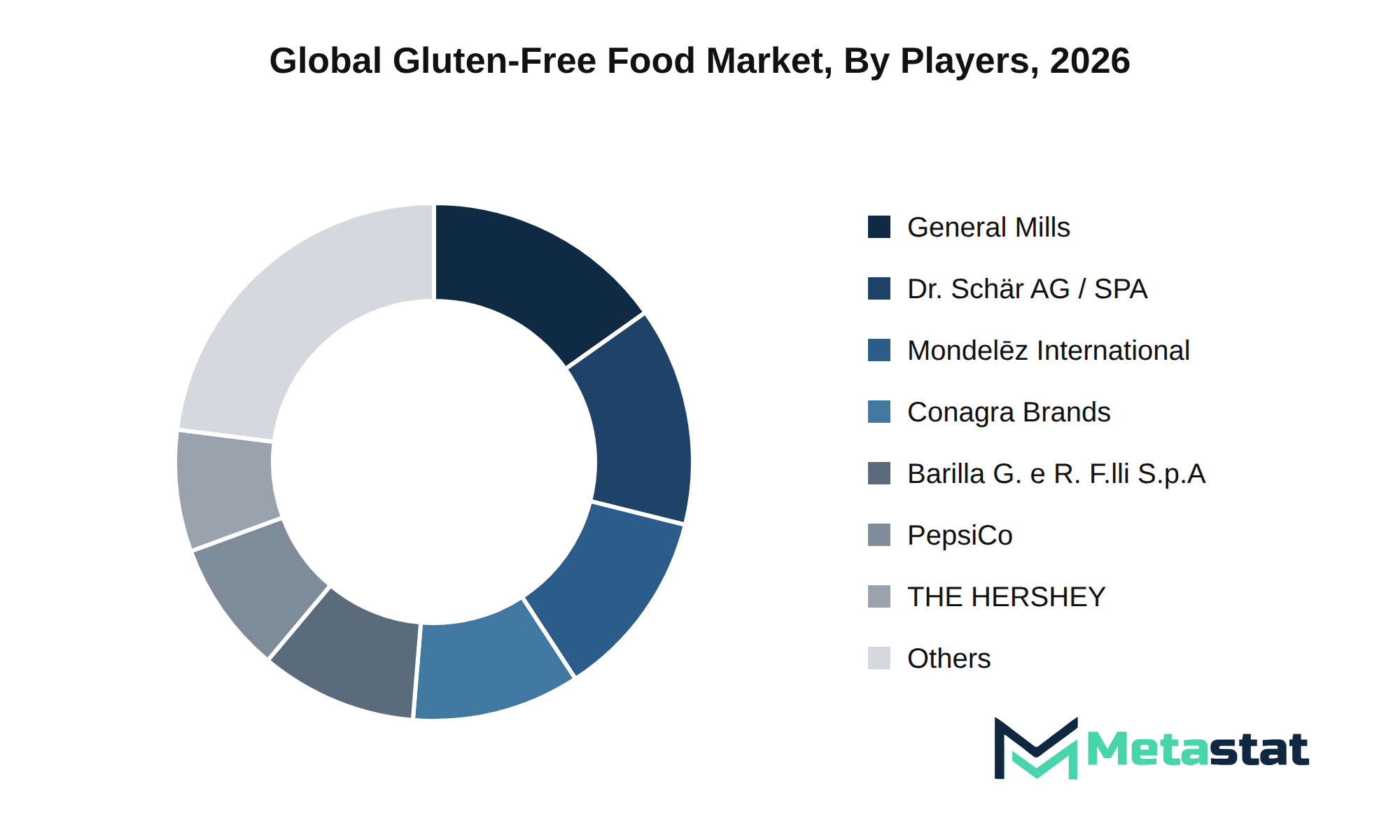
Key players in the Gluten-Free Food market include Dr. Schär AG / SPA, General Mills, Conagra Brands, Inc., Barilla G. e R. F.lli S.p.A., Mondelēz International, PepsiCo Inc., and Bob's Red Mill Natural Foods.
Bulk Milk Coolers (BMC) market size is valued at USD 1,355.7 million in 2025 and projected to reach USD 2,194.3 million by 2033, growing at a CAGR of 6.2%.
Energy Drinks market to hit $159.9B by 2033, growing from $85.7B in 2025 at an 8.1% CAGR. Explore key energy drinks industry trends & insights.
Energy Drinks market, Energy Drinks Market Size, Energy Drinks Market Share, Energy Drinks Market Analysis, Energy Drinks Market Growth, Energy Drinks Market Trends, Energy Drinks Market Research Report, Energy Drinks Market Forecast, Energy Drinks, Energy Drinks Market Research, Energy Drinks Industry, Energy Drinks Industry Report, Energy Drinks Market Data, Energy Drinks Statistics, Energy Drinks Market Statistics, Energy Drinks Industry Trends, Energy Drinks Market Report, Energy Drinks Market Trends, Energy Drinks Market News, Energy Drinks Forecasts, Energy Drinks Market Intelligence Report, Energy Drinks market 2033, Energy Drinks market outlook, Energy Drinks market segmentation, Energy Drinks market drivers, Energy Drinks market restraints, Energy Drinks market opportunities, Energy Drinks market CAGR, Energy Drinks suppliers, Energy Drinks manufacturers, Energy Drinks market by region, North America Energy Drinks market, Asia Pacific Energy Drinks market, Europe Energy Drinks market, Energy Drinks market competitive landscape, Energy Drinks market key players, Standard-Serve Carbonated Ready-to-Drink Energy Drinks market, Low-Sugar Energy Drinks market, E-commerce Energy Drinks market, Powdered Energy Drink Mixes market.