
Global Hybrid Electric Vehicle Conversion Kit Market
Global Hybrid Electric Vehicle Conversion Kit Market Size, Share, By Vehicle Type (Passenger Cars, Light Commercial Vehicles, Heavy Commercial Vehicles and Motorcycles), By Conversion Kit Type (Plug-in Hybrid Conversion Kits, Parallel Hybrid Conversion Kits, Series Hybrid Conversion Kits, Full Hybrid Conversion Kits and Mild Hybrid Conversion Kits), By Component (Battery Systems, Electric Motors, Power Electronics, Control Systems, Regenerative Braking Systems, Wiring Harnesses, Cooling Systems and Mounting Hardware), By Sales Channel (Direct Sales, Specialty Conversion Shops, Automotive Parts Retailers and Online Retail Platforms), Industry Analysis, Growth, Trends, and Forecast, 2026-2033
MSI-4977
August 19, 2026
Updated
281 Pages
Historical
Base year
Forecast
Forecast period
Report Details
Comprehensive Market Analysis And Insights
Market Overview
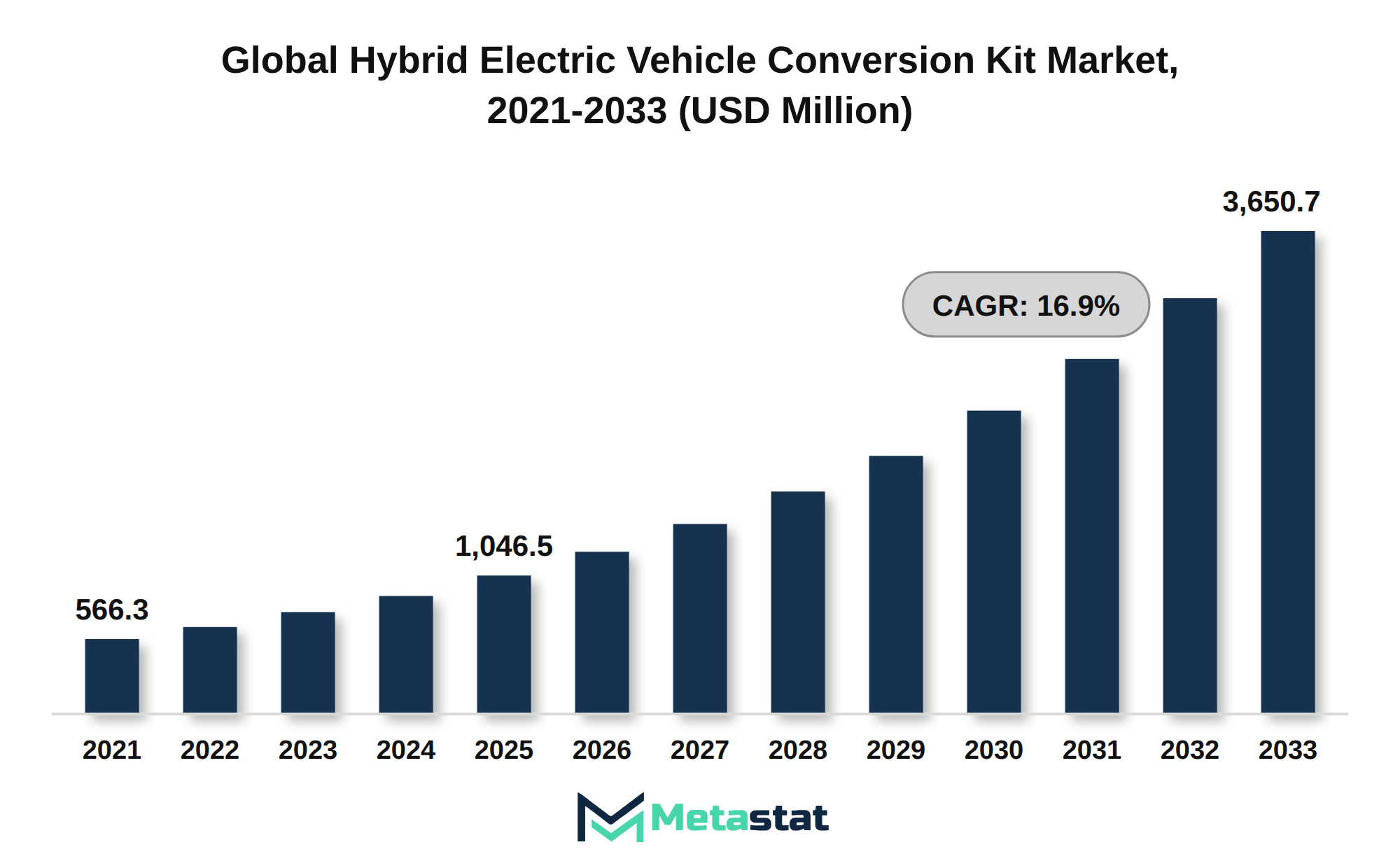
The global Hybrid Electric Vehicle Conversion Kit market was valued at USD 1,046.5 million in 2025 and is projected to reach USD 3,650.7 million by 2033, growing at a CAGR of 16.9% over the forecast period.
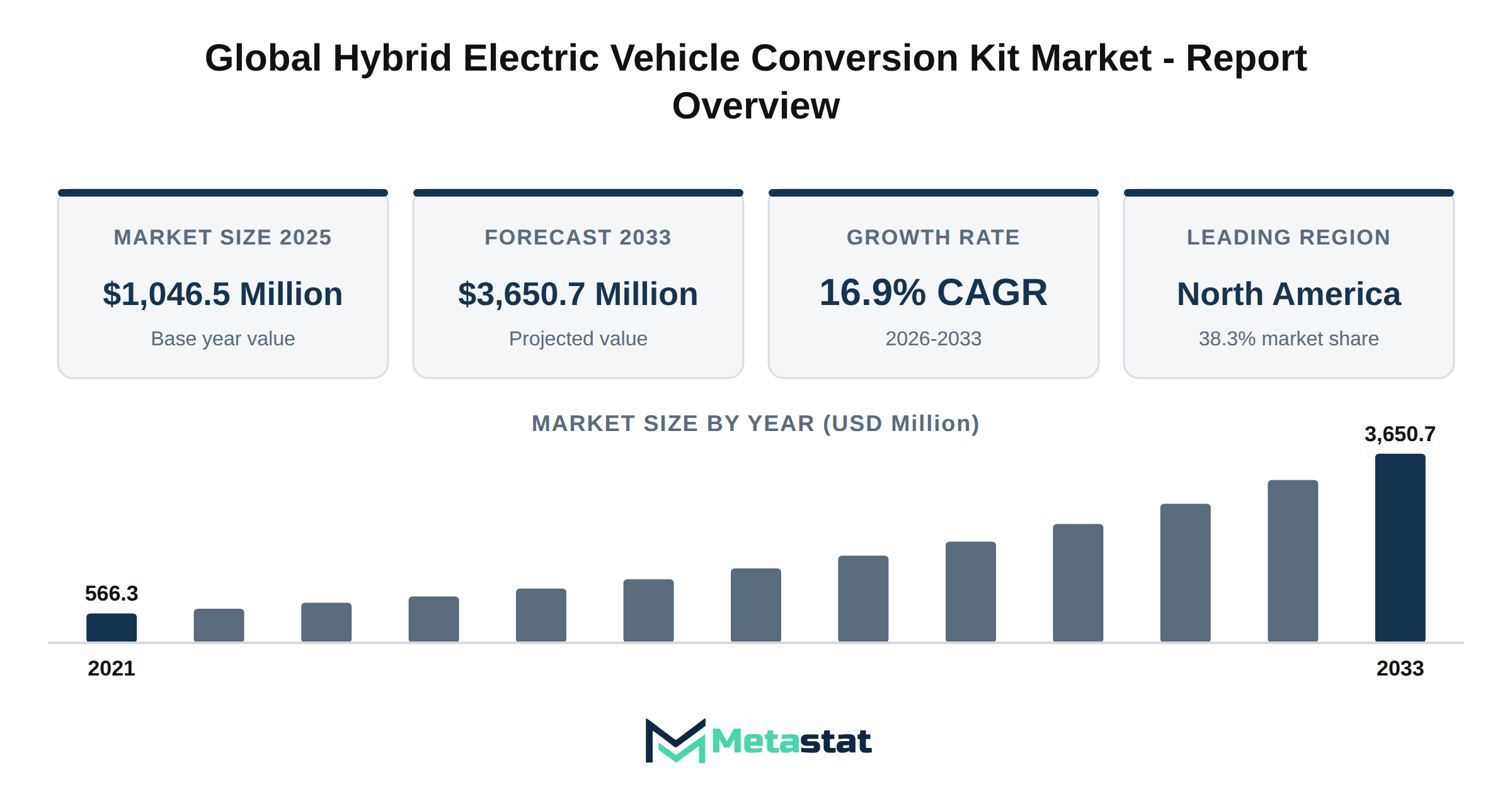
The Hybrid Electric Vehicle Conversion Kit market reached a valuation of USD 1,046.5 million in 2025, following a historical growth trajectory that began in 2021 with USD 566.3 million. The market is projected to expand significantly, reaching USD 3,650.7 million by 2033, representing a compound annual growth rate (CAGR) of 16.9%. This robust expansion is driven by increasing environmental concerns, advancements in technology, and a global shift towards sustainable transportation solutions.
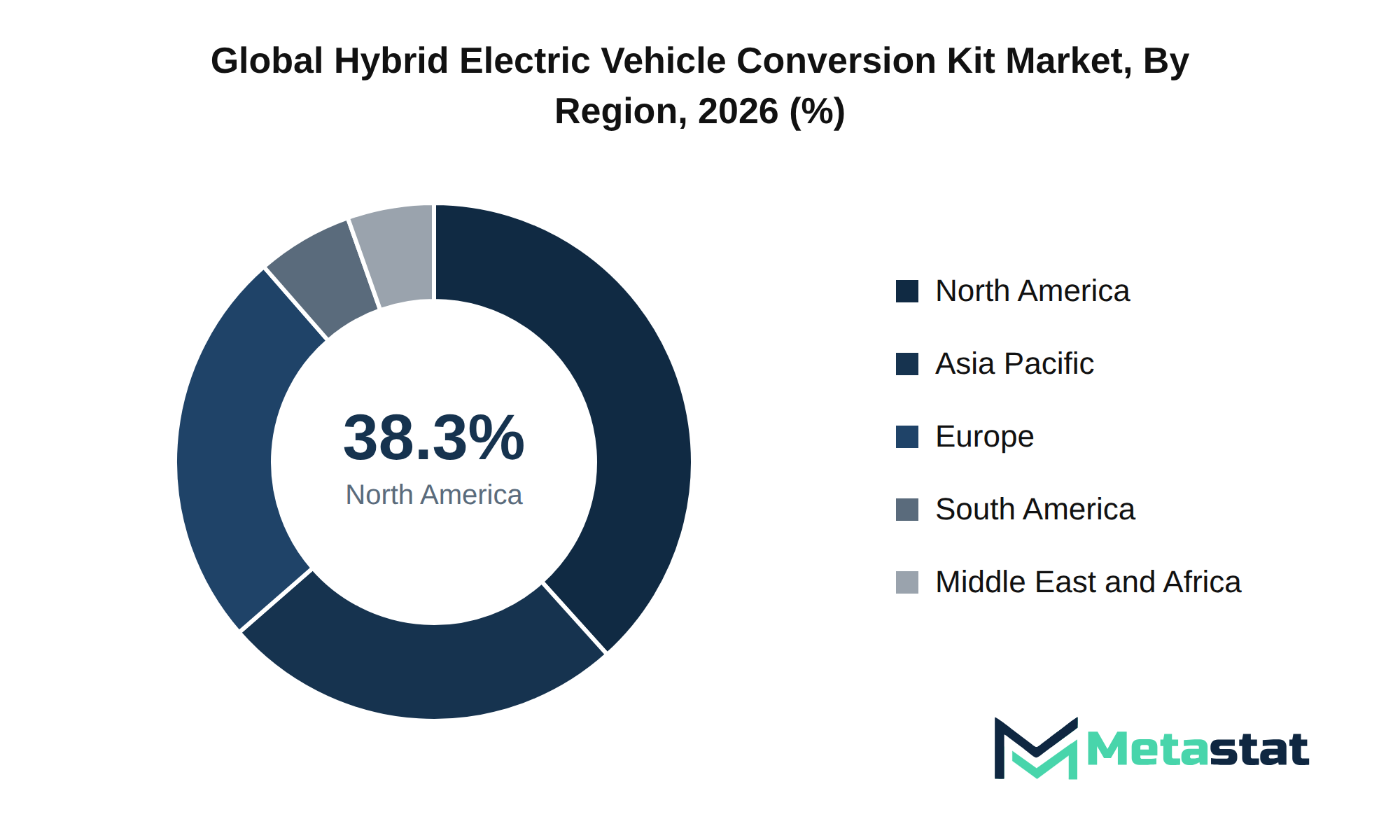
North America holds the largest share of the market, accounting for 38.3% of total revenue. Europe and Asia Pacific follow closely, with market shares of 25% and 25.2%, respectively. Demand in North America is expected to maintain a steady growth rate of 16.9%, reaching USD 1,282.1 million by 2033. This regional dynamic illustrates the strong inclination towards hybrid electric vehicle technologies in these markets.
Passenger cars represent a significant segment within the market, with a projected value increase from USD 703.1 million in 2026 to USD 2,003.5 million by 2033, achieving a CAGR of 16.1%. Light commercial vehicles are anticipated to experience an even higher growth rate of 17.8%, with a total market value of USD 782.7 million by 2033. Emphasis on enhancing vehicle performance and reducing emissions drives this upward trend.
In terms of conversion kit types, plug-in hybrid conversion kits lead the market trajectory, with growth from USD 479.1 million in 2026 to USD 1,495 million in 2033, reflecting a CAGR of 17.7%. Parallel hybrid conversion kits provide a complementary offering, with an expected market value of USD 136.9 million by 2033. The comprehensive nature of these kits aligns with the industry's focus on efficiency and performance enhancement.
Component-wise, battery systems attract significant investment, with a rise from USD 390.4 million in 2026 to USD 1,200 million by 2033, achieving a CAGR of 17.4%. This trend indicates a clear preference for advanced battery technologies that enhance the performance and longevity of hybrid electric vehicles. Electric motors and power electronics are set to experience substantial growth, with total values reaching USD 826.9 million and USD 567.7 million by 2033, respectively.
The Hybrid Electric Vehicle Conversion Kit market experiences significant evolution driven by various factors, including regulatory compliance and sustainability imperatives. Regulatory frameworks increasingly emphasize emissions reductions and energy efficiency, compelling manufacturers to innovate and adapt their product offerings. These regulations encourage investment in research and development, steering the market toward next-generation technologies that align with decarbonization goals.
Innovation trajectories focus on integrating advanced battery systems and electric motors into conversion kits, enhancing vehicle performance while minimizing environmental impact. This shift supports the broader sustainable transformation of the automotive industry, contributing to a circular economy that prioritizes resource efficiency and waste reduction.
The supply chain landscape remains dynamic, with logistics architecture evolving to support the efficient distribution of conversion kits. Strategic sourcing and procurement practices emphasize partnerships with component suppliers, ensuring reliability and quality throughout the value chain. This market fragmentation necessitates a keen understanding of customer journey dynamics, because diverse consumer preferences influence purchasing decisions.
Capital allocation plays a critical role in the market's future, with infrastructure investments directed toward enhancing manufacturing capabilities and expanding distribution networks. Companies prioritize both capital expenditure and operational expenditure to align with long-term growth objectives, considering macroeconomic headwinds, including inflationary pressures and currency volatility.
In this context, the Hybrid Electric Vehicle Conversion Kit market is poised for growth, driven by increasing consumer awareness and demand for eco-friendly transportation solutions. The strategic outlook emphasizes the importance of high-value recommendations and agile responses to shifting market conditions, ensuring resilience and competitiveness in an evolving environment.
Market Dynamics
Emission limits drive closed-loop adoption
Accelerating regulatory frameworks surrounding emissions control and environmental standards drive growth in the Hybrid Electric Vehicle Conversion Kit market. Governments worldwide increasingly emphasize reducing carbon footprints, prompting investment in hybrid technologies. This shift influences industries including automotive and transportation, which adopt conversion kits to comply with stringent emissions regulations.
Rising demand for greener transportation solutions reflects changing consumer preferences towards sustainable practices. Businesses integrating Hybrid Electric Vehicle Conversion Kits into their fleets enhance market competitiveness while addressing environmental concerns. This transition boosts operational efficiency and aligns with broader sustainability initiatives prioritizing resource stewardship.
Infrastructure development initiatives expand globally, enhancing access to charging networks and support for hybrid vehicle adoption. Increased availability of resources and public-private partnerships enable further investment in the market, driving innovation and technological integration. The convergence of these factors fuels anticipated growth of the Hybrid Electric Vehicle Conversion Kit market through 2033.
Increasing Demand for Sustainable Solutions
The demand for sustainable solutions drives significant expansion in the Hybrid Electric Vehicle Conversion Kit market. Heightened awareness of environmental issues and the increasing importance of reducing carbon emissions push consumers and businesses toward adopting hybrid electric technologies. This shift aligns with global trends in sustainability and resource stewardship, compelling manufacturers to innovate and offer solutions that meet evolving consumer preferences.
Consumer behaviors reflect a growing preference for environmentally friendly products. Many individuals seek vehicles that contribute to a reduced carbon footprint, leading to increased interest in Hybrid Electric Vehicle Conversion Kits. This trend, supported by shifting demographic patterns favoring urbanization and lifestyle changes, drives growth within the market.
Investment in infrastructure development complements this demand. Upgrading physical and digital capacities creates a supportive environment for the proliferation of hybrid electric vehicle technologies. Stakeholders across various sectors recognize the commercial advantages of investing in sustainable solutions, enhancing operational productivity and cost-efficiency initiatives that align with evolving market conditions.
The combination of sustainability mandates, consumer preferences, and strategic investment in infrastructure positions the Hybrid Electric Vehicle Conversion Kit market for significant growth and innovation during the forecast period.
Macroeconomic challenges restrain market growth
Macroeconomic headwinds significantly impact the Hybrid Electric Vehicle Conversion Kit market. Inflationary pressures increase production costs, leading to higher pricing for conversion kits and reducing consumer adoption rates. Fluctuations in economic stability result in reduced disposable income, which affects purchasing decisions among consumers and businesses seeking to invest in hybrid technology.
Supply chain disruptions continue to pose challenges within the market. Delays in obtaining critical components, including battery systems and electric motors, hinder manufacturers' ability to meet demand efficiently. This disruption escalates lead times and complicates inventory management, ultimately affecting revenue generation and competitiveness in the market.
Geopolitical instability influences market dynamics. Tensions between nations result in trade restrictions, impacting the availability of essential materials and components needed for hybrid vehicle conversions. Such risks create uncertainty for suppliers and manufacturers, deterring investment and stunting growth in the market.
Infrastructure gaps present additional challenges for the adoption of hybrid electric vehicles. Insufficient charging stations limit the usability of converted vehicles, creating hesitation among potential customers. Without robust charging infrastructure, the market's expansion faces significant constraints.
Technological obsolescence poses a concern for manufacturers and consumers alike. Rapid advancements in hybrid technology require ongoing investment in research and development. Companies unable to keep pace with emerging technologies risk losing market relevance and customer interest. This pressure to innovate results in financial commitments that impact profitability.
Overall, these macroeconomic challenges, supply chain disruptions, and infrastructure gaps impede the growth of the Hybrid Electric Vehicle Conversion Kit market. Addressing these issues will be critical for stakeholders aiming to enhance market penetration and capitalize on the evolving landscape of hybrid vehicle technology.
Geopolitical tensions impact supply chain stability
Geopolitical fragmentation presents challenges for the Hybrid Electric Vehicle Conversion Kit market, particularly through trade deficits and tariff friction. Escalating tensions between nations disrupt supply chains, leading to delays and increased costs for components. This volatility affects manufacturers and suppliers, prompting them to seek alternative sourcing strategies, which strain operational efficiency and profitability.
Technological disruptions and interoperability friction complicate research and development integrations for conversion kits. Companies in the market face difficulties stemming from attempts to align diverse technologies and standards across different regions and suppliers. These challenges increase the overall costs of innovation and slow the adoption of advanced hybrid technologies.
Rising input costs and margin pressures impact pricing strategies within the market. Suppliers contend with fluctuations in materials and production costs, forcing them to reconsider pricing structures. This situation leads to a reluctance among consumers to invest in conversion kits, slowing overall market growth.
Talent retention pressures and workforce skill gaps represent additional obstacles for the Hybrid Electric Vehicle Conversion Kit market. The transition towards hybrid technology requires specialized skills, which are in high demand but short supply. Companies invest in training and development programs to maintain competitive advantages, further straining financial resources.
Environmental sustainability demands and decarbonization mandates influence operational practices in the market. Companies are under pressure to develop eco-friendly solutions while managing compliance overhead associated with evolving legal liabilities. Balancing these demands against economic realities adds complexity to strategic planning and execution.
Overall, these challenges create a multifaceted environment for the Hybrid Electric Vehicle Conversion Kit market, necessitating strategic adaptations by stakeholders to navigate ongoing uncertainties and drive sustained growth.
Emerging technological innovations enhance market growth
The Hybrid Electric Vehicle Conversion Kit market experiences substantial opportunities driven by rapid advancements in technological innovations. These innovations facilitate the development of more efficient and cost-effective conversion kits, attracting a diverse range of consumers and businesses. Technological disruptions, including advancements in battery systems and electric motors, enable better performance and longer lifespans of converted vehicles. Enhanced capabilities in power electronics and control systems contribute to improved energy management, promoting wider adoption.
The demand for next-generation solutions aligns with the growing emphasis on sustainability and green transformations. This trend encourages manufacturers to innovate and integrate advanced technologies into their product offerings, expanding market reach. Digital transformation in procurement processes streamlines purchasing decisions, creating a more responsive market environment. Evolving buying behaviors reflect an increased preference for environmentally friendly options, compelling suppliers to diversify product lines and explore niche applications.
Geographical expansion significantly influences the market's growth trajectory. Emerging markets exhibit increasing demands for hybrid electric vehicle solutions, driven by urbanization and rising environmental awareness. Infrastructure modernization supports the adoption of hybrid electric vehicles, enabling integration into existing transport networks. The combination of these factors positions the Hybrid Electric Vehicle Conversion Kit market for robust expansion during the forecast period.
Market Segmentation Analysis
The Global Hybrid Electric Vehicle Conversion Kit market is segmented based on Vehicle Type, Conversion Kit Type, Component, and Sales Channel.
By Vehicle Type, the market is further segmented into:
- Passenger Cars
- Light Commercial Vehicles
- Heavy Commercial Vehicles
- Motorcycles
Passenger Cars
Valued at USD 703.1 million in 2026, the Passenger Cars segment is projected to reach USD 2,003.5 million by 2033, reflecting a CAGR of 16.1% during the forecast period. This growth stems from increasing consumer preference for environmentally friendly vehicles and advancements in hybrid technology. Enhanced fuel efficiency and reduced emissions drive buyers toward hybrid electric vehicle conversion kits. The rise in urbanization and rising fuel prices contribute to the demand for these kits among consumers seeking cost-effective transportation solutions.
Technological maturation plays a significant role in expanding the market, with ongoing innovations in battery systems and electric motors enhancing performance characteristics. These developments lead to greater adoption rates, driven by newer models catering to consumer expectations for efficiency and effectiveness. The transition to electric vehicles and stricter emissions regulations reinforce the appeal of hybrid electric vehicle conversion kits, further stimulating growth in the Passenger Cars segment.
Competition among manufacturers intensifies, encouraging strategic partnerships and investment in research and development to improve product offerings. Key players in the market actively pursue next-gen upgrades and product evolution, focusing on maximizing the performance of battery systems and control systems. This collaborative environment supports innovation and aligns with market dynamics favoring sustainability and efficiency.
The hybrid electric vehicle conversion kit market experiences shifts in consumption patterns, driven by consumers prioritizing eco-friendly options. There is a noticeable trend toward increased consumer awareness of the environmental impact of traditional vehicles, prompting a shift toward hybrids. Regulatory compliance standards and policies supporting low-emission alternatives enhance market prospects, leading to a more favorable business climate for manufacturers. Overall, the Passenger Cars segment stands at a strategic crossroads, poised for significant growth driven by evolving consumer preferences and technological advancements.
Light Commercial Vehicles
Adoption of hybrid electric vehicles in the Light Commercial Vehicles segment reflects a strong shift towards environmentally friendly transportation solutions. This shift results from stricter emissions regulations and a growing emphasis on reducing operational costs. Fleet operators increasingly pursue hybrid electric technologies to enhance fuel efficiency, lower maintenance expenses, and mitigate carbon footprints. The demand for such vehicles drives investment in hybrid electric vehicle conversion kits, providing significant opportunities for suppliers and manufacturers.
This segment is projected to reach USD 782.7 million by 2033, at a CAGR of 17.8% during the forecast period. Manufacturers of hybrid electric vehicle conversion kits focus on developing advanced components, including battery systems and electric motors, to meet the evolving needs of the market. Innovations in these areas support performance improvements and longer vehicle ranges, further encouraging widespread adoption among end users.
Market dynamics, including the transition to electric mobility, influence the growth trajectory of the Light Commercial Vehicles segment. Increasing consumer awareness of sustainability and fuel savings contributes to a shift in purchasing behaviors. Manufacturers enhance their product offerings with next-generation upgrades, reinforcing the importance of hybrid electric vehicle conversion kits in the broader market.
Heavy Commercial Vehicles
Adoption of Hybrid Electric Vehicle Conversion Kits in the Heavy Commercial Vehicles segment aligns with the increasing focus on environmental sustainability and regulatory compliance. Fleet operators prioritize reducing emissions and fuel consumption, driving demand for effective conversion solutions. The sector's shift towards electrification enhances opportunities for manufacturers to innovate and improve performance, meeting stringent emission norms while optimizing operational costs.
Heavy Commercial Vehicles segment is expected to reach USD 450.5 million by 2033. Growth in this segment results from technological advancements in battery systems and electric motors, enabling more efficient vehicle conversions. While manufacturers refine their offerings, the market sees a rise in competitive pricing and enhanced product features, further attracting end-users.
Demand drivers include government incentives supporting electric vehicle adoption and rising fuel prices, which encourage fleet operators to invest in conversion kits. Regulatory standards influence adoption rates, owing to compliance with emission targets becoming mandatory. The market's trajectory benefits from continuous advancements in conversion technology, promoting long-term growth and a robust investment outlook.
Motorcycles
Growth in the motorcycles segment stems from increasing consumer interest in eco-friendly transportation solutions. Urbanization trends and a rise in traffic congestion raise the demand for compact and efficient vehicles, positioning motorcycles because a viable alternative. This segment is projected to grow at a CAGR of 18.5% during the forecast period. Technological advancements in battery systems and electric motors support the development of high-performance hybrid electric motorcycle conversion kits, attracting consumers seeking enhanced functionality and sustainability.
Changes in regulatory frameworks supporting electric vehicle adoption incentivize manufacturers to invest in innovative conversion kits for motorcycles. While emission standards tighten globally, the market experiences a shift towards hybrid solutions that comply with these regulations. This shift encourages collaboration among various stakeholders, including manufacturers, policymakers, and consumers, strengthening the overall supply chain.
Consumer preferences are evolving towards more sustainable and energy-efficient modes of transportation, creating a favorable environment for the hybrid electric vehicle conversion kit market. The increasing availability of online retail platforms enhances accessibility, allowing for broader consumer reach. This expansion in distribution channels significantly contributes to market growth, making hybrid electric conversions more convenient for end-users.
Investment in research and development within the motorcycle sub-segment supports the evolution of conversion technologies. This ongoing innovation leads to improved performance, cost efficiency, and reliability of hybrid electric vehicle conversion kits. Manufacturers focus on enhancing product quality, and the overall market continues to expand, driven by the demand for advanced and environmentally friendly transportation options.
By Conversion Kit Type, the market is further segmented into:
- Plug-in Hybrid Conversion Kits
- Parallel Hybrid Conversion Kits
- Series Hybrid Conversion Kits
- Full Hybrid Conversion Kits
- Mild Hybrid Conversion Kits
Plug-in Hybrid Conversion Kits
Plug-in Hybrid Conversion Kits segment is valued at USD 479.1 million in 2026 and is projected to reach USD 1,495 million by 2033, at a CAGR of 17.7% during the forecast period. A strong push towards reducing greenhouse gas emissions drives demand for these kits, particularly in markets with stringent environmental regulations. The automotive industry, especially manufacturers of passenger cars and light commercial vehicles, increasingly favors plug-in hybrid solutions to meet regulatory compliance and consumer expectations for sustainability.
Investment in technological advancements enhances the performance and efficiency of plug-in hybrid conversion kits. Ongoing developments in battery systems, electric motors, and control systems increase the appeal of these kits among end-users. The transition towards electrification in vehicles, fueled by rising fuel costs and increasing awareness of environmental impacts, accelerates adoption across various sectors. Growth in online retail platforms and specialty conversion shops facilitates easier access for consumers, further expanding market reach.
Pricing pressures stemming from raw material costs impact the financials associated with plug-in hybrid conversion kits. Fluctuations in commodity prices affect profitability; however, strategic sourcing and supply chain resilience mitigate these risks. With a robust capital investment outlook, companies operating within the market prepare to capitalize on emerging opportunities stemming from evolving consumer preferences and technological innovation. The segment's growth contributes significantly to the overall Hybrid Electric Vehicle Conversion Kit market, demonstrating a clear trajectory towards increased adoption and expanded market share.
Parallel Hybrid Conversion Kits
Strong growth in the Parallel Hybrid Conversion Kits segment reflects increasing consumer preferences for efficient vehicle technologies. The transition toward more sustainable transportation solutions drives adoption among various end-users, particularly in urban environments where fuel efficiency and reduced emissions gain prominence. Investments in advanced battery technologies and electric drive systems enhance the performance and appeal of parallel hybrid systems, making these options attractive for manufacturers and consumers.
Regulatory compliance standards play a crucial role in shaping market dynamics, pushing manufacturers to adopt hybrid technologies to meet stringent emission regulations. Policies promoting low-carbon transportation evolve, accelerating market expansion, particularly in regions with robust environmental policies including Europe and North America. The segment is projected to reach USD 136.9 million by 2033, at a CAGR of 14.5% during the forecast period.
Technological advancements contribute significantly to the growth trajectory of parallel hybrid systems. Enhancements in control systems and power electronics create opportunities for improved vehicle efficiency and performance. The market attracts investments from established automotive players and new entrants aiming to capture a share of the evolving hybrid vehicle landscape.
Price volatility associated with raw materials poses challenges for manufacturers, impacting production costs and profit margins. Strategic sourcing and supply chain resilience strategies mitigate these pressures, enabling firms to maintain competitive pricing. The parallel hybrid conversion kit segment is poised for considerable growth, driven by favorable market conditions and technological innovations within the broader Hybrid Electric Vehicle Conversion Kit market.
Series Hybrid Conversion Kits
Increasing demand for efficient energy solutions drives growth in the Series Hybrid Conversion Kits segment of the Hybrid Electric Vehicle Conversion Kit market. This segment is projected to reach USD 101.1 million by 2033, reflecting a focus on reducing carbon emissions and enhancing vehicle functionality. Technological advancements in hybrid systems support this growth, making vehicles more appealing to consumers and manufacturers.
Regulatory compliance standards pushing for environmental sustainability further enhance market dynamics. These standards encourage the adoption of hybrid technologies, which feature reduced fuel consumption and lower greenhouse gas emissions compared to traditional vehicles. Evolving preferences among consumers seeking sustainable alternatives support this segment's expansion.
Investment in research and development of advanced hybrid technologies results in significant product evolution. Emerging innovations lead to improved performance characteristics, creating a competitive advantage for manufacturers. Strategic opportunity windows for investment in Series Hybrid Conversion Kits arise from ongoing shifts in consumer preferences towards greener technologies, influencing market dynamics.
Price volatility resulting from raw material sourcing and supply chain resilience impacts market dynamics. Suppliers face challenges in maintaining cost structures amid fluctuating prices of critical components. Consequently, businesses in the Series Hybrid Conversion Kits segment explore avenues to enhance operational efficiency, aligning their offerings with the evolving market environment.
Ongoing analysis of downstream application trends indicates an increasing interest in the integration of Series Hybrid Conversion Kits within various vehicle classes. The adaptation of these kits across different platforms highlights the versatility and potential for broader market penetration, positioning this segment favorably within the Hybrid Electric Vehicle Conversion Kit market.
Full Hybrid Conversion Kits
Increasing consumer preference for fuel-efficient vehicles drives demand for Full Hybrid Conversion Kits. This segment is projected to grow at a CAGR of 15.9% during the forecast period. Growth in this segment aligns with a broader trend toward sustainable transportation solutions, appealing to environmentally conscious consumers and businesses. Enhanced fuel economy and reduced emissions are primary drivers for adoption, attributed to regulatory bodies enforcing stricter environmental standards globally.
Technological advancements in battery systems and electric motors enhance the appeal of Full Hybrid Conversion Kits. These innovations ensure improved performance, longevity, and cost-effectiveness, contributing to market growth. The evolving landscape surrounding emission regulations strengthens demand for hybrid solutions across various industries, including passenger transportation and logistics. The increasing complexity of vehicle systems calls for sophisticated conversion solutions, ensuring that manufacturers and suppliers remain competitive.
Full Hybrid Conversion Kits are integral to the ongoing evolution within the Hybrid Electric Vehicle Conversion Kit market. The shift toward cleaner technologies creates opportunities for product evolution and next-generation upgrades. Strategic investments in research and development further support this trend, driving innovation in design and functionality. Market players allocate resources to enhance the efficiency and performance of their offerings, ensuring alignment with consumer expectations and regulatory demands.
Market dynamics reflect a shift toward more sustainable end-use applications. Full Hybrid Conversion Kits cater to diverse consumer segments, ranging from individual vehicle owners to fleet operators. While demand for electric and hybrid vehicles rises, conversion solutions provide an attractive option for upgrading existing vehicle fleets, presenting a viable path to meeting environmental goals. This segment's growth trajectory illustrates the resilience of the market and its strategic importance within the broader automotive industry.
Mild Hybrid Conversion Kits
Emerging trends among consumers increasingly favor Mild Hybrid Conversion Kits within the Hybrid Electric Vehicle Conversion Kit market. Enhanced fuel efficiency and reduced emissions contribute to rising demand, aligning with global sustainability goals. Ongoing advancements in battery technology and electric motor systems facilitate the adoption of these conversion kits, providing a cost-effective means for vehicle electrification without the need for complete replacement.
Regulatory compliance standards significantly influence market dynamics, promoting the transition towards hybrid solutions in various automotive applications. Growing awareness of environmental impact encourages manufacturers to invest in Mild Hybrid Conversion Kits, leading to innovative designs and improved performance. Strategic partnerships among industry players enhance product offerings and streamline supply chains, further supporting market expansion.
Downstream applications in urban transportation and fleet management sectors demonstrate increasing relevance for Mild Hybrid Conversion Kits. Stricter emissions regulations implemented by cities prompt fleet operators to seek viable options to meet compliance without incurring excessive costs. Overall, positive shifts in consumer behavior and regulatory frameworks establish a solid foundation for expansion within this segment.
By Component, the market is further segmented into:
- Battery Systems
- Electric Motors
- Power Electronics
- Control Systems
- Regenerative Braking Systems
- Wiring Harnesses
- Cooling Systems
- Mounting Hardware
Battery Systems
Valued at USD 390.4 million in 2026, the Battery Systems segment is projected to reach USD 1,200 million by 2033, at a CAGR of 17.4% during the forecast period. Primary demand drivers include the increasing emphasis on energy efficiency and sustainability within the automotive sector. Rising fuel prices and stringent regulatory compliance standards necessitate the adoption of advanced technologies, which boosts demand for Battery Systems because integral components in Hybrid Electric Vehicle Conversion Kits.
Technological maturation facilitates the evolution of Battery Systems, leading to enhanced performance characteristics and lower costs. Next-generation upgrades focus on improving energy density and reducing charging times, making electric vehicles more appealing to consumers. Downstream applications for Battery Systems span various vehicle types, including passenger cars and light commercial vehicles, with end-use dynamics shifting toward hybrid solutions that offer greater flexibility and operational efficiency.
The market experiences significant opportunities from consumption shifts toward electrification. Increasing investments in infrastructure and raw material sourcing support the growth of Battery Systems, while supply chain resilience remains critical to meeting rising demand. Strategic opportunity windows arise for manufacturers to innovate and expand their product offerings, particularly in response to evolving consumer preferences and technological advancements.
Electric Motors
Growth in the Electric Motors segment of the Hybrid Electric Vehicle Conversion Kit market is driven by heightened demand for energy-efficient vehicles and advancements in electric motor technology. Rising fuel prices and increasing environmental concerns influence consumers to adopt hybrid electric vehicles, leading to greater interest in electric motors. This segment is estimated to reach USD 826.9 million by 2033, at a CAGR of 17.2% during the forecast period.
Technological maturation in electric motor design enhances performance and efficiency, promoting wider usage in various vehicle types. Innovations in materials and manufacturing processes result in lighter, more compact electric motors, further supporting adoption across passenger cars, light commercial vehicles, and motorcycles. The next generation of electric motors focuses on integrating smart technologies, which optimize energy consumption and improve overall vehicle performance.
Regulatory compliance standards related to emissions and fuel economy drive manufacturers to invest in electric motor technology. Policy headwinds aimed at reducing carbon footprints create strategic opportunity windows for electric motor suppliers. Firms engage in capital investments to develop advanced electric motor solutions, strengthening their competitive positioning in the market.
Supply chain resilience influences market dynamics, owing to raw material sourcing affecting production costs. Fluctuations in the availability and pricing of essential materials impact electric motor manufacturing. Manufacturers continuously seek alternative materials to mitigate risks associated with supply chain vulnerabilities.
Power Electronics
Demand for power electronics in the Hybrid Electric Vehicle Conversion Kit market remains robust, driven by the shift towards electrification in transportation. Growing regulatory impetus for reduced vehicle emissions encourages manufacturers to adopt advanced power electronics systems. Technological maturation in components including inverters and converters supports enhanced efficiency and performance, enabling vehicle manufacturers to comply with stringent environmental standards.
Investment in next-generation power electronics reflects the industry's focus on improving vehicle performance and reducing energy consumption. The segment is projected to reach USD 567.7 million by 2033. Market players increasingly adopt integrated solutions that enhance the functionality of hybrid electric vehicles, contributing to a decrease in production costs and increasing competitiveness.
Power electronics play a critical role in the end-use dynamics of the market, with applications across passenger cars, commercial vehicles, and motorcycles. Demand for high-performance electronics aligns with consumer expectations for improved driving experiences and operational efficiencies. With the continued evolution of hybrid technologies, demand for advanced power electronics is expected to grow, further supporting market expansion.
Control Systems
Growth in the Control Systems segment aligns with advancements in vehicle automation and the increasing complexity of hybrid electric vehicle architectures. These systems ensure optimal power management and energy efficiency, enhancing overall vehicle performance. Demand for sophisticated control systems arises from the need for improved energy management in various vehicle types, driving the market towards more integrated and efficient solutions.
The Control Systems segment is projected to grow at a CAGR of 16.3% during the forecast period. This growth reflects the industry's shift towards higher efficiency and smarter technologies in the Hybrid Electric Vehicle Conversion Kit market. Innovations in control algorithms and integration with advanced driver-assistance systems support this expansion, attracting investments and increasing competition among market participants.
Increasing regulatory compliance standards regarding emissions and fuel efficiency further fuel demand for advanced control systems. Manufacturers focus on developing compliant systems that optimize the performance of hybrid vehicles while meeting these stringent regulations. This trend enhances the market's attractiveness for investors and manufacturers, leading to a stronger competitive environment.
The evolving nature of electrification in the automotive sector necessitates continuous upgrades and adaptations of control systems. Upgrading legacy systems to next-gen solutions becomes crucial for maintaining competitiveness and relevance in the market. Enhanced functionalities and improved reliability of control systems provide strategic opportunities for market participants, ultimately benefiting end-users through better vehicle performance and lower operational costs.
Regenerative Braking Systems
Technological maturation significantly influences the adoption of regenerative braking systems in the Hybrid Electric Vehicle Conversion Kit market. These systems enhance energy efficiency by capturing and reusing energy typically lost during braking, leading to improved vehicle performance and reduced operational costs. Growing recognition of energy efficiency among consumers encourages buyers to consider vehicles equipped with regenerative braking systems, increasing competitive advantage for manufacturers.
Next-generation upgrades in regenerative braking technology focus on improving energy recovery rates and system integration with advanced electronic controls. Innovations including lightweight materials and enhanced battery storage capabilities further support the evolution of these systems, encouraging manufacturers to invest in research and development. The trend toward environmental sustainability strengthens demand owing to regulatory compliance standards increasingly favoring energy-efficient solutions.
End-use dynamics reflect a shift toward hybrid vehicles equipped with advanced regenerative braking systems. This shift aligns with the broader consumer movement toward low-emission transportation options. The market benefits from the transition owing to more manufacturers adopting these technologies in response to rising consumer expectations for sustainability and efficiency.
Raw material sourcing for regenerative braking systems involves specific components including advanced composites and rare metals, which encounter supply chain vulnerabilities. Ongoing concerns regarding raw material availability introduce pricing volatility. Strategic opportunity windows arise because manufacturers seek to mitigate these risks through diversified sourcing strategies and innovative material use.
Investment in regenerative braking systems presents a strategic avenue for manufacturers aiming to capture market share. The market grows, and companies focusing on technological advancements and competitive pricing structures will likely strengthen their market positions. This focus on enhancing regenerative braking systems aligns with the broader goals of the Hybrid Electric Vehicle Conversion Kit market, reinforcing the importance of energy efficiency and innovation in meeting consumer demands.
Wiring Harnesses
Demand for wiring components in the Hybrid Electric Vehicle Conversion Kit market reflects the broader trend toward electrification in the automotive sector. These components play a critical role in connecting various electrical systems within hybrid vehicles, enabling efficient energy management and integration of power sources. Increasing complexity in hybrid electric vehicles drives demand for advanced wiring solutions. Manufacturers focus on enhancing the durability and performance of these components to meet stringent requirements of hybrid applications.
Technological maturation drives innovation in wiring design, focusing on lightweight and flexible materials that enhance efficiency. Next-generation upgrades involve incorporating smart technologies that enable better energy distribution and diagnostics. This evolution aligns with the growing emphasis on energy efficiency and sustainability in the automotive industry.
Downstream applications for wiring components extend to various hybrid electric vehicle types, ensuring compatibility across passenger cars, light commercial vehicles, and heavy commercial vehicles. End-use dynamics reflect a shift toward more sophisticated electrical systems, increasing the value proposition of advanced wiring solutions. Compliance with regulatory standards influences design and manufacturing, pushing for higher safety and performance benchmarks.
Cost structures in this segment show pressures from raw material sourcing and pricing volatility, particularly in response to supply chain fluctuations. Strategic opportunity windows arise from increasing integration of hybrid technologies, with investments directed toward enhancing wiring functionality. The overall outlook for wiring components in the market remains positive, driven by ongoing advancements and a commitment to meeting evolving consumer and regulatory demands.
Cooling Systems
Demand for cooling systems within the Hybrid Electric Vehicle Conversion Kit market is influenced by increasing regulatory pressures aimed at reducing emissions and enhancing vehicle efficiency. Automakers prioritize innovations that enhance thermal management, which directly affects vehicle performance and energy consumption. Adoption of advanced cooling technologies, including liquid cooling systems, plays a crucial role in maintaining optimal battery temperatures, thereby extending battery life and improving overall system efficiency.
Technological maturation in cooling technologies supports the development of next-generation cooling systems that optimize performance while minimizing energy loss. Integration of smart materials and innovative designs enhances the effectiveness of cooling systems, facilitating better thermal control in hybrid electric vehicles. This evolution aligns with consumer demand for more sustainable and efficient vehicles, encouraging manufacturers to invest in cooling system advancements.
End-use dynamics shift towards hybrid electric vehicles with enhanced thermal management capabilities, resulting in improved reliability and performance. The market sees a growing interest in aftermarket solutions that enhance existing cooling systems, creating opportunities for manufacturers to expand their product offerings. Regulatory compliance standards drive the need for efficient cooling solutions, influencing manufacturers to invest in research and development initiatives.
Certain challenges persist within the supply chain, particularly regarding raw material sourcing for advanced cooling system components. Fluctuations in pricing and availability of essential materials impact production costs, necessitating strategic sourcing approaches. Manufacturers explore alternative materials and innovative designs to mitigate risks associated with supply chain vulnerabilities, ensuring consistent product availability in the competitive market.
Mounting Hardware
Technological advancements in the Hybrid Electric Vehicle Conversion Kit market drive interest in mounting hardware, which ensures the efficient installation and performance of conversion kits. Increasing vehicle electrification pushes manufacturers to innovate components that enhance compatibility and reliability across various vehicle types.
Consumer demand for sustainable and energy-efficient vehicles increases the need for high-quality mounting hardware, which supports the overall performance of hybrid systems. Regulatory compliance standards further compel manufacturers to adopt robust mounting solutions that meet safety and performance criteria.
Cost structures related to mounting hardware impact pricing dynamics in the market. Pricing volatility in raw materials, including metals and plastics, influences overall production costs. Manufacturers focus on supply chain resilience to mitigate risks associated with raw material sourcing and logistics vulnerabilities, maintaining competitive advantage.
Strategic opportunity windows for innovation in mounting hardware exist owing to industry players exploring next-gen upgrades and disruptive alternatives. Continuous product evolution aligns with changing end-use dynamics and consumption shifts resulting from market maturation, ultimately enhancing performance and user experience.
By Sales Channel, the market is further segmented into:
- Direct Sales
- Specialty Conversion Shops
- Automotive Parts Retailers
- Online Retail Platforms
Direct Sales
Significant growth in the Direct Sales channel reflects a shift toward consumer engagement and convenience in the Hybrid Electric Vehicle Conversion Kit market. Valued at USD 410.4 million in 2026, this segment is projected to reach USD 1,131.7 million by 2033, at a CAGR of 15.6% during the forecast period. Increasing awareness regarding environmental sustainability and the economic advantages of hybrid vehicles drives demand in this channel. Consumers prioritize tailored solutions, prompting manufacturers to enhance direct sales strategies, allowing end-users to access specialized products without intermediaries.
Technological advancements play a substantial role in supporting the growth of this segment, with innovations in conversion kits enhancing efficiency and performance. Manufacturers expand their product offerings through direct sales, enabling them to capture a larger share of the market. While regulatory compliance standards tighten, direct sales channels facilitate better communication between manufacturers and consumers, ensuring that the products meet specific requirements. This alignment between consumer needs and manufacturer capabilities fuels market growth, positioning direct sales because a vital component of the overall Hybrid Electric Vehicle Conversion Kit market.
Specialty Conversion Shops
Market growth for Specialty Conversion Shops aligns with rising consumer interest in sustainable and efficient vehicle options. This segment is estimated to reach USD 1,077 million by 2033, at a CAGR of 16.6% during the forecast period. Increased environmental awareness among consumers drives demand for hybrid electric vehicle solutions, encouraging investments in conversion kits by specialty shops. The evolution of these shops reflects a larger trend toward customization and personalization in the automotive industry, where consumers seek tailored solutions to fit their specific needs.
Technological advancements in battery systems and electric motors enhance the offerings of specialty conversion shops. Shops focusing on high-quality components and installation processes fulfill the market's growing expectations for reliability and performance. These factors contribute to heightened consumer trust in specialty shops, directly influencing purchasing decisions. The emphasis on regulatory compliance regarding emissions and fuel efficiency creates a favorable environment for these businesses to thrive.
Overall, the Specialty Conversion Shops segment holds significance in the Hybrid Electric Vehicle Conversion Kit market, addressing consumer demands while adapting to technological innovations and regulatory changes. This segment's growth trajectory reflects broader shifts within the automotive landscape, indicating a robust future for businesses operating within this niche.
Automotive Parts Retailers
Growth within the Automotive Parts Retailers segment stems from increasing consumer interest in Hybrid Electric Vehicle Conversion Kits. Consumers seek greater availability and accessibility of conversion kits through retail channels, creating robust demand dynamics. Retailers play a critical role in meeting customer needs by providing a variety of products that cater to diverse vehicle types and conversion requirements.
Technological advancements in electric vehicle components enhance the attractiveness of hybrid conversion kits. While vehicle manufacturers pursue more efficient powertrains, retailers benefit from the introduction of upgraded and innovative products. This evolution increases sales and expands consumer choices, ultimately impacting the overall growth trajectory of the Hybrid Electric Vehicle Conversion Kit market.
The Automotive Parts Retailers segment is expected to reach USD 711.9 million by 2033. This figure highlights the anticipated revenue potential, driven by a combination of favorable market conditions, increasing consumer awareness, and continuous product enhancements across the segment.
Adoption of hybrid conversion kits leads to significant shifts in consumer preferences, with sustainability becoming a key purchase driver. Retailers adapt their strategies to align with these preferences, ensuring they offer environmentally friendly solutions that appeal to a growing demographic of eco-conscious consumers. This alignment enhances the competitive positioning of retailers within the market.
Continued investment in marketing and distribution channels strengthens the presence of Automotive Parts Retailers. While conversion kits become more mainstream, effective marketing strategies are essential to capture market share and drive consumer engagement. Retailers that leverage digital platforms and enhance their supply chain resilience find opportunities for growth and profitability in the evolving landscape.
Online Retail Platforms
Growing interest in online shopping influences the expansion of the Online Retail Platforms segment within the Hybrid Electric Vehicle Conversion Kit market. Increased convenience and accessibility drive consumers toward purchasing conversion kits through digital channels. Enhanced customer experiences, including detailed product information and user reviews, significantly impact purchasing decisions.
The Online Retail Platforms segment is projected to grow at a CAGR of 20.7% during the forecast period. This substantial growth reflects the increasing reliance on e-commerce for automotive products. Competitive pricing and promotional offers available through online platforms entice buyers, contributing to segment growth.
Technological advancements support the segment's expansion, with improvements in website functionalities and payment systems enhancing user experience. The shift toward online retail aligns with the general trend of digital transformation across industries.
Increased awareness among consumers regarding the environmental benefits of hybrid vehicles drives demand for hybrid electric vehicle conversion kits. This heightened interest in sustainability leads consumers to explore online options, facilitating informed purchasing decisions.
Growth within the Online Retail Platforms segment will impact overall market dynamics, driven by companies investing in e-commerce strategies to capture consumer attention. The integration of advanced logistics solutions enhances supply chain efficiency, ensuring timely delivery of products purchased online. This segment's evolution reflects broader changes in consumer behavior within the Hybrid Electric Vehicle Conversion Kit market.
By Region
Based on geography, the Global Hybrid Electric Vehicle Conversion Kit market is divided into North America, Europe, Asia-Pacific, South America, Middle East, and Africa.
North America
North America Hybrid Electric Vehicle Conversion Kit market is set to expand at a CAGR of 16.9% within the forecast period, reaching a market size (TAM) of USD 1,282.1 million by the end of 2033. The region accounted for 38.3% of the global market in 2025, indicating its significant position in the overall market.
Growth in this market stems from several factors, including increasing consumer awareness of environmental issues, which drives demand for cleaner transportation solutions. The United States, Canada, and Mexico demonstrate robust adoption rates across various vehicle types, contributing to the overall expansion. Local regulations supporting hybrid electric vehicle technologies further encourage investments in conversion kits, enhancing market penetration.
Infrastructure modernization supports the market. Expanded electric vehicle charging networks and updated power grid capabilities facilitate the transition to hybrid technologies. Localized manufacturing densities in North America contribute to efficient supply chains, enabling faster delivery and installation of conversion kits.
Key players in the region, including XL Fleet, EV West, and Enginer, actively engage in product innovations, offering diverse solutions to meet the evolving needs of consumers. Growing competition creates a dynamic environment where suppliers strive to enhance their offerings and capture market share.
While the region benefits from established market dynamics, emerging segments including light commercial vehicles and motorcycles present opportunities for incremental growth. These segments exhibit increasing interest in hybrid solutions, driven by the necessity for fuel efficiency and reduced emissions.
Continued investment in research and development will support advancements in conversion kit technologies, further propelling the market forward. Manufacturers and consumers alike recognize the value of hybrid electric vehicles, positioning the North American market for substantial growth through the forecast period.
Europe
In Europe, the Hybrid Electric Vehicle Conversion Kit market is projected to capture a share of 25.0% of the global market by 2025. Countries including Germany, France, the UK, Italy, and Spain lead the demand for hybrid electric vehicle technologies, driven by stringent environmental regulations and government incentives aimed at reducing carbon emissions. Russia and the rest of Europe are gradually adopting these technologies, influenced by increasing awareness of climate change and the need for sustainable transportation solutions.
Technological advancements and the modernization of infrastructure facilitate the deployment of hybrid electric vehicle conversion kits across the continent. Investments in charging infrastructure and electric vehicle support systems enhance the appeal of hybrid solutions. Demand for efficiency and sustainability among consumers accelerates the adoption of hybrid technologies, particularly in urban areas where congestion and pollution are pressing issues.
Market dynamics within Europe reflect a maturing landscape, characterized by high-value replacement cycles resulting from older vehicles transitioning to hybrid models. The ongoing shift toward localized manufacturing and supply chain regionalization strengthens the market, with several domestic players emerging from leaders in the hybrid conversion industry. This trend enables cross-border trade corridors and enhances competition, driving innovation and further investment in the sector.
Overall, the regional competitive landscape features diverse domestic market participants, each contributing unique strengths to the Hybrid Electric Vehicle Conversion Kit market. Their strategies, combined with favorable regulatory frameworks, position Europe because a key player in hybrid technology adoption while creating opportunities for continued growth and expansion.
Asia-Pacific
Asia-Pacific represents a crucial region in the Hybrid Electric Vehicle Conversion Kit market, contributing significantly to the global market in 2025. Countries like China, Japan, India, and South Korea lead in adoption, driven by stringent emissions regulations and government incentives promoting electrification. The increasing availability of localized manufacturing and the emergence of regional domestic market participants enhance competitive dynamics.
Infrastructure modernization contributes significantly to market expansion. Investments in electric vehicle charging networks and battery production facilities improve consumer confidence and facilitate market penetration. Cultural nuances of consumer behavior in these countries emphasize a growing preference for eco-friendly transportation solutions, spurring demand for various conversion kit types.
Innovation within the region highlights the development of advanced battery systems and electric motors, aligning with global trends. The market is anticipated to experience incremental growth from segments including plug-in hybrid conversion kits and light commercial vehicles, supported by evolving consumer preferences and technological advancements. Southeast Asia and the Rest of Asia Pacific present additional opportunities for expansion, characterized by underpenetrated markets and rising awareness of hybrid technologies.
South America
The Hybrid Electric Vehicle Conversion Kit market in South America faces unique challenges and opportunities. Brazil and Argentina serve because the primary markets, contributing significantly to regional demand. Increasing environmental awareness and government incentives drive adoption, creating a favorable environment for hybridization of the vehicle fleet.
Infrastructure modernization contributes to market expansion, with investments in electric vehicle charging stations and support services. The region's focus on sustainable transportation aligns with global trends, enhancing the appeal of hybrid electric vehicles. Growing awareness of energy efficiency and lower operational costs associated with hybrid vehicles encourages consumers to consider conversion kits.
Local manufacturers and suppliers capitalize on the increasing market demand. Brazil, in particular, benefits from a strong automotive sector and a shift toward greener technologies. The market sees potential for further growth through partnerships with regional players focused on innovation and expansion of the hybrid electric vehicle ecosystem.
While the market evolves, domestic players are expected to strengthen their positions. Competitive dynamics will influence market strategies, with an emphasis on localized production and tailored offerings that connect with regional consumers. The Hybrid Electric Vehicle Conversion Kit market in South America is poised for gradual growth, supported by strategic initiatives and evolving consumer preferences.
Middle East and Africa
The Middle East and Africa region’s share of the global Hybrid Electric Vehicle Conversion Kit market reached 5.4% in 2025. Countries including Saudi Arabia, UAE, and South Africa demonstrate increasing infrastructure modernization efforts and investment in electric vehicle technologies. Local energy policies supporting sustainability initiatives enhance growth potential within the market.
Investment in localized manufacturing capabilities contributes to a more resilient supply chain and aligns with the global shift towards hybrid and electric vehicle adoption. Demographic shifts towards urbanization in major cities within the region create a fertile market for hybrid electric vehicle solutions.
Strong demand for energy-efficient transportation methods drives significant interest in hybrid electric vehicle conversion kits. Regional market participants actively seek partnerships and collaborations to strengthen their competitive position and expand their reach.
Emerging market front-runners demonstrate a commitment to enhancing product offerings, driving advancements in technology and innovation. Strategic entry barriers, including regulatory frameworks and local compliance mandates, shape the competitive environment and influence market dynamics.
Competitive Landscape and Strategic Insights
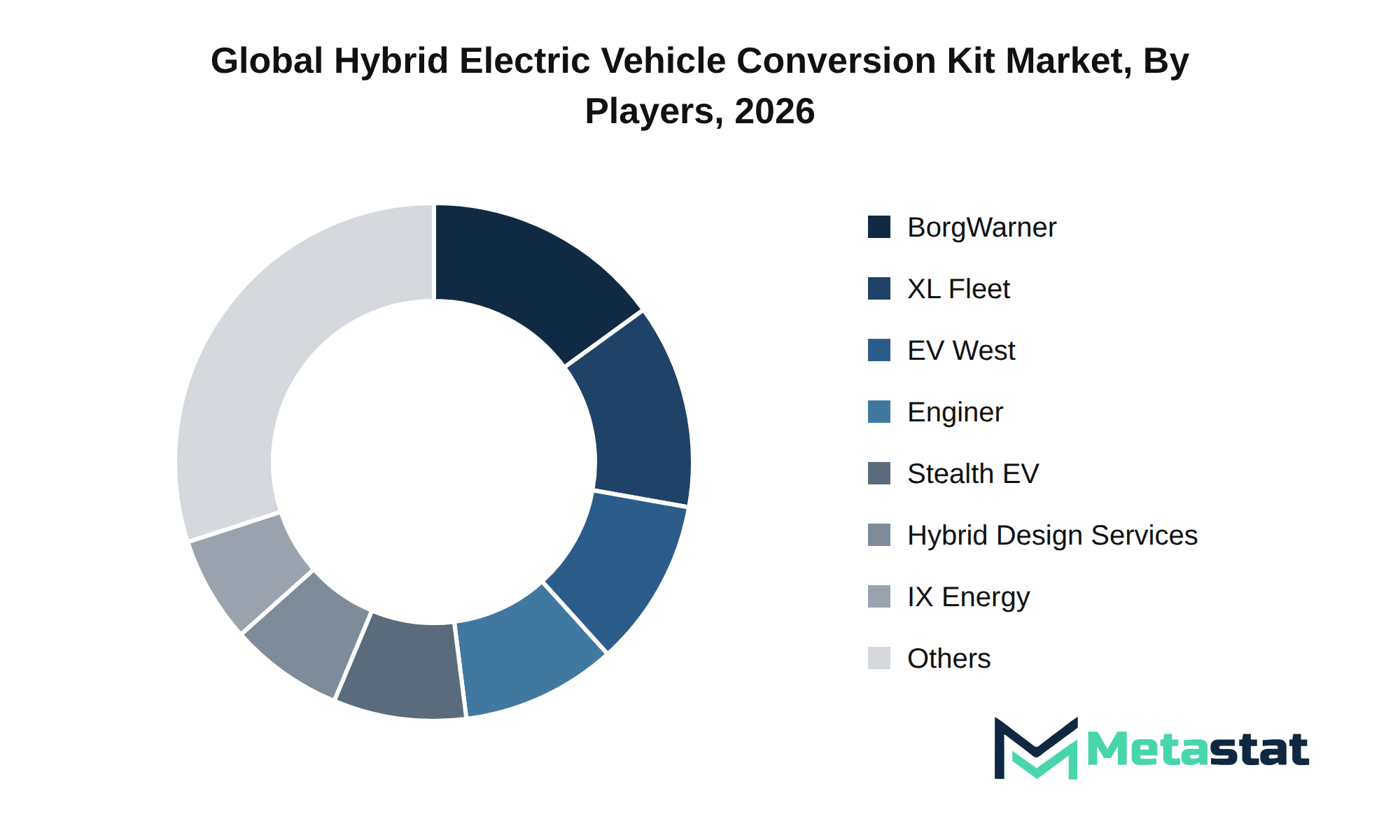
The Hybrid Electric Vehicle Conversion Kit market experiences a dynamic competitive environment shaped by various strategic behaviors. Companies within this market focus on product differentiation and innovation, with a notable emphasis on proprietary technology moats that enhance competitive positioning. For instance, firms like XL Fleet and BorgWarner Inc. invest in research and development to advance product offerings, ensuring alignment with evolving consumer preferences and regulatory standards. Strategic alliances and joint ventures form a critical part of growth strategies, allowing for resource sharing and enhanced market reach.
Market strategies and dynamics
Pricing architectures in the market vary significantly, reflecting the diverse commercial models employed by participants. Players including EV West and Stealth EV adopt competitive pricing strategies to attract a broader customer base, while others leverage brand equity to justify premium pricing. The threat of new entrants remains pertinent, with startup disruption dynamics influencing established firms to strengthen barriers to entry through intellectual property portfolios and technology defensibility. Overall, the Hybrid Electric Vehicle Conversion Kit market continues to evolve, driven by competitive imperatives and a focus on strategic growth vectors.
Forecast and Future Outlook
Market size is forecast to rise from USD 1,046.5 million in 2025 to over USD 3,650.7 million by 2033. The base case presents a compound annual growth rate (CAGR) of 16.9% throughout this period, driven by evolving consumer preferences toward sustainability and reduced emissions. The hybrid electric vehicle conversion kit market experiences substantial demand from passenger cars and light commercial vehicles, with significant growth opportunities anticipated in emerging markets.
In a bull case scenario, robust investments in infrastructure and technology advancements would enhance market growth even further, positioning it for a more rapid expansion than projected. Conversely, a bear case could arise from economic downturns, supply chain disruptions, or delays in regulatory compliance, potentially limiting market adoption and growth rates.
Structured shifts in consumer behavior align with increasing regulatory pressures and stricter emissions standards. These shifts drive manufacturers to innovate, integrating next-generation technologies into hybrid electric vehicle conversion kits. R&D commercialization timelines indicate a need for swift adaptation to meet market demands while aligning with evolving policies across different regions.
Strategic capital allocation and infrastructure commitments remain crucial in supporting the hybrid electric vehicle conversion kit market. Anticipated investments in R&D and production capacity development will enable companies to address unmet enterprise needs and capitalize on high-growth pockets. This proactive approach ensures firms maintain competitiveness while preparing for future challenges and opportunities in an evolving global environment.
Hybrid Electric Vehicle Conversion Kit Market Key Segments
By Vehicle Type:
- Passenger Cars
- Light Commercial Vehicles
- Heavy Commercial Vehicles
- Motorcycles
By Conversion Kit Type:
- Plug-in Hybrid Conversion Kits
- Parallel Hybrid Conversion Kits
- Series Hybrid Conversion Kits
- Full Hybrid Conversion Kits
- Mild Hybrid Conversion Kits
By Component:
- Battery Systems
- Electric Motors
- Power Electronics
- Control Systems
- Regenerative Braking Systems
- Wiring Harnesses
- Cooling Systems
- Mounting Hardware
By Sales Channel:
- Direct Sales
- Specialty Conversion Shops
- Automotive Parts Retailers
- Online Retail Platforms
By Region:
- North America
- Europe
- Asia-Pacific
- South America
- Middle East and Africa
Key Global Hybrid Electric Vehicle Conversion Kit Industry Players
- XL Fleet
- EV West
- Enginer
- Stealth EV
- EVDrive
- Hybrid Design Services
- IX Energy
- Odyne Systems LLC
- Protean
- BorgWarner Inc.
- Folks Motor
- Magmotor Technologies Inc.
- ZF Friedrichshafen AG
- Marlin Motocorp Private Limited
- Fazzi Industries
- MELADATH AUTO COMPONENTS PRIVATE LIMITED
- gogoa1
- KPIT Technologies Ltd
- Flux Hybrids
- OZ Electric Vehicles
- NORTHWAY MOTORS
Report Coverage
The report strategically identifies and profiles the key market players and analyses their core competencies in each sub-segment of the Hybrid Electric Vehicle Conversion Kit market.
Report Attributes | Details |
Study Period | 2021-2033 |
Base Year | 2025 |
Estimated Year | 2026 |
Forecast Period | 2026-2033 |
Historical Period | 2021-2025 |
Growth Rate | CAGR 16.9% from 2026 to 2033 |
Revenue Unit | USD million |
Segmentation | By Vehicle Type, Conversion Kit Type, Component, Sales Channel, and Region |
By Region | North America (By Vehicle Type, Conversion Kit Type, Component, Sales Channel, and Country)
|
Europe (By Vehicle Type, Conversion Kit Type, Component, Sales Channel, and Country)
| |
Asia Pacific (By Vehicle Type, Conversion Kit Type, Component, Sales Channel, and Country)
| |
South America (By Vehicle Type, Conversion Kit Type, Component, Sales Channel, and Country)
| |
Middle East and Africa (By Vehicle Type, Conversion Kit Type, Component, Sales Channel, and Country)
|
What Report Provides
- Company Market Share, Revenue and Ranking for the Hybrid Electric Vehicle Conversion Kit Market
- Key Market Leaders in the Hybrid Electric Vehicle Conversion Kit Industry
- Full In-Depth Analysis of the Parent Industry
- Industry Statistics and Trends Affecting the Market
- Important Changes in Market Dynamics and Their Impact
- Segmentation Details of the Hybrid Electric Vehicle Conversion Kit Market
- Historical, Ongoing, and Projected Market Analysis
- Key Strategies of Major Players in the Market
Frequently Asked Questions
Find answers to common questions about this report
The Hybrid Electric Vehicle Conversion Kit market size was valued at USD 1,046.5 million in 2025, according to the Metastat Insights study.
The Hybrid Electric Vehicle Conversion Kit market is projected to grow at a CAGR of 16.9% during the forecast period from 2026 to 2033.
The North America Hybrid Electric Vehicle Conversion Kit market size is estimated to reach USD 1,282.1 million by 2033.
The Passenger Cars segment leads the Hybrid Electric Vehicle Conversion Kit market, with a projected value of USD 2,003.5 million by 2033. This segment demonstrates significant growth potential, with a compound annual growth rate of 16.1 percent.
Accelerating regulatory frameworks surrounding emissions control and rising consumer demand for sustainable transportation solutions drive growth in the Hybrid Electric Vehicle Conversion Kit market. Investment in hybrid technologies and infrastructure development further supports this trend, enhancing market competitiveness and operational efficiency for businesses adopting these solutions.
North America holds the dominant share of the Hybrid Electric Vehicle Conversion Kit market, with a value of USD 1,282.1 million projected for 2033, representing 38.3 percent of the total market.
Macroeconomic headwinds, inflationary pressures, and supply chain disruptions significantly restrain the Hybrid Electric Vehicle Conversion Kit market. Rising production costs and geopolitical instability create uncertainty, affecting investment and leading to potential hesitance among consumers and businesses to adopt hybrid technologies. infrastructure gaps, including insufficient charging stations, limit the usability of converted vehicles.
Accelerating regulatory frameworks and heightened consumer awareness of environmental issues favor product adoption in the Hybrid Electric Vehicle Conversion Kit market. The emphasis on reducing carbon footprints drives businesses and individuals toward hybrid technologies, enhancing market competitiveness and aligning with sustainability initiatives. This shift reflects changing consumer preferences for greener transportation solutions.
The Hybrid Electric Vehicle Conversion Kit market is estimated to reach a valuation of USD 3,650.7 million by 2033.
Key players in the Hybrid Electric Vehicle Conversion Kit market include XL Fleet, EV West, Enginer, Stealth EV, EVDrive, Hybrid Design Services, and BorgWarner Inc.
Choose Your License
Global Hybrid Electric Vehicle Conversion Kit Market
Related Reports
Explore related market intelligence reports worth reading alongside this one.
Automotive Retrofit Electric Vehicle Powertrain Market
Starting from
$2950