Global Luxury Resort Hotel Market Size, Share, By Location Type (Mainland Beach and Coastal Resorts, Island Resorts, Mountain and Alpine Resorts, Desert Resorts, Forest and Wilderness Resorts, Lake and River Resorts, Rural and Countryside Resorts, Others (Remote Nature and Specialty Destination Resorts)), By Accommodation Type (Luxury Guest Rooms, Suites, Private Villas, Bungalows and Cottages, Overwater Villas and Bungalows, Luxury Tents and Lodges, Others (Chalets and Cabins)), By Booking Channel (Hotel Website and Mobile App, Hotel Call Center and Property Direct, Online Travel Agencies, Traditional Travel Agencies, Tour Operators and Destination Management Companies, Hotel Wholesalers and Bedbanks, Global Distribution Systems and Travel Management Companies, Others (Membership and Affinity Platforms)), Industry Analysis, Growth, Trends, and Forecast, 2026-2033
Report ID
MSI-4875
Published
August 7, 2026
Pages
288 Pages
Format
Market Size 2021
USD 30.7 Billion
Historical
Market Size 2025
USD 42.2 Billion
Base year
Market Size 2033
USD 81.7 Billion
Forecast
CAGR 2025-2033
8.6%
Forecast period
Report Details
Comprehensive Market Analysis And Insights
Market Overview
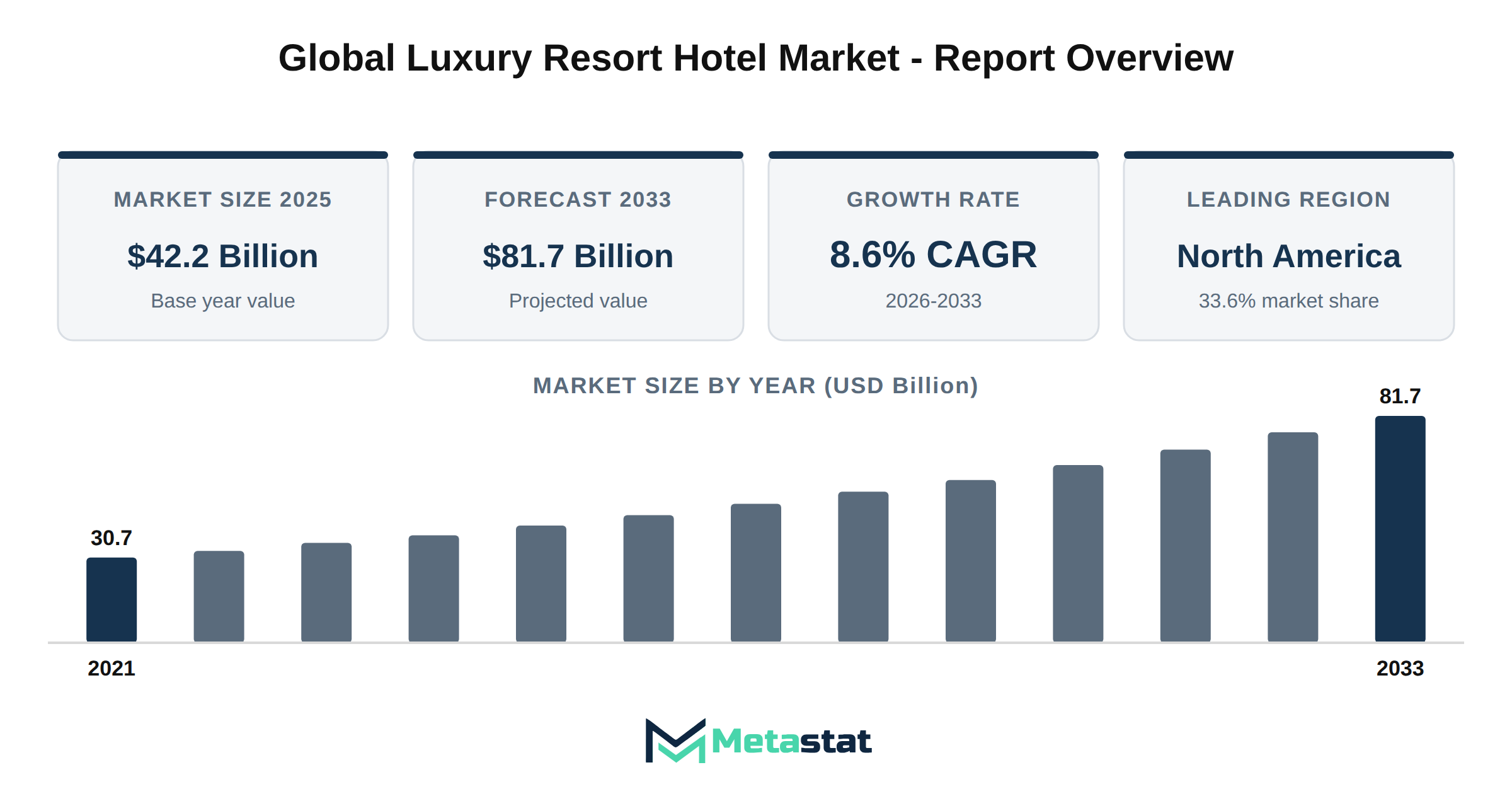
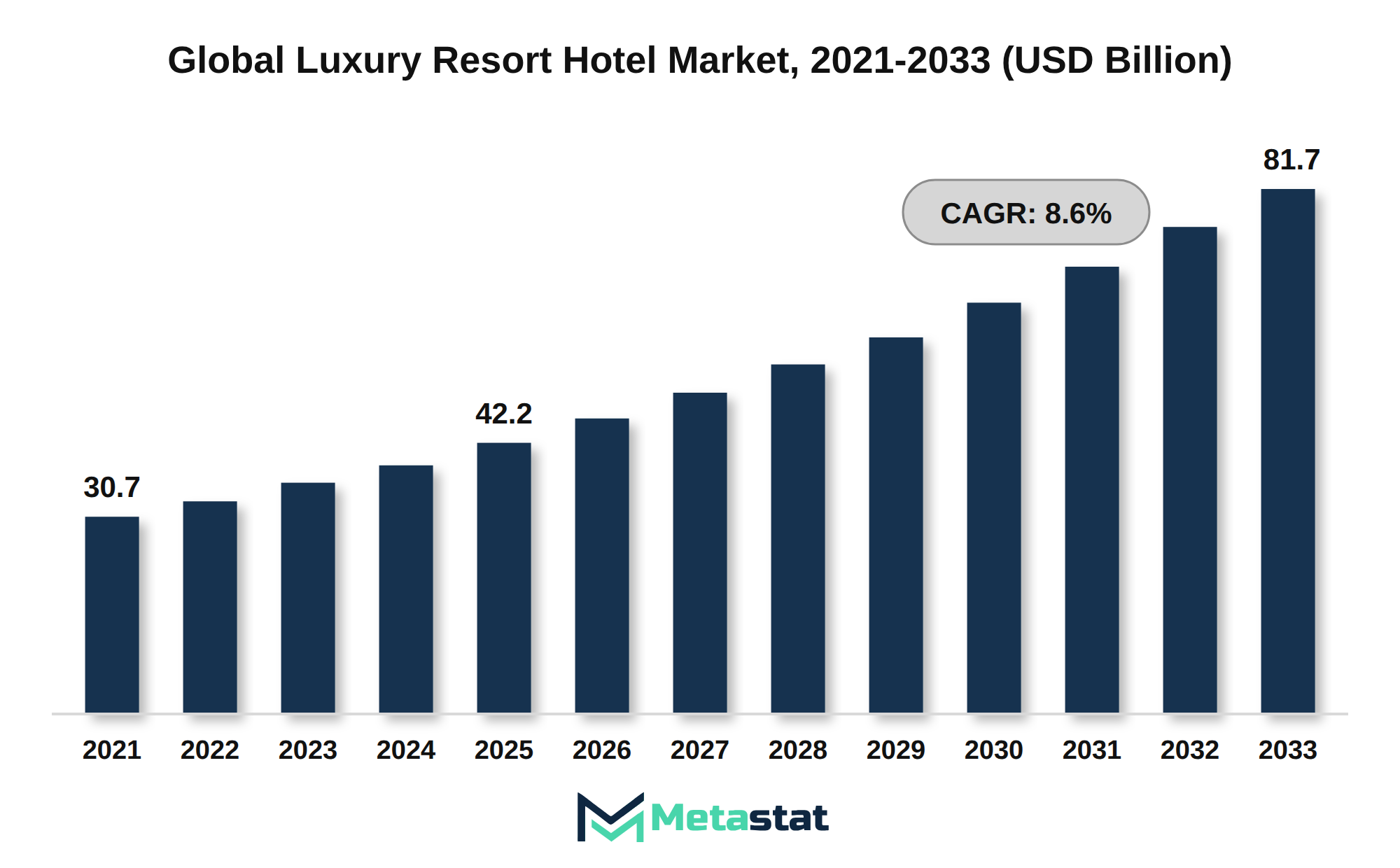
The global Luxury Resort Hotel market was valued at USD 42.2 billion in 2025 and is projected to reach USD 81.7 billion by 2033, growing at a CAGR of 8.6% over the forecast period.
The Luxury Resort Hotel market was valued at USD 42.2 billion in 2025 and is projected to reach USD 81.7 billion by 2033, reflecting a compound annual growth rate (CAGR) of 8.6% during the forecast period. Historical data indicates growth from USD 30.7 billion in 2021 to USD 36 billion in 2023, with an increase to USD 38.7 billion in 2024. The market is expected to continue this upward trajectory, reaching USD 46 billion in 2026 and USD 50 billion in 2027.
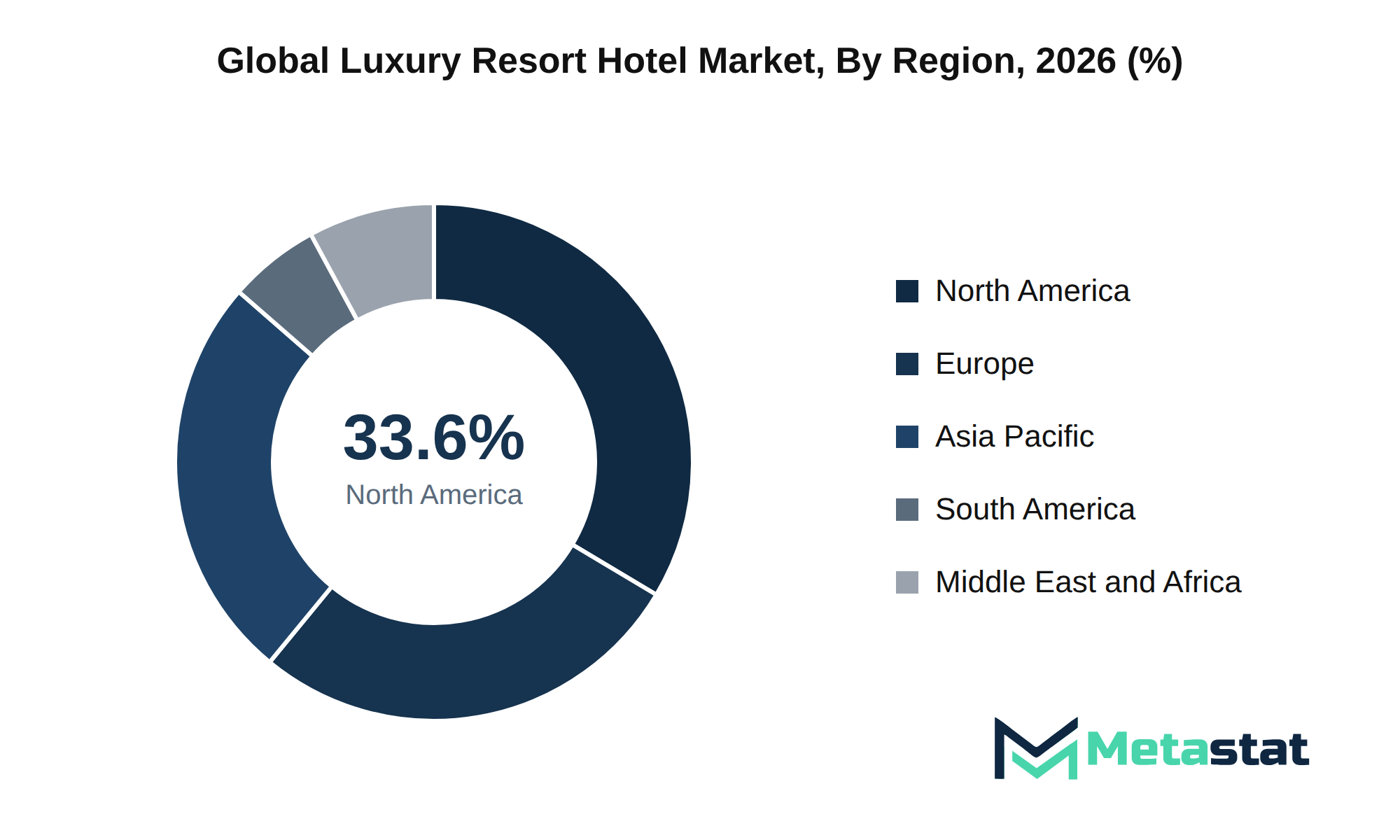
Regional analysis shows North America holding a share of 33.6%, followed by Europe at 27.4% and Asia Pacific at 25.5%. By 2033, North America is anticipated to contribute USD 26.1 billion to the market, maintaining an 8.6% CAGR. The segment of Mainland Beach & Coastal Resorts demonstrates strong potential, with values projected to increase from USD 14.1 billion in 2026 to USD 24.3 billion in 2033, reflecting an 8% CAGR.
The Luxury Resort Hotel market experiences notable influences from economic factors and consumer behavior. Inflationary pressures contribute to rising operational costs, affecting pricing strategies across various segments. Increased costs often lead to adjustments in service offerings to maintain competitiveness while ensuring profitability. This dynamic influences the overall market, compelling players to innovate and differentiate their services to attract high-value customers.
Macro-economic headwinds, including currency volatility, impact international travel patterns and consumer spending. Regions with stable currencies generally experience stronger inbound tourism, while fluctuations deter potential travelers. Consequently, this affects occupancy rates and revenue management strategies among luxury resort hotel operators, prompting a focus on local markets and domestic tourism.
Investment in infrastructure remains critical to supporting the growth of the market. Enhanced connectivity and transportation networks facilitate access to luxury resorts, thus broadening their customer base. Strategic capital allocation towards sustainable practices and technology integration has emerged owing to an imperative for many operators, aligning with shifting consumer preferences towards eco-friendly options.
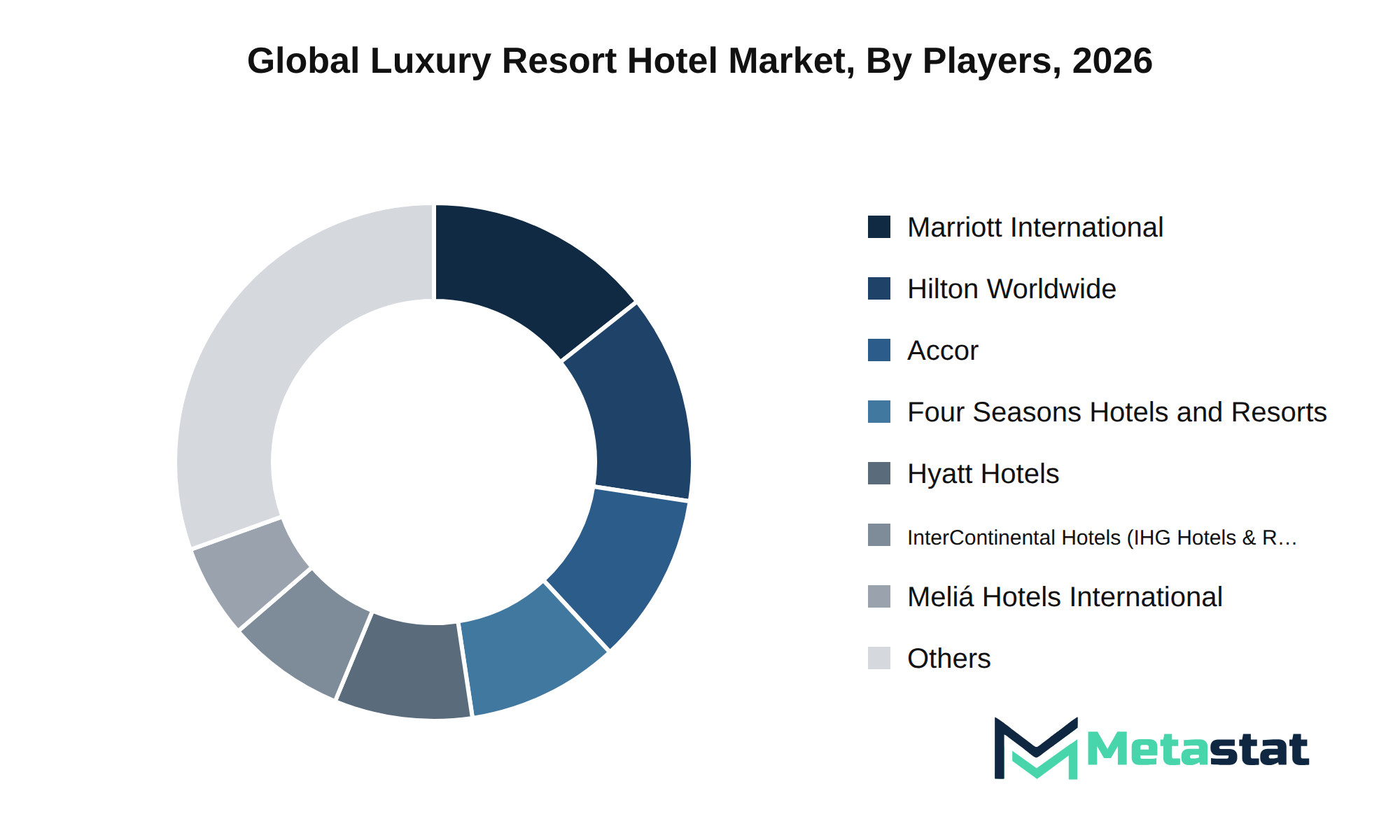
Player strategies in the Luxury Resort Hotel market highlight a trend toward consolidation through mergers and acquisitions. This fragmentation allows for enhanced resource sharing and operational efficiency, thereby increasing competitiveness. Major players including Marriott International, Inc., Four Seasons Hotels and Resorts, and Hilton Worldwide Holdings Inc. actively pursue strategic partnerships to expand their portfolio and geographic reach.
The market anticipates a robust trajectory driven by evolving consumer preferences for personalized experiences and high-quality services. Emerging trends, including wellness tourism and experiential travel, further shape the offerings in luxury resort hotels. Adapting to these trends positions operators favorably for sustained growth and enhanced market share.
The Luxury Resort Hotel market experiences significant momentum from macro-economic factors, particularly capital investments influenced by rising GDP growth and favorable interest rates. Increased venture funding enhances the financial environment for hotel developers, allowing for a wave of new projects and renovations. This influx of capital supports the expansion of luxury resorts, catering to affluent travelers seeking unique experiences.
Shifting demographic patterns contribute to the growth of the market, driven by affluent consumers increasingly prioritizing travel within their lifestyle. Urbanization trends create a demand for luxury resort experiences, particularly in emerging markets, where purchasing power continues to rise. This demographic shift influences investment strategies, driving hotels to adapt offerings that align with evolving consumer preferences.
Digital transformation significantly impacts the market, with technology integration streamlining operations and enhancing guest experiences. The adoption of automation, AI, and advanced software solutions enables resorts to optimize services while reducing operational costs. This technological integration improves efficiency, allowing hotels to deliver personalized offerings that attract discerning travelers, ultimately boosting the market's growth trajectory.
The Luxury Resort Hotel market experiences substantial influence from shifting demographic patterns, particularly the increasing purchasing power of younger generations and the growing number of affluent older adults. This change in demographics leads to rising demand for customized travel experiences that cater to the preferences of different age groups.
Young travelers, particularly millennials and Gen Z, prioritize unique experiences, wellness, and sustainability. These characteristics shape their preferences for luxury resorts that offer immersive activities, local culture, and eco-friendly practices. The market responds by enhancing offerings, including wellness retreats and sustainable luxury accommodations, attracting this segment of travelers.
Simultaneously, the aging population influences the market's direction. Older adults seek comfortable and accessible luxury experiences, driving demand for high-end resorts with tailored services including personalized care and wellness programs. This demographic shift prompts luxury resorts to expand facilities and services to accommodate the growing number of older travelers.
Overall, these demographic transformations significantly impact the Luxury Resort Hotel market, encouraging investment in diverse offerings and enhancing the overall guest experience. The strategic focus on appealing to different age cohorts supports sustained growth in the coming years, with the market projected to expand from USD 42.2 billion in 2025 to USD 81.7 billion by 2033.
Regulatory compliance and economic factors
Stringent regulatory compliance requirements pose a significant challenge within the Luxury Resort Hotel market. Various jurisdictions enforce rigorous standards related to environmental sustainability, labor practices, and health and safety protocols. Compliance with these regulations necessitates substantial financial investments and operational adjustments, burdening existing and new establishments.
Economic factors including inflationary pressures continue to impact the market. Rising costs of materials and services directly affect operational expenses for luxury resorts. Increased prices challenge profitability and force hotels to reassess pricing strategies, influencing consumer demand. Fluctuating economic stability raises concerns regarding sustained revenue generation for luxury resorts.
Supply chain disruptions represent another restraint affecting the Luxury Resort Hotel market. Global events, including geopolitical tensions and trade restrictions, have led to delays in obtaining essential goods and services. These interruptions hinder luxury resorts' ability to maintain high service standards and fulfill guest expectations, potentially damaging brand reputation and customer satisfaction.
Talent gaps in skilled labor create obstacles for luxury resorts in their quest to provide high-quality service. The hospitality industry faces a shortage of qualified personnel, impacting operational efficiency and guest experience. The necessity for training and development further increases operational costs, affecting overall market dynamics.
Market fragmentation complicates competitive positioning within the Luxury Resort Hotel market. Diverse offerings and geographical distribution create challenges for brand recognition and consumer loyalty. Luxury resorts navigate a complex environment of competitors, requiring strategic marketing and differentiation in service delivery.
The Luxury Resort Hotel market faces challenges stemming from geopolitical fragmentation, which significantly impacts operational stability. Trade deficits and tariff friction disrupt supply chains, increasing costs for operators. These factors influence key markets, including North America and Europe, where luxury resort investments experience volatility. Consequently, rising input costs pressure profit margins, forcing operators to adapt pricing strategies that could impact consumer demand.
Technological disruptions complicate the landscape further, driven by resorts integrating complex research and development initiatives to remain competitive. Interoperability friction among different technology platforms creates operational inefficiencies, limiting the market's growth potential. This scenario places additional burdens on hospitality providers striving to enhance guest experiences while managing escalating costs.
Sustainability demands and environmental lifecycle footprints present additional hurdles. Tightening global regulatory standards compel resorts to invest in compliance infrastructure, diverting resources from core business operations. The pressures of workforce skill gaps and talent retention intensify the challenge, attributed to attracting qualified personnel becoming increasingly difficult. These dynamics collectively hinder investment in innovative solutions, slowing the overall growth of the market.
Logistics disruptions and supply chain instability further exacerbate challenges for luxury resort operators. Fluctuating feedstock and component prices create uncertainty, complicating budgeting and financial planning. Consequently, these factors undermine long-term growth strategies, necessitating more robust risk management practices within the industry.
Emerging trends drive luxury resort growth
The Luxury Resort Hotel market experiences significant opportunities driven by emerging regional demands and infrastructure modernization. Increased disposable income among affluent travelers fuels a surge in luxury travel, particularly in Asia Pacific and Latin America. Improved connectivity and upgraded transport infrastructure enable easier access to remote luxury destinations. The market aligns with evolving consumer preferences towards unique travel experiences that blend luxury with local culture, enhancing appeal across diverse geographic regions.
Technological disruptions play a crucial role in shaping opportunities for growth within the market. Digital transformation influences booking behaviors, with an increasing shift towards online travel agencies and mobile applications. Advanced technologies improve operational efficiencies within resorts, allowing for personalized guest experiences and streamlined services. The integration of smart technologies, including mobile check-ins and automated guest services, enhances convenience and satisfaction, thereby attracting tech-savvy travelers.
Sustainability imperatives are becoming central to market strategies. Growing demand for eco-friendly accommodations and practices among travelers prompts resorts to adopt green transformations, aligning with environmental, social, and governance (ESG) principles. Investments in renewable energy and sustainable practices appeal to environmentally conscious consumers and result in long-term operational cost savings, strengthening competitive positioning within the Luxury Resort Hotel market.
Downstream market diversification opens avenues for niche application growth. Luxury resorts increasingly explore partnerships with local businesses, offering curated experiences that highlight regional attractions. Such collaborations enhance the authenticity of the resort experience and contribute to the local economy. This trend expands revenue streams beyond traditional accommodation, creating a more resilient business model.
Strategic consolidation through cross-industry mergers and acquisitions enables increased market competitiveness. Collaborations between established hotel chains and innovative startups facilitate the sharing of resources and expertise, enhancing service offerings and operational capabilities. This dynamic encourages investment in next-generation innovations, reinforcing the Luxury Resort Hotel market's growth trajectory.
Market Segmentation Analysis
The Global Luxury Resort Hotel market is segmented based on Location Type, Accommodation Type, and Booking Channel.
By Location Type, the market is further segmented into:
Mainland Beach & Coastal Resorts
Island Resorts
Mountain & Alpine Resorts
Desert Resorts
Forest & Wilderness Resorts
Lake & River Resorts
Rural & Countryside Resorts
Others (Remote Nature and Specialty Destination Resorts)
Mainland Beach & Coastal Resorts
Mainland Beach & Coastal Resorts segment is valued at USD 14.1 billion in 2026 and is projected to reach USD 24.3 billion by 2033, at a CAGR of 8% during the forecast period. Coastal resorts attract travelers seeking leisure, relaxation, and entertainment, with primary demand driven by increasing disposable income and a growing trend towards experiential travel. The segment benefits from a rise in domestic and international tourism, driven by more consumers prioritizing vacation experiences, especially in scenic coastal areas.
Infrastructure improvements, including easier access to coastal regions, fuel segment expansion. Enhanced transportation networks, including roads and airports, significantly simplify travel to these destinations, supporting the influx of visitors. Investments in marketing strategies by luxury resort hotels help raise awareness and attract affluent travelers, further driving demand within the segment.
Technological maturation plays an essential role in enhancing guest experiences at mainland beach resorts. Modern amenities, including high-speed internet and smart room technologies, cater to the needs of tech-savvy travelers. Next-gen upgrades in sustainability practices connect with environmentally conscious consumers, promoting long-term loyalty and repeat visits.
Consumption shifts towards personalized services and bespoke experiences have become increasingly important. Customers seek tailored offerings, including exclusive dining options and curated activities, which luxury resorts leverage to differentiate themselves in a competitive landscape. Regulatory compliance standards, focusing on environmental protection and guest safety, increasingly shape operational strategies, ensuring resorts align with contemporary consumer values.
Pricing volatility remains a consideration, impacted by fluctuating demand and operational costs. Effective cost management strategies help maintain profitability while responding to market pressures. Strategic opportunity windows exist in emerging markets where a growing middle class seeks luxury travel experiences, presenting avenues for capital investment and expansion.
The segment's growth trajectory aligns with evolving consumer preferences, robust investment in infrastructure, and a focus on enhancing guest experiences, ensuring relevance within the broader Luxury Resort Hotel market. With projected growth, this segment signifies a vital component of the overall market dynamics during the forecast period.
Island Resorts
Growth in the Island Resorts sub-segment is driven by increasing consumer demand for unique and immersive travel experiences, particularly in tropical and exotic locations. Factors fueling this demand include rising disposable incomes among tourists, greater accessibility to remote islands through improved transportation, and the growing popularity of wellness and eco-friendly tourism. The luxury segment of the market benefits from affluent travelers seeking high-end accommodations and bespoke experiences, which are often abundant in island resorts. These resorts offer exclusive amenities, privacy, and unique attractions, making them appealing to both leisure and business travelers.
Segment expansion is supported by significant investments in infrastructure and hospitality services on various islands. Developers focus on creating state-of-the-art facilities that cater to the evolving preferences of high-end travelers. This includes the integration of next-gen technologies for enhanced guest experiences, including smart room features and personalized services. The rise of eco-conscious travelers promotes the demand for sustainable practices in resort operations, driving investment in green technologies and practices.
By 2033, the Island Resorts segment is projected to reach USD 19.2 billion, at a CAGR of 9.4% during the forecast period. This anticipated growth reflects the ongoing transformation of consumer preferences and the increasing willingness of travelers to invest in premium experiences. Revenue generation in the segment is closely tied to the performance of luxury resort hotels, which cultivate loyalty and repeat visits through outstanding service and unique offerings.
Challenges within the segment stem from environmental concerns and regulatory compliance standards that affect development and operational costs. Striking a balance between expansion and sustainability remains crucial for players in this market segment. Understanding shifts in consumer behavior, including preferences for experiential travel, will determine competitive positioning and long-term success. The luxury resort hotel market, particularly in the Island Resorts sub-segment, continues to evolve to meet these challenges while capturing market share from emerging trends.
Mountain & Alpine Resorts
Strong demand for outdoor activities and wellness tourism fuels growth in Mountain & Alpine Resorts, particularly among affluent travelers seeking unique experiences. An increase in disposable income, coupled with a growing preference for experiential travel, drives the influx of visitors to these destinations. Resort operators focus on enhancing guest experiences through luxury accommodations and personalized services, appealing to high-end consumers.
Adoption of sustainable practices promotes segment expansion, attracting environmentally conscious travelers. Resorts integrate eco-friendly initiatives, contributing to positive brand perception while reducing operational costs over time. Technological advancements enhance guest experiences through innovative services, including mobile check-in, smart room features, and personalized recommendations, thereby increasing customer satisfaction.
The Mountain & Alpine Resorts segment is expected to reach USD 11.7 billion by 2033. Investment in infrastructure, including improved transportation access and high-quality amenities, positions the segment for significant growth. The market faces challenges including competition from alternative accommodation types, necessitating differentiation through superior service and unique offerings to retain market share.
Consumer preferences shift towards wellness and relaxation, prompting resorts to incorporate spas and wellness programs into their offerings. These shifts create opportunities for new service models and partnerships with wellness brands, enhancing the overall guest experience. The Luxury Resort Hotel market reflects these trends, driven by evolving consumer expectations and a commitment to quality and sustainability.
Desert Resorts
Investment in Desert Resorts has gained momentum owing to rising interest in unique travel experiences and luxury offerings. Travelers increasingly seek destinations that provide exclusive amenities and immersive cultural experiences, driving demand for luxury resort hotels in desert regions. This segment is projected to grow at a CAGR of 10.1% during the forecast period, reflecting strong adoption among affluent customers eager for distinctive retreats.
Technological advancements enhance the appeal of desert resorts, with innovations in luxury accommodations and personalized services. Many resorts integrate next-generation upgrades, including eco-friendly practices and smart technology, which attract environmentally conscious travelers. Successful adaptation to consumer preferences contributes significantly to growth within the market.
Shifts in consumption patterns indicate a preference for experiential travel, with desert resorts increasingly offering adventure activities, wellness programs, and gourmet dining. These offerings cater to a broad range of guests, from families to couples, reaffirming the segment's attractiveness. The expansion of luxury resort hotels in desert locales aligns with a general trend in the Luxury Resort Hotel market toward more personalized and customized guest experiences.
Increased competition among key players encourages investment in unique and innovative resort concepts. Establishments including Four Seasons Hotels and Resorts, Aman Group, and Marriott International, Inc. actively enhance their portfolios within this segment to capture affluent travelers. This competitive environment drives continuous improvement in service quality and guest satisfaction.
Market dynamics reflect a strong capital investment outlook, encouraging stakeholders to explore strategic opportunities in underdeveloped desert regions. The potential for high returns in these markets attracts interest from investors seeking to capitalize on emerging trends in luxury tourism. This eagerness for expansion positions the desert resorts segment favorably within the overall Luxury Resort Hotel market.
Forest & Wilderness Resorts
Forest and wilderness resorts attract travelers seeking immersive experiences in nature. Factors driving demand include an increasing interest in eco-tourism, where guests prioritize sustainability and conservation. The appeal of these resorts lies in their ability to combine luxury with natural surroundings, offering amenities and services that enhance the outdoor experience.
Adoption of forest and wilderness resorts is influenced by consumers' shifting preferences towards health and wellness. Activities including hiking, meditation, and nature retreats appeal to individuals looking for restorative travel options. The segment benefits from partnerships with environmental organizations that enhance credibility and appeal.
Segment expansion is supported by advancements in technology, which enable resorts to provide high-quality experiences without compromising the environment. Innovations in green building practices and renewable energy sources attract environmentally conscious travelers. Marketing strategies that highlight unique local attractions and experiences contribute to growth.
Regulatory compliance shapes operational standards within this segment. Resorts focusing on minimizing their ecological footprint often achieve certifications that reinforce their commitment to sustainability. These certifications enhance market positioning and attract a specific demographic of eco-conscious consumers.
Pricing volatility in the broader luxury market impacts the forest and wilderness resort segment, where costs associated with maintaining natural landscapes and providing premium services fluctuate. Effective cost management strategies are critical in maintaining profitability during these pressures.
Supply chain resilience is essential for these resorts, particularly regarding the sourcing of local ingredients and materials. By relying on local suppliers, resorts support the surrounding economy while reducing logistics challenges and transportation costs. This approach aligns with the growing consumer preference for local and sustainable products.
Strategic opportunities arise from the rising trend of experiential travel, where travelers seek distinctive offerings. Investments in unique accommodations, including treehouses or luxury tents, create appealing options that attract diverse clientele. This focus on innovation in product development leads to increased market penetration and revenue growth.
Lake & River Resorts
The appeal of Lake & River Resorts stems from a growing preference for immersive nature experiences combined with luxury accommodations. Consumers increasingly seek destinations that offer picturesque views, serene environments, and opportunities for outdoor recreation, driving demand in the Luxury Resort Hotel market. The unique positioning of these resorts along lakes and rivers attracts travelers seeking tranquility and adventure, enhancing their appeal in an evolving marketplace.
Technological advancements in hospitality services contribute to the expansion of this segment. Enhanced booking platforms and improved customer service technologies streamline guest experiences, supporting the uptick in visitors at Lake & River Resorts. Facilities equipped with state-of-the-art amenities cater to upscale clientele, promoting luxurious stays while maintaining a connection to nature.
Regulatory compliance regarding environmental sustainability influences operations within the Lake & River Resorts segment. Adhering to environmental regulations creates a positive image among eco-conscious travelers, strengthening brand loyalty and encouraging repeat visits. The integration of sustainable practices reduces operational costs and aligns with consumer preferences, further enhancing the segment's growth potential.
Consumption patterns indicate a shift towards experiential travel, with guests increasingly valuing unique and memorable experiences over mere accommodation. Lake & River Resorts capitalize on this trend by offering curated activities including kayaking, fishing, and guided nature tours, which enhance the overall guest experience. This focus on experiential offerings aligns with the broader movement within the market, fueling interest and increasing overall demand.
Strategic investments in infrastructure and facility upgrades play a critical role in the segment's evolution. Capital allocated to enhancing accommodations and diversifying amenities enables resorts to meet high guest expectations, leading to improved satisfaction and higher occupancy rates. Continuous innovation in service offerings positions Lake & River Resorts favorably within the competitive environment, attracting a broader audience seeking luxury and nature combined.
Rural & Countryside Resorts
Interest in Rural & Countryside Resorts stems from an increasing desire for authentic and immersive travel experiences. Travelers seek refuge from urban environments, opting for serene settings that offer a connection to nature and local culture. This trend aligns with a broader movement towards wellness tourism, where natural landscapes significantly enhance mental well-being. The appeal of these resorts includes spacious accommodations that provide tranquility and opportunities for outdoor activities, including hiking, cycling, and exploring local flora and fauna.
Technological maturation has played a crucial role in shaping the offerings within this segment. Enhanced digital marketing strategies allow properties to present their unique locations and amenities effectively. Next-gen upgrades in eco-friendly infrastructure support sustainability initiatives, attracting environmentally conscious travelers. The combination of technology and an emphasis on environmental responsibility positions Rural & Countryside Resorts because appealing destinations for modern consumers.
Shifts in consumer preferences are evident, with travelers increasingly prioritizing experiences over material possessions. This consumption shift drives demand for unique and personalized stays that reflect local culture and heritage. Regulatory compliance standards promoting sustainable practices further support the growth of this segment, ensuring that resorts adhere to environmentally friendly operations. Certifications related to sustainability and eco-friendliness enhance market credibility and consumer trust.
Price sensitivity remains relevant, with potential margin pressures arising from fluctuating costs associated with energy, staffing, and local sourcing. This dynamic influences pricing strategies within the market, requiring resorts to balance affordability with the premium experience offered. Strategic opportunity windows present themselves through partnerships with local businesses, enhancing the guest experience while supporting the local economy.
Supply chain resilience plays an essential role in the operational success of Rural & Countryside Resorts. Efficient sourcing of local materials not only reduces costs but strengthens community ties. Vulnerabilities in logistics impact service delivery, emphasizing the importance of robust planning and adaptability. Disruptive alternatives, including emerging glamping trends, challenge traditional offerings, encouraging continuous innovation within the sector.
The Rural & Countryside Resorts segment thrives on capital investment outlooks that support infrastructure improvements and service enhancements. Investments in marketing and community engagement initiatives drive visibility and attract diverse traveler demographics. While the Luxury Resort Hotel market expands, Rural & Countryside Resorts continue to play a vital role in catering to the evolving preferences of discerning travelers.
Others (Remote Nature and Specialty Destination Resorts)
Demand for remote nature and specialty destination resorts has grown owing to an increasing consumer preference for unique and immersive travel experiences. These resorts attract travelers seeking tranquility and connection with nature, often located in secluded environments away from urban centers. Trends in wellness tourism and eco-conscious travel further drive this demand, because consumers prioritize sustainability and bespoke experiences.
Adoption of these resorts has accelerated in response to the rise of experiential travel, which emphasizes personalized and memorable stays. Customers from affluent demographics increasingly seek destinations that offer distinctive cultural experiences and natural beauty. This shift influences resort operators to invest in unique offerings and exclusive amenities, enhancing the value proposition for high-end clientele.
Segment expansion benefits from the growing trend of remote work. Individuals blend leisure with professional commitments. Extended stays at these resorts appeal to remote workers seeking inspiration and relaxation during their work-life balance. The market for remote nature and specialty destination resorts continues to evolve, with operators adapting to the changing needs and desires of their guests.
Technological advancements enhance the guest experience. Resorts implement smart technologies to streamline services and offer personalized solutions. Innovations in booking systems and mobile applications facilitate easier access to unique accommodations. Operators leverage these technologies to enhance operational efficiency and improve customer satisfaction.
Regulatory compliance and sustainability practices play critical roles in this segment. Operators face increasing scrutiny regarding environmental impacts. Adherence to certifications and eco-friendly initiatives aligns with consumer expectations for responsible tourism. This focus not only supports brand reputation but attracts a conscientious customer base.
Strategic opportunities exist in developing partnerships with local communities and businesses to create authentic experiences. Collaborations provide unique offerings that differentiate resorts from conventional accommodations, appealing to discerning travelers. Capital investment in these ventures is anticipated to yield significant returns by enhancing the overall guest experience and driving revenue growth.
By Accommodation Type, the market is further segmented into:
Luxury Guest Rooms
Suites
Private Villas
Bungalows & Cottages
Overwater Villas & Bungalows
Luxury Tents & Lodges
Others (Chalets and Cabins)
Luxury Guest Rooms
Valued at USD 18.2 billion in 2026, the Luxury Guest Rooms segment is projected to reach USD 30.7 billion by 2033, reflecting a CAGR of 7.8% during the forecast period. Growth in this segment stems from increasing consumer preferences for premium and personalized experiences, driving demand among affluent travelers seeking comfort and exclusivity. The rise in wellness tourism and experiential travel fuels interest in luxury accommodations, driven by guests prioritizing unique amenities, superior service, and bespoke offerings.
Technological advancements contribute to the evolution of luxury guest rooms, with smart technologies enhancing the guest experience. Features including automated room controls, advanced entertainment systems, and enhanced security measures appeal to tech-savvy consumers. This focus on innovation supports market expansion, attributed to luxury resort hotels striving to attract discerning clientele.
Pricing dynamics within the Luxury Guest Rooms segment reflect the overall health of the market. While competition among providers intensifies, pricing strategies adapt to address shifting consumer expectations while maintaining healthy profit margins. The growing demand for luxury accommodations reinforces the segment's resilience, allowing suppliers to invest in next-gen upgrades that enhance the guest experience.
Supply chain resilience ensures consistent service and quality delivery within the Luxury Guest Rooms segment. Strategic partnerships with premium suppliers and robust logistics frameworks allow hotels to maintain high standards while mitigating risks associated with disruptions. This stability enables operators to focus on enhancing their offerings and catering to evolving consumer preferences, ultimately strengthening their market position.
Suites
Growth in the Suites segment of the Luxury Resort Hotel market stems from increasing demand for personalized and luxurious accommodations. Affluent travelers, seeking exclusive experiences, drive this demand, resulting in a notable rise in bookings for suites. High-profile guests often prefer suites for their spaciousness and premium amenities, enhancing their overall stay experience.
Segment expansion is driven by trends in luxury travel, with consumers prioritizing comfort, privacy, and unique offerings. Properties that offer upgraded suite options report higher occupancy rates, attracting a clientele willing to pay a premium for enhanced services and exclusive experiences. Technological advancements in room design and service delivery enhance the appeal of suites, encouraging investment in next-gen upgrades that improve guest satisfaction.
Pricing volatility influences demand dynamics within the segment, with luxury consumers often less sensitive to price changes. High-margin suites contribute significantly to overall revenue, enhancing profitability for hotel operators. Strategic opportunity windows arise for properties that invest in suite renovations or expansions, positioning themselves to attract a growing number of luxury travelers.
Market estimates indicate that the Suites segment is projected to reach USD 19.5 billion by 2033, at a CAGR of 8.5% during the forecast period. This growth reflects the increasing importance of suite accommodations in the overall Luxury Resort Hotel market, driven by operators adapting to evolving consumer preferences and investing in high-quality offerings.
Private Villas
Valued at USD 14.3 billion by 2033, the Private Villas segment experiences growth driven by a shift in consumer preferences toward exclusive and personalized travel experiences. High-net-worth individuals increasingly seek accommodations that offer privacy, luxury, and unique amenities, impacting demand dynamics across the Luxury Resort Hotel market. This trend is further fueled by the rising interest in wellness tourism, where private villas provide secluded environments for relaxation and rejuvenation.
Investment in private villa developments has intensified, with many resort operators enhancing their offerings to meet the desires of affluent travelers. The integration of advanced technologies, including smart home systems and eco-friendly amenities, supports the appeal of these accommodations. Consumers exhibit a preference for properties that blend luxury with sustainability, influencing design and operational decisions within the segment.
Geographically, regions with established luxury tourism infrastructures, including the Caribbean, Mediterranean, and parts of Southeast Asia, position themselves because key markets for private villas. The Luxury Resort Hotel market anticipates continued expansion in these areas, driven by increasing international travel and investment in high-end properties. Strong promotional efforts by resort chains and local tourism boards will enhance the visibility and attractiveness of private villa options.
The Private Villas segment illustrates significant potential for revenue growth, presenting lucrative opportunities for investors and operators within the Luxury Resort Hotel market. Consumer preferences evolve toward personalized luxury experiences, positioning the segment to capture a larger share of the overall market.
Bungalows & Cottages
Growth in the Bungalows & Cottages segment is driven by an increasing preference for unique and private accommodation experiences among travelers. Consumers seek intimate settings that provide comfort along with connection to nature, enhancing their overall travel experience. This preference aligns with the broader trend towards personalized travel solutions, which significantly influences demand in the Luxury Resort Hotel market.
Investment in this segment focuses on developing eco-friendly and sustainable lodging options to meet the rising expectations of environmentally conscious travelers. Several hotels invest in next-generation upgrades, enhancing the appeal of bungalows and cottages through modern amenities and design while maintaining a rustic charm. Adoption of sustainable practices attracts a growing demographic of eco-conscious consumers and supports market expansion.
The Bungalows & Cottages segment is projected to grow at a CAGR of 7.7% during the forecast period. This growth reflects the segment's ability to cater to changing consumer preferences, particularly in regions rich in natural beauty. Increased marketing efforts targeting adventure and leisure travelers contribute to heightened visibility and awareness of offerings in this segment.
Technological advancements play a crucial role in shaping the appeal of bungalows and cottages. Implementation of smart technologies enhances guest experiences, providing convenience and personalization. Innovations in booking processes, including mobile applications and online travel agencies, facilitate easier reservations, driving demand in this segment.
Pricing dynamics within the Bungalows & Cottages segment reflect both competitive pressures and premium offerings. While maintaining affordability attracts a broad customer base, luxury positioning allows for premium pricing strategies. Such strategies enhance profitability for operators and contribute to the overall financial health of the market.
Growth opportunities exist within the Bungalows & Cottages segment, fueled by shifts in consumer preferences towards more secluded and nature-centered experiences. These factors are expected to strengthen the segment's position within the Luxury Resort Hotel market, encouraging continued investment and innovation.
Overwater Villas & Bungalows
Luxury Resort Hotels featuring Overwater Villas & Bungalows attract discerning travelers seeking unique, upscale experiences. Recent trends indicate that the rising preference for exclusive accommodations drives demand in this segment. Guests favor these structures for their privacy and stunning views, enhancing the allure of luxury resorts.
Technological maturation influences the development of Overwater Villas & Bungalows. Innovations in sustainable building materials and design technologies promote eco-friendly practices, aligning with consumer preferences for environmental responsibility. Enhanced amenities, including private pools and high-end furnishings, improve the guest experience, supporting market expansion.
Strategic opportunity windows arise owing to luxury resorts enhancing their offerings. Destinations in tropical regions increasingly invest in overwater structures to differentiate themselves from competitors. This investment aligns with the broader growth trajectory of the Luxury Resort Hotel market, driven by a trend toward experiential travel.
Regulatory compliance and certification standards impact the construction and operation of these accommodations. Meeting environmental regulations and ensuring guest safety enhances brand reputation and builds customer trust. The segment's resilience against market fluctuations stems from its ability to adapt to changing consumer preferences and regulatory landscapes.
The cost structures associated with Overwater Villas & Bungalows reflect the premium nature of these accommodations. High initial investment in construction and ongoing maintenance forms a significant barrier to entry. However, the potential for high occupancy rates and premium pricing offsets these costs, making the segment attractive for investors.
In terms of raw material sourcing, access to quality materials ensures the durability and aesthetic appeal of Overwater Villas & Bungalows. Sustainable practices in material selection align with environmentally conscious consumers, enhancing brand loyalty. This focus on sustainability further positions the segment favorably within the larger Luxury Resort Hotel market.
Disruptive alternatives, including land-based luxury accommodations, present competition but fail to replicate the unique experience offered by overwater structures. The segment's distinctiveness strengthens its position within the market, catering to affluent travelers who prioritize unique and memorable stays.
Luxury Tents & Lodges
Growing interest in immersive travel experiences drives demand for luxury tents and lodges within the Luxury Resort Hotel market. This segment attracts travelers seeking unique accommodations that blend luxury with nature, offering an alternative to traditional hotel settings. Increased consumer preference for eco-friendly and sustainable travel options further supports the adoption of glamping experiences, where luxury tents provide comfort while minimizing environmental impact.
Technological advancements in materials and design enhance the appeal of luxury tents and lodges. Innovations including weather-resistant fabrics and energy-efficient climate control systems improve guest experiences while maintaining a connection to the surrounding landscape. This evolution in product offerings positions the segment well in the market, catering to a demographic increasingly oriented towards experiential stays.
Regulatory compliance and certification standards in the hospitality industry influence the growth of this segment. Operators focusing on sustainable practices often pursue certifications that improve their reputations, attracting environmentally conscious travelers. This trend encourages investment in infrastructure and operations that adhere to these standards, leading to strategic opportunity windows for new entrants and established players alike.
Price volatility linked to raw material sourcing affects cost structures within the luxury tents and lodges segment. Fluctuations in material costs impact profit margins, requiring strategic pricing adjustments to maintain competitiveness. Consequently, effective supply chain management and logistics planning become essential for operators aiming to optimize profitability while delivering high-quality accommodations.
Investment in marketing strategies focused on digital channels is crucial for driving awareness of luxury tents and lodges. Targeted campaigns highlighting unique experiences and customer testimonials enhance brand visibility and attract potential guests. This strategic emphasis on digital presence aligns with current consumption shifts, where travelers increasingly rely on online platforms for research and booking decisions.
Overall, luxury tents and lodges represent a dynamic and evolving segment within the Luxury Resort Hotel market, characterized by innovative product offerings, sustainability-driven demand, and strategic investments that position operators for growth.
Others (Chalets and Cabins)
Interest in chalets and cabins within the Luxury Resort Hotel market continues to rise. This trend stems from a growing preference for unique and immersive lodging experiences. Travelers increasingly seek authentic connections with nature, evidenced by the popularity of remote locations that offer privacy and solitude. The segment benefits from a shift in consumer behavior that prioritizes experiential travel, aligning with eco-conscious choices and sustainability initiatives.
Technological advancements enhance the appeal of chalets and cabins, with smart home features improving guest convenience and comfort. Integration of renewable energy solutions, including solar panels and energy-efficient appliances, attracts environmentally-minded travelers. This technological maturation supports operational efficiencies, enabling operators to reduce costs while maintaining high quality standards.
Strategic opportunity windows within this segment arise from collaborations with local businesses and artisans to promote regional culture and experiences. Such partnerships enhance the overall guest experience, driving demand and supporting long-term growth. The focus on authentic local experiences aligns with broader consumption shifts within the market, creating a strong ecosystem for chalets and cabins.
Challenges related to pricing volatility and margin pressures require operators to remain agile in the face of fluctuating demand. Efficient raw material sourcing and supply chain resilience are critical factors in maintaining competitive pricing. Emphasizing quality and unique offerings mitigates the impact of these pressures, strengthening customer loyalty and repeat business.
While the Luxury Resort Hotel market continues to evolve, chalets and cabins hold significant potential for expansion. Their distinct appeal attracts a diverse range of travelers seeking memorable experiences. Increased investment in this sector is expected to enhance the overall attractiveness of chalets and cabins, supporting market growth throughout the forecast period.
By Booking Channel, the market is further segmented into:
Hotel Website & Mobile App
Hotel Call Center & Property Direct
Online Travel Agencies
Traditional Travel Agencies
Tour Operators & Destination Management Companies
Hotel Wholesalers & Bedbanks
Global Distribution Systems & Travel Management Companies
Others (Membership and Affinity Platforms)
Hotel Website & Mobile App
Projected at USD 13.3 billion in 2026, the Hotel Website & Mobile App segment gains traction through increased digital engagement from travelers. Enhanced user interfaces and personalized experiences on mobile platforms drive demand among tech-savvy consumers. The convenience of online booking through hotel websites and mobile applications significantly influences customer choices, resulting in higher conversion rates for luxury resorts.
Investment in technological advancements fuels segment expansion, with luxury resorts adopting next-generation upgrades to streamline booking processes. Customer preference for mobile applications offering easy navigation and integrated services, including loyalty programs and real-time availability, further enhances the market's growth potential. By 2033, the segment is anticipated to reach USD 25.8 billion, with a CAGR of 10% during the forecast period.
Shifts in consumption patterns towards digital platforms reflect broader trends within the Luxury Resort Hotel market. Guests increasingly prioritize convenience and accessibility, prompting resorts to innovate their online offerings. Regulatory compliance standards regarding data security and privacy shape technological investments, ensuring customer trust while facilitating growth.
Market participants, including Marriott International, Inc., Hilton Worldwide Holdings Inc., and Four Seasons Hotels and Resorts, actively enhance their digital infrastructure to capture the growing online customer base. Competition intensifies, creating strategic opportunity windows for brands investing in robust mobile platforms, presenting avenues for increased market share and improved customer engagement.
Hotel Call Center & Property Direct
Market dynamics show a growing emphasis on direct booking channels, particularly through Hotel Call Centers and property direct methods. This segment is driven by increasing consumer preference for personalized service and immediate assistance, which enhances the overall customer experience. Rising disposable incomes and a shift towards experiential travel contribute to the segment's expansion. Travelers seeking tailored travel arrangements find direct communication through hotel call centers essential for addressing specific needs and preferences.
Technological advancements play a crucial role in enhancing the efficiency of Hotel Call Centers. Integration of artificial intelligence and data analytics allows for improved customer interaction and streamlined booking processes. This evolution in technology facilitates quicker responses to inquiries and supports upselling opportunities, thereby increasing revenue for hotels. Continuous improvements in staff training and resource allocation optimize service delivery, attracting guests seeking high-quality engagement.
Market estimates indicate that the Hotel Call Center & Property Direct segment is projected to reach USD 7.8 billion by 2033, at a CAGR of 6.3% during the forecast period. While competition intensifies among luxury resorts, the ability to stand out through superior customer service and direct engagement becomes a strategic priority. This segment's growth aligns with broader trends in the Luxury Resort Hotel market, emphasizing the importance of direct communication and customer relationship management.
The segment's future is influenced by changes in consumer behavior and technological maturation. Increased reliance on mobile devices and digital channels complements the traditional call center approach, enabling a multifaceted engagement strategy. Adapting to these trends enhances customer retention and loyalty. Ultimately, the Hotel Call Center & Property Direct segment is set to play a significant role in shaping the overall market for Luxury Resort Hotels.
Online Travel Agencies
Growth in the Online Travel Agencies segment reflects increasing digital engagement among travelers, driven by a preference for convenience and accessibility. This segment facilitates easy comparison of prices and availability, enhancing customer decision-making processes. The rise of mobile applications and user-friendly platforms strengthens market penetration, appealing to both leisure and business travelers. Promotional strategies and exclusive deals offered by these agencies significantly influence consumer choice, driving further adoption.
Investment in advanced technologies, including artificial intelligence and machine learning, enhances personalization and customer service for online travel agencies. This technological maturation enables agencies to analyze consumer behavior and preferences, tailoring offerings to specific market segments. The Online Travel Agencies segment is expected to reach USD 22.9 billion by 2033, reflecting a robust trajectory within the broader Luxury Resort Hotel market. The integration of next-generation upgrades, including mobile optimization and enhanced payment options, positions online travel agencies because key players in the evolving travel bookings landscape.
Changing consumption patterns, with a growing emphasis on experiential travel, contribute to the expansion of this segment. Consumers increasingly seek unique experiences, driving the demand for boutique luxury resort hotels that online travel agencies effectively present. Regulatory compliance, including data protection standards, shapes operational frameworks within the segment, prompting agencies to enhance security measures and build consumer trust. Overall, the Online Travel Agencies segment significantly influences market dynamics and enhances accessibility to luxury resort options.
Traditional Travel Agencies
Growth in the Traditional Travel Agencies segment reflects increasing consumer confidence in personalized travel planning and tailored experiences. The resurgence of international travel following pandemic-related restrictions has heightened the demand for bespoke itineraries, driving customers to seek expert advice and recommendations from traditional agencies. This trend is particularly evident among affluent travelers, who prioritize customized service and attention to detail over online booking options.
Traditional travel agencies benefit from their expertise in navigating complex travel arrangements, providing value through their professional insights. This segment is projected to grow at a CAGR of 6.2% during the forecast period. The ability of these agencies to offer unique packages and exclusive deals enhances their appeal, particularly in the luxury travel sector, where discerning clients seek distinctive experiences.
In addition, the overall expansion of the Luxury Resort Hotel market positively influences this segment. Increased investment in luxury accommodations and amenities aligns with the preferences of high-net-worth individuals who prefer curated travel experiences. Traditional travel agencies act because intermediaries, connecting clients with luxury resorts and ensuring that their specific needs are met, further reinforcing their role in the market.
Technological advancements facilitate collaboration between traditional agencies and luxury resorts, allowing for effective communication and booking processes. These enhancements support the demand for traditional travel agencies, because they leverage technology to provide personalized service without compromising the human touch. The ongoing evolution of consumer preferences and the importance of tailored travel planning signal a promising outlook for the traditional travel agency segment within the Luxury Resort Hotel market.
Tour Operators & Destination Management Companies
Interest in Tour Operators and Destination Management Companies reflects a growing trend towards curated travel experiences. Increasing consumer desire for personalized itineraries drives demand for these services, particularly among affluent travelers seeking unique vacation offerings that align with their preferences. The market experiences an upsurge in bookings through these channels driven by travelers seeking comprehensive packages that include accommodations, activities, and transportation.
Technological advancements enhance the offerings of tour operators and destination management companies, enabling them to provide effective booking experiences. Mobile applications and integrated platforms facilitate real-time updates and customer engagement, positioning companies to adapt to evolving consumer expectations. This technological maturation creates a competitive environment where innovative solutions capture a larger share of the luxury market.
Strategic partnerships between luxury resorts and tour operators expand access to diverse customer segments. Collaborations with airlines, local attractions, and event organizers create unique travel packages that appeal to high-net-worth individuals seeking exclusive experiences. This collaboration not only enhances customer engagement but drives revenue growth for both luxury resorts and operators.
Regulatory compliance remains a critical aspect of operations for tour operators and destination management companies. Adherence to local laws and international travel regulations ensures smooth operations and builds consumer trust. Navigating these regulatory landscapes effectively contributes to the overall stability and growth of the segment within the Luxury Resort Hotel market.
Margin pressures from rising operational costs challenge tour operators and destination management companies to optimize pricing structures. Fluctuating costs of service delivery, including accommodation rates and transportation, necessitate strategic pricing strategies that maintain profitability while offering competitive packages. The ability to adjust to pricing volatility directly impacts overall market competitiveness and revenue generation.
Shifts in consumer preferences towards sustainable and experiential travel influence the evolution of offerings in this segment. Increasing awareness of environmental and social issues among travelers drives demand for eco-friendly and culturally immersive experiences. Tour operators and destination management companies that incorporate sustainability into their packages stand to attract a discerning clientele, enhancing their market position.
Investment in marketing strategies that emphasize unique selling propositions supports segment expansion. Highlighting exclusive partnerships, unique experiences, and personalized services differentiate providers in a crowded marketplace. Effective outreach to target demographics ensures sustained interest and engagement with luxury offerings.
Hotel Wholesalers & Bedbanks
Technological advancements and the rise of digital platforms drive growth in the Hotel Wholesalers & Bedbanks segment of the Luxury Resort Hotel market. Increased demand for efficient booking experiences influences hotels to collaborate with wholesalers and bedbanks, enabling competitive pricing and broader distribution. Fluctuating travel trends and evolving consumer preferences further contribute to the segment's expansion, with travelers seeking unique and curated experiences.
Competition among booking channels creates opportunities for wholesalers and bedbanks to enhance their offerings. Companies invest in technology upgrades to streamline operations and improve customer experience, which directly impacts market dynamics. Strategic partnerships with luxury resorts allow for exclusive deals and promotions, attracting a diverse clientele.
An increased focus on regulatory compliance and certifications strengthens the credibility of wholesalers and bedbanks, providing assurance to consumers. This emphasis improves operational standards and encourages adherence to quality benchmarks within the industry. Cost structures related to these compliance measures influence pricing strategies, leading to a balance between competitive rates and quality service.
Consumer behavior shifts toward online and mobile booking platforms, reflecting a preference for convenience and accessibility. This trend compels wholesalers and bedbanks to adapt their strategies to meet evolving expectations. By leveraging data analytics, companies gain insights into customer preferences, informing targeted marketing efforts and product development.
Investment in supply chain resilience enhances the ability to manage fluctuations in demand and mitigate risks associated with operational disruptions. Focused attention on logistics vulnerabilities ensures a smooth flow of services to end-users. Ongoing enhancements in service delivery mechanisms contribute to sustained growth and profitability within this segment.
Global Distribution Systems & Travel Management Companies
Technological maturation drives the growth of Global Distribution Systems and Travel Management Companies within the Luxury Resort Hotel market. The integration of advanced software solutions has streamlined operations, enhancing booking efficiency and increasing customer satisfaction. Adoption of these technologies spans various hotel chains, ensuring effective management of reservations and inventory across platforms.
Next-generation upgrades significantly influence segment dynamics, with artificial intelligence and data analytics offering personalized experiences for travelers. This customization creates a competitive advantage, attracting a wider clientele seeking tailored luxury experiences. Enhanced data utilization enables hospitality providers to refine marketing strategies, ensuring that offerings connect with target demographics.
Product evolution in this sub-segment emphasizes connectivity between consumers and luxury resort hotels. Through sophisticated booking interfaces and mobile applications, travel management companies enhance user experiences, facilitating effortless access to accommodation options. This convenience aligns with shifting consumer preferences toward digital solutions, further reinforcing the relevance of this segment.
End-use dynamics reflect a growing inclination toward integrated travel solutions, where consumers seek comprehensive packages that include accommodations, activities, and transport. This trend benefits both consumers and service providers, promoting comprehensive travel experiences that drive revenue streams. Regulatory compliance standards and certifications ensure that these systems maintain high operational quality, building trust among consumers.
Pricing volatility within this segment requires operators to develop robust pricing strategies to maintain margins during fluctuating market conditions. Strategic opportunity windows exist for companies investing in innovative technologies and user-friendly platforms. Capital investment outlook remains positive, with significant funding directed toward enhancing infrastructure and expanding service offerings in the Luxury Resort Hotel market.
Others (Membership and Affinity Platforms)
Membership and affinity platforms within the Luxury Resort Hotel market gain traction through the increasing demand for personalized and exclusive travel experiences. This demand arises from evolving consumer preferences that favor unique offerings tailored to individual interests and memberships. The growth of these platforms relies heavily on strategic partnerships with various brands, enhancing their appeal to affluent travelers seeking bespoke experiences.
Technological maturation facilitates the rise of membership programs, enabling hotels to leverage data analytics for improved customer segmentation and targeted marketing. Enhanced user interfaces allow these platforms to offer efficient booking experiences, driving higher engagement and loyalty. While competitive pressures rise, luxury resorts integrate advanced features, including dynamic pricing and exclusive member benefits, to attract and retain clientele.
Downstream application of membership platforms influences customer behaviors significantly. Loyalty incentives prompt repeat bookings, which enhances revenue stability for luxury resorts. Simultaneously, the adoption of these platforms indicates a shift in consumer consumption patterns towards travel arranged through curated experiences rather than traditional hotel bookings.
Regulatory compliance standards impact operational frameworks within the segment, owing to hotels aligning with data protection laws and consumer rights regulations. Adherence to these standards is crucial for maintaining customer trust and protecting sensitive information gathered through membership channels.
Pricing volatility presents challenges within the segment, driven by luxury resorts navigating fluctuating demand and economic uncertainties. Margin pressures arise from balancing competitive pricing with the provision of high-quality experiences and services. Strategic opportunity windows exist for operators to explore innovative pricing models that align with customer expectations while optimizing profitability.
Supply chain resilience is vital for maintaining service quality and guest satisfaction. Sourcing raw materials and services tailored to membership platforms requires robust relationships with suppliers. Disruptive alternatives, including emerging travel technologies and new market entrants, pose competitive threats, necessitating adaptive strategies to safeguard market share.
Investment in technological upgrades and next-generation solutions remains key for future growth in the luxury resort hotel segment. Capital investment outlooks favor platforms that enhance user experiences and operational efficiencies, positioning them for long-term success while navigating evolving market dynamics. The integration of these technologies reinforces the value proposition of membership and affinity platforms, affirming their role in the broader context of the Luxury Resort Hotel market.
By Region
Based on geography, the Global Luxury Resort Hotel market is divided into North America, Europe, Asia-Pacific, South America, Middle East, and Africa.
North America
North America holds a significant position in the Luxury Resort Hotel market, accounting for 33.6% of the global market share in 2025. The region is projected to expand at a CAGR of 8.6% during the forecast period, reaching a market size (TAM) of USD 26.1 billion by the end of 2033. Key demand drivers include a growing affluent population and an increasing inclination towards luxury travel experiences, particularly in the United States, Canada, and Mexico.
Infrastructure modernization throughout North America enhances the appeal of luxury resort hotels. Investments in transportation and hospitality facilities improve accessibility to these destinations, increasing customer engagement and satisfaction. The ongoing development of diverse accommodation types, including luxury guest rooms, suites, and private villas, drives market growth, with significant contributions from mainland beach and coastal resorts.
The competitive landscape in North America features several prominent players including Marriott International, Inc., Four Seasons Hotels and Resorts, and Hilton Worldwide Holdings Inc. These companies focus on enhancing their service portfolios and expanding their market presence, ensuring a robust response to evolving consumer preferences. This competitive dynamic supports sustained investment and innovation within the market.
Localized procurement dynamics and cultural nuances influence buying behaviors in the region. High-value replacement cycles within luxury accommodation, coupled with evolving consumer preferences for unique experiences, present incremental growth vectors. While luxury resort hotels adapt to these trends, they position themselves strategically to capture emerging market opportunities.
Europe
The Luxury Resort Hotel market in Europe represents 27.4% of the global market in 2025, driven by a combination of cultural preferences and increasing demand for high-end travel experiences. Countries including Germany, France, the UK, Italy, Spain, and Russia contribute substantially to this market, with varying degrees of growth potential and consumer behavior patterns.
Investment in infrastructure modernization enhances the appeal of luxury resort hotels throughout the region, facilitating access to underpenetrated territories. The presence of established domestic market participants, including well-known brands like Marriott International, Four Seasons, and Accor, strengthens the competitive landscape and supports expansion strategies.
Geopolitical factors and localized procurement dynamics significantly impact the market. Regulatory frameworks and compliance mandates vary across countries, necessitating tailored approaches to market entry. Cultural nuances influence B2B buying behaviors, with regional preferences shaping the types of accommodations and experiences demanded by travelers.
Focusing on high-value replacement cycles, the market experiences incremental growth driven by evolving consumer expectations. Luxury guest rooms and suites remain popular accommodation types, with an increasing emphasis on unique offerings including private villas and bungalows.
While the market evolves, foreign direct investment flows into Europe signal a robust outlook for luxury resort hotels. Investment in cross-border trade corridors and nearshoring initiatives further contributes to the region's market stability and growth potential.
Asia-Pacific
Asia-Pacific holds a share of the Luxury Resort Hotel market, accounting for 25.5% in 2025. Countries including China, Japan, India, South Korea, Australia, and various Southeast Asian nations contribute to this strong market environment. The region's diverse cultural offerings and scenic landscapes enhance the appeal of luxury accommodations, attracting both domestic and international travelers.
Rapid urbanization and increasing disposable incomes in countries like China and India serve because primary demand drivers. Enhanced infrastructure, including transportation networks and digital connectivity, supports the growth of luxury resort hotels. Emerging markets within Southeast Asia show high potential due to their underpenetrated hospitality sectors, leading to investment opportunities for domestic and international players.
Market dynamics create a competitive environment characterized by both established brands and new entrants. Major companies including Marriott International, Hilton Worldwide, and Four Seasons Hotels are expanding their footprint, responding to the rising demand for luxury accommodations. The shift towards bespoke travel experiences continues to influence customer preferences, prompting resorts to enhance service offerings and amenities.
Strategic entry barriers, including compliance with local regulatory frameworks and cultural nuances, affect market participation. Companies navigate these complexities to establish a successful presence in the region. Foreign direct investment flows into luxury resort developments indicate a growing confidence in the Asia-Pacific market, reinforcing its potential for sustained growth.
Overall, with an expected growth rate of 8.6% during the forecast period, the Luxury Resort Hotel market in Asia-Pacific is set for substantial expansion. Factors including localized procurement dynamics and consumer trends towards experiential travel will shape future developments, creating a dynamic market environment.
South America
Brazil and Argentina serve because key players in the Luxury Resort Hotel market within South America. The region accounts for a share of 5.7% of the global market in 2025, reflecting growing interest among travelers for luxury accommodations. Investment in high-end resorts aligns with tourism trends, particularly in Brazil, which features diverse landscapes and cultural attractions. Argentina's unique offerings draw visitors seeking luxury experiences in picturesque settings.
Infrastructure modernization significantly influences market growth, with improvements in transportation and hospitality services facilitating access to luxury destinations. Emerging high-value segments, including Mainland Beach & Coastal Resorts and Island Resorts, contribute to increased hotel revenues. Enhanced local compliance mandates and regulatory frameworks support the development of new properties, attracting foreign direct investment.
Competition intensifies due to domestic and international players expanding their presence in the market. Major companies, including Marriott International, Inc., and Hilton Worldwide Holdings Inc., enhance service offerings to capture a larger market share. Local market leaders adapt to consumer preferences, emphasizing personalized services and unique experiences that distinguish them from competitors.
Localized procurement dynamics reflect regional buying behaviors, with consumers favoring brands that connect with local culture and heritage. Strategies targeting cultural nuances help companies build loyalty among travelers who seek authentic experiences. The Luxury Resort Hotel market prepares for incremental growth, driven by evolving consumer tastes and an expanding portfolio of luxury accommodations.
Middle East and Africa
The Middle East and Africa region accounts for a significant share of the global Luxury Resort Hotel market in 2025. This share is driven by strong growth in key markets including Saudi Arabia and the UAE, which prioritize luxury tourism and have invested significantly in infrastructure development. South Africa contributes to regional growth through its established tourism sector and diverse offerings, ranging from coastal resorts to wildlife experiences.
Increasing demand for luxury accommodations influences the expansion of the market across the region. The Mainland Beach & Coastal Resorts segment is projected to grow from USD 14.1 billion in 2026 to USD 24.3 billion by 2033, reflecting an anticipated CAGR of 8%. Island Resorts will see significant growth, with projections reaching USD 19.2 billion by 2033 at a CAGR of 9.4%. These trends highlight the appeal of diverse luxury experiences that cater to affluent travelers.
Infrastructure modernization plays a critical role in enhancing accessibility and attracting high-value tourists. Investments in transportation, hospitality, and local amenities support the Luxury Resort Hotel market's growth potential. In addition, localized procurement dynamics and regional compliance mandates create a competitive environment for domestic market participants. Major players including Marriott International, Hilton Worldwide, and Four Seasons operate extensively in this space, contributing to vendor consolidation trends.
Geopolitical stability in the region strengthens foreign direct investment (FDI) flows, encouraging international brands to enter the market. Saudi Arabia's Vision 2030 initiative aims to diversify the economy and enhance tourism, positioning the country because a front-runner in the luxury segment. The UAE's continued investment in tourism infrastructure further enhances its status because a prime destination for luxury travelers.
Cultural nuances specific to the Middle East and Africa influence consumer preferences and purchasing behaviors. Understanding regional B2B buying patterns and local market dynamics allows suppliers to tailor their offerings effectively. While competition intensifies, adapting to these nuances becomes essential for market players aiming for sustained growth in the Luxury Resort Hotel market.
Competitive Landscape and Strategic Insights
The competitive landscape in the Luxury Resort Hotel market reflects a dynamic environment characterized by strategic consolidation and alliances among prominent players. Companies including Marriott International, Inc., Four Seasons Hotels and Resorts, and Hilton Worldwide Holdings Inc. engage in mergers and acquisitions to enhance market presence and operational synergies, creating competitive advantages that drive growth. The focus on premium customer experiences encourages these firms to innovate their service offerings and maintain high operational standards.
Commercial models in the market emphasize direct booking channels, with increasing investments in digital platforms by major players. The integration of hotel websites and mobile applications facilitates direct customer engagement, leading to improved retention rates and lower distribution costs. Pricing architectures remain competitive, influenced by customer preferences and market demand. Firms like Hyatt Hotels Corporation and InterContinental Hotels Group PLC (IHG Hotels & Resorts) leverage market data to adjust pricing strategies, ensuring alignment with evolving consumer expectations.
Strategic growth and emerging trends
The Luxury Resort Hotel market experiences significant differentiation through customized experiences and unique accommodations. Companies including Aman Group and Rosewood Hotel Group focus on niche markets, including private villas and bespoke services, enhancing brand equity and customer loyalty. The threat of new entrants into the market presents challenges, particularly in terms of capital investment and brand recognition, which established players effectively mitigate through strong marketing and customer relationships.
Technological advancements play a crucial role in maintaining competitive positions within the market. Organizations invest in research and development to create proprietary technologies that enhance guest experiences and operational efficiencies. Collaborative partnerships with technology firms further strengthen capabilities in areas including smart room innovations and personalized services. The future competitive outlook for the Luxury Resort Hotel market is projected to be robust, driven by strategic imperatives that emphasize sustainability, luxury, and experiential offerings.
Forecast and Future Outlook
Market size is forecast to rise from USD 42.2 billion in 2025 to over USD 81.7 billion by 2033, reflecting an 8.6% CAGR. This growth trajectory arises from various macroeconomic factors, including increased disposable income, evolving consumer preferences for luxury experiences, and heightened interest in travel among affluent demographics. The Luxury Resort Hotel market benefits from structural consumption shifts driven by consumers prioritizing wellness, sustainability, and unique travel experiences.
Two scenarios exist for future performance: a bullish scenario indicating robust sector growth driven by strong consumer confidence, expanded travel access, and significant investment in luxury developments. A bearish scenario highlights potential downturns due to economic uncertainties, geopolitical tensions, and fluctuations in global travel patterns. These influences will shape operational strategies and capital allocation within the market.
The integration of next-generation technologies enhances service delivery and operational efficiency. Innovations in booking platforms and customer engagement tools streamline operations, while advancements in sustainability practices improve market appeal, addressing unmet enterprise needs. In response, strategic capital allocation focuses on infrastructure commitments and CapEx investments that align with evolving consumer demands.
The regional landscape demonstrates varying growth potential, with North America, Europe, and Asia Pacific leading in market share. Emerging white-space opportunities in underserved markets present avenues for expansion. Companies that adapt to these changing dynamics and prioritize customer experience position themselves favorably in the competitive Luxury Resort Hotel market.
Luxury Resort Hotel Market Key Segments
By Location Type:
Mainland Beach & Coastal Resorts
Island Resorts
Mountain & Alpine Resorts
Desert Resorts
Forest & Wilderness Resorts
Lake & River Resorts
Rural & Countryside Resorts
Others (Remote Nature and Specialty Destination Resorts)
By Accommodation Type:
Luxury Guest Rooms
Suites
Private Villas
Bungalows & Cottages
Overwater Villas & Bungalows
Luxury Tents & Lodges
Others (Chalets and Cabins)
By Booking Channel:
Hotel Website & Mobile App
Hotel Call Center & Property Direct
Online Travel Agencies
Traditional Travel Agencies
Tour Operators & Destination Management Companies
Hotel Wholesalers & Bedbanks
Global Distribution Systems & Travel Management Companies
Others (Membership and Affinity Platforms)
By Region:
North America
Europe
Asia-Pacific
South America
Middle East and Africa
Key Global Luxury Resort Hotel Industry Players
Marriott International, Inc.
Four Seasons Hotels and Resorts
Accor
Hilton Worldwide Holdings Inc.
Hyatt Hotels Corporation
InterContinental Hotels Group PLC (IHG Hotels & Resorts)
The report strategically identifies and profiles the key market players and analyses their core competencies in each sub-segment of the Luxury Resort Hotel market.
Report Attributes
Details
Study Period
2021-2033
Base Year
2025
Estimated Year
2026
Forecast Period
2026-2033
Historical Period
2021-2025
Growth Rate
CAGR 8.6% from 2026 to 2033
Revenue Unit
USD billion
Segmentation
By Location Type, Accommodation Type, Booking Channel, and Region
By Region
North America (By Location Type, Accommodation Type, Booking Channel, and Country)
United States
Canada
Mexico
Europe (By Location Type, Accommodation Type, Booking Channel, and Country)
Germany
France
UK
Italy
Spain
Russia
Rest of the Europe
Asia Pacific (By Location Type, Accommodation Type, Booking Channel, and Country)
China
Japan
India
South Korea
Australia
Southeast Asia
Rest of Asia Pacific
South America (By Location Type, Accommodation Type, Booking Channel, and Country)
Brazil
Argentina
Rest of South America
Middle East and Africa (By Location Type, Accommodation Type, Booking Channel, and Country)
Saudi Arabia
UAE
South Africa
Rest of Middle East and Africa
WHAT REPORT PROVIDES
Key Company Market Share, Revenue and Ranking for the Luxury Resort Hotel Market
Key Market Leaders in the Luxury Resort Hotel Industry
Full In-Depth Analysis of the Luxury Resort Hotel Parent Industry
Industry Statistics for the Luxury Resort Hotel Market
Important Changes in Luxury Resort Hotel Market Dynamics
Segmentation Details of the Luxury Resort Hotel Market
Historical, Ongoing and Projected Market Analysis for Luxury Resort Hotels
Key Strategies of Major Players in the Luxury Resort Hotel Market
Find answers to common questions about this report
The Luxury Resort Hotel market size was valued at USD 42.2 billion in 2025, according to the Metastat Insights study.
The Luxury Resort Hotel market is projected to grow at a CAGR of 8.6% during the forecast period from 2026 to 2033.
The North America Luxury Resort Hotel market size is estimated to reach USD 26.1 billion by 2033.
Mainland Beach & Coastal Resorts leads the Luxury Resort Hotel market with a projected value of USD 24.3 billion by 2033. This segment's growth reflects a compound annual growth rate of 8.0 percent from 2026 to 2033.
The key drivers for the Luxury Resort Hotel market include rising GDP growth, favorable interest rates, and increased venture funding, which enhance the financial environment for hotel developers. shifting demographic patterns, particularly the growing purchasing power of younger generations and affluent older adults, drive demand for customized travel experiences and wellness-oriented offerings.
North America holds the dominant share of the Luxury Resort Hotel market, with a regional share of 33.6% in 2025. This position reflects the highest percentage among all regions analyzed.
Stringent regulatory compliance requirements, economic factors including inflation, supply chain disruptions, and talent gaps in skilled labor significantly restrain growth in the Luxury Resort Hotel market. These challenges increase operational costs and complicate competitive positioning, ultimately impacting profitability and consumer demand.
Increasing GDP growth and favorable interest rates enhance capital investments in the Luxury Resort Hotel market. Shifting demographic patterns, particularly the rising purchasing power of younger generations and affluent older adults, drive demand for unique and customized travel experiences, promoting product adoption.
The Luxury Resort Hotel market is estimated to reach a valuation of USD 81.7 billion by 2033.
Key players in the Luxury Resort Hotel market include Marriott International, Inc., Four Seasons Hotels and Resorts, Accor, Hilton Worldwide Holdings Inc., Hyatt Hotels Corporation, and InterContinental Hotels Group PLC (IHG Hotels & Resorts).
Small Kitchen Appliances Market Size, Share, Trends, 2033
Small Kitchen Appliances market size is valued at USD 37.2 billion in 2025 and projected to reach USD 59.3 billion by 2033, growing at a CAGR of 6.0%.
Small Kitchen Appliances market, Small Kitchen Appliances Market Size, Small Kitchen Appliances Market Share, Small Kitchen Appliances Market Analysis, Small Kitchen Appliances Market Growth, Small Kitchen Appliances Market Trends, Small Kitchen Appliances Market Research Report, Small Kitchen Appliances Market Forecast, Small Kitchen Appliances, Small Kitchen Appliances Market Research, Small Kitchen Appliances Industry, Small Kitchen Appliances Industry Report, Small Kitchen Appliances Market Data, Small Kitchen Appliances Statistics, Small Kitchen Appliances Market Statistics, Small Kitchen Appliances Industry Trends, Small Kitchen Appliances Market Report, Small Kitchen Appliances Market Trends, Small Kitchen Appliances Market News, Small Kitchen Appliances Forecasts, Small Kitchen Appliances Market Intelligence Report, Small Kitchen Appliances Market 2033, Small Kitchen Appliances Market Outlook, Small Kitchen Appliances Market Segmentation, Small Kitchen Appliances Market Drivers, Small Kitchen Appliances Market Restraints, Small Kitchen Appliances Market Opportunities, Small Kitchen Appliances Market CAGR, Small Kitchen Appliances Suppliers, Small Kitchen Appliances Manufacturers, Small Kitchen Appliances Market by Region, North America Small Kitchen Appliances Market, Asia Pacific Small Kitchen Appliances Market, Europe Small Kitchen Appliances Market, Small Kitchen Appliances Market Competitive Landscape, Small Kitchen Appliances Market Key Players, Food Preparation Appliances Market, Coffee Machines Market, Electric Kettles Market, Cooking Appliances Market, Residential Small Kitchen Appliances Market, Foodservice Small Kitchen Appliances Market
Home Organization Products Market Size, Share, Trends, 2033
Home Organization Products market size is valued at USD 14.4 billion in 2025 and projected to reach USD 20.4 billion by 2033, growing at a CAGR of 4.4%.
Home Organization Products market, Home Organization Products Market Size, Home Organization Products Market Share, Home Organization Products Market Analysis, Home Organization Products Market Growth, Home Organization Products Market Trends, Home Organization Products Market Research Report, Home Organization Products Market Forecast, Home Organization Products, Home Organization Products Market Research, Home Organization Products Industry, Home Organization Products Industry Report, Home Organization Products Market Data, Home Organization Products Statistics, Home Organization Products Market Statistics, Home Organization Products Industry Trends, Home Organization Products Market Report, Home Organization Products Market Trends, Home Organization Products Market News, Home Organization Products Forecasts, Home Organization Products Market Intelligence Report, Home Organization Products market 2033, Home Organization Products market outlook, Home Organization Products market segmentation, Home Organization Products market drivers, Home Organization Products market restraints, Home Organization Products market opportunities, Home Organization Products market CAGR, Home Organization Products suppliers, Home Organization Products manufacturers, Home Organization Products market by region, North America Home Organization Products market, Asia Pacific Home Organization Products market, Europe Home Organization Products market, Home Organization Products market competitive landscape, Home Organization Products market key players, Home Organization Products by material type, Home Organization Products by product type, Home Organization Products by application area, Home Organization Products by distribution channel.
Australia Cat Litter Market Size, Share, Trends, 2033
Australia Cat Litter market size is valued at USD 361.1 million in 2025 and is projected to reach USD 671.8 million in 2033, at a CAGR of 7.3% from 2026 to 2033
Australia Cat Litter Market, Australia Cat Litter Market Size, Australia Cat Litter Market Share, Australia Cat Litter Market Analysis, Australia Cat Litter Market Growth, Australia Cat Litter Market Trends, Australia Cat Litter Market Research Report, Australia Cat Litter Market Forecast, Australia Cat Litter, Australia Cat Litter Market Research, Australia Cat Litter Industry, Australia Cat Litter Industry Report, Australia Cat Litter Market Data, Australia Cat Litter Statistics, Australia Cat Litter Market Statistics, Australia Cat Litter Industry Trends, Australia Cat Litter Market Report, Australia Cat Litter Market Trends, Australia Cat Litter Market News, Australia Cat Litter Forecasts, Australia Cat Litter Market Intelligence Report