Global Luxury Stem Cell Beauty Product Market Size, Share, By Product Type (Serums & Concentrates, Creams & Moisturizers, Eye Treatments, Cleansers & Toners, Sun Care & Complexion Products, Hair & Scalp Treatments, Body Care and Others), By Primary Skin Concern (Anti-Aging and Wrinkle Reduction, Firmness and Elasticity, Skin Regeneration and Renewal, Hydration and Skin Barrier Repair, Brightening and Hyperpigmentation, Radiance and Skin Tone, Photoaging and Environmental Damage and Others), By End User (Men, Women and Unisex), By Distribution Channel (Brand-Owned DTC E-commerce, Specialty Beauty Retailers, Dermatology, Plastic Surgery & Medical Aesthetic Clinics, Luxury Spas & Professional Salons and Premium E-Retailers & Marketplaces), Industry Analysis, Growth, Trends, and Forecast, 2026-2033
Report ID
MSI-4931
Published
August 14, 2026
Pages
304 Pages
Format
Market Size 2021
$2,013 Million
Historical
Market Size 2025
$3,099.4 Million
Base year
Market Size 2033
$7,513.3 Million
Forecast
CAGR 2025-2033
11.7%
Forecast period
Report Details
Comprehensive Market Analysis And Insights
Market Overview
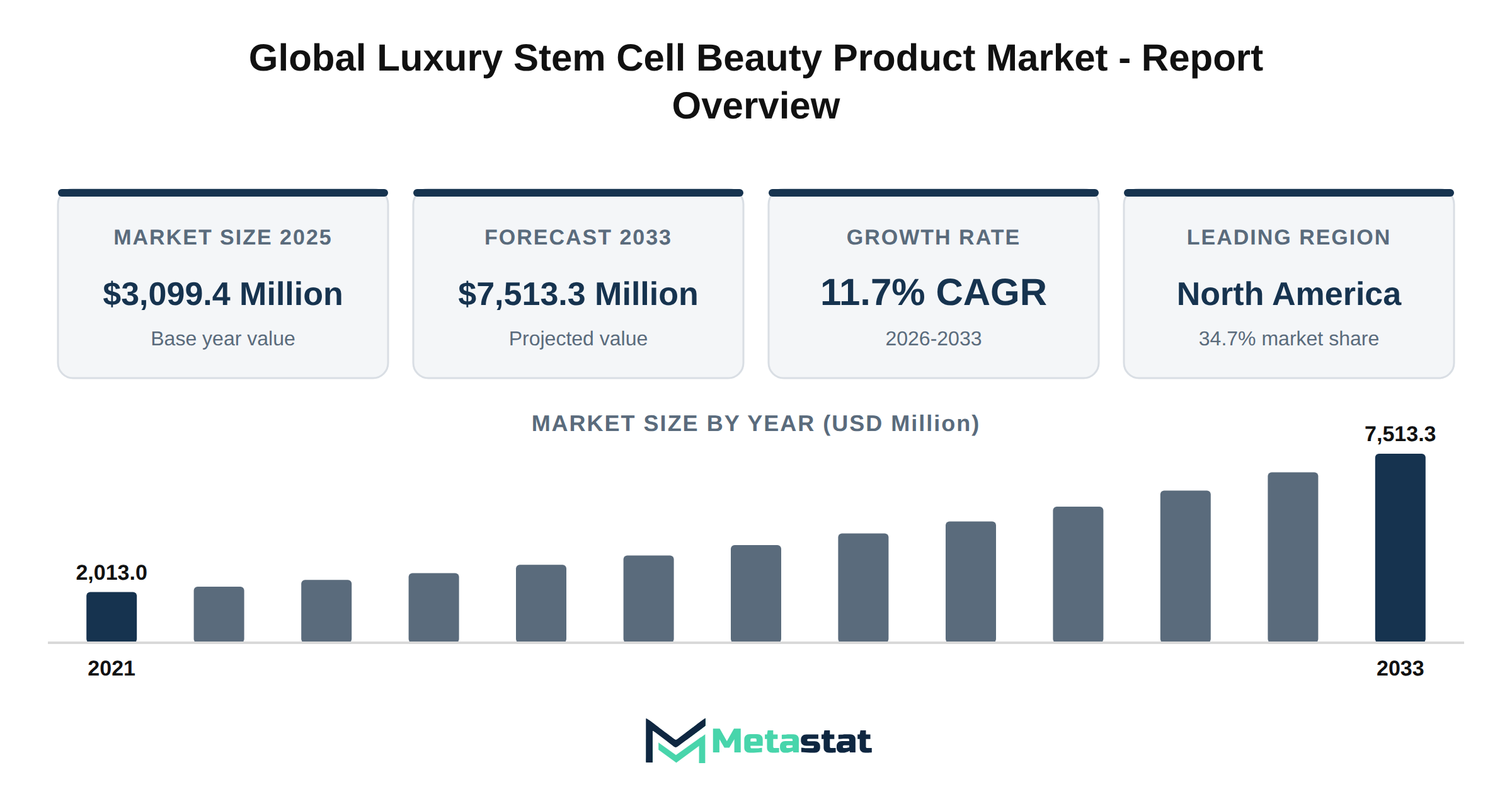
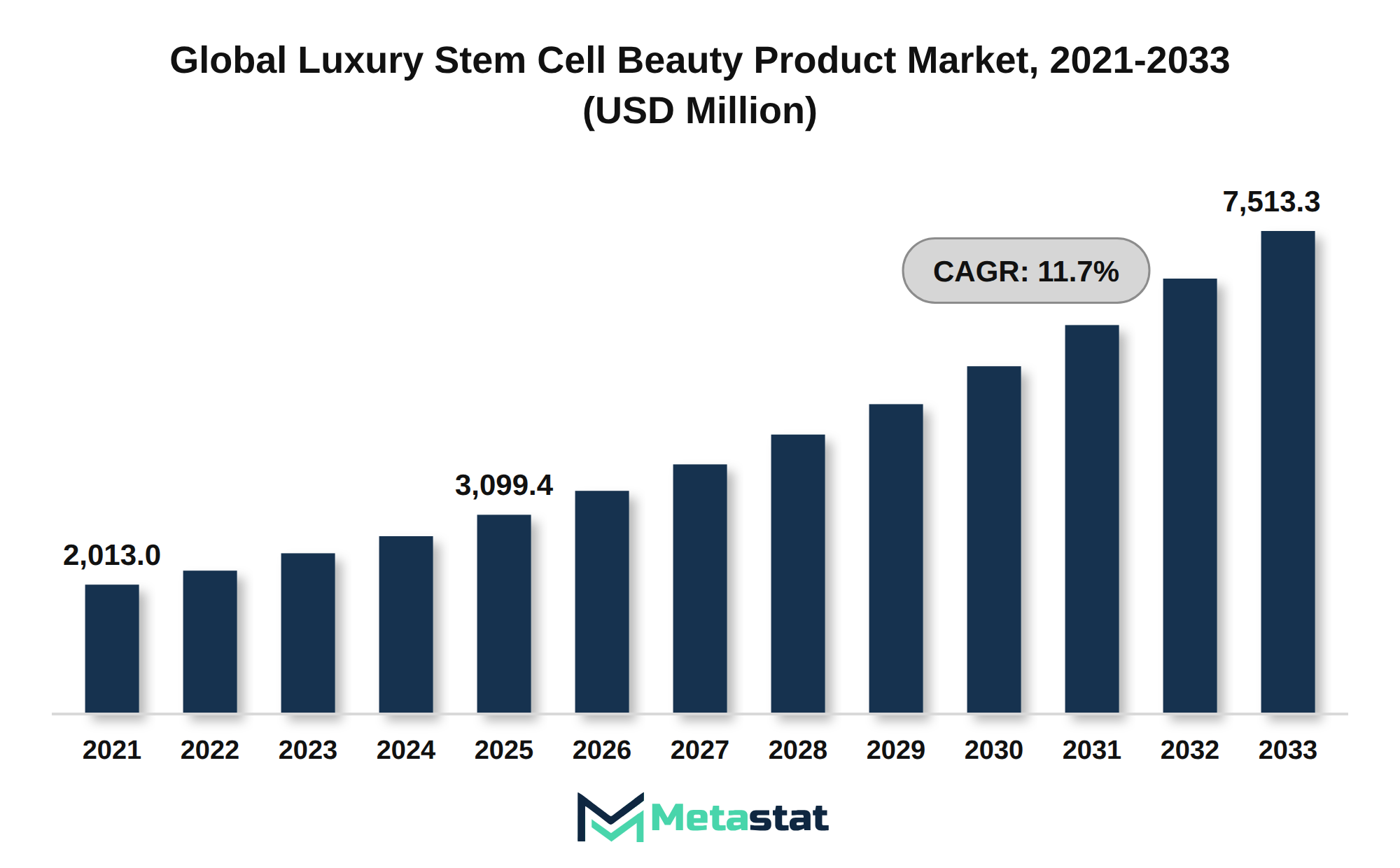
The global Luxury Stem Cell Beauty Product market was valued at USD 3,099.4 million in 2025 and is projected to reach USD 7,513.3 million by 2033, growing at a CAGR of 11.7% over the forecast period.
The Luxury Stem Cell Beauty Product market reached USD 3,099.4 million in 2025, demonstrating significant growth since its historical value of USD 2,013.0 million in 2021. This upward trajectory is projected to continue, with the market expected to attain USD 7,513.3 million by 2033, reflecting a compound annual growth rate (CAGR) of 11.7% during the forecast period from 2026 to 2033.
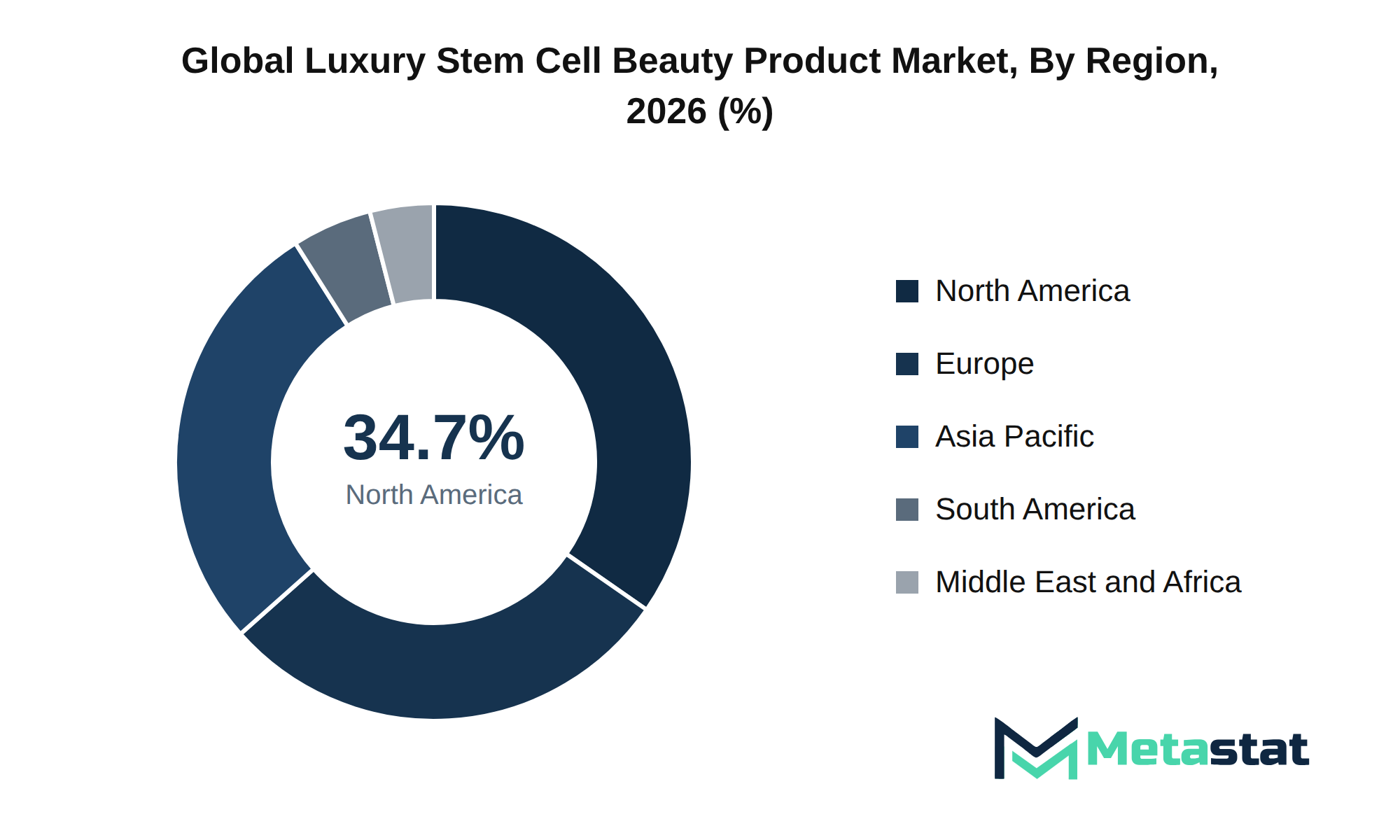
Regional dynamics illustrate that North America holds the largest share of the market at 34.7%, followed by Europe at 28.8% and Asia Pacific at 27.6%. By 2033, North America's market value is anticipated to reach USD 2,405.8 million, supported by a CAGR of 11.7%. The diverse regional adoption stems from varying consumer preferences, purchasing power, and the presence of key industry players.
Product segmentation identifies serums and concentrates because a leading category, expected to grow from USD 1,115.0 million in 2026 to USD 2,556.0 million by 2033, achieving a CAGR of 12.6%. Creams and moisturizers follow closely, with a projected value of USD 1,917.4 million by 2033. The primary skin concerns driving demand include anti-aging and wrinkle reduction, firmness and elasticity, and hydration and skin barrier repair.
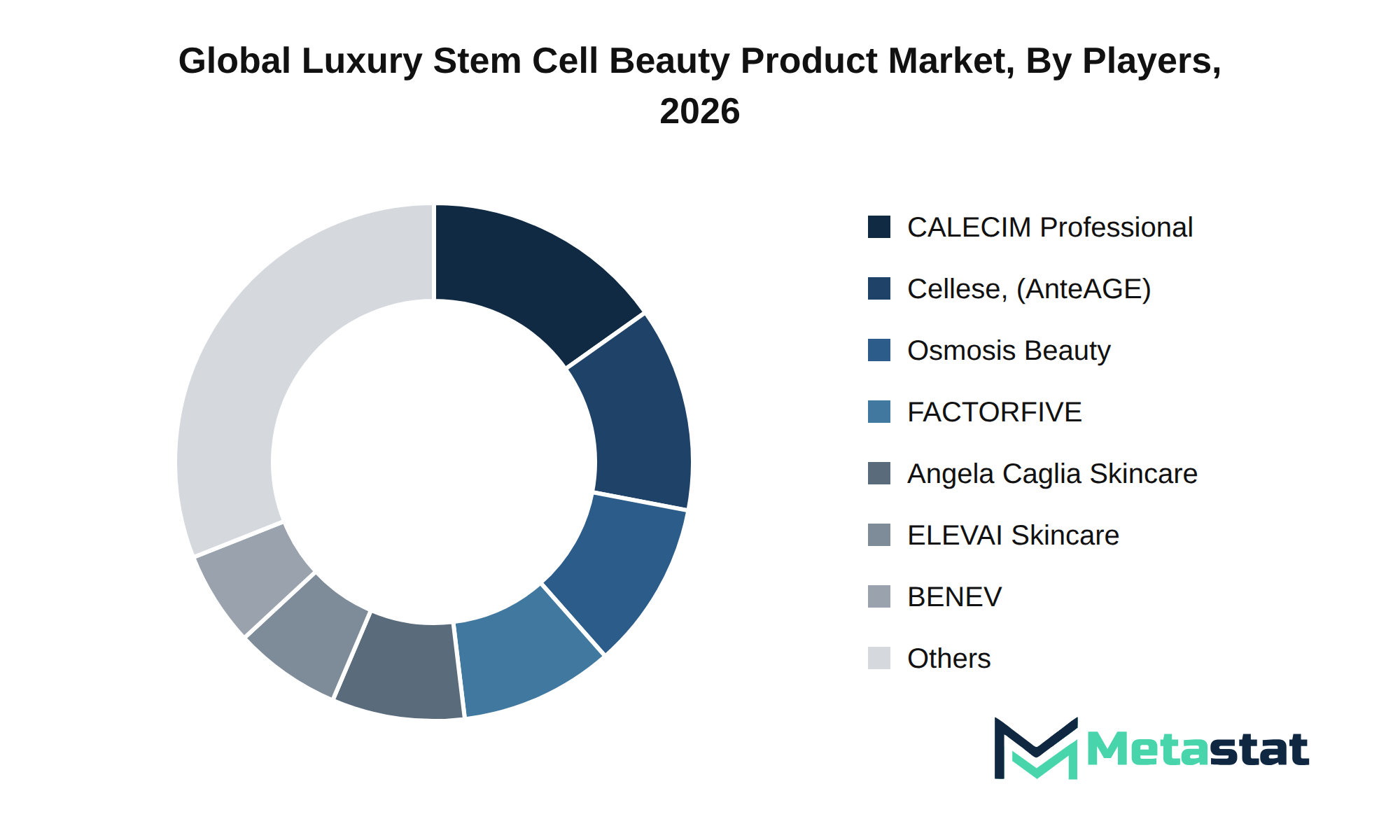
Consumer trends indicate an increasing focus on advanced formulations that address specific skin issues. This shift influences the competitive landscape, compelling companies to innovate and enhance their product offerings. Leading players in the Luxury Stem Cell Beauty Product market include Cellese, Inc. (AnteAGE), CALECIM Professional, and FACTORFIVE, which continually invest in research and development to maintain their market position.
The Luxury Stem Cell Beauty Product market experiences significant influence from various factors, including regulatory compliance and geopolitical risks. Regulations surrounding cosmetic ingredients and their safety compel manufacturers to adopt stringent quality control measures. These compliance requirements impact operational costs and product development timelines, sometimes hindering market entry for new players seeking to introduce innovative offerings.
Next-generation innovation emerges driven by a critical driver in the Luxury Stem Cell Beauty Product market. Companies invest heavily in research and development to create advanced formulations that address evolving consumer preferences. This focus on innovation not only enhances product efficacy but helps brands differentiate themselves in a competitive environment, encouraging customer loyalty and driving sales growth.
Sustainability factors into strategic planning within the market. Brands increasingly prioritize sustainable transformation, adopting eco-friendly practices that appeal to environmentally conscious consumers. This shift towards sustainable practices aligns with broader industry trends, including circular economy dynamics, which emphasize resource efficiency and waste reduction, thereby creating long-term value.
The supply chain landscape reflects the complexities of sourcing high-quality ingredients for luxury beauty products. Disruptions caused by global events necessitate robust logistics architecture to ensure timely delivery and maintain product availability. Companies that establish strong supplier relationships and diversify their sourcing options mitigate risks associated with supply chain vulnerabilities.
Market fragmentation characterizes the competitive environment, where numerous players compete across various segments and regions. This fragmentation presents both challenges and opportunities for market participants. Mergers and acquisitions (M&A) serve because strategic avenues for growth, enabling companies to expand their market presence and enhance their product portfolios through synergistic collaborations.
Capital allocation reflects the industry's commitment to long-term growth. Investments in infrastructure and technology are essential for enhancing production capabilities and improving operational efficiencies. Companies that strategically allocate capital towards innovation and sustainability initiatives position themselves favorably in the Luxury Stem Cell Beauty Product market, ensuring resilience against economic fluctuations.
Macroeconomic headwinds, including inflationary pressures and currency volatility, impact pricing strategies and consumer purchasing behavior. Brands that effectively navigate these challenges through strategic pricing and value propositions sustain customer engagement and market share. The future strategic outlook emphasizes agility and adaptability, with companies focusing on aligning their operations with changing market dynamics.
Corporate imperatives underline the importance of understanding customer journey dynamics. By enhancing the consumer experience through personalized marketing and tailored product offerings, brands in the Luxury Stem Cell Beauty Product market build deeper connections with their audience. High-value recommendations based on consumer insights will drive engagement and loyalty, securing a competitive edge in an evolving marketplace.
The Luxury Stem Cell Beauty Product market experiences growth driven by evolving consumer behaviors, particularly among aging populations. A significant focus on anti-aging and skin rejuvenation has emerged, leading to increased demand for products that address these concerns. The trend toward prioritizing skin health and wellness influences purchasing decisions, with consumers actively seeking high-quality, innovative solutions. This shift results from lifestyle changes, urbanization, and heightened awareness of skincare benefits.
The growing interest in sustainable and ethically sourced beauty products further fuels market expansion. Consumers increasingly prefer brands that align with their values, particularly those committed to environmental stewardship and responsible sourcing. This preference motivates companies within the market to enhance their product offerings, adopting sustainable practices to attract discerning buyers. The outcome is a more competitive landscape, where innovation and ethical considerations drive differentiation and customer loyalty.
Investment in technology and digital platforms supports the evolving market dynamics. Online shopping and social media engagement enable consumers to make informed choices, driving demand for luxury stem cell beauty products through increased visibility and accessibility. Companies that effectively leverage digital marketing strategies and e-commerce platforms gain a competitive edge, capturing the attention of health-conscious consumers seeking premium skincare solutions. This digital transformation enhances consumer engagement and strengthens brand loyalty, contributing to the market's growth trajectory.
Investment in technological integration enhances market growth
Investment in technological integration significantly influences the Luxury Stem Cell Beauty Product market. Key advancements in automation, artificial intelligence, and software adoption streamline processes and enhance product development. Companies leverage these technologies to improve operational efficiency and reduce costs, ultimately increasing profit margins.
Automation reduces manual workloads, enabling staff to focus on innovation and quality assurance. This shift allows businesses to adapt quickly to evolving consumer preferences and market demands. Incorporating AI-driven analytics helps identify emerging trends and tailor product offerings, ensuring alignment with customer expectations.
The shift towards a digital landscape supports the development of high-quality luxury products with enhanced efficacy. Consumers increasingly seek personalized experiences, and technological integration enables brands to deliver customized solutions. This growing emphasis on personalization drives demand for luxury stem cell beauty products and propels market expansion.
Investment in research and development (R&D) further supports innovation-led product diversification. Companies prioritizing technological integration position themselves competitively, responding effectively to market opportunities. The Luxury Stem Cell Beauty Product market is projected to experience substantial growth, driven by the ongoing evolution of technology and its applications within the beauty industry.
The Luxury Stem Cell Beauty Product market faces significant restraint from stringent regulatory compliance measures. Regulatory frameworks governing product safety, efficacy, and marketing practices impose extensive requirements on manufacturers. These regulations result in increased operational costs and extended timelines for product development and market entry, impacting the competitive landscape.
Compliance with evolving legal mandates demands substantial investments in quality control, testing, and documentation processes. Companies absorb these costs, limiting their ability to allocate resources toward innovation and marketing efforts. Consequently, slower growth occurs in the market, particularly among smaller players lacking the financial capacity to navigate complex regulatory environments.
Regional variations in compliance standards introduce additional challenges for businesses operating across multiple jurisdictions. The Luxury Stem Cell Beauty Product market encounters fragmentation, where differing regulations hinder effective supply chain management and complicate international trade. This regulatory landscape constrains growth opportunities and affects overall market dynamics, leading to an environment where agility is crucial for success.
Geopolitical Fragmentation and Supply Chain Instability
The Luxury Stem Cell Beauty Product market faces challenges arising from geopolitical fragmentation and supply chain instability. Disruptions in global trade relationships result in trade deficits and tariff friction, complicating the procurement of necessary materials and components. While manufacturers rely increasingly on global supply chains, any instability leads to delays or increased costs, affecting overall market dynamics.
Complex research and development integrations further exacerbate these challenges, driven by firms navigating varying regulations and compliance overhead across different jurisdictions. This scenario creates significant hurdles for new product introductions and innovation, potentially limiting the market's growth trajectory.
Rising input costs and tightening global regulatory standards influence pricing strategies, putting pressure on profit margins. Companies balance these costs while maintaining product quality to stay competitive. The ongoing need for sustainability and decarbonization initiatives adds another layer of complexity, resulting from firms allocating resources to meet evolving environmental demands.
Workforce skill gaps and talent retention pressures contribute to operational challenges within the market. Firms struggle to recruit professionals with the necessary expertise to drive innovation in luxury stem cell beauty products. This shortage complicates companies' abilities to adapt to changing consumer demands and market trends.
Ultimately, these factors necessitate strategic adjustments within the Luxury Stem Cell Beauty Product market. Companies that proactively develop solutions to address these challenges will position themselves more favorably in a competitive landscape. Understanding and adapting to these dynamics will be vital for sustained growth and market penetration.
Emerging regional demands drive market expansion
The Luxury Stem Cell Beauty Product market benefits from increasing consumer interest in advanced skincare solutions across various regions. North America, Europe, and Asia Pacific exhibit notable demand for innovative products integrating stem cell technology, driven by evolving beauty standards and a focus on anti-aging solutions. These regions reflect a growing population prioritizing premium, high-quality beauty products, resulting in substantial market expansion opportunities.
Infrastructure modernization supports enhanced distribution channels, enabling wider access to luxury beauty products. Retail innovations, including direct-to-consumer e-commerce platforms and specialized beauty retailers, facilitate direct engagement with consumers. This expansion of distribution channels enhances brand visibility and encourages higher consumer adoption across the Luxury Stem Cell Beauty Product market.
Geographical expansion emerges because a significant trend, with brands targeting emerging markets in South America and the Middle East. Expanding into these regions allows companies to tap into new customer bases and capitalize on rising disposable incomes, further driving market growth. The financial gains from these expansions reflect a strategic approach to capturing untapped potential in the beauty sector.
Technological disruptions within product development lead to the creation of next-generation formulations that align with consumer preferences for efficacy and sustainability. Innovations in stem cell technologies contribute to improved product performance, driving competitiveness. The Luxury Stem Cell Beauty Product market thrives on these advancements, supporting growth and product differentiation.
Digital transformation within the market reshapes consumer interactions, with personalized marketing approaches gaining traction. The shift toward digital procurement and online shopping behaviors enables brands to reach consumers effectively. Enhanced online presence allows companies to build loyalty while adapting to consumer demands for convenience and quality.
Strategic consolidation among industry players encourages collaboration and resource sharing. Mergers and acquisitions enable companies to pool expertise and expand their product portfolios. This approach strengthens the market's competitive landscape, creating opportunities for growth and innovation in the Luxury Stem Cell Beauty Product market.
Market Segmentation Analysis
The Global Luxury Stem Cell Beauty Product market is segmented based on Product Type, Primary Skin Concern, End User, and Distribution Channel.
By Product Type, the market is further segmented into:
Serums & Concentrates
Creams & Moisturizers
Eye Treatments
Cleansers & Toners
Sun Care & Complexion Products
Hair & Scalp Treatments
Body Care
Others (Facial Mists, Lip Care)
Serums & Concentrates
Demand for serums and concentrates in the Luxury Stem Cell Beauty Product market reflects a growing consumer preference for targeted skincare solutions. This segment is valued at USD 1,115 million in 2026 and is projected to reach USD 2,556 million by 2033, at a CAGR of 12.6% during the forecast period. Increasing awareness of the benefits associated with stem cell technology fuels the transition of consumers toward these advanced formulations.
Technological maturation continues to enhance product efficacy, attracting consumers seeking innovative treatments. The ability of serums and concentrates to deliver potent ingredients directly to the skin increases their appeal. This segment benefits from investments in research and development, driving continuous improvements in product formulations and application methods.
While consumers prioritize skincare regimens that address specific concerns, serums and concentrates demonstrate significant growth potential. The effectiveness of these products in targeting anti-aging effects and improving skin texture contributes to their adoption among both men and women. The increasing trend of personalized skincare enhances interest in customizable serum options, providing an avenue for brand differentiation.
Regulatory compliance and quality assurance standards play a crucial role in shaping consumer confidence within the segment. Brands that adhere to stringent regulations enhance their reputation, improving market competitiveness. Pricing volatility remains a factor, influenced by fluctuations in raw material costs; however, product innovation and superior performance often justify premium pricing strategies, contributing to healthy profit margins.
Strategic opportunities exist for brands to expand their market presence through online channels and collaborations with dermatological professionals. The emergence of direct-to-consumer e-commerce platforms facilitates accessibility, allowing consumers to engage with brands more easily. The luxury stem cell beauty product market is positioned for sustained growth, driven by increasing demand for serums and concentrates.
Creams & Moisturizers
Creams & Moisturizers segment is projected to experience significant growth over the forecast period, reaching USD 1,917.4 million by 2033, at a CAGR of 10.5%. Increasing consumer awareness regarding skin health and advanced formulations that incorporate stem cell technology drive demand in this segment. The market benefits from a rising preference for products that offer anti-aging and skin rejuvenation properties, aligning with consumer desires for visible results.
Innovative ingredients enhance product efficacy, leading to greater consumer interest. This segment employs technological advancements, resulting in the development of next-generation formulations that provide enhanced hydration and skin barrier repair. The shift towards clean and sustainable beauty products influences the formulation strategies of brands, enabling competitive differentiation in the Luxury Stem Cell Beauty Product market.
Ongoing research and development contribute to the evolution of creams and moisturizers, with an emphasis on addressing diverse skin concerns. Regulatory compliance and certifications ensure product safety and effectiveness, increasing consumer confidence and brand loyalty. The strategic focus on refining cost structures and optimizing pricing strategies enhances profitability within this segment, supporting continued investment and growth.
Eye Treatments
Growing attention towards skincare solutions targeting the eye area drives interest in the Eye Treatments segment of the Luxury Stem Cell Beauty Product market. Increasing awareness of aging signs around the eyes, including dark circles and fine lines, drives demand from a diverse consumer base. This focus on specialized eye treatments leads to the development of advanced formulations that leverage stem cell technology to enhance efficacy.
Consumer preferences shift towards products with clinically backed ingredients, fueling innovation in eye treatment formulations. Brands invest in research to create next-generation products, including those that improve hydration and reduce puffiness. These enhancements contribute to the segment's anticipated growth to USD 772.4 million by 2033.
The market for eye treatments benefits from a trend towards comprehensive beauty regimens, where consumers seek multifunctional products that address multiple concerns simultaneously. This evolving landscape encourages companies to explore new distribution channels, including luxury spas and dermatology clinics, enhancing accessibility for end users. The strategic expansion into these channels aligns with the overall growth trajectory of the Luxury Stem Cell Beauty Product market.
Regulatory compliance and certifications play critical roles in shaping consumer confidence in eye treatment products. Brands prioritizing adherence to stringent regulations enhance their market positioning, which ultimately supports sales growth. In this segment, maintaining high quality and demonstrating product efficacy remain essential for brands seeking to capture the attention of discerning consumers.
Cleansers & Toners
Increasing consumer awareness regarding skin health significantly drives demand for cleansers and toners within the Luxury Stem Cell Beauty Product market. Rising preferences for products that offer both cleansing and treatment benefits, including those containing stem cell-derived ingredients, fuel interest among consumers seeking multifunctional skincare solutions. This segment is projected to grow at a CAGR of 10.4% during the forecast period, reflecting a structural shift towards integrated skincare routines.
Heightened focus on personal grooming and skincare routines, particularly post-pandemic, enhances the appeal of cleansers and toners. These products play a crucial role in daily skincare regimens, emphasizing the importance of maintaining skin cleanliness and hydration. Consequently, consumers increasingly prioritize quality, leading to greater investment in premium cleansers and toners that deliver effective results, reinforcing long-term demand in the segment.
Innovation in formulation and application techniques drives growth within this segment. Advances in technology allow for the development of more effective and gentle cleansing products, appealing to a broader audience. The market responds favorably to innovations that enhance user experience, including sustainable packaging and natural ingredients, aligning with current consumer trends towards eco-friendliness and clean beauty, which are critical for attracting environmentally conscious buyers.
Competitive dynamics among brands further influence the landscape, with established players and new entrants introducing innovative products that cater to diverse skin concerns. This competition creates an environment conducive to continuous product evolution, ensuring that offerings remain relevant and appealing to consumers' changing preferences, ultimately enhancing market competitiveness.
By 2033, the cleansers and toners segment is likely to see substantial market value, aligning with the overall growth trajectory of the Luxury Stem Cell Beauty Product market, which emphasizes high-quality, effective skincare solutions. The segment's development reflects broader trends toward premiumization and targeted skincare, positioning it well for future expansion and increasing investment across the value chain.
Sun Care & Complexion Products
Growing awareness of the importance of sun protection fuels demand for Sun Care & Complexion Products in the Luxury Stem Cell Beauty Product market. Consumers increasingly seek products that provide sun protection and enhance skin quality. This trend is driven by a broader understanding of the adverse effects of sun exposure on skin health, leading to a shift in consumer preferences towards multifunctional products. The emergence of advanced formulations containing stem cell technology enhances the appeal of these products, offering additional benefits including skin regeneration and nourishment.
Technological innovations play a key role in the segment's expansion, with brands focusing on next-generation upgrades that incorporate innovative research in stem cell efficacy. Product evolution includes the introduction of lightweight, non-greasy formulations that cater to diverse skin types and preferences. This adaptability in product design aligns with shifting consumption patterns, driven by consumers increasingly opting for products that fit seamlessly into their skincare routines.
Regulatory compliance standards continue to shape the segment, with brands focusing on obtaining certifications that align with consumer expectations for safety and efficacy. This focus on compliance strengthens consumer trust and enhances brand positioning within the competitive landscape. Maintaining cost structures that allow for competitive pricing without compromising quality remains essential amid rising raw material costs.
Logistics vulnerabilities, particularly concerning the sourcing of high-quality ingredients, represent ongoing challenges within the market. Strategic opportunity windows exist because brands leverage local sourcing to enhance supply chain resilience, mitigating risks associated with global supply disruptions. The Luxury Stem Cell Beauty Product market stands to benefit from these developments, supporting sustained growth in the Sun Care & Complexion Products segment.
Hair & Scalp Treatments
Interest in Hair & Scalp Treatments within the Luxury Stem Cell Beauty Product market reflects growing consumer awareness of advanced ingredients and their potential benefits for hair health. Increasing incidences of hair thinning and scalp issues motivate consumers to seek effective solutions, driving demand for these specialized products. The segment utilizes technological advancements, including stem cell technology, which enhances product efficacy and consumer trust.
Market players focus on continuous product evolution, introducing innovative formulations that emphasize natural ingredients and sustainable practices. The shift towards environmentally friendly products influences consumer choices, with many seeking brands that align with their values. Regulatory compliance standards play a critical role, ensuring that products meet safety and effectiveness benchmarks, which reinforces consumer confidence and brand loyalty.
While consumer preferences shift towards multifunctional products, Hair & Scalp Treatments face opportunities for integration with other beauty and personal care items. This trend enhances the appeal of such treatments, catering to consumers looking for effective solutions. Capital investment in research and development remains critical to driving innovation, enabling brands to adapt to changing market dynamics while addressing the evolving needs of consumers.
The Luxury Stem Cell Beauty Product market is expected to continue thriving due to brands expanding their portfolios to include effective Hair & Scalp Treatments. Establishing strong distribution channels enhances market reach, allowing consumers to access these products more conveniently. The segment's growth trajectory aligns with rising consumer demand for personalized beauty experiences, creating a strategic opportunity window for stakeholders in the luxury beauty sector.
Body Care
Body care products represent a compelling segment within the Luxury Stem Cell Beauty Product market, driven by a growing consumer focus on skincare solutions. This trend results from increasing awareness regarding skin health and a desire for products that offer comprehensive benefits. Enhanced formulations that leverage advanced stem cell technology contribute to product evolution, addressing diverse skin concerns including hydration, elasticity, and overall skin vitality.
The segment benefits from shifting consumption patterns, with consumers seeking multifunctional products that combine efficacy with luxury. This demand for innovation stimulates market expansion, encouraging brands to invest in research and development. Collaborations with dermatologists and skincare experts enhance credibility and consumer trust, driving adoption of body care products across various demographics.
Regulatory compliance standards play a crucial role in ensuring product safety and efficacy within the market. Brands that meet these rigorous standards often gain a competitive edge, reinforcing consumer confidence. The evolving landscape of consumer preferences and regulatory requirements necessitates continuous adaptation by manufacturers, promoting a dynamic environment for body care innovation.
Strategic opportunity windows emerge owing to brands exploring partnerships with luxury retailers and e-commerce platforms to enhance product accessibility. Targeting the unisex market segment presents additional avenues for growth, with various brands developing inclusive marketing strategies. Overall, the body care segment stands poised for substantial development within the Luxury Stem Cell Beauty Product market, driven by innovation, consumer demand, and strategic market positioning.
Others (Facial Mists, Lip Care)
Consumer interest in facial mists and lip care products has surged, driven by a growing emphasis on convenience and multifunctionality in beauty routines. These products often provide on-the-go hydration, appeal to a diverse audience, and align with trends emphasizing natural ingredients and skin health. The segment attracts consumers seeking quick refreshment and nourishment while contributing to the larger Luxury Stem Cell Beauty Product market.
Technological advancement in formulations enhances the appeal of facial mists and lip care items, focusing on innovative ingredients that cater to specific skin concerns. Brands increasingly adopt bioactive compounds derived from stem cells, aligning with consumer expectations for efficacy and safety. This evolution creates a competitive environment where companies strive to differentiate their offerings through unique benefits and effective solutions.
Consumer preferences are shifting towards products that deliver immediate results and align with ethical sourcing practices. This shift prompts product development, encouraging brands to invest in sustainable raw material sourcing and eco-friendly packaging. Compliance with regulatory standards further shapes the market, encouraging companies to prioritize transparency and quality in their formulations.
Strategic opportunities arise for brands that effectively utilize consumer insights and adapt to shifting market dynamics. By focusing on innovative marketing strategies and collaborations with influencers, companies boost their visibility and reach within the Luxury Stem Cell Beauty Product market. Investment in targeted campaigns engages a broader audience, ultimately driving demand for facial mists and lip care products.
By Primary Skin Concern, the market is further segmented into:
Anti-Aging and Wrinkle Reduction
Firmness and Elasticity
Skin Regeneration and Renewal
Hydration and Skin Barrier Repair
Brightening and Hyperpigmentation
Radiance and Skin Tone
Photoaging and Environmental Damage
Others (Acne Scarring and Specialized Skin Concerns)
Anti-Aging and Wrinkle Reduction
Valued at USD 1,066.2 million in 2026, the Anti-Aging and Wrinkle Reduction segment is projected to reach USD 2,208.2 million by 2033, at a CAGR of 11% during the forecast period. Significant demand drivers include an increasing focus on skin health and the desire for a youthful appearance, prompting consumers to invest in advanced skincare products. The growing prevalence of aging concerns, alongside heightened awareness of the benefits of stem cell technologies, supports market expansion.
Technological maturation and product evolution contribute to the appeal of anti-aging solutions. Innovative formulations and effective delivery systems enhance product efficacy, attracting consumers seeking results-driven options. Rising adoption of these advanced skincare solutions occurs because consumers prioritize quality over price. Regulatory compliance and certifications play essential roles in building consumer trust and ensuring product safety, further supporting market growth.
End-user dynamics reveal a notable preference among women for anti-aging products, driving substantial revenue within the Luxury Stem Cell Beauty Product market. Increasing engagement from men with these solutions reflects a shift in perceptions regarding skincare and personal grooming. The segment benefits from strategic opportunity windows, where brands shape offerings to cater to specific consumer needs, ensuring sustained demand and a competitive advantage.
Firmness and Elasticity
Growing consumer demand for products addressing skin firmness and elasticity directly influences the Luxury Stem Cell Beauty Product market. Targeted formulations that enhance skin elasticity appeal to consumers seeking effective anti-aging solutions. The segment is projected to reach USD 1,280.3 million by 2033, at a CAGR of 11.3% during the forecast period. Innovations in product formulation contribute to segment growth, with advancements in stem cell technology enhancing efficacy and results. Increased marketing of these products through digital platforms accelerates consumer awareness and adoption, particularly among younger demographics focused on long-term skincare benefits.
While the market evolves, preferences shift towards high-quality, clinically tested products. Rising demand for natural and organic ingredients compels manufacturers to adapt their offerings. Retailers emphasize the importance of educating consumers on the benefits of improved firmness and elasticity, further driving market dynamics. With a strong growth trajectory anticipated, investments in product development and marketing strategies are expected to enhance competitive positioning within the market.
Skin Regeneration and Renewal
Growing demand for products focused on skin regeneration and renewal drives expansion within the Luxury Stem Cell Beauty Product market. Increasing consumer interest in advanced skincare solutions reflects a shift towards products that promote skin health and rejuvenation. This segment is characterized by a diverse range of formulations that cater to various skin types and concerns, enhancing its appeal across broader demographics.
Technological advancements in formulation and ingredient sourcing play a critical role in segment growth. Innovations in stem cell technology enable the development of more effective and targeted beauty products, attracting consumers seeking high-performance solutions. Enhanced efficacy and the promise of visible results contribute to greater adoption rates among consumers, particularly those prioritizing anti-aging and skin renewal.
The Skin Regeneration and Renewal segment is projected to reach USD 1,391.5 million by 2033. This substantial market potential encourages companies to invest in research and development, further driving product evolution and refinement. Strategic partnerships and collaborations among industry players promote valuable knowledge sharing, facilitating the introduction of next-generation products.
A growing focus on regulatory compliance enhances consumer trust in the market. Certifications and safety standards adopted by manufacturers assure quality and broaden market access. Consumer preferences increasingly lean towards products that demonstrate transparency in sourcing and ingredient efficacy, reinforcing the demand for skin regeneration solutions.
Market participants face pressures related to pricing volatility and cost structures. Manufacturers balance maintaining product quality with managing operational costs to ensure profitability. Optimizing supply chain processes and raw material sourcing strategies enhances resilience against potential market disruptions while meeting consumer expectations for premium products.
Hydration and Skin Barrier Repair
Increasing consumer demand for effective skin hydration and barrier repair drives growth in the Luxury Stem Cell Beauty Product market. The growing awareness of skin health and the significance of hydration in achieving a youthful appearance fuels this trend. Products targeting hydration and skin barrier repair address concerns about environmental damage, aging, and skin conditions that compromise the skin's protective layers. Consumers increasingly seek formulations that deliver long-lasting moisture, often combining stem cell technology with active ingredients that enhance skin resilience.
This segment is projected to grow at a CAGR of 12.7% during the forecast period. The rise in popularity of multifunctional products that incorporate hydration and barrier repair benefits appeals to a wide range of consumers. The emergence of next-generation formulations, including innovative delivery systems and natural ingredients, supports market evolution. Brands focusing on transparency and efficacy in their marketing connect strongly with consumers, reinforcing trust and loyalty.
Shifts in consumer behavior towards effective skincare and preventive health strategies contribute to the expansion of this segment within the market. The segment for hydration and skin barrier repair aligns with growing trends in self-care and wellness, positioning these products because essential components of daily skincare routines. Manufacturers are investing in research and development to enhance product efficacy and meet evolving consumer expectations.
Brightening and Hyperpigmentation
Sub-segment Brightening and Hyperpigmentation (By Primary Skin Concern)
Consumer interest in products targeting brightening and hyperpigmentation reflects a growing trend in the Luxury Stem Cell Beauty Product market. This segment addresses common skin concerns related to uneven skin tone, dark spots, and discoloration. Factors driving demand include increased awareness of skin health and the aesthetic appeal associated with a radiant complexion.
Innovation within product formulations significantly influences segment expansion. Advancements in stem cell technology, combined with natural ingredients, enhance the effectiveness of treatments designed for brightening. Increased investment in research and development supports the continuous evolution of these products, meeting consumer expectations for results-driven solutions.
Shifts in consumer preferences toward clean and sustainable beauty products impact purchasing behaviors. Regulatory compliance standards regarding ingredient safety shape product development strategies. Brands focused on transparency and ethical sourcing enhance their market appeal, aligning with consumer values.
End-users, particularly younger demographics, prioritize effective solutions for skin concerns, propelling sales in this segment. The Luxury Stem Cell Beauty Product market is projected to benefit from a strategic opportunity window. Brands enhance product visibility through targeted marketing and collaborations with influencers and dermatologists.
Radiance and Skin Tone
Consumer interest in products that enhance radiance and skin tone influences growth within the Luxury Stem Cell Beauty Product market. The segment gains traction due to an increasing focus on achieving a luminous complexion, particularly among millennials and Gen Z consumers who prioritize glow-enhancing skincare. The rising prevalence of social media platforms contributes to heightened visibility for beauty products that promise radiant skin, prompting brands to innovate and expand their offerings.
Technological advancements in formulation and application methods enhance product efficacy while ensuring safety. Consumers increasingly seek products that combine luxury with performance, driving demand for formulations that leverage stem cell technology to improve skin texture and tone. This emphasis on effective and high-quality ingredients supports the need for brands to meet consumer expectations and maintain competitive positioning within the market.
Shifts in consumer behavior reflect a broader trend towards clean and sustainable beauty, impacting product development strategies. Regulations regarding ingredient safety and environmental impact encourage manufacturers to adopt more sustainable practices, influencing formulations in the radiance and skin tone segment. These developments reinforce the market's focus on transparency and efficacy, shaping consumer purchasing decisions and brand loyalty.
The radiance and skin tone sub-segment aligns with the growing desire for skincare solutions that cater to diverse complexion concerns. Innovations in product development create opportunities for brands to penetrate untapped consumer segments, contributing to the overall growth trajectory of the Luxury Stem Cell Beauty Product market.
Photoaging and Environmental Damage
Sub-segment Photoaging and Environmental Damage (By Primary Skin Concern)
Concerns regarding photoaging and environmental damage increasingly drive consumer interest in advanced skincare solutions. This segment addresses the effects of sun exposure, pollution, and other environmental factors on skin health, emphasizing the need for protective and restorative products. The market observes rising demands for formulations that incorporate stem cell technology aimed at mitigating the visible signs of aging caused by external stressors.
The increasing prevalence of skin issues linked to environmental damage enhances the urgency for effective anti-aging solutions. Consumers prioritize products that demonstrate efficacy in combating photoaging and environmental stress, leading to a surge in innovation within this space. Brands in the Luxury Stem Cell Beauty Product market focus on developing formulations that combine active ingredients known for their repairing properties with the regenerative benefits of stem cells.
Adoption of these products is influenced by high consumer awareness of the long-term effects of environmental factors on skin appearance. The emergence of targeted marketing strategies highlighting the benefits of stem cell-based products serves to educate consumers on the advanced capabilities of these formulations. This increased education builds consumer trust and loyalty, positioning brands favorably within a competitive environment.
Challenges exist within this segment, particularly concerning regulatory compliance and the need for robust testing to validate product claims. Brands invest in research and development to ensure compliance with evolving regulations while maintaining the integrity and efficacy of their formulations. Businesses that effectively navigate these challenges position themselves for success in the Luxury Stem Cell Beauty Product market.
Others (Acne Scarring and Specialized Skin Concerns)
Increasing focus on addressing specific skin concerns drives demand for products targeting acne scarring and other specialized skin issues. Consumers seek innovative solutions that deliver effective results while maintaining the luxurious experience associated with the Luxury Stem Cell Beauty Product market. Advances in formulation technology enable the development of targeted treatments that enhance skin health and appearance.
Product evolution within this segment emphasizes the importance of high-quality ingredients and formulations designed to meet unique skin needs. Innovations in stem cell technology contribute to the effectiveness of acne treatments, positioning these products because desirable options for consumers. The market experiences a shift toward personalized skincare solutions that cater to individual preferences and concerns.
End-use dynamics show a growing interest in professional recommendations and treatments, particularly in dermatology and medical aesthetic settings. Consumer behavior reflects a willingness to invest in products that promise visible improvements in skin texture and tone. This trend drives purchasing decisions, leading to increased adoption of products that target acne scarring and specialized skin concerns.
Regulatory compliance standards play a significant role in shaping product offerings within this segment. Brands focus on ensuring that their formulations meet safety and efficacy requirements, which enhances consumer confidence. This commitment to quality aligns with the expectations of discerning consumers who prioritize effective solutions in the Luxury Stem Cell Beauty Product market.
Capital investment outlook highlights opportunities for brands that invest in research and development to further enhance product offerings. Identifying and addressing gaps in the market leads to strategic advantage, enabling brands to capture a larger share of the growing demand for specialized skin care treatments.
By End User, the market is further segmented into:
Men
Women
Unisex
Men
Valued at USD 431 million in 2026, the Men segment is projected to reach USD 1,039.8 million by 2033, at a CAGR of 13.4% during the forecast period. Growing interest among men in personal grooming and skincare contributes significantly to the expansion of the segment. The increasing acceptance of luxury stem cell beauty products among male consumers highlights a shift in skincare preferences. This evolution reflects broader societal changes, where men seek products that address specific skin concerns, including anti-aging, hydration, and skin barrier repair.
Market players respond to this demand by developing innovative formulations tailored for men, which enhances their competitive positioning in the Luxury Stem Cell Beauty Product market. Marketing strategies emphasize the efficacy and high-quality ingredients of these products, appealing to the target demographic's desire for premium skincare solutions. Increased availability through various distribution channels, including e-commerce and specialty beauty retailers, supports market penetration.
Heightened awareness regarding skincare regimens and grooming routines creates a robust foundation for future growth in this segment. Product offerings continue to evolve, and the market anticipates a notable increase in male consumers seeking solutions that cater to their unique skincare needs.
Women
Increasing consumer focus on skincare and beauty products drives growth within the Luxury Stem Cell Beauty Product market, particularly for women. This segment is estimated to reach USD 5,118.8 million by 2033, at a CAGR of 11% during the forecast period. Demand emerges from a heightened awareness of the benefits of advanced formulations that leverage stem cell technology for skin rejuvenation and anti-aging effects.
Adoption stems from ongoing innovations in product formulations that enhance effectiveness and address diverse skin concerns, including anti-aging, hydration, and skin renewal. Women often seek products that deliver visible results. This demand prompts brands to invest in research and development for next-generation upgrades that align with consumer expectations.
The evolving beauty standards influence consumption patterns, with women increasingly favoring products that offer multifunctional benefits and luxury experiences. Regulatory compliance and certifications further support market growth by assuring consumers of product safety and efficacy.
Pricing strategies play a significant role in shaping the market, driven by premium pricing that reflects the perceived value of luxury stem cell beauty products. Competition intensifies among established and emerging brands, resulting in an expanded range of offerings specifically targeting women. The Luxury Stem Cell Beauty Product market demonstrates strong potential for sustained growth driven by these factors.
Unisex
Projecting substantial growth, the Unisex segment within the Luxury Stem Cell Beauty Product market is expected to reach USD 1,354.6 million by 2033. Consumer preferences increasingly shift toward products that offer versatility, appealing to both men and women. This unisex appeal drives demand, supported by evolving social norms and the desire for inclusive beauty solutions. The segment benefits from technological advancements enhancing product formulations, leading to improvements in efficacy and user experience.
While awareness of skincare benefits continues to rise, consumers show a growing interest in products that address multiple skin concerns, further fueling market expansion. Innovations in product development, emphasizing clean and sustainable ingredients, align with consumer expectations for ethical sourcing and environmentally friendly practices. The trend toward self-care and overall wellness significantly impacts purchasing decisions, with consumers seeking high-quality beauty products that provide tangible results.
Market players focusing on the Unisex segment are likely to experience increased competition, driven by brands developing offerings tailored to this demographic. Strategic investments in marketing and distribution channels will play a crucial role in capturing market share. The Luxury Stem Cell Beauty Product market reflects a changing environment, where adaptability and consumer-centric strategies are vital for success.
By Distribution Channel, the market is further segmented into:
Brand-Owned DTC E-commerce
Specialty Beauty Retailers
Dermatology, Plastic Surgery & Medical Aesthetic Clinics
Luxury Spas & Professional Salons
Premium E-Retailers & Marketplaces
Others (Selective Pharmacies, Duty-Free Retail)
Brand-Owned DTC E-commerce
Direct-to-consumer (DTC) e-commerce channels have gained prominence within the Luxury Stem Cell Beauty Product market, driven by changing consumer purchasing behaviors and the increasing popularity of online shopping. The convenience of online platforms enables brands to engage directly with customers, facilitating personalized marketing strategies and enhancing customer experiences. This shift enhances consumer connections, allowing brands to gather valuable insights into preferences and buying patterns.
Technological maturation plays a critical role in the expansion of DTC e-commerce. Advances in digital platforms and payment systems streamline the shopping experience, encouraging consumers to explore luxury beauty products online. The integration of augmented reality and artificial intelligence enhances consumer interactions, providing virtual try-ons and personalized product recommendations that increase engagement. These innovations position brands to effectively compete in the evolving marketplace.
Continued evolution of product offerings fuels consumer interest in DTC e-commerce channels. Brands consistently introduce new formulations and specialized treatments that cater to specific skin concerns, appealing to informed consumers seeking effective solutions. This focus on product innovation aligns with the growing trend of self-care and wellness, encouraging consumers to invest in high-quality beauty products that deliver tangible results.
Regulatory compliance standards influence the operational framework of DTC brands, necessitating adherence to safety and quality guidelines. Compliance builds consumer trust, which is essential in the luxury segment where brand reputation significantly impacts purchasing decisions. Transparent communication regarding ingredient sourcing, product efficacy, and ethical practices enhances brand credibility, further driving sales through DTC channels.
Cost structures associated with DTC e-commerce models vary, with initial investments in technology, marketing, and logistics. However, reduced overhead costs compared to traditional retail environments present significant advantages. Brands maintain competitive pricing strategies while optimizing profit margins. These dynamics position DTC e-commerce because a viable, profitable distribution channel within the broader Luxury Stem Cell Beauty Product market.
Specialty Beauty Retailers
Specialty beauty retailers represent a significant distribution channel within the Luxury Stem Cell Beauty Product market. These retailers focus on providing high-quality, niche beauty products to discerning consumers who prioritize efficacy and luxury in their skincare routines. The growth of this segment aligns with increasing consumer preference for personalized shopping experiences and expert advice in beauty care.
Product education and brand storytelling are essential elements driving adoption in specialty beauty retail. Consumers often seek guidance from knowledgeable staff regarding the benefits of stem cell-infused products, enhancing their purchasing confidence. The growing trend of experiential shopping is significant in attracting consumers to specialty retailers, where they engage with products in a curated environment.
Competition among specialty beauty retailers intensifies owing to brands innovating and expanding their product lines. Technological advancements facilitate the introduction of next-generation products, further appealing to consumers interested in innovative beauty solutions. Retailers that emphasize unique product offerings and build brand loyalty are well-positioned to capture market share, contributing to overall segment expansion.
Regulatory compliance and quality assurance significantly influence consumer expectations in this market. Specialty retailers often highlight certifications and adherence to stringent safety standards, which enhances customer trust and loyalty. This focus on compliance translates to a competitive edge, especially in a landscape where consumer awareness regarding ingredient sourcing and product safety continues to rise.
The Luxury Stem Cell Beauty Product market benefits from shifting consumer behaviors towards premium skincare solutions. While consumers increasingly prioritize self-care and wellness, specialty beauty retailers that align their offerings with these values are expected to thrive. This emphasis on high-quality ingredients and effective formulations positions the segment to capture a growing share of the overall market.
Dermatology, Plastic Surgery & Medical Aesthetic Clinics
Consumer preferences increasingly shift towards specialized services offered by dermatology, plastic surgery, and medical aesthetic clinics, significantly influencing the Luxury Stem Cell Beauty Product market. These clinics provide personalized skincare solutions, leveraging advanced technologies and expertise to enhance the effectiveness of stem cell-derived products. The integration of these offerings with consultative services improves customer satisfaction and encourages higher spending on premium beauty products, strengthening long-term demand.
Regulatory compliance and certification standards specific to the medical aesthetic field play critical roles in shaping product offerings. Ensuring that products meet stringent safety and efficacy requirements builds trust and confidence among consumers seeking cosmetic procedures. This adherence to regulations streamlines the path for luxury beauty products to gain acceptance in clinical settings, ultimately expanding the addressable base.
Technological maturation facilitates the adoption of innovative formulations within this segment. Next-generation upgrades and ongoing product evolution enable clinics to deliver superior results, appealing to consumers pursuing visible and lasting skin improvements. Downstream applications of luxury stem cell beauty products cater to specific skin concerns, including anti-aging and skin rejuvenation, reinforcing the segment's position.
Strategic opportunity windows present themselves through collaborations between beauty brands and medical professionals, enhancing product visibility and credibility. This collaboration allows brands to tap into the clinic’s existing clientele, driving consumption shifts and building brand loyalty. The Luxury Stem Cell Beauty Product market stands to benefit significantly from such partnerships, aligning advanced skincare with consumer demands for effective and safe solutions, increasing investment across the value chain.
Luxury Spas & Professional Salons
Growing interest in high-end spa experiences drives demand within the Luxury Spas & Professional Salons distribution channel. Clients increasingly seek advanced skincare treatments, including luxury stem cell beauty products, for effective anti-aging and rejuvenation results. This channel serves consumers who prioritize premium services and products, contributing to significant growth in the overall luxury stem cell beauty product market.
Technological advancements in beauty applications enhance the efficacy of treatments offered at these establishments. Salons and spas utilize innovative product formulations and techniques to deliver superior results, aligning with consumer expectations for visible improvements. Adoption of new technologies creates competitive advantages for participants in the luxury spa and salon sector.
Regulatory compliance standards and certifications play critical roles in shaping the product offerings within this distribution channel. Providers focus on sourcing high-quality ingredients that meet stringent regulations while ensuring consumer safety. Such diligence builds trust and loyalty among clientele, further boosting the luxury stem cell beauty product market.
Strategic opportunity windows arise from the increasing popularity of personalized beauty treatments. Consumers prefer tailored solutions that address individual skin concerns. This trend encourages spas and salons to adapt their offerings, integrating luxury stem cell products that cater to diverse skincare needs.
Premium E-Retailers & Marketplaces
Shifts in consumer purchasing behavior significantly influence the Premium E-Retailers & Marketplaces sub-segment. The rise of online shopping platforms has improved access to luxury products, enhancing the consumer experience. Increased digital engagement among consumers allows brands to present their offerings effectively, driving awareness and interest in luxury stem cell beauty products. The segment benefits from the ability to target niche markets through tailored marketing strategies, which enhances customer loyalty.
Technological advancements in e-commerce infrastructure support efficient transactions and effective customer service. Enhanced logistics capabilities, including improved shipping and returns processes, contribute to consumer satisfaction, thereby encouraging repeat purchases. The market observes an upward trend in consumers seeking convenience and immediate access to luxury products, reinforcing the importance of this distribution channel.
The growing emphasis on sustainability influences purchasing decisions, prompting retailers to adopt eco-friendly practices. Brands that prioritize sustainable sourcing and packaging connect with environmentally conscious consumers, further enhancing their market appeal. The Luxury Stem Cell Beauty Product market is well-positioned to capitalize on these evolving consumer preferences and market dynamics.
Strategic partnerships between luxury brands and e-retailers expand market reach and visibility. Collaborative marketing campaigns leverage the strengths of both parties, creating comprehensive brand narratives that attract diverse consumer segments. This collaboration drives innovation in product offerings, ensuring alignment with consumer expectations and emerging trends within the luxury beauty space.
Overall, the Premium E-Retailers & Marketplaces sub-segment plays a critical role in shaping the market for Luxury Stem Cell Beauty Products, contributing significantly to its growth trajectory. While consumer preferences evolve, adaptability and strategic positioning within this channel will drive success for brands catering to the luxury beauty segment.
Others (Selective Pharmacies, Duty-Free Retail)
Selective pharmacies and duty-free retail outlets play a unique role in distributing luxury stem cell beauty products, catering to a diverse consumer base seeking premium skincare solutions. These channels attract consumers looking for exclusive offerings that reflect luxury and innovation. The prestige associated with luxury stem cell beauty products aligns with the expectations of consumers shopping in these environments, enhancing perceived value and driving purchase decisions.
Consumer trends indicate strong demand for premium products that address specific skin concerns, including anti-aging and hydration. Selective pharmacies often provide personalized consultations, enabling consumers to make informed choices based on their individual needs. This personalized approach enhances customer satisfaction and loyalty, contributing to sustained interest in the luxury stem cell beauty product market.
Strategic partnerships with leading brands enhance the product selection available in selective pharmacies and duty-free retail, ensuring that consumers have access to the latest innovations. The presence of luxury stem cell beauty products in these channels signals quality and exclusivity, which appeals to affluent consumers seeking high-end skincare solutions.
Market expansion opportunities arise from increasing global travel. Duty-free retail outlets serve because key points for introducing new brands and products to international consumers. This environment facilitates initial exposure and encourages repeat purchases through unique product offerings not readily available in local markets. Such dynamics strengthen the market's growth potential.
By Region
Based on geography, the Global Luxury Stem Cell Beauty Product market is divided into North America, Europe, Asia-Pacific, South America, Middle East, and Africa.
North America
North America demonstrates strong dynamics within the Luxury Stem Cell Beauty Product market, characterized by a projected expansion at a CAGR of 11.7% during the forecast period, reaching a market size of USD 2,405.8 million by the end of 2033. The region holds a market share of 34.7% in 2025, positioning it because a key player in the industry.
Consumer demand in the United States, Canada, and Mexico significantly influences the growth trajectory. A robust interest in anti-aging solutions and skin rejuvenation drives purchasing decisions, reflecting a cultural emphasis on beauty and skincare. The region's well-developed retail infrastructure, including brand-owned DTC e-commerce and specialty beauty retailers, facilitates consumer access to luxury products.
Market expansion relies on innovation within product categories, particularly in serums and concentrates, which exhibit strong growth potential. The focus on high-quality ingredients and scientific advancements in formulations creates competitive advantages for brands targeting discerning consumers. Regional market participants leverage these trends to enhance their positioning, stimulating investment and market penetration.
Emerging market front-runners within North America demonstrate a keen interest in localized production and supply chain regionalization. Staying attuned to consumer preferences, brands increasingly adopt nearshoring initiatives, ensuring timely delivery and responsiveness to market demands. This strategic shift optimizes operational efficiencies, reinforcing the region's competitive standing in the Luxury Stem Cell Beauty Product market.
Europe
The Luxury Stem Cell Beauty Product market in Europe is characterized by a diverse range of consumer preferences and purchasing behaviors. Countries including Germany, France, the UK, Italy, Spain, and Russia exhibit a growing demand for advanced skincare solutions targeting anti-aging, skin firmness, and hydration. This trend aligns with increasing consumer awareness regarding skincare benefits attributed to stem cell technologies.
Regulatory frameworks in Europe emphasize product safety and efficacy, influencing market dynamics and shaping consumer trust. Local compliance mandates and trade policy shifts encourage manufacturers to prioritize transparency in ingredient sourcing and product formulation. Consequently, this focus on compliance creates a competitive landscape where domestic market participants strive to innovate and enhance their offerings within the Luxury Stem Cell Beauty Product market.
Emerging market front-runners in Europe have tapped into localized manufacturing densities and strategic entry barriers, driving investment and innovation. Regional players leverage supply chain regionalization and nearshoring initiatives to enhance responsiveness to consumer demands while maintaining product quality. This localized approach ensures efficient resource availability, contributing to overall market growth.
Incremental growth vectors within the market arise from high-value replacement cycles, particularly in segments addressing specific skin concerns. The emphasis on effective anti-aging solutions and advanced hydration products attracts consumers, resulting in sustained interest and investment in premium skincare products. The Luxury Stem Cell Beauty Product market in Europe is projected to demonstrate significant growth, supported by evolving consumer trends and a commitment to quality.
Asia-Pacific
In the Asia-Pacific region, the Luxury Stem Cell Beauty Product market benefits from a rapidly expanding consumer base, particularly in countries like China, Japan, and India. Increasing disposable incomes and a growing interest in premium beauty products drive demand across various demographics, leading to a higher adoption of luxury skincare solutions.
Emerging market front-runners, including South Korea and Australia, contribute significantly to market dynamics. The popularity of innovative formulations and an emphasis on anti-aging and skin regeneration align with regional beauty trends. Consumers prioritize quality and effectiveness, resulting in a shift towards specialized products addressing specific skin concerns.
Infrastructure modernization supports market growth. Enhanced distribution channels and e-commerce platforms enable consumers to access luxury products conveniently. Increased investments in localized manufacturing densities and supply chain regionalization further enhance product availability, allowing brands to respond quickly to market demands.
Diverse cultural nuances influence purchasing behaviors, leading to tailored marketing strategies that connect with local consumers. This localized approach creates stronger brand loyalty, particularly among younger consumers who actively seek effective and luxurious skincare solutions. The market is projected to experience sustained growth, driven by both innovative products and effective marketing strategies.
South America
The Luxury Stem Cell Beauty Product market in South America presents unique growth opportunities, driven by increasing consumer awareness of advanced skincare technologies. Key countries, including Brazil and Argentina, exhibit rising demand for innovative beauty solutions, reflecting a regional trend towards premium products that address specific skin concerns.
Brazil stands out because a significant market player, supported by a growing middle class with increasing disposable income, leading to higher spending on luxury beauty products. Argentina follows closely, where cultural influences prioritize skincare, positioning the Luxury Stem Cell Beauty Product market for growth. The Rest of South America shows potential, with emerging trends in beauty and wellness creating a foundation for market expansion.
Distribution channels in South America evolve, presenting a blend of traditional retail and expanding e-commerce platforms. The market experiences gradual adoption of direct-to-consumer sales models, enhancing accessibility to luxury products. Local brands increasingly invest in marketing strategies that connect with regional consumers, further driving the growth of luxury stem cell offerings.
Market players focus on localized sourcing and production to overcome regional challenges, including supply chain disruptions and import tariffs. Strategic partnerships and collaborations enable companies to enhance their market presence while addressing specific regional preferences. Overall, the Luxury Stem Cell Beauty Product market in South America is positioned for incremental growth, backed by robust consumer interest and evolving market dynamics.
Middle East and Africa
With a market share of 4.00% in 2025, the Middle East and Africa region presents unique dynamics within the Luxury Stem Cell Beauty Product market. The growth potential in this region stems from increasing disposable incomes and a rising awareness of skincare benefits, particularly among affluent consumers. Countries like Saudi Arabia and the UAE exhibit notable demand for premium skincare solutions that address aging and skin rejuvenation, driven by a cultural emphasis on beauty and wellness.
Infrastructure modernization plays a critical role in enhancing market access, with investments in luxury retail spaces and e-commerce platforms facilitating consumer engagement. Emerging market front-runners, particularly the UAE, benefit from high-value retail environments and a strong tourism sector, which contributes significantly to skincare product sales. South Africa, while facing economic challenges, shows incremental growth vectors through local distribution channels and an expanding middle-class demographic that seeks luxury beauty products.
Localized manufacturing densities and regional procurement dynamics influence supplier strategies, with companies focusing on establishing production facilities closer to key markets. This approach reduces logistics costs and aligns with consumer preferences for locally produced goods. The competitive landscape reflects a consolidation trend, with domestic market leaders, including regional skincare brands, competing with international players to capture the growing demand.
Understanding cultural nuances remains essential for effective market penetration. In the Middle East and Africa, consumer behavior reflects unique beauty standards and preferences, necessitating tailored marketing strategies. The Luxury Stem Cell Beauty Product market experiences growth driven by companies adapting to these regional characteristics and investing in targeted outreach initiatives.
Competitive Landscape and Strategic Insights
The Luxury Stem Cell Beauty Product market features a diverse array of companies focusing on various product types and consumer needs. Major players including Cellese, Inc. (AnteAGE), CALECIM Professional, and FACTORFIVE leverage proprietary technologies and product differentiation to enhance their market positioning, addressing significant consumer concerns including anti-aging and skin regeneration. Strategic alliances and partnerships further enhance these companies' market reach and innovation capabilities, allowing for rapid adaptation to changing consumer preferences.
In addition, companies like Osmosis Beauty and Angela Caglia Skincare emphasize R&D pipelines that prioritize unique formulations, enhancing their appeal in the competitive landscape. Pricing architectures vary, with brands like ELEVAI Skincare and BENEV employing premium pricing strategies to reflect the luxury aspect of their offerings. The emphasis on customer retention and brand equity is evident, driven by firms aiming to build long-term loyalty through targeted marketing and high-quality products.
The market faces barriers to entry, including substantial investment requirements for R&D and the establishment of brand recognition. New entrants encounter challenges from well-established players with significant intellectual property portfolios, including Dior and ELEMIS, which secure their positions through technological defensibility. Despite these challenges, the ongoing threat of startup disruption drives continuous innovation and competitive advancements within the Luxury Stem Cell Beauty Product market.
Forecast and Future Outlook
Market size is forecast to rise from USD 3,099.4 million in 2025 to over USD 7,513.3 million by 2033. The base case reflects a growth trajectory at a CAGR of 11.7%. This expansion stems from heightened consumer awareness regarding the benefits of stem cell technology in beauty products, alongside increased investments in research and development.
In a bull case scenario, intensified innovation and advancements in next-generation technologies accelerate adoption rates, leading to an even stronger market performance. A bear case could emerge if economic downturns impair consumer spending on luxury items, resulting in slowed growth. External factors, including regulatory changes and geopolitical shifts, significantly influence market dynamics, impacting strategies and investments across the luxury stem cell beauty product market.
Market participants remain agile, adjusting their strategies in response to evolving consumer preferences and regulatory landscapes. This adaptability will contribute to the sustained growth of the market, driven by stakeholders leveraging emerging opportunities and navigating potential challenges.
The report strategically identifies and profiles the key market players and analyses their core competencies in each sub-segment of the Luxury Stem Cell Beauty Product market.
Report Attributes
Details
Study Period
2021-2033
Base Year
2025
Estimated Year
2026
Forecast Period
2026-2033
Historical Period
2021-2025
Growth Rate
CAGR 11.7% from 2026 to 2033
Revenue Unit
USD million
Segmentation
By Product Type, Primary Skin Concern, End User, Distribution Channel, and Region
By Region
North America (By Product Type, Primary Skin Concern, End User, Distribution Channel, and Country)
United States
Canada
Mexico
Europe (By Product Type, Primary Skin Concern, End User, Distribution Channel, and Country)
Germany
France
UK
Italy
Spain
Russia
Rest of the Europe
Asia Pacific (By Product Type, Primary Skin Concern, End User, Distribution Channel, and Country)
China
Japan
India
South Korea
Australia
Southeast Asia
Rest of Asia Pacific
South America (By Product Type, Primary Skin Concern, End User, Distribution Channel, and Country)
Brazil
Argentina
Rest of South America
Middle East and Africa (By Product Type, Primary Skin Concern, End User, Distribution Channel, and Country)
Saudi Arabia
UAE
South Africa
Rest of Middle East and Africa
What Report Provides
Key Company Market Share, Revenue and Ranking for Luxury Stem Cell Beauty Product Market
Key Market Leaders in Luxury Stem Cell Beauty Products
Full In-Depth Analysis of the Parent Industry
Industry Statistics for Luxury Stem Cell Beauty Products
Important Changes in Market Dynamics and Trends
Segmentation Details of the Luxury Stem Cell Beauty Product Market
Historical, Ongoing, and Projected Market Analysis
Key Strategies of Major Players in the Market
End of Report Overview
Frequently Asked Questions
Find answers to common questions about this report
The Luxury Stem Cell Beauty Product market size was valued at USD 3,099.4 million in 2025, according to the Metastat Insights study.
The Luxury Stem Cell Beauty Product market is projected to grow at a CAGR of 11.7% during the forecast period from 2026 to 2033.
The North America Luxury Stem Cell Beauty Product market size is estimated to reach USD 2,405.8 million by 2033.
The leading segment in the Luxury Stem Cell Beauty Product market is Serums & Concentrates, with a projected value of USD 2,556 million by 2033. This segment demonstrates the highest growth potential compared to other product types.
The Luxury Stem Cell Beauty Product market experiences growth driven by evolving consumer behaviors, particularly among aging populations prioritizing anti-aging and skin rejuvenation. Increased demand for high-quality, innovative solutions reflects lifestyle changes and a growing interest in sustainable, ethically sourced products, enhancing brand loyalty and market competitiveness.
North America holds the dominant share of the Luxury Stem Cell Beauty Product market, with a value of USD 2,405.8 million projected for 2033, representing 34.7 percent of the total market.
The Luxury Stem Cell Beauty Product market growth faces significant restraints from stringent regulatory compliance measures that increase operational costs and extend product development timelines. These regulations limit resources allocated to innovation and marketing, particularly impacting smaller players. Geopolitical fragmentation and supply chain instability further complicate procurement, hindering overall market dynamics.
Evolving consumer behaviors, particularly among aging populations, favor product adoption by increasing demand for anti-aging and skin rejuvenation solutions. the trend towards sustainability and ethically sourced beauty products influences purchasing decisions, with consumers seeking brands that align with their values.
The Luxury Stem Cell Beauty Product market is estimated to reach a valuation of USD 7,513.3 million by 2033.
Key players in the Luxury Stem Cell Beauty Product market include Cellese, Inc. (AnteAGE), CALECIM Professional, FACTORFIVE, Osmosis Beauty, Angela Caglia Skincare, and ELEVAI Skincare.
Global Rare Biological Sample Collection market size was USD 1,596.4 million in 2025 and is projected to reach USD 3,942.1 million by 2033 at a 12.1% CAGR.
Fc Protein and Glycoengineered Antibodies Market Size, 2033
Global Fc Protein and Glycoengineered Antibodies market size: USD 39.3 million in 2025, forecast USD 93.9 million by 2033 at a 11.5% CAGR.
Fc Protein and Glycoengineered Antibodies market, Fc Protein and Glycoengineered Antibodies Market Size, Fc Protein and Glycoengineered Antibodies Market Share, Fc Protein and Glycoengineered Antibodies Market Analysis, Fc Protein and Glycoengineered Antibodies Market Growth, Fc Protein and Glycoengineered Antibodies Market Trends, Fc Protein and Glycoengineered Antibodies Market Research Report, Fc Protein and Glycoengineered Antibodies Market Forecast, Fc Protein and Glycoengineered Antibodies, Fc Protein and Glycoengineered Antibodies Market Research, Fc Protein and Glycoengineered Antibodies Industry, Fc Protein and Glycoengineered Antibodies Industry Report, Fc Protein and Glycoengineered Antibodies Market Data, Fc Protein and Glycoengineered Antibodies Statistics, Fc Protein and Glycoengineered Antibodies Market Statistics, Fc Protein and Glycoengineered Antibodies Industry Trends, Fc Protein and Glycoengineered Antibodies Market Report, Fc Protein and Glycoengineered Antibodies Market Trends, Fc Protein and Glycoengineered Antibodies Market News, Fc Protein and Glycoengineered Antibodies Forecasts, Fc Protein and Glycoengineered Antibodies Market Intelligence Report, Fc Protein and Glycoengineered Antibodies market outlook, Fc Protein and Glycoengineered Antibodies market segmentation, Fc Protein and Glycoengineered Antibodies market drivers, Fc Protein and Glycoengineered Antibodies market restraints, Fc Protein and Glycoengineered Antibodies market opportunities, Fc Protein and Glycoengineered Antibodies market CAGR, Fc Protein and Glycoengineered Antibodies suppliers, Fc Protein and Glycoengineered Antibodies manufacturers, Fc Protein and Glycoengineered Antibodies market by region, North America Fc Protein and Glycoengineered Antibodies market, Asia Pacific Fc Protein and Glycoengineered Antibodies market, Europe Fc Protein and Glycoengineered Antibodies market, Fc Protein and Glycoengineered Antibodies market competitive landscape, Fc Protein and Glycoengineered Antibodies market key players, Fc Amino Acid and Protein Engineering market, Fc Glycoengineering and Afucosylation market, Oncology Fc Protein and Glycoengineered Antibodies market, Commercialized Products Fc Protein and Glycoengineered Antibodies market.