
Global Screen Printing Market
Global Screen Printing Market Size, Share, By Type of Printing Equipment (Manual Screen Printing Machines, Semi-automatic Screen Printing Machines, and Fully Automatic Screen Printing Machines), By Ink Type (Plastisol Ink, Water-based Ink, Discharge Ink, UV-curable Ink, and Solvent-based Ink), By Application (Apparel & Textile, Electronics, Advertising & Signage, Packaging, Industrial Labels, and Others), By End-Use Industry (Fashion and Apparel, Consumer Electronics, Automotive, and Industrial Manufacturing), Industry Analysis, Growth, Trends, and Forecast, 2026-2033
MSI-5015
August 21, 2026
Updated
283 Pages
Historical
Base year
Forecast
Forecast period
Report Details
Comprehensive Market Analysis And Insights
Market Overview
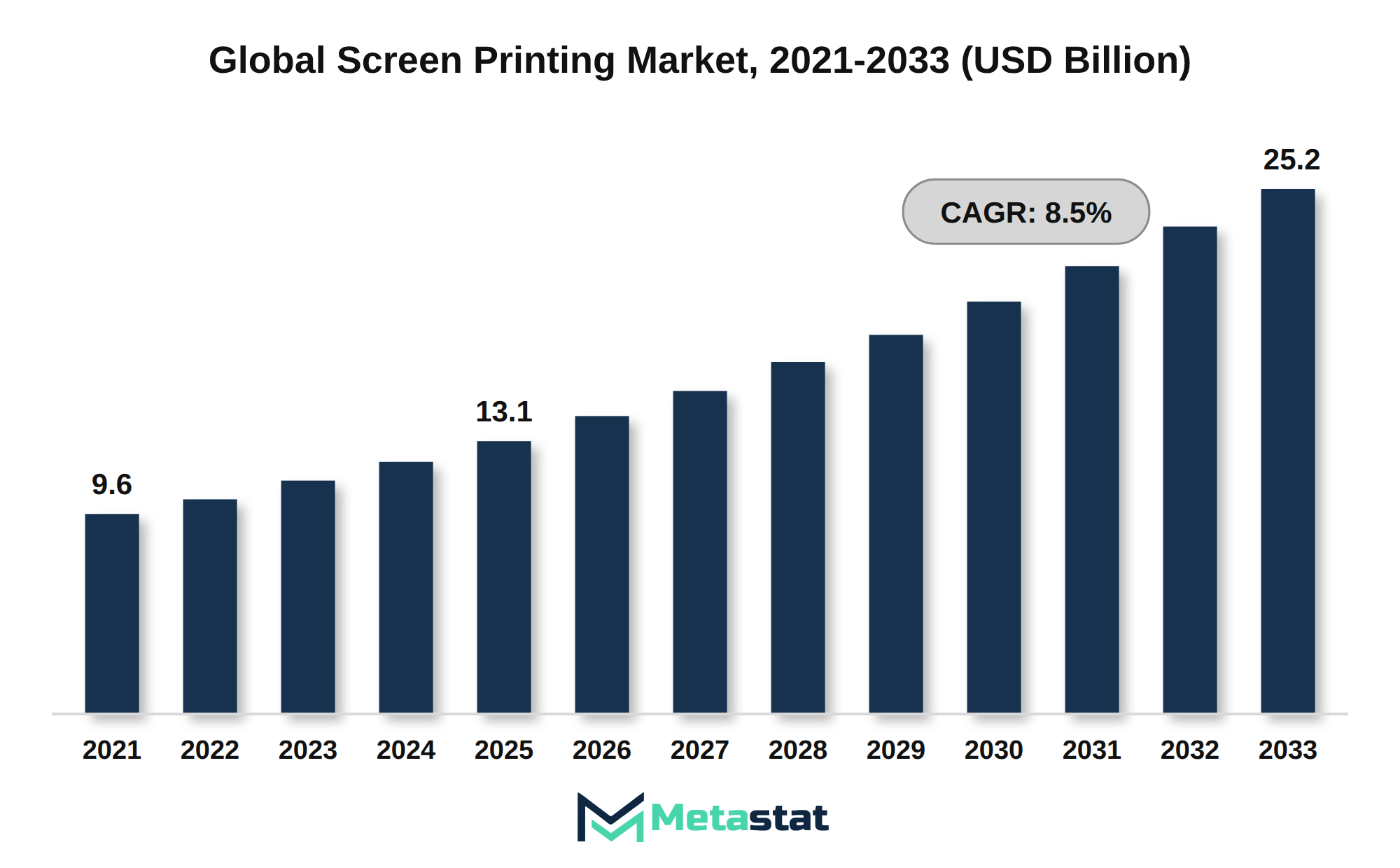
The global Screen Printing market was valued at USD 13.1 billion in 2025 and is projected to reach USD 25.2 billion by 2033, growing at a CAGR of 8.5% over the forecast period.
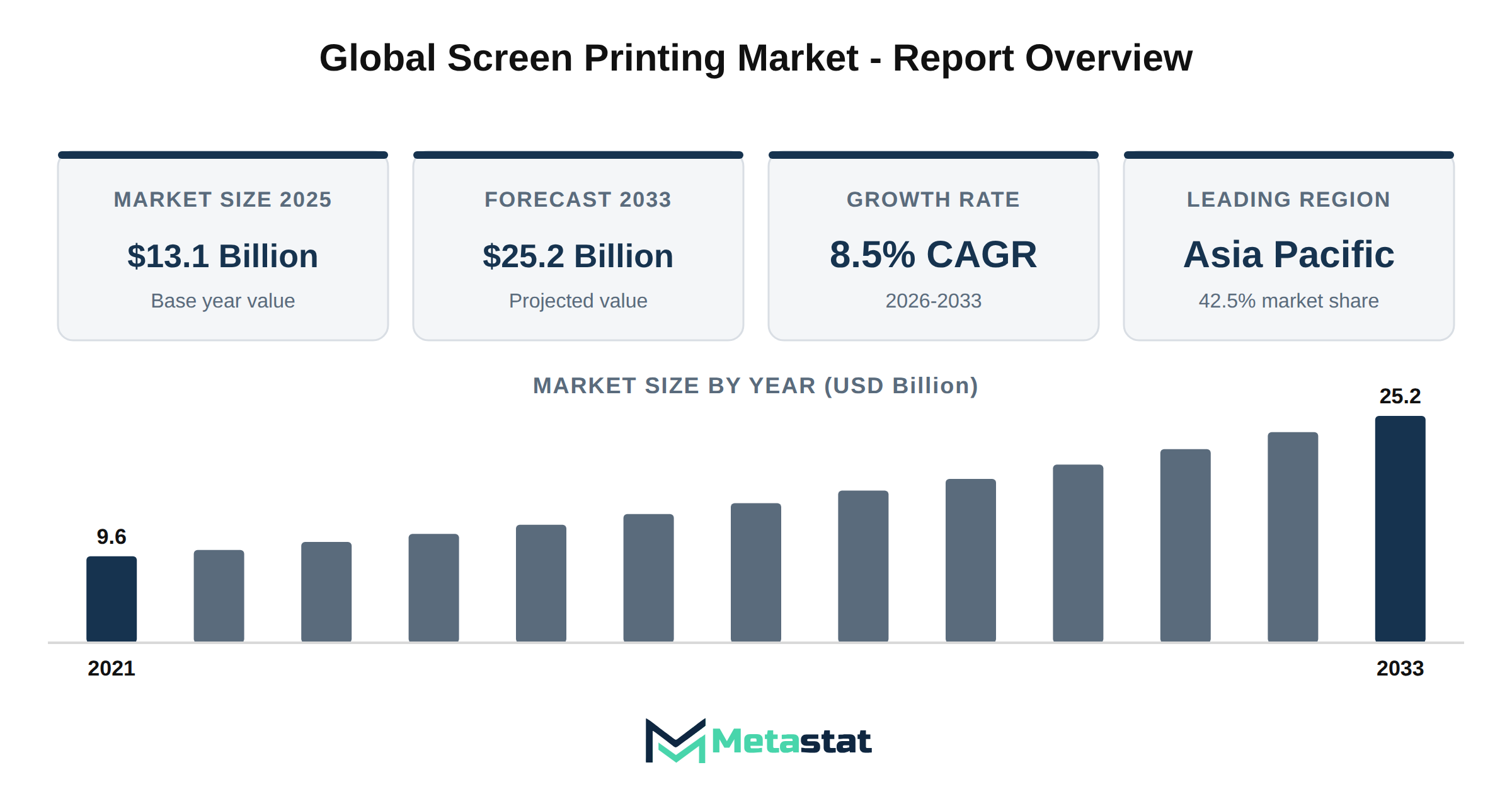
The Screen Printing market reached a valuation of USD 13.1 billion in 2025, following a historical growth from USD 9.6 billion in 2021. The market is projected to expand significantly, with an anticipated value of USD 25.2 billion by 2033, reflecting a compound annual growth rate (CAGR) of 8.5% during the forecast period from 2026 to 2033.
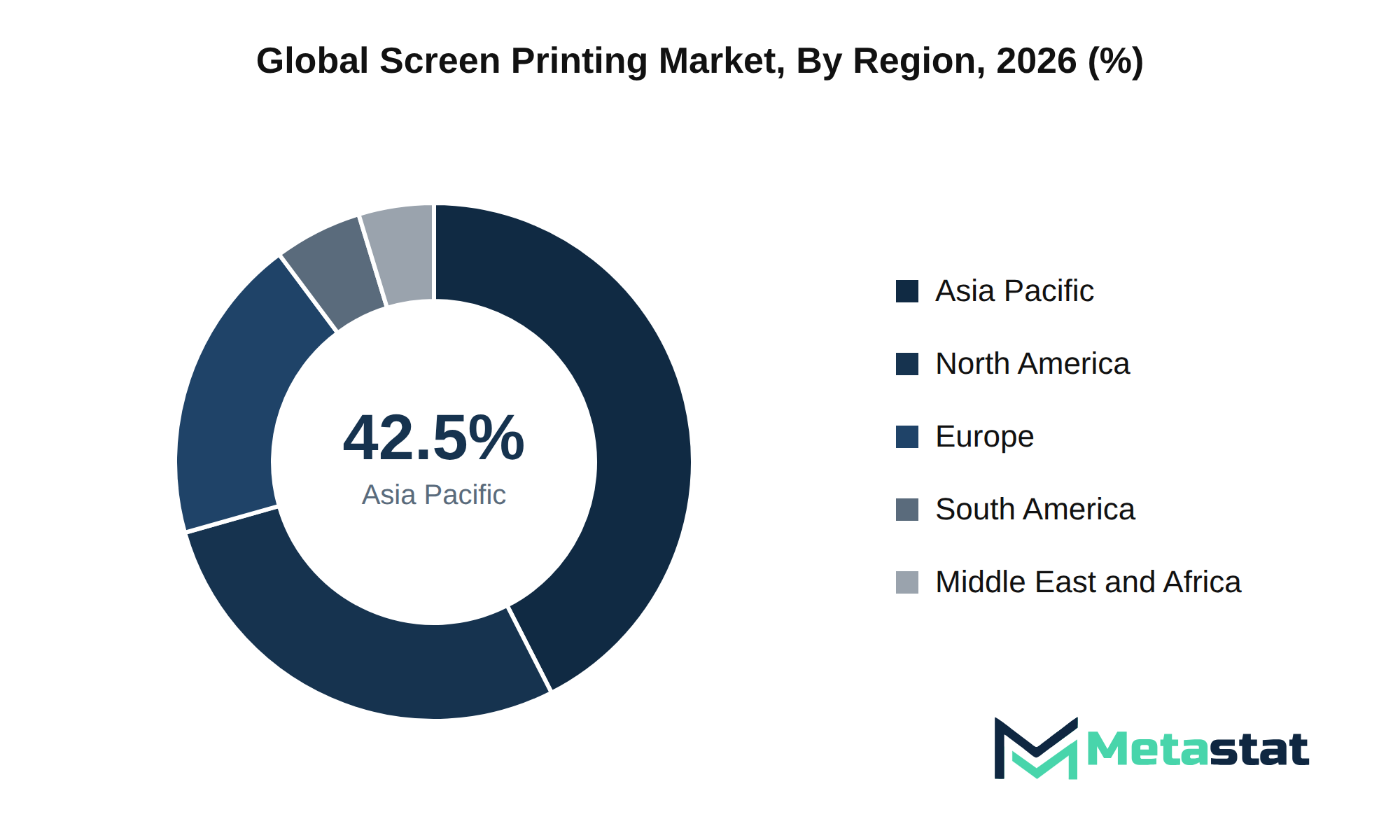
Regional dynamics illustrate that the Asia Pacific region dominates with a share of 42.5% in 2025, driven by robust manufacturing capabilities and increasing demand for printed materials across various industries. North America and Europe follow, accounting for 28.1% and 19.2% of the market, respectively. Growth in these regions results from advancements in printing technologies and rising consumer preferences for customized products.
Investment in research and development plays a critical role in the evolution of the Screen Printing market. Companies focus on next-generation innovations, including the development of automated and efficient printing technologies. This focus enhances production capabilities and aligns with sustainability goals, addressing the increasing demand for environmentally friendly printing solutions.
The supply chain landscape for screen printing encompasses a diverse range of suppliers, each contributing to the overall value chain. Effective logistics architecture and sourcing strategies are essential for ensuring timely delivery of printing materials and equipment, thus supporting operational efficiency and enhancing customer satisfaction.
Market fragmentation remains a notable characteristic, with numerous players operating at various scales. Key participants include Toppan Inc., Dai Nippon Printing Co., Ltd., and CCL Industries Inc., among others. This competitive environment drives continuous improvements in product offerings and pricing strategies, ensuring that the market remains dynamic and responsive to consumer needs.
The ongoing evolution in the Screen Printing market emphasizes the significance of research and development trajectories. Companies invest in innovative technologies to enhance printing efficiency and quality, addressing the increasing demand for customization in various sectors. This focus on next-generation innovation enables the introduction of advanced printing techniques, which contribute to market growth.
Sustainable transformation constitutes a critical theme within the market. Environmental concerns drive the adoption of eco-friendly materials and processes, including water-based inks and energy-efficient machinery. The shift toward decarbonization and circular economy dynamics influences operational strategies, prompting suppliers to adapt to changing consumer preferences and regulatory frameworks.
The supply chain landscape experiences considerable shifts, influenced by geopolitical risks and market fragmentation. Companies reassess sourcing strategies to mitigate disruptions caused by global events, ensuring resilience and reliability. Logistics architecture evolves to enhance efficiency, addressing both cost and time constraints in distribution channels.
Capital allocation remains a focal point for businesses navigating macroeconomic headwinds. Inflationary pressures and currency volatility affect operational costs, prompting firms to optimize expenditures. Strategic investments in infrastructure and technology serve because key drivers for long-term growth in the market.
The future strategic outlook for the Screen Printing market focuses on high-value recommendations that align with emerging trends. Organizations prioritize corporate imperatives that emphasize sustainability and innovation, ensuring competitiveness in a rapidly changing environment. These strategies not only strengthen market position but enhance customer journey dynamics, improving loyalty and satisfaction.
Market Dynamics
Macro-economic factors drive market growth
The Screen Printing market experiences significant expansion fueled by macro-economic factors, including GDP growth and capital investments. Regions with robust economic performance exhibit increased demand for printing solutions, driven by rising disposable incomes and consumer spending. This trend results in higher production volumes across industries, particularly textiles and packaging. Rising investments in modernizing manufacturing processes are escalating demand for advanced screen printing technologies, further enhancing market growth.
Economic stability and favorable interest rates enhance access to funding, enabling companies to invest in innovative printing equipment and technologies. The integration of automation and digitization in production processes optimizes operational efficiency, allowing manufacturers to reduce costs and increase profitability. This shift attracts established players and new entrants to the market, intensifying competition and leading to further advancements in screen printing capabilities.
Increased public and private spending on infrastructure and manufacturing facilities contributes to the market's expansion. Governments worldwide prioritize building resilient supply chains and enhancing production capacities, creating favorable conditions for screen printing technologies. This trend is particularly evident in emerging markets, where urbanization and industrialization drive demand for diverse printing applications, reinforcing the market's positive outlook.
Capital investment environments promote market growth
Increased capital investment environments significantly influence the Screen Printing market. Factors including GDP growth, favorable interest rates, and heightened public-private spending power create a robust framework for business expansion. Enhanced funding opportunities, particularly in venture capital, fuel innovation and technological advancements within the market.
Investment in the latest printing technologies leads to improved efficiency and productivity. Companies that adopt automation and advanced software solutions reduce operational costs while enhancing output quality. The trend impacts various sectors, including fashion, consumer electronics, and automotive industries, where demand for high-quality printed materials continues to rise.
The overall effect of these capital investments results in a competitive advantage for firms operating in the market. Enhanced financial backing enables companies to explore new product offerings and diversify services, aligning with evolving consumer preferences. This dynamic environment is expected to sustain growth, reaching a projected market value of USD 25.2 billion by 2033.
Regulatory challenges hinder market expansion
Regulatory challenges significantly impact the Screen Printing market, particularly through stringent compliance requirements. These hurdles create barriers for manufacturers seeking to adopt new technologies or processes. Companies face increased costs associated with meeting these regulations, leading to higher product prices and reduced competitiveness in the market. The financial burden of compliance deters smaller players from entering the market, limiting innovation and market diversity.
Macroeconomic headwinds, including inflationary pressures and rising operational costs, exacerbate these restraints. Higher material and labor costs result in diminished profit margins, prompting firms to reconsider investments in growth initiatives. Geopolitical instability contributes to supply chain disruptions, complicating the procurement of essential materials for production. This instability leads to delays and increased costs, ultimately affecting the market's supply dynamics.
Skilled labor deficiencies represent another significant challenge for the Screen Printing market. A shortage of qualified personnel limits operational efficiency and impacts production capacity. Companies invest heavily in training programs, yet the ongoing talent gap persists, hindering growth potential. Technological obsolescence poses risks, driven by outdated equipment that does not meet evolving market demands, compelling businesses to allocate resources for upgrades.
Regional adoption resistors play a role in shaping market dynamics, influenced by cultural barriers and varying levels of technological infrastructure that lead to uneven growth across different areas. Several regions exhibit slower adoption rates due to these factors, affecting overall market performance. Market fragmentation complicates the landscape, with numerous small and medium-sized enterprises vying for share, making it challenging for larger players to establish dominance.
The culmination of these factors results in a constrained growth trajectory for the market. Companies navigate complex regulatory frameworks, manage rising costs, and address labor shortages while striving to maintain competitiveness in an increasingly saturated environment. These dynamics underline the necessity for strategic adaptation to ensure sustained market presence and growth in the Screen Printing sector.
Geopolitical fragmentation and trade tensions
Geopolitical fragmentation presents challenges for the Screen Printing market, leading to increasing trade deficits and tariff friction. These conditions disrupt the flow of materials and equipment, impacting manufacturers who rely on international supply chains. Tariffs raise the cost of imported components, creating pricing pressures that affect competitiveness, particularly for smaller firms with limited margins.
Technological disruptions complicate the environment, requiring companies to invest heavily in R&D for innovative printing solutions. This investment results in complex integrations that demand skilled labor and advanced technology, raising operational costs. The market faces workforce skill gaps, where the existing labor force lacks the necessary training to adapt to new technologies. Talent retention becomes critical due to companies striving to maintain a knowledgeable workforce amid rising automation displacements.
Environmental sustainability drives pressure on firms to adopt greener practices. Compliance with tightening global standards increases operational overhead, because companies allocate resources to meet evolving legal liabilities. This shift diverts funds from innovation and expansion, causing potential stagnation in market growth.
Logistics disruptions remain a significant hurdle, with increasing costs and delays impacting supply chain stability. Volatility in feedstock and component prices introduces further uncertainty, challenging firms to manage their cost structures effectively. Consequently, inflationary pressures on input costs contribute to margin compression, intensifying competition within the market.
Ultimately, these factors create a complex environment for the Screen Printing market. Companies navigating these challenges balance profitability with compliance and innovation, while adapting to changing downstream demands and market saturation pressures.
Emerging technologies spur innovation growth
Technological disruptions significantly influence the Screen Printing market by introducing advanced techniques, including digital printing integration and automated processes. These innovations enhance production efficiency and enable manufacturers to meet diverse customer demands with greater precision. The rise of digital transformation in production processes facilitates quicker turnaround times and customization, appealing to industries including fashion and electronics.
Geographical expansion across emerging economies contributes to market growth. Rising disposable incomes and urbanization create new opportunities. Countries in Asia Pacific, particularly China and India, demonstrate increasing demand for screen-printed products, driven by a growing middle class and an emphasis on branding within consumer sectors. This trend encourages market players to establish localized production facilities, optimizing supply chains and reducing lead times, resulting in enhanced operational efficiency.
Sustainability imperatives play a crucial role in shaping market dynamics. Companies increasingly adopt eco-friendly practices, integrating sustainable materials and processes to meet consumer expectations and regulatory requirements. This shift drives investment in green technologies, enhancing the market's appeal among environmentally conscious buyers and supporting long-term growth.
Market participants increasingly focus on product integration and niche applications, including specialty inks and unique printing techniques. These strategies attract diverse customer segments and promote differentiation, contributing to overall market resilience. Evolving buying behaviors, including the shift toward digital procurement, encourage companies to adopt new commercial models, enhancing competitive positioning within the Screen Printing market and expanding the addressable base.
Market Segmentation Analysis
The Global Screen Printing market is segmented based on Type of Printing Equipment, Ink Type, Application, and End-Use Industry.
By Type of Printing Equipment, the market is further segmented into:
- Manual Screen Printing Machines
- Semi-automatic Screen Printing Machines
- Fully Automatic Screen Printing Machines
Manual Screen Printing Machines
Valued at USD 3.1 billion in 2026, the Manual Screen Printing Machines segment is projected to reach USD 5 billion by 2033, reflecting a CAGR of 7% during the forecast period. Demand for manual screen printing machines stems from their versatility in producing high-quality prints across various applications, including textiles and promotional materials. This segment appeals primarily to small to medium-sized businesses that prioritize flexibility and cost-effectiveness over mass production capabilities.
The increasing adoption of manual screen printing machines occurs owing to their user-friendly operation, making them accessible for businesses with limited production volume. Technological advancements in printing inks and substrates enhance the capabilities of these machines, allowing for a broader range of applications. The Fashion and Apparel industry significantly drives demand, attributed to custom designs and smaller runs gaining popularity among consumers. Manufacturing sectors that employ manual screen printing benefit from lower initial investment costs compared to automated counterparts, making this an attractive option for startups and niche players.
While consumer preferences shift towards personalized products, the segment experiences steady growth. Companies focus on improving product offerings, integrating next-generation upgrades that enhance print quality and efficiency. This ongoing evolution in the manual screen printing machines segment supports the overall growth of the Screen Printing market, providing opportunities for manufacturers and suppliers to capitalize on emerging trends. Investments in training and skill development further enhance the market's potential, enabling businesses to leverage advances in printing technology and meet evolving consumer demands.
Semi-automatic Screen Printing Machines
Semi-automatic Screen Printing Machines exhibit strong growth potential, driven by increasing demand for efficient printing solutions in various industries. This segment is expected to reach USD 8 billion by 2033, at a CAGR of 8.3% during the forecast period. The rise in popularity of customization and personalized products encourages manufacturers to adopt semi-automatic machines, enhancing production efficiency while maintaining quality. End-use industries including fashion and apparel, consumer electronics, and packaging significantly contribute to growth, leveraging these machines for diverse applications.
Technological advancements play a crucial role in the evolution of semi-automatic screen printing. Innovations in ink formulations, including water-based and UV-curable inks, expand application possibilities and enhance print quality. Regulatory compliance regarding environmental standards drives manufacturers towards more sustainable printing solutions, influencing the adoption of semi-automatic machines.
Pricing volatility affects operational costs and influences overall market dynamics. Manufacturers face margin pressures due to fluctuating raw material prices and competition from fully automatic machines. Strategic investments in semi-automatic screen printing technology improve production capabilities while navigating these challenges. This segment's resilience in supply chain sourcing and logistics enhances its position within the broader Screen Printing market.
Fully Automatic Screen Printing Machines
Fully Automatic Screen Printing Machines segment is expected to reach USD 12.2 billion by 2033. Demand for this segment arises from the need for high-speed, high-volume production capabilities that enhance operational efficiency. Industries including fashion and apparel, electronics, and packaging increasingly adopt these machines to meet growing consumer expectations for quality and turnaround times.
Technological maturation significantly influences this segment's growth. Advancements in automation and software integration improve precision and reduce labor costs, attracting manufacturers seeking to optimize their production lines. Evolving technologies, along with upgrades and next-generation features, including improved ink handling and energy efficiency, serve because common selling points that stimulate market interest.
End-use dynamics significantly influence consumption patterns within the market. The rising trend toward personalization in apparel and an increase in packaging demands push manufacturers to invest in fully automatic machines. This shift enables manufacturers to respond quickly to market changes and consumer preferences, further driving segment expansion.
Cost structures generally favor fully automatic machines due to their ability to lower per-unit production costs over time. Despite higher initial investments, manufacturers realize substantial return on investment through enhanced productivity and reduced waste. This economic rationale enhances the segment's appeal in a competitive environment.
Margin pressures from fluctuating raw material prices impact the overall market. Producers continuously seek to innovate and streamline processes to mitigate these effects, creating a robust competitive environment. Strategic opportunity windows emerging from these challenges present avenues for investment and growth, particularly in automation and sustainable practices.
By Ink Type, the market is further segmented into:
- Plastisol Ink
- Water-based Ink
- Discharge Ink
- UV-curable Ink
- Solvent-based Ink
Plastisol Ink
Plastisol ink remains a widely available option in the Screen Printing market, primarily owing to its durability and ease of use. This ink type demonstrates strong adhesion to various substrates while enhancing color vibrancy, making it especially popular in the apparel and textile segment. The consistent demand for high-quality prints in fashion and promotional materials drives adoption rates among manufacturers, further reinforcing its position in the market.
Technological advancements contribute to the evolution of plastisol ink formulations, resulting in faster drying times and improved environmental compliance. This evolution aligns with regulatory standards, prompting manufacturers to innovate while addressing sustainability concerns. The growing emphasis on eco-friendly practices influences consumption trends, impacting choices within the market.
End-use dynamics reflect a significant shift towards customized printing solutions, with plastisol ink serving because a preferred choice for intricate designs and high-volume runs. This trend highlights the importance of product evolution in meeting consumer preferences. Consequently, manufacturers face pressure to balance performance characteristics with cost structures, ensuring competitive pricing while maintaining profit margins.
Strategic opportunities exist for players within the market to explore next-generation upgrades that enhance the performance of plastisol inks. These innovations not only drive growth but address substitution risks posed by emerging alternatives, including water-based and UV-curable inks. Companies focused on research and development position themselves favorably within a competitive landscape because consumer preferences continue to evolve.
Investment in supply chain resilience remains crucial for ensuring the availability of raw materials used in plastisol ink production. Logistics vulnerabilities arise from fluctuations in sourcing, which impact pricing volatility and margin pressures. Consequently, companies remain vigilant in their procurement strategies to mitigate risks associated with market dynamics.
Water-based Ink
Growing environmental awareness drives the adoption of water-based inks in the Screen Printing market. These inks offer a lower environmental impact compared to traditional solvent-based inks, aligning with the sustainability goals of many industries. The shift towards eco-friendly printing solutions connects particularly with consumers in the fashion and apparel sectors, where brands prioritize sustainable practices, strengthening long-term demand.
Technological advancements enhance the performance of water-based inks, enabling better adhesion and durability on various substrates. Innovations in ink formulation contribute to a wider range of applications, making it suitable for textiles, packaging, and promotional materials. This versatility supports broader market penetration and adoption across diverse industries, increasing investment across the value chain.
Regulatory compliance standards regarding volatile organic compounds (VOCs) encourage manufacturers to transition towards water-based options. Government incentives and initiatives aimed at reducing environmental footprints further support the market's expansion. Companies that invest in eco-friendly practices gain a competitive advantage, attracting environmentally conscious consumers and reinforcing the segment's position.
Cost structures related to raw materials and production processes influence the pricing dynamics of water-based inks. Fluctuations in raw material costs affect profit margins, prompting manufacturers to optimize their supply chains and production techniques. Strategic investments in research and development yield innovative formulations, mitigating cost pressures while enhancing product performance, resulting in increased compliance costs for participants.
Market participants identify strategic opportunity windows for water-based inks, particularly in regions with stringent environmental regulations. The increasing demand for sustainable printing solutions positions this sub-segment favorably within the broader Screen Printing market. Companies that prioritize the development of water-based ink technologies will likely strengthen their market presence in the coming years, expanding the addressable base.
Discharge Ink
Demand for discharge ink in the Screen Printing market reflects a growing preference for eco-friendly printing solutions. This ink type offers a softer feel and superior color vibrancy, making it popular among apparel and textile manufacturers. Regulatory compliance standards increasingly favor water-based and discharge inks, which produce fewer volatile organic compounds compared to traditional inks. Adoption of discharge ink has been propelled by its compatibility with various fabrics, including cotton and blends, enhancing its application across multiple sectors.
Shifts in consumer preferences toward sustainable and environmentally responsible products further drive demand for discharge ink. Fashion brands focusing on organic and eco-friendly lines incorporate discharge inks to align with their sustainability goals. This segment benefits from innovation in formulations, leading to improved performance and versatility, which appeals to a broader range of customers.
Disruptive alternatives, including digital printing technologies, pose challenges but present opportunities for discharge ink, reflecting its continuous evolution. While manufacturers innovate, the balance between cost structures and quality remains crucial. Margins face pressure from raw material sourcing, particularly when integrating sustainable practices, yet the market responds positively to advancements in supply chain resilience.
Strategic investment in research and development facilitates new applications and enhances product evolution, allowing discharge ink to maintain a competitive edge in the market. Overall, the segment's growth trajectory aligns with broader trends in sustainability and consumer demand for quality, positioning it favorably for future expansion.
UV-curable Ink
In the Screen Printing market, UV-curable ink holds a distinctive position due to its rapid curing capabilities, making it ideal for high-speed production environments. This ink type supports the trend toward sustainability, producing less waste compared to traditional inks. The demand for UV-curable ink stems from its application versatility across various substrates, including plastics, glass, and metals, which broadens its appeal in multiple industries.
Growing awareness of environmental issues drives manufacturers to adopt UV-curable ink. The formulation of this ink generally contains fewer volatile organic compounds, aligning with regulatory compliance standards aimed at reducing harmful emissions. Enhanced performance characteristics, including durability and gloss finish, position UV-curable ink because a preferred choice for high-end applications in the packaging and signage sectors.
Supply chain resilience influences the availability and adoption of UV-curable ink. Challenges in raw material sourcing impact production schedules and costs. Investments in research and development facilitate innovations in UV-curable formulations, enhancing their performance and compatibility with advanced printing technologies. Strategic opportunity windows arise because manufacturers seek to differentiate their offerings through the use of high-quality, environmentally friendly inks.
Solvent-based Ink
Growing adoption of solvent-based inks in the Screen Printing market stems from their excellent adhesion and strong color output, making them particularly suitable for various applications, including textiles and promotional items. Manufacturers prioritize solvent-based inks due to their versatility and ability to bond effectively with different substrates, which drives demand in the market.
Industry players recognize the importance of regulatory compliance standards concerning environmental impact, prompting a shift towards more sustainable practices. This shift includes developing solvent-based inks with reduced volatile organic compounds (VOCs) to meet strict regulations while maintaining performance standards.
Technological maturation of production processes enhances the quality and consistency of solvent-based inks, which encourages further investment in this segment. Innovations in formulations contribute to improved durability and resistance to fading and weathering, appealing to end-use industries including automotive and industrial manufacturing.
End-use dynamics show that solvent-based inks are increasingly favored by manufacturers needing high-performance solutions for demanding applications. The ongoing evolution of consumer preferences for durable and high-quality printed products creates growth opportunities in this segment.
Pricing volatility influences the operational strategies of producers, driven by fluctuations in raw material costs that affect profit margins. Suppliers focus on strategic partnerships with raw material providers to ensure stable sourcing and mitigate risks associated with pricing pressures.
Overall, the solvent-based ink segment in the Screen Printing market thrives amid shifting consumer expectations and technological advancements. This segment plays a critical role in shaping the future of printing solutions.
By Application, the market is further segmented into:
- Apparel & Textile
- Electronics (PCB printing)
- Advertising & Signage
- Packaging
- Industrial Labels
- Others
Apparel & Textile
Demand for screen printing in the Apparel & Textile segment reflects strong consumer preferences for customized and high-quality printed fabrics. Brands increasingly focus on distinct designs and personalization, driving higher adoption rates of screen printing technologies. Environmental consciousness influences this segment, prompting companies to seek sustainable ink solutions that align with consumer values.
Technological advancements play a crucial role in this segment. Innovations in printing equipment enhance efficiency and expand design capabilities, allowing for sophisticated graphics and rich colors. The industry experiences a shift towards fully automatic machines, which significantly improve production speeds and reduce labor costs, further supporting growth. Strategic investment in next-generation upgrades positions companies favorably in a competitive environment.
Apparel and textile manufacturers face challenges related to raw material sourcing and pricing volatility. Fluctuations in ink prices impact overall production costs, compelling companies to optimize their supply chain strategies. Regulatory compliance standards regarding environmental impact and product safety add complexity to operational processes, while adherence to these standards enhances brand reputation and consumer trust.
End-use dynamics demonstrate a growing trend towards sustainable fashion, with brands prioritizing eco-friendly practices. The shift in consumer consumption patterns towards ethical and sustainable products influences purchasing decisions, creating strategic opportunity windows for companies investing in environmentally responsible printing solutions. The market's resilience in addressing these shifts ensures adaptability to changing consumer demands.
Electronics (PCB printing)
Rapid advancements in technology drive significant demand within the Electronics (PCB printing) segment of the Screen Printing market. The necessity for precise and reliable printing methods in consumer electronics fuels this demand, resulting from manufacturers requiring high-quality printed circuit boards (PCBs) for their products. The evolving landscape of electronics, characterized by increasing complexity and miniaturization, intensifies the need for advanced screen printing techniques to accommodate intricate designs and components.
Adoption of next-generation upgrades, including enhanced printing machinery and innovative ink formulations, significantly contributes to this segment's growth. These upgrades offer improved efficiency, higher accuracy, and better adhesion, aligning with the industry trends toward miniaturization and integration of functionalities in electronic devices. Product evolution within the segment focuses on developing eco-friendly inks and sustainable practices, influenced by heightened regulatory compliance standards in various regions.
End-use dynamics illustrate a shift toward smart electronics, where the reliance on PCBs escalates due to the proliferation of Internet of Things (IoT) devices. This shift necessitates robust and versatile printing solutions that meet the demands for high-speed production without compromising quality. Consumption shifts toward rapid prototyping and shorter production runs in the electronics sector accentuate the need for adaptable screen printing processes.
Strategic opportunity windows exist for suppliers who navigate the complexities of raw material sourcing, ensuring a stable and reliable supply of high-performance inks and substrates. The potential for disruptive alternatives, including digital printing technologies, poses challenges for traditional screen printing practices. Nevertheless, the resilience of the supply chain within this segment remains a priority, with companies focusing on developing logistics strategies that mitigate vulnerabilities and maintain consistent output.
Advertising & Signage
Significant growth in the Advertising & Signage sub-segment of the Screen Printing market stems from increasing demand for customized and high-quality visual communication. Businesses increasingly recognize the importance of effective signage in enhancing brand visibility and customer engagement. This heightened awareness drives investment in innovative printing techniques, enabling companies to create eye-catching graphics and promotional materials. Adoption of advanced printing technologies further supports this trend, with businesses seeking to leverage methods that improve color accuracy and durability of printed materials.
The shift towards eco-friendly printing solutions influences choices in the market. Companies prioritize sustainable materials and inks to align with environmental standards and customer preferences for green products. This focus on sustainability not only addresses regulatory compliance but enhances brand reputation among environmentally conscious consumers.
Technological maturation facilitates the development of next-generation printing equipment that offers enhanced efficiency and capabilities. Upgrades in printing machinery allow businesses to respond rapidly to changing market demands, maintaining competitiveness within the industry. Evolving digital printing methods complement traditional screen printing, expanding the range of applications and customization options. This integration of technologies shapes consumption patterns, driven by businesses adapting to the demands of an increasingly digital landscape.
Strategic opportunity windows emerge because businesses explore new avenues for advertising and signage. The ongoing evolution in consumer behavior, influenced by digital transformation, affects marketing strategies, prompting brands to invest in dynamic and interactive signage solutions. The Advertising & Signage segment, therefore, contributes to the overall growth of the market, reflecting changing consumer preferences and technological advancements.
Packaging
Strong demand for packaging solutions sustains growth in the Screen Printing market. Various industries, including food and beverage, cosmetics, and pharmaceuticals, increasingly rely on screen printing for packaging applications. Customization and branding drive adoption, driven by businesses seeking to differentiate their products on retail shelves. The need for high-quality prints that withstand environmental stressors increases the importance of technological advancements in the sector.
Developments in ink formulations and printing technologies enhance the efficiency and effectiveness of screen printing for packaging. Innovations like UV-curable inks and eco-friendly options align with sustainability trends, meeting environmental standards while delivering high-quality results. These advancements enable manufacturers to produce complex designs and appealing colors, which attract consumer attention.
Regulatory compliance influences the landscape of packaging within the market. Companies adhere to strict guidelines regarding safety and environmental impact, influencing their choice of materials and processes. This focus on compliance encourages investment in advanced technologies that meet or exceed regulatory benchmarks, supporting long-term growth prospects.
While volatile raw material prices present challenges, strategic sourcing and supply chain resilience mitigate risks. Companies actively explore alternative materials and processes to reduce dependency on traditional resources and enhance margins. Continuous investment in research and development drives innovation, allowing firms to adapt to changing market demands and consumer preferences effectively.
Overall, the packaging segment thrives on evolving consumer expectations, technological advancements, and regulatory considerations. These dynamics create significant opportunities for growth within the Screen Printing market, driving investment and innovation across the sector.
Industrial Labels
Growing demand for industrial labels within the Screen Printing market stems from increased needs across various industries, including automotive, consumer electronics, and pharmaceuticals. These sectors prioritize high-quality, durable labeling solutions that adhere to compliance regulations. Industries adopt advanced labeling processes, driving significant expansion resulting from heightened standards for product identification and branding.
Technological advancements play a crucial role in enhancing the capabilities of screen printing for industrial labels. Innovations in ink formulations, including UV-curable and solvent-based inks, improve adhesion and durability, meeting the rigorous requirements of the end-use industries. Continuous investments in next-generation printing equipment lead to more efficient production processes, driving down costs and improving margins.
Regulatory compliance standards significantly impact the industrial labels segment, with manufacturers ensuring their products meet various safety and environmental regulations. Adopting sustainable inks and materials aligns with these standards, creating opportunities for companies to differentiate themselves in a competitive market. The integration of smart labeling solutions, including QR codes and RFID technology, enhances the functionality of industrial labels, catering to the evolving needs of consumers and manufacturers.
Supply chain resilience remains essential for the industrial labels segment, especially regarding raw material sourcing and logistics management. Fluctuations in the availability of specific materials affect production timelines and costs. Increasing use of digital printing technologies prompts traditional screen printing players to innovate continually and adapt their offerings to maintain market relevance.
Overall, the industrial labels segment within the Screen Printing market is poised for growth, driven by strong demand across multiple industries and the ongoing evolution of printing technologies. Companies that strategically position themselves to leverage these trends benefit from enhanced market share and profitability.
Others
Growing interest in niche applications contributes to the expansion of the "Others" sub-segment within the Screen Printing market. Custom projects, unique promotional items, and artistic projects increasingly drive demand in this area. Diverse end-use industries including crafts, specialty packaging, and limited-edition merchandise benefit from tailored screen printing solutions. Consumer trends toward personalization and bespoke products significantly enhance the attractiveness of this sub-segment.
Technological maturation within the market facilitates more efficient production processes. Innovations in printing technology enable quicker setups and lower waste, appealing to businesses seeking flexibility and cost-effectiveness. Adoption of next-gen printing equipment streamlines operations, allowing companies to meet specific customer demands without compromising production quality.
Shifts in consumer preferences toward unique and personalized items create strategic opportunity windows for suppliers operating in the "Others" sub-segment. Companies focusing on artistic and limited-edition products leverage these trends to enhance their market presence. Supply chain resilience becomes crucial, ensuring timely responses to fluctuating demand while maintaining product quality standards. These trends strengthen overall market dynamics.
Raw material sourcing impacts the cost structure within the market. Suppliers increasingly emphasize sustainable practices, influencing pricing strategies and margin pressures. Regulatory compliance standards shape the landscape, compelling businesses to adapt to evolving environmental regulations. These factors collectively contribute to the dynamic nature of the "Others" sub-segment, driving innovation and growth opportunities.
By End-Use Industry, the market is further segmented into:
- Fashion and Apparel
- Consumer Electronics
- Automotive
- Industrial Manufacturing
- Others
Fashion and Apparel
Fashion and apparel drive considerable demand within the Screen Printing market, driven by brands seeking to differentiate themselves through custom designs and unique prints. This sub-segment benefits from evolving consumer trends that emphasize personalization and creativity in clothing. End-users in this industry prioritize high-quality and durable prints, influencing the adoption of advanced printing technologies. The expansion of e-commerce platforms brings increased opportunities for custom apparel production, encouraging smaller businesses to enter the market.
Technological maturation within screen printing equipment enables significant enhancements in efficiency and quality. Manual, semi-automatic, and fully automatic machines cater to different production scales, accommodating both small-scale custom orders and large-scale manufacturing. This flexibility supports a broad spectrum of applications, allowing businesses to adapt quickly to changing consumer preferences.
Regulatory compliance standards regarding environmental sustainability prompt shifts towards eco-friendly inks, including water-based and discharge inks. These inks align with market expectations for sustainable practices in the fashion industry, enhancing the appeal of screen printed products. Price volatility in raw materials, particularly relating to ink formulations, poses challenges for manufacturers, impacting their cost structures and profit margins.
Supply chain resilience influences the availability of materials, with sourcing strategies becoming increasingly important for businesses. Companies are exploring local suppliers and alternative materials to mitigate logistics vulnerabilities and reduce lead times. Strategic investment in next-gen upgrades offers a pathway to remain competitive, encouraging players to innovate and streamline production processes.
Overall, the fashion and apparel segment within the Screen Printing market is poised for substantial growth, fueled by technological advancements and shifting consumer demands. The integration of sustainable practices alongside efficient production techniques will define the future of this dynamic sector.
Consumer Electronics
Technological advancements in the Consumer Electronics sector create robust demand for screen printing applications. Manufacturers increasingly incorporate innovative designs and intricate patterns, enhancing product appeal in a competitive marketplace. The increasing complexity of product designs drives the need for high-quality printing solutions, particularly in printed circuit boards and electronic components.
With a focus on efficiency, companies invest in semi-automatic and fully automatic screen printing machines that enhance production speed and accuracy. These advancements lead to improved output and reduced operational costs, supporting manufacturers in meeting rising consumer expectations. The shift towards energy-efficient and environmentally friendly printing solutions aligns with growing regulatory compliance standards and consumer preferences for sustainable practices.
The market faces pressures from pricing volatility in raw materials including inks and substrates, impacting overall production costs. The potential for next-generation upgrades provides strategic opportunities for manufacturers to differentiate their offerings. By adopting advanced technologies, companies enhance product quality and expand their market reach.
Supply chain resilience remains critical, particularly in sourcing raw materials and maintaining consistent production outputs. Vulnerabilities in logistics disrupt the availability of essential components, emphasizing the importance of robust sourcing strategies. Evolving consumer preferences drive manufacturers in the Consumer Electronics segment of the Screen Printing market to adapt through innovative product development and strategic capital investments.
Automotive
Demand for screen printing in the automotive industry stems from the need for high-quality graphics and branding on vehicles. Advances in printing technology facilitate the production of intricate designs, enhancing the appeal of automotive products. The integration of customization options in the automotive sector drives a rise in demand for screen printing. Manufacturers require efficient and durable printing solutions to withstand various environmental conditions, influencing adoption rates in the market.
Regulatory compliance regarding vehicle branding and labeling standards enhances the necessity for reliable screen printing solutions in automotive applications. Maintaining quality control and ensuring consistency in branding across different vehicle models is vital for automotive manufacturers. Competitive pressures necessitate innovation and efficiency in production processes. Strategic investment in next-generation screen printing technologies, including digital and hybrid systems, positions automotive players to maintain their market presence.
Shifts in consumer preferences towards personalized and unique vehicle designs contribute to the growth of the screen printing market within the automotive sector. Increasing interest in electric vehicles prompts a demand for distinctive branding solutions, creating opportunities for screen printing providers. Continuous product evolution in printing materials ensures compatibility with various substrates and inks, allowing suppliers to meet diverse automotive needs effectively. Overall, the automotive segment represents a dynamic area within the screen printing market that aligns with broader trends towards customization, sustainability, and technological advancement.
Industrial Manufacturing
Industrial manufacturing relies heavily on the precision and efficiency of screen printing technology. Increasing demand for customized and high-quality parts drives investment in advanced screen printing capabilities. Enterprises within this sector benefit from the ability to produce intricate designs and detailed graphics, leading to enhanced product differentiation and competitive advantage.
Technological maturation influences the industrial manufacturing landscape. The transition from manual to fully automatic screen printing machines enables greater production efficiency and consistency, allowing manufacturers to meet growing market needs effectively. Recent upgrades in printing technology have enhanced the quality of output, influencing adoption across various applications.
Downstream applications focus on specific requirements for industrial manufacturing processes. Products including labels, circuit boards, and specialized components employ screen printing for their robustness and versatility. This versatility enables firms to adapt to shifting consumer preferences, further driving consumption trends.
Regulatory compliance standards impact operational strategies in the industrial manufacturing sector. Adhering to environmental regulations influences the choice of inks and processes, prompting the adoption of eco-friendly ink options. Such compliance addresses regulatory demands while enhancing corporate responsibility, appealing to environmentally conscious consumers.
Cost structures are critical to competitiveness in the market. Rising raw material costs pressure profit margins, compelling manufacturers to explore alternative sourcing strategies and production methodologies. Effective management of costs ensures sustainability and profitability within the industrial manufacturing context.
Strategic opportunity windows arise from evolving market dynamics. Capital investment in research and development facilitates innovation in screen printing technologies, enabling manufacturers to remain competitive. Identifying white-space opportunities within the market leads to growth and increased market share across the industrial manufacturing sector.
In various applications, the category labeled "Others" within the Screen Printing market encompasses a range of unique and specialized uses that extend beyond traditional segments. Innovations in technology prompt exploration into new applications, driving growth in this category. Businesses seeking to differentiate their offerings leverage screen printing for customized products, thus expanding the market's reach into creative industries that value personalization.
Adoption in this segment reflects evolving consumer preferences that favor unique designs and tailored solutions. The shift toward sustainability influences manufacturers to explore eco-friendly printing options, increasing appeal to environmentally conscious consumers. Regulatory frameworks surrounding environmentally friendly practices support this transition, encouraging businesses to adopt innovative materials and processes.
Product evolution within the "Others" segment manifests in the introduction of advanced screen printing technologies that cater to niche markets. These innovations include specialized inks and substrates designed for unique applications, enabling businesses to meet specific customer demands. Flexibility in applications creates strategic opportunity windows, allowing companies to capitalize on emerging trends and customer preferences in the market.
Strategic investments in technology and research enhance competitive positioning, driving companies to explore white-space opportunities. The continuous evolution of customer needs requires businesses to remain agile, adapting offerings to address shifting demands in the market. Overall, the "Others" sub-segment illustrates the dynamic nature of the Screen Printing market, characterized by adaptability and innovation.
By Region
Based on geography, the Global Screen Printing market is divided into North America, Europe, Asia-Pacific, South America, Middle East, and Africa.
North America
North America presents a dynamic market environment for screen printing, influenced by a diverse array of factors. The region holds a market share of 28.1% in 2025, equating to an anticipated market size of USD 6.5 billion by the end of 2033. Key demand drivers include the strong fashion and apparel sectors, which create strong requirements for high-quality printing solutions. Increased investments in localized manufacturing and infrastructure modernization support industry growth, allowing for more responsive production lines that meet customer needs effectively.
The presence of established players in the United States, Canada, and Mexico ensures a competitive landscape that encourages innovation and efficiency. These domestic market participants prioritize advancements in printing technology, enabling better product offerings and enhanced customer satisfaction. Nearshoring initiatives contribute to regional supply chain resilience, reducing lead times and operational costs for companies involved in the market.
Emerging trends including the shift toward sustainable printing practices and the adoption of advanced ink technologies create growth opportunities. The increasing emphasis on compliance with local regulations enhances product quality and safety, further appealing to environmentally conscious consumers. With a robust CAGR of 8.5% projected for the forecast period, the North America screen printing market is poised for continued expansion, driven by evolving consumer preferences and technological advancements.
Europe
The Screen Printing market in Europe represents a vital component of the overall industry, with a market share of 19.2% in 2025. Countries including Germany, France, the UK, Italy, Spain, and Russia contribute significantly to this market. High demand for screen printing in the apparel and textile segment drives substantial growth. Cultural preferences within these countries influence local purchasing behaviors, creating opportunities for tailored solutions that enhance market penetration.
Infrastructure modernization enhances production capabilities across Europe. Localized manufacturing densities enable suppliers to respond effectively to regional demands. Investments in technology and efficiency improvements support this landscape, creating an environment conducive to growth and adoption of screen printing technologies.
Emerging market front-runners, particularly in Germany and France, demonstrate innovative applications of screen printing technology, setting trends for the rest of Europe. These advancements stimulate interest from various sectors, including fashion, consumer electronics, and advertising. The regional competitive landscape consists of a mix of domestic suppliers and new entrants striving for market share, influencing competitive dynamics.
Supply chain regionalization and nearshoring initiatives strengthen the market, enhancing the ability to meet localized demand. Increased Foreign Direct Investment (FDI) flows support the establishment of new manufacturing facilities, promoting job creation and economic development. Strategic entry barriers remain significant, presenting opportunities for investors willing to navigate the evolving landscape.
Overall, Europe’s screen printing sector exhibits promising growth potential. The combination of high-value replacement cycles and incremental growth vectors positions the market favorably for future expansion and increased investment across the value chain.
Asia-Pacific
Asia-Pacific represents a significant share of the global Screen Printing market, accounting for 42.5% in 2025. Growth in this region is driven by rapid industrialization and increasing demand for customized products across various sectors, including fashion, electronics, and packaging. Countries like China, Japan, and India stand out because key players, leveraging their manufacturing capabilities to meet local and international demand.
Infrastructure modernization enhances the market's potential, particularly in urban areas where advanced printing technologies gain traction. Emerging market front-runners benefit from investments in digital printing technologies, which improve efficiency and reduce lead times. Localized manufacturing densities create opportunities for businesses to serve diverse regional needs while minimizing logistical challenges.
High-value replacement cycles and incremental growth vectors contribute to the market's dynamics. Established companies in the region focus on upgrading their equipment to enhance productivity and reduce environmental impact. In South Korea and Australia, companies increasingly adopt automated solutions, reflecting a shift towards more efficient manufacturing processes.
Regional competitive landscapes exhibit robust activity among domestic market participants, driving innovation and collaboration. Vendor consolidation trends emerge because companies seek to expand their market presence through strategic partnerships and mergers. Cultural nuances influence regional B2B buying behaviors, with businesses increasingly prioritizing local suppliers to ensure compliance with domestic regulations.
Availability of regional resources, including skilled labor and raw materials, supports the market's growth. Energy grid resiliency and local infrastructure readiness play essential roles in ensuring uninterrupted production and delivery. Foreign direct investment flows into the region, driven by its growth prospects, further enhance the market's attractiveness for international players.
Geopolitical fragmentation presents challenges and opportunities, impacting cross-border trade corridors and local compliance mandates. Companies navigate these complexities to capitalize on emerging market opportunities while adhering to evolving trade policies. The Screen Printing market in Asia-Pacific is poised for substantial growth, fueled by these multifaceted influences.
South America
The Screen Printing market in South America experiences a unique growth trajectory influenced by local economic conditions and consumer preferences. With a market share of 5.5% projected for 2025, the region presents significant opportunities for expansion in various applications, particularly in Brazil and Argentina.
In Brazil, demand for screen printing continues to rise, driven by the fashion and apparel industry, which emphasizes customized and unique designs. Argentina’s growing focus on sustainability and eco-friendly practices enhances the appeal of water-based and UV-curable inks, aligning with international consumer trends.
Localized manufacturing densities contribute to a competitive landscape, where domestic players adapt to evolving market needs and consumer expectations. Investment in modernizing infrastructure supports the production of high-quality printing services, which strengthens market growth.
Emerging market participants in South America capitalize on strategic entry barriers, including foreign direct investment flows and localized procurement dynamics. This focus not only enhances market penetration but reinforces regional supply chain resilience, allowing businesses to respond effectively to local demands.
Overall, the Screen Printing market in South America stands poised for expansion, driven by an evolving consumer base, technological advancements, and an increasingly favorable business environment.
Middle East and Africa
The Middle East and Africa region represents a modest share of the global Screen Printing market at 4.7% in 2025. Key drivers for growth in this region include an expanding manufacturing base and increasing demand for localized production. Countries including Saudi Arabia and the UAE invest heavily in infrastructure modernization, enhancing capabilities for high-quality screen printing applications.
South Africa plays a significant role in the market by supporting a robust domestic manufacturing ecosystem. The region's companies adapt to evolving consumer preferences, particularly in industries including apparel and packaging, which significantly influence market dynamics. Local compliance mandates and geopolitical factors shape trade practices, impacting supply chain strategies across the region.
Adoption rates for screen printing technologies show a gradual increase, driven by the need for efficiency and customization in production processes. Investment in new technologies creates opportunities for suppliers to introduce innovative solutions tailored to regional demands. The market is projected to experience incremental growth, contributing to the overall expansion of the global Screen Printing market.
Competitive Landscape and Strategic Insights
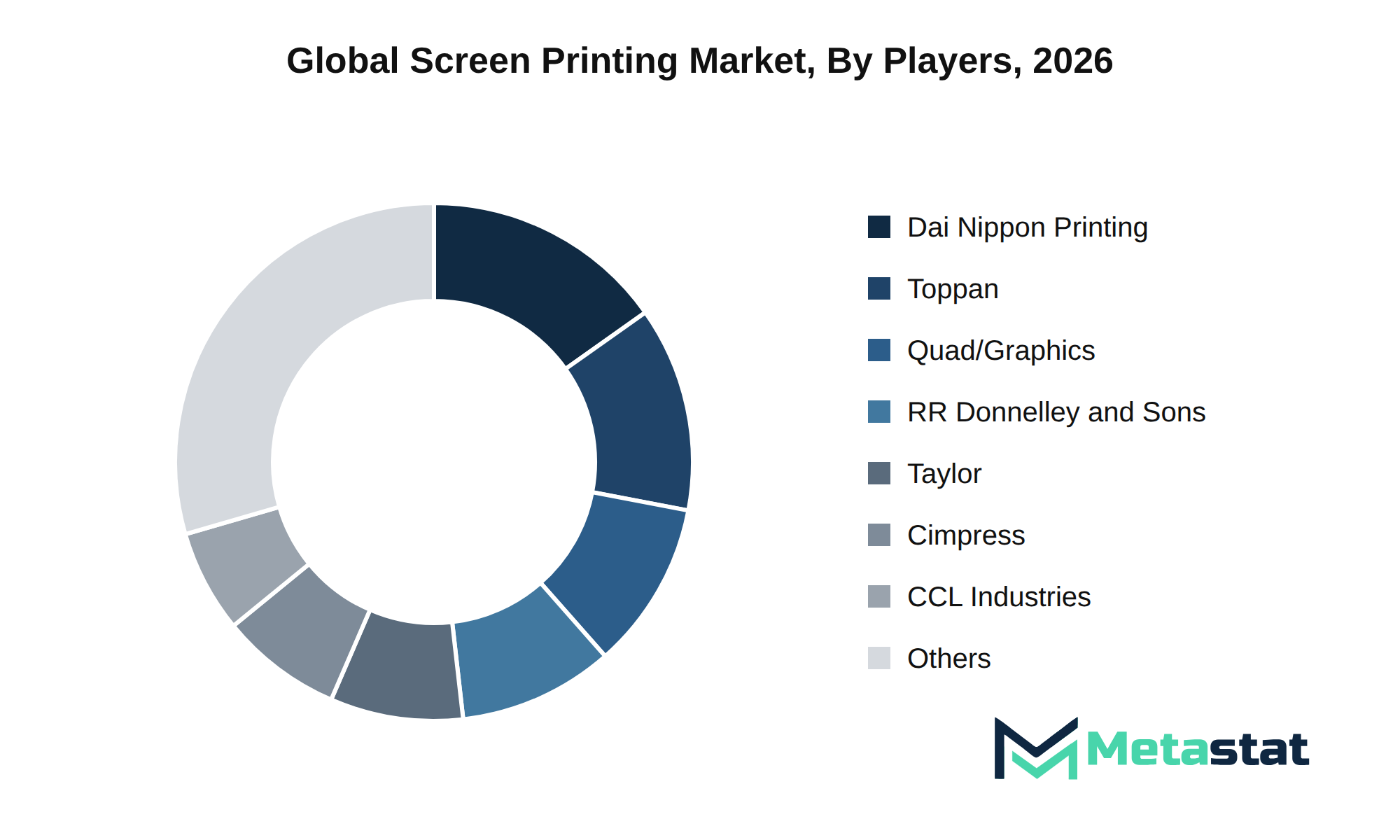
The Screen Printing market features a diverse competitive landscape shaped by strategic consolidation and product differentiation. Companies including Toppan Inc., Dai Nippon Printing Co., Ltd., and CCL Industries Inc. actively expand their product offerings and innovate through dedicated research and development pipelines. These players focus on enhancing their proprietary technology moats to strengthen their positions in the market.
Strategic alliances and joint ventures frequently emerge among key players like Quad/Graphics, Inc. and RR Donnelley and Sons Company, allowing them to leverage cross-industry partnerships for innovation and market penetration. In addition, firms prioritize customer retention strategies, contributing to brand equity dynamics and mitigating the threat of new entrants in the market.
Companies like Taylor Corporation and Cimpress plc demonstrate robust supply chain dominance through vertical integration, enhancing procurement leverage and improving operational efficiencies. The competitive outlook of the market reflects ongoing efforts to address barriers to entry, ensuring sustained growth and adaptation to shifting consumer demands.
Market size is forecast to rise from USD 13.1 billion in 2025 to over USD 25.2 billion by 2033. The base case indicates growth driven by increased demand across various sectors, including fashion and apparel, consumer electronics, and automotive industries. This demand stems from evolving consumer preferences and the adoption of advanced printing technologies.
The bull case anticipates accelerated growth due to significant advancements in next-generation technologies, which will enhance production capabilities and efficiency. In contrast, the bear case suggests potential challenges, including regulatory changes and geopolitical tensions impacting supply chains, which constrain growth and limit market expansion.
Factors influencing the market include shifts in downstream demand and structural consumption patterns, reflecting changing consumer habits and preferences. These trends necessitate a strategic approach to capital allocation and investment in infrastructure to support growth initiatives.
Emerging opportunities within the market present avenues for companies to address unmet needs, particularly in segments including sustainable printing solutions and customized applications. The evolving environment requires firms to focus on R&D commercialization timelines and product lifecycle management to remain competitive.
Geopolitical realignments and evolving trade corridors will impact market dynamics, emphasizing the importance of strategic partnerships and supply chain resilience. Companies prioritize compliance with regulatory frameworks to navigate forthcoming enforcement horizons effectively.
The market outlook remains positive, contingent upon the ability of companies to adapt to the changing environment and leverage emerging opportunities for sustained growth.
Screen Printing Market Key Segments
By Type of Printing Equipment:
- Manual Screen Printing Machines
- Semi-automatic Screen Printing Machines
- Fully Automatic Screen Printing Machines
By Ink Type:
- Plastisol Ink
- Water-based Ink
- Discharge Ink
- UV-curable Ink
- Solvent-based Ink
By Application:
- Apparel & Textile
- Electronics (PCB printing)
- Advertising & Signage
- Packaging
- Industrial Labels
- Others
By End-Use Industry:
- Fashion and Apparel
- Consumer Electronics
- Automotive
- Industrial Manufacturing
- Others
By Region:
- North America
- Europe
- Asia-Pacific
- South America
- Middle East and Africa
Key Global Screen Printing Industry Players
- Toppan Inc.
- Dai Nippon Printing Co., Ltd.
- CCL Industries Inc.
- Quad/Graphics, Inc.
- RR Donnelley and Sons Company
- Taylor Corporation
- Cimpress plc
- Serigraph Inc.
- Butler Technologies, Inc.
- Eastprint Incorporated
- Inkcups Now Corporation
- SPGPrints B.V.
- Printful Inc.
- Gildan Activewear SRL
- ColorCraft Graphic Arts, Inc.
- Superior Screen Printing LLC
- M&R Printing Equipment, Inc.
- Anatol Equipment Manufacturing Co.
- Vastex International, Inc.
- Thieme GmbH & Co. KG
- MHM Austria GmbH
- Systematic Automation, Inc.
- Workhorse Products
- ATMA Champ Ent. Corp.
- Sakurai Graphic Systems Corporation
- Mino Group
- SPS Technoscreen S.r.l.
- DEK Printing Machines
- EKRA GmbH
- Sun Chemical Corporation
- ASPE Inc. (Automatic Screen-Printing Equipment)
- Huned Y. Rangwala.
- Panasonic Factory Solutions
- Aurel Automation S.p.A.
- TAS International
Report Coverage
The report strategically identifies and profiles the key market players and analyses their core competencies in each sub-segment of the Screen Printing market.
|
Report Attributes |
Details |
|
Study Period |
2021-2033 |
|
Base Year |
2025 |
|
Estimated Year |
2026 |
|
Forecast Period |
2026-2033 |
|
Historical Period |
2021-2025 |
|
Growth Rate |
CAGR 8.5% from 2026 to 2033 |
|
Revenue Unit |
USD billion |
|
Segmentation |
By Type of Printing Equipment, Ink Type, Application, End-Use Industry, and Region |
|
By Region |
North America (By Type of Printing Equipment, Ink Type, Application, End-Use Industry, and Country)
|
|
Europe (By Type of Printing Equipment, Ink Type, Application, End-Use Industry, and Country)
|
|
|
Asia Pacific (By Type of Printing Equipment, Ink Type, Application, End-Use Industry, and Country)
|
|
|
South America (By Type of Printing Equipment, Ink Type, Application, End-Use Industry, and Country)
|
|
|
Middle East and Africa (By Type of Printing Equipment, Ink Type, Application, End-Use Industry, and Country)
|
What Report Provides
- Key Company Market Share, Revenue and Ranking for the Screen Printing Market
- Key Market Leaders and Their Strategies in the Screen Printing Industry
- Full In-Depth Analysis of the Parent Screen Printing Industry
- Industry Statistics and Important Changes in Market Dynamics
- Segmentation Details of the Screen Printing Market
- Historical, Ongoing and Projected Market Analysis for Screen Printing
- Assessment of Niche Industry Developments in Screen Printing
- Company Profiles of Key Players in the Screen Printing Market
Frequently Asked Questions
Find answers to common questions about this report
The Screen Printing market size was valued at USD 13.1 billion in 2025, according to the Metastat Insights study.
The Screen Printing market is projected to grow at a CAGR of 8.5% during the forecast period from 2026 to 2033.
The North America Screen Printing market size is estimated to reach USD 6.5 billion by 2033.
The segment of Fully Automatic Screen Printing Machines leads the Screen Printing market, projected to reach USD 12.2 billion by 2033. This segment's growth reflects increasing demand for high-efficiency printing solutions.
Key drivers for the Screen Printing market include GDP growth, increased capital investments, and rising disposable incomes, which enhance demand for printing solutions. The integration of automation and digitization in production processes further optimizes operational efficiency, attracting investment and intensifying competition across various industries.
Regulatory challenges create barriers for manufacturers, increasing costs associated with compliance and reducing competitiveness. skilled labor shortages hinder operational efficiency and production capacity, while geopolitical instability disrupts supply chains, leading to delays and increased costs. These factors collectively constrain growth in the Screen Printing market.
Increased capital investments, favorable economic conditions, and rising disposable incomes significantly favor product adoption in the Screen Printing market. These factors drive demand for advanced printing technologies, particularly in sectors including textiles and packaging, enhancing operational efficiency and profitability for manufacturers.
The Screen Printing market is estimated to reach a valuation of USD 25.2 billion by 2033.
Key players in the Screen Printing market include Toppan Inc., Dai Nippon Printing Co., Ltd., CCL Industries Inc., Quad/Graphics, Inc., RR Donnelley and Sons Company, and Taylor Corporation.
The Screen Printing market is projected to reach USD 14.3 billion by 2026.
Choose Your License
Global Screen Printing Market
Related Reports
Explore related market intelligence reports worth reading alongside this one.