Global Turboexpander Market Size, Share, By Loading Device (Compressor, Generator, and Oil Brake), By Product Type (Radial, Axial, and Hybrid), By Power Capacity (Less than 1 MW, 1 MW-4 MW, 5 MW-9 MW, 10 MW-19 MW, 20 MW-24 MW, 25 MW-40 MW, and Above 40 MW), By Application (Hydrocarbon Processing & Recovery, Air Separation, Natural Gas Processing & NGL Recovery, LNG Liquefaction, Hydrogen & Helium Liquefaction, Oil & Gas Processing, Cryogenic Applications, Energy Recovery & Power Generation, and Others), Industry Analysis, Growth, Trends, and Forecast, 2026-2033
Report ID
MSI-4962
Published
August 18, 2026
Pages
296 Pages
Format
Market Size 2021
$953.6 Million
Historical
Market Size 2025
$1,154.4 Million
Base year
Market Size 2033
$1,732.2 Million
Forecast
CAGR 2025-2033
5.2%
Forecast period
Report Details
Comprehensive Market Analysis And Insights
Market Overview
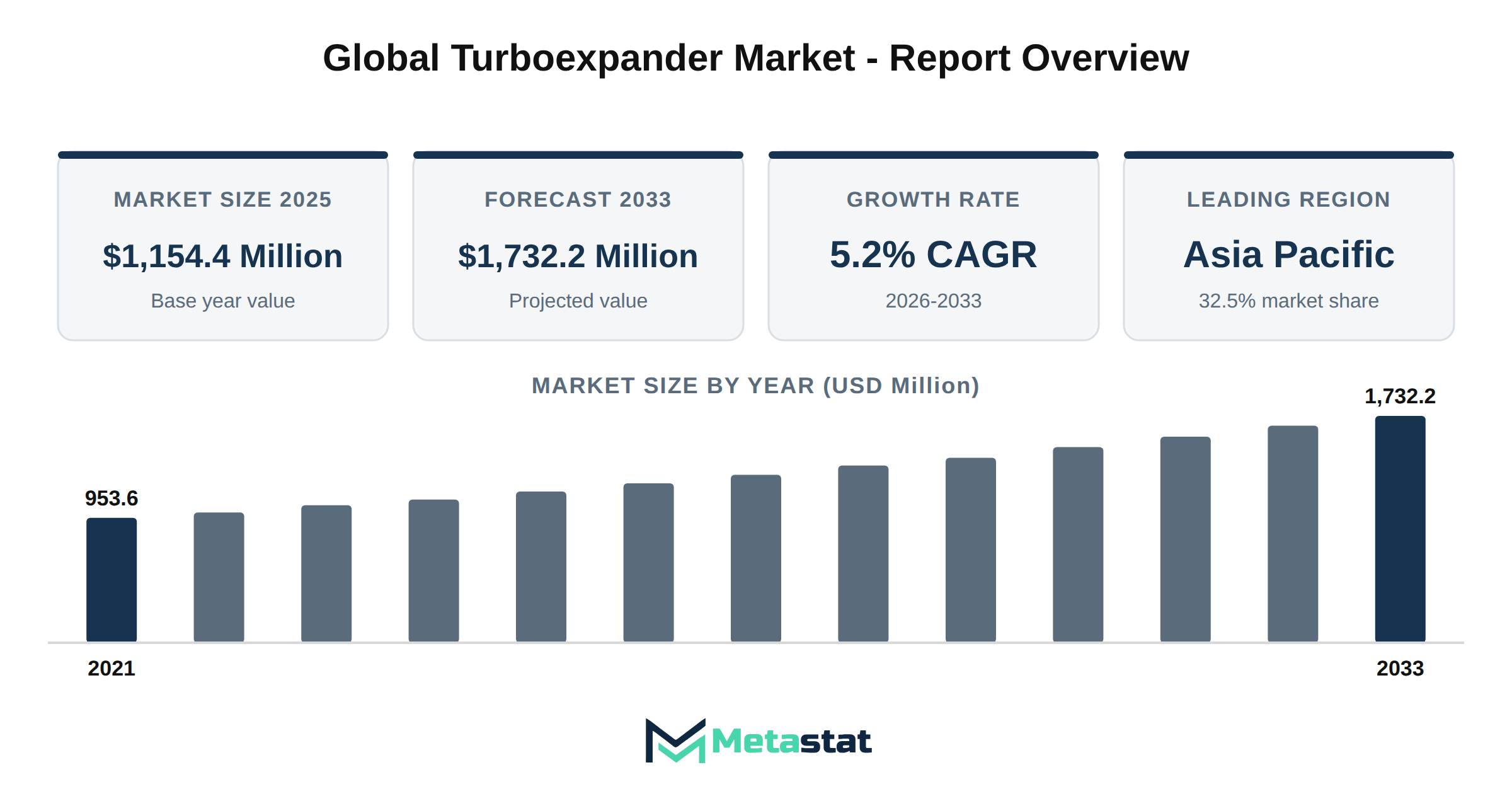
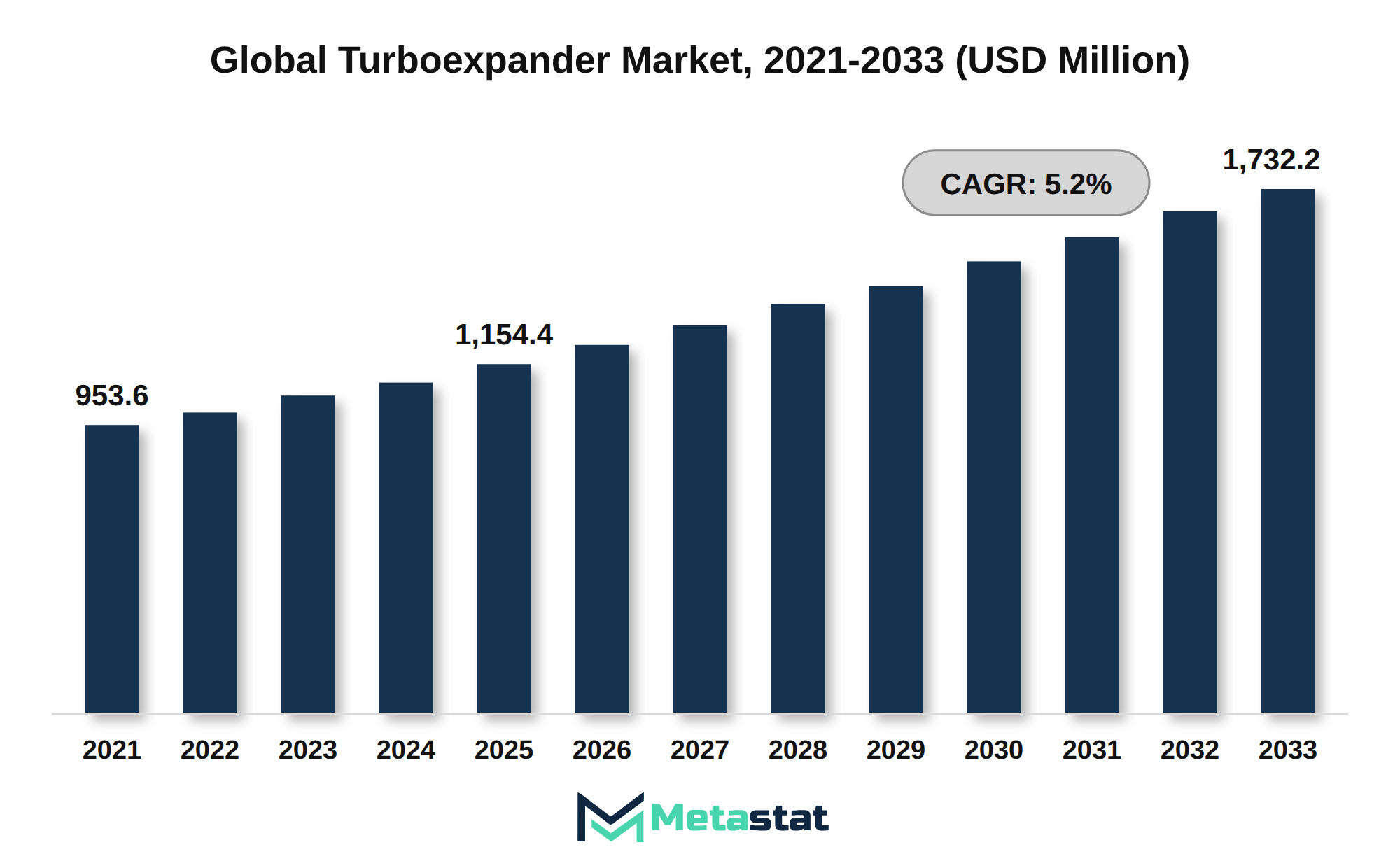
The global Turboexpander market was valued at USD 1,154.4 million in 2025 and is projected to reach USD 1,732.2 million by 2033, growing at a CAGR of 5.2% over the forecast period.
The global Turboexpander market reached a valuation of USD 1,154.4 million in 2025, reflecting a steady growth trajectory from USD 953.6 million in 2021. Forecasts indicate an increase to USD 1,732.2 million by 2033, signifying a compound annual growth rate (CAGR) of 5.2% during the forecast period from 2026 to 2033. This growth is driven by increasing applications in various sectors, particularly in energy recovery and hydrocarbon processing.
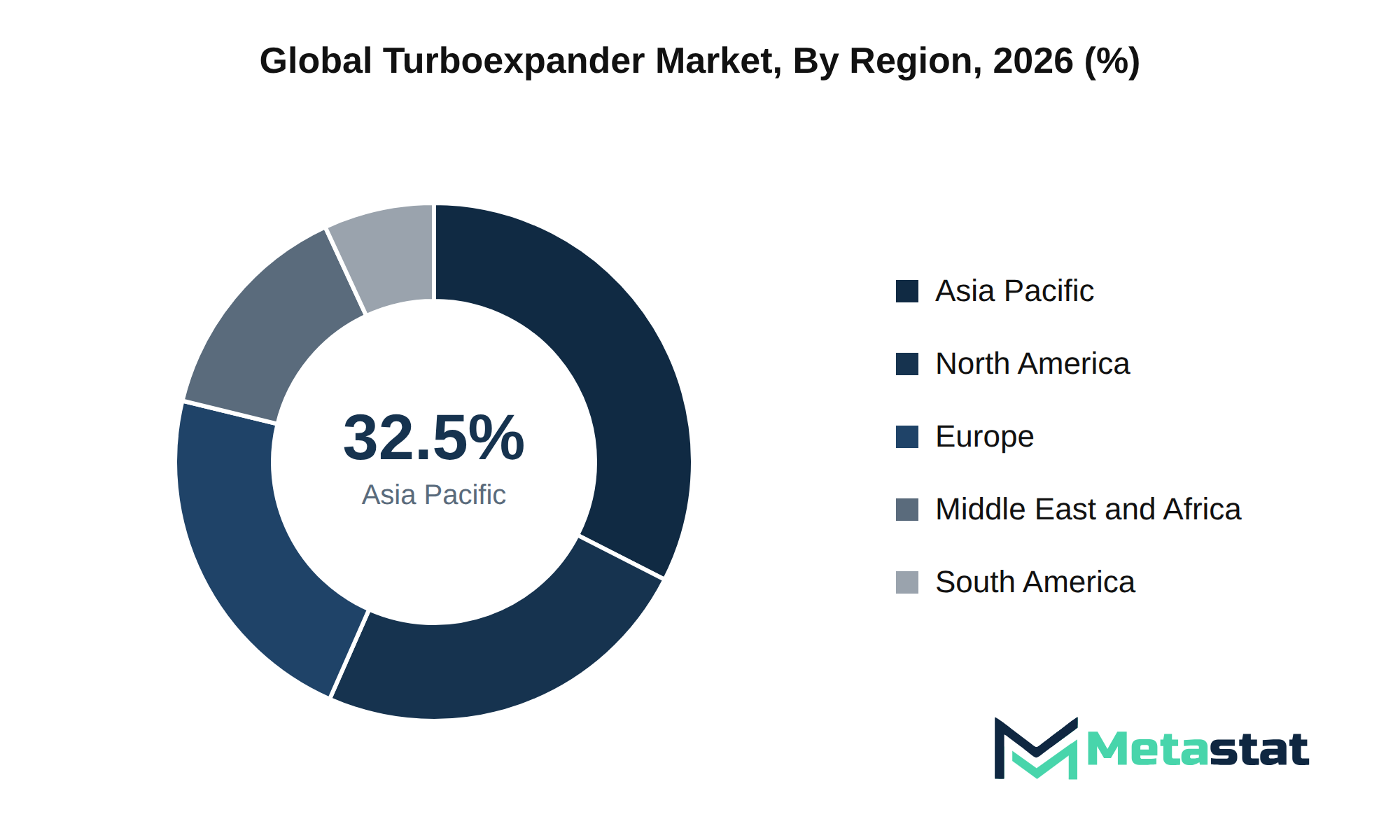
Regionally, Asia Pacific leads the market with a share of 32.5%, supported by robust industrialization and rising energy demands. North America and Europe follow with shares of 24.1% and 22.2%, respectively. The Middle East and Africa account for 14.3%, while South America holds a 6.9% share. This distribution highlights the diverse regional dynamics affecting the Turboexpander market, with significant opportunities for expansion across different geographies.
The market for loading devices, including compressors, generators, and oil brakes, plays an essential role in driving demand. Among these, compressors represent a substantial segment, projected to grow from USD 723.2 million in 2026 to USD 987.4 million by 2033, reflecting a CAGR of 4.5%. Generators exhibit rapid growth potential, expected to reach USD 589 million by 2033, with a CAGR of 6.6%. The increasing focus on energy efficiency and sustainable practices drives advancements in Turboexpander technologies.
Innovations in product types, including radial, axial, and hybrid designs, contribute to market dynamism. These advancements align with the industry's push towards enhanced performance and efficiency, addressing the growing need for sustainable energy solutions. The integration of next-generation innovations facilitates the development of more efficient turboexpanders, influencing their adoption in various applications.
The Turboexpander market experiences notable advancements driven by increasing demand for energy efficiency and sustainability in various industrial applications. Industries including oil and gas, cryogenics, and energy recovery focus on adopting turboexpanders to enhance operational efficiency and reduce emissions. This trend aligns with global decarbonization goals and the push for sustainable transformation, prompting companies to invest in next-generation technology. The integration of innovative designs and materials leads to improved performance and reliability, ultimately supporting market expansion.
Regulatory compliance frameworks increasingly influence market dynamics, encouraging manufacturers to adhere to stringent environmental standards. This regulatory landscape encourages innovation in product development, compelling companies to enhance their offerings. Geopolitical risks play a significant role in shaping the supply chain landscape, affecting sourcing strategies and logistics architecture. Firms actively seek to mitigate these risks through diversified supply chains and strategic partnerships, ensuring continuity and resilience in operations.
Capital allocation within the market reflects a growing emphasis on research and development initiatives. Companies prioritize investments in R&D trajectories to stay competitive and introduce advanced products. Infrastructure investments remain vital for expanding production capacities and improving distribution networks. The relationship between capital expenditures and operational expenditures influences overall market dynamics, shaping the strategies of key players.
Macroeconomic headwinds, including inflationary pressures and currency volatility, present challenges for businesses operating within the Turboexpander market. Inflationary pressures and currency volatility influence pricing strategies and profit margins, necessitating agile responses from industry participants. The evolving customer journey dynamics require firms to enhance service offerings and customer engagement, ensuring alignment with market expectations.
The Turboexpander market presents significant growth potential, driven by technological advancements, regulatory compliance, and strategic investments. Companies that navigate the complexities of the market landscape effectively position themselves for long-term success. High-value recommendations for industry participants include focusing on innovation, optimizing supply chains, and maintaining flexibility in financial strategies to adapt to changing market conditions.
Market Dynamics
Emission limits drive closed-loop adoption
Increasing emphasis on emission limits stimulates growth in the Turboexpander market. Industries face rising pressure to enhance energy efficiency and reduce carbon emissions, prompting investment in advanced technologies. The adoption of turboexpanders aligns with sustainability goals, driving demand from sectors including hydrocarbon processing, natural gas processing, and energy recovery. Implementing these systems facilitates significant reductions in greenhouse gas emissions and operational costs associated with energy consumption.
Government incentives and funding opportunities for environmentally friendly technologies encourage investments in turboexpanders. Companies operating in regulated environments prioritize solutions that comply with stringent emission standards, aligning their operational strategies with market expectations. This focus on eco-friendly technology enhances competitiveness and opens new avenues for market expansion through innovative applications in energy recovery and liquefaction processes.
Heightened awareness around emission limits fuels the demand for turboexpanders, with industries committing to investments that promote sustainability and operational efficiency. The market is poised for growth driven by companies increasingly recognizing the benefits of integrating these technologies to meet regulatory requirements and achieve environmental objectives.
Digital transformation accelerates operational efficiency
The ongoing digital transformation significantly influences the Turboexpander market by enhancing operational efficiency and reducing costs. Advancements in automation, artificial intelligence, and software adoption optimize processes, enabling companies to streamline operations and improve productivity. This trend aligns with the growing focus on cost-efficiency initiatives, driving investment in modern technologies that facilitate better resource management and operational performance.
The heightened emphasis on technological integration addresses the challenges associated with outdated legacy systems. Companies actively adopt digital tools to modernize workflows, contributing to improved output and responsiveness to market demands. The integration of new technologies provides a competitive edge, positioning businesses to meet evolving consumer preferences and operational requirements effectively.
Investment in digital transformation initiatives reflects broader macro-economic factors. Economic growth and increased venture funding support the adoption of innovative solutions within the Turboexpander market. Organizations prioritize capital investments that align with sustainability goals, including environmental, social, and governance (ESG) mandates, leading to enhanced resource stewardship and reduced carbon footprints.
The convergence of these dynamics results in a favorable environment for the Turboexpander market, creating opportunities for growth. Companies that effectively leverage digital transformation gain significant advantages, enabling them to navigate market challenges and expand their reach within diverse industries. This strategic focus on technology and efficiency drives demand within the market.
High capital investment requirements limit market growth
The Turboexpander market faces notable challenges owing to high capital investment requirements. The initial costs associated with acquiring and installing turboexpanders often deter potential investors and operators, particularly in industries with tightening budgets or those experiencing capital stagnation. This financial barrier restricts market entry and limits the expansion opportunities for existing players, resulting in slower growth rates.
In addition to high capital costs, escalating operating costs, driven by inflationary pressures and resource scarcity, further constrain the market. Companies operating in energy-intensive sectors, including hydrocarbon processing and natural gas, balance these rising costs against profit margins. The pressure to invest in advanced technologies for efficiency while managing these costs poses a significant challenge for players in the turboexpander market.
Market fragmentation contributes to the restraint, because many smaller firms operate without the financial backing to invest adequately in technology upgrades. This creates disparities in performance and capability among suppliers, further complicating procurement decisions for end-users. Consequently, decision-makers face challenges in selecting reliable partners, which slows down the adoption of turboexpanders across various applications.
Geopolitical tensions create market disruptions
The Turboexpander market faces significant challenges stemming from geopolitical tensions that create trade deficits and tariff frictions. These geopolitical factors restrict the flow of materials and components essential for turboexpander production, leading to increased costs and delays in the supply chain. Manufacturers encounter difficulties in sourcing reliable feedstock, which contributes to component volatility. Such instability hampers production schedules, ultimately affecting market performance.
Technological disruptions further exacerbate these issues by introducing complexities in research and development integrations. Companies allocate substantial resources to adapt existing technologies while ensuring compatibility across diverse systems. This demand for innovation contributes to rising operational costs, creating pressure on profit margins.
Tightening global regulatory standards impose compliance overhead, presenting challenges to manufacturers striving to meet evolving legal liabilities. These regulatory requirements necessitate investments in environmental and sustainability measures, adding to the financial burden on businesses within the market.
The interaction of these factors contributes to pricing compression, which affects overall profitability. Companies address workforce skill gaps, particularly in automation technologies, to remain competitive. Talent retention pressures arise owing to skilled labor becoming increasingly scarce, impacting productivity and innovation capabilities.
While the Turboexpander market adapts to these challenges, strategic investments in infrastructure become critical. Addressing retrofitting barriers and implementation bottlenecks will be essential for capturing new opportunities presented by decarbonization mandates and sustainability demands. Failure to navigate these complexities could hinder market growth, increasing the need for proactive measures that align with shifting market dynamics.
Emerging regional demands drive market growth
The Turboexpander market benefits from emerging regional demands, particularly in the Asia Pacific region, which shows a significant growth trajectory. Countries including China and India prioritize energy efficiency and sustainability, leading to an uptick in demand for turboexpanders in various applications. Infrastructure modernization across these regions supports the integration of advanced technologies, enhancing operational efficiency and driving adoption.
Technological disruptions underpin market expansion by introducing innovative designs and improved performance metrics. The transition towards more sustainable energy practices aligns with global environmental goals, prompting industries to adopt turboexpanders for their efficiency and lower emissions. This trend positions the market favorably, driven by investments flowing towards next-generation innovations that address both energy needs and environmental responsibilities.
Geographical expansion across developing economies presents lucrative opportunities for turboexpander manufacturers. The increasing focus on expanding natural gas processing and cryogenic applications in these regions accelerates demand. The drive for downstream market diversification encourages suppliers to explore niche applications, allowing the market to flourish through tailored solutions for specific industry needs.
Strategic consolidation among key players strengthens competitive positioning. Mergers and acquisitions facilitate access to advanced technologies and broaden product portfolios, enhancing market reach. This consolidation aligns with evolving buying behaviors, where companies seek integrated solutions to optimize their operational yield and reduce costs.
While the market evolves, digital procurement shifts and commercial model transitions play crucial roles. The adoption of digital platforms allows for streamlined purchasing processes, enhancing customer engagement and satisfaction. These trends indicate a robust future for the Turboexpander market, driven by innovation, sustainability efforts, and strategic market positioning.
Market Segmentation Analysis
The Global Turboexpander market is segmented based on Loading Device, Product Type, Power Capacity, and Application.
By Loading Device, the market is further segmented into:
Compressor
Generator
Oil Brake
Compressor
Sub-segment Compressor (By Loading Device)
Valued at USD 723.2 million in 2026, the Compressor segment of the Turboexpander market is projected to reach USD 987.4 million by 2033, achieving a CAGR of 4.5% during the forecast period. This growth stems from increased adoption across multiple industries, particularly in hydrocarbon processing, air separation, and natural gas processing. The demand for efficient energy recovery systems drives the development of advanced compressor technologies, enhancing performance and operational efficiency.
Technological maturation significantly influences the segment's expansion, with ongoing improvements in design and materials contributing to higher efficiency and lower operational costs. Next-gen upgrades focus on integrating digital solutions, including automation and predictive maintenance, which optimize performance and reduce downtime. Companies are investing in research and development to advance product evolution, ensuring that compressors remain competitive in the market.
End-use dynamics indicate a shift towards sustainable practices, compelling sectors including oil and gas to seek energy-efficient solutions. Regulatory compliance standards regarding emissions and energy consumption stimulate the demand for high-performance compressors. The rise in stringent regulations prompts manufacturers to innovate and enhance their offerings to meet industry requirements.
Cost structures reflect the complexities of raw material sourcing and production processes. Pricing volatility in the commodities market impacts overall manufacturing costs, influencing final pricing strategies for compressors. Maintaining supply chain resilience becomes essential for manufacturers to mitigate potential disruptions and ensure timely delivery of products.
Strategic opportunity windows emerge from growing investments in renewable energy and the increasing focus on carbon capture technologies. These trends facilitate greater adoption of compressors in various applications, further emphasizing their significance in the Turboexpander market. Overall, the Compressor segment presents a strong growth trajectory, driven by technological advancements, regulatory pressures, and the evolving landscape of energy consumption.
Generator
Increasing focus on sustainable energy solutions drives demand for the Generator segment within the Turboexpander market. This segment addresses the growing need for efficient energy recovery systems in various industrial applications, particularly in hydrocarbon processing and natural gas processing. Escalating emphasis on reducing greenhouse gas emissions necessitates the adoption of technologies that enhance energy efficiency, further driving market growth.
The Generator segment is estimated to reach USD 589 million by 2033, at a CAGR of 6.6% during the forecast period. Technological advancements in turboexpander designs contribute to improved performance and reliability, attracting investments from key players seeking to enhance operational efficiency. Integration of next-generation materials and innovative engineering techniques facilitates product evolution, enabling generators to operate at higher efficiencies and lower operational costs.
Demand for this segment receives additional support from stringent regulatory compliance standards that promote cleaner energy solutions. Industries including oil and gas, along with power generation, prioritize implementation of turboexpanders for their ability to optimize energy recovery processes. This focus on compliance creates a favorable environment for growth of the Generator segment in the market.
With increasing investments in renewable energy and energy-efficient technologies, the Generator segment presents strategic opportunity windows for manufacturers. Global consumption shifts toward greener alternatives, and turboexpanders play a crucial role in meeting energy demands while adhering to environmental regulations. The combination of these factors positions the Generator segment favorably for sustained growth in the Turboexpander market.
Oil Brake
Growth in the Oil Brake sub-segment of the Turboexpander market stems from various primary demand drivers, including the increasing focus on energy efficiency and reduced emissions across industries. This segment is particularly vital in applications linked to hydrocarbon processing, where efficient energy recovery solutions contribute significantly to operational improvements. The drive for advanced technology aligns with the growing trend toward next-generation upgrades, which enhance performance and reliability in energy-intensive operations.
Technological maturation results in ongoing innovations in materials and design processes, yielding products that offer higher efficiency and lower operational costs. Stakeholders increasingly recognize the importance of regulatory compliance standards, which require stringent emissions controls. This regulatory landscape fuels demand for more efficient oil brake systems, which help meet these requirements effectively.
Pricing volatility in raw materials impacts supply chain dynamics, influencing manufacturers' cost structures and margin pressures. Strategic opportunity windows in emerging markets present avenues for growth, particularly in regions investing heavily in energy infrastructure upgrades. By 2033, the Oil Brake segment is projected to reach USD 155.9 million, reflecting the segment's expanding role within the broader Turboexpander market. Overall, these factors shape the competitive environment, driving investment and innovation within this critical market segment.
By Product Type, the market is further segmented into:
Radial
Axial
Hybrid
Radial
Sub-segment Radial (By Product Type)
In the Turboexpander market, the Radial sub-segment benefits from several primary demand drivers, including the growing need for energy efficiency across various industries. Adoption of Radial expanders continues to increase due to organizations seeking to optimize their operations and reduce energy consumption, particularly in hydrocarbon processing and natural gas applications. Segment expansion catalysts include advancements in design and materials that improve performance and reliability. Technological maturation enables manufacturers to deliver more efficient and compact designs, enhancing the appeal of Radial solutions.
Next-generation upgrades focus on integrating smart technologies, contributing to greater operational oversight and efficiency. Product evolution promotes the development of Radial expanders tailored to specific applications, supporting downstream processes in energy recovery and power generation. Evolving end-use dynamics reflect shifts towards renewable energy sources, influencing demand for innovative solutions within this segment.
Regulatory compliance standards significantly impact the market, pushing manufacturers to adopt cleaner technologies. Cost structures within the Radial sub-segment face pressures related to raw material sourcing and production costs, particularly because global supply chains encounter disruptions. Pricing volatility, driven by fluctuating material costs, poses challenges for maintaining margin stability.
The market exhibits strategic opportunity windows resulting from industries pivoting towards sustainability. White-space analysis identifies potential for enhanced market penetration in emerging economies, where the need for efficient energy solutions remains high. Capital investment outlook in the Radial sub-segment indicates a robust trend towards technology integration, aligning with broader market objectives for energy efficiency and operational sustainability.
Axial
Demand for axial turboexpanders stems from their efficiency in various applications, particularly in energy recovery and natural gas processing. Industries prioritize these units for their ability to enhance energy efficiency and reduce operational costs, aligning with global trends towards sustainability and reduced carbon footprints. The adoption of axial designs facilitates advancements in energy sectors, especially in hydrocarbon processing and liquefaction processes, strengthening long-term demand.
Technological maturation drives innovation in the axial segment, leading to more sophisticated designs that optimize performance and reliability. Next-generation upgrades focus on enhancing operational efficiency while meeting stringent regulatory compliance standards. These factors contribute to an evolving product landscape, enabling manufacturers to meet increasing demands for high-performance solutions, expanding the addressable base.
Market participants experience cost structures that reflect the complexities of raw material sourcing and supply chain resilience. Strategic opportunity windows emerge for companies that leverage advancements in manufacturing processes and invest in research and development. The continual evolution of technology offers potential for growth within the axial segment of the turboexpander market, increasing investment across the value chain.
Hybrid
Hybrid configurations in the Turboexpander market result from the integration of radial and axial designs, optimizing efficiency and performance across various applications. These units provide enhanced flexibility, allowing for a wider range of operational conditions and improved energy recovery. Increased adoption of hybrid expanders reflects growing demand within sectors including natural gas processing and LNG liquefaction, where efficiency and reliability directly influence operational costs.
Technological maturation drives advancements in hybrid expanders. Continuous improvements in material science and engineering design enable manufacturers to produce lighter, more durable components, thus enhancing the overall performance of these systems. Increasing investments in research and development contribute to the evolution of hybrid technologies, ensuring alignment with modern energy recovery strategies and regulatory compliance.
Changes in consumption patterns shape the hybrid segment of the market. Industries increasingly prioritize energy efficiency and lower emissions, which drives demand for innovative expander solutions capable of meeting these criteria. This shift aligns with global sustainability goals, encouraging manufacturers to focus on hybrid designs that deliver superior performance while minimizing environmental impacts.
Strategic opportunity windows arise from regulatory frameworks promoting cleaner energy solutions. Governments worldwide implement policies that favor the adoption of advanced technologies, including hybrid expanders in various end-use applications. Compliance with these regulations enhances market potential, encouraging firms to invest in hybrid solutions that align with evolving energy standards.
End-use dynamics further influence the growth trajectory of hybrid expanders. Industries including hydrocarbon processing and energy recovery increasingly recognize the benefits of hybrid technologies in achieving higher efficiency and reliability. Companies investing in hybrid designs position themselves competitively, capturing market share in a landscape prioritizing innovation and performance.
By Power Capacity, the market is further segmented into:
Less than 1 MW
1 MW-4 MW
5 MW-9 MW
10 MW-19 MW
20 MW-24 MW
25 MW-40 MW
Above 40 MW
Less than 1 MW
Demand for turboexpanders below 1 MW primarily arises from applications in energy recovery, natural gas processing, and air separation. The increasing focus on reducing energy consumption and enhancing efficiency drives adoption of smaller capacity units. Growing regulatory pressures for lower emissions and higher operational efficiency enhance the attractiveness of this sub-segment.
Technological advancements contribute significantly to product evolution, with manufacturers introducing improved designs that offer better performance and reliability. Innovations in materials and control systems lead to enhanced efficiency, driving further interest in the market. The transition to cleaner energy sources influences consumption patterns, with industries seeking solutions that align with sustainability goals.
End-use dynamics in the turboexpander market reflect a shift towards more efficient energy solutions, particularly among smaller-scale applications. The growth of renewable energy sources, including biogas and hydrogen production, creates a favorable environment for less than 1 MW turboexpanders. This sub-segment benefits from increasing investment in infrastructure that supports these new energy paradigms.
Strategic opportunities arise from evolving market needs for energy-efficient solutions in various industrial sectors. Companies developing next-generation upgrades respond to the demand for enhanced performance and reduced operational costs. Overall, the less than 1 MW segment reflects a proactive approach to technological maturation and market adaptability, reinforcing its role within the broader turboexpander market.
1 MW-4 MW
Demand for turboexpanders in the 1 MW-4 MW power capacity segment arises from several sectors, particularly in hydrocarbon processing and natural gas applications. The ongoing shift towards more efficient energy solutions drives interest in these systems, influencing supply and demand dynamics in the market.
Technological maturation within the segment enables producers to offer enhanced performance and reliability. Upgrades focusing on efficiency improvements and reduced emissions align with regulatory compliance standards, pushing manufacturers to innovate continuously. This focus on next-generation upgrades supports market growth and attracts investments.
Consumption shifts towards cleaner technologies impact the market significantly. Industries seek solutions that meet operational demands while aligning with sustainability goals. Downstream applications in energy recovery and liquefaction benefit from the adaptability and efficiency of turboexpanders in this power capacity range, reinforcing their essential role in modern energy systems.
Pricing volatility remains a consideration for players within the market. Fluctuations in raw material costs influence profit margins, compelling suppliers to strategize for cost management without compromising quality. Supply chain resilience is vital for maintaining steady production and meeting market demands.
Strategic opportunity windows arise from technological advancements and the increasing push for energy transition, positioning the market favorably for sustained growth. The focus on innovation presents avenues for new players and established companies seeking to expand their footprint in the turboexpander market.
5 MW-9 MW
Growing interest in efficient energy recovery solutions drives significant attention towards the 5 MW-9 MW power capacity segment in the Turboexpander market. This segment attracts users from diverse industries including natural gas processing, hydrocarbon processing, and cryogenic applications due to its ability to enhance energy efficiency and reduce operational costs.
Technological maturation supports segment expansion through innovations in design and materials, improving performance and reliability. Next-generation upgrades increasingly incorporate advanced monitoring and control systems, optimizing operation and maintenance practices. Product evolution aligns with increasing demand for sustainable and efficient solutions across various applications.
End-use dynamics highlight shifts toward energy recovery in industrial processes, particularly within the oil and gas sector. Regulatory compliance standards concerning emissions and energy efficiency drive adoption, compelling organizations to invest in turboexpanders for operational excellence. The segment's resilience strengthens through established supply chains and strategic partnerships with key players in the industry.
Investment in this sub-segment reflects a broad commitment to advancing technology and supporting capital efficiency. With ongoing developments, opportunities emerge for manufacturers to satisfy growing market needs, enhancing competitive positioning within the Turboexpander market.
10 MW-19 MW
Sub-segment 10 MW-19 MW (By Power Capacity)
Growing investment in energy recovery applications drives interest in the 10 MW-19 MW power capacity segment. Demand stems from industries focused on enhancing operational efficiency and reducing environmental impact. Expansion in this market results from technological advancements that lead to improved performance and reliability in these systems.
End-users in sectors including hydrocarbon processing and natural gas processing seek efficient solutions to maximize energy utilization. Adoption of turboexpanders aligns with initiatives to comply with stringent regulatory standards and achieve sustainability targets. These factors contribute to heightened competition among manufacturers to innovate and capture market share.
Strategic opportunities emerge from the evolution of next-generation turboexpander technologies. Investment in research and development drives advancements, making products more appealing across various applications. The market's growth trajectory continues to evolve, reflecting shifts in consumption patterns and increasing awareness of energy-efficient practices.
The environment for this power capacity segment remains dynamic, influenced by fluctuating raw material costs and supply chain considerations. Manufacturers face challenges related to pricing volatility, impacting profit margins while navigating the demands of an evolving industry. Addressing these challenges will be essential for maintaining a competitive edge within the turboexpander market.
20 MW-24 MW
Growing adoption of turboexpanders in the 20 MW-24 MW power capacity segment results from their application in energy recovery and power generation processes. This segment aligns with industries focusing on optimizing energy efficiency and lowering operational costs. Increasing regulatory pressure for sustainable practices drives companies to seek advanced solutions, enhancing the market's appeal. Technological advancements further contribute to the segment's growth by providing more efficient and reliable systems.
Demand from sectors including natural gas processing and hydrogen liquefaction underlines the importance of this capacity range. Companies recognize the value of integrating advanced turboexpander technology to maximize operational output while minimizing emissions. The market is set to experience significant evolution, influenced by ongoing innovations and investments in next-generation systems.
While industries prioritize energy efficiency and environmental compliance, the 20 MW-24 MW power capacity segment within the turboexpander market is expected to advance. Strategic opportunities arise from ongoing shifts in consumption patterns favoring high-capacity, efficient solutions. Investment in research and development is anticipated to play a crucial role in enhancing product offerings and ensuring alignment with future market demands.
25 MW-40 MW
Demand for turboexpanders in the 25 MW-40 MW power capacity segment arises from the increasing adoption of energy recovery systems across various industries. This segment serves critical applications in sectors including hydrocarbon processing, LNG liquefaction, and natural gas processing, where efficiency and reliability hold significant importance. The drive towards enhanced energy efficiency fuels investments in high-capacity systems, contributing to significant advancements in turboexpander technology.
Technological maturation supports the market with next-generation upgrades leading to improved performance and reduced operational costs. Innovations in design and materials enhance the reliability of turboexpanders, which aligns with the industry's focus on sustainability and operational efficiency. Regulatory compliance standards promoting energy conservation further increase the attractiveness of turboexpanders in this power capacity range.
Downstream applications increasingly favor systems that support higher capacities, driving the demand for turboexpanders in this segment. Shifts in consumption patterns reflect a move towards more efficient energy solutions, influencing purchasing decisions and market dynamics. Strategic opportunity windows arise from manufacturers seeking to innovate and differentiate their offerings in a competitive environment.
Challenges related to pricing volatility and margin pressures contribute to the complexity of the market. Suppliers face fluctuations in raw material costs, which impact overall pricing strategies and profit margins. Supply chain resilience plays a critical role in addressing these challenges, allowing manufacturers to maintain competitiveness while ensuring product availability for end-users seeking reliable turboexpander solutions.
Above 40 MW
High-capacity turboexpanders, particularly those exceeding 40 MW, play a significant role in large-scale energy recovery and generation applications. These systems often find utility in industries including oil and gas, where efficiency and reliability are critical. Innovations in technology drive the development of this segment, with manufacturers focusing on advanced materials and designs to enhance performance and reduce operational costs.
Demand arises from the need for optimized energy solutions in large industrial processes, with significant investments aimed at improving process efficiency and reducing carbon footprints. Regulatory compliance and environmental policies influence adoption rates, promoting the integration of high-capacity turboexpanders into existing infrastructure. Stringent energy regulations encourage operators to shift towards more efficient energy systems.
Competitive dynamics in the Turboexpander market illustrate a shift towards customization and flexibility, allowing manufacturers to cater to specific industrial requirements. Companies pursue sustainable practices, and the market experiences increased interest in turboexpanders that operate efficiently under varying conditions, ultimately enhancing productivity while mitigating environmental impact.
Market players face challenges related to pricing volatility and margin pressures influenced by raw material costs. Strategic investment in research and development facilitates the introduction of next-generation turboexpanders, enhancing capabilities and expanding applications in various sectors. The focus on technological maturation encourages firms to explore innovative design approaches, ensuring resilience against market fluctuations and technological obsolescence.
By Application, the market is further segmented into:
Hydrocarbon Processing & Recovery
Air Separation
Natural Gas Processing & NGL Recovery
LNG Liquefaction
Hydrogen & Helium Liquefaction
Oil & Gas Processing
Cryogenic Applications
Energy Recovery & Power Generation
Others (CO₂ Processing, Compressed-Air Energy Storage, Aerospace & Space Cooling)
Hydrocarbon Processing & Recovery
Increasing demand for efficient hydrocarbon processing techniques drives investments in turboexpanders. Industry players focus on optimizing recovery processes, enhancing energy efficiency, and reducing operational costs. Regulatory compliance standards push operators towards sustainable practices, encouraging the adoption of advanced technologies. Technological maturation in turboexpander design and manufacturing allows for improved performance and reliability, appealing to end-users in hydrocarbon processing.
Downstream applications for hydrocarbon processing and recovery require robust solutions capable of handling variable operating conditions. Consumption shifts towards greener and more efficient processes create opportunities for turboexpanders with innovative designs. Strategic opportunity windows emerge because companies seek to enhance their competitive edge through next-generation upgrades and product evolution. A resilient supply chain and effective raw material sourcing remain crucial in addressing challenges related to pricing volatility and margin pressures within the market.
Air Separation
Increasing reliance on air separation processes across various industries drives demand in this application segment. Industries including natural gas processing and hydrogen liquefaction benefit from advanced technologies that optimize the efficiency of air separation, influencing the adoption of turboexpanders. Technological maturation within this segment results in improved operational performance and energy efficiency, enhancing the appeal of turboexpanders in air separation applications.
Investment in next-generation upgrades facilitates the development of more sophisticated turboexpander systems, which support the evolving needs of end-users. Regulatory compliance standards related to emissions and energy consumption create additional incentives for companies to incorporate turboexpanders in their operations. This shift in consumption patterns occurs particularly in regions focusing on sustainable practices.
Cost structures in the air separation segment influence pricing strategies across the market. Fluctuations in raw material costs contribute to pricing volatility, impacting margins for manufacturers. Supply chain resilience remains a critical factor, especially with the increasing complexity of sourcing and logistics in a globalized market. Strategic opportunity windows exist for companies that navigate these challenges effectively, positioning themselves for growth in the turboexpander market.
Downstream applications continue to expand, reflecting dynamic end-use requirements in sectors including energy and chemical processing. Addressing these demands requires ongoing innovation and product evolution, ensuring that turboexpander technology remains relevant and competitive. Companies prioritizing research and development efforts in this segment are well-positioned to capitalize on emerging trends and drive market growth.
Natural Gas Processing & NGL Recovery
Growing investments in natural gas processing and NGL recovery applications significantly impact the Turboexpander market. The shift towards cleaner energy sources drives demand for efficient processing technologies, particularly in the context of stringent environmental regulations. Industries focused on natural gas utilization increasingly adopt turboexpanders to improve operational efficiency and reduce emissions.
Technological advancements in turboexpander design enhance performance and reliability, promoting adoption in various downstream applications. The integration of next-generation upgrades, including enhanced controls and adaptive algorithms, streamlines processes and improves efficiency levels. Firms operating in natural gas processing continually seek innovative solutions to optimize their production capabilities.
Regulatory compliance standards concerning emissions and energy efficiency strongly influence industry dynamics. Companies prioritize technologies that align with these standards, positioning turboexpanders because critical components in their operational strategies. This regulatory landscape drives investments in advanced systems capable of meeting compliance while improving overall productivity.
Cost structures play a significant role in shaping market dynamics. Firms face pressures related to pricing volatility of raw materials and operational costs, prompting a focus on more efficient technologies that deliver a competitive edge. Turboexpanders facilitate significant energy savings, thereby enhancing profit margins and supporting sustainable growth within the sector.
Strategic opportunity windows emerge because firms seek to leverage advancements in turboexpander technology. By investing in research and development, companies explore white-space opportunities, further expanding their market reach. The Turboexpander market presents considerable growth potential, driven by the increasing emphasis on efficiency, sustainability, and compliance across the natural gas processing and NGL recovery sectors.
LNG Liquefaction
Growth in the LNG liquefaction application is driven by increasing demand for liquefied natural gas (LNG) because a cleaner alternative to traditional fossil fuels. This trend reflects broader energy transition efforts aimed at reducing greenhouse gas emissions. Significant investments in LNG infrastructure enhance operational efficiency and support technological advancements within the Turboexpander market.
Technological maturation in turboexpander designs contributes to improved efficiency and performance in LNG applications. Innovations in compressor and generator technologies enable more effective gas processing and energy recovery, positioning these solutions favorably in the market. The ongoing evolution of product capabilities aligns with the rising complexity of LNG production and processing requirements.
Adoption of turboexpanders in LNG liquefaction is reinforced by favorable regulatory compliance standards that promote cleaner energy sources. Certifications related to emissions reduction and energy efficiency drive market participation and encourage investment in advanced turboexpander technologies. These regulations create strategic opportunity windows, particularly for companies focused on environmental sustainability.
Cost structures in LNG liquefaction applications exhibit sensitivity to pricing volatility in raw materials and energy inputs. Fluctuating costs of natural gas and technological components necessitate strategic planning to maintain profitability. Effective management of margin pressures ensures competitive positioning within the broader Turboexpander market.
Consumption shifts toward LNG because a transition fuel indicate a growing reliance on this energy source in various sectors. Downstream applications, including power generation and industrial processes, increasingly incorporate LNG solutions, driving demand for turboexpanders tailored to these needs. The expansion of the LNG market contributes to heightened interest in turboexpander applications.
Supply chain resilience remains critical for companies operating in the LNG liquefaction segment. Raw material sourcing and logistics vulnerabilities impact project timelines and operational success. Developing robust supply chains enhances companies' ability to respond to market fluctuations and maintain a competitive edge.
Hydrogen & Helium Liquefaction
Growing emphasis on hydrogen and helium liquefaction reflects a shift towards cleaner energy sources. The adoption of turboexpanders in this sub-segment is driven by increasing investments in hydrogen infrastructure and demand for liquefied gases in various applications, including fuel cells and industrial processes. Technological maturation in turboexpander design enhances efficiency, making these systems appealing for energy-intensive operations.
Regulatory compliance standards and environmental policies fuel growth in hydrogen and helium liquefaction, incentivizing industries to transition towards sustainable practices. Companies investing in innovative turboexpander technologies gain a competitive edge, enabling further penetration into the market. The push for greener alternatives creates an environment ripe for strategic opportunity windows, encouraging firms to align product offerings with emerging energy trends.
Consumption shifts towards clean hydrogen and helium applications influence operational strategies across multiple sectors. Downstream applications, particularly in energy and industrial sectors, expand demand for efficient liquefaction processes. Pricing volatility in traditional energy sources motivates industries to explore alternatives, reinforcing the value of turboexpanders in the pursuit of cost-effective solutions.
Oil & Gas Processing
In the turboexpander market, the significance of the Oil & Gas Processing application emerges from the ongoing quest for improved efficiency and sustainability within the sector. Factors driving adoption include stringent regulatory compliance standards that necessitate advancements in processing technologies. The focus on reducing emissions and enhancing energy recovery aligns well with technological maturation in turboexpander designs, allowing for optimized performance in challenging operational environments.
Next-gen upgrades in turboexpander technology enhance the capability to process hydrocarbons more effectively, reflecting the growing demand for operational efficiencies. Product evolution driven by market needs further fuels interest in enhanced performance and reliability. To ensure compliance with evolving regulations, operators emphasize compliance certifications to mitigate risks associated with environmental standards.
Cost structures remain a critical consideration within this application segment. Pricing volatility in raw materials used for manufacturing turboexpanders influences operational margins, necessitating strategic sourcing and supplier partnerships. The market faces challenges from substitution risks, with emerging alternatives threatening traditional processing methods. However, technological obsolescence in older systems compels investments in advanced turboexpander solutions, creating growth opportunities.
Market dynamics indicate a shift toward more resilient supply chains, prompting investments in logistics to mitigate vulnerabilities. Strategic opportunity windows arise from the increasing complexity of energy demands and shifting consumption patterns within the sector, opening avenues for innovative applications of turboexpanders. Overall, growth in the Oil & Gas Processing application segment directly contributes to the broader development of the turboexpander market.
Cryogenic Applications
Technological advancements in cryogenic applications significantly influence the Turboexpander market. Industries including LNG liquefaction and hydrogen liquefaction increasingly adopt turboexpanders owing to their efficiency in energy recovery. Rising global energy demands drive investments in technologies that enhance operational efficiency, positioning turboexpanders because essential components in these processes.
The ongoing shift towards sustainable energy solutions increases the need for cryogenic applications. Regulatory compliance and environmental standards create a favorable landscape for the adoption of turboexpanders, which offer lower emissions and improved performance. Companies invest in innovative designs and materials to enhance the performance of turboexpanders, leading to product evolution and increased market competitiveness.
End-use dynamics reflect a growing focus on optimizing energy consumption across various industries. Applications in air separation, hydrocarbon processing, and natural gas processing benefit from the integration of advanced turboexpander technologies, resulting in reduced operational costs and improved efficiency. The demand for high-performance solutions continues to shape the turboexpander market.
Strategic opportunities emerge because industries explore next-generation upgrades to existing systems. The potential for disruptive alternatives drives investment in research and development, allowing for enhanced product offerings. With a focus on supply chain resilience and raw material sourcing, companies seek to mitigate risks associated with pricing volatility and margin pressures, ensuring sustainable growth within the Turboexpander market.
Energy Recovery & Power Generation
Sub-segment Energy Recovery & Power Generation (By Application)
Growing focus on energy recovery & power generation applications significantly influences adoption of turboexpanders within the market. Demand is driven by a commitment to enhance energy efficiency and reduce operational costs, particularly in industries including oil and gas processing, hydrocarbon recovery, and renewable energy generation. Technological advancements support the development of high-efficiency turboexpanders that enable next-generation energy systems and sustainable practices.
Regulatory compliance and policy support for clean energy initiatives motivate investments in energy recovery solutions. Optimizing energy consumption highlights the importance of turboexpanders in maximizing overall efficiency across various processes. Shifts in end-use dynamics, particularly towards cleaner and more efficient technologies, further drive the uptake of turboexpanders in targeted applications.
Cost structures associated with energy recovery systems focus on balancing initial investment with long-term operational efficiencies. Pricing volatility of raw materials impacts the overall costs for manufacturers, necessitating strategic sourcing and supply chain resilience. Disruption from alternative energy solutions and technological obsolescence presents challenges and opportunities for innovation within the turboexpander market.
Investment outlook for the energy recovery & power generation segment remains positive, with strategic opportunities arising from evolving market demands. This segment's growth reflects an increasing recognition of the role turboexpanders play in energy optimization and sustainability across multiple industries.
Others (CO₂ Processing, Compressed-Air Energy Storage, Aerospace & Space Cooling)
Interest in specialized applications within the turboexpander market continues to grow, particularly for CO₂ processing, compressed-air energy storage, aerospace, and space cooling. The convergence of environmental regulations and sustainability goals drives demand for solutions that efficiently manage energy and reduce emissions. Technological maturation in these sectors enhances the capabilities of turboexpanders, enabling them to adapt to diverse operational requirements and specific industry needs.
Investment in innovative technologies supports segment expansion, attracting companies seeking to leverage emerging applications. Regulatory compliance standards increasingly emphasize energy efficiency and carbon reduction, further promoting the adoption of turboexpanders in these specialized markets. The dynamic nature of end-use applications reinforces the need for continuous product evolution, positioning turboexpanders because essential components in advanced technologies.
Market participants face challenges related to pricing volatility and margin pressures, necessitating strategic planning to maintain competitiveness. Supply chain resilience becomes critical in managing raw material sourcing and mitigating risks associated with logistics vulnerabilities. Disruptive alternatives and technological obsolescence present ongoing challenges, compelling manufacturers to invest in next-gen upgrades to stay ahead in the market.
Strategic opportunity windows emerge in underexplored areas, including advanced aerospace applications and innovative energy storage solutions. Addressing these white-space opportunities requires targeted capital investments and a robust understanding of market dynamics. The evolving landscape of the turboexpander market continues to present avenues for growth, driven by the increasing importance of energy efficiency and sustainability across multiple sectors.
By Region
Based on geography, the Global Turboexpander market is divided into North America, Europe, Asia-Pacific, South America, Middle East, and Africa.
North America
The North America Turboexpander market exhibits a strong growth trajectory, driven by an increasing focus on energy efficiency and sustainability within the industrial sector. The region's commitment to modernizing infrastructure, particularly in the United States, Canada, and Mexico, enhances the adoption of turboexpanders across various applications. The share of North America in the global market is projected at 24.1% in 2025, highlighting its significant role in the overall market.
Investment in localized manufacturing and nearshoring initiatives contributes to the competitive dynamics within the market. Domestic companies including Atlas Copco North America LLC, Baker Hughes Company, and Siemens Energy play important roles in shaping industry standards and driving technological advancements. These companies leverage regional procurement dynamics and cultural nuances to align their offerings with local buyer behaviors, ensuring effective market penetration.
Infrastructure readiness remains a critical factor, with ongoing developments in energy grid resiliency further supporting demand for turboexpanders. The market is projected to expand at a CAGR of 5.2% during the forecast period, reaching a market size (TAM) of USD 377.6 million by the end of 2033. This growth reflects the increasing focus on high-value replacement cycles and the need for incremental growth vectors to address evolving market demands.
Europe
The Turboexpander market in Europe demonstrates significant growth potential, driven by the increasing focus on energy efficiency and sustainable practices. The region's mature industrial landscape, particularly in Germany, France, the UK, Italy, Spain, and Russia, supports robust demand for advanced turboexpander technologies across various applications, including hydrocarbon processing and air separation.
Infrastructure modernization initiatives present opportunities for turboexpander adoption within Europe, facilitating improved energy recovery systems. Emerging market front-runners leverage technological advancements to enhance operational efficiency, creating favorable conditions for expansion. Domestic market participants contribute to a competitive landscape characterized by innovation and strategic partnerships.
Localized procurement dynamics and cultural nuances within European countries influence B2B buying behaviors, impacting how companies select turboexpander solutions. Regulatory frameworks and compliance mandates shape the market environment, necessitating adherence to stringent environmental standards. This regulatory landscape encourages investments in high-value replacement cycles for aging equipment in industries reliant on turboexpanders.
The market's future trajectory hinges on foreign direct investment flows, which support geographic expansion and localized manufacturing efforts. Regional resource availability and energy grid resiliency play critical roles in shaping the competitive landscape, offering strategic entry barriers for new entrants. Analysis of the Turboexpander market in Europe indicates a well-defined path for growth, driven by demand for innovative solutions and a proactive approach to energy management.
Asia-Pacific
The Asia-Pacific region accounts for 32.5% of the Turboexpander market in 2025. Rapid industrialization and increasing energy demands across countries including China, India, and Japan drive the need for efficient energy conversion technologies. Infrastructure modernization initiatives in these nations further enhance adoption rates, especially within the hydrocarbon processing and air separation segments.
Emerging market front-runners, including South Korea and Australia, contribute to market growth through investments in local manufacturing and energy projects. Regional players prioritize developing localized procurement dynamics and aligning with cultural nuances to improve B2B buying behaviors. The presence of strong domestic market participants facilitates competitive strategies, leading to vendor consolidation trends within the region.
Geopolitical factors and cross-border trade corridors significantly influence market dynamics. Nearshoring initiatives enable companies to streamline supply chains while benefiting from regional resource availability and energy grid resiliency. Overall, the Asia-Pacific Turboexpander market demonstrates strong growth potential, driven by a combination of technological advancements and strategic investments in infrastructure and energy sectors.
South America
The Turboexpander market in South America, accounting for 6.9% of the global share in 2025, faces unique dynamics shaped by regional demand drivers and market conditions. Brazil and Argentina emerge because key players, with notable opportunities in energy-intensive industries. Investment in infrastructure modernization enhances capabilities in hydrocarbon processing and air separation applications, increasing adoption of turboexpanders.
Cross-border trade corridors influence the market landscape, allowing for the exchange of technology and best practices among neighboring countries. Local manufacturing densities contribute to competitive pricing and supply chain efficiencies, further supporting market growth. Domestic market leaders leverage cultural nuances and regional B2B buying behaviors to enhance their positioning in this evolving environment.
Energy grid resiliency and resource availability in Brazil and Argentina play essential roles in supporting the Turboexpander market. The need for high-value replacement cycles and incremental growth vectors drives investment in advanced technologies, ensuring operational efficiency and sustainability. Such factors collectively position South America because an emerging frontier in the global turboexpander market.
Middle East and Africa
The Turboexpander market in the Middle East and Africa exhibits unique characteristics influenced by local demand dynamics and market conditions. Countries including Saudi Arabia and the UAE invest heavily in infrastructure modernization, which enhances the adoption of turboexpanders across various applications, particularly in oil and gas processing. South Africa’s growing focus on energy resilience further supports the market's development, driven by industries seeking efficient solutions for energy recovery and power generation.
The region's share of 14.3% in the global market for turboexpanders indicates significant potential for growth. Emerging markets within this region present opportunities for localized manufacturing and procurement, allowing vendors to cater specifically to regional demand. The presence of domestic market participants, along with foreign direct investment, facilitates competitive dynamics that drive innovation and improvement in product offerings.
Geopolitical factors influence trade corridors and supply chain regionalization, impacting the availability and pricing of turboexpanders. Regulatory frameworks and compliance mandates shape the operational landscape for manufacturers and suppliers, necessitating a focus on local standards. By addressing these specific regional factors, stakeholders in the turboexpander market navigate challenges while capitalizing on growth opportunities.
Competitive Landscape and Strategic Insights
Market Players and Competitive Strategies
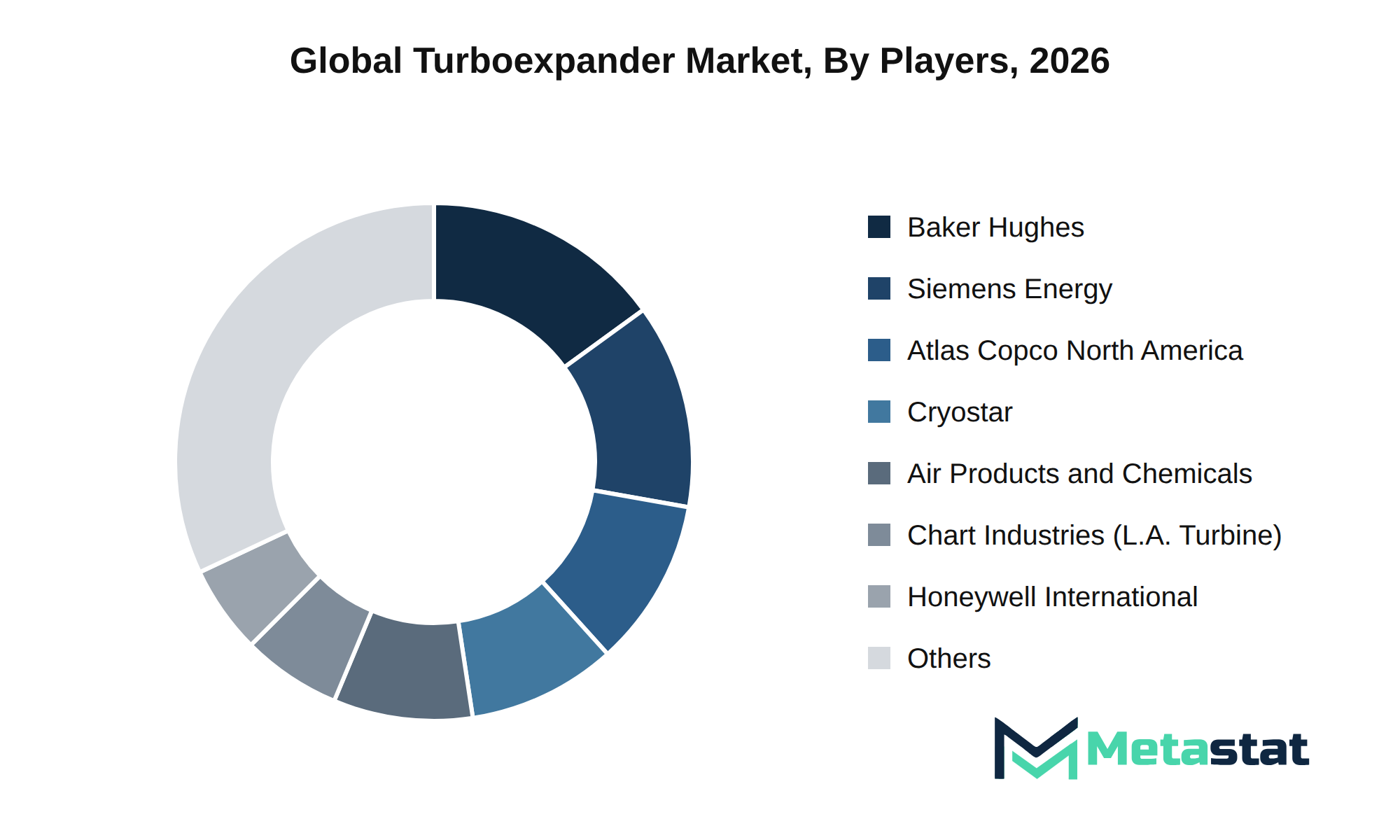
The Turboexpander market features a diverse set of players who employ various strategic behaviors to enhance their market position. Companies including Atlas Copco North America LLC, Baker Hughes Company, and Siemens Energy focus on product differentiation through advanced technological solutions and proprietary innovations. Their R&D pipelines emphasize developing energy-efficient turboexpanders that cater to growing demand for sustainable energy solutions.
Strategic alliances and joint ventures play a crucial role in the competitive dynamics of the market. Collaborations among key players like Air Products and Chemicals, Inc. and Chart Industries (L.A. Turbine) expand their reach and capabilities, enabling them to deliver integrated solutions across multiple applications, including hydrocarbon processing and LNG liquefaction. These partnerships drive innovation and enhance the value chain, improving customer retention strategies and brand loyalty.
Barriers to Entry and Competitive Outlook
Barriers to entry in the Turboexpander market stem from the high level of technological expertise required and the significant capital investment necessary for manufacturing. Established players including Honeywell International Inc. and MITSUBISHI HEAVY INDUSTRIES, LTD. leverage their intellectual property portfolios and strong brand equity to maintain a competitive edge. This landscape raises switching costs for customers, further reinforcing the presence of existing companies and complicating the entry of new entrants.
The competitive outlook remains positive, with anticipated growth driven by increasing demand for efficient energy solutions and advancements in turboexpander technology. Companies including TGSK - Turbo Gear Services Kempten and Ebara Elliott Energy actively pursue innovation and market expansion strategies. Their focus on proprietary technology moats supports long-term stability in a market characterized by evolving customer needs and technological advancements.
Forecast and Future Outlook
Forecast and Future Outlook
Market size is forecast to rise from USD 1,154.4 million in 2025 to over USD 1,732.2 million by 2033. This progression reflects a compound annual growth rate (CAGR) of 5.2%. The base case outlines a scenario where consistent demand and technological advancement drive growth throughout the forecast period. The bull case anticipates accelerated growth, fueled by significant investments in next-generation technologies and increasing downstream demand across key industries. In contrast, the bear case considers potential economic headwinds, regulatory challenges, and geopolitical tensions that could hinder market expansion.
Core industry maturation contributes to a more structured consumption shift, with established players focusing on efficiency enhancements and product life-cycle management. Regulatory evolution will shape market dynamics, with imminent compliance milestones influencing investment timelines. Strategic capital allocation directives emphasize infrastructure commitments and capital expenditure investment vectors, aligning with emerging white-space opportunities and unmet enterprise needs within the turboexpander market.
Technological integration plays a critical role in shaping future demand, driven by firms prioritizing research and development commercialization timelines. Executive-level strategic imperatives will guide organizations toward defensibility roadmaps, positioning them to capture high-growth pockets amid shifting global supply chain dynamics. This approach to market navigation ensures that stakeholders remain responsive to evolving trends and resilient against potential disruptions.
Turboexpander Market Key Segments
By Loading Device:
Compressor
Generator
Oil Brake
By Product Type:
Radial
Axial
Hybrid
By Power Capacity:
Less than 1 MW
1 MW-4 MW
5 MW-9 MW
10 MW-19 MW
20 MW-24 MW
25 MW-40 MW
Above 40 MW
By Application:
Hydrocarbon Processing & Recovery
Air Separation
Natural Gas Processing & NGL Recovery
LNG Liquefaction
Hydrogen & Helium Liquefaction
Oil & Gas Processing
Cryogenic Applications
Energy Recovery & Power Generation
Others (CO₂ Processing, Compressed-Air Energy Storage, Aerospace & Space Cooling)
The report strategically identifies and profiles the key market players and analyses their core competencies in each sub-segment of the Turboexpander market.
Report Attributes
Details
Study Period
2021-2033
Base Year
2025
Estimated Year
2026
Forecast Period
2026-2033
Historical Period
2021-2025
Growth Rate
CAGR 5.2% from 2026 to 2033
Revenue Unit
USD million
Segmentation
By Loading Device, Product Type, Power Capacity, Application, and Region
By Region
North America (By Loading Device, Product Type, Power Capacity, Application, and Country)
United States
Canada
Mexico
Europe (By Loading Device, Product Type, Power Capacity, Application, and Country)
Germany
France
UK
Italy
Spain
Russia
Rest of the Europe
Asia Pacific (By Loading Device, Product Type, Power Capacity, Application, and Country)
China
Japan
India
South Korea
Australia
Southeast Asia
Rest of Asia Pacific
South America (By Loading Device, Product Type, Power Capacity, Application, and Country)
Brazil
Argentina
Rest of South America
Middle East and Africa (By Loading Device, Product Type, Power Capacity, Application, and Country)
Saudi Arabia
UAE
South Africa
Rest of Middle East and Africa
What Report Provides
Key Company Market Share, Revenue and Ranking for Turboexpander Market
Key Market Leaders and Their Competitive Positioning
Full In-Depth Analysis of the Parent Industry
Industry Statistics and Important Changes in Market Dynamics
Segmentation Details of the Turboexpander Market
Historical, Ongoing and Projected Market Analysis
Assessment of Niche Industry Developments and Trends
Key Strategic Recommendations for Market Players
End of Report Overview
Frequently Asked Questions
Find answers to common questions about this report
The Turboexpander market size was valued at USD 1,154.4 million in 2025, according to the Metastat Insights study.
The Turboexpander market is projected to grow at a CAGR of 5.2% during the forecast period from 2026 to 2033.
The North America Turboexpander market size is estimated to reach USD 377.6 million by 2033.
The Compressor segment leads the Turboexpander market, with a projected value of USD 987.4 million by 2033, compared to other segments.
Key drivers for the Turboexpander market include increasing emphasis on emission limits, which spurs investment in advanced technologies for energy efficiency and carbon reduction. the ongoing digital transformation enhances operational efficiency, while government incentives for environmentally friendly technologies further stimulate market growth.
High capital investment requirements and escalating operating costs significantly restrain Turboexpander market growth. Industries face challenges in balancing the need for advanced technology investments with tightening budgets and rising costs, which complicates procurement decisions and slows adoption rates. Geopolitical tensions further exacerbate these issues by creating supply chain disruptions and increasing operational expenses.
Factors favoring product adoption in the Turboexpander market include increasing emphasis on emission limits, which drives industries to invest in advanced technologies for enhanced energy efficiency and reduced carbon emissions. Government incentives for environmentally friendly technologies support investments in turboexpanders, particularly in sectors including hydrocarbon processing and energy recovery.
The Turboexpander market is estimated to reach a valuation of USD 1,732.2 million by 2033.
Key players in the Turboexpander market include Atlas Copco North America LLC, Baker Hughes Company, Cryostar, Air Products and Chemicals, Inc., Siemens Energy, Honeywell International Inc., and MITSUBISHI HEAVY INDUSTRIES, LTD.
The Turboexpander market size in 2025 is USD 1,154.4 million.
Global Forest Bathing (Shinrin-Yoku) Services market size reached USD 8.6 billion in 2025 and is forecast to hit USD 16.9 billion by 2033 at a 8.8% CAGR.
Global Well Stimulation market size: USD 9.1 billion in 2025, forecast USD 15.1 billion by 2033 at a 6.6% CAGR. Segment, region and competitor analysis.
Well Stimulation market, Well Stimulation Market Size, Well Stimulation Market Share, Well Stimulation Market Analysis, Well Stimulation Market Growth, Well Stimulation Market Trends, Well Stimulation Market Research Report, Well Stimulation Market Forecast, Well Stimulation, Well Stimulation Market Research, Well Stimulation Industry, Well Stimulation Industry Report, Well Stimulation Market Data, Well Stimulation Statistics, Well Stimulation Market Statistics, Well Stimulation Industry Trends, Well Stimulation Market Report, Well Stimulation Market Trends, Well Stimulation Market News, Well Stimulation Forecasts, Well Stimulation Market Intelligence Report, Well Stimulation market 2033, Well Stimulation market outlook, Well Stimulation market segmentation, Well Stimulation market drivers, Well Stimulation market restraints, Well Stimulation market opportunities, Well Stimulation market CAGR, Well Stimulation suppliers, Well Stimulation manufacturers, Well Stimulation market by region, North America Well Stimulation market, Asia Pacific Well Stimulation market, Europe Well Stimulation market, Well Stimulation market competitive landscape, Well Stimulation market key players, Hydraulic Fracturing Well Stimulation, Matrix Acidizing Well Stimulation, Offshore Well Stimulation, Onshore Well Stimulation, Shale Well Stimulation, Tight Oil and Gas Well Stimulation, Carbonate Well Stimulation, Sandstone Well Stimulation, Coalbed Methane Well Stimulation, Conventional Reservoirs Well Stimulation, International Oil Companies Well Stimulation, National Oil Companies Well Stimulation, Independent Oil & Gas Operators Well Stimulation, Oilfield Service Companies Well Stimulation
Lighting as a Service (LaaS) Market Size, Share, 2033
Global Lighting because a Service (LaaS) market size: USD 10.7 billion in 2025, forecast USD 101.9 billion by 2033 at a 32.5% CAGR. Segment and regional data.
Lighting as a Service (LaaS) market, Lighting as a Service (LaaS) Market Size, Lighting as a Service (LaaS) Market Share, Lighting as a Service (LaaS) Market Analysis, Lighting as a Service (LaaS) Market Growth, Lighting as a Service (LaaS) Market Trends, Lighting as a Service (LaaS) Market Research Report, Lighting as a Service (LaaS) Market Forecast, Lighting as a Service (LaaS), Lighting as a Service (LaaS) Market Research, Lighting as a Service (LaaS) Industry, Lighting as a Service (LaaS) Industry Report, Lighting as a Service (LaaS) Market Data, Lighting as a Service (LaaS) Statistics, Lighting as a Service (LaaS) Market Statistics, Lighting as a Service (LaaS) Industry Trends, Lighting as a Service (LaaS) Market Report, Lighting as a Service (LaaS) Market Trends, Lighting as a Service (LaaS) Market News, Lighting as a Service (LaaS) Forecasts, Lighting as a Service (LaaS) Market Intelligence Report, Lighting as a Service (LaaS) Market Outlook, Lighting as a Service (LaaS) Market Segmentation, Lighting as a Service (LaaS) Market Drivers, Lighting as a Service (LaaS) Market Restraints, Lighting as a Service (LaaS) Market Opportunities, Lighting as a Service (LaaS) Market CAGR, Lighting as a Service (LaaS) Suppliers, Lighting as a Service (LaaS) Manufacturers, Lighting as a Service (LaaS) Market by Region, North America Lighting as a Service (LaaS) Market, Asia Pacific Lighting as a Service (LaaS) Market, Europe Lighting as a Service (LaaS) Market, Lighting as a Service (LaaS) Market Competitive Landscape, Lighting as a Service (LaaS) Market Key Players, Indoor Lighting as a Service (LaaS) Market, Outdoor Lighting as a Service (LaaS) Market, Commercial Lighting as a Service (LaaS) Market, Industrial Lighting as a Service (LaaS) Market, LED Lighting as a Service (LaaS) Market, Software & Communication Systems in Lighting as a Service (LaaS) Market.
Global Hydrocarbon market size was USD 447.7 billion in 2025 and is projected to reach USD 641.7 billion by 2033, growing at a CAGR of 4.6%. Full analysis.