
LEAD ANALYST
Utkarsh Khirodkar is a Lead Market Research Analyst at MetaStat Insight, specializing in market intelligence, technology sector assessments, and competitive strategy.

Global High-Voltage Bushing Market Size, Share, By Voltage Rating (25-36 kV, 36-72.5 kV, 72.5-145 kV, 145-245 kV, 245-420 kV, 420-550 kV, 550-800 kV and Above 800 kV), By Insulation Technology (Oil-Impregnated Paper (OIP) Condenser, Resin-Impregnated Paper (RIP) Condenser, Resin-Impregnated Synthetic/Fiber (RIS/RIF) Condenser, Resin-Bonded Paper (RBP) Condenser, Oil-Filled / Oil-Communicating Non-Condenser, Solid Cast-Resin / Epoxy Non-Condenser, Solid Porcelain and Others (Gas-Insulated and Specialty Hybrid Designs)), By Application (AC Power & Distribution Transformers, HVDC Converter Transformers, Shunt & Series Reactors, Gas-Insulated Switchgear & Gas-Insulated Lines, Circuit Breakers & Other Switchgear, Generators & Isolated-Phase Bus Systems, Wall & Building Feedthroughs and Others (Rail Traction, Specialty Electrical Equipment, etc.)), Industry Analysis, Growth, Trends, and Forecast, 2026-2033
Report ID
MSI-5323
Published
September, 2026
Pages
269 Pages
Format
Historical
Base year
Forecast
Forecast period
Report Details
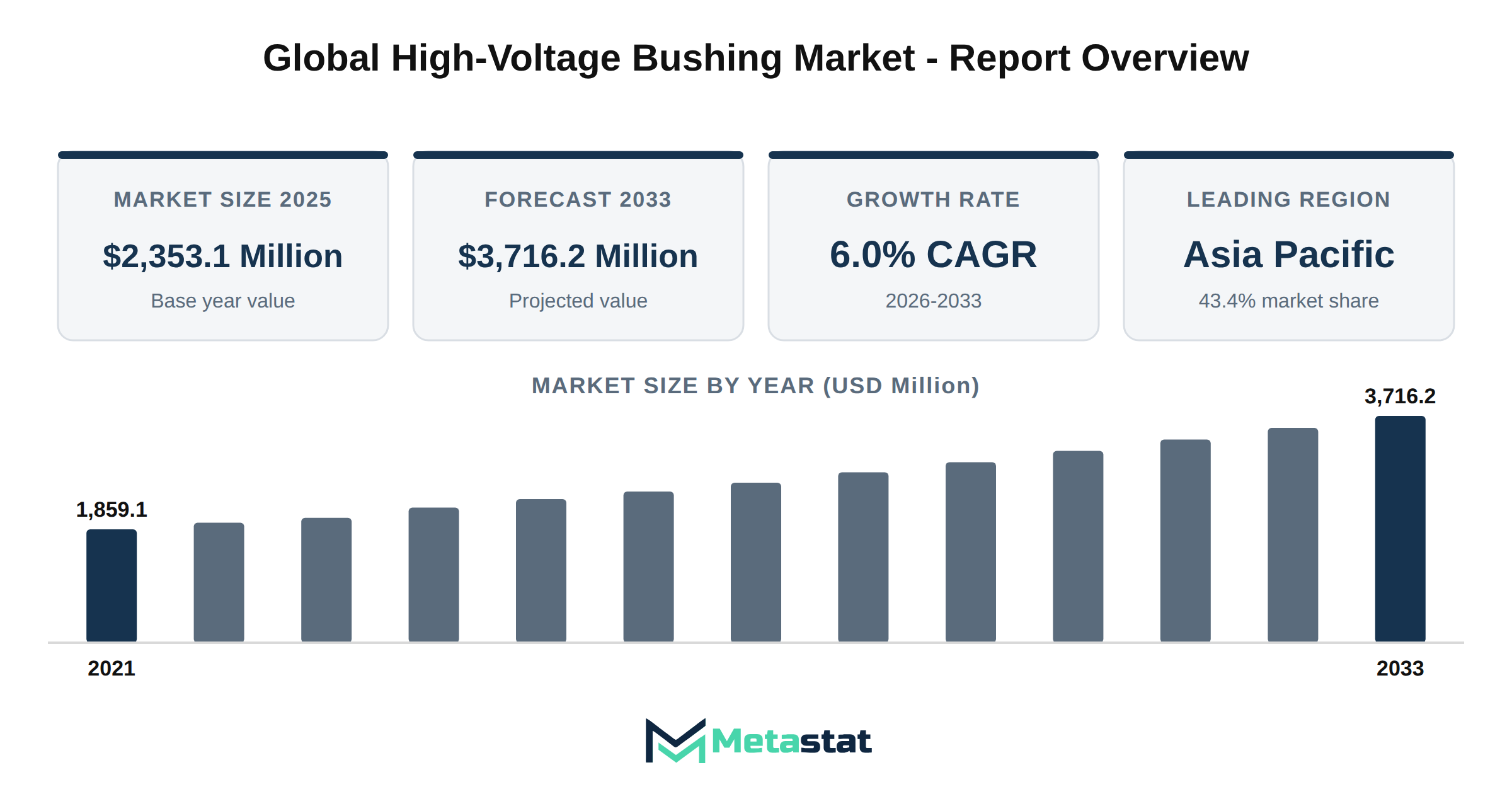
Market Valuation: Valued at $2,353.1 Million in 2025, projected to reach $3,716.2 Million by 2033 at a 6.0% CAGR.
Dominant Segment: The 72.5-145 kV segment leads the market, driven by the expansion of renewable energy sources and the need for reliable electricity transmission systems. By 2033, this segment is projected to reach USD 592.4 million, reflecting ongoing investments in grid infrastructure.
Geographic Lead: The Asia-Pacific region exhibits the fastest growth, fueled by rapid urbanization and infrastructure modernization initiatives. This region prioritizes investment in modern power systems to support expanding electrical grids and renewable energy integration.
What's Inside: The report provides comprehensive competitive coverage, detailed analyses of market dynamics, and forecasts from 2026 to 2033, focusing on voltage ratings, insulation technologies, and applications across various sectors.
Emerging Trends: Digital transformation and advancements in insulation technologies are driving market growth, enabling manufacturers to optimize production cycles and enhance product performance, particularly in renewable energy projects.
Choose Your License
Global High-Voltage Bushing Market
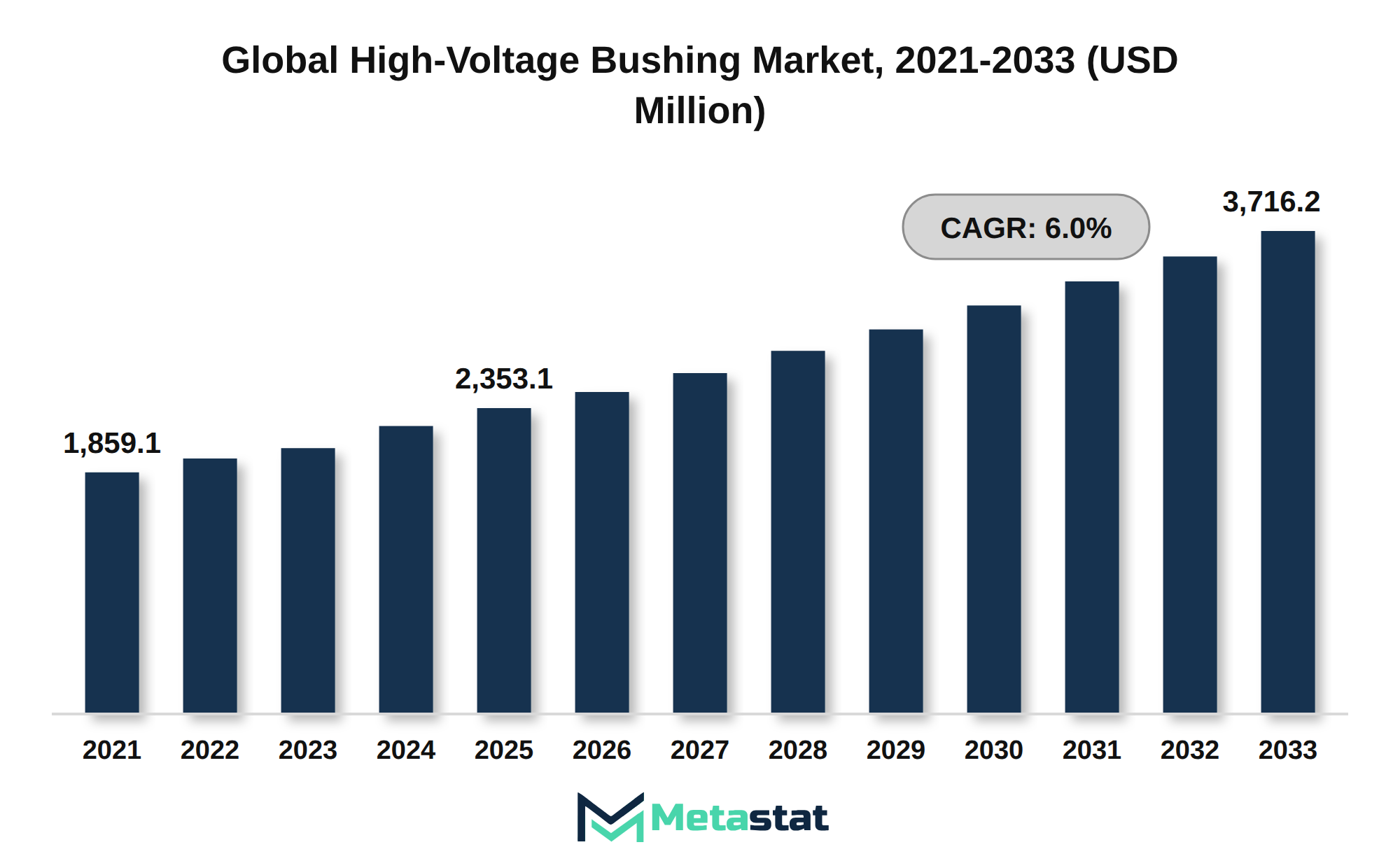
The global High-Voltage Bushing market was valued at USD 2,353.1 million in 2025 and is projected to reach USD 3,716.2 million by 2033, growing at a CAGR of 6.0% over the forecast period.
The High-Voltage Bushing market demonstrates significant growth driven by the increasing demand for reliable electrical infrastructure. Grid modernization imperatives increase this demand, owing to utilities and industries prioritizing upgrades to ensure operational efficiency and resilience against outages. The transition from traditional oil-impregnated paper to dry-type resin-impregnated paper (RIP) and resin-impregnated synthetic/fiber (RIS) bushings enhances performance and sustainability, resulting in improved reliability and reduced maintenance costs.
Advancements in smart bushing technology and real-time Internet of Things (IoT) condition monitoring systems contribute to predictive grid asset management. By providing real-time insights into the operational status of electrical components, these innovations support proactive maintenance strategies, ultimately extending the lifespan of critical infrastructure. The expansion of transmission infrastructure, including ultra-high voltage direct current (UHVDC) corridors, aligns with the growing demand for efficient energy transmission over long distances.
Decarbonization efforts and the interconnection of renewable energy substations significantly influence bushing deployment. Increased investments in clean energy projects necessitate the integration of high-voltage bushings to facilitate the safe and efficient transmission of electricity generated from renewable sources. Material innovations in polymer and composite bushings outperform traditional porcelain options, offering enhanced performance characteristics and reducing weight.
Global supply chain vulnerabilities and raw material cost pressures impact manufacturing lead times within the market. Suppliers face challenges related to sourcing high-quality materials, which influence production schedules and inventory management. Stringent utility safety standards, environmental regulations, and fire-resistant insulation mandates further dictate specifications for high-voltage bushings, compelling manufacturers to innovate continuously while adhering to compliance requirements.
End-use demand dynamics across power utilities, heavy industry, and offshore wind substations shape the market landscape. Each sector requires tailored solutions that address unique operational challenges and performance expectations. Competitive dynamics within the market highlight the importance of strategic partnerships and mergers and acquisitions (M&A) activities, because Original Equipment Manufacturers (OEMs) seek to enhance their technological capabilities and market presence.
Regional growth hubs show distinct trends, with infrastructure replacement initiatives in North America contrasting with rapid grid expansion in the Asia-Pacific region. The long-term market outlook remains robust, supported by investment pipelines directed toward next-generation transmission bushings that meet evolving industry standards and performance demands.
Demand for high-voltage bushings is influenced by the imperative to modernize electrical grids globally. This modernization is characterized by a shift towards more efficient and reliable power transmission systems, necessitating the adoption of advanced bushing technologies. The transition from oil-impregnated paper to dry-type resin-impregnated paper (RIP) and resin-impregnated synthetic (RIS) bushings reflects a strategic move towards enhanced durability and reduced maintenance requirements.
The integration of smart bushings equipped with Internet of Things (IoT) condition monitoring capabilities supports predictive maintenance strategies within grid asset management. Real-time data collection allows utilities to optimize operational efficiency and minimize downtime, aligning with the increasing focus on reliability in power delivery.
Expansion of transmission infrastructure, including ultra-high voltage direct current (UHVDC) corridors, drives demand for high-voltage bushings. These corridors facilitate the efficient transport of electricity over long distances, essential for connecting renewable energy sources to consumption centers. Decarbonization efforts further accelerate the deployment of bushings, particularly at renewable energy substations that require reliable interconnection solutions.
Material innovations in polymer and composite bushings present significant advantages over traditional porcelain options. These modern materials often outperform porcelain in terms of weight, performance, and resistance to environmental factors, contributing to a shift in preference among utilities.
Global supply chain vulnerabilities, coupled with rising raw material costs and extended manufacturing lead times, challenge market participants. Suppliers face pressure to maintain margins while navigating these complexities, which influence pricing strategies and availability in the market.
Stringent utility safety standards and environmental regulations, including mandates for fire-resistant insulation, shape the operational framework for bushing manufacturers. Compliance with these standards is vital for market entry and sustainability, impacting production processes and product design.
End-use demand dynamics vary across sectors, with significant uptake from power utilities, heavy industry, and offshore wind substations. Each segment has unique requirements for high-voltage bushings, influencing the competitive landscape and driving innovation in product offerings.
The competitive landscape reflects ongoing strategic partnerships among original equipment manufacturers (OEMs) and active mergers and acquisitions in bushing technologies. These collaborations enhance product development capabilities and expand market reach, positioning firms for sustainable growth in the evolving high-voltage bushing market.
Regional growth hubs depict contrasting trends; North America experiences infrastructure replacement while Asia-Pacific witnesses rapid grid expansion. This divergence highlights the necessity for tailored strategies that address the unique challenges and opportunities present in each region.
Looking ahead, the long-term market outlook remains positive, supported by robust investment pipelines in next-generation transmission bushings. Stakeholders expect these investments to drive advancements in technology, further enhancing the capabilities and efficiency of high-voltage bushings.
The integration of digital technologies within the High-Voltage Bushing market significantly influences operational efficiency and product innovation. Investment in digital transformation initiatives facilitates automation and enhances data analytics capabilities across manufacturing processes. This shift enables suppliers to optimize production cycles, reduce downtime, and improve product quality, resulting in enhanced competitive positioning.
Technological integration, particularly through automation and software adoption, supports the market's growth by streamlining operations and enabling real-time monitoring of equipment performance. Many companies in the market leverage advanced software solutions to digitize legacy processes, which increases productivity and reduces operational costs. Organizations focusing on improving cost-efficiency find the adoption of such technologies essential for sustaining profitability.
Consumer behaviors reflect a growing preference for sustainable and efficient energy solutions, prompting suppliers to innovate and diversify their offerings in the High-Voltage Bushing market. Meeting these changing demands necessitates ongoing investment in research and development, driven by companies aiming to align their products with evolving consumer expectations. The focus on sustainability further encourages suppliers to adopt greener technologies, enhancing their market appeal.
The ongoing trend of digital transformation and technological integration positions the market for substantial growth opportunities. Organizations prioritizing these initiatives are likely to see enhanced operational capabilities and improved responsiveness to market trends. Overall, the drive toward digital solutions reinforces the market's trajectory, allowing stakeholders to capitalize on emerging opportunities and respond to shifting consumer preferences.
Regulatory tightening and compliance hurdles present significant challenges within the High-Voltage Bushing market. Stricter environmental regulations impose high operational costs on manufacturers, compelling them to invest in compliance mechanisms. These costs deter new entrants from participating in the market, limiting competition and innovation.
Macroeconomic headwinds, including inflationary pressures and capital stagnation, further constrict market growth. Rising material costs, driven by supply chain disruptions and geopolitical instability, diminish profit margins for manufacturers. These factors create an environment where investment in new projects becomes less appealing, affecting overall market expansion.
Technological obsolescence represents another critical restraint. Rapid advancements necessitate consistent investments in research and development to maintain competitiveness. Companies face the risk of falling behind if they do not adapt to emerging technologies, leading to market share loss.
Infrastructure gaps and connectivity deficits challenge the deployment of high-voltage bushings. Insufficient infrastructure in certain regions hampers the efficient installation and maintenance of these products, resulting in delayed project timelines and increased costs. These challenges restrict the market's ability to meet rising demand in various applications.
Rising workforce overhead, stemming from talent gaps and skilled labor deficiencies, contributes to operational inefficiencies. The lack of qualified personnel to support high-voltage bushing installation and maintenance increases labor costs, impacting profitability and limiting capacity for expansion. Consequently, these elements exert downward pressure on market growth.
The High-Voltage Bushing market faces challenges stemming from geopolitical fragmentation and increasing trade barriers. Nations pursue protectionist policies, leading to tariff friction that affects import costs and supply chain dynamics. These trade deficits disrupt the market, resulting from increased expenses for manufacturers sourcing materials and components, which directly influences pricing structures.
Technological disruptions further complicate the market landscape. Rapid advancements require substantial investment in research and development, increasing the complexity of integrating new technologies into existing systems. Companies struggle to maintain interoperability among diverse equipment and standards, hindering innovation and slowing product adoption. This environment creates a competitive disadvantage for firms unable to keep pace with technological evolution.
Tightening global regulatory standards impose compliance overhead and evolving legal liabilities on market participants. Companies invest resources to meet stringent environmental and safety regulations, diverting funds from critical innovation initiatives. These pressures contribute to pricing compression and margin pressures, challenging profitability in a competitive landscape.
Rising input costs, driven by volatility in feedstock and component availability, further strain the market. Unpredictable supply chain factors create instability, exacerbating procurement challenges. In tandem, workforce skill gaps and talent retention pressures limit operational capacity, impeding the ability to innovate and respond to market demands effectively.
The High-Voltage Bushing market navigates these multifaceted challenges while adapting to changing downstream demands and potential market saturation. Firms that successfully address these issues maintain a competitive edge, while those unable to adapt face decreased market share and profitability.
Rapid urbanization and population growth across developing regions create notable demand for high-voltage bushings. These regions require infrastructure enhancements to support expanding electrical grids and an increasing reliance on renewable energy sources. Consequently, stakeholders in regions including Asia Pacific prioritize investment in modern power systems, creating a more robust high-voltage bushing market.
Infrastructure modernization initiatives provide a substantial opportunity for market growth. Energy providers focus on upgrading existing facilities and implementing next-generation technologies to improve operational efficiency. This trend not only extends the lifespan of current systems but drives demand for advanced high-voltage bushings that align with sustainability goals through eco-friendly materials and designs.
Technological disruptions drive innovation within the industry, pushing manufacturers to adopt advanced production techniques and materials. This adaptation results in more durable and efficient products, increasing their appeal to consumers. The integration of digital technologies enhances supply chain efficiencies, allowing suppliers to respond more effectively to market fluctuations and customer needs.
Strategic consolidation among key players influences the market landscape. Mergers and acquisitions across various sectors enable companies to diversify their offerings, thereby expanding their presence in the high-voltage bushing market. Collaborations among cross-industry stakeholders further enhance product integration and create niche market applications tailored to specific customer demands.
The high-voltage bushing market benefits from evolving buying behaviors, with customers increasingly favoring digital procurement processes. Streamlined purchasing through online platforms enhances accessibility to high-voltage bushing products, facilitating quicker decision-making and reducing lead times. This shift positions manufacturers to capture emerging opportunities in the market that align with changing customer preferences.
Supply chain localization efforts strengthen the market by reducing dependency on international sources. This development enhances resilience against global supply chain disruptions, allowing local manufacturers to meet regional demands effectively. Asset life-cycle extensions and maintenance upgrades create an ongoing need for high-voltage bushings, ensuring sustained growth in the sector.
The Global High-Voltage Bushing market is segmented based on Voltage Rating, Insulation Technology, and Application.
Growth in the 25-36 kV segment stems from increasing demand for reliable energy transmission and distribution systems. Investments in upgrading aging infrastructure and enhancing grid resilience contribute to this trend. The segment is valued at USD 240.9 million in 2026 and is projected to reach USD 347.7 million by 2033, reflecting a CAGR of 5.4% during the forecast period. Innovations in insulation technology, particularly the development of Oil-Impregnated Paper (OIP) condensers, enhance performance and longevity, attracting more users across various industries.
End-use dynamics reflect a strong emphasis on AC power and distribution transformers, which rely heavily on robust bushing solutions for effective operation. Regulatory compliance standards reinforce the necessity for high-quality insulation solutions, further driving demand. The shift towards sustainable energy practices positions the High-Voltage Bushing market for continued expansion, supported by advancements in material science and insulation techniques that meet evolving industry requirements.
Growth in the 36-72.5 kV segment aligns with increasing demand for efficient power transmission and distribution systems. Investments in renewable energy and infrastructure modernization stimulate adoption across various sectors. This segment is projected to receive support from technological advancements that enhance insulation materials and reliability. While electricity consumption escalates globally, utilities and industrial applications increasingly rely on high-voltage bushings to ensure operational efficiency. The integration of next-generation technologies improves performance standards, addressing reliability concerns while maintaining cost-effectiveness.
Regulatory compliance requirements surrounding energy efficiency and safety standards influence the adoption of products within this segment. Continuous advancements in insulation technologies, including the development of resin-impregnated options, provide enhanced performance under demanding conditions. The 36-72.5 kV segment is anticipated to reach USD 367.6 million by 2033, at a CAGR of 4.1% during the forecast period. This growth trajectory indicates a robust market environment, driven by strategic investments and a commitment to improving energy transmission systems.
Growth in the 72.5-145 kV segment is driven by increasing demand for reliable electricity transmission systems. This demand arises from the expansion of renewable energy sources and high-voltage transmission networks, which require bushings that handle higher voltage levels effectively. By 2033, this segment is projected to reach USD 592.4 million, reflecting ongoing investment in grid infrastructure and modernization initiatives across various regions.
Enhancements in insulation technology and advancements in manufacturing processes support segment expansion. The integration of advanced materials and design innovations contributes to the development of more efficient and durable bushings. This evolution caters to the requirements of industries including energy generation, transmission, and distribution, which underpin demand within the High-Voltage Bushing market.
Regulatory compliance drives investments in higher voltage ratings, ensuring that systems meet evolving safety and performance standards. Utilities and operators face mounting pressure to upgrade aging infrastructure, making the shift towards more efficient and reliable components imperative. This trend positions the 72.5-145 kV segment favorably within the broader context of the High-Voltage Bushing market.
Demand for high-voltage bushings in the 145-245 kV segment experiences growth driven by increasing investment in renewable energy projects and the expansion of existing power infrastructure. This segment is projected to grow at a CAGR of 5.1% during the forecast period. Enhanced capacity in power generation and transmission necessitates high-voltage bushings, ensuring reliable and efficient energy transfer. Adoption of next-generation technologies enhances the performance and durability of these bushings, aligning with the demands of modern electrical systems.
Regulatory compliance regarding energy efficiency and environmental standards reinforces the necessity for advancements in this segment. Manufacturers invest in innovative insulation technologies and improved materials, responding to evolving market needs. The market experiences shifts in consumption patterns, with a stronger focus on energy-efficient solutions and high-performance components.
The 145-245 kV segment of the high-voltage bushing market reflects a dynamic environment, driven by technological maturation and strategic investments in power infrastructure. This positioning attracts significant capital investments from stakeholders aiming to secure a competitive advantage in a growing market.
Growing investments in renewable energy projects contribute to the demand for high-voltage bushings rated between 245-420 kV. This segment attracts utilities and industries seeking to integrate high-capacity transmission systems that support sustainable energy sources. Power generation shifts toward renewables create a critical need for robust insulation solutions. The ability to handle higher voltages enhances operational efficiency in power plants, making this segment essential for modern energy infrastructures.
Technological advancements significantly influence the evolution of the segment. Innovative insulation materials and manufacturing techniques improve performance and reliability, directly impacting adoption rates. Enhanced designs address challenges associated with environmental factors, ensuring long-term durability and reducing maintenance costs. Continued investments in research and development are anticipated to drive these innovations, reinforcing the segment's position within the broader high-voltage bushing market.
Regulatory compliance drives the need for certifications and standards that ensure safety and performance in high-voltage applications. Increasing scrutiny from regulatory bodies encourages manufacturers to adopt rigorous testing protocols, enhancing product quality. This trend builds consumer confidence and accelerates market penetration within the segment.
Changing consumption patterns within industries including manufacturing and transportation impact demand dynamics, often favoring energy-efficient solutions. The adoption of eco-friendly technologies aligns with governmental policies aimed at reducing carbon emissions, promoting the use of high-voltage bushings in new installations and upgrades. Market players focus on strategic partnerships and collaborations to leverage these shifts, enhancing their competitive edge.
Strong demand for high-voltage bushings in the 420-550 kV voltage rating arises from the increasing capacity of modern power transmission systems. This segment benefits from a shift towards higher voltage levels, which enhances transmission efficiency over long distances. Adoption of these products aligns with the expansion of renewable energy sources and the need for robust grid infrastructure. Emerging markets in Asia-Pacific and ongoing investments in electrical infrastructure fuel growth in the segment. Manufacturers focus on technological advancements to improve product reliability and performance, responding to stringent regulatory compliance standards that govern electrical equipment.
Investment in research and development supports the evolution of high-voltage bushings, ensuring alignment with next-generation upgrades. The integration of advanced materials contributes to enhanced insulation properties, which are crucial for performance in the electrical grid. End-use dynamics reflect a preference for efficient energy transmission solutions, prompting significant shifts towards high-voltage bushings in various applications. Increased focus on sustainability and energy efficiency further drives demand in the market.
Demand for high-voltage bushings in the 550-800 kV segment reflects a shift towards higher voltage applications, particularly within the power transmission sector. This segment experiences growth driven by increased investments in grid modernization and the expansion of renewable energy sources, which necessitate robust infrastructure capable of handling high voltage levels. The transition to a more electrified environment increases the need for reliable and efficient energy transmission solutions.
Technological maturation plays a critical role in driving adoption within this segment. Innovations in insulation materials and bushing designs enhance performance and reliability, addressing concerns related to durability and efficiency. End-use dynamics highlight the importance of this segment in high-capacity applications, including high-voltage direct current (HVDC) systems and interconnections between grids, which require the reliable performance of high-voltage bushings.
Regulatory compliance standards further influence market conditions by necessitating advanced technologies that meet stringent safety and operational requirements. The market responds to these pressures by offering products that align with evolving regulations, ensuring continued access to a growing customer base.
Strategic opportunity windows arise from the need for increased energy efficiency and sustainability, prompting investments in infrastructure upgrades. This trend leads to heightened demand for high-voltage bushings, with manufacturers focusing on product evolution to meet the specific requirements of this segment. Overall, the 550-800 kV segment plays a significant role in the broader context of the High-Voltage Bushing market, reflecting a commitment to future-proofing energy systems.
Demand for high-voltage bushings rated at above 800 kV aligns with the increasing need for reliable and efficient energy transmission in large-scale infrastructure projects. The transition to renewable energy sources drives this requirement, necessitating higher capacity and efficiency in transmission systems to manage energy flow effectively. Energy producers, utilities, and large-scale industrial operators exhibit a growing preference for advanced technologies capable of supporting this transition.
Technological advancements play a crucial role in enhancing the performance of bushings in this voltage category. Innovations in insulation materials and manufacturing processes contribute to improved reliability and longevity, promoting greater adoption of high-voltage bushings in critical applications. This trend reflects the ongoing evolution of the High-Voltage Bushing market, because stakeholders seek solutions that reduce maintenance costs and improve operational efficiencies.
End-use dynamics highlight the significance of high-voltage bushings in applications including HVDC converter transformers and extensive power distribution networks. The growing investment in smart grid technologies emphasizes the importance of reliable equipment capable of handling significant energy loads. Consequently, manufacturers focus on developing next-generation solutions that integrate monitoring capabilities and enhanced insulation properties, ensuring compliance with evolving regulatory standards in the energy sector.
Market participants face pressure from fluctuating costs of raw materials and increasing competition. Strategic approaches to maintain profit margins become necessary. Supply chain resilience is essential, particularly in sourcing high-quality components that meet stringent industry standards. Within this context, the potential for disruptive alternatives, including solid insulations, presents both challenges and opportunities for growth in the market.
Investment outlook for the above 800 kV segment remains robust, driven by the global push for modernization of energy infrastructure. Strategic opportunity windows arise from governmental initiatives and funding aimed at enhancing energy security and sustainability. Stakeholders in the High-Voltage Bushing market increasingly recognize the importance of capitalizing on these opportunities to support growth and operational expansion.
Valued at USD 1,055.1 million in 2026, the Oil-Impregnated Paper (OIP) Condenser segment is projected to reach USD 1,418.3 million by 2033, reflecting a CAGR of 4.3% during the forecast period. Demand for OIP condensers stems from their widespread application in electric power systems, particularly in transformers, where reliable insulation properties enhance performance and longevity. Investment in energy infrastructure has accelerated the adoption of OIP technology, driven by the need for efficient power distribution and management.
Technological advancements in insulation materials contribute significantly to segment growth. Continuous improvements in the manufacturing processes of Oil-Impregnated Paper decrease production costs while enhancing the efficiency and reliability of the final product. This evolution aligns with the market's shift toward more sustainable and efficient electrical components.
Regulatory compliance regarding electrical safety and efficiency standards impacts segment dynamics. Increasingly stringent regulations aim to minimize environmental impact and enhance safety protocols. OIP condensers play a vital role in meeting these requirements, particularly in regions emphasizing renewable energy integration and grid modernization.
Rising investments in renewable energy projects facilitate the integration of OIP technology into new applications. The transition toward clean energy sources necessitates the use of efficient and robust insulation solutions, creating a favorable environment for OIP condensers. This trend highlights the segment's strategic importance in the broader High-Voltage Bushing market.
Increasing adoption of Resin-Impregnated Paper (RIP) Condenser technology is anticipated to drive growth in the High-Voltage Bushing market. This segment is estimated to reach USD 1,238.8 million by 2033, at a CAGR of 6.9% during the forecast period. Growth stems from enhanced performance characteristics of RIP condensers, including improved electrical insulation properties and enhanced thermal stability. These attributes increase their application across diverse energy sectors, particularly in renewable energy projects and modern electrical grids.
Demand for RIP condensers aligns with rising investments in high-efficiency electrical equipment, where their lightweight and compact designs optimize system performance. Regulatory frameworks promoting energy efficiency and sustainability further support the segment's expansion, driven by manufacturers increasingly seeking materials that meet stringent compliance standards. The continuous evolution of insulation technology contributes to upgrading existing infrastructure, driving a shift toward more reliable energy transmission systems.
Investment in research and development enhances product innovation in the RIP sector, leading to advanced configurations that support higher voltage ratings. Manufacturers are exploring new materials and processes to improve the performance and durability of RIP condensers, addressing potential concerns over longevity and operational efficiency. This proactive approach positions the market favorably for capturing a larger share of the overall High-Voltage Bushing market.
Growth in the Resin-Impregnated Synthetic/Fiber (RIS/RIF) Condenser segment aligns with increasing applications within high-voltage systems. This segment is projected to reach USD 458.8 million by 2033, driven by rising industrial demand for reliable insulation materials. The push for efficient energy solutions influences adoption in sectors including renewable energy, where the need for advanced technology is critical.
Technological maturation within the insulation technology domain enhances the performance attributes of RIS/RIF condensers. Advancements in resin formulations contribute to improved thermal and electrical properties, making these products increasingly attractive to manufacturers and end-users. Integration of innovative materials supports segment expansion, providing a strategic opportunity window for companies invested in the High-Voltage Bushing market.
Regulatory compliance standards related to energy efficiency and safety regulations reinforce the necessity for high-quality insulation solutions. Adherence to these standards influences purchasing decisions and impacts production costs and pricing structures within the market. Continuous investments in research and development enable manufacturers to refine their offerings, ensuring alignment with evolving regulatory frameworks.
Downstream applications, particularly in AC Power & Distribution Transformers and HVDC Converter Transformers, exhibit significant demand for RIS/RIF condensers. Shifts in consumption patterns toward more sustainable and efficient energy systems drive this trend, enhancing the segment's relevance in the overall High-Voltage Bushing market. Market players are positioned to leverage these shifts, capitalizing on growing preferences for advanced insulation solutions.
Investment in the Resin-Bonded Paper (RBP) Condenser segment reflects a strategic focus on enhancing insulation technologies within the High-Voltage Bushing market. Growing demand for reliable and efficient insulation solutions drives this segment, promoting advancements in materials and manufacturing processes. Regulatory compliance standards emphasize quality and performance, prompting manufacturers to invest in higher-quality insulation materials, which enhances operational reliability across various applications.
End-use dynamics indicate a shift toward renewable energy systems, necessitating innovative insulation solutions that withstand high voltages. This transition influences growth in the RBP Condenser segment, which is projected to grow at a CAGR of 2.4% during the forecast period. Product evolution within the segment looks toward integrating advanced materials that enhance thermal and electrical performance while reducing environmental impact. The focus on sustainability aligns with broader market trends, creating further growth opportunities.
Supply chain resilience plays a critical role in maintaining consistent production and quality in this segment. Fluctuations in raw material costs affect pricing volatility, impacting profit margins. Manufacturers that adapt to these fluctuations through effective sourcing strategies are likely to achieve competitive advantages. The market's trajectory indicates a proactive response to these challenges, ensuring ongoing relevance and stability within the High-Voltage Bushing market.
In the context of the High-Voltage Bushing market, the Oil-Filled / Oil-Communicating Non-Condenser technology serves because a critical segment within the insulation technology classification. This technology finds application across various high-voltage settings, particularly emphasizing its reliability and efficiency in electrical systems. Primary demand drivers for this segment include the need for enhanced insulation performance, improved safety standards, and increasing complexity in energy-efficient systems.
The evolution of product designs and advancements in materials contribute significantly to the segment's growth. Technological maturation facilitates the transition towards next-generation upgrades, ensuring that Oil-Filled / Oil-Communicating Non-Condenser products align with the latest industry standards. Regulatory compliance standards play a vital role in shaping the segment, pushing manufacturers to adopt more sustainable and efficient solutions.
The downstream application of this technology encompasses diverse sectors, including energy generation, transmission, and distribution. End-use dynamics indicate a shift towards higher efficiency and reliability in high-voltage systems, driving consistent demand for advanced insulation solutions. Cost structures within the segment are influenced by raw material sourcing, logistics, and market pricing dynamics, leading to margin pressures for manufacturers. Despite these challenges, strategic opportunity windows arise for companies willing to invest in innovation and sustainable practices.
The landscape surrounding the Oil-Filled / Oil-Communicating Non-Condenser technology reflects ongoing consumption shifts driven by evolving energy policies and market demands. This segment's resilience is crucial for the overall growth trajectory of the High-Voltage Bushing market, adapting to both current and future challenges in the energy landscape.
Technological advancements in Solid Cast-Resin / Epoxy Non-Condenser products significantly influence adoption within the High-Voltage Bushing market. Enhanced durability, moisture resistance, and thermal stability of these materials align with the increasing demands of modern power infrastructure. Utilities and manufacturers recognize the advantages of this insulation technology, particularly for high-stress environments where traditional materials fail.
Regulatory compliance standards further drive the adoption of Solid Cast-Resin / Epoxy Non-Condenser products. Governments and industry bodies emphasize the importance of safety and efficiency in electrical applications. This focus encourages investment in advanced materials that meet stringent performance criteria, thereby supporting market growth.
Changing end-use dynamics reflect a shift toward renewable energy sources and electrification projects, necessitating reliable high-voltage insulation solutions. The demand for Solid Cast-Resin / Epoxy Non-Condenser technology aligns with the expansion of electric vehicle charging networks and energy storage systems, which require robust insulation to ensure operational efficiency. This trend highlights the strategic opportunity for manufacturers to capitalize on this evolving landscape.
Competition within the market intensifies, driven by key players seeking to innovate and differentiate their offerings in the Solid Cast-Resin / Epoxy Non-Condenser segment. Collaborations and partnerships among manufacturers support the development of next-generation products, ultimately enhancing the overall performance and reliability of high-voltage bushings.
Supply chain resilience remains a critical factor, particularly concerning raw material sourcing and logistics. Ensuring access to high-quality materials for Solid Cast-Resin / Epoxy Non-Condenser production mitigates risks associated with price volatility and market fluctuations. Strategic investments in supply chain management enhance competitiveness and position suppliers favorably within the High-Voltage Bushing market.
Shifts in energy infrastructure towards reliability and efficiency influence demand for Solid Porcelain insulation technology within the High-Voltage Bushing market. This category offers superior electrical insulation properties and robust mechanical strength, positioning it favorably against alternative materials.
Technological advancements play a crucial role in enhancing the performance characteristics of Solid Porcelain bushings. Ongoing research aims to improve material formulations, resulting in products that exhibit greater resistance to environmental stressors and longer operational lifespans. Such developments appeal to industries prioritizing sustainability and cost savings.
Downstream applications, particularly in utility and renewable energy sectors, fuel growth in the Solid Porcelain segment. Increased investments in grid modernization, including upgrades to existing transmission and distribution systems, drive adoption of this insulation technology. Regulatory compliance standards regarding safety and environmental impact strengthen its market position.
Cost structures for Solid Porcelain insulators typically align with advanced manufacturing processes, which require significant upfront investment. However, the long-term operational savings derived from reduced maintenance and replacement cycles improve overall profitability for end-users. The market's pricing volatility reflects fluctuations in raw material sourcing, with strategic opportunities arising from advancements in production techniques.
Supply chain resilience emerges because a key factor influencing the availability and distribution of Solid Porcelain products. Manufacturers actively seek to mitigate risks associated with raw material procurement and logistics vulnerabilities, ensuring consistent product delivery to meet market demand. This proactive approach enhances competitiveness within the High-Voltage Bushing market.
Innovative designs in high-voltage bushings focus on Gas-Insulated and Specialty Hybrid configurations, reflecting the industry's shift towards compact and efficient solutions. Demand stems from the need for enhanced reliability and performance in electrical networks, particularly in environments where space is limited. Adoption of these designs benefits utilities and industrial users aiming to optimize their infrastructure while maintaining high operational standards.
Technological maturation advances these insulation technologies. Continuous research and development in materials science lead to improvements in durability and electrical performance, thereby increasing attractiveness to end-users. Applications in modern power systems, including renewable energy integration and smart grid implementations, drive ongoing interest in innovative bushing designs.
Regulatory compliance and environmental considerations influence the market landscape. Stricter standards around emissions and safety require manufacturers to innovate, ensuring that new products meet or exceed regulatory requirements. Consequently, investment in R&D for Gas-Insulated and Specialty Hybrid Designs contributes to the overall growth trajectory of the High-Voltage Bushing market.
Increasing complexity in energy distribution networks creates opportunities for specialized applications. This segment serves niche markets where traditional bushings do not meet specific operational demands. Stakeholders view these innovative solutions because critical to achieving higher efficiency and reliability, further cementing their importance in future energy infrastructures.
Valued at USD 1,198.7 million in 2026, the AC Power & Distribution Transformers segment is projected to reach USD 1,657.9 million by 2033, at a CAGR of 4.7% during the forecast period. The growth of this segment is driven by increasing demand for reliable power supply systems and the need for modernization in electricity distribution infrastructure. Ongoing investments in grid upgrades and renewable energy projects enhance the necessity for efficient transformers, thereby driving the high-voltage bushing market.
Technological maturation and innovation in transformer design contribute to segment expansion, allowing for more efficient energy transfer and reduced losses. Enhanced efficiency standards and regulatory compliance requirements further increase the adoption of advanced technologies within the segment. The shift towards smart grid solutions and automation in energy management creates additional pathways for growth, driven by utilities seeking to improve system resilience and management capabilities.
Increased consumption patterns shift towards energy efficiency, encouraging the upgrade of legacy systems to modern solutions that incorporate high-voltage bushings. Competitive pricing pressures and margin considerations engage manufacturers to optimize cost structures while maintaining quality and performance standards. This environment creates a situation where strategic opportunities arise, particularly for companies that invest in research and development to introduce next-generation products into the market.
The ongoing evolution of power distribution technologies continues to shape demand dynamics within the AC Power & Distribution Transformers segment. While energy demands rise globally, the high-voltage bushing market aligns with broader energy infrastructure trends, reinforcing the critical role of transformers in reliable power delivery.
Growing investments in HVDC technology support the HVDC Converter Transformers segment, driving an estimated market value of USD 377.2 million by 2033, at a CAGR of 10.9% during the forecast period. The transition towards renewable energy sources necessitates efficient power transmission, increasing the importance of HVDC systems. Utility providers recognize the advantages of HVDC converter transformers in enhancing grid stability and reducing transmission losses, which drives adoption across various regions.
Significant advancements in insulation technology contribute to improved performance and reliability of HVDC converter transformers. These upgrades enhance energy efficiency, making them attractive for both new installations and retrofitting projects. Demand from renewable energy facilities and interconnection projects further strengthens this segment within the High-Voltage Bushing market.
Emerging regulatory frameworks promoting sustainable energy solutions stimulate investment in HVDC infrastructure, creating a favorable landscape for market growth. The increasing complexity of power networks necessitates sophisticated solutions, positioning HVDC technologies because key components of modern electrical systems. While electricity demand escalates, the shift towards HVDC systems aligns with global energy transition goals.
Growing focus on power quality and system stability drives demand for Shunt & Series Reactors within the High-Voltage Bushing market. This segment is expected to reach USD 274.3 million by 2033, highlighting the increasing reliance on such reactors for voltage regulation and operational efficiency. The transition towards renewable energy sources necessitates enhanced reactive power support, especially within AC power systems. Investments in grid modernization and expansion stimulate interest in these reactors, aligning with the broader trend of increasing electricity consumption and the need for robust infrastructure. Regulatory compliance regarding grid reliability and performance standards influences adoption, compelling utilities to integrate advanced solutions that enhance operational capabilities.
Technological advancements in bushing design, including improved insulation materials and structures, contribute to the evolution of Shunt & Series Reactors, enhancing performance and lifespan. The increasing prevalence of smart grid technologies drives investment in next-generation upgrades, ensuring systems adapt to fluctuating power demands. While global energy consumption patterns shift towards sustainability, companies prioritize innovations that improve efficiency and reduce operational costs, prompting further exploration of this segment’s potential within the market. Overall, the expansion of the Shunt & Series Reactors segment signifies a strategic opportunity for stakeholders aiming to capitalize on the evolving dynamics of the energy sector.
Investment in the Gas-Insulated Switchgear & Gas-Insulated Lines segment reflects growing demand for reliable and efficient power delivery solutions. This segment is projected to grow at a CAGR of 8.1% during the forecast period. Increasing urbanization and industrialization drive the need for advanced electrical infrastructure, contributing to the expansion of this segment within the High-Voltage Bushing market. Regulatory compliance with environmental standards promotes the adoption of gas-insulated technologies due to their lower environmental impact compared to traditional solutions. The trend toward sustainable energy solutions enhances market prospects for gas-insulated applications, particularly in densely populated areas where space constraints exist. Investments in next-generation grid technologies and smart grid solutions align with strategic opportunity windows available to industry stakeholders. Effective management of supply chain resilience and raw material sourcing influences operational efficiency and cost structures within this segment. Sustained demand for gas-insulated technologies significantly contributes to the growth trajectory of the High-Voltage Bushing market.
Increasing focus on reliability and efficiency in power systems fuels demand for circuit breakers and other switchgear. The trend towards renewable energy sources necessitates advanced technologies, driving the need for high-performance bushings in these applications. Enhanced safety standards and regulatory compliance further prompt investments in high-voltage bushings, ensuring that circuit breakers meet stringent operational requirements.
The transition towards smarter electrical grids influences the design and functionality of switchgear and circuit breakers. Innovations in monitoring and protection systems boost the integration of high-voltage bushings, allowing for improved performance and safety. Strategic partnerships among key players enhance the development of next-generation products, ensuring competitiveness in the high-voltage bushing market.
Rising energy demands, particularly in emerging economies, create significant opportunities for circuit breakers and other switchgear. Efficient power distribution systems necessitate robust solutions, driving the adoption of advanced bushing technologies. Increased investments in infrastructure and development projects contribute to market expansion, positioning high-voltage bushings because critical components in modern electrical systems.
Investment in Generators & Isolated-Phase Bus Systems reflects a response to the increasing demand for reliable energy transmission and distribution. The evolution of power infrastructure toward enhanced efficiency and reliability increases the need for advanced high-voltage bushings. Technological maturation drives innovation within this segment, resulting in next-generation upgrades that improve operational performance and safety. Industry players focus on developing high-performance products to meet regulatory compliance standards, which further supports market growth.
Shifts in consumption patterns toward cleaner and more efficient energy solutions increase demand for high-voltage bushings in this application. End-use dynamics, particularly in renewable energy sectors, influence market expansion by necessitating advanced technologies capable of handling high voltage levels. Supply chain resilience remains critical, with raw material sourcing strategies tailored to mitigate risks associated with fluctuations in availability and pricing. Strategic opportunity windows arise from ongoing investments in power generation infrastructure, which are expected to enhance the market's outlook for growth.
Expanding utilization of Wall & Building Feedthroughs aligns with the increasing complexity of modern electrical infrastructure. This sub-segment benefits from trends toward higher efficiency and reliability in energy transmission. The transition to renewable energy sources drives demand for equipment capable of managing various voltage levels effectively. Regulatory compliance and safety standards regarding energy distribution increase the need for robust feedthrough solutions.
Innovations in insulation materials and designs enhance the performance of feedthroughs, allowing for better energy management and reduced maintenance costs. Growing emphasis on sustainability and environmental impact influences product development, pushing manufacturers to adopt next-generation technologies. These advancements ensure compatibility with evolving standards and consumer preferences, thereby capturing a broader market base.
Investment in smart grid technologies promotes the adoption of advanced feedthrough systems, integrating with digital monitoring and control systems. The market benefits from strategic partnerships among manufacturers, utilities, and regulatory bodies, facilitating a coordinated approach to growth. This collaborative environment encourages the exploration of new applications, expanding the potential for Wall & Building Feedthroughs within the broader High-Voltage Bushing market.
Increasing demand for retrofitting existing infrastructure presents significant opportunities for growth. Aging electrical systems require upgrades to meet contemporary standards, further driving the need for reliable feedthrough solutions. A focus on long-term sustainability highlights the importance of these components, supporting their integral role in the evolving landscape of electrical distribution.
Demand for high-voltage bushings in the "Others" application segment encompasses specialized uses, including rail traction and various electrical equipment. This segment relies on emerging technologies and evolving industry standards to enhance performance and reliability. Key drivers include the increasing need for efficient energy distribution and advancements in electrical infrastructure. Innovative designs address specific performance requirements, supporting growth in niche applications.
Technological maturation leads to the development of advanced materials, further enhancing the capabilities of high-voltage bushings. Continuous product evolution aligns with evolving regulatory compliance standards, ensuring that manufacturers meet stringent safety and operational guidelines. Shifts in consumption patterns reflect a growing emphasis on energy efficiency and sustainability, creating strategic opportunities within the market.
Strategic investments in research and development significantly influence market dynamics, enabling companies to capture expanding opportunities. A focus on enhancing supply chain resilience prioritizes raw material sourcing and logistics strategies to mitigate risks. The presence of disruptive alternatives highlights the importance of maintaining technological relevance and competitive positioning within the high-voltage bushing market.
Based on geography, the Global High-Voltage Bushing market is divided into North America, Europe, Asia-Pacific, South America, Middle East, and Africa.
North America demonstrates robust potential within the High-Voltage Bushing market, expanding at a CAGR of 6.0% during the forecast period, reaching a market size of USD 792.3 million by the end of 2033. Key drivers for this growth include modernization initiatives in energy infrastructure and a push for enhanced grid reliability. Both the United States and Canada invest heavily in upgrading aging electrical systems, which increases demand for advanced high-voltage bushing solutions.
Regional players actively pursue localized manufacturing strategies, improving supply chain efficiency while catering to specific market needs. The presence of established domestic manufacturers, alongside emerging local companies, creates a competitive environment that stimulates innovation and product development. Significant investments in both AC power and distribution transformers and HVDC converter transformers further strengthen the market landscape.
Regulatory frameworks in the region emphasize compliance with safety and performance standards, influencing procurement decisions among utilities and industrial clients. Cultural nuances in B2B buying behaviors lead to distinct preferences for high-quality, reliable products, driving vendors to enhance offerings tailored to regional specifications. Overall, the North American High-Voltage Bushing market shows strong potential for sustained growth, supported by substantial infrastructure investments and evolving consumer demands.
Europe represents a significant portion of the global High-Voltage Bushing market, accounting for 21.00% in 2025. Key countries including Germany, France, the UK, Italy, Spain, and Russia contribute prominently to this figure. The region's demand is driven by infrastructure modernization and energy transition initiatives. Investment in renewable energy sources, particularly wind and solar power, enhances the need for efficient and reliable high-voltage systems.
Infrastructure modernization initiatives support the adoption of high-voltage bushings, with utilities prioritizing upgrades to existing power infrastructure. The increasing penetration of HVDC technology facilitates high-efficiency power transmission across long distances, stimulating demand for specialized high-voltage bushings that support these applications. High-value replacement cycles in aging infrastructure create continuous opportunities for market growth.
Regional competitive dynamics reflect a mix of domestic market participants and multinational players striving for market share. Companies including ABB Ltd., Hitachi Energy Ltd., and GE Vernova Company operate effectively within the competitive landscape. Localized procurement dynamics, combined with cultural nuances in buying behaviors, shape the market's structure and influence purchasing decisions. Cross-border trade corridors enhance the availability of high-voltage bushings, further enriching the market ecosystem across Europe.
Local compliance mandates and regulatory frameworks regarding energy efficiency and environmental standards promote the adoption of advanced insulation technologies. This regulatory environment encourages manufacturers to innovate and improve product offerings in the High-Voltage Bushing market. Emerging technologies, including Resin-Impregnated Paper (RIP) Condenser and Oil-Impregnated Paper (OIP) Condenser, benefit from this trend.
The European market for high-voltage bushings is characterized by robust demand driven by modernization initiatives, regulatory support, and competitive dynamics. Continued focus on infrastructure improvement and technological advancement positions the market for sustained growth in the coming years.
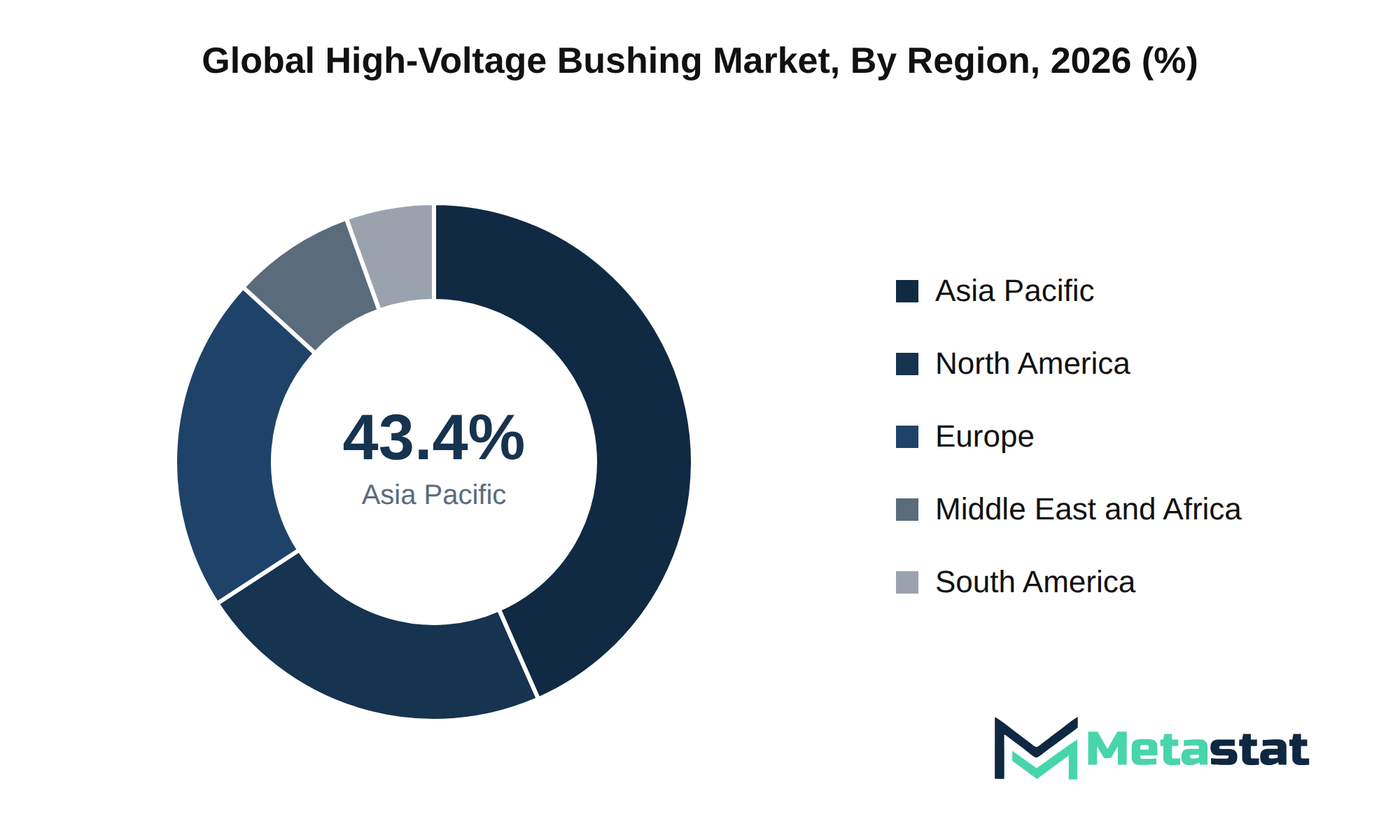
Asia-Pacific accounts for a significant share of the High-Voltage Bushing market, estimated at 43.4% in 2025. This dominance stems from robust industrial activities and significant investments in infrastructure development across key countries, including China, Japan, India, and South Korea. Rapid urbanization and the increasing demand for reliable electricity supply serve because primary demand drivers. Countries in this region prioritize modernizing existing power infrastructure, creating opportunities for high-voltage bushings in both new installations and replacement applications.
Investment in renewable energy projects contributes to market expansion, particularly in China and India, where government initiatives promote green energy sources and enhance energy efficiency. The adoption of HVDC technology aligns with the regional commitment to improving grid interconnections and reducing energy losses. Emerging markets within Southeast Asia and Australia demonstrate incremental growth, spurred by local manufacturers addressing the need for high-quality, region-specific products.
Challenges related to supply chain regionalization and localized manufacturing densities persist, influencing pricing dynamics and availability of products. Geopolitical factors impact cross-border trade, prompting manufacturers to explore nearshoring initiatives to enhance supply chain resilience. Regulatory frameworks specific to energy and electrical standards in Asia-Pacific countries dictate compliance, shaping procurement practices and influencing buying behaviors in the market.
Domestic market participants, including established vendors and newer entrants, engage in competitive strategies to strengthen their positions. Emphasis on collaboration and vendor consolidation trends influence market dynamics, allowing companies to leverage local resources and enhance distribution networks. Overall, the region's focus on energy grid resiliency, local infrastructure readiness, and strategic investments continues to drive growth in the High-Voltage Bushing market.
South America presents an emerging region in the High-Voltage Bushing market, with a market share of 5.5% projected for 2025. Brazil and Argentina lead demand in this region, driven by increasing investments in energy infrastructure and modernization initiatives. The need for reliable power distribution systems significantly influences the adoption of high-voltage bushings, particularly in large-scale projects and urban expansion efforts.
Infrastructure development remains a priority, with targeted efforts to enhance energy grid resiliency and support local demand. The shift toward sustainable energy solutions further supports market growth, particularly in urban centers where energy efficiency is critical. Localized manufacturing initiatives contribute to cost reduction and improved supply chain dynamics, enhancing the market's accessibility.
Strategic entry barriers exist, with foreign direct investment flows aimed at capitalizing on the region's growth potential. Domestic players, alongside international vendors, engage in competitive strategies to strengthen their market presence. The High-Voltage Bushing market in South America benefits from a combination of infrastructure modernization and regional procurement dynamics, positioning it for incremental growth during the forecast period.
The Middle East and Africa region represents a developing area within the High-Voltage Bushing market, currently holding a share of 7.7% of the global market in 2025. Energy demands in countries including Saudi Arabia and the UAE drive investments in infrastructure modernization, with an emphasis on enhancing the resilience of energy grids. The ongoing push for local manufacturing and supply chain regionalization enhances market dynamics, ensuring more efficient procurement processes and reduced lead times for high-voltage equipment.
South Africa demonstrates significant potential, supported by increasing government initiatives aimed at upgrading and expanding existing energy infrastructure. Localized procurement dynamics and cultural nuances define the B2B buying behaviors prevalent in the region. The emergence of domestic market leaders strengthens competitive landscapes, creating opportunities for collaboration and consolidation among vendors.
In addition, geopolitical fragmentation and regulatory frameworks specific to the region create unique entry barriers for foreign direct investment (FDI). These factors influence trade policies and compliance mandates, shaping the operational environment for businesses involved in the high-voltage market. The relationship between these elements positions the Middle East and Africa because an area ripe for growth and expansion in the High-Voltage Bushing market.
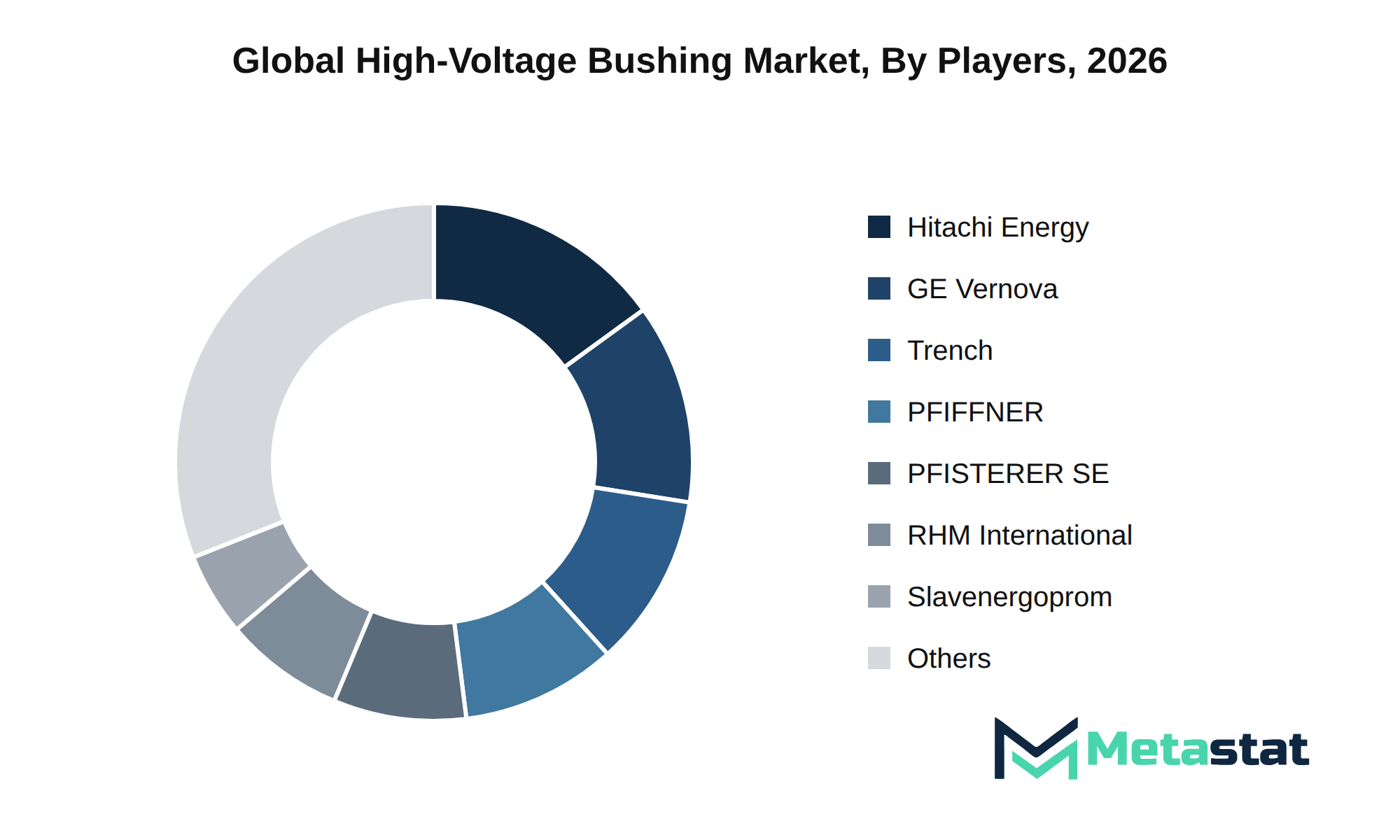
The High-Voltage Bushing market features several key players engaged in strategies that enhance their competitive positions. Companies like Hitachi Energy Ltd., GE Vernova Company, and Trench Group exhibit strong R&D pipelines focused on innovative insulation technologies and voltage ratings. This focus enables differentiation in product offerings, catering to specific applications including AC Power and Distribution Transformers and HVDC Converter Transformers.
Strategic alliances and partnerships play a significant role in the market dynamics. Firms like ABB Ltd. and Eaton Corporation plc leverage extensive distribution networks and brand equity to enhance customer retention strategies. Barriers to entry, including technological know-how and capital requirements, contribute to the current competitive environment, limiting the threat of new entrants. Established players including PFIFFNER Group and PFISTERER Holding SE capitalize on operational efficiencies and procurement leverage to maintain cost advantages.
The market's future competitive outlook indicates a trend towards consolidation, with companies exploring mergers and acquisitions to expand product portfolios and market reach. Competitors, including Reinhausen GmbH and Hubbell Incorporated, focus on building proprietary technology moats, enhancing technological defensibility in the face of potential startup disruptions. This strategic growth vector ensures sustained competition and innovation within the High-Voltage Bushing market.
The High-Voltage Bushing market size is forecast to rise from USD 2,353.1 million in 2025 to over USD 3,716.2 million by 2033. This growth represents a 6.0% CAGR. Various macroeconomic factors influence this outlook, including adjustments in downstream demand, maturation in core industries, and shifts in consumption patterns driven by technology integration. A noticeable trend involves the rise of next-generation technologies, propelling research and development commercialization timelines, along with product life-cycle transitions.
Regulatory changes and compliance milestones have significant implications for the market, affecting strategic capital allocation and investment in infrastructure. The evolving geopolitical landscape introduces realignments that impact trade corridors and global supply chains, making it essential for companies to adapt to these dynamics. High-growth pockets emerge from unmet enterprise needs, emphasizing the importance of strategic imperatives and defensibility roadmaps for future growth.
Accelerated demand for the High-Voltage Bushing market is anticipated due to robust infrastructure investments and positive regulatory frameworks. Potential challenges arise from geopolitical tensions and economic downturns affecting investment decisions. The market's trajectory relies on navigating these complex factors while leveraging emerging opportunities.
The report strategically identifies and profiles the key market players and analyses their core competencies in each sub-segment of the High-Voltage Bushing market.
Report Attributes | Details |
Study Period | 2021-2033 |
Base Year | 2025 |
Estimated Year | 2026 |
Forecast Period | 2026-2033 |
Historical Period | 2021-2025 |
Growth Rate | CAGR 6.0% from 2026 to 2033 |
Revenue Unit | USD million |
Segmentation | By Voltage Rating, Insulation Technology, Application, and Region |
By Region | North America (By Voltage Rating, Insulation Technology, Application, and Country)
|
Europe (By Voltage Rating, Insulation Technology, Application, and Country)
| |
Asia Pacific (By Voltage Rating, Insulation Technology, Application, and Country)
| |
South America (By Voltage Rating, Insulation Technology, Application, and Country)
| |
Middle East and Africa (By Voltage Rating, Insulation Technology, Application, and Country)
|
Find answers to common questions about this report
The High-Voltage Bushing market size was valued at USD 2,353.1 million in 2025, according to the Metastat Insights study.
The High-Voltage Bushing market is projected to grow at a CAGR of 6.0% during the forecast period from 2026 to 2033.
The North America High-Voltage Bushing market size is estimated to reach USD 792.3 million by 2033.
The segment leading the High-Voltage Bushing market is the AC Power & Distribution Transformers segment, with a projected value of USD 1,657.9 million by 2033. This segment surpasses others in terms of revenue generation within the market.
Significant capital investments in energy infrastructure and the transition to cleaner energy sources drive demand for high-voltage bushings. Technological advancements, including automation and enhanced insulation, improve performance and reliability, supporting market growth. The integration of digital technologies enhances operational efficiency and product innovation, positioning the market for substantial growth opportunities.
Significant capital investments in energy infrastructure and the transition to cleaner energy sources favor product adoption in the High-Voltage Bushing market. The necessity for advanced electrical components, driven by enhanced energy efficiency and sustainability practices, further stimulates demand for modern bushing solutions.
The High-Voltage Bushing market is estimated to reach a valuation of USD 3,716.2 million by 2033.
Key players in the High-Voltage Bushing market include Hitachi Energy Ltd., GE Vernova Company, Trench Group, PFIFFNER Group, PFISTERER Holding SE, RHM International, LLC, and ABB Ltd.
The Asia Pacific High-Voltage Bushing market is projected to experience significant growth, reflecting a regional share of 43.4 percent by 2033.
The Resin-Impregnated Paper (RIP) Condenser segment is anticipated to exhibit a compound annual growth rate of 6.9 percent, reaching a value of USD 1,238.8 million by 2033.
The analysts below cover Energy and Power research at Metastat Insights.
LEAD ANALYST
Utkarsh Khirodkar is a Lead Market Research Analyst at MetaStat Insight, specializing in market intelligence, technology sector assessments, and competitive strategy.

PRINCIPAL CONSULTANT - ENTERPRISE AI & EMERGING TECHNOLOGIES
Banking & Finance · Electronics and Semiconductor · Energy and Power · Healthcare IT · Information & Technology · Professional Services
Vijay Gunti is a Principal Consultant at MetaStat Insight, bringing over two decades of experience across enterprise digital transformation, technology strategy, and intelligent systems.

ENERGY & INFRASTRUCTURE INDUSTRY CONSULTANT
Automotive and Transportation · Electronics and Semiconductor · Energy and Power · Machinery & Equipment
Saurabh Vasant Ganvir consults for Energy & Infrastructure Industry at MetaStat Insight, specializing in renewable energy, solar EPC, and electric vehicle (EV) infrastructure markets.
Assessing commercial microgrid software adoption requires looking past top-level installation numbers and examining utility interconnection queues. The research provided verifiable data on average permitting timelines, tariff structures, and battery storage integration costs across regional utility territories. That grounded perspective was valuable for our team when building five-year demand projections for industrial microgrid controllers.
Ambulatory surgical centers have very different purchasing cycles for robotic-assisted surgery platforms than major hospital networks. The MetaStat Insight study focused squarely on capital expenditure depreciation, procedural reimbursement pathways, and surgeon training overhead. That operational clarity made it much simpler to validate multi-year procedure growth forecasts against actual ambulatory center adoption patterns.
When planning edge sensor rollouts across refinery environments, generic IoT reports typically miss the harsh-environment certification bottlenecks. MetaStat Insight gave an objective evaluation of ATEX and Class 1 Division 2 hardware availability, along with realistic five-year maintenance cycle cost projections. The comparison of wireless mesh versus private cellular backhaul helped our team pressure-test network reliability models for remote processing facilities.
Explore related market intelligence reports worth reading alongside this one.