Metastat Insights
Back to Healthcare

India Corporate Wellness Market

India Corporate Wellness Market Size, Share, By Service Type (Health Risk Assessment, Preventive Health Screening, Mental Wellness and Employee Assistance Programmes, Fitness and Physical Activity Programmes, Nutrition and Weight Management, Chronic Disease Management, Ergonomics and Musculoskeletal Wellness, and Others (Financial Wellness, Tobacco Cessation, Sleep Wellness)), By Delivery Mode (Onsite Delivery, Offsite In-Person Delivery Only, Digital Delivery Only, and Hybrid Delivery), By Organization Size (Small and Medium Enterprises, Mid-sized Enterprises, and Large Enterprises), By End-Use Industry (Information Technology and IT-Enabled Services, Banking, Financial Services and Insurance, Manufacturing, Healthcare and Life Sciences, Professional and Business Services, Retail and E-Commerce, Telecommunications and Media, Transportation and Logistics, Energy and Utilities, and Others (Hospitality, Education, Construction)), Industry Analysis, Growth, Trends, and Forecast, 2026-2033

Report ID

MSI-5448

Published

October, 2026

Pages

269 Pages

Format
Market Size 2021
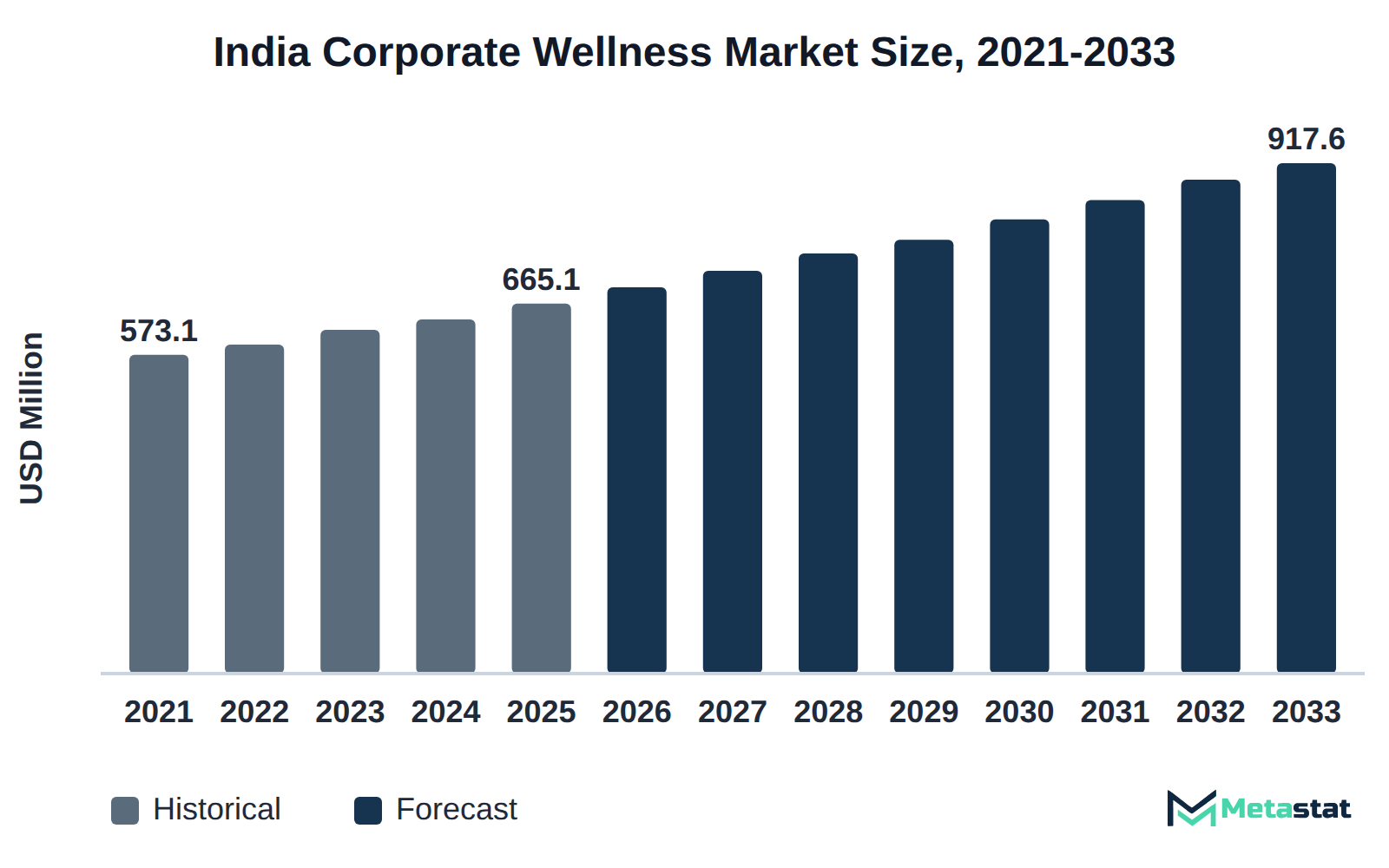
$573.1 Million

Historical

Market Size 2025
$665.1 Million

Base year

Market Size 2033
$917.6 Million

Forecast

CAGR 2026-2033
4.1%

Forecast period

Report Details

Comprehensive Market Analysis And Insights

TL;DR / Key Insights

  • Market Valuation: Valued at $665.1 Million in 2025, projected to reach $917.6 Million by 2033 at a 4.1% CAGR.

  • Dominant Segment: Health Risk Assessment leads the market with a 22.2% share by value, driven by employer focus on early identification of health concerns and targeted intervention to control long-term healthcare costs.

  • Delivery Mode Shift: Hybrid Delivery is the fastest-growing delivery mode with a CAGR of 7.3%, reflecting employer demand for flexible engagement options that combine digital and onsite wellness services for distributed workforces.

  • Sector Demand: Information Technology and IT-Enabled Services, along with Banking, Financial Services and Insurance sectors, drive significant demand for mental wellness and employee assistance programmes, which are projected to reach USD 170.9 million by 2033.

  • Geographic Lead: Tier-1 and tier-2 commercial hubs in India are fueling investment in holistic employee well-being, as organizations in these regions compete for skilled talent and address urban workforce health challenges.

  • What's Inside: The report provides detailed segmentation by service type, delivery mode, organization size, and end-use industry, with market forecasts through 2033, competitive landscape analysis, and coverage of key trends shaping the India Corporate Wellness market.

India Corporate Wellness Market Overview

The India Corporate Wellness market was valued at USD 665.1 million in 2025 and is projected to reach USD 917.6 million by 2033, growing at a CAGR of 4.1% over the forecast period.

India Corporate Wellness Market Market Overview

The India Corporate Wellness market provides services and solutions that address employee health, mental wellbeing, chronic disease prevention, and lifestyle management for organizations of varying sizes. Buyers invest in these offerings to reduce absenteeism, lower healthcare costs, and improve workforce productivity by promoting healthier behaviors and early intervention. Programmes frequently replace fragmented, ad hoc health initiatives with comprehensive platforms integrating health risk assessment, preventive health screening, fitness activities, nutrition guidance, and mental health support. The most substantial demand comes from large enterprises and sectors facing high workforce stress or health risk exposure, particularly those aiming to attract and retain skilled talent through enhanced employee benefits.

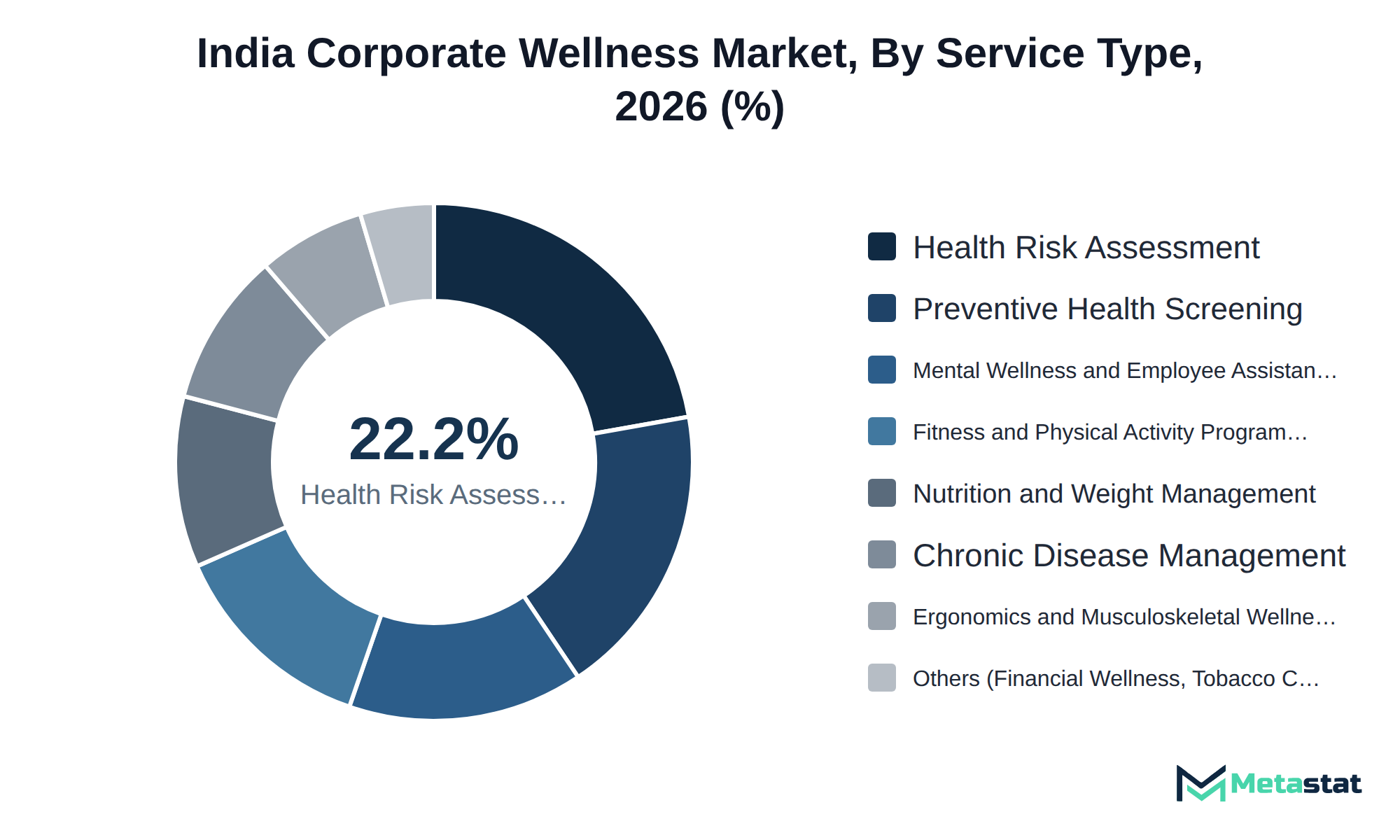
Among the categories, Health Risk Assessment holds the largest share by value, accounting for 22.2% of regional share. This segment’s prominence reflects a strong focus on early identification of health concerns and targeted intervention, which supports employers in managing long-term healthcare expenditure and improving organizational outcomes. Buyers increasingly value data-driven insights that enable them to design and refine wellness strategies for specific workforce demographics, which strengthens the position of health risk assessment solutions in the India Corporate Wellness market.

Growth in the market is driven primarily by increasing employer recognition of the link between employee wellbeing and business performance. Organizations in sectors like Information Technology and IT-Enabled Services encounter rising rates of chronic disease, mental health challenges, and lifestyle-related conditions, resulting in accelerated investment in structured wellness initiatives. This shift in buyer priorities underpins demand for integrated platforms and services that deliver measurable improvements in employee health outcomes and organizational productivity.

Corporate wellness offerings in India span health risk assessments, preventive health screening, mental wellness and employee assistance programmes, fitness and physical activity programmes, nutrition and weight management, chronic disease management, ergonomics and musculoskeletal wellness, and other services addressing financial, tobacco cessation, and sleep wellness needs. Employers invest in these solutions to address rising healthcare costs, absenteeism, and productivity loss linked to employee health issues. The market serves organizations aiming to build healthier workforces and improve employee retention, with both large enterprises and small and medium enterprises adopting these programmes to gain competitive advantages in talent attraction and workforce performance.

Among all service types, health risk assessment holds the highest value share at 22.2 percent, reflecting its central role in identifying employee health risks and guiding interventions. This segment stands out for its ability to provide clear insights into workforce health, prompting employers to implement targeted support and monitor progress. Preventive health screening ranks next at 18.4 percent, followed by mental wellness and employee assistance programmes at 14.7 percent, highlighting a strong demand for both early detection and mental health support in Indian workplaces.

Growth in the market is driven mainly by the rising focus on preventive healthcare among employers. Organizations are shifting from reactive approaches towards proactive investment in employee health, aiming to reduce long-term medical costs and support workforce productivity. This shift has accelerated adoption of comprehensive wellness programmes, with demand strongest in sectors facing intense competition for skilled talent and higher employee attrition risks.

India Corporate Wellness Market Market Size By Value

Integration of AI-Driven Preventive Care and Healthtech Platforms in Enterprise Health Programs

AI-driven preventive care and healthtech platform integration is reshaping enterprise health programs in the India Corporate Wellness market. Enterprises are accelerating adoption of digital delivery and hybrid models that streamline health risk assessments, automate screening reminders, and personalize employee wellness interventions. The growing share of digital solutions is reflected in the forecast for Digital Delivery Only, which is projected to reach USD 219 million by 2033. This demonstrates a rising preference among employers for technology-based engagement, allowing large and mid-sized organizations to scale wellness initiatives efficiently and gather detailed health data for their workforce.

AI-powered analytics are supporting earlier detection of health risks, particularly in service types including Health Risk Assessment, which is anticipated to reach USD 178.2 million in 2033. These platforms enable tailored recommendations and continuous monitoring, leading employers to pivot from traditional periodic screenings toward ongoing, data-informed preventive strategies. Healthtech companies in the India Corporate Wellness market are expanding partnerships with enterprise customers to deliver integrated, AI-enabled platforms that address both physical and mental wellbeing objectives. This shift is lowering administrative burden for HR managers and enabling measurable outcomes, which strengthens enterprise commitment to sustained investment in digital-first health programs and increases demand for advanced, scalable healthtech solutions.

Mental Health and Stress Management Solutions Reshaping IT and BFSI Workforce Benefits

Corporate buyers in the India Corporate Wellness market, particularly in the Information Technology and IT-Enabled Services (IT/ITES) and Banking, Financial Services and Insurance (BFSI) sectors, are shifting their procurement of mental health and stress management solutions toward bundled and scalable contract models. This adjustment responds to increasing employee demand for flexible, ongoing access to mental wellness resources, reflecting the normalization of remote and hybrid working arrangements throughout these industries. Instead of traditional ad hoc or annual payment schemes, buyers now favor service packages that combine digital delivery, virtual counseling, and periodic in-person support within enterprise-wide contracts.

The segment β€œMental Wellness and Employee Assistance Programmes” is projected to reach USD 170.9 million by 2033, reflecting sustained demand in sectors where mental health management is now treated as a core workforce benefit. Corporate procurement teams in IT/ITES and BFSI select providers based not only on content breadth and technology integration but on transparent, predictable pricing that allows large-scale deployment for distributed workforces. Such demand for comprehensive, multi-channel solutions incentivizes vendors to structure contracts with fixed annual fees per employee or per cohort, covering a spectrum of digital modules and live support, rather than offering isolated workshops or reactive crisis interventions.

This transition in purchasing and payment models increases contract stability and revenue predictability for suppliers while reducing per-capita costs for buyers seeking to manage mental health at scale. Uptake of long-term, platform-based offerings is increasing in the IT/ITES and BFSI sectors, pushing vendors to innovate in both delivery and commercial structure.

Tier-1 and Tier-2 Commercial Hubs Fueling Employer Investment in Holistic Employee Well-Being

Employers in India’s tier-1 and tier-2 commercial hubs are accelerating investment in comprehensive employee well-being, driven by the expanding presence of professional and IT-enabled services in these cities. These hubs concentrate formal employment and face intense competition for skilled talent. Demand for wellness programmes now extends beyond conventional health risk assessments and preventive screenings to address mental well-being, fitness, and chronic disease management. The demand structure reflects organizations aiming to attract and retain high-performing employees by addressing stress, sedentary lifestyles, and work-life balance concerns prevalent in urban centers.

Offerings including Mental Wellness and Employee Assistance Programmes account for 14.7% of total service share by value, while Chronic Disease Management and Fitness and Physical Activity Programmes together contribute over 22%. These proportions show that employers in high-growth metropolitan areas allocate resources to services beyond mandatory health checks. Larger enterprises with a national or multi-city footprint are prominent adopters, while mid-sized firms in these hubs increasingly invest in digital and hybrid models to reach dispersed workforces and enable personalized engagement.

This shift supports higher per-employee spending on wellness initiatives, raising service sophistication and creating commercial opportunities for suppliers able to address nuanced needs. Providers offering digital scalability and tailored programmes differentiate their value proposition, supporting revenue growth when corporate buyers in tier-1 and tier-2 cities prioritize comprehensive well-being as a criterion for workplace competitiveness.

How Are Flexible Work Models Changing Employee Wellness Program Spending Across Indian Enterprises?

Flexible work models are prompting Indian enterprises to recalibrate their employee wellness program investments, with an evident shift toward hybrid and digital delivery options. Remote and hybrid workforces are becoming more prevalent, leading organizations to adapt their wellness strategies to remain relevant and accessible for a dispersed employee base. The latest segment data show that Hybrid Delivery leads the delivery mode group with a compound annual growth rate of 7.3%, outpacing Onsite Delivery at 1% and Offsite In-Person Delivery Only at 0.8%, reflecting heightened preference for flexible engagement options.

This shift impacts the market by accelerating adoption of digital platforms and integrated hybrid solutions, particularly among mid-sized and large enterprises seeking scalable programs. The sustained growth in Hybrid Delivery is driven by employer demand for wellness offerings that accommodate remote employees and in-office staff without compromising reach or engagement. Digital Delivery Only is forecast to reach USD 219 million by 2033, further indicating growing enterprise willingness to invest in virtual solutions that support diverse work settings.

For solution providers and buyers, the commercial consequence is clear: organizations that invest in adaptable wellness programs now address both retention and productivity objectives within an evolving workforce structure. Vendors positioning hybrid and digital services increase their market relevance and capture a larger share of enterprise spending, while employers gain access to wellness options that extend beyond traditional office environments.

India Corporate Wellness Market Dynamics

Employee health priorities reshape procurement

Rising awareness of non-communicable diseases and lifestyle-related health risks is prompting Indian enterprises to recalibrate procurement priorities toward preventive and proactive employee health interventions. Corporations are increasing allocations for health risk assessments, preventive health screening, and chronic disease management services, reflecting recognition of the impact of employee well-being on productivity and healthcare cost containment. In the market, this shift benefits service lines including health risk assessment, which accounts for 22.2% of segment share, and preventive health screening, with an 18.4% share. These offerings enable companies to identify health risks early, reduce absenteeism, and contain insurance outlays. The market is influenced by a growing workforce that values employer-supported health programs, particularly in sectors experiencing high stress and sedentary work patterns. Adoption of such programs strengthens retention and engagement, further stimulating demand for wellness solutions among large organizations and mid-sized enterprises.

Limited SME budgets restrict programme scale

Small and Medium Enterprises (SMEs) contribute to a growing share of employment in India, yet restricted budgets slow the adoption of comprehensive wellness solutions across this segment. Unlike larger enterprises, SMEs often prioritize direct operational investment, which results in limited allocation for non-core employee benefits. The market faces slower uptake from these buyers, with orders typically skewing toward basic packages rather than fully integrated programmes. This cost sensitivity leads to delayed upgrades, narrower service selection, and shorter contract duration for providers targeting SMEs. Service vendors experience subdued volume growth in this segment, limiting the pace at which advanced wellness offerings reach wider employee populations.

Pricing pressures reduce supplier margins

Suppliers in the India Corporate Wellness market are experiencing margin compression driven by enterprise buyers demanding greater value from service contracts. Large organizations and digitally mature mid-sized enterprises negotiate for bundled offerings that combine multiple services including preventive health screening and mental wellness support, often with expectations for discounted rates or extended support periods. This trend increases competition among vendors and restricts the room for price increases, especially for established programmes. Several suppliers respond by streamlining operations, automating routine elements of programme delivery, and expanding digital delivery capabilities to improve cost efficiency. These measures support profitability, though per-client revenue growth slows. For smaller suppliers, meeting client expectations around customization and ongoing support raises delivery expenses and challenges their ability to scale. Competitive differentiation now depends on process efficiency and the capacity to deliver measurable outcomes within constrained budgets. The India Corporate Wellness market faces sustained pressure to innovate business models that protect margins while meeting enterprise procurement demands.

Hybrid delivery models accelerate adoption

Hybrid delivery is emerging the strongest opportunity for growth, driven by organizations seeking flexibility and engagement for distributed workforces. Hybrid programmes blend onsite and digital wellness solutions, enabling employers to offer both in-person events and year-round digital support. This approach is supported by a 7.3% CAGR for hybrid delivery, the highest among all delivery modes tracked in the India Corporate Wellness market. Service providers that prioritize hybrid solutions address the evolving expectations of large enterprises and mid-sized companies expanding geographically or implementing flexible work arrangements. While onsite and digital-only models capture meaningful share, hybrid offerings differentiate themselves by bridging participation gaps and supporting ongoing engagement. Demand for hybrid models is expected to rise as buyers aim to balance employee preferences, cost efficiency, and measurable outcomes.

India Corporate Wellness Market Segmentation Analysis

The India Corporate Wellness market is segmented based on Service Type, Delivery Mode, Organization Size, and End-Use Industry.

By Service Type, the market is further segmented into:

  • Health Risk Assessment
  • Preventive Health Screening
  • Mental Wellness and Employee Assistance Programmes
  • Fitness and Physical Activity Programmes
  • Nutrition and Weight Management
  • Chronic Disease Management
  • Ergonomics and Musculoskeletal Wellness
  • Others (Financial Wellness, Tobacco Cessation, Sleep Wellness)

Health Risk Assessment

Health Risk Assessment segment is valued at USD 152.2 million in 2026 and is projected to reach USD 178.2 million by 2033, at a CAGR of 2.3% during the forecast period. Employers implement health risk assessments to identify workforce health trends, support early intervention, and optimize insurance and benefit design. Usage is highest among large enterprises and those managing high-value insurance portfolios, where the ability to stratify risk and control claims costs drives uptake. In the India Corporate Wellness market, this segment remains the largest by share at 22.2%, reflecting a strong emphasis on baseline screening and risk profiling rather than broader lifestyle management. Growth is slower than that of Preventive Health Screening, which posts a 3.7% CAGR. Health Risk Assessment distinguishes itself through structured data collection at enrollment or renewal, while other service types focus on ongoing engagement or specific health outcomes. Demand in the India Corporate Wellness market is sustained by the direct linkage between risk assessment and measurable cost savings on group health policies.

Preventive Health Screening

Preventive Health Screening segment is estimated to reach USD 164.1 million by 2033, at a CAGR of 3.7% during the forecast period. These screenings are purchased by organizations seeking early detection of health risks among employees, with the goal of reducing absenteeism and long-term medical expenditures. Large Indian enterprises and mid-sized firms dominate demand in this segment, driven by policies that incentivize proactive care and rising expectations for standardized workforce health initiatives. Preventive Health Screening expands at a faster pace than Health Risk Assessment, which grows at a slower CAGR of 2.3%, reflecting its increased prioritization in employer-funded wellness packages. Growth in this segment aligns with heightened regulatory attention around occupational health and a shift toward bundled health benefits. Price sensitivity remains less of a barrier than in fitness or nutrition segments, with buyers positioning screening to support compliance and retention. Demand for Preventive Health Screening continues to be shaped by employer focus on measurable outcomes and evidence-based procurement.

Mental Wellness and Employee Assistance Programmes

Employers across sectors are prioritizing these services to address workplace stress, burnout, and productivity challenges. Solutions in this segment support employees through counseling, stress management training, and confidential support channels, appealing to organizations that wish to minimize absenteeism and improve retention. Information Technology and IT-Enabled Services, Banking, Financial Services and Insurance, and Mid-sized Enterprises are principal buyers, seeking to meet workforce expectations for mental health support amid rising job demands. In comparison with Health Risk Assessment, which holds a higher absolute market share but a slower CAGR of 2.3%, demand for Mental Wellness and Employee Assistance Programmes is fueled by growing recognition of mental health’s operational impact and by changing workforce demographics. This segment stands out through its focus on psychological and emotional health rather than physical risk factors, distinguishing its role in the India Corporate Wellness market and supporting ongoing diversification in service offerings.

Fitness and Physical Activity Programmes

Fitness and Physical Activity Programmes segment is projected to grow at a CAGR of 3.2% during the forecast period. This segment addresses structured exercise, group fitness classes, and activity challenges tailored for employees in mid-sized and large enterprises. Buyers in the market focus on these solutions to counter rising sedentary behavior and its commercial impact - reduced productivity and increased health costs. Information Technology, BFSI, and manufacturing sectors drive uptake, seeking measurable reductions in absenteeism and insurance claims. Compared to Health Risk Assessment, which has a CAGR of 2.3%, Fitness and Physical Activity Programmes segment is expanding at a faster rate, reflecting growing employer willingness to invest in engagement-focused wellness options rather than risk-screening alone. Digital delivery platforms and mobile integration differentiate this segment, allowing for individual and team-based participation across distributed workforces. The shift toward activity-based initiatives is supported by a younger workforce and leadership’s growing interest in quantifiable wellness metrics.

Nutrition and Weight Management

Nutrition and weight management programs focus on guiding employees toward healthier eating habits and sustainable lifestyle choices, supported by structured interventions and personalized counseling. Large enterprises, particularly those in knowledge-intensive sectors, integrate these offerings to address rising concerns over metabolic health, obesity, and productivity loss. Demand for this segment in the India Corporate Wellness market is driven by increased recognition among employers that poor nutrition directly affects absenteeism and long-term healthcare costs. Compared to fitness and physical activity programmes, nutrition and weight management initiatives appeal to organizations seeking a lower-cost preventive approach. These programs frequently combine digital tracking and professional guidance, but adoption faces barriers from limited employee engagement and cultural diversity in dietary patterns. In the India Corporate Wellness market, the segment attracts employers aiming to curb chronic disease incidence, but it grows at a pace below service types including hybrid-delivered wellness solutions, where a 7.3% CAGR is recorded. Nutrition and weight management remains a foundational but slower-expanding option within the overall service type portfolio.

Chronic Disease Management

Services targeting chronic disease management focus on controlling and reducing the impact of conditions including diabetes, hypertension, and cardiovascular diseases among workforce populations. Employers in sectors with high prevalence of non-communicable diseases, including manufacturing and large-scale administrative offices, integrate these offerings into their employee benefit policies to mitigate absenteeism and related healthcare costs. Corporate buyers prioritize these solutions to address long-term productivity losses and rising insurance premiums linked to chronic illness. The market sees this segment driven by the need for sustained engagement and regular monitoring, which often requires coordination with third-party health providers and in-house medical teams. Compared with segments like Health Risk Assessment or Fitness and Physical Activity Programmes, chronic disease management usually involves higher ongoing costs per employee due to continuous intervention. In this segment, adoption is shaped by organizational willingness to invest in long-term outcomes rather than short-term participation, often resulting in slower uptake among cost-sensitive small and medium enterprises.

Ergonomics and Musculoskeletal Wellness

Solutions in ergonomics and musculoskeletal wellness address physical strain from prolonged sitting, repetitive tasks, or poor workplace setup that contribute to injuries and discomfort. Demand is growing with Indian employers recognizing the impact of workplace design on employee productivity and absenteeism, particularly in sectors relying on extensive computer use or assembly line work. Adopters seek to reduce costs linked to lost workdays and medical claims by investing in ergonomic assessments, equipment, and educational initiatives. Compared to larger segments like health risk assessment or preventive health screening, ergonomics and musculoskeletal wellness appeals to organizations with a high proportion of desk-based staff or manual workers, reflecting a more targeted approach rather than broad-based preventive care. Manufacturers and IT firms form a distinct buyer profile in this segment, prioritizing these services to prevent repetitive strain injuries and support regulatory compliance. Price sensitivity and the need for tailored solutions differentiate uptake patterns from segments focused on chronic conditions or lifestyle management.

Others (Financial Wellness, Tobacco Cessation, Sleep Wellness)

Financial wellness, tobacco cessation, and sleep wellness solutions address emerging priorities for Indian employers seeking to support the total well-being of their workforce. These services are adopted to help employees manage financial stress, quit tobacco use, and improve sleep quality - factors influencing productivity, absenteeism, and long-term health costs. Employers in sectors including manufacturing, retail, and professional services look to these offerings when workforce demographics trend younger, or when high turnover and stress-related absenteeism affect operational continuity. In the India Corporate Wellness market, this sub-segment's growth is supported by employers seeking differentiated benefits that go beyond traditional medical screening and fitness programs.

Compared to higher-volume segments including health risk assessment or preventive screening, financial wellness, tobacco cessation, and sleep wellness solutions tend to attract organizations focusing on targeted improvements in employee engagement and retention, rather than broad population interventions. Suppliers in the India Corporate Wellness market have responded with modular, customizable services that integrate digital tools, counseling, and behavioral support, setting this segment apart from others that rely more heavily on standardized clinical protocols or group-based physical interventions.

By Delivery Mode, the market is further segmented into:

  • Onsite Delivery
  • Offsite In-Person Delivery Only
  • Digital Delivery Only
  • Hybrid Delivery

Onsite Delivery

Valued at USD 275.7 million in 2026 and projected to reach USD 295.3 million by 2033, onsite delivery of corporate wellness services maintains a steady presence among Indian enterprises. These programs deliver health and wellness interventions directly at the workplace, enabling real-time participation and engagement. Large enterprises and multinational corporations typically account for a higher share of uptake, driven by the scale of their workforce and the logistical benefits of onsite access. Demand is shaped by employers who prioritize immediate, in-person solutions for annual health screenings, vaccination drives, and fitness initiatives, particularly in sectors with centralized office locations. Compared to digital-only and hybrid models, onsite delivery is forecast to grow at a slower CAGR of 1%, reflecting a shift toward flexible and offsite modalities. The slower growth in this segment is influenced by rising adoption of digital and hybrid formats that accommodate geographically dispersed or remote employees, a trend that is reshaping service allocation across delivery modes.

Offsite In-Person Delivery Only

Offsite In-Person Delivery Only segment is estimated to reach USD 105.2 million by 2033, at a CAGR of 0.8% during the forecast period. This delivery mode provides wellness interventions at venues apart from the core workplace, including health camps, external clinics, or dedicated event locations. Mid-sized and large enterprises with centralized workforces rely on this approach for high-touch engagement, especially for annual screenings, vaccination drives, and specialist consultations. Relative to digital or hybrid models, offsite in-person delivery advances at the slowest rate within the India Corporate Wellness market’s delivery modes, reflecting a preference among emerging employers for scalable and flexible solutions. Investment in this segment is influenced by organizations prioritizing personalized, event-based health experiences, but adoption is constrained by logistical complexity and limited scalability. While digital delivery is expected to attract higher growth, offsite in-person services retain relevance for regulated industries and companies seeking direct interaction between healthcare professionals and employees. These unique use cases differentiate this segment from onsite and digital alternatives in the India Corporate Wellness market.

Digital Delivery Only

Digital Delivery Only segment is expected to reach USD 219 million by 2033. This segment enables enterprises to provide wellness interventions to distributed workforces, often through mobile apps and virtual platforms. Digital delivery serves employers in technology, financial services, and professional business services that require scalable, location-independent engagement. Demand in this segment increases with Indian organizations shifting focus to convenience, accessibility, and the ability to personalize interventions for employees across geographies. Compared to Onsite Delivery, which is projected at USD 295.3 million by 2033 but grows at a CAGR of 1%, Digital Delivery Only stands out for its technology-driven service model and higher engagement among younger, digitally literate workforces. Buyers in this segment benefit from lower implementation costs and rapid deployment, supporting the trend of digital transformation in employee benefits. Service providers have strengthened their mobile and web offerings to address new procurement priorities and the rising digital preference among enterprise clients. Digital Delivery Only continues to transform program formats and engagement strategies across the segment.

Hybrid Delivery

Hybrid Delivery segment is projected to grow at a CAGR of 7.3% during the forecast period. This delivery mode integrates in-person and digital engagement, allowing employers to offer tailored wellness services to employees across locations and schedules. Hybrid models are seeing greater adoption among large enterprises and mid-sized organizations with geographically dispersed or remote workforces that require both the scalability of digital tools and the personal touch of onsite interventions. A key differentiator for Hybrid Delivery in the India Corporate Wellness market is its growth rate, which outpaces Onsite Delivery (CAGR of 1%) and Offsite In-Person Delivery Only (CAGR of 0.8%). Technology innovation, particularly the integration of mobile wellness platforms and data-driven personalization, enables effective coordination between virtual and physical components, driving higher engagement rates. Buyers who prioritize flexibility and adaptability are selecting hybrid models to address varied employee health needs, supporting this segment’s position as the fastest-growing option among all delivery modes.

By Organization Size, the market is further segmented into:

  • Small and Medium Enterprises
  • Mid-sized Enterprises
  • Large Enterprises

Small and Medium Enterprises

Small and Medium Enterprises segment is valued at USD 178.4 million in 2026 and is projected to reach USD 265.5 million by 2033, at a CAGR of 5.8% during the forecast period. This segment consists of organizations seeking to attract and retain skilled talent while reducing absenteeism and healthcare-related expenses. Decision makers in these firms increasingly adopt structured wellness initiatives to address rising stress, lifestyle disorders, and productivity concerns among staff. Higher uptake from small and medium enterprises compared to mid-sized or large enterprises is reflected in the 5.8% CAGR for this segment, which exceeds the 4.6% CAGR for mid-sized enterprises over the same period. Cost-effective, modular, and digitally enabled wellness solutions support adoption by firms with more limited HR budgets and decentralized geographic footprints. Such buying behavior distinguishes this group from large enterprise buyers, who tend to focus on comprehensive, multi-location rollouts. The segment benefits from scalable offerings that fit fluctuating workforce needs without requiring significant upfront investment.

Mid-sized Enterprises

Estimated to reach USD 281.1 million by 2033 and projected to grow at a CAGR of 4.6%, the mid-sized enterprises segment reflects a rising commitment to employee well-being among organizations larger than SMEs but more cost-conscious than major corporates. These companies are adopting structured wellness initiatives to improve productivity, attract talent, and address retention challenges in a competitive labor market. Their demand for comprehensive yet scalable solutions sets them apart from small and medium enterprises, whose lower budgets and limited internal resources restrict program scope. Mid-sized enterprises have accelerated investment in digital and hybrid delivery modes, leveraging platforms that integrate health risk assessments, preventive screenings, and mental wellness support to enhance program participation and measure outcomes. Compared with small and medium enterprises, which are expected to reach USD 265.5 million by 2033 at a faster CAGR of 5.8%, mid-sized buyers focus on balancing cost control with higher adoption rates of multi-service wellness programs. This focus on scalable, multi-service adoption supports steady demand growth from mid-sized organizations.

Large Enterprises

Expected to reach USD 371 million by 2033, this segment consists of large-scale employers investing in programs aimed at supporting workforce resilience, productivity, and talent retention. Large enterprises in the market typically pursue comprehensive initiatives that combine preventive care, mental wellness resources, and specialized interventions to reduce absenteeism and enhance long-term employee engagement. Decision-makers in these organizations favor providers with robust platforms, national reach, and analytics-driven reporting. Large enterprises stand out by allocating higher per-employee budgets and prioritizing integrated service delivery, which contrasts with small and medium enterprises that focus on targeted offerings. Limited flexibility in procurement cycles and internal compliance requirements influence adoption speed. While this segment’s absolute spending is the highest among organizational sizes, the CAGR for small and medium enterprises at 5.8% outpaces large enterprises, reflecting maturing demand among established firms and swifter expansion among emerging businesses.

By End-Use Industry, the market is further segmented into:

  • Information Technology and IT-Enabled Services
  • Banking, Financial Services and Insurance
  • Manufacturing
  • Healthcare and Life Sciences
  • Professional and Business Services
  • Retail and E-Commerce
  • Telecommunications and Media
  • Transportation and Logistics
  • Energy and Utilities
  • Others (Hospitality, Education, Construction)
  • Competitive Landscape and Strategic Insights
  • Corporate Wellness Market Key Segments
  • By Service Type
  • Health Risk Assessment
  • Preventive Health Screening
  • Mental Wellness and Employee Assistance Programmes
  • Fitness and Physical Activity Programmes
  • Nutrition and Weight Management
  • Chronic Disease Management
  • Ergonomics and Musculoskeletal Wellness
  • Others (Financial Wellness, Tobacco Cessation, Sleep Wellness)
  • By Delivery Mode
  • Onsite Delivery
  • Offsite In-Person Delivery Only
  • Digital Delivery Only
  • Hybrid Delivery
  • By Organization Size
  • Small and Medium Enterprises
  • Mid-sized Enterprises
  • Large Enterprises
  • By End-Use Industry
  • Information Technology and IT-Enabled Services
  • Banking, Financial Services and Insurance
  • Manufacturing
  • Healthcare and Life Sciences
  • Professional and Business Services
  • Retail and E-Commerce
  • Telecommunications and Media
  • Transportation and Logistics
  • Energy and Utilities
  • Others (Hospitality, Education, Construction)
  • Key Corporate Wellness Industry Players
  • ekincare
  • MediBuddy
  • Truworth Wellness
  • HCL Healthcare
  • Visit Health Private Limited
  • Tata 1mg
  • HealthAssure Private Limited
  • Zyla Health Private Limited
  • Happiest Health
  • HealthifyMe Wellness Private Limited
  • Onsurity
  • Plum
  • Apollo Health and Lifestyle Limited
  • 1to1help
  • Indus Health Plus
  • Practo
  • cult.fit
  • FITPASS
  • Vantage Circle
  • Silver Oak Health
  • Amaha
  • Manah Wellness
  • United We Care
  • Plan My Health
  • Report Coverage
  • WHAT REPORT PROVIDES
  • FREQUENTLY ASKED QUESTIONS
  • How big is the Corporate Wellness market?
  • What is the Corporate Wellness market growth rate?
  • Which type segment leads the Corporate Wellness market?
  • What are the key drivers for the Corporate Wellness market?
  • What factors are restraining the Corporate Wellness market growth?
  • What factors are favoring adoption in this industry?
  • What is the forecasted size of the Corporate Wellness market by 2033?
  • Who are the key players in the Corporate Wellness Market?
  • Table of Content
  • Market Introduction
  • Executive Summary
  • Market Definition
  • Market Scope
  • Research Methodology
  • Primary Research
  • Secondary Research
  • Assumptions and Exclusions
  • Secondary Data Sources
  • Corporate Wellness Market Dynamics and Overview
  • Report Segmentation and Scope
  • Key Market Trends
  • Drivers
  • Restraints
  • Opportunity
  • Porter's Five Forces Analysis
  • Market Share Analysis
  • Service Type Overview
  • Introduction
  • Market Size and Forecast
  • Health Risk Assessment
  • Market Size and Forecast
  • Preventive Health Screening
  • Market Size and Forecast
  • Mental Wellness and Employee Assistance Programmes
  • Market Size and Forecast
  • Fitness and Physical Activity Programmes
  • Market Size and Forecast
  • Nutrition and Weight Management
  • Market Size and Forecast
  • Chronic Disease Management
  • Market Size and Forecast
  • Ergonomics and Musculoskeletal Wellness
  • Market Size and Forecast
  • Others (Financial Wellness, Tobacco Cessation, Sleep Wellness)
  • Market Size and Forecast
  • Market Size and Forecast
  • Market Size and Forecast
  • Delivery Mode Overview
  • Introduction
  • Market Size and Forecast
  • Onsite Delivery
  • Market Size and Forecast
  • Offsite In-Person Delivery Only
  • Market Size and Forecast
  • Digital Delivery Only
  • Market Size and Forecast
  • Hybrid Delivery
  • Market Size and Forecast
  • Market Size and Forecast
  • Market Size and Forecast
  • Market Size and Forecast
  • Market Size and Forecast
  • Market Size and Forecast
  • Market Size and Forecast
  • Organization Size Overview
  • Introduction
  • Market Size and Forecast
  • Small and Medium Enterprises
  • Market Size and Forecast
  • Mid-sized Enterprises
  • Market Size and Forecast
  • Large Enterprises
  • Market Size and Forecast
  • Market Size and Forecast
  • Market Size and Forecast
  • Market Size and Forecast
  • Market Size and Forecast
  • Market Size and Forecast
  • Market Size and Forecast
  • Market Size and Forecast
  • End-Use Industry Overview
  • Introduction
  • Market Size and Forecast
  • Information Technology and IT-Enabled Services
  • Market Size and Forecast
  • Banking, Financial Services and Insurance
  • Market Size and Forecast
  • Manufacturing
  • Market Size and Forecast
  • Healthcare and Life Sciences
  • Market Size and Forecast
  • Professional and Business Services
  • Market Size and Forecast
  • Retail and E-Commerce
  • Market Size and Forecast
  • Telecommunications and Media
  • Market Size and Forecast
  • Transportation and Logistics
  • Market Size and Forecast
  • Energy and Utilities
  • Market Size and Forecast
  • Others (Hospitality, Education, Construction)
  • Market Size and Forecast
  • Company Profile
  • ekincare
  • Company Basic Information, Operating Footprint, Service Area, and Key Competitors
  • ekincare Product Category, Application, and Specification
  • ekincare Financial Performance
  • Main Business/Business Overview
  • MediBuddy
  • Truworth Wellness
  • HCL Healthcare
  • Visit Health Private Limited
  • Tata 1mg
  • HealthAssure Private Limited
  • Zyla Health Private Limited
  • Happiest Health
  • HealthifyMe Wellness Private Limited
  • Onsurity
  • Plum
  • Apollo Health and Lifestyle Limited
  • 1to1help
  • Indus Health Plus
  • Practo
  • cult.fit
  • FITPASS
  • Vantage Circle
  • Silver Oak Health
  • Amaha
  • Manah Wellness
  • United We Care
  • Plan My Health

Information Technology and IT-Enabled Services

Digital-first workforces in information technology and IT-enabled services prioritize employee wellbeing to retain talent, address mental health, and support long-term productivity. Buyers in this segment include large domestic and multinational IT companies managing high employee turnover and demanding project cycles. Wellness solutions tailored for this group typically focus on preventive health, mental wellness, and digital delivery, reflecting the predominantly urban, educated, and mobile workforce. Adoption in this segment is driven by an industry-wide shift toward integrated health platforms and flexible engagement models, supporting hybrid work norms and 24/7 service requirements. Compared to manufacturing or banking, purchasing decisions trend toward higher per-employee spending on customization, digital access, and personalized services. This contrasts with lower-touch, compliance-driven procurement patterns observed in sectors with less digital engagement. Decision-makers balance cost efficiency and program impact, while seeking scalable solutions that integrate with internal HR and IT systems to drive measurable engagement and retention outcomes.

Banking, Financial Services and Insurance

Insurance providers, private banks, and financial institutions implement wellness programs to reduce absenteeism, attract talent, and address rising stress levels among employees. Buyers in this segment typically select solutions that combine preventive health screening, mental wellness support, and financial counseling, reflecting the sector’s dual focus on productivity and regulatory responsibility. Solutions tailored to high-pressure environments and strict compliance demands tend to experience higher engagement compared to those in sectors with less regulatory scrutiny. Wellness adoption in this segment is influenced by the need for robust data privacy, given the sensitivity of financial and health information involved. Unlike manufacturing or retail, an increasing number of buyers in this segment emphasize continuous digital engagement and personalized assistance, favoring platforms with advanced analytics and remote consultation. Cost sensitivity is lower compared to small enterprises, enabling broader program scope and higher per-employee spend, while adoption moves in tandem with digitalization and risk management mandates unique to financial services employers.

Manufacturing

Workplace wellness initiatives in industrial production environments support absenteeism reduction, safety compliance, and improved workforce retention. Manufacturing buyers often prioritize solutions that address occupational health risks, ergonomics, and chronic disease management, driven by the physical demands and shift patterns characteristic of their operations. Unlike segments including healthcare and life sciences, where regulatory expectations on wellness are more prescriptive, manufacturing relies on program adoption driven by direct productivity gains and reduced workplace injury costs. Uptake is influenced by a need for cost-efficient offerings tailored to large and diverse blue-collar workforces, with buyers frequently selecting vendors that deliver scalable onsite screenings or targeted digital modules. This segment differs from information technology and banking, where program customization and digital engagement dominate purchasing criteria. Manufacturing organizations are more likely to evaluate providers on their ability to deliver measurable outcomes in workplace safety and musculoskeletal health, rather than employee assistance or mental wellness programs, which see higher demand in office-based sectors. Regulatory influence is less pronounced than in healthcare and life sciences, making investment decisions highly sensitive to price and direct ROI.

Healthcare and Life Sciences

Hospitals, clinics, diagnostics providers, and pharmaceutical firms invest in wellness solutions that address clinical staff burnout, occupational health risks, and rising chronic disease rates among healthcare workers. Purchasing in this segment is driven by regulation-driven compliance standards and the critical nature of workforce fitness for uninterrupted patient care. Buyers in healthcare and life sciences tend to prioritize clinical accuracy, regular screening, and program customization for shift-based staff, distinguishing their requirements from non-clinical sectors that focus on general engagement or knowledge worker retention. Unlike banking and information technology, where stress management and hybrid program delivery receive the most attention, healthcare organizations place greater emphasis on programs that reduce transmission risks and support physical resilience. Adoption is influenced by regulatory oversight unique to the medical sector, while ongoing skill shortages intensify focus on retention and health outcomes. This segment stands apart for requiring integration with occupational health protocols and for its readiness to adopt evidence-based assessment tools, in contrast to more cost-sensitive buyers in manufacturing or logistics.

Professional and Business Services

Consulting firms, legal practices, and accounting providers operate under client-driven business models that demand high cognitive output and frequent multi-disciplinary collaboration. These organizations invest in wellness offerings to sustain productivity and reduce occupational stress among skilled employees working long or irregular hours. Professional and business service firms compete for talent in a recruitment landscape shaped by upskilling, retention, and flexible work arrangements, which drives demand. In contrast to segments like manufacturing or healthcare, adoption in this field tends to favor digital solutions and mental health initiatives over traditional physical health programs. Buyers in this segment prefer customizable, confidential services that align with client confidentiality standards and support knowledge worker engagement. Workforce demographics and organizational policy often shape program selection, rather than strict regulatory mandates or industry-wide health risk patterns. Cost sensitivity is balanced by a willingness to pay for solutions that deliver measurable improvements in staff wellbeing, absenteeism, and cognitive performance. Service providers focus on integration with digital workflow tools and discreet counseling access, setting this segment apart from sectors where on-site physical health screening dominates purchasing criteria.

Retail and E-Commerce

Retailers and e-commerce companies invest in employee wellness to address high work stress, extended operating hours, and staff retention across distributed and customer-facing environments. These organizations use wellness offerings to reduce burnout and absenteeism, improve morale, and support continuous operations in a workforce that often spans both onsite and remote roles. Programs tailored to retail and e-commerce employees emphasize practical interventions including mental wellness, shift-based health management, and nutrition, which differ from the clinical or compliance-driven initiatives seen in healthcare or manufacturing sectors. Demand in this segment is shaped by a younger employee demographic and rapid workforce expansion, driving buyers to seek scalable and digitally accessible solutions. Adoption is often led by larger retailers with established human resource functions who prioritize brand reputation and employee loyalty, while smaller players focus on cost-effective, modular services. Compared to segments including banking or IT services, retail and e-commerce buyers evaluate offerings for flexibility and direct impact on turnover reduction rather than regulatory compliance or high-skill talent retention.

Telecommunications and Media

Entertainment broadcasters, mobile operators, and digital content providers drive demand for wellness solutions focused on high-stress, shift-based work environments. In this segment, employers seek programs that reduce mental fatigue, improve engagement, and address screen-related health issues linked to extended digital exposure. Wellness offerings tailored for telecommunications and media firms often emphasize mental wellness and employee assistance, which hold a 14.7% share among all service types. This segment stands apart from manufacturing and healthcare by prioritizing resilience training, flexible participation models, and preventive mental health services over physical safety or clinical risk management. Adoption is further shaped by the sector’s fast-changing workforce dynamics, frequent project-based hiring, and high turnover rates. Digital delivery and hybrid models gain traction, responding to the need for scalable, accessible support across both centralized studios and remote production settings. Compared with segments like banking or IT, purchasing in media and telecom is driven by the demand to maintain productivity during high-pressure broadcast cycles and to support creative staff who operate outside traditional office structures.

Transportation and Logistics

Fleet operators and logistics firms procure wellness programs that address workforce health issues brought on by long shifts, physical exertion, and irregular schedules. These buyers prioritize services targeting fatigue management, injury prevention, and mental health resilience to reduce downtime and improve operational continuity across distributed transport networks. Distinct from sectors including Information Technology and IT-Enabled Services or Banking, Financial Services and Insurance, transportation and logistics buyers often require tailored programs for mobile, on-the-move staff rather than office-based teams. Adoption in this segment is shaped by the high prevalence of musculoskeletal concerns and chronic fatigue among drivers and warehouse staff, driving interest in ergonomics and preventive screening. Price sensitivity tends to be higher compared to healthcare or professional service industries, resulting in a focus on essential offerings with measurable health outcomes rather than extensive bundled packages. This segment stands out for its demand for scalable solutions that deliver health benefits across geographically dispersed and shift-oriented workforces, differentiating it from sectors with more centralized or sedentary staff profiles.

Energy and Utilities

Gas and electric utility providers, energy distribution firms, and support contractors invest in wellness initiatives to mitigate the impact of physically demanding roles and rotating shift schedules on employee health. These organizations purchase programs targeting fatigue management, cardiovascular health, and chronic disease prevention to address high rates of fieldwork and operational stress not seen in office-based industries. Workforce demographics in this segment skew toward technical and field staff, driving demand for onsite wellness screenings and ergonomic interventions. Procurement cycles tend to align with regulatory safety reviews or large-scale infrastructure upgrades, which differs from the annual budgeting approach in IT or finance. Compared to sectors with higher white-collar densities, energy and utilities organizations often favor solutions tied to injury prevention and physical resilience over cognitive health offerings. Adoption is strengthened by pressure to demonstrate compliance with occupational health mandates, while cost sensitivity remains high due to fluctuating commodity prices and regulatory constraints. Program customization for remote sites and hazardous environments is a point of differentiation for solution providers serving this segment, influencing both product development and service delivery models.

Others (Hospitality, Education, Construction)

Hospitality, education, and construction employers introduce wellness solutions to address distinct workforce pressures, seasonal workloads, and site-based health risks. In these sectors, program adoption addresses objectives including minimizing presenteeism, supporting mental health for staff exposed to irregular shifts or high-stress situations, and satisfying compliance requirements unique to regulated environments. Demand is driven by a mix of mandatory obligations and voluntary workforce retention strategies, with buyers ranging from hotel chains seeking to differentiate their employment proposition, to educational institutions addressing educator burnout, and construction firms responding to occupational health norms. Compared to sectors with higher margins or larger employee bases, purchasing patterns in this segment often reflect cost sensitivity, a focus on modular service options, and a preference for solutions demonstrating measurable compliance outcomes. This segment differs from others in the group by placing a premium on flexibility and adaptability, given variability in workforce composition and deployment across sites or academic calendars. Adoption faces challenges where distributed operations or contract-heavy employment structures slow program integration, creating a need for providers to deliver scalable, easily deployed solutions tailored for environments with frequent staff turnover or non-standard work schedules.

Competitive Landscape and Strategic Insights

Several developments underpin projected growth in this segment. Increasing program adoption by large enterprises and mid-sized employers is driven by heightened focus on workforce wellbeing and talent retention, particularly in sectors reporting high stress and attrition. Digital delivery is expanding rapidly, with buyers shifting toward customizable and scalable wellness platforms that meet specific workforce needs. The forecast assumes that providers including ekincare, MediBuddy, and Truworth Wellness continue expanding their integrated offerings, with attention to digital engagement and analytics. If cost pressures or limited awareness among small and medium enterprises persist, adoption rates could lag expectations and slow market expansion. For the segment to reach its projected value, program providers have to sustain innovation in service offerings and demonstrate measurable outcomes to buyers. Outlook is most dependent on continued digital adoption and employer willingness to invest in long-term wellness initiatives.

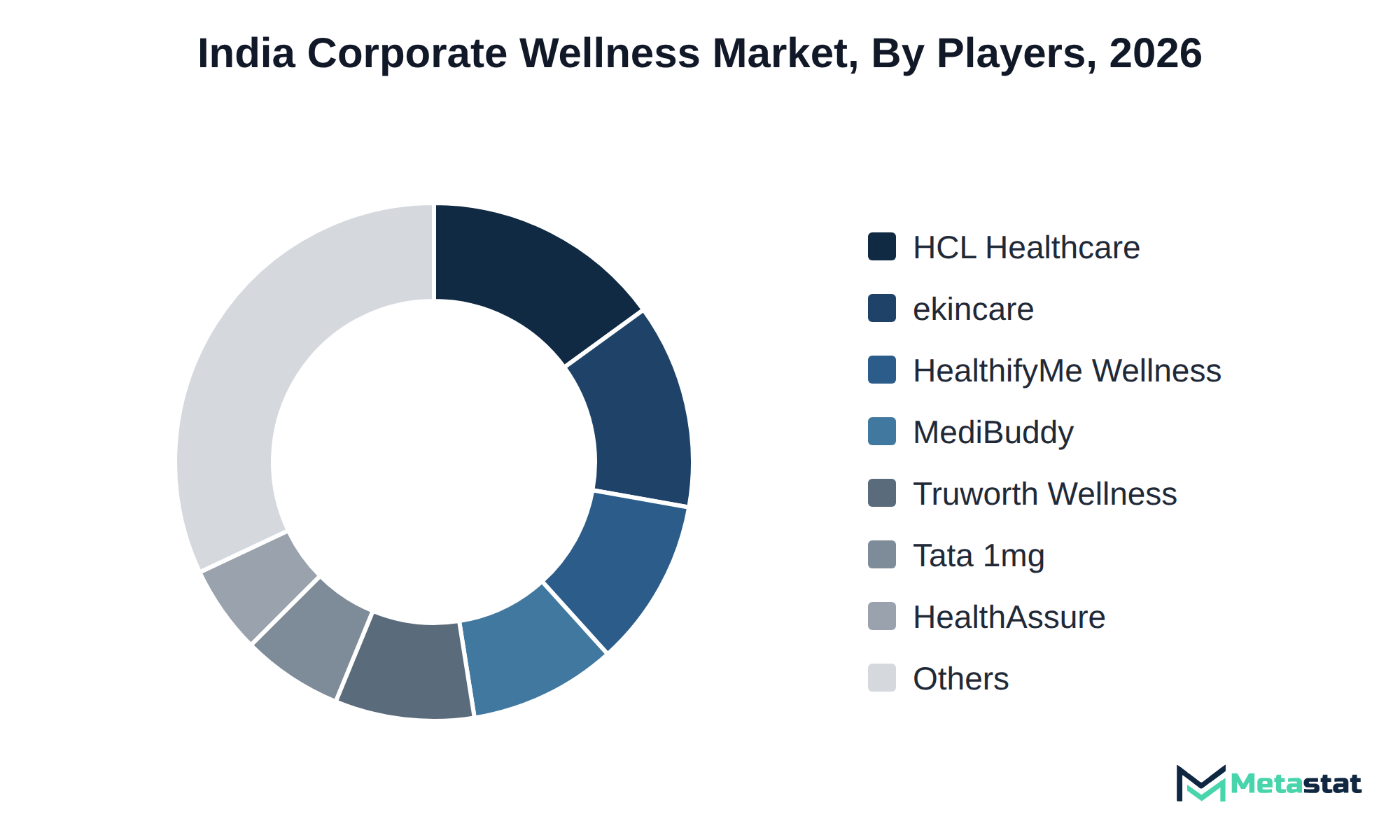
Providers compete on the breadth and adaptability of their wellness portfolios, digital capabilities, and service quality. Buyers prioritize solutions that offer flexibility, integration with HR systems, and responsive support. ekincare focuses on comprehensive digital health platforms tailored for enterprises, while MediBuddy emphasizes telehealth and large-scale preventive care packages. Truworth Wellness stands out for its data-driven assessments and custom program designs. HealthifyMe Wellness Private Limited offers app-based nutrition and fitness solutions that appeal to employers seeking engagement through technology. Players including HCL Healthcare and Tata 1mg supply packages for preventive health and chronic disease management. Program scope and the ability to deliver measurable improvements in employee health are key differentiators for buyers seeking value in this evolving market.

Report Coverage

This report provides a comprehensive assessment of the India Corporate Wellness market, including key company market share, revenue, and position or ranking. It covers major market players, in-depth analysis of the parent industry, industry statistics, important changes in market and its dynamics, segmentation details, historical, ongoing, and projected market analysis, and an assessment of niche industry developments. Market share analysis, key strategies of major players, company profiles, unique selling propositions, emerging segments, regional growth potential, key strategic recommendations, and competitive benchmarking are included. The report does not cover import-export trade statistics, since the market is service-driven.

WHAT REPORT PROVIDES

Key Company Market Share, Revenue, and Position or Ranking; Key Market Players; Full In-Depth Analysis of the Parent Industry; Industry Statistics; Important Changes in Market and Its Dynamics; Segmentation Details of the Market; Historical, Ongoing, and Projected Market Analysis; Assessment of Niche Industry Developments; Market Share Analysis; Key Strategies of Major Players; Company Profiles of Key Players; Unique Selling Propositions of Key Market Players; Emerging Segments and Regional Growth Potential; Key Strategic Recommendations; Competitive Benchmarking.

Frequently Asked Questions

How big is the India Corporate Wellness market?
Market size stands at USD 665.1 million in 2025.

What is the growth rate of the India Corporate Wellness market?
The compound annual growth rate is 4.1% from 2025 to 2033.

Which segment leads the India Corporate Wellness market?
Health Risk Assessment is the leading segment by share.

What are the key drivers for the India Corporate Wellness market?
Employer focus on talent retention and rising investment in digital wellness solutions are driving expansion.

What factors are restraining market growth?
Limited awareness among smaller employers and budget constraints restrict broader adoption.

What opportunities exist for market expansion?
Companies offering digital and hybrid delivery models are positioned to capture unmet demand. Customization for industry-specific health risks is expected to increase adoption.

Who are notable companies in the India Corporate Wellness market?
ekincare, MediBuddy, Truworth Wellness, HCL Healthcare, Tata 1mg, HealthifyMe Wellness Private Limited, and HealthAssure Private Limited operate in this sector.

Forecast and Future Outlook

This segment encompasses projections for all end-use industry buyers, spanning small, mid-sized, and large enterprises across sectors, and the anticipated uptake of evolving wellness solutions. Digitalization of service delivery is a primary influence on the forecast. Hybrid and digital delivery modes are projected to grow much faster than onsite or offsite in-person approaches, supported by technology adoption among new and existing buyers. Small and medium enterprises contribute significantly to future volume. Price sensitivity among SME and mid-market clients restricts provider margins and limits premiumization. Adoption is driven by the ability to meet regulatory expectations for employee health and support cross-sector productivity gains. Sector-specific requirements and expanding access through scalable digital platforms influence momentum.

Digitalization of service delivery is a primary influence on the forecast. Small and medium enterprises contribute significantly to future volume.

Corporate Wellness Market Key Segments

India Corporate Wellness market key segments span across service types and delivery models, addressing distinct needs for employers of different sizes and industries. Employers in information technology, BFSI, manufacturing, and healthcare seek solutions tailored to workforce demographics and health risks. Demand rises on greater awareness of employee mental and physical wellbeing. Buyers shift toward integrated models that combine digital and onsite offerings. Several segments show broad adoption across employer categories. Service differentiation shapes decisions. Pricing depends on program intensity and customization. High-value buyers prioritize evidence-based outcomes and digital enablement. Providers compete on program scope, technology integration, and the ability to demonstrate reduction in absenteeism or improvement in productivity metrics. Unlike segments with narrower focus, key segments require providers to deliver comprehensive portfolios that adapt to changing workplace expectations and regulatory shifts.

By Service Type

Preventive, lifestyle, and risk-mitigation services including health risk assessment, preventive health screening, mental wellness and employee assistance programmes, fitness and physical activity programmes, nutrition and weight management, chronic disease management, ergonomics and musculoskeletal wellness, and others (financial wellness, tobacco cessation, sleep wellness) are tailored for organizational buyers seeking to address employee health proactively across sectors. Employers in sectors facing high health risk exposure or workforce stress turn to service types that best match their employee profiles. For example, health risk assessment draws strong demand from organizations with a focus on early detection and long-term cost control, while mental wellness and employee assistance programmes see accelerating adoption in high-turnover or high-pressure workplaces. Among service types where CAGRs are available, preventive health screening (3.7%) and fitness and physical activity programmes (3.2%) outpace health risk assessment (2.3%), driven by a stronger push for preventive care and active lifestyle promotion. Barriers include limited budget flexibility for customized or multi-component solutions, especially in small and medium enterprises, which contrasts with higher uptake among larger organizations able to invest in integrated wellness platforms.

Health risk assessment involves systematic evaluation of employee health status, lifestyle factors, and potential risk exposures in workplace populations. Organizations commission these assessments to identify early indicators of chronic illness, guide targeted interventions, and track the effectiveness of workplace health initiatives. Technology companies and IT-enabled service providers stand out, seeking to reduce absenteeism while strengthening workforce productivity through data-driven wellness strategies. A distinct feature of this segment is its highest revenue share among service types, yet its projected growth rate is comparatively slower than preventive health screening. While health risk assessment addresses a broad spectrum of health factors, buyers in this category prioritize reliability, customization for their employee base, and integration with digital platforms. Lower growth relative to segments like preventive health screening reflects partial saturation in larger enterprises and stable demand from established buyers, with first-time adoption continuing in mid-sized organizations. Persistent demand is supported by regulatory requirements for occupational health compliance and growing employer focus on long-term healthcare cost containment.

Preventive health screening identifies early signs of illness among employees through periodic diagnostic tests, supporting workforce productivity and reducing absenteeism. Major buyers for this service are large employers in high-turnover industries and organizations that prioritize reducing long-term healthcare expenditure. Demand for preventive health screening is driven by a shift in employee expectations toward proactive healthcare and by regulatory encouragement of occupational health standards. Compared to segments including nutrition and weight management or mental wellness programmes, preventive health screening appeals to enterprises with established human resources infrastructure due to its structured, protocol-driven nature. Unlike fitness and physical activity programmes, which engage employees year-round, preventive health screening commonly involves annual or biannual interventions, attracting buyers seeking measurable outcomes and clear return on investment. Adoption is influenced by the perceived value of early detection, with industries facing higher rates of chronic disease or occupational hazards - including manufacturing, IT, and BFSI - showing stronger uptake. The pace of growth in this segment is influenced by employer willingness to invest in regular medical assessments over discretionary wellness offerings.

Mental wellness and employee assistance programmes deliver targeted psychological support, stress management, and counseling resources for workforce populations. These offerings see highest adoption among information technology, financial services, and healthcare employers, where mental health challenges and high-stress environments impact productivity and retention. Demand in this segment is driven by a visible shift in employer priorities, with organizations recognizing that mental health investment directly influences workforce stability and performance. Compared to chronic disease management or preventive screenings, mental wellness solutions address intangible yet commercially significant factors like absenteeism, presenteeism, and workplace morale. Buyers in this segment frequently opt for confidential access to digital and in-person therapy, resilience workshops, and crisis intervention services, where customization and accessibility outweigh price in decision making. Ongoing destigmatization of mental health and regulatory encouragement for comprehensive employee support further support sustained adoption. This segment differs from others by targeting both acute and ongoing psychological needs, often requiring a more personalized and continuous engagement model that appeals to sectors with knowledge-based roles and younger demographic profiles.

Physical activity programmes focus on structured fitness initiatives and movement-based interventions tailored for employee populations. These offerings are used by organizations aiming to reduce sedentary behaviour, boost morale, and support healthier workforces through activities like group exercise sessions, fitness challenges, and access to digital fitness platforms. Uptake has accelerated with employers prioritizing prevention of chronic conditions and responding to rising interest in active lifestyles among younger employees. Demand for these programmes is most pronounced in industries with younger workforce profiles or where employee engagement is closely tracked, including technology and consumer-oriented sectors. Distinct from other wellness service types, fitness and physical activity programmes are influenced by trends in digital delivery and personalization, with buyers often comparing them based on flexibility, integration with existing health benefits, and measurable participation rates. While segments like Hybrid Delivery show faster expansion, physical activity programmes appeal through their direct impact on productivity and workforce satisfaction, even though their growth rate is not the highest among all wellness interventions.

Dietary guidance and weight management solutions target employees aiming to improve metabolic health, manage lifestyle diseases, or establish sustainable eating habits. These programmes are frequently adopted in sectors experiencing rising rates of sedentary work, including financial services and technology, where long work hours and limited physical movement drive demand for practical nutrition interventions. Employers invest in personalized diet consultations, group wellness workshops, and digital nutrition tracking, responding to employee interest in managing chronic conditions and enhancing daily energy levels. Uptake of nutrition and weight management is shaped by cultural dietary norms and the diversity of food preferences across India, which requires program customization for effective engagement. Compared to fitness and physical activity programmes, nutrition initiatives attract buyers focused more on preventive and long-term health outcomes, rather than immediate physical performance. Price sensitivity remains a consideration, with enterprises weighing return on investment against the cost of tailored guidance and ongoing support. Adoption is most pronounced among organizations seeking to address absenteeism linked to lifestyle-related disorders, particularly in metropolitan settings with access to multi-specialty wellness providers and digital health platforms.

Management of chronic diseases in employed populations centers on continuous support for conditions including diabetes, hypertension, and cardiovascular disease. Programmes in this segment are typically adopted by organizations with a workforce profile that shows a high prevalence of long-term health issues, particularly among older employees or those in roles with sedentary demands. Buyers in this segment often prioritize comprehensive solutions that offer ongoing monitoring, personalized coaching, and integration with digital health platforms for sustained engagement. Compared to faster-growing service types including preventive health screening, chronic disease management experiences steadier uptake, reflecting the commitment required from employers and employees for measurable outcomes. Adoption is influenced by the rising burden of non-communicable diseases in urban corporate settings and the associated costs of employee absenteeism and productivity loss. Barriers to broader adoption include limited employee participation and challenges in demonstrating short-term return on investment, which slows employer decision-making relative to segments that deliver more immediate results.

Workplace ergonomics and musculoskeletal wellness initiatives are designed to reduce injury risk and improve comfort for employees in sectors with extended desk work, repetitive motion, or manual tasks. Employers invest in ergonomic assessments, workstation adjustments, and training to address rising cases of back pain, posture-related fatigue, and repetitive strain disorders. Demand for these services is most pronounced in white-collar industries and modern offices, where prolonged screen time and sedentary routines contribute to musculoskeletal complaints. Compared to segments including chronic disease management or mental wellness interventions, ergonomics and musculoskeletal wellness programs tend to command lower average spend per employee, reflecting shorter intervention duration and fewer ongoing costs. Adoption in manufacturing and logistics settings remains constrained by budget priorities and competing health and safety expenditures, while regulatory requirements for ergonomic compliance are less prescriptive than in North America or Europe. Unlike digital-first wellness solutions, these offerings rely on a combination of physical assessments and on-site adjustments, which limits scalability but drives higher engagement where implemented.

Financial wellness, tobacco cessation, and sleep wellness programmes offer specialized interventions targeting less-addressed aspects of employee health. Employers deploy these initiatives to support staff in managing financial stress, quitting tobacco use, or improving sleep quality, aiming to reduce risk factors that undermine productivity or lead to long-term health complications. Buyers in this segment include organizations with high levels of job stress or complex shift schedules, including financial services groups and transportation firms, seeking to address unique wellness priorities not fully covered by core medical or fitness services. Adoption is driven by the shift among employers toward wellbeing strategies that incorporate both preventative and supportive solutions beyond standard health screenings or disease management. Compared to higher share segments like health risk assessment or preventive screening, this category covers a more diverse array of needs but typically sees lower overall spending intensity. Providers operating in this segment differentiate their offerings through customized workshops, digital platforms for habit tracking, or partnerships with financial counselors and behavioral health experts, reflecting the growing demand for tailored support in workforce wellness portfolios.

By Delivery Mode

Delivery mode defines how organizations access and implement wellness services for their workforce. Onsite delivery enables employers to offer services at the workplace, appealing to businesses prioritizing direct engagement and coordination. Offsite in-person delivery supports companies preferring third-party locations for privacy or resource reasons. Digital delivery offers remote wellness programs, leveraging mobile and web platforms to address geographically dispersed employees and those seeking flexibility. Hybrid delivery combines online and offline methods, appealing to buyers that value both accessibility and personal interaction. Hybrid delivery grows faster than other segments, supported by a CAGR of 7.3%, while onsite and offsite in-person delivery record lower growth rates of 1% and 0.8%, respectively. Buyers choose delivery modes based on workforce distribution, technology adoption, and cost structure. Manufacturers, IT and IT-enabled services, and mid-sized enterprises often seek hybrid or digital delivery to support a distributed workforce and streamline participation. Digital adoption is influenced by rising access to smartphones and wider acceptance of virtual engagement. In contrast, sectors requiring hands-on interventions, including manufacturing, continue to favor onsite models to ensure compliance and direct oversight.

Provision of wellness services at the client’s location supports immediate, face-to-face engagement and delivers programs tailored to each workforce. Employers relying on onsite delivery often prioritize interactive workshops, health screenings, and preventive care managed directly in the workplace environment. This model benefits sectors with fixed-location staff or high participation requirements and appeals to organizations seeking visible investment in employee health. Onsite delivery attracts buyers seeking high engagement, immediate feedback, and easier integration of wellness with daily work routines. In comparison to digital-only or hybrid options, onsite delivery addresses employee populations with lower digital access or those preferring personal interaction but grows more slowly than hybrid delivery, which carries a CAGR of 7.3%. Cost limits adoption for budget-sensitive organizations, particularly small and medium enterprises, when compared to digital solutions that offer scalable reach at lower price points. Regulatory requirements for occupational health or sector-specific compliance influence program design and delivery, especially in manufacturing, healthcare, or industries with higher physical risk.

Offsite in-person delivery involves employees traveling to designated wellness centers or clinics to receive program services, rather than accessing solutions at the workplace or through digital platforms. This format is favored by organizations seeking specialized health screenings, consultations, or interventions that require external facilities or certified professionals unavailable in-house. Demand for offsite in-person delivery is concentrated among firms prioritizing personalized care options and sectors subject to regulatory or accreditation-driven health requirements. Buyers in this segment select providers based on access to accredited clinics, breadth of program offerings, and quality of on-site staff, with decision-making reflecting both compliance and employee engagement factors. Compared to onsite and digital-only delivery, offsite in-person solutions frequently involve additional direct costs and logistical planning, which restricts adoption for smaller organizations or those with dispersed workforces. In contrast to hybrid delivery, which shows a 7.3% CAGR, offsite in-person delivery is characterized by slower expansion, since convenience and scalability favor digital and integrated models for most end-use sectors. Regulatory changes affecting external wellness service providers, or shifts in accreditation standards, directly influence the appeal and uptake of this segment.

Digital-only delivery leverages online platforms and mobile applications to provide wellness resources and interventions without physical interaction. Employers in information technology, banking, and telecommunication sectors increasingly select digital solutions to reach dispersed workforces and enable scalable health management tools. Convenience and lower implementation cost drive digital adoption among mid-sized firms and service industries seeking rapid, measurable engagement across employee bases. This delivery mode stands out from onsite and offsite in-person formats by offering 24/7 access and integrating tools including app-based fitness tracking, virtual counseling, and preventive care reminders. IT-enabled sectors favor digital delivery for its compatibility with remote and hybrid working models, enabling integration into daily workflows. Unlike hybrid delivery, digital-only solutions avoid logistics planning but often encounter challenges in replicating personalized or high-touch interventions. Adoption depends on workforce digital literacy and the availability of advanced mobile infrastructure, creating a distinct buyer segment compared to those prioritizing in-person support. Digital-only delivery appeals to employers balancing cost efficiency and accessibility while targeting preventive and mental health outcomes for employees with diverse working patterns.

Hybrid delivery integrates both digital platforms and in-person services to reach diverse employee groups with flexibility and scale. Employers select hybrid delivery to meet the preferences of remote and onsite staff while providing a more adaptive model than purely digital or physical options. Hybrid models attract organizations seeking to balance personalized engagement with broader accessibility, supporting technology-driven sectors and companies with distributed workforces. Adoption is driven by demand for personalized employee experiences and organizational cost management, since hybrid approaches reduce the need for continuous physical infrastructure and allow integration of wellness technologies. Implementation requires agility in vendor selection, with buyers often evaluating technology integration and user experience in addition to pricing. Hybrid delivery addresses new work patterns and evolving regulatory expectations for flexible workplace health interventions, setting it apart from traditional delivery models that serve more static, location-bound employee cohorts.

By Organization Size

Organization size divides demand for workplace wellness initiatives across small and medium enterprises, mid-sized enterprises, and large enterprises. Adoption patterns are shaped by distinct workforce demographics, resource availability, and strategic priorities. Small and medium enterprises generally focus on cost-effective wellness solutions that address foundational employee needs, with purchasing decisions frequently influenced by budget sensitivity and a preference for bundled services. In contrast, large enterprises prioritize comprehensive programs that integrate digital and in-person components, reflecting more complex workforce requirements and a capacity for broader investment in employee health infrastructure. Buyers in this segment commonly assess offerings on the basis of scalability, customizability, and ongoing support, seeking providers that offer measurable return on investment and flexible delivery models. Compared to small and medium enterprises, mid-sized and large organizations display higher penetration of hybrid and digital wellness services, driven by distributed workforces and a greater emphasis on employee retention. Distinct from other segmentation axes including service type or delivery mode, organization size remains a primary determinant of both the breadth and sophistication of workplace wellness program adoption.

Wellness adoption among small and medium enterprises reflects a distinct set of business objectives, with decision-makers focusing on workforce productivity, reducing absenteeism, and improving retention. Solutions in this segment are typically selected by owners and HR heads seeking to balance program scope with cost efficiency. This buyer group values bundled offerings - including health risk assessments, preventive health screening, and digital health interventions - to provide practical coverage for employees without extensive in-house resources. Flexible pricing and modular program structures appeal strongly to these enterprises, setting them apart from large organizations that demand enterprise-scale customization or mid-sized firms favoring deeper integration. Program adoption in this segment is influenced by stricter budget constraints compared to larger companies, leading to a higher rate of digital and hybrid delivery uptake. Regulatory compliance and talent retention in competitive local markets drive incremental investment, but cost sensitivity often limits the breadth of solutions. Distinct from large enterprises, small and medium enterprises pursue scalable packages that support growth while controlling overhead, making this segment more responsive to pricing innovations and vendor flexibility.

Growing demand from firms with mid-sized workforces shapes adoption patterns in this segment. Mid-sized enterprises pursue wellness interventions to address workforce stress, attrition, and rising chronic health risks, often balancing cost sensitivity with expectations for professional-grade solutions. Buyers seek programs that support talent retention and productivity, with uptake driven by the pressure to compete for skilled employees against larger firms that offer comprehensive health and wellness packages. Distinct from small and medium enterprises, which typically face tighter budget constraints, mid-sized organizations possess more capacity to invest in structured wellness plans yet remain more price-conscious than large enterprises. Engagement from this group hinges on the availability of modular, scalable offerings that flex to headcount changes and operational volatility. Market activity in this segment responds to both the rising awareness of employee well-being and the need for cost-efficient, measurable outcomes. Compared with small and medium enterprises, mid-sized enterprises show a stronger preference for customized solutions and integration with existing HR platforms, yet adoption lags behind large enterprises where enterprise-wide programs are more easily deployed.

Large organisations prioritise wellness initiatives that deliver measurable outcomes for thousands of employees, with program adoption driven by a combination of regulatory compliance and the pursuit of higher workforce productivity. Buyers in this segment typically include major enterprises across IT, banking, manufacturing, and healthcare, seeking comprehensive offerings that integrate health risk assessments, preventive screenings, and mental wellness support. Compared to small and mid-sized enterprises, large employers generally demand customised, scalable solutions that align with corporate governance policies and internal branding. Customisation requirements and higher expectations for digital integration raise both the complexity and price point of services delivered to this group. Risk mitigation, particularly for chronic diseases and mental health, remains critical, since large workforces increase the commercial impact of absenteeism and turnover. Adoption barriers include longer internal decision cycles and the challenge of standardising wellness outcomes across distributed teams and multiple business units, setting large enterprises apart from more agile mid-sized firms.

By End-Use Industry

End-use industry segmentation tracks demand for workplace wellness services across a spectrum of sectors, including information technology and IT-enabled services, banking and financial services, manufacturing, healthcare, professional services, and others. In information technology and IT-enabled services, corporate wellness adoption is supported by the prevalence of knowledge workers and high rates of digital engagement, prompting employers to prioritize preventive health screening and digital wellness solutions. Banking, financial services, and insurance firms seek to address sedentary work patterns and employee stress with targeted health interventions, while manufacturing organizations prioritize onsite health and safety support for operational and blue-collar staff. Healthcare and life sciences companies demonstrate growing interest in integrated health programs, reflecting a workforce with higher exposure to occupational health risks. Compared to other end-use groups, healthcare and life sciences show faster growth when both CAGR values are available, driven by regulatory compliance and higher awareness of chronic disease prevention. Manufacturing and traditional sectors display slower adoption due to cost sensitivity and lower digital penetration, while service-driven industries leverage higher per-employee spend and greater customization in their wellness offerings.

Key Corporate Wellness Industry Players

Competition among industry players shapes the structure and service differentiation seen in this segment. Providers including ekincare, MediBuddy, Truworth Wellness, HCL Healthcare, and Tata 1mg supply a mix of digital-first platforms, on-site health services, and preventive health screening solutions to address evolving employer demands. Buyers evaluate vendors on criteria including program customization, digital integration, and breadth of wellness modules - ranging from fitness and mental health to chronic disease management and financial wellness. Digital delivery has increased in relevance, with companies like HealthifyMe Wellness Private Limited and FITPASS focusing on technology-enabled wellness and remote engagement tools, while others including Apollo Health and Lifestyle Limited maintain a dual focus on in-person and online services. In this segment, product and service innovation determines a provider’s reach, with employers seeking scalable offerings that balance cost control with employee engagement. Companies differ from end-use industry segments by centering business models on service delivery and technology enablement. Clients in those other segments prioritize wellness outcomes specific to sectoral workforce needs or operational contexts.

Service providers in this segment are expanding digital and hybrid wellness platforms to meet the needs of distributed and remote teams, while targeting deeper penetration among small and medium enterprises. These efforts reflect a shift toward scalable, affordable solutions that support volume growth and address the requirements of non-traditional workforces. Information technology and IT-enabled services organizations, with large and variable employee bases, generate sustained demand for mental health, preventive care, and flexible wellness offerings. Slower adoption among traditional sectors or regulatory delays could limit the pace of expansion in targeted industries.

Industry competition in this segment is defined by the ability to deliver customizable, technology-driven wellness programs that align with employer priorities and workforce trends. Providers differentiate through digital integration, breadth of wellness modules, and the capacity to address sector-specific needs. The segment’s evolution is shaped by ongoing innovation in service delivery models and the increasing importance of remote engagement tools.

WHAT REPORT PROVIDES

Frequently Asked Questions

What is the India Corporate Wellness market growth rate?
The forecasted CAGR is 4.1% from 2026 to 2033.

What is the forecasted size of the India Corporate Wellness market by 2033?
Market size is projected to reach USD 917.6 million by 2033.

Which type segment leads the India Corporate Wellness market?
Health Risk Assessment leads, with the highest share at 22.2%.

What are the key drivers for the India Corporate Wellness market?
Rising focus on employee wellness and mental health solutions drives demand. Rapid digitalization of wellness delivery supports expansion among distributed workforces.

What factors are restraining the India Corporate Wellness market growth?
Budget constraints among smaller organizations slow adoption. Low awareness limits penetration in traditional sectors.

What factors are favoring adoption in this industry?
Growing awareness of workplace health risks promotes program uptake. Customizable, scalable digital solutions appeal to organizations managing remote and hybrid teams.

Who are the key players in the India Corporate Wellness market?
ekincare, MediBuddy, Truworth Wellness, HCL Healthcare, Visit Health Private Limited, Tata 1mg, HealthAssure Private Limited, Zyla Health Private Limited, Happiest Health, and HealthifyMe Wellness Private Limited.

ekincare

ekincare focuses on delivering digitally enabled corporate wellness solutions for enterprises aiming to integrate health management, preventive screenings, and employee engagement onto a single platform. Large employers and mid-sized firms adopt these offerings to address diverse workforce needs, blending health risk assessments, teleconsultations, and data-driven wellness initiatives. Demand growth in this segment is shaped by rising employer prioritization of scalable platforms that allow for data analytics, unified reporting, and real-time employee health tracking. Buyers select providers based on the breadth of digital integration, user experience, and the ability to customize programs for different workforce profiles. Compared to other firms in the same group, ekincare offers a technology-driven approach, which sets it apart from traditional providers focused on in-person services. While companies like MediBuddy and Tata 1mg operate in this field, ekincare emphasizes an integrated, digital-first architecture targeting cost-efficient delivery and comprehensive analytics, making it distinct in buyers' evaluations of service models and measurable health outcomes.

Growth in this segment is expected to be driven by continued expansion of digital delivery platforms led by providers including ekincare, which support scalable and remote wellness offerings for large and distributed workforces. Sustained investment by small and medium enterprises will drive category expansion, supported by segment growth at a 5.8% CAGR from 2026 to 2033. The primary risk to this trajectory is limited digital infrastructure or low employee engagement with technology-led wellness solutions, which would reduce the effectiveness of platform-based models relative to traditional onsite or hybrid delivery. Successful scaling will depend on ongoing product innovation, continued customization for sector-specific needs, and data security assurances that meet rising employer and employee expectations.

Report Coverage

This section analyzes ekincare’s digital-first strategy and its impact on buyer preferences within the end-use industry segment. The analysis focuses on how digital integration, customization, and analytics capabilities influence provider selection and measurable health outcomes. It highlights the shift from traditional in-person models to scalable, technology-enabled solutions, and examines how ekincare’s approach addresses evolving employer requirements for flexible, cost-efficient wellness delivery. The section further discusses the implications of digital infrastructure limitations and employee engagement challenges for adoption rates and long-term segment growth.

WHAT REPORT PROVIDES

1. Key Market Players
3. Full In-Depth Analysis of the Parent Industry
4. Industry Statistics
5. Important Changes in Market and Its Dynamics
6. Segmentation Details of the Market
7. Historical, On-Going, and Projected Market Analysis
8. Assessment of Niche Industry Developments
9. Market Share Analysis
10. Key Strategies of Major Players
11. Company Profiles of Key Players
12. Unique Selling Propositions of Key Market Players
13. Emerging Segments and Regional Growth Potential
14. Key Strategic Recommendations
15. Competitive Benchmarking
16. Coverage of Regulatory and Policy Impacts

Frequently Asked Questions

What are the key drivers for the India Corporate Wellness market?
Large enterprises invest in digital health solutions to improve employee productivity. Small and medium enterprises drive adoption through demand for flexible, cost-efficient wellness offerings.

What factors are restraining the India Corporate Wellness market growth?
Limited digital infrastructure in several regions restricts adoption. Low employee engagement in digital programs challenges sustained usage.

What factors are favoring adoption in this industry?
Segment expansion is supported by product innovation in digital service models. Growth in hybrid delivery responds to shifting employee expectations for access and convenience.

MediBuddy

MediBuddy delivers corporate wellness programs structured around digital and in-person health services for organizations aiming to improve workforce health outcomes and reduce medical cost burdens. Employers select MediBuddy for its integrated approach that combines preventive screenings, teleconsultations, and personalized wellness plans to address diverse employee health requirements. Demand for this segment is driven by large enterprises and technology-driven industries seeking scalable platforms capable of handling high participation rates while maintaining cost efficiency. Compared to segments focused solely on digital or onsite delivery, MediBuddy’s hybrid model offers flexibility for companies balancing remote and office-based staff. Adoption in this segment reflects a preference for comprehensive offerings that streamline health risk management and employee support. Buyers favor vendors able to demonstrate measurable outcomes and smooth integration with HR management systems, leading to stronger engagement among high-skill, urban workforces. Unlike niche providers that target single service types, MediBuddy competes by broadening access and supporting continuity of care for both preventive and ongoing wellness needs.

Truworth Wellness

Truworth Wellness delivers corporate wellness solutions by blending digital engagement platforms with modular health intervention programs. Employers in sectors with diversified workforce profiles select Truworth Wellness offerings to address preventive healthcare, productivity, and employee satisfaction goals through technology-driven delivery. Large and mid-sized enterprises drive adoption, seeking scalable, customizable health management modules that support workforce retention. Demand in this segment is shaped by the integration of digital tools that facilitate health risk assessment, personalized coaching, and real-time analytics, distinguishing Truworth Wellness from purely onsite or traditional program providers. Compared to other industry providers, Truworth Wellness focuses on modularity and data-driven customization, allowing buyers to align wellness initiatives to specific organizational health priorities rather than a one-size-fits-all model. This approach supports rapid scaling for enterprises with distributed teams, a factor gaining importance with the persistence of remote and hybrid work patterns. Relative to offsite-only or onsite-only providers, Truworth Wellness addresses a broader set of buyer requirements for integration, flexibility, and measurable outcomes, which influences procurement decisions in the India Corporate Wellness market.

HCL Healthcare

Health-focused service providers including HCL Healthcare deliver solutions tailored for Indian enterprises seeking to enhance workforce health outcomes and reduce absenteeism linked to lifestyle diseases and workplace stress. These offerings are adopted primarily by large and mid-sized organizations that prioritize employee retention and productivity, often in white-collar settings where health risks are not limited to physical labor but extend to mental wellness and chronic disease management. Leading demand in this segment are clients who seek integrated packages combining preventive screening, health risk assessments, and access to primary care, distinguishing it from manufacturing or logistics-driven buyers who typically focus on single-issue interventions. The shift toward comprehensive wellness support, including mental health services and digital health monitoring, has accelerated adoption among employers facing rising claims costs and heightened regulatory scrutiny over employee well-being. Compared to segments with slower adoption of digital modalities, service providers in this space compete by integrating technology, personalizing care pathways, and supporting rapid response to emerging health trends aligned to urban white-collar workforces.

Visit Health Private Limited

Visit Health Private Limited delivers employee wellness solutions for corporate buyers seeking integrated digital health management, preventive care, and support across a distributed workforce. Its offerings serve both large enterprises and mid-sized organizations that prioritize workforce productivity and retention through structured health initiatives. Demand within this segment is driven by organizations pursuing digital-first engagement and measurable improvement in employee health outcomes. Unlike service providers with a primary focus on onsite or in-person models, Visit Health Private Limited differentiates with a technology-led platform that enables scalable deployment and real-time tracking of utilization data. Buyers in this segment select providers based on the flexibility of service delivery, customization options for health programs, and the ability to integrate wellness tracking into human resources processes. Pricing sensitivity remains moderate compared to segments prioritizing only basic screening or fitness activities, with buyers seeking comprehensive value and data-driven reporting. Compared to other segments addressing narrower health needs, solutions from Visit Health Private Limited attract enterprises seeking broad engagement and measurable impact on employee well-being.

Tata 1mg

Pharmacy-backed health service providers like Tata 1mg supply integrated health and wellness solutions to corporate clients seeking scalable and medically robust offerings. Large enterprises and technology-driven organizations select Tata 1mg for its ability to connect preventive health screening, diagnostics, and digital health management under a single brand, addressing workforce health requirements at scale. Buyers in this segment prioritize access to a verified medical network, digital convenience, and transparent pricing, which distinguishes Tata 1mg’s model from peers focused on fitness or behavioral health modules alone. Demand for Tata 1mg’s services is driven by companies seeking direct employee access to preventive care and pharmacy products alongside structured health risk assessment programs. Compared to segments centered on fitness or employee assistance programmes, pharmacy-integrated providers serve employers where medical legitimacy and established healthcare supply chains carry more weight in vendor selection. Adoption of Tata 1mg’s solutions accelerates where organizations require compliance-grade health data management and prefer a one-stop platform for both digital health services and physical product fulfilment. Competitive positioning in this segment depends on the ability to link telehealth, diagnostics, and pharmacy logistics while upholding clinical reliability and service scalability.

HealthAssure Private Limited

HealthAssure Private Limited delivers health management and wellness solutions tailored for corporate clients seeking to address rising employee healthcare demands and control benefit costs. Large organizations and mid-sized enterprises engage providers in this segment to implement preventive health programs, digital health risk assessments, and integrated wellness campaigns that address both physical and mental well-being. Employers respond to a younger workforce’s expectations for digital-first experiences, driving adoption of app-based health services over traditional in-person formats. Compared to other providers in this group, HealthAssure Private Limited emphasizes the integration of technology with access to a wide provider network, aiming to improve employee participation and track health outcomes in real time. This approach diverges from segments focused on purely onsite or offsite solutions, and aligns with a broader trend toward hybrid and digital delivery, which outpaces legacy models in scalability and accessibility. The shift toward digitized, outcome-driven services attracts employers prioritizing measurable returns on health spending and transparent reporting of engagement metrics. Regulatory influences and rising chronic disease prevalence in India further support demand for comprehensive, technology-enabled wellness solutions.

Zyla Health Private Limited

Zyla Health Private Limited delivers solutions that combine digital health management with personalized wellness interventions designed for India’s growing employee-centric enterprise segment. Buyers in this sub-segment typically include mid-sized and large organizations that prioritize access to ongoing health monitoring, chronic disease management, and mental wellness resources. Demand for Zyla Health Private Limited’s services is driven by the shift among employers toward data-driven and continuous engagement models that address both physical and behavioral health. This focus contrasts with segments that emphasize standalone preventive screenings or single-touch interventions. Zyla Health Private Limited distinguishes itself by leveraging technology to facilitate longitudinal care and customized wellness journeys, suiting organizations with distributed workforces and complex medical benefit structures. Unlike segments oriented toward on-premise service or basic screenings, this sub-segment attracts buyers seeking measurable improvement in workforce health indicators and reduced long-term benefit expenses through integrated digital solutions. Adoption trends reflect the value placed on technology-enabled, adaptive offerings rather than rigid, one-size-fits-all programs.

Happiest Health

Health and wellbeing specialists in this segment design programs that prioritize preventive healthcare, mental resilience, and ongoing lifestyle support for employees in knowledge-driven organizations. Demand is largely driven by rising corporate investment in employee mental health and comprehensive wellness, a trend that accelerated when high-skill workplaces recognized the cost of absenteeism and disengagement linked to stress and chronic health risks. Services typically address mental wellness, preventive screening, and ergonomic support, offering a breadth and frequency of engagement that differs from manufacturing or field-based segments, where interventions often prioritize injury prevention or regulatory compliance. Buyers for these services include IT, professional services, and technology firms seeking outcomes that go beyond physical health to include sustained productivity and retention. Compared to manufacturing, where demand is shaped by distinct occupational risks, this segment competes on program customization, digital engagement, and measured impact on workforce performance. Emphasis on data-driven outcomes distinguishes this approach from end-use industries where wellness is viewed primarily through compliance or cost-control lenses.

HealthifyMe Wellness Private Limited

HealthifyMe Wellness Private Limited delivers digital wellness programs that prioritize personalized health tracking, nutrition management, and fitness interventions for corporate employees. Its offerings are adopted by information technology, banking, and service-oriented enterprises seeking measurable improvements in workforce well-being and engagement. A principal driver for this segment is the rise of mobile-enabled health management, with buyers seeking integrated platforms that support remote engagement and real-time analytics across distributed teams. This demand for digital accessibility differentiates HealthifyMe’s approach from service providers focused on onsite or physical delivery, making it especially relevant for employers supporting hybrid or flexible work arrangements. While other segments emphasize in-person preventive health screenings or chronic disease management, HealthifyMe targets proactive lifestyle change and user engagement through mobile applications and data-driven insights. The segment’s adoption faces competitive pressure from digital-first providers including cult.fit and FITPASS, which center on fitness and activity programs, but HealthifyMe’s nutrition and behavioral coaching sets it apart within the digital delivery field.

Onsurity

Onsurity delivers employee healthcare benefits and wellness services tailored for small and medium enterprises seeking affordable coverage and engagement-focused solutions. Buyers in this segment frequently prioritize flexible subscription models and comprehensive digital interfaces that allow for quick onboarding and broad access to preventive, fitness, and mental wellness programs. This approach appeals to organizations with limited HR resources, supporting adoption among fast-growing startups and cost-sensitive employers looking for scalable options that adapt to fluctuating workforce needs. Onsurity’s focus on simplifying health benefit management sets it apart from providers targeting larger corporates with more complex, in-person or hybrid interventions. In contrast with other segments emphasizing high-touch, onsite services, Onsurity’s model streamlines delivery through digital platforms and standardized packages, reducing administrative overhead for employers. Demand is influenced by rising expectations for transparency, ease of access, and the ability to monitor utilization and outcomes, factors that strongly influence decision-makers in the small and medium enterprise space. This tailored emphasis on technology-driven flexibility and affordability distinguishes Onsurity from other players concentrating on broad integrated service portfolios or extensive medical infrastructure.

Plum

Plum provides employee health benefits and group insurance options to organizations, addressing the demand for simplified and scalable wellness coverage. Buyers in this segment include small and mid-sized enterprises that seek cost-effective solutions for health risk management with minimal administrative overhead. The main driver is the increasing preference among employers for digital-first platforms that streamline policy management and claims, differentiating Plum from traditional service-centric models in the group. While other segments see adoption driven by comprehensive health screening or in-person wellness programs, Plum’s focus on technology-driven insurance and flexible benefits appeals to buyers prioritizing convenience and transparency. The ability to customize plans creates value for employers seeking tailored solutions that support workforce retention. Demand growth in this segment depends on evolving regulatory standards for employer-sponsored health coverage and the continued digitalization of administrative processes. Compared to service providers emphasizing preventive care or lifestyle management, Plum’s model responds primarily to cost control and ease of implementation for organizations managing diverse and distributed teams.

Apollo Health and Lifestyle Limited

Specialty healthcare providers in this segment deliver medical and wellness services to employers seeking comprehensive support for workforce health challenges. Large enterprises and organizations with geographically distributed staff invest in these solutions to offer employees preventive health screening, medical consultations, and chronic disease management through a network of clinics and digital platforms. Demand rises when buyers prioritize continuity of care and access to healthcare infrastructure that supports both onsite and remote workforces. Compared to digital-only or wellness-focused competitors, providers in this segment supply medically integrated offerings with robust clinical oversight and a strong physical presence, appealing to buyers who prioritize access to in-person diagnostics and specialty care. This segment attracts organizations facing regulatory compliance pressures around employee health and safety, and those in industries with higher medical risk profiles. Service differentiation is driven by the breadth of clinical services, access to specialty practitioners, and the ability to integrate preventive programs with primary healthcare, setting these providers apart from wellness-only or fitness-oriented platforms in the field.

1to1help

Specialists in psychological wellbeing, 1to1help delivers employee assistance programmes and mental health support for enterprises seeking to address workplace stress, absenteeism, and productivity loss. Its services are primarily adopted by mid-sized and large organizations in sectors where employee mental health concerns are linked to high-pressure roles and retention challenges. Demand is driven by a shift in employer priorities: organizations now recognize mental health as integral to workforce stability and output, prompting investment in confidential counselling and resilience training. This segment differs from other end-use providers by focusing on mental and emotional health, rather than broad-based health screenings or physical activity programs. While segments including Health Risk Assessment are driven by compliance and preventive mandates, 1to1help’s adoption is linked to cultural change and management willingness to invest in comprehensive employee care. Service differentiation often centers on confidentiality, qualification of counsellors, and the ability to integrate digital access for distributed teams, setting this provider apart in a field shaped by rising mental health awareness and workforce mobility.

Indus Health Plus

Preventive healthcare providers like Indus Health Plus supply solutions focused on early detection and risk profiling for enterprises managing a diverse workforce. Buyers in this segment often include organizations with high employee turnover, and those in industries where absenteeism and productivity loss tied to chronic disease create cost pressure. Indus Health Plus is used for tailored health check-up packages, risk assessment protocols, and structured wellness interventions that help employers identify health risks before they escalate into workplace disruption. Demand for these services is shaped by organizations seeking to move from reactive to preventive healthcare models, supporting cost containment while improving workforce well-being. In comparison to digital-only or insurance-driven providers, Indus Health Plus emphasizes in-person screening and diagnostic coverage, setting it apart for clients requiring robust clinical validation. Corporate buyers choose among providers based on the scope of diagnostics, data privacy provisions, and the ability to deliver at multi-location scale. This approach attracts sectors with dispersed or on-site employee bases, including manufacturing and logistics, that require verified, decision-ready health data rather than only digital engagement.

Practo

Employee health technology providers in this segment target organizations seeking accessible mental health, counseling, and medical consultation services. Practo’s offerings primarily serve enterprises that prioritize digital convenience, integrating telemedicine with health management platforms to reach geographically dispersed teams. Demand in this segment is driven by a shift in employer expectations toward integrated healthcare and mental wellness solutions that deliver both preventive and ongoing care. Buyers in this category often compare service providers based on digital usability, breadth of clinical expertise, and the ability to deliver measurable outcomes rather than solely on price. Unlike segments focused on physical wellness or specific medical screenings, Practo stands out for its focus on virtual health access. This approach appeals to technology-forward industries and enterprises with hybrid or remote workforces. Compared with providers emphasizing in-person delivery, Practo’s model eliminates location barriers but faces competition from digital-first players investing in user engagement and data-driven health insights. Employers seeking scalable, tech-enabled options for employee health support and mental wellbeing across diverse work settings drive adoption in this segment.

cult.fit

Wellness and fitness platforms in this segment deliver employee engagement solutions that blend physical activity with digital access, targeting organizations that prioritize workforce vitality and participation. Services are used by employers aiming to increase adoption of healthier routines, improve productivity, and support overall employee morale. Buyers select providers based on the breadth of group exercise formats, integration with mobile wellness tracking, and the ability to customize challenges for both onsite and remote teams. This approach attracts enterprises that face workforce wellness inertia and are seeking interactive models beyond basic health screenings or risk assessments. Unlike chronic disease management or mental wellness segments, demand for these offerings is propelled by the consumerization of workplace wellness and the expectation of sustained, measurable participation. Barriers in this segment include cost sensitivity among smaller employers and the challenge of maintaining engagement over time, particularly where employee demographics are highly distributed or less fitness-oriented. Providers differentiate by offering scalable, app-driven experiences that combine live and virtual sessions, responding to evolving client expectations around personalization and convenience.

FITPASS

Fitness engagement platforms including FITPASS serve organizations seeking to improve employee health outcomes through scalable physical activity initiatives and curated fitness access. Corporate buyers in this segment prioritize versatile wellness benefits, offering employees a wide network of fitness centers, digital workout options, and on-demand wellness services. This approach aligns with the rising demand from younger, urban-centric workforces who value flexible fitness solutions integrated with daily routines. FITPASS stands out by facilitating multi-location access and digital integration, which differs from traditional onsite or single-provider wellness offerings in this group. Key drivers for this sub-segment include the shift toward hybrid and remote work models, which fuels demand for fitness solutions untethered from company premises, and the growing emphasis among employers on preventive health investments to reduce long-term healthcare costs. Compared to other segments targeting mental wellness or disease management, fitness platforms achieve higher engagement rates among millennial and Gen Z employee populations, but require ongoing technology investment to maintain service breadth and user experience.

Vantage Circle

Vantage Circle delivers employee engagement and wellness solutions designed for organizations seeking to improve workforce morale, productivity, and retention. Its offerings focus on incentive-driven health programs, digital engagement platforms, and recognition modules that integrate wellness with rewards and employee satisfaction mechanisms. Large enterprises and information technology-driven organizations often select such platforms to support high engagement across distributed teams, differentiating this segment from others that emphasize direct health interventions or in-person services. Buyers in this segment frequently compare vendors on the breadth of digital engagement tools, customization of wellness incentives, and the ability to integrate recognition into corporate culture. In a field where business models diverge between traditional health providers and digital-first engagement specialists, Vantage Circle prioritizes integration of wellness with daily workflow technologies. Competing companies including ekincare and cult.fit focus on preventive care and comprehensive fitness, respectively, while Vantage Circle emphasizes employee recognition and digital engagement in its core value propositions. Price sensitivity and the demand for scalable, customizable digital experiences shape vendor selection, especially among corporate clients seeking measurable improvements in participation and employee satisfaction.

Silver Oak Health

Occupational mental health and wellbeing services structured by Silver Oak Health address the requirements of enterprises aiming to reduce psychosocial risk and enhance employee resilience. Large employers and service sector organizations select Silver Oak Health’s offerings to manage stress, burnout, and work-life balance pressures affecting productivity. Demand for specialized interventions and measurable program outcomes drives adoption, particularly in industries with high cognitive workloads and regulatory attention on employee support. Compared to other end-use industry providers, Silver Oak Health stands out by focusing on structured psychological health solutions rather than broad-based physical or lifestyle wellness. Buyer selection often hinges on the ability to deliver targeted mental health support and evidence-based outcomes rather than commodity pricing or generic engagement models. This approach appeals to human resources leaders seeking comprehensive risk mitigation and measurable return on investment in employee health. In a field with a range of delivery models, Silver Oak Health competes primarily on clinical program depth and evidence-based results, diverging from platform-focused or insurance-backed providers.

Amaha

Mental health support specialists in this segment address workplace stress, emotional wellbeing, and psychological resilience for employers with a high proportion of knowledge workers and service industry staff. These services are used by organizations that place a premium on employee mental health, often in sectors where job pressure and performance-related anxiety contribute to productivity challenges. Demand in this area is influenced by heightened awareness of mental health issues among younger workforces and growing expectations for employers to provide confidential, tech-enabled support channels. Compared to other segments focused on physical health or preventative screening, providers in this space differentiate through targeted counseling, behavioral health programs, and digital interventions that allow continuous engagement. Adoption is shaped by the capacity of organizations to recognize and respond to stress-related absenteeism and turnover among younger or urban-centric teams. Buyers tend to prioritize customizability, the presence of trained mental health professionals, and the ability to integrate digital support tools, distinguishing these offerings from broader wellness or medical management segments that concentrate on screenings or chronic disease risk mitigation.

Manah Wellness

Digital mental wellbeing providers in this segment deliver support solutions that address psychological health challenges for employees in high-stress sectors. Manah Wellness specializes in organizational mental health programmes, offering structured interventions for companies that prioritize employee emotional resilience and proactive engagement strategies. Adoption is driven by demand from enterprises facing rising workplace stress and turnover, particularly those seeking evidence-based frameworks for workforce wellbeing. Buyers include human resource departments in information technology, finance, and services, which favor Manah Wellness for its focus on preventive mental health and team-based interventions rather than transactional or generic support. Unlike segments centered on physical health or general wellness, Manah Wellness differentiates itself through emphasis on emotional wellness, using assessments and continuous support rather than one-off sessions. Barriers to adoption include lack of awareness among small and mid-sized companies regarding the value of dedicated mental health programs compared to traditional health benefits. Selection in this segment depends on customization, evidence-backed outcomes, and the ability to integrate with existing human capital management systems.

United We Care

United We Care structures its offerings around digital mental health support and employee assistance programmes targeting organizations that prioritize accessibility and confidential engagement. Companies that select United We Care frequently seek solutions for stress management, anxiety, and behavioral health, aligning with a rising trend in enterprises focusing on comprehensive and preventive wellness strategies for distributed teams and hybrid workforces. The primary demand driver for this segment stems from increasing employer recognition of the productivity impact associated with untreated mental health issues and a growing willingness among HR leaders to invest in scalable, digital-first interventions. Compared to segments oriented toward on-premise or traditional health risk assessments, United We Care's solutions address a broader range of psychological and emotional concerns, leveraging technology to enable convenient access for employees. Buyers differentiate United We Care from other providers by evaluating its technology-driven delivery, breadth of counseling resources, and emphasis on privacy. This approach attracts organizations in sectors experiencing high workplace stress or rapid digital transformation, and positions United We Care distinctly in a competitive field where service customization and virtual delivery have become critical criteria for adoption.

Plan My Health

Plan My Health specializes in employee wellness initiatives tailored for organizations that prioritize comprehensive prevention and lifestyle management. Its solutions are used by employers seeking technology-driven engagement, integrating digital coaching, health risk assessments, and continuous monitoring to address both physical and mental wellbeing for a varied workforce. Demand in this segment is shaped by corporate buyers in fast-scaling industries who favor customizable and data-driven wellness interventions, aiming to lower absenteeism and drive healthy behavior adoption among employees. Compared to segments focused solely on physical fitness or isolated risk screenings, Plan My Health differentiates with integrated digital workflows and sustained follow-up, appealing to enterprises that value ongoing employee engagement over one-time interventions. Adoption is most pronounced among firms with distributed or hybrid teams and those with limited in-house occupational health infrastructure. Price sensitivity remains a consideration, with employers weighing the cost of sustained digital engagement against traditional onsite models. Plan My Health’s approach contrasts with providers that emphasize either face-to-face delivery or insurance integration, positioning itself on sustained digital value and employee participation outcomes.

Report Coverage

Expanding adoption by small and medium enterprises is projected to drive growth in this segment, with a CAGR of 5.8 percent between 2026 and 2033. Rising employer awareness of workforce health risks and demand for accessible, scalable wellness solutions support this momentum. Ongoing digitalization of delivery models, with hybrid and digital-only channels expected to outpace onsite and offsite in-person delivery, underpins much of the anticipated expansion. However, progress faces risk from limited integration of wellness initiatives in sectors with lower workforce engagement, particularly among industries with cost constraints or limited digital infrastructure. For suppliers to reach broader buyer segments, addressing gaps in customization and accessibility remains a priority.

This report delivers comprehensive coverage of the India Corporate Wellness market by including key company market share, revenue, and ranking; profiles of major providers; full in-depth analysis of the parent industry; industry statistics; significant changes in market and dynamics; granular segmentation details; historical, ongoing, and projected market analysis; assessment of niche industry developments; market share analysis; key strategies of major participants; unique selling propositions of providers; analysis of emerging segments and regional growth potential; strategic recommendations; and competitive benchmarking. The evaluation excludes import and export trade data since it does not apply to service-based markets.

WHAT REPORT PROVIDES

1. Profiles of Major Providers
3. Full In-Depth Analysis of the Parent Industry
4. Industry Statistics
5. Important Changes in Market and Its Dynamics
6. Segmentation Details of the Market
7. Historical, On-Going, and Projected Market Analysis
8. Assessment of Niche Industry Developments
9. Market Share Analysis
10. Key Strategies of Major Players
11. Company Profiles of Key Players
12. Unique Selling Propositions of Key Market Players
13. Emerging Segments and Regional Growth Potential
14. Key Strategic Recommendations
15. Competitive Benchmarking

Frequently Asked Questions

How big is the Corporate Wellness market?
It is projected to reach USD 917.6 million by 2033.

What is the Corporate Wellness market growth rate?
The market is expected to expand at a CAGR of 4.1 percent from 2025 to 2033.

Which type segment leads the Corporate Wellness market?
Health Risk Assessment is the largest segment by share, accounting for 22.2 percent.

What are the key drivers for the Corporate Wellness market?
Rising employer focus on long-term workforce productivity increases adoption. Digital and hybrid delivery models support in expanding reach to more organizations.

What factors are restraining the Corporate Wellness market growth?
Limited integration in cost-sensitive sectors restricts adoption. Uneven digital infrastructure in certain regions challenges consistent service delivery.

What factors are favoring adoption in this industry?
Growing preference for personalized wellness programs and the need for scalable interventions drives penetration in emerging buyer segments.

WHAT REPORT PROVIDES

Expanded digital delivery and increased employer investment in hybrid wellness solutions are driving segment growth. Providers are updating platforms to support remote and distributed workforces, with hybrid delivery showing a 7.3% CAGR, the fastest segment in its group. Uptake by small and medium enterprises, projected to expand at a 5.8% CAGR, is central to reaching the projected total, with more SMEs seeking scalable, cost-effective programmes. The main risk is price sensitivity among traditional buyers, particularly mid-sized enterprises, which could limit spend on advanced service types and slow volume growth in more mature segments. The market’s trajectory will depend on providers’ ability to support both digital-first and high-touch in-person requirements without raising prices beyond reach for cost-conscious employers.

This section details segment-specific market share, revenue, and competitive positioning by end-use industry. It analyzes industry statistics, recent changes in segment dynamics, and the full segmentation of the market by end-use. Historical, ongoing, and projected analysis highlights niche developments and segment-specific growth opportunities. The section examines strategies of major providers, company profiles, and the unique selling points that distinguish competitors within each end-use industry. It identifies emerging end-use segments and assesses regional growth potential. Import-export data is omitted since it does not apply to the core service-based structure of the India Corporate Wellness market.

Frequently Asked Questions

What is the growth rate of the India Corporate Wellness market?
The market is projected at a 4.1% CAGR from 2025 to 2033.

Which type segment leads the market?
Health Risk Assessment holds the leading share among service types.

What are the key drivers for the India Corporate Wellness market?
Rising employer focus on employee well-being drives demand. Expansion of digital and hybrid delivery models supports broader adoption.

What factors are restraining growth?
Price sensitivity among mid-sized buyers is a key restraint. Limited awareness in traditional sectors remains a challenge.

What factors are favoring adoption in this industry?
Corporate prioritization of preventive health and scalable digital delivery is increasing. Employers are seeking customizable and integrated wellness solutions.

FREQUENTLY ASKED QUESTIONS

Attaining this forecast depends on rising adoption of digital delivery and hybrid wellness programmes, driven by increased health consciousness and demand for flexible access to wellness services among Indian employers. Growth among small and medium enterprises is projected to accelerate, with this buyer group increasing its market share due to scalable programme offerings and tailored pricing that lower barriers to participation. Digitalisation in employee engagement and the expansion of preventive health screening services are expected to create additional momentum, especially in information technology and banking sectors. Regulatory changes that slow the rollout of digital health platforms, or economic volatility that constrains employer budgets for non-core services, could moderate revenue growth below projections. Advances in technology, evolving buyer profiles and the pace of service innovation shape the market, with performance hinging on continued investment in digital and hybrid service infrastructure.

WHAT REPORT PROVIDES

1. Key Market Players
3. Full In-Depth Analysis of the Parent Industry
4. Industry Statistics
5. Important Changes in Market and Its Dynamics
6. Segmentation Details of the Market
7. Historical, On-Going, and Projected Market Analysis
8. Assessment of Niche Industry Developments
9. Market Share Analysis
10. Key Strategies of Major Players
11. Company Profiles of Key Players
12. Unique Selling Propositions of Key Market Players
13. Emerging Segments and Regional Growth Potential
14. Key Strategic Recommendations
15. Competitive Benchmarking

Frequently Asked Questions

Which type segment leads the Corporate Wellness market?
Health Risk Assessment is the leading segment by revenue share.

What are the key drivers for the Corporate Wellness market?
Employer demand for digital and hybrid delivery models is increasing adoption. Rising health awareness among workforces influences programme uptake and expansion.

What factors are restraining the Corporate Wellness market growth?
Limited awareness and budget constraints among small businesses restrict adoption. Regulatory uncertainty around digital health services adds to operational challenges.

What factors are favoring adoption in this industry?
Wider use of scalable wellness platforms is enabling more SMEs to participate. Demand for integrated preventive screenings and employee assistance is growing with shifting employer priorities.

Competition in the India Corporate Wellness market involves providers differentiating through delivery models, digital integration, and the breadth of wellness services. Buyers evaluate offerings based on customization, access to digital platforms, and the ability to serve varied workforce sizes. ekincare focuses on scalable digital health management solutions for employers seeking technology-driven engagement and preventive care. MediBuddy emphasizes comprehensive wellness platforms that integrate medical consultations and diagnostics, appealing to larger employers investing in employee health infrastructure. Onsurity targets SMEs with membership plans that bundle insurance and wellness services, meeting the requirements of price-sensitive buyers seeking bundled value. This competitive field segments by service portfolio, delivery flexibility, and responsiveness to employer priorities in a digital-first environment.

How big is the Corporate Wellness market?

This figure reflects extensive adoption among large enterprises and mid-sized organizations in India, where investment in employee health initiatives supports improved workforce productivity and engagement. The segment is driven by rising awareness of workplace health risks and the adoption of structured wellness programs that go beyond basic insurance coverage. An increasing number of companies in this segment are employers seeking to reduce absenteeism, retain talent, and control insurance costs. Compared to end-use segments including Manufacturing and Healthcare and Life Sciences, the overall market covers a broader spectrum of industries, with service adoption triggered by workforce size, organizational risk profiles, and regulatory pressures. Growth is supported by digital integration, cost-effective program customization, and measurable return on investment, factors that distinguish this segment from those with lower adoption rates or slower digital uptake. The scale and diversity of the buyer base, spanning Information Technology and IT-Enabled Services, Banking, Financial Services and Insurance, and other industries, create steady demand and pricing resilience relative to more narrowly focused end-use segments.

Continued expansion in digital delivery models and the migration of small and medium enterprises into organized wellness programs are central developments for future growth. Digital delivery is expected to reach USD 219 million by 2033, supporting new modes of engagement and outcome measurement. Small and medium enterprises contribute a forecast jump from USD 178.4 million in 2026 to USD 265.5 million in 2033, signaling a broadening of the addressable base and growing demand outside traditional large-company buyers. The primary risk to this outlook involves pricing pressure and adoption barriers among cost-sensitive buyers, which could slow uptake if perceived value or regulatory incentives weaken.

This report covers market size and share analysis, revenue trends, and company positioning; profiles of key market participants; full in-depth analysis of the parent industry; industry statistics and major changes in market dynamics; detailed segment coverage by service type, delivery mode, organization size, and end-use industry; historical, ongoing, and projected market analysis; assessment of niche developments; competitive benchmarking; key strategies of major participants; company profiles with unique selling propositions; identification of emerging segments and regional growth potential; and key strategic recommendations. Import/export trade statistics are excluded since they are not material to this service-based sector.

WHAT REPORT PROVIDES

  1. Key Company Market Share, Revenue, and Position/Ranking
  2. Key Market Players
  3. Full In-Depth Analysis of the Parent Industry
  4. Industry Statistics
  5. Important Changes in Market and Its Dynamics
  6. Segmentation Details of the Market
  7. Historical, On-Going, and Projected Market Analysis
  8. Assessment of Niche Industry Developments
  9. Market Share Analysis
  10. Key Strategies of Major Players
  11. Company Profiles of Key Players
  12. Unique Selling Propositions of Key Market Players
  13. Emerging Segments and Regional Growth Potential
  14. Key Strategic Recommendations
  15. Competitive Benchmarking

Frequently Asked Questions

What are the key drivers for the Corporate Wellness market?
Digital innovation expands program reach and engagement. Employers invest in wellness to address productivity and retention challenges.

What factors are restraining the Corporate Wellness market growth?
Cost sensitivity among SMEs restricts adoption. Limited awareness in traditional sectors impedes penetration.

What factors are favoring adoption in this industry?
Expansion of digital delivery platforms opens access for new employer segments. Data-driven program evaluation supports measurable outcomes and sustained investment.

What is the Corporate Wellness market growth rate?

Growth is projected at a CAGR of 4.1% during the forecast period from 2026 to 2033. This rate reflects momentum in the India Corporate Wellness market with organizations responding to evolving employee health expectations and regulatory shifts. Employers invest in comprehensive well-being programs to support retention and productivity amid a tight labor market. Large enterprises and mid-sized companies drive volume, seeking scalable services that blend digital and onsite options. Higher adoption of integrated wellness offerings results from the need for measurable outcomes and program flexibility, with awareness of mental and physical health risks rising. Competition differentiates on service customization and digital access, aligning with a workforce that expects convenience and confidentiality. Budget limitations restrict adoption among smaller enterprises, which tempers the overall pace. Employer willingness to invest and an ecosystem of digital-first providers responding with tailored solutions sustain the current trajectory.

Which type segment leads the Corporate Wellness market?

Health Risk Assessment stands out as the leading service type segment, driven by strong demand from large enterprises and sectors with high employee headcounts or regulatory pressures. Employers rely on health risk assessments to identify workforce health trends, flag potential chronic disease risk, and prioritize interventions that lower insurance claims or absenteeism. Adoption is especially high among organizations in Information Technology and IT-Enabled Services, where structured, data-driven approaches to employee wellness improve both compliance and workforce productivity. Two factors move this segment ahead of others: its foundational value for shaping broader wellness program design, and employer preference for measurable outcomes over softer engagement metrics. Compared to segments including Mental Wellness and Employee Assistance Programmes or Fitness and Physical Activity Programmes, health risk assessment secures broader adoption through its role in risk stratification and targeted screening, which does not depend on personal initiative or voluntary participation. While newer offerings in digital wellness and mental health support record faster projected growth, health risk assessment retains the largest share through its position as the entry point for comprehensive employer-led wellness strategies.

What are the key drivers for the Corporate Wellness market?

Key drivers for this segment include employer prioritization of workforce productivity and rising awareness of chronic health conditions among staff. Large Indian organizations, particularly in the Information Technology and IT-Enabled Services sector, now integrate health risk assessments, preventive screenings, and mental well-being initiatives to manage absenteeism and improve retention. Demand is further strengthened by mid-sized and small to medium enterprises adopting digital wellness platforms that offer scalable and cost-effective solutions. Compared to manufacturing or healthcare end-users, IT and professional services buyers are more likely to seek comprehensive programs, reflecting a higher focus on employee engagement and retention. This leads to greater uptake of integrated offerings that combine screening, mental health support, and lifestyle management tools. Service differentiation for these buyers often hinges on the scope of digital access, data analytics, and customization rather than price alone.

What factors are restraining the Corporate Wellness market growth?

Cost sensitivity among small and medium enterprises limits adoption of wellness programs across diverse sectors. These organizations face budgetary constraints that restrict investment in comprehensive or long-term employee well-being initiatives, impacting both coverage and participation. Smaller buyers in manufacturing, retail, and professional services often select basic or fragmented offerings when compared to larger enterprises that demand integrated, multi-dimensional programs. In addition, inconsistent awareness of long-term organizational benefits from preventive health and mental wellness solutions further slows uptake in many industries. This hesitancy is reinforced by perceived uncertainty over return on investment, particularly where leadership prioritizes near-term cost control over employee engagement or productivity improvements. Compared with segments including Information Technology and IT-Enabled Services, which have higher program penetration and dedicated health budgets, cost-driven buyers remain cautious. This difference in buyer approach leads to uneven growth across end-use industries, with slower adoption rates in price-sensitive segments restricting overall market expansion.

What factors are favoring adoption in this industry?

Adoption across India’s diverse end-use industries is shaped by the growing recognition among employers that workforce health directly links to organizational performance and employee retention. Buyers in information technology, financial services, and manufacturing increasingly seek integrated well-being platforms that address both physical and mental health needs, supporting higher productivity and reduced absenteeism. The shift is particularly pronounced among enterprises facing skilled talent shortages, where investment in preventive health services and mental wellness support helps attract and retain critical staff. Compared to other segments, adoption in professional and business services is influenced by client-facing roles that require sustained engagement and resilience, making these buyers more likely to prioritize stress management and emotional well-being features. In contrast, manufacturing and logistics sectors select solutions focused on chronic disease management and injury prevention, reflecting the physical nature of their workplace demands. While cost sensitivity remains a consideration for small and medium enterprises, digital delivery models and modular program options have improved access, differentiating adoption patterns by industry scale and purchasing power. The result is a market where both core health offerings and specialized programs advance, but with distinct priorities by sector and organization size.

What is the forecasted size of the Corporate Wellness market by 2033?

Achieving a forecasted value of USD 917.6 million by 2033 depends on sustained demand from large and mid-sized enterprises, which continue expanding wellness program coverage to support workforce retention and productivity. The market draws significant strength from growing employer awareness of chronic disease risks, pushing adoption of preventive health screening and health risk assessment services, both of which carry the highest segment shares within the market. Digital delivery models are projected to gain share, especially where hybrid or offsite solutions address the needs of distributed workforces, distinguishing the market from traditional, location-bound providers. However, implementation barriers tied to budget constraints among small and medium enterprises limit overall penetration and create a slower growth profile in this segment. The primary risk to reaching USD 917.6 million in 2033 remains cost sensitivity in sectors with low per-employee spending or limited HR infrastructure, which restricts program uptake despite rising health awareness. Successful forecast realization hinges on digital platform scalability, continued employer investment, and tailored engagement models that fit organizational scale and sector needs.

Who are the key players in the Corporate Wellness Market?

ekincare, MediBuddy, Truworth Wellness, HCL Healthcare, and Visit Health Private Limited are highly visible players in the India Corporate Wellness market, each delivering specialized offerings that target the distinct needs of employers. Buyers in this market evaluate providers based on digital integration, customization of health risk assessments, and the depth of preventive screening services. ekincare focuses on end-to-end digital corporate wellness platforms, integrating health risk assessments and preventive screenings that appeal to large enterprises and information technology organizations seeking scalable solutions. Truworth Wellness and MediBuddy both concentrate on combining digital and onsite delivery, allowing employers to select services that suit dispersed or hybrid workforces. HCL Healthcare emphasizes onsite medical infrastructure and health risk evaluation, which attracts manufacturing and healthcare sector clients requiring robust physical health programs. Visit Health Private Limited addresses mid-sized organizations by offering customizable health services and digital-first engagement. This field divides by the degree of digital enablement and service breadth. Decision-makers prioritize integration and program adaptability. Providers that invest in analytics and outcome-driven reporting strengthen their appeal to price-sensitive buyers in this market.

Table of Content

The Table of Content sub-segment lists the full framework of topics, sections, and sub-sections addressed throughout the India Corporate Wellness market report. Buyers reference this structure to identify the breadth of analysis, the segmentation criteria, and the depth of coverage offered across service types, delivery models, organization sizes, and end-use industries. This sub-segment is relevant for decision makers who require transparency about the report’s methodology, the extent of historical and forecast data, and the strategic themes covered. Unlike other sub-segments, the Table of Content serves as an orientation tool that enables organizations to evaluate report fit against internal research priorities. Its primary value lies in mapping the market structure, aiding benchmarking initiatives, and supporting procurement or investment planning by clarifying the analytical scope. The structure outlined helps buyers distinguish between service-specific analysis and broader competitive assessment, setting expectations for the level of insight into trends and segmental performance across the market.

Market Introduction

Market Introduction covers the purpose, core offerings, and user landscape for wellness programs adopted by Indian enterprises. Organizations in sectors including information technology, banking, manufacturing, and healthcare use these services to address employee health risks, reduce absenteeism, and support workforce productivity. Buyers in this segment focus on evidence-based program components - health assessments, preventive screenings, and digital solutions - to boost retention and reduce long-term healthcare costs. Distinct from other end-use industry segments, Market Introduction addresses a broad base of corporate clients at the initial stage of adoption, where purchase decisions are primarily driven by regulatory compliance pressure and increasing awareness of workforce health impacts. Cost constraints have a larger effect in this segment compared to large-scale rollouts in sectors with established wellness priorities. Digital delivery and hybrid models gain traction among enterprises in this phase, offering greater flexibility and reach. Compared to Healthcare and Life Sciences, where sectoral requirements drive tailored offerings and higher investment, Market Introduction sees more standardized solutions and a greater emphasis on scalable program design.

Executive Summary

Executive Summary delivers concise findings and distilled analysis for decision-makers evaluating the India Corporate Wellness market. This segment synthesizes key conclusions from market sizing, segmentation, and competitive developments, supporting board-level and strategy teams in setting priorities. The Executive Summary distills the strongest demand forces, including the digitization of employee health assessments and the expansion of hybrid wellness delivery models, which stand out in shifting organizational budgets toward comprehensive employee benefits. Unlike operational or tactical segments, Executive Summary is used primarily by C-suite leadership and investment stakeholders seeking a single reference point for market direction, segment growth outlook, and the distribution of opportunities across end-use industries.

Distinct from detailed segment reviews, this section gives context by highlighting where adoption patterns or regulatory activity diverge from historical trends. The focus on drivers - including accelerated digital adoption in urban corporate hubs - gives investors and large enterprises clear, decision-ready insight. Executive Summary differs from other segments by offering a panoramic view of the India Corporate Wellness market, rather than focusing on service types or buyer profiles. This high-level consolidation enables leaders to benchmark progress against market forecasts and anticipate shifts driven by technology or workforce demographics.

Market Definition

Market definition in this context clarifies the boundaries, scope, and criteria that determine which products, solutions, and services are included in the India Corporate Wellness market. This segment informs buyers and suppliers what constitutes a corporate wellness offering, outlining both core and adjacent services tailored to workplace health, preventive care, and employee assistance. Large enterprises, mid-sized companies, and small to medium enterprises evaluate these definitions to align procurement strategies, ensure compliance with organizational health mandates, and benchmark against industry standards. Market definition affects buyer choices by influencing eligibility for procurement and standardization, shaping what program elements attract investment and adoption. Compared to other segments in the End-Use Industry axis, market definition governs the frameworks used for segmentation, filtering, and performance measurement, while other sub-segments address specific service types or verticals. For buyers, a clear market definition reduces ambiguity when comparing proposals and negotiating terms, improving transparency and compliance. For suppliers, it enables clearer product positioning and supports competitive differentiation by setting thresholds that solutions meet to be recognized within the India Corporate Wellness market.

Market Scope

Market Scope covers the range of end-use industries and user profiles, with a focus on the diversity of wellness needs encountered across sectors. This segment addresses stakeholders from technology, manufacturing, healthcare, and services, each requiring tailored solutions to meet distinct employee health priorities. Large corporations with high staff counts commission comprehensive wellness programs to drive retention and productivity, while mid-sized organizations emphasize targeted, cost-efficient modules. A distinguishing factor for Market Scope, compared to segments like Healthcare and Life Sciences or Information Technology and IT-Enabled Services, lies in the hybridization of solutions: digital, onsite, and offsite models are adopted in varying proportions depending on company size and sectoral health risk profiles. Recent years have seen increased uptake of digital platforms in this segment, reflecting rising demand for scalable tools that cover preventive, mental, and chronic health management. Cost sensitivity shapes purchasing in mid-sized and manufacturing-heavy industries, while professional service firms often select providers for their ability to integrate data-driven analytics with programme flexibility. These usage patterns and buyer priorities distinguish Market Scope from the more specialized adoption seen in narrower industry sub-segments.

Research Methodology

Research Methodology in the India Corporate Wellness market describes the systematic approach used to gather and analyze data relevant to end-use industries adopting wellness programs. This segment is used by consulting teams, business analysts, and strategic planners who evaluate demand patterns, assess user preferences, and validate market segmentation across corporate buyers. The process draws on both primary interviews and secondary data, enabling stakeholders to measure the impact of wellness offerings on workforce productivity and organizational outcomes. Compared to segments focusing on industry-specific adoption, Research Methodology stands apart by addressing how data reliability and transparency influence buyer trust and decision-making. Demand for this segment is shaped by the growing requirement for evidence-based insights, particularly among large enterprises and multinational organizations, which prioritize due diligence before investing in long-term wellness partnerships. A key differentiator is the emphasis on accuracy and reproducibility, which contrasts with other group segments that focus on direct service delivery or employee engagement. Adoption barriers for this segment include limited access to granular data and variation in reporting standards across providers, which introduce uncertainty in benchmarking outcomes.

Primary Research

Primary Research in the context of employee wellness refers to the process of gathering direct insights from organizational stakeholders on health needs, program effectiveness, and emerging risk factors. Human resources departments, benefits managers, and consultants rely on primary research to tailor interventions and track outcomes unique to their workforce. This approach differs from standardized screening, focusing instead on localized data collection through surveys, interviews, or focus groups. Adoption of primary research is driven by organizations seeking high customization and more precise measurement of program impact, particularly in sectors with complex health risk profiles or rapidly changing employee demographics. Compared to segments including Preventive Health Screening or Health Risk Assessment, primary research is less standardized and often requires higher investment in data collection and analysis. Decision-makers in industries with diverse or dispersed teams value primary research for its ability to inform targeted wellness strategies, though higher cost and the need for specialized expertise distinguish it from other wellness service options.

Secondary Research

Secondary research in this context focuses on gathering, analyzing, and synthesizing data from existing studies, industry reports, and published statistics relevant to employee wellness programs. Human resources professionals and management consultants frequently use this segment to benchmark organizational health practices and inform strategic planning for wellness initiatives. Market growth in this area is driven by the demand for insights that guide investment in program design and optimization. Compared with other end-use industry sub-segments, secondary research adopts a more analytical and evidence-led approach, with buyers placing greater emphasis on access to comprehensive, up-to-date data and reliable benchmarking tools. Companies selecting secondary research services tend to prioritize the credibility of data sources and the ability to extract sector-specific trends over direct program delivery or wellness intervention. This segment attracts buyers who manage multiple business units or seek to understand industry-wide best practices, rather than those implementing frontline services or digital wellness tools for immediate employee engagement. The focus on strategic decision support distinguishes secondary research from segments that deliver direct wellness solutions.

Assumptions and Exclusions

Assumptions and exclusions define the boundaries of analysis for end-use industry segmentation, specifying what is included or omitted from the market evaluation. These guidelines are typically used by analysts and stakeholders to clarify which types of services, organizations, or usage scenarios are accounted for in sizing and forecasting efforts. In practice, assumptions focus on standardizing data sources, qualifying types of wellness programs, or excluding fringe use cases that lack commercial relevance. Exclusions address activities or industries outside the scope, including informal wellness initiatives or benefits not meeting defined program criteria. Compared to core end-use industry segments like Information Technology and IT-Enabled Services or Healthcare and Life Sciences, this sub-segment does not constitute a revenue or volume category and instead supports data consistency and transparency across the India Corporate Wellness market study. Its influence is indirect, affecting how decision-makers interpret published segment shares and growth rates, rather than shaping demand or supplier competition. For companies and buyers, these definitions inform benchmarking, RFP eligibility, and market entry evaluations, setting expectations for what the research covers and what falls outside its purview.

Secondary Data Sources

Secondary data sources consist of published studies, industry analyses, government statistics, and publicly available organizational reports that inform strategic wellness program decisions. Human resources departments and management consultants use these materials to benchmark wellness initiatives, evaluate participation trends, and shape policy development without incurring the costs or delays of new data collection. These sources help larger enterprises compare outcomes across sectors, while smaller organizations use them to identify emerging best practices and validate vendor claims. Among all the segments under end-use industry, secondary data sources differ by emphasizing aggregation and synthesis rather than direct survey or fieldwork. This approach supports broader market visibility but often results in less tailored recommendations compared to primary research. The reliability of these sources depends on the quality and recentness of the data, with outdated or generic reports potentially limiting their applicability for specific industry verticals. Increased digitization and open access to industry databases have made these resources more accessible, providing both opportunities for rapid analysis and risks related to data relevance.

Corporate Wellness Market Dynamics and Overview

Reaching USD 917.6 million by 2033 depends on rising adoption of comprehensive wellness programs by large and mid-sized enterprises, with technology-enabled solutions enabling scalable, measurable outcomes. In particular, the continued expansion of digital delivery and hybrid models is expected to support access and engagement across sectors including Information Technology, Banking, and Healthcare, where remote and dispersed workforces require flexible approaches. The segment’s growth is further supported by the increasing focus on preventive health screening and mental wellness services, which address both organizational cost control and talent retention needs. A key risk lies in price sensitivity among smaller organizations, which could limit program uptake if cost structures do not adjust to fit constrained budgets. The outlook for this segment relies on investments in technology and service innovation, and market readiness to adopt solutions beyond traditional onsite models. Any slowdown in digital infrastructure improvements or employer willingness to spend on wellness could restrict progress toward the USD 917.6 million forecast.

In this segment, competition centers on the breadth of service offerings, flexibility in delivery modes, and the ability to customize solutions by company size or industry. Buyers evaluate providers based on the mix of health risk assessments, preventive care, and mental wellness options, favoring platforms that integrate digital engagement with in-person support. ekincare focuses on unified digital health management and analytics, supporting both large enterprise and SME clients. MediBuddy and Truworth Wellness emphasize preventive health and screening, while cult.fit and FITPASS stand out for their emphasis on physical activity and accessible fitness programs. Tata 1mg and HealthifyMe Wellness Private Limited both deliver technology-driven, consumer-facing wellness services. Firms differentiate on service integration, platform usability, and the extent of measurable health outcomes delivered. Buyers select suppliers based on the ability to balance cost with program depth and evidence of positive workforce impact.

End-use industry demand is shaped by sector-specific wellness priorities and the ability of providers to tailor solutions for unique workforce needs. Information Technology and Banking sectors seek scalable digital programs to address dispersed employee bases, while Healthcare organizations prioritize preventive screening and mental health support. The pace of adoption varies by industry, reflecting both regulatory expectations and internal resource allocation for wellness initiatives. Providers that demonstrate measurable improvements in employee health and productivity strengthen their competitive position among enterprise buyers.

FREQUENTLY ASKED QUESTIONS

Which type segment leads the India Corporate Wellness market?
Health Risk Assessment holds the largest share by service type.

What are the key drivers for the India Corporate Wellness market?
Adoption is expanding through digital and hybrid wellness solutions. Employers prioritize preventive healthcare and mental wellness services to support workforce wellbeing.

What factors are restraining the India Corporate Wellness market growth?
High cost sensitivity among small enterprises limits adoption. Resistance to change in traditional sectors restricts broader uptake of wellness programs.

What factors are favoring adoption in this industry?
Employers recognize the link between workforce health and organizational performance. Interest in scalable technology-enabled programs influences procurement decisions.

Who are the key players in the India Corporate Wellness market?
ekincare, MediBuddy, Truworth Wellness, HCL Healthcare, Tata 1mg, cult.fit, and HealthifyMe Wellness Private Limited operate across the market core segments.

Report Segmentation and Scope

Report Segmentation and Scope details the structure used to analyze the India Corporate Wellness market by breaking down the industry across multiple axes - service type, delivery mode, organization size, and end-use industry. This segmentation enables buyers and suppliers to identify growth pockets aligned to their priorities, whether targeting health risk assessment, digital delivery, or specific industry verticals. HR leaders, benefits managers, and procurement teams rely on this segmentation to benchmark peer adoption, compare service offerings, and tailor program selection to workforce size or sector-specific needs. In contrast to other sub-segments, Report Segmentation and Scope drives investment decisions by clarifying which segments are expanding faster, including hybrid delivery with a CAGR of 7.3 percent, or where digital solutions see rising demand. The approach differs from standalone industry analysis by supporting targeted go-to-market and portfolio development, rather than simply reporting historical trends. For suppliers and buyers in the India Corporate Wellness market, these well-defined segment boundaries directly influence both pricing strategies and product design by highlighting divergent needs and adoption rates across user groups.

Segment expansion relies on three critical developments: rapid uptake of digital and hybrid delivery models, accelerated adoption among small and medium enterprises, and the ability to address rising demand from the information technology and IT-enabled services sector. Hybrid delivery, with a CAGR of 7.3 percent, is expected to change how providers serve distributed workforces, while small and medium enterprises are projected to increase their share with a CAGR of 5.8 percent. Growth in the information technology and IT-enabled services segment, rising from USD 169.2 million in 2026 to USD 209.9 million by 2033, further supports overall market momentum. The main risk to achieving the USD 917.6 million outcome is a potential slowdown in enterprise spending, particularly if economic or regulatory conditions limit HR budgets or delay new program adoption.

The report on the India Corporate Wellness market delivers comprehensive coverage, evaluating service types, delivery modes, organization size, and end-use industries. It provides a detailed analysis of the parent industry, presents industry statistics, and details important changes in market and its dynamics. Strategic recommendations and coverage of critical developments ensure decision-makers are equipped with intelligence for current and future planning.

WHAT REPORT PROVIDES

Frequently Asked Questions

What are the key drivers for the Corporate Wellness market?
Employers in India are increasing employee engagement through adoption of health risk assessment and mental wellness programs. Demand growth is supported by the expansion of digital platforms and hybrid service models.

What factors are restraining the Corporate Wellness market growth?
Budget constraints among small enterprises restrict new program rollout. Pricing pressures challenge providers to differentiate on service and outcomes.

What factors are favoring adoption in this industry?
Growing awareness of the impact of employee health on organizational performance, combined with regulatory encouragement for preventive health, increases adoption across sectors.

Which segment is growing fastest by delivery mode?
Hybrid delivery is projected to be the fastest growing, with a CAGR of 7.3 percent.

Which organization size segment is expanding quickly?
Small and medium enterprises are projected to grow with a CAGR of 5.8 percent between 2026 and 2033.

Rising adoption of digital-first engagement and the integration of comprehensive wellness components are the most visible trends across Indian end-use industries procuring employee wellness solutions. Organizations increasingly seek platforms that combine physical, mental, and preventive health services for a unified experience. Large employers in sectors including Information Technology and IT-Enabled Services and Banking, Financial Services and Insurance frequently prioritize digital delivery and hybrid engagement. Manufacturing and healthcare buyers often emphasize tailored in-person interventions. Demand for mental wellness and employee assistance programs has accelerated, with a strong focus on stress management and resilience building. Interest in nutrition, weight management, and ergonomics solutions grows steadily, though at a more measured pace. Budget allocation, technology readiness, and the scale of workforce engagement further shape distinctions among end-use industries. Vendors respond by emphasizing modular, scalable solutions. Providers differentiate through customization, digital integration, and value-added analytics. Each sector requires unique program features, which drives ongoing innovation while buyers evaluate platforms for breadth, adaptability, and demonstrable health outcomes.

Drivers

Employer investment in structured health programs is the leading force driving demand from end-use industries. Human resources and top management in sectors including IT-enabled services, banking, and manufacturing increasingly prioritize employee health to strengthen workforce stability and productivity. This trend is particularly evident in the adoption of Mental Wellness and Employee Assistance Programmes, which are gaining traction in industries with higher stress profiles and employee churn risk. Health Risk Assessment remains the most widely adopted service, with buyers in technology and finance seeking data-driven approaches to minimize health-related absenteeism. Industries with mature safety cultures show slower uptake, while sectors undergoing rapid expansion display faster adoption as leaders address emerging health concerns and retention challenges. In contrast, cost sensitivity and limited awareness restrict adoption rates in traditional industries, where investment in wellness programs tends to lag behind. This divergence in adoption drivers produces uneven growth, with information technology and finance prioritizing comprehensive solutions that integrate digital tools and analytics, while other industries remain cost-focused or selective in their engagement with third-party providers.

Restraints

Adoption in the end-use industry segment is limited by budget constraints and a lack of immediate return on investment, particularly in sectors with thin operating margins or a large workforce. Employers in manufacturing, retail, and logistics face pressure to justify wellness spending relative to core business expenditures, leading to slower program uptake compared to finance or information technology. While wellness initiatives aim to improve productivity and reduce absenteeism, smaller firms in sectors like hospitality and construction often deprioritize these investments in favor of operational spending. Compared to healthcare and life sciences, which experience faster growth due to regulatory expectations and professional awareness, these industries experience a lower penetration rate for structured wellness programs. Demand from sectors including energy and utilities is further hampered by dispersed worksites and challenges in uniform program delivery. In contrast, large enterprises and technology-driven industries find it easier to integrate wellness solutions, driven by workforce expectations and competitive talent retention needs. This disparity in buyer priorities and resource allocation continues to shape the adoption trajectory across different end-use industries.

Opportunity

Potential for growth in end-use industries arises from gaps in personalized wellness interventions and the heightened corporate focus on preventive health measures. Employers in sectors with a high incidence of workplace stress or chronic health conditions look for tailored wellness programs that address both physical and mental health challenges, targeting productivity loss and absenteeism. Demand concentrates in industries where health risks directly affect business performance, including information technology-enabled services and manufacturing, where employee engagement and retention hold commercial significance. Unique to this segment, barriers to adoption include budget constraints among smaller organizations and limited awareness of long-term cost savings from preventive care, distinguishing it from segments where regulatory requirements drive purchasing. In contrast with industries driven primarily by compliance, opportunity in this segment results from shifting executive priorities toward measurable health outcomes and talent retention. Customization and digital integration support adoption, setting this segment apart from more standardized approaches in legacy sectors. Success relies on suppliers' ability to demonstrate return on investment for end-use clients and integrate new technologies that streamline program delivery.

Porter's Five Forces Analysis

Competitive intensity in the India Corporate Wellness market is shaped by a supplier field that divides mainly on service specialization and delivery mode. Buyers in this industry evaluate providers based on the breadth of program offerings, digital integration, customization, and pricing flexibility. For instance, ekincare focuses on comprehensive digital-first health management solutions, attracting IT and service-driven enterprises seeking scalable, tech-enabled engagement. Truworth Wellness emphasizes preventive health and chronic disease management, aligning with employers who prioritize long-term medical cost control. HealthifyMe Wellness Private Limited targets nutrition and fitness, appealing to organizations seeking lifestyle change outcomes for employees. Onsurity delivers flexible group health benefits, appealing to small and medium enterprises that require modular, cost-efficient solutions. Provider strategies reflect organizational size, sectoral wellness priorities, and the demand for measurable program outcomes. Buyers increasingly value integration of digital and onsite elements, a trend that sets hybrid and digital-only delivery models apart from traditional, in-person approaches. Technology adoption and real-time data analytics strengthen competitive advantage for service providers in this environment.

Market Share Analysis

Market share analysis evaluates how suppliers position themselves across major end-use industries, highlighting the key dimensions that define buyer preferences and competitive approaches. Buyers in the India Corporate Wellness market select providers based on customization, breadth of service portfolio, digital integration, and track record in high-impact sectors. Large enterprises in information technology and IT-enabled services often prioritize digital engagement and end-to-end wellness platforms, while small and medium enterprises seek flexible solutions with measurable outcomes. In this competitive field, ekincare focuses on technology-driven employee health management platforms tailored for enterprises prioritizing data-driven outcomes. Cult.fit and FITPASS address the growing segment for fitness and physical activity programmes, building out digital fitness ecosystems that attract urban, white-collar employers. HealthifyMe Wellness Private Limited leverages a digital-first model for nutrition and weight management, appealing to organizations with geographically dispersed workforces. MediBuddy and Tata 1mg deliver comprehensive preventive health screening and virtual care, which align with the rising demand for accessibility and scale in larger organizations. Buyers often distinguish between providers based on the integration of digital and in-person services, with increased weight given to platforms capable of supporting hybrid and remote workforces. This segmentation of the India Corporate Wellness market reflects not only service differentiation and technology integration, but the influence of enterprise size and digital maturity in buyer decisions.

Service Type Overview

Service type segmentation covers a range of interventions designed to address distinct organizational health priorities. Health risk assessment services support employers in identifying and quantifying employee health risks. Preventive health screening targets early detection of chronic conditions before they become costlier concerns. Mental wellness and employee assistance programmes serve organizations where productivity and retention are tied to stress management and psychological support. These are frequently favored by knowledge-based industries. Fitness and physical activity programmes address sedentary lifestyle risks, appealing to employers seeking direct improvement in workforce vitality. Nutrition and weight management services focus on long-term behavioral change. Higher adoption appears among organizations with extended employee engagement. Ergonomics and musculoskeletal wellness programs are distinct in targeting physical workplace hazards, especially relevant in manufacturing or logistics sectors. Service type growth rates differ. Hybrid offerings integrating digital and in-person elements enable broader reach, while traditional health risk assessment posts slower growth compared to the segment average. Buyers differentiate among service types by considering regulatory compliance, perceived return on investment, and the unique health profiles of their workforce. Customization and data-driven reporting remain central to organizational purchasing decisions, shaping how suppliers compete and innovate across categories.

End-use industry segmentation brings together sectors that purchase wellness solutions for their unique workforce health requirements and compliance profiles. This grouping consists of buyers including information technology and IT-enabled services, banking and financial services, healthcare and life sciences, manufacturing, and newer segments including professional services, retail, telecommunications, and logistics. Buyers select offerings based on factors including the intensity of workforce health exposure, competition for skilled employees, and sector-specific risk management pressures. Industries with higher regulatory oversight, including healthcare and financial services, exhibit stronger adoption of multi-faceted wellness programs tailored to compliance and retention goals. In contrast, retail and logistics sectors emphasize solutions that prioritize occupational safety and attendance. Compared to other segmentations, end-use industry divides purchasing priorities by primary business function rather than program delivery or organization size, leading to distinct needs for customization and service integration. Wellness program providers address these variations through specialized service portfolios and digital delivery models that support rapid deployment and sector-specific adaptation.

Market Size and Forecast

Automotive manufacturers, auto suppliers, and parts assemblers purchase wellness services under this segmentation to address challenges unique to industrial plants and distributed production facilities. Buyers in this segment require programs tailored to physical health risk management, fatigue reduction, and occupational safety, often seeking on-site or hybrid delivery that integrates with established shift structures. Expanding automation in factories drives higher productivity targets, intensifying the focus on absenteeism mitigation and chronic disease prevention among line workers and technical staff. Compared to sectors including information technology or business services, automotive buyers show a higher preference for ergonomic assessments and chronic disease management offerings, responding to the manual and repetitive nature of factory tasks. Decision-makers in these organizations prioritize cost-effective, scalable solutions that demonstrate clear impact on workforce safety and downtime reduction. This segment differs from healthcare or banking by its operational priority on accident prevention and sustained physical capability, rather than stress management or knowledge worker productivity. Adoption barriers include fragmentation in plant locations and variable budget allocation across regional manufacturing hubs, which slows uniform program uptake despite recognized health and productivity benefits.

Delivery Mode Overview

Delivery modes in this segment reflect a range of approaches for program implementation, including onsite delivery, offsite in-person delivery, digital delivery only, and hybrid models that combine physical and digital components. Employers select among these based on workforce distribution, technology adoption, and the complexity of services required. Digital delivery only appeals to organizations with large, geographically distributed workforces, offering flexibility and scalability. Offsite in-person delivery is preferred by buyers emphasizing privacy and access to specialized facilities, while onsite models appeal to those prioritizing direct engagement at the workplace. Hybrid delivery stands out for its ability to address both remote and onsite needs, attracting enterprises seeking comprehensive coverage for diverse teams. Each delivery mode targets a distinct buyer profile. Hybrid delivery outpaces others, with a CAGR of 7.3 percent, compared to onsite delivery’s 1 percent, driven by demand for blended wellness interventions and the growth of distributed work models. The market for digital delivery only is shaped by rising use of connected health platforms and mobile-first engagement strategies, especially in technology and IT-enabled services organizations. In contrast, offsite in-person delivery has a slower growth trajectory, reflecting preferences among traditional industries for personalized care but facing remote work adoption barriers.

Organization Size Overview

Organization size segmentation divides adoption and customization of wellness programs among small and medium enterprises, mid-sized enterprises, and large enterprises. Buyer priorities differ by size. Small and medium enterprises often prioritize cost-effective, modular wellness solutions that are rapidly deployed with limited administrative resources. Large enterprises typically invest in more comprehensive, integrated programs tailored to diverse and geographically distributed workforces. Demand from small and medium enterprises is driven by rising awareness of preventive health among employees and increasing pressure to attract and retain skilled talent. In contrast, large enterprises are influenced by workforce scale and the need for uniform implementation across sites, creating higher demand for advanced analytics and personalized wellness modules. This faster expansion reflects structural shifts in India’s employment base. Agile companies seek scalable wellness solutions to support growth. Large enterprises maintain higher spending levels, often leveraging established vendor relationships and prioritizing program depth over rapid change. Solution providers structure their offerings accordingly, supporting segmentation by organization size with flexible pricing and service models.

End-Use Industry Overview

Sector diversity defines this segmentation, with end-use industries ranging from information technology and banking to healthcare, manufacturing, and retail. Employers in this segment purchase wellness solutions to reduce occupational health risks, control absenteeism, and improve staff retention. Regulatory requirements and rising expectations for employee benefits in knowledge-driven sectors drive demand. The banking, financial services, and insurance segment shows a CAGR of 4.7%. Information technology and IT-enabled services record a 3.1% CAGR, which signals faster adoption among financial sector employers. End-use industry segmentation differs from delivery mode or organization size by highlighting variations in wellness priorities, budget allocation, and intervention types. Buyers assess service portfolios, provider credentials, and the ability to deliver programs tailored to sector-specific risk profiles. Barriers to adoption result from varying investment cycles across sectors and hesitancy to prioritize preventive health spending where short-term return is less clear. Adoption trends and program scope differ more sharply across industries than between other segmentation axes, reflecting the influence of sector-specific drivers and constraints.

Company Profile

Company profiling within this segment highlights how solution providers differentiate on digital readiness, breadth of services, and adaptability to organization size. Buyers in India select providers based on customization, digital integration, and the ability to serve hybrid workforces. ekincare focuses on personalized health risk assessments and the integration of digital health records, responding to growing demand for data-driven wellness. MediBuddy delivers preventive health screening and telemedicine services through a robust digital platform, appealing to employers seeking scalable solutions for remote and onsite teams. cult.fit and FITPASS position offerings around fitness and physical activity programs. Their approach emphasizes app-based engagement and diverse fitness options for large enterprises. HealthifyMe Wellness Private Limited targets nutritional guidance and weight management with AI-enabled wellness tracking and attracts companies that prioritize measurable outcomes. The supplier field divides between those offering comprehensive wellness ecosystems spanning physical, mental, and preventive care, and those concentrating on a specific vertical including fitness or chronic disease management. Price, service quality, digital reporting features, and the alignment of program offerings with workforce demographics shape buyer decisions. This distinguishes this segment from others that are driven by regulatory or sectoral compliance requirements.

Report Coverage

WHAT REPORT PROVIDES

1. Key Market Players
3. Full In-Depth Analysis of the Parent Industry
4. Industry Statistics
5. Important Changes in Market and Its Dynamics
6. Segmentation Details of the Market
7. Historical, On-Going, and Projected Market Analysis
8. Assessment of Niche Industry Developments
9. Market Share Analysis
10. Key Strategies of Major Players
11. Company Profiles of Key Players
12. Unique Selling Propositions of Key Market Players
13. Emerging Segments and Regional Growth Potential
14. Key Strategic Recommendations
15. Competitive Benchmarking
16. Coverage of Regulatory and Policy Impacts

Frequently Asked Questions

Company Basic Information, Operating Footprint, Service Area, and Key Competitors

Providers in this segment deliver corporate wellness solutions across diverse geographies, with operating footprints shaped by scale, technological capability, and sector focus. Buyers in India evaluate vendors based on the breadth of their wellness offering, customization to specific workforce needs, digital integration, and the ability to deliver blended onsite and digital services. ekincare focuses on integrated digital health platforms and analytics, supporting employers seeking scalable, data-driven wellness engagement. MediBuddy has built out a network-driven model that emphasizes access to medical professionals and preventive screenings, attracting buyers in highly regulated or health-focused verticals. Truworth Wellness delivers customized programs and employee assistance services suited to organizations that prioritize mental health and behavior change. HCL Healthcare and Tata 1mg both extend clinical service reach, appealing to large enterprises and sectors with complex compliance requirements. HealthifyMe Wellness Private Limited and cult.fit target fitness, nutrition, and lifestyle interventions, addressing demand for comprehensive programs among younger or urban workforces. Each company differentiates using a mix of service diversity, technology, and sector alignment, setting the segment apart from those focused on a single vertical or delivery mode.

ekincare Product Category, Application, and Specification

Comprehensive digital integration distinguishes ekincare’s product and application suite, with offerings tailored for mid-sized and large enterprises seeking unified health management and measurable employee engagement. The company’s platform supports a range of wellness modules that include preventive screenings, nutrition, fitness tracking, and mental health resources, targeting client organizations with diverse workforce demographics and distributed teams. Buyers typically prioritize solutions that combine secure data management, customizable program design, and outcome analytics over static, single-purpose programs. Pricing sensitivity remains higher for small enterprises, while larger employers value expanded digital feature sets and scalability. Compared to providers specializing in onsite or offsite physical services, digital-first players including ekincare address demand for high-frequency, remote, and hybrid workforce engagement, which influences technology adoption rates among urban professional sectors. Movement toward integrated digital platforms is driven by employer preference for centralized reporting and measurable return on investment, setting this segment apart from those focused on one-off or physical-only interventions. Product adoption correlates with technology readiness among clients, regulatory compliance on employee health data, and the ability to integrate seamlessly with existing HR systems, defining competitive differentiation in this field.

ekincare Financial Performance

ekincare’s financial performance segment reflects the outcomes of competing in a market shaped by digital service delivery, employee engagement mandates, and corporate cost controls. Buyers include medium and large enterprises seeking scalable wellness platforms that combine virtual health solutions with measurable outcomes. Demand growth in this segment comes from organizations prioritizing digital-first approaches for preventive health screenings and integrated reporting with HR systems. ekincare’s business model focuses on platform integration. Rivals including MediBuddy and Truworth Wellness emphasize comprehensive service portfolios and preventive care packages. HCL Healthcare and HealthifyMe Wellness Private Limited center their offerings on clinical engagement and personalized wellness coaching. Buyer decisions depend on digital platform interoperability, customization to workforce size, and the ability to deliver robust analytics. Digital-centric models appeal strongly to enterprises operating across multiple locations or seeking unified dashboards, while segments relying on onsite delivery face different adoption patterns. Pricing pressure rises with the entry of technology-driven providers that deliver services at scale, challenging firms with more labor-intensive delivery models. No other segment in this group demonstrates the same emphasis on end-to-end digitalization and data-driven ROI measurement.

Main Business/Business Overview

Providers in this segment compete on service breadth and technology integration. No single business model dominates. Buyers weigh digital capability, onsite service options, and depth of health management offerings when selecting a provider. MediBuddy and Tata 1mg have strong positions in digital wellness delivery, meeting the requirements of employers who prioritize virtual engagement and ease of access. HealthAssure Private Limited supports organizations demanding multichannel programs that include both in-person and digital touchpoints. Truworth Wellness and Zyla Health Private Limited differentiate by offering tailored wellness modules for enterprise clients with complex workforce health profiles. Price sensitivity remains high among small and medium enterprises. Large enterprises seek scalable, integrated solutions. Intense competition centers on bundled offerings and the ability to address emerging wellness needs including mental health and chronic disease management. Buyers increasingly seek measurable outcomes and a single point of accountability. Players operate across cities and sectors. Service customization and digital engagement now distinguish growth and retention strategies.

The India Corporate Wellness market features a diverse mix of providers, each offering targeted solutions for enterprise clients across various segments. Established players including ekincare, MediBuddy, Truworth Wellness, and HCL Healthcare focus on delivering integrated wellness platforms, combining preventive health screening, digital engagement, and health risk assessments. These providers strengthen their positions by offering bundled services tailored for information technology, banking, and large enterprise buyers, driving adoption among organizations seeking measurable outcomes for employee health.

Digital-first companies including HealthifyMe Wellness Private Limited, FITPASS, and cult.fit expand the reach of fitness and nutrition programs through app-based platforms, meeting rising demand for flexible and scalable engagement models. Firms including Tata 1mg and Practo support the medical screening and telehealth segments, enhancing accessibility for both onsite and remote workforces. Companies like Manah Wellness, Amaha, and United We Care specialize in mental wellness and employee assistance programmes, addressing the increasing prominence of mental health support within comprehensive wellness offerings.

Smaller and specialized providers including 1to1help, Plan My Health, and Happiest Health often serve small and medium enterprises with targeted programs, focusing on chronic disease management and ergonomics. Competitive differentiation in the India Corporate Wellness market arises from the breadth of service portfolios, customizability for diverse organizational sizes, and the ability to deliver services through hybrid and digital modes. Strategic partnerships with insurers, integration of analytics, and an emphasis on data-driven reporting enable providers to align their offerings with evolving employer expectations and regulatory trends, supporting further expansion.

India Corporate Wellness Market Market by Players

Achieving this growth depends most on the rising adoption of digital delivery models and expanding uptake among small and medium enterprises. Demand for digital delivery only and hybrid delivery solutions is expanding, with employers seeking scalable programmes that reach employees across distributed and remote workforces. This shift is supported by the rapid forecast growth in hybrid delivery, which leads the delivery mode segment at a 7.3% CAGR. In parallel, small and medium enterprises are increasing their share, projected to expand from USD 178.4 million in 2026 to USD 265.5 million in 2033, reflecting more businesses investing in employee wellbeing to retain talent and control healthcare costs.

These developments depend on continued digital infrastructure improvements and sustained employer interest in retention and productivity. The main risk to the outlook is a potential slowdown in employer wellness budgets, particularly among mid-sized enterprises and manufacturing, if economic conditions tighten. Slower investment in digital platforms or reduced willingness to allocate funds for new wellness initiatives would limit segment expansion. However, current trends in digital delivery and SME adoption position the market for steady growth through 2033 if enabling conditions remain in place.

Segments Covered in the India Corporate Wellness Market Report

By End-Use Industry: Information Technology and IT-Enabled Services, Banking, Financial Services and Insurance, Manufacturing, Healthcare and Life Sciences, Professional and Business Services, Retail and E-Commerce, Telecommunications and Media, Transportation and Logistics, Energy and Utilities, Others (Hospitality, Education, Construction)

Key India Corporate Wellness Industry Players

  • ekincare
  • MediBuddy
  • Truworth Wellness
  • HCL Healthcare
  • Visit Health Private Limited
  • Tata 1mg
  • HealthAssure Private Limited
  • Zyla Health Private Limited
  • Happiest Health
  • HealthifyMe Wellness Private Limited
  • Onsurity
  • Plum
  • Apollo Health and Lifestyle Limited
  • 1to1help
  • Indus Health Plus
  • Practo
  • cult.fit
  • FITPASS
  • Vantage Circle
  • Silver Oak Health
  • Amaha
  • Manah Wellness
  • United We Care
  • Plan My Health

The report strategically identifies and profiles the key market players and analyses their core competencies in each sub-segment of the Corporate Wellness market.

Report Attributes

Details

Study Period

2021-2033

Base Year

2025

Estimated Year

2026

Forecast Period

2026-2033

Historical Period

2021-2025

Growth Rate

CAGR 4.1% from 2026 to 2033

Revenue Unit

USD million

Segmentation

  • Company Market Share, Revenue, and Ranking
  • Key Market Players and Profiles
  • Full In-Depth Analysis of the Parent Industry
  • Industry Statistics and Market Dynamics
  • Segmentation Details by Service Type, Delivery Mode, and End-Use
  • Historical, Current, and Forecast Market Analysis
  • Assessment of Niche Industry Developments
  • Key Strategies of Major Players
  • Competitive Benchmarking and Positioning
  • Emerging Segments and Regional Growth Potential
End of Report Overview

Frequently Asked Questions

Find answers to common questions about this report

The Corporate Wellness market size was valued at USD 665.1 million in 2025.

The projected CAGR is 4.1% for the forecast period from 2026 to 2033.

Health Risk Assessment leads by share, accounting for 22.2 percent of the total. This segment holds the highest proportion compared to other service types.

Key drivers include rising awareness of non-communicable diseases, increased employer focus on preventive health interventions, and growing workforce demand for wellness programmes. Health risk assessment and preventive health screening are the largest service segments, with health risk assessment accounting for 22.2 percent of segment share.

Restricted budgets among SMEs slow adoption of comprehensive wellness solutions, limiting service selection and contract duration. Suppliers experience margin compression as buyers demand greater value and discounted rates, challenging profitability and scaling for smaller vendors.

Hybrid delivery is supporting adoption, as organizations seek flexible solutions for distributed workforces and aim to balance employee preferences with measurable outcomes. This approach is favored by large enterprises and mid-sized companies expanding geographically or implementing flexible work arrangements.

The Corporate Wellness market is estimated to reach a valuation of USD 917.6 million by 2033.

Key players in this industry include ekincare, MediBuddy, Truworth Wellness, HCL Healthcare, Visit Health Private Limited, Tata 1mg, HealthAssure Private Limited, and Zyla Health Private Limited.

Hybrid delivery is expanding at a 7.3 percent CAGR, the highest among all delivery modes, driven by employer demand for flexible and engaging wellness solutions.

Small and medium enterprises show slower adoption and prefer basic wellness packages, while large enterprises allocate more resources to comprehensive and integrated programmes.

Healthcare Research Team

The analysts below cover Healthcare research at Metastat Insights.

UTKARSH KHIRODKAR

LEAD ANALYST

Utkarsh Khirodkar is a Lead Market Research Analyst at MetaStat Insight, specializing in market intelligence, technology sector assessments, and competitive strategy.

AJAY DEVGIRE

LEAD PRINCIPAL ANALYST, PHARMA AND HEALTHCARE

Food and Beverages Β· Healthcare Β· Healthcare IT Β· Medical Devices

Ajay Devgire is the Lead Healthcare Analyst at MetaStat Insight, leading strategic research and market intelligence initiatives across the global healthcare domain.

What our clients say

Analyzing the transition from natural gas to green hydrogen in iron ore reduction requires realistic infrastructure timelines. Meta stat insight supplied a detailed regional assessment of DRI plant conversion costs and scrap metal availability in North America and Western Europe. Their report carefully examined pellet quality specs and electrical grid access constraints without making oversimplified market assumptions. The research material served as a practical reference during internal technology roadmap discussions.
A

ArcelorMittal

Head of Metallurgical Processes

Integrating zero-trust access controls across legacy electronic health record systems involves complex compliance overhead. Team produced an analysis that clearly separated identity governance and administration tools from privileged access management platforms. Their evaluation of HIPAA and GDPR compliance features across cloud native solutions gave our architecture group clear baseline criteria. The custom data request regarding biometric authentication adoption in hospital networks was returned promptly with clear documentation.
O

Oracle Health

CTO

Evaluating calorific value requirements and air permit compliance across municipal waste facilities requires localized data. Metastat Insight structured their analysis around operational throughput capacity and feedstock composition variations in Latin America and Eastern Europe. Their competitive mapping of sorting equipment vendors helped clarify technology differences between optical separators and heavy media systems. The study provided an objective baseline during our capital expenditure reviews.
V

Veolia

Operations Manager

Related Reports

Explore related market intelligence reports worth reading alongside this one.