
LEAD ANALYST
Utkarsh Khirodkar is a Lead Market Research Analyst at MetaStat Insight, specializing in market intelligence, technology sector assessments, and competitive strategy.

India Feeding Bra Market Size, Share, By Product Type (Wireless Feeding Bra, Underwired Feeding Bra, Padded Feeding Bras, Non-padded Feeding Bra, Sports Feeding Bra, and Seamless Feeding Bra ), By Fabric Type (Cotton Feeding Bra, Microfiber Feeding Bra, Lycra Feeding Bra, Silk Feeding Bra, and Polyester Feeding Bra), By Closure Type (Front Closure Feeding Bra, Back Closure Feeding Bra, Hook Feeding Bra, Eye Feeding Bra, Clip-on Feeding Bra, and Pull-on Feeding Bra), By Distribution Channel (Online Retail, Specialty Maternity Stores, Supermarkets, Hypermarkets, and Others), Industry Analysis, Growth, Trends, and Forecast, 2026-2033
Report ID
MSI-4783
Published
May, 2026
Pages
306 Pages
Format
Report Details
Choose Your License
India Feeding Bra Market
India Feeding Bra market size is valued at USD 277.5 million in 2025 and projected to grow at a CAGR of 8.1% during the forecast period, reaching USD 517.2 million by 2033.
North India held 33.5% market share in 2025, with Uttar Pradesh contributing strongly to regional demand.
The Wireless Feeding Bra segment accounted for 28.6% market share in 2025.
Key trends driving growth: Growing awareness of breastfeeding benefits and maternal health support policies is increasing adoption of feeding bras in India, especially among urban and working mothers, along with rising demand for comfortable, functional maternity innerwear is also boosting market penetration.
Opportunities include rising demand for sustainable, organic, and skin-friendly maternity wear presents a strong opportunity for innovation and product differentiation in India.
Key insight: The India Feeding Bra Market is growing steadily as modern consumers prioritize comfort, convenience, and postpartum care products.
The India Feeding Bra Market has become an important category within maternity apparel owing to changing consumer preferences and stronger awareness of postpartum comfort needs. Feeding bras are designed to support nursing mothers through easy-access cup mechanisms, stretchable fit, and improved breast support during lactation.
Urbanization, rising disposable income, and increasing e-commerce adoption are helping brands reach consumers across metro cities and tier-2 locations. Domestic and international labels are expanding product ranges with breathable fabrics, inclusive sizing, and modern designs. These factors will sustain long-term growth in the India Feeding Bra Market.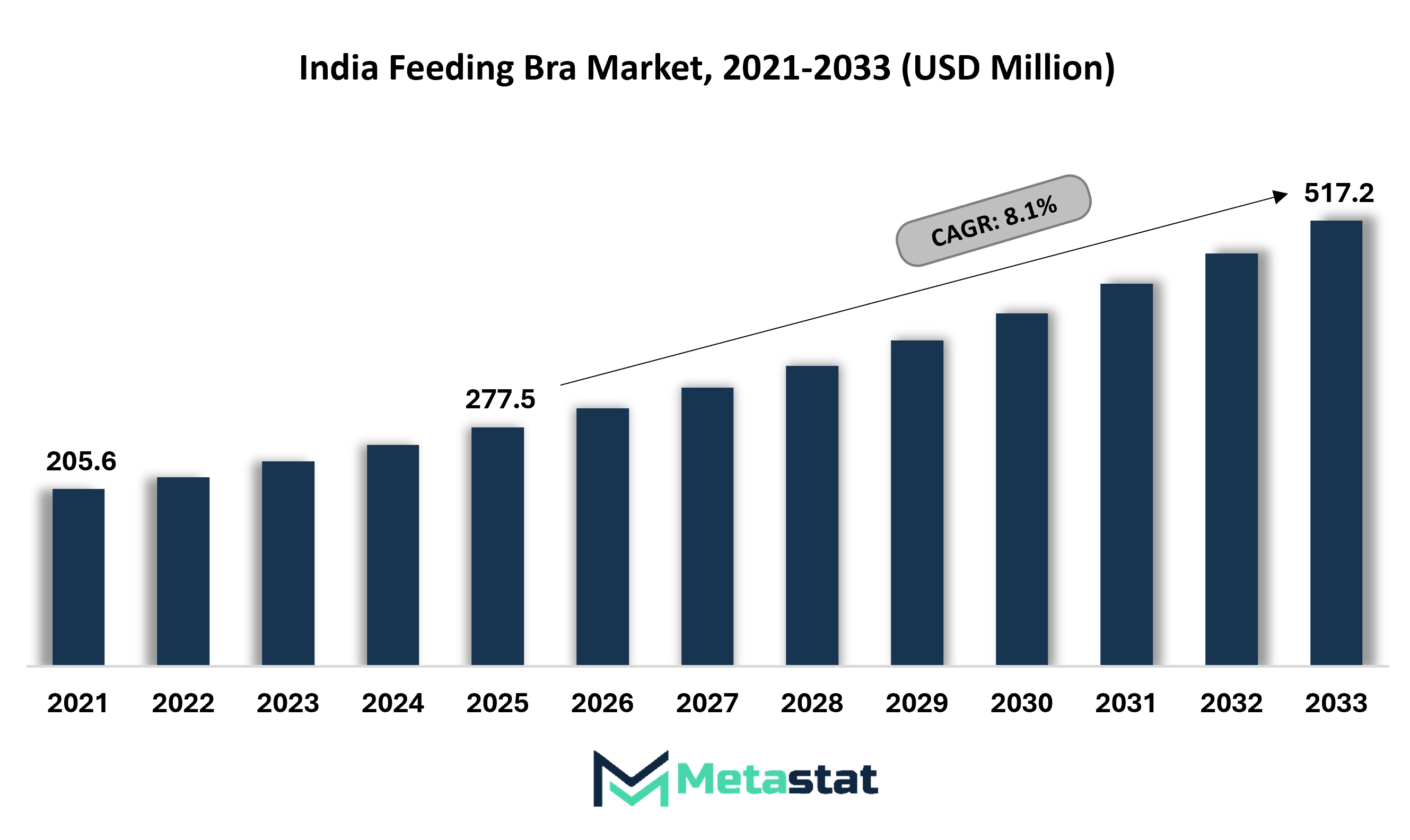
Growing awareness of breastfeeding benefits and maternal health support policies is increasing adoption of feeding bras in India, especially among urban and working mothers.
Public health campaigns, hospital counselling, workplace wellness programs, and maternity guidance services are improving product awareness. Urban families are seeking greater convenience during daily routines, while working mothers prefer supportive designs for long schedules. The India Feeding Bra Market will gain momentum through organized retail expansion and wider healthcare engagement.
Rising demand for comfortable, functional maternity innerwear is also boosting market penetration.
Soft fabrics, easy-open nursing access, stretch support, and breathable construction are shaping purchase decisions. Consumer preference is shifting toward practical innerwear designed for pregnancy and post-delivery needs. Brand visibility through digital stores, specialty counters, and pharmacy channels will improve reach across multiple income groups.
High price sensitivity in the Indian market limits adoption of premium feeding bra brands.
Budget-sensitive purchasing patterns often influence category selection, especially during broader maternity expense planning. Imported labels and premium collections face slower adoption owing to higher pricing. Future growth will depend on value-led pricing, local sourcing, efficient manufacturing, and durable quality within affordable price ranges.
Lack of awareness in semi-urban and rural regions reduces market penetration.
Limited category education, lower specialty retail presence, and dependence on traditional garment choices restrict adoption outside major cities. Many consumers remain unfamiliar with nursing-focused comfort benefits. Future expansion will require healthcare outreach, regional-language promotion, trusted retail partnerships, and wider offline product availability.
Rising demand for sustainable, organic, and skin-friendly maternity wear presents a strong opportunity for innovation and product differentiation in India.
Natural cotton, bamboo blends, low-impact dyes, and skin-safe materials are attracting health-conscious consumers. Eco-focused packaging and traceable sourcing will strengthen brand appeal. Domestic manufacturers can build premium trust through certified materials, modern styling, and comfort-led engineering suited to Indian climatic conditions.
The India Feeding Bra market is classified based on Product Type, Fabric Type, Closure Type, and Distribution Channel.
Wireless Feeding Bra segment is valued at USD 85.7 million in 2026 and is projected to reach USD 148.3 million by 2033, at a CAGR of 8.1% during the forecast period.
Future demand for Wireless Feeding Bras will rise through comfort-led design, soft support bands, and adaptive stretch panels. Urban maternity consumers will prefer movement-friendly options for daily wear, office schedules, and travel. Lightweight construction, skin-safe fabrics, and quick nursing access will support growth across the India Feeding Bra Market.
Underwired Feeding Bra segment is valued at USD 22.5 million in 2026 and is projected to reach USD 29.7 million by 2033, at a CAGR of 4% during the forecast period.
Premium demand for Underwired Feeding Bras will expand through improved lift, shape retention, and stronger support for formal dressing needs. Advanced flexible wiring, pressure-control frames, and breathable lining will improve comfort. Fashion-conscious maternity buyers will support wider acceptance across metro retail channels and premium digital platforms.
Padded Feeding Bras segment is valued at USD 66.3 million in 2026 and is projected to reach USD 119.5 million by 2033, at a CAGR of 8.8% during the forecast period.
Structured Padded Feeding Bras will attract consumers seeking contour, modesty, and confidence during social activities. Future products will include removable pads, cooling foam, and moisture-control layers. Rising preference for polished outerwear looks will support steady sales across organized retail and digital marketplaces.
Non-padded Feeding Bra segment is valued at USD 68.8 million in 2026 and is projected to reach USD 106.8 million by 2033, at a CAGR of 6.5% during the forecast period.
Non-padded Feeding Bras will gain attention through softness, airflow, and low-bulk design. Value-focused families will prefer practical choices with easy washing and durable stitching. Expanded color ranges and improved cup shaping will strengthen category appeal across urban and semi-urban demand zones.
Sports Feeding Bra segment is valued at USD 21.9 million in 2026 and is projected to reach USD 41.6 million by 2033, at a CAGR of 9.6% during the forecast period.
Rising adoption of Sports Feeding Bras among new mothers will support demand for activewear nursing products. Stretch-recovery fabrics, bounce-control panels, and quick-release feeding access will drive adoption. Fitness routines, walking culture, and postnatal wellness programs will strengthen category expansion over the coming years.
Seamless Feeding Bra segment is valued at USD 34.5 million in 2026 and is projected to reach USD 71.2 million by 2033, at a CAGR of 10.9% during the forecast period.
Smooth silhouettes under fitted garments will raise demand for Seamless Feeding Bras. Circular knit technology, friction-free edges, and flexible sizing will improve comfort during long wear hours. Premium buyers will value refined appearance, creating strong potential in fashion-led maternity collections.
Cotton Feeding Bra segment is projected to reach USD 195.7 million by 2033, at a CAGR of 6.9% during the forecast period.
Cotton Feeding Bras will remain highly preferred owing to softness, breathability, and climate suitability. Warm weather conditions across many regions will sustain strong volume movement. Organic cotton, natural dyes, and sustainable sourcing will appeal to health-conscious families seeking dependable daily essentials.
Microfiber Feeding Bra segment is projected to reach USD 107.9 million by 2033, at a CAGR of 9.9% during the forecast period.
Microfiber Feeding Bras will grow through lightweight feel, quick-drying performance, and smooth texture. Busy consumers will value low-maintenance garments suitable for travel and frequent washing. Improved stretch recovery and odor-control finishing will support premium positioning in future retail assortments.
Lycra Feeding Bra segment is projected to reach USD 97.9 million by 2033, at a CAGR of 10.1% during the forecast period.
Stretch-led comfort will keep Lycra Feeding Bras relevant for changing body measurements. Shape memory, close fit, and flexible movement will suit active schedules. Brands using soft-touch yarn blends and long-life elasticity will gain loyalty from repeat maternity shoppers.
Silk Feeding Bra segment is projected to reach USD 21.6 million by 2033, at a CAGR of 3.4% during the forecast period.
Gifting and premium self-care trends will support growth in Silk Feeding Bras. Soft texture, elegant finish, and gentle skin contact will appeal to affluent shoppers. Limited-edition collections, festive packaging, and boutique sales channels will support niche sales opportunities.
Polyester Feeding Bra segment is projected to reach USD 94.1 million by 2033, at a CAGR of 8.2% during the forecast period.
Polyester Feeding Bras will maintain a strong share through durability and cost efficiency. Easy-care performance, wrinkle resistance, and color retention will suit mass-market demand. Recycled polyester adoption will improve brand image and support sustainability-focused purchasing behaviour.
Front Closure Feeding Bra segment is projected to reach USD 81.8 million by 2033.
Front Closure Feeding Bras will gain demand owing to fast handling and simple wearability. Reduced effort during dressing routines will appeal strongly during early motherhood stages. Future designs with magnetic safety locks and smooth fasteners will expand premium demand.
Back Closure Feeding Bra segment is projected to reach USD 104.0 million by 2033.
Traditional preference and familiar fit systems will maintain steady demand for Back Closure Feeding Bras. Multiple adjustment rows, improved hooks, and stronger band support will improve comfort. Large-format retail outlets will continue stocking broad size ranges within category shelves.
Hook and Eye Feeding Bra segment is projected to reach USD 129.6 million by 2033.
Reliable fastening systems will remain important for Hook-and-Eye Feeding Bras owing to durability and adjustable sizing benefits. Improved rust-free hardware, soft backing layers, and skin-friendly finishing will improve product quality. Budget and mid-range segments will continue contributing strong volume through widespread acceptance.
Clip-on Feeding Bra segment is projected to reach USD 128.5 million by 2033.
Fast nursing access will drive high demand for Clip-on Feeding Bras. One-hand operation, secure locking clips, and silent-release systems will improve user experience. Working mothers and travel users will prefer efficient designs available through online maternity brands.
Pull-on Feeding Bra segment is projected to reach USD 73.2 million by 2033.
Minimal hardware construction will attract buyers seeking softness and simplicity in Pull-on Feeding Bras. Stretch-entry design, lounge comfort, and sleepwear suitability will support growing use during recovery periods. Seamless knit pull-on styles will gain popularity in premium comfort-focused collections.
Online Retail segment is projected to grow at a CAGR of 9.6% during the forecast period.
Online Retail will lead channel expansion through wider assortment, reviews, and doorstep delivery. Size guides, virtual fit tools, and subscription reorder systems will improve buyer confidence. High smartphone penetration will keep online channels central to category growth.
Specialty Maternity Stores segment is projected to grow at a CAGR of 7.6% during the forecast period.
Expert fitting support and curated maternity ranges will preserve the relevance of Specialty Maternity Stores. Personalized guidance, fabric education, and size correction services will attract first-time buyers. Premium urban districts will remain key centers for experiential maternity shopping.
Supermarkets & Hypermarkets segment is projected to grow at a CAGR of 6.2% during the forecast period.
Supermarkets & Hypermarkets will support volume movement through convenience and bundled pricing. Household shoppers will purchase maternity essentials during routine visits. Expanded private labels, festive discounts, and visible shelf placement will strengthen category penetration across major cities.
Others segment is projected to grow at a CAGR of 7.3% during the forecast period.
Pharmacies, department stores, local lingerie outlets, and clinic-linked counters will add supplementary sales. Regional trust networks and immediate availability will support demand where organized retail presence remains limited. Future omnichannel partnerships will widen access across smaller towns.
Based on geography, the India Feeding Bra market is divided into North India, South India, West India, East India, and Central India.
West India benefits from high retail density, premium brand presence, and strong online shopping adoption.
South India maintains strong demand through rising female workforce participation, healthcare awareness, and organized retail growth.
North India offers strong opportunities through population scale, an expanding urban middle class, and rising maternity care spending.
East India is gradually improving through e-commerce reach, retail expansion, and rising awareness of maternity wellness products.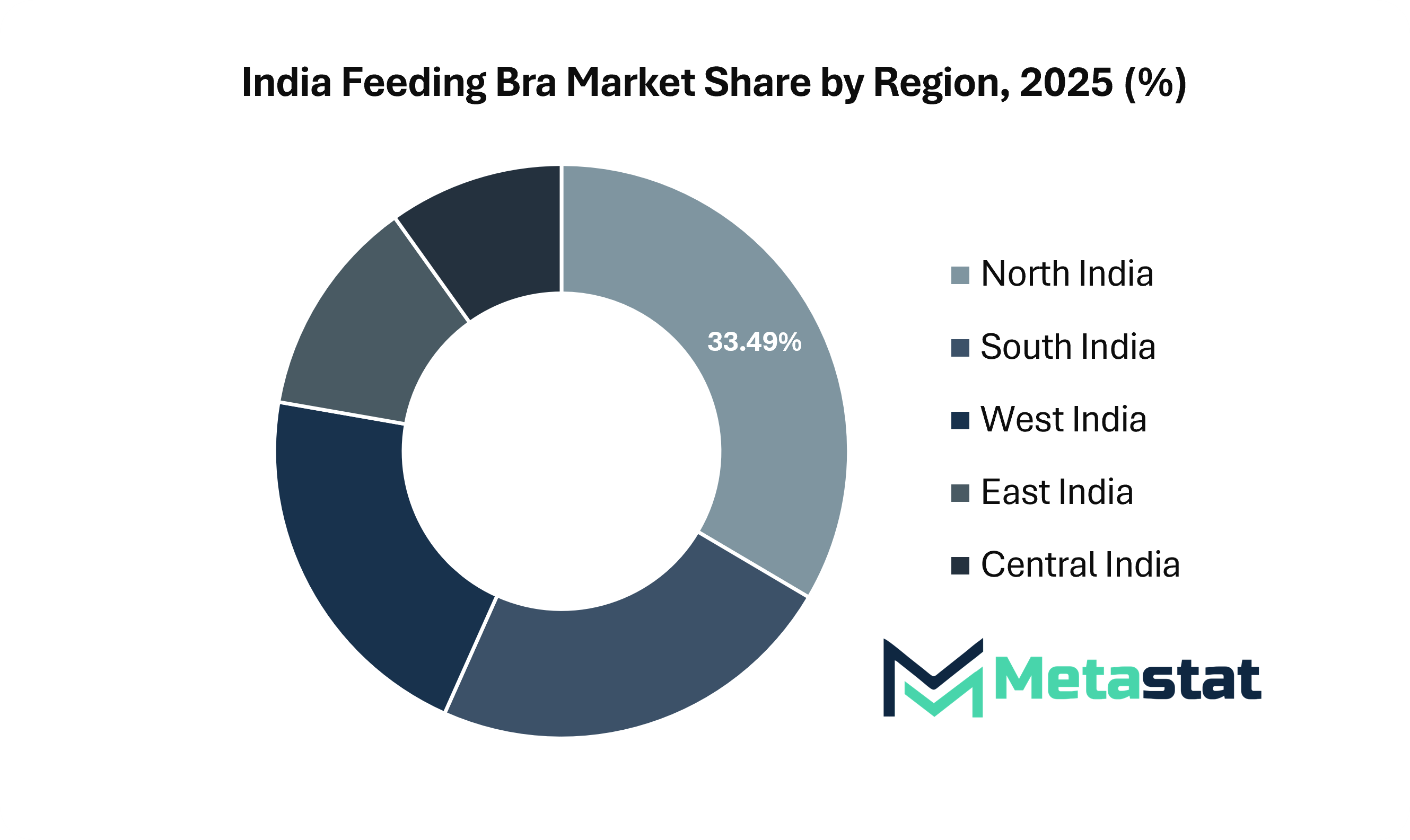
The India Feeding Bra Market has expanded with changing family needs, higher product awareness, and wider online access. New mothers now seek comfort, support, soft fabric, and smooth nursing clips during long daily routines. Buyers also evaluate fit, skin feel, wash life, and price before making purchase decisions. Urban demand remains strong, while smaller towns are also adding steady sales through digital stores and local counters. Brand trust remains important as women prefer reliable sizing and safe materials. Social media reviews, doctor advice, and word-of-mouth recommendations will continue shaping purchase decisions across age groups during the forecast period.
Key industry participants include Jockey India, Zivame, VNH Naidu Hall, Hunkemoller, Bodycare, Clovia, Shyaway, Envie, Lovable India, and Trylo Intimates. These companies serve consumers through stores, marketplaces, and direct websites with multiple size options. Tailor and Circus builds appeal through contemporary design, while Mothercare India continues to focus on maternity basics. Marks & Spencer India and H&M India add international shelf presence in major cities. Amanté, Inner Sense, Triumph India, and Nykd by Nykaa attract younger customers through style-led products, comfort positioning, active digital outreach, and seasonal offers for nursing buyers.
KCJ Lingeries Pvt. Ltd. through its Floret brand and Tweens maintains relevance in value-focused channels. International specialists such as Bravado Designs, Medela, Anita Maternity, Kindred Bravely, Cake Maternity, and Morph Maternity add premium choices for mothers seeking advanced feeding support. Their products often highlight wider straps, stretch cups, leak-pad compatibility, and easy-open clasps. Competition keeps prices balanced and encourages new launches each season. Retailers will benefit when they explain fit guidance clearly, as many first-time consumers still need confidence before making purchase decisions in stores and online.
Looking ahead, growth will depend on stronger education around post-childbirth sizing, softer fabrics for sensitive skin, and easy return policies. Many women purchase multiple pieces once comfort is validated, which supports repeat sales. Brands that listen to feedback, improve straps, and offer inclusive sizes will gain long-term loyalty. Offline fitting assistance will remain important, while online channels will widen reach across new districts. Stable supply, fair pricing, and consistent product quality will help the category move forward with stronger consumer confidence across urban and rural markets.
Market size is forecast to rise from USD 277.5 million in 2025 to over USD 517.2 million by 2033.
The India Feeding Bra Market is expected to benefit from rising birth-care spending, broader maternity wellness awareness, and stronger digital retail access. Future adoption is likely to favour soft-touch fabrics, leak-support-compatible designs, premium basics, and personalized size-fit recommendations through online platforms.
This research report categorizes the India Feeding Bra market based on key segments and regions, forecasts revenue growth, and analyses trends in each submarket. The report analyses the key growth drivers, opportunities, and challenges influencing the India Feeding Bra market. Recent market developments and competitive strategies such as expansion, product launch, partnership, merger, and acquisition have been included to draw the competitive landscape in the market.
The report strategically identifies and profiles the key market players and analyses their core competencies in each sub-segment of the India Feeding Bra market.
|
Report Attributes |
Details |
|
Study Period |
2021-2033 |
|
Base Year |
2025 |
|
Estimated Year |
2026 |
|
Forecast Period |
2026-2033 |
|
Historical Period |
2021-2025 |
|
Growth Rate |
CAGR 8.1% from 2026 to 2033 |
|
Revenue Unit |
USD million |
|
Sales Volume Unit |
Thousand Units |
|
Segmentation |
By Product Type, Fabric Type, Closure Type, Distribution Channel, and Region |
|
By Region |
India (By Product Type, Fabric Type, Closure Type, Distribution Channel, and State)
|
Find answers to common questions about this report
Top players operating in the India Feeding Bra industry includes Jockey India, Zivame, VNH Naidu Hall, Hunkemoller, Bodycare, Clovia, Shyaway, Envie, and Lovable India
India Feeding Bra market is estimated to reach USD 517.2 million by 2033.
High price sensitivity in the Indian market limits adoption of premium feeding bra brands. will hamper the market growth within the forecast period.
North India region dominates the market.
Growing awareness of breastfeeding benefits and maternal health support policies is increasing adoption of feeding bras in India, especially among urban and working mothers and rising demand for comfortable, functional maternity innerwear is also boosting market penetration. are key driving factors, boosting the market.
The Wireless Feeding Bra is the leading type segment in the India market.
The India Feeding Bra market is expected to grow at a CAGR of 8.1% over the forecast period (2026-2033).
The Metastat Insights study shows that the India Feeding Bra market size was USD 277.5 million in 2025.
The analysts below cover Consumer Goods research at Metastat Insights.
LEAD ANALYST
Utkarsh Khirodkar is a Lead Market Research Analyst at MetaStat Insight, specializing in market intelligence, technology sector assessments, and competitive strategy.
Floating offshore wind feasibility relies heavily on specialized installation vessel availability and port crane limits, which most broad renewable energy forecasts ignore. The report delivered a thorough analysis of dry dock capacity, mooring chain supply constraints, and raw material pricing trends for deepwater anchor installations. It served as a solid independent sanity check for our offshore project capital expenditure assumptions.
Assessing commercial microgrid software adoption requires looking past top-level installation numbers and examining utility interconnection queues. The research provided verifiable data on average permitting timelines, tariff structures, and battery storage integration costs across regional utility territories. That grounded perspective was valuable for our team when building five-year demand projections for industrial microgrid controllers.
Ambulatory surgical centers have very different purchasing cycles for robotic-assisted surgery platforms than major hospital networks. The MetaStat Insight study focused squarely on capital expenditure depreciation, procedural reimbursement pathways, and surgeon training overhead. That operational clarity made it much simpler to validate multi-year procedure growth forecasts against actual ambulatory center adoption patterns.
Explore related market intelligence reports worth reading alongside this one.